




Abstract
Previous research shows that residents of metropolitan areas tend to have social ties outside their neighborhoods, but ties’ locations and what they indicate in terms of social relations and urban structure are not sufficiently studied. Using survey data and interviews collected in Tehran, Iran, I examine the level of propinquity of strong social ties. Measuring the geographical distance and relative orientation between participants and their ties, I discuss the implications of having ties outside residential neighborhoods. I examine how these relations are formed and sustained and analyze how they impact class relations and perceptions of social structure. Results indicate that ties who reside in other neighborhoods offer points of reference for situating oneself in relation to others, both in socioeconomic and cultural sense. Participants’ narratives suggest that ties’ locations, together with ties’ origins and types, impact interpretations of group relations and social hierarchies associated with location in the metropolitan area.
Studies of social networks in urban contexts have contributed to a variety of sociological discussions including communities and neighborhoods, immigration and integration, gangs and criminal behavior, health and education, access to opportunities, and group relations among others (Kim and Chang 2018; Marques 2011; Netto, Pinheiro, and Paschoalino 2015; Papachristos, Hureau, and Braga 2013; Sampson and Groves 1989; Wellman 1983). A subset of this literature directly engages with geography and where social ties are located and how they are spatially oriented (Cornwell and Behler 2015; Small 2007; Wellman 1979; Wellman and Wortley 1990). Although these studies offer insights into outcomes of networks for individuals and communities, less is known about how having social ties outside one’s residential neighborhood reflects social dynamics of the urban context and how, if in any ways, these ties influence group relations and perceptions of class and culture in the metropolitan area.
Using the case of Tehran, the capital city of Iran, I examine the spread of social ties across the city, study the relation between social structure and ties’ location, and explore what the geographical locations of ties indicate in terms of spatial patterns of class relations. The findings suggest that ties’ particular location (in the metropolitan context) and type (kin vs. non-kin, neighbors vs. friends or coworkers, etc.) are consequential in how urban dwellers perceive and interpret group relations and social hierarchies associated with geographical location in the city. The analyses build on my fieldwork in Tehran, including survey data and interviews with users of public spaces. Using a mixed methods approach, I use survey data to show that most respondents have strong social ties that are located outside their neighborhoods and I draw on interview data to discuss the processes, interpretations, and consequences of this dispersion. The social ecology of Tehran, where wealthier and more prestigious neighborhoods are located further north, offers a context where distance and the relative orientation of social ties can be interpreted in meaningful ways.
The paper contributes to the literature on social ties in two ways: first, by providing a quantifiable measure of the location of the participants and their ties, I examine the level of propinquity and show that ties are often spread across different neighborhoods and regions of the metropolitan area. The findings are in line with the “liberated communities” argument, which suggests that rather than having ties in close proximity, urbanites’ social ties tend to be “spatially dispersed,” and that advances in communication and transportation, spatial mobility, and separation of work and residence have liberated “the Community Question from its local roots” (Wellman 1979:1207; Wellman and Wortley 1990). My work takes a step further to inquire where non-neighborhood ties are located and how their location matters. I show that participants and their non-local ties do not necessarily reside in neighborhoods of the same socioeconomic status. Second, I discuss how these networks are formed and sustained and what they mean in terms of class relations, perceptions of social and spatial organization, and hierarchies embedded in the structure of the city. The findings have implications for how people navigate the geographical and socially constructed boundaries between classes and provide a nuanced picture of the relation between location and class.
Background and Theoretical Framework
Social Networks
Studies of social networks confirm the importance of both weak and strong ties through exploring a variety of topics, such as communities (Wellman 1983; Wellman and Wortley 1990), access to resources and opportunities (Bian and Huang 2015; Granovetter 1973; Marques 2011; Netto et al. 2015), social and cultural capital (Chua, Axhausen, and Tan 2018; Coleman 1988; Ryan et al. 2008), group relations (Sampson and Groves 1989), criminal behavior and gangs (Papachristos et al. 2013), and mental and emotional well-being (Cheung 2014). Whether working with the measurable outcomes associated with having (or lacking) strong and diverse social networks (Kasinitz and Rosenberg 1996; Lin 1999), or the processes through which social ties are developed, sustained, and used (Desmond 2012; Garip and Asad 2016), these studies provide insights into how social networks operate in urban contexts.
Furthermore, by comparing qualities and functions of different types of ties –such as strong versus weak, kin versus non-kin, and physically close versus distant ties– scholars show how different types of ties offer distinctive types of resources and support (Fischer 1982; Gerstel 2011; Granovetter 1973; Ryan 2011; Tilly 2007; Wellman and Wortley 1990). These nuanced approaches have provided a wealth of knowledge on the implications of having social ties for individuals and communities. They also highlight the linkage of micro and macro levels, underlining the relation between individual experiences and larger social structures (Granovetter 1973:1377–78).
For instance, studies of migrants’ ties indicate that they provide economic, social, and emotional support. Access to ties, whether local or “back home” (or trans-local ties), can translate into access to opportunities such as employment (Bian and Huang 2015; Sanders, Nee, and Sernau 2002), job mobility (Tian and Lin 2016), reduction in poverty, and smoother integration processes (Knight, Thompson, and Lever 2017; Korinek, Entwisle, and Jampaklay 2005; Ryan 2011; Yue et al. 2013). Moreover, having ties is associated with greater social capital and support (Chua et al. 2018; Ryan et al. 2008), mental well-being (Cheung 2014), and building relationships (Ryan 2011).
Similarly, research on the social networks of the urban poor highlights some of the disadvantages of living in (racially or class-based) segregated areas. Several studies show that poor individuals have smaller, less varied, and more local social networks, which limit their access to resources, and that these networks rarely overlap with those of middle or upper classes (Barnes 2003; Marques 2011, 2015; Tigges, Browne, and Green 1997; Van Eijk 2010). Confirming research on the impact of social networks on the development of trust and norms (Coleman 1990) and social capital (Coleman 1988), scholars depict how scarcity of local ties and lack of community cohesion result in negative outcomes for individuals and communities (Cornwell and Behler 2015; Kohlbacher, Reeger, and Schnell 2015; Nation, Fortney, and Wandersman 2010; Wang, Zhang, and Wu 2016).
Research on processes and consequences of networks has also been useful in exploring networks that are not embedded in neighborhoods and has opened up new lines of inquiry into metropolitan ties. For instance, when engaging with broader contexts, such as the city or the metropolitan area (rather than proximate communities), scholars have examined how communication technologies (and more recently, online social networks) allow for the development and sustaining of non-local ties (Chayko 2014; Goodspeed 2017; Wellman 1979) and how online social networks influence interactions in public spaces (Goers 2013; Hampton, Livio, and Sessions 2010; Humphreys 2010). In line with the liberated communities argument, these studies underscore that new technologies have made location less salient to one’s social networks. While acknowledging the significance of virtual connections, social dynamics associated with spatial dispersion of ties remains an important topic in the study of urban social networks.
Location of Ties
Scholarly interest in location of ties and the associated outcomes for individuals and communities has generated multiple lines of research. John J. Beggs, Valerie A. Haines, and Jeanne S. Hurlbert (1996), for instance, investigate variations in the number and types of ties in metropolitan versus non-metropolitan areas, concluding that certain types of ties (kinship ties and a tendency to know other ties of an individual) are more common in non-metropolitan areas, but that those residing in metropolitan areas have larger and more diverse networks. Similarly, Katherine J. Curtis White and Avery M. Guest (2003) use measures such as the number of ties, kin versus non-kin ties, interconnection, and frequency of contact to explore how social ties vary in different U.S. settlement types (rural, small town, suburban, and urban) and to understand effects of urbanization and metropolitanization on variations in networks (White and Guest 2003).
Within cities, while some studies focus on local ties and networks embedded in neighborhoods (Cornwell and Behler 2015; Small 2007), others explore how non-local and spatially dispersed networks function and influence different aspects of social life (Beggs et al. 1996; Wellman 1979; Wellman and Wortley 1990). Scholars have also emphasized the importance of location of ties by exploring how networks in metropolitan areas are related to segregation and spatial organization, showing that living in segregated high-poverty neighborhoods is often associated with smaller network size (Marques 2011; Small 2007).
Yet, despite attention to the geographical location of ties, studies of social networks often only distinguish between “local” (residing in the same neighborhood) and “non-local” (“metropolitan” or “transnational”) ties (Pahl and Spencer 2004; Wellman 1979; Wellman and Wortley 1990). Physical distance between respondents and their ties are rarely measured, and differences in neighborhood contexts are often overlooked. When scholars, and especially geographers, do measure distance (for examples, see Frei and Axhausen 2007; and Chua et al. 2018), the definition of local and non-local generally refers to national versus transactional ties, which again means a lack of distinction within the metropolitan context. This scarcity of detailed attention to location of ties is also observable in studies that concern patterns of movement in cities. Studies of activity spaces, which examine individual (or households’) movement patterns, have important implications for transportation, urban planning, and behavior analysis (Tao et al. 2011; Parthasarathi, Hochmair, and Levinson 2015; Schönfelder and Axhausen 2003). Often using quantitative approaches, they also examine impacts of urban structure and cognitive navigation on use of space, showing that people move around the city, often well beyond their neighborhoods. Although some studies have incorporated ties into the significance of activity spaces (Mason et al. 2015), they do not sufficiently analyze the physical location of ties or their impacts.
A Closer Look at Location and Social Outcomes
Despite interesting research on networks, the inquiry into location and distance among ties remains limited in some ways. Relatedly, this paper contributes to the literature on social ties by engaging with two less-studied aspects in metropolitan contexts. First, it offers a closer look at location of ties. In those studies that concern spatial aspects of tie relations, the geographical location is often operationalized as a dichotomous variable (i.e., local vs. non-local), or in terms of residential area type (rural, small town, suburban, urban, etc.). Actual distance or social, economic, and cultural dynamics of the residential neighborhoods of the respondents and their ties are rarely measured or discussed. This is evident both in data collection and data analysis, with few studies collecting the location of ties beyond local versus non-local (when they do, “local” often refers to ties within the metropolitan area, in contrast to “non-local” as transnational ties. For an example, see Chua et al. 2018). I engage with geographical location and relative distance among ties, within the metropolitan area, and study the relevant social consequences.
Second, while studies of social ties examine outcomes for individual, neighborhoods, and social cohesion (Chua, Madej, and Wellman 2014; Guest and Wierzbicki 1999), other contextual analysis, such as metropolitan processes and group relations, have not been sufficiently discussed. In addition to analyzing processes and outcomes for the ego (types of ties and how they are formed/sustained), I explore how the ties’ location—along with their origins (local vs. non-local) and types (kin vs. non-kin)—shape and influence participants’ interpretations of the socio-spatial structure of the city and group relation in the metropolitan area.
As Mark Granovetter (1973) suggests, exploring the relation between individual experiences and larger social structures allows for a better understanding of the linkage of micro and macro levels. Accordingly, this paper uses a socio-spatial approach to situate social ties within the metropolitan context. I analyze the extent to which participants’ social ties are spread across the city and what consequences the dispersion has on relationships in and perceptions of the city. I discuss the processes through which these ties are formed, sustained, and perceived. Furthermore, by looking into the location of strong ties, this study raises questions about the geographical and socially constructed boundaries between social classes in Tehran. Analysis of social ties in this context provides insights regarding city-level processes that function beyond individuals or neighborhoods.
The Setting
Tehran, the capital city of Iran, is a metropolitan area of 14 million residents (8 million in the city proper) and 280 square miles. Tehran is often described as a divided city. The division is evident in the physical structure, economic basis, historical development, and perceptions and assumptions of (and about) its citizens (Bayat 2010; Madanipour 1998). From early developments in the late nineteenth century, the city has embodied a stark class segregation, with the north being inhabited by the upper class, wealthier, and more educated groups and the south by the poor, less educated, and migrants from rural areas and provincial towns (Bayat 2010). In fact, with some limited exceptions, a gradual shift along a north/south axis is observable: As one moves from the north to the south, one moves from wealthier and higher-prestige neighborhoods to the poorer ones. The south has historically been considered to be more conservative and religious as well, but in the absence of actual data, it is hard to make claims about the level of religiosity or political and social conservatism and how it has changed, although economic inequalities have persisted or exacerbated over time 1 (Bayat 2010; Madanipour 1998).
This historical divide, a reflection of both natural settings and human developments, has dominated the growth patterns and has important social and cultural ramifications. A complex set of economic and cultural aspirations shape how citizens experience inequality and their location in the socio-spatial hierarchy of the city. In this context, exploring the location of ties can tell us more than whether and how local or non-local ties shape social networks. Particularly, in case of non-local ties, we can examine if their locations reflect a completely divided city or if, by contrast, they depict a picture of integration. This in turn will allow for a discussion of how location of close ties shape interpretations and perceptions of class relations and socio-spatial structures.
Methods and Data
Data for this study are part of a larger project for which I conducted fieldwork in Tehran, including observations, collection of survey data, and interviews with users of eight public spaces across the city. Studies of social ties often choose sampling methods that either focus on a residential area, such as a neighborhood or a census tract (Pahl and Spencer 2004; Small 2007; Wellman 1979), or diversify respondents based on their residential context, such as urban, suburban, and rural (White and Guest 2003). When using general surveys, scholars usually incorporate residential location as a dimension in their analysis. For this study, rather than sampling based on place of residence, I recruited participants in public spaces where they spend time, often outside their residential neighborhoods. By choosing diverse sites in terms of urban function and location, I have been able to access a more diverse group in terms of class background and residential location. This method provides the opportunity to examine spatial dispersion of social ties among people who do not necessarily share a residential neighborhood, but instead use the same spaces outside their neighborhoods. This allows to examine the social ties of those who tend to move beyond the boundaries of their residence and work places, and to explore the structure and meanings of social networks for a subset of the population that is not easy to reach by sampling in specific neighborhoods. Although this sampling method is not generalizable to the whole population of the city (as is also the case with sampling in one or two neighborhoods), it offers insights into the networks of those who are willing and able to leave their neighborhoods and use public spaces outside their local communities. Below, I discuss the logic of site selection and its implications, the characteristics of the sample, and my analytical approach.
The Logic of Site Selection
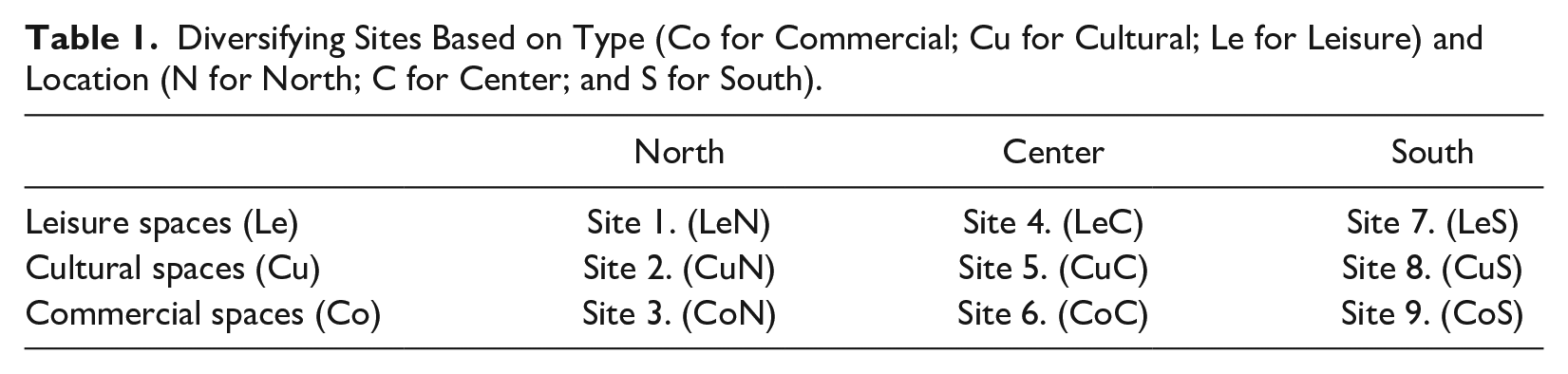
The sites include a diverse set of public spaces both in terms of urban function and geographical location. In selecting the fieldwork sites, three main categories of spaces—commercial, cultural, and leisure—were considered and given the structure of the city, potential sites corresponding with each category were selected in the north, center, and south of Tehran. Table 1 summarizes the original schema of how I diversified the sites based on type and location. Using previous research on the main structure of Tehran, consisting of significant public spaces, roads, landmarks, and historical buildings (Habibi et al. 1993), I limited the choices of the sites to a corridor in the middle part of the city. Figure 1 shows that area and location of my sites. As evident in the map, the sites do not exactly match the ideal types of the table, but they do represent all nine categories. All sites are city-level public spaces, meaning that they attract users from beyond adjacent communities for a variety of reasons, such as their size, function, or location in the city.
Diversifying Sites Based on Type (Co for Commercial; Cu for Cultural; Le for Leisure) and Location (N for North; C for Center; and S for South).
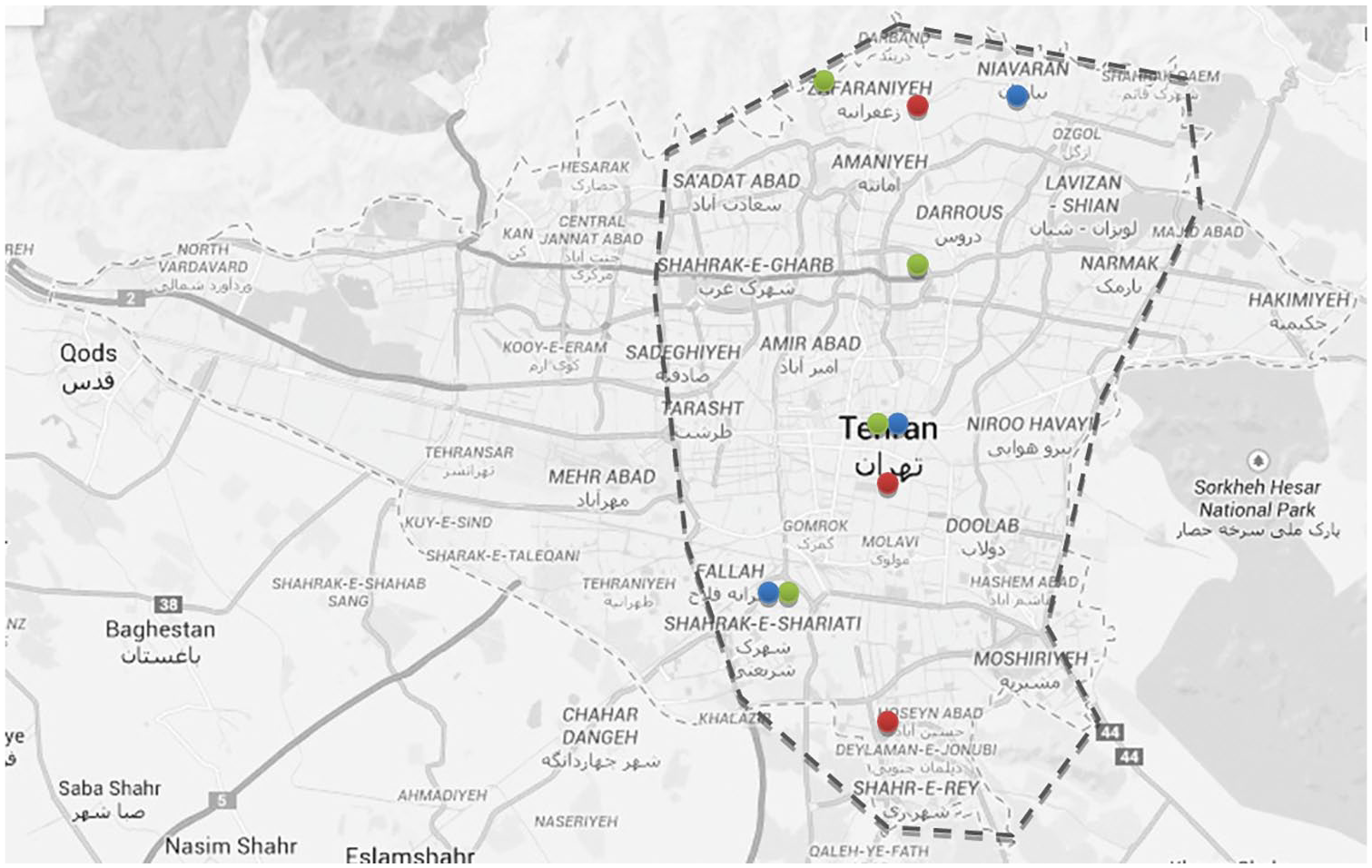
Map of Tehran.
Sampling and Survey
I recruited participants in fieldwork sites by approaching individuals using the space and asking if they were willing to complete a short survey form. I used face-to-face interactions as the main method of recruitment, with various response rates across different sites and times, which resulted from certain limits in the recruitment process (e.g., individuals and smaller groups were more likely to participate, as opposed to larger groups). Nonetheless, the sample reflects the composition of the users of these spaces who were young, and in most sites disproportionately female. 2 The age range is 18 to 78 and the mean is 28.1, younger than the average age in Tehran at 31.2, and almost two thirds of the respondents are female (164 women and 78 men). Survey respondents were instructed to share contact information if they were willing to participate in a longer interview. Interviewees’ age range is between 20 and 57, with equal numbers of men and women, from different parts of the city. Recorded interviews (conducted in Persian) were typically between 65 to 120 minutes. I transcribed the interviews and used Dedoose (2016) to code the transcribed interviews along with notes from my conversations with survey respondents and observation memos.
The first part of the paper is primarily based on survey data: As part of a qualitative survey form, respondents were asked to think of five closest friends or family members (who do not share the same residence) and name the neighborhoods in which those ties reside. No criteria were offered other than identifying “closest friends or family,” allowing the participants to decide how they define close ties. As the literature shows, scholars have used a variety of different questions to access respondents’ social ties (for examples and discussions, see Chua et al. 2014; Fischer 1982; Pahl and Spencer 2004; Wellman 1979). Name generating techniques remain a topic of discussion and even the question used by the General Social Survey (GSS) has been extensively discussed in terms of usefulness and possible errors (Fischer 2009; see Bailey and Marsden 1999). Given that I was conducting research in a different language and cultural context and considering other components of the survey form, I found the question I used to be more appropriate and less confusing for the local population, compared with some other choices (including the GSS question about “discussing important matters”). As I will show, the data suggest that most respondents identify strong ties outside their local communities, in other neighborhoods and regions, often far away from their place of residence.
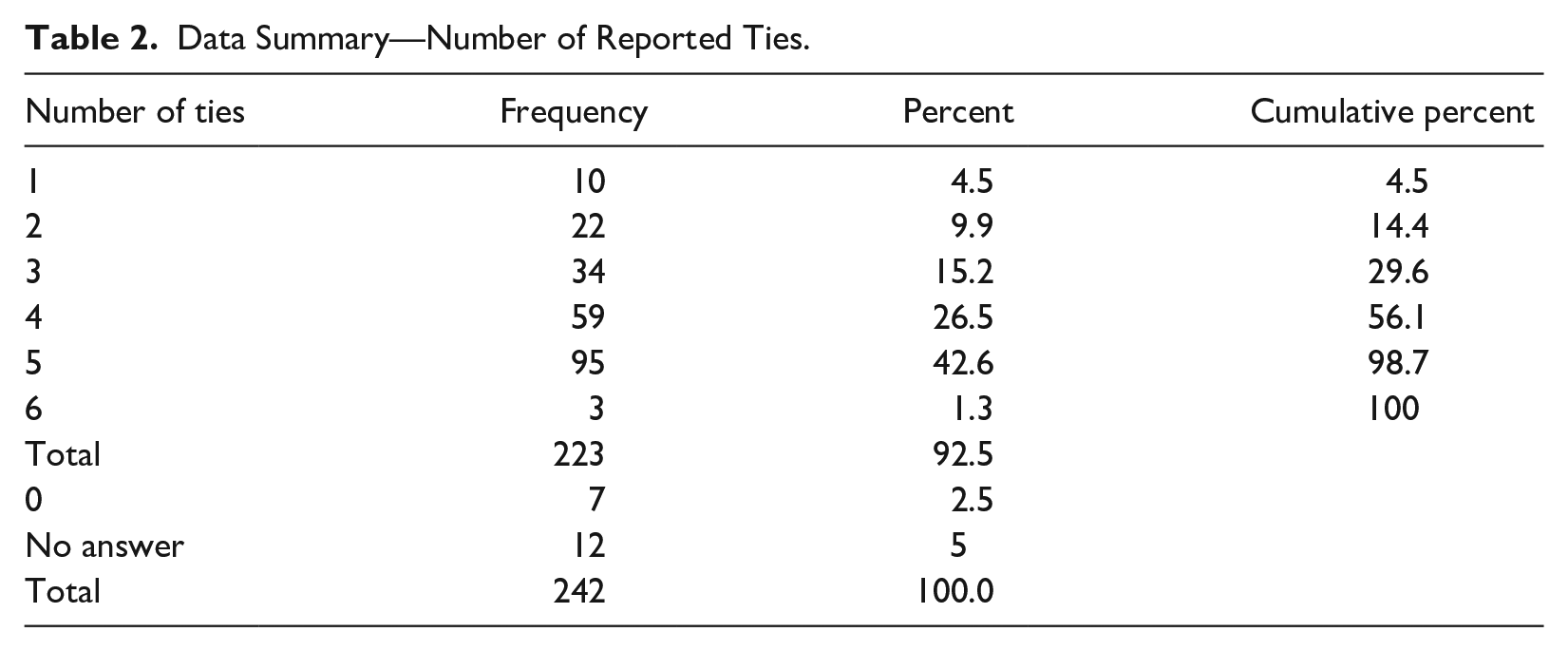
Two hundred forty-two respondents across the eight sites participated in the survey. Of the 242, 12 did not answer the question about the location of ties, 7 indicated that they have no close ties in Tehran, and 223 answered with at least one entry. The responses range from 1 to 6 tie/neighborhoods (a few included one extra to the suggested 5), each neighborhood indicating the location of one tie (they were instructed to repeat the name of the neighborhood, if more than one tie resided in a specific neighborhood). Table 2 and Figure 2 show the number of ties’ neighborhoods, indicated by respondents.
Data Summary—Number of Reported Ties.
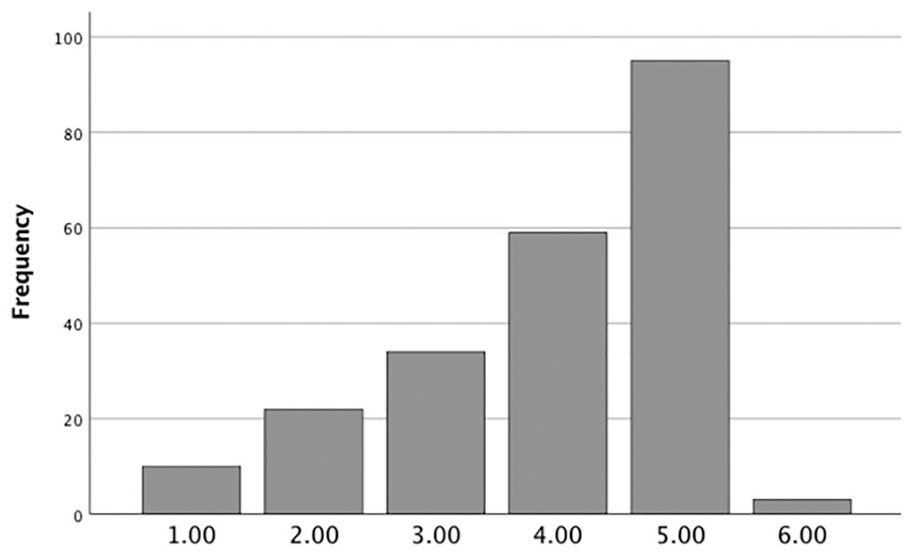
Number of reported ties.
Analytical Approach
To be able to work with these data and to trace potential patterns, I coded the location of ties so that each respondent and all her ties are treated as nodes. The relation is defined as the distance between each pair of nodes. Given the number of the respondents and their associated ties, this method of coding offers 885 unique data points, each indicating the distance between two people (one respondent and one tie) in Tehran. Because my data lack the precise location of the respondents and their ties (for privacy protection), I measured the distance between each respondent and each of her ties by locating the two neighborhoods and using Google Maps. I used the shortest driving path suggested by Google Maps and took note of the distance measured in kilometers. 3 For ties within the same neighborhood, I assigned a distance of 1 kilometer. 4
The socio-spatial structure of Tehran facilitates interpretation of the numbers associated with distance in the city. The gradual shift in socioeconomic class (form north to south) that is observable in Tehran is different from many other cities, where wealthy areas might be located in close proximity to poor and deprived neighborhoods (a pattern intensified by gentrification). Other factors, such as the level of social and economic mobility and racial heterogeneity, may influence interpretation of these numbers in other urban contexts. Furthermore, the purposive sampling method (recruiting participants in public spaces) is consequential in terms of assessing social ties: one can argue that those who tend to move to use city-level public spaces outside their local communities (who comprise most of my respondents) are more likely to have social ties outside their neighborhoods; or that having social ties outside one’s neighborhood would motivate people to move around the city to visit family and friends. Although this purposive sampling limits the generalizability of the findings, it allows for a focus on ties that reside outside one’s neighborhood and what can be learned through studying such ties.
The first part of the paper provides a foundation for my arguments in the second part. To study the implications of ties’ geographical dispersion, I tap into the perceptions and experiences of a smaller group of participants in my sample. The second part builds on data from longer conversations with survey respondents and in-depth semi-structured interviews with a smaller subset. Through these data, I explore some of the underlying processes that shape the origins, meanings, and outcomes of having ties across the metropolitan area.
Location of Social Ties: Local or Metropolitan Communities?
The collected data on the location of close social ties show that the social networks of most respondents are spread across the city. In fact, there are only a few participants in the sample whose closest friends and family all live in the same neighborhood. Moreover, not only are close ties located in different neighborhoods, but also, they are usually scattered in different parts of the city: of the 223 respondents, only 9 had all of their ties in one neighborhood, and only an additional 6 had all their ties in the same region (for instance, all in the north, or south, etc.). The rest reported their ties to be spread across different neighborhoods and regions in Tehran. This general observation is confirmed by looking more closely at the data, as explained through tables and diagrams in this section.
As mentioned earlier, measuring the distance between respondents and their ties offers 885 unique data points, each indicating the distance between two people in Tehran (see Figure 3). The mean at 11.9 kilometers and the median at 9.4 confirm that most ties are located outside respondents’ residential neighborhoods with 76 percent being more than 4 kilometers apart. If only non-neighborhood ties are considered (excluding the 136 ties that are in the same neighborhood with the assigned distance of 1), the mean jumps to about 13.9 (and the median to 11.2), meaning that on average the respondents’ travel distance to their strong ties outside their neighborhoods is 13.9 kilometers, which in a congested city like Tehran might mean hours spent in traffic. Depending on directions (discussed more fully below), it can also indicate noticeable changes in the characteristics and conditions of the neighborhoods, both physically and socially.
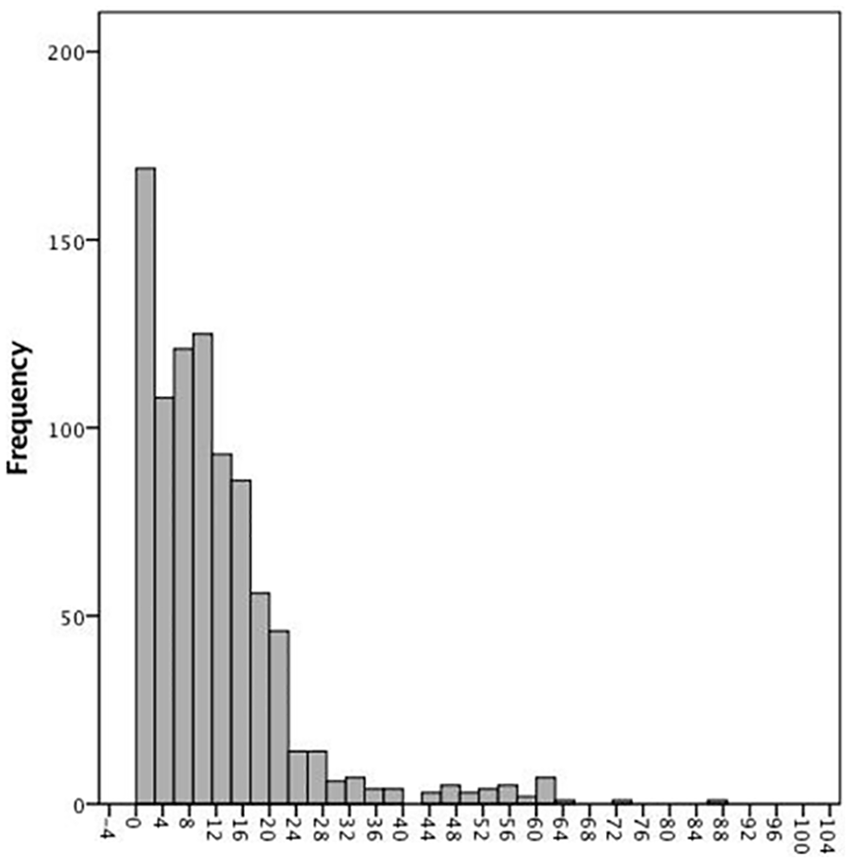
Frequency diagrams for distance between all respondent/tie pairs.
In addition to these aggregate numbers, data can be used to explore patterns at the individual level. Figure 4 shows the distance between each respondent and her furthest social tie. Here, the maximum (among the numbers indicating respondents’ distance from each of her ties) is used to show that most respondents have at least one tie that resides outside their neighborhood. The median is 16.7, with 85 percent having their furthest tie more than 10 kilometers away. Since the diagram is based only on the distance of the furthest ties, it is mainly used to confirm that most respondents have at least one tie who lives in a neighborhood with different socioeconomic characteristics than their own (and not to make any claims about the general dispersion of ties). Figure 5, showing the mean distance between each respondent and all her social ties, indicates that about 60 percent of the respondents have a network of ties whose average distances fall between 6 to 14 kilometers. For 25 percent, their ties are on average more than 14 kilometers away, and for the remaining 15 percent the average is less than 6 kilometers.
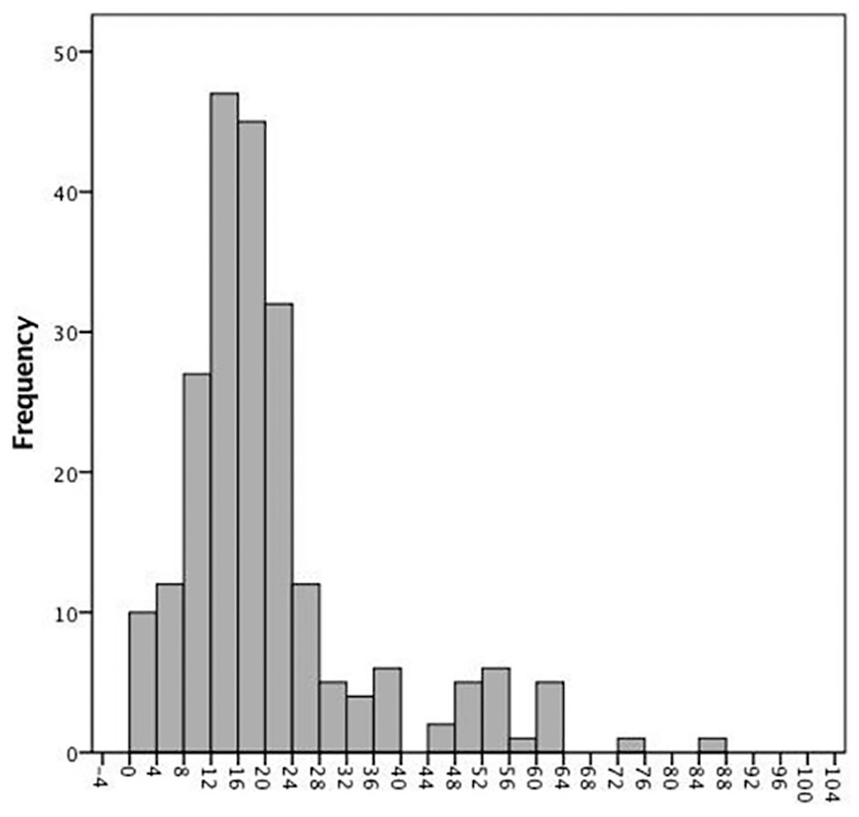
Frequency diagram: Distance of the furthest social tie.
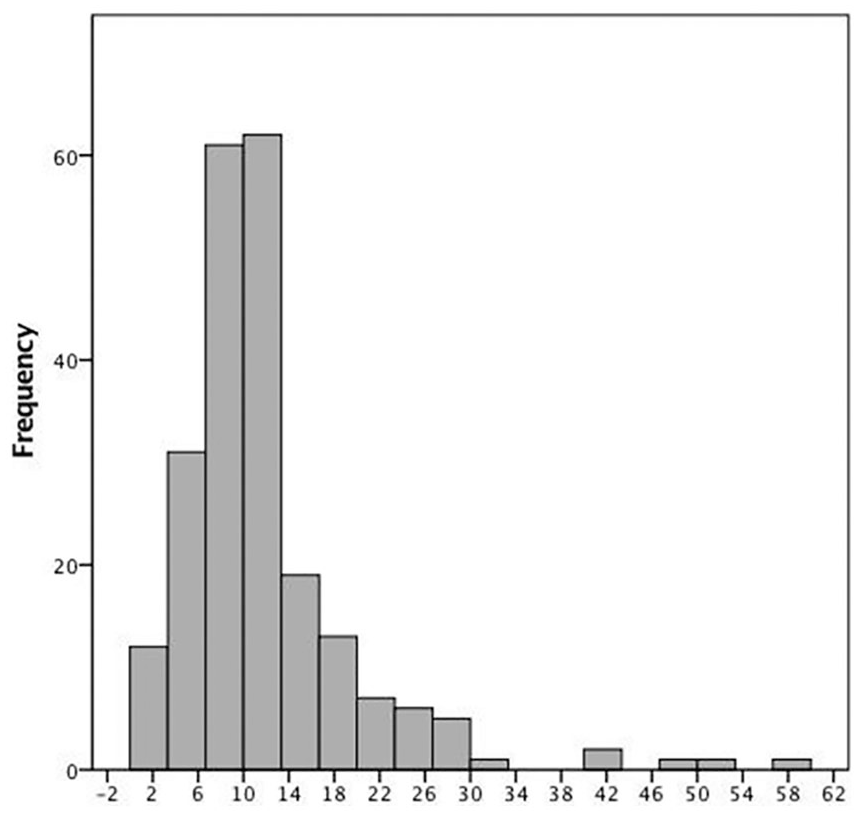
Frequency diagram: The average distance between each respondent and all her social ties.
In addition to distance, the data can be used to explore the dynamics related to the north/south orientation and the associated neighborhoods socioeconomic status. For instance, a tie north of a respondent indicates that the tie is more likely to come from a higher status neighborhood compared with a tie located south of a respondent. To code this relative relationship, I have developed a three-point system: if a respondent and her tie live approximately around the same (imaginary) horizontal line, the relation would be 0. For ties living north (including northeast and northwest) or south (including southeast and southwest) of the respondent, the relation is coded as 1 and −1, respectively (see Figure 6).
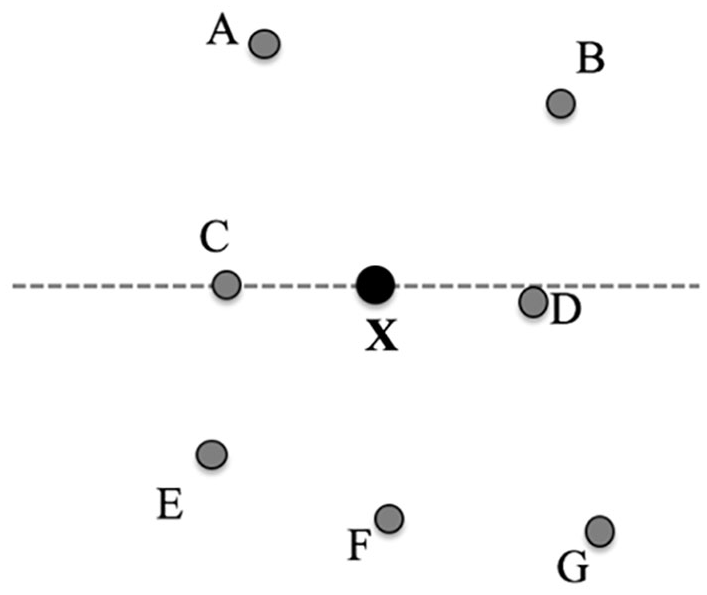
Schema of orientation coding. In this hypothetical example, X is a respondent and other dots show the relative location of her ties. The coding would be +1 for A and B, 0 for C and D, and −1 for E, F, and G.
As Figure 7a and Table 3 show, it is more likely for respondents to indicate ties who live north of them as opposed to the south. In fact, it is four times more likely for the ties to be around the same line or toward the north compared with being located south of the respondents. To make sure that the aggregate numbers do not undermine patterns for individuals (e.g., respondent with all ties north of them outnumbering respondents with all the ties south of them), another variable is considered, which is the sum of the values that indicate the orientation of each tie for each respondent (with a −6 to 6 range). The same northward orientation is visible at the individual level and the respondents tended to indicate more ties who lived north of them (see Table 4 and Figure 7b). This is particularly intriguing because the respondents from the center and north outnumber those from the south in the sample, and thus it might be expected that the orientation of the ties be either equally distributed or be slightly inclined toward the south.
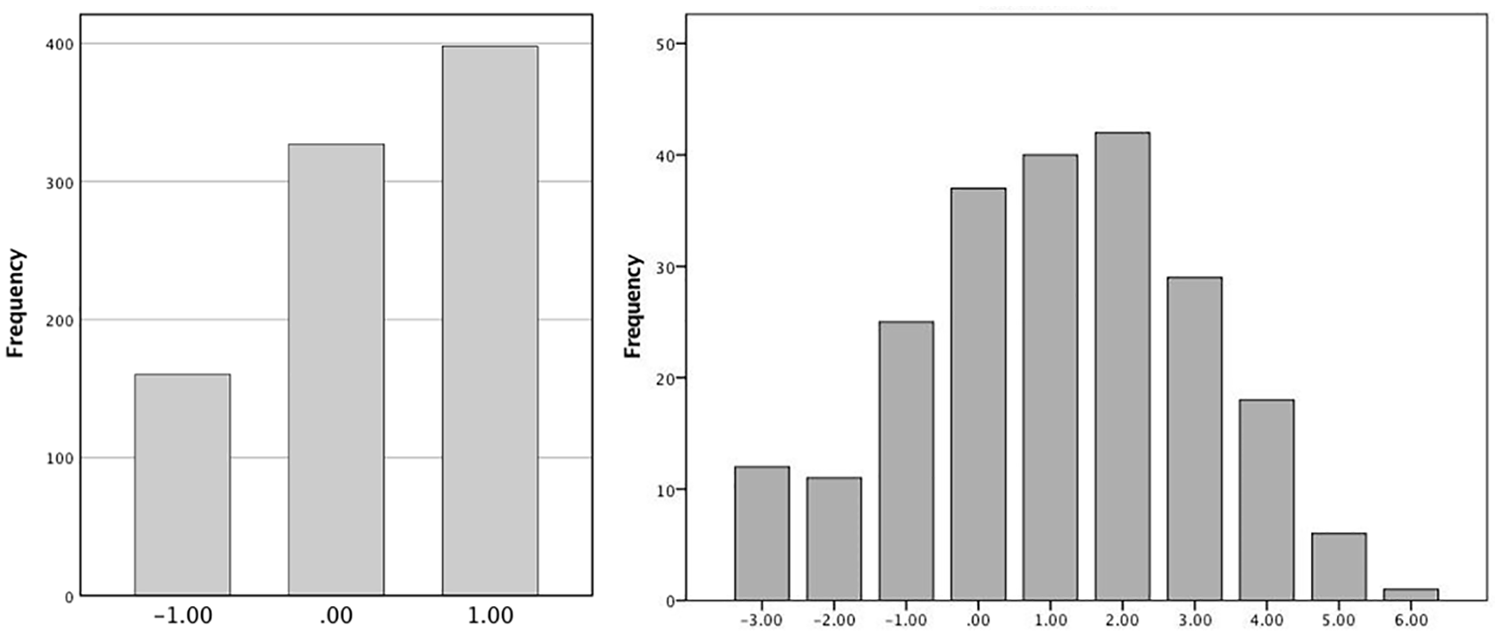
Respondent/ties’ relative orientation.
Frequency and Percentage—All Ties’ Relative Orientation.

Note. Value of 1 indicates ties located to the north of the respondent, −1 indicates ties located to the south of the respondent, and 0 indicates respondent and tie located around the same east-west line.
Frequency and Percentage—The Sum of Values for Ties’ Orientation for Each Respondent.
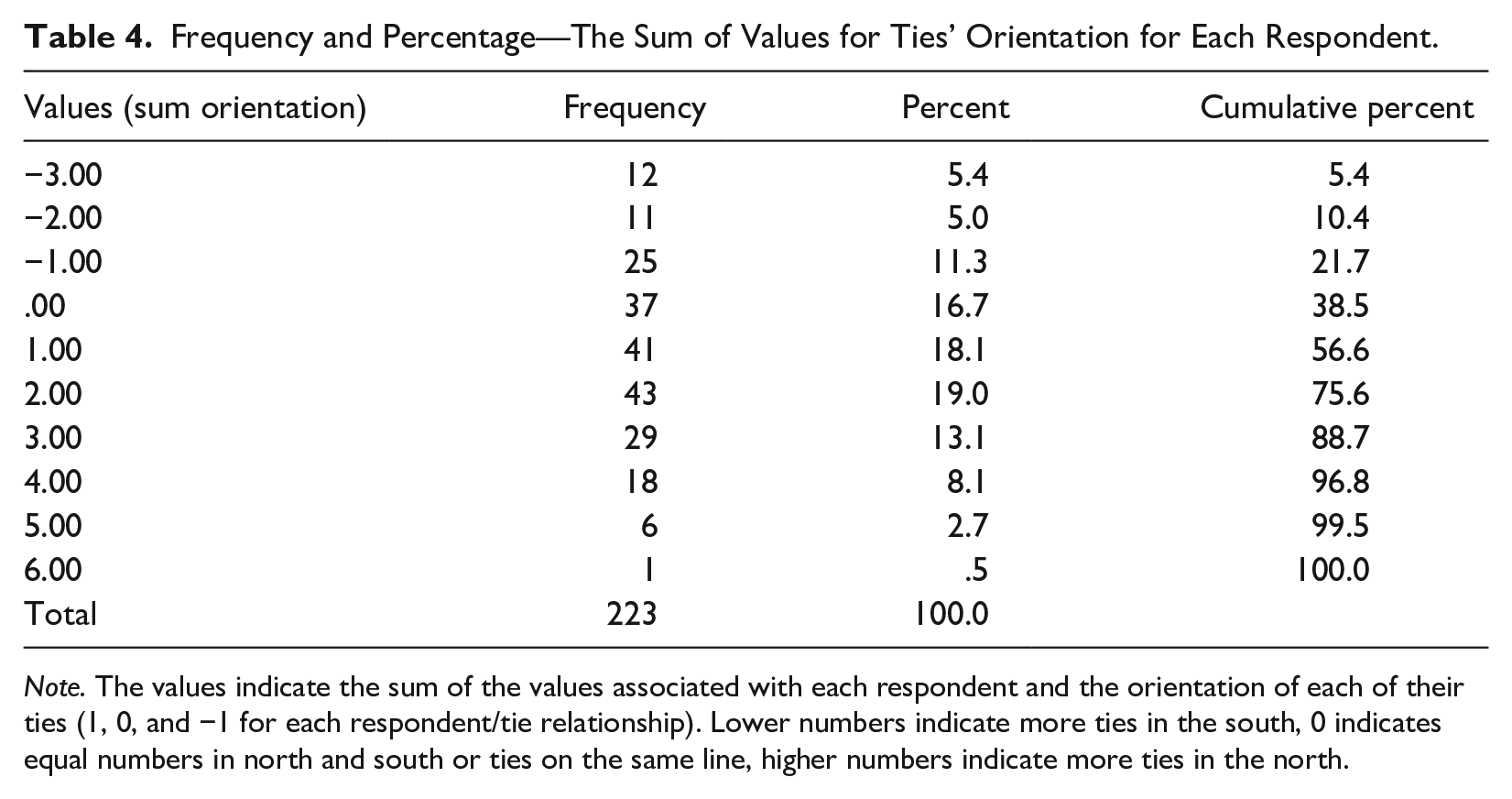
Note. The values indicate the sum of the values associated with each respondent and the orientation of each of their ties (1, 0, and −1 for each respondent/tie relationship). Lower numbers indicate more ties in the south, 0 indicates equal numbers in north and south or ties on the same line, higher numbers indicate more ties in the north.
Although this pattern might be related to a selection effect (the sites, the types of people who were more likely to participate, etc.), it can also be interpreted in terms of perceptions of class and prestige associated with spatial location. For instance, the northward orientation might mean that people are more likely to mention ties who live north of them to associate with a higher status. As one example, a female respondent jokingly said, “See . . . I am the furthest south. All my good friends, including him [pointing to her boyfriend] live up there. Maybe I’ll move closer someday.” She was not the only respondent who explicitly mentioned being “the furthest south,” expressing a longing for “moving,” which can mean moving closer to the ties or “moving up” to “better” or “more prestigious” neighborhoods.
Processes, Meanings, and Consequences of Metropolitan Networks
Geographically Dispersed Social Network: How Do They Form?
How are geographically dispersed social networks shaped? Who are the people outside the immediate local community that comprise the social ties of the individual? Are they family, friends, coworkers, or classmates? In other words, where and how do people build and sustain close social ties across the city and what do they think of these social ties in terms of their location? Survey data, interviews, and some longer conversations with survey respondents are used to explore these interrelated questions and I underscore how spatial and social aspects are closely entangled in explaining such processes.
Based on the data, two major paths appear to exist for building or sustaining close social ties outside one’s neighborhoods: (1) ties in the immediate community who then move to other parts of the city (or the respondent moving out of previous local communities); (2) daily interactions in places of work or education, particularly friendships formed during the college years (in Tehran, but more significantly in cases where respondents study in a university outside Tehran). Below, I discuss how these paths are similar or different in shaping cross-regional perceptions of other groups.
The first path (local ties moving to other parts of the city) was best described by some residents of southern neighborhoods. In my interviews with residents of older (and poorer) neighborhoods in the south with ties in other parts of Tehran, I found that some had (former) neighbors or family members who originally lived in the same neighborhood, but gradually, usually due to social or economic mobility, relocated to other parts of the city but kept their close relations with the old neighborhoods. For instance, Negar, a 28-year-old female interviewee from the south of Tehran, explained how her grandfather migrated to Tehran and bought a house in a neighborhood in the south of the city some 50 years ago. Her parents, her sister, and an aunt were the only ones (out of a large extended family) who were still living in the neighborhood. Members of her extended family had gradually moved to neighborhoods in center, west, and north of the city, but the family remained close, visiting each other often.
While some instances of “moving out of the neighborhood” were upward mobility, there were cases in which participants considered their movement (or that of their social ties) “downward.” Mahshid, a 45-year-old woman shopping at the Hypersun Market (in the south of Tehran), who lived in a neighborhood in the periphery of the city, explained how her family (her husband and three children) kept “going down,” while her sisters’ families remained in Khorasan neighborhood (in the southeast of Tehran): I always dreamed of moving to a better neighborhood, you know . . . the ones up north . . . but I liked it there [Khorasan area] too. I was close to my sisters and it was a good decent neighborhood. But after a few years, we couldn’t afford the rent and moved to Shabdolazim [another southern neighborhood]. I wanted to move back so badly, but we kept going down. Now we live outside of Tehran on the margins [. . .] Now, even Shabdolazim seems like a dream. I still hope that one day we can move back. We visit my sisters every weekend and part of it for me is to just walking there again.
Another typical pattern of moving out of the old neighborhood (whether upward or downward) is through marriage. Multiple young women, in particular, mentioned that they had moved after marriage and some longed for their previous neighborhoods, even when the movement was not toward the south (e.g., moving east or west in relation to their parents’ neighborhood was also undesirable for some). Azam, a 31-year-old woman, explained that she went to the Bazaar area every Thursday when she was off work.
[I] just come here on my own and watch people for two hours and go home or go to my parents’. I got married last year and we moved to a neighborhood in far west of Tehran. Everyone says that it is a nice neighborhood, and this is what we can afford, but I just hate it. It is like a dormitory . . . completely soulless. My parents live in a central neighborhood. You wouldn’t say it’s a “top neighborhood.” But it has a soul. It is crowded, full of people and kids all the time and that’s where I grew up. I so much want to move back. But we can’t afford . . . and both of us work in the west. I come here to watch the crowds. It’s not far from my parents’ and I used to come here often when I still lived with them.
Such connections to “previous locations,” whether connection to the neighborhoods or to the people still living in them, are key in sustaining social ties. They also show that physical locations in the city (mostly determined by financial resources and economic class) do not necessarily match social and cultural expectations. In other words, citizens may think of themselves as belonging to a “higher up” neighborhood. While they cannot afford the economic burden, they think of themselves as socially or culturally “more apt” for such neighborhoods, than where they actually live.
The second major way to build and sustain social ties in other parts of Tehran is meeting and befriending others in places of work or education. Friendships formed in college years seem to be the most common and sustained form of such relations. Increased access to higher education and the growing number of college graduates seem to have significantly influenced intragroup interactions, resulting in more frequent encounters with residents of other parts of Tehran for sustained periods of time and allowing for building long-term social relations.
This is particularly evident for those studying in other cities, as a lack of (or physical distance from) other social ties results in building new ties with residents of other parts of Tehran (which might not have happened if studying in Tehran). With the increase in the number of universities outside Tehran and a growing trend of seeking higher education, the likelihood of studying in other cities has increased. Because of the concentration of job opportunities, family connections, and a variety of other reasons, most graduates return to Tehran and typically the relationships built during the college years continue. As one participant noted, he met his close friend when they were both students in a small city. They decided to share a room because they were from “the same city,” although at first, they did not share much more than being from Tehran: We were so different, but I think we both changed . . . that’s the age people change a lot anyways. We learned to appreciate our differences. I consider him one of my best friends. He still lives with his parents in Khavaran [in the southeast] and I live with my parents in Vanak [in the north], and we are busy with our jobs and everything. So, it’s not like we see each other every day, but we are very close . . .
Although “being from Tehran” facilitated friendships in the beginning, participants often emphasized that their friends during college years were not all from Tehran, but that it was easier to sustain friendships with Tehranis after graduation. For instance, Hossein, a 28-year-old male who had received his degree outside Tehran, explained that he had friends from all over the country, but after graduation “people went back to their cities and it became harder to keep in touch. But with Tehranis, you can see them and remain close friends.” The narratives related to these friendships are not uniform and include a variety of different personal experiences, motivations, and emotions (as evident in the quote above and in the following section), but they usually include at least an implied attention to “differences” and how they relate to “neighborhoods of origin.” Whether appreciating or simply taking note, respondents consistently expressed awareness of “being from other neighborhoods.”
“Natural” or “Exceptional?”: Location and Types of Ties
Having social ties in other neighborhoods is one of the ways in which residents of Tehran imagine and interpret group differences, explain location-based class relations, and conceptualize “others.” Depending on personal experiences, these perceptions find different forms and are expressed in different ways. For instance, for Negar, residents of other parts of the city, “even the north,” were not that different from people next door: I don’t think people are that different. At the end of the day, my aunt’s neighbors in central Tehran or my uncle’s in the west are not that different. Who knows? Maybe their neighbors also once lived in other neighborhoods and just like my aunt and uncle at some point relocated to a better one.
Nonetheless, talking about differences seems inevitable and came up later in the interview, although the differences are attributed to the “culture of the neighborhood [or region]” rather than people who inhabit them.
There are nice people everywhere and bad people too. But it’s the culture . . . you know . . . When my uncle’s wife passed away, their neighbors didn’t know until a few days later. That’s impossible here! Neighbors are involved in one another’s life and there is a support network embedded in the neighborhood. My uncle’s neighbors are nice, but they just don’t know much about one another. His neighborhood might be better, but I like that if something happens to us here, our neighbors would know . . . Maybe it’s because our neighborhood is old. I grew up with the next-door neighbor’s daughter . . . Here neighbors are like family, unlike those neighborhoods, but people keep moving out if they can afford it, because . . . [pause] . . . I think because of the nicer environment and higher status [of those neighborhoods].
Through her experiences with residents of other parts of Tehran, whether directly (family) or indirectly (their neighbors), Negar builds a frame of reference to represent her own neighborhood and “its culture” in the city. While agreeing with some of the stereotypes about “neighborhood cultures,” she undermines the taken-for-granted hierarchy in which “the further north, the better” by highlighting some “positive” aspects of living in her neighborhood. Yasser, a 22-year-old male interviewee from a central neighborhood, provides a similar observation about different “regional cultures” and “his location” in the hierarchical structure of Tehran: As kids, we all grew up together and we were close. We just happened to live in different parts of Tehran. Of course, when you grow older you realize what north/south means and what areas are of a higher status. But in my experience people are not different. Yes! Neighborhood cultures might differ, but not people . . . It’s like people are the same, but where they live change how they behave. It’s funny because you usually don’t even have any relations with your neighbors, still your neighborhood culture influences you. Honestly, I am happy that we live in a central neighborhood. Access is easy and I don’t feel too high up or too low as some kids in my family do.
While for some of the interviewees, like Negar and Yasser, having social ties in other areas was “natural” and part of “living in a huge city like Tehran,” for others it was an “exceptional” experience. Some interviewees with ties in other regions thought of themselves or their ties as “exceptional.” Payam, a 27-year-old from the east, indicated that his friend from a southern neighborhood was exceptional, “more like people in my area, not the people of the south.” They had met when they were students in another city.
I sometimes feel that I influenced him a lot. We were both in another city and out of the context of our neighborhoods. We became friends and he became more like us [me and my friends in Tehran], and we remained close, but he is exceptional. I don’t see myself capable of being friends with people from his neighborhood . . . It’s like a different world. My friend himself talks about that all the time.
Similarly, Maryam, a 24-year-old from the south, found her relationship with her friends from the west and north “extraordinary,” but in a different way. Her friends were “unique” because she never thought that she could be friends with people from “those areas” or that anyone from those neighborhoods would want to be friends with her: It’s not like I knew no one from other places. We have family in the north and they are nice. But family is different . . . You know . . . wherever they live, you all come from the same background and you like each other because it’s family . . . But with friends . . . Not everyone wants to be friends with people coming from lower neighborhoods. But my friends are different. They have gone beyond these superficial and cheap notions of north and south, east and west. After all, we are all from the same city. Aren’t we?
Another female interviewee from the south shared a similar experience: We were classmates in an English language program in central Tehran. We soon became friends and they didn’t care where I lived. Not all people are like that! I’ve known people that wouldn’t even talk to you, if you are from a neighborhood south of Vanak [in the north]. Especially girls . . . Who would tell their boyfriends that they are friends with a girl from “the south?” My friends are not like that!
Despite having geographically spread out social networks, almost all participants in my sample were conscious about north/south divisions and while on the one hand resist previously established divisions (by building and sustaining relationships beyond their neighborhoods), they sometimes reproduce such assumptions. For instance, while insisting that there is “nothing wrong with being from the south,” and that “people are not that different,” both those who live in the south and those who have ties in the south feel a need to explain how the ties were shaped and sustained (especially with friendships, less so with family). An indication of “influencing” or “changing” their ties or being influenced by them was also common.
Discussion and Conclusion
This paper illustrates how the study of the location of close social ties in metropolitan contexts is useful in assessing and analyzing urban social relations. By measuring the geographical distance and relative orientation between respondents and their ties, I examine the implications of having ties outside residential neighborhoods and how the relative locations of ties are perceived and interpreted. Moving beyond observations of the liberation of personal networks from the limits of neighborhoods (Beggs et al. 1996; Fischer 1982; Wellman 1979), I show that social networks of the participants expand into different neighborhoods and regions across the metropolitan area with varying socioeconomic characteristics. Furthermore, I argue that ties’ locations matter in perceptions and interpretations of social relations, as residents of Tehran make sense of their place in the urban context, both geographically and culturally, through these ties. This is not only consequential in terms of how participants think about group relations, but also impacts individuals’ choices of where to live, where to spend time, and how to interact and keep in touch with their ties. In cases where financial limitations prevent participants from enacting these choices, some of these perceptions are discussed in terms of aspirations, future plans, and appreciation of or complaints about access to opportunities in discussing cultural and economic characteristics of neighborhoods.
In the case of Tehran, the numbers associated with distance between respondents and their ties are noteworthy, not only because they reaffirm the expansion of ties beyond neighborhoods and how far they are, but also because they can be interpreted in terms of class relations within the socio-spatial structure of the city. In a city where geographical location indicates clear disparities in wealth and status, how far one’s ties are, and where in relation to the ego they are, provide insights into social and spatial relations and how they are perceived and interpreted. Not only distance, but also ties’ relative orientation is meaningful in Tehran as socioeconomic and spatial hierarchies significantly overlap: If a tie is located north of a respondent, it is likely that they are from a more prestigious or wealthier neighborhood. While in the first part I show that such ties exist, in the second part, I examine what they mean for citizens and how they form and function.
These ties are typically formed and sustained through maintaining relations with those (formerly) local ties who move out, as well as building new relations in places of education, work, and other social activities. My analysis indicates that “social” and “spatial” factors are intertwined, particularly with regard to maintaining relations with formerly local ties. As some interviewees suggested, sometimes “visits” were as much about connecting with their (now) non-local ties as they were about returning to or reconnecting with places they once belonged to.
The significance of ties rooted in places (vs. maintained virtually) has often been discussed in terms of the vibrancy of neighborhoods, but rarely has it been located within the broader structure of the city. Shifting the attention to implications for urban contexts beyond neighborhoods, I argue that social ties outside one’s residential area shape the ways in which participants perceive class and social hierarchies that are embedded in the socio-spatial structure of the city. I show that social ties who live outside participants’ residential neighborhoods offer points of reference for situating oneself in relation to others, both in a socioeconomic and cultural sense. As Hana R. Shepherd (2017) suggests, network structure can influence individuals’ subjective sense of their social world. My findings show that in Tehran, a combination of ties’ characteristics (their location, type, and origin) shapes the subjective perception of ego’s social location in the urban context.
Narratives of relationships outside local communities indicate ties’ location, together with ties’ origins and types, impacts interpretations of the metropolitan context. For instance, if the non-local close ties are family (especially who have moved out of a shared neighborhood), they are less likely to present a different “class” or “culture”; instead, they provide windows (often through their neighbors) to look at the social worlds of other parts of Tehran and to consider “how people are different” or similar in other areas. In case of friendships, however, participants usually use their relations as a frame of reference to locate themselves in the class structure of the city. At the same time, by showing their connections to other parts of Tehran, they build a sense of belonging to something larger than their neighborhoods (especially if not satisfied with their location). Meanwhile, whether living “further north” or “further south” of their ties, they are conscious, and sometimes proud, of building such relations, and think of them as going beyond “conventional relations,” or “superficial and cheap notions of north and south.”
The findings have implications at the city-level as well. Having close social ties in places other than one’s neighborhood shows that social groups, living in different parts of Tehran, are connected to one another at least through a number of shared ties. Whether through relocations or through building new relationships outside one’s neighborhood, residents of Tehran use their ties to discover and express what they share with (and how they are different from) other social groups. Although the north and south are seen as divided along class and status lines, the networks of the users of public spaces go beyond specific regions. This observation does not undermine real differences between the north and the south in terms of wealth, status, level of education, and access to opportunities; rather, it is an indication of the ways in which different parts of Tehran remain connected through social networks and how they are used to engage and interact with other groups.
It is important to note that urban structure in Tehran allows for interpretation of the numbers associated with distance and orientation of ties in ways that may not work in other contexts. The gradual shift in the locality of socioeconomic classes that is observable in Tehran is different from many other cities, where distance between wealthy and poor neighborhoods might not be significant or patterned. Particularly in gentrified (or gentrifying) areas, ties’ distance would not necessarily provide a reliable basis for a meaningful analysis. Furthermore, patterns observed in Tehran might be less common in places where social and economic mobility is scarce. Racial and ethnic relations can complicate the picture and add several variables beyond place to a similar analysis in a racially diverse context. Finally, this study is focused on strong social ties and does not incorporate a discussion of weaker ties (for a discussion of their importance and impact see: Granovetter 1973). Further research is needed to provide insights into the spatial structure of whole networks, comprising both strong and weak social ties.
A more careful assessment of the location of those ties who reside outside one’s neighborhood allows for asking novel questions and exploring new topics. Future research on the location of both strong and weak ties in the metropolitan area can illuminate the implications of geographically dispersed networks, not only for individuals, but also in relation to neighborhoods, regions, and cities. By providing an analysis of the location of close social ties and their social consequences, this paper provides a starting point for a more serious consideration of the geographical location of ties in metropolitan contexts.
Footnotes
Acknowledgements
The author would like to thank Catherine Tan, David Cunningham, Laura Miller, and Alexis Mann as well as the Sociological Perspectives editors and anonymous reviewers for their helpful feedback on this article.
Declaration of Conflicting Interests
The author(s) declared no potential conflicts of interest with respect to the research, authorship, and/or publication of this article.
Funding
The author(s) received no financial support for the research, authorship, and/or publication of this article.