



Abstract
Workforce instability in the long-term care sector has raised wide attention about nursing staff turnover. Most attention has been devoted to understanding the relationship between facility’s characteristics and organizational turnover. This case-control study examined the contribution of work characteristics to individual staff turnover. Surveys were collected with nursing staff in 18 for-profit nursing homes on up to five occasions between 2006 and 2012. A list of nursing staff voluntarily terminating jobs was provided by the company. Cases and controls (628 of each) were selected from survey respondents by matching on age, job category, and survey occasion. Multiple predictor conditional logistic regression models showed that evening shift work (hazards ratio [HR] = 2.00, p < .01) and shift length > 8 hr (HR = 1.42, p < .05) were contributing factors to voluntary termination. This study provides different perspectives of nursing staff voluntary termination in nursing homes. Future qualitative research would be valuable to explore and understand nursing staff turnover in the health care industry.
Introduction
Workforce instability in the long-term care sector has raised wide attention about employee turnover. Particular attention has been paid to turnover of nursing staff, because nursing staff turnover critically impacts the quality of care delivery and resident safety. Literature suggests that a high turnover of nursing staff has resulted in negative consequences, including increased costs of hiring and personnel training (Li & Jones, 2013), decreased quality of resident care (Trinkoff et al., 2013), and reduced workforce productivity (North et al., 2013). One study estimated the average costs associated with a 10% increase in turnover of direct care staff was US$167,063 or 2.9% of annual total costs in each facility from over 900 nursing homes in California (Mukamel et al., 2009). Zimmerman, Gruber-Baldini, Hebel, Sloane, and Magaziner (2002) reported that with each proportionate loss of registered nurses (RNs), the risk of resident infection increased by 29% and the risk of hospitalization for infection increased by 83% from 59 U.S. nursing homes. Trinkoff et al. (2013) reported that nationally nursing homes with high certified nursing assistant (CNA) turnover have significantly higher odds of resident pressure ulcers, pain, and urinary tract infections even after controlling for staffing, skill mix, bed size, and ownership.
Besides the negative consequences associated with turnover of nursing staff, the high rate is a substantial problem. Through surveys of over 3,700 nursing facilities in the United States, the American Health Care Association (2010) reported a turnover rate of 35% for all employees, and 43% for CNAs. Donoghue (2010) reported the highest nursing home turnover nationally among CNAs at 75%, followed by RNs at 56%, and Licensed Practical Nurses (LPNs) at 51%.
Organizational contributions to nursing staff turnover in long-term care have been explored previously, suggesting that for-profit ownership, lower staffing levels, higher bed size, and lower facility quality (Castle & Engberg, 2006), higher top management turnover (Castle, 2008), shareholder managers (never solicit input from staff when making a decision) (Donoghue & Castle, 2009), and more staff work hours per resident day (Donoghue, 2010) were associated with higher nursing staff turnover; while greater staff empowerment practice was associated with higher nursing staff retention (Berridge, Tyler, & Miller, 2016). Most attention has been paid to understanding the relationship between organizational characteristics and facility level turnover; however, the work environment predictors of individual nursing staff turnover have not been well studied, which warrants further exploration.
Turnover research has traditionally examined intention to turnover rather than actual turnover at the individual level. Intention to turnover is reported as a strong direct predictor of actual turnover (Rosen, Stiehl, Mittal, & Leana, 2011). Previous studies have found the association between intention to turnover and job satisfaction among nursing assistants in nursing homes (Decker, Harris-Kojetin, & Bercovitz, 2009; Rosen et al., 2011) and home care (Jang et al., 2017; Stone et al., 2016), and among nurses in hospitals (Masum et al., 2016; Ramoo, Abdullah, & Piaw, 2013). Intention to turnover has been associated with many work characteristics including low recognition from supervisors (Jang et al., 2017), low respect from other professionals (Kankaanranta & Rissanen, 2008), high job demands and low job control (Wendsche, Hacker, Wegge, & Rudolf, 2016), experience of physical injury and racial/ethnic discrimination (Jang et al., 2017), low levels of confidence in job performance (Jang et al., 2017), high risk of workplace violence (Aytac, Dursun, & Akalp, 2016), high work–family conflict (Hatam, Jalali, Askarian, & Kharazmi, 2016), and low possibilities for career development (Flinkman, Laine, Leino-Kilpi, Hasselhorn, & Salantera, 2008). However, the direct associations between these work characteristics and nursing staff actual turnover in nursing homes have not been well examined.
Turnover is not rigorously and consistently defined in the literature. Several reviews indicated a large variety of turnover definitions and measurements (Castle, 2006; Hayes et al., 2006). Conflicts exist in terms of voluntary turnover versus involuntary turnover, time periods for turnover (e.g., 3 months, 6 months, or 1 year), internal turnover versus external turnover, and turnover in the current position versus turnover in specific unit or in the facility (Castle, 2006; Hayes et al., 2006). Literature emphasizes the importance of giving out clear description of turnover definitions and measurements in research studies.
In this study, we defined turnover as voluntary external termination of positions among full-time, part-time, and per-diem nursing staff (RNs, LPNs, and CNAs) in 18 nursing homes during the study periods from May 2006 to March 2012. The objective of this study was to explore work characteristics that were associated with voluntary termination of nursing staff in nursing homes. As part of a larger research effort to promote the physical and mental health of nursing home caregivers, “Pro-Care” (http://www.uml.edu/centers/cph-new/Projects.html), information was collected on work characteristics, intention to turnover, and voluntary termination from employees in a large chain of nursing homes in the eastern United States.
Method
Data Collection
Questionnaire surveys (“Pro-Care”) were collected among permanent full-time, part-time, and per-diem employees in 18 nursing homes located in Maryland and New England on up to five occasions between 2006 and 2012 (Figure 1). All nursing homes participating in this study were for-profit nonunionized facilities managed by a single company that operates over 200 nursing homes in 12 states in the eastern United States. Surveys were collected at baseline (F0), at 3-month (F1), 12-month (F2), 24-month (F3), and 36-month (F4). These five surveys (F0-F4) repeatedly measured employee work characteristics and intention to turnover. We included all five surveys (from 2006 to 2012) in this study with the matched termination data set (May 2006 to March 2012) provided by the company, to ensure the opportunity to include the maximum number of employees who took “Pro-Care” surveys and terminated jobs during the study period.
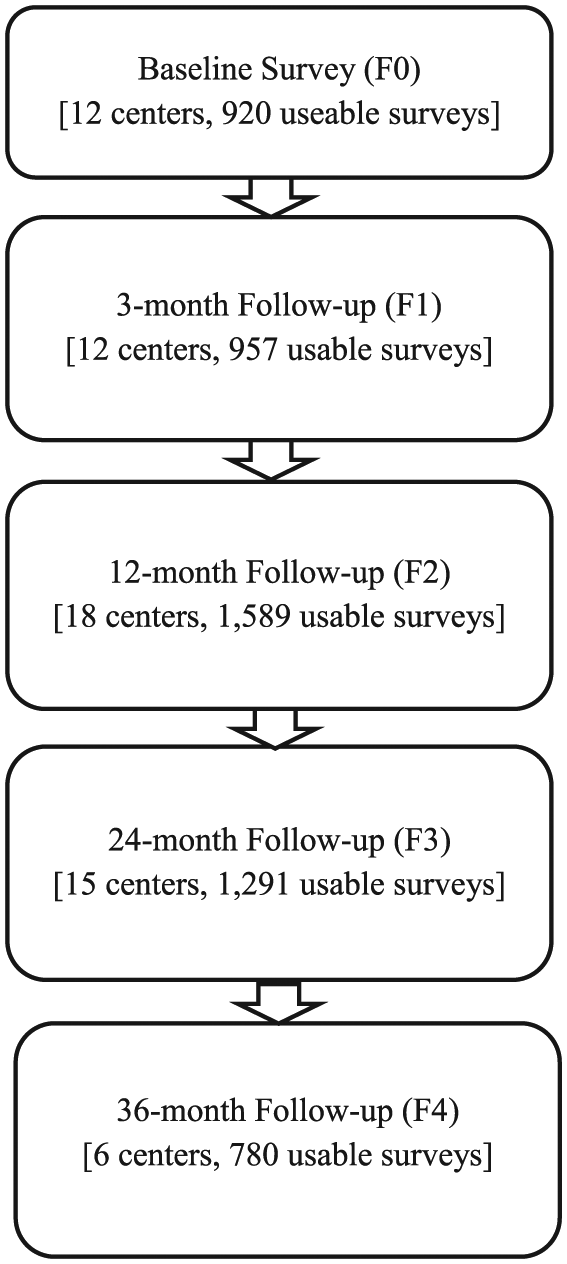
“Pro-Care” F0-F4 data collection.
Questionnaires were distributed and collected by the research team over a 2- to 4-day period at each facility, to accommodate employees from different shifts and units. Most employees completed questionnaires during break times and returned them in person. For others, such as third-shift and weekend employees, a pre-stamped and addressed-return envelope was provided. Compensation of US$20 was offered in exchange for each completed questionnaire returned with a consent form. The study was approved by the Institutional Review Board at the University of Massachusetts Lowell (No. 06-1403).
The source of data on termination was a report provided by the company listing all employees in the 18 surveyed facilities who terminated positions between May 2006 and March 2012. This report also provided information on employee service and termination dates, termination reason (voluntary/involuntary/transfer to casual), job status before termination (full-time/part-time/per-diem), and any rehiring date and status (full-time/part-time/per-diem).
Study Design
A case-control design was used for this study, with “case” defined as leaving employment. The selection process started with merging the “Pro-Care” surveys with the employee termination data set, including all employees who voluntarily or involuntarily terminated jobs or transferred to casual during the study periods. Each case was matched to one control on the basis of age, job category, and having taken a “Pro-Care” survey at the same time. Figure 2 illustrates the detailed data set merging and sample selection process.
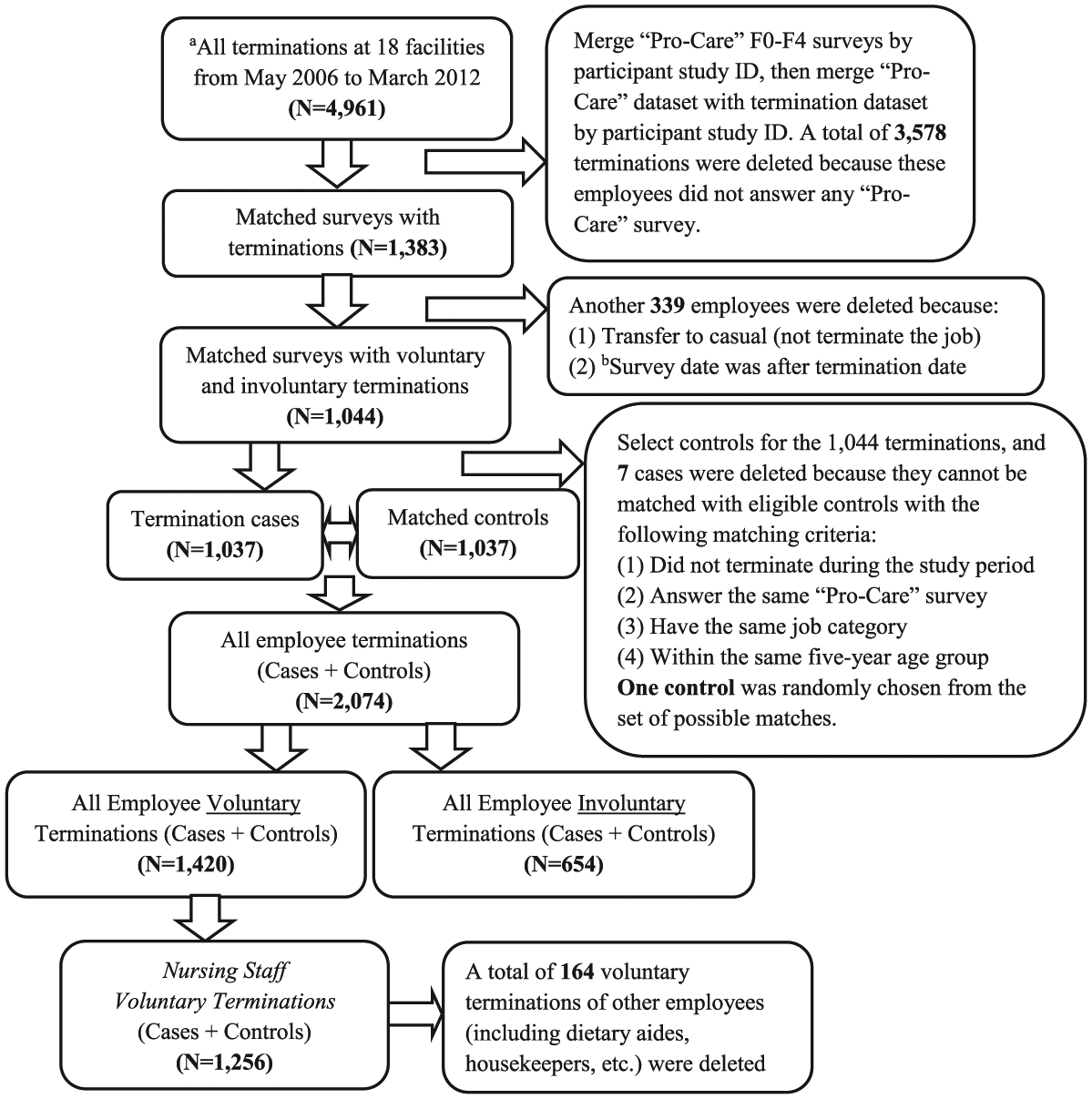
Nursing staff voluntary termination cases and controls selection.
Case definition
The cases were full-time, part-time, and per-diem employees in these 18 facilities who voluntarily or involuntarily terminated jobs between May 2006 and March 2012. As during the time periods there were employees taking multiple surveys and terminating multiple times, the following rationale was used to select the survey and termination: A survey date prior to a termination date was considered as a priori rationale. For employees who had multiple surveys and one termination date, the last survey of that employee prior to termination was used. For employees who had one survey and multiple termination dates, the closest post survey termination date was used. For employees who had multiple surveys and multiple termination dates, the closest survey prior to termination date was used.
Control definition
After cases were selected, controls were matched with cases based on the following criteria: (a) did not terminate during the study period, (b) answered the same “Pro-Care” survey, (c) had the same job category, and (d) was within the same 5-year age group as the case. One control was randomly chosen from the set of possible matches for each case. There were seven cases excluded from data analysis because controls could not be identified, mostly due to the age criterion.
The nursing staff who voluntarily terminated, together with their matched controls, were selected for data analysis (N = 1,256; Figure 2).
Measurement of Variables
Sociodemographics and health
The “Pro-Care” survey collected detailed information on participants’ sociodemographics, including gender, race, marital status, education, and responsibility for children and other dependents. Chronic health conditions were assessed through questions regarding the following conditions including diabetes, hypertension, elevated cholesterol level, and low back disease or spine problems. Chronic health conditions were defined as “yes” if participants reported either one of the above conditions. Musculoskeletal disorders (MSDs) were assessed through questions regarding musculoskeletal pain in the following body regions: low back, shoulder, wrist/forearm, and knee. MSDs were defined as “yes” if participants reported pain and severity ≥3 (on a 1-5 Likert-type scale) in either one of the body regions. General health was assessed by a single item from the Short Form-12 Health Survey (SF-12; Ware, Kosinski, & Keller, 1996) using a 5-point Likert-type scale (poor, fair, good, very good, and excellent). This item was used as a continuous variable for analysis with a higher score indicating better general health.
Work characteristics
Aspects of the work environment included items on three physical domains (physical demands, physical safety, and violence at work) and five psychosocial domains (psychological demands, decision latitude, schedule control, social support, and work–family conflict). Psychological demands (two items), decision latitude (two items), physical demands (five items), and social support (four items) were selected from the Job Content Questionnaire (JCQ; Karasek et al., 1998). The JCQ subscales have demonstrated good validity and acceptable internal consistency in large study populations from six countries (Karasek et al., 1998). Physical safety was measured with two items from Griffin and Neal (2000), and two items developed by the investigators. Violence at work was measured with one single item adapted from Rogers and Kelloway (1997), “In the past 3 months, have you been hit, kicked, grabbed, shoved, pushed or scratched by a patient, patient’s visitor or family member while you were at work?” and was categorized as “no,” “1 to 2 times,” and “3 or more times.” Schedule control was measured with two items derived from Buessing (1996). Work–family conflict was assessed from interrole conflict, with three items selected from Kopelman, Greenhaus, and Connolly (1983).
All items for physical demands, physical safety, psychological demands, decision latitude, schedule control, social support, and work–family conflict, were assessed using a 4-point Likert-type scale (strongly disagree, disagree, agree, and strongly agree). Participants’ shift schedule (day, evening, night, or rotating shifts), shift length (≤8 hr or >8 hr), biweekly work hours (≤80 hr or >80 hr), and working other paid jobs (yes or no) were also collected.
Intention to turnover
Intention to turnover was measured with one single item: “I am likely to leave this job in the next two years.” This item was assessed with a 4-point Likert-type scale (strongly disagree, disagree, agree, and strongly agree). Intention to turnover within the next 2 years was believed to reflect the actual willingness to leave (Kash, Naufal, Dagher, & Johnson, 2010). Intention to turnover was dichotomized as “yes” or “no” (disagree or strongly disagree) for subsequent analysis.
Data Analysis
All analyses were conducted using SAS software Version 9.3 on a Windows 7 operating system. Individual characteristics were described for cases and controls. Single predictor conditional logistic regression analysis was used to examine the crude associations of sociodemographics, health, work characteristics, and intention to turnover. To adjust for potential confounding effects, factors that resulted a change of 10% or more of the magnitude of other coefficients (Greenland, 1989) were introduced into the multiple predictor conditional regression modeling. Two-tailed significance level was reported at p < .05.
Results
Descriptive Analyses
The original response rates (defined as usable surveys divided by facility employee counts) for the Pro-Care surveys were 71.8% (F0), 74.6% (F1), 72.7% (F2), 74.3% (F3), and 75.5% (F4), with an overall average response rate of 73%. The final study sample for these analyses (628 cases and 628 controls) consisted of mostly female (91.1%) nursing staff (Table 1). The participants were similarly distributed into White (43.2%) and Black (44.3%) racial groups. More than one-half reported responsibility for children, and nearly one-fifth had responsibility for other dependents. More than one-third reported at least one chronic disease condition, and nearly half had MSD symptoms. Nearly one-fifth had other paid jobs, and nearly one-half reported experiencing one or more assaults at work in the past 3 months.
Sociodemographics, Work Characteristics, and Voluntary Termination of Nursing Staff (N = 1,256).
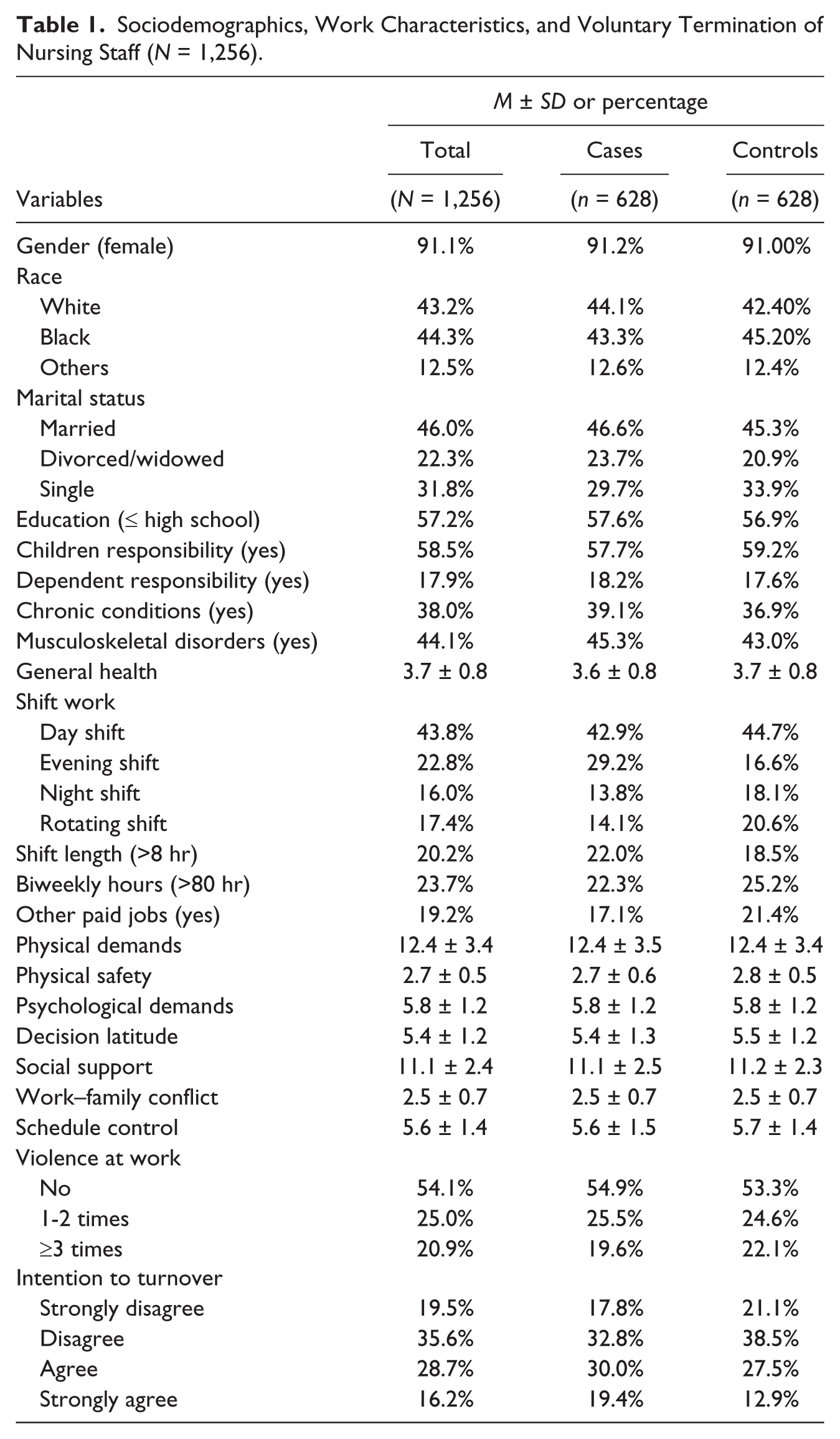
The cases were somewhat more likely than the controls to express an intention to turnover in the next 2 years (Table 1).
Conditional Logistic Regression Models
Single predictor conditional logistic regression models reported that voluntary termination was significantly associated with intention to turnover (p < .01), shift work (p < .05), working other paid jobs (p < .05), and general health (p < .05). To adjust for potential confounding effects, factors that resulted a change of 10% or more of the magnitude of other coefficients, which included shift length, schedule control, and responsibility for other dependents, were introduced into the multiple predictor conditional logistic regression models.
The multiple predictor conditional logistic regression model (Model 3, Table 2) suggested that evening shift work (hazards ratio [HR] = 2.00, p < .01) and shift length >8 hr (HR = 1.42, p < .05) were contributing factors to voluntary termination. Working other paid jobs was a protective factor for voluntary termination (Model 1, HR = 0.71, p < .05); however, this association disappeared after introducing shift length, schedule control, and responsibility for other dependents into the model. After adjustment for covariates, intention to turnover was significantly associated with nursing staff voluntary termination (Model 4, HR = 1.36, p < .05).
Conditional Logistic Regression Results Associating With Voluntary Termination in 1,256 Nursing Staff.
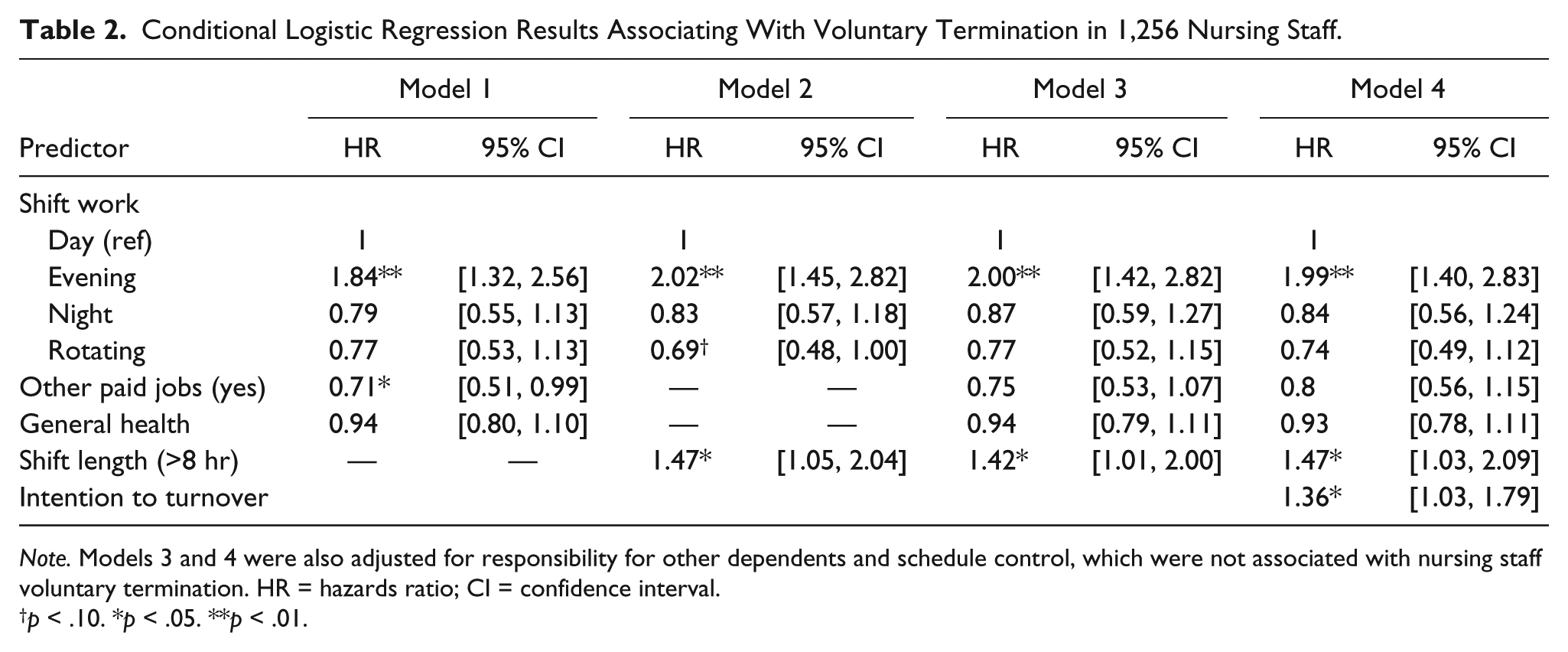
Note. Models 3 and 4 were also adjusted for responsibility for other dependents and schedule control, which were not associated with nursing staff voluntary termination. HR = hazards ratio; CI = confidence interval.
p < .10. *p < .05. **p < .01.
Discussion
This study included a large number of nursing staff who voluntarily terminated their jobs between May 2006 and March 2012 from 18 for-profit nonunionized nursing homes. A case-control study design was employed to examine work characteristics that were associated with voluntary termination of nursing staff. After adjustment for multiple covariates, nursing staff working evening shifts reported a 100% higher prevalence of voluntary termination than nursing staff working day shifts. Out of our expectation, night or rotating shift work was not associated with an increased risk of voluntary termination in nursing staff. Night or rotating shift work has received considerable research attention, and has been associated with decreased employee sleep quantity and quality (Caruso, 2014); poor health habits (Nea, Kearney, Livingstone, Pourshahidi, & Corish, 2015); numerous health concerns such as increased risk for cardiovascular diseases, gastrointestinal disorders, metabolic syndrome, and some cancers (Itani & Kaneita, 2016); and critical social/domestic problems (Iskra-Golec, Barnes-Farrell, & Bohle, 2016). Evening shift workers usually have less social interactions with family members and missed social and family activities, which may explain their higher prevalence of voluntary termination. A possible explanation for the nonassociation between night or rotating shift work and voluntary termination is that nursing staff may voluntarily choose to work night or rotating shifts to accommodate other family responsibilities. Moradi et al. (2014) reported that nurses who had chosen shift work voluntarily had significant higher job satisfaction as compared with those who were forced to work on shifts.
Our study also found that nursing staff working shifts of over 8 hr reported a 42% higher prevalence of voluntary termination than those working shifts of 8 hr or less. This finding is within our expectation. Similar to shift work, long work hours and working overtime have received considerable research attention. Previous studies have reported that long work hours and working overtime contributed to more adverse employee health outcomes (Bannai & Tamakoshi, 2014), more occupational injuries and illnesses (Dembe, Erickson, Delbos, & Banks, 2005), and poor quality and safety outcomes (Griffiths et al., 2014). Nurses working long hours have reported more experience of burnout, less job satisfaction, and higher intention to leave their jobs (Dall’Ora, Griffiths, Ball, Simon, & Aiken, 2015).
Based on this study finding about the effect of evening shift work and long work hours on nursing staff voluntary termination, practical strategies to improve retention of nursing staff include establishing programs to increase employee decisions about work schedules, providing opportunities to increase wages for off-shift (including evening shift) or long-shift (including overtime) employees, acknowledging nursing staff for working off-shifts or long-shifts, and genuinely listening to nursing staff’s concerns when difficulties arise from their family and social life.
Our study found that working other paid jobs was associated with decreased prevalence of voluntary termination, although this association disappeared after introducing other covariates. As a potential protective factor for voluntary termination of nursing staff, working other paid jobs is a possible way for nursing staff to relieve the economic burden from supporting their family. Therefore, they were less likely to voluntarily terminate their current jobs. In addition, the economic climate during the study periods (2006-2012) may explain that these nursing staff cannot afford to leave their jobs.
In this study, we examined a number of work characteristics, such as job demands, job control, social support, work–family conflict, and violence at work, which have been reported as associated with intention to turnover among nursing staff (Aytac et al., 2016; Hatam et al., 2016; Jang et al., 2017; Wendsche et al., 2016). Similarly, our previous study using a cross-sectional data set of nursing home employees reported that employees who reported beneficial job features (employee getting along with supervisors and coworkers, feeling respect at work, and making decisions on the job) were less likely to state an intention to leave (citation blinded for peer review). However, contrary to our expectations, these variables were not associated with actually leaving the job in the current study. Apparently these physical and psychosocial work stressors were strong enough to initiate an intention to leave the job, but not strong enough to make them actually leave the job. Obviously economic need and other factors may intervene. Cohen, Blake, and Goodman (2015) reported that turnover intention and actual turnover were distinct concepts at the organizational level and were predicted by different sets of variables. These findings deserve special attention from administrators and employers since physical and psychosocial work stressors may lead to more safety and health implications, such as burnout (Woodhead, Northrop, & Edelstein, 2016) and mental health disorders, especially if staff members wish to leave the job but are not able to do so.
Consistently with previous studies (Rosen et al., 2011), we found that intention to turnover was significantly associated with voluntary termination, after adjustment for covariates. We admit that this study did not assess some other possible predictors of actual turnover, such as job rewards (Castle, Engberg, Anderson, & Men, 2007), opportunities for career development (Castle et al., 2007; Flinkman et al., 2008), quality of care (Castle et al., 2007), payment and benefits, family relocation, and other job opportunities in the community. The study findings suggested that in addition to intention to turnover, future studies are needed to explore potential contributors or predictors of nursing staff turnover.
Strengths and Limitations
This study has several limitations. Although the study avoids some possible organizational confounders, since these 18 nursing homes were all for-profit facilities operated by a single company and none were unionized, the generalizability of the results may be limited as a result. The organizational contribution to individual nursing staff turnover was not examined due to the small number of facilities (N = 18). Previous studies suggested that a sample size of 50 or less could lead to biased estimate of the second-level effect (Maas & Hox, 2005). Therefore, a follow-up study using a more nationally representative sample would improve the generalizability of the results and permit estimation of any interactions between organizational and individual factors on nursing staff turnover.
Case-control studies are well suited to investigate infrequent outcomes. However, they are subject to potential selection bias in the selection of matching criteria for controls and cases. For example, in this study, many termination cases had to be deleted from analysis due to lack of matching surveys.
In addition, as with any study design where exposures are determined retrospectively, there may be a problem with information quality. A further issue is that assessment of work characteristics and intention to turnover was based on self-reports with similar item structure and response style, which may affect the validity and reliability of these measures (Podsakoff, MacKenzie, & Podsakoff, 2012). It is possible that the method biases caused underestimation of the association between common work characteristics and voluntary termination. A balancing of positive and negative items might have been preferable (Podsakoff et al., 2012). Future analyses of longitudinal data are needed to verify the study findings.
The strengths of the study include a large number of cases and controls selected from multiple nursing facilities, the comprehensive assessment of work and other characteristics, and the consideration of confounders in data analyses.
Conclusion
This case-control study found that evening shift work and shift length >8 hr were positively associated with voluntary termination of nursing staff. In addition, expressed intention to turnover was significantly associated with voluntary termination, after adjustment for covariates. With the demands for clinical caregivers in the long-term care sector continue to increase, and the requirements for ensuring quality of care delivery and patient safety, it is critical to remain nursing staff. This study provides different perspectives and predictors of nursing staff voluntary termination from previous studies. The study findings, although unexpected, are important for the nursing home industry, because evening shift work and long work hours may be neglected as critical stressors for nursing staff, which, however, has significant implications for turnover. Future studies are needed to further evaluate the contribution of demanding work schedules and other work characteristics to actual turnover at the individual staff level. In addition, future qualitative research would be valuable to explore and understand reasons for nursing staff turnover in the health care industry, both in long-term care and other subsectors. Top management and employers need to pay special attention to contributors of actual turnover to remain healthy and satisfactory nursing staff.
Footnotes
Acknowledgements
We are grateful to the CPH-NEW Research Team working together to collect the questionnaire data.
Authors’ Note
This work is solely the responsibility of the authors and does not necessarily represent the official views of the National Institute for Occupational Safety and Health. This study was approved by the University of Massachusetts Lowell Institutional Review Board (No. 06-1403).
Declaration of Conflicting Interests
The authors declared no potential conflicts of interest with respect to the research, authorship, and/or publication of this article.
Funding
The authors disclosed receipt of the following financial support for the research, authorship, and/or publication of this article: The Center for the Promotion of Health in the New England Workplace (CPH-NEW) is supported by Grant 1 U19 OH008857 from the National Institute for Occupational Safety and Health (CDC).