



Abstract
This analysis examined whether a community-based intervention produced measurable improvements in dietary habits. MOVE UP combined translational, evidence-based weight management and healthy aging interventions using a non-randomized design. This 13-month intervention included 32 group sessions, explicit calorie and physical activity goals, self-monitoring, and nutrition education. Participants were (N = 297) older adults (mean = 68.0 years) with overweight and obesity. Diet was measured using Rate Your Plate (RYP)-Heart. Changes in scores from baseline to 5, 9, and 13 months were assessed using mixed models. MOVE UP successfully shifted eating patterns from baseline (mean = 50.9) to 5 months (mean = 55.1) (p < .0001) adjusted for age, sex, and race. Improvements persisted through 9 (mean = 54.7) and 13 months (mean = 55.0) (p < .0001). Although participants were not prescribed a specific diet, RYP-Heart indicated positive dietary shifts. Community-implemented behavioral weight loss interventions may assess the modifiability of dietary habits with a simple, easy-to-administer tool.
Introduction
Obesity rates among older adults have remained high over the last decade (Hales et al., 2020). Good dietary choices are important because of their relationship with weight and risk factors such as insulin resistance (Panizza et al., 2020) as well as risk of frailty and mortality (Jayanama et al., 2021).
Many behavioral interventions provide guidance to participants on changing eating and physical activity habits; however, few track improvements in dietary habits explicitly such as increases in whole grain consumption or decreases in sodium intake or unhealthy fats (Gold et al., 2021). Because weight loss can be difficult to maintain (Wing & Hill, 2001), it is important to assess improvements in dietary habits and whether improvements can be more easily maintained. Additionally, with the diet quality of older adults often less than ideal (US Department of Health and Human Services and US Department of Agriculture, 2015), intervening on dietary habits may provide a valuable path to better health, separate from weight loss.
Food frequency questionnaires (FFQ), food records, and dietary recalls are time-intensive dietary measures and require significant resources and expertise to administer (Farshchi et al., 2017). As such, these measures may be impractical for use in a community or clinical setting. The Rate Your Plate (RYP) tool is a short dietary questionnaire used for cholesterol screening and education in populations with or at risk of cardiovascular disease. It has been shown to be correlated with fat consumption (Gans et al., 1993) and been used to assess dietary improvements after case management in cardiac rehabilitation patients (Aspry et al., 2018) and in a community-based intervention for the prevention of chronic disease (Hammons et al., 2019). It is promising for use in translational lifestyle programs because it may be self-administered, is quick to complete, and may reflect the heart-healthy dietary behavior changes recommended for high-risk older adults with comorbidities seeking to lose weight.
In this report, we discuss the use of the RYP-Heart, an updated version of the original, for the assessment of dietary change in a community-based behavior intervention for older adults. Particularly among older adults with functional limitations precluding large gains in physical activity, it may make sense to highlight changes in one’s diet that all participants can make. In fact, dietary improvements may be an especially relevant target for older adults with functional limitations as limitations are associated with food insecurity and poor diet quality (Chang & Hickman, 2018).
Our aim was to determine if the Mobility and Vitality Lifestyle (MOVE UP) Program successfully induced sustainable dietary habit improvements among older adults over 13 months. Dietary habit modification may provide a complementary endpoint from which to assess the success of behavioral weight control interventions.
Methods
Study Design
MOVE UP combined translational, evidence-based weight management and healthy aging interventions with a primary endpoint of physical function and has been described elsewhere (Albert et al., 2021; Venditti et al., 2018). Briefly, the program was delivered to 26 cohorts of individuals by trained community health workers in community settings (e.g., senior centers) in the Pittsburgh, PA area. Eligible participants had staff-measured overweight or obesity (BMI ≥ 25), were 60–75 years old, and could walk with or without an assistive device.
The 13-month intervention employed a non-randomized, pre-post design. The dietary intervention included a calorie goal based on a 7% weight loss target. While no specific dietary pattern was emphasized, during months 2–5, participants learned about healthy eating patterns, nutrition fact labels, and the principles of calorie density. Participants self-monitored food intake throughout the entire intervention and were provided written feedback on diet logs by trained community health workers who had continued access to a registered dietitian. Consistent with the behavioral weight management approach, community health workers were explicitly trained not to give extensive feedback, but comment on small positive changes. The second half of the study, months 6–13, focused on maintaining changes achieved. This study was approved by the University of Pittsburgh Institutional Review Board (PRO1411268). Participants provided written informed consent.
Measures
Age, sex, and race were self-reported at baseline. BMI was measured using a stadiometer and digital scale. The short physical performance battery (SPPB), a validated measure of physical function, includes staff-measured gait speed, standing balance, and chair-stand tests to assess lower extremity function among older adults (Chalé-Rush et al., 2010). Higher scores reflect better physical function.
Dietary habits were self-reported via a paper questionnaire using the RYP-Heart at baseline, 5, 9, and 13 months; however, scores were not provided to participants. Rate Your Plate was developed for clinicians to assess the diet of patients with elevated serum cholesterol levels (Gans et al., 2000). An updated version, RYP-Heart, with 24 items was released with seven items focusing on meat and seafood types, portion size, and cooking methods and two asking about use of fats in other forms of cooking. One item asks about egg consumption and three about milk, cheese, and dairy; two capture fruit, vegetable, and whole grain consumption; two capture sweets and desserts. A single item captures eating outside the home. The remaining six query meatless meals, nuts, snacks, salt, spreads, and dressings.
There are three categories of responses from 1 point to 3 points. An example item related to Meat Cuts (such as fresh beef and pork) asks if participants A) Usually eat lean cuts or seldom eat meat (3 points), B) Sometimes eat higher fat cuts (2 points), or C) Usually or often eat higher-fat cuts (1 point).
Responses to all items are summed. Scores range from 24–72 points. A score of 24–40 is considered the least healthful (“There are many ways you can make your eating habits healthier”), 41–57 is considered moderately healthful (“There are some ways you can make your eating habits healthier”), and 58–72 is considered the most healthful (“You are making healthy choices”) (Gans et al., 2000). One item on meatless meals was unintentionally omitted from the instrument in this study; therefore, possible scores ranged from 23–69 points with cut points adjusted: 23–38 “least healthful,” 39–54 “moderately healthful,” and 55–69 “most healthful”.
Statistical Analyses
Rate Your Plate-Heart scores at each time point were assessed for normality. As plotted trajectories of RYP-Heart scores suggested non-linear change, both linear and quadratic time terms were included in the linear mixed model fit to assess change in dietary habits. An unstructured variance-covariance structure was supported through examination. Due to convergence issues, we did not account for the effect of cohort membership in multi-level modeling. The best fitting model adjusted for age, sex, and race and included random intercept and slope terms to account for variations in the baseline diet and rate of change in diet. Additionally, a chi-square test was used to examine differences in the percentage of participants falling into each RYP-Heart category at each time point. No violation of the assumption of missing at random was noted.
Results
Demographic Characteristics of the MOVE UP Study Sample at Baseline (N = 298).
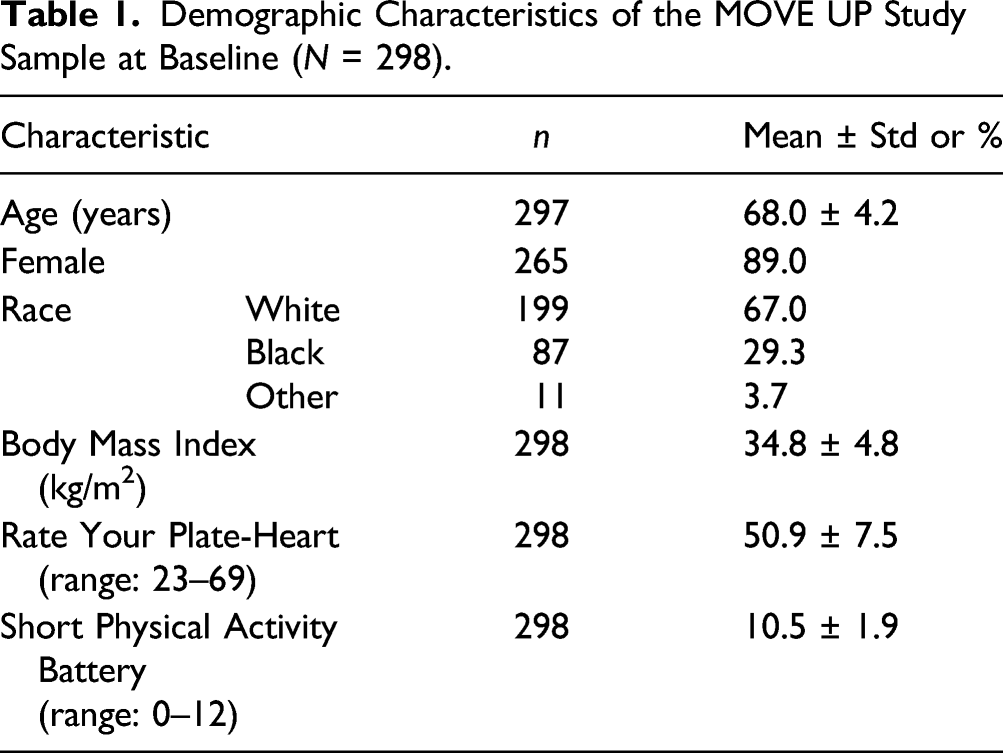
Figure 1 displays adjusted and unadjusted mean RYP-Heart scores. The RYP-Heart score at baseline (unadjusted mean = 50.9, points, Std = 7.5) increased to 55.1 points (Std = 6.4) by 5 months. Rate Your Plate-Heart scores remained stable at 9 (unadjusted mean = 54.7, Std = 6.6) and 13 months (unadjusted mean = 55.0, Std = 6.1). At baseline, 32.6% of participants fell into the “most healthful” category, but at 5, 9, and 13 months, 57.3%, 55.2%, and 55.8%, respectively, were in the “most healthful” category (p < .0001). Change in Rate Your Plate-Heart scores over time.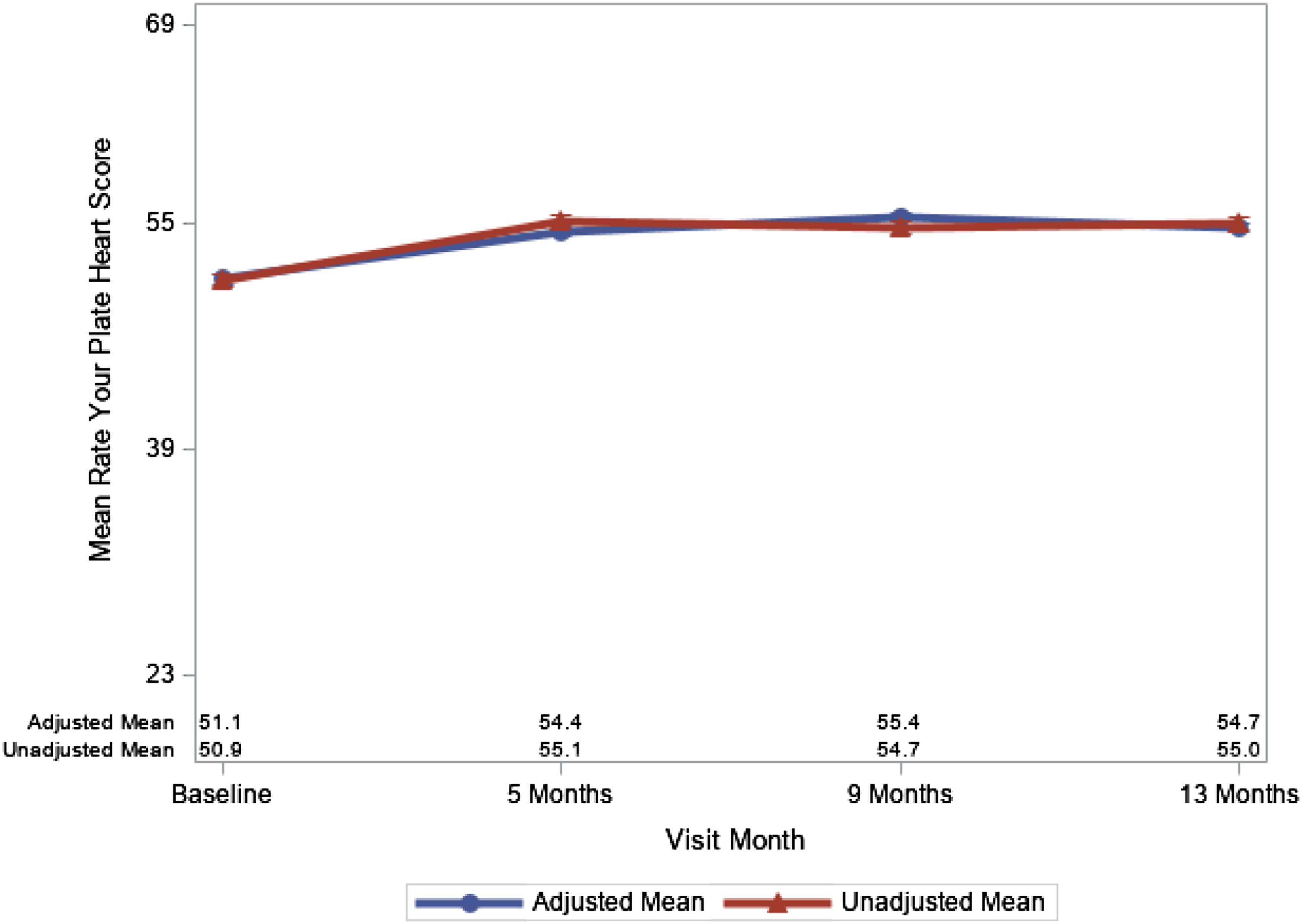
Fixed Effects for the Mixed Model Assessing the Change in Rate Your Plate-Heart Scores over the 13-Month MOVE UP Intervention.

Discussion
During the active phase of MOVE UP, there was an improvement of about four points in dietary habits—the equivalent of improving by 1 category for about 4 separate items. This level of improvement is similar in magnitude to that of other studies, (Aspry et al., 2018; Hammons et al., 2019) but less than seen in a 6-month dietary intervention among patients with dyslipidemia (Kulick et al., 2013). Despite not prescribing a specific dietary pattern, participants appear to have absorbed and acted on the healthy eating information provided. Importantly, during the maintenance phase of the study (months 5–13), improvements were maintained.
The increase in average score from “moderately healthful” to “most healthful” represents an important change in dietary choices. RYP-Heart scores at this level have been associated with better adiposity measures (Ganguzza et al., 2018). Because of the significant risk burden of cardiovascular disease among older adults (Yazdanyar & Newman, 2009), such improvements, if maintained, may greatly impact morbidity and mortality.
A strength of our study was the explicit assessment of dietary habits. Few weight loss interventions report on dietary habit change despite changes in dietary intake being key to weight loss. This report shows it is possible to intervene on dietary patterns in lifestyle programs and that diet may be an important endpoint to assess. As such it may serve as an example to community programs attempting to improve diet.
While we saw statistically significant changes in RYP-Heart scores, it is unclear how these changes relate to other diet quality scores calculated from more robust diet collection methods (e.g., dietary recalls). Future studies need to investigate how RYP-Heart scores relate to other measures of diet and to cardiometabolic indicators such as cholesterol.
In conclusion, RYP-Heart is an easy-to-use tool that may be sensitive to change in an older adult population. It is a viable approach to monitoring progress in community-based trials as it is quick, inexpensive, and significantly less burdensome than other dietary assessment methods. Being able to assess improvements in diet may be particularly appealing for participants who do not achieve weight loss but who are still making healthy changes.
Footnotes
Acknowledgments
The authors thank all participants, community health workers, and organizations for their dedication and commitment to the MOVE UP study. We also would like to acknowledge the CAPH-PRC Community Advisory Board for their guidance and assistance in carrying out the study.
Author Contributions
JC was responsible for data analysis and drafting of the manuscript. LEB contributed to the design of the study and helped revise the manuscript. EMV contributed to the design of the study and helped revise the manuscript. SMS advised on statistical analyses and helped revise the manuscript. NWG contributed to the design of the study and helped revise the manuscript. SMA contributed to the design of the study and helped revise the manuscript. ABN acquired funding, contributed to the design of the study, and helped revise the manuscript. Sponsor’s Role: The study sponsor had no role in the study design; collection, analysis, and interpretation of data; writing the report; or the decision to submit the report for publication
Declaration of Conflicting Interests
The author(s) declared no potential conflicts of interest with respect to the research, authorship, and/or publication of this article.
Funding
The author(s) disclosed receipt of the following financial support for the research, authorship, and/or publication of this article: Health Promotion and Disease Prevention Research Center supported by Cooperative Agreement No. 5U48DP0050001 from the Centers for Disease Control and Prevention.
Disclosures
This work was presented as part of a symposium at the Gerontological Society of America Conference in November 2020.
Ethical Approval
Institutional Review Board, Human Protection Office, University of Pittsburgh (Approval Number: PRO1411268)
