



Abstract
Growing evidence highlights the negative impact of managing the COVID-19 pandemic on the wellbeing of the healthcare workforce, including in the aged care sector. We undertook a qualitative study during the pandemic’s third year to explore the psychosocial impacts on nine managers of residential care facilities (RCFs) across metropolitan and rural New South Wales, the largest state in Australia. Four themes were identified: (1) Increased pressure on maintaining aged care services, (2) Increased responsibility on RCF managers, (3) Psychosocial impacts due to accumulating pressures, and (4) Experience of beneficial supports. COVID-19 compounded pre-pandemic sector challenges and added new stressors. While resilient and resourceful, RCF managers experienced workplace stress and burnout, which may affect quality of resident care and impact on staff retention. There is a need for more investment to effectively support staff, and research to identify optimal psychosocial and management supports.
• Qualitative insights from managers of residential care facilities (RCF) in rural and metropolitan NSW, Australia, on the psychosocial impacts of COVID-19 collected during the third pandemic year. • COVID-19 has exposed and further exacerbated the historical challenges facing the aged care sector, thus creating a “perfect storm” and putting extreme pressures on the RCF workforce. • As RCFs have transitioned from an acute COVID-19 response to living with COVID-19, it is assumed that “life goes on.” However, our findings highlight the experience of burnout and psychosocial symptoms among RCF managers, despite the easing of public health measures in RCFs. We posit that COVID-19 impacts on RCF managers continue and society has not appreciated their extent.
• Post the acute phase of the COVID-19 pandemic, we need to understand the scale and characteristics of impacts on the aged care workforce. • To support aged care workforce longevity and the quality of care provided to RCF residents, there is a need for sustained support. • Some practical support strategies at system, organizational, and individual level are offered.What this paper adds
Applications of study sindings
Introduction
The COVID-19 pandemic has disproportionately impacted older adults in high-income countries, including Australia (Australian Bureau of Statistics, 2022; Torres et al., 2023). Older adults living in residential care facilities (RCFs) have been particularly affected (Department of Health and Aged Care, 2023; Hashan et al., 2021; Levin et al., 2022). In response to this risk in Australia, a combination of containment and mitigation activities, including the use of personal protective equipment, lockdowns, visitor restrictions, and changes to activities within RCFs were implemented (Australian Government Department of Health and Aged Care; NSW Ministry of Health).
In Australia, states and territories are legally responsible for public health protection against communicable diseases, including the management of disease outbreaks (Basseal et al., 2023). Strict infection control measures during the initial response to the COVID-19 pandemic were quickly implemented in RCFs with little time for residents, families, or staff to adapt (Thomas et al., 2022). Over the course of the pandemic, public health measures (PHMs) in RCFs were adapted in response to the changing context, particularly following the widespread rollout of COVID-19 vaccinations, increased availability of antivirals, and the emergence of new highly transmissible variants (Australian Government Department of Health and Aged Care, 2023a; NSW Ministry of Health). Implementing changing measures within RCFs was difficult and compounded by staffing shortages, frequent staff turnover, high resident-to-staff ratios, supply shortages, and inadequate infection prevention and control supplies (Aitken et al., 2021; Cousins, 2020; Gilbert & Lilly, 2021).
Providing care for an aging population was complex prior to the pandemic, in part due to the worldwide experience of nursing shortages (Buchan & Aiken, 2008; Graham & Duffield, 2010). Current figures suggest that Australia’s demand for nurses will significantly exceed supply and that by 2025 there will be a shortfall of approximately 85,000 nurses, which will increase to 123,000 nurses by 2030 (Australian Primary Health Care Nurses Association, 2023). Consistent with international trends, the Australian nursing workforce is predominantly female (86%), and over a third of the workforce identifies with a cultural and linguistically diverse background (35%) (Department of Health, 2020). Recruitment in the RCF sector is historically problematic due to relatively poor remuneration, low status, and limited opportunities for education and career development (Department of Health, 2020). In addition to these pre-pandemic challenges, growing evidence highlights the negative and disruptive impacts of the increased workload and pandemic-related stress on RCF staff wellbeing during the pandemic, including anxiety, depression, and burnout (McGuinness et al., 2023). Rounding out this complex picture are findings from the Australian Royal Commission into Aged Care Quality and Safety (Royal Commission into Aged Care), which were perceived by the sector as portraying it in a negative light, particularly concerning the provisions of quality care being underpinned by adequacy of staffing and resource funding (McGuinness et al., 2023; Royal Commission into Aged Care Quality and Safety, 2021; Tierney et al., 2022). The understanding of the scope and significance of these impacts, however, is limited.
Qualitative research methods investigate the subjective nature of social reality and the relationships between individuals and the institutions and society in which they live (Bernard, 2013)As part of a broader research program exploring the impact of COVID-19 among staff, residents, and visitors of RCFs, we have undertaken qualitative research to understand RCF managers’ perspectives on implementing PHMs in their facilities, after three years of the pandemic (Bolsewicz et al., 2024). In brief, key findings highlighted the complexity of factors influencing the implementation of PHMs including whether policy was mandated or not, balancing the measures with resident wellbeing, the impact of the built environment and personal protective equipment (PPE) use fatigue the measures (Bolsewicz et al., 2024).
The prominence of psychosocial impacts of the pandemic on RCF managers also emerged via the study’s iterative methodology. This is consistent with growing evidence concerning the increase in psychological morbidity in health care staff during COVID-19 (Vizheh et al., 2020) including the experience of moral distress when unable to implement actions that are perceived as morally right (Epstein et al., 2023).To further explore this, the aim of the current paper is to understand the psychosocial impacts of the pandemic on RCF managers across New South Wales (NSW), Australia. Given the pre-existing stresses on the sector it is surprising that there has been little scientific inquiry into the scale and nature of pandemic impacts. Improved understanding of the aged care workforce experience and response to the COVID-19 pandemic can assist with practice and policy changes that support staff and residents.
Methods
An interpretive qualitative approach was deemed appropriate to understand the psychosocial impacts of the pandemic on RCF managers. Our selection criteria involved identifying RCFs where there had been an outbreak in the previous 6 months, so experience would be current. RCFs with an active COVID-19 outbreak at the time of the study were ineligible to participate as we were cognizant of not placing additional burden on facility managers during outbreaks. We subsequently undertook purposive sampling based on facility size (residential bed numbers), whether they were stand-alone or part of a larger organization, and star quality rating. (Australian Government Aged Care Quality and Safety Commission, 2023). Given the unprecedented demands of COVID-19 on RCFs at the time of the study, we invited 19 RCFs from a possible 123 total facilities across the Hunter New England area. Potential participants were emailed (March–April 2023) to invite participation by MV, a nurse consultant well known to RCF managers due to her role in supporting local RCF COVID-19 outbreak management, provided with study information and the opportunity to ask questions about the research. Five invitations went unanswered, one reported no time to participate and others were referred to regional managers or in-house research governance teams that went unanswered. All participants (n = 9) provided informed consent. The study used semi-structured interviews and was informed by the Consolidated Criteria for Reporting Qualitative Research (COREQ) checklist (Tong et al., 2007). Approval was obtained from the University of Newcastle Human Research Ethics Committee (H-2023-0041).
Data Collection
Semi-structured interviews, ranging from 45–70 min, were conducted at a mutually convenient time via phone or zoom (given the high risk of a COVID-19 outbreak emerging in facilities at the time of the interview), depending on participant preference. Interviews were conducted by a female, PhD trained social science and public health researcher working at Hunter New England Public Health, skilled in qualitative research methods (KB). At the start of each interview KB stated her affiliation and reasons for conducting the research. Only KB and the participant were present at each interview. Interviews, guided by an interview schedule, began by asking participants to share their experience of implementing PHMs during the pandemic. The semi-structured nature permitted flexibility for participants to elaborate upon or cover important topics that would not have otherwise surfaced (Braun & Clarke, 2012). Due to the iterative nature of the broader study, there was a possibility for further themes to emerge in interviews after achieving thematic saturation (two coders agreeing that no new themes were emerging) of the principal study aim. The experience of psychosocial distress in RCF managers during the pandemic was identified, which was further probed during interviews, and subsequently informed the current paper. No repeat interviews were conducted.
Analysis
Interviews were recorded with the participant’s permission and transcribed verbatim using otter.ai transcription software and checked for accuracy, with identifying data removed.
An interpretative qualitative approach, which is a research paradigm that acknowledges that reality is shaped by human experience and social backdrops, was used in this study. This approach is useful for exploring human behaviors in their socio-cultural context (Pervin & Mokhtar, 2022). Data derived from transcripts and interviewer’s notes was coded using an inductive thematic approach. Analysis followed a three-phase approach involving (i) identifying units of meaning by reading the transcripts line-by-line, (ii) grouping units into categories to assist with data retrieval, irrespective of the research question, and (iii) examining relationships between codes to form themes. For this paper, the first author (KB) conducted an in-depth analysis (without use of software), focusing on RCF managers’ experiences and emotions about managing COVID-19 in their facility, and the ongoing impacts of the pandemic. Such experiences were initially captured during consensus coding of the overarching study (Bolsewicz et al., 2024). To further refine analysis, KB read and re-read three transcripts and coded text inductively to succinctly capture managers’ personal experiences. KB then shared and discussed the refined coding structure, focused on the psychological aspects, with the research team (listed co-authors) for input and confirmation. Following team discussion, modified codes were subsequently applied—to the remaining transcripts, expanded, and modified with new insights. Saturation of codes was reached at seven interviews. KB grouped codes into categories based on similarities in meaning and discussed these with the research team, establishing and confirming four themes. The final application of codes was undertaken with input from all authors of varying disciplines (KB a social scientist, JW a social scientist and Occupational Therapist, PM and DD Public Health Physicians, and MV a Clinical Nurse Consultant). Trustworthiness of the data was upheld using several strategies, including immersion in data, reflexive analysis, and peer debriefing (Pandit, 1996).
Results
Participants
Participant Characteristics.
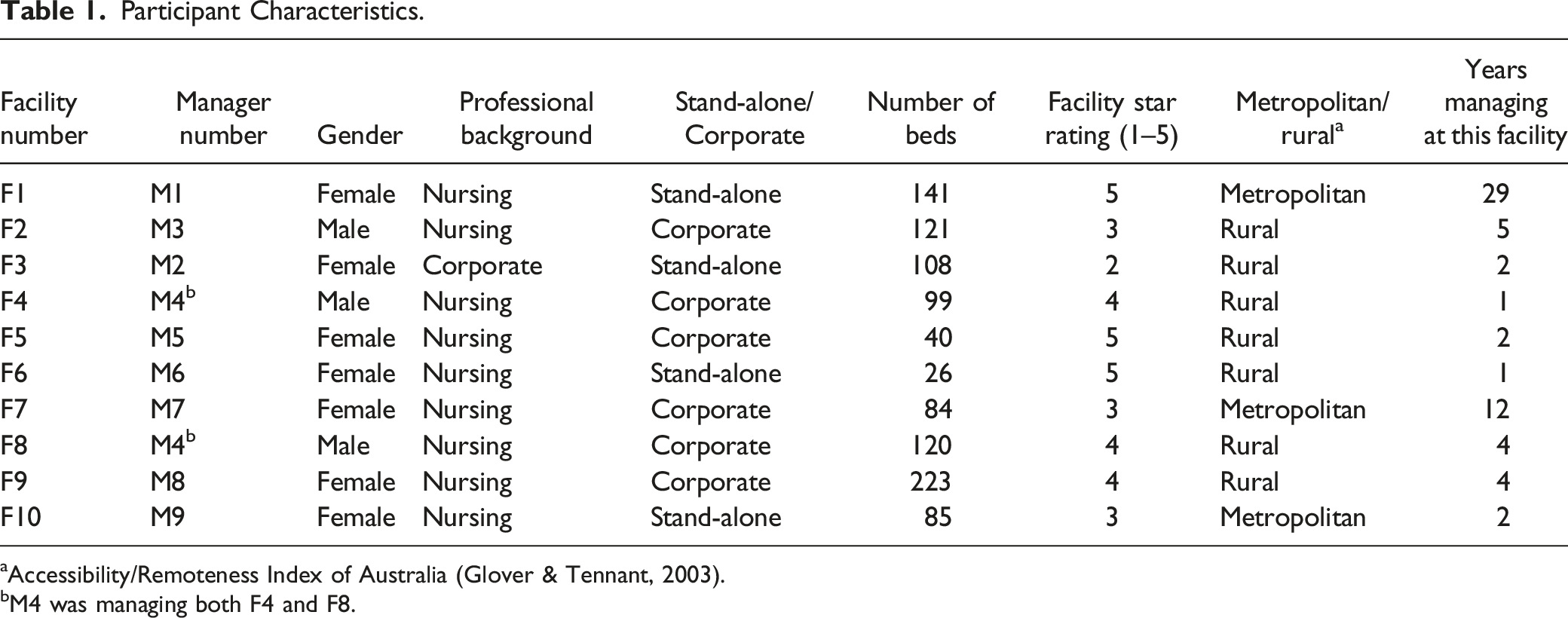
aAccessibility/Remoteness Index of Australia (Glover & Tennant, 2003).
bM4 was managing both F4 and F8.
Findings
We identified four key themes: 1. Increased pressure on maintaining aged care services during COVID-19. 2. Increased responsibility on RCF managers during COVID-19. 3. Psychosocial impacts on managers and staff due to accumulating pressures. 4. Experience of beneficial supports during the pandemic.
Theme 1. Increased Pressure on Maintaining Aged Care Services During COVID-19
All participants reported that historic under-resourcing and workforce issues across the aged care sector were exacerbated during the COVID-19 pandemic. Throughout the pandemic all participants reported experiencing staff shortages, and increased casualization of the workforce. Participants readily noted changes to workloads and work conditions (e.g., wearing PPE; performing additional tasks to provide social support to residents who needed to isolate; doing longer shifts). Managing staff rosters was reportedly challenging given the increased numbers of staff requiring extended sick leave, to manage the health needs of self and family members, or requirements for isolation/quarantine as COVID-19 cases or contacts. Several participants described challenging situations characterized by staff exhausting their leave allowance to care for sick family members, and struggling to make ends meet financially. Participants acknowledged the tension between being considered an essential worker and historically being paid low wages to work in aged care. I think that if there was recognition that aged care was already failing, before COVID. In terms of 10 years of inadequate funding, we’re on our knees, and then we get a pandemic and we’re expected to perform at the highest level. (M1)
Participants reported difficulties accessing vaccinations, especially once they were mandated, noting that RCF staff were not prioritized for vaccination in the early stages of the pandemic. Managers’ reports suggested they felt personally responsible for finding ways to ensure staff were vaccinated in a timely fashion, especially as they were at risk of losing their jobs if they did not meet the vaccination mandate. Some reported making alternative arrangements and “bending the rules” (M6) so that staff would be vaccinated on time. Many expressed feelings of anger and dismay with the poor access to COVID-19 vaccinations, despite being considered a priority, and expressing feelings of being “lied to” (M1) by the Australian government. It was difficult... making sure that all of our staff were vaccinated in time because it was mandatory, they would have lost their job. (M5) Now that’s a national disgrace, to make a commitment and then completely recant it... Either we were a priority or we weren’t and don’t lie to the public and say we’ve made them a priority -when you have no intention of making us anybody’s priority. (M1)
Participants reported that the pandemic coincided with the Australian Royal Commission into Aged Care and findings that were perceived by the aged care sector as highly critical of the sector. Some participants expressed a feeling that the aged care sector was being “vilified” (M5) by the media and the public in the aftermath of the Commission report. Participants reported feeling additional criticism given that major COVID-19 outbreaks in Australia occurred in RCFs. Participants reported a loss of staff morale and the experience of increased resignations due to the pandemic. The morale side of it has had a huge impact on why the workforce is failing now. And people are sick of being bashed by society for being an aged care worker. And they're just leaving in droves. The number of vacancies is terrifying across the nation. And COVID just added the perfect, you know, perfect last ingredient to what was already a perfect storm in this sector. So I don’t know how it’s going to be repaired. We’re seeing more facilities close. (M1)
Theme 2. Increased Responsibility on RCF Managers During COVID-19
All managers reported that they were at the forefront of implementing local, state, and national COVID-19 response guidelines. Many expressed being under pressure to interpret and respond to the changing COVID-19 regulations and public health measures, which added significant time to their work schedule. In addition, some participants reported feeling unprepared and unsupported in their role, especially when required to listen to multiple sources and interpret complex information.
In addition, participants reported frustration at having to attend long meetings, respond to calls, and produce multiple reports to different agencies, all while being tasked with managing the outbreaks in their own facilities. They perceived a lack of understanding from the national government concerning daily RCF operations and what was required to implement recommendations. Participants reported that responding to information requests during outbreaks was at odds with their immediate needs, including implementing vaccinations and providing PPE for staff and residents; accessing additional resources, and providing care to residents. There was one day during the pandemic. It was one of our first outbreaks. I spent seven and a half hours solid in meetings, outbreak management meetings with the PHU, the Commonwealth, doing line lists, the whole lot, seven and a half hours and I said to them, that’s seven and a half hours that I can’t be out on the floor, making sure that the staff are wearing correct PPE, that we’re doing hand washing, that we’ve got correct hand sanitizer. (M4)
Participants expressed significant concern for their staff during the pandemic, who were not only at increased risk of contracting COVID-19, but were required to take on additional care responsibilities to residents, often while assuming a carer role outside of work. Participants valued their staff for their professionalism, commitment to the sector, and maintaining caring relationships with residents. Some reported negative experiences with surge staff during the pandemic, noting high expense, poor training, and sub-optimal quality of care provided. The presence of surge staff was perceived to impact negatively on existing staff who reportedly felt undervalued with surge staff paid at higher rates. Rather than relying on surge staff, some participants reportedly offered their casual staff permanent roles thus providing access to sick and COVID-19 leave. Participants also reported taking extra shifts themselves to help staff who needed to take leave to care for their families. People are using up their annual leave. I’ve got a request the other day for someone, they didn't have any sick leave. So could they use their long service leave to cover their sick days which I approved because people are under financial duress. (M1) Surge workforce was hard to get. And then to tell you the truth, when we did get them, I paid a lot of money for people that weren’t qualified. I was not impressed at all... So and my staff are very good, they’ll do doubles. They’ll do triples, just to keep the surge workforce people out. Because again, we know our residents, we know the policies and procedures. And we’re here for the families as well. (M2)
Most participants described experiencing challenges implementing restrictions on visitor access for families of residents. Participants reported experiencing aggressive behavior from visitors who did not comprehend and/or accept public health measures, such as not coming to the facility with respiratory symptoms; not taking the resident out when COVID-19 positive; providing rapid antigen testing results at entry, or wearing masks when indoors, were keeping residents safe from illness and even death. While measures were unprecedented and converse to the usual operations of care homes, participants expressed a responsibility to minimize the spread of COVID-19 as well as balance safety and quality of life for residents. For many, this required increased communication efforts across various channels such as email and text message. Despite increased communication of changing recommendations, participants reported experiencing increased verbal and physical abuse from some visitors. Participants perceived that visitors were more likely to listen to someone in authority and would step in to assist staff during difficult situations. Similarly, participants blocked emails to staff from difficult family members so they were the only ones receiving and responding to aggressive emails. Yesterday [a family member], stormed past staff, we tried to explain to her that she tested positive on a rat the day previous, could she do another rat, quite um, quite offensive, and then she assaulted one of my staff members. (M3) She [the resident] had COVID and, you know, I was trying to explain to them [family], well, your mom’s actually positive for COVID and you really shouldn’t take her out. And I was actually literally screamed at, you know, so they’re the most difficult things I think that you face. (M10)
Theme 3. Psychosocial Impacts on Managers Due to Accumulating Pressures
A number of participants reported that they and their staff experienced physical and psychological symptoms during the pandemic, including “extreme emotional wear” (M7), anxiety, and depression. Some participants became emotional during interviews, especially when recalling stressful times during the pandemic, such as when the sector was not being prioritized for COVID-19 vaccination, working longer hours to prepare reports, and maintain care while having too few staff. Our lives for the last three years have just, yeah, it’s been hard. I have to tell you, it’s, it’s changed me as a person. You know, and that makes Yeah, it makes me incredibly sad. It does. Because it’s just been the most stressful thing I’ve ever dealt with in my life ever (M7)
Many reported feelings of exhaustion and burnout due to the constant need to be doing “extra stuff” (M9). Indeed managers empathized with the workforce leaving. They expressed feelings of being un-appreciated and “vilified” by the media particularly in the aftermath of the Royal Commission into Aged Care findings. Yeah, well, in the public eye...we were vilified….. everyone’s going on “aged care...it’s, you know, it’s dreadful what’s happening”. Well, it was a virus that was taking people’s lives all over the world. But as soon as it happened in an aged care facility, there was public vilification. It made it very difficult to go to work. (M5)
Participants also reported an emotional burden as they observed stressed and exhausted staff attempting to balance work and care for their families. Feeling personally responsible for staff wellbeing, taking on extra shifts to cover for staff who needed to take leave, and making arrangements for staff vaccinations and access to PPE, all contributed to managers’ level of stress. It was stressful. I mean, everyone cares about the people that they look after. Some of our staff were quite ill. We know their family situations, you know, it puts some of them under pressure, you know, financially because if they had children that are off for up to a month, you know, that that created issues here staffing wise for us. (M7) It’s difficult to be completely honest. I do, at a minimum 30 hours overtime, unpaid, a pay period. (M5)
Several managers reported being in a state of constant “alertness” (M9) in response to needing to be available at any time of the day for outbreak management and for responding to the rapidly changing situations and government advice. Post the immediate COVID-19 crisis, this state had not ceased for many, with a number of participants reporting being unable to relax and switch off from work. Before COVID, you could have a weekend off as a manager... But now we have to be close to our computers. We can’t not be hands on. So there’s always calls. There’s always alertness... that constant need to be doing all this extra stuff. On top of everything we’ve always had to do, you know, it’s it is hard. And I don’t know how we get rid of that. (M9) There’s a lot of emotion in, in this...the first three years honestly, honestly, the number of managers that resigned, it just sent you to the wall (M7)
Theme 4. Experience of Beneficial Supports During the Pandemic
Participants identified some beneficial supports they have received during the pandemic. We have grouped these into system, organizational, and individual level factors.
At the system level, some participants expressed gratitude when recalling receiving support during outbreaks from the public health unit (PHU). Many identified that the pandemic has improved communication, collaboration, and support between the PHU, acute care (local hospitals and emergency care) and aged care sectors, and spoke of “friendship” (M4), “camaraderie” (M1), and a deepening understanding of how to work with each other. Many hoped that these relationships would be sustained post-pandemic but feared they would go back to “business as usual” functioning (M4). We ….weren’t on our own. We have real, real camaraderie with our health professionals and colleagues. And that, so many times got us over the line where we thought we had no hope. (M1) (COVID) actually strengthened our relationship with the local hospital...I got to know the pathology manager of the hospital so that if … I needed to fast track [a PCR test] … I could do that... The staff here started to build a relationship with the Emergency Nurses. So we would borrow equipment from them…We learned to I guess, handover a little bit more information. (M4) I have actually found there’s much more of a dialogue happening between the public health unit and the facilities now. There’s a lot more trust between the public health unit and the facilities... than we’ve had probably prior to the pandemic. (M4)
In addition, participants valued having timely public messaging from a respected, credible local figure, such as the director of the local PHU. Daily or weekly communications and video messages from the PHU that were jargon free and honest, were reported as clarifying, reassuring, and created confidence in the local PHU. Local messaging is really important. From our local public health unit (...) Strong communication but on the front foot, media releases, media messaging from [director of the PHU], who was very credible, and highly regarded. (M1)
At organizational level, participants recognized the benefits of being part of a corporate organization and expressed empathy towards smaller, standalone facilities faring worse during the pandemic. Participants attributed the additional challenges experienced by smaller facilities to the lack of a buffer from the corporate organization. The buffer included help with interpreting and implementing the changing public health regulations and measures, and access to additional resources during times of strife. In addition, some participants perceived the built environment of the corporate facilities (e.g., the fact that facilities were built for purpose and well ventilated) promoted enhanced management of COVID-19 outbreaks. We’re a standalone facility. So we don’t have, you know, multiple facilities everywhere else that we can actually ask for advice. (M2) I really feel for those standalone facilities; they don’t have that level of support. Like we had the ability for some of our head office staff to come out and help being the size of our business. Whereas I guess the ability to pull in those resources, if you were a standalone facility, and not a very big company would be a lot harder… (M3)
Finally, participants indicated that personal characteristics, such as being resourceful in accessing vaccines assisted their role during the pandemic. Participants also reported that leadership and communication skills facilitated navigating difficult situations. For example, some managers described explaining and negotiating with staff and visitors the reasons for implementing public health measures. Communication skills reportedly underpinned difficult conversations and helped sustain behavior change for staff and visitors alike. And I make a concerted effort to engage with the families. So they feel like they have a voice (…) with our meetings, you know, let them talk about staff, provide education, listen to people’s alternative views, and give them the factual evidence to let them go away and think about it and then make their own decisions instead of just being autocratic. (M6) The one thing that I can’t stress enough is…everybody has been through hell in the last three years. And it’s moving forward, we obviously realised communication is so important to be able to do that. (M4)
Discussion
This qualitative study generated understanding of the emotional experience of RCF managers during the COVID-19 pandemic in Australia. Key findings highlight the immediate need to address the persistent emotional impacts of the pandemic on the RCF workforce, and to conduct further research to better understand the scale these impacts. Here, we highlight two key issues: the accumulating pressures on RCF managers; and the resulting psychosocial impacts and ways to manage these going forward.
The COVID-19 pandemic has exposed and further exacerbated the historical challenges facing the aged care sector, thus creating a “perfect storm” which has put extreme pressures on RCF managers and workforce. Specifically, prior to the COVID-19 pandemic, the RCF workforce faced numerous stressors, including physical and psychosocial work demands, organizational factors such as poor staffing ratios, inadequate leadership support, lack of training, and the emotional demands of caring for patients with complex needs (Hodgkin et al., 2017; Ibrahim, 2020; Royal Commission into Aged Care Quality and Safety, 2021; Tierney et al., 2022). Indeed, such challenges have been noted internationally across health sectors, particularly in relation to care disruption, delay, access, and resource and staff shortages (Arsenault et al., 2022).
It was not just the challenges in the workplace during the pandemic that impacted the RCF workforce. RCF staff, most of whom are female, experienced increased responsibilities to care for family members (children and aging parents) at home during the pandemic—a finding confirmed by our study. A recent scoping review of women healthcare workers’ experiences during COVID-19 and other crises identified that women were more likely to be exposed to risk of infection, experience increased workloads, carry increased caregiving responsibilities in the home (when schools and childcare supports were restricted) and experience higher rates of psychological morbidity (depression, anxiety, and post-traumatic stress disorder) (Morgan et al., 2022). Managers in this study considered their staff’s financial and social pressures, while attempting to alleviate staff workloads (often by taking on extra work), while themselves being impacted by the pandemic. Given the aged care workforce is predominantly female we highlight gender inequities experienced by women during the pandemic and the need for policies that provide sustained social, financial, and professional supports. Secondly, our study also highlighted the impact of engaging with surge staff during pandemics. Participants valued RCF staff for their knowledge, dedication, and the high-quality care they provided to residents, equally noting varied quality and expense of surge staff. This resonates with the findings of an earlier review that noted that the COVID-19 surge workforce often lacked experience in the RCF setting and outbreak response (Gilbert & Lilly, 2021). Furthermore, Australian research undertaken prior to COVID-19 identified poorer quality of care outcomes with greater use of temporary agency staff (Ma et al., 2023). The issues with surge staff require further investigation, particularly how to ensure adequate training and optimal engagement during future pandemics.
Third, consistent with the international literature (Lyng et al., 2021; Samdal et al., 2023; Savage et al., 2022), our study identified the stress experienced by RCF managers during the pandemic related to making critical decisions regarding implementing public health measures to protect staff and residents. Adding to stressors was the experience of slow vaccine rollout and limited access to PPE (Tierney et al., 2022).
Finally, we identified the impact of negative media coverage of the RCF sector during the pandemic as a key detrimental factor to wellbeing, with some RCF managers feeling “vilified” by media coverage. Importantly, as noted in our study and in other research, the negative portrayal and public scrutiny of the sector was heightened during the pandemic due to the Royal Commission into Aged Care findings and related media. While the final Royal Commission report acknowledged that the sector was poorly resourced and supported, it also revealed many shortcomings in the quality of care provided to residents and largely attributed these to the aged care workforce. The impacts of the negative portrayal of the RCF sector in the media during the pandemic on RCF workforce wellbeing has been identified in previous research and is alarming (Brydon et al., 2022; Gilbert & Lilly, 2021; Tierney et al., 2022).
As RCFs have transitioned from an acute COVID-19 response to living with COVID-19 (Australian Government Department of Health and Aged Care, 2023b), it is assumed that “life goes on.” However, the iterative nature of this study led to managers expressing their emotional distress, information that extended beyond core questions exploring the implementation of public health measures (Bolsewicz et al., 2024). Such results bear witness to the emotional impacts of the pandemic on managers and staff. Our results highlight the experience of burnout and the ongoing experience of psychosocial symptoms despite the easing of PHMs (Boamah et al., 2023; Chen et al., 2021; McGuinness et al., 2023). We posit that the pandemic impacts on the RCF workforce have not stopped, nor has society understood the extent of them.
Our results echo similar findings for health and aged care workers, where increased burnout and reduced optimism, wellbeing, and resilience were reported more frequently as the pandemic progressed (Estabrooks et al., 2023; Jun et al., 2021). To prevent further burnout, loss of aged care workforce and negative impacts on RCF residents, we need to understand the scale of RCF workforce burnout post-pandemic and implement relevant supports (McGuinness et al., 2023). In addition to addressing pre-existing challenges in the RCF sector as comprehensively recorded in the Royal Commission into Aged Care (Royal Commission into Aged Care Quality and Safety, 2021), this study identified opportunities to support RCF managers and staff.
Firstly, there is a need for appropriate research to fully understand the extent of trauma experienced by the aged care workforce. While this and other studies (McGuinness et al., 2023) have signaled the problem, systematic research with RCF managers and staff is needed to understand the scale of the problem and the longer-term psychosocial impacts of the pandemic on the RCF workforce (McGuinness et al., 2023).
The second opportunity involves enhancing evidence-based policies and interventions in the RCF sector to support staff wellbeing and address the experience of burnout (Boamah et al., 2023; McGuinness et al., 2023; Tierney et al., 2022). This may include increased access to counseling services and improved mental health training for staff (Boamah et al., 2023; Brydon et al., 2022). We also advocate for policies that support better pay, secure employment, and recognition of the aged care sector with the focus on retaining a skilled workforce—findings noted in the Royal Commission into Aged Care (Royal Commission into Aged Care Quality and Safety, 2021). Such issues were underscored by large numbers of health care workers, especially nurses, resigning during the COVID-19 pandemic due to excessive workloads, feeling devalued and burnt out as well as fear for personal safety (Poindexter, 2022). A systematic review of factors affecting turnover intention among healthcare workers during the COVID-19 pandemic identified wide variation in the associated socio-demographic characteristics of turnover intention highlighting the different pandemic-related challenges faced by young and older health care workers (Poon et al., 2022). In addition, a rapid review of the effects of COVID-19 on employment and work-related aspects across different age groups suggested that older health care workers were at higher risk of infection while younger and less experienced health care workers lacked resilience and personal coping resources (Bellotti et al., 2021). It is unlikely that health and aged care jobs will be replaced by technology in the near future (Dickinson et al., 2021; Tan & Taeihagh, 2021); thus, offering meaningful work with appropriate training and support is all the more critical for the sustainability of these workforces.
The third opportunity involves coordinating a program for supporting and building capacity in RCF managers. Our findings are in concordance with previous work highlighting the critical role played by RCF managers in managing and leading facility outbreak responses during the pandemic (Gilbert & Lilly, 2021; Savage et al., 2022). We have identified several factors that participants reported as helpful during the pandemic; here we discuss the system and organizational level factors.
At a system level, managers reflected on the importance of strong relationships and support from the local PHU and hospital. Some managers hoped to see these relationships sustained beyond the pandemic, aligning with a recommendation from the NSW Public Health COVID-19 after action review (NSW Ministry of Health, 2023). Credible and timely public health messaging was also identified as critical, a finding resonating with previous work that highlighted the challenges digesting and responding to changing public health advice (Savage et al., 2022). Since access to and understanding of PHMs was sub-optimal in some RCFs, we posit the need for ongoing clear messaging as the pandemic evolves and during future pandemics.
At organizational level, corporate organizational support and oversight was beneficial, helping managers interpret and implement public health advice and providing additional resourcing. This finding is relevant because, given the complexity of the RCF sector in Australia (Royal Commission into Aged Care Quality and Safety, 2021), there may be a need for more targeted planning and supports for smaller stand-alone RCF facilities in future pandemics or in managing other outbreaks. This includes consideration for strategies and policies to foster effective RCF leadership, which can help support care quality for residents and staff wellbeing (Berning et al., 2023; Enghiad et al., 2022; Estabrooks et al., 2023; Jeon et al., 2010; Meissner & Radford, 2015).
Limitations
The strength of this study lies in the exploration of a heterogenous, albeit small, sample of RCF managers. We acknowledge the potential for reporting bias and that responding participants may have had different experiences to non-responders. Likewise, there is potential for variation in RCFs which may have differing models of care that could influence experiences during the pandemic. Non-response may have been higher than expected due to the stress of living in pandemic conditions (Lumeng et al., 2020). At the time of writing high levels of COVID-19 persist despite the relaxation of PHMs such that older people in RCFs remain at risk (Department of Health and Aged Care, 2023). As such, future research is needed to explore strategies to manage the ongoing risks to RCF residents from COVID-19 and what is needed to prepare for this prolonged pandemic and future pandemics.
Conclusions
Our study demonstrates that the COVID-19 pandemic has both compounded pre-pandemic sector challenges and added new stressors that have impacted on the wellbeing of RCF managers. While resilient and resourceful, RCF managers experienced workplace stress and burnout, which may affect the quality of residential care and impact on staff retention. To prevent further burnout, promote quality of care, and protect the longevity of the RCF workforce, managers need ongoing support for themselves and their staff to manage these stressors and related impacts. In addition to workforce policies that address pre-pandemic challenges, we also need further research to understand the scale of the psychosocial impacts exacerbated by the pandemic, and the optimal psychosocial and management supports at system, organizational, and personal levels both during and post-future pandemics.
Supplemental Material
Supplemental Material - “COVID-19 - A Perfect Storm”: A Qualitative Exploration of Residential Care Facility Managers Perspectives on the Psychosocial Impacts of COVID-19
Supplemental Material for “COVID-19 - A Perfect Storm”: A Qualitative Exploration of Residential Care Facility Managers Perspectives on the Psychosocial Impacts of COVID-19 by Katarzyna T. Bolsewicz, Jennifer White, Peter Murray, Megan Vidler, and David N. Durrheim in Journal of Applied Gerontology
Footnotes
Acknowledgments
The authors thank Dr Kirrilly Thompson for contributions to the overall study design. The authors also thank all participants.
Authors’ Contributions
All authors meet authorship conditions set out by Sage Journals. KB completed data analysis with support from JW, PM, and DD. All team members had input for theme development. KB drafted the manuscript for publication and JW, PM, and DD contributed to the content and critical revision of the manuscript. KB managed revisions, literature, and checking of the manuscript. All authors read and approved the final version.
Declaration of Conflicting Interests
The author(s) declared no potential conflicts of interest with respect to the research, authorship, and/or publication of this article.
Funding
The author(s) disclosed receipt of the following financial support for the research, authorship, and/or publication of this article: The study was conducted with funding from Hunter New England Local Health District, and KB and JW were funded by New South Wales Health through the Prevention Research Support Fellowship.
Ethical Statement

Data Availability Statement
Available on request.
Supplemental Material
Supplemental material for this article is available online.
References
Supplementary Material
Please find the following supplemental material available below.
For Open Access articles published under a Creative Commons License, all supplemental material carries the same license as the article it is associated with.
For non-Open Access articles published, all supplemental material carries a non-exclusive license, and permission requests for re-use of supplemental material or any part of supplemental material shall be sent directly to the copyright owner as specified in the copyright notice associated with the article.
