



Abstract
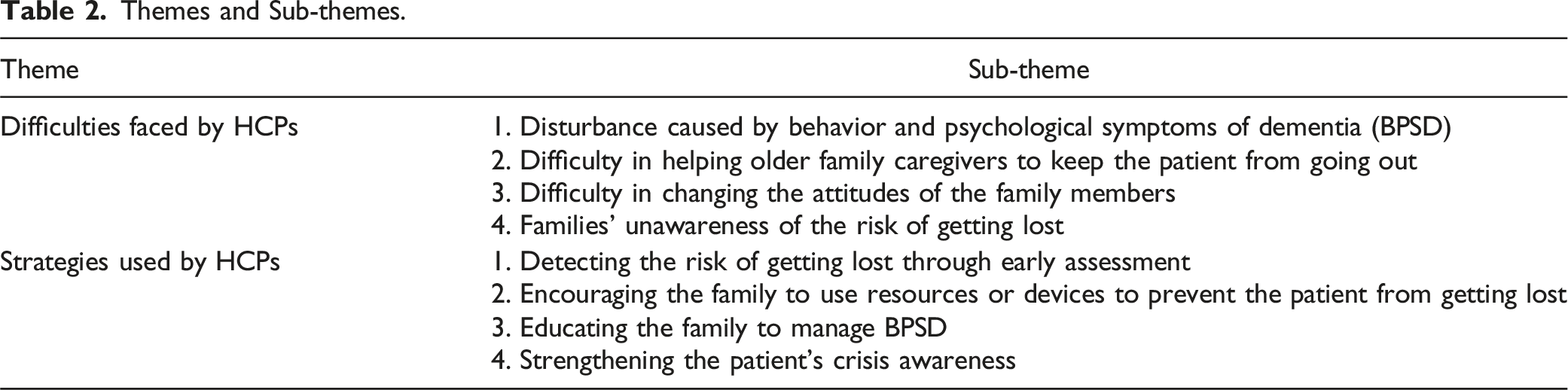
Caring for patients with dementia at risk of getting lost is challenging for community healthcare providers. Through semi-structured interviews with 25 participants, we examined the challenges faced by these providers and the strategies they employed. We identified the following themes of challenging parts: (a) the disturbance caused by behavioral and psychological symptoms in dementia; (b) difficulty in helping older family caregivers to keep the patient from going out; (c) difficulty in changing the attitudes of the family members; families’ unawareness of the risk of getting lost. We also identified the following strategies to mitigate these themes: (a) detecting the risk of getting lost through early assessment; (b) encouraging the family to use resources or devices to prevent the patient from getting lost; (c) educating the family to manage behavior and psychological symptoms of dementia; (d) strengthening the patient’s crisis awareness.
• To provide insights into the challenges community healthcare providers face in dementia. • To identify strategies that can support community healthcare providers in providing care for dementia individuals.
• The findings offer preventive strategies to manage the risk of getting lost among individuals with dementia.What this paper adds
Applications of study findings
Introduction
The growing aging global population has resulted in a high prevalence of dementia. In 2023, Alzheimer’s Disease International estimated that more than 50 million people worldwide have dementia, and this number is expected to nearly triple by 2050 (Alzheimer’s Disease International, 2023; WHO, 2023). Dementia is manifested by cognitive and non-cognitive impairment (Cloak & AlKhalili, 2019). Cognitive symptoms involve memory loss, language difficulties, spatial orientation problems, and issues with abstract thinking, judgment, and executive functions. Non-cognitive impairment symptoms encompass personality changes, delusions, hallucinations, mood disturbances, anxiety, aggression, purposeless hyperactivity, and altered sexual behavior (Absher & Cummings, 1994).
Among cognitive impairments, spatial disorientation is common in patients with Alzheimer’s dementia and starts at an earlier stage of the disease (Coughlan et al., 2018). In the early stage of Alzheimer’s disease, hippocampal involvement becomes apparent, and as neuropathological lesions advance, symptoms such as memory impairment and topographical disorientation begin to surface. This often leads individuals to rely more on path integration, a process supported by integrating self-movement cues in the parietal cortex (Lithfous et al., 2013; Monacelli et al., 2003). As the disease progresses into later stages, there is a potential compromise in the functioning of the parietal cortex, which could hinder effective path integration. At that point, location cues are crucial in aiding orientation by connecting recognized landmarks to mental maps, but this only relies on a familiar environment (Monacelli et al., 2003). The symptoms of wandering can cause individuals to become disoriented and confused about their surroundings (Halloran, 2014).
As a result of these impairments, people with dementia (PwD) will gradually lose their autonomy, which will adversely affect their quality of life, employment, and interpersonal relationships (Haaksma et al., 2018). Moreover, most PwD are older adults and are comorbid with various aging degeneration problems, such as physical, visual, and auditory impairments that can jeopardize their ability to navigate spatially and perform visual-spatial tasks (Cerman et al., 2018). Consequently, it becomes more difficult for PwD to recognize travel routes, making getting lost easier (Marquez et al., 2017).
According to the statistical office of The Taiwan National Police Agency (2021), PwD has the highest percentage of older missing population, increasing from 40% in 2015 to 47% in 2019. Wang et al. (2012) reported that 30%–60% of PwD have gotten lost at least once, and among them, approximately 40% have gotten lost repeatedly. The consequences of getting lost can have far-reaching effects on PwD and their family caregivers. The negative impact of getting lost on patients can range from mild to severe, from electrolyte imbalances to even death (Coughlan et al., 2018).
Ward et al. (2022) conducted a five-year international study of the neighborhood experiences of people with dementia and found that “getting lost” is complex, situated, emergent, evolving, and heterogeneous. Research has shown that family caregivers are under great psychological stress due to the challenges associated with caring for a PwD who is at risk of getting lost (PwD-GL) (Hong & Pai, 2020). In Taiwan, individuals with mild to moderate dementia primarily reside in the community, where their care is undertaken by senior female spouses or mid-age female children who encounter significant caregiving challenges, frequently compounded by a lack of adequate support (Hsieh et al., 2022). However, PwD-GL can consume the community’s resources, including police and rescue team efforts (Jeong et al., 2016). Even with advanced technology, the challenges associated with PwD-GL are complex and cannot be managed merely by assistive technology or strategy (Curnow et al., 2021; Hillier et al., 2016; Neubauer & Liu, 2021).
Healthcare professionals, including doctors, nurses, therapists, and caregivers, despite their moderate understanding and positive stance towards dementia care, struggle with recognizing and confidently managing dementia-specific behaviors, particularly in preventing wandering, a challenge exacerbated by their diverse backgrounds and training levels (Paul et al., 2023; Svedin et al., 2023). All the healthcare professionals (HCPs) who come into contact with PwD-GL in the community must be highly sensitive to this issue of getting lost, and their education and training are necessary. Hence, it is essential to grasp the challenges they face and the approaches they employ. This study aimed to explore HCPs’ difficulties and strategies when caring for community-dwelling PwD-GL.
Methods
This study adopted a qualitative exploratory design and the standards for reporting qualitative research (O’Brien et al., 2014). A qualitative exploratory design helps describe the experience, events, and truth and understand people’s beliefs, values, and motivations (Korstjens & Moser, 2017).
Participants
Purposive sampling was used to recruit participants who have experience caring for PwD-GL from community healthcare organizations, including home care agencies, outpatient departments (OPD), and daycare services in Taiwan. The inclusion criteria included being at least 20 years old, having a valid license in healthcare, and having cared for PwD-GL in the community for more than six months.
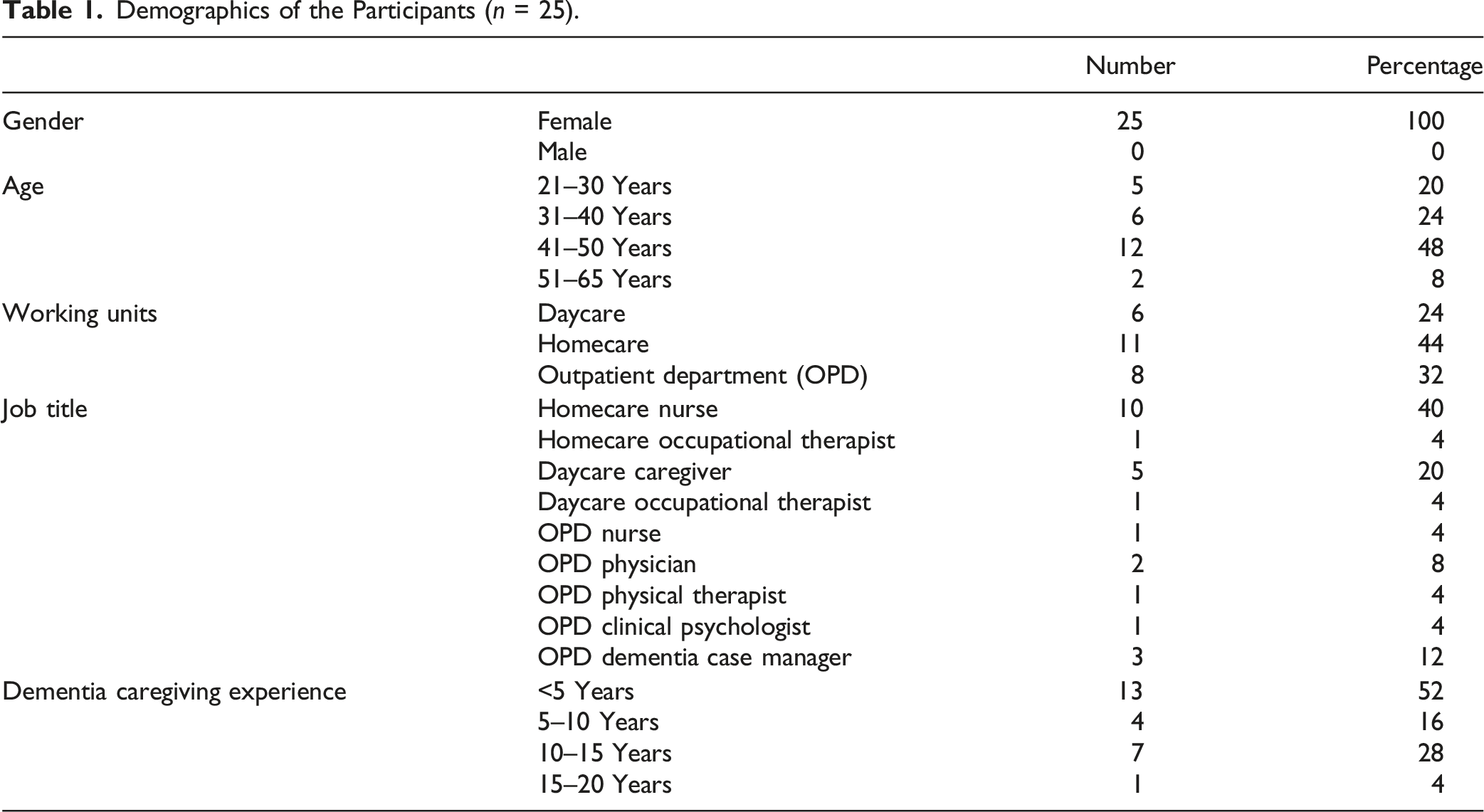
The saturation of data determined the number of participants. Recruiting continued until the data reached diminished returns, in that the research questions were answered in a representative and generalizable way, and no new information was produced by adding more participants (Lincoln & Guba, 1985). We recruited and interviewed participants until we gathered sufficient data. Ultimately, 25 participants participated in this study.
Data Collection
The researcher contacted the heads of the relevant agencies to identify eligible HCPs for participation in the study and subsequently contacted them individually. Once the HCPs agreed to participate and signed the consent form, they were interviewed in a private or online chat room. A mobile phone recorder was used for data collection. Each interview lasted for approximately 30 minutes. Each participant received an incentive of $200 TDW (at the time ∼$6 USD) for their time. The interview protocol consisted of two semi-structured questions: 1. What difficulties or problems do you encounter when caring for a patient with dementia who is at risk of getting lost? 2. What do you do to prevent people with dementia from getting lost or to assist family caregivers?
In addition to the primary questions, we incorporated specific prompts to delve deeper into these issues, guided by the responses provided by the interviewees. Questions such as “What about your caregiving experience when caring for a patient with dementia who is at risk of getting lost? What challenges have you faced in your caregiving experience? What actions do you take to address these challenges, and what suggestions do you have based on your experiences? Can you describe them?” All interviews were audio-recorded and transcribed. Additionally, field notes were taken by the first author (C.J. Hu) during the semi-structured interviews, as well as notes on their reflections on various aspects of the data collection process (Korstjens & Moser, 2018).
Data Analysis
This research employed thematic analysis to explore and interpret meaningful data (i.e., the interviews and researchers’ field notes). The analysis was a six-step process: (a) familiarizing with the data, (b) generating initial codes, (c) searching for themes, (d) reviewing themes, (e) defining and naming themes, and (f) producing the report (Braun & Clarke, 2006). Two researchers who coded and analyzed codes and categories analyzed the data separately and independently. In addition, the research team held regular data analysis meetings to share and compare the findings and identify the themes.
Rigor
The criteria defined by Lincoln and Guba (1985) were used to establish the trustworthiness of data regarding their credibility, transferability, dependability, and confirmability. 1. Credibility: Semi-structured interviews were conducted, and researcher field notes were kept. We also asked the participants to review and confirm the data during data collection. Each interview was analyzed separately by two researchers. After that, research meetings were held to compare the analyses, and themes were identified. 2. Transferability: This paper provides a comprehensive interview description of this study with details of the characteristics of the researchers, participants, contexts, sampling strategies, and the data collection and analysis procedures. 3. Dependability: Two external research experts conducted an audit to assess the research protocol and methodology of the study. 4. Confirmability: Triangulation methods were applied, and the researchers’ reflective reports were examined.
Ethical Considerations
The present study was approved by the NCKU Institutional Review Board (IRB) (NCKU HREC-E-110-642-2). We contacted healthcare organizations to inform them about the study for recruiting potential participants. We contacted those interested and made an appointment to explain this study consent form. Subsequently, the first author completed the informed consent process by signing the participants. The study period was from August to September 2022.
Participants’ Demographic Information
Demographics of the Participants (n = 25).
Findings
Themes and Sub-themes.
Theme 1: Difficulties Faced by HCPs
Disturbance Caused by Behavior and Psychological Symptoms of Dementia (BPSD)
In this study, “disturbance caused by BPSD” refers specifically to the high risk of getting lost as a result of severe BPSD, such as delusion or auditory hallucinations. The patients often keep trying to leave a place because they believe it is not their home. The participating HCPs working in daycare frequently experienced this situation and felt overwhelmed. The older adult with dementia often wanders around, looks around, and tries to find doors and windows. He wants to leave here, which is causing trouble for other older adults with dementia. It is a challenge for us to look after him while also ensuring the well-being of others with dementia (Daycare Caregiver 2). He often knocks on doors and windows, tries to open them, and attempts to find an exit. His BPSD is severe and interferes with other older adults with dementia, sometimes causing many residents to wander off or try to get home. It is difficult for us to keep him in our daycare (Daycare Caregiver 12).
Difficulty in Helping Older Family Caregivers to Keep the Patient From Going Out
Although the HCPs in OPD provided the families with strategies to prevent their PwD from getting lost, the family could only accompany or monitor the patient sometimes, especially the older adult caregivers. Older caregivers often find it challenging to manage the wandering and outdoor activities of their family members with mild dementia. Some OPD HCPs felt powerless when this happened. As case managers, we have a high caseload to manage, and it is not feasible to provide daily assistance to each individual. The challenge is that the patients want to go out, and their caregivers are too old and unable to prevent them from doing so (OPD Case Manager 1). There are some patients that we are unable to manage, such as when older adults with dementia keep trying to go out, and there is no family member available to stop them. For instance, we have a case where the person returns with injuries every time he goes out, and sometimes he gets back home with police assistance. His wife is old and unable to prevent him from leaving the house (OPD Clinical Psychologist).
Difficulty in Changing the Attitudes of the Family Members
The OPD HCPs urged families to implement preventive measures, such as using home caregiver resources and purchasing GPS products. However, the families ignored the HCPs’ instructions or dismissed these products as unnecessary, so the HCPs often had to spend a substantial amount of time persuading them. He has gotten lost multiple times. Every time the family comes into my OPD, I suggest they apply for or purchase a locator, such as a wristband or GPS, to prevent him from getting lost. However, they did not take any action, and it took me a long time to convince them to do so. Even with health education provided by professionals, influencing the behavior of family members can be challenging (OPD Physician 2). The challenge is that family members often do not utilize the dementia care resources available to them even though we keep providing education. Many family members remain unaware of or unwilling to use available dementia care resources (OPD Case Manager 2).
Families’ Unawareness of the Risk of Getting Lost
Even though the OPD HCPs were constantly educating patients’ families about dementia, the latter still might not have fully understood the risk of getting lost. Furthermore, some family members were over-confident in the patient’s memory and orientation capabilities, leading to incidents of getting lost. Sometimes, we may recognize the decline in memory and orientation of the patient, but their family members might consider them normal. Even after we remind them of the risks associated with wandering, they may not take it seriously. Therefore, we need to monitor dementia people closely to prevent wandering and getting lost while they are in our clinic (OPD Nurse 1). Sometimes, the patient’s family goes to park the car, leaving the patient with mild dementia to walk from the hospital entrance to our OPD room alone. They think the patient is used to walking to the OPD independently, so they assume that he can still do it alone. But then he gets lost (OPD Case Manager 1).
Theme 2: Strategies Used by HCPs
Detecting the Risk of Getting Lost Through Early Assessment
The HCPs not only collected information about the BPSD of their patients from their families but also regularly assessed their cognitive functions and factors related to the risk of getting lost to detect and prevent it early. For newly identified PwD, the OPD HCPs would spend a few minutes administering a screening tool to find the high-risk patients. Sometimes, family members do not fully understand the symptoms associated with dementia, which can leave me feeling a little helpless. However, by using the Risk of Wandering scale, I can quickly identify those who are at a high risk of getting lost (OPD Case Manager 2). When a dementia patient returns to the OPD, family members may share with us the current situation of the patient. However, they might not notice all the symptoms. Therefore, it is important to ask for more details about the patient’s medical history to better evaluate their sense of orientation and any BPSD that may increase their risk of getting lost (OPD Case Manager 3). For new patients of dementia, we prioritize the assessment of symptoms because the family members’ descriptions of the patient’s conditions may not always be accurate. It is crucial to interact with the person more, observe their behavior, and understand whether they are at risk of getting lost (Daycare Caregiver 4).
Encouraging the Family to Use Resources or Devices to Prevent the Patients From Getting Lost
All the participants indicated that PwD-GL needs around-the-clock attention. They often encouraged the family to arrange or hire someone to accompany the patient. Many HCPs strongly recommend that patients engage in daily activities such as going to a daycare center. Sometimes, they would advise that the PwD be kept within a specific zone for activities and that an alarm or doorbell would ring to alert the caregiver when they went outside that zone. We usually ask the family to ensure the doors and windows are locked at home because PwD may try to open the doors or windows to go out ... We encourage them to install a monitor at home, which will be easier for them to locate the PwD (Homecare Caregiver 1). For a person with mild dementia who wants to go out, we advise their family members to ensure they are accompanied by someone. We also encourage them to apply for a home companion service, so the person can go out for walks, hikes, or even travel with appropriate support (Homecare Occupational Therapist). We are constantly reminding family members of some essential tips for dementia care. For instance, we had a patient who used to get lost frequently. However, after participating in the daycare activities, he not only has maintained good physical health but also has not gotten lost since (OPD Physician 2). To prevent wandering, we arrange daytime activities for them such as playing ball, making art and crafts, and other suitable activities (Homecare Nurse 9).
Educating the Family to Manage BPSD
The participating HCPs reported the problem of family caregivers lacking knowledge and sensitivity toward managing BPSD. Therefore, they emphasized teaching caregivers strategies to manage BPSD, such as keeping the curtains open to let in natural light to prevent sundown symptoms. They also encouraged family caregivers to divert the PwD’s attention from BPSD through increased daily activities. Some older adults may indirectly develop BPSD due to irregular medication schedules, diet, and unstable sleeping patterns, which can increase their risk of getting lost. Therefore, we provide courses to family members to educate them on how to take care of dementia patients… Some patients with dementia experience sundown symptoms between 4 PM and 6 PM. Therefore, we must engage them in daytime activities that expose them to natural light. Also, it’s essential to inform them about the time to avoid confusion and prevent them from trying to find the door to go out (Daycare Occupational Therapist). In addition to wandering, there are also other BPSD that can lead to getting lost. Therefore, we must teach new caregivers how to communicate with the patients and equip them with essential care skills (Homecare Occupational Therapist).
Strengthening the Patient’s Crisis Awareness
A few HCPs, especially the occupational therapist and psychologist, mentioned that they trained the PwD to practice walking familiar routes daily and encouraged them to ask strangers for help to avoid getting lost actively. We are doing our best to help him walk his familiar routes, such as those in his neighborhood, to prevent him from getting lost (Homecare Occupational Therapist). We provide guidance to PwD on what to do if they become lost or unsure of their way. We encourage them to ask for help from others, which can be very helpful if they become disoriented (OPD Clinical Psychologist).
Discussion
Regarding the first two sub-themes related to difficulties experienced by HCPs: “disturbance caused by BPSD” and “difficulty in helping older family caregivers to keep the patient from going out,” although HCPs have to deal with all BPSD, wandering is behaviors that put PwD at high risk of getting lost and therefore the most concerning. HCPs’ feeling of being overwhelmed echoes what Seidel and Thyrian (2019) found, that not only family members but also professional caregivers reported experiencing the heaviest burden when caring for PwD who had aggressive and disoriented behaviors. Apart from BPSD, older family caregivers often find it challenging to keep the patient from going out unsupervised. In Taiwan, this is a significant concern as dementia care is typically provided by the older adult spouse of the patient, often the wife, with an average age of 73.7 years (Tsai et al., 2021). In Chinese culture, older women often feel powerless to control their husbands' behavior and experience a sense of burden. The significant proportion of older female family caregivers contributing to this powerlessness among healthcare providers (HCPs) aligns with findings from Western studies (Seidel & Thyrian, 2019; Tsai et al., 2021). The challenges faced by older caregivers in providing care for PwD are not limited to Taiwan; instead, they are a global issue in dementia home care that has led to the development of friendly community-based social services for dementia care worldwide (Chowdhary et al., 2022).
Regarding the attitudes of the family members, the main challenge for HCPs is persuading the family to use assistive devices. This is similar to the finding by Jarvis et al. (2017), in which 51% of the participating home-dwelling PwD did not use the assistive technology provided to them by their occupational therapists. This is often due to limited knowledge about the technology devices and concerns about the costs and difficulties in learning new skills. Research has suggested that HCPs should better understand how PwD and family caregivers can incorporate assistive technology into their daily routines and their challenges when using it (Gibson et al., 2015).
The last sub-theme, families’ unawareness of the risk of PwD getting lost, can be attributed to their lack of overall awareness of the risky behavior of PwD. This finding is similar to previous studies: Dai et al. (2013) found that family caregivers lacked knowledge about dementia care. They often perceived cognitive decline as a normal part of aging; Yin et al. (2023) found that family caregivers had low crisis awareness regarding caring for PwD at home. This can be attributed to the fact that when some people first experienced symptoms, doctors only informed them about their memory issues without diagnosing the disease (Mok et al., 2007). Additionally, within Chinese culture, people view dementia as a shame-of-a-kind mental illness. Consequently, during the early stage, some older adults with dementia and their family members usually characterize it as mere forgetfulness, the natural process of aging, and not being aware of the importance of dementia care (Mok et al., 2007).
To address the difficulties mentioned above, HCPs have different strategies for different settings. First, OPD HCPs can benefit from using standardized tools to identify PwD-GL early. HCPs in daycares can also assess cognitive function and observe PwD’s behaviors to identify those at high risk of getting lost. Agrawal et al. (2021) mentioned that a proper risk assessment should be done for all PwD, similar to the recommendations made by the HCPs in our study. Barnard-Brak and Parmelee (2021) also suggested that the risk of wandering scale helps predict wandering behavior in PwD. This approach is beneficial when taking in new PwD or informing family members unfamiliar with their condition.
Second, as one of the common difficulties encountered by HCPs is helping older family caregivers to keep the patients from going out, HCPs in-home care and OPD should encourage the families to seek care advice by using consultation hotlines and governmental home care and long-term care resources. Also, HCPs should encourage PwD to participate in daytime activities. This can address their social and activity needs, help improve their sleep quality, prevent sundown symptoms, decrease BPSD, and lower their chance of getting lost (Agrawal et al., 2021; Murata et al., 2022). Encouraging older adults with dementia to participate in daytime activities is beneficial. However, studies have revealed that some family members believe that individuals with dementia are unsuitable for engaging in community activities. They fear the stigma associated with mental illness and the potential slight embarrassment or, at worst, deep humiliation that is related to Chinese culture. Additionally, they may doubt the motivation and ability of dementia patients to participate in such activities. As a result, their preference is for dementia patients to stay safely at home (Mok et al., 2007; Wu et al., 2019).
In addition to suggesting social resources, HCPs can advocate for implementing home technologies, such as sensors, smart bulbs, pressure mats, and speakers, to prevent wandering and mitigate related crises for PwD. However, this recommendation needs to be reconciled with one of the challenges identified in the thematic analysis: HCPs find it challenging to persuade families to adopt these devices. Therefore, HCPs should engage in counseling and educational efforts to encourage families to utilize these resources. This is consistent with previous literature; for example, Lau et al. (2019) and Ault et al. (2020) introduced home-based missing incident prevention programs that modified the home environment to prevent patients from leaving unsupervised.
Third, because some BPSDs, such as agitation or wandering, may increase the risk of getting lost for PwD, educating the family to manage BPSD at home is an essential strategy used by many home care HCPs, including nurses, occupational therapists, and care providers, as well as physicians in OPD. Not knowing how to manage BPSD can lead to frustration and a sense of unpreparedness when these symptoms are manifested in PwD. Ramirez et al. (2021) stated that family caregivers often express the need for education from healthcare providers regarding the behavioral symptoms of PwD. Moore et al. (2013) pointed out that when encountering numerous BPSD, some family caregivers cannot manage them effectively. This highlights the need to educate and support caregivers in identifying triggers, comprehending symptoms, and developing coping mechanisms to better cope with these symptoms.
Lastly, PwD should be trained to familiarize themselves with daily routes, recognize landmarks, and seek help. Additionally, caregivers should be trained to increase their vigilance when the patient’s responsiveness decreases during training. As we know, in dementia community care, a significant distinction exists between HCPs in OPD, who possess formal medical training and offer comprehensive medical and therapeutic services. They hold such positions as physician, therapists, and dementia case managers. Community facilities and home care HCPs often focus on daily activities, personal care, and emotional support for individuals with dementia. They are caregiver and homecare nurses. Despite these differences, both categories of professionals play vital roles in dementia care. The collaboration between outpatient and community-based professionals creates a holistic approach, effectively addressing the multifaceted needs of dementia patients. However, there is a lack of empirical research on this topic, and further investigation is recommended for future studies.
Limitations
This study primarily focuses on HCPs in community settings within Taiwanese culture, where HCPs are predominantly female. While the findings offer valuable insights for healthcare professionals and caregivers in Taiwan, their direct applicability to HCPs in different care settings, such as long-term care facilities and acute hospitals, may be limited due to potential cultural variations in care approaches and challenges. Nevertheless, the study included a diverse group of participants and the complexity of dementia care. However, it is essential to note that the issues faced and strategies it uses can vary across different care settings. Therefore, it is necessary to develop a more comprehensive understanding of dementia care practices and improve care for individuals with dementia globally.
Conclusions
In this study, we have identified the challenges HCPs face and the strategies for caring for PwD-GL. The findings can assist HCPs in anticipating the challenges they may experience when working with PwD and applying effective caregiving strategies. Continuous education and training for HCPs are crucial. Our study highlights the importance of ongoing education, training, and support for HCPs caring for PwD-GL in the community. By implementing preventive measures and effective coping strategies, HCPs can reduce the risk of getting lost for PwD and improve their overall quality of life. Therefore, we expect these research outcomes to provide valuable insights and serve as a resource for various community caregivers who work with PwD-GL.
Footnotes
Acknowledgments
The authors wish to thank all the participants in this study.
Declaration of Conflicting Interests
The author(s) declared no potential conflicts of interest with respect to the research, authorship, and/or publication of this article.
Funding
The author(s) disclosed receipt of the following financial support for the research, authorship, and/or publication of this article: This study was funded by the Taiwan Ministry of Science and Technology [MOST-111-2314-B-006-022-MY3].
Ethical Statement

Data Availability Statement
The data that support the findings of this study are available from the corresponding author upon reasonable request.