




Abstract
Self-control has been consistently linked to antisocial behavior and though low self-control makes delinquency more likely, neither the findings nor the theory suggests that low self-control necessitates participation in such behavior. There remains a shortage of research on those situational factors or individual characteristics that might lessen the effects of low self-control on antisocial behavior. Future orientation is one such characteristic that can have implications for the control of behavior. The purpose of the current study was to explore the independent and interactive effects of future orientation and low self-control on delinquency using data from Wave 1 of the National Longitudinal Study of Adolescent Health. A series of regressions showed that self-control and future orientation had independent effects on delinquent behavior. Further, future-oriented achievement expectations conditioned the effect of self-control on delinquency such that the effects of self-control were weakened with increases in future orientation. The findings suggest that prevention programs should place more emphasis on helping youth plan for the future. Further, research should more fully explore the other aspects of future orientation (e.g., specificity of planning and change/stability of aspirations), as they relate to self-control and delinquency.
Introduction
Delinquency, as described by the general theory of crime (Gottfredson & Hirschi, 1990), tends to be motivated solely by egoistic desires such as pleasure and thrill seeking. Persons who participate in delinquency are believed to have low self-control and share tendencies such as a “here and now” orientation and an inability to defer gratification. According to Gottfredson and Hirschi (1990), those prone to delinquency are not likely to think much about the future or have the patience or tenacity to work toward achieving future goals. Though there is a lack of direct evidence linking the criminological construct of self-control to future-oriented thinking (Silver & Ulmer, 2012), a few studies do note a negative relationship between impulsivity (a major component of self-control) and future orientation (Oyserman & Saltz, 1993; Robbins & Bryan, 2004; Steinberg et al., 2009). Further, there is some evidence that delinquent offenders tend to score lower than non-offenders on measures of future orientation (Oyserman & Markus, 1990a; Oyserman & Saltz, 1993; Trommsdorff & Lamm, 1980). This evidence, however, does not dictate that adolescents who participate in delinquency are completely devoid of orientation toward the future. In fact, many youthful offenders do indeed report conventional expectations about education, jobs, and personal relationships (Clinkinbeard & Murray, 2012; Clinkinbeard & Zohra, 2012).
Although it is likely that low levels of orientation toward the future often coexist with low self-control, one is not necessarily a defining element of the other (Grasmick, Tittle, Bursik, & Arneklev, 1993; Steinberg et al., 2009). Psychological research tells us that human beings are complex creatures and it is quite common for people to have contradictory traits, beliefs, and attitudes (Donahue & Harary, 1998; Festinger, 1957; Hampson, 1998). Although one may hypothesize that persons with low self-control, as a group, will be less oriented to the future than those with high self-control, it is still quite possible for individuals to have low self-control and to simultaneously generate expectations, aspirations, and fears about the future. Further, there is reason to believe that such expectations may serve as protection against the negative outcomes associated with low self-control. Specifically, future-oriented beliefs and expectations could serve as motivational capital (Clinkinbeard & Zohra, 2012) against low self-control tendencies (i.e., thoughts about the future serve as motivation to avoid delinquency and exercise self-control even if it is not one’s general tendency to do so; Silver & Ulmer, 2012).
The current study is an investigation of future orientation, as it relates to self-control and delinquent behavior among adolescents. More specifically, the analysis focuses on three questions regarding these relationships. First, do youth with lower levels of self-control tend to have lower levels of future orientation, as suggested by the general theory of crime? Second, do self-control and future orientation each have unique contributions to the explanation of delinquent behavior? Finally, can a healthy orientation toward the future serve as protection against delinquency among those with low levels of self-control? The literature review that follows includes a brief overview of the future orientation and self-control concepts and their relationships to delinquency, followed by a short discussion of future orientation and its relationship to current behavior.
Future Orientation, Self-Control, and Delinquency
Future orientation is an umbrella term (Steinberg et al., 2009) that captures a wide range of social psychological and developmental designations that have been conceptualized and measured in a number of different ways (Greene & DeBacker, 2004). Future orientation can include expectations and aspirations, possible selves, future time perspective, and strategy generation, among others. When measuring future orientation, researchers may focus on the extent to which one actually considers the future, how far into the future one extends his or her thinking, the perceived likelihood of achievement, completeness of planning (e.g., are expectations linked to strategies), balance between hopes and fears, salience, and so on. In the current study, future orientation is conceptualized as the extent to which one desires and expects positive future selves.
Self-control was first defined in the criminological literature as the “relatively stable differences across individuals in the propensity to commit criminal (or equivalent) acts” (Gottfredson & Hirschi, 1990, p. 137) and then later redefined as differences in the “tendency to consider the full range of potential costs of a particular act” (Hirschi, 2004, p. 543). Persons who are low in self-control are generally self-interested and tend to share a number of characteristics such as inability to defer gratification, a lack of tenacity, an adventuress nature, and minimal tolerance for frustration. According to theory and research, low self-control is a result of ineffective parenting early in life (Gottfredson & Hirschi, 1990; Perrone, Sullivan, Pratt, & Margaryan, 2004; Unnever, Cullen, & Pratt, 2003). Self-control (low or high) was initially hypothesized to crystallize by ages 10–12 with relatively little change throughout the remainder of life (Beaver, Wright, DeLisi, & Vaughn, 2008; Piquero et al., 2010), though recent research has questioned the stability assumption (Hay & Forrest, 2006; Na & Paternoster, 2012). Finally, a few researchers have highlighted an important distinction between one’s capacity for self-control and the desire to exercise it (Cochran, Aleksa, & Chamlin, 2006; Tittle, Ward, & Grasmick, 2004).
Though the relationship between low self-control and future-oriented thinking may not be explicit, there are certainly assumptions made in the literature. One of the components of low self-control, as described by Gottfredson and Hirshi (1990), is a “here and now” orientation accompanied by an inability to defer gratification. The redefined self-control (Hirschi, 2004) goes a bit further, suggesting that persons low in self-control do not consider all of the consequences of their behavior. Though these definitions and discussions certainly imply that persons with low self-control have trouble anticipating consequences and modulating their behavior toward the future, it does not necessarily follow that persons low in self-control never think, dream, or worry about the future. More important, this assumption has never been explored empirically (Silver & Ulmer, 2012).
Both self-control and future orientation have been linked to delinquency though self-control is far more frequently studied in criminology. Though self-control may not be quite as powerful as initially suggested, it has certainly garnered evidence as a consistent predictor of crime and delinquency (see Piquero et al., 2010; Pratt & Cullen, 2000). Low self-control has been associated with problematic drinking and substance use, property crime, dating violence (both psychological and physical), and other types of violent crime, as well as offender noncompliance (Baker, 2010; Conner, Stein, & Longshore, 2009; Desmond, Bruce, & Stacer, 2012; Gover, Jennings, Tomsich, Park, & Rennison, 2011). With regard to future orientation, there is a small body of work, primarily in social psychology, that provides evidence of a link to delinquency. Aspects of future orientation have been used to differentiate between known offenders (adjudicated) and non-offenders (Oyserman & Markus, 1990a; Oyserman & Saltz, 1993; Siennick & Staff, 2008; Trommsdorff & Lamm, 1980) and have predicted delinquency in public school populations (Newberry & Duncan, 2001; Oyserman & Markus, 1990a). More research is needed, however, to establish the specifics of the relationship between the various components of future orientation and delinquency.
Future Orientation as Motivational Capital
One of the most disconcerting implications of the work surrounding self-control theory (as originally proposed) is the idea that people who do not establish high self-control in childhood suffer a long-lasting deficit (i.e., low self-control) that puts them at higher risk of crime and other unfavorable outcomes (e.g., driving under the influence of alcohol, drug use, victimization, etc.; Conner et al., 2009; Keane, Maxim, & Teevan, 1993; Pratt & Cullen, 2000; Schreck, 1999). Although the fixed nature of self-control is troublesome from a prevention/intervention framework, Gottfredson and Hirschi (1990) do acknowledge that “… lack of self-control does not require crime and can be counteracted by situational conditions or other properties of the individual” (p. 89). Further, recent evidence suggests that, at least for some youth, self-control may be more amenable to change than previously thought (Hay & Forrest, 2006; Na & Paternoster, 2012). A few scholars (Cochran et al., 2006; Doherty, 2006; Tittle et al., 2004; B. R. E. Wright, Caspi, Moffitt, & Silva, 2001) have begun to explore potential moderators of self-control and delinquency, though more research is warranted.
Though future-oriented thinking and conceptions of self have been largely ignored in the criminological literature (Silver & Ulmer, 2012), there is plenty of evidence to suggest that orientation to the future can motivate current behavior (Greene & DeBacker, 2004; Oyserman, Bybee, Terry, & Hart-Johnson, 2004; Oyserman & Markus, 1990b). Identifying positive future goals serves numerous functions in terms of self-enhancement and motivation. Regardless of one’s current situation, thinking about a successful future can serve to enhance self-esteem and positive emotion (Oyserman et al., 2004). Furthermore, recognition of future expectations can motivate individuals to reduce discrepancies between current situations and desired future selves (Markus & Nurius, 1986; Strahan & Wilson, 2006). In other words, being able to picture an improved “future me” can make me feel better in the moment while also incentivizing behavior designed to achieve that “future me” and discouraging behavior that might hamper desired outcomes.
The motivation that comes with thinking about the future may help buffer the effects of self-control on delinquency in a couple of ways. One possibility is that future orientation increases the desire to exercise restraint or self-control in certain situations. Tittle and colleagues (2004) suggested that individuals’ interest in restraining themselves constitutes one such characteristic that could weaken the negative effects of low self-control. In other words, even those disadvantaged by low self-control may aspire toward achieving some kind of control and this aspiration can have positive outcomes. Indeed, the authors found that a desire to self-regulate behavior moderated the relationship between self-control and various measures of crime and deviance. While Tittle and colleagues focused on the desire to regulate against antisocial behavior, positive future-oriented expectations may represent a desire for self-regulation of prosocial behavior. Or put simply in a recent call for research by Silver and Ulmer (2012, p. 700), “Individuals’ conceptions of themselves in the future, or future selves, are crucial because they are key to motivating the exercise of self-control.”
It is also possible that future-oriented expectations are most important and effective among those least likely to have them. The social protection hypothesis suggests that certain social ties or characteristics may work even harder for those already prone to crime or those low in self-control (B. R. E. Wright et al., 2001). As discussed above, one of the benefits of thinking about the future is that it can help direct and motivate current behavior. The redefined version of self-control suggests that the more inhibiting factors that are salient for an individual, the less likely he or she is to commit crime (Hirschi, 2004; Silver & Ulmer, 2012). In the case of youth who are low in self-control, and thus more prone to delinquency, any inhibiting factor that can help motivate current behavior is going to be especially important. Future orientation, for these youth, may represent an additional inhibiting factor.
The Current Study
Future orientation is a much less recognized concept than self-control in the criminological literature, though there is evidence that it can be linked to delinquency (Oyserman & Markus, 1990a; Oyserman & Saltz, 1993; Trommsdorff & Lamm, 1980). It is hypothesized that future orientation is related to self-control in the sense that it is likely that people who have deficits in self-control also tend to be low in future orientation. I suggest that although persons with low self-control, as a group, will be less oriented to the future than those with high self-control, it is quite possible for individuals to have low self-control and to simultaneously generate expectations, aspirations, and fears about the future. Further, when low self-control and future orientation do coexist, future orientation may counteract some of the negative outcomes (e.g., delinquency) often associated with low self-control. Further, because future orientation is generally thought to be malleable and open to intervention, it may be especially promising in the areas of delinquency prevention/intervention.
The current study used data from the National Longitudinal Study of Adolescent Health (Add Health) to explore future orientation as it relates to self-control and delinquent behavior among adolescents. As mentioned previously, future orientation has a number of potential definitions though it was conceptualized here as the extent to which one desires and expects positive future selves. The availability of future orientation measures in the Add Health data, and in most data sets with measures of self-control and delinquency (Silver & Ulmer, 2012), is limited and thus the concept was operationalized as expectations about the future in the areas of academics/achievement and health/mortality. As discussed later, it is expected that follow-up research will expand on the operationalization of future orientation. For now, the specific interest was in the following questions: (1) Is there a negative relationship between low self-control and future orientation (academic/health expectations) such that as low self-control scores increase, future orientation decreases, (2) although related, are self-control and future orientation distinct constructs with unique contributions to delinquent behavior, and (3) can a healthy orientation toward the future serve as protection, through moderation, against delinquency among those with low levels of self-control? These questions were explored while controlling for relevant developmental characteristics and contexts. Parental supervision is theorized to influence the development of self-control and has been linked to delinquency (Cullen, Unnever, Wright, & Beaver, 2008; Gottfredson & Hirschi, 1990). Verbal ability is also included, as intelligence has been linked to future orientation and particularly educational expectations (Nurmi & Pulliainen, 1991).
Data and Method
Sample
Data for the current study come from Wave 1 of the Add Health, a study conducted by the North Carolina Population Center at the University of North Carolina. Wave 1 includes a prospective nationally representative sample of adolescents who were in Grades 7 through 12 between September 1994 and December 1995 (Udry, 2003). Using unequal stratified sampling techniques, a total of 80 high schools and 52 middle schools in the United States were selected for the study. The study was designed to ensure that the sample was representative of schools with respect to region of the country, urbanicity, school size, school type, and ethnicity (Harris et al., 2003). The overall study consisted of data collected from a number of sources, including an in-school student questionnaire, a school administrator questionnaire, an in-home student interview, and a parent questionnaire (for more information, see Harris et al., 2003; Udry, 2003).
The current study uses data from the in-school questionnaires and the adolescent in-home interviews. Approximately 15,300 students participated in both the in-school and the in-home portions of the study. A number of respondents had missing data on weight variables and had to be excluded from the final sample. After removing these cases, and additional cases with missing data on one or more of the variables, the final sample consisted of 8,657 adolescents. Throughout the analysis, appropriate sample weights were utilized to ensure that the final sample was a national representation of American adolescents (see Chantala & Tabor, 1999). The final sample was 52% female and ranged in age from 11 to 18 (M = 15.48, standard deviation [SD] = 1.63). The sample was primarily White (67%) and non-Hispanic (84%).
Measures
Primary Variables
Delinquency
Youth were asked to report how often they had participated in various antisocial activities over the past year. Items covered both minor (e.g., paint graffiti, run away from home, and steal something worth less than US$50) and more serious delinquent behaviors (e.g., steal a car, threaten someone with a weapon, and burglarize a building). Each respondent’s answers to 15 items were summed to create a general delinquency scale (α = .83). Higher scores represented higher levels of delinquent behavior in the past year (M = 4.16, SD = 5.05).
Low self-control
One of the primary controversies in the self-control literature is wide-ranging disagreement about how to measure the construct (Cretacci, 2008; Higgins, 2007; Hirschi & Gottfredson, 1993; Marcus, 2004; Meldrum, Young, & Weerman, 2009; Piquero & Goode, 2008; Ward, Gibson, Boman, & Leite, 2010; Williams, Fletcher, & Ronan, 2007). The most often cited measure still appears to be the scale developed by Grasmick, Tittle, Bursik, and Arneklev (1993), although these items are not available in the Add Health data. There is evidence, however, that the relationship between self-control and delinquency holds up across a number of different measures of self-control (Pratt & Cullen, 2000). Previous Add Health users have relied on varied combinations of items (Young, 2011) with one of the most often used being the 5-item scale originally published in 2004 by Perrone and colleagues (Beaver, DeLisi, Vaughn, & Wright, 2010; Beaver et al., 2008; Boisvert, Vaske, Taylor, & Wright, 2012; Perrone et al., 2004; J. P. Wright, Schnupp, Beaver, Delisi, & Vaughn, 2012). Students were asked how often they had trouble paying attention in school, trouble keeping their mind focused, trouble getting along with their teachers, trouble finishing their homework and whether they felt they did everything just right. These items are intended to tap the self-centeredness, physical activities, impulsivity, and simple tasks components of self-control (Perrone et al., 2004). All items were standardized and summed (α = .67). 1 Higher scores represented lower levels of self-control (M = −.11, SD = 3.16).
Future orientation
Two short scales were created to capture future-oriented expectations. The first scale, achievement/education expectations, 2 consisted of 3 items: “how much do you want to attend college;” “how likely is it that you will attend college;” and “chances you will graduate from college.” The second scale, health/mortality expectations, also consisted of 3 items: likelihood of living to age 35, likelihood of getting HIV/AIDS, and likelihood of getting killed by age 21. Items were answered on either a scale of 1 to 5 with regard to likelihood or on a scale of 0 to 8 (no chance to it will happen). When necessary, items were reverse coded, so that higher scores represented greater likelihood of positive outcomes (e.g., killed by 21 reverse scored, so that higher meant less chance of it happening). All responses were standardized before being summed to create the final achievement expectations (α = .71) and mortality/health expectations (α = .57) scales. The factor analysis that helped inform the creation of these scales is discussed below.
Although beliefs about one’s future can fall under any number of contexts and categories, the availability of future-oriented items in the Add Health data is limited. Further, the few items that are available are rather diverse and do not achieve levels of high internal consistency when they are all considered together. A factor analysis was conducted to serve two purposes: (1) to help construct future orientation measures for further analysis and (2) to explore whether or not self-control and future orientation loaded on different factors and thus could be considered distinct constructs (discussed in Results section). Initially, the factorability of 16 self-control and future orientation items was examined. Based on a number of criteria (i.e., lack of correlations over .3 with other variables, anti-image correlation diagonals below .5, and communalities below .3, etc.), 1 item (tries to do school work well) was dropped from the analysis. Three-, four-, and five-factor solutions were examined with the remaining 15 items. The three- and four-factor solutions were comparable, accounting for 43% and 51% of the variance, respectively. There was little difference between varimax and oblimin solutions. In both solutions, a total of 2 items (accomplish through hard work and hopeful about the future) were eliminated because they did not contribute to a simple factor structure and failed to meet a minimum criteria of having a primary factor loading of .4 or above. The principal difference in the three- and four-factor solution was the division of the last factor. After exploring internal consistency for the scales designated by the three- and four-factor solution, it was determined that the four-factor solution was better. Although the four-factor solution was determined to have the best fit for the data, the fourth factor still suffered from low internal consistency and included an item that cross-loaded and thus was not used in further analysis. It should be noted that the self-control items and the final future orientation items did not load highly on the same factors in any of the solutions. Internal consistency for each of the scales was examined using Cronbach’s α. The αs were moderate to low: .67 (self-control), .70 (achievement/education), .57 (mortality/health), and .490 (conventional). The factor loading matrix for this final solution is presented in Table 1.
Orthogonally Rotated Component Loadings and Communalities for Self-Control and Future Orientation Items.
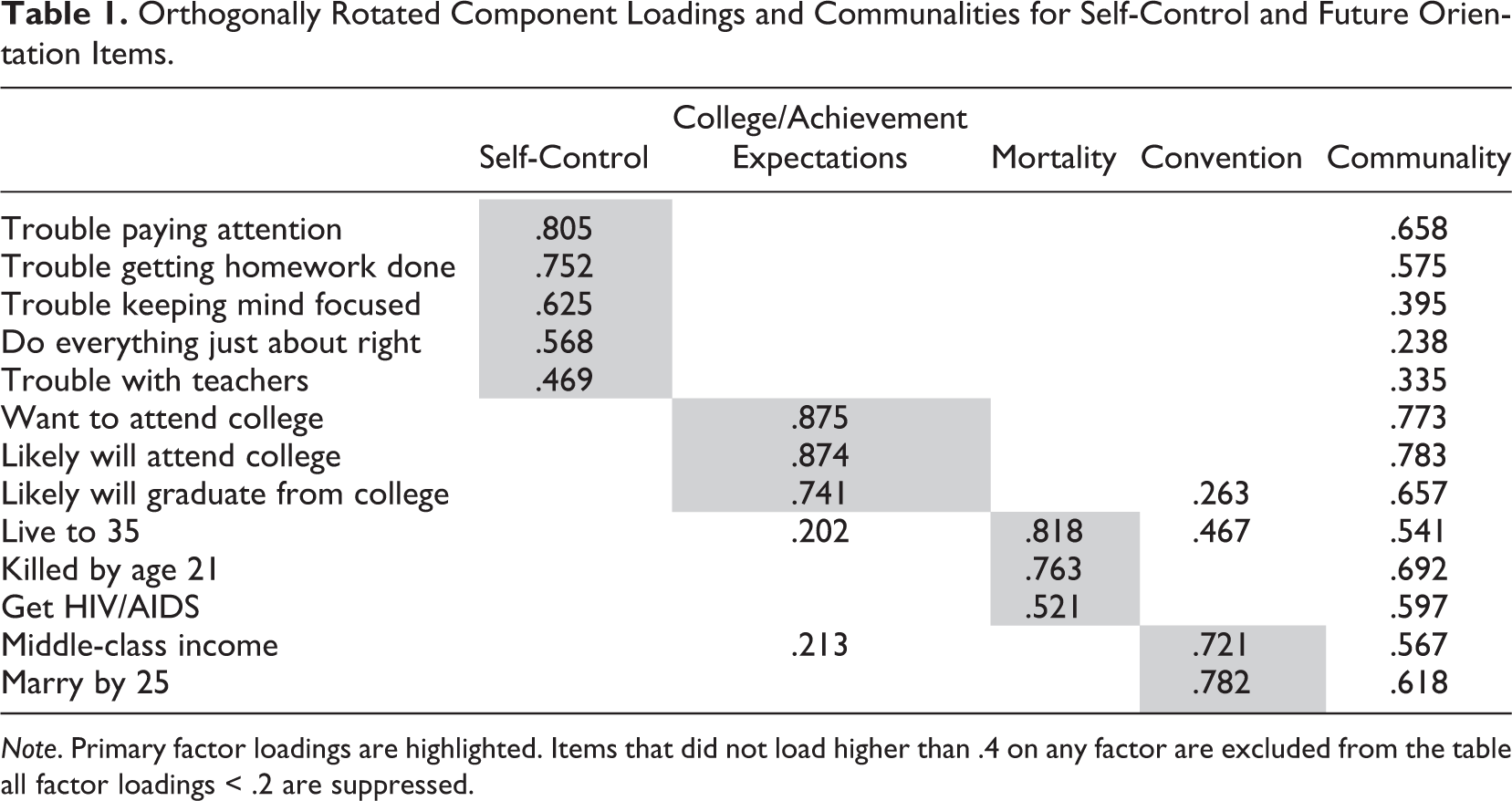
Note. Primary factor loadings are highlighted. Items that did not load higher than .4 on any factor are excluded from the table all factor loadings < .2 are suppressed.
Interaction term
Two interaction terms were created in order to examine the conditioning effects of future-oriented beliefs and expectations on the relationship between self-control and delinquency. The first interaction term was the product of achievement expectations and low self-control and the second was the product of future health/mortality beliefs and low self-control. All variables were mean-centered prior to computing the multiplicative terms.
Control Variables
Parental supervision
Parental supervision was measured using a 3-item index that gauges how often (1) the parent is at home when you leave for school; (2) the parent is at home when you return from school; and (3) the parent is at home when you go to bed. These 3 items were asked about both the mother and the father. Since not all adolescents live with two residential parents, the higher score from either the mother of the father was used to construct this index (Demuth & Brown, 2004). Original items were reverse coded as (0) never; (1) almost never; (2) some of the time; (3) most of the time; and (4) always. As a result, corresponding scores for the index range from 0 to 12 (M = 9.36, SD = 2.27), with higher scores indicating greater parental supervision.
Verbal ability
The Peabody Picture Vocabulary Test (PPVT) was given during the in-home interview portion of Wave 1. The test is a measure of verbal ability, or verbal intelligence quotient (IQ), and has been utilized as such by a number of Add Health researchers (Neiss & Rowe, 2000; Rowe, Jacobson, & Van den Oord, 1999). It has also served as an indicator of neuropsychological deficit in the criminological study of self-control and delinquency (Beaver et al., 2010). The current study controls uses the PPVT to control for the possibility that verbal IQ and/or neuropsychological deficits, rather than future orientation, explains the relationship between self-control and delinquency explored here. The percentile rank score was used as it indexes relative standing among same-age peers. Scores range from 0 to 100 with higher scores representing higher relative verbal ability.
Demographics
Several dummy variables were created to capture sex (0 = female, 1 = male), ethnicity (0 = non-Hispanic, 1 = Hispanic), and race (0 = non-White, 1 = White). Respondent’s age was measured as a continuous variable that ranged from 11 to 18 and was subsequently mean-centered. An age-squared term was also included to allow for either increasing or diminishing effects of each additional year (Long & Freese, 2006). Finally, a poverty variable was created based on the parent responses to the receipt of aid. Youth whose primary caregivers reported receiving Aid to Families with Dependent Children, food stamps, or a housing subsidy were coded as an affirmative on the poverty variable (0 = no poverty, 1 = poverty). Approximately 12% of youth were reported by their caregivers to be living in poverty.
Analyses
The complex nature of the Add Health design requires the implementation of survey correction procedures in order to produce unbiased estimates of variance and standard errors (Chantala & Tabor, 1999). Data analyses were conducted using the “svy” commands in Stata (v. 11), a software package that includes procedures for correctly analyzing complex survey designs. Factor analysis (principal components) was utilized in developing the future orientation scales and is also briefly discussed in the results as it pertains to the question of whether self-control and future orientation are distinct constructs. A series of survey-weighted 3 ordinary least squares (OLS) regression models were estimated to explore the relationships between future orientation, self-control, and delinquency. Baseline models are first presented exploring the independent effects of two variations of future orientation and self-control on a measure of general delinquency. Interaction terms (Self-control × Achievement Expectations and Self-control × Health/Mortality Expectations) are then added to the original models to explore the conditional effects of future orientation on the relationship between self-control and delinquency. OLS models are presented here to improve interpretability of interactions and comparability with previous research (Tittle, Antonaccio, Botchkovar, & Kranidioti, 2010; B. R. E. Wright et al., 2001). Though not displayed here, 4 negative binomial regressions were also conducted to help account for the skewed/count nature of our outcome variables and to stand as an additional test of robustness.
Results
The answer to the first research question (i.e., is there a negative relationship between low self-control and future orientation or expectations) can be found in the correlation matrix in Table 2. The bivariate correlations indicate a significant negative relationship between low self-control and both achievement and health/mortality future-oriented expectations. That is, youth with lower self-control 5 (i.e., high on the measure of low self-control) tend to have lower academic expectations and less positive expectations regarding their own future health and mortality. The second research question is concerned with whether self-control and future orientation are distinct constructs. The correlation matrix in Table 2 indicates that although self-control and future orientation (expectations) are significantly correlated, the association is not strong enough to suggest multicollinearity. Further evidence of distinctiveness comes from a factor analysis that was conducted in the construction of the future orientation scales. Fifteen items related to self-control and future orientation were examined, including the 5 items from the previously developed (Perrone et al., 2004) self-control scale and 10 items available in the Add Health with some relationship to expectations about the future. Based on evidence from the scree plot, the initial Eigenvalues, and interpretability of factors, it was decided that either the three- or four-factor solutions were best. Ultimately, the first three factors from the four-factor solution were utilized in developing measures utilized in the following regressions. In both solutions, whether utilizing varimax or oblique rotation, the 5 self-control items represented a single factor and the items did not cross-load on any of the future orientation factors (see Table 1). In other words, although related, future orientation and self-control appear to be distinct constructs.
Bivariate Correlations.
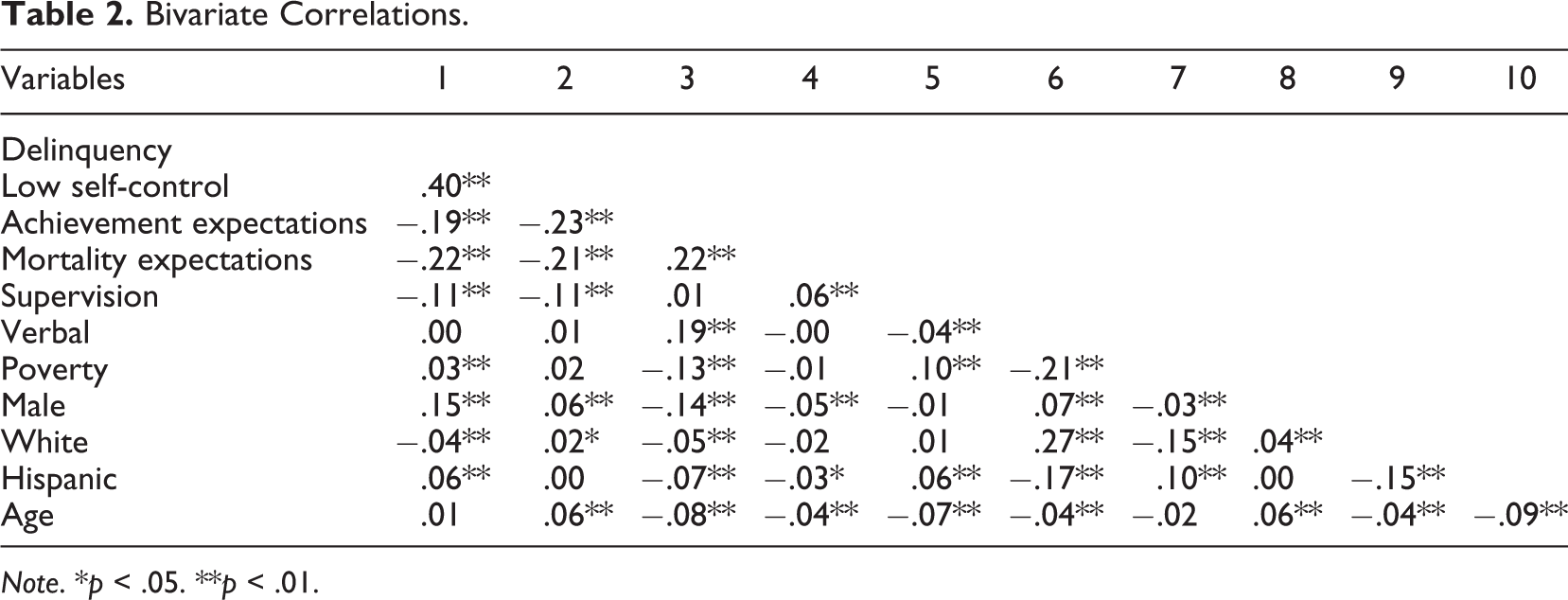
Note. *p < .05. **p < .01.
The second research question is also concerned with whether self-control and future orientation expectations both uniquely predict delinquency. The correlations in Table 2 also indicate a positive relationship between low self-control and delinquency such that higher levels of low self-control are related to higher levels of delinquency. Further, both achievement expectations and mortality expectations are negatively associated with delinquency such that having more positive expectations for the future is related to lower reports of delinquency. Before moving forward with the inclusion of these predictors in a series of regression models, a number of diagnostics were conducted. Multivariate outliers were identified and explored for their potential for undue influence. The models discussed below were repeated both with and without outliers and although there were slight changes in regression coefficients when all outliers were removed, the overall outcomes were the same, thus they were left in the sample. The outcome variable and residuals fail tests of normality. Delinquency in this study is positively skewed with the majority of the sample falling at the lower end of the scale. Issues of normality were addressed in a couple of different ways. First, OLS regressions were conducted using the nontransformed outcome variable and then repeated with an inverse transformation to help approximate a normal distribution. Next the same series of models were tested using negative binomial regressions which help correct for the skewed nature of the outcome variable. Because the results of the different analyses were essentially the same and because OLS provides easier interpretation of continuous interaction effects, only the results from the original OLS models are presented below. 6
Table 3 presents the results from the overall models. Model 1 explores the independent effects of self-control and achievement expectations. Low self-control exhibited a significant positive effect such that youth with lower levels of self-control reported committing more delinquency. Further, student achievement expectations exhibited significant negative effects on delinquency. In other words, youth who report higher educational aspirations reported committing lower levels of delinquency. Model 2 shows that the student achievement expectation by self-control interaction was negative and significant, meaning that the effect of future orientation is stronger and especially important for those with low self-control. Model 3 is similar to Model 1 with the exception that mortality expectations replace achievement expectations. As with achievement expectations, mortality expectations are significantly related to delinquency such that youth who have more positive expectations for the future report lower levels of delinquency. Though the mortality by self-control interaction in Model 4 showed a similar pattern as the expectation by self-control interaction, it did not reach significance in the OLS model. 7 For the most part, demographic and control variables fell in line with previous research. Males and minority youth reported higher levels of delinquency than females and nonminority youth, though poverty was not significantly related to delinquency. Delinquency reports increased with age, though at a declining rate, and higher levels of parental supervision were associated with lower levels of reported delinquency. Somewhat surprising was a significant, though small, positive relationship between verbal test rank and delinquency.
Predicting Delinquency From Self-Control and Future-Oriented Educational Expectations.

Note. FO = future orientation; SE = standard error.
All continuous variables were mean-centered prior to inclusion in the regression models.
*p < .05. **p < .01.
Table 4 illustrates the interaction through the presentation of the effects of self-control on delinquency at different levels of future orientation. 8 The table indicates that self-control has a stronger influence on those at lower levels of future orientation. Although significant at all levels, the strength of association is greater for those who score very low on the future orientation measures (.72 increase in delinquency) compared to those with high future orientation (.49 increase in delinquency). Or put another way and in line with previous research on self-control desire (Cochran et al., 2006; Tittle et al., 2004), the effect of self-control on delinquency is weaker at higher levels of future orientation. Figure 1 presents this relationship graphically.
The Effects of Self-Control on Delinquency by Levels of Future-Oriented Educational Expectations.
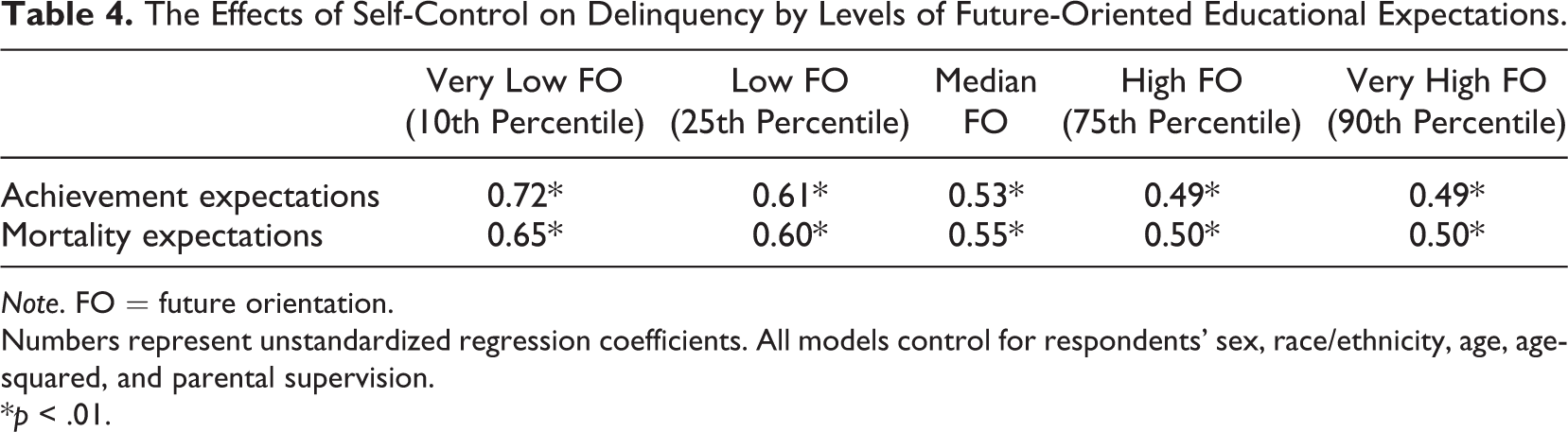
Note. FO = future orientation.
Numbers represent unstandardized regression coefficients. All models control for respondents’ sex, race/ethnicity, age, age-squared, and parental supervision.
*p < .01.
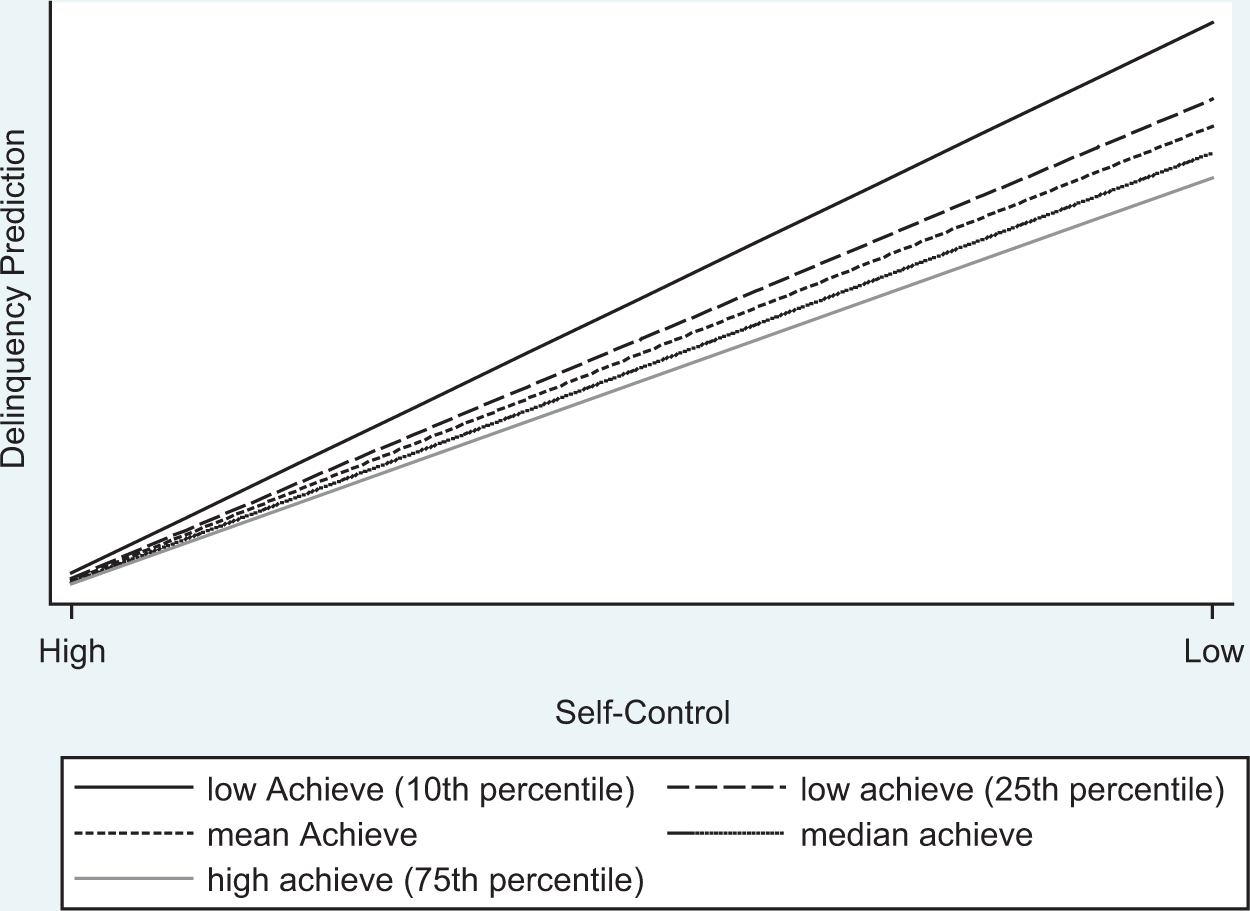
The effects of self-control on delinquency by levels of future-oriented educational expectations.
Discussion
The primary goals of the current study were to explore the relationships between self-control, future-oriented expectations, and delinquency, including whether expectations serve as a moderator of the relationship between self-control and delinquency. The results demonstrated that self-control and future orientation are related, yet distinct, concepts that contribute uniquely to delinquent behavior. The results also indicated that self-control had the strongest effects on delinquency at the lowest levels of future orientation. This was primarily true for achievement expectations. Although both mortality and achievement expectations uniquely predicted delinquency, only achievement expectations significantly moderated self-control. One possibility here is that mortality expectations may be related to things more outside one’s control compared to achievement expectations. Whether or not you think you will live to your 20s or 30s may be related as much to perceptions of safety in your neighborhood as anything. In the case of educational achievement, youth are likely to perceive at least some control over these outcomes and thus they may provide more motivation for current behavior. In fact, using similar measures in the Add Health, Brezina, Tekin, and Topalli (2009) discovered that those who anticipate early death had reported higher rates of offending on a number of serious offenses. Further, in qualitative interviews, they supported this relationship and noted a strong perception of a lack of control and predictability related to future outcomes in general.
These findings have several important implications with regard to research on self-control. First, they add support to previous investigations of self-control desire which found that a desire to regulate negative or antisocial behavior conditioned the effects of self-control on delinquency (Cochran et al., 2006; Tittle et al., 2004). While previous investigations have conceptualized self-control desire as an aspiration (or motivation) for avoiding antisocial behavior, the current study shows that aspirations for prosocial behaviors may work in a similar fashion. One of the markers of low self-control is the tendency to ignore or fail to recognize consequences of behavior, especially when immediate rewards exist (Gottfredson & Hirschi, 1990; Grasmick et al., 1993). One of the ways in which prosocial aspirations may moderate delinquent behavior is by helping youth with low self-control to see potential consequences, especially when delinquent behavior interferes with more conventional aspirations and expectations. In other words, focusing on the future despite having low levels of self-control may help youth to overcome (if only somewhat more often) the damaging consequences associated with low self-control. Another possibility to consider is that youth with higher levels of educational expectations are spending more time on schoolwork and other conventional activities thus limiting unstructured socialization and the opportunities for their lapses in self-control to lead them astray (Osgood & Anderson, 2004).
In addition, these findings represent an example of the social protection hypothesis at work. The social protection hypothesis states that “… those social ties that deter crime, such as to education, should deter it most strongly among individuals already prone to crime” (B. R. E. Wright et al., 2001, p. 322). Although expectations about the future are not necessarily direct measures of social ties, they are certainly at least indirectly related to the social world. That is, future orientation is strongly influenced by context and social relationships (Markus & Nurius, 1986). Expectations or reflections of the self in either present or future states are often a reflection of what we have garnered about ourselves and our abilities by processing and interpreting feedback from others (e.g., Clinkinbeard & Murray, 2012). In this case, having a conventional self-reflection (i.e., self as academically successful) may serve to protect youth from some of the negative consequences (i.e., delinquency) of having low self-control. It is possible that having a positive picture or expectation of one’s self in the future increases motivation to avoid antisocial behavior in the present.
Finally, these findings may have practical implications in the way of prevention and intervention. While Gottfredson and Hirschi (1990) suggest there is not much to be done about self-control beyond very early intervention and socialization (Piquero et al., 2010), there is evidence that future orientation can be shaped through intervention (Hock, Deshler, Schumaker, Dunkel, & Kerpelman, 2006; Oyserman, Terry, & Bybee, 2002). The current findings suggest that interventions which focus on the development and shaping of future-oriented thinking and planning may be especially important to youth who have low levels of self-control and are thus more prone to delinquency. Thus, future research might explore the effects of future-oriented thinking and planning interventions on youth with varying levels of self-control. If the failure to plan for the future is a common side effect of low self-control, intervention research could question whether manipulating one side effect (i.e., future-oriented thinking) could impact other common side effects (e.g., delinquency, poor school performance, etc). In other words, could a focus on planning for the future be one way to help youth who are traditionally less likely to think about or recognize the consequences of their actions to do just that?
Future Research
Probably the most significant limitation in this exploratory study is the restricted nature of the future orientation measure. Although the Add Health data include acceptable measures of self-control and delinquency, the future orientation measure was constrained to simple aspirations. As mentioned earlier, future orientation is a broad concept that includes many components beyond aspirations or expectations (e.g., strategies, balance between hopes and fears, ability beliefs, etc.). While the current study found a modest conditioning effect of achievement expectations, a better measure of future orientation might show a more pronounced moderating effect on self-control and delinquency. Specifically, future research should focus on the extent of development of one’s future orientation. That is, youth who have aspirations but no strategies tied to those aspirations may not experience as much protection as youth who have goals and also understand the necessary steps involved in achieving those goals. In fact, social psychological research supports the notion that more developed/articulated planning is more strongly tied to actual behavior (Oyserman et al., 2004). As an individual begins to see the relationship between his or her hopes and fears, recognizes potential barriers to success, and develops strategies, his or her motivational capital is strengthened (Clinkinbeard & Zohra, 2012) and the chances of avoiding antisocial behavior, when desired, are stronger. Other data sets beyond Add Health (e.g., National Education Longitudinal Study) should be considered to attempt replication with modified measures. Although aspirations alone had a small conditioning effect, it is expected that a more developed sense of future orientation would have a stronger conditioning effect. Further, scholars should consider employing experimental designs to manipulate components of future orientation (e.g., control over or salience of) and investigate the results with regard to self-control and risky or deviant behavior.
The current research provides evidence for a cross-sectional effect of future orientation on self-control and delinquency. 9 However, some aspects of future orientation ebb and flow over time and with changes in social context. Thus, future research should work to develop a more complete picture of the longitudinal changes in the relationships between future orientation, self-control, and delinquency. For example, some evidence suggests that expectations may be lowered over time (Karmel, 1975) and thus it would be important to explore not just the level of expectation at a given point in time but the implications of change in expectations. Further, additional emphasis should be placed on better understanding the relationship between self-control and future orientation. Future research should investigate who these youth are that have low self-control yet maintain high levels of future orientation. What are the contexts and characteristics that allow these characteristics to coexist? One place to start might be to further tease out the effects of parental supervision, social bonds, and opportunity, as they relate to future orientation, self-control, and delinquency. Future research should also look more closely at the different types/content of future-oriented expectations and fears. There may be some sort of hierarchy with regard to how hopes and fears motivate current behavior or influence one’s desire to exercise self-control. For example, expectations and fears about mortality may supersede, and/or influence, other future-oriented expectations (e.g., if you think you will not live past tomorrow, aspirations of future educational achievement may be unlikely; Brezina, Tekin, & Topalli, 2009).
Finally, future research should consider both future orientation and/or the desire to regulate prosocial behavior in concert with future-oriented fears and the desire to regulate antisocial behavior (Brezina et al., 2009; Tittle et al., 2004). The desire to regulate behavior has long been studied in the field of social psychology and there is recognition that self-regulation does not only include the desire to regulate negative behavior (e.g., avoid eating that doughnut) but also a desire to achieve goals through regulation of positive behaviors (e.g., run on the treadmill). In fact, motivation that comes from desires on both sides of the self-regulatory coin may be even stronger in behavioral effectiveness (e.g., Oyserman & Markus, 1990b). Thus, it is expected that youth who are able to recognize or aspire toward both avoiding antisocial behavior and achieving prosocial behavior would maximally benefit in terms of protection against the negative consequences of self-control.
Footnotes
Acknowledgements
This research uses data from Add Health, a program project directed by Kathleen Mullan Harris and designed by J. Richard Udry, Peter S. Bearman, and Kathleen Mullan Harris at the University of North Carolina at Chapel Hill, and funded by grant P01-HD31921 from the Eunice Kennedy Shriver National Institute of Child Health and Human Development, with cooperative funding from 23 other federal agencies and foundations. Special acknowledgment is due Ronald R. Rindfuss and Barbara Entwisle for assistance in the original design. Information on how to obtain the Add Health data files is available on the Add Health website ( ). No direct support was received from grant P01-HD31921 for this analysis.
Declaration of Conflicting Interests
The author declared no potential conflicts of interest with respect to the research, authorship, and/or publication of this article.
Funding
The author received no financial support for the research, authorship, and/or publication of this article.