




Abstract
Since the development of the general theory of crime, self-control has been tested in a variety of manners including various sample populations and criminal outcomes. A smaller, but growing body of research compares the explanatory power of self-control between sociodemographic groups including sex and race. Although the existing body of literature on self-control is extensive, this study addresses a significant gap, that of sexual orientation. Using self-reported data from college students, this research assesses the association between self-control and criminal behavior between heterosexual and nonheterosexual groups. This research further tests the strength of Gottfredson and Hirschi’s theory in a previously unexplored area, as well as offers a glimpse into offending patterns based on sexual orientation. Results from multivariate regression models indicate there are no significant differences in criminal behavior between sexual orientation groups; however, self-control is not a consistent predictor between sexual orientation groups.
Introduction
The center of Gottfredson and Hirschi’s (1990) general theory of crime is self-control, a relatively straightforward concept with a clear-cut relationship—as self-control increases, the likelihood of participation in criminal and deviant behavior decreases (Gottfredson & Hirschi, 1990). As one of the most well-known and tested criminological theories, the general theory of crime has amassed a sizable amount of empirical support (Pratt & Cullen, 2000). Research has demonstrated that the effects of self-control have relationships with a number of different crimes including violent, property, and drug crimes (Benson & Moore, 1992; Ford & Blumenstein, 2013; Gibson, Schreck, & Miller, 2004; Longshore, Turner, & Stein, 1996; Shekarkhar & Gibson, 2011; Sun & Longazel, 2008; Vazsonyi, Pickering, Junger, & Hessing, 2001).
Research has also examined the general theory of crime from a number of specific perspectives to explore various relationships between self-control and a number of outcomes across specific sociodemographic groups, such as sex, age, and race. Contrary to the claims of Gottfredson and Hirschi (1990), results from this literature have been mixed. For example, the literature has not found consistent results indicating self-control has a similar prediction power for both males and females (Blackwell & Piquero, 2005; Burton, Cullen, Evans, Alarid, & Dunaway, 1998; Higgins, 2004; Tittle, Ward, & Grasmick, 2003), or if self-control is a stronger predictor for one sex over the other (Benda, Toombs, & Corwyn, 2005; DeLisi et al., 2010; Vazsonyi et al., 2001). Results are just as mixed concerning self-control and deviance between racial groups (Higgins & Ricketts, 2005; Vazsonyi & Crosswhite, 2003), calling into question the generalizability of the general theory of crime.
Although the general theory of crime has been examined from a number of perspectives, there is still unexplored territory. This study begins to explore the significant gap in the literature by looking at self-control and criminal behavior from the perspective of sexual orientation. Assessing any possible variation in the relationship between self-control and criminal behavior between sexual orientation groups is important for several reasons including continuing to test the validity and reliability of the general theory of crime, as well as providing a new, but important, look at sexual orientation from the perspective of offending. Additionally, examining criminological theory from the perspective of sexual orientation will allow for researchers to further understand any possible challenges faced by nonheterosexuals within the context of criminal justice and compare those challenges to other hurdles nonheterosexuals face in other contexts such as social acceptance or opportunity structures.
Literature Review
Published in 1990, Gottfredson and Hirshci’s general theory of crime is based on self-control—a single, unidimensional concept, internal to the individual, developed at a young age, and consistent throughout life. This concept differed from pervious control theories that were based on multiple concepts, such as a set of internal or external controls, or various social bonds (Hirschi, 1969). By using the direct, yet complex measure of self-control, Gottfredson and Hirschi (1990) claimed they would be able to explain all types of crime for all groups of individuals. The idea behind self-control was that the level was directly correlated with the individual’s vulnerability to temptations (Gottfredson & Hirschi, 1990). Based on this premise, it is generally expected that low self-control would predict involvement in a number of deviance-related outcomes.
Perhaps as a result of its simplicity, the general theory of crime has been empirically tested in a number of situations relating to criminal involvement since its development. So much so that it may be considered one of the most tested criminological theories of all time (Pratt & Cullen, 2000). Throughout the body of literature, significant support for self-control has been accumulated. Generally speaking, the effects of self-control have been found to have relationships with general deviance such as theft, assault, and vandalism (Vazsonyi et al., 2001); property offenses (Shekarkhar & Gibson, 2011); other violent offenses (Benson & Moore, 1992; Longshore et al., 1996); and substance use (Ford & Blumenstein, 2013; Gibson, Schreck, & Miller, 2004; Sun & Longazel, 2008). The pattern of low self-control and involvement in criminal behavior holds steady across different data sources, self-control measurements, and criminal outcomes (DeLisi & Vaughn, 2008; Higgins, 2004; Vazsonyi, Wittekind, Belliston, & Van Loh, 2004; Winfree, Taylor, He, & Esbensen, 2006). Support for the theory can be succinctly summarized through the conclusions from Pratt and Cullen’s (2000) work, whose results indicated that regardless of measurement differences, low self-control is a consistent and important predictor of crime and deviant behavior.
While there is a significant amount of research testing self-control across a variety of criminal outcomes, a smaller but growing body of literature has examined the association between self-control and behaviors across groups. Often the goal of this research is to test the generalizability of Gottfredson and Hirschi’s (1990) bold claims. Research in this area has compared the strength of self-control as a predictor between males and females, as well as Whites and non-Whites (Benda et al., 2005; Blackwell & Piquero, 2005; Burton et al., 1998; De Li, 2005; DeLisi et al., 2010; Higgins, 2004; Tittle et al., 2003; Vazsonyi & Crosswhite, 2003). Results from this research provide valuable insight into the overall strength of self-control as a predictor when examined from a more nuanced perspective, as a portion of the research does not support the theory’s ability to generally explain crime (Benda et al., 2005; DeLisi et al., 2010; Vazsonyi et al., 2001).
In their original theory, Gottfredson and Hirschi (1990) contend that self-control has the same effect on criminal behavior among individuals with different racial and ethnic backgrounds, as well as between sex groups. Some research supports this claim. Racial research, for example, have not found significant differences in the ability of self-control to predict deviance between White, Black, and Hispanic individuals (De Li, 2005; Vazsonyi & Crosswhite, 2003). A portion of the available empirical work on sex have not found differences in the effect of self-control on behavioral outcomes between males and females (Blackwell & Piquero, 2005; Burton et al., 1998; Higgins, 2004; Higgins & Ricketts, 2005; Tittle et al., 2003).
Other research, however, does not support such a sweeping application of self-control. For example, Higgins and Ricketts (2005) found low self-control to have a link with delinquency for White juveniles, but not for Black juveniles. In other studies, self-control was found to be a stronger predictor for males rather than females (Benda et al., 2005; DeLisi et al., 2010). Self-control has also been found to have a stronger influence for females instead of males (Vazsonyi et al., 2001), although this may be attributed to research which has shown that males generally have lower levels of self-control than females (Gibbs, Giever, & Martin, 1998; Gibson, Ward, Wright, Beaver, & DeLisi, 2010; Keane, Maxim, & Teevan, 1993; Tittle et al., 2003).
The mixed results from this body of literature serve to shed light on the notion that there may be more to the relationship than Gottfredson and Hirschi may have realized, a notion supported by recent research regarding the development of self-control. In the original theory, Gottfredson and Hirschi (1990) argue that self-control is a product of child rearing. Under this premise, one may argue that child rearing, and thus the development of self-control, may vary between males and females, as well as between racial groups (Anderson & Fienberg, 2000; De Li, 2005; Stephan & Stephan, 2000; Tittle et al., 2003).
It should be noted that recent developmental research has begun to find the development of self-control may be housed in the prefrontal cortex (Beaver, Wright, & DeLisi, 2007; Goldberg, 2001), which potentially results in a much more complex situation concerning brain differences and levels of self-control. These findings pertaining to the development of self-control may not be related to Gottfredson and Hirschi’s theory; however, they serve as a possible explanation pertaining to varying levels of self-control within and between specific groups, variations that were previously unaccounted for by Gottfredson and Hirschi.
Despite the vast amount of research on self-control and criminal outcomes, there have yet to be any published articles examining this relationship from the perspective of sexual orientation. Assessing a potential variation in the link between self-control and crime between sexual orientation groups is a necessary addition to the literature to further test the generalizability and reliability of the theory. If the theory is to be as strong as Gottfredson and Hirschi (1990) argue it will be, then the core concept of self-control should have a similar relationship to criminal outcomes for all sociodemographic groups. As previous research has found mixed results regarding the relationship between self-control and criminal outcomes based on sex and race (Blackwell & Piquero, 2005; Burton et al., 1998; Higgins, 2004; Higgins & Ricketts, 2005; Tittle et al., 2003), no safe assumption can be made about self-control and criminal outcomes based on sexual orientation.
Although this study does not address any argument regarding varying levels of self-control for sexual orientation groups, as it is beyond the scope of this research given the neurological foundation of both sexual orientation and self-control (Beaver & Wright, 2005; Boutwell & Beaver, 2010; DeLisi, 2005; Wilson & Rahman, 2005), it assesses the strength of the association between self-control and criminal behaviors for heterosexuals and nonheterosexuals to determine if the strength of the association varies between groups. Previous research has neglected to address sexual orientation and criminality under the general theory of crime. Given existing patterns of variation between self-control and criminal outcomes regarding sex and race, it can be surmised that the strength of the association between self-control and criminal behavior will vary between sexual orientation groups, although it remains to be seen for which group self-control would be a stronger predictor.
The Current Study
This study focuses specifically on the general theory of crime and self-control. Despite being known as the strongest predictor of crime (Pratt & Cullen, 2000), self-control has yet to be used to predict criminal behavior for sexual orientation groups. To continue to assess the strength of self-control as a predictor of crime, this present research compares the explanatory power of self-control between heterosexual and nonheterosexual college students. While it may be unknown as to for which sexual orientation group self-control is a stronger predictor, based on conclusions regarding variability in the prediction power of self-control between sex and race groups, we can expect to see a difference in prediction power between sexual orientation groups.
In addition to being the first study of its kind to examine self-control from the perspective of sexual orientation, it is the first to examine offending patterns between sexual orientation groups. While limited work has addressed victimization patterns based on sexual orientation (Bontempo & d’Augelli, 2002; Friedman et al., 2011), there is a dearth of theoretical and empirical knowledge regarding offending patterns based on sexual orientation. Sexual orientation research in criminal justice has been limited to examining substance use rates between sexual orientation groups, with a significant amount of literature finding nonheterosexuals to have increased use of substances (Hegna & Rossow, 2007; Marshal, Friedman, Stall, & Thompson, 2009; McCabe, Hughes, Bostwick, West, & Boyd, 2009; Meyer, 2003). That research has not been extended to looking at criminal behavior, where there is no concrete evidence to suggest a similar pattern may be afforded.
While having been previously ignored by research, understanding offending patterns between heterosexual and nonheterosexual populations is important, as the field continues to explore reasons for offending. As research has found with sex, race, age, education, and other sociodemographic variables, it cannot be expected that offending patterns or theoretical relationships are the same between groups. Therefore, while it cannot be implied that offending patterns will be the same between sexual orientation groups, it cannot be implied that offending patterns will be different either. As a result, it is essential to include sexual orientation to empirical work in criminal justice research. If one sexual orientation group has a greater propensity for offending than other sexual orientation groups, it is essential to delve further to understand what is accounting for those different offending patterns. If offending patterns are similar across sexual orientation groups, the field would greatly benefit from future research exploring what makes sexual orientation different from other demographic groups which had varying offending patterns. This study is at the forefront of this research by being the first to look at self-reported criminal behaviors between sexual orientation groups, distinguishing itself from previous research that has focused on substance use between sexual orientation groups.
Data and Method
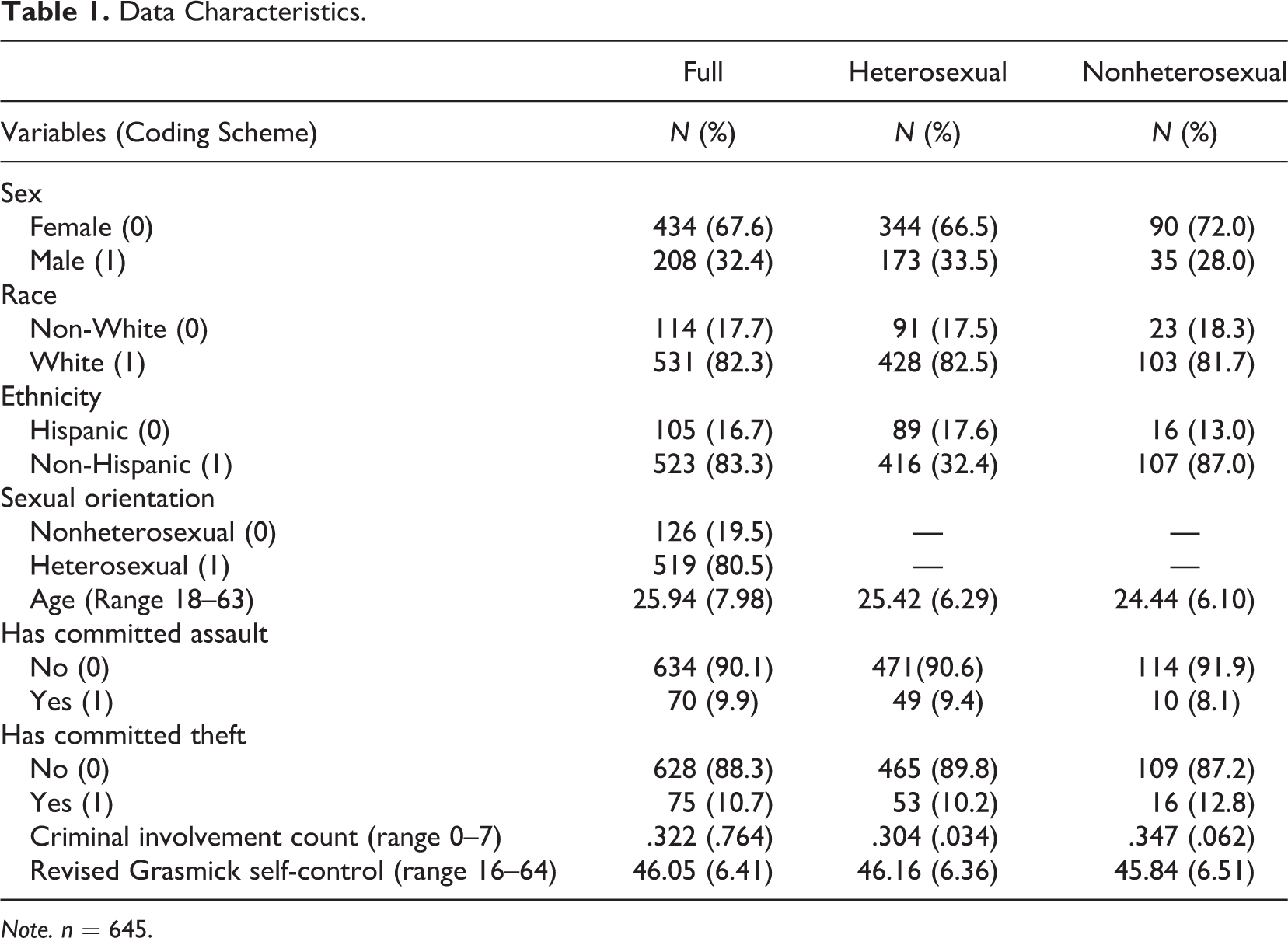
A quantitative questionnaire was designed and disseminated to collect cross-sectional data from a sample of college students. Students enrolled at a moderately sized Southern university during the spring 2013 semester were sent an e-mail requesting their voluntary and anonymous participation in a survey about college deviance and sexual orientation, along with a hyperlink to the survey itself, which was hosted on a third party website, surveymonkey.com. In total, 645 individuals participated in the study. The majority of participants were female (67.6%), White (82.3%), and non-Hispanic (83.3%).
Additionally, a substantial 19.5% of the sample was identified as nonheterosexual, an inclusive term used to capture individuals who identified as gay, lesbian, bisexual, pansexual, questioning, queer, or any other nonheterosexual self-reported identity (Koeppel & Bouffard, 2014a, 2014b; Messinger, 2011). In general, an estimated 3.5% of adults in the United States may be identified as nonheterosexual (Gates, 2011). Although not intentional in this study, oversampling of populations may have occurred due to the subject of the research. It is possible that despite the survey being sent to all students at the university, the potentially sensitive subject matter regarding sexual orientation could have influenced the demographics of participants, which in this case led to an oversampling of nonheterosexual individuals. While the unintentional oversampling of nonheterosexuals will interfere with the generalizability of results, it did result in a considerable number of nonheterosexual participants which provided strong analyses to compare sexual orientation groups.
Dependent Variables
Three measures of criminal behavior were used in this study. Theft was a binary measure and was coded 1 if the respondent had ever stolen anything worth less than US$10 and/or stolen anything worth more than US$50 (N = 75, 10.7%). Assault was also coded in a binary manner, where 1 indicated the respondent had gotten into a physical fight with a stranger and/or with someone they knew (N = 70, 9.9%). In addition to the binary measures, a count variable was created which captured how many of seven crimes a respondent had indicated they had participated in during the last 12 months. These crimes included the 2 items measuring assault and the 2 items measuring theft in addition to having sold illegal drugs to anyone; illegally carrying a weapon; and pressuring, coercing, or forcing someone else into unwanted sexual contact. Logistic regression models were used to predict the binary measures of assault and theft, while Poisson models were used to predict the count variable of criminal behavior.
Independent Variables
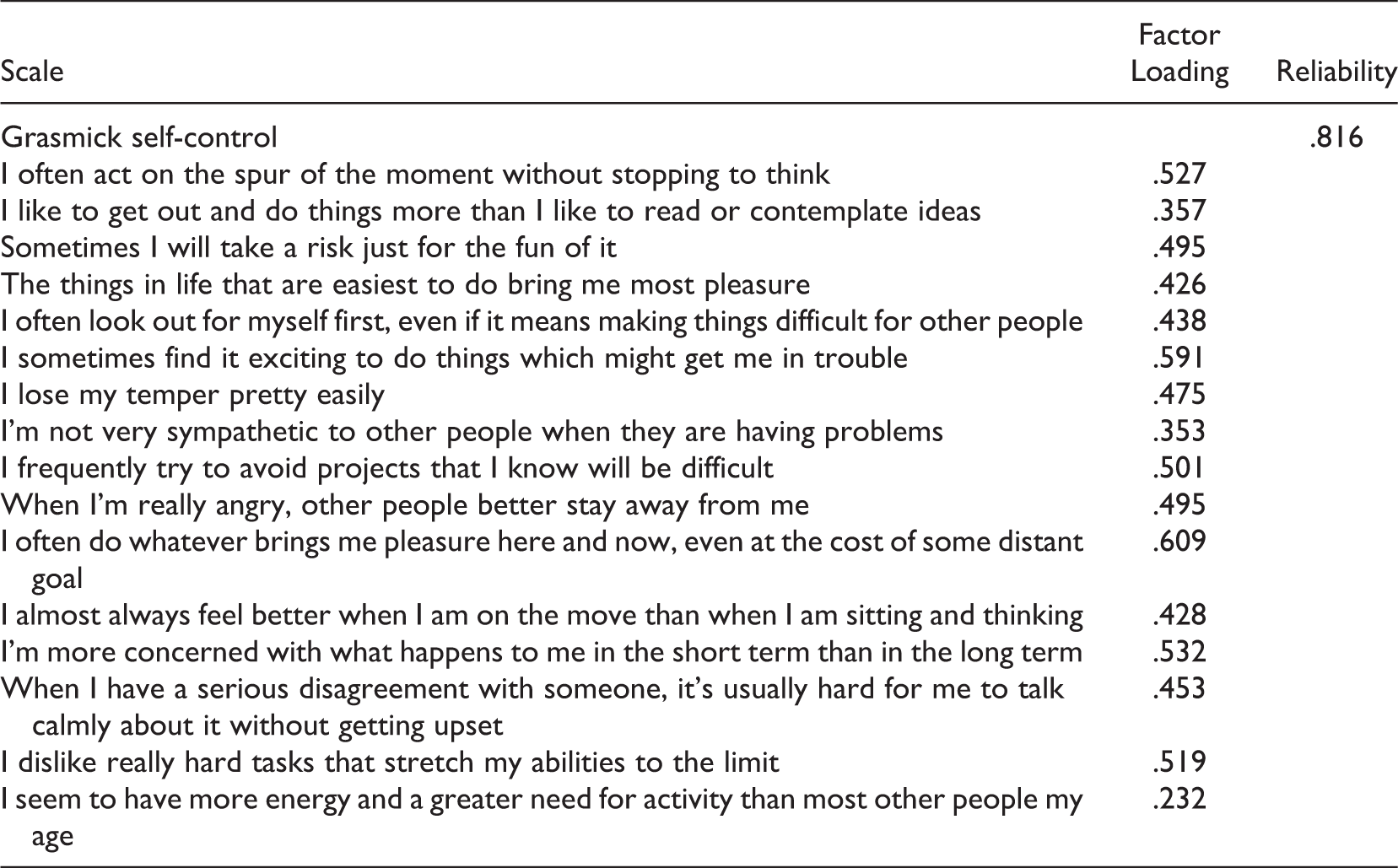
The Grasmick self-control scale is the most widely used measure of self-control (DeLisi, Hochstetler, & Murphy, 2003; Grasmick, Tittle, Bursik, & Arneklev, 1993; Pratt & Cullen, 2000), and a variation of the scale was utilized in the current study. While the original scale consisted of 24 items each rated on a 4-point Likert-type scale, where 1 indicated strongly agree and 4 indicated strongly disagree, a more current and revised version of the scale was used. This version includes 16 items, measured in the same Likert-type manner, which have passed the requirements of Rasch modeling for presenting a unidimensional trait (Gibson et al., 2010; Higgins, 2007). The 16 items included in the scale are presented in Appendix. Combined together, higher scores on the scale reflected higher levels of self-control, while lower scores indicated lower levels of self-control (Cronbach’s α = .816).
Personal Characteristics
Sexual orientation was measured by a single item indicator. Respondents who indicated they were bisexual, gay, lesbian, or other were grouped together as nonheterosexuals. This binary measure was coded, so 1 indicated the respondent was heterosexual and 0 indicated the respondent was nonheterosexual. The respondent’s age was measured in years at the time of participation. Sex was measured as the respondent indicating if they were male or female, while race consisted of identifying their race as White or non-White. Respondents identified as being Hispanic or non-Hispanic to measure ethnicity (Table 1).
Data Characteristics.
Note. n = 645.
Research Questions
Given the lack of existing literature on offending rates by sexual orientation, as well as a lack of theoretical literature on sexual orientation, a specific direction for the relationships is unable to be predicted. Therefore, the two questions are as follows:
Results
Bivariate Results
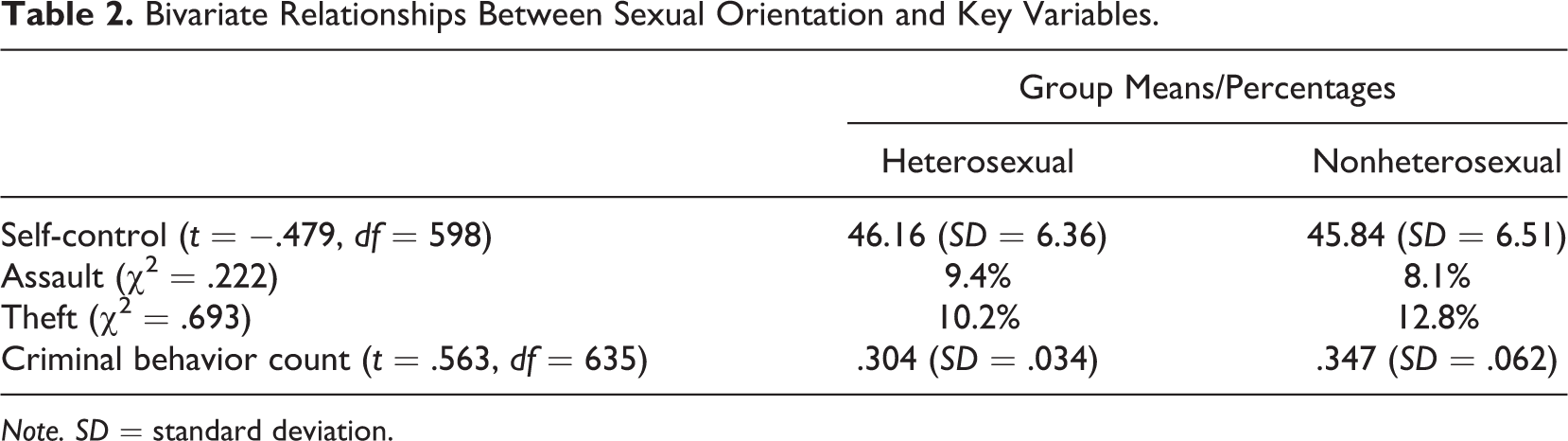
Table 2 presents the results from an independent sample t-test model used to examine bivariate relationships between sexual orientation and the level of self-control. Results indicate there was no significant difference between the level of self-control for heterosexuals and the level of self-control for nonheterosexuals (t = −.479, p > .05). An additional independent sample t-test model was conducted to determine whether there was a significant difference in participation of crime for the crime count variable between heterosexual and nonheterosexual individuals, although results indicated there were no significant differences (t = .563, p > .05). Analyses of variance tests used to compare involvement in criminal behavior between sexual orientation groups are also presented. Results indicate there is no significant difference in perpetration of assault for heterosexuals and nonheterosexuals (9.4% vs. 8.1%, χ2 = 0.222, p > .05). No significant differences were found for perpetration of theft as well (10.2% vs. 12.8%, χ2 = .693, p > .05).
Bivariate Relationships Between Sexual Orientation and Key Variables.
Note. SD = standard deviation.
Multivariate Results
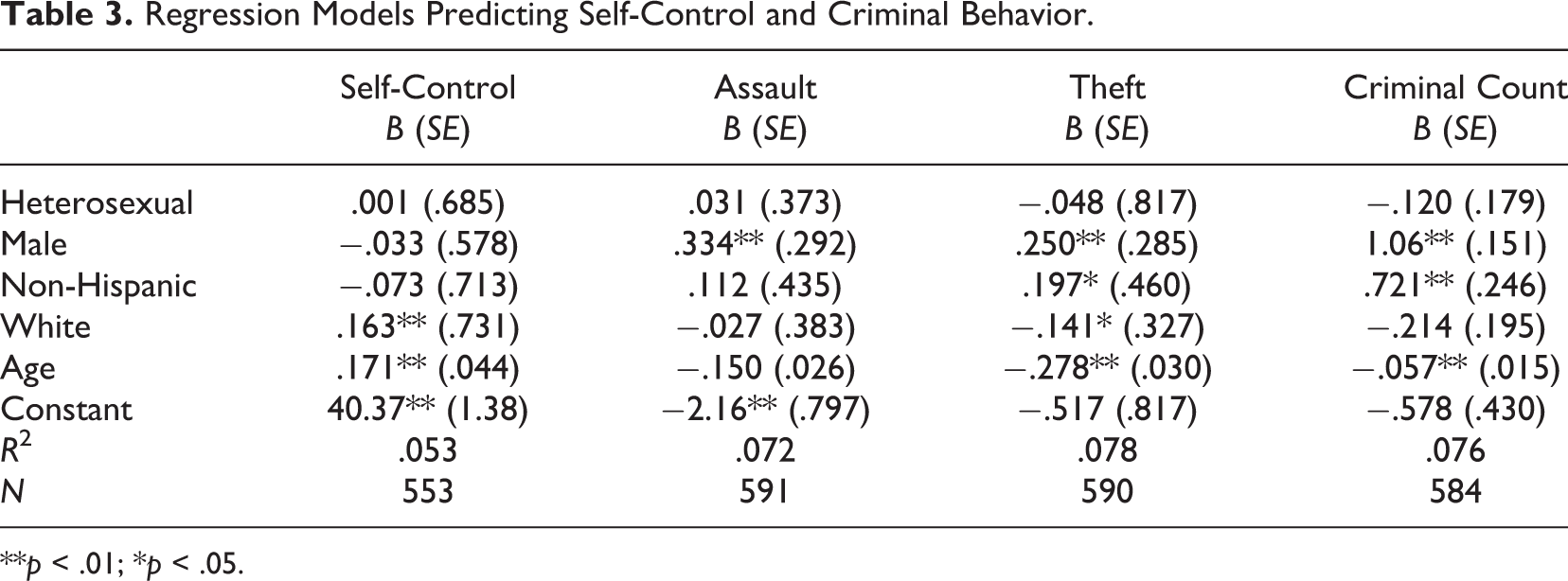
Results from four regression models predicting the key dependent variables are presented in Table 3. Results from a linear regression model predicting self-control indicate sexual orientation is not a significant predictor (B = .001, p > .05). The logistic regression model predicting perpetration of assault also indicate sexual orientation is not a significant predictor (B = .031, p > .05). Results from the logistic regression model predicting perpetration of theft are similar; sexual orientation is not a significant predictor (B = −.048, p > .05). Finally, the results from a Poisson regression model also find sexual orientation is not a significant predictor of involvement in multiple criminal activities (B = −.120, p > .05).
Regression Models Predicting Self-Control and Criminal Behavior.
**p < .01; *p < .05.
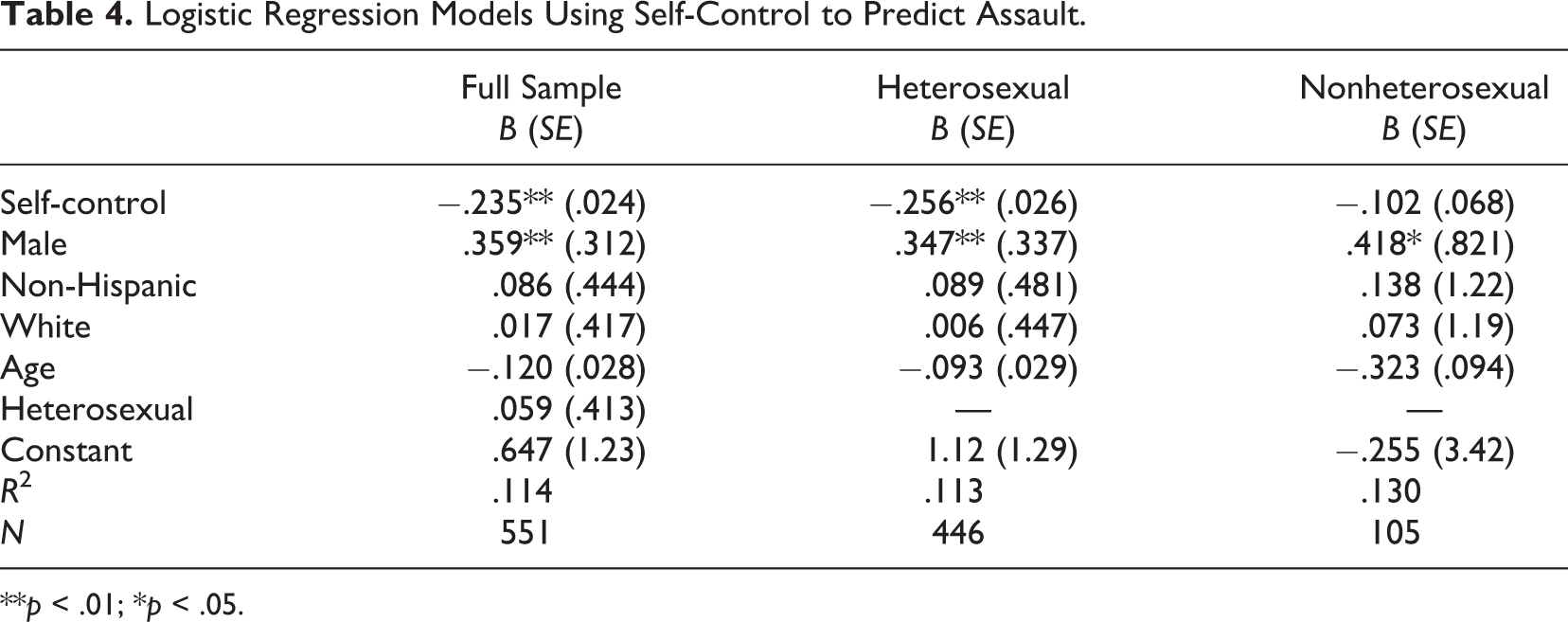
The results of three logistic regression models predicting perpetration of assault are presented in Table 4. Results for the full model found having higher self-control significantly decreased the likelihood of perpetrating assault (B = −.235, p < .01), as theoretically expected. Sexual orientation was not a significant predictor of perpetration of assault in the full model (B = .059, p > .05).
Logistic Regression Models Using Self-Control to Predict Assault.
**p < .01; *p < .05.
Next, the models were examined separately for the heterosexual and nonheterosexual samples. Self-control was a significant predictor for only the heterosexual samples (B = −.256, p < .01). As self-control levels increased, the likelihood of perpetrating an assault decreased. Self-control was not a significant predictor for the nonheterosexual sample (B = −.102, p > .05).
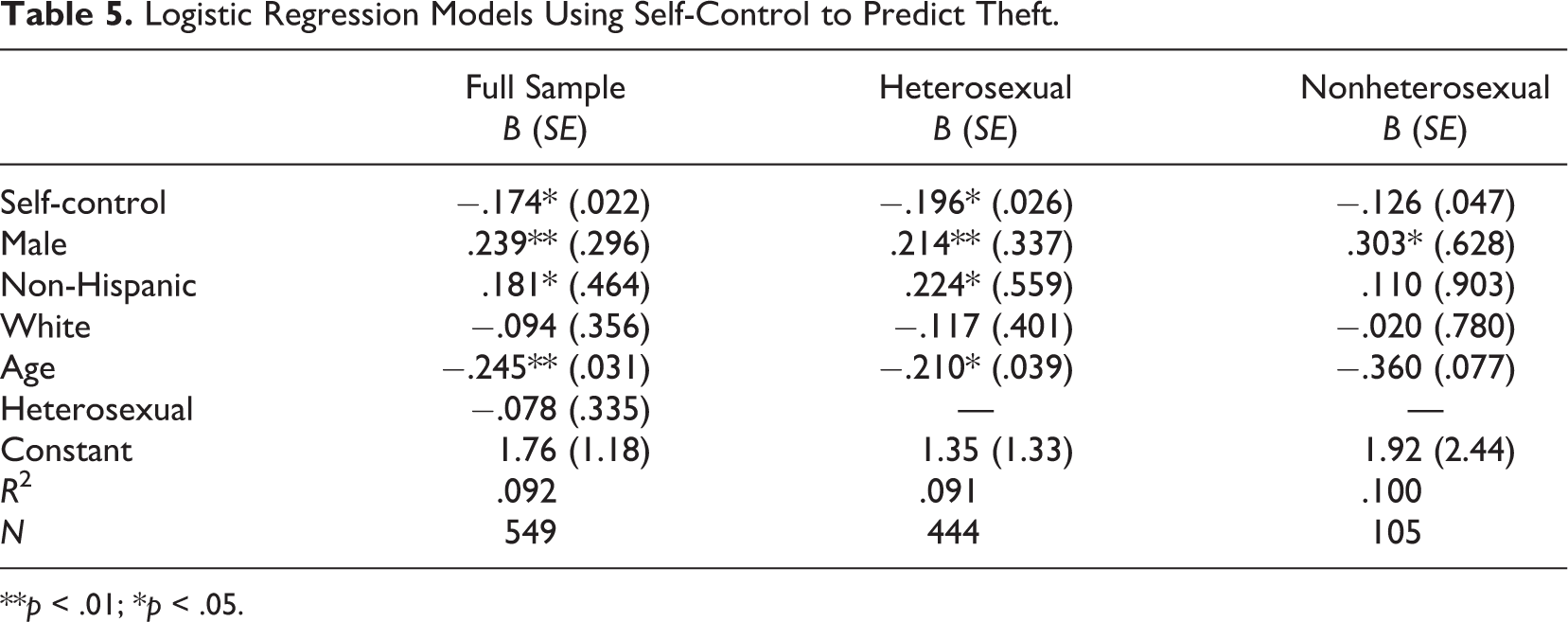
The results of three logistic regression models predicting perpetration of theft are presented in Table 5. Results for the full model found having higher self-control significantly decreased the likelihood of perpetrating theft (B = −.174, p < .05). Similar to the full model predicting committing assault, sexual orientation was not a significant predictor of perpetration of theft (B = −.078, p > .05).
Logistic Regression Models Using Self-Control to Predict Theft.
**p < .01; *p < .05.
Looking at the models predicting perpetration of theft split by sexual orientation group, results indicated self-control was a significant predictor for the heterosexual sample (B = −.196, p < .05). As self-control levels of heterosexuals increased, the likelihood of participating in nonviolent crime decreased. Self-control was not found to be a statistically significant predictor for predicting perpetration of theft for the nonheterosexual sample (B = −.126, p > .05).
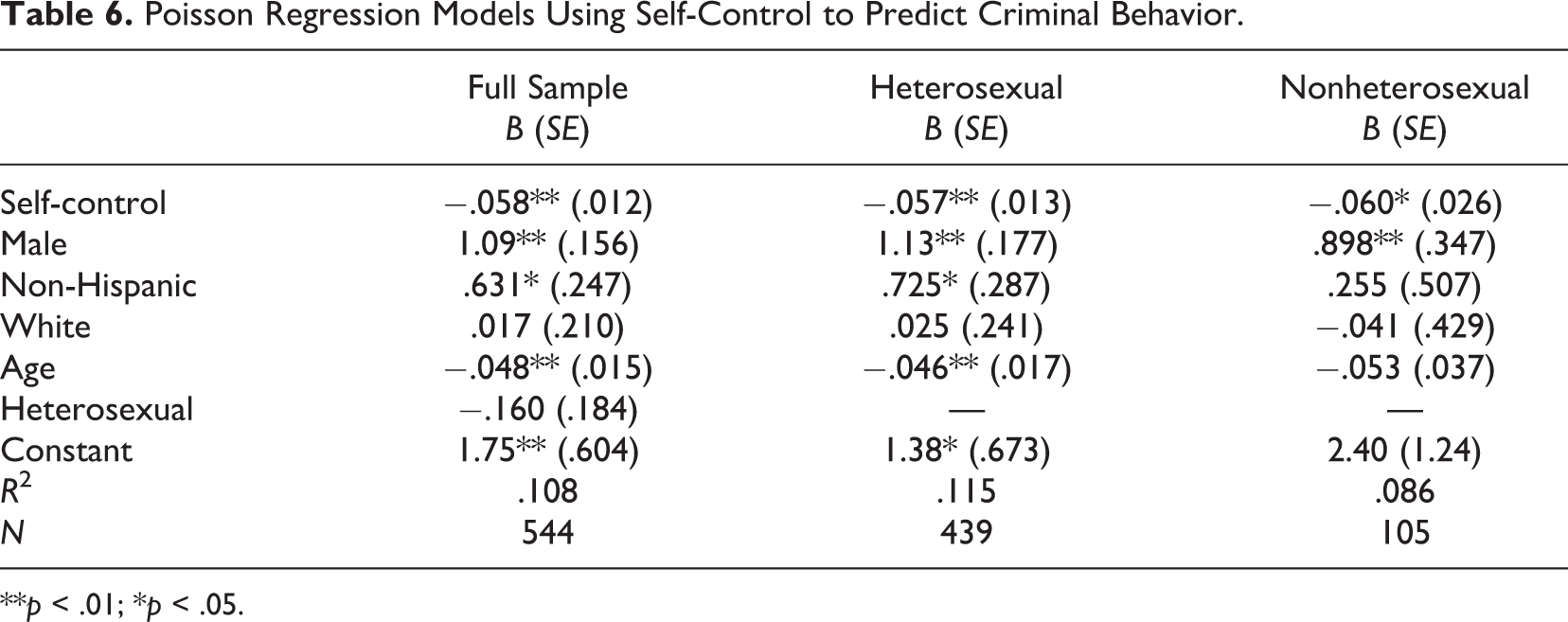
The results of three Poisson regression models predicting involvement in criminal activities are presented in Table 6. Results for the full model found having higher self-control significantly decreased the number of criminal activities in which the individual is involved (B = −.058, p < .01). Similar to the full logistic regression models predicting committing assault or theft, sexual orientation was not significant in predicting involvement in criminal activities (B = −.160, p > .05).
Poisson Regression Models Using Self-Control to Predict Criminal Behavior.
**p < .01; *p < .05.
Looking at the models predicting involvement in criminal activities split by sexual orientation group, results indicated self-control was a significant predictor for both the heterosexual sample (B = −.057, p < .01) and nonheterosexual sample (B = −.060, p < .05). As self-control levels of individuals increased, the number of criminal activities in which they are involved decreased.
Discussion and Conclusion
This research is among the first to explore self-control and sexual orientation and addresses a significant gap in the theoretical literature. Despite the impressive body of literature on the general theory of crime, it has yet to be examined from a sexual orientation perspective. With data from college students from a mid-sized southern university, this study compared the ability of self-control to predict self-reported criminal behavior between heterosexuals and nonheterosexuals, while addressing two research questions.
The first question considered if there would be a significant difference in engaging in criminal behavior between sexual orientation groups. Bivariate and multivariate results indicated there was no significant difference in the likelihood of involvement of assault between heterosexuals and nonheterosexuals, nor was there any difference in the likelihood of involvement of theft, or the number of criminal activities in which an individual was involved. As the first research of this kind to examine criminal behavior between sexual orientation groups, this finding is noteworthy, although it certainly should not be generalized outside of this data set.
The second question focused on whether self-control would consistently predict criminal behavior for one sexual orientation group over the other. For predicting the perpetration of assault and theft, self-control was a significant predictor for only the heterosexual population. When assessing the association between self-control and the criminal activity count, self-control was a significant predictor for both heterosexuals and nonheterosexuals. Although it was not possible to determine whether or not the influence of self-control on various criminal behaviors was statistically different between the sexual orientation groups, the support for the notion that self-control was a more consistent predictor of crime for heterosexuals is noteworthy, as the general theory of crime proposes that self-control should have consistently predicted criminal outcomes regardless of sexual orientation.
The lack of consistency regarding the ability of self-control to predict criminal involvement for nonheterosexuals may be a result of several things. First, as noted in the literature review, research has found a link between self-control and executive brain function which could provide an explanation of any variation (Beaver et al., 2007; Goldberg, 2001; Knoch & Fehr, 2007; Wikström & Treiber, 2007). Second, there may be relationships unaccounted for in the models, such as the influence of minority stress. When applied to sexual orientation, minority stress, a psychosocial stress unique to nonheterosexuals (Meyer, 1995), may interact with self-control, which may result in the weakening of its ability to predict nonviolent criminal behavior.
Minority stress in nonheterosexuals is comprised of internal and external homophobia, experiences of discrimination, and overall stigmatization associated with sexual orientation (Meyer, 1995, 2003). Higher levels of minority stress in nonheterosexuals have been associated with increased drug and alcohol use, a greater likelihood of intimate partner violence, and adverse psychological, health, and job-related outcomes (Hatzenbuehler, 2009; Kimmel & Mahalik, 2005; Kuyper & Fokkema, 2011; Waldo, 1999). One possibility is that minority stress may be a stronger predictor of criminal behavior than self-control. If this is the case, it may negate the relationship between self-control and criminal behavior. It should be noted that due to the lack of existing theoretical literature examining sexual orientation, this is all speculation. Further research pertaining to minority stress and criminal justice could be used to help develop programs for nonheterosexuals to deal with societal stressors and discrimination.
Regardless of the differences pertaining to sexual orientation, the direction of the relationship between self-control and criminal behaviors was consistent with previous literature and adds further support to the strength of self-control as one of the strongest predictors of deviance (Pratt & Cullen, 2000). The lack of consistency regarding self-control and predicting criminal behavior between sexual orientation groups, however, suggests that more work is necessary to determine if Gottfredson and Hirschi’s (1990) theory can be applied across sexual orientation groups. Results from this study, in addition to results of previous literature specific to sex and race, imply that self-control may be more complex than Gottfredson and Hirschi may have expected.
Despite the novelty of this research, there are a number of limitations attached to the study. To begin, this is the first study of its kind, and as such does not have the privilege of testing an already developed research protocol. Second, this research used data gathered from only one university, and the sample was not representative of the larger student body. The lack of representation and limitation of only one university limits the generalizability of these conclusions to only this data set. Third, given that the goal of this research is to examine college-related crime and deviancy, more serious criminal behavior such as robbery, burglary, or homicide are not measured in this research. Finally, given the nature of the subject, deviance, self-reports from students may not be honest, as individuals may have been sensitive to the subject. The self-report nature of the research may result in over- or underreporting due to unclear memory or dishonesty. Regardless of the numerated shortcomings, the role of this research is an important one, as results will provide a strong springboard for future research exploring the role of sexual orientation.
Recommendations for future research begin with the call to replicate this study with various populations and deviance measures. Given this study is the first of its kind, it would be extremely remiss to believe the findings reached with this specific data set would be the same for other research. The need for continued research is strengthened if future research uncovers contradictory conclusions to existing research. Additionally, future research may benefit from further examining sexual orientation and sex by exploring possible theoretical differences between male heterosexuals versus male nonheterosexuals and female heterosexuals versus female nonheterosexuals. This approach to the research will further develop the theoretical perspective regarding self-control, sexual orientation, and criminal justice. Understanding any possible relationships between theoretical predictors of crime and sexual orientation may shed some much needed light on understanding specific challenges nonheterosexuals may face in the criminal justice context.
The current study and its findings add to existing criminological literature, as they address a significant hole in the research, variations in theoretical concepts, and offending rates between sexual orientation groups. Data in this study discovered that despite having similar levels of self-control, self-control was not a significant predictor of self-reported criminal behavior between sexual orientation groups. These results highlight the need for continued assessment of the generalizability of self-control, as well as more research exploring the role of sexual orientation in crime. We understand quite a bit about sexual orientation and its expression within the family structure, child development, and other broader macro-social trends. These patterns are often related to political and cultural discussion, which have had direct effects on policy development and implementation (e.g., same-sex marriage). Given that very contemporary emphasis, our field has some responsibility to examine the evidence or lack thereof for between-group variation in crime/deviance outcomes. Heterosexuals and nonheterosexuals have different experiences as a result of their sexual orientation which lead to varying relationships between self-control and deviance. To continue to work toward a comprehensive understanding of crime, the varying experiences between heterosexuals and nonheterosexuals can no longer be ignored.
Footnotes
Appendix
| Scale | Factor Loading | Reliability |
|---|---|---|
| Grasmick self-control | .816 | |
| I often act on the spur of the moment without stopping to think | .527 | |
| I like to get out and do things more than I like to read or contemplate ideas | .357 | |
| Sometimes I will take a risk just for the fun of it | .495 | |
| The things in life that are easiest to do bring me most pleasure | .426 | |
| I often look out for myself first, even if it means making things difficult for other people | .438 | |
| I sometimes find it exciting to do things which might get me in trouble | .591 | |
| I lose my temper pretty easily | .475 | |
| I’m not very sympathetic to other people when they are having problems | .353 | |
| I frequently try to avoid projects that I know will be difficult | .501 | |
| When I’m really angry, other people better stay away from me | .495 | |
| I often do whatever brings me pleasure here and now, even at the cost of some distant goal | .609 | |
| I almost always feel better when I am on the move than when I am sitting and thinking | .428 | |
| I’m more concerned with what happens to me in the short term than in the long term | .532 | |
| When I have a serious disagreement with someone, it’s usually hard for me to talk calmly about it without getting upset | .453 | |
| I dislike really hard tasks that stretch my abilities to the limit | .519 | |
| I seem to have more energy and a greater need for activity than most other people my age | .232 |
Declaration of Conflicting Interests
The author declared no potential conflicts of interest with respect to the research, authorship, and/or publication of this article.
Funding
The author received no financial support for the research, authorship, and/or publication of this article.
