




Abstract
In the last few years, a considerable volume of body-worn camera (BWC) studies has evaluated to what extent this technology influences a range of policing outcomes. However, to date, a limited body of research explores how the implementation of this technology influences court-based outcomes. Using interrupted series analysis, and a sample of 13,000 incidents from a small police department, this research evaluates to what extent the implementation of BWCs impacted the adjudication process through an analysis of time to disposition, rate of convictions, and rate of dismissals. The results of our study show partial support for claims being made about the impact of BWCs on the court system. Namely, the number of incidents being referred for prosecution and the number of guilty decisions being reached saw a marginal increase after the implementation of BWCs. Additionally, the number of days to complete adjudication saw a decrease overall during the post-implementation period. The policy implications of these findings are discussed.
Introduction
In the criminal justice system, the development and innovation behind several types of technology has been paramount in the ongoing search to improve organizational efficiency and operational effectiveness. The emergence of body-worn camera (BWC) technology is no exception. With the adoption of BWCs becoming more widespread, a vast majority of the academic literature assessing their impact has focused on a wide range of police outcomes (see Lum et al., 2019 for a detailed review). While it was anticipated that many of the studies surrounding BWCs in the immediate wake of their implementation would concern whether they achieved the desired outcomes they were designed for (namely, increasing police accountability), a scarcity of research currently exists regarding the downstream effects of this technology. As Lum et al., (2019) note in a comprehensive review of the literature, we know little about the broader effects of this technology. Specifically, to what extent this technology influences the court process.
Research shows that several factors play a role in how a court case will be resolved. Among the litany of factors, three prominent factors include the dynamics of the courtroom workgroup (Eisenstein & Jacob, 1977), the credibility of victims (Frohmann, 1991), and the most influential being the individual assessment as to the probability of obtaining a guilty verdict (Albonetti, 1987; Frederick & Stemen, 2012). Concerning the latter, one of the most influential factors in prosecutorial decision-making is the strength of evidence, where cases with stronger evidence for conviction experience a higher likelihood of being filed (Albonetti, 1987; Spohn et al., 2001). Of the many arguments for BWCs, one claimed benefit is that BWCs would provide a stronger, tangible piece of evidence that would increase the likelihood of a case being filed.
Despite the anticipated impact of BWC footage on prosecutorial decision-making, few studies have examined the impact BWC’s would have on court outcomes. Merola and colleagues (2016) have provided the most information regarding the potential impact of BWC footage on the court system by surveying prosecutors across the nation. Based on their study, most prosecutors believed that BWCs will benefit the prosecution more than the defense and will also lead to an increase in the rates of conviction and the frequency of plea bargains (Merola et al., 2016). Although there appears to be a large amount of support for BWC footage, as a form of evidence by prosecutors, the impact of BWCs on conviction and dismissal rates, as well as the time to final disposition in the courts, remains under examined.
This study fills an important gap in the literature by measuring the impact of BWCs on court-based outcomes. For jurisdictions considering the implementation of BWCs, our findings are useful to consider when determining the costs and benefits of them. Additionally, to fully understand the effects of BWCs on criminal justice processes, their impact on the courts should be evaluated. Policy implications from this research include creating a streamlined system that uses BWCs in court proceedings and increasing the overall utilization of BWC footage to increase the quality of reports and evidence used by different court actors.
Substantial amounts of resources are allocated to the implementation and use of BWCs in several jurisdictions across the states. By highlighting the resources that are saved due to the use of BWCs and the ways in which they can be employed by practitioners for beneficial purposes is important in terms of a broader cost-benefit perspective. Further, potential positive social impacts that stem from this research include the increased quality of evidence used in court proceedings and the decreased number of days to reach final dispositions. These factors may result in a more positive attitude towards the courts and criminal justice system by the individuals of whom it serves by providing more transparent evidence in the process and decreasing the amount of time the individual is detained pre-trial waiting for a final disposition. With these potential policy implications in mind, this study examines how the implementation of BWCs has impacted the number of cases referred for prosecution, conviction and rejection rates, and the time to final disposition. The current study relies on 13,000 incidents from a small police department to examine to what extent the implementation of BWC’s could influence court-based outcomes.
Literature Review
Factors Influencing Prosecutor Decision-Making
Several factors influence a prosecutor’s decision on whether to refer or reject a case for prosecution. One of the most well-known factors is the courtroom workgroup. The courtroom workgroup is comprised of the prosecutors, judges, and defense attorneys that try cases in a local jurisdiction and their consistent interactions will slowly shape the informal rules and practices of the group (Eisenstein & Jacob, 1977; Heumann, 1977). The establishment of these informal rules and practices by the courtroom workgroup provide a sense of predictability for the actors involved and can be referred to as the local legal culture (Church, 1985). This predictability can come in a variety of forms, from knowing which cases will be referred for trial to how long a case should take to reach a final adjudication. Together, the dynamics of the courtroom workgroup and the local legal culture often exert a fair amount of influence on the prosecutor’s decision as to how the case will proceed (Frederick & Stemen, 2012).
Aside from the pressures of the courtroom workgroup dynamics, the local legal culture, and the internal policies of prosecutor’s offices, the prosecutor’s decision to pursue a case hinges on legally relevant case characteristics. Again, to minimize uncertainty, the prosecutor is more likely to refer a case for prosecution if the odds of obtaining a conviction are good (Albonetti, 1987; Frederick & Stemen, 2012; Spohn et al., 2001). To accomplish this, a prosecutor must evaluate the evidence that is available in the case. The evidence being evaluated can include a variety of things, from hard evidence, such as DNA or weapons used in the commission of the crime, to more subtle pieces of evidence like defendant characteristics and victim credibility. In cases where the available evidence is strong and where the victim’s credibility is good, the likelihood of obtaining a conviction increases and therefore the likelihood of the prosecutor referring the case for prosecution also increases (Frederick & Stemen, 2012; Frohmann, 1991; Spohn et al., 2001).
This recurring need to minimize uncertainty can be further tied to the idea that a prosecutor’s performance tends to be measured by their conviction rate or ‘win percentage’ (Ferguson-Gilbert, 2001; Glazer, 2001). As one means of performance, this calculation is often used in consideration for incentives and promotion and has been linked to detrimental outcomes - including overzealousness on the part of prosecutors to convince others that the evidence aligns with their version of the case (Burke, 2005; O’Brien, 2009). While prosecutors act ethically in most of their decisions, their competing mandates to be an impartial actor to seek justice and be a zealous advocate to obtain a conviction inherently complicate their job (Berger v. United States, 1935; Sklansky, 2016). These competing mandates can lead to some instances of prosecutorial misconduct. This misconduct may be achieved through the leveraging of information (evidence) minimizing uncertainty and thus increasing successful case dispositions.
A review of the literature demonstrates that while the aforementioned factors contribute to prosecutorial decision-making, one of the more dominate factors influencing court outcomes is the strength of the evidence (Frederick & Stemen, 2012; Frohmann, 1991; Spohn et al., 2001). Across the levels of evidentiary strength, tangible evidence (or ‘hard evidence’) tends to be easier to evaluate when it comes to strength of evidence since it is something that the prosecutor can physically review. Along with DNA evidence, and any weapons that may have been found at the crime scene, BWC footage can also be a form of hard evidence that can be physically evaluated by the prosecutor for its value. Importantly, strength of evidence is associated with a range of outcomes including decreases in time to disposition, increases in guilty pleas, and sentencing outcomes (Redlich et al., 2016).
BWCs Purported Impact on Court Outcomes
While most BWC studies concern their impact on various policing measures, one policing related study has touched on the perceived impact of BWCs, as it relates to the quality of investigatory materials and evidence for prosecution. In their mixed method study, Pelfrey Jr and Keener (2016) utilized surveys and focus groups with a large university police agency prior to BWC implementation to understand their perceptions of the anticipated impacts BWCs would have on their work. Among their findings, officers believed that BWCs would aide with report writing and note taking, along with increasing the quality of evidence and expediting prosecutions (Pelfrey Jr & Keener, 2016). Nevertheless, Lum and colleagues (2019) have conducted the largest meta-analytic study on the status of BWC research to date, and they have acknowledged the severe lack of research being conducted on the full impact of BWCs on court-based outcomes.
However, the few studies that have examined BWCs and courts have made contributions to our understanding of the role BWCs play in the adjudication process. In a study that surveyed prosecutors across the nation, over 90% of jurisdictions with BWCs have already begun using them in prosecution proceedings (Merola et al., 2016). Additionally, Merola and colleagues (2016) found that over half of those prosecutors surveyed not only supported the use of BWCs by police (∼80%), but they also believed that: they would benefit the prosecution more than the defense (63%), lead to increases in convictions (58%), and lead to increases in the use of plea bargains (62%). The survey results from their study provide some insight as to the potential impact of BWCs from a prosecutorial standpoint, but it does not provide any real testing of how BWCs have impacted the adjudication process.
There have been three studies conducted in the United Kingdom suggesting that BWCs might increase the detection and clearance of criminal investigations along with the rate of guilty pleas (Ellis et al., 2015; Goodall, 2007; ODS Consulting, 2011). Despite the encouraging results from this trio of studies, each study importantly highlights their methodological weaknesses and tempers any attempts to generalize the study results. Another study by Owens and colleagues (2014) found that BWCs can lead to an increase in the number of incidents detected, which resulted in a criminal charge being filed, though were unable to conclude that BWCs had an impact on guilty pleas. More recently, one study documented that BWC footage, in the context of intimate partner violence, can assist officers with moving cases to prosecution when cooperation by the victim is lacking, and that cases are more likely to filed or result in a conviction either via plea bargain or trial (Katz et al., 2014).
While the aforementioned studies provide limited support for and refute claims made on the benefits and detriments of BWCs on court outcomes, there remains a considerable gap concerning the impact BWC’s have on court processes and prosecutorial outcomes. Using time series analysis, the current study fills this important gap by examining to what extent the implementation of BWCs into a police agency influenced the number of cases referred for prosecution, specific to court processes if BWCs influenced the time associated with key phases, and lastly influenced case outcomes – including rates of rejection and conviction rates. To evaluate these claims, we produce the following hypotheses:
The implementation of BWCs will lead to an increase in the number of cases referred for prosecution. The implementation of BWCs will influence case outcomes. The implementation of BWCs will lead to a shorter time to final disposition.
Methodology
Data and Background
Data for this project represents a collation of data provided from a police department and prosecutors office located in the Pacific Northwest. The department is a smaller agency with over 30 sworn personnel and serves a resident population of ∼35,000, with the population increasing on average by 20,000 between August and May. To assess each of our hypotheses, the police department provided the number of incidents reported by officers including the number of offenses referred for prosecution. Importantly, these data include the date of referral, which in concert with the court disposition date allows for a calculation of the number of days to adjudication. While these dates were available at the daily level and could be aggregated to the weekly level for analysis, for the purposes of assessing our hypothesis and providing meaningful data to key stakeholders, we aggregate these measures at the monthly level. Between the study period spanning from January 2004 through December 2018, there were 13,000 individual cases referred for prosecution.
Specific to prosecutorial decision-making, we include prosecutor decisions to amend or reject charges – we also include measures for other dispositions, such as involuntary court commitment, and cases vacated by court order, which do not reflect the above referenced prosecutorial decisions. Due to the low frequency of the involuntary court commitment and vacated by court order dispositions, these dispositions were collapsed into another category for simplicity, along with diversion agreements, deferred prosecution, and pending designations. To evaluate to what extent BWCs may influence case outcomes, we include measures associated with a finding of guilt, a dismissed decision by a judge, or a rejection for prosecution. Unfortunately, with these data, we are not able to disaggregate between guilty pleas and other forms of guilt.
BWC Implementation
The police department implemented BWCs in April of 2013. Implementation of BWCs within the agency was an internal decision. There were no adverse incidents associated with the decision to implement a program, nor public pressure to obtain a program. Most importantly, the implementation of body-worn cameras was not associated with external grants, nor external oversight or guidance on implementation. In many ways, the agency’s BWC implementation represents efforts attempting to evaluate their impact, as opposed to an agency involved in research attempting to document if BWC will have an impact. This retrospective approach, while lacking a true experimental design framework, remains valuable as it can be easily replicated across other locations.
Analysis
As aforementioned, existing research has primarily relied upon standard analytical approaches that do not account for temporal dynamics within these data. It is entirely possible that an examination from a year prior to, and a year post, BWC implementation may show signs of an effect. However, an approach like this would be unable to account for longer trends nor demonstrate the implementation of the technology, alone, accounted for these observed changes. In absence of a true randomized experiment, time series analysis provides a more robust analytical solution for identifying intervention effects (Bernal et al., 2017; Campbell, 1969; Cook et al., 2002; Linden, 2015). Interrupted time series analysis can document the impact of an intervention and the associated magnitude of that intervention. What is particularly valuable about this statistical approach is the ability to examine for delayed implementation effects – that is to say, while policy may have an implementation date, the integration of the policy, or in our case BWC’s, may take time to demonstrate an effect. Using this approach, we can examine immediate effects and delayed effects between the implementation of BWC’s and our outcome measures.
Conducting a time series analysis requires adequate observations to attain the necessary statistical power to test a hypothesis. Additionally, when undertaking an interrupted time series analysis, there should be a suitable number of pre/post intervention observations. There are 180 monthly observations occurring between January 2004 to December 2018, with an intervention point of April 2013. Given the nature of our data, and the hypotheses, we use a single group interrupted time series analysis (ITSA). As explained by Linden (2015), ITSA relies on ordinary least squares (OLS) regression because it is typically more flexible and applicable across most contexts. Admittedly, the use of a single-group ITSA is problematic. Most centrally, there is no control group, which allows for us to evaluate the counterfactual (Linden, 2017). As such, as Linden (2017) cautions, these results should be viewed as preliminary. However, recognizing the uniqueness of these data, and our inability to obtain adequate comparison data, we inevitably must employ the single-group ITSA, which as Bernal et al. (2019) argue should still be regarded as an intermediate methodology for the detection of intervention effects. Therefore, we estimate our models using the ITSA package in Stata 17.
Briefly, Linden (2015) defines the single group interrupted time-series analysis regression series model as:

Recognizing the potential for seasonality, that is cases may fluctuate consistently during specific months or periods, we include a control in each model for each of the 12 months. Additionally, autocorrelation is addressed through a transformation process (Durbin-Watson). Augmented Dickey-Fuller tests for unit root were completed in Stata 17. MacKinnon approximate p-value for Z(t) were <0.001 indicating stationarity in each of the outcome variables.
Findings
Table 1 shows the descriptive statistics for the cases included in the sample. A large majority of the cases involved males (74.4%), white individuals (81.1%), with an average age of 32. Concerning court disposition most cases resulted in a guilty decision (36.3%) followed by cases that resulted in a dismissal (28.9%) and cases that were rejected for prosecution (14.4%). Although the overall median days to adjudication is 52, those cases resulting in a dismissal took longer (95 days), while those that resulted in a guilty decision (43 days) and a rejection for prosecution (21 days) were reached more quickly.
Sample Descriptive Statistics (N = 13,000).

Notes. *Indicates that the value is a median.
ITSA Results
Table 2 depicts the regression results for the ITSA models assessing the post-treatment effect of BWCs on case outcomes disaggregated by offense type. While these disaggregated results are not the primary focus of the current study, the statistically significant findings do offer a few interesting insights. For DUI cases, after the implementation of BWCs, the days to adjudication decrease at a rate of .57 days per case per month (p < .05, CI = −1.13, −.01). The days to adjudication for driving with license suspended (DWLS) cases decrease at a rate of .61 days per case per month (p < .05, CI = −2.7, −.31). Lastly, the number of DWLS cases resulting in a guilty decision were declining with a rate of .01 cases per month (p < .05, CI = −.02, .0002). When broken down by offense type, these findings require further research attention. Importantly, the meaningful variance between these types of offenses is minimal. Nevertheless, our DUI specific findings align with previous research indicating that cases involving impaired drivers, specifically cases involving a refusal of an FST, the impairment of the driver may be made visible which could lend itself to the decreased days to adjudication (Groff et al., 2018). Due to the lack of existing empirical research that would support predictions specific to offense type, we decided to aggregate these offense types to provide a broader understanding of the impact of BWCs on the overall court process.
ITSA Post-Treatment Effect of Body-Worn Cameras on Case Outcomes.
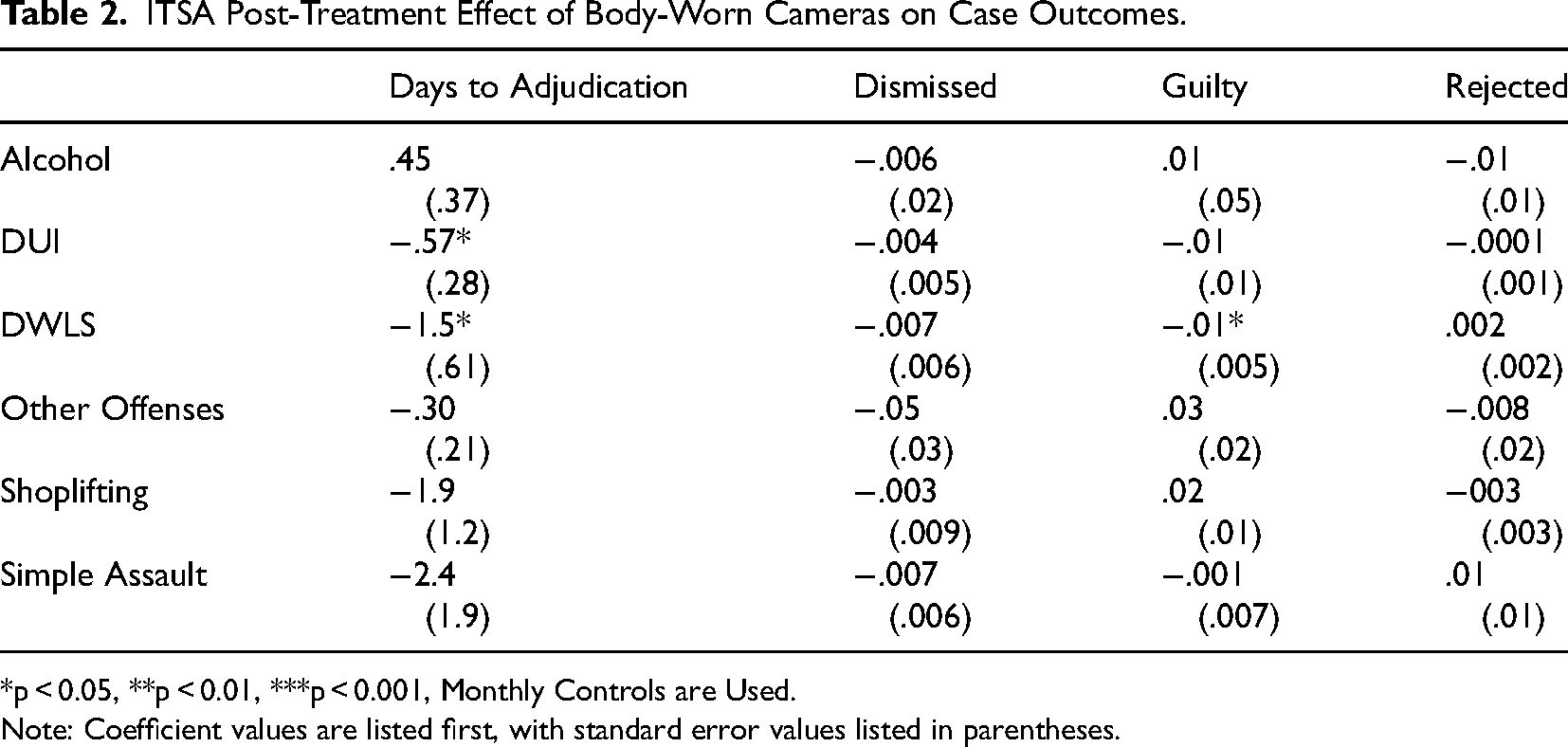
*p < 0.05, **p < 0.01, ***p < 0.001, Monthly Controls are Used.
Note: Coefficient values are listed first, with standard error values listed in parentheses.
Table 3 provides the regression results for the ITSA models 1 evaluating the various hypotheses. Regarding the first hypothesis that the implementation of BWCs will lead to an increase in the number of cases being referred for prosecution – two ITSA analyses were ran on separate variables: the first variable was the raw number of incidents referred for prosecution monthly, while the second variable represents a ratio of the number of incidents referred for prosecution against the total number of calls for service in a given month. The rationale for the creation of the second variable is an attempt to account for police department workload. By creating a ratio of the actual number of incidents referred for prosecution divided by the total number of calls for service monthly, we can evaluate whether any observed changes in incidents referred was influenced by the implementation of BWCs or by changes to police workload.
ITSA Results for Court Process and Case Outcomes.
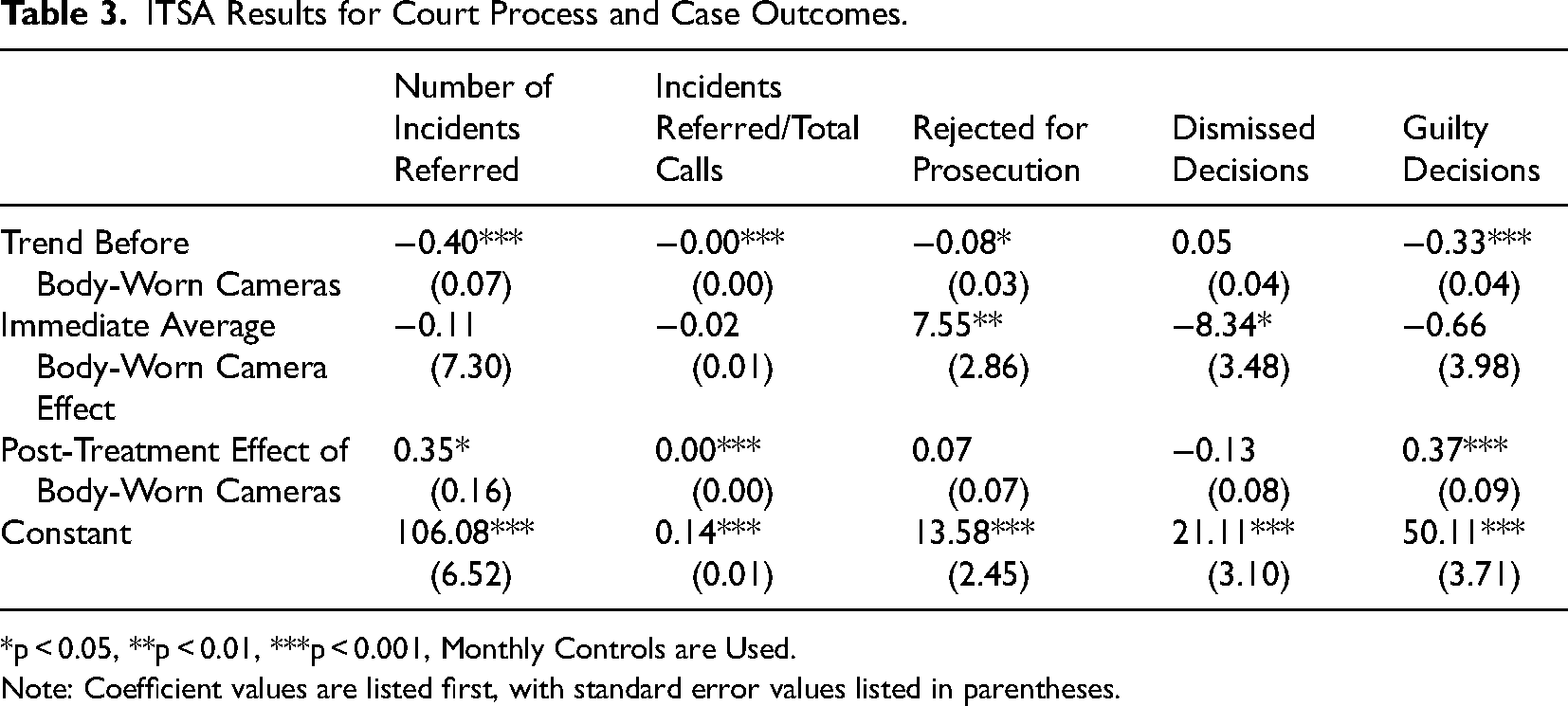
*p < 0.05, **p < 0.01, ***p < 0.001, Monthly Controls are Used.
Note: Coefficient values are listed first, with standard error values listed in parentheses.
Results of this analysis indicate the number of incidents referred for prosecution from January 2004 was decreasing at a rate of 0.40 cases per month up until the implementation of BWCs in 2013 (p < 0.001, CI = −0.55, −.026); although the ratio of incidents referred to total calls for service during the same period was decreasing at a rate of less than 0.001 cases per month (p < 0.001, CI = −0.001, −0.000). Interestingly, while the immediate effect of the implementation of BWCs was not significant for either the raw number of incidents referred for prosecution or the ratio of incidents referred to total calls for service, the post-intervention period after BWCs were implemented showed a statistically significant increase in the raw number of incidents referred for prosecution by 0.35 cases per month (p = 0.035, CI = 0.03, 0.67).
As displayed in Figure 1, the starting level of incidents referred for prosecution in January 2004 was 106 cases per month but the actual number of cases being referred for prosecution monthly was scattered, with an average decrease of 0.40 cases being referred for prosecution monthly up until the intervention point. At the intervention point in April 2013, there was a decrease similar to the trend pre-intervention, though this did not reach a level of significance. The post-intervention period shows a slight increase in the number of cases being referred for prosecution monthly. Controlling for the ratio of calls for service and incidents referred, the same pattern exists, suggesting BWCs have an effect, though negligible, on the number of incidents referred to the prosecutor. Results of this analysis indicates that in January 2004, the starting rate of cases being referred for prosecution to the total number of calls for service was approximately 14%, yet the actual rate of cases being referred for prosecution to total calls for service varied widely with a general decrease of less than 1% per month up until the intervention point. Additionally, the general downward trend continued in April 2013 and further into the post-intervention period.
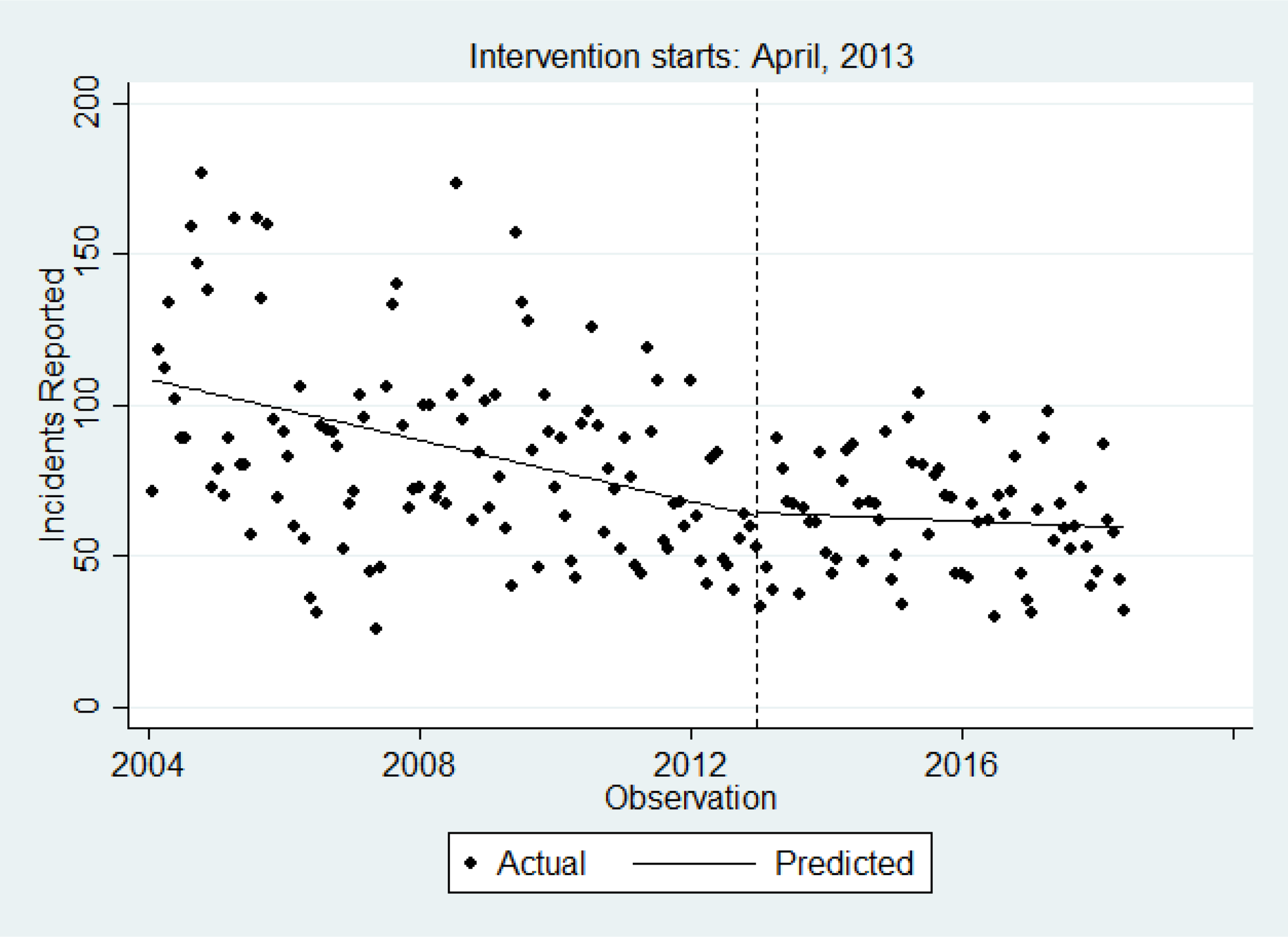
Incidents referred.
Specific to the second hypothesis – that the implementation of BWCs will influence case outcomes three ITSA models were ran: one for the number of guilty decisions monthly, one for the number of cases rejected for prosecution monthly, and one for the number of dismissed decisions monthly. The number of cases resulting in a guilty decision and cases being rejected for prosecution from January 2004 until April 2013 were declining similarly, with rates of 0.33 (p < 0.001, CI = −0.41, −0.25) and 0.08 (p = 0.013, CI = −0.13, −0.02) cases per month, respectively. Alternatively, the number of cases resulting in a dismissed decision during the same time period was showing a slight increase, but this was not significant. For the number of guilty decisions monthly, there was no significant impact at the point of intervention, though in the post-intervention period, the decreasing trend ceases with a slight increase in the number of guilty decisions monthly by 0.37 cases (p < 0.001, CI = 0.20, 0.54). As for the number of cases rejected for prosecution monthly, opposite results were found; the immediate impact of the intervention showed a significant spike in the number of cases being rejected for prosecution with 7.55 cases (p = 0.09, CI = 1.90, 13.21), but this increase was not sustained during the post-intervention period. Lastly, the number of cases resulting in a dismissed decision saw a decline at the point of intervention with 8.34 cases (p = 0.02, CI = −15.21, −1.46), but this significant decrease did not persist during the post-intervention period.
Figure 2 shows the related ITSA graph for the regression results from the number of cases resulting in a guilty decision. As seen in Figure 2, the starting level of cases resulting in a guilty decision in January 2004 was approximately 50 cases per month but the actual number of guilty decisions per month varied, with an average decrease of 0.33 cases resulting in a guilty decision monthly up until April 2013. At the intervention point, the number of guilty decisions mirrored a similar decrease, though in the post-intervention period the monthly number of guilty decisions shows a minor increase.

Guilty decisions.
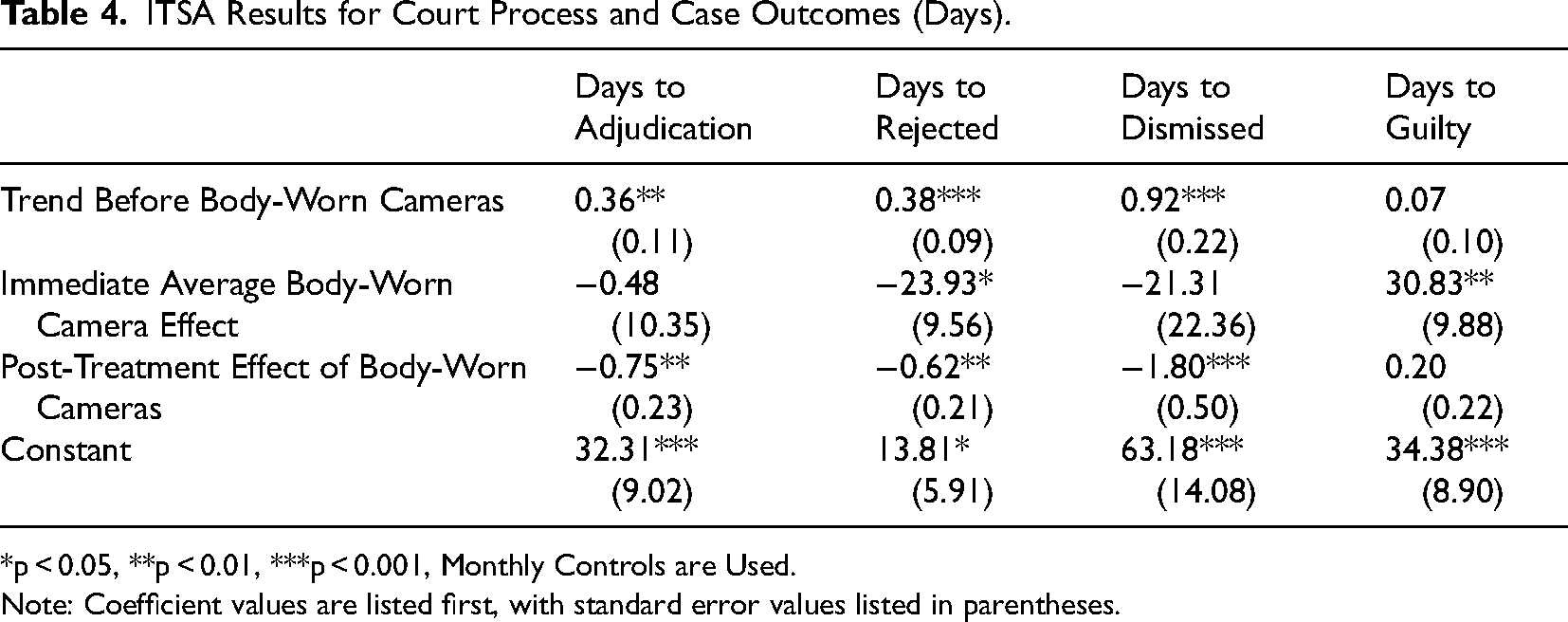
Lastly, with the final hypothesis – that the implementation of BWCs would lead to a shorter time to final disposition – four ITSA models were ran: one for the number of days to reach adjudication overall, one for the number of days to a dismissed decision, one for the number of days to a guilty decision, and one for the number of days to a rejection for prosecution. The results of these analyses are in presented in Table 4. The number of days to a final disposition overall was slightly increasing from January 2004 until April 2013, with an increase of 0.36 days per case per month (p = 0.001, CI = 0.16, 0.57). Although there was no significant impact of BWCs on days to final disposition at the intervention point, the post-intervention period showed a statistically significant decrease in the number of days to final disposition by 0.75 days per case per month (p = 0.002, CI = −1.21, −0.28). Figure 3 represents this trend graphically.
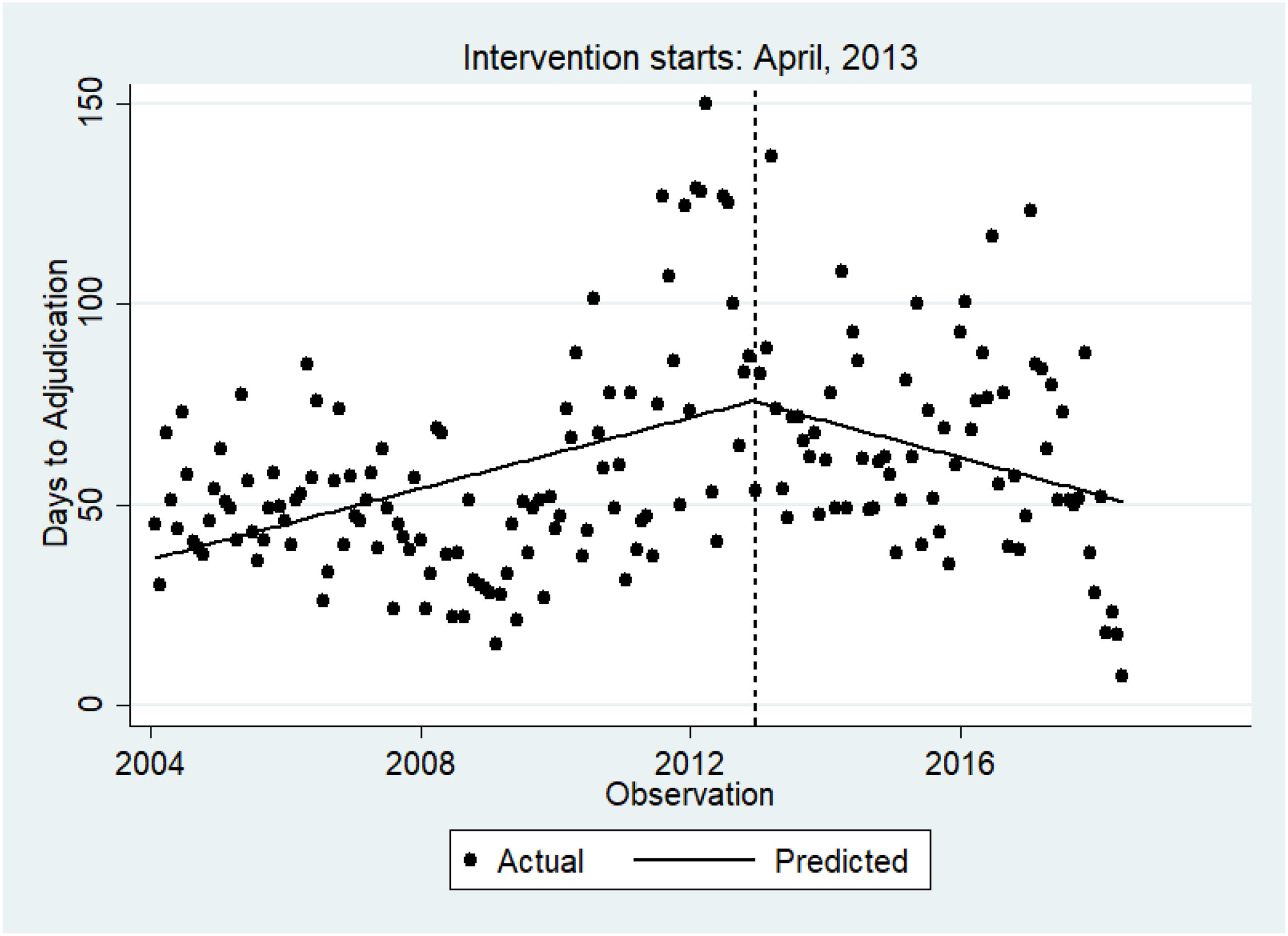
Days to adjudication.
ITSA Results for Court Process and Case Outcomes (Days).
*p < 0.05, **p < 0.01, ***p < 0.001, Monthly Controls are Used.
Note: Coefficient values are listed first, with standard error values listed in parentheses.
When looking at the number of days to a dismissed decision between January 2004 and April 2013, there appears to be a slight increase of 0.92 days per case per month (p < 0.001, CI = 0.48, 1.35). Despite the intervention point not yielding a significant change in the number of days to a dismissed decision, the post-intervention period showed a significant decline of 1.80 days per case per month (p < 0.001, CI = −2.79, −0.81). Concerning the number of days to reach a guilty decision, the pre-intervention period did not exhibit any significant trends, though at the intervention point, the days to reach a guilty decision saw a significant increase of 30.83 days (p = 0.002, CI = 11.32, 50.34). However, this significant spike was not maintained during the post-intervention period. As for the days to a rejection for prosecution, the pre-intervention period saw a significant slight increase of 0.38 days per case per month (p < 0.001, CI = 0.19, 0.56). Surprisingly, the intervention point shows a significant drop of 23.93 days (p = 0.013, CI = −42.81, −5.06) and this significant decline persisted during the post-intervention period with a sustained decrease of 0.62 days per case per month (p = 0.004, CI = −1.04, −0.20).
Seen in Figure 4, the starting level for the number of days to a dismissed decision in January 2004 was approximately 63 days but the number of days to reach a dismissed decision varied, with an average increase of 0.92 additional days per case up until the intervention point. However, in April 2013 the number of days to reach a dismissed decision saw a decrease and that downward trend sustained into the post-intervention period. A similar pattern can be seen regarding the number of days to reach a rejected decision. Problematically, the data include several significant outliers, resulting in a need to create a log of the number of days to adjudication. Results of both analyses, and as depicted in Figures 5 and 6, show the number of days to rejection was approximately 14 days with an average increase of 0.38 additional days per case leading up to the intervention point. Additionally, in April 2013 the number of days to reach a rejected decision also saw a decrease that persisted into the post-intervention period.
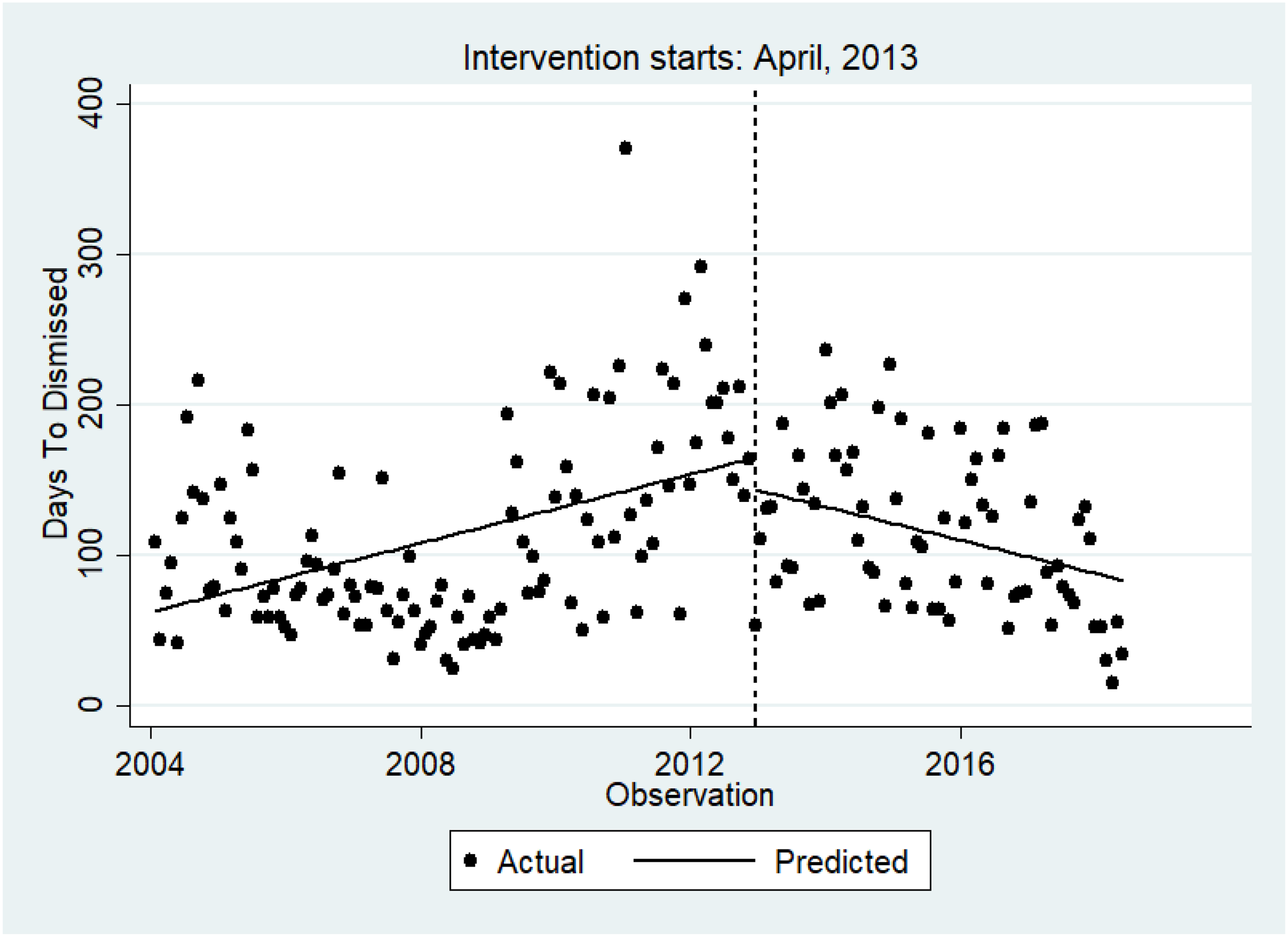
Days to dismissed.

Days to rejection (log).
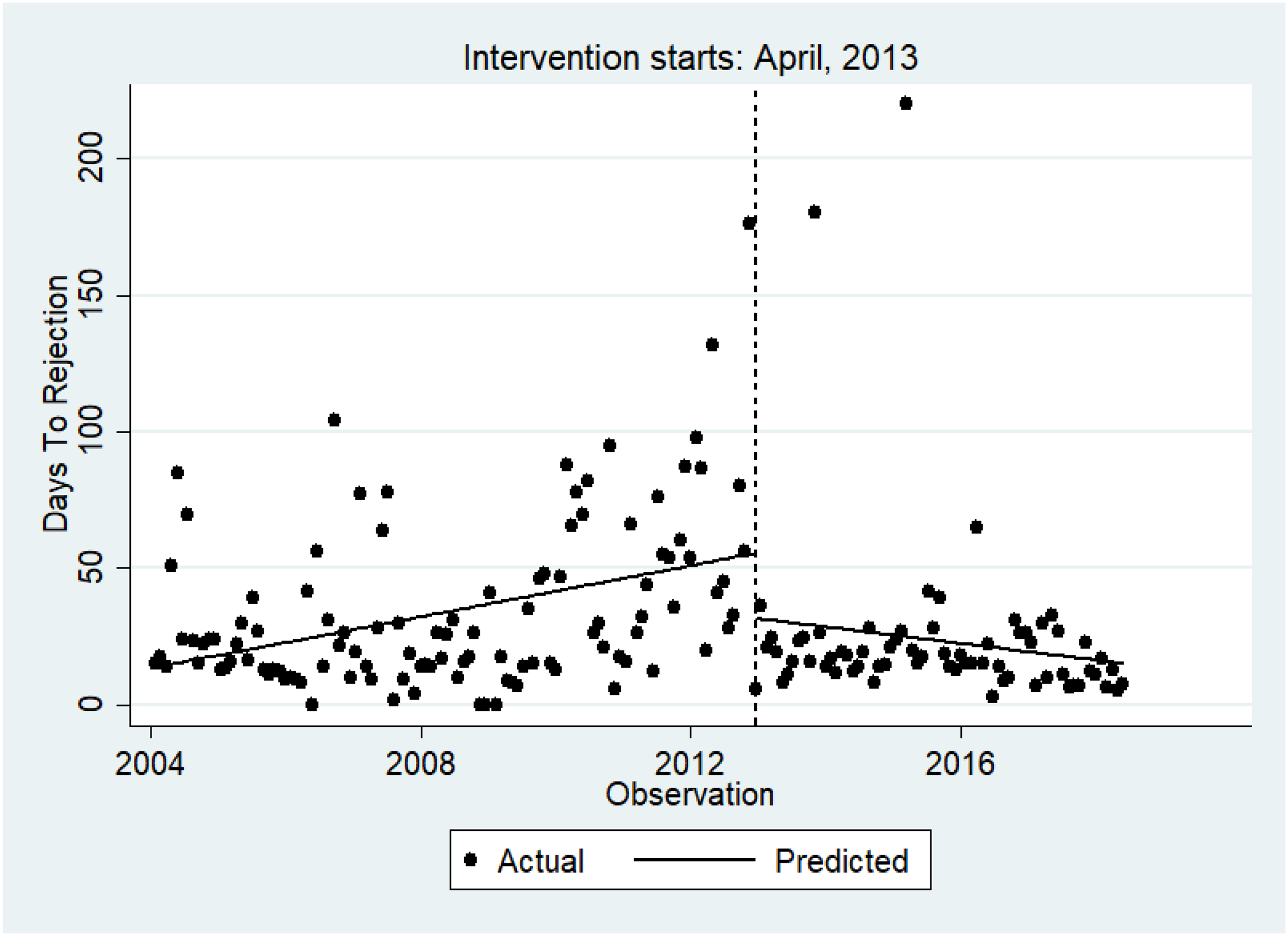
Days to rejection.
Discussion
Results from this exploratory study document an intervention impact for BWCs, though while our ITSA models document an intervention, it is important to state the magnitude of the intervention is negligible for many of the court outcomes. Despite the low magnitude, these significant findings carry important implications, as we continue to determine the full impact of BWCs on the court system.
As introduced by Merola et al. (2016), surveyed prosecutors believed that the implementation of BWCs would lead to an increase in the rate of cases cleared. Our results indicate the trend for the period leading up to the intervention showed a decline in the rate of cases being cleared followed by a stabilization in the post-intervention period, though this finding was non-significant. While various factors contribute to the rate of cases being cleared, the reason for the non-significant finding related to the rate of cases being cleared may be explained by the resources currently available to the courts. Specifically, when it comes to effectively analyzing and using BWC footage as evidence, the existing infrastructure, and resources available to prosecutors’ offices is often lacking. Merola and colleagues (2016) identified the two highest ranked needs indicated by prosecutors being upgrades to technology for reviewing or showing videos and changes to their current cataloging or storage systems for evidence. Without the necessary infrastructural changes within prosecutors’ offices, the non-significant finding regarding changes in the rate of cases being cleared may be a result of business as usual for the courts under the current constraints they have. Our findings in this sense lend themselves to a broader discussion related to the impact that technology has on the court processes. Although BWCs were implemented with several goals in mind, thoroughly understanding how to use them to their fullest capacity will require an introspective examination of the court system infrastructure. If the potential for BWCs to increase the rate of cases cleared is be taken seriously, the implementation of such approach should be met with additional organizational changes.
When looking at the impact of BWCs on the number of incidents being referred for prosecution, our findings showed support for the first hypothesis – that the implementation of BWCs would lead to an increase in the number of incidents being referred for prosecution. This finding is in line with research on the topic. Specifically, the implementation of BWCs have shown to assist officers with report writing and note taking, along with increasing the quality of evidence provided and helping with preparation for court proceedings (Pelfrey Jr & Keener, 2016). Prosecutors and the courtroom workgroup tend to limit the amount of uncertainty in their work (Albonetti, 1987; Frederick & Stemen, 2012; Spohn et al., 2001). Accordingly, by having benefits to the quality of report writing and evidence, the logical progression is that police officers are becoming more confident in the strength of their cases and therefore are putting forth more cases for prosecution. Cases referred for prosecution speak to an often-overlooked portion of the criminal justice process. Understanding how officer confidence in their cases and the increase in number of cases being referred is important if we are to understand the impact of BWCs at the organizational level for both the police and the courts.
As for the impact on convictions, rejections, and dismissals, our findings showed partial support for the second hypothesis. Our findings only showed support for the contention that BWC implementation would lead to a greater number of convictions. This finding is in line with prosecutorial beliefs identified in the nationwide survey conducted by Merola and colleagues (2016), where over half of those prosecutors surveyed believed that the implementation of BWCs would lead to an increase in convictions. Even though our findings did not show support for the anticipated decreases in the number of rejected cases and dismissed cases, this may be explained by the fact that officers are only putting forth strong cases for prosecution that will achieve a conviction. Said differently, with the implementation of BWCs and their benefits to higher quality reports and evidence (Pelfrey Jr & Keener, 2016), officers may be putting forth cases with stronger video evidentiary value that prosecutors are less likely to reject, defense attorneys may be more inclined to counsel the accused to plea, and that are also less likely to be dismissed by judges. Future research should employ content analysis of footage to understand the extent information contained in the footage influences officers’ decisions to refer and prosecutors’ rejection or judicial dismissals.
Finally, with respect to the impact of BWCs on time to final disposition, our findings showed partial support for the third hypothesis – that the implementation of BWCs will lead to a shorter time to final disposition. Our findings did show support for each of the four parts of this hypothesis except for the number of days to a guilty verdict. The finding that the number of days to reach a final disposition overall was shorter in the post-intervention period was interesting, though when disaggregated the results document variability into what extent BWC’s influence the court.
Informed by the prior literature, it was assumed that BWCs would decrease the number of days for a dismissal, rejection, and guilty outcome. We only found this to hold true regarding those cases that were dismissed and rejected for prosecution. Understandably, this finding appears confusing, especially when viewed together with the finding that the only statistically significant increase for case outcomes was guilty verdicts. Unfortunately, given the exploratory nature of the study and the current methodological constraints, we can only speculate as to why this result is showing in our sample. Nevertheless, the findings that the number of days to reach a final disposition overall is shorter in the post-intervention period is encouraging in the sense that inevitably this will lead to cost savings in terms of court resources being expended to adjudicate cases. Most importantly, it does not appear the introduction of BWCs have introduced delays, which may occur during the implementation of technology.
Limitations and Future Research
Like most studies, there are certain inherent limitations present in the methodology used here along with various avenues for future studies. Among the most prominent limitations is the lack of a control group to evaluate the counterfactual. Without a sufficient control group, the results from this study need to be tempered and viewed as preliminary. Relatedly, the generalizability of these findings is inherently limited due to the geographic and demographic characteristics of the study site and sample. Future research that evaluates the impact of BWCs on court-based outcomes will do well to include a suitable control group to be able to assess the reliability of these findings across different populations.
Second, there were a few variables that could not be included based on limitations in data access. One of the variables concerned the offense type, and because there was little variance present in the types of offenses being charged within our sample, the ability to disaggregate the offense types meaningfully was hindered. Additionally, there are often instances where an individual is charged with multiple crimes stemming from a single incident. Accordingly, a variable that indicates multiple charges levied against an individual needs to be included in future research to explore the extent to which BWCs influence the type of charges that are selected for prosecution. The other important variable that was not available in the data was a flag as to whether or not the prosecutor actually reviewed the footage in their decision on how to proceed with the case. While the findings show certain statistically significant results related to the four hypotheses, the outcomes may tell a more detailed story with the inclusion of disaggregation by offense types, multiple charges against an individual, and the flag of whether the prosecutor made use of the footage or not. For these reasons, future research should be mindful of the potential of different trends arising regarding numbers of referrals, disposition, and time to adjudication based on offense type, multiple charges, and whether or not the prosecutor made use of the footage in their decision.
Third, the issue of budgets and resource allocation is an ever-present concern across the criminal justice system. While it is encouraging that the preliminary results in this study have shown support for the contention that the implementation of BWCs have led to an overall decrease in the number of days it takes to reach a final disposition, we are in no position to make any claims about the cost savings equated with this finding. In the future, research examining the impact of BWCs on the court system should include a cost-benefit analysis that details the savings associated with BWC implementation, in terms of both monetary and human resource costs.
Last, although several of the measures included were found to be statistically significant following the implementation of BWCs, it is important to remember that statistical significance is only providing us with one side of the story. As scholars have noted, there may be broader social and political factors exerting influence on decisions to prosecute or divert cases (Wright et al., 2014). As such, future research should seek to include more qualitative information from the various courtroom actors involved to provide a more complete picture of how BWCs are impacting the court system. Despite these shortcomings, our research provides an important preliminary look at the impact of BWCs on the court system and various court-based outcomes.
Conclusion
While the advent of BWCs in the criminal justice system is not new, the existing research surrounding the impact of its implementation across the system has focused on police outcomes. Additionally, with the miniscule amount of research currently available on the impact of BWCs in the courts, there is relatively little that we have learned thus far aside from a handful of studies that primarily center on domestic violence incidents (Ellis et al., 2015; Goodall, 2007; Katz et al., 2014; Morrow et al., 2016; ODS Consulting, 2011; Owens et al., 2014). With that being said, the extant research surrounding BWC impact on court outcomes was overall encouraging. The only other study contributing to our understanding of the impact BWCs have on the courts provided us with perceptions from prosecutors about how this new technology would affect court-based outcomes (Merola et al., 2016); but this did not provide any actual testing of their impact.
Although the methodology employed in this study is not without its flaws, our findings provide an important look at how the courts are being affected by this recent technology. The implementation of BWCs is having an impact on the court system and the outcomes associated with the adjudication process. The increased quality of reports and evidence being put forth by law enforcement suggests that prosecutors can decrease the possible uncertainty that can be present when deciding to pursue a case, and this inevitably leads to benefits with the working relationship between police and prosecutors. Also, the decrease in the number of days to reach final disposition suggests that resources are being saved and the implication for policy is to determine how these savings can be reallocated to make the court system more efficient. There can be no doubt that further research on the topic is sorely needed, but the early findings from this study highlight that the implementation of BWCs is having an impact on court-based outcomes, though what remains unclear is what technological solutions and process-oriented changes will be necessary to increase court efficiencies and effectiveness. BWCs were touted as a panacea (Makin, 2016; Makin, 2017) for policing and as a means of improving efficiencies within the court. However, in our research location, the implementation of BWCs has not reached the level of magnitude as purported.
Footnotes
Declaration of Conflicting Interests
The authors declared no potential conflicts of interest with respect to the research, authorship, and/or publication of this article.
Funding
The authors received no financial support for the research, authorship, and/or publication of this article.
