




Abstract
The purpose of this study was to survey a random sample of police departments in Colorado to assess their views on the impact of marijuana legalization in the state. While police perceptions have been used in prior research to assess other topics, very few studies have assessed police perceptions of marijuana legalization. To address this, police officers and sheriff deputies at 64 randomly selected police departments across Colorado were administered surveys that assessed the impact marijuana has had on enforcement and their personal perceptions of marijuana. In addition, qualitative questions were asked to explore these topics in greater detail. The findings of the 131 respondents suggest that most police officers in Colorado are slightly supportive of legalization, but have noted that it has made their job more difficult.
Introduction
The purpose of this study was to survey a random sample of police departments in Colorado to assess their views on the impact of marijuana legalization in the state. During the eight years since the legalization of marijuana in Colorado, there has been a dearth in the literature that assesses the perceptions of police officers on the impact of marijuana legalization. While there have been studies on police perceptions regarding use of force (Phillips & Sobol, 2011), community policing (Stein & Griffith, 2015), human trafficking (Farrell et al., 2015), and even the impact of broadband technology (Carter & Grommon, 2017), very little has been done to assess police perceptions of marijuana legalization. This is unfortunate, as prior research has concluded that police attitudes can impact enforcement strategies in other areas of policing, such as gender and policing practices (Carlan, 2009; Poteveva & Sun, 2009), cultural differences (Sun & Chu, 2008), and the handling of rape cases (Brown, 1998; Campbell & Johnson, 1997; Page, 2007; 2008). It would stand to reason, then, that policymakers should assess police attitudes toward the growing trend of marijuana legalization.
However, as Petrocelli et al. (2014) articulated, there have been very few studies that have measured police perceptions of drug enforcement. In fact, Petrocelli et al. (2014) found only three, measuring attitudes relating to heroin policies (Beyer, Crofts, & Reid, 2002 ), needle exchange programs (Beletsky, Macalino, & Burris, 2005), and drug enforcement policy (Moore & Palmiotto, 1997). While these studies address crucial topics in law enforcement, they do not directly assess police officer opinions toward legalization. Measuring police attitudes is important for several reasons. First, as Petrocelli et al. (2014) argued, failing to measure police officer attitudes with regard to drug enforcement omits information they can provide that could influence strategies for drug enforcement. This matters, as their perceptions influence “front line enforcement and discretion” (Petrocelli et al., 2014, p. 23). In addition, Goetschel and Peha (2017), in their work on police perceptions of body-worn cameras, highlighted the need for measuring police perceptions. They argued that police are stakeholders in the implementation of a new policy. As such, their opinions can affect decision-making, resource allocation, and execution. It stands to reason, then, that police officers in Colorado may want their voices to be heard when informing policy on how to handle marijuana-related issues. Police in Colorado may be noticing legalization-related issues that are not being discussed or addressed. A way to fill these policy gaps is to measure the perceptions of those on the front line. We also hope to assess perceptions between three types of police departments – municipal, sheriffs, and university. Policy may need to vary between these differing departments as well. Finally, it is advantageous to assess crime concerns among police with the legalization of marijuana. Previous studies have found that they are concerned about drug trafficking (Licate, 2016) and marijuana-impaired driving (Lovrich et al., 2016). However, Maier et al. (2017) found in states that have legalized medical or recreational marijuana (or both), rates of property and violent crime have not increased. This research, then, can offer a comparison of the perception of police officers in regard to the impact of legalization on crime and the reality of it. The purpose of this study, then, is to answer the following questions:
Has legalization of recreational marijuana affected law enforcement duties between police department types? What factors influence officer's perceptions of the impact marijuana legalization has had on enforcement?
Specifically, a survey instrument adapted from one used by Ward et al. (2018) to assess officer perceptions of marijuana legalization in the state of Colorado was administered to municipal police, college police, and sheriff's departments across Colorado.
Literature Review
Marijuana Legalization in Colorado
While medical marijuana was legal in Colorado since 2000 with the passing of Amendment 20, it was not until 2012 when recreational marijuana was legalized. “An Act to Regulate Marijuana Like Alcohol,” or Amendment 64, which passes with 55% of the vote, removed all criminal penalties for those who possessed less than one ounce of the substance (Blake & Finlaw, 2014; Kamin, 2013). In addition, it permitted individuals to cultivate no more than six plants. They could also give away, with no payment required, no more than an ounce (Kamin, 2013). Further, and perhaps most significantly, it urged the state legislatures to pass proper legislation for the regulation of retail sale (Kamin, 2013). Pardo (2014) also noted that it made it a requirement that the Colorado Department of Revenue both license and regulate this industry.
While the State of Colorado has legalized possession of marijuana for its residents, it is important to note that not all counties allow the sale of it. Amendment 64 permitted every county and town in Colorado to determine whether marijuana businesses could operate in their jurisdictions. Because of this, according to Mitchell (2018), only 25 of the 64 Colorado counties allow marijuana to be sold (see Figure 1 for breakdown). Whether or not a county a police officer works in has granted permission for dispensary businesses may impact their perception of marijuana legalization.
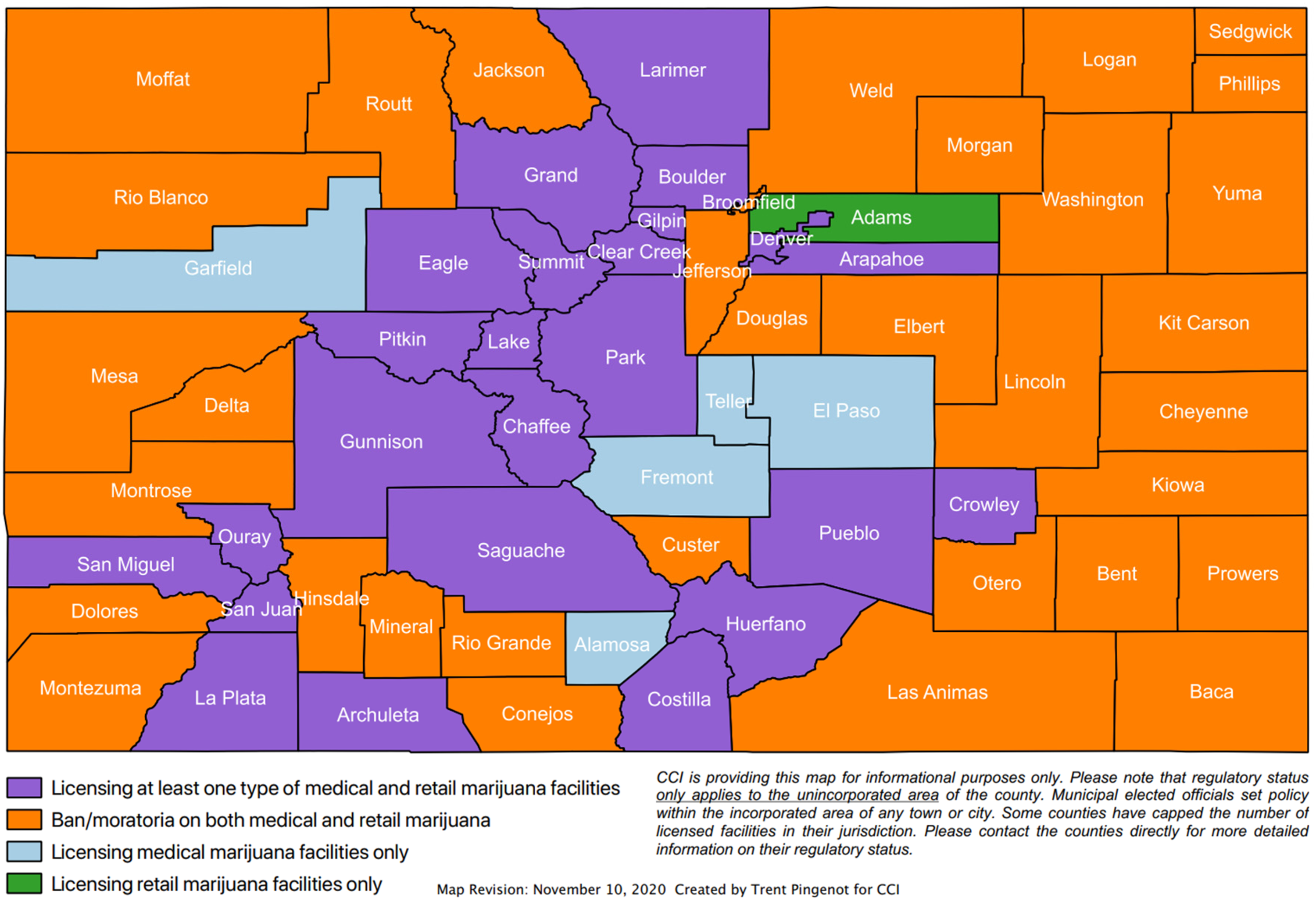
County regulatory status of retail and medical marijuana 1 .
Finally, universities across Colorado do not allow marijuana possession on campus. Marijuana is still illegal at the federal level, and because there is federal funding for colleges, all institutions of higher education in Colorado abide by federal regulations (Ingold, 2012). Specifically, to receive federal funds, all schools must comply with the Drug-Free Schools and Communities Act, which requires these institutions to ban drugs from their campuses. Assessing university police perceptions is vital, as they may have quite different opinions on legalization compared to those who work at the city or county level.
While no current research looks at perceptions of marijuana between police agencies within states, some research has examined the impacts of marijuana legalization between states. Hao and Cowan (2019) analyzed spillover effects of recreational marijuana legalization in Colorado and Washington to neighboring states. They found that marijuana possession arrests in border counties increased significantly compared to non-border counties. They hypothesize that, at least in one state (Nebraska), police are directing more attention to marijuana possession near the border. Similarly, Ward et al. (2018) found that police in Kansas, Nebraska, and Wyoming who worked in counties closer to the border of Colorado had more negative perceptions of legalization. They felt it strained their resources, and led to increased juvenile use, among other concerns. This could carry over to what police in counties that have not legalized dispensaries are doing in Colorado. The same can be hypothesized for university police as well, because Colorado has made marijuana use illegal on all college campuses.
Importance of Measuring Police Perception
As discussed previously, it is important that scholars assess police perceptions, as these are the individuals on the “front lines” of law enforcement. Petrocelli et al. (2014) noted that law enforcement opinions have mattered a great deal in other areas of policing and should matter in drug enforcement as well. They go on to reason that critical information is not being gathered and assessed regarding drug enforcement if officer opinions are not considered.
While scholars have consistently argued that police perceptions are critical in shaping enforcement tactics, little work has been done when it comes to assessing law enforcement perceptions of marijuana legalization. Petrocelli et al. (2014) suggest that one explanation for this is the “protected secrecy” of the police subculture (p. 24). They argue that police are protective of their views as they are wary of public scrutiny. While this may be true, learning about police perspective is still important. This will become even more salient as more states legalize recreational marijuana. Early work by Wilson et al. (1985) examined police attitudes of vice crimes, including drugs. These authors found that, while vice crimes did not require immediate police attention, they do lead to more serious offenses. In regard to drugs, the authors concluded that the type of drug crime, and the type of drug influenced police perceptions. Specifically, those who sold heroin or cocaine deserved prison time while those who sold marijuana only deserved a short jail sentence. Further, approximately 10% of the sample believed that police should not enforce marijuana use laws. This was a more commonly held belief among younger officers and could hold true with the current study's sample.
Moore and Palmiotto (1997) assessed patrol officer opinions of policy alternatives to drug use using the Drug Policy Questionnaire (DPQ). The sample included 100 male officers from two disparate districts; one that was high crime, high minority, high gang activity, and high drug activity, and another that was low crime, low minority, low gang activity, and low drug activity. Overall, patrol officers from both districts believed drug misuse was a societal problem (80%) and that both drug dealers (95.8%) and drug users (91.9%) should be imprisoned. However, they were open to other policies, such as education (93%), prevention (92%) and mandatory treatment (89%), to name a few. Finally, and most importantly, they did not believe legalization offered any benefits. Specifically, they believed drugs would still be manufactured (94.7%), underage use would continue (94.7%), and overall use and harm would increase (87%), to name just a few.
These findings partly coincide with the work of Petrocelli et al. (2014), who also conducted a study assessing police office perception of drugs. A survey was administered to police officers taking the 4:20 Group training course over one years’ time. |Over 1,000 surveys were completed, and the majority of officers believed that federal drug laws were not strict enough. Further, they did believe that drugs could be quite harmful, especially the harder drugs, such as methamphetamines, heroin, and crack. Finally, and most important to the present study, officers strongly disagreed with both decriminalization and legalization. However, they were much less bullish when it came to marijuana; almost 20% agreed with decriminalization and 15% with legalization (Petrocelli et al., 2014). This could mean that police officers in Colorado may be open to marijuana legalization. Jorgensen (2018) built on the work of Wilson et al. (1985) and Petrocelli et al. (2014) by surveying police on their attitudes of drug use. Overall, as with the findings of Wilson et al. (1985), officers were more punitive toward drug sellers than users. Concerning marijuana, only 15% of the officers believed marijuana should be decriminalized, and almost 40% believed it should result in incarceration (Jorgensen, 2018). Interestingly, he found that demographic variables, specifically education and working in a vice/narcotics unit, were strong predictors of drug seriousness attitudes. Specifically, the higher the education, the less serious they viewed drugs, and working in the vice/narcotics unit decreased a police officers’ view of drug seriousness.
Finally, Stohr et al. (2020), noting the dearth in the literature regarding police perceptions of marijuana legalization, conducted a qualitative analysis of 48 officers in Washington state to address concerns that they have with legalization. Overall, officers in this state are not supportive of re-criminalization. However, they did voice several concerns. One area of concern was increased drugged driving in the state. Their second major concern was increased access and use among juveniles. In addition to these two areas, they also stated that there was a real lack of planning about how officers handle public consumption situations (such as a student in a dorm), which is still illegal. They used to issue a citation, but without prosecutor backing (which they also cited as a concern), they are not sure what to do. Finally, they argue that, while legalization was supposed to lessen their workload, it really has not had that effect. They still respond to marijuana-related calls, specifically at colleges and universities.
As noted previously, this work utilizes an adapted version of the survey instrument implemented by Ward et al. (2018) in their study of the impact of marijuana legalization on law enforcement working in states bordering Colorado. The instrument (which will be discussed in detail below) included two scales (impact on enforcement and personal perception of marijuana), demographic measurements, and qualitative questions that comprised a total of 48 questions. The authors also evaluated the impact of distance, specifically how far away the officers resided from Colorado. Overall, the officers from these surrounding states had concerns with the legalization of marijuana, and “overwhelmingly disapprove of Colorado legalizing recreational marijuana” (Ward et al., 2018, p. 235). These feelings were more pronounced among law enforcement officers closer to the Colorado border. At the individual level, officers who had a positive perception of marijuana reported lower negative impacts on their job. Qualitatively, four interesting findings emerged: these officers were more concerned with plant and edible marijuana coming into their state, their resources being strained, trafficking of marijuana increasing, and a perceived increased use of marijuana among juveniles. While the first should not concern Colorado police officers, it will be interesting to compare the qualitative results of the current study to the Ward et al. (2018) findings to see if these concerns are held in a state that has legalized marijuana.
Methodology
Research Questions
The purpose of this study is to examine law enforcement officers’ perceptions of marijuana and the perceived impact the legalization of recreational marijuana in Colorado has had on their jobs. Utilizing survey methodology, this study aimed to answer the following research questions:
Has legalization of recreational marijuana affected law enforcement duties between police department types? What factors influence officer's perceptions of the impact marijuana legalization has had on enforcement?
These questions were assessed through an examination of the quantitative and qualitative responses to a survey disseminated to police officers in Colorado. Many of the responses are combined into summated scales measuring the officer's perceived impact on enforcement and their personal perceptions of the drug. The factors investigated will include type of department the officer works, whether cannabis dispensaries are allowed in the officer's jurisdiction, geographic location, and length of time working as a police officer.
Sample
In 2019 police departments were identified from the National Directory of Law Enforcement Administrators. This resource provides the contact information (name address, and number of officers) for each police chief and sheriff throughout the United States. A list of Colorado departments was compiled and broken down into three groups: municipal police departments (150 total in Colorado), sheriff's departments (62 total in Colorado), and university police departments (28 total in Colorado). In order to try get a variety of participating departments at of each type, the researchers surveyed a random sample of approximately 20% of municipal and sheriff's departments and 50% of university departments. An oversampling of university police departments was done to account for both the fewer university police departments and fewer officers who work for them.
Each of the 240 total departments were assigned a number. Once assigned, a random number generator was used to select departments from each group until our sample parameters were met. Overall, 35 municipal departments (23%) 13 (21%) sheriff's departments and 16 (57%) university departments being selected. Before mailing the surveys, a pre-notice postcard was sent to inform all chiefs or sheriffs in each of the selected departments explaining the study. Mail was the preferred method of dissemination of the surveys, but for larger departments (over 50 officers), an electronic version of the survey was sent via email as too many packages would have to be sent, which could be unwieldy for the department to handle. Two weeks after the pre-notice, the surveys were sent. After two more weeks, follow-up postcards were sent. During this time, a police chief reached out to the researcher, indicating that they received the postcards but never the surveys. In case this was a common occurrence, all departments were then sent the survey via e-mail as well with instructions to only fill out if a paper version was not previously completed.
The dissemination of these surveys used a top-down approach. The surveys were sent to the chief of police or sheriff, not to each officer individually. Officer addresses and e-mails were not publicly available, so the researchers had to send these surveys to the gatekeeper of the department and to the survey be distributed to their officers. Several departments contacted the researcher to notify him that they were choosing not to participate. In addition, while no notification occurred, several departments did not send back any completed instruments.
In total, with 2,244 surveys were sent to municipal departments, 865 to sheriff's departments, and 186 to university departments. Due to the top-down approach of gatekeepers sending out surveys within their departments, not all officers had access to their surveys. To account for this, two response rates were calculated, departmental and officer. Of the 35 municipal departments, 18 returned surveys, 9 of the 13 sheriffs’ departments, and 7 of the 16 university departments. In total, 34 of the 64 surveyed departments returned surveys, for a response rate of 53.1% at the departmental level. In the 34 departments who disseminated surveys to their officers, there were a total of 867 potential respondents. The final sample size consisted of 131 respondents, leaving the officer response rate at 15.1% from participating departments.
Survey Instrument
The survey instrument was adapted from Ward et al. (2018) and included a total of 48 questions. These items included two separate scales (discussed below), demographic items, and several open-ended items that allowed respondents to voice their perspectives on any perceived impacts legalization of cannabis has on their job duties. Demographic items included questions related to the type of department (sheriff's office, municipal, or university), department location, officer's rank, experience in years, level of education, department size, gender, race, and age. The two scales included questions relating impact of legalization has had on enforcement in their department and each officer's personal perception of marijuana.
The first scale (Impact on Enforcement Scale) was a summated scale that included 19 Likert-style items pertaining to the potential impact that the legalization of recreational marijuana in Colorado has had on enforcement and job duties in their area. These items addressed topics such as increased marijuana trafficking, concern from citizens, calls for service, need of additional resources, and issues presented by the different types of cannabis (e.g., edibles). The items were scored with “Strongly Disagree” = 1, “Disagree” = 2, “Neutral” = 3, “Agree” = 4, and “Strongly Agree” = 5. Scores on this scale ranged from 19–95, with a higher score indicating that legalization of recreational marijuana had a negative impact on law enforcement. The mean score of the scale was 66.7 (SD = 10.2) with a Cronbach's alpha of.856. A score of 38 would indicate a neutral score on the scale. The mean for all respondents was nearly 29 points higher, indicating that on average, most officer respondents did notice a negative impact on their department's enforcement.
The second scale (Personal Perception of Marijuana Scale) included 10 Likert-style items measuring the law enforcement officer's personal perceptions regarding the legalization of recreational marijuana. These items included views of marijuana as a “gateway drug,” belief that their state's marijuana laws are too strict or too lax, perceptions of the harm marijuana does to their state and the nation, and their support for decriminalization or legalization of recreational and/or medicinal marijuana. Like the above scale, items were scored with “Strongly Disagree” = 1, “Disagree” = 2, “Neutral” = 3, “Agree” = 4, and “Strongly Agree” = 5. Scores on this scale ranged from 10–50, with a higher score indicating more positive perception of marijuana. Eight items on the scale were reverse coded. The mean score of the entire sample was 24.6 (SD = 8.3) with a Cronbach's alpha of.891. A score of 20 on the perception scale would be neutral, meaning that the sample was slightly supportive of marijuana.
In addition, a number of open-ended questions were included in the survey. These questions allowed for qualitative responses relating to how (if at all) marijuana legalization has affected law enforcement practices in Colorado, any challenges faced in the years since marijuana was legalized, the impact legalization has had on illicit drug markets, and what can be done to stop the trafficking of marijuana into other states.
Demographics
There were a total of 131 respondents who took part in this study. As seen in Table 1, of these respondents, 38.5% worked in areas where dispensaries were legal, where 61.5% worked in areas where they were not. Most of officer respondents worked for a sheriff's office (44.9%), followed by municipal police (34.6%) and university police (20.5%). Most officers worked in small departments (38.2%) with less than 20 officers, compared to 35.1% working in departments with 21–50 officers and 36.7% in departments with over 51 officers. Regarding the area the officers work, 46.8% indicated they worked in a primarily rural area, 27% urban, 21.4% suburban, and 4.8% indicated “other”, reporting their department served multiple geographic region types. The majority of officers were male (64.3%) compared to female (35.7%) and White, non-Hispanic (81%) compared to Hispanic (11.1%) or Black, non-Hispanic (5.6%). A plurality of respondents had a Bachelor's degree (43.7%), while 21.4% indicated having completed some college, 17.5% an Associate's degree, 4% a High School Diploma, GED, or technical certificate, and 13.5% had at least a Master's degree. Rank of the officers were broken down into upper, front line, and administration. A total of 47.5% of the sample identified as being “upper rank” (Lieutenant, Sergeant, and Corporal) or Administration (Chief, Assistant Chief, Sheriff, Undersheriff, or Captain). The remaining 52.5% of the sample were coded as “front line officers” (Patrol, Deputy, K9 unit, and Detective).
Demographic Data of Respondents.
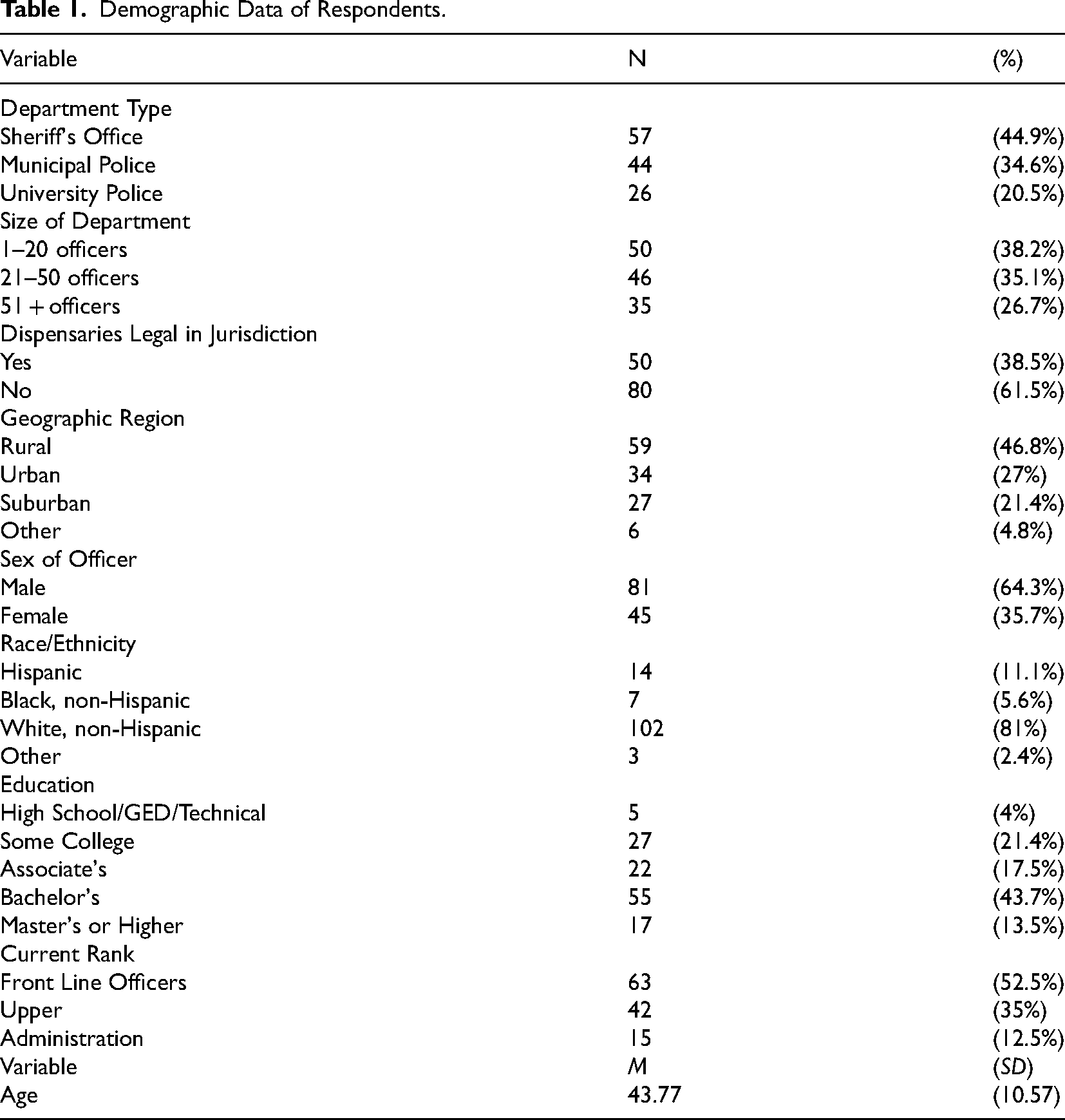
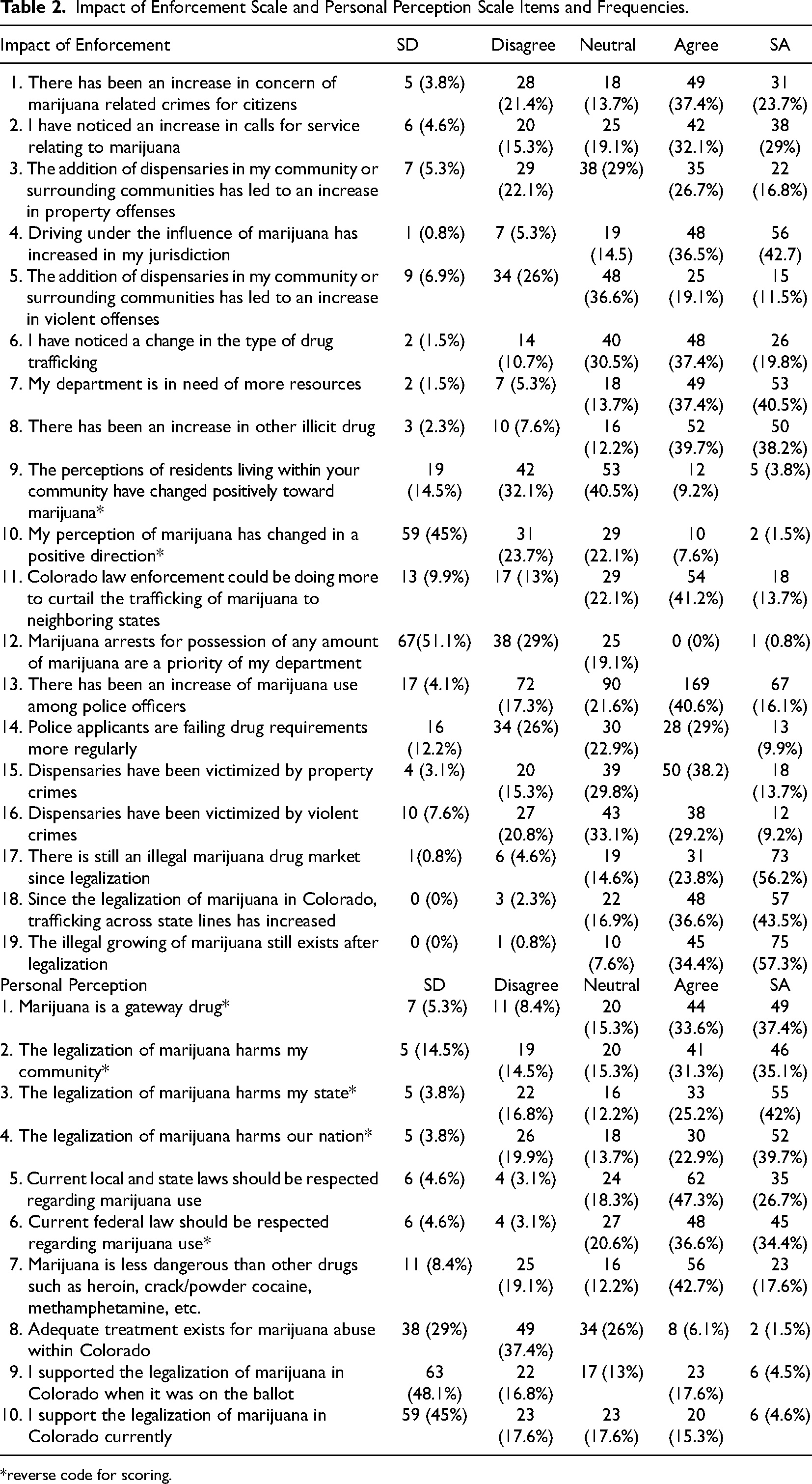
Table 2 offers a detailed breakdown of the Impact of Enforcement and Personal Perceptions scale items, along with the frequencies of each response. While a discussion of each item is impractical, several responses are worth noting. First, under the Impact of Enforcement Scale, item 19 asks respondents if “the illegal growing of marijuana still exists after legalization.” Of the 131 respondents, 120 (91.7%) either agreed or strongly agreed. This was an alarming finding, and further elaborated on with the qualitative responses. Almost every officer who participated in the qualitative responses (93) noted that the black market still exists, or is growing. While several reasons were given, the most common was that the illegal marijuana market was still popular because it costs much less than dispensary marijuana and it is not taxed. Officers across all three types of departments routinely brought this theme to our attention. Overall, seven university officers, nine sheriff's department officers, and 11 municipal police officers mentioned price, taxes, or a combination of both as significant factors in the illegal marijuana market in Colorado. Several interesting quotes give more detail as to why prices may be higher. One university officer noted: “Absolutely there still is a black market for marijuana. The option for individuals to grow their own marijuana and a certain number of plants can produce 1 pound. This amount can add up significantly and when the price of marijuana at the dispensaries is very high; the option to purchase for a lesser amount on the street is a viable solution for those choosing to use” (Respondent 16)
Impact of Enforcement Scale and Personal Perception Scale Items and Frequencies.
reverse code for scoring.
The other interesting finding came from an item under the Personal Perception Scale. Item 1 asks if the officer still believes that marijuana is a gateway drug. Of the 131 respondents, 93 (71.0%) either agreed or strongly agreed. As with the illegal market finding, this was the other most commonly discussed qualitative response. Thirty officers noted that marijuana legalization has had some type of negative impact on juveniles in the state. One officer stated: “Possession by minors, especially high school students, have increased dramatically. Kids are told marijuana is not harmful. However medical research demonstrates otherwise for brain development” (Respondent 3).
While this respondent noted medical issues for children who ingest marijuana, most indicated that it is more accessible for children, with some suggesting that they steal it from their parents or older siblings. Again, this should be a topic that is explored more in future research, but Colorado police, from all agencies, seem to be very concerned about underage marijuana use.
Analysis Plan
To answer the research question, has legalization of recreational marijuana affected law enforcement duties between police department types, a One Way ANOVA will be run. The independent variable will be department type, broken down by municipal, sheriff, or university police. The dependent variable will be the average scores on the impact of enforcement scale.
Furthermore, to answer the question, what factors influence officer's perceptions of the impact marijuana legalization has had on enforcement, an OLS regression model will be run. The dependent variable for this model will be the impact of enforcement scale. Independent variables will include the personal perception of marijuana scale, police department type, experience in policing, geographic location of department, whether dispensaries operate in their jurisdiction, and the control variables of race and gender. The personal perception scale was found to be predictive of officer's perceived impact of enforcement in Ward et al. (2018)'s study of Nebraska, Kansas, and Wyoming law enforcement officers. Those with a more positive perception of marijuana were less likely to believe that Colorado's legalization of marijuana impacted their job duties. Police department type will be included to see if any perceived enforcement differences remain when other variables are included in the model. Furthermore, as law enforcement in Colorado operate in differing jurisdictions where some allow dispensaries, while others do not, we included this variable to see if areas where dispensaries are located had a perceived higher impact on enforcement compared to jurisdictions that do not have legal dispensaries. Geographic location was also included to determine if officers who serve rural or urban areas differ in their perceived enforcement. Similar to Ward et al. (2018), an experience variable was included in the OLS model. Instead of using rank, years of experience in law enforcement was used in the model. This variable was selected to determine if those who had been working in law enforcement for longer periods of time noticed a larger impact of enforcement compared to those with fewer years of experience.
Results
A One-Way ANOVA was run to examine if legalization of recreational marijuana in Colorado has affected law enforcement duties between police department types. The results found a statistically higher Impact on Enforcement Scale mean scores for Sheriff Office respondents (M = 69.3, SD = 11.4) compared to municipal (M = 65.7, SD = 9.2) and university respondents (M = 63.2, SD = 8.7), F (2, 121) = 3.6, p < .001.
To answer the question “What factors influence the Impact on Enforcement Scale of Colorado Police Officers”, an OLS regression was run. Independent variables included department type, time on the force, whether cannabis dispensaries were legal in their jurisdiction, geographic location of department, and score on the Personal Perception Scale. Race/Ethnicity and Gender were included as control variables. Based on responses, Race/Ethnicity was dummy coded into White = 1, Other = 0, while Gender was coded into Male = 1, Female = 0. Department type was also dummy coded in order to be included in the model. For department type, Sheriff's office was left as reference categories based on the results of the One-Way ANOVA showing higher Impact on Enforcement Scale mean scores for Sheriff Office respondents compared to municipal and university respondents. Time, in years, on the force was included to examine if serving more or less time in a department influences officer's perceived Impact on Enforcement. This was imputed as a continuous variable. Cannabis dispensaries being legalized in the officer's jurisdiction was self-reported as Yes = 1, No = 0. Geographic location was coded as Rural = 1 and urban, suburban, or other = 0. This coding was the result of rural officers representing the majority of responses. Finally, the score on the perception scale was input as a continuous variable to see if personal perceptions can predict the impact legalization of marijuana has had on law enforcement duties. OLS assumptions were examined prior to interpreting the analysis, with no violations detected.
The overall model was statistically significant with an r2 value of.569, explaining 56.9% of the variance in the Impact on Enforcement Scale, F(8, 109) = 17.99, p < .001. Of the eight variables included in the model, three were statistically significant: Personal Perception Scale, University Police, and Municipal Police (see Table 2). Of the three variables, a lower score on the Personal Perception Scale was most strongly associated with higher Impact on Enforcement score (beta = -.701, p < .001), followed by working at a Sheriff's department compared to University Police (University Dummy Variable beta = -.215, p = .004), and working at a Sheriff's department compared to municipal police (Municipal Dummy Variable beta = -.194, p = .012) (see Table 3).
Regression output for Impact on Enforcement Scale as dependent variable.
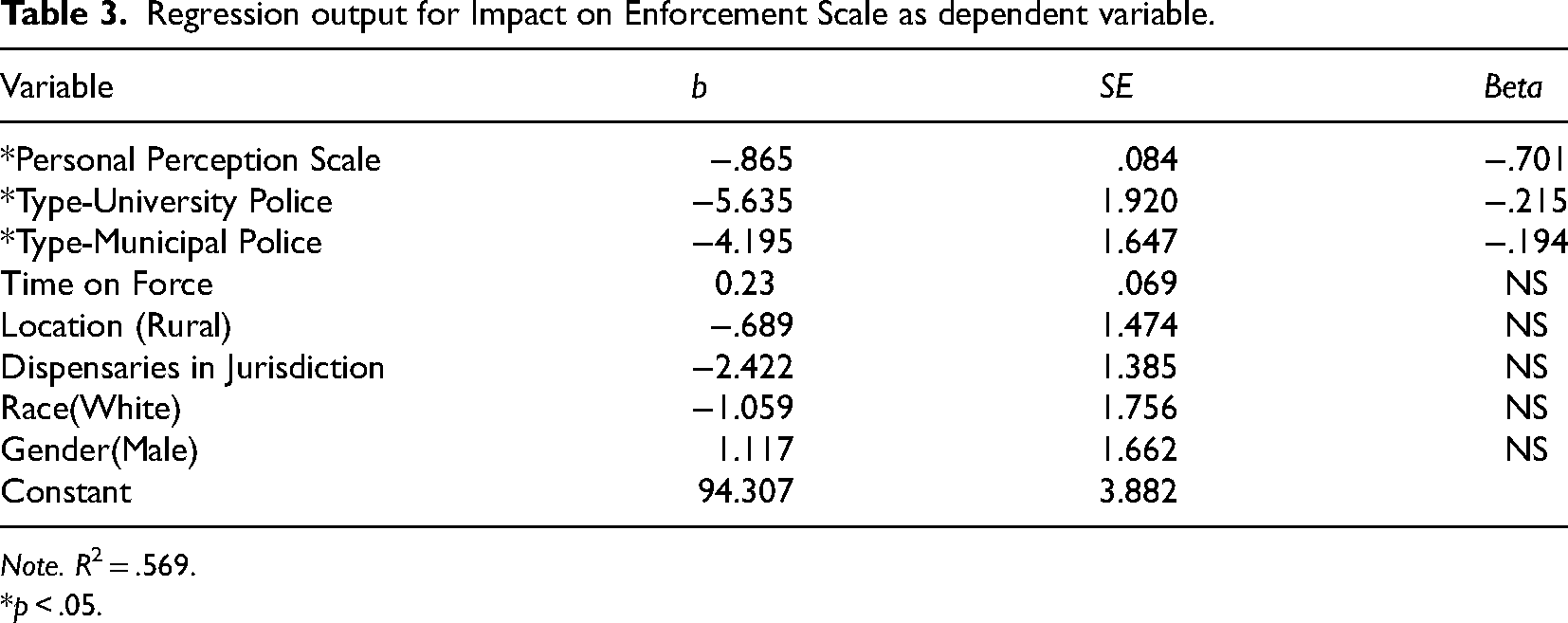
Note. R2 = .569.
*p < .05.
Discussion
The purpose of this study was twofold: to assess what, if any, impact marijuana legalization had on sheriff, municipal, and university police officers in the state of Colorado and to measure their personal perceptions of marijuana legalization. While there have been numerous studies that assess police officer perceptions of other aspects of their job, there is a paucity of research on police officer opinions of marijuana legalization. By measuring both their personal perceptions of marijuana, and the impact it has had on their duties, the researchers intended to begin to assess the effect legalization has had.
Overall, the sample was slightly supportive of marijuana legalization (mean of 24.6), but, interestingly, still noted that it had a negative impact on their job (mean of 66.7). When examining the quantitative responses of the latter, officers were strongly supportive of marijuana legalization when it was on the ballot, and still strongly support it. However, while their personal perceptions were supportive, their quantitative results suggest they believe that it is making their job more difficult. This was not surprising, as prior research has found that police most often identify as Republican, and therefore have more conservative views (Woods & Blackmon, 2021). Three specific findings are further examined: that marijuana legalization is acting as a gateway drug for juveniles, that it is increasing DUIDs, and that it is increasing drug trafficking. What is interesting was that, in some instances, police seem to be correct with their concerns, while in others, there is a disconnect between what they believe and what research suggests.
One of the major concerns, both quantitatively and qualitatively was that more juveniles were using marijuana. Results from Harpin et al. (2017) suggest that youth do not use it more, but they do believe it is easier to attain. Vigil et al. (2018) examined marijuana use among adolescents and young adults along with adverse health events. They found that 30-day use among this group remained steady pre- and post-legalization, similar to the results of Harpin et al. (2017), but that healthcare encounters that mention marijuana have increased after legalization. The conclusions of Wang et al. (2018) support the latter finding. They examined marijuana-related visits from 2005 through 2015 and concluded that, while national survey data shows no increased marijuana use among teens, there has been a significant increase in emergency visits among adolescents in Colorado.
In a similar vein, police voiced concern that marijuana was acting as a gateway drug. Overall, national studies, such as that by Jorgensen and Wells (2021) find that marijuana is not acting as a gateway to more illicit drug use. Further, a report by Roberts (2018) suggested that, in states that have legalized marijuana, increased use of harder drugs has not occurred. While the increase of hospital visits among teens may be impacting these concerns, overall it seems that police are manifesting concern about a non-existent problem. This suggests that education of the impacts of legalization could help police.
Officers also voiced concern for DUID's. A study by Urfer et al. (2014) concluded that DUIDs did increase in Colorado over a three-year period (January 2011-February 2014), with an increase in positive cannabinoid screens (CS). However, the authors noted that they could not discern the cause of the increase, contributing it to one or all of the following: changes in public opinion of marijuana use, recreational marijuana legalization, an emergence of “naïve” marijuana users since legalization, and/or increased vigilance of law enforcement officers. Sabet (2018) also noted that early studies highlight an increase of DUIDs involving marijuana, but that definitive conclusions cannot be made. Reed (2018) found that DUI citations identified by officers as marijuana or marijuana-in-combination increased from 12% of all DUIs in 2014 to 15% in 2017. Finally, regarding fatal crashes, Aydelotte et al. (2017) found no significant changes in Colorado before or after legalization. Reed (2018) found differently – from 2014–2017 fatalities increased from 55 to 139. However, the test currently only notes if Delta-9 THC was in the system, but not if the driver was impaired. Officers also noted that technology has yet to “catch up” when testing for a DUID. In 2016, a three-year pilot program was implemented that equipped officers with one of five different types of oral fluid testers to sample driver saliva for drugs, including marijuana (Hernandez, 2016). These devices range in size and capability, but, according to one officer interviewed, at least one type of device is in every field office in Colorado. As of this writing, there is no conclusive data on which of these five devices best detects THC in the driver. It seems that police may be rightfully concerned with increased DUIDs, but it also highlights their frustration with DUIDs and with keeping up with the new changes in laws related to legalization.
Finally, one thing that all officers agreed on was that the illegal marijuana market has not gone away. This seems to be the case, and Stewart (2018) provided support for these claims. In interviewing DEA supervisor Paul Roach, Stewart (2018) reported that the agency spends approximately 15% of its time on trafficking cases in Colorado, up three times from what it was before legalization. This is because, according to Roach, drug trafficking organizations move here and send it back to their home states to sell for a large profit, which is what several officers of this study previously identified. Sheriff Mikesell of San Miguel County (CO), argued that there is also a local black market because of the large amount of plants individuals could cultivate. Laws have since lessened the amount, but grow operations persist. In addition, Stewart (2018) found that after legalization, some buyers stayed loyal to their prior drug dealers, which helps keep the black market alive. A dealer also interviewed by Stewart (2018) also suggested that many individuals do not want to be seen going into a dispensary, so they buy more discreetly from dealers. Finally, just as our respondents noted, Stewart pointed out that buying from a dispensary is more expensive, and therefore some individuals will seek out illegal marijuana. Overall, the officers highlighted a real problem with marijuana legalization in Colorado. Future research should take a more comprehensive look at this issue, and policymakers of states that legalize in the future must consider the consequences of legalization on black market sales.
In addition, we found that the lower officers scored on the Personal Perceptions Scale, the more likely they believed that marijuana had a negative impact on their job. As highlighted in previous studies, police hold, in general, negative views of drug use. These are more severe when discussing harder drugs (Jorgensen, 2018; Petrocelli et al., 2014), but many are still opposed to marijuana (Jorgensen, 2018; Ward et al., 2018). This is especially true among older police officers (Petrocelli et al., 2014). This study was also the first to separate into type of police department, which had interesting results. Sheriff's departments were most likely to be against the legalization of marijuana, compared to both university and municipal. This was surprising; it was hypothesized that university would be most opposed, since marijuana is still illegal on all college campuses. It may be fruitful to engage in more in-depth qualitative analyses to understand why sheriff's departments hold the most negative perceptions of the impact of legalization on enforcement. Finally, there were also no differences between rural or urban and suburban officers, those who have dispensaries in their jurisdiction, or length of time on the force.
This study was not without its limitations. First, the sample is quite small. With only 131 respondents, overall conclusions are limited. Future research needs to strive to include more police officers in their sample. Along those same lines, most large departments that were randomly selected declined to do the survey. One department in a major metropolitan area sent the researcher an immediate response noting that that would not be participating, while the others ignored all requests for their participation. Future research may want to try to get these large departments invested before sending the survey, as their opinions matter greatly in this line of research.
There is much that should be done in future research. Some of the disconnects found in this survey should be further examined. Understanding why these disconnects occur should help educate police officers on the true impact of legalization. Further, studies should start to compare these findings between states and come to more uniform, aggregate conclusions on marijuana legalization. Finally, more studies need to ask the opinions of the frontline stakeholders – police officers – and take these opinions into account when confronted with marijuana legalization.
Overall, this study is the first to examine the opinion of different types of police department – sheriffs, municipal, and university. Sheriff's department officers found scored highest on the impact of enforcement scale while accounting for gender, race, time in service, location, and whether dispensaries operate in their jurisdiction. Future research may find further differences in opinions among these varying departments. Those opinions, in general, seem to support legalization, but many voiced concerns that legalization has impacted enforcement. Some, such as increasing drug trafficking, seem legitimate while others, including increased juvenile usage, do not.
From the perspective of law enforcement, they would like to have a voice in the larger discussion relating to legalization. As these individuals are the front-line workers tasked with enforcing and dealing with any unforeseen outcomes, they offer a perspective that is important for policymakers when deciding how the transition toward the legalization process will unfold. Largely, this study found the officers were eager the share their options on this matter because no one had asked them prior. With this, we recommend that policymakers engage more with police officers in the planning process to anticipate and plan for these issues that our respondents disclosed before legalizing marijuana.
Footnotes
Declaration of Conflicting Interests
The author(s) declared no potential conflicts of interest with respect to the research, authorship, and/or publication of this article.
Funding
The author(s) received no financial support for the research, authorship, and/or publication of this article
