



Abstract
We examined the association of students’ ability to transition on a daily basis (horizontal transitions) as reported by teachers with academic achievement as mediated by the summer Extended School Year (ESY) services received. Transitions from summer break to re-entry in the fall are referred to as a vertical transition. We examined these relationships via structural equation modeling techniques using multi-group modeling with respect to students with Individualized Education Programs (IEPs) versus students without IEPs. Among students with IEPs, increased ability to transition was significantly associated with increased academic achievement across time. The receipt of summer ESY services was strongly and significantly associated with increased academic achievement among students with IEPs. The receipt of summer ESY services was also significantly associated with increased ability to transition for these students with IEPs. This ability to transition may be even more impacted by the advent of the COVID-19 pandemic, which has disrupted learning for many school children.
For many students with disabilities, transitions present an immense challenge in a variety of ways. Horizontal transitions, or daily transitions between classes (Johansson, 2007; Kagan & Tarrant, 2010; Rutanen & Hännikäinen, 2017), often elicit challenging behaviors such as aggression, time off-task, and disruption (e.g., Lequia et al., 2015; Sullivan et al., 2017; Tullis et al., 2015). Vertical transitions, or transitions between schools or school years (Webster et al., 2017), have been associated with reduced academic achievement (Akos et al., 2015). Due to these increased challenges, many students with disabilities require additional support to manage both types of transitions (Ohl et al., 2020; Ross, 2018). One way to support students with vertical transitions is with summer support delivered through Extended School Year (ESY) services as mandated by the Individuals with Disabilities Education Act (IDEA) (Burke & Decker, 2017; Sobeck, 2017). Eligibility criteria for ESY services include student needs related to continuity; however, it is unclear how challenges with horizontal transition may substantiate the need for continuity of services. This continuity of services has been indicated as criterion for ESY services in one 10th Circuit case, Johnson v. Independent School District No. 4, which considered the need for continuous attention in a curricular area as being one of many criteria for ESY services (921 F.2d 1022). The empirical basis for this criterion among others has not been explicated via any empirical examination.
We suggest students who struggle with horizontal transitions (i.e., daily routine transitions) would also have the same, if not more difficulty with the vertical transition from grade level to grade level, which results in less positive academic outcomes. The purpose of the current study was therefore to examine the association of a student’s teacher-reported success with horizontal transitions and academic achievement, as mediated by summer ESY services received, which has yet to be examined in the extant literature. We will examine two key research questions: (1) What is the relationship of a student’s ability to transition with academic achievement across time as mediated by the receipt of services at school over the summer break? and (2) Are there differences in this relationship according to the Individualized Education Program (IEP) status of students? The implications for research and practice is to determine the value of summer services in mediating the relationship of ability to transition and academic achievement with special reference to specific populations such as those students with and without IEPs.
Horizontal Transitions
Transitions between activities have been estimated to take approximately 25% to 30% of the average school day for students with disabilities, representing a substantial amount of the school day (Ergin & Bakkaloğlu, 2019). These transitions can elicit challenging behaviors among students with disabilities, such as aggression, time off-task, and disruption of learning (e.g., Lequia et al., 2015; Sullivan et al., 2017; Tullis et al., 2015). These transition-related challenging behaviors tend to be even more heightened when transitioning from a preferred activity such as recess or music to a nonpreferred activity or unpreferred activity such as a mathematics or reading lesson (e.g., Jessel et al., 2016; McCord et al., 2001; Wilder et al., 2006). It is clear that students require support during these frequent, daily occurrences.
Many strategies have correspondingly been developed to address transition-related challenging behaviors. Some strategies have focused on preparing students mentally for transitions through the use of activity schedules (Giles & Markham, 2017; Maajeeny, 2021) or other forms of advance notice such as a two-minute vocal warning (Brewer et al., 2014). Other transition strategies have used those transition periods for small, discrete tasks that can be easily managed during a transition time to direct a student’s focus (e.g., flash cards; Rakap, 2019). The body of literature on reducing transition-related challenging behaviors appears to be rather well developed with many tools and strategies for educators to use. A common feature of these particular aforementioned transitions is that these transitions occur on a daily basis and have been described as horizontal transitions (e.g., Johansson, 2007; Kagan & Tarrant, 2010; Rutanen & Hännikäinen, 2017).
Vertical Transitions
Another disruptive transition that occurs less frequently (relative to horizontal transitions that occurs daily) entails the transition from the end of school year to the start of summer to re-entering school in the fall, which is referred to as vertical transition (Webster et al., 2017). These vertical transitions can occur between schools such as between elementary and middle school (Akos et al., 2015), middle and high school (Test et al., 2015), and post-high school to college (Oertle & Bragg, 2014) or vocational/career training (Morgan & Riesen, 2016). Vertical transitions between school environments have also been associated with declines in academic achievement for students with and without disabilities (e.g., Ahtola et al., 2011; Akos et al., 2015; Casillas et al., 2012). However, students with disabilities appear to struggle more with these transitions, especially when compounded with other sociodemographic variables such as race, ethnicity, and socioeconomic status (Akos et al., 2015).
These vertical transitions can also occur between grade levels (Symonds, 2015) as students experience a new teacher, new classmates, and a new routine even if occurring in the same physical school building. Issues associated with grade level to grade level transition are compounded with the typical regression in academic skills that occurs over the course of the summer break for students regardless of disability. This regression over the summer break has been referred to as the “summer slide” (Smith, 2012) or generally as summer learning loss (Turner & Tse, 2015) as well as alternatively the “summer melt” (Castleman et al., 2012). Summer “melt” refers to students not returning at all after a transition point such as high school students dropping out or high school graduates accepted into college not subsequently attending college (Castleman et al., 2012). As a result, a wide range of summer ESY services have been developed and studied in the literature in order to decrease the likelihood of difficulties associated with the transitions of students with and without disabilities with varying levels of success (e.g., Alexander et al., 2016; Borman et al., 2009; Lenhoff, et al., 2020). Even definitions of what constitutes ESY services range considerably, Barnard-Brak and Stevens (2021) found that local education agencies considered typical services such as occupational or physical therapy to less typical services like credit recovery.
Extended School Year Services
It is acknowledged that students with disabilities may need services outside of the typical school year to ensure that substantial regression in academic (e.g., mathematics, reading, writing, and science) and nonacademic skills (e.g., horizontal transition-related behavior strategy implementation) that is unable to be readily recouped does not occur (Burke & Decker, 2017; Queenan, 2015). To mitigate and hopefully prevent this substantial regression that is unable to be readily recouped (i.e., typically within the first 6 weeks), ESY services are provided under the IDEA as revised in 2004 (Burke & Decker, 2017; Sobeck, 2017). Extended School Year services specifically refer to those services that students receive outside of the typical 180-day school year among those students receiving special education services under an IEP (Queenan, 2015; Sobeck, 2017). These ESY services have been associated with better academic performance for students with disabilities (Barnard-Brak & Stevens, 2019).
Eligibility for ESY Services
There are a variety of criteria for determining eligibility for ESY services, which vary considerably by state and even within state (Barnard-Brak & Stevens, 2021). The broadest set of criteria for determining eligibility for ESY services can be found in Johnson v. Independent School District No. 4 (1994, 10th Cir.). In the Johnson v. Independent School District No. 4 case, the 10th circuit court considered the following criteria for determining eligibility for ESY services to include but are not limited to: the degree of impairment, the degree of regression suffered by the child, the recovery time from this regression, the ability of the child's parents to provide the educational structure at home, the child's rate of progress, the child's behavioral and physical problems, the availability of alternative resources, the ability of the child to interact with non-handicapped children, the areas of the child's curriculum which need continuous attention, the child's vocational needs, and whether the requested service is extraordinary for the child's condition, as opposed to an integral part of a program for those with the child's condition. (921 F.2d 1022)
The child’s ability to transition from activity to activity on a daily basis (i.e., horizontal transition) is not explicitly considered as a criterion for determining eligibility for ESY services, but we argue may be considered implicit to many of the criteria aforementioned. For instance, the criterion related to areas of the child’s curriculum that need continuous attention would imply that transitioning from one activity to another may be problematic if continuous attention is required.
Purpose of the Current Study
To reiterate, we argue that students who struggle with horizontal transitions (i.e., daily routine transitions) would also have difficulty with the vertical transition from grade level to grade level, if not more so. The purpose of the current study was therefore to examine the association of a student’s teacher-reported success with horizontal transitions and academic achievement, as mediated by summer ESY services received. To achieve this purpose, we used structural equation modeling techniques using multi-group modeling with respect to students with IEPs versus students without IEPs. We addressed the following research questions: (1) What is the relationship of a student’s ability to transition with academic achievement across time as mediated by the receipt of services at school over the summer break? and (2) Are there differences in this relationship according to the IEP status of students? For the first research question, the estimate of the indirect effect of summer services between ability to transition and academic achievement were of particular relevance. For the second research question, differences in estimates of these indirect effects between students with and without IEPs were of particular relevance. We examined these relationships via structural equation modeling techniques using multi-group modeling.
Method
Sample
The sample consisted of 18,174 students beginning in kindergarten for the 2011–2012 school year examined through the second grade year (2014–2015) across the United States as part of the Early Childhood Longitudinal Study-Kindergarten cohort (ECLS-K; Tourangeau et al., 2019). With the application of the appropriate weight (C1CW0), these approximately 18,000 students represent approximately 4.1 million students across the nation. Approximately 48.8% (n = 8847) of students were female and 51.2% (n = 9288) were male. For ethnicity, approximately 25.5% (n = 4234) of students identified as Hispanic or Latinx while 74.5% (n = 12,655) were non-Hispanic. For race, approximately 46.7% (n = 8488) were White, 13.2% (n = 2396) were African American, 8.5% (n = 1543) were Asian, 0.6% (n = 117) were Native Hawaiian or Pacific Islander, 0.9% (n = 168) were Native American, American Indian, or Alaska Native, and 4.6% (n = 827) were two or more races. The age of students at the time of assessment for the kindergarten cohort ranged from 54 to 79 in months with a mean age of 67.45 (SD = 4.48). Approximately 13.4% (n = 1582) of the students had an IEP while 86.6% (n = 10,248) of students did not have an IEP.
Measures
Summary Statistics of Transition Behavior Items.
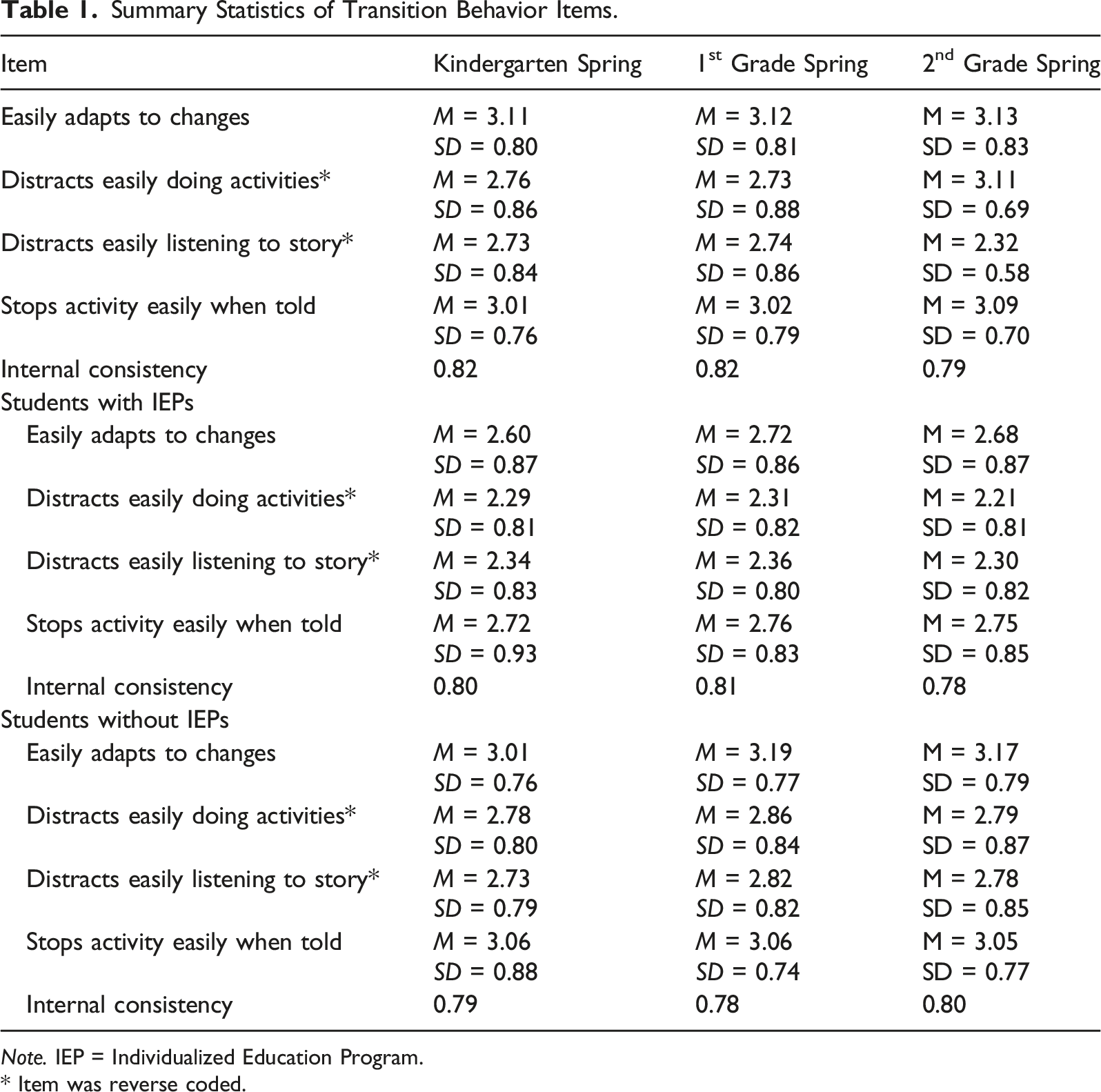
Note. IEP = Individualized Education Program.
* Item was reverse coded.
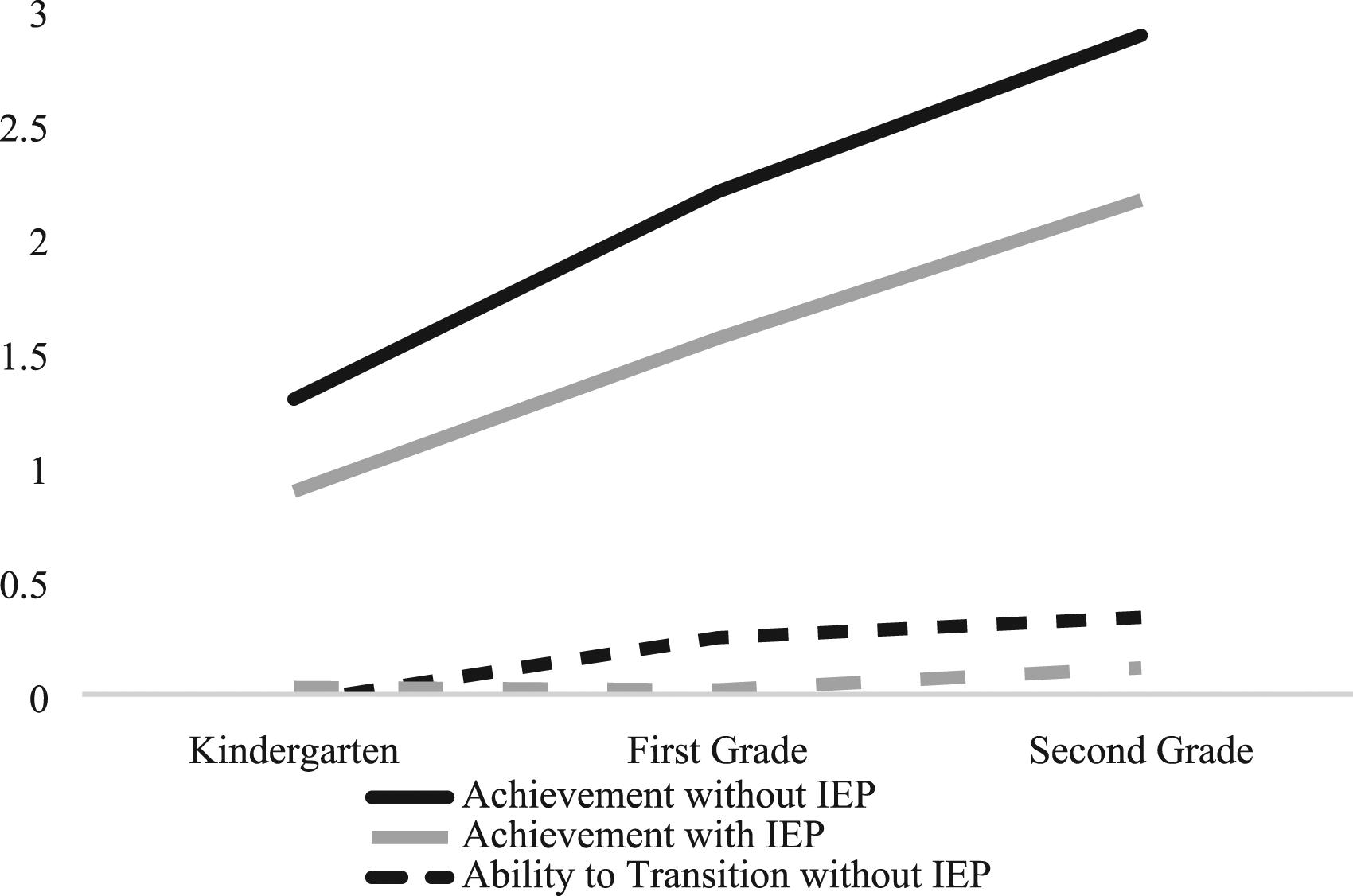
Achievement and ability to transition across time.
Analyses
In analyzing academic achievement data by domain and then in aggregate, structural equation modeling techniques were employed, specifically latent growth modeling via Mplus (v. 8.0; Muthén & Muthén, 2018). Latent growth modeling techniques allows for intercepts or initial statuses and slopes to be estimated as latent variables across time to derive overall trend (Preacher et al., 2008). We evaluated model fit according to a combination of fit statistics. A statistically nonsignificant chi-square (χ2) is indicative of acceptable model fit while the Comparative Fit Index (CFI) values and the Tucker Lewis (TLI; also known as the Non-Normed Fit Index) values at or greater than 0.90 are considered generally indicative of acceptable model fit (Little, 2013). Root Mean Square Error of Approximation (RMSEA) values at or below 0.08 are indicative of acceptable model fit (Little, 2013). Multi-group modeling techniques were then utilized to compare results between students with and without IEPs at the configural level (Dimitrov, 2010). We did not test for invariance beyond the configural level as we did not conceptually expect invariance of path or other parameter values between students with and without IEPs. We would expect other paths to vary according to IEP status. It would not be authentic to constrain these paths to be equal as that is not a situation that would ever occur or be expected to occur in the real world. Standardized direct and indirect effects were estimated via Weighted Least Square Means and Variances, which may be considered a robust estimator that does not assume normally distributed variables (Kelloway, 2014). Standardized regression coefficient values may be interpreted akin to Pearson’s r correlation values as they are bounded from −1 to 1 with values of 0.15, 0.30, and 0.50 or greater considered as small, medium, and large, respectively (Gravetter & Wallnau, 2016). We calculated the percentage of an effect that was mediated as being the estimated indirect effect divided by the sum of direct and indirect effect (i.e., the total effect), which is then multiplied by 100. This equation is expressed mathematically as
Weights that were provided as part of the ECLS-K as a complex data set were applied and design effects adjusted to more accurately estimate standard errors (Hahs-Vaughn, 2005, 2006). Without these adjustments for weights with design effects, standard errors would be under-estimated leading to the heightened likelihood of committing a Type I error.
Results
Standardized Regression Coefficients Across and by Achievement.
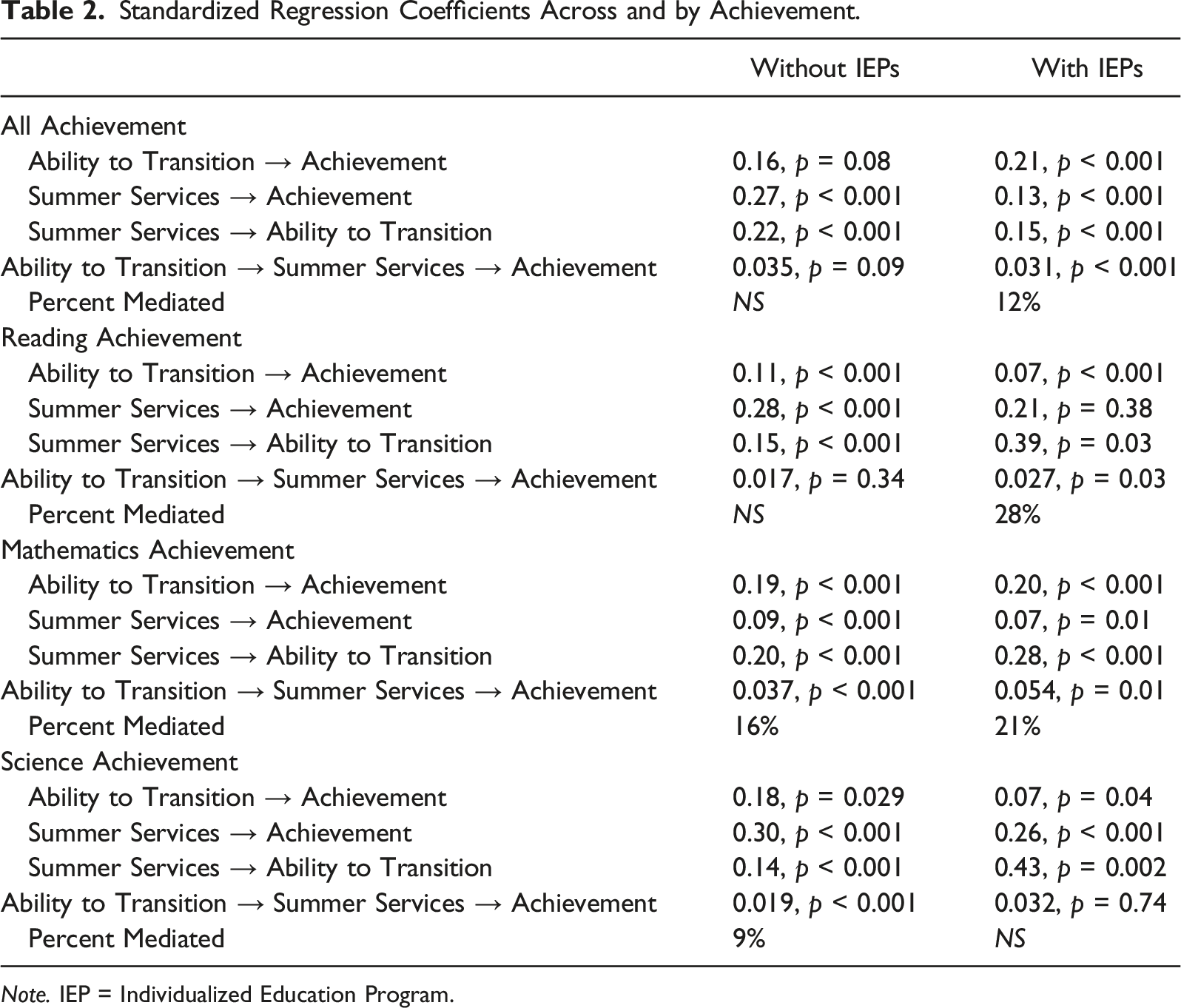
Note. IEP = Individualized Education Program.
Reading Achievement
For reading achievement disaggregated, the chi-square goodness of fit statistic was statistically significant, χ2(60) = 313.62, p < 0.001 indicating a lack of fit. However, the chi-square statistic has been found to be influenced by sample size and model complexity, thus other fit statistics were also considered. A CFI value of 0.99 and a Tucker Lewis Index (TLI) value of 0.98 were achieved indicating acceptable model fit. A RMSEA value of 0.04 was also acceptable as it was at or less than 0.08. Overall, the model fit was acceptable in view of the fit statistics reviewed holistically.
As we established acceptable model fit, standardized path estimates were then evaluated. Among students with IEPs, increased ability to transition was associated with increased reading achievement, β = 0.07, p < 0.001. The receipt of summer ESY services was associated with increased reading achievement, β = 0.21, p = 0.38 and increased ability to transition, β = 0.39, p = 0.03. An indirect effect of 0.027 (CI95: 0.015; 0.035), p = 0.03 was estimated, with approximately 28% of the relationship between ability to transition and reading achievement accounted for by school-related summer ESY services (i.e., Indirect Effect/(Indirect Effect + Direct Effect)).
Among students without IEPs, increased ability to transition was associated with increased reading achievement, β = 0.11, p < 0.001. The receipt of summer ESY services was associated with increased reading achievement as well, β = 0.28, p < 0.001. The receipt of summer ESY services was also associated with increased ability to transition, β = 0.15, p < 0.001. An indirect effect of 0.01, p = 0.34 was estimated.
Mathematics Achievement
For disaggregated mathematics achievement, the chi-square goodness of fit statistic was statistically significant, χ2(60) = 221.15, p < 0.001. A CFI value of 0.99 and a TLI value of 0.98 were achieved indicating acceptable model fit. A RMSEA value of 0.03 was also considered acceptable. Overall, the model fit was acceptable in view of the fit statistics reviewed. Among students with IEPs, increased ability to transition was associated with increased mathematics achievement, β = 0.20, p < 0.001. The receipt of summer ESY services was associated with increased mathematics achievement, β = 0.07, p = 0.01, and increased ability to transition, β = 0.28, p < 0.001. Among students with IEPs, an indirect effect of 0.054 (CI95: 0.029; 0.079), p = 0.01 was estimated, with approximately 21% of the relationship between ability to transition and mathematics achievement accounted for by school-related summer ESY services.
Among students without IEPs, increased ability to transition was associated with increased mathematics achievement, β = 0.19, p < 0.001. The receipt of summer ESY services was associated with increased mathematics achievement, β = 0.09, p < 0.001 and increased ability to transition, β = 0.20, p < 0.001. An indirect effect of 0.029 (CI95: 0.023; 0.050), p < 0.001 was estimated, with approximately 16% of the relationship between ability to transition and mathematics achievement accounted for by school-related summer ESY services.
Science Achievement
For disaggregated science achievement, the chi-square goodness of fit statistic was statistically significant, χ2(60) = 149.11, p < 0.001. A CFI value of 0.99 and a TLI value of 0.98 were achieved indicating acceptable model fit. A RMSEA value of 0.03 was also acceptable. Overall, the model fit was acceptable in view of the fit statistics reviewed. Among students with IEPs, increased ability to transition was associated with increased science achievement, β = 0.07, p = 0.04. The receipt of summer ESY services was associated with increased science achievement, β = 0.26, p < 0.001 as well as increased ability to transition, β = 0.43, p = 0.002. An indirect effect of 0.03, p = 0.74 was estimated.
Among students without IEPs, increased ability to transition was associated with increased science achievement, β = 0.18, p = 0.029. The receipt of summer ESY services was associated with increased science achievement, β = 0.30, p < 0.001 and increased ability to transition, β = 0.14, p < 0.001. Among students without IEPs, an indirect effect of 0.019 (CI95: −0.015; 0.022), p < 0.001 was estimated, with approximately 9% of the relationship between ability to transition and science achievement was accounted for by school-related summer ESY services.
Academic Achievement Aggregated
For the whole sample, model appeared to fit the data well from a variety of fit statistics comparing both students with and without IEPs. The chi-square goodness of fit statistic was statistically significant, χ2(60) = 608.37, p < 0.001 indicating a lack of fit. However, the chi-square statistic has been indicated as being influenced by sample size and model complexity, thus other fit statistics were considered. A CFI value of 0.96 and a TLI value of 0.94 were achieved indicating acceptable model fit. A RMSEA value of 0.05 was also acceptable being at or less than 0.08. Overall, the model fit was acceptable in view of the fit statistics reviewed holistically. As we established acceptable model fit, standardized path estimates were then evaluated.
For the whole sample, as the ability to transition increased across time, this was associated with decreased academic achievement, β = −0.21, p < 0.001. The receipt of summer ESY services was associated with increased academic achievement as well, β = 0.31, p < 0.001. The receipt of summer ESY services was also associated with increased ability to transition, β = 0.22, p < 0.001. A standardized estimate of the indirect effect of 0.07, p < 0.001 was found. We next examined the relationship comparing students with and without IEPs.
When testing for configural invariance between students without and with IEPs, the model fit the data better, χ2(60) = 232.61, p < 0.001 with also a CFI value of 0.99, a TLI value of 0.98, and a RMSEA value of 0.04. Among students without IEPs, increased ability to transition was associated with academic achievement but this relationship was statistically nonsignificant, β = 0.16, p = 0.08. The receipt of summer (though not ESY, since they do not have an IEP) services was associated with increased academic achievement as well, β = 0.27, p < 0.001, among these students without IEPs. The receipt of summer services was also associated with increased ability to transition, β = 0.22, p < 0.001 for these students without IEPs. Among students without IEPs, a statistically nonsignificant indirect effect of 0.035, p = 0.09 for school-related summer services was estimated in the relationship between ability to transition and academic achievement.
Standardized Path Estimates.

Note. IEP = Individualized Education Programs.
Notes. I1 refers to the initial status of academic achievement; I2 refers to the initial status of ability to transition; S1 refers to the slope of academic achievement; S2 refers to the slope of ability to transition.

Path diagrams for students without and with Individualized Education Programs. Note that the number of paths shown in figures are abbreviated for figure clarity. Refer to Table 2 for more standardized path values.
Discussion
In the current study, we examined the association of students’ teacher-reported abilities related to horizontal transitions (i.e., daily, frequent transitions between classes and subjects) with academic achievement as mediated by the summer ESY services received by students. In the first research question, we asked: What is the relationship of a student’s ability to transition with academic achievement across time as mediated by the receipt of services at school over the summer break? We found that the receipt of summer ESY services was significantly associated with increased academic achievement but this relationship was relatively small. The receipt of summer ESY services was also significantly associated with increased ability to transition. A significant indirect effect indicated that a quarter of the relationship between the ability to transition and academic achievement was accounted for by summer school-related services. In the second research question, we asked: Are there differences in this relationship according to the IEP status of students? Among students with IEPs, increased ability to transition was significantly associated with increased academic achievement across time. The receipt of summer ESY services was significantly and moderately associated with increased academic achievement as well. Among students without IEPs, increased ability to transition was associated with increased academic achievement but this relationship was statistically nonsignificant. The receipt of summer ESY services was also associated with increased ability to transition for these students without IEPs, but this was a weaker relationship.
Relationship Between Horizontal Transition and Academic Achievement Mediated by ESY
Transitions between activities, or horizontal transitions, can elicit challenging behaviors among students with disabilities, such as aggression, time off-task, and disruption of learning (e.g., Lequia et al., 2015; Sullivan et al., 2017; Tullis et al., 2015). These behaviors tend to be even more heightened when transitioning from a preferred activity such as recess or music to a nonpreferred activity or unpreferred activity such as a mathematics or reading lesson (e.g., Jessel et al., 2016; McCord et al., 2001; Wilder et al., 2006). Many strategies have correspondingly been developed to address transition-related challenging behaviors. Some strategies have focused on preparing students mentally for transitions through the use of activity schedules (Giles & Markham, 2017; Maajeeny, 2021) or other forms of advance notice such as a two-minute vocal warning (Brewer et al., 2014). Other transition strategies have used those transition periods for small, discrete tasks that can be easily managed during a transition time to direct a student’s focus (e.g., flash cards; Rakap, 2019). The body of literature on reducing transition-related challenging behaviors appears to be rather well developed with many tools and strategies for educators to use. Findings of the present study provide further support that, for students with and without IEPs combined, as a student’s ability to transition increased, academic achievement significantly decreased but this relationship was relatively small.
Vertical transitions can occur between grade levels (Symonds, 2015) as students experience a new teacher, new classmates, and a new routine even if occurring in the same physical school building. Issues associated with grade level to grade level transition are compounded with the typical regression in academic skills that occurs over the course of the summer break for students regardless of disability. This regression over the summer break has been referred to as the “summer slide” (Smith, 2012) or generally as summer learning loss (Turner & Tse, 2015) as well as alternatively the “summer melt” (Castleman et al., 2012). Summer “melt” refers to students not returning at all after a transition point such as high school students dropping out or high school graduates accepted into college not subsequently attending college (Castleman et al., 2012). As a result, a wide range of summer ESY services have been developed and studied in the literature in order to decrease the likelihood of difficulties associated with the transitions of students with and without disabilities with varying levels of success (e.g., Alexander et al., 2016; Borman et al., 2009; Lenhoff, et al., 2020). Even definitions of what constitutes ESY services range considerably, Barnard-Brak and Stevens (2021) found that local education agencies considered typical services such as occupational or physical therapy to less typical services like credit recovery. Vertical transitions between school environments have been associated with declines in academic achievement for students with and without disabilities (e.g., Ahtola et al., 2011; Akos et al., 2015; Casillas et al., 2012). Although this relationship between vertical transition and achievement is established, the present study adds to the literature in that students’ horizontal transition abilities as mediated by ESY has not previously been explored. Findings from the present study provide further evidence that, for the entire sample of students, summer school-related services accounted for a small but significant percent of the relationship between ability to transition horizontally and academic achievement.
Variations in the Relationship Based on IEP Status
Although all students may be challenged by transitions, students with disabilities appear to struggle more, especially when compounded with other sociodemographic variables such as race, ethnicity, and socioeconomic status (Akos et al., 2015). This notion is supported in the present study, in that transition abilities for students without IEPs was not significantly associated with achievement. Students without IEPs also had generally better ability to transition initially thus there may have been less room for improvement. As many students without disabilities also experience summer regression and related challenges with transition, this finding may have important implications related to the need to provide more summer-related services to students without IEPs. The receipt of summer ESY services was also associated with increased ability to transition for these students without IEPs but this was a weaker relationship. There was no significant mediation of school-related summer ESY services in the relationship between ability to transition and academic achievement, and this relationship was not statistically significant across time either. Again, these weaker and nonsignificant relationships may be because students without disabilities had less teacher-reported horizontal transition-related challenges to begin with.
Compared to students without disabilities, the need for ESY services is certainly substantiated by the larger relationship between summer ESY services and academic achievement for students with disabilities. This is to be expected, as the criteria for ESY services describe the ways in which students may be negatively impacted without supports. Additionally, prior research espouses increased academic achievement as a result of ESY services (Barnard-Brak & Stevens, 2019). Importantly, our findings also indicate that the receipt of summer ESY services was also significantly associated with increased ability to transition for these students with IEPs. This indirect effect estimated indicates that about a one-third of the relationship between ability to transition and academic achievement was accounted for by school-related summer ESY services. This relationship has not been previously explored.
Limitations
Transition can be exciting yet overwhelming for different categories of students with disabilities and their families. After summer break, students face a lot of adjustments in coming back to school. Students with IEP had transition planning, and students worked on specific goals. ESY services helped achieve these goals. Among students with IEPs, increased ability to transition was associated with increased academic achievement. The current study revealed that the receipt of summer ESY services was associated with increased academic achievement as well among these students with IEPs. The receipt of summer ESY services was also associated with increased ability to transition. Students with disabilities have reported special challenges in making successful transitions whether they be vertical or horizontal (e.g., Lequia et al., 2015; Sullivan et al., 2017; Tullis et al., 2015), but we should note that not all students with IEP have transition problems. Degree of disability, type, and onset of the disability played a role in the transition process. Even though all students with IEPs are supposed to have transition planning considered, transition for individuals with high incident disabilities like specific learning disabilities and intellectual disabilities would appear to pose more challenges than other groups (e.g., Lequia et al., 2015; Sullivan et al., 2017; Tullis et al., 2015); thus, transition planning is not one size fits all. The literature does appear to suggest that among some children, especially perhaps with high incidence disabilities that encounter difficulties in making the transitions that these issues with transitions may extend to adolescent and to adult life (e.g., Lequia et al., 2015; Sullivan et al., 2017; Tullis et al., 2015). Thus, issues with transition in childhood found in the current study may extend across the lifespan. Transition problems vary considerably ranging from social skills, behavior, unemployment, underemployment, job changes, participation in community and leisure activities, pay, dependency on parents and others, satisfaction with employment, post-secondary academics, and functional skills (e.g., Lequia et al., 2015; Sullivan et al., 2017; Tullis et al., 2015).
Several limitations emerged from conducting the current study. First, summer ESY services were narrowly conceived as summer school-related services. Future research should consider other types of summer ESY services outside of those provided via a school as these services may not emphasize academic achievement, thus potentially revealing different results. Second, the basis for our study was based on our theory that students who struggle with horizontal transitions (i.e., daily routine transitions) would also have difficulty with the vertical transition from grade level to grade level. This may have been problematic if this theory did not hold; however, it appears to have been affirmed by the results of the current study—that is, students with IEPs’ ability to transition daily (i.e., horizontal transition) was mediated the relationship between summer ESY services and academic achievement. Third, a student having an IEP does not necessarily mean they have problems related to transition; however, for this age group (i.e., Kindergarten through second grade), transition issues would appear to be developmentally appropriate for children to have at this age range.
Implications and Future Directions
ESY Eligibility Screening Items.
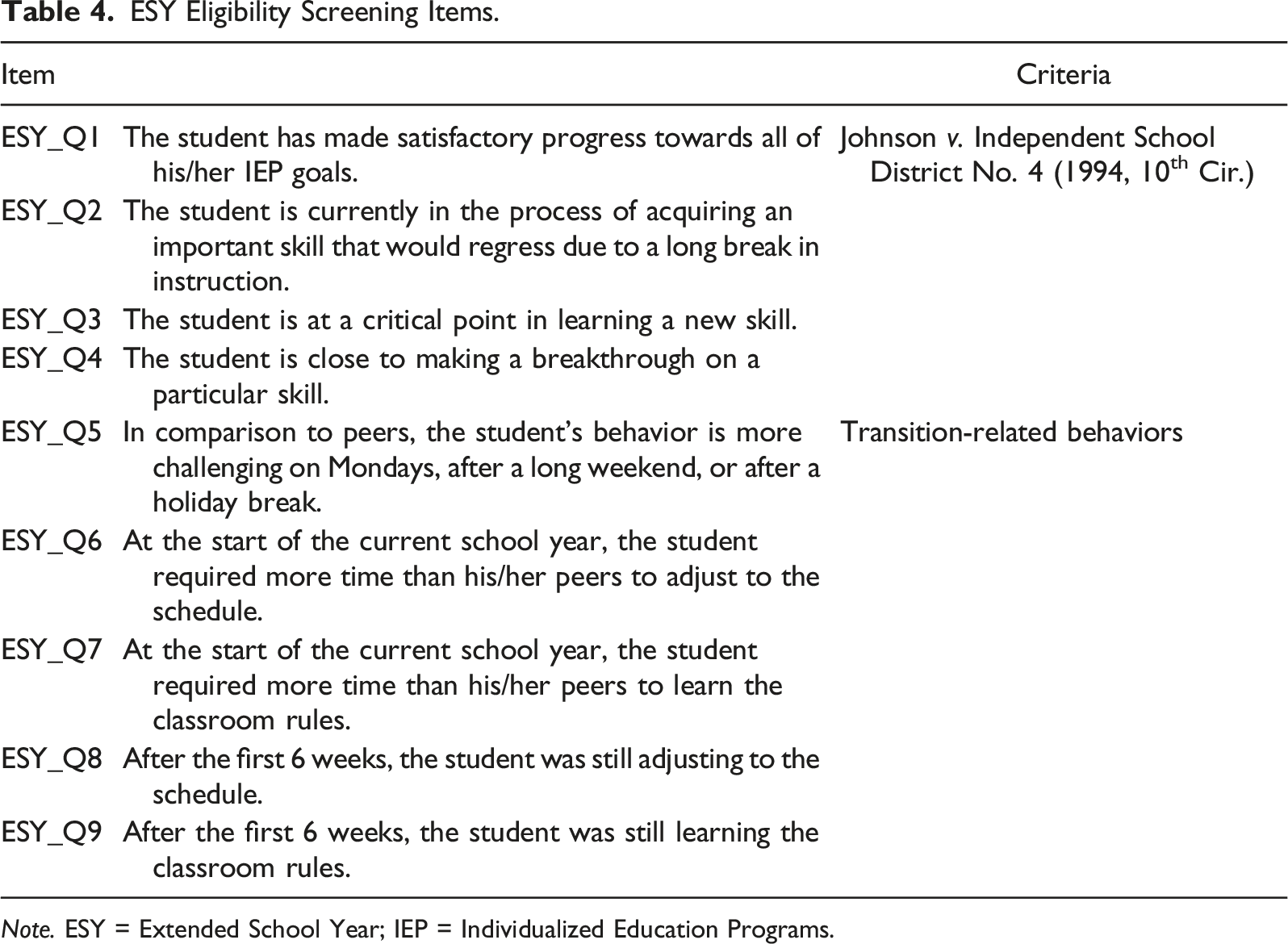
Note. ESY = Extended School Year; IEP = Individualized Education Programs.
Conclusion
In conclusion, results of the current study suggest that ability to transition was related to academic achievement among students with IEPs. Results of the current study also indicate that school-related summer ESY services mediate the relationship between the ability to transition and academic achievement for students with IEPs. Barnard-Brak and Benner (2020) surveyed both state and local special education directors about ESY services and found that determining eligibility for ESY services was problematic. This is not surprising given the current patchwork of criteria utilized by local education agencies to determine eligibility for ESY services (Barnard-Brak & Stevens, 2021). Thus, results of the current study suggest that a student’s ability to transition should explicitly be considered as a criterion in determining eligibility for ESY services. This ability to transition may be even more impacted by the advent of the COVID-19 pandemic, which has disrupted learning for many school children.
Footnotes
Declaration of Conflicting Interests
The author(s) declared no potential conflicts of interest with respect to the research, authorship, and/or publication of this article.
Funding
The author(s) received no financial support for the research, authorship, and/or publication of this article.
