



Abstract
Minority stress theory is a model for understanding health disparities among sexual minorities, defined as those who experience a level of same-sex attraction, identity, or behavior. Methods for assessing minority stress among youth included only adult measures until the development of the Sexual Minority Adolescent Stress Inventory (SMASI). The SMASI appears to be a robust scale in its ability to measure specific stressors and global minority stress among adolescents; however, it does not measure the domain-level constructs of proximal and distal stress, which are integral features of the underlying theory. This study tests the psychometric defensibility of including these domain-level factors within an updated SMASI measurement model. Results provide evidence for the structural validity of the proximal and distal domains within the SMASI measurement model and suggest this updated model has more informational value than the original model for capturing minority stress.
Sexual minorities are defined as persons who are minoritized based on their experience of some level of same-sex attraction, identity, or behavior (Lefevor et al., 2020). Currently, significant health disparities exist in sexual minority communities that have drawn attention from social justice-oriented researchers. Broadly, psychological distress and risk-taking behaviors have been observed to be elevated in sexual minority populations (Gonzales & Henning-Smith, 2017; King et al., 2008). Much of the existing literature focuses on sexual minority adults, likely due to convenience sampling, ethical barriers, and logistical difficulties, such as recruitment, cost, and parental consent. However, there are an increasing number of studies finding similar health disparity trends among sexual minority youth. Sexual minority adolescents have been found to exhibit higher rates of depression, anxiety, eating disorders, trauma, and reduced levels of general psychological wellbeing compared to their heterosexual peers (Smith et al., 2016; Watson et al., 2017). Additionally, when compared with heterosexual youth, sexual minority youth are at higher risk for a variety of adverse behavioral health outcomes, such as substance abuse, academic problems, homelessness, risky sexual behavior, and suicidal ideation and behavior (e.g., Bontempo & d’Augelli, 2002; Caputi et al., 2018; Silenzio et al., 2007).
As with many health disparities observed among minoritized groups, researchers are interested in addressing the question as to why sexual minority individuals are at higher risk for so many harmful outcomes. Meyer (2003) proposed the minority stress model as an explanation for this phenomenon, which has since been embraced by the academic community (Goldbach & Gibbs, 2017). Meyer defines minority stress as life stressors experienced by sexual minority individuals due to their identity in addition to the routine daily stressors experienced by all people, regardless of identity. Global minority stress is further divided into domains of distal and proximal stressors. Distal stressors are events external to the individual and often societally driven. For example, heterosexual, lesbian, and gay peers might isolate a bisexual person because they are perceived as different, untruthful, indecisive, promiscuous, or attention seeking. Proximal stressors are the internal experiences one encounters often due to exposure to distal stressors (Hatzenbuehler, 2009). For example, rejection from a family member could lead a gay youth to develop negative disclosure expectancies, perceiving all environments as hostile and dangerous if their identity is revealed.
Minority stress has been shown to consistently predict concurrent mental health disparities among sexual minority adolescents, including in depression, suicidality, and substance use (Meyer, 2003; Weeks et al., 2021). Several measures have been developed to assess levels of minority stress in adults, including the Heterosexist Harassment, Rejection, and Discrimination Sale (Szymanski, 2009); the Gay-related Stressful Life Events Scale (Rosario et al., 2002); the Daily Heterosexist Experiences Questionnaire (Balsam et al., 2013); and the LGBT People of Color Microaggressions Scale (Balsam et al., 2011). While these measures evaluate various facets of minority stress, including several aspects of demographic intersectionality, only one measure to date has been developed and validated specifically for use with youth: the Sexual Minority Adolescent Stress Inventory (SMASI; Schrager et al., 2018).
Scores from the SMASI have been found to be meaningfully associated with anxiety, depression, substance misuse, and suicidality among sexual minority adolescents (Burgess, 2017; Fulginiti et al., 2020; Weeks et al., 2021). The SMASI measures global minority stress (via a total score) as well as 11 specific minority stressors (via subscale scores) that are drawn from proximal and distal stress frameworks, respectively. Subscales drawn from the proximal stressor framework include: internalized homonegativity, identity management, negative expectancies, and intersectionality. It is noteworthy that the SMASI frames intersectionality as a proximal stressor because items representing this subscale aim to assess intersectional discrimination, and not merely intersectionality, as the label might suggest. Subscales drawn from the distal stressor framework include: family rejection, social marginalization, homonegative communication, homonegative climate, negative disclosure experiences, work, and religion. Similar to intersectionality, it is noteworthy that the SMASI frames both work and religion as distal stressors because items representing these subscales aim to assess discrimination experienced within these social contexts.
Interestingly, the original validation study of the SMASI (Schrager et al., 2018) did not investigate the structural validity of the mid-level proximal and distal factors (via domain scores). Global minority stress and specific minority stressors were modeled, yet the mid-level factors representing proximal and distal stress were left out of the multidimensional measurement model. While one preliminary study found strong internal consistency reliability and convergent validity evidence supporting the use of distal and proximal domain scores from the SMASI (Weeks et al., 2021), the empirical defensibility of these domain-level factors (i.e., proximal stress and distal stress) have yet to be substantiated via factor analysis. Thus, there are no adequate measures of distal or proximal stress that can be used with sexual minority youth.
While the SMASI measures unique distal and proximal stressors (via subscale scores), these specific experiences vary slightly from one minority stress framework to another. What all minority stress models share, however, is the implication of distal and proximal stress domains. These stress domains are integral to Meyer’s (2003) minority stress model and are frequently discussed, at least theoretically, in the literature. Having domain scores for proximal and distal stress could facilitate more effective measurement of minority stress, as domain-level scores can be more easily generalized across studies and measures compared to scores representing each unique stressor within these domains. This possibility is supported by initial evidence from a study by Weeks et al. (2021), which found that the differential predictive value of specific stressors measured by the SMASI was negligible, whereas the differential predictive value of domain scores (i.e., sums of proximal and distal stressors, respectively) was substantial. Furthermore, it is noteworthy that although a minority stress measure assessing proximal and distal stress has yet to be validated for use with youth, researchers have been making broader domain-based inferences based on specific subdomain stressors or theory alone (e.g., Douglass & Conlin, 2020; Ramirez & Galupo, 2019). Validating a measure of proximal and distal stress with this population could therefore contribute to stronger, more defensible inferences in future studies, shoring up the evidence base in support of minority stress theory with adolescents.
Though the SMASI is a relatively new measure, it captures a large amount of information regarding minority stress in a population that lacks options for valid measures of minority stress (Andretta et al., 2018; Eckstrand et al., 2019; Garcia-Perez, 2020). To improve the scientific and clinical utility of the SMASI, and the measurement of minority stress with sexual minority adolescents broadly, it is important to have a reliable and valid instrument for assessing proximal and distal stress domains. Again, it is striking that no empirical evidence has been generated yet to support broad measures of proximal and distal stress with this population, though this aspect of minority stress theory is frequently assumed and described as if such evidence exists. Knowing that minority stress is a major contributor of health disparities in sexual minority youth means the scientific and clinical communities working with this population need an accurate way to measure minority stress and its full theoretical framework, interpret results in terms of predictive value, monitor progress and change, and properly evaluate the usefulness of scores representing the theory via applied and basic research. The current study aimed to investigate the structural validity of the latent variables of proximal and distal stress, as measured by the SMASI, via the following questions: 1. Do observed variables load appropriately onto their assigned specific stressor subscales (i.e., first-order factors)? 2. How well do internalized homonegativity, identity management, negative expectancies, and intersectionality subscales (i.e., first-order factors) load onto a proximal stress domain (i.e., second-order factor)? 3. How well do family rejection, social marginalization, homonegative communication, homonegative climate, and negative disclosure experiences subscales (i.e., first-order factors) load onto a distal stress domain (i.e., second-order factor)? 4. How well do proximal and distal stress domains (i.e., second-order factors) account for the higher-order global minority stress factor? 5. Overall, how much informational value does the SMASI measurement model including proximal and distal factors have compared to the original measurement model consisting of only specific and global minority stress factors? 6. How strong is the internal reliability of the proximal and distal domains (i.e., second-order factors) represented in the updated SMASI measurement model?
Given the distinction between internal and external stressors captured by the proximal and distal SMASI subscales and previous research providing preliminary validity evidence for domain scores at this level (Weeks et al., 2021), we predicted that the designated distal and proximal factors would be psychometrically defensible, as indicated by at least adequate factor loadings, latent construct reliabilities, and data–model fit indices. Given its coherence with Meyer’s (2003) minority stress theory, we also anticipated the SMASI model including distal and proximal factors would have more informational value compared to the original model consisting of only specific stressor and global minority stress factors.
Methods
Participants
Sample Demographics: Frequencies and Percentages (N = 445).
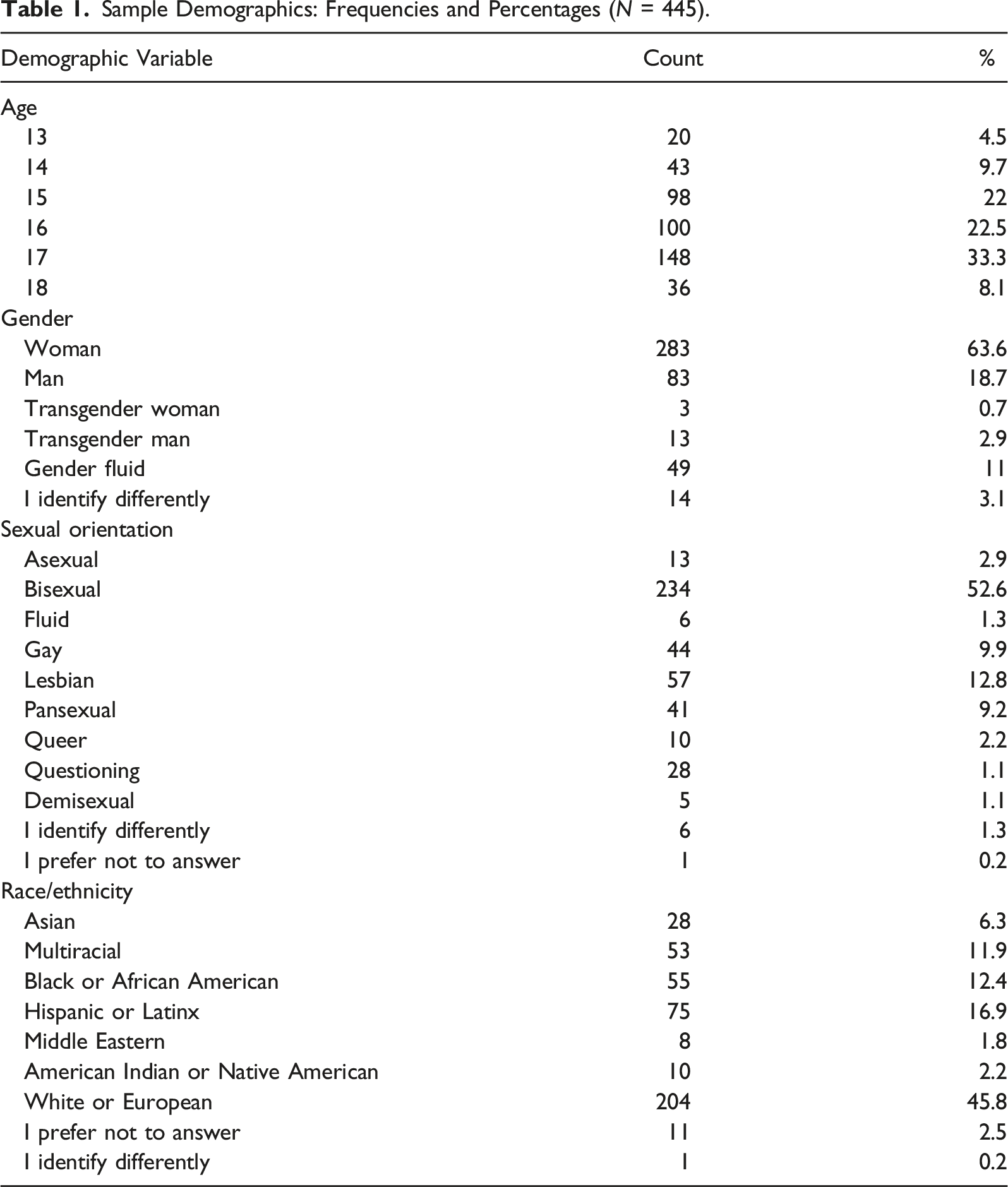
Measures
Demographic questionnaire
Participants in both samples completed a demographic questionnaire. The questionnaire for both samples asked participants to select their self-identified sexual orientation, age (by birth year), gender, and race/ethnicity.
The SMASI
Schrager et al. (2018) developed the SMASI as a measure of minority stress intended to be used with sexual minority adolescents ages 14–17 years. The SMASI consists of 64 total items that provide a global minority stress composite score. The 64 items are distributed into 11 subscales used to evaluate specific experiences of minority stress across proximal and distal domains. Responses to SMASI items are coded in a binary fashion and items are framed both within the past 30 days as well as over one’s lifetime, with “no” = 0 and “yes” = 1. Responses to all items are summed at the subscale and composite scale levels, with higher scores representing higher levels of minority stress. Items included in the SMASI are based on key minority stress theory frameworks (Goldbach et al., 2014; Hatzenbuehler, 2011; Meyer, 2003) and qualitative information obtained via interviews with sexual minority cisgender adolescents ages 13–19 years. Schrager et al. (2018) and Goldbach et al.’s (2017) initial validation studies as well as Goldbach et al.’s (2021) follow-up validation study with a diverse sample demonstrated the SMASI scales had strong internal consistency reliability and good divergent and convergent validity with other mental health measures. Additionally, Burgess (2017) and Fulginiti et al. (2020) found the SAMSI to be psychometrically sound in their respective studies. A full, free version of the SMASI is available at https://dworakpeck.usc.edu/media/291/download.
Although the original SMASI is comprised of 11 subscales with 64 items, the present study used only the following nine subscales consisting of 49 total items: internalized homonegativity (proximal), identity management (proximal), negative expectancies (proximal), intersectionality (proximal), family rejection (distal), social marginalization (distal), homonegative communication (distal), homonegative climate (distal), and negative disclosure experiences (distal). The work and religion subscales were intentionally excluded from the SMASI in both Sample 1 and Sample 2 due to concern that they were not applicable to all participants in the population being sampled. Items in these subscales assume that adolescents are employed in a work setting and participating in a religious community, which means there are no response options for “does not apply.” Thus, if an adolescent is not working or participating in a religious community and responds “no” to all items in either subscale, this would be interpreted as experiencing low levels of discrimination in that context, which, in turn, contributes to lowering the domain-level score for distal stress as well as the total score for overall minority stress. In short, including the work and religion subscales biases scoring and interpretation at other levels of the measure for adolescents who do not participate in these contexts but who may nevertheless experience greater levels of minority stress across the other distal contexts that are truly universal (e.g., family rejection, social marginalization). For this reason, the work subscale has been recommended as optional by SMASI developers (Schrager et al., 2018). A prior study also suggests excluding the work and religion subscales does not affect the integrity of higher-level SMASI scores, as Weeks et al. (2021) found the SMASI had strong internal consistency reliabilities for proximal (α = .90), distal (α = .94), and global (α = .95) minority stress scores, sans these two subscales. Given this study is only the second to exclude both work and religion subscales, however, a secondary aim was to provide further structural validity evidence for this reduced (49-item) and potentially less-biased version of the SMASI.
Statistical Analyses
Preliminary analyses were run for observed scores from the three levels of the SMASI—including global minority stress (total scale), proximal and distal stress domains (composite scales), and the nine specific stressors (subscales)—to evaluate distribution of responses, central tendency, and internal consistency reliability. Pearson bivariate correlations were also calculated to assess strength of relationships, independence, and directionality between scores derived from these three levels of measurement (i.e., total scale, composite scales, and subscales). Given the study combined two samples from different online panels, a two samples t-test was conducted to determine potential mean differences in the two samples prior to aggregating the data.
After ensuring through preliminary analyses that the data met basic statistical assumptions, confirmatory factor analysis (CFA) was conducted on the SMASI’s measurement model using the weighted least squares estimator (WLSMV; Jöreskog et al., 2001) with mean and variance adjustments (see Figure 1). Goodness of fit was determined based on the chi-square test, an RMSEA of less than .06, a CFI of greater than .90, and an SRMR of less than .08 (Hu & Bentler, 1999). Indicators were determined to be representative of the latent variable based on their standardized loadings, with loadings > .70 considered ideal and > .40 deemed acceptable (Kline, 2014). These statistical procedures assessed factor loadings of SMASI items on the latent variables representing specific stressors: internalized homonegativity (proximal), identity management (proximal), negative expectancies (proximal), intersectionality (proximal), family rejection (distal), social marginalization (distal), homonegative communication (distal), homonegative climate (distal), and negative disclosure experiences (distal). According to the minority stress model, these first-order factors were expected to have acceptable to ideal loadings onto the second-order latent variables of distal and proximal stress (as previously indicated in the parentheses following each first-order factor). Two-factor distal and proximal stress model.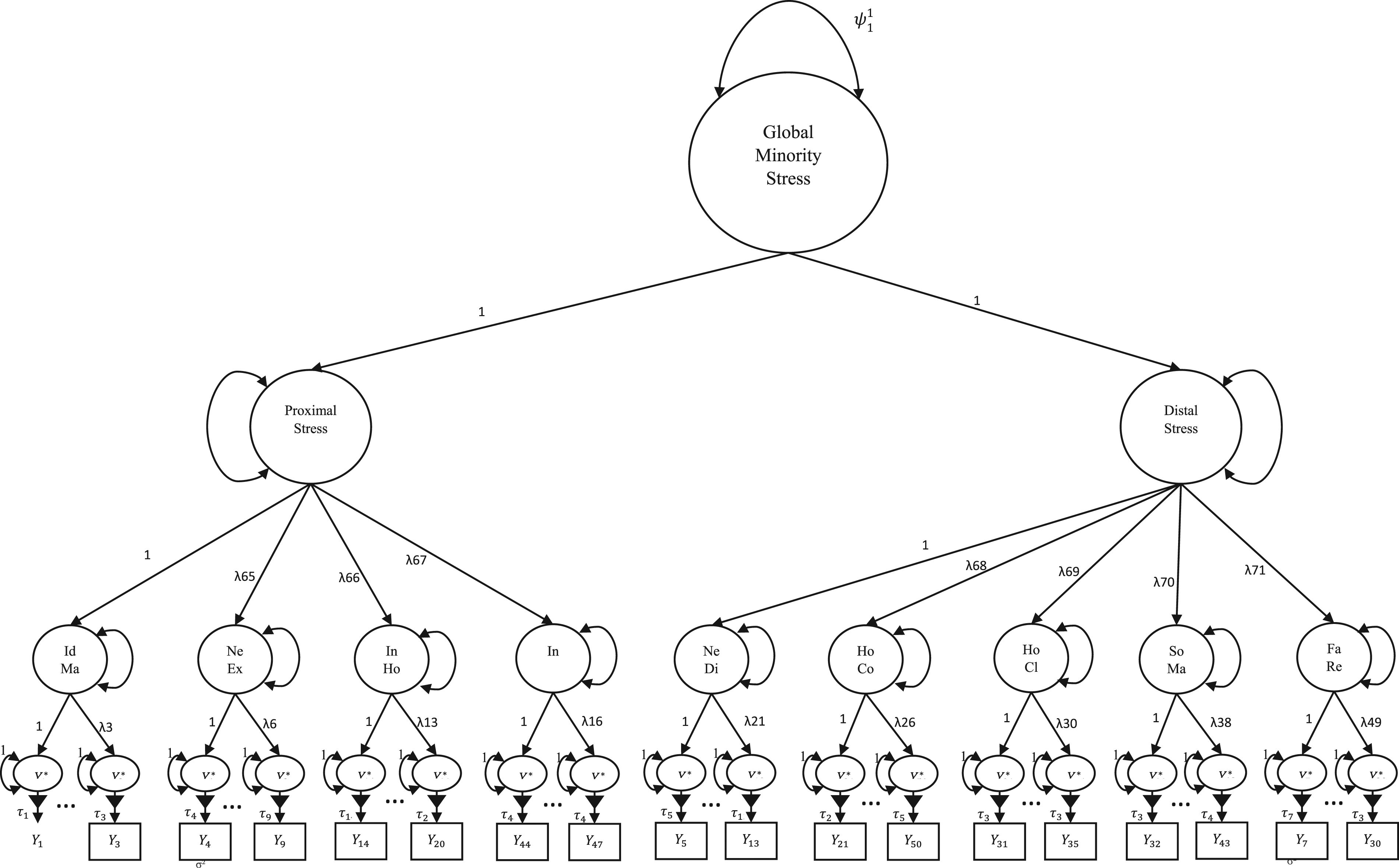
The factor variance of distal and proximal stress factors on a third-order latent variable representing global minority stress was also evaluated by constraining both second-order loadings on this factor to one and calculating the correlation. A nested model comparison index, comparing the second-order model with distal and proximal stress factors (see Figure 1) with the second-order model with a global minority stress factor (sans distal and proximal factors; see Figure 2), was evaluated to determine how well the updated multidimensional measurement model compared to the original and simpler SMASI measurement model with fewer factors. Based on model comparison using a likelihood ratio test with WLMSV corrections, we expected the model with proximal and distal second-order factors would demonstrate statistical value added (i.e., p < .05) compared to the original model with one second-order factor representing global minority stress (sans distal and proximal factors). Proposed CFA model pathways for the model with two second-order factors are outlined in Figure 1. In addition to the primary CFA, latent construct reliability analyses were conducted to explore the consistency of the latent variables (as opposed to the observed scores) across each of the three levels of measurement (i.e., first-order, second-order, and third-order factors). For latent construct reliability, which is an indicator of internal consistency at the factor level, H ≥ .70 were considered desirable, as they indicate a strong intrafactor correlation over repeated administrations (Hancock & Mueller, 2001). Factor analyses were conducted using the lavaan package (Rosseel, 2012) through R Statistical Environment (R Core Team, 2020). Single factor global minority stress model.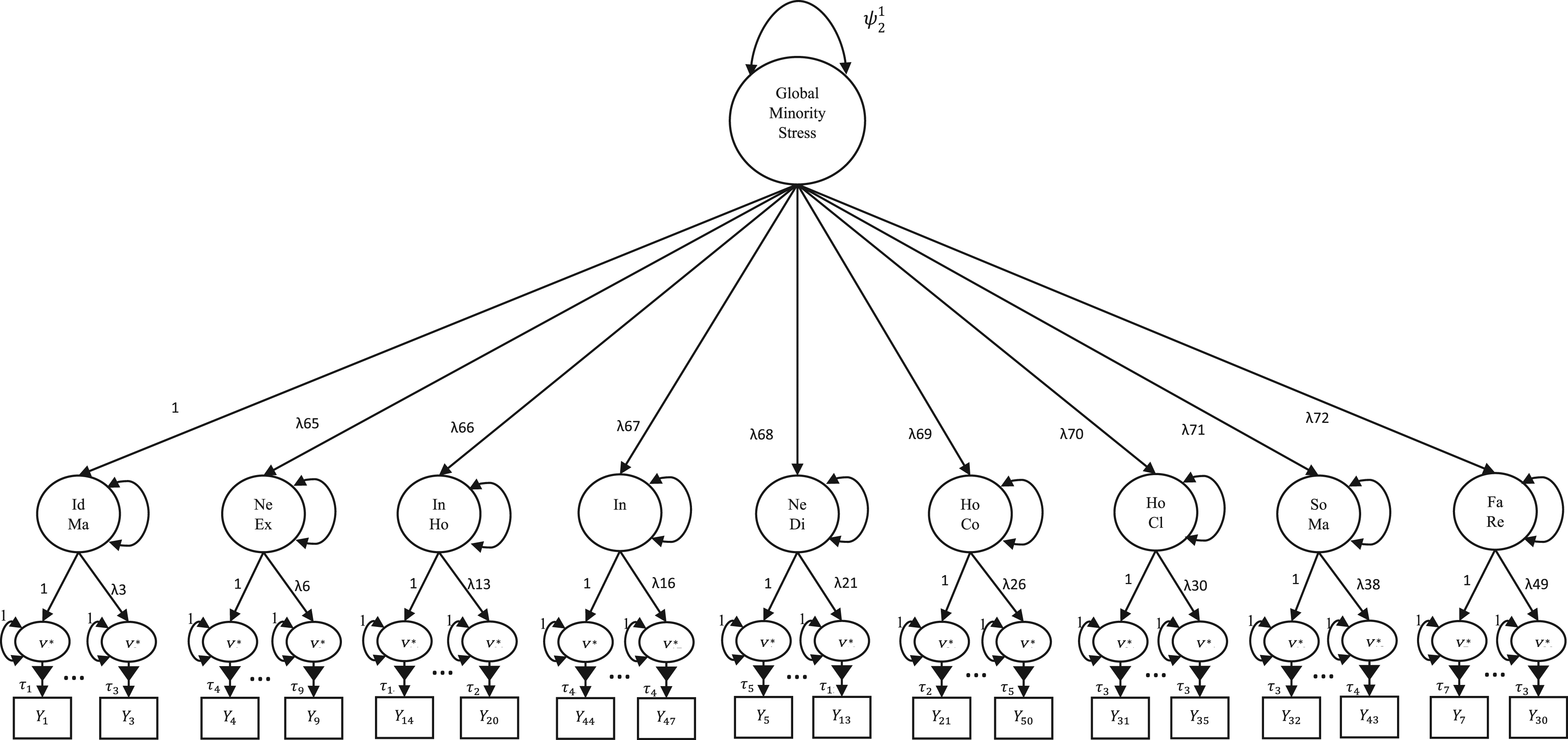
Results
Descriptive Statistics
All subscale scores were assessed to determine central tendencies, range, distribution, and internal consistency reliability. Scale scores were generally normally distributed except for two subscales (i.e., social marginalization and internalized homonegativity). While distribution of scale scores is important within measurement, strict normality is not necessary for conducting confirmatory factor analyses with dichotomous items. Additionally, skewness and kurtosis values for all subscale scores were < |2|, suggesting the distributions could be interpreted as relatively normally distributed for our analytic purposes. Evidence of a difference in mean SMASI total scores between samples was found, t (433) = 3.544, p < .001, though the effect size was small (d = .35). Given this finding, sample group was included as a covariate in the CFA models to control for the potential effect of sampling on results from the current study.
Correlations
Bivariate Correlation Matrix (Pearson’s r) for SMASI Scale Scores.
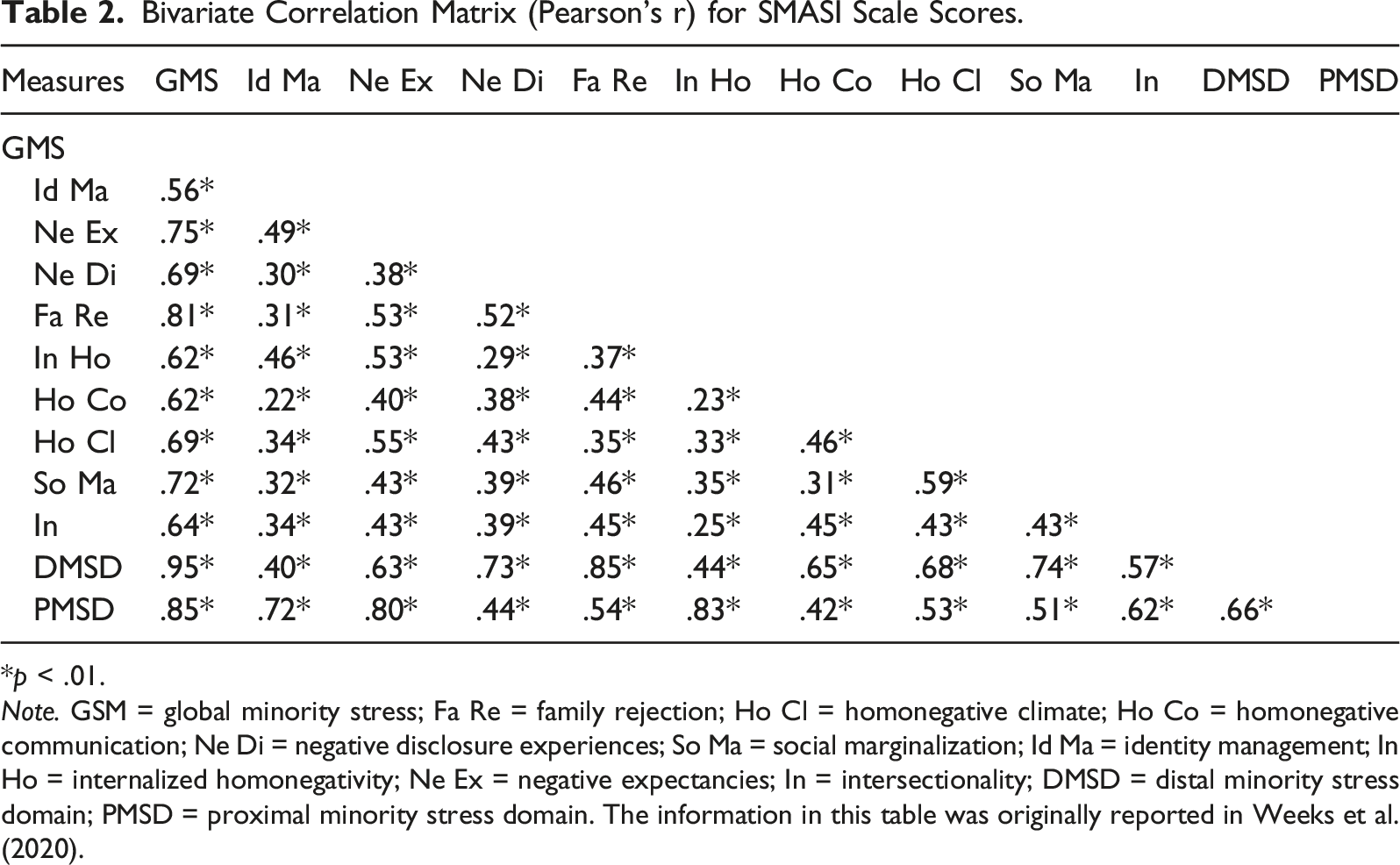
*p < .01.
Note. GSM = global minority stress; Fa Re = family rejection; Ho Cl = homonegative climate; Ho Co = homonegative communication; Ne Di = negative disclosure experiences; So Ma = social marginalization; Id Ma = identity management; In Ho = internalized homonegativity; Ne Ex = negative expectancies; In = intersectionality; DMSD = distal minority stress domain; PMSD = proximal minority stress domain. The information in this table was originally reported in Weeks et al. (2020).
Factor Analyses
Prior to conducting the primary analyses, a preliminary CFA was conducted to confirm the psychometric defensibility of the original SMASI measurement model with one second-order factor representing global minority stress. To determine the appropriateness of observed variable loadings on subscale latent variables, a CFA model was fit. Parameter estimates were conducted using the WSLMV estimator with mean and variance adjustments. Results for the second-order model with one higher-order factor (Figure 2) demonstrated good data–model fit (χ2 (1166, N = 445) < .01, RMSEA = .045, CFI = .918, SRMR = .10), with first-order factor loadings ranging from λ = .64–.92 onto the higher-order global minority stress factor. Additionally, global minority stress exhibited strong internal consistency reliability at the observed level (α = .93) and the latent level (H = .95).
CFA Results for the Updated SMASI Model with Proximal and Distal Domain Factors.
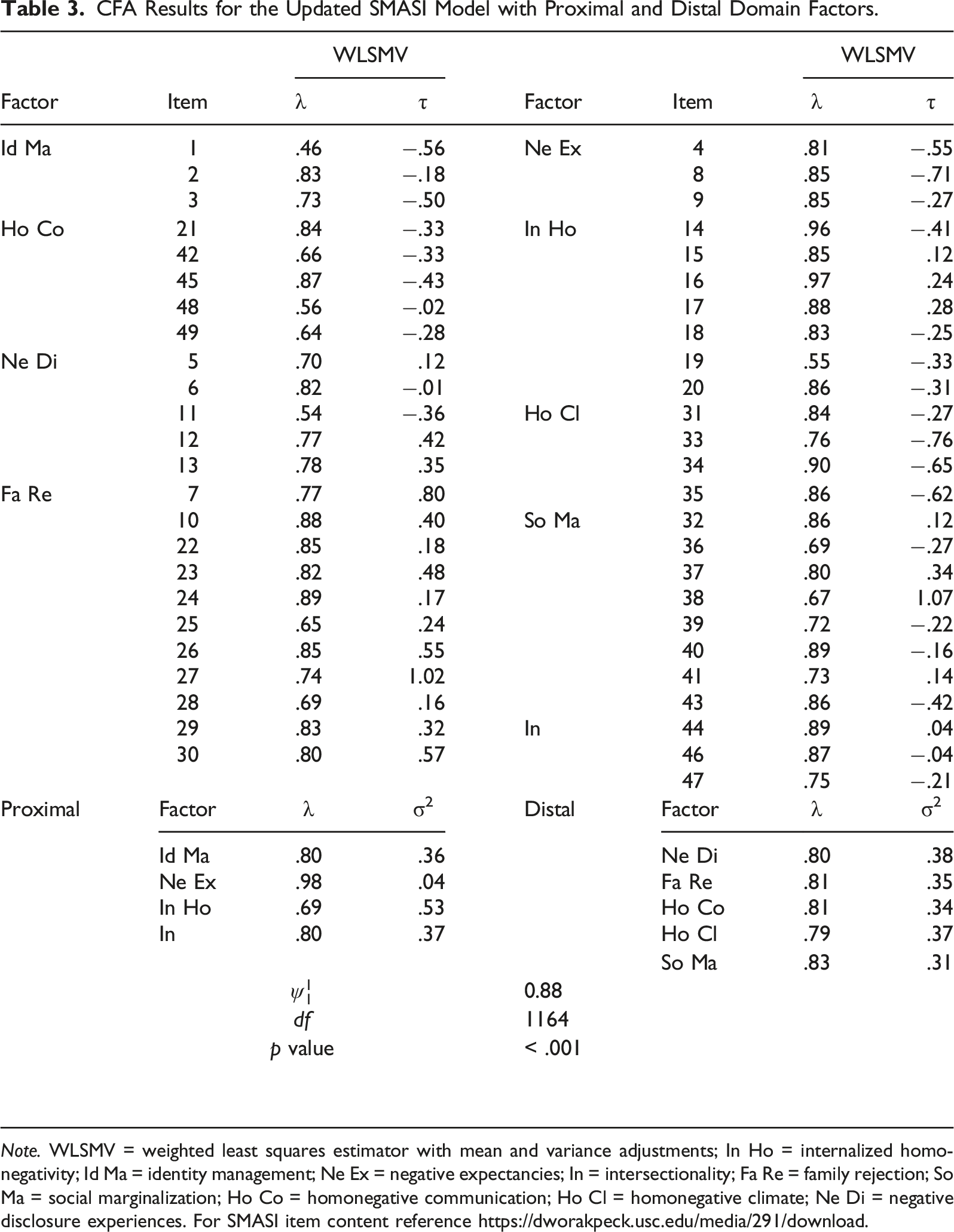
Note. WLSMV = weighted least squares estimator with mean and variance adjustments; In Ho = internalized homonegativity; Id Ma = identity management; Ne Ex = negative expectancies; In = intersectionality; Fa Re = family rejection; So Ma = social marginalization; Ho Co = homonegative communication; Ho Cl = homonegative climate; Ne Di = negative disclosure experiences. For SMASI item content reference https://dworakpeck.usc.edu/media/291/download.
Second-order loadings of first-order (subscale level) factors on the higher-order factor of proximal stress appeared to be more variable compared with the first-order factor loadings on the higher-order distal stress factor (see Table 3). Subscale (i.e., first-order factor) loadings on the proximal domain have a larger range, with internalized homonegativity furthest from the subscale grouping (λ = .69). On the other hand, subscale factor loadings on the distal domain are clustered above the .70 threshold, with only a range of .04 in parameter estimates (see Table 3). Overall, estimates indicated that the proximal and distal latent variables are likely accurate representations of the latent subscales that theoretically comprise them, but that there is more variability in the contribution made by first-order factors for the proximal domain compared to the distal domain. Furthermore, when considering the larger conceptual framework of the minority stress model, results showed that the third-order global minority stress factor can account for a very strong latent correlation between the proximal and distal stress domains, ψ = .88, suggesting a positive relationship among these factors that is consistent with theory.
Finally, the nested model comparison index assessed the value added of the second-order two-factor minority stress model accounting for proximal and distal domains. A likelihood ratio test with WLSMV corrections of the second-order two-factor model (see Figure 1) with the second-order one-factor model (see Figure 2) found a chi-squares difference of 10.92, df = 2, p = .004. This indicates that the more complex model with distal and proximal stress domains seems to be a better fit for the data than simply using a one-factor, second-order, global minority stress model to capture all subscales assessed using the SMASI. The difference between the nested models showed significant difference in terms of model fit, as determined by chi-square and degrees of freedom, relative to the additional parameters and degrees of freedom required to estimate them. Testing of latent construct reliability further supported the model comparison outcome, with both distal and proximal latent factors exhibiting good internal consistencies at the observed level, α = .91 and .86, and the latent level, H = .90 and .99, respectively.
Discussion
The primary analyses used to address the research questions put forth in this study confirmed the hypotheses and provided evidence to support the structural validity of the second-order two-factor measurement model for evaluating minority stress theory at the proximal and distal domains. This updated model aligns better with the theory underlying the SMASI, and the CFA showed that a second-order two-factor model (see Figure 1) is psychometrically defensible and more informative than the original model which conceptualizes minority stress at the specific stressor and global levels while ignoring the domain levels. In the big picture, these findings provide initial structural validation for the minority stress model that includes distal and proximal domains as described in the theoretical literature. Thus, the scientific and clinical utility of the SMASI in particular, and measurement of minority stress in adolescents more generally, can be broadened to include an empirically supported instrument for assessing proximal and distal stress domains.
Many studies up to this point have used proximal and distal stress concepts to describe the health disparities found in sexual minority individuals (e.g., Goldbach et al., 2014; Goldbach et al., 2017; Hatzenbuehler, 2011; Meyer, 2003). This model originally outlined by Meyer (2003) has been widely accepted and quickly generalized to sexual minority youth. While some studies used one or two subscales within the proximal or distal domains to quantify proximal and distal stress (Douglass & Conlin, 2020; Ramirez & Galupo, 2019), they did not account for the other subscales included in these domains that are also likely experienced by the individual and which contribute to a more robust representation of proximal and distal domains. This neglects the complexity in the relationship among the subscales representing specific stressors and ignores the likelihood that youth experiencing one specific stressor are likely experiencing several others, as seen in the correlations in Table 2. While operationalizing a construct through only one of its component parts may be better than nothing at all, doing so can be empirically misleading. However, without an appropriate measure to assess the proximal and distal stress domains, researchers and interventionists did not have suitable alternatives for measuring and discussing the stress domains. Prior to the recent development of the SMASI (Schrager et al., 2018), there was no measurement for adolescent minority stress broadly, much less the domains that comprise it. This study addressed a problem in the literature by further validating the SMASI’s original measurement model and then updating the model to account for proximal and distal stress domains. Overall, results from the present study suggest that this updated model could be used for future applications of the SMASI within research and practice.
Level by level (i.e., subscales, composite scales, and total scale), results from this study suggest the SMASI does an adequate job of representing its constructs of interest. Specifically, findings showed that observed items loaded appropriately onto first-order factors representing specific stressors and these first-order factors then loaded appropriately onto second-order factors representing proximal and distal stress domains. Results also showed that when modeled as a third-order variable, global minority stress accounted for a strong correlation between the second-order proximal and distal stress factors. A previous study had found that distal and proximal composite scores derived from the SMASI had strong internal consistency reliabilities and predictive value in determining concurrent harmful psychological and behavioral outcomes (Weeks et al., 2021). The current study furthered that work by evaluating the structural validity of this updated model at the latent level through a CFA and model comparisons with the original structure sans domain-level factors. Similar to Weeks et al. (2021), the current study determined through model comparison that the proximal and distal domains not only adequately capture the experiences of sexual minority adolescents but are of greater value than merely looking at global minority stress on its own.
Limitations
Limitations within the current study include the operationalization of the minority stress model within the measure used (SMASI). As stated in the introduction, various measures exist for assessing minority stress, including the Heterosexist Harassment, Rejection, and Discrimination Sale (Szymanski, 2009); the Gay-related Stressful Life Events Scale (Rosario et al., 2002); the Daily Heterosexist Experiences Questionnaire (Balsam et al., 2013); and the LGBT People of Color Microaggressions Scale (Balsam et al., 2011). While these measures are not currently validated with youth, they raise the point that minority stress can be operationalized in multiple ways in addition to how it is operationalized in the SMASI. The current study captured youth minority stress based on the combination of some of the most widely accepted minority stress frameworks (Goldbach et al., 2014; Hatzenbuehler, 2011; Meyer, 2003); however, future research would benefit from validating the levels of the minority stress model—specific stressors, proximal and distal stress, and global minority stress—using other measures and across diverse demographic groups (e.g., racial and gender). Additionally, the SMASI phrased items in a negative manner, with more items endorsed as “yes” indicating higher experiences of minority stress. Future research could further investigation in this area by measuring minority stress through strengths-based or coping-oriented item phrasing that aims to measure how well adolescents are navigating minority stress across specific, domain, and global levels. Adapting SMASI item response options to Likert-type scaling may also provide opportunity to investigate if results observed in this study would hold across alternative measurement methods.
Other methodological limitations were also present in the current study. Sampling using purposive procedures that required participants to engage via computer or smartphone and required internet connection likely limited participation by youth without access, especially those from families with lower socio-economic means. Other demographic considerations should be taken when generalizing results from the study, given the sample identified predominantly as White, bisexual, and female. Additionally, while the sample was large enough for the current analytic approach, it was comprised of a combination of two subsamples obtained at different timepoints of data collection occurring over a year apart. Therefore replicating these analyses with larger and more diverse cross-sectional samples obtained at single time point would account for limitations in the present sample while also lending greater credibility to the stability of these results. Last, although the third-order factor of global minority stress was included in the updated model (Figure 1) to represent the theoretical framework utilized in informing the SMASI, loadings for the second-order proximal and distal stress factors onto this third-order global minority stress factor could not be estimated due to limitations in the statistical software. Specifically, it is not currently possible to estimate loadings for a factor when there are only two indicators; three or more are required. Thus, our modeling approach was a workaround that indirectly accounted for the information of interest. Future research may try to account for this limitation by using alternative modeling approaches, such as bifactor CFA (Canivez, 2016). Yet we caution that bifactor modeling approaches may fundamentally alter the interpretation of SMASI factors—and therefore the interpretation of resulting scale scores for use in research and practice—compared to the original SMASI model (Schrager et al., 2018) and our updated model (see Bonifay et al., 2017).
Conclusion
Based on the importance of the minority stress theory model in its utility for understanding behavioral health disparities among sexual minority individuals, including adolescents, empirically validating the measurement of each theoretical level within the model is important. Proximal and distal stress present as two mid-level domains in identifying and describing the experiences that contribute to adolescents’ minority stress. Past literature has assessed the directionality and relationships of proximal and distal stress in terms of sexual minority adolescent’s psychological outcomes, though not as latent domain-level variables. Assessing minority stress at this level is important because it is broad enough that it can adequately capture significant differences in experience, but not so broad that it cannot inform theory and practice (Weeks et al., 2021). Capturing domain-level minority stress may also have greater generalizability across multiple theoretical operationalizations of minority stress theory, which include different combinations and operationalizations of specific stressors that contribute to understandings of proximal and distal stress domains. This study adds value to the literature by updating the SMASI’s measurement model and confirming the psychometric defensibility of the proximal and distal domains as second-order factors that are strongly indicated by first-order specific stressors and adequately accounted for by third-order global minority stress. Future researchers and interventionists may benefit from using the SMASI and its domain-level factors of proximal and distal stress to predict risk and harm and assess where to intervene with accuracy and integrity that coheres with minority stress theory.
Footnotes
Declaration of Conflicting Interests
The author(s) declared no potential conflicts of interest with respect to the research, authorship, and/or publication of this article.
Funding
The author(s) disclosed receipt of the following financial support for the research, authorship, and/or publication of this article: Partial funding for this project was provided to the first author by a Graduate Student Research Award from the Department of Psychology and College of Education and Human Services at Utah State University.
