




Abstract
Individuals with high levels of Public Service Motivation (PSM) are assumed to be a good fit for public organizations due to their commitment to service-orientated values. However, public organizations vary in terms of performance, leadership, and other qualities, and some organizations may be a better fit for PSM-driven employees than others. This study examines whether organizational characteristics influence the relationship between PSM and affective organizational commitment. The findings indicate that perception of organizational performance and transformational leadership strengthen the relationship between PSM and commitment. On the other hand, climate for innovation is shown to have a strong direct influence on organizational commitment for all employees regardless of their PSM level. A number of theoretical and practical implications of these results are discussed.
Introduction
Based on the service-orientated values of public servants, significant value congruence between public sector organizations and the employees who work there is widely believed to exist (Perry & Wise, 1990; Rainey & Steinbauer, 1999). Nevertheless, a one-to-one correspondence between public service motivation (PSM) and the values of public organizations is problematic. Individuals may decide to work in government for many different reasons, with PSM having only a marginal or no impact on the choice. Moreover, once highly motivated individuals do work for government, there is the possibility that a given organization’s characteristics come to frustrate the potential formation of an affective bond between them and their workplace (Rainey & Steinbauer, 1999). As such, it is reasonable to assume that the effect of PSM on organizational commitment as well as other dispositions and behaviors desirable from an organizational perspective may be moderated by the task and other context-specific characteristics of a given organization (Coursey, Yang, & Pandey, 2012; Perry & Vandenabeele, 2008; Steijn, 2008; Taylor, 2008).
This paper explores how different organization-level characteristics moderate the relationship between PSM and affective organizational commitment. In particular, it is argued that the relationship between PSM and commitment is strengthened to the extent that the employee perceives higher organizational performance, a stronger climate for innovation, and encounters transformational leadership. In the first instance, as PSM is related to commitment to the public interest (Perry & Wise, 1990), we argue that public organizations that are perceived to be effective in achieving their goals may inspire a greater affective response from those employees with an a priori commitment to those goals. Second, organizations that encourage innovation in the workplace by opening up work processes and soliciting input about how to improve the functioning of the organization may also benefit through increased employee commitment. However, innovation climate may be more important for employees with an inherent orientation toward organizational goals, which high-level PSM employees are hypothesized to be. Finally, organizational leadership that strives to relate the goals of the organization to individual employees, stimulates their intellectual curiosity, and provides an idealized model of behavior should enhance organizational commitment. We argue, however, that employees who are pre-orientated toward the organization’s values, such as high-level PSM employees, may benefit disproportionately from high-quality leadership, and thus that transformational leadership also will moderate the relationship between PSM and commitment. This study tests these hypotheses using data from a large survey of local government employees in South Korea.
Literature Review
PSM and Organizational Commitment
Perry and Wise (1990) define PSM as “an individual’s predisposition to respond to motives grounded primarily or uniquely in public institutions and organizations” (p. 368) and argue that individuals with high-levels of PSM tend to seek out employment in the public sector, a hypothesis which has been corroborated in the empirical literature (Lewis & Frank, 2002; Steijn, 2008; Vandenabeele, 2008). Some dispositions and behaviors related to PSM are valued particularly highly in the public sector, such as higher trust in government, while others are equally important for the private sector, such as higher productivity, improved interpersonal relationships, and job satisfaction (Brewer, Selden, & Facer, 2000; Naff & Crum, 1999). In particular, affective organizational commitment, defined as an individual’s identification with and involvement in their organization and characterized by an acceptance and affirmation of the organization’s goals and values (Allen & Meyer, 1990; Mowday, Steers, & Porter, 1979), is intuitively linked to PSM in public sector organizations (Perry, 1996). Unlike normative and continuance commitment, which target specific turnover-related behaviors, affective commitment is primarily an attitude held toward the organization, its values, and its mission, and underlies a general propensity to further the interests of the organization (Solinger, van Olffen, & Roe, 2008). A number of studies have confirmed empirically the link between PSM and affective organizational commitment. Crewson (1997) examines a direct link between PSM and commitment, which in turn was found to have an impact on job performance, and Castaing (2006) examines a similar link, concluding that “commitment to the public interest seems to be an issue relative to the ‘desire’ to serve users rather than the ‘duty’ to serve others” (p. 96). Focusing on the Australian context, Taylor (2008) looks at the relationship between PSM, PSM-fit, and commitment and finds a strong relationship, in particular in cases where levels of PSM-fit are high. Based on the intuitive relationship between the constructs and this strong precedence in the literature, this study also expects to find a positive relationship between PSM and affective organizational commitment.
At the same time, however, while PSM theory suggests that intrinsic motivation has a direct effect on many positive organizational behaviors and attitudes, scholars have also pointed to mixed findings related to these direct relationships. For instance, findings related to the direct impact of PSM on job satisfaction, turnover intent, and individual performance have all received mixed support in the literature (Wright & Pandey, 2008), which suggests that the impact of PSM on the disposition and behavior of employees at work may be moderated and/or mediated by a number of other factors (Coursey et al., 2012; Kim, 2012; Vandenabeele, 2009; Wright & Pandey, 2008). Again, while previous literature is quite consistent in finding a direct relationship between PSM and organizational commitment, it has not been ruled out whether the strength of this relationship is affected by other organizational factors as well. This research postulates that an employee’s perception of organizational performance, innovation climate, and transformational leadership are organizational-level factors that moderate the relationship between PSM and organizational commitment.
Organizational Performance, PSM, and Commitment
Although a public organization is funded and theoretically accountable to the public, this does not guarantee that the organization will serve the public consistently and to the standards of service-orientated employees (Wright & Pandey, 2008). In the public sector, generally, positive employee attitudes toward their organizations may be dependent on the extent to which employees perceive that their work contributes to effectively serving the public interest (Rainey, 2003). As such, if employees perceive that organizational performance is low, they may be less inclined to offer their support and commitment. Empirically, organizational commitment has long been linked to individual-level performance (Meyer & Allen, 1991; Mowday, Steers, & Porter, 1979); however, there is some evidence that perceived organizational performance also affects levels of affective organizational commitment. Basing their inquiry on the assumption that organizational performance is particularly important for public sector workers, Boardman and Sundquist (2009) measured the extent to which employees perceived their organization to be effectively serving the public. Their performance-oriented variable “perceived public service efficacy” was found to be linked to reduced role ambiguity, as well as higher levels of job satisfaction and commitment. This finding highlights the importance that perceived organizational performance can play in influencing a number of important employee attitudes.
On the other hand, not all employees value the public goals of their organizations equally, and it may be the case that those who value public goals more highly than others will have higher levels of commitment in organizations that are perceived to effectively serve those goals. Conversely, such employees should also be relatively more disturbed by performance that is perceived to be poor. Based on this, we argue that in the public sector the relationship between PSM and organizational commitment will be partially dependent on perceived organizational performance. This prediction is in line with that of Rainey and Steinbauer (1999), who draw a distinction between commitment to a specific organization and its mission and commitment to public values in general. They argue that in instances where the individual perceives a gap between their service ideals and the performance or behavior of their organization, employees with high-levels of PSM may find that their loyalties lie with the public. In this sense, for employees driven by PSM, organizational commitment flows from how well the employee perceives that the organization achieves publicly desirable ends. Conversely, if performance slips or, in the extreme case, the organization is perceived to have violated the public trust, these employees may suffer a disproportionate loss of faith in the organization. PSM has been shown to be linked with whistle-blowing in public organizations deemed corrupt by their employees (Brewer & Selden, 1998), which illustrates the potential consequences of a perceived gap between the service-orientated values of high-level PSM employees and the extent to which the organization is perceived to effectively serve them. Based on this reasoning, the following two hypotheses are postulated.
Climate for Innovation, PSM, and Commitment
Wright and Pandey (2008) point out that not every public organization will provide sufficient opportunities for individuals to make the type of service contribution that they desire, regardless of how well the organization is perceived to be fulfilling its duty. Individuals with high-levels of PSM are individually motivated to make a contribution to public service, and even in the private sector, jobs that do not allow highly motivated individuals to reach their personal objectives may damage the organizational commitment of employees (Buchanan, 1974). This claim has been backed up by empirical research.
Park and Rainey (2008) argue that a higher level of autonomy in the workplace will enhance the intrinsic motivation of service-oriented employees by allowing them to more easily internalize organizational regulations. They found that greater autonomy and empowerment among federal employees lead to a greater sense of motivation based on a greater identification with the organization. Thompson and Bunderson (2003) argue that the extent to which employees are willing to participate in an organization is dependent on how well they perceive themselves to be able to make a meaningful contribution to a higher ideal. Highly centralized decision-making structures may also frustrate individual motivation by excluding employees from decision-making processes that directly affect their ability to perform their jobs, leading to a loss of self-efficacy (Brewer et al., 2000; P. G. Scott & Pandey, 2005). In terms of PSM, Vinzant (1998) found that in a study of social workers, individuals with high-levels of PSM reported dissatisfaction with their jobs when they perceived that their skills were not being adequately utilized by their organization.
Given the importance of empowerment to organizational commitment, we can expect all employees to be less committed to their organizations the less empowered they are. Psychological climate for innovation (S. G. Scott & Bruce, 1994) measures the extent to which an employee’s organization is open to input from employees on how to improve central work processes, and is thus closely linked to a sense of empowerment. Empowering employees through support for innovation has been a central tenant of many of the reform initiatives in the public sector over the past decades (Kettl, 2005), and we expect to find a positive relationship between climate for innovation and affective organizational commitment. However, we also propose that public organizations which lack established methods by which employees may contribute to organizational success and make meaningful contributions to the functioning of the organization may frustrate higher-level PSM employees more than low-level PSM employees. This proposition is based on the reasoning that being encouraged to make individual contributions to organizational goals will be more important for those who have an a priori commitment to those goals, as high-level PSM employees are understood to have. High-level PSM employees desire to serve the public good, and organizational support for innovative behaviors, insofar as it allows high-level PSM employees to fulfill this desire, may strengthen their identification with the organization. Put differently, it is likely that the extent to which high-level PSM employees perceive their workplace to encourage innovation will be linked to commitment to the organization relative to low-level PSM employees. These considerations lead to two hypotheses.
Transformational Leadership, PSM, and Commitment
Many studies have looked at the effects of leadership styles on the attitudes and behaviors of employees. In particular, transformational leadership has become an increasingly salient topic in the organizational behavior literature over the past 30 years (Wright, Moynihan, & Pandey, 2012). Transformational leaders inspire greater effort on the part of their followers by raising an awareness of organizational goals and values and articulating a vision of the future in such a way that employees can relate directly to these values and goals (Bass, 1985; Bass & Riggio, 2006; Burns, 1978). However, despite the recognized importance of transformational leadership for organizations, relatively few empirical studies focusing on the importance of transformational leadership in public sector organizations have been carried out (Trottier, Van Wart, & Wang, 2008). While pay for performance initiatives have increased in the public sector in recent years (Perry, Engbers, & Jun, 2009), publicly funded organizations can not compete with private companies in terms of pure monetary incentives, and moreover it has been conjectured that an overemphasis on them may damage the motivation of service-orientated individuals (Georgellis, Iossa, & Tabvuma, 2011). Therefore, insofar as transformational leadership attempts to connect the individual at a deep level with the organization to unlock their intrinsic motivation, the concept of transformational leadership may turn out to be highly important for public sector performance (Wright et al., 2012). These sentiments echo calls from Perry and Hondeghem (2008), who argued that scholars should turn their attention to the ways in which leaders activate collective identities and values in subordinate agents, particularly by linking the mission of the organization to the values and identities of each individual.
Transformational leadership attempts to motivate employees by appealing to their higher-level ideals and morals and elevating individual goals beyond self-interest, as well as instilling a sense of confidence to achieve those goals (Dvir, Eden, Avolio, & Shamir, 2002; Park & Rainey, 2008; Tracey & Hinkin, 1998). As the goals of public organizations can be diffuse (Chun & Rainey, 2005), transformational leadership may be able to play a part in helping employees understand how their behavior contributes to longer-term outcomes. The extent to which employees understand their work to make a positive impact on people’s lives may influence how meaningful they consider their jobs (Grant, 2007), which should have an impact in turn on how committed they are to performing them. As managerial quality may have a direct effect on the work motivation of employees insofar as they can stimulate a sense of purpose and increased sense of belonging (Moynihan & Pandey, 2007), transformational leadership, which is based in these behaviors, should increase the commitment of employees.
On the other hand, while transformational leadership is likely to be associated with commitment for all employees, we propose here that the construct will play a moderating role with respect to the relationship between PSM and affective organizational commitment. First, transformational leaders clarify and champion organizational values, thereby allowing followers to embrace and internalize them and strengthen their affective bond with the organization. However, high-level PSM employees are a priori orientated toward public values, and as such may find in the speech of transformational leaders a validation of their mission to serve the public, as well as their own self-concept. While for low-level PSM employees, transformational leaders in the public sector must labor to instill a sense of service-orientated values, for high-level PSM employees these leaders instead can reinforce an already existing disposition and set of values, thereby potentially achieving a powerful effect. Based on this reasoning, this study proposes that transformational leadership will positively moderate the relationship between PSM and organizational commitment.
Extrinsic Motivators, and Procedural Justice
Transformational and transactional leadership, the latter of which attempts to motivate employees through performance-based rewards, are often contrasted and placed at opposing ends of a spectrum of leadership styles (Bass, 1985). However, Bass and Riggio (2006) suggest that the most successful leaders are skilled at blending transformational as well as transactional styles of interaction with their followers to appeal to the whole person. Based on this argument, Wright (2007) found that extrinsic rewards could influence the importance that public sector workers placed in their jobs, and Wright and Pandey (2008) found that reward satisfaction could have a direct, positive impact on employee–organization value congruence. Taylor (2008) also found a positive relationship between extrinsic rewards and organizational commitment. As such, this study controls for the effects of merit-based extrinsic rewards, which are expected to have a positive relationship with organizational commitment.
Finally, allowing employees to provide input into the decisions that affect their working lives creates a sense of justice within the organization and has been linked to organizational commitment, among other positive dispositions and behaviors (Rubin, 2009; Simons & Roberson, 2003). Perceived organizational justice has also been linked to organizational identification (OI), a concept closely related to commitment (Tyler & Blader, 2003). Procedural justice is thus controlled for in the model of this study, and a positive relationship between the construct and organizational commitment is expected.
Data and Analytic Method
Data
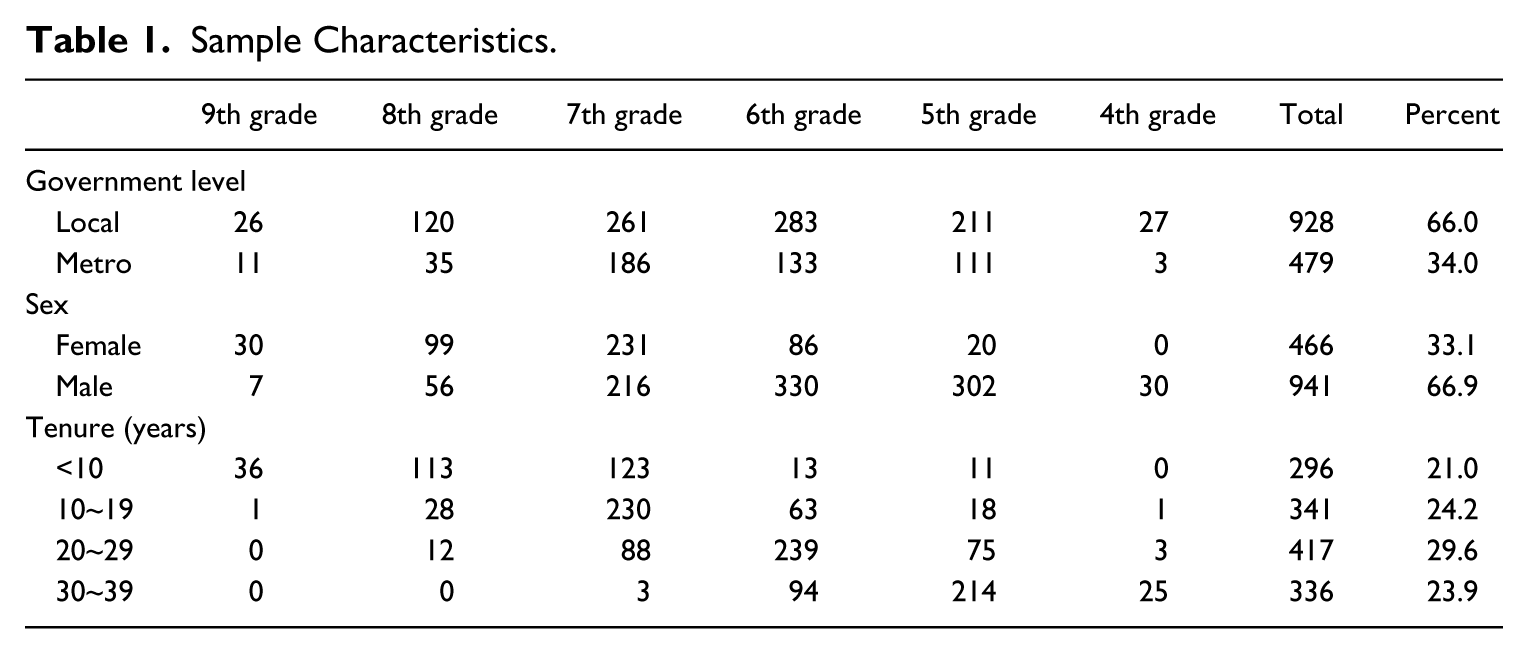
This study uses data from the 2012 Korean Local Civil Servant Survey (KLCSS) designed by the Knowledge Center for Public Administration at Seoul National University and administered by Gallup Korea. The survey was conducted between July 2 and July 27, 2012, and public employees in 16 upper-level local and 228 local government offices in Korea participated. Surveys were conducted through face-to-face interviews at local organizations with the support of organization heads, and various employee-level characteristics, such as sex, age, and job grade, are well represented. In terms of job grade, the Korean civil service is divided into nine grades, with Grades 9 through 6 representing low-level positions and Grades 5 through 1 representing high-level positions. In the sample, roughly 75% of respondents belong to the lower grades while the remaining 25% have a job grade of 5 or 4 (Grades 3 through 1, the highest grades, are not represented). In total, 1,403 observations were collected. Table 1 displays sample characteristics by civil service grade.
Sample Characteristics.
Measurements of Dependent, Independent, and Control Variables
Whenever possible, measurements used in this study were drawn from scales established in the existing literature. Distributions for each of the composite variables were examined, and high-levels of skewness or kurtosis were not found. Appendix I lists all items for scales with more than two items.
Affective organizational commitment
Our independent variable, organizational commitment, was measured by four questions including “The values that I think are important are very similar to the values that my organization pursues” and “I don’t feel a sense of belonging in my organization” (reversed). As discussed in the literature review, affective organizational commitment measures the extent to which the values embodied by the organization and its activities are similar to those held by the employee, and how passionately employees feel about their work at the organization. As the underlying theory of this study focuses on the affective and cognitive responses of employees to various organizational phenomena, we focus exclusively on this dimension of organizational commitment. Cronbach’s alpha for the scale was 0.763.
PSM
PSM was measured with five items based on Perry’s (1997) 24-item scale. Items were chosen to reflect the “commitment to public interest/civic duty” (e.g., “As a citizen, serving other citizens is my duty”), “self-sacrifice” (e.g., “My contribution to the society is more important than my own accomplishments”), and “compassion” (e.g., “I feel a strong responsibility for my society”) dimensions of PSM. In constructing the survey, items representative of the “attraction to public policy making” dimension of Perry’s scale were not included and are thus not included in our scale. Due to their rational rather than affective or normative foundations (Wright & Pandey, 2008), however, a number of other PSM studies have also excluded this dimension. Exploratory factor analysis confirmed that the five-item scale was unidimensional. The scale was also found to have an acceptable level of internal consistency with an alpha coefficient of 0.854.
Perceived organizational performance
Perceived organizational performance was measured by four items based on Brewer and Selden’s (2000) scale. Items related to service quality, customer satisfaction, as well as commitment to cost reduction were included. The alpha level for the scale was 0.860.
Transformational leadership
While the precise dimensions to transformational leadership continue to be debated (Rafferty & Griffin, 2004), public administration scholars have measured the concept along the dimensions of inspirational motivation, idealized influence, role modeling, and vision (Wright et al., 2012). This study uses a scale constructed from four questions reflecting these subdimensions of the construct, with items such as “My leader often talks about their vision for the future of the organization” (vision) and “My leader has a high-level of expertise in public administration” (role modeling). The construct was found to be unidimensional and acceptably consistent, with an alpha coefficient of 0.777.
Climate for innovation
Climate for innovation was measured by four items adopted from the scale developed by S. G. Scott and Bruce (1994). Our scale includes items such as “Members at all levels are encouraged to contribute new ideas to improve the organization” and “Resources are available to support new initiatives.” While S. G. Scott and Bruce found two distinct factors in their 21-question measurement, a factor analysis on our data revealed only one factor which explains approximately 63% of the variance of the scale. Cronbach’s alpha was 0.794.
Merit-based extrinsic rewards
Two questions are used to measure merit-based extrinsic rewards: “Our promotion system is merit based” and “My pay depends on performance my performance.” Initially, the authors intended to combine the two questions into a single scale, but a Cronbach’s alpha coefficient of 0.503 indicated a low level of internal consistency between the items. As such, each item is included in the model as a separate predictor, with the expectation that each is positively related to organizational commitment.
Procedural justice
Thibaut and Walker (1975) distinguished between decision and process control in their model of procedural justice. The former refers to the level of control participants have over the actual outcome of decisions, while the latter refers to the level of control over how the decisions are reached. This study uses two questions reflecting each of these dimensions of procedural justice, namely, “Important changes are determined by the participation of members” and “Information is well shared between members of the organization.” Cronbach’s alpha for the two items was 0.741.
Finally, a number of employee-level characteristics are included to control for spurious effects on the dependent variable. Our model includes a dummy variable representing sex (male = 1), tenure, civil service grade, and administrative level (metropolitan government = 1; sub-metropolitan level = 0).
Findings
Descriptive Statistics
Table 2 shows descriptive statistics for our key variables. The table shows that Korean civil service workers in general have a high-level of organizational commitment, with the mean value being 3.6 on a scale of 5. Local civil servants in Korea also have above mid-scale levels of PSM at 3.5 and high-levels of perceived transformational leadership at 4.1. These statistics suggest that Korean local government employees are intrinsically motivated as well as managed in a way that appeals to this inner motivation and attempts to link it to the goals of the organization. Perceived organizational performance is also somewhat high at 3.9. As perceived performance has been shown to be an acceptably reliable measure of organizational performance in the past (Dollinger & Golden, 1992), we can assume that Korean local government organizations are performing at a relatively high-level. Agreement to the question that promotion systems were merit-based was found to be just over the mid-scale value, however, and the existence of merit pay systems has a mean value of just 2.09. This statistic suggests that most employees perceive that their pay is largely tied to nonperformance factors, despite significant attempts to introduce more performance pay throughout the civil service in recent years (Lee & Moon, 2012).
Descriptive Statistics.

Note. PSM = public service motivation.
Correlation Matrix
Table 3 shows the correlations between the primary variables included in our study. PSM, organizational performance, innovation climate, and transformational leadership all show positive, statistically significant correlations with organizational commitment ranging from .41 to .56. Merit-based promotion systems and procedural justice also show positive, statistically significant correlations with the dependent variable. However, contrary to our expectations, merit-based pay has no significant correlation with organizational commitment. Again, this may be due to the surprisingly low level of merit pay implementation in local government organizations as noted earlier.
Bivariate Correlations.

Note. PSM = public service motivation.
Bold values represent statistical significance at p < .001.
p < .05. **p < .01.
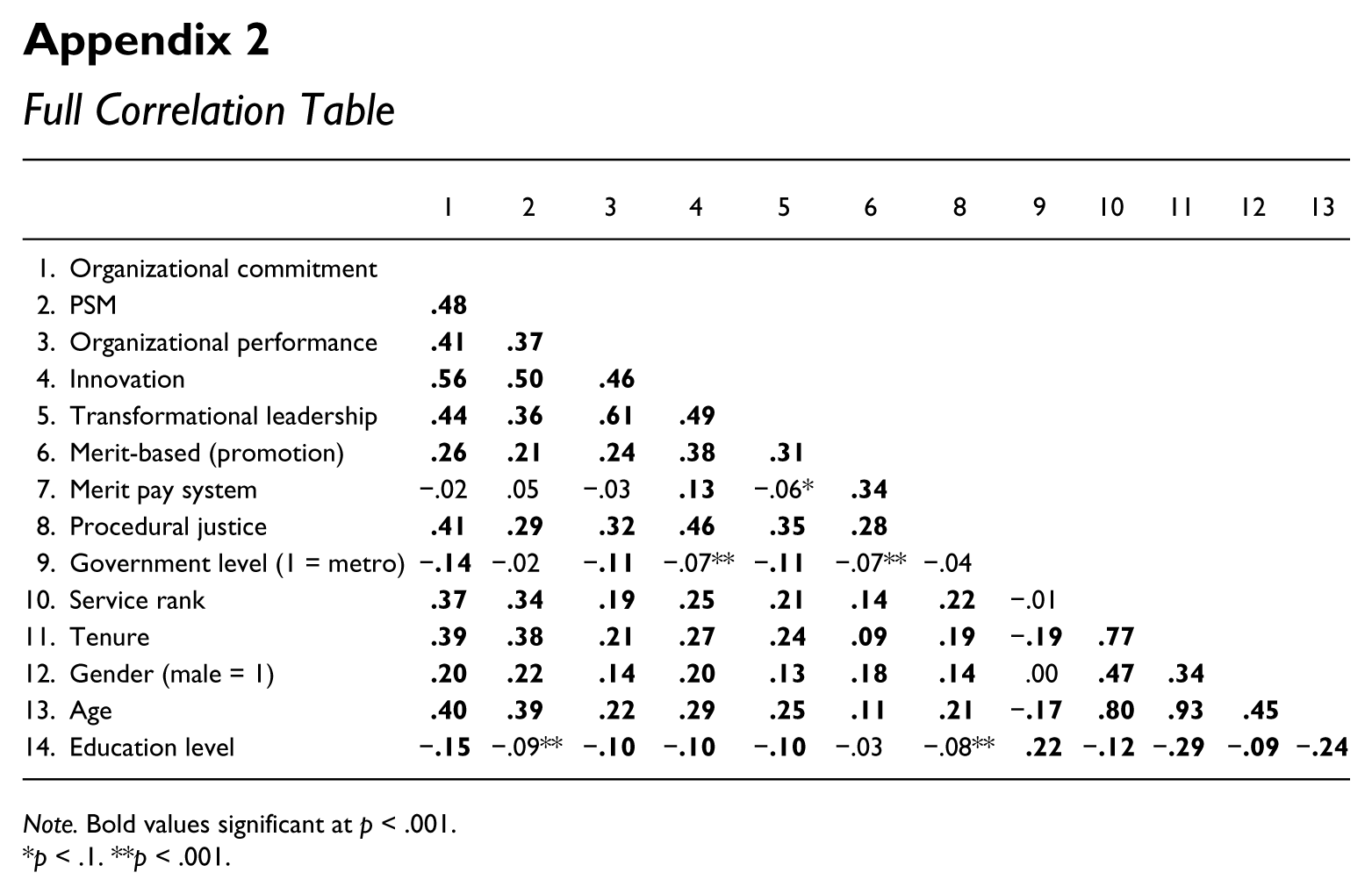
While this study proposed no formal hypotheses related to the demographic and organizational controls to be included in the model, we note here that all of these variables were found to be significantly correlated to the dependent variable (the complete correlation matrix can be found in Appendix 2). Tenure and age were positively related to commitment, as was civil service grade. The male dummy variable was also correlated with commitment, potentially due to perceived gender inequality and unique Confucian context of the Korean public service (Kim, 2005). Finally, respondents from metropolitan offices also exhibit higher levels of commitment than their local-level counterparts.
Regression Analysis
To test our hypotheses we used a series of nested ordinary least squares (OLS) regressions, with our individual-level controls, independent variables, and interaction terms entered at successive stages into the model. This nested model building was used to minimize problems of multicollinearity between the terms used as the basis of the multiplicative term and the multiplicative term itself, thereby creating biased and unstable coefficients (Aiken & West, 1991; Cohen & Cohen, 1983). A series of nested models in which the multiplicative term is entered at a later stage in the regression can neutralize potential multicollinearity (Aiken & West, 1991) and thereby estimate the influence of the multiplicative term without bias. Finally, a variance inflation factor mean of 2.84 was found for the full model without interaction terms (Model 2) and a test for heteroskedasticity was nonsignificant, statistics that both suggest that OLS is the appropriate estimation method for the model.
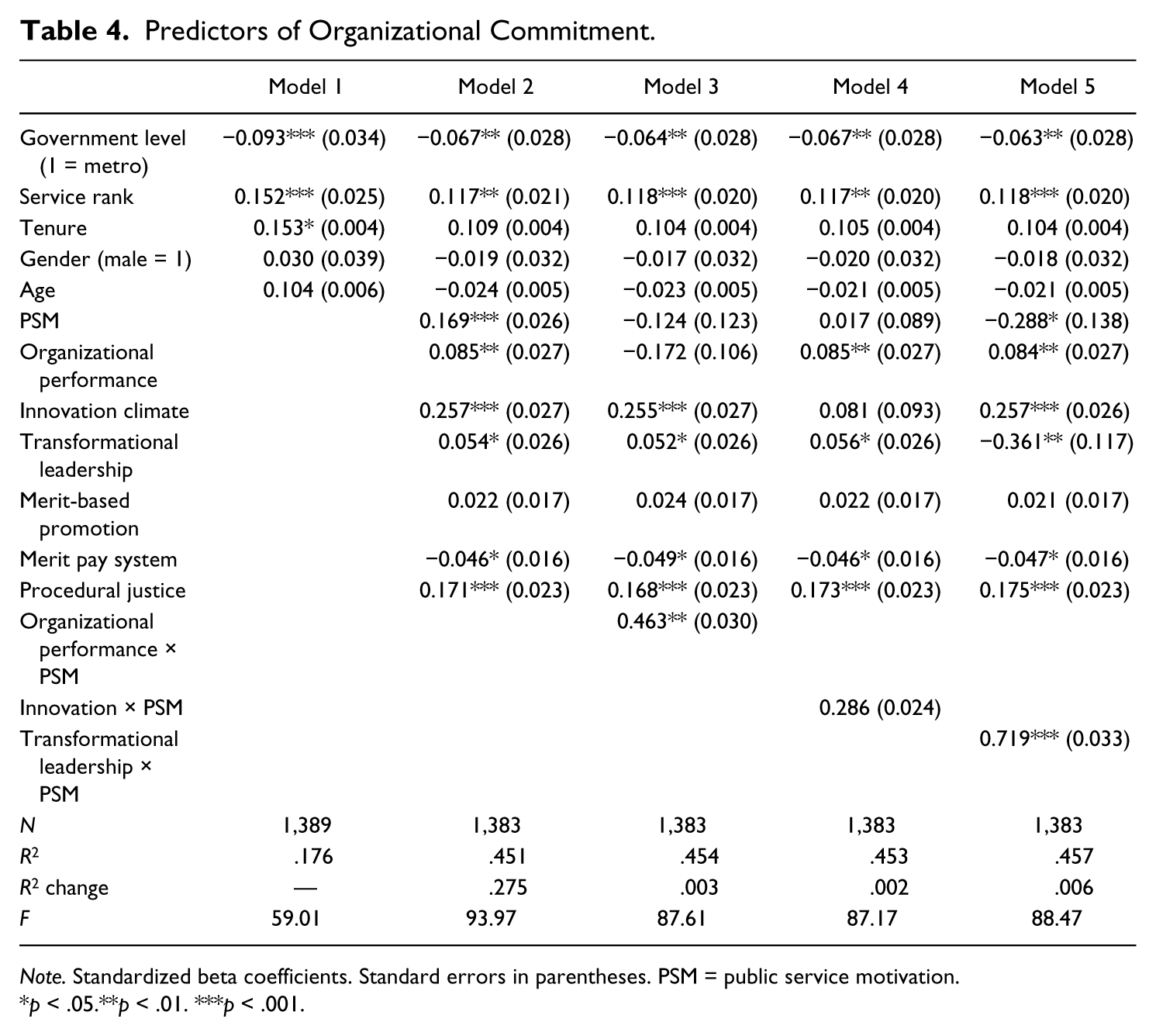
Table 4 shows the results of a series of OLS regressions with organizational commitment as the dependent variable. In Model 1, employee characteristic and demographic variables are entered as controls, and here only government level and civil service rank are shown to have a statistically significant effect on organizational commitment. In Model 2, PSM and other independent variables were entered. PSM is shown to have a positive relationship with organizational commitment significant at p < .001. This provides support for the first hypothesis of this study. Hypotheses 2A, 3A, and 4A predicted that organizational performance, innovation climate, and transformational leadership would be positively related to the dependent variable, and positive, statistically significant coefficients for each of these variables provide support for these hypotheses as well. In particular, innovation climate has a relatively high coefficient, suggesting the importance of allowing employees to make meaningful contributions to their work processes for organizational commitment.
Predictors of Organizational Commitment.
Note. Standardized beta coefficients. Standard errors in parentheses. PSM = public service motivation.
p < .05.**p < .01. ***p < .001.
Hypotheses 5A and 5B predicted that merit-based promotions and performance pay would have positive relationships with organizational commitment. However, across all models, only merit-based pay had a statistically significant relationship with the dependent variable (p < .05), however, the direction of this relationship was not as hypothesized. Merit-based pay systems appear to be negatively related to organizational commitment, suggesting that employees subjected to more pay-based evaluations have their commitment to their organization suffer as a result.
Finally, procedural justice also had a positive and statistically significant relationship with organizational commitment, providing support for Hypothesis 6, which argued that allowing employees to participate in decisions that affect their well-being in the organization leads to a sense of fairness and inclusion, which in turn can heighten organizational commitment.
Models 3 through 5 each contain a multiplicative term in addition to the control and independent variables to test for the hypothesized interaction effects between PSM and organizational performance, innovation climate, and transformational leadership, respectively. Positive, statistically significant coefficients for organizational
performance and transformational leadership when multiplied by PSM provide support for Hypotheses 2B and 4B. In other words, the effect of PSM on organizational commitment is to some extent dependent on the levels of organizational performance that the employee perceives as well as the existence of transformational leadership. Innovation climate, on the other hand, did not show a statistically significant effect when multiplied by PSM. This result suggests that, given the high coefficient for the direct relationship between innovation climate and organizational commitment, this variable is important for all employees independent of their level of PSM. The following section of this paper provides a more thorough discussion of the moderation effects.
Moderation Effects
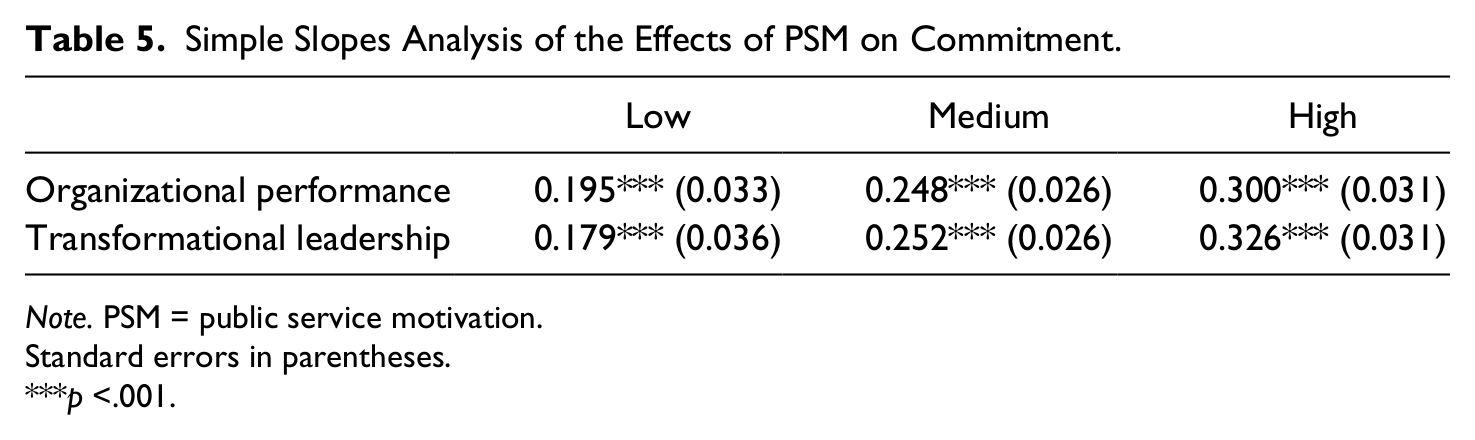
Table 5 shows a simple slopes analysis for the effect of PSM on organizational commitment at different levels of organizational performance and transformational leadership, respectively. To calculate low, medium, and high groups, the mean was taken from each variable as the medium level, while high and low levels were determined at one standard deviation above and below the mean, respectively. In the table, it can be seen that the slope coefficients for PSM are different and statistically significant at each level of the moderation variable while holding all other variables at their means. To aid in the interpretation, the slopes are displayed graphically in Figure 1. In the graphs, higher levels of perceived organizational performance and transformational leadership are associated with steeper PSM slopes. Moreover, the predicted values of organizational commitment at very low-levels of PSM intersect with one another in the organizational performance and transformational leadership graph. This suggests that, individuals with a high-level of PSM may experience lower levels of organizational commitment when organizational performance and transformational leadership is very low.
Simple Slopes Analysis of the Effects of PSM on Commitment.
Note. PSM = public service motivation.
Standard errors in parentheses.
p <.001.
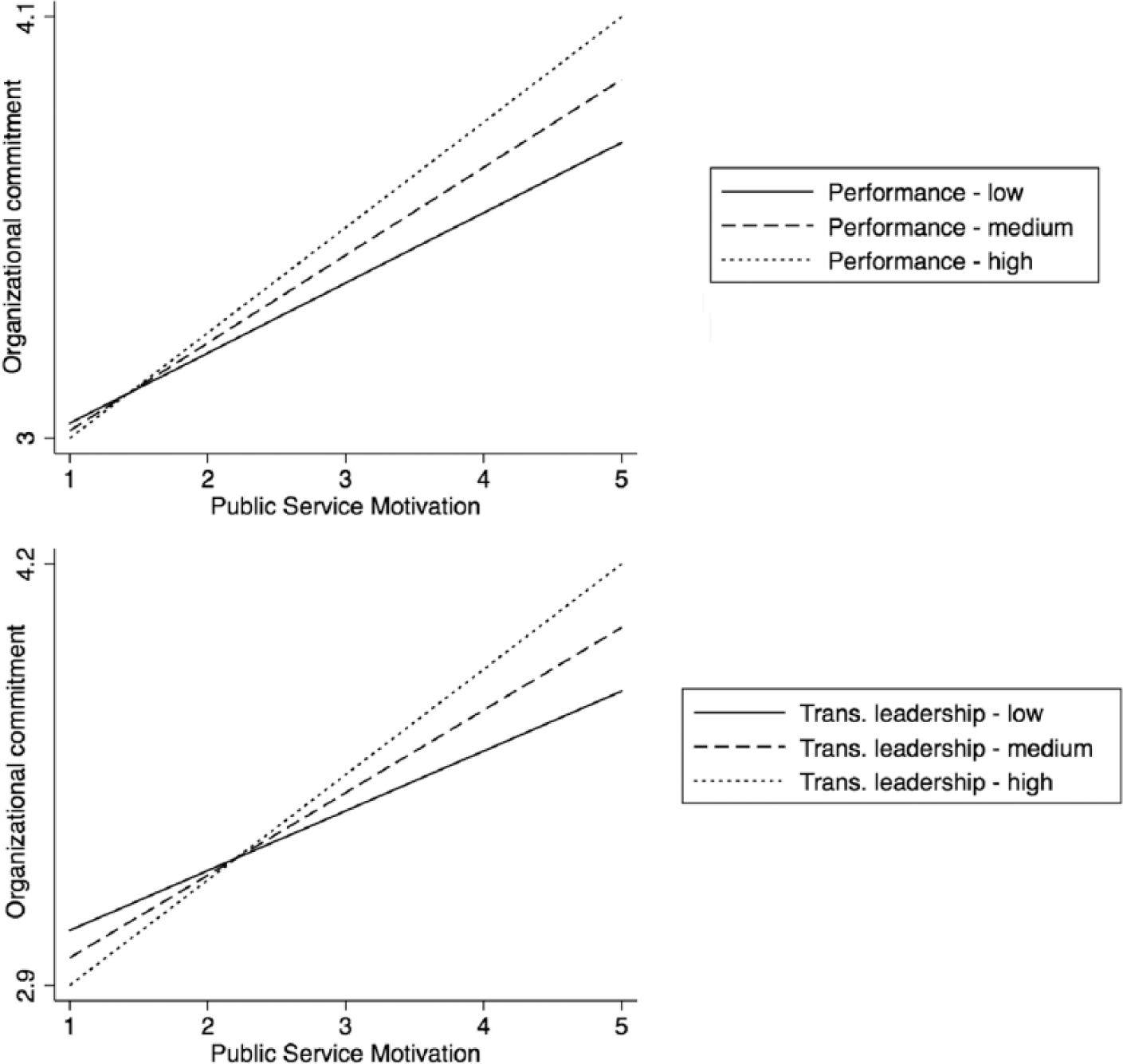
Moderation graphs.
Discussion
PSM values are related to the desire to serve the public, even to the point of sacrificing one’s own interests for the interests of others, and these values have been said to draw individuals with high-levels of PSM to pursue careers in the public sector (Perry & Wise, 1990). As such, PSM is an important construct to consider in analyzing the emergence of employee commitment in public sector organizations, a relationship which has been documented in the literature (Castaing, 2006; Crewson, 1997). However, individuals seek employment in the public sector for any number of reasons in addition to their desire to serve the public, and moreover, there is no guarantee that every public-sector organization will meet the high standards set forth by individuals with high-levels of PSM (Brewer & Selden, 1998; Rainey & Steinbauer, 1999; Wright & Pandey, 2008). In line with previous research, the results of this study suggest that the relationship between PSM and organizational commitment is best understood by taking into account how other contextual characteristics of the organization interact with PSM levels. In particular, it was found that perception of organizational performance and transformational leadership have an impact on individuals in some sense proportional to their levels of PSM.
Individuals with a high-level of PSM have a commitment to serving the public. As such, organizations which serve the public well may be held in high regard by individuals with higher levels of PSM, and elicit more commitment from them. Individuals with lower levels of PSM may be less concerned about the overall performance of their organizations as these individuals have generally lower levels of concern for the purpose that their organization serves. Nevertheless, as shown in Model 2 of our study, perception of organizational performance is a significant predictor of organizational commitment even while holding levels of PSM constant. As such, one practical implication of this finding for public organizations is that individuals may come to serve their organizations more vigorously the more they are aware of the positive impact their organizations are making. For example, regular forums where information about organizational successes is shared and can be jointly celebrated may lead to higher levels of commitment among employees.
The relationship between PSM and commitment was also shown to be significantly moderated by the existence of transformational leadership. One of the core strategies of transformational style leadership is the socialization of organizational values (Bass & Riggio, 2006), which allows individual employees to understand how their work is related to the mission of the organization by linking it with organizational goals. Because it can be assumed that individuals with high-levels of PSM are a priori oriented toward the goals and values that public organizations serve, the effects of transformational leadership may produce high-levels of commitment in these employees. The second interpretation of the link between PSM and transformational leadership is the motivational strategy taken by the latter. Just as PSM theory was proposed as an alternative to the self-interested rational actor model of organizational behavior in public-sector organizations (Perry & Wise, 1990), so too does transformational leadership appeal not to the self-interest of the individual, but rather the whole person (Bass, 1985). As such, transformational leadership may be a well-fitting tool for managing high-level PSM employees in the public sector.
This study found no relationship between the level of perceived openness to innovation and PSM in determining organizational commitment. On the other hand, innovation climate was significantly related to organizational commitment regardless of PSM level. While scholars have argued that empowerment should moderate the relationship between PSM and commitment by allowing higher-level PSM employees to make contributions to the goals which they find important (Park & Rainey, 2008), it might also be the case that if the target of innovation is not closely linked with organizational goals but focuses instead on organization-level processes, the effect of introducing more support for innovation into the workplace may be more or less consistent across employees. Overall, this study suggests that organizational characteristics that are related to the core values of the organization will moderate the relationship between PSM and commitment. More general characteristics such as support for innovative behavior may not.
Three other hypotheses were tested in this study. As expected, employee perceptions of procedural justice were positively related to organizational commitment. However, the two hypotheses related to extrinsic rewards, namely, that a merit-based promotion system and performance pay would be positively related to organizational commitment, failed to find support in this study. Moreover, while a merit-based promotion system had no statistically significant relationship with commitment, performance was found to have a negative relationship. This finding is surprising in light of previous studies (for instance, Fletcher & Williams, 1996). However, considering the collectivist culture of Korean pubic administration and the potentially inconsistent manner in which performance pay is institutionalized, this is not necessarily surprising (Im, Campbell, & Cha, 2013). Collective-based performance pay may create the problem of “free riders,” which has been acknowledged as a challenge in the context of Korea’s performance-based reforms (Lee & Moon, 2012). As such, individuals that perceive that a portion of their salary is determined by forces beyond their control may feel less commitment toward their organization. In any case, while the single measure of the existence of performance pay used in this study is clearly worded, nevertheless a more robust and rigorous investigation is necessary to explore this effect further.
While the results of this study are compelling, an important limitation should be noted. Our analysis is based on cross-sectional data, and as such the causal direction of the relationships implied by the theory cannot be verified with full confidence. For example, it may be the case that employees with higher levels of affective commitment to the organization perceive it to be more innovative and higher performing, or to have higher-quality leadership. This potential reverse causality may be addressed by further studies through the selection of appropriate instruments or through the utilization of time series research designs.
Conclusion
The results of this study are suggestive. Given that the most important antecedents of PSM may be societal institutions (Perry, 2000) and that therefore levels of PSM perhaps are relatively stable in the face of varying work contexts, nevertheless, there may be strategies that can be taken in public-sector organizations to encourage the most intrinsically motivated employees to high-levels of performance (Pandey, Wright, & Moynihan, 2008). Organizations which foster a sense of shared values, goals, and successes among employees may reap performance dividends as a result of increased commitment, particularly from employees with high levels of PSM. While this study looked at leadership, support for innovation, and perception of organizational performance as determinants of commitment, other important variables may be uncovered by future research. This study contributes toward an understanding of how PSM has a role to play as a contextual variable, in addition to its well-established role as a direct effect.
Footnotes
Appendix
Full Correlation Table
| 1 | 2 | 3 | 4 | 5 | 6 | 8 | 9 | 10 | 11 | 12 | 13 | |
|---|---|---|---|---|---|---|---|---|---|---|---|---|
| 1. Organizational commitment | ||||||||||||
| 2. PSM |
|
|||||||||||
| 3. Organizational performance |
|
|
||||||||||
| 4. Innovation |
|
|
|
|||||||||
| 5. Transformational leadership |
|
|
|
|
||||||||
| 6. Merit-based (promotion) |
|
|
|
|
|
|||||||
| 7. Merit pay system | −.02 | .05 | −.03 |
|
−.06* |
|
||||||
| 8. Procedural justice |
|
|
|
|
|
|
||||||
| 9. Government level (1 = metro) | − |
−.02 | − |
−.07** | − |
−.07** | −.04 | |||||
| 10. Service rank |
|
|
|
|
|
|
|
−.01 | ||||
| 11. Tenure |
|
|
|
|
|
|
|
− |
|
|||
| 12. Gender (male = 1) |
|
|
|
|
|
|
|
.00 |
|
|
||
| 13. Age |
|
|
|
|
|
|
|
− |
|
|
|
|
| 14. Education level | − |
−.09** | − |
− |
− |
−.03 | −.08** |
|
− |
− |
− |
− |
Note. Bold values significant at p < .001.
p < .1. **p < .001.
Declaration of Conflicting Interests
The author(s) declared no potential conflicts of interest with respect to the research, authorship, and/or publication of this article.
Funding
The author(s) disclosed receipt of the following financial support for the research, authorship, and/or publication of this article: This study was partially funded by a grant from Korea Research Foundation (NRF- 2011-330-B00195 [I00035]). This funding in no way affected or otherwise influenced the results of the study.