



Abstract
The nonprofit sector has become increasingly reliant on paid professional staff and now faces competition from the private and public sectors, which often pay higher to attract and retain workers. Although Millennials are attracted to nonprofit work, there are concerns that they will not remain committed to the nonprofit workforce due to low pay. We analyzed data from the 2011 Young Nonprofit Professionals Network Survey to examine the relationship between pay, perceptions of equitable pay, and sector-switching intentions among Millennial nonprofit workers. Although two thirds of the respondents indicate sector-switching intentions, we found no evidence that Millennial nonprofit workers, who are purported to value extrinsic and materialistic rewards, expressed sector-switching intentions on account of pay. However, pay influences the sector-switching intentions of Millennial nonprofit managers and those with advanced education. Our results suggest that the nonprofit sector may be facing challenges in attracting and retaining Millennial managers because of low pay.
Introduction
One of the key challenges facing the nonprofit sector is the attraction and retention of talent (Ban, Drahnak-Faller, & Towers, 2003; Clerkin & Coggburn, 2012; Guo, Brown, Ashcroft, Yoshioka, & Dong, 2011; Kim & Lee, 2007). As a sector, nonprofit employers have to compete with private and public sector employers for managerial and professional staff (Kim & Lee, 2007; Ng, Gossett, & Winter, 2016). This challenge is also compounded by the impending retirement of baby boomers in large numbers (Cornelius & Corvington, 2012; Society for Human Resource Management, 2013; Van Bavel & Reher, 2013). Although the Millennial generation (those born after 1980) is entering the workforce, a number of commentators have noted that Millennials emphasize different values and attitudes, and make different career decisions than previous generations (Lyons, Ng, & Schweitzer, 2014; McGinnis, 2011; Smola & Sutton, 2002; Twenge, Campbell, & Freeman, 2012). Millennials are also purported to be looking for meaningful and fulfilling work more than other generations (e.g., Ng, Schweitzer, & Lyons, 2010), and the public and nonprofit sectors are positioned to offer interesting work through their public service missions (Ng & Gossett, 2013; Rampell, 2011). However, despite the value Millennials place on meaningful work, they also indicate a high degree of preference for materialistic rewards (Twenge & Kasser, 2013), raising concerns for nonprofit employers as they generally pay less than the private and public sectors (Faulk, Edwards, Lewis, & McGinnis, 2013; Katz & Krueger, 2012; Leete, 2006; McGinnis, 2011; Ruhm & Borkoski, 2003).
Millennials have also been found to report a greater number of job and organization changes than Gen Xers (b. 1966-1980) and Baby Boomers (b. 1946-1965; Lyons, Schweitzer, & Ng, 2015; Lyons, Schweitzer, Ng, & Kuron, 2012), suggesting that they may be prone to switch sectors if they are dissatisfied with aspects of work. Indeed, management literature suggests that pay is a facet of job satisfaction which affects turnover and although Millennials may first be attracted to nonprofit work, a lack of pay may cause them to reconsider their sectoral choice (Jamison, 2003). In this regard, the prospect of attracting and retaining Millennial workers would be a cause for concern for nonprofit employers. The purpose of this article is to explore the link between sector switching and pay levels among Millennial nonprofit workers. Specifically, we investigate whether Millennial workers are likely to stay with the nonprofit sector when they perceive their pay as equitable with peers. We also extend our investigation to determine whether Millennials, particularly those in managerial roles, are likely to switch sectors when confronted with competitive pay scenarios.
To date, only a small number of studies have examined the incidence of sector switching, and even less research is focused on switching away from the nonprofit sector, where the competition for talent is most acute given low pay conditions. Su and Bozeman (2009) reported that individuals switch from the private into the public sector as a result of corporate reorganization (e.g., downsizing or outsourcing). They also found that managers were more likely than non-managers to switch sectors, and individuals switch into the nonprofit sector only to take advantage of advancement opportunities. In another study conducted in Denmark, Hansen (2014) found that individuals switch away from the public into the private sector primarily for higher pay. Tschirhart, Reed, Freeman, and Anker (2008) reported that graduates were more likely to switch sectors when they display a strong protean career orientation, that is, a desire for interesting and meaningful work, personal growth, and developing new skills. Given that Millennial workers have strong protean career tendencies, and a record of frequent job and employer changes (Lyons et al., 2012b) a compelling case can be made to study the role of pay in nonprofit sector switching, particularly among this younger generation of workers.
Nonprofit Employment
The nonprofit sector has become increasingly reliant on paid professional employees (vis-à-vis volunteer workers) in response to stakeholder accountability, organizational isomorphism, and resource acquisition (e.g., need for professional fundraisers; Chum, Mook, Handy, Schugurensky, & Quarter, 2013; Park & Word, 2012; Ridder, Piening, & Baluch, 2012; Suarez, 2009). Historically, the nonprofit sector has promoted its public service oriented mission to attract employees (Ben-Ner, Ren, & Paulson, 2011; Houston, 2006; Leete, 2000; Mann, 2006; Rose, 2013). This appeal is often necessary because nonprofit work often pays less in comparison with employment in the private and public sectors (Faulk et al., 2013; McGinnis, 2011; Preston & Sacks, 2010).
Scholars describe nonprofit workers as differently motivated from their private sector counterparts, as they place more emphasis on the intrinsic aspects of work (Light, 2002, 2003; Narcy, 2011; Serra, Serneels, & Barr, 2011). In that sense, nonprofit workers donate their labor and accept lower wages in exchange for the intrinsic satisfactions they receive for assisting with the achievement of their organizations’ mission-oriented goals (Hansmann, 1980; Park & Word, 2012; Preston, 1989). Even in industries where nonprofits offer similar services to public and private sector organizations, such as education, law, and health care, employees are attracted to the potential of serving others through nonprofit missions (Faulk et al., 2013; Preston, 1989; Weisbrod, 1983).
The “donative labor” hypothesis has been used to explain why job satisfaction is high among nonprofit workers, despite receiving low wages. Research in nonprofit supports the labor donation hypothesis and the perception that nonprofit workers value intrinsic rewards over extrinsic rewards. For example, Borzaga and Tortia (2006) found that pay does not have a statistically significant relationship with job satisfaction for nonprofit workers. Likewise, Lanfranchi and Narcy (2006) reported that nonprofit workers find greater utility in intrinsic rewards over and above their salaries. Mirvis and Hackett’s (1983) research also supports this finding as nonprofit workers “feel a sense of accomplishment and to feel better about themselves when they do their jobs well” (p. 9). Furthermore, a number of studies also reported that when nonprofit organizations offer employees extrinsic rewards, it crowds out the intrinsic motivations of employees and volunteers (Chen, 2013; Lanfranchi & Narcy, 2006; Lanfranchi, Narcy, & Larguem, 2010; Lee & Whitford, 2008). These studies demonstrate that nonprofit workers value intrinsic motivations so much so that compensating them with extrinsic rewards decreases their work output.
However, literature has emerged indicating that for nonprofit employees, mission attachment does not have a positive impact on a workers organizational commitment, particularly because nonprofit employees tend to be dissatisfied with low pay (Brown & Yoshioka, 2003; Chen, 2013; Kim & Lee, 2007). Therefore, it is unclear whether Millennial nonprofit workers—who indicate a strong preference for materialistic rewards more than previous generations—would remain in the nonprofit sector if their expectations for pay are not met.
The Millennial Worker
The Millennials are a cohort that is born between 1980 and 1995 (Foot & Stoffman, 1998; Zemke, Raines, & Filipczak, 2000). As a generation, they have been characterized as egoistic, self-absorbed, narcissistic, and entitled (Alsop, 2008; Hill, 2002; Howe & Strauss, 2009; Twenge, 2006; Zemke et al., 2000). Studies have documented how Millennials are different from previous generations in terms of their work values, attitudes, and career expectations (Ng, Lyons, & Schweitzer, 2012; Smola & Sutton, 2002; Twenge, 2010; Twenge & Campbell, 2008). Much of these differences can be accounted for by cohort effects (individuals perceived to have similarities due to shared experiences) and by period effects 1 (individual values affected by influences during a time period; Joshi, Dencker, Franz, & Martocchio, 2010; Parry & Urwin, 2011). This conceptualization is also consistent with Mannheim’s (1952) sociological theory of generations, which states that a generation is a group of individuals sharing a common location in historical time, shaped by historical events and experiences of that time (cf. Gilleard, 2004).
The environment in which Millennials grew up in during their formative years affects their values, attitudes, and behaviors (Ng & McGinnis Johnson, 2015; Parry & Urwin, 2011). As children of Baby Boomers, Millennials have been raised and socialized with unprecedented levels of positive reinforcement and attention. Twenge and colleagues examined personality shifts among high school students (from 1930s to 2000s) and observed that self-esteem levels are on the rise (Twenge & Campbell, 2008a; Twenge, Konrath, Foster, Campbell, & Bushman, 2008a). They also reported that Millennials’ self-esteem scores were reaching narcissistic levels, which contributed to increased self-confidence and self-assuredness (Twenge, Konrath, Foster, Campbell, & Bushman, 2008b). As a result, Millennials form inflated self-views, self-liking, and self-satisfaction compared with previous generations. This often leads to unrealistic expectations at work, a high need for praise, and frequent job hopping (Foster, Campbell, & Twenge, 2003; Twenge & Campbell, 2008b). For example, Ng et al. (2010) reported that Millennials expect their first promotion in 15 months and an average of 63% increase in pay over 5 years, with no relation to (academic) performance. In another study, they also found that Millennials reported an average of six job and organizational changes by the time they reached 30 years of age, compared with three job and organizational changes each for Gen Xers and Baby Boomers (Lyons et al., 2012b).
Perhaps most troubling is the finding that Millennials place a strong emphasis on material rewards (i.e., the importance of money), display a lower concern for others, and espouse lower levels of altruism (Twenge et al., 2012; Twenge, Campbell, Hoffman, & Lance, 2010; Twenge & Kasser, 2013). In a “Read to Lead” survey of up and coming nonprofit workers, “respondents under 25 have significantly more financial concerns about committing to the sector than older respondents” (Cornelius, Corvington, & Ruesga, 2008, p. 14). The survey suggests that Millennial workers may be more likely to switch out of nonprofit employment as a result of inadequate pay. Herzberg’s (1966) Two-Factor Hygiene-Motivation Theory also identifies pay as a factor that could lead to dissatisfaction and withdrawal behaviors. Thus, when pay is inadequate, Millennials may be more likely to consider finding alternative work (in better paying sectors) that can satisfy their financial needs. Conversely, according to Meyer and Allen’s (1984, 1991) general model of commitment, individuals are also much more likely to stay on account of continuance commitment (i.e., investments that are lost when they leave an organization). Therefore, we hypothesize that as pay increases, Millennial workers will be less likely to leave the nonprofit sector.
In addition, Adams’s (1963) equity theory suggests that individuals compare their input (efforts) and outcomes (pay) with those of the others. Equity theory is also used to explain why male and female wages in the nonprofit sector are more comparable than other sectors—primarily because the nonprofit sector relies on a large proportion of female human capital and if women perceived they were not being compensated fairly, they would leave, creating significant inefficiencies (Faulk et al., 2013; Lanfranchi & Narcy, 2015; Rutherford, 2015). In this regard, Millennials working in nonprofits are also likely to compare their pay with those of their peers in the public and private sectors (Cornelius et al., 2008).
It is widely held that the private sector is perceived by nonprofit workers as most effective at paying its employees by nonprofit workers (Cornelius & Corvington, 2012; Hansen, 2014; Rainey & Bozeman, 2000). To the extent that this is true, perceptions of pay inequity will lead to the likelihood that Millennial workers will leave the nonprofit sector (Hamann & Ren, 2013). In general, “internal equity” refers to pay comparisons among employees within the same organization, whereas “external equity” refers to pay comparisons with employees outside the organization (Terpstra & Honoree, 2003). We use the same nomenclature for sectoral comparisons. Therefore, we hypothesize that when Millennials—who are highly sensitive about pay—perceive their compensation as equitable in comparison with their peers in the nonprofit sector (internal equity), they are less likely to express intentions to leave the sector. Conversely, when Millennials perceive their compensation as inequitable in comparison with their peers in other sectors (external equity), they will be more likely to leave the nonprofit sector.
Millennial Managers
In addition, research on sector switching suggests that individuals switch sectors for career success or to improve job satisfaction (Bozeman & Ponomariov, 2009; Kankaanranta et al., 2007; Su & Bozeman, 2009). Following McClelland (1956), individuals who have a higher need for achievement are more likely to engage in risk-taking behaviors (i.e., switch sectors) to achieve personal goals such as career success (Atkinson, 1957; Stahl, 1983). A number of studies (e.g., Bartol & Martin, 1988; Waldman & Korbar, 2004; Wise, 1975) have demonstrated that academic attainment and motivation are also related to pay, which is an indicator of (career) success. McClelland (1956) noted that the person with a high need [for achievement] is interested in money rewards or profits primarily because of the feedback they [the money] give him as to how well he is doing . . . the money reward is not the incentive to effort. (p. 7)
Given that pay confers upon high achievers a sense of accomplishment (McClelland, 1965), we expect that those with high levels of ability and achievement motivation (i.e., managers) are more sensitive to pay differences. Thus, Millennial managers in the nonprofit sector, on account of achievement motivation and career outcomes, may be more sensitive to pay differentials and consequently express greater sector-switching intentions.
Method
Data were gathered from the 2011 Young Nonprofit Professionals Network (YNPN) electronic survey of members and non-members. YNPN is a national association that provides professional development and support to more than 30,000 members through 33 local chapters across the United States. Survey respondents were sampled through electronic YNPN Chapter email listservs. Respondents were also acquired through a snowball technique as each participant was asked to forward the survey to peers who worked in the nonprofit sector. A total of 1,168 surveys were completed. Given our interest in Millennial (under 31 years of age) nonprofit workers, we removed respondents who were students/interns and those not employed by a nonprofit. The final sample is comprised of 617 individuals representing 52.8% of the original data set. Due to the sampling technique 2 in which respondents were solicited through referral to participate in the survey, we consider the respondents to be a convenience sample. We found no evidence of sampling bias, given the similarities in the demographic characteristics between Millennials in this survey (YNPN sample) and the demographics of Millennials working at nonprofits in Census data 3 (McGinnis, 2011).
Dependent Variable
Intention to Switch Sector—"Intentions to switch sector" is used as a proxy of sector switching. Scholars have used similar conceptualization in studies of turnover intentions due to practical challenges with collecting data on actual turnover at the individual level. Turnover intention studies generally conclude that an individual’s intention to leave predicts whether or not they actually leave a job (Brown & Yoshioka, 2003; Kim & Lee, 2007; Llorens & Stazyk, 2011). Respondents were asked, “How do you currently feel about building a career in the nonprofit sector?” and were provided with four options: (1) “I am 100% committed to building a career in the nonprofit sector” (32.7%), (2) “I will only leave the nonprofit sector for the right professional opportunity” (45.1%), (3) “I will be looking for the best job regardless of sector” (20.4%), and (4) “I do not plan to build a career in the sector” (2.0%). Option 1 was indicative of a commitment to the nonprofit sector, whereas Options 2, 3, and 4 were indicative of respondents who could potentially sector switch. Therefore, responses were recoded as 0 = committed to the nonprofit sector or 1 = potential for future sector switching.
Independent Variables
Pay—Respondents were asked to report their present pay (in USD) in one of several categories: 1 = less than $25,000, 2 = $25 to $34,999, 3 = $35 to $49,999, 4 = $50 to $64,999, 5 = $65 to $79,999, 8 = $80,000 and above.
Perceptions of equitable pay—Respondents were also asked to choose one of the following statements as indicative of their perception of equitable pay: 1 = “My compensation is competitive with that of my peers from the nonprofit sector, but not competitive with that of my peers from other sectors,” 2 = “My compensation is competitive with that of my peers from any sector,” 3 = “My compensation is not competitive with peers in any sector,” 4 = “I am unsure if my compensation is competitive.”
Control Variables
We also control for a number of individual demographic variables known to affect salaries, based on previous studies (Faulk et al., 2013; Jones, 2015; Leete, 2006; McGinnis, 2011) such as gender (0 = male, 1 = female), race 4 (0 = non-White, 1 = White), education levels (1 = less than bachelor’s, 2 = bachelor’s, 3 = master’s or higher), and years of work experience (1 = less than a year, 2 = 1 to 5 years, 3 = 5 or more years). We also control for the nonprofit field (see Table 1 for the 12 field categories) and geographical region 5 (1 = Northeast, 2 = Midwest, 3 = South, 4 = West) as they may affect pay levels.
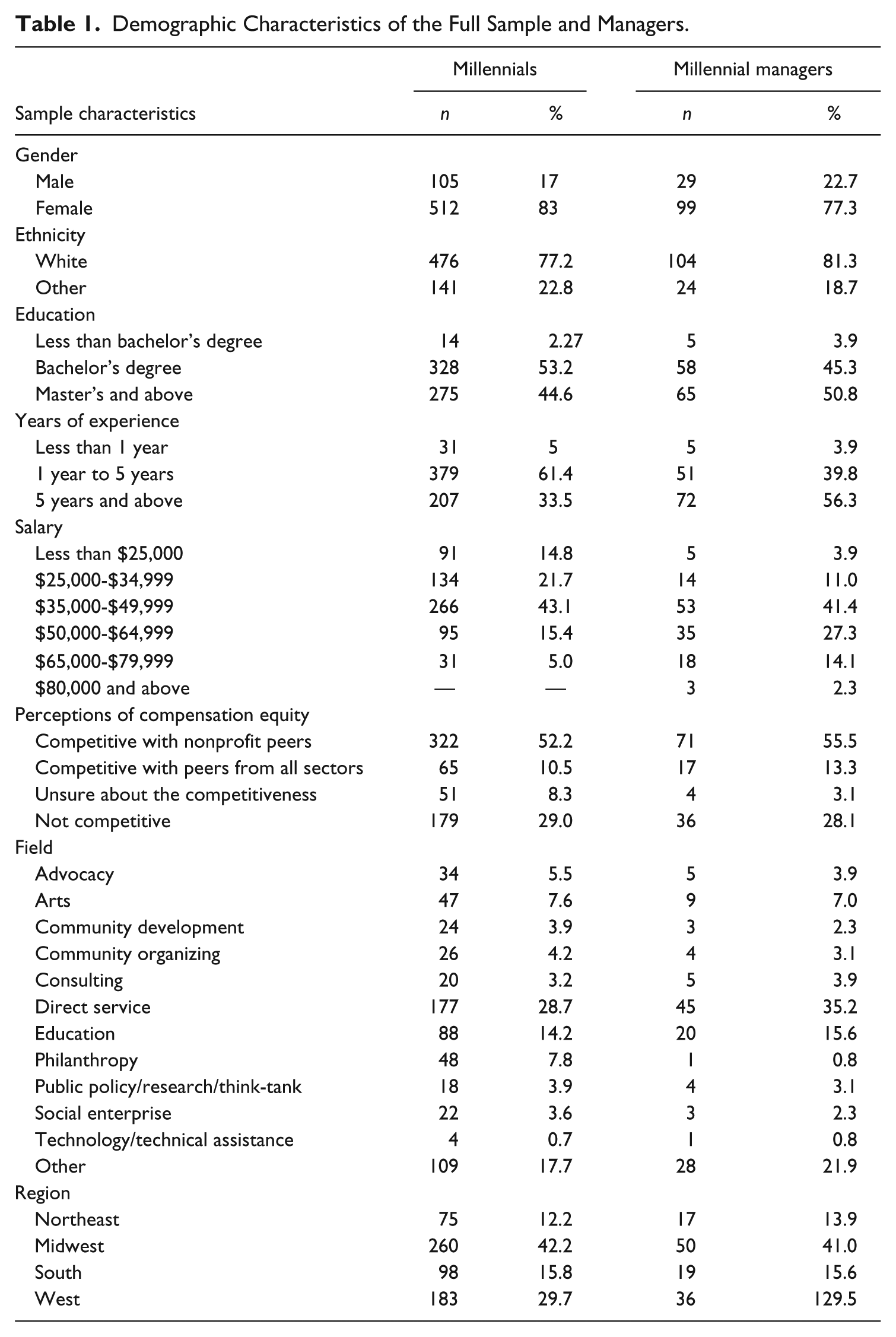
Demographic Characteristics of the Full Sample and Managers.
Results
Millennial Workers
The Millennial nonprofit workers in the study are predominantly female (83%) and White (77%). The average age of the Millennials in the sample is 27 years old, and the respondents ranged from 22 to 31 years of age. The sample is also highly educated with 53% of respondents holding a bachelor’s degree and 44% holding a master’s degree or higher. Forty-three percent of the respondents earn between $35,000 and $49,999, whereas 21% of the respondents earn between $25,000 and $34,999. Furthermore, 52% of the respondents indicate that their pay is competitive with peers in the nonprofit sector, whereas almost 11% indicate that their pay is competitive with peers in any sector. See Table 1 for the descriptive statistics for the overall Millennial sample.
The variance inflation factor (VIF) test for multicollinearity revealed an average VIF value of 2.96, which is below the standard cutoff of 3.5, indicating that multicollinearity is not a serious concern. Because none of the independent variables are significantly correlated (except for bachelor’s and master’s degrees), this provides further evidence that multicollinearity is not a concern. The correlations matrix is included in Table 2.
Correlations Matrix of All Variables Under Investigation.
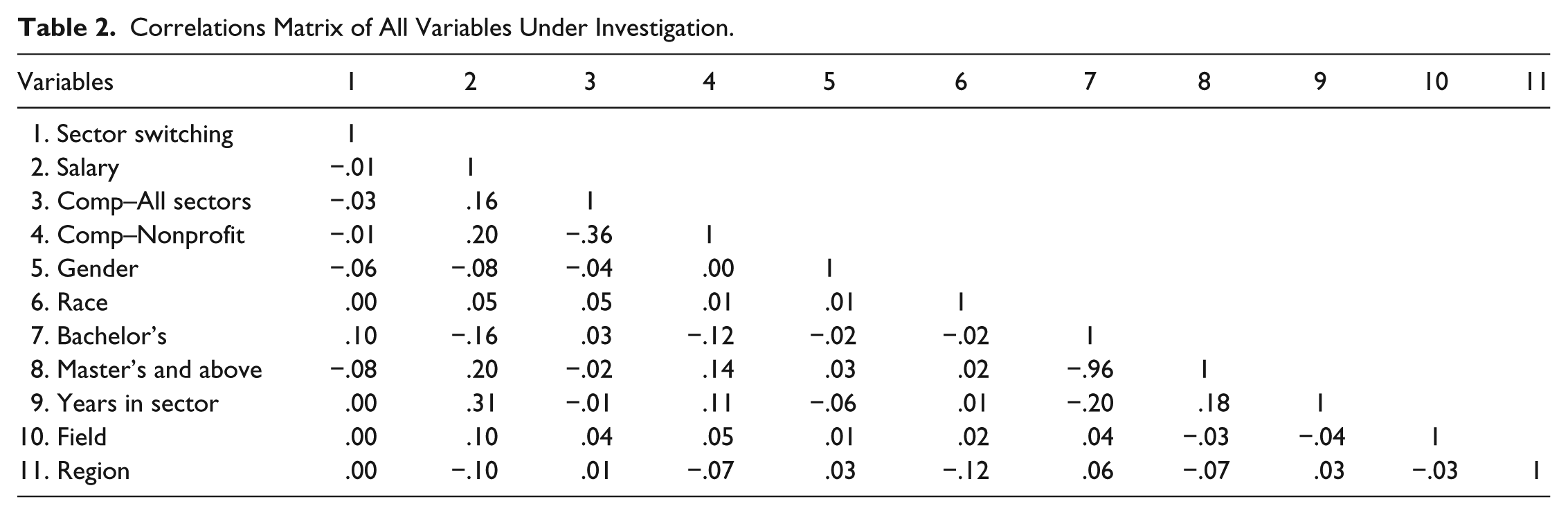
Table 3 reports the percentage of respondents along each independent and control variable and chi-square tests of difference for sector switchers and non-sector switchers.
Chi-Square Comparison of Sector Switchers and Non-Sector Switchers (%).
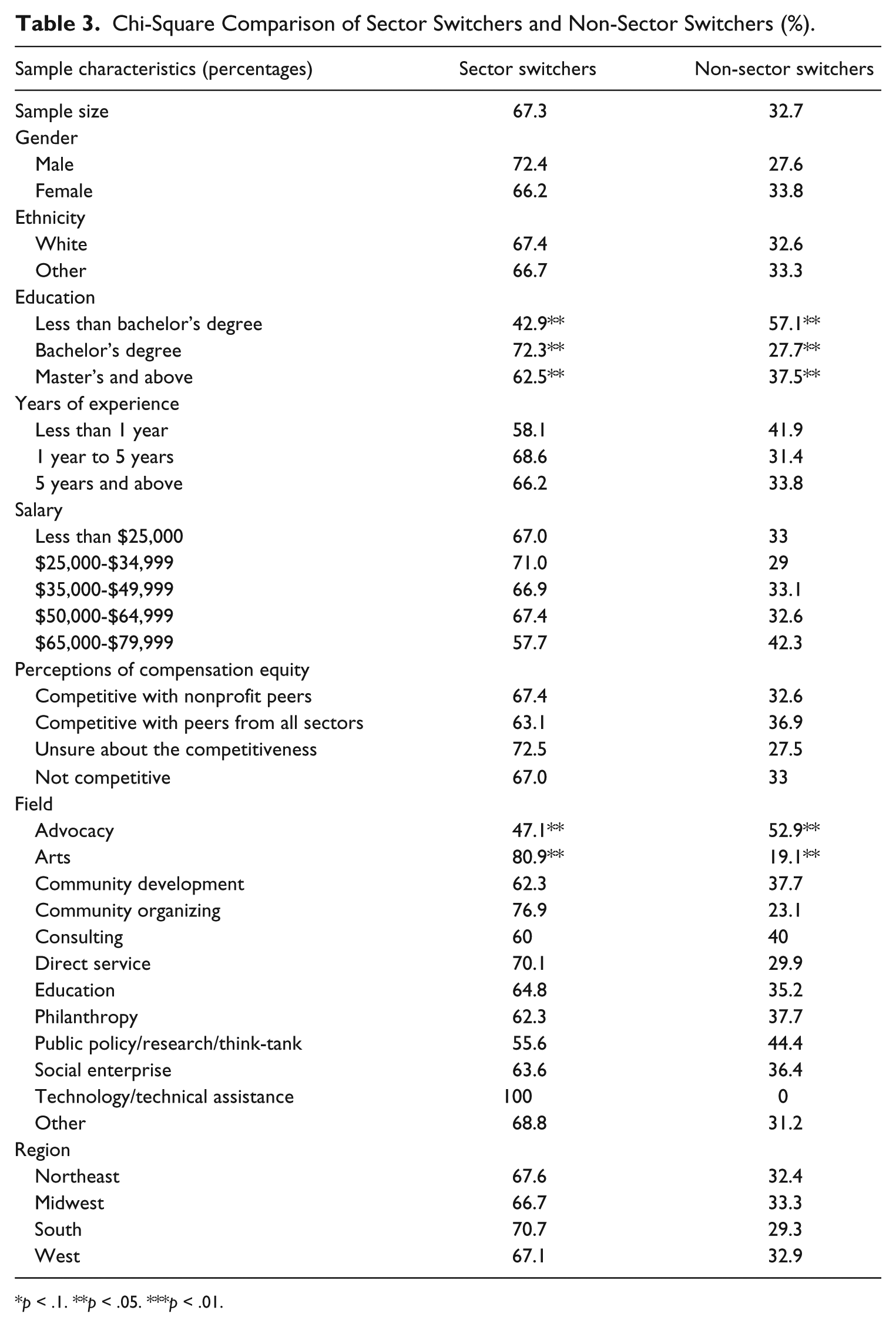
p < .1. **p < .05. ***p < .01.
Approximately two-thirds (67%) of the respondents indicate they may switch sectors in the future. Education increases the likelihood that Millennials will sector switch. Millennials with a college or graduate degree have a much higher propensity to switch sectors, whereas respondents without a college degree (less than a bachelor’s) are much more likely to remain committed to the nonprofit sector. Respondents working in advocacy are also more likely to remain committed to nonprofit employment, whereas those working in arts organizations indicate a strong likelihood to sector switch in the future.
We performed logistic regression models (the dependent variable is dichotomous) to test the effects of pay levels and equity on the full sample and Millennial nonprofit managers’ intention to sector switch (see Table 4). Robust standard errors were used to reduce heteroskedasticity.
Multinomial Logistic Regression Results.
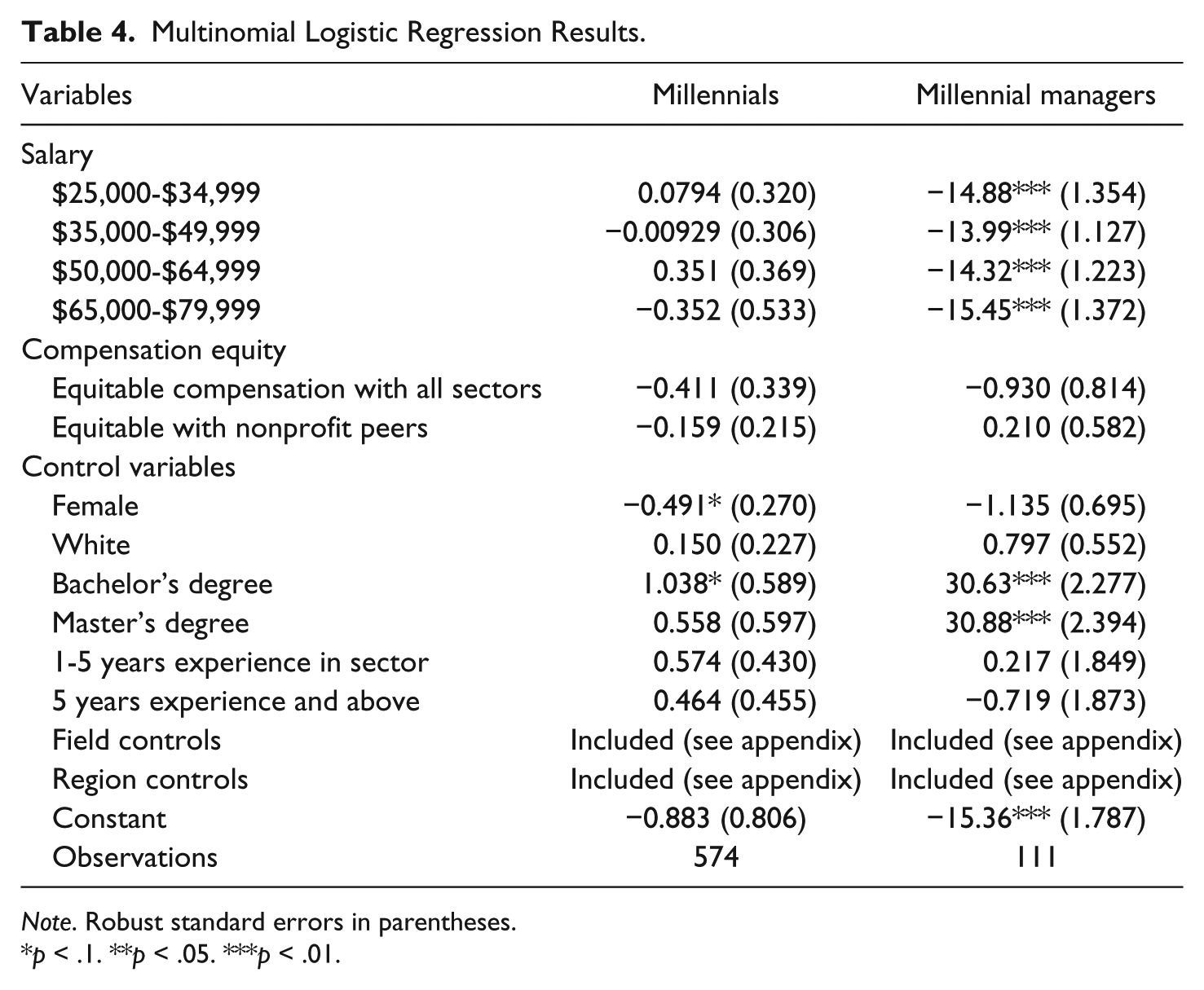
Note. Robust standard errors in parentheses.
p < .1. **p < .05. ***p < .01.
Hypothesis 1 states that as pay increases, Millennials are less likely to switch away from the nonprofit sector. We found no difference in sector-switching intentions among Millennial workers, in general, at various levels of pay; thus, Hypothesis 1 was not supported. Hypothesis 2a states that Millennials who perceive their pay as equitable to others in the nonprofit sector (internal equity) are less likely to switch sectors, whereas Hypothesis 2b states that Millennials who perceive their pay as inequitable to those employed in the other sectors (external equity) will be more likely to switch sector. Again, we found no support for Hypotheses 2a and 2b as perceptions of compensation equity did not have a significant impact on sector-switching intentions.
Millennial Nonprofit Managers
The Millennial managers have similar characteristics (see Table 1) to the Millennial employees in the full sample, except for education attainment. The Millennial managers are also predominately female (77%) and White (81%), but a greater proportion of managers hold graduate degrees (51%) than the Millennial sample. The salaries and perceptions of compensation equity between Millennial workers in this survey and Millennial managers in the survey are also similar. Forty-one percent of Millennial managers earn between $35,000 and $49,999, as compared with 43% of Millennial employees. Furthermore, 55% of Millennial managers indicate that their pay is competitive with peers in the nonprofit sector (vs. 52% among Millennials workers), whereas only 28% indicate that their pay is not competitive (vs. 29% among Millennials workers).
We reran the logistic regression analysis 6 with the Millennials managers (n = 111). Binary logistic coefficients indicate that Millennial nonprofit managers who earn a higher pay for each pay category (above the reference group, less than $25,000) are less likely to express their intentions to sector switch. We calculated the average marginal effect 7 on the probability of a Millennial manager sector switching and found that as a manager’s pay increases, he or she is less likely to switch sector, supporting Hypothesis 3. Furthermore, Millennial managers who earn between $65,000 and $79,999 are 55% less likely to sector switch than their peers who earn less than $25,000. In other words, managers who are underpaid are likely to express sector-switching intentions.
However, we find that for managers, equitable pay comparisons with peers in the nonprofit or with all other sectors do not have a significant impact on nonprofit managers’ intention to switch sector. Thus, Hypotheses 4 is not supported. Logistic regression coefficients indicate that managers with college and graduate degrees are also more likely to state their intentions to sector switch, compared with those without a college degree (less than a bachelor’s degree). To enhance our understanding of the effects of education and pay on sector-switching intentions, we graphed the average marginal effects (see Figure 1) to compare managers’ sector-switching intentions across pay and education levels.
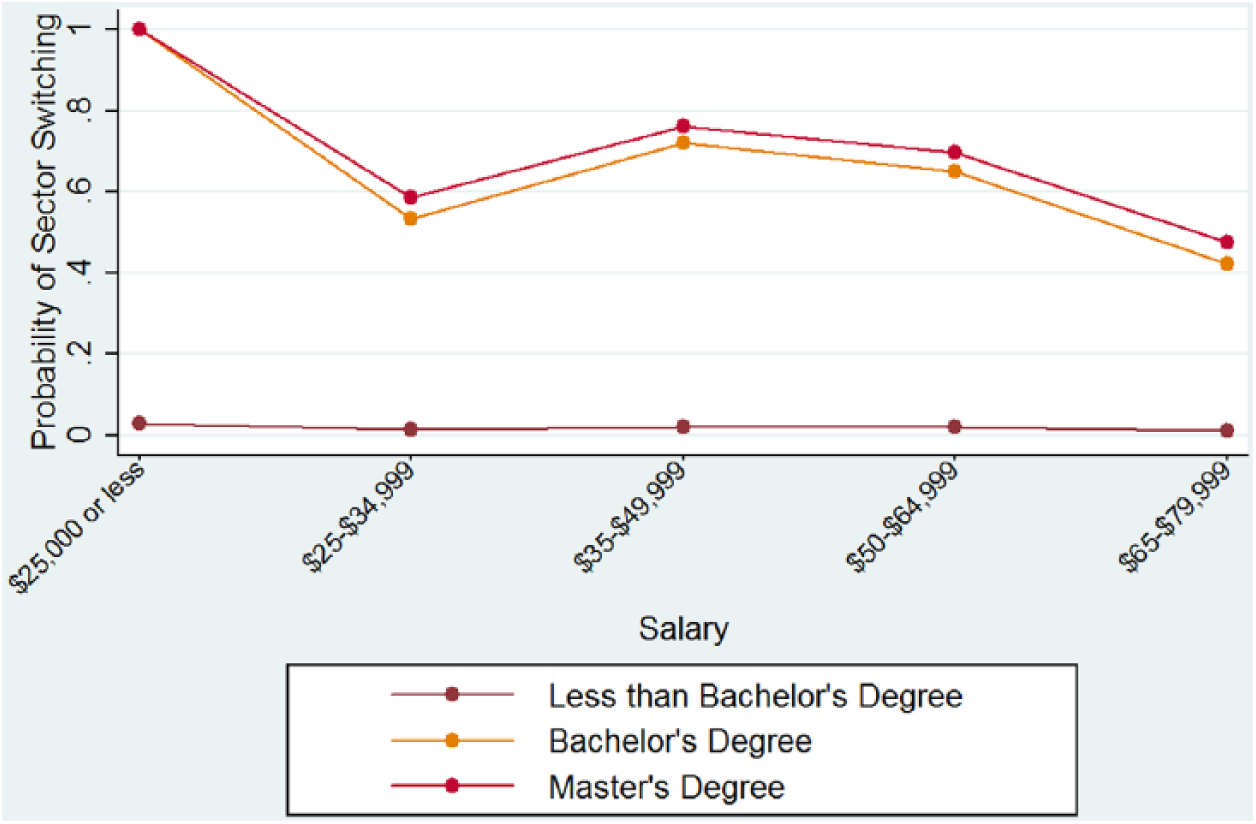
Predictive margins of salary and education on intention to sector switch.
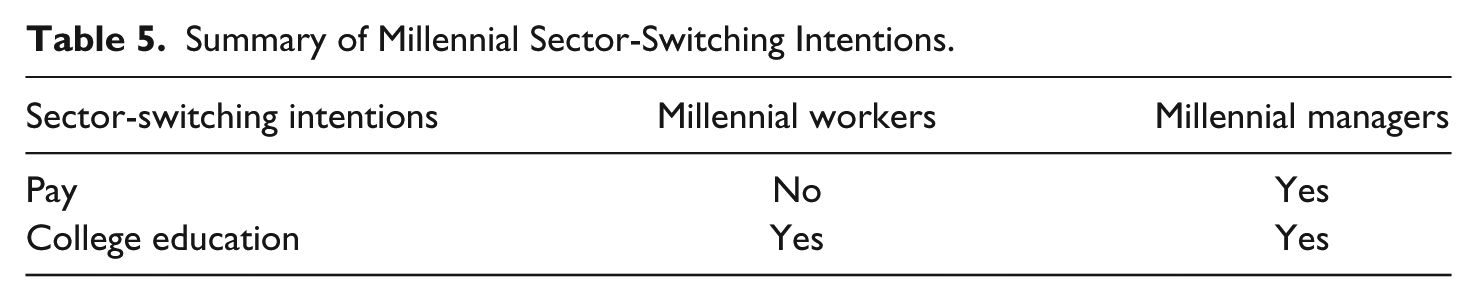
Figure 1 provides four important pieces of information to more easily interpret the propensity of Millennial managers to switch sectors. First, across all pay ranges, individuals without a college degree are much less likely than those with college and graduate degrees to state their intentions to switch sector. Second, individuals who are paid at the very bottom of the pay scale (less than $25,000) and have either a college or graduate degree are most likely to sector switch. Third, pay matters only for Millennial managers with college and graduate degrees. They are less likely to sector switch when they are being paid higher salaries. Finally, there is only a slight difference between a college and a graduate degree on a Millennial manager’s propensity to switch sectors. A summary of our findings are presented in Table 5.
Summary of Millennial Sector-Switching Intentions.
Discussion
Although a great deal of attention has been cast on Millennials as a source of workforce renewal for the nonprofit sector (e.g., Ng et al., 2016), and assertions that they are leaving the nonprofit sector in large numbers (e.g., Barnett, 2011; Kunreuther, Kim, & Rodriguez, 2008), there is comparatively little research to deepen our understanding on why Millennials are leaving the nonprofit sector. To close this gap, we investigate pay as a possible explanation for Millennials’ sector-switching intentions. We find no evidence that Millennial nonprofit workers, who are purported to value extrinsic and materialistic rewards, harbor sector-switching intentions when confronted with competitive pay scenarios (H2a and H2b). In fact, we also find no evidence that Millennials will remain nonprofit employment as pay increases, suggesting that pay is not a key consideration in nonprofit employment (H1). In contrast, we find that education levels influence Millennials’ sector-switching intentions.
Our findings largely corroborate the “donative labor” hypothesis, where employees in the nonprofit sector donate their labor in exchange for intrinsic rewards such as job satisfaction and fulfillment in serving others. Furthermore, pay comparisons with peers do not always lead to changes in an employee’s sector-switching intentions. Thus, despite assertions pointing to Millennials’ strong preference for extrinsic rewards (e.g., Twenge et al., 2012; Twenge et al., 2010; Twenge & Kasser, 2013), the respondents in our study did not appear to value extrinsic rewards (i.e., pay) any more than their peers who are employed in other sectors (Schneider, 1987; Starks, 2007).
Of note, Millennials are much more likely to switch sectors when they have higher levels of education, that is, a college degree (than for pay reasons). This may reflect, in part, the higher need for achievement that comes with greater education attainment, and in part to the sense of entitlement among Millennials (Kim & Lee, 2007; McLellan, 1956). Indeed, in a Canadian study, Krahn and Galambos (2014) documented that incidence of “job entitlement” (i.e., an expectation of a well-paying job with college education attainment) was high among Millennials. Ng et al. (2010) similarly reported that Millennials who are college graduates are impatient to succeed (wanting rapid promotions). Thus, the Millennials who have college education in our sample may express greater sector-switching intentions owing to a lack of career progress and achievement (more than pay). Thus, suggestions about how to improve retention of Millennial employees may center on promotion and advancement opportunities.
Another possible explanation is the proliferation of management degree programs, particularly in business, public administration, and nonprofit management (Mirabella & Wish, 2000, 2001), resulting in the blurring of sector-specific training and contributing to “sector agnostic” management graduates (see review in Ng & McGinnis Johnson, 2015). As a consequence, it is easier for graduates from management programs to work across sectoral boundaries, as management education (e.g., MBA in corporate social responsibility and social enterprise) increasingly emphasizes the transferability of skills across sectors (Cornelius et al., 2008; Lee & Whitford, 2008; Rose, 2013; Teachers Insurance and Annuity Association - College Retirement Equities Fund (TIAA CREF)/Independent Sector, 2011; Tschirhart et al., 2008). Sector agnosticism may also be stronger among Millennials in light of the changing nature of work and “boundaryless” careers (Lyons et al., 2012a), as Millennials have been reported to change jobs and organizations more frequently than previous generations (Lyons et al., 2012). Therefore, it is no surprise that Millennial nonprofit workers who often begin their careers in the nonprofit sector will switch sectors later in their careers (Light, 2003; Tschirhart et al., 2008).
A second noteworthy finding in our study is that Millennial managers express intentions to remain in the nonprofit sector as their pay level rises (H3). This is consistent with the notion of continuance commitment (Meyer & Allen, 1984, 1991), whereby commitment to engage in a certain line of activities (e.g., remain in nonprofit sector) is a result of an accumulation of investments (pay, position), which would have been lost if the activity is discontinued. Millennial managers may anticipate a higher “cost” of leaving (in lost pay, starting new) than non-managers, and thus were less likely to express intentions to switch sectors, whereas pay had little influence for non-managers. It is also possible for managers to be more emotionally attached to nonprofit work as they have a longer period of time to internalize the values of nonprofit work (i.e., congruence between individual and nonprofit values; Cohen, 1993; O’Reilly & Chatman, 1986). Managers, especially those who are well-paid and in very senior roles, may see the “bigger picture” and develop meaningfulness in nonprofit work. In this regard, we did find tenure (5 years experience or more) to be related to intentions to remain in the nonprofit sector, but failed to find statistical significance at conventional levels, likely due to our small sample size.
Conclusion and Limitations
Despite concerns that Millennials are heavily motivated by extrinsic rewards, young nonprofit workers are less likely to switch sectors on account of pay. Millennials with a college or graduate degree are also more likely to switch sectors. Pay matters only for managers, and for those with a college or graduate degree; they are more likely to remain in nonprofit work when they are paid higher salaries. Furthermore, Millennials’ (except for managers) perceptions of compensation equity with peers (both internal and external) do not affect their sector-switching intentions.
Although past research on nonprofit employment has focused on donative labor hypothesis, our research suggests as the workforce shifts with a new generation of workers (i.e., Millennials), other factors such as education and position hierarchy (managerial jobs) matter. Thus, the current theoretical framework may be inadequate to fully capture the implications of a changing workforce. Shifting work values, attitudes, and career expectations will necessitate new thinking about current strategies for attracting and retaining a new generation of workers (Lyons et al., 2015). In this study, we integrate Meyer and Allen’s Theory of Commitment, as well as McLellan’s Achievement Motivation Theory to help explain Millennials’ sector-switching intentions. Although the study is based on a convenience sample collected through the YNPN, it nonetheless provides us with a glimpse of the nature in which Millennials make career decisions. To the best of our knowledge, very little research has cast light on why Millennials may be leaving the nonprofit sector. Thus, our research fills this gap by offering an insight into the role of pay in sector switching and intentions to remain in the nonprofit sector. We also contribute to furthering knowledge on the impact of college education on sector switching as a result of an increasingly sector agnostic workforce.
A few limitations should be noted to put our findings into perspective. First, we used secondary data collected by the YNPN to conduct our analyses. As a result, we were limited to the types of questions and response options in the survey, and may lose variance when analyzing categorical data. Nonetheless, we were able to find a few important and significant findings, which provide clues to guide future research on Millennials and nonprofit sector switching related to pay. Second, the data set is cross-sectional in nature, which also limits our ability to make causality claims. Thus, the present study should best be considered as exploratory research. Despite the limitations of the data set, our study does contribute to furthering our understanding on the role of education, pay, reward preferences, and sector-switching intentions among Millennials, and supports a broader research agenda on sector switching and nonprofit employment. Third, some of the studies we reviewed were conducted using workers from different periods, and the findings may not be generalizable to present workers. Likewise, we also caution that our findings may also not be generalizable to future workers. Thus, it is important for future studies to examine whether our findings hold for the next generation of workers (i.e., generation Z). In closing, we call for future research to address issues of generational differences in motivations and reward preferences in nonprofit work and an understanding of career stages in sector-switching behaviors, particularly among the Millennial generation.
Footnotes
Appendix
Regression Results for Field and Region Controls
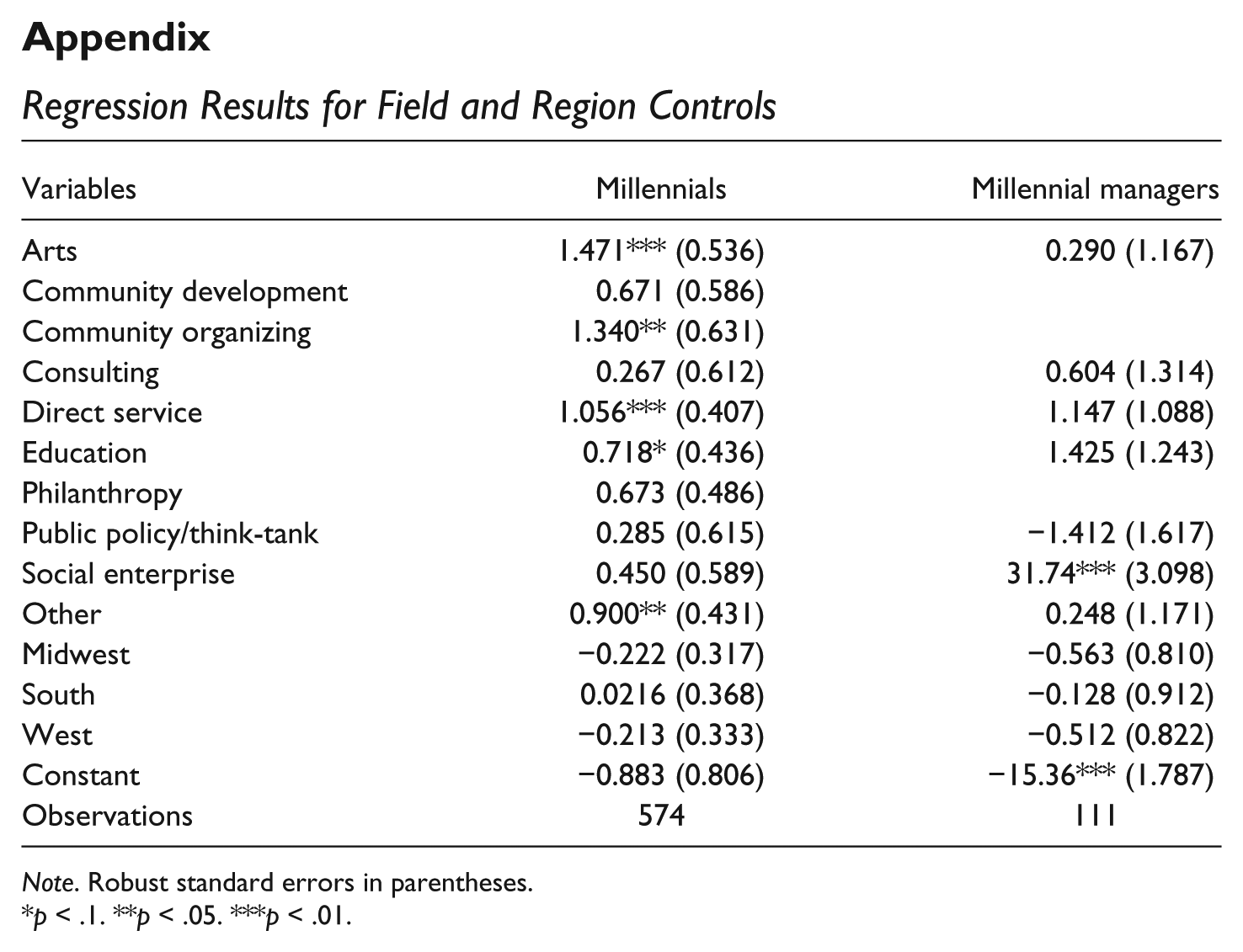
| Variables | Millennials | Millennial managers |
|---|---|---|
| Arts | 1.471*** (0.536) | 0.290 (1.167) |
| Community development | 0.671 (0.586) | |
| Community organizing | 1.340** (0.631) | |
| Consulting | 0.267 (0.612) | 0.604 (1.314) |
| Direct service | 1.056*** (0.407) | 1.147 (1.088) |
| Education | 0.718* (0.436) | 1.425 (1.243) |
| Philanthropy | 0.673 (0.486) | |
| Public policy/think-tank | 0.285 (0.615) | −1.412 (1.617) |
| Social enterprise | 0.450 (0.589) | 31.74*** (3.098) |
| Other | 0.900** (0.431) | 0.248 (1.171) |
| Midwest | −0.222 (0.317) | −0.563 (0.810) |
| South | 0.0216 (0.368) | −0.128 (0.912) |
| West | −0.213 (0.333) | −0.512 (0.822) |
| Constant | −0.883 (0.806) | −15.36*** (1.787) |
| Observations | 574 | 111 |
Note. Robust standard errors in parentheses.
p < .1. **p < .05. ***p < .01.
Acknowledgements
The authors would like to thank the staff of the Young Nonprofits Professional Network (YNPN) who generously provided access to their member survey. The authors would also like to thank Gregory B. Lewis and the faculty at Dalhouise University who provided feedback.
Declaration of Conflicting Interests
The author(s) declared no potential conflicts of interest with respect to the research, authorship, and/or publication of this article.
Funding
The author(s) received no financial support for the research, authorship, and/or publication of this article.