



Abstract
Public administration scholars have provided a variety of theoretical insights to understand bureaucratic whistleblowing, and have emphasized its ethical, legal, and practical rationales in the context of democratic bureaucracy. To enhance our understanding of this principled dissent behavior in the public sector, this study systematically reviews 71 whistleblowing articles and dissertations that address three aspects in the literature: (1) definitions and theories; (2) methods and data, and (3) factors associated with whistleblowing intention and behavior. The findings show public administration whistleblowing research typically uses Near and Miceli’s definition, grounded on psychology, ethics, and human resource management (HRM) theories. Methodologically, there is a notable recent trend in the growth of empirical research using survey data, and equal attention has been paid to both whistleblowing intention and behavior variables. Based on the review findings, the study discusses two issues—definitional and theoretical—and presents four research agendas for future bureaucratic whistleblowing scholarship.
Introduction
A democratic bureaucracy cannot be achieved without addressing and incorporating bureaucrats’ principled dissent that reflects their public interest oriented nature (Bowman, 1980; Brehm & Gates, 1999; Graham, 1986; Hirschman, 1970). Whistleblowing—an employee’s employees’ explicit dissenting behavior—has been receiving growing scholarly attention in the fields of political science (Johnson & Kraft, 1990), public administration (Brewer & Selden, 1998; O’Kelly & Dubnick, 2006; Perry, 1993), and business management (Miceli et al., 2008; Near & Miceli, 1985).
In public administration, there has been a flurry of empirical research on whistleblowing, defining it as a prosocial or altruistic behavior, after the initial connection was made by Brewer and Selden (1998) (e.g., Caillier, 2015, 2017; Cho & Song, 2015; Potipiroon & Wongpreedee, 2021; Prysmakova & Evans, 2020). Together with Graham’s notion of principled dissent, which refers to “a protest and/or effort to change the organizational status quo because of a conscientious objection to current policy or practice” (Graham, 1986, p. 1), whistleblowing has received a fair amount of scholarly attention with belief that it would enhance bureaucratic effectiveness, accountability, and ethicality. Recently, the continuing interest in the field has elucidated the bureaucratic whistleblowers’ psychological features using the theory of planned behavior (Lee et al., 2021), the socialization effects of gender on intention to blow the whistle (Prysmakova & Evans, 2020), the trends in State whistleblowing laws (Exmeyer & Jeon, 2020), and the whistleblowing policies in local governments (West & Bowman, 2020). Accordingly, we now have a clear consensus that whistleblowers play a key role in keeping bureaucracies democratic, efficient, and transparent, and thus we need to consider ways to better protect them.
Over the past four decades, whistleblowing became a common option for public services to voice their prosocial concerns. In 2018, approximately 4,000 disclosures about prohibited practices and 2,000 disclosures about wrongdoing were submitted to the Office of Special Counsel (The U.S. Office of Special Counsel, 2018). These disclosures include claims relating to prohibited personnel practices, Hatch Act violations, and alternative dispute resolution under the new laws.
Theoretically, the recent advancements in whistleblowing research have provided a rich context for the development of the theories of public and personnel management. As an academic theme, bureaucratic whistleblowing is associated closely with the birth of public service motivation theory (Brewer & Selden, 1998) and has been connected with existing theories such as social exchange (e.g., Taylor, 2018), accountability (e.g., Friedrich, 1940; Moloney et al., 2019), ethics (e.g., Bowman, 1980; Cooper, 1990; Menzel, 2016; O’Kelly & Dubnick, 2006; Svara, 2021), and bureaucratic politics (e.g., Lavena, 2016). Similarly, equal amounts of legal and practical attention have been paid to the protection systems (e.g., Civil Service Reform Act of 1978 in the U.S.; Public Interest Disclosure Act of 1998 in the U.K) through our long-standing discussion on the rule of law (Hill & Lynn, 2015).
Then, what do we know about, and what do we need to know about bureaucratic whistleblowing? To address this question, this study performs an inductive investigation of 71 studies published from 1980. This systematic literature review study pursues two research goals, the first of which is to systematically understand and summarize the recurring themes in the public administration whistleblowing literature, to obtain the knowledge of what we know. To maintain research transparency for the first descriptive goal, this study adheres to the “Preferred Reporting Items for Systematic Reviews and Meta-Analyses” (PRISMA) protocol (Moher et al., 2009). Systematic review is a “study of studies” (Miceli et al., 2008, p. 27), and the PRISMA is a tool for identifying, selecting, and reporting published studies for critical appraisal (Cooper, 2010). Second, based on the descriptive information obtained, two issues in the public sector whistleblowing research and four future empirical agendas are provided to answer the question of what we need to know. For the first goal, this study addresses three specific questions:
What definitions, theories, and themes are used to investigate bureaucratic whistleblowing?
What research methods, epistemological approaches, and data are applied?
Which antecedents and correlates have been identified as the factors that shape whistleblowing-related outcomes, such as intention and behavior?
In doing so, this study focuses on the topic of bureaucratic whistleblowing including several aspects of whistleblowing such as laws, systems, consequences, and organizational barriers that need to be altogether discussed. As Perry (1993) recommends, it is necessary to “start with an understanding of the scope of the phenomenon,” in obtaining a comprehensive understanding of bureaucratic whistleblowing (p. 81).
Background: Bureaucratic Whistleblowing
Decades’ worth of research has highlighted the importance of whistleblowing for building democratic organizations (Brewer & Selden, 1998; Graham, 1986; Pemberton et al., 2012; Prysmakova & Evans, 2020; Taylor, 2018). Scholars view whistleblowing as a pro-social behavior or a form of protest, namely a positive organizational behavior, as whistleblowers wish to behave in a way that promotes public interest (De Maria, 2008). Whistleblowing research is expanding because of the escalating attention to the theoretical and practical importance of prosocial behavior (Lindblom, 2007). These views are also well reflected in the two ways to define whistleblowing discussed next.
Broadly, there are two ways to define whistleblowing. The first is the process definition proposed by Near and Miceli (1985): “. . .the disclosure by organizational members (former or current) of illegal, immoral, or illegitimate practices under the control of their employers, to persons or organizations that may be able to affect action” (p. 4). This academic definition focuses on four generalizable elements of the whistleblowing process: the whistleblower; the act or complaint; the receiver, and the wrongdoer.
The second is the legal definition, developed through a series of American public personnel system reforms, and hence targets public employees specifically. The Civil Service Reform Act of 1978 (hereinafter, the CSRA) defines whistleblowing as: “The lawful disclosures of information which the employees reasonably believe evidence regarding (a) violation of any law, rule, or regulations or (b) mismanagement, a gross waste of funds, an abuse of authority, or a substantial and specific danger to public health or safety” (CSRA, 1978). This legal definition was substantiated further by the following enactments of the Whistleblower Protection Act of 1989 (hereinafter, the WPA) and the Whistleblower Protection Enhancement Act of 2012 (hereinafter, the WPEA). In this respect, it is essential to note that federal and state/local bureaucrats are under different personnel systems. Even so, this study focuses on all bureaucracies since federal-level reforms such as the CSRA also reconstructed the state-level accountability systems and affected them interactively (Hays & Sowa, 2006).
According to a comparative study of whistleblowing systems and policies (Loyens & Vandekerckhove, 2018), there has been an increasing trend to install governmental whistleblowing agencies or authorities. In the U.S. federal government, bureaucrats are guaranteed the right to blow the whistle to multiple accountability institutions, such as the Office of Special Counsel, Inspector General, Congressional committees, Government Accountability Office, and the whistleblowing ombudsman. The institutional feature of the Special Counsel is particularly notable, as it provides an array of disclosure channels, receiving and handling Hatch Act violations and Uniformed Services Employment and Reemployment Right Act cases as an external, but nonetheless as a governmental, channel. While it is unknown why bureaucrats choose one channel versus others, it is obvious that both legislators and public administrators are motivated to protect these altruistic voices for the betterment of government.
Reflecting these trends, public administration scholars also consistently address the unique features of, or importance of, whistleblowing in the public sector. Brewer and Selden (1998) elucidates the motivational nature of bureaucratic whistleblowers focusing on the pivotal role of public service motivation (PSM). Perry (1992, 1993) elaborates that whistleblowing occurs more in the public than the private organizations because it is supported internally by their accountability structure, and externally by the Constitutions, the institutions, and the public. Consistent with this, Brewer (1997) documents that public sector whistleblowing is more visible than that in the private sector. According to this meta-analysis of whistleblowing articles in 30 major news media, 70% of these addressed the public sector whistleblowing cases rather than the private. This is surprising because during that period, only 20% of the U.S. workforce was employed in the public sector.
Nonetheless, it is important to acknowledge a limited number of scholars express concern that whistleblowing might not always be beneficial. Whistleblowers can be a “threat” to organizations (Martin & Rifkin, 2004, p. 7) and be seen as individuals who do not want to follow the given organizational norms (Dozier & Miceli, 1985). For these reasons, Warren (2003) labels whistleblowing as “beneficial deviant behavior” (p. 622) because of the direct and indirect costs organizations need to pay in response of whistleblowing.
Methods: Systematic Literature Review
While there is a good body of research which examined whistleblowing in the public sector, no systematic literature review has been attempted. A systematic literature review would help future research by providing a comprehensive overview of the bureaucratic whistleblowing scholarship, as it identifies commonalities in the previous studies and synthesizes findings in a replicable way (Cooper, 2010; Moher et al., 2009). Figure 1 outlines the review procedure that was used to identify, select, and include the articles and dissertations for the review.
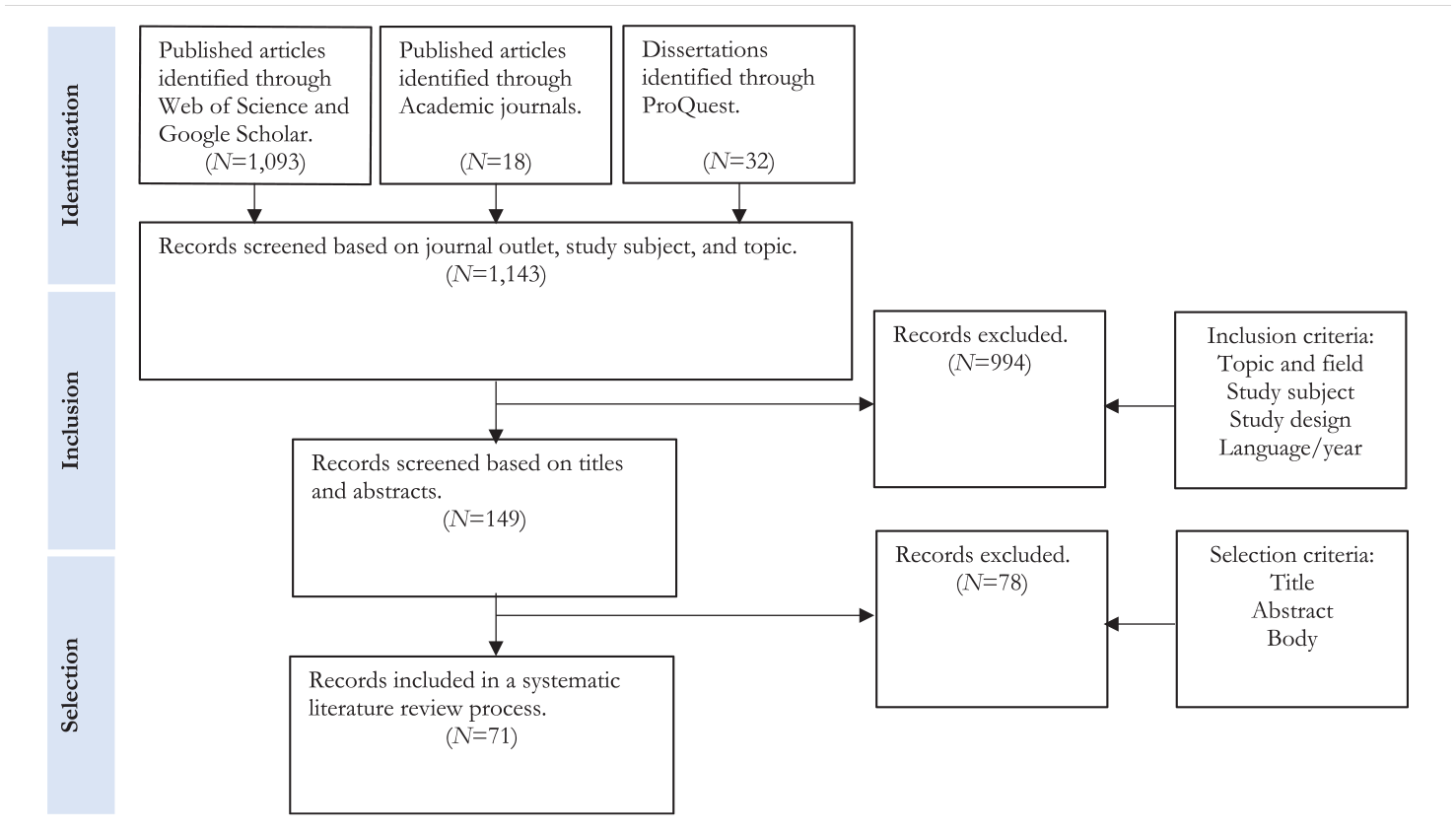
Literature identification, selection, and inclusion PRISMA flowchart.
Literature Identification
First, two databases, the Web of Science (published articles) and Google Scholar (additional sources) were used as sources to carry out the initial literature search. The search terms used were: “whistleblowing,” “whistle-blowing,” “whistle blowing,” “whistle*,” and “disclosure.” This search was conducted in March 2020 and generated more than 1,100 studies in the categories of law, business, ethics, business management, political science, and public administration. Second, dissertations were identified from the database of the ProQuest Dissertations & Theses. The search terms used in this stage were the same as above. This search identified 32 additional studies. Third, to identify additional research, seven academic journals in public administration, three in political science, and four in business management were searched manually using the aforementioned search terms. 1 The last search was conducted in May 2020 and generated 18 additional studies for inclusion.
Literature Selection
The key task of this study is to synthesize the knowledge about bureaucratic whistleblowing available. The three research questions this study proposed mainly guided the inclusion of 71 studies (62 peer-reviewed articles and 9 dissertations) from the 1,143 studies. Following the PRISMA selection protocol Liberati et al. (2009) outlines, the sample was included based on the following inclusion criteria:
During the selection process, studies that did not match the selection criteria above were excluded from the review sample. In selecting the sample, the author reviewed the abstracts and titles in the first stage. If a study could not be identified clearly based on the abstract and title, then the author reviewed the main body, whether it contains a description of whistleblowing and targets bureaucracies. In doing so, Miceli and Near’s pieces are also included in the review process if a study intended to research whistleblowing in the public sector, even though they are from business management. Figure 1 outlines the literature identification and selection procedure.
Literature Coding
Guided by the literature search protocol of the PRISMA, 71 studies in total were identified. The key information was extracted using an information extraction form corresponding to the three research questions proposed. The coding process was performed by a single coder in three distinct phases, intended to maintain the research transparency and replicability. In the first coding, the emerging themes were identified with respect to the use of theory, method, data, and variable operationalizations, in order to develop a coding scheme. In the second coding, then, the identified coding schemes were applied to extract the information from the review sample. In this stage, the schemes were reviewed two times by four experts (three public administration and personnel management experts and one research method expert), and the scheme was significantly revised.
For instance, the use of data scheme was included rather than the country, to understand the contexts of the whistleblowing studies in more detail. In addition to the intention and behavior variables, the third and fourth categories (perceptions of fear and other categories) were additionally included in the dependent variables scheme to better specify which variables were used to analyze whistleblowing empirically. In the third and final coding stage, the review sample was coded again based on the revised coding schemes reviewed by the external experts. In sum, a single coder conducted the coding three times, the coding results were checked in a final review, and consensus was reached before the analysis.
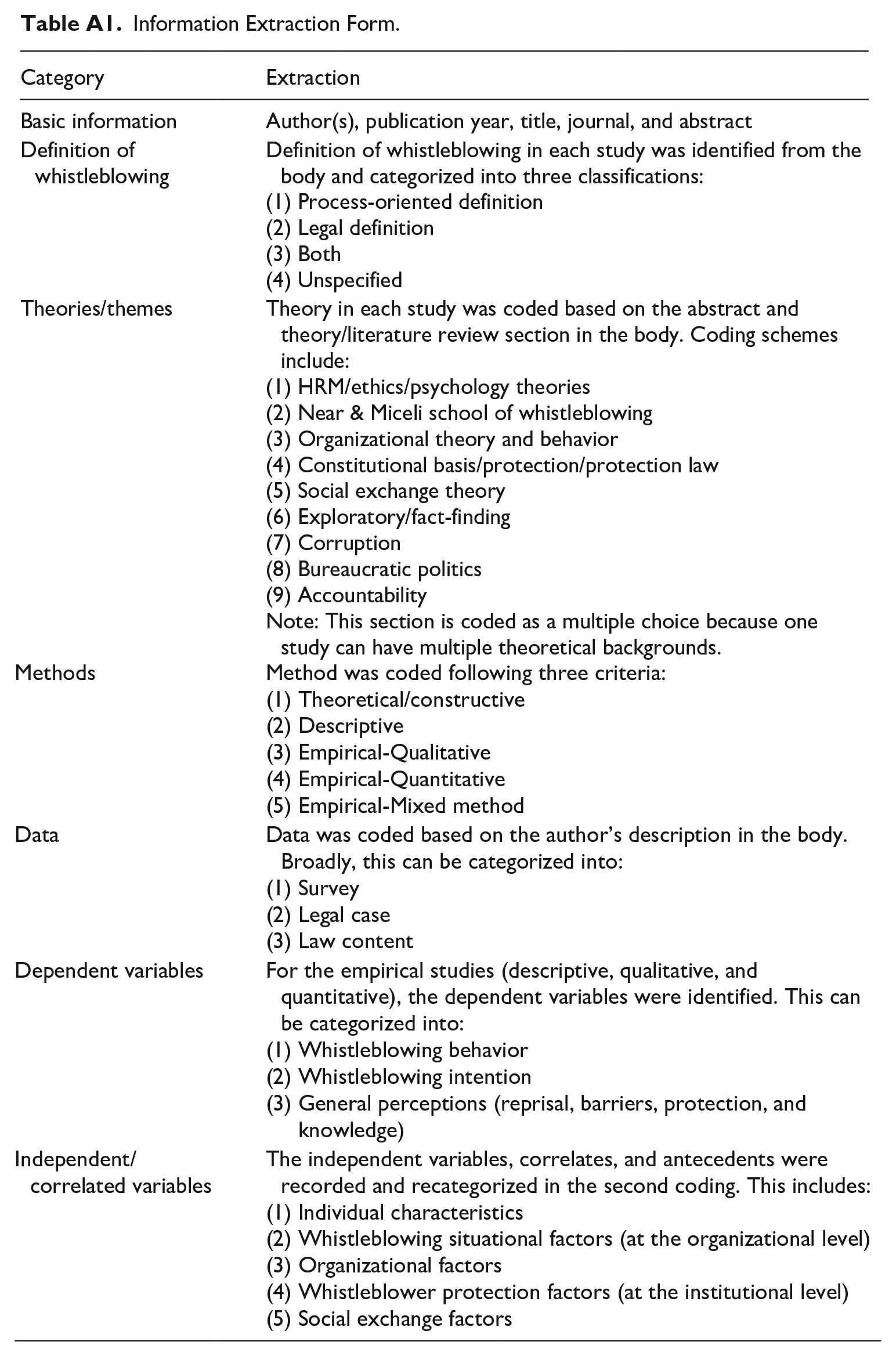
Appendix Table A1 outlines the coding criteria (information extraction form). The definition was coded by checking whether a study used either the process or legal definition. If a study specified two definitions (e.g., Dworkin & Near, 1997; Exmeyer, 2017), it is then coded as using both definitions. The theories and themes were coded with nine categories followed by an iterative review process as follows: (1) human resource management (HRM)/ethics/psychology theories; (2) Near and Miceli school of whistleblowing; (3) organizational theory and behavior; (4) Constitutional basis; (5) social exchange; (6) exploratory; (7) corruption; (8) bureaucratic politics, and (9) accountability. While the author agrees with any objection to these criteria, in the iterative review process, specific patterns were found based on the logic of saturation. A study that used multiple theoretical approaches was coded as having multiple categories. For instance, Lavena (2013) uses the ethics, whistleblowing situational, organizational culture, and bureaucratic politics perspectives, thereby coded as having four theoretical grounds. In addition, across the literature, it was found that the HRM, ethics, and psychology theories appear together. Not surprisingly, in the whistleblowing context, these three theories have been frequently used interchangeably. The majority of studies under this category shows certain patterns such as: considering whistleblowing as an ethical decision-making (ethics), which is subject to the existing laws, policies, procedures (HRM), and this entire process can be significantly encouraged or discouraged by their supervisors, colleagues, and leadership (psychology). For instance, to examine the potential whistleblowers’ intentions, Folks (2000) addresses how the HRM systems leverage their motivation drawing on the Svara (1997)’s ethical triangle theory.
Methods section checked the study design a study dominantly used and the coding results were categorized as: (1) theoretical/conceptual; (2) descriptive; (3) empirical-quantitative; (4) empirical-qualitative, and (5) empirical-mixed. As it appeared that a number of studies descriptively analyze the protection systems without statistical inference, these were categorized as the descriptive. The theoretical/conceptual category refers to the studies that link whistleblowing into the existing theories (e.g., Jos, 1991; O’Leary, 2010) or guides a new vantage point to understand whistleblowing critically (e.g., Roberts, 2007). The data category literally recorded the main databases a study used for their analysis.
With a sample of 47 empirical studies out of 71, variables sections collected information regarding how an article operationalized the dependent and independent/correlated variables. The dependent variables regarding how whistleblowing was measured were coded into four categories: (1) whistleblowing behavior, (2) whistleblowing intention, (3) general perceptions, and (4) others. Independent and correlated variables were coded into the following five categories: (1) individual characteristics, (2) situational factors, (3) organizational factors, (4) protection factors, and (5) social exchange factors.
Findings: What Do We Know About Bureaucratic Whistleblowing?
As a result of the review process described above, a total of 71 studies were included (62 peer-reviewed articles and 9 dissertations). The five academic outlets that published the most articles on the topic of bureaucratic whistleblowing were as follows: Public Integrity (15); Review of Public Personnel Administration (8); American Review of Public Administration (6); Public Administration Review (5), and Journal of Public Administration Research and Theory (4). The nine dissertations were published from the following institutions: University of Southern California (1986); University of Alabama (2003); American University (2008); University of Windsor (2010); Pepperdine University (2010); Rutgers University (2013); Indiana University (2017), and Mississippi State University (2017). This indicates the topic of bureaucratic whistleblowing has received a decent amount of attention in the field of public administration. Interestingly, only two dissertations, those of Exmeyer (2020) and Lavena (2016), were published in peer-reviewed journals. This bolsters the rationale for why dissertations should be included.
Nature of Bureaucratic Whistleblowing Research
Definitions in the literature
As discussed above, there are two types of decoupled, but still inter-related, definitions of whistleblowing in the literature. The first is the process definition, provided by Near and Miceli (1985)’s seminal article and most widely used, and the second is the legal definition, defined by the laws.
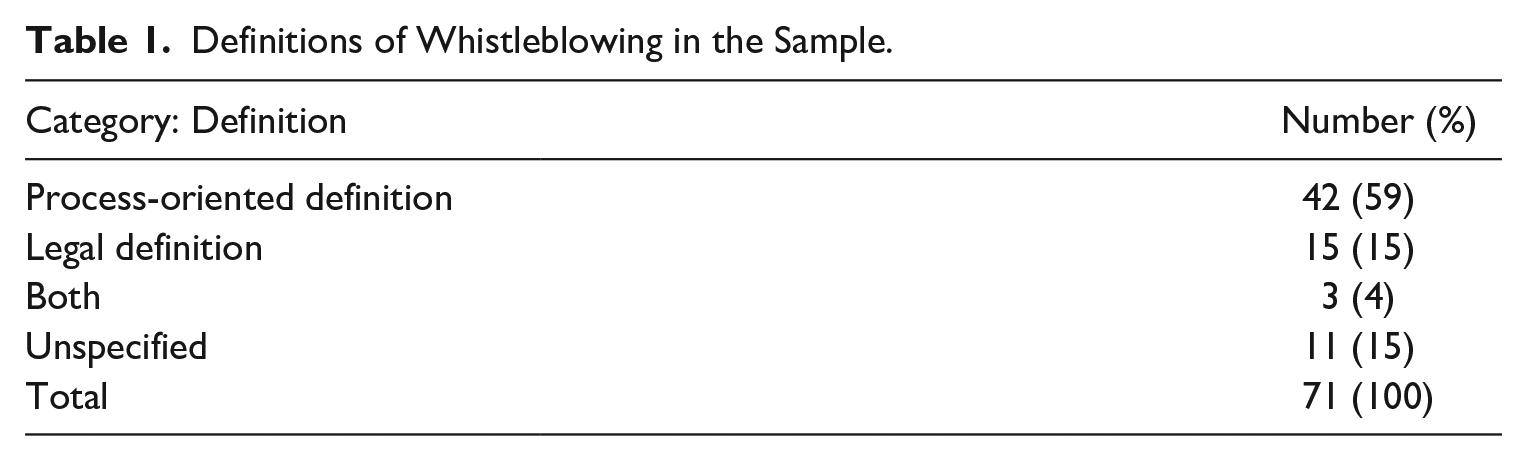
Table 1 summarizes the definitions used in the literature. The findings indicate the majority of studies adopted the process-oriented definition (59%, N = 42), followed by the legal definition (15%, N = 15), and both (4%, N = 3). A moderate number of ethics scholars tend to adopt the legal definition while citing the baseline laws (e.g., Bowman, 1980; Johnson & Kraft, 1990; Jos, 1991; Lindquist, 2003). On the contrary, the process definition appeared to be more preferred in the empirical studies (e.g., Brewer & Selden, 1998; Caillier, 2012; Jos et al., 1989; Rothwell & Baldwin, 2006). Notably, several scholars have attempted to reconstruct the concept of whistleblowing in the public sector (Dryburgh, 2009; Dworkin & Near, 1987; Heumann et al., 2013; Hüttl & Léderer, 2013) in order to sufficiently reflect the feature of bureaucracies. These points are discussed in the Discussion section.
Definitions of Whistleblowing in the Sample.
Theories and themes in the literature
Understanding the theories and themes used in the literature would provide another vantage point to systematically comprehend bureaucratic whistleblowing. To assess the patterns, the theories used in the studies were iteratively extracted and coded. Once again, while there would be no clear-cut rules to distinguish the theoretical backgrounds, to understand the patterns regarding what we know, this study coded the theories used in the literature into nine categories.
Table 2 illustrates the coded results about theories and themes used in the literature. Whistleblowing is rare and could be considered as a deviant behavior. Hence, scholars have attempted to understand this phenomenon from a variety of theoretical perspectives. First, not surprisingly, the HRM, ethics, and psychology theories appeared to be most frequently used. The specific themes in this category include: ethical grounds (Bowman, 1980); public service motivation (Brewer & Selden, 1998; Caillier, 2015, 2017; Cho & Song, 2015); theory of planned behavior (Park & Blenkinsopp, 2009); guerrilla government (Newswander, 2015; O’Leary, 2010), and the Hirschman’s theory of exit, voice, and loyalty (Hassan, 2015). This group tends to identify what individual-level factors promote whistleblowing intention and behavior. The three theoretical backgrounds (HRM, ethics, and psychology theories) are quite different in nature; nonetheless, these themes appear to be interchangeably and simultaneously used in the bureaucratic whistleblowing literature.
Theories and Themes Used in the Sample.
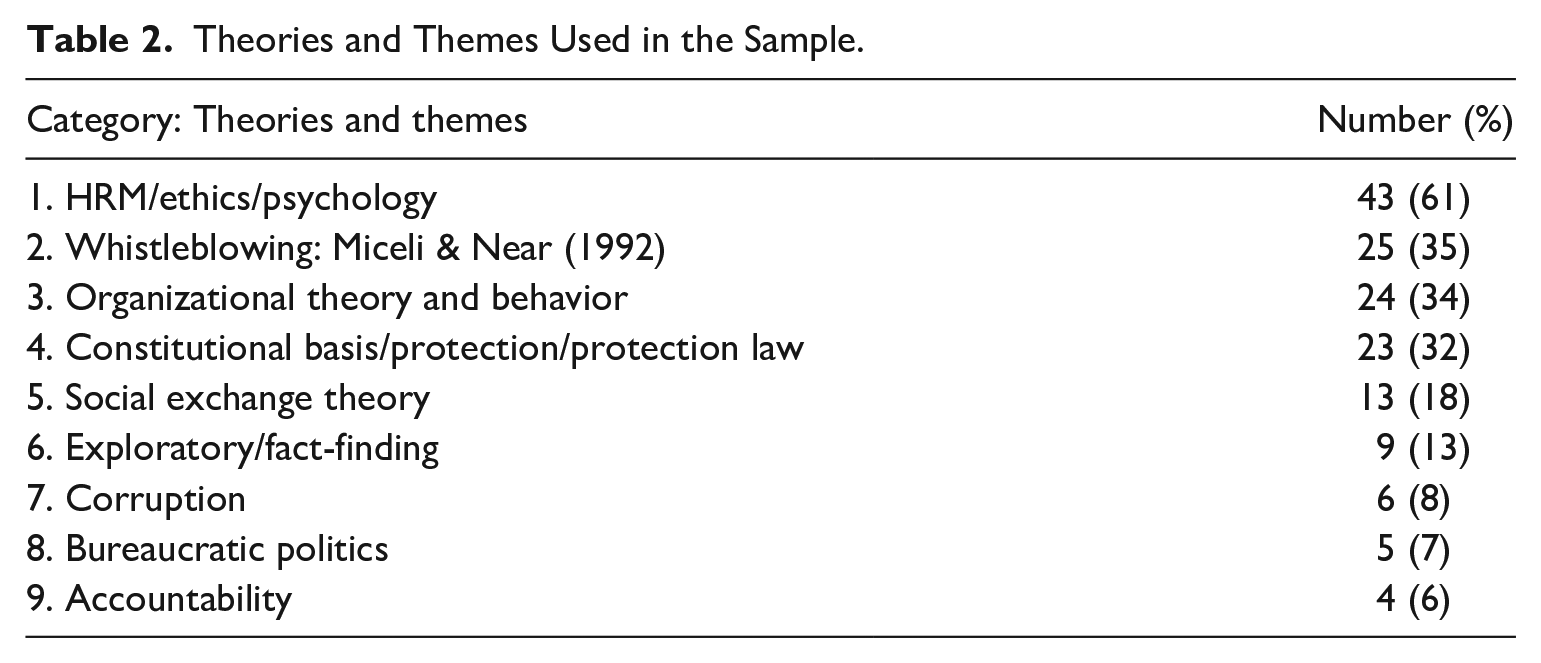
The second frequently used theoretical theme is the Miceli and Near school of whistleblowing in which the studies performed analysis based on the two seminal books of whistleblowing: Blowing the whistle: The organizational and legal implications for companies and employees (Miceli & Near, 1992) and Whistle-blowing in organizations (Miceli et al., 2008). The specific themes under this category include: whistleblower’s psychological features (Miceli et al., 1988); whistleblowing climate (Dryburgh, 2009; Rothwell & Baldwin, 2006); nature of wrongdoing (Near & Miceli, 2008; Smith, 2010), and whistleblowing channels (Caillier, 2017; Jeon, 2017; Lee, 2020). Interestingly, Near and Miceli themselves have published a good number of articles in public administration journals to research whistleblowing in the public sector. Their approach particularly focuses on the situational factors (e.g., support, channels, resources) as well as the systems (e.g., laws, remedies, organizational contexts) that can uphold the focal individual’s intention to blow the whistle.
Third, given that public organizations are designed inherently as Weberian bureaucracies, the organizational theory and behavior appeared as the theme used third most frequently. In operationalizing the organizational variables, scholars contemplate the following specific themes: institutional isomorphism as a part of institutional theory (Pillay et al., 2017); role of accountability agencies, such as the Inspector General in the U.S. (Folks, 2000; Miceli et al., 1988) and the confidential integrity office in the Netherlands (De Graaf, 2019); bureaucratic structure (Kim, 2017), and span of control (Lee, 2020). This approach aims to link organizational characteristics into individual’s whistleblowing intentions and behaviors.
Fourth, although there are only a few, some scholars attempt to incorporate whistleblowing as a public administration topic using the Constitutions, bureaucratic politics, and accountability literature. These trends demonstrates that bureaucratic whistleblowing may be needed to be distinguished conceptually from the general, or private sector, whistleblowing. Bureaucrats are ostensibly protected by a series of patchwork laws (Dworkin & Near, 1997), and are institutionally supported to blow the whistle (Bowman, 1980). Also, a number of studies suggest that bureaucrats may have distinctive motivational drivers (Brewer & Selden, 1998; O’Kelly & Dubnick, 2006; Perry, 1993). Consistent with this, Jos (1991) attempts to link the bureaucratic accountability structure to explain bureaucratic whistleblowers’ behavior. To be specific, Jos (1991) documents that bureaucracies tend to develop internal accountability mechanisms unique to the public sector context, with a goal of achieving and forging a democratic bureaucracy.
Finally, it is worth discussing the Constitutional basis of bureaucratic whistleblowing. First, no scholars doubt that bureaucrats enjoy a greater level of protection than do private employees and citizens (Bowman, 1980). Second, the particular effect of protection remains undetermined, nevertheless. Although scholars have studied the influence of protection laws such as the CSRA (Miceli et al., 1999), the WPA (Peffer et al., 2015), and the State laws (Dworkin & Near, 1997; Moloney et al., 2019), these studies were largely descriptive rather than empirical or causal.
Methodological Trends in Bureaucratic Whistleblowing Research
Methods used in the literature
Whistleblowing is a methodologically thorny topic on which to perform an empirical study because it is difficult to carry out investigations into unethical conduct (Chiu, 2003), and tracking individual whistleblower is illegal. Nonetheless, there was a notable growing emphasis to study bureaucratic whistleblowing empirically.
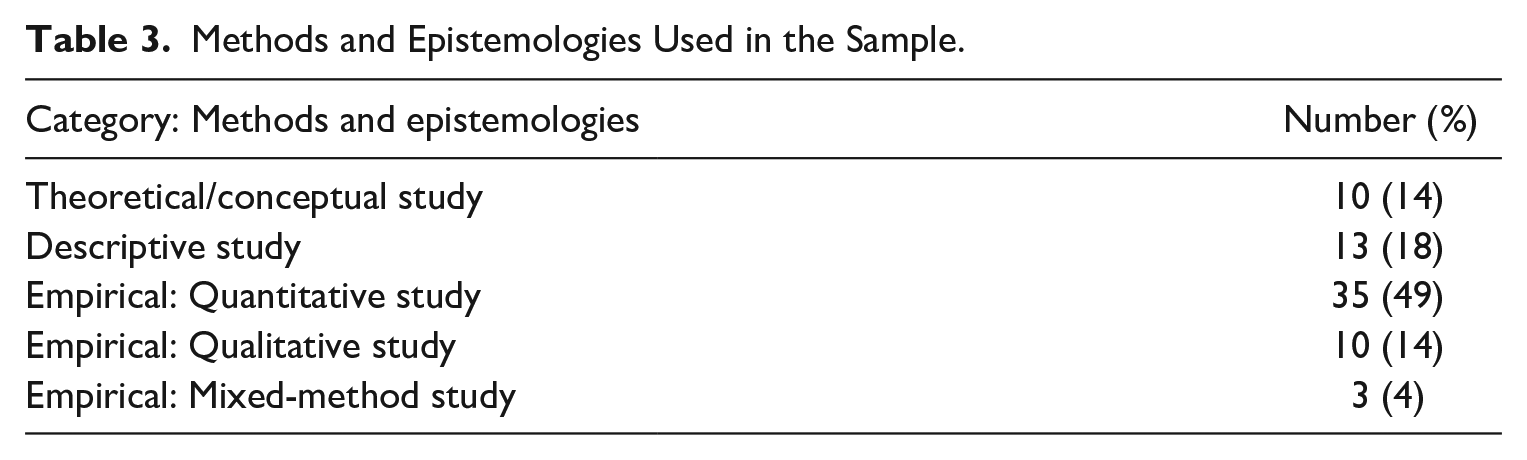
Table 3 provides the findings in terms of the research method used in the literature. The findings show that public administration whistleblowing studies were largely conducted in an empirical manner using quantitative (49%, N = 35), qualitative (14%, N = 10), and mixed-method (4%, N = 3) data. It is worth discussing some of valuable findings from the qualitative studies. A number of scholars conducted interviews with actual bureaucratic whistleblowers (Lavena, 2013; Stafford, 2016; Truelson, 1986) or protection agency bureaucrats (De Graaf, 2019; Folks, 2000; Loyens & Vandekerckhove, 2018; Moloney et al., 2019) to obtain a deeper understanding. In addition, qualitative scholars actively used several archival sources such as the court decisions and whistleblowing cases to bolster their practical viewpoints (e.g., Peffer et al., 2015). The details about quantitative studies are discussed in the later section.
Methods and Epistemologies Used in the Sample.
Other features can also be found from the theoretical/conceptual and descriptive studies. First, the theoretical/conceptual studies tend to establish potential theoretical links with the public administration literature through a normative approach (Bowman, 1980; Newswander, 2015; O’Kelly & Dubnick, 2006). Second, there is a good number of descriptive studies described the protection laws available (Lee & Kleiner, 2011; Lindquist, 2003), bureaucrats’ perceptions (Rothwell, 2003), and actual whistleblowers’ perceptions (Jos et al., 1989).
Datasets used in the literature
One way to diagnose the current level of understanding is to review the data sources used predominantly, as generalizable findings come from representative data. Based on the sample, we can see that whistleblowing scholars used their own surveys most frequently (18), followed by using the Merit Principles Survey (MPS) (14), and the Federal Employee Viewpoint Survey (FEVS) (6) that U.S. federal agencies distributes. Further, whistleblowing cases, court decisions, and legal cases were also used for qualitative studies. Table 4 presents the data sources used in the literature.
Data and Cases Used in the Sample.
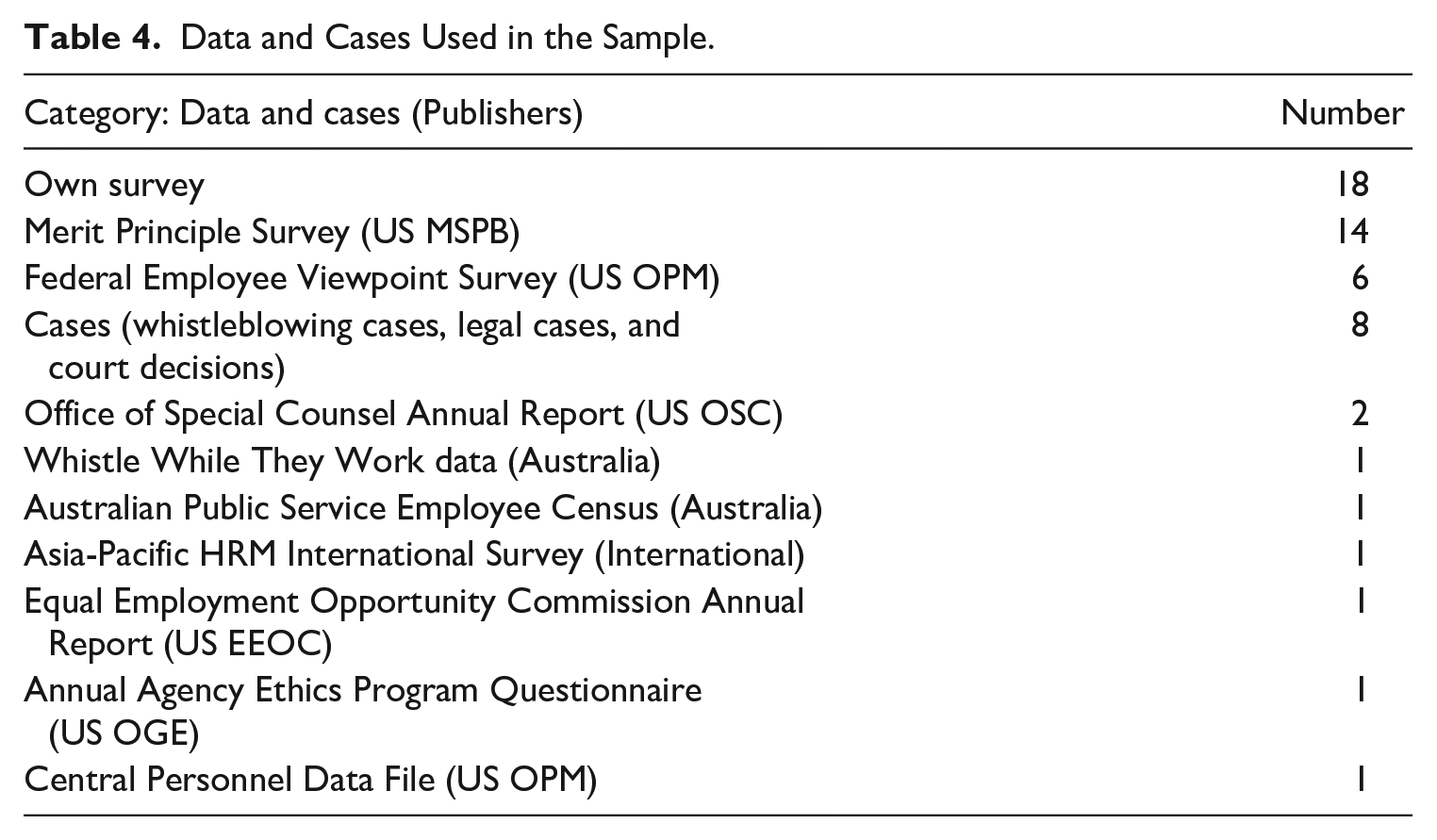
The findings from the data sources offers two insights. First, the majority of the empirical findings were derived from the U.S. federal governments by using the MPS and the FEVS. In particular, human resource scholars use these two datasets most widely probably because of the representativeness and generalizability. Nonetheless, empirical findings from these studies may not be generalized into other county or local government contexts because of contextual, institutional, and/or cultural differences. On the other hand, it is important to note that many scholars conducted their own surveys to identify new variables such as whistleblowing-related beliefs (Park & Blenkinsopp, 2009), code of silence or blue wall (Rothwell, 2003), and social learning (Hassan et al., 2014).
Operationalization strategies in bureaucratic whistleblowing research
As described, more than a half of bureaucratic whistleblowing studies (47 out of 71) have adopted empirical approach to study whistleblowing in the public sector. Then, how these scholars measure the whistleblowing outcomes and its antecedents? This section reviews the several types of variables used in the literature, with a sample of 47 empirical studies (out of 71).
Dependent variables in the literature
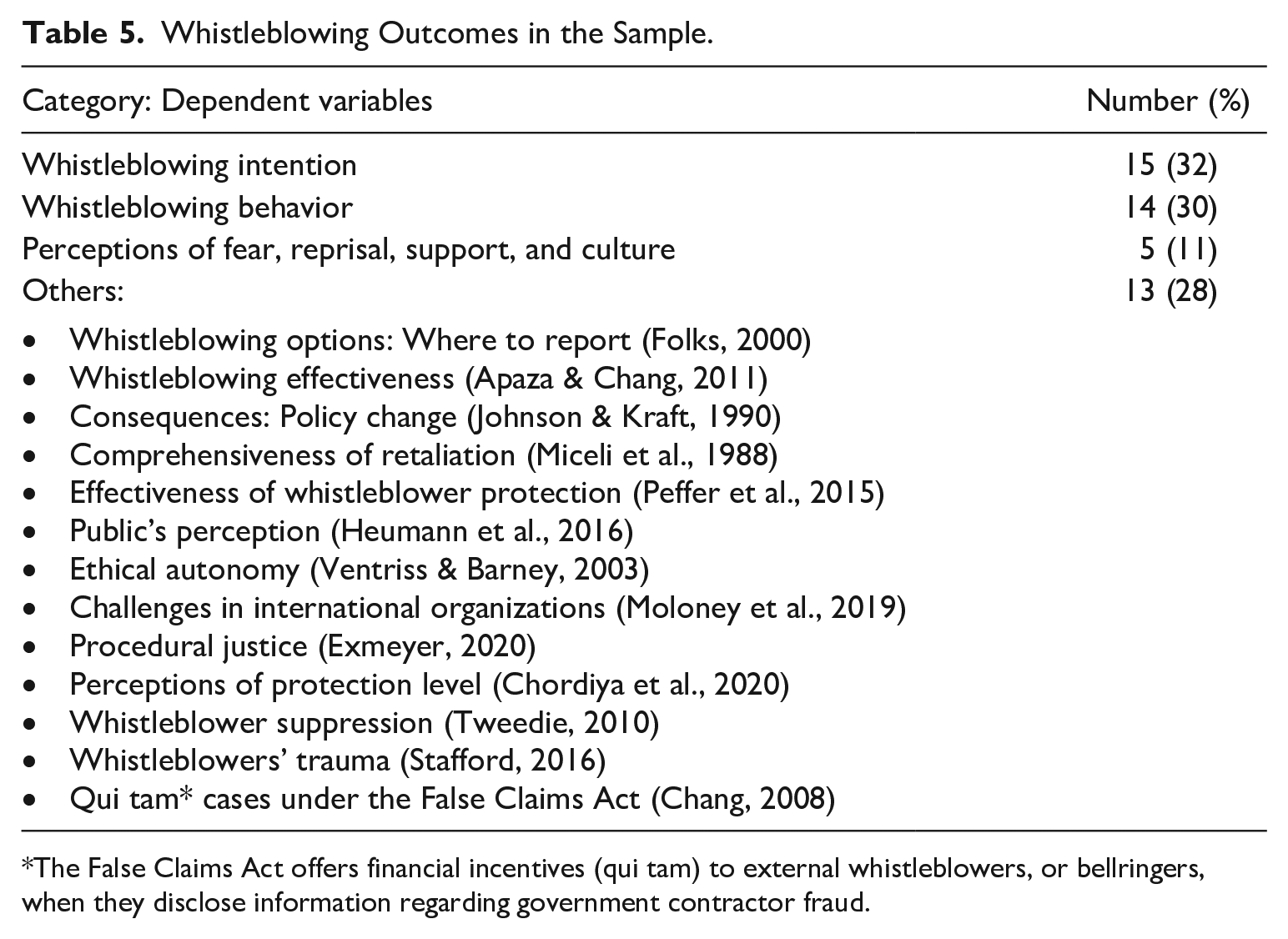
Table 5 outlines the types of dependent variables in the literature. Whistleblowing-related outcomes appeared to be operationalized in the following ways, either quantitatively or qualitatively: (1) whistleblowing intention (32%, N = 15); (2) whistleblowing behavior (30%, N = 14); (3) perceived fear of reprisal (11%, N = 5), and (4) others (13%, N = 13). Largely, four patterns were found during the review process. Note that, this information was extracted only when a study used whistleblowing as a dependent variable. To be precise, it appears that no studies used whistleblowing as an independent variable, while several scholars document the importance of its consequences on organizations (e.g., Near & Miceli, 1995; Perry, 1993).
Whistleblowing Outcomes in the Sample.
The False Claims Act offers financial incentives (qui tam) to external whistleblowers, or bellringers, when they disclose information regarding government contractor fraud.
With an emphasis on the factors affect whistleblowing-related decisions, the following aspects are identified. First, unsurprisingly, whistleblowing intention was the measure used most frequently, likely for two reasons. First, questions about whistleblowing intention are frequently included in representative surveys of U.S. federal government, such as the FEVS and MPS. Second, the use of the questionnaires in the administrative survey helps researchers gage general perceptions while avoiding the risk of asking sensitive questions. 2 Further, because the FEVS is an annual survey, it could be used as a panel or quasi-experimental setting to observe the treatment effects caused by institutional reforms.
Second, it appeared that many studies use whistleblowing behavior as the dependent variable as well, although it is still from surveys. In contrast to the intention measures, the behavior measures allow researchers to gage bureaucrats’ actual experiences of whistleblowing as a particular self-reported behavior. As the MPS questionnaires gage bureaucrats’ perceptions about merit principles, such as fairness, democracy, and justice, based on the representative sample, it appeared that business management scholars also frequently use it when studying whistleblowing.
Third, whistleblowing scholars have also used whistleblowing situational variables as the dependent variables. These include: emotional barriers (Pillay et al., 2018); fear and cultural forces (Park et al., 2005); knowledge of protection systems (Chordiya et al., 2020); justice (Exmeyer, 2017, 2020), and reprisal (Bradbury et al., 2010; Kim, 2017; Somers & Casal, 2011).
Finally, unlike the discriminations and complaints research (Rubin & Alteri, 2019; Rubin & Edwards, 2020), it appeared that there is no study that used the actual numbers of whistleblowing disclosures. Two exceptions have used the number of the Office of Special Counsel disclosures substantiated (Exmeyer, 2020) as the independent variable and the number of qui tam cases to the Department of Defense as the dependent variable in relation to the False Claims Act (Chang, 2008). Note that, the False Claims Act offers financial incentives (qui tam) to external whistleblowers, or bellringers, when they disclose information regarding government contractor fraud. To this end, others include variables such as effectiveness of whistleblowing (Apaza & Chang, 2011; Johnson & Kraft, 1990), consequences of whistleblowers after blowing the whistle (Miceli et al., 1988; Stafford, 2016), and effects of protection laws (Peffer et al., 2015; Tweedie, 2010).
Independent and correlated variables in the literature
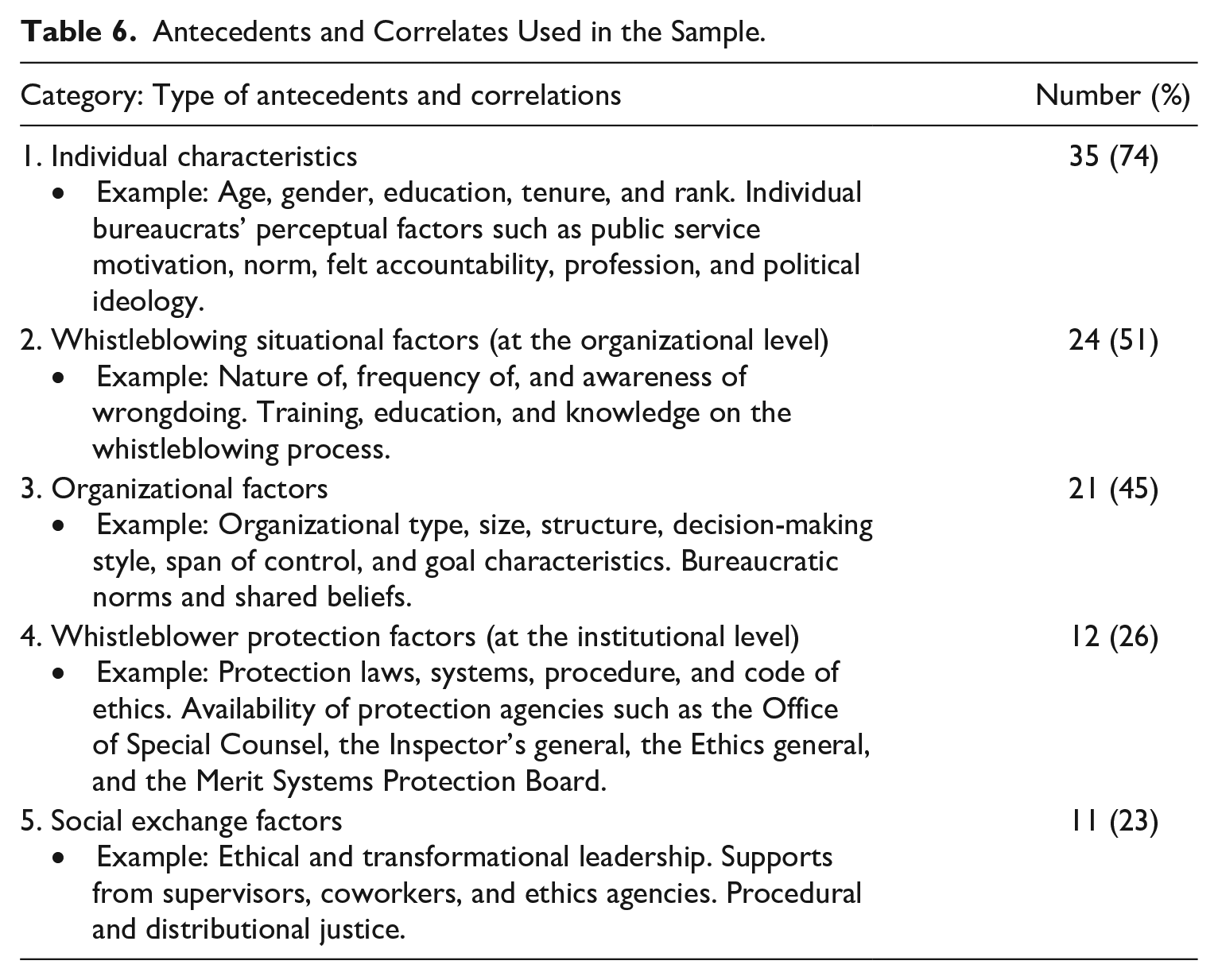
Table 6 reports the details of the factors that affects whistleblowing outcomes. Taking a closer look at the independent variables holistically offers another opportunity to diagnose our current level of understanding, as predictors are usually derived from theories. Based on an investigation of the independent, moderating, mediating, and control variables, five categories were identified in the empirical studies, in the following order: (1) individual characteristics (74%, N = 35); (2) situational factors (51%, N = 24); (3) organizational factors (26%, N = 21); (4) protection factors (26%, N = 12), and (5) social exchange factors (23%, N = 11). As with the theories and themes, one study can have multiple categories.
Antecedents and Correlates Used in the Sample.
Conclusion: Bureaucratic Whistleblowing in Public Administration Scholarship
Summary: What Do We Know About Bureaucratic Whistleblowing?
This review study attempts to synthesize the existing scholarship on whistleblowing in the public sector. What do we know about bureaucratic whistleblowing? The findings from a review of 71 articles and dissertations illustrate that the process definition suggested by Near and Miceli (1985) had been much preferred (59%) than the legal definition. To examine whistleblowing in the public sector, scholars have used multiple theoretical grounds while heavily relying on the HRM, ethics, and psychology theories (61%). Interestingly, there has been a growing number of empirical studies in recent days (67% including quantitative and qualitative) that used either survey, cases, or court decisions. In those empirical studies, both the whistleblowing intention and behavior were used equally. To study whistleblowing empirically, the use of survey appeared to be the most preferred way to start. Not surprisingly, most bureaucratic whistleblowing studies have focused on the effects of individual characteristics such as socio-demographic factors, motives, norms, and beliefs with a question of who they are.
It is worth discussing the previous studies’ overarching contributions to the distinctive methodological orientations. First, as discussed briefly, the theoretical and constructive studies enrich our discussion by introducing rationales for the public administration community to address whistleblowing more seriously. For example, Bowman (1980) and Jos (1991) introduce several key themes, including accountability, protection laws, internal/external systems, and the likely tension between the individual and the organization. Similarly, in response to the CSRA, Dworkin and Near (1987) incorporate the importance of protection into their whistleblowing model. In a similar vein, four studies attempt to incorporate whistleblowing into the existing theories of public administration such as: Guerilla government (Newswander, 2015; O’Leary, 2010); moral agency (O’Kelly & Dubnick, 2006); ethical triangle theory (Folks, 2000, referencing Svara, 1997) and citizens’ attitude toward whistleblowers (Heumann et al., 2016).
Second, later empirical studies incorporate the possibilities previous studies suggested using both qualitative and quantitative data. As such, we now have a clearer understanding of why and when a bureaucrat blows the whistle (Brewer & Selden, 1998; Park & Blenkinsopp, 2009; Park et al., 2005), what motivates them to do so (Caillier, 2015; Caillier & Sa, 2017; Hassan et al., 2014; Lavena, 2016; Wang et al., 2018), and the way organizational factors influence prospective whistleblowers (Lee, 2020; Pillay et al., 2017). Further, the active use of survey data has allowed public management scholars to diagnose why bureaucratic whistleblowers are distinctive from the private sector whistleblowers.
Discussion: What Do We Need to Know About Bureaucratic Whistleblowing?
What do we need to know more about concerning bureaucratic whistleblowing? There are two issues to bolster the theme of bureaucratic whistleblowing further. The first is a definitional issue. While the process definition is widely used in academia, it is important to note a growing number of studies that addressed the legal aspect of whistleblowing in bureaucracies. In particular, in the U.S. context, whistleblower protection has been considered to reflect the core values of the field of public administration accompanied by a series of administrative reforms (e.g., CSRA of 1989; WPA of 1989; WPEA of 2012). Hence, it might be important to link these ideas into the legal approach to public administration (Piotrowski & Rosenbloom, 2002; Rosenbloom, 1983), as whistleblower protection system in bureaucracy represents another means to achieve democratic bureaucracy from inside (Ingraham, 1995; Mosher, 1968; Van Riper, 1958). Hence, it is worth developing a meso-level definition of bureaucratic whistleblowing that is distinguishable from the general process definition but broader than the legal one. Several studies have shown that bureaucratic whistleblowers have unique motivational structure (Brewer & Selden, 1998; Caillier, 2015; Cho & Song, 2015); are embedded by intrinsic accountability structure (Johnson & Kraft, 1990); possess distinguishable norms and professionalism (Jos, 1991 referencing Waldo, 1948), and are institutionally protected (Hill & Lynn, 2015; Vaughn, 2012). Future studies may need to incorporate such features of bureaucratic whistleblowers when redefining the term.
The second is a theoretical issue. While public administration scholars have struggled to study whistleblowing in the public sector using multiple theoretical grounds, there has been little effort to develop a theory of bureaucratic whistleblowing. To advance further research, it would be necessary to set a testable framework encompassing several aspects of the whistleblowing process, hopefully in an empirically testable manner. Miceli et al. (2008)’s prosocial organizational behavior model of whistleblowing with three-dimensional approach, or the model of effective whistleblowing (Near & Miceli, 1995) could be the references from which to start building this framework. For this task, the findings outlined in this article would also be helpful. In particular, the findings from the variables used in previous studies (Table 6) suggest that there are at least five dominant dimensions that affect, moderate, and mediate bureaucratic whistleblowers’ intention and behavior. In doing so, a future conceptual model or framework needs to address the consequences of whistleblowing by taking a closer look at the feedback effects, with a question of what happens at the organizational level. While there is a good body of literature examining the whistleblowers’ characteristics, little knowledge is available about what happens after a whistle is actually blown at the organizational level.
Future Bureaucratic Whistleblowing Research
Recently, bureaucratic whistleblowing received a fair amount of academic attention during the political and economic turmoil of the later part of the 2010s. The continued interests in public administration journals have provided fresh insights regarding whistleblowing in the public sector. The recently published pieces such as Potipiroon and Wongpreedee (2021), Lee et al. (2021), Exmeyer and Jeon (2020), and West and Bowman (2020) show that it as a phenomenon to be actively revisited and empirically examined.
To supplement these advancements, the findings from a systematic review also suggest a couple of future empirical research agenda. First, several descriptive questions remain unanswered. How frequently whistleblowing occurs in the federal, state, and local governments? Are there any differences in whistleblowing behavior patterns among managers, rank-and-file bureaucrats, and contractors? Do unions play any role in whistleblowing processes? Do the personnel reforms, such as the employment at-will system or pay-for-performance, affect bureaucrats’ whistleblowing outcomes? What are the proper roles of leadership, accountability institution, and ethics training on encouraging bureaucratic whistleblowing and quality of protection? Investigating these questions would offer a unique context to develop a theory of personnel management and bureaucratic whistleblowing.
Next, empirical research that evaluates the causal effects of legal protection and ethics system are required. Does statutory whistleblower protection really matter? What is the net effect of being protected versus unprotected? Hence, it would be necessary to perform a quasi-experimental study that targets certain agencies specifically and causally, to derive a theory of bureaucratic whistleblowing. For example, the recent WPEA of 2012 would offer a good opportunity to assess the efficacy of protection law. Changes in protections at the state level can also serve as quasi-experimental settings. In addition to this, we would need to pay attention to the existing ethics training systems on public services’ intention to blow the whistle.
Third, developing ways to evaluate the performance of the protection system will bolster the importance of bureaucratic whistleblowing. Together with the transparency requirements of the Freedom of Information Act, outcomes and outputs of protection system are not easily measurable. For this reason, it is difficult to measure the performance of such institutional arrangements. These concerns regarding the performance of bureaucratic whistleblowing might be answered by testing the relations among whistleblowing, whistleblower protection systems, and citizens’ responses to the institutional efforts to protect bureaucratic voices. In what ways do citizens react to the incidence of bureaucratic whistleblowing? Do they change their perceptions toward government, such as trust in government, satisfaction, and reputation judgment? In addition, do public agencies change their behavior after an employee blows the whistle? For the second and third agenda, Menzel (2016)’s idea of ethics management would be useful.
Finally, at the individual level, it is worth tracking the consequences of blowing the whistle on the whistleblowers’ life. Much of whistleblowing studies usually conclude that whistleblowers often face retaliation or suppression. However, little empirical attention has been paid to bureaucratic whistleblowers’ life after they blow the whistle. Performing a longitudinal analysis of bureaucratic whistleblowers by focusing on the narratives would be an ideal vehicle for obtaining a better understanding. For instance, Alford (2007) identified three novel narratives (choiceless choice, stuck in static time, and living in the position of the dead) by listening to several whistleblowers’ retrospective stories.
As a whole, the present study attempts to systematically organize what we know in terms of bureaucratic whistleblowing. Based on these, two theoretical issues and four empirical agendas are presented, with a question of what we need to know to better protect them and to incorporate their prosocial voices. We now have a clear understanding about who they are and why they blow the whistle. As a final remark, this study calls for more scholarly attention to the systems, institutions, and organizational arrangements which would support their reasoned voices.
Footnotes
Appendix
Information Extraction Form.
| Category | Extraction |
|---|---|
| Basic information | Author(s), publication year, title, journal, and abstract |
| Definition of whistleblowing | Definition of whistleblowing in each study was identified from the body and categorized into three classifications: (1) Process-oriented definition (2) Legal definition (3) Both (4) Unspecified |
| Theories/themes | Theory in each study was coded based on the abstract and theory/literature review section in the body. Coding schemes include: (1) HRM/ethics/psychology theories (2) Near & Miceli school of whistleblowing (3) Organizational theory and behavior (4) Constitutional basis/protection/protection law (5) Social exchange theory (6) Exploratory/fact-finding (7) Corruption (8) Bureaucratic politics (9) Accountability Note: This section is coded as a multiple choice because one study can have multiple theoretical backgrounds. |
| Methods | Method was coded following three criteria: (1) Theoretical/constructive (2) Descriptive (3) Empirical-Qualitative (4) Empirical-Quantitative (5) Empirical-Mixed method |
| Data | Data was coded based on the author’s description in the body. Broadly, this can be categorized into: (1) Survey (2) Legal case (3) Law content |
| Dependent variables | For the empirical studies (descriptive, qualitative, and quantitative), the dependent variables were identified. This can be categorized into: (1) Whistleblowing behavior (2) Whistleblowing intention (3) General perceptions (reprisal, barriers, protection, and knowledge) |
| Independent/correlated variables | The independent variables, correlates, and antecedents were recorded and recategorized in the second coding. This includes: (1) Individual characteristics (2) Whistleblowing situational factors (at the organizational level) (3) Organizational factors (4) Whistleblower protection factors (at the institutional level) (5) Social exchange factors |
Declaration of Conflicting Interests
The author declared no potential conflicts of interest with respect to the research, authorship, and/or publication of this article.
Funding
The author received no financial support for the research, authorship, and/or publication of this article.
