



Abstract
The purpose of this study is to design a structural model explaining how elementary students use digital textbooks on mobile devices. This study extends the technology acceptance model framework, with self-efficacy, learning motivation, learning strategies, and parent education level as external variables. Results show that perceived usefulness was a significant mediating factor for students’ actual usage of digital textbook on mobile devices. Self-efficacy and learning strategies influence self-reported actual usage through perceived usefulness and perceived ease of use. In addition, parent education level has a significant influence on students’ self-efficacy and especially learning motivation. These findings have broadened research on technology acceptance with emphasis on a more learning-centered framework that focuses on the learners’ characteristics and their unique contexts when using digital textbooks via mobile devices.
Keywords
Introduction
Textbooks, as an essential learning tool in K-12 education, have long played roles of reflecting the academic standards, implementing specified objectives, and communicating ideologies commonly found in public curricula (Chang, 2006; Mayer, Bove, Bryman, Mars, & Tapangco, 1996). New technological innovations in the consumer market, such as increased availability of electronic texts—for example, hardware e-book readers and large text collections on the Internet—also have gained momentum (Kissinger, 2013). Within this overall climate, using digital textbooks is becoming an increasingly important practice, which has already had an impact on educational productivity, either by improving academic outcomes or reducing costs (Johnston, Berg, Pillon, & Williams, 2015; Rockinson-Szapkiw, Courduff, Carter, & Bennett, 2013). The adoption of digital textbooks, along with a broad range of interactive learning features, is projected to become widely used by students and teachers in K-12 education. However, digital textbooks in their current form have not yet made a proper entrance into Chinese K-12 education. Despite the potential benefits of using digital textbooks in school, the use of digital textbook among young learners often remains peripheral and minimal (Huang, Liang, Su, & Chen, 2012). The continued use of digital textbooks is the key to student access to multimedia-enriched content and interactive features for a personalized learning experience (Huang et al., 2012).
Digital textbooks transformed paper-based textbooks and are more than just a digital version of the same. Interactive multimedia integration has increased digital textbooks’ visual appeal. Digital textbooks can be reused as often as needed, supporting learning with technology features such as, notes, hyperlinks, progress monitoring, and so forth (D’Ambra, Wilson, & Akter, 2013). Researchers compared university students that use e-textbook on their mobile device and students who use traditional textbooks. Findings showed no difference in cognitive learning and grades between the two groups. The results also indicated that students who chose e-textbooks had significantly higher perceived affective learning and psychomotor learning than students who chose to use traditional print textbooks (Rockinson-Szapkiw et al., 2013; Weisberg, 2011). However, for a much younger learner group, digital textbooks present challenges that could impede the learning experience and even cause discontinued use of the tool. C. Gong, Chen, Cheng, Yang, and Huang (2013) reported that technical issues such as delay of system response and teachers’ attitude toward e-textbooks can affect elementary students’ use of digital textbooks. In addition to usability issues (Berg, Hoffmann, & Dawson, 2010) and teacher or parent attitude, Stone and Baker-Eveleth (2013) found that for university students, motivation to use and satisfaction with e-textbooks could also influence their continued use of digital textbooks based on the technology acceptance model (TAM; Stone & Baker-Eveleth, 2013).
Most previous research was done with undergraduate students; however, to the best of our knowledge, few studies have investigated the use of digital textbooks by elementary school students. Elementary students have very different sociocultural learning environments and technological capabilities compared with college students. Many studies have focused on e-textbook use in static locations, such as school libraries or classrooms (Johnston et al., 2015; J. Lee, 2015), instead of studying digital textbook use on mobile devices. Most importantly, the dominant focus of most digital textbook usage research has been on the technology, its usability, and features, rather than the broader pedagogical aspects (Väljataga & Fiedler, 2014). Cheung and Hew (2009) stated, “The use of theoretical foundations will help inform the pedagogy of using them” (p. 166). The understanding of students’ perceptions and individual traits is a key factor to the development of successful pedagogy on use of digital textbooks to enhance learning (Cheung & Hew, 2009). Studies are needed that move the research agenda away from the dominant techno-centric focus on design and development. The new focus should go back to the learners, their contexts, and the unique potential affordances of the emerging digital textbook practice in education (Hyman, Moser, & Segala, 2014; Kissinger, 2013).
The purpose of this study is to understand elementary students’ use of digital textbooks on mobile devices based on a TAM. Furthermore, this study extends the TAM by exploring individual variables such as self-efficacy, learning motivation, learning strategies, and parent education levels to conceptualize a theoretical model about how these variables influence perceived usefulness (PU) and perceived ease of use (PEOU), eventually, explain students’ usage of digital textbook on mobile devices.
Literature Review
Digital Textbook on Mobile Devices
In the development of the unfolding digital transformation, the textbook has gone through changes over time. Students in today’s classroom are becoming much more technologically savvy every year. Using digital textbooks on mobile devices has been studied by researchers across multidisciplines (Hyman et al., 2014; Johnston et al., 2015; Kissinger, 2013; Rockinson-Szapkiw et al., 2013). Studies have shown that students gain more benefit from interactive digital textbooks that support authentic mobile learning (Huang et al., 2012). Braun (2011) discovered that mobile learning devices, such as Kindle, help to encourage collaboration because students can highlight particular passages and make comments available for others to view. Using digital books on mobile devices may enhance students’ ability to work and communicate collaboratively and asynchronously.
Although recent studies have shown various learning benefits of digital textbooks, reviews of student perceptions of e-textbooks consistently demonstrate a lack of preference; thus, students do not seem to be positively affected by familiarity or prior use (Daniel & Woody, 2013). Factors that increase or decrease the desire of the students to use digital textbooks need to be further investigated.
Technology Acceptance Model
The TAM has been widely adopted for explaining and predicting the use of technology. TAM was proposed by Davis (1989) and has been tested and extended by many studies. The original TAM proposed by Davis et al. theorizes that an individual’s behavioral intention to use a system is determined by his or her attitude toward using, which in term was determined by two beliefs: PU, defined as the extent to which a person believes that using the system will enhance his or her performance; and PEOU, defined as the extent to which a person believes that using the system will be free of effort (Venkatesh & Davis, 2000). A key objective of TAM is to provide a basis for tracing the effect of external variables on intentional and actual use of certain technologies that are mediated by PU and PEOU (Legris, Ingham, & Collerette, 2003). Overall, the TAM has been empirically successful in predicting about 40% of any system’s use (Venkatesh & Davis, 1996). It suggests that PEOU and PU are the two most important factors in explaining system use.
Unlike studies that only focus on technological attributes and their influence on PEOU and PU, external variables have been more thoroughly explored by recent studies, which focus on participants’ internal traits, the context or personal background, and their social experiences (Hsiao & Tang, 2014; Joo, Lim, & Kim, 2016; J. Lee, 2015). Hyman et al. (2014) examined usage intent and actual usage of a mobile learning agent as a result of ease of use and usefulness of mobile devices. Ease of use, usefulness, and learnability proved to be external variables for predicting behavioral usage intention and a system’s actual use. Hsiao and Tang (2014) explored e-textbook adoption among college students based on five theoretical acceptance models. Overall, the results indicated that the unified theory of acceptance and use of technology model appeared to excel. The external variables that their study examined include: self-efficacy, peer influence and superior influence, performance expectancy, effort expectancy, social influence, and facilitating conditions. S. Lee (2013) investigated factors that influence adoption and use of smartphones among Koreans using the TAM approach. Their findings suggest that when distributing an information system with innovative and active features, developers should pay attention to users’ intrinsic motivations as well as their extrinsic requirements.
In this literature review of recent studies based on the TAM, we can confirm a current trend of delving deeper into TAM and exploring indirect and hidden factors related to students’ own individual characteristics and the learning context. Such an exploration involves both the social context and pedagogical environment. In this study, we examined self-efficacy, learning motivation, learning strategies, and parent education levels as external variables that could be associated with PU and PEOU, and indirectly impact actual usage of digital textbooks on mobile devices.
Perceived usefulness
PU is defined as the degree to which a person believes that using a particular technology will enhance his or her job performance (Davis, Bagozzi, & Warshaw, 1989). People tend to use or not use an application based on the extent to which that they believe it will enhance their job performance (Davis et al., 1989). In our study, PU was examined as a construct that associated with elementary students’ use of digital textbooks. The hypothesis is as following: H1: Students’ perceived
Perceived ease of use
Perceived ease of use refers to the degree to which a person believes that using a particular technology will be free of effort (Davis et al., 1989). According to Aaltonen, Mannonen, Nieminen, and Nieminen (2011) and Berg et al. (2010), people expect reading an e-book on tablets or e-readers to be like browsing webpages on a desktop computer; moreover, they get frustrated when the actions and interactions are different. Many learners also expect the functionality of a printed book and a digital textbook to be the same. They risk running into problems when trying the smaller screen size, image quality, navigation design, and nonlinear structure of digital textbooks, which could present cognitive challenges to users with different levels of competency in mobile technology. In our study, PEOU was examined as a construct that was associated with elementary students’ use of digital textbooks. The hypothesis is as following: H2: Students’ perceived
Self-efficacy
Self-efficacy was used as a component of social cognitive theory, representing learners’ perception of their performance abilities and their choices based on these perceptions. Bandura (1982) defined self-efficacy as “ … people's judgment of their capabilities to organize and execute the courses of action required to attain designated types of performance” (pp. 124–125). Thus, self-efficacy is not concerned with the skill one already has, but with the judgment one has of what he or she can do with whatever skills he or she possesses (Bandura, 1982). Studies have found that self-efficacy plays a significant role in a technology-driven learning context. The research from M. Gong, Xu, and Yu (2004) shows that computer self-efficacy directly influences the ease of use and the intention to use technologies to support learning. The hypotheses for this study are: H3a: Students’ H3b: Students’
Learning motivation
Deci and Ryan (1985) have noted that self-determined learner behavior can stem from both intrinsic motivation (i.e., the learner engages in an activity because it is interesting or enjoyable) and from extrinsic motivation (i.e., the learner engages in an activity because he or she desires the outcome and wants to achieve some instrumental end such as earning a reward). With respect to technology-supported learning environments, however, research focusing on students' motivation is limited. Learning motivation has been studied as a positive effect on students’ desire to use technologies during learning (Ciampa, 2014). The hypotheses for this study are: H4a: Students’ H4b: Students’
Learning strategies
Learning strategies describe the way students engage in the task itself. The learning approaches that students take to learn are crucial to the learning outcome in technology-supported learning. Learning strategy has been reported as a significant external variable in the TAM by studies focused on adoption of web-based learning or information systems (Park, 2009; Yi & Hwang, 2003). The hypotheses for this study are: H5a: Students’ H5b: Students’
Parent Education Level
Parent education level, as an important socioeconomic factor, has been studied as the factor that influences students’ academic achievement and technology-based self-efficacy (Davis-Kean, 2005). The hypotheses for this study are: H6a: Students’ H6b: Students’ H6c: Students’
Based on the aforementioned hypotheses, a theoretical research model is proposed as shown in Figure 1.
Research model for understanding use of digital textbooks by elementary students.
Methods
Instruments and Variables
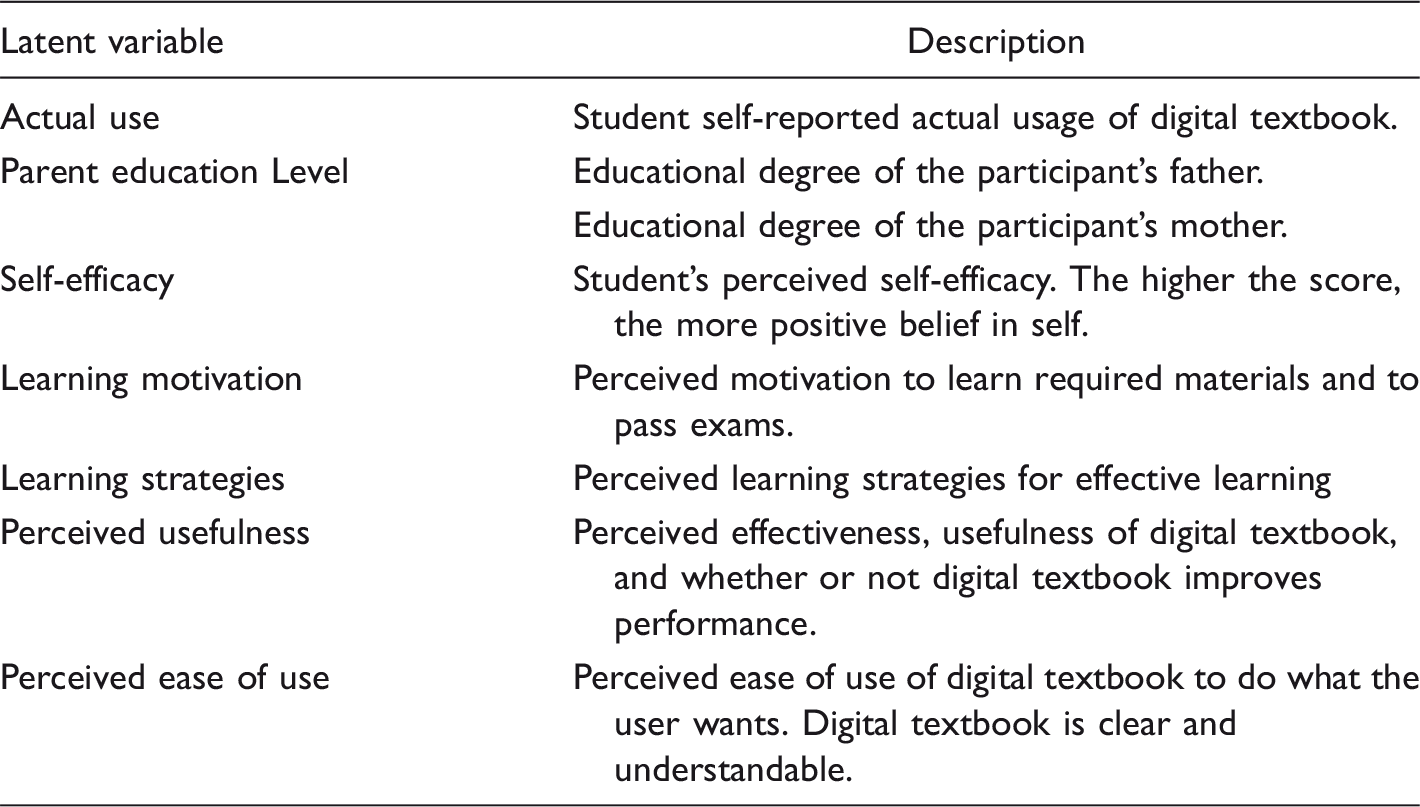
Latent Variables and Their Descriptions.
Demographic Information of the Sample.

Self-efficacy measurement was based on Morgan–Jinks Student Efficacy Scale, which is a 30-item self-report measure assessing students’ academic self-efficacy (Jinks & Morgan, 1999). In this research, three items were used to examine students’ self-efficacy: (a) belief in self-intellectual ability, (b) belief in academic achievement among peers, and (c) belief in self ability to use digital textbooks on mobile devices.
Learning motivation and strategy measurements were based on the revised two-factor study process questionnaire (Biggs, Kember & Leung, 2001). Three items measuring learning motivation and three items measuring learning strategies were used in this study to determine the learning motivation and strategy of the students in using digital textbooks. Learning was divided into deep and surface levels to reflect the interaction between the learners and the digital textbooks.
With the goal of detecting the factors that affect students’ acceptance of technology, Davis proposed the TAM, TAM version 1 (1989) and TAM version 2 (1993), based on the theory of reasoned action (Ajzen & Fishbein, 1980; Fishbein & Ajzen, 1975). This study contained four items under the TAM theoretical dimensions, two items for the PEOU and another two items for the PU. These items were aimed at thoroughly exploring the technology acceptance of the students toward digital textbooks. Please see the descriptions of latent variables in table 1.
Each statement item was measured on a 5-point Likert-type scale which measure responses from 5 = strongly agree to 1 = strongly disagree. This scale could not be used when assessing parent education, which was a more specific listing of school levels of completion (1, none; 2, elementary school; 3, middle school; 4, high school; 5, bachelor’s degree; 6, master’s degree or PhD). The final scale assessed the actual usage of digital textbooks by each survey participant: (1, basically every day; 2, two or three times per week; 3, several times in a semester).
Participants and Data Collection
The research team communicated the purposes of this research to the educational administrative bureaus of two provinces, which are both leaders in K-12 informational technology reform in China. These bureaus helped determine the best volunteer schools based on the following requirements: (a) the schools must have been integrating digital textbooks with mobile learning terminals (e.g., iPads) into their classroom learning for over two semesters and (b) the students of the schools should be capable of completing the online survey by themselves within the school schedule. The online survey was in Chinese. For the younger students (Grade 1 to 3), during the time of filling out the online survey in class, the lead teacher read the items out load and help the students understand the meaning of both the item and the options for them to choose. The facilitating teacher helps students with technical or other questions during the session. For students who were in Grade 4 to 6, the teachers also supported them answering the online survey questions in class hour. The participation of filling out the online survey is completely voluntary for the students.
For the purpose of this study, 800 samples were randomly included. Three school districts and 61 schools were covered (see table 2).
Structural Equation Modeling
According to Pedhazur (1997), growing out of multiple regression, structural equation modeling (SEM) is a more powerful way for testing the tenability of causal models involving a set of independent and dependent variables. Unlike multiple regression, SEM considers measurement errors, correlated residuals, modeling of interactions, nonlinearities, and correlated independence. In this study, SEM was used to analyze and reveal the relationship of PU, PEOU, self-efficacy, learning motivation, learning strategies, and parent education level in the TAM.
Results
Descriptive Statistics
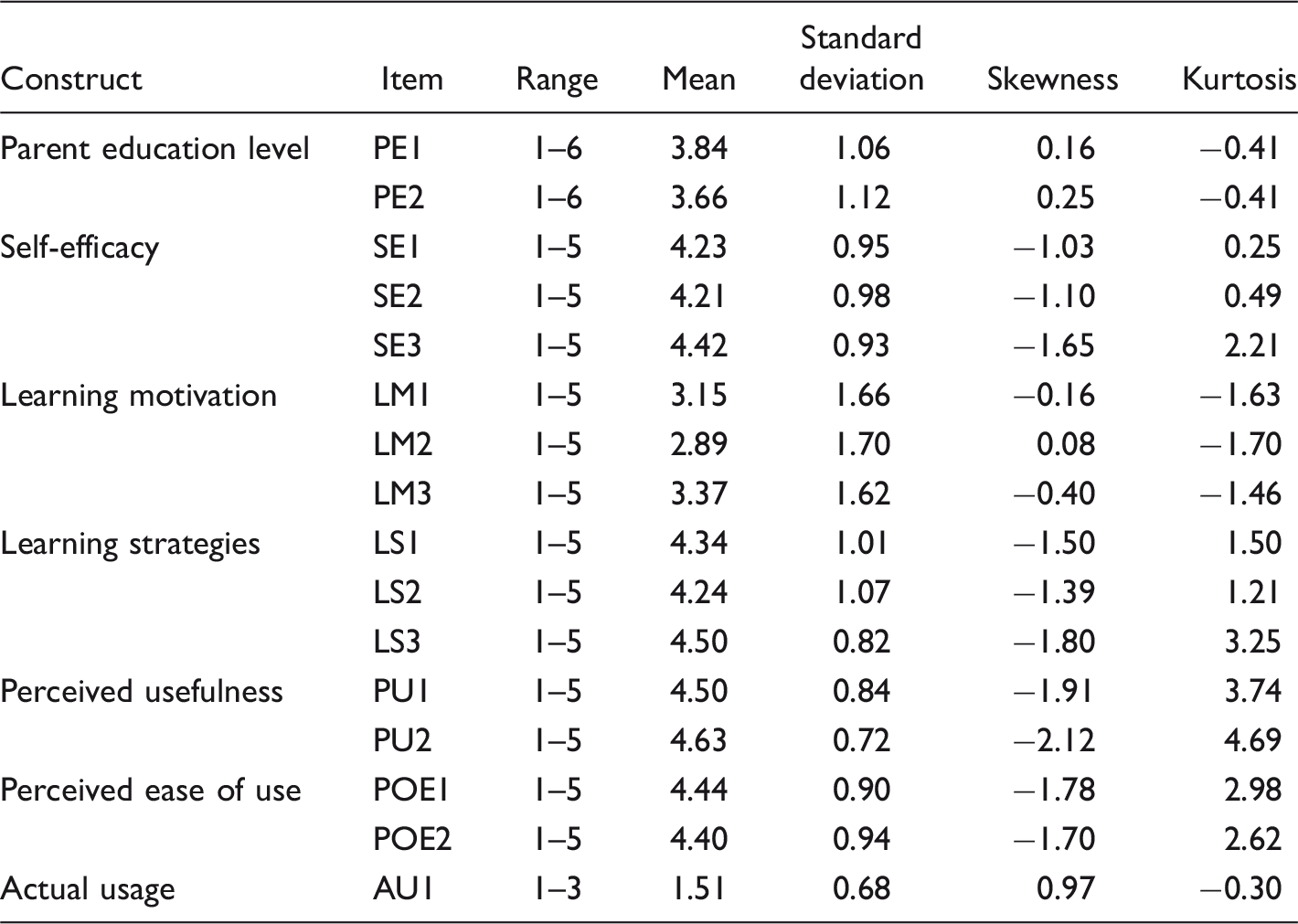
Descriptive Statistics of the Items in the Measure.
Measurement Model
Results for the Measurement Model.
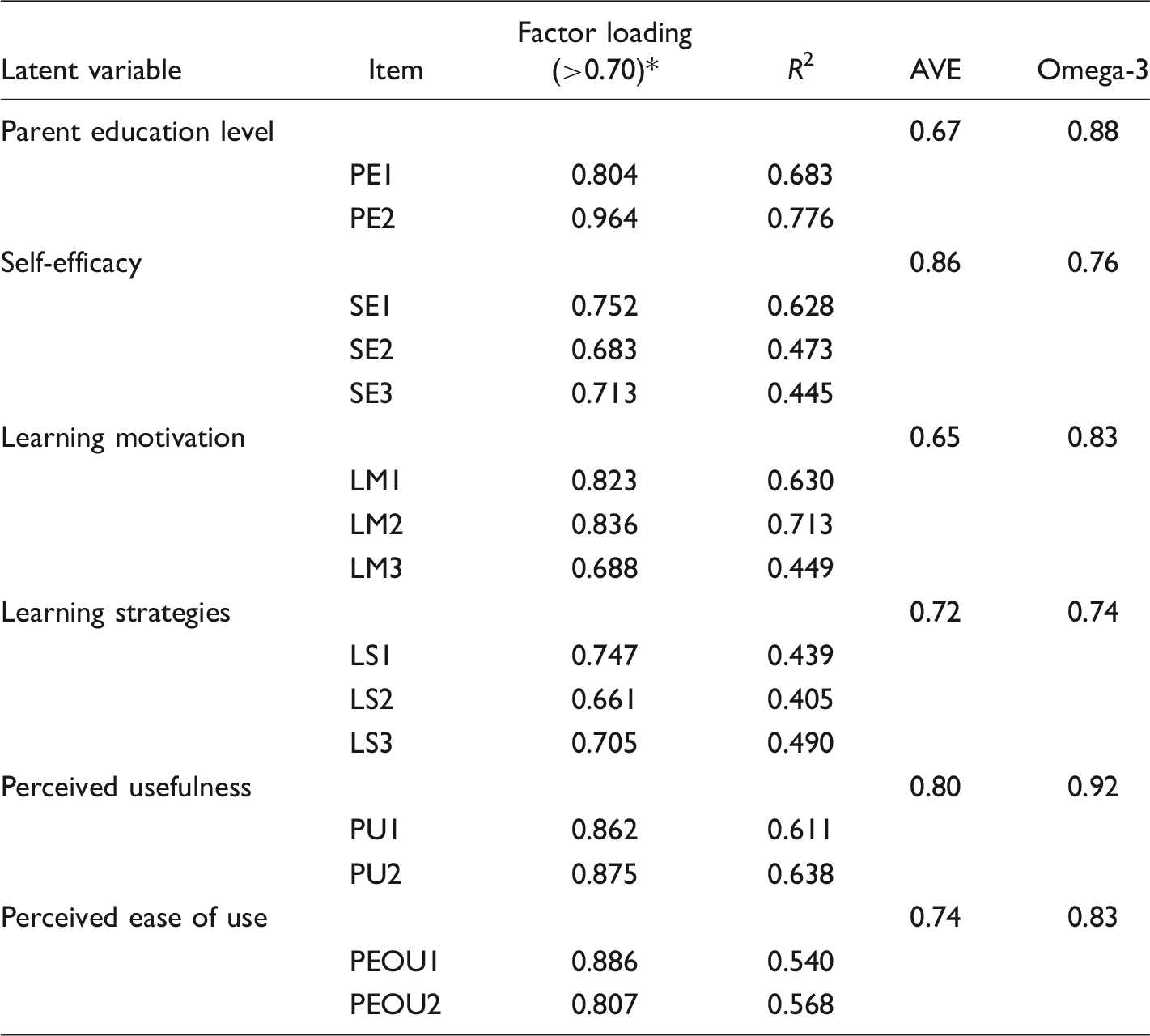
Tests of convergent validity were conducted using average variance extracted (AVE) and composite reliability measures. The AVE measures the overall amount of variance that is attributed to the construct in relation to the amount of variance attributable to measurement error (Fornell & Larcker, 1981). Convergent validity is judged to be adequate when AVE equals or exceeds 0.50. In this study, omega-3 was used as a measure of composite reliability. For composite reliability to be adequate, a value of 0.70 and higher was recommended (Nunnally & Bernstein, 1994). Table 4 shows the values of the AVE and omega-3 to be adequate representations of convergent validity.
Discriminant Validity for the Measurement Model.

Note. Diagonal in parentheses: square root of average variance extracted from observed variables (items); off-diagonal: correlations between constructs.
p < .01.
Model Fit
The overall goodness-of-fit measures indicated an acceptable fit of the model (Normed
Structural equation model
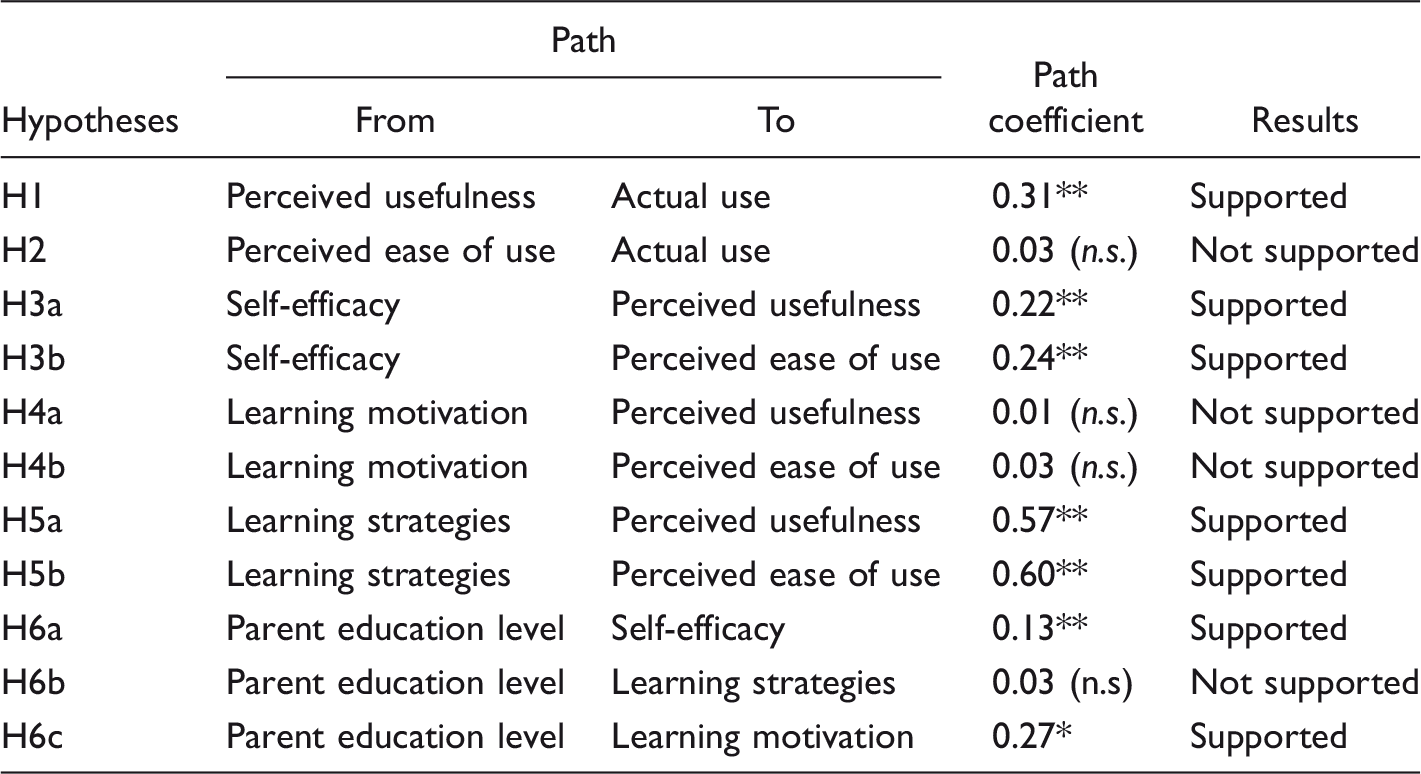
The results show that learning strategies and self-efficacy are the most determinant of all endogenous variables in the model (see Figure 2). Learning strategies have a medium effect on PU (d = 0.57) and PEOU (d = 0.60). Self-efficacy has a small effect on PU (d = 0.24) and PEOU (d = 0.22). See hypotheses testing results in Table 6.
SEM results with path coefficients. n.s., not significant. *p < .05; **p < .01. Hypothesis Testing Results. p < .05. **p < .001.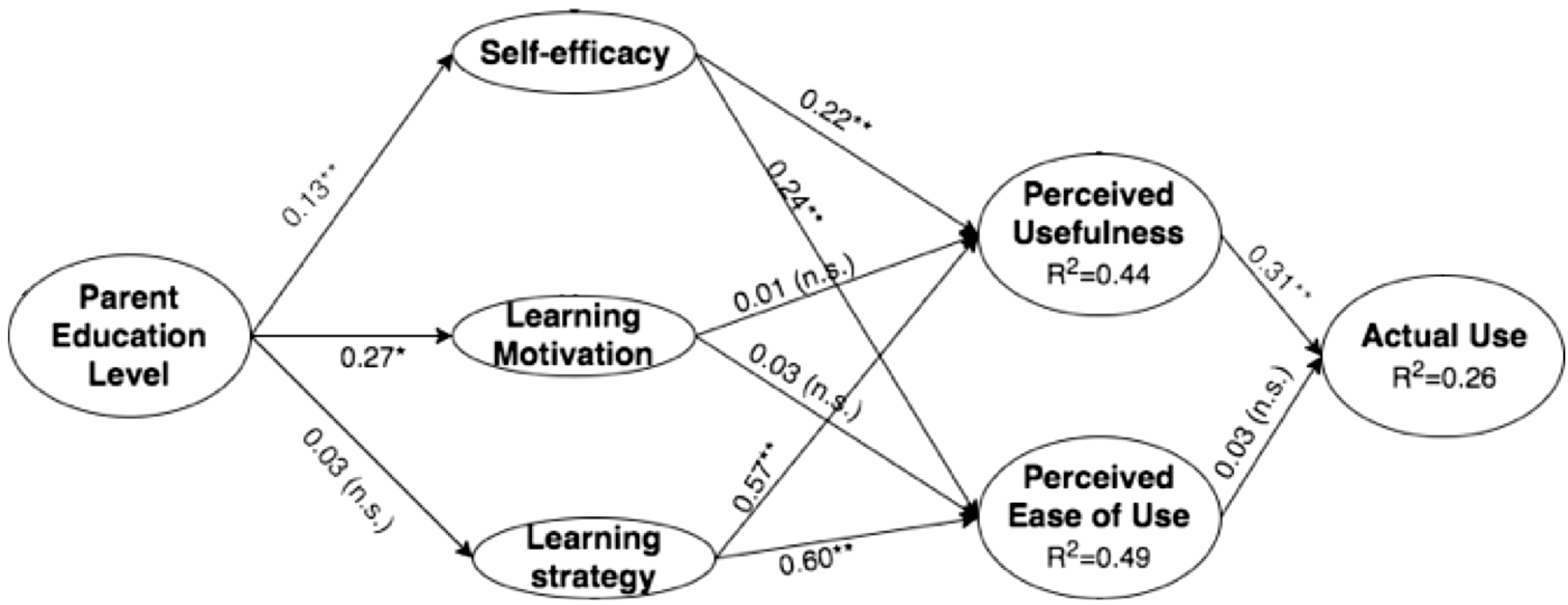
Discussion
This study aims to (a) explore Chinese elementary students’ use of digital textbooks on mobile devices and (b) identify the key determinants of students’ actual use of digital textbooks. It was found that students’ PU was key determinant of their actual use of digital textbooks with a direct significant effect on students’ use of digital textbooks. In addition, self-efficacy, learning motivation, learning strategy, and parent education level were included as external variables in the research model. Self-efficacy and learning strategy had a significant direct effect on PU and PEOU. Last but not the least, the parents’ education level was significantly associated with students’ self-efficacy and learning motivation.
Implications to Research
This study found that Chinese elementary students PU of digital textbooks as significant in determining their actual use of digital textbooks. This is in alignment with recent research that found PU to be a key determinant of students’ use of digital textbook (Hsiao & Tang, 2014; Legris et al., 2003; Nicholas, Rowlands, & Jamali, 2010). In addition, the study contributes to the current research body with findings on elementary students. This study also found that elementary students viewed digital textbook to be useful, and their use of digital textbooks were significantly influenced by this perception. Along with the rapid growth of e-textbook adoption in K-12 education in China (Sun & Jiang, 2015), teachers and students have gained familiarity with e-textbooks and found them effective in teaching and learning, respectively. This finding was also supported by the findings of Stone and Baker-Eveleth (2013) that PU was positively associated with how long a school had used digital textbooks. The participants for this study had all used digital textbooks for at least two semesters.
Students’ PEOU did not have significant effects on actual use of digital textbooks. Unlike the existing research that found PEOU as a predictor of actual use of the technology of interest (Johnston et al., 2015; Legris et al., 2003), this study found that students’ perception of ease of use toward digital textbooks on mobile devices stayed on a high level because digital textbooks are generally intuitive to use and have very simple functionalities. Especially with wide adoptions of personal mobile devices such as iPads and Android tablets, eBooks have become a necessity of everyday life. The young generation (born after 2003) grew up in an environment where they have encountered, and in fact, have been bombarded with new technologies at an ever-increasing pace. So, the PEOU is not a determinant factor to the actual use of digital textbooks in this case, especially comparing with PU.
This study found a significant relationship of elementary students’ self-efficacy in using digital textbooks with both their PU and PEOU. These results have been supported by Venkatesh and Davis (1996), who suggest that self-efficacy perceptions are based on the effect of PEOU on behavior. Previous studies have also revealed the influence of self-efficacy on PU (Yi & Hwang, 2003). Users regard the system easier to use when their confidence in their own efficacy regarding the target system is higher (Hsu & Chiu, 2004).
Learning strategy has been found to have a significant effect on students’ PU and PEOU in regard to digital textbooks. Students’ approaches to e-learning have been found to be substantially associated with their achievements (Biggs et al., 2001). The learning strategies questionnaire items used in this study are “When I am reading digital textbooks on iPad, I try to relate new material to what I already know on that topic,” “I spend a lot of my free time finding out more about interesting topics, which have been discussed in different classes,” and “I like to do enough work on a topic so that I can form my own conclusions before I am satisfied.” As Biggs (2001) takes on learning strategies for deep learning—strategies describe the way students engage the task itself, strategies for deep learning maximized meaning instead of focus on narrow targets and rote learning—whether or not students adopted the learning strategies for deep learning determined the use of digital textbooks. Learning strategies affect students’ perceptions of digital books. Students who adopt different approaches may perceive digital textbook in different ways, which means their use of digital textbooks might also differ. For example, students who only chose a selective memorization approach might not perceive digital textbook as useful or easy to use as students who chose to seek the meanings of the learning materials and to use optimal time and space management approach.
The learning motivation measured in this study was whether elementary students wanted to stay out of trouble with minimal effort or to maximize grades. According to Hennessey, Moran, Altringer, and Amabile (2015), the learning motivation examined in this study was extrinsic motivation, as the researchers stated, “Extrinsic motivation is the motivation to do something in order to attain some external goal or meet some externally imposed constraint” (p. 11).This study did not find a significant relationship between learning motivation and elementary students’ use of digital textbooks. Venkatesh (2000) and Davis, Bagozzi, and Warshaw (1992) found that intrinsic motivation (playfulness and enjoyment of the target technology) has a significant influence on PEOU. However, according to the results of this study, extrinsic motivation, specifically, the motivation to get good grades, was not a predictor of PU and PEOU on the use of digital textbooks.
This study also found that parent education level has a significant relationship with elementary students’ self-efficacy and learning motivation. Parents’ years of schooling was found to be an important socioeconomic factor to take into consideration when looking at children’s academic belief, self-efficacy, and technology use (Ali, McWhirter, & Chronister, 2005; Davis-Kean, 2005). This study contributed to the research body on the role of parental socioeconomic status in the TAM.
Implications to Practice
Given the slower than expected growth in digital textbooks used by elementary students, it is worthwhile to understand what determines students’ actual usage of digital textbooks. The implications to practice are three-fold. First, to facilitate the adoption of learning with digital textbook on mobile devices, we need to pay attention to a function of both individual characteristics and the teaching context. Both teacher and student are jointly responsible for the outcome; The teacher for structuring the enabling conditions, which is, fostering the use of learning strategies for deep learning in routine curriculum and learning beliefs, and learner for engaging them. Second, the findings have indicated that young generations are naturally competent in using digital textbooks on mobile devices; we should probably shift our focus on training them on how to use the technology, to a more effective way, providing pedagogical support and design instructions that encourage exploratory reading on related topics on digital textbooks and help students to be able to lead their own learning based on reading digital textbooks. Third, schools, teachers, and parents should be cautious when they try to motivate young learners to use digital textbooks by external rewards or limits, such as grades.
Limitations
The study’s empirical results do have some limitations. As with any empirical study, we need to be careful when generalizing the results outside the original context from which the data sample was drawn. For this study, it means cautiously generalizing the findings to students beyond elementary students in eastern China. It is conceivable that students from elementary schools with different socioculture settings may have materially different attitudes, perceptions, and reactions to digital textbooks than those students included in this study.
Conclusion
This study explored Chinese elementary students’ use of digital textbooks, and the empirical results showed that PU to be significant in mediating the determinant to students’ use of digital textbooks. In the research model, self-efficacy and learning strategies were significant determinants to students’ PU and PEOU, which in turn affected the actual use of digital textbooks. Parent education level significantly influenced students’ learning motivation and self-efficacy in using digital textbooks. On the part of educators, there is a need to understand the dimensions that influence elementary students’ use of digital textbooks. This study explored a comprehensive understanding of elementary students’ use of digital textbooks on mobile devices. Future research could continue to explore influence of pedagogical and organizational efforts, teacher attitudes, and peer interactions on the young learners’ use of digital textbooks.
Footnotes
Appendix A: Survey questions
Acknowledgments
We thank Zhong Sun in College of Information Engineering at Capital Normal University and Yuzhen Jiang in School of Language and Communication Studies at Beijing Jiaotong University for sharing their data.
Declaration of Conflicting Interests
The authors declared no potential conflicts of interest with respect to the research, authorship, and/or publication of this article.
Funding
The authors received no financial support for the research, authorship, and/or publication of this article.