




Abstract
The falling learning outcome is one of the major challenges faced by most of the educational systems. Adaptive educational systems (AESs) are viewed as catalyst to reinforce learning. Several AESs have been developed considering only single aspect of learners, for example, learning styles. The impact of learning style-based AESs in terms of improving learning outcomes is still unclear. In this study, an adaptive learning system is being proposed considering combination of multiple sources of personalization such as learning styles, working memory capacity, and prior knowledge. An experiment was conducted using sample size of 184 students to assess the impact of proposed approach in comparison to traditional classroom teaching and learning. The student sample was equally divided into control and experimental groups. Both groups further consisted of subgroups formed on the basis of their cognitive and noncognitive characteristics, identified using standardized tools. The experimental subgroups learned the subject contents with proposed adaptive learning system, whereas control subgroups learned in traditional classroom environment. The results revealed that the participants of experimental subgroups exhibit significantly better learning performance than their counterparts of control subgroups.
Keywords
Introduction
E-learning is being considered as a widely recognized option to address drawbacks of traditional learning environment (Deborah, Baskaran, & Kannan, 2014). E-learning refers to the use of Internet technologies to deliver a broad array of solutions that enhance knowledge and performance. The concept has gained popularity in developing countries of Asian region including India, Malaysia, and Singapore and is being used to strengthen classroom environment for quality learning experience (Price Waterhouse Coopers, 2010). The information and communication technology-based interventions generally resulted in positive impact over traditional learning but has not yet revolutionized the teaching learning process (Dangwal & Thounaojam, 2011; Maftuh, 2010; Price Waterhouse Coopers, 2010).
Adaptive educational systems (AESs), a specialized class of e-learning, based on the philosophy that the learners differ from each other in numerous ways. For example, they may differ from each other in terms of knowledge level, learning styles (LSs), cognitive abilities, and affective states. Thus, e-learning system should adapt content in accordance to individual characteristics of learners (Brusilovsky & Millan, 2007; Granić & Nakic, 2010). AESs tend to integrate characteristics of each learner in a student model (SM) for the adaptation of contents according to their learning needs. The major thrust behind the development of AESs is to improve learning efficiency, learning outcomes, learner’s satisfaction, and motivation (Deborah et al., 2014; Marković & Jovanovic, 2012).
Among various individual characteristics, LSs have been considered an important factor in e-learning to deliver quality learning experience. It was believed that the quality of education can significantly be enhanced if learning content (LC) matched to students LSs (Manochehr, 2006).
In the last decade, numerous AESs have been developed considering LSs as major source of personalization such as iWeaver (Wolf, 2007), web-based educational system with learning style adaptation (WELSA) (Popescu, Badica, & Moraret, 2010), WHURL-LS (Brown, Brailsford, Fisher, & Moore, 2009), INSPIRE (Papanikolaou, Grigoriadou, Kornilakis, & Magoulas, 2003), and LS-PLAN (Limongelli, Sciarrone, Temperini, & Vaste, 2009) to impart adaptive learning material.
Although LSs are important for quality learning but considering single aspect of students learning in the design of AESs is not enough to improve their learning progress (Akbulut & Cardak, 2012; Ciloglugil & Inceoglu, 2012). The effect of LS-based AESs on students learning outcomes is controversial, and their overall reflection toward academic achievement is still low. It has been concluded that LS-based adaptation improves students learning efficiency rather than boosting their academic score (Akbulut & Cardak, 2012). It is therefore suggested to combine LS with other parameters including prior knowledge (PK) and working memory capacity (WMC) in AESs to offer adaptive learning experience (Akbulut & Cardak, 2012; Ciloglugil & Inceoglu, 2012).
To cope with this problem, in this research, an adaptive e-learning system is being proposed which combines multiple sources of personalization, in addition to LSs. The proposed system was used to teach English prepositions to the students of Grade IX and X. Furthermore, experiment was conducted in real-learning environment to see its impact on students learning outcomes.
Literature Review
Background
Intelligent tutoring systems (ITSs) and adaptive education hypermedia systems (AEHSs) are two major research streams in AESs which is aimed at individualized learning. ITSs provide problem solving support by tracing student actions and their responses (Desmarais & Baker, 2012). ITSs have certain limitations such as lack of requisite learning material; application is limited to procedural domains as well as hard to formalize learning processes including metacognition and reflection. AEHS research was motivated owing to such issues of ITSs and some of the problems related to online learning including cognitive overload and disorientation (Brusilovsky & Peylo, 2003). The combination of ITSs and organization of learning material in hypermedia format was an actual starting point of AEHS research. AEHSs were developed to extend ITS traditional student modeling and adaptation approaches with hypermedia component such as Anatom Tutor, ITEM/IP, and SYPROS (Brusilovsky, 2004). The educational hypermedia systems such as 2L670 and Hypadapter were evolved to provide individualized learning. These systems provided good foundation for the generation of further research systems including ISIS Tutor, SQL Tutor, and ELM-ART (Brusilovsky, 2004).
Adaptive Educational Systems
The initial systems were based merely on knowledge dimension to deliver adaptive learning experience but majority of such systems lack empirical evaluations. Only few of them including ISIS Tutor and SQL Tutor showed statistically significant results (Brown et al., 2009). The experiment results revealed that adaptive mechanism used in ISIS tutor barely improved learning but it has potential to reduce learning time (Brusilovsky & Pesin, 1995). The evaluation related to SQL tutor showed that feedback mechanism including hints and messages for all errors improved learning and reduced attempts to solve problem (Mitrovic & Martin, 2000).
Afterward, researchers emphasized on the integration of LSs in AESs to improve learning outcomes, efficiency, and satisfaction. Carver, Howard, and Lane (1999) presented pioneer adaptive system (CS 383) which modeled visual, verbal, and global dimensions of Felder Silverman Learning Style Model (FSLSM) to cope with problem of inefficient and ineffective learning through hypermedia courseware. The profile of learners was determined using index of learning style questionnaire. The learning resources, such as audio or video files, slideshow, and so on, were given rating from 0 to 100 on the basis of their relevance to each dimension of FSLSM. The system creates dynamic web pages containing ordered list of most to least apposite learning resources for each learner corresponding to their learning preference. The causal feedback that the researchers collected defined the system positive in terms of learning improvement. Arthur (Gilbert, 2000) was designed to make significant difference in student learning outcomes through adaptive instruction. The adaptive instructions were imparted on the basis of auditory, visual, and tactile LSs. Initially, the system delivered instructions randomly because no psychometric tool was used to identify LSs. Later on, LSs were identified using collaborative matching based on students learning performance. The significant difference in terms of student learning outcomes was observed during Arthur’s evaluation. Papanikolaou et al. (2003) developed INSPIRE considering knowledge and Honey and Mumford learning style model to offer individualized learning. The LSs of students were identified through corresponding questionnaire or they defined by themselves. The knowledge level of learners on different concepts ascertained through their performance in assessment material. The system’s content generation module generates contents as per learner’s level of knowledge and presentation module presents such contents in accordance to their LSs. The evaluation results showed that participants were satisfied as they found learning process easy and comprehensible as compared with handouts. However, evaluation study was conducted without control group, and only 50% learners’ submitted LS questionnaire while from rest of the participants, some self-assessed and others ignored the feature altogether. Bajraktarevic, Hall, and Fullick (2003b) presented ILASH considering higher order learning strategies including questioning and summarization. The LCs were based on two formats, one for summarizing strategy and second for questioning strategy. At the outset, contents were presented to students with summarizing strategy and later they were asked to summarize. If they failed to do so, then presentation changed to questioning strategy. The understanding of students was regularly assessed in order to select most appropriate strategy for the delivery of each lesson. The evaluation results of ILASH were not reported. The authors conducted another study considering sequential and global dimensions of FSLSM in web-based educational system to cater student’s individual preferences. The LSs were measured using Felder Solomon Learning Style questionnaire. Two different interfaces were designed in order to present learning material in accordance to each dimension. The empirical evaluation showed that students presented with learning material matched to their LS obtained significantly better results than students who provided mismatched learning material (Bajraktarevic, Hall, & Fullick, 2003a). Graf (2007) research considered FSLSM dimensions including active or reflective, sensing or intuitive, and sequential or global to augment learning management systems with adaptive feature. A novel approach was proposed to automatically detect LSs using learners’ usage behavior and actions in order to present them with matched LCs. The results revealed that matched group found learning easier and satisfactory but no difference was found among matched, mismatched, and standard group in terms of academic score. Wolf (2007) designed iWeaver to accommodate individual learning preferences based on perceptual and information processing dimensions of Dun and Dun Learning Style Model. The system dynamically offers choices to learner between different versions of content. The evaluation study investigated the effect of adaptive learning system that provided choices of different style specific media experiences relative to learning environment that offered single static media experience. The analysis found no significant difference between the two conditions in terms of learning gain, enjoyment, and motivation. Further analyses revealed that choice of media experience is related to students experience and interest. It may be beneficial for learners with low experience rather than high experience. Brown et al. (2009) discussed WHURLE-LS which was designed considering visual or verbal LSs. The LSs were identified using Felder Solomon Inventory. The system provides content to learners corresponding to their LSs such as visual learners with visual content and verbal learners with verbal content. A quantitative user trial was carried out dividing subjects into matched, mismatched, and no preference groups. Indifferent results were found in terms of academic performance among the three groups. To confirm further, Brown et al. conducted another trial with e-learning platform namely Digital Environment Utilizing Styles to assess the impact of sequential or global dimensions of FSLSM on students learning outcomes. The findings were consistent to WHURLE-LS trial. LS-PLAN incorporated students’ level of knowledge and all dimensions of FSLSM in SM to impart adaptive learning experience. The level of knowledge and LSs were identified prior to learning process using cognitive state and index of learning style questionnaires. The system generated sequence of learning objects based on students’ initial evaluation and further updated SM on the basis of their learning performance. The sequence of learning objects was changed according to the change in SM. The results were promising in terms of increasing students’ knowledge (Limongelli et al., 2009). The WELSA was designed to impart quality learning experience utilizing suitable features of different LS models rather than single LS model. The system implicitly identifies student LSs based on their interaction (i.e., behavioral patterns). Afterwards, their learning preferences were automatically computed by system to deliver them individualized instructions. The evaluation results showed that adaptive approach improves learning efficiency but no significant increase found in respect of learning gain (Popescu, 2009; Popescu et al., 2010). Another AES namely UZWEBMAT was created to impart individualized learning on the basis of visual, auditory, and kinesthetic LSs. The results of the study showed that the students who learnt using UZWEBMAT found statistically more successful than those who learnt through traditional learning environment (Ozyurt, Ozyurt, Guven, & Baki, 2014).
Limitations
The literature (Akbulut & Cardak, 2012; Brown et al., 2009; Ciloglugil & Inceoglu, 2012; Graf, 2012; Graf & Kinshuk, 2014; Kirschner, 2017; Mulwa, Lawless, Sharp, Arnedillo-Sanchez, & Wade, 2010; Ozyurt & Ozyurt, 2015; Wolf, 2007; Yang, Hwang, & Yang, 2013) revealed many shortcomings of previous research: (a) The influence of LS-based AESs on learning outcomes is still unclear, and their overall success toward academic achievement is still low. (b) Among various LSs models, only few have been utilized for adaptive learning experience. For example, the most preferred LS model FSLSM has been utilized in almost 50% of research studies, 17.1% utilized cognitive styles, 9% Kolb’s LS model, 7.1% VARK model, 6% Honey and Mumford learning style, and other models such as Dun and Dun (Mulwa et al., 2010). Ozyurt and Ozyurt (2015) analysis also confirmed that FSLSM was employed in most of the studies, whereas many other LS models were considered in limited number of studies. The deep versus surface LS model (Entwistle, 2000) has been completely neglected in research studies conducted so far. (c) Moreover, it is indicated in literature (Barmeyer, 2004; Joy & Kolb, 2009; Levinsohn, 2007) that LS models have strong relation to culture while in previous studies LS has been chosen without considering its relevance to a particular culture. (d) Existing AESs lacked in promoting deep learning and long-term retention of learnt concepts. (e) Most of the AESs are based on single source of personalization; the combination of different personalization parameters to impart adaptive learning is an open research problem. It was therefore suggested to conduct further research employing combination of multiple effective parameters in SM for the adaptive delivery of learning material and to study its impact on student’s learning outcomes (Akbulut & Cardak, 2012; Graf & Kinshuk, 2014; Graf, Liu, Chen, & Yang, 2009; Inan, Flores, & Grant, 2010).
Recommendations
The research related to LS-based AESs showed mixed results in terms of improving students learning outcomes. The findings about positive impact of LS-based AESs in few studies could not be credited to LSs as these systems not only deal with LSs but also considered other parameters including interests, cognitive traits, and competence level. It has also been revealed that LS-based AESs had more visible impact on perception than improving learning. Moreover, the implied relationship between WMC and LSs underlined on the need to conduct further research using multiple sources of personalization in order to deliver more suitable content to learners (Akbulut & Cardak, 2012; Graf et al., 2009). The LS-based AESs portray only single characteristic of learner, whereas learning is undoubtedly affected by number of factors including WMC, motivation, and personality traits. It is expected that considering these factors with LS in further research might yield significant insights (Brown et al., 2009). It is also highlighted that considering students’ information including domain knowledge, LSs, and WMC in AESs is much important to meet their learning needs (Graf, Lin, & Kinshuk, 2008). Furthermore, it is suggested that learners’ cognitive and noncognitive characteristics should be considered in a SM for the sake of effective adaptation (Chrysafiadi & Virvou, 2013). The characteristics of learners which are specific to a domain called noncognitive parameters such as student knowledge level, experience as they may be limited only to a specific domain. On the contrary, the characteristics which are independent of domain and define a student as an individual are called cognitive parameters such as personality, WMC, LSs, and so on (Brusilovsky & Millan, 2007; Durrani, 1997; Durrani & Duurani, 2010). For example, LS is student’s preferred way of learning across the domain. Similarly, WMC demonstrates students’ mental workplace to process information on a number of domains.
Effective Personalization Parameters
Keeping in view the earlier recommendations, this study considered other effective parameters along with LS model that was not explored in previous studies.
Learning Style
It is widely believed that matching teaching and LS can positively impact learning process (Marković & Jovanovic, 2012). Although numerous LS models had introduced (Coffield, Moseley, Hall, & Ecclestone, 2004) but among them FSLSM was viewed as most preferred LS due to its simplicity (Fatahi, Moradi, & Kashani-Vahid, 2016). Thus, adaptive learning systems are still underexplored in terms of other LS theories (Truong, 2016). The culture has significant effect on student LSs as they are influenced by family setup and norms at school (Barmeyer, 2004; Joy & Kolb, 2009; Levinsohn, 2007). It has been shown through empirical analysis that LSs are culture bound cognitive schemes (Barmeyer, 2004). For this study, Entwistle’s deep or surface LS (Entwistle, 2000) was chosen as it had been ignored in previous research. Moreover, educational practices at schools showed its relevance to learning culture of the country where study was conducted.
Working Memory Capacity
Working memory (WM) is defined as mental workplace which temporarily stores recently received information as well as facilitates to manipulate it for various cognitive tasks. WM is critical for learning as it affects students learning efficiency, knowledge retention, and recall (Wiley, Sanchez, & Jaeger, 2014). The students vary from each other in terms of WMC so contents which overload their WMC can discourage them and after a while hamper the learning process. Therefore, considering WMC in adaptive learning systems may improve students learning performance. It has already been confirmed that performance of low WMC learners can be enhanced by adapting content to their capacity and eventually they reach to the performance level of medium or high WM (Tsianos, Germanakos, Lekkas, Mourlas, & Samaras, 2010; Tsianos et al., 2009). Maycock (2010) developed adaptive learning system which produces LC as per learners WMC and LS. The system improved learning by 15% in comparison to traditional lecture.
Prior Knowledge
PK refers to student’s current knowledge level on knowledge domain (Brusilovsky & Millan, 2007; Chrysafiadi & Virvou, 2013). It has been revealed through experimental research that PK provides support to comprehend and remember new incoming information. It is helpful to strengthen WM which lasts only for a short period of time (Brod, Werkle-Bergner, & Shing, 2013). It is one of the most powerful and consistent constructs that is predictive of academic achievement (Mampadi, Chen, & Ghinea, 2009; Rias & Zaman, 2013). It is therefore emphasized on the need to combine PK with learning or cognitive styles in adaptive learning systems in order to improve student learning outcomes (Akbulut & Cardak, 2012; Mampadi, 2012; Mampadi et al., 2009).
Measures
Knowledge is usually measured using questionnaire or tests before and during the learning process, whereas cognitive parameters are measured through specially designed psychological tools (Brusilovsky & Millan, 2007).
Knowledge Tool
To measure students’ level of knowledge in English grammar preposition, the tool was designed which consisted of English sentences related to preposition of time and place. Two independent experts in English domain validated the tool.
Working Memory Test Battery for Children
Working Memory Test Battery for Children (WMTB-C) is a standardized tool to assess WMC of children of age-group 5 to 15 years (Tsianos et al., 2009, 2010). The electronic version of tool was used to assess WMC of students with age below 15 years. The tool measures processing and memory ability, presenting English sentences. The students were asked to verify whether the sentence is correct or incorrect and remember to put its last word into textbox. Upon receiving correct response, the amount of sentences gradually increased up to six sentences.
Approaches and Study Skills Inventory for Students
Approaches and Study Skills Inventory for Students (ASSIST) was selected to measure student’s preferred LS on account of its strong psychometric characteristics. The research studies provided evidence about the internal consistency, reliability, and construct validity of deep versus surface LS. ASSIST was utilized in different settings and countries, and it has been confirmed that the tool produced valid and reliable results (Abedin, Jaafar, Husain, & Abdullah, 2013; Brown, White, Wakeling, & Nauker, 2015; Speth, Namuth, & Lee, 2007; Steenkamp, Baard, & Frick, 2009). To utilize ASSIST in this study, it was adopted as bilingual (English and Urdu) for easy understanding of the tool by population, where Urdu is native language. Some terms specific to higher education were also interpolated with terms specific to school education.
Research Questions
Combination of Cognitive (WMC, LS) and Noncognitive (PK) Parameters.
It is expected that the proposed approach would improve students learning outcomes, learning efficiency, and satisfaction in comparison to their counterparts studying in traditional setting. Accordingly, the below mentioned research questions are being explored.
Do students with different level of PK, WMC, and specific LS, when exposed to lecture contents as per their learning needs can exhibit better performance in terms of learning outcomes or gain (i.e., test score) and learning efficiency (i.e., time taken to learn) as compared with those students with similar learning characteristics but without given contents according to their learning needs. Do students who learn course material using adaptive learning system are more satisfied and have better retention of learnt material than those who do not have such facility available to them.
Design of Adaptive Learning System
This section presents design of the adaptive learning system based on combination of multiple personalization parameters. The system consists of six different components which are domain model, SM, adaptive model (AM), evaluation module, feedback module, and user interface module. These components interact with each other to provide adaptation effect as shown in Figure 1.
Architecture of adaptive learning system.
Domain Model
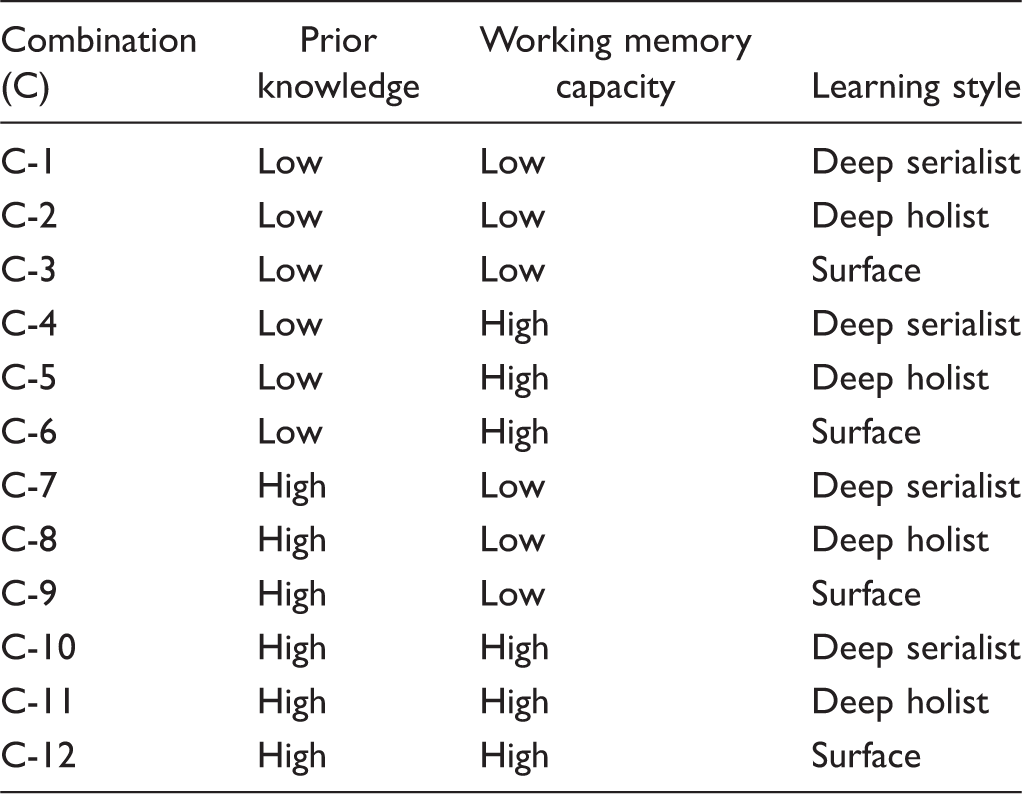
The domain model (DM) captures domain knowledge, English preposition for this study, as depicted in National English Curriculum (of Pakistan) for Grade IX and X. The contents were developed as per each combination of learner’s characteristics shown in Table 1. DM was thus developed defining multiple versions of each concept of English prepositions. Each version provides distinct presentation of the same concept corresponding to combination of different characteristics of learners. For example, low PK and low WMC means the learner has weak PK and weak memory retention abilities, whereas high PK and high WMC means the learner possesses prerequisite knowledge of the subject and good memory retention abilities. Similarly, learner with deep LS prefers well-represented and well-connected concepts while surface learners take narrow view and make use of rote learning. Moreover, learning strategies associated to deep LS such as serialist indicate that learners use facts to build up an understanding, concentrate narrowly on details, and feel comfortable with clear logical structure, whereas holist wants to view broader picture of the topic and prefers to learn by relating concepts with each other. They may not like to read material and do not focus on enough details hence they may experience learning deficiency. Thus, the learner with low PK, low WMC, and deep-serialist LS get LCs which begin with basics of a concept using smaller but well-represented sequentially ordered chunks of domain knowledge emphasizing on learner’s ability to remember usage of grammar constructs. The content development guidelines are depicted as per learner’s characteristics in Figure 2.
Design of adaptive e-learning contents.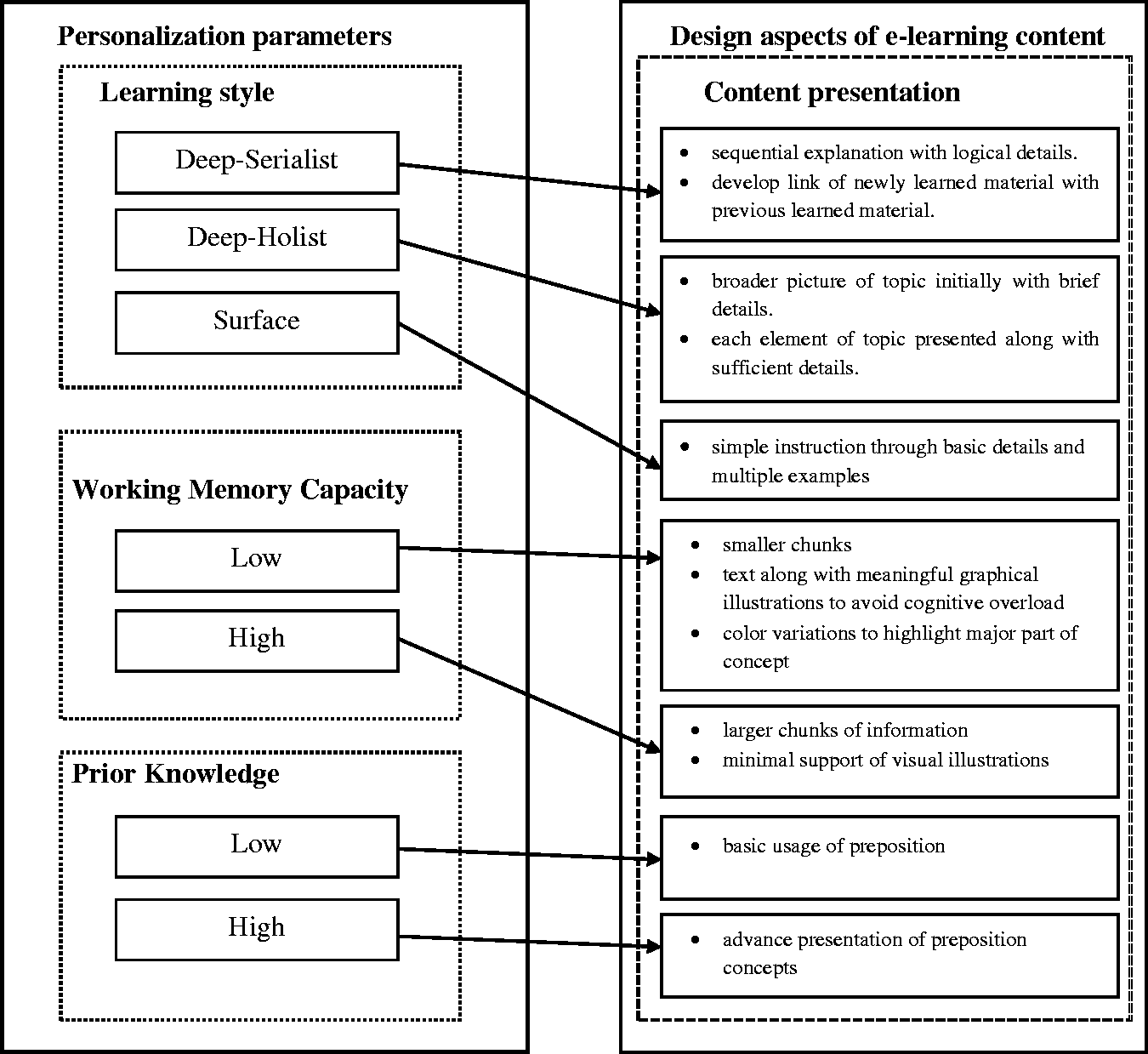
The DM maintains the repository of distinct collection of contents corresponds to all combination of parameters considered in this study along with assessment and feedback material. The DM interacts with other components (Figure 1) of the system in order to carry out adaptive learning functionality. For example, it interacts with AM to deliver personalized learning material, with feedback module to provide feedback as per student learning needs and with evaluation module to offer correct answers.
Student Model
The SM contains information of each student with respect to three selected characteristics that is captured through corresponding tools. The information contained in SM is provided to AM, evaluation module, and feedback module. The SM is further updated by evaluation module based on student performance in assessment material (Figure 1).
Based on the approach discussed in (Germanakos & Belk, 2016), the SM sm of a student si (sm(si)) is composed of cognitive and noncognitive characteristics which consist of triplets of the form (ID, sch, val) where ID is for individual differences which represents combination of cognitive (i.e., cognitive abilities and LSs) and noncognitive characteristics; sch stands for student characteristics which represent student’s noncognitive characteristics (ncc) such as PK and cognitive abilities (ca) and LSs (ls); and val represents the value of each individual characteristic, for example, low or high value for PK, WMC, and deep or surface value for LS. Deep-learning approach further has either serialist or holist tendencies (value). Therefore, student si may have the following SM.
sm (si) = {(ncc, prior knowledge, low), (ca, working memory capacity, low), (ls, deep, serialist)}.
The earlier SM representation shows that si noncognitive characteristic is PK with low value, cognitive ability is WMC with low value, and LS is deep with serialist tendency.
Adaptive Model
The AM is responsible to impart instruction to students in accordance to the information stored in the respective SM. It is a central model which receives inputs from DM and SM to make decision regarding adaptivity. It then generates output for user interface module and present suitable LCs according to the learning needs of diverse learners as shown in Figure 1. The rules adopted from (Germanakos & Belk, 2016) are used (e.g., {(pk, low), (wmc, low), (ls, deep), (deep, serialist)} (content_type, C-1) for the selection of appropriate LCs.
The AM consists of adaptive rules (ARs), collection of learning contents (CLCs), and adaptive engine. AR is a group of all ARs which relate student’s characteristics defined in his or her SM with particular LCs in order to present most suitable contents. Each content belongs to CLCs is in the form of triplets which means the design of content is represented by three values of student’s individual characteristics. The adaptive engine offers suitable LCs for a student si using the SM sm (si) and ARs. The process is shown in Figure 3.
Representation of adaptive model.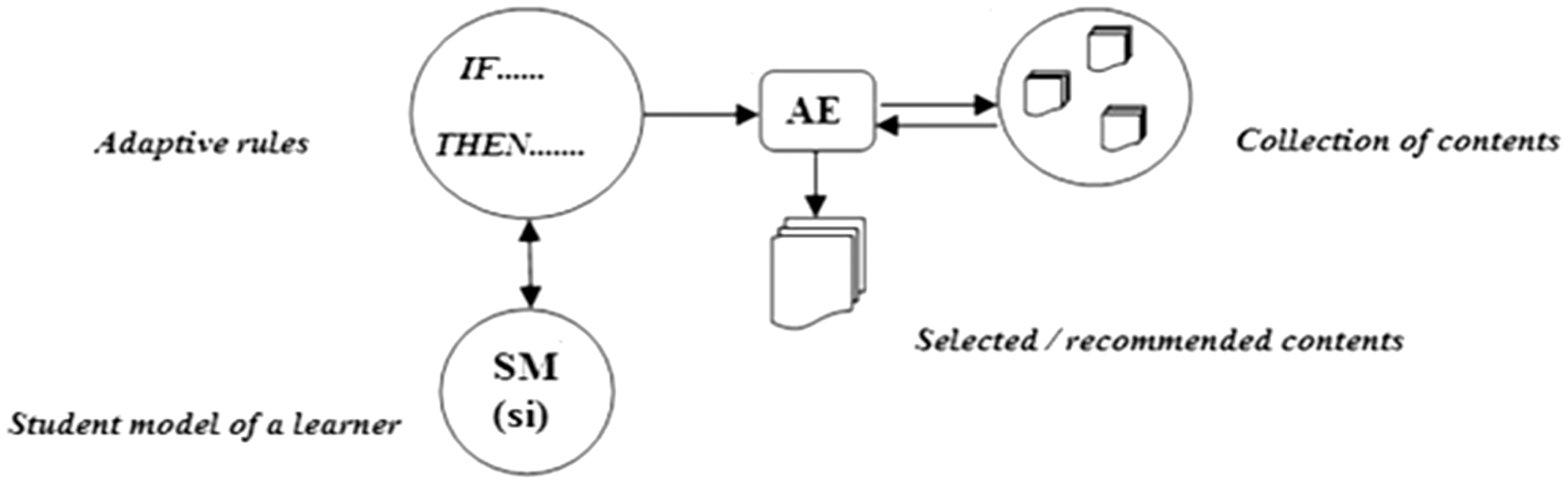
An algorithm adopted from (Germanakos & Belk, 2016) research work takes SM and ARs as an input, to select an appropriate LC from the repository (DM). To perform this, the algorithm tests every AR from the rules base, and if rule fires, then appropriate LC is selected from the CLCs and presented to the learner. Conversely, if test related to AR remains unsuccessful, then system selects no content to present. Further, learning algorithm is used to make it possible for the system to teach preposition concepts (i.e., at, in, and on) in reference to time and place.
The student starts learning through adaptively selected LC which is further personalized according to his or her performance in assessment material. On the basis of student performance, system decides regarding presentation of next knowledge item, partial or complete revision, or brief overview or summary of already learnt knowledge. Finally, upon successful completion of basic concepts, student level of knowledge is updated, and system recommends next level of contents accordingly.
Evaluation Module
The evaluation module calculates students’ performance on the basis of answers given by them to different questions asked during assessment stage. This module gets correct answers from DM and evaluates student’s solution by comparing it with DM answers. The SM is also updated in accordance to assessments made by the evaluation module (Figure 1). So further LC is presented to learner according to his or her performance in assessment material.
Feedback Module
The feedback module interacts with SM, DM, evaluation module, and user interface module. It takes student information such as deep or surface learner from SM. It receives information regarding assessment material from evaluation module, and it gets correct answers from DM to identify desired feedback. Finally, it interacts with the user interface module in order to show appropriate feedback to learners (Figure 1). The feedback is provided to learners in accordance to their learning characteristics. For example, if a surface learner makes mistakes in giving answers s/he gets immediate feedback with detailed messages conveying the reasons behind mistake and asking to reattempt. If response is correct, then the system appreciates the learner with encouraging message. In case of deep learner, the delayed feedback is provided after user attempts all questions. The system shows right and wrong questions with appropriate mark and present short feedback only related to wrong answers which enable deep learner to think out in this regard.
User Interface Module
This module consists of two submodules such as input module and output module. The input module receives inputs from students regarding their cognitive and noncognitive parameters and provides such information to the SM. The input module is responsible to update SM with information related to student’s characteristics (i.e., cognitive and noncognitive) and performance exhibited during assessment stages. The output module interacts with AM and feedback module in order to generate outputs in the form of appropriate LCs and feedback.
Experiment and Evaluation
To evaluate the effectiveness of adaptive learning system, an experiment was conducted in local public schools on the learning activity of English preposition of Grade IX and X. The details of the experiment are as follows:
Field Study
At the initial stage of the experiment, field study was conducted in order to identify learners PK, WMC, and deep or surface LS using respective instruments such as knowledge tool, WMTB-C, and ASSIST. A random sample of (515)—ninth- and tenth-grade students from four local public schools was selected. The students were categorized into low and high PK using threshold value, based on the expert opinion of subject expert. For example, (>15 and <40) marks indicate low PK and (>60) indicate high PK. The students with intermediate results such as between (>40 and <60) were not considered. The incomplete questionnaire mostly with (<15) score were also ignored. WMTB-C automatically categorized learners into low WMC if they completed only two levels and placed into high WMC if all six levels of verbal test were completed. Furthermore, students were categorized into deep serialist, deep holist and surface LS according to the scoring procedure given with ASISST (Entwistle, 1997). The data were processed and analyzed using IBM-SPSS (v. 20).
The classification from low to high in PK and WMC may further be broken into sub or medium levels but scope of this study was limited only to low and high values of PK and WMC. Hence, considering low and high values of PK, WMC, and serialist, holist of deep LS and surface LS, 12 groups (Figure 5) were created out of possible 27 groups. The 12 groups were further bifurcated into control and experimental groups.
The main differentiating factor between control and experimental groups was that the proposed adaptive system delivered content to each experimental subgroup in accordance to their unique combination of learning characteristics. On the other hand, for control group learners, no mapping of contents was considered with regard to individual characteristics. Owing to this, significant better learning performance was expected from the experimental subgroups in comparison to control subgroups.
Participants
There were 184 participants including both male and female. The subjects with identical learning needs or capacities were equally divided into control (n = 92) and experimental groups (n = 92).
Instruments
Summary of Variables.

IV = independent variable; DV = dependent variable; WMC = working memory capacity.
Variables
To answer research questions, it was imperative to state independent and dependent variables. Independent variable was the adaptive learning system based on the combination of characteristic values of PK, WMC, and deep or surface LS. The dependent variables were learning outcome, learning efficiency, retention, and satisfaction as shown in Table 2.
Design of Experiment
Figure 4 indicates template for the design of experiment. The subjects of control and experimental groups were further divided into subgroups with regard to their learning needs. Each subgroup consisted of eight participants with similar learning characteristics. One of the subgroups had only four participants with identical characteristics. A separate learning session was conducted with each subgroup. Time of 1 h and 20 min was allocated to each evaluation session for learning activity. Separate time was allocated for brief training and to complete subjective and objective posttests.
Design of experiment. Sample content for subgroup 1 (low PK, low WMC, and deep serialist).

To minimize the confounding factors, participants in each subgroup, control as well as experimental, were placed based on similar learning characteristics. The learning characteristics were identified directly through standardized tools. It was confirmed by concerned instructors that students placed in each subgroup had almost equal performance in terms of class tests and participation during lectures. Furthermore, they all belonged to more or less similar socioeconomic background. The two subgroups studied the same concepts in similar depth and time.
The difference in teaching approach was that the subgroups of experimental group were given adaptive learning system by providing them with LCs considering their LS, WMC, and domain knowledge. The students of control subgroups, on the other hand, learned the contents in traditional classroom environment through class teacher and using English grammar books or notes. Both control and experimental groups had edge over each other such as experimental group had an advantage of availability of learning material designed specifically considering their learning needs. The learner could revise the concepts as many times as he or she wanted. The students of control group prepared learning material on their own using books but they had the advantage of teacher interaction as they could consult the teacher to clarify their concepts. At the end of the session, both groups were given Posttest 1 immediately and Posttest 2 on the following day. A subjective test was given only to the participants of experimental group in order to know their satisfaction regarding adaptive e-learning system.
Results
Learning Gain
Descriptive Data t Test Result of the Pretest Score.

Control versus experimental Subgroups 1, 2, and 3
The comparison of average score of control and experimental subgroups including Subgroups 1, 2, and 3 is presented in Figure 8. It was hypothesized that students even with low prior subject knowledge, low WMC, and any LS including deep serialist or deep holist or surface can show better learning progress if content is provided to them in accordance to their learning characteristics. The results assured that participants of Experimental Subgroups 1, 2, and 3 were significantly different than participants of Control Subgroups 1, 2, and 3 in Posttest 1 and Posttest 2. These results came mainly owing to the delivery of matched content to learner’s learning capacities and preferences. The design of LC addressed limitations of experimental subgroups in terms of PK and WMC as well as unique learning preference of each subgroup (Table 1) through apposite presentation strategies. For example, content for Subgroup 1 shown in Figure 5 communicates basic usage of English prepositions using simple examples. To cater learner’s low WMC, multiple strategies have been used including smaller chunks, meaningful graphical illustrations, and color variations to underline important parts of the concepts to remember at least main points. At the bottom, a separate block of information present logical details of concept and attempt to connect it with previously learnt material. Similarly, content for Subgroup 2 shown in Figure 6 presents overview of topic and highlights logical relation among concepts to cater learning preference of deep holist. The relevant details are presented further to avoid learning deficiency of holists as they ignore details. The teaching strategies used to support memory issues for Subgroups 2 and 3 are similar to Subgroup 1 as the parameters are same. For Subgroup 3 (Figure 7), contents were designed with simple instructions and basic details, more visual representation, and smaller chunks, keeping in view that surface learners have comparatively low memory trace and overall weak knowledge base than their deep counterparts; for example, words and sentences were used in addition so that memorization of concepts could take place. The delivery of LC eventually helped each subgroup to learn more effectively. The inclusion of practice material with each knowledge item also contributed toward better results.
Sample content for subgroup 2 (low PK, low WMC, and deep holist). Sample content for subgroup 3 (low PK, low WMC, and surface). Performance of control and experimental subgroups 1, 2, and 3.


The system also identified the students about their deficiencies in relation to learnt material and attempted to bridge gap by offering repetition of (partial or complete) learning material that enabled permanent learning. The instant feedback encouraged surface learners toward learning activity.
Regarding learning efficiency, the Experimental Subgroups 1 and 2 took 15 and 18 min less learning time, respectively, as compared with Control Subgroups 1 and 2, due to clear, easy to read, and understand instructions. The Experimental Subgroup 3 took 5 min more to complete learning activity than counterpart control subgroup owing to taking repetitions on content, offered by system based on their low performance in practice material (Figure 9).
Learning efficiency of control and experimental groups.
In contrast, Control Subgroups (1, 2, and 3) studied through standard learning material available in books. The group took more learning time and found the material difficult to understand. In available material, there was no mechanism to regularly assess student’s comprehension regarding studied material, so they forgot most part of the learnt information.
Descriptive Data and ANCOVA of the Posttest 1 Score.

Descriptive Data and ANCOVA of the Posttest 2 Score.

Control versus experimental Subgroups 4, 5, and 6
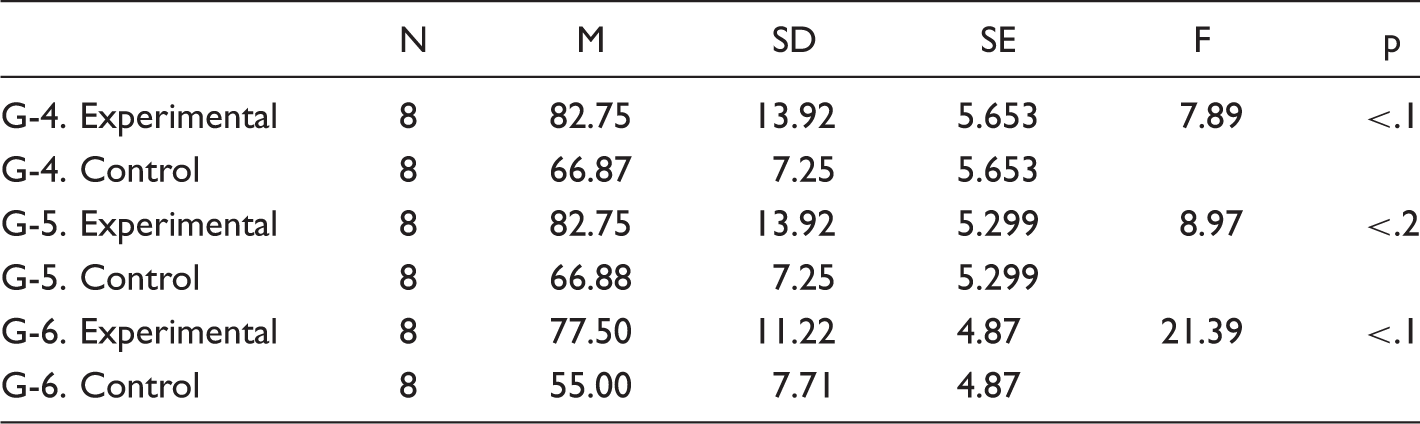
The comparison of average score of control and experimental subgroups including Subgroups 4, 5, and 6 is presented in Figure 10. It was assumed that students with low prior subject knowledge, high WMC, and any LS including deep serialist or deep holist or surface would exhibit better learning performance in exceedingly less learning time when instructions are given to them in accordance to their learning characteristics. The results verified that participants of Experimental Subgroups 4, 5, and 6 performed significantly better than participants of Control Subgroups 4, 5, and 6 in Posttest 1 and Posttest 2. The Experimental Subgroups 4, 5, and 6 took correspondingly 22, 24, and 09 min less (Figure 9) to complete learning activity. The possible reason behind improved learning gain and significant learning efficiency was availability of LCs which address the learning needs of experimental subgroups (4, 5, and 6) in terms of their limitation related to PK, strength of WMC, and specific LS. Hence, each subgroup gained relatively better score and successfully finished lessons in much less time than their counterparts of control subgroups. On the contrary, in traditional environment, students found unmatched contents and they did not have an opportunity to figure out their learning deficiencies and hence practice learnt material and conduct learning activity repetitively.
Performance of control and experimental subgroups 4, 5, and 6.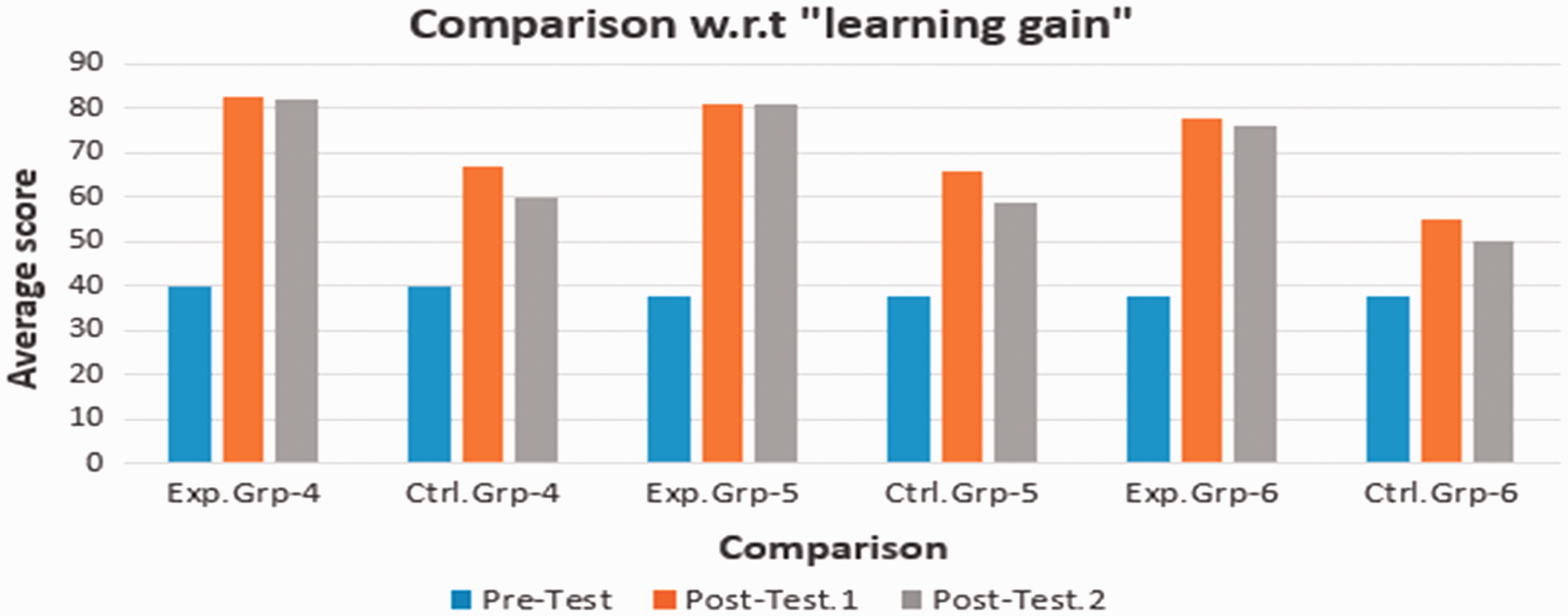
Moreover, the comparison within experimental subgroups showed that the subgroups with high WMC (i.e., Subgroups 4, 5, and 6; Figure 10) learnt in significantly less time relative to subgroups with low WMC (i.e., Subgroups 1, 2, and 3; Figure 8). This impact is mainly due to the availability of learning material (with larger chunks) in accordance to their memory processing capacity. On the other hand, the subgroups with low WMC have gained learning score almost equal to subgroups with high WMC. This occurred due to the provision of LCs which catered and supported learners’ limited memory capacity.
Descriptive Data and ANCOVA of the Posttest 1 Score.
Descriptive Data and ANCOVA of the Posttest 2 Score.

Control versus experimental Subgroups 7, 8, and 9
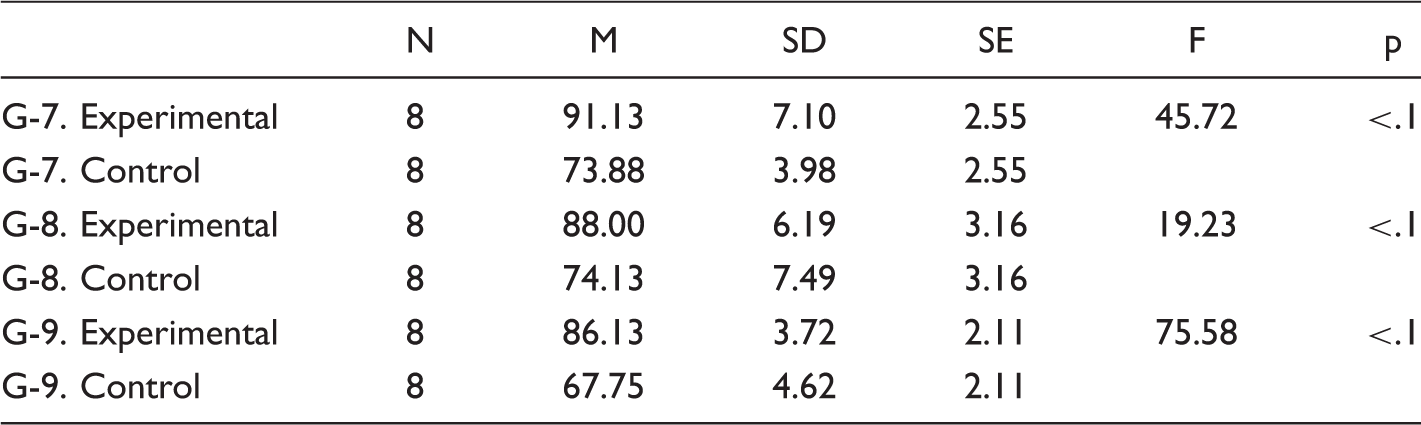
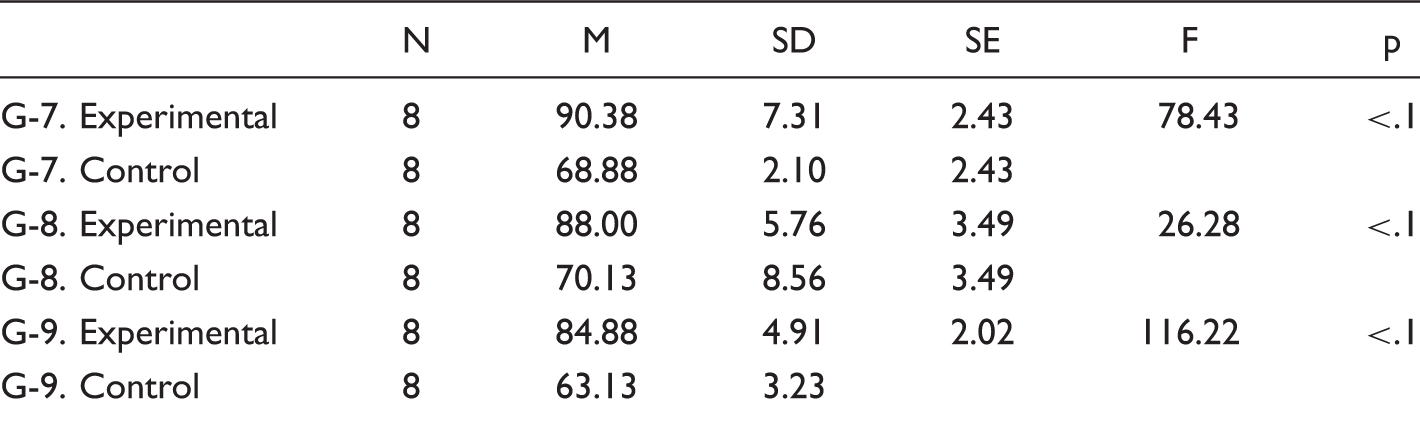
The comparison of average score of control and experimental groups including Subgroups 7, 8, and 9 is presented in Figure 11. The authors hypothesized that learners with high PK but low WMC and any LS including deep serialist or deep holist or surface LS would perform better if learning environment impart them instruction according to their learning. The results confirmed that participants of Experimental Subgroups 7, 8, and 9 were significantly better than participants of Control Subgroups 7, 8, and 9 in Posttest 1 and Posttest 2. The students of Experimental Subgroups 7, 8, and 9 have also outperformed by taking 12, 14, and 10 min less learning time, respectively (Figure 9). The possible reason behind such learning progress was the learning environment’s ability to recommend LCs as per their PK and abilities so they get motivated to learn new information supported by their existing knowledge base. In addition, the design of contents considered learners limitation related to WMC as well as specific learning preferences which further influenced their comprehension. Hence, the proposed approach reinforced learning process by delivering matching LCs to each subgroup, performance-based repetition, and feedback mechanism that was missing in traditional learning environment.
Performance of control and experimental subgroups 7, 8, and 9.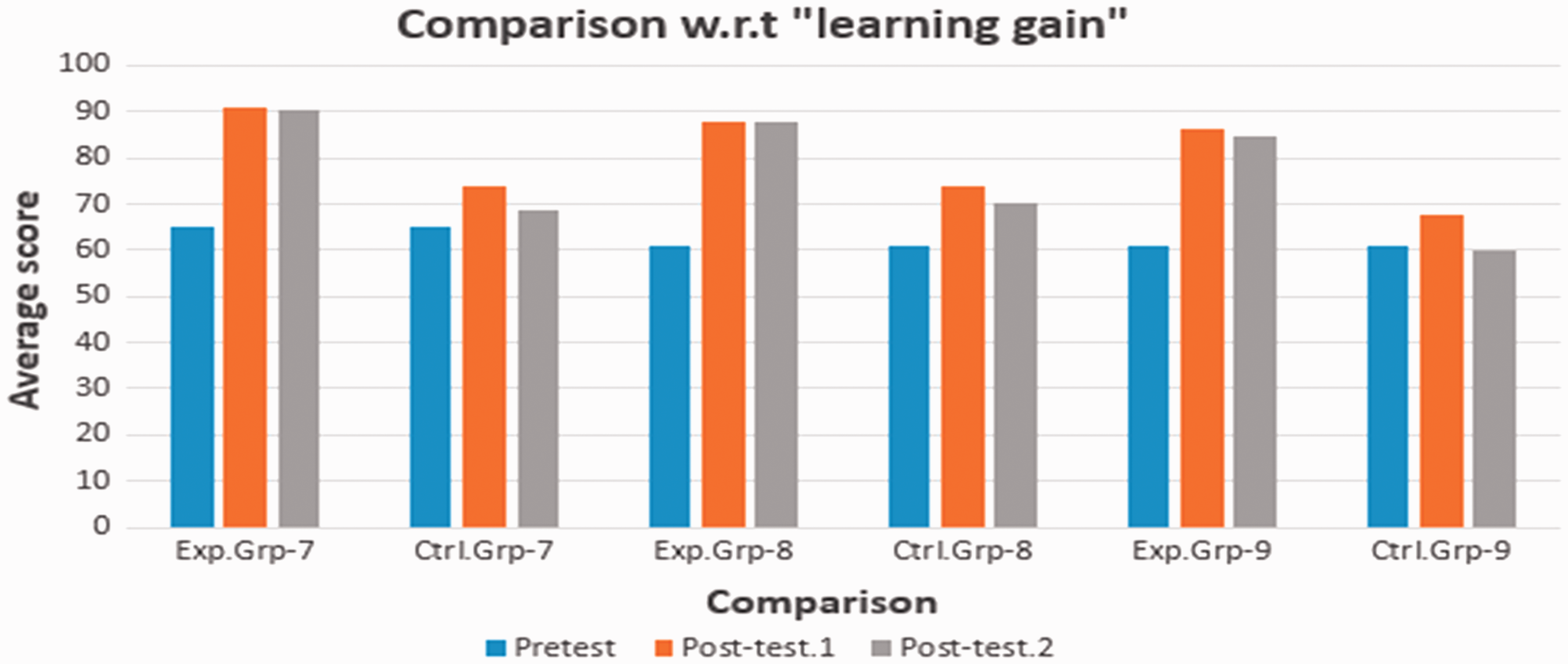
The experimental subgroups (1–9) showed better performance in terms of learning gain and efficiency because each subgroup was served by adaptive learning system in accordance to their unique combination of learning characteristics. Hence, this phenomenon contributed toward improved learning performance. Furthermore, analysis of student feedback related to experimental subgroups (1–9) revealed that majority of the students were satisfied with the proposed learning approach.
Descriptive Data and ANCOVA of the Posttest 1 Score.
Descriptive Data and ANCOVA of the Posttest 2 Score.
Control versus experimental Subgroups 10, 11, and 12
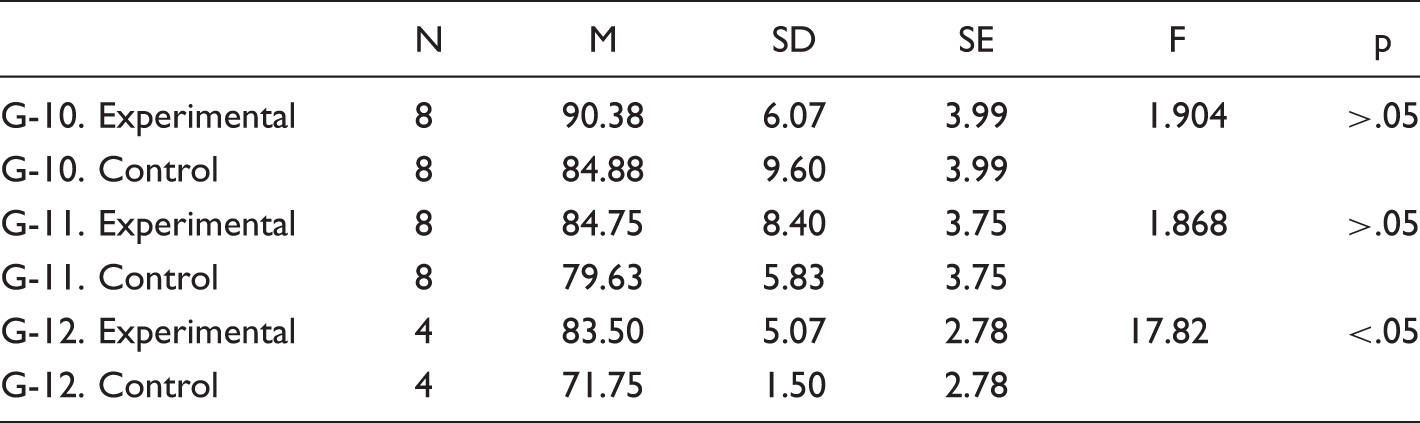
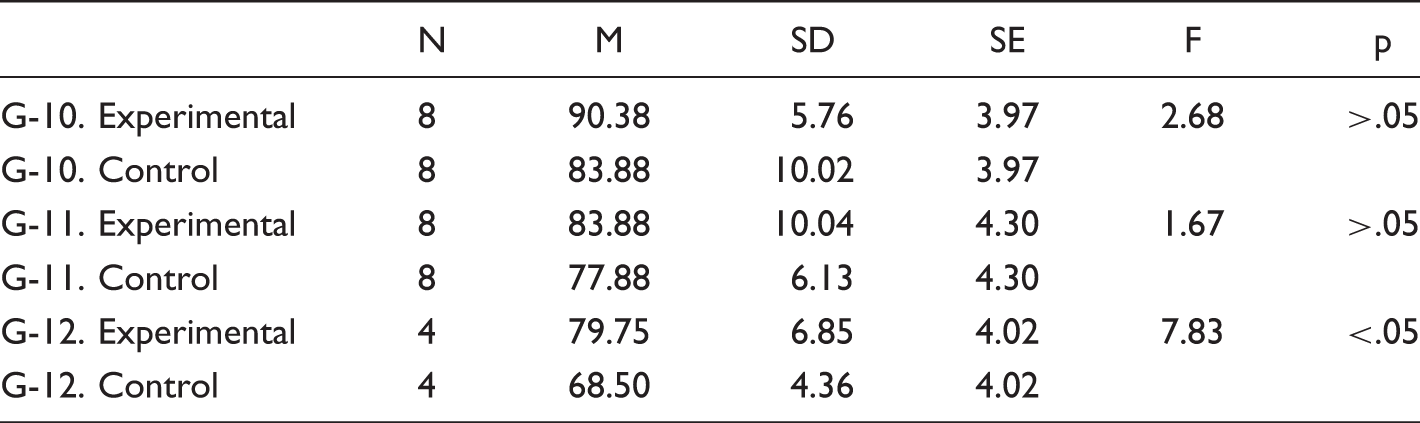
It was expected that adaptive e-learning system could significantly improve the learning performance of learners with high PK, high WMC, and any LS including deep serialist or deep holist or surface by providing them learning material as per their learning characteristics. The results found were contrary to author’s expectation as no significant difference was found in terms of learning performance of Experimental Subgroups 10 and 11 as compared with corresponding control subgroups (Figure 12) in Posttest 1 and Posttest 2. The Experimental Subgroup 12 showed significant difference but it has low number of participants. Furthermore, experimental subgroups also showed minor learning time differences (Figure 9). The possible reason of these results was the deficiency in content to support learners of high cognitive capacities as the participants of both subgroups expressed that it would be better if e-learning system allows them to freely explore course material from different perspectives (e.g., knowledge, application, and creativity) rather than controlled presentation of LC. Moreover, they were not found satisfied with proposed learning approach.
Performance of control and experimental subgroups 10, 11, and 12.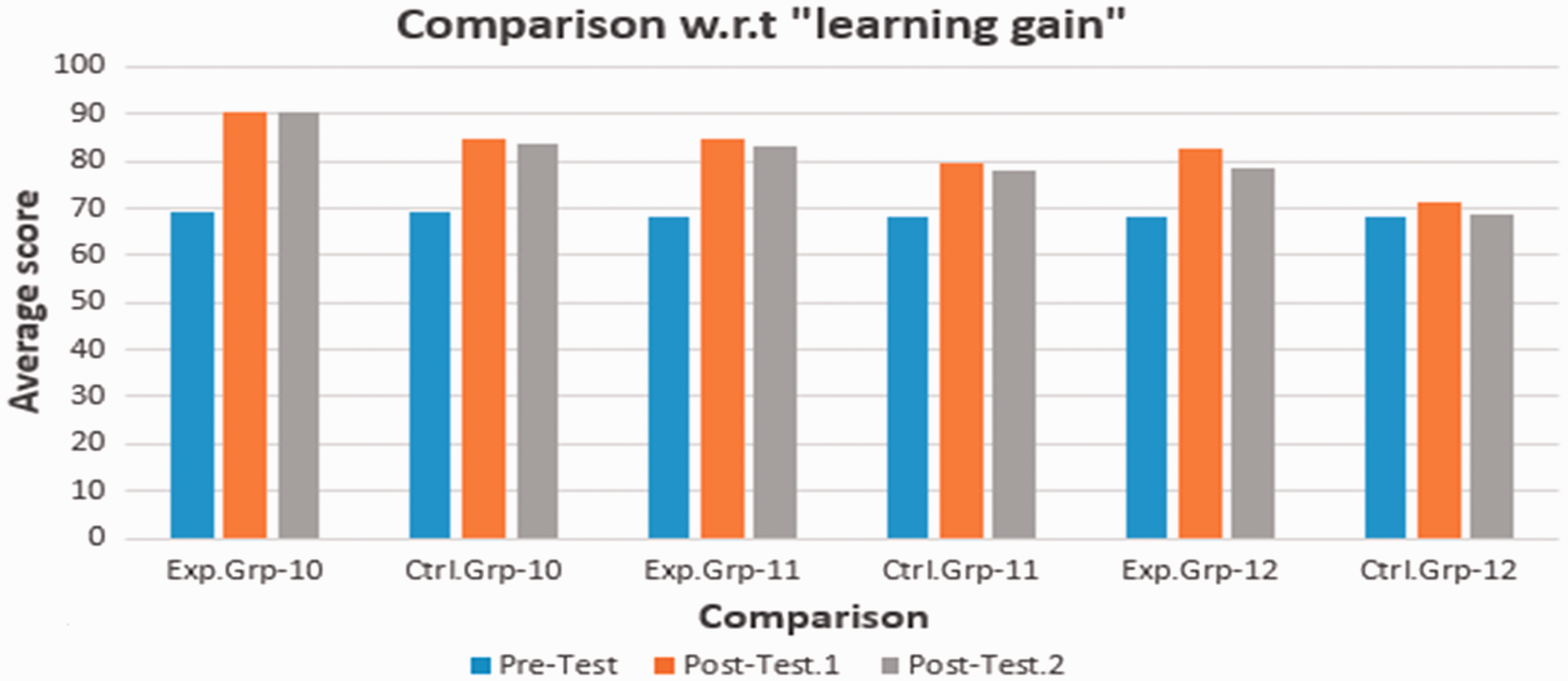
Descriptive Data and ANCOVA of the Posttest 1 Score.
Descriptive Data and ANCOVA of the Posttest 2 Score.
Discussion
Adaptive e-learning has been considered an important and exciting issue of computer-assisted learning technology to enhance learning performance. During the last decade, numerous AESs have been proposed considering cognitive characteristics in order to provide learners with better learning environment. In previous research, learner’s single aspect such as LS models had been used as a source of adaptation while developing adaptive learning systems. In this article, we have proposed an adaptive learning system based on the combination of learner’s characteristics including PK, WMC, and LSs.
Answers of the two research questions were explored in this study. (a) The results specified that in general the students who were provided adaptive LCs considering their combination of individual characteristics such as PK, WMC, and particular LS gained almost 15% more score than their counterparts, who did not have such facility. (b) The results showed that experimental group that learnt through adaptive e-learning system was quite satisfied except few subgroups. Moreover, experimental group showed significantly better understanding and retention of learnt concept by achieving approximately 19% greater score than their counterparts of control group. Furthermore, the participants of control group on average showed 6.5% loss of learnt information, whereas subjects of experimental group lost tiny information (i.e., 1.4%).
The system help improved the learning score of experimental subgroups. In terms of learning efficiency, the experimental subgroups also showed better performance. The greater difference came from the adaptive delivery of easy to read, understandable, and clearly written instructions in accordance to different combinations of their three learning characteristics. The participants of control subgroups received standard contents which were not designed as per their learning needs. This phenomenon showed that all learners have ability to learn so if instructions are provided to them, according to their capabilities, they can exhibit better learning performance.
In particular, the comparison of Experimental Subgroups (1, 2, and 3) with Experimental Subgroups (4, 5, and 6) showed that learners with high WMC can process much information in less time if they had opportunity to work at their pace. Similarly, results showed that by adaptive learning, learners even with low WMC can gain score at par to high WMC learners that is consistent to the findings of (Tsianos et al., 2009, 2010) research.
The results from appraisal rating showed that overall students of experimental subgroups were satisfied with adaptive learning system. They enjoyed the learning experience as the content was easy to read, comprehend, and relevant to their learning needs. They felt that this approach is better than simply listening to lecture contents. Revision of previously learnt material helped them understand and retain concepts on long-term basis. The indications of students’ satisfactory learning experience are identical to the evaluation results of INSPIRE (Papanikolaou et al., 2003).
The success of proposed approach is attributed to different combinations of aforementioned variables. It is collective impact of combination of learner characteristics. The results are similar to the finding of (Durrani & Durrani, 2010) which indicated that provision of LC on the basis of PK and cognitive abilities have better impact on student learning rather than only PK. Similarly, Yang et al. (2013) research also confirmed that multiple sources of personalization have better impact on student learning outcome.
On the other hand, proposed approach was found to be unsuccessful in improving learning performance of experimental subgroup with characteristics such as (a) high PK, high WMC, and deep serialist (b) high PK, high WMC, and deep holist. They did not find learning material much effective. They also did not appreciate other features used in proposed approach. To some extent, these results are consistent to the results from ELM-ART (Weber & Specht, 1997) and Flores, Ari, Inan, and Arslan-Ari (2012) research which revealed that novice students benefitted more from adaptive learning than advance learners. This is most probably due to the opportunity for novice learners to learn at their own pace, facility to practice learnt material, feedback mechanism, and adaptive support which boost their learning progress.
However, this study has confirmed that addressing student’s weaknesses, utilizing their strengths, and meeting learning preferences through adaptive learning approach can equally enhance the learning performance of diverse students.
Conclusion
The adaptive learning systems are beneficial for students as they address their individual differences while imparting learning material. From the evaluation results, it can be viewed that adaptive learning approach based on combination of PK, WMC, and LS is promising which imply that on the basis of proved concept, further systems could be developed for different subject domains. Although the results are promising, there are some limitations of study that needs to be handled and some further possibilities should be explored. First, this empirical study did not assess learning one by one, for example, first see learning outcomes based only on PK and keep other constants, then WMC and keep other constants and so in order to know that which parameter is most effective and which is least effective. So, further research needed to examine comparative effect of each parameter with combined approach impact to recommend most effective parameter(s). Second, the proposed approach mainly benefited the students with low PK and memory capacities having any LS than students with high PK and memory capacities along with deep LS. It therefore requires mechanism to explore and integrate strategies in the design of adaptive e-learning system which would benefit learners’ with high capabilities. Third, this study incorporated small scale of population and limited LCs. Hence, it is suggested that future studies should be carried out using large-scale samples and LCs to provide further evidence. Lastly, the present study emphasized on the combination of PK, WMC, and LS to impart instruction, some other important parameters including background, competence level, and affective states should also needs to be considered in future research.
Footnotes
Declaration of Conflicting Interests
The authors declared no potential conflicts of interest with respect to the research, authorship, and/or publication of this article.
Funding
The authors received no financial support for the research, authorship, and/or publication of this article.