



Abstract
Abstract
The extended constructs of technology acceptance model (TAM) have rarely been linked to psychological influence factors. This study complements for the missing link in literature through structural equation modeling and a nonparametric Mann–Whitney U test based on the data obtained from a large-scale questionnaire survey. It is concluded that (a) conformity behavior can be integrated into the TAM to establish a fit model in WeChat use in language learning at the significance level .05, (b) self-esteem can be integrated into the TAM to establish a fit model in WeChat use in language learning at the significance level .05, and (c) there are no significant gender differences in the extended constructs in the TAM in WeChat use in language learning at the significance level .05. Future research may extend the constructs further in psychology in order to complement for missing links in current literature. It is also promising to establish a sociocultural TAM with respect to mobile device acceptance in both western and eastern contexts.
WeChat, developed by Tencent, is a communicative app designed for multiple purposes such as text messaging, voice transmitting, video sharing, and mobile payment. WeChat has been increasingly popular around the world (G. Wang et al., 2019). However, WeChat is the app that is mainly used in China. Since its birth in 2011, it has become the largest independent mobile communicative tool measured by the number of monthly active users (Custer, 2016). Meanwhile, service plug-ins in WeChat such as “shake a shake,” “floating bottle,” “circle of friends,” “public platform,” and “voice notebook” can also be used by sharing media contents and location-based social plug-ins (Ding et al., 2019). Language learners can also learn a language through its multiple functions, which can be easily installed on any kind of smart phones.
Recent decades have been witnessing wide use of WeChat in education, such as information literacy learning (Guo & Huang, 2020), stomatology pedagogy (Gao & Li, 2020), architectural drawing courses education (S. Zhang, 2020), and obstetrics and gynecology teaching and learning (J. Lu & Dai, 2020). Yan and Yan (2020) discussed theory and practice of WeChat-assisted instruction. However, relatively fewer studies have been committed to WeChat-assisted language learning in the world. The multiple functions of WeChat are conducive to language learning.
As a popular mobile technology, WeChat, except for its multiple functions, can not only assist learning but also facilitate the communication between teachers and students (J. Zhang & Wang, 2014). Recordings of various languages can be saved in WeChat, to which learners can have frequent access and teachers can provide instant feedback. WeChat is beneficial to foreign language learning (L. S. Sun & Zhang, 2014) and English language listening and speaking skills (Cai, 2014). Although numerous studies have been conducted on the use of WeChat in language learning, few of them have been devoted to the technology acceptance of and gender differences in WeChat use in language learning (Y. N. Wang et al., 2018). We will identify the main research themes in WeChat in order to confirm the direction of this study.
Main Research Themes in WeChat
To determine the major research themes, we obtained 473 results by searching Web of Science Core Collection with the title WeChat. After screening the irrelevant results, we finally selected 420 publications for analysis. We saved the selected results in the form of all records plus cited references. The data were then entered into CiteSpace 5.3.R8 for further analysis. The network was then divided into 14 co-citation clusters (see Figure 1
Major Clusters.
The largest cluster (#0) has 42 members and a silhouette value of 0.712. It is labeled as technology acceptance by log-likelihood ratio (LLR) tests, WeChat by term frequency-inverse document frequency (TFIDF). The most active citer to the cluster is 0.1941 (L. S. Chen et al., 2017). In this article, the technology acceptance model (TAM) was extended to include guanxi as a construct in a Chinese WeChat-based context (L. S. Chen et al., 2017). Construct was operationally defined as an element in TAM in this study.
The second largest cluster (#1) has 22 members and a silhouette value of 0.86. It is labeled as college student by LLR, WeChat by TFIDF. The most active citer to the cluster is 0.5561 (Y. Chen, 2017). Y. Chen (2017) revealed that entertainment and recognition could influence political engagement through the use of WeChat, and the use of WeChat and news browsing were positively correlated with political engagement through WeChat.
Based on the first two biggest clusters, we can determine that the major research into WeChat is devoted to its technology acceptance among Chinese college students, while gender differences in the constructs of the TAM have experienced fewer studies. Therefore, this study aims to extend the learning TAM of WeChat by adding new psychological constructs. Their gender differences will also be studied. To achieve this goal, it is necessary to introduce Psychological Influence Theory.
Psychological Influence Theory
Psychological Influence Theory is operationally defined as the theory that formulates the psychological factors influencing the TAM in the use of WeChat. Numerous studies have identified several psychological influence factors, for example, cognitive perception (Mohd Suki et al., 2008), teachers’ continuance (Yim et al., 2019), psychological ownership (Q. Zhao et al., 2016), and psychological needs (Partala & Saari, 2015). Nevertheless, psychological constructs such as conformity behavior and self-esteem have seldom been examined in the learning TAM of WeChat. It is thus necessary to investigate both psychological constructs.
Literature Review
Prior Works on WeChat in Language Learning
Most of works on WeChat supported its use in language learning. Recently, numerous studies have been devoted to use of WeChat in language learning, especially in China, such as the application of WeChat platform in language learning (H. Sun & Wang, 2019; Z. Wang, 2015; N. Zhang & Li, 2019), the use of WeChat among college students (X. Zhao & Liu, 2016), and the use of WeChat in English listening and speaking (Pan & Wu, 2015; Pan et al., 2016). On the other hand, motivation and attitude of students were explored in WeChat supported language learning (Cheng, 2019), which argued that WeChat could improve student motivation and attitudes.
With the rapid development of information technology, mobile learning via WeChat was also discussed in order to explore its optimal path to achieve success in language learning (Y. Wang, 2019). Vocabulary mobile learning proved effective assisted with the WeChat platform (H. Xu, 2015). In addition, due to the multilingual context in China, a few studies focused on multilingual learning, minority language and second language learning via the WeChat platform. It was argued that the WeChat platform could facilitate minority language learning (J. Xu & Liu, 2018), multilingual learning (Z. Zhang & Jiang, 2018), and second language learning (Li & Wei, 2017). Considering the large number of relevant studies in China, it is meaningful to explore the constructs of TAM in WeChat-assisted language learning, especially in the Chinese context.
Constructs in the Extended TAM
Many studies have extended the original TAM by including many constructs. To determine the impact of learning styles on student satisfaction and e-learning technology acceptance, Al-Azawei et al. (2017) extended the TAM by increasing more constructs such as self-efficacy, perceived satisfaction, and learning styles. This extended model was demonstrated fit, although no significant psychological differences were revealed in student satisfaction and e-learning technology acceptance (Al-Azawei et al., 2017).
Abdullah and Ward (2016) identified the most commonly used external factors of TAM, that is, self-efficacy, subjective norm, enjoyment, computer anxiety, and experience. They also identified the effect of these factors on students’ perceptions of e-learning and finally proposed a General Extended TAM for E-Learning. This model included the constructs of perceived ease of use, perceived usefulness, self-efficacy, enjoyment, experience, computer anxiety, and subjective norm.
Under the theoretical framework of social cognition and model of personal computer use, Atif et al. (2015) proposed an extended TAM including the constructs of perceived usefulness, perceived ease of use, attitude toward technology use, intention to use technology, social influence, unit guide specific self-efficacy, and unit guide specific anxiety. This study, aiming to include conformity behavior and self-esteem in the TAM, is meaningful in WeChat-assisted language learning.
Conformity Behavior
Conformity behavior is operationally defined as the behavior that users of apps tend to follow others or the phenomenon that their behaviors are greatly influenced by others. Cultural conformity is operationally defined as the phenomenon that learners, influenced by the culture, tend to keep in conformity with others in a given context. Cultural conformity tends to appear once individuals would like to share their own cultural characteristics with peers and people in the same community (Boyd & Richerson, 1985). It is usually contributed to by a conformist bias (Boyd & Richerson, 1985), which often occurs while individuals choose different behaviors from those who prefer to keep in conformity with the majority. Conformity may lead to shared selection in groups due to its importance in complicated cultural behaviors (Boyd & Richerson 1992). Cultural conformity has been devoted to cultural traits directly contributing to foraging techniques (Henrich & Boyd 1998). Conformity behavior was then considered the most effective strategy when the individual behavior was in conflict with the common one (Lachlan et al., 2004).
Conformity brings a simple and unified learning regulation, which provides an economic shortcut where individuals do not need to monitor their own performances (Henrich & Boyd, 1998). Nevertheless, conformity may decrease beneficial innovations, limit cultural diversity, and inhibit cultural evolution (Kandler & Laland, 2009). Users of technology most likely adopt the conformity strategy by using the same technology as peers do in order to avoid conflicts, follow the majority, and find an economic shortcut to communicate with others. However, very few studies explored the influence of conformity on use and effect of WeChat in language learning, especially in China. The first research question in this study is thus “is conformity an influencing factor in the TAM of WeChat use in language learning?”
Self-Esteem
Self-esteem was operationally defined in this study as a sort of attitude toward an individual or a person’s general subjective emotional assessment of his or her own value. Self-esteem involves beliefs about oneself and emotional status such as success, disappointment, pride, and shame (Hewitt, 2009). It was defined by Smith and Mackie (2007) as the self-concept or feelings about oneself, and it could be either positive or negative assessment of oneself.
Self-esteem is deemed as an element of sociopsychology since it is able to exert an influence on academic achievement (Marsh, 1990; Yagual, 2015), happiness (Baumeister et al., 2003), satisfaction in marriage and relationships (Orth & Robbins, 2014), and criminal behavior (Orth & Robbins, 2014). Self-esteem can be used to measure either a global or a specific dimension. Self-esteem has, however, never been measured as a factor influencing the acceptance of technology, let alone the TAM of WeChat in language learning. The second research question in this study is thus “is self-esteem an influencing factor in the TAM of WeChat use in language learning?”
Gender Differences in the TAM
Gender differences in the TAM were an important issue, which had attracted much attention of researchers in attitudes toward technology (Maican et al., 2019). Male teachers were significantly more interested in technology, more confident in technical skills and more enthusiastic about technology use than females (Anderson et al., 2008). Female teachers expected to encounter more difficulties or challenges in technology used in education than males (Teo et al., 2015). No significant gender differences were, however, found in collaboration frequency of application use (Maican et al., 2019).
Gender differences in the TAM and its extensions have hardly been discussed and studied. In view of the sparse studies and inconsistent findings, it is necessary to determine gender differences in the extended TAM in language learning. The last research question is “are there significant gender differences in the extended constructs in the TAM in language learning?”
Research Objectives
The first research objective is to determine whether the extended constructs of conformity behavior and self-esteem fit the model. In other words, the study aims to establish another extended fit TAM in the use of WeChat in language learning. The second research objective of this study is to identify gender differences in the constructs of the extended TAM in language learning.
Research Hypotheses
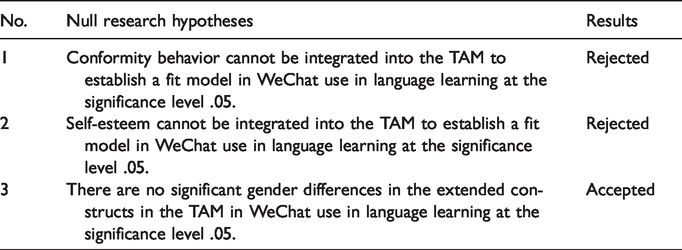
The proposed three null hypotheses are (a) conformity behavior cannot be integrated into the TAM to establish a fit model in WeChat use in language learning at the significance level .05, (b) self-esteem cannot be integrated into the TAM to establish a fit model in WeChat use in language learning at the significance level .05, and (c) there are no significant gender differences in the extended constructs in the TAM in WeChat use in language learning at the significance level .05.
Research Methods
We obtained consents from all the participants. The study was rigidly designed to answer research questions and test research hypotheses. This methodology part includes participants, research instruments, as well as research procedure.
Participants
We randomly selected the participants based on both inclusion and exclusion criteria. The inclusion criteria are: (a) the participants who came from Faculty of Foreign Studies in the University in China, (b) the participants who majored in languages, (c) the participants who were all skilful at WeChat, (d) the participants who were voluntary to join the research and signed the consent forms, (e) the participants who received language education for more than 10 years and they also learned a language assisted with WeChat for at least one year before they joined the survey, and (f) the participants who have used WeChat to learn a language for no less than 1 year.
The exclusion criteria were as follows: (a) the participants who were not voluntary to join the research or refused to sign the consent forms, (b) the participants who were unable to correctly and completely fill in the questionnaires, (c) the participants who were not familiar with use of WeChat, for example, those from remote places in China, and (d) the participants who have used WeChat to learn a language for less than 1 year.
Participants, in a reputable university of China, were randomly selected from undergraduate students majoring in languages, ranging from 17 to 23 years old (SD = 1.68, M = 21.12). Chinese is their first language. Females (N = 373) outnumbered males (N = 308) in the study because more females than males select languages as their majors. They could frequently communicate with each other via WeChat. They all received language education for more than 10 years and signed the consent form to participate in the study. We informed them that the data obtained from the questionnaire would merely be used nowhere but in this study.
Research Instruments
Research Instruments.
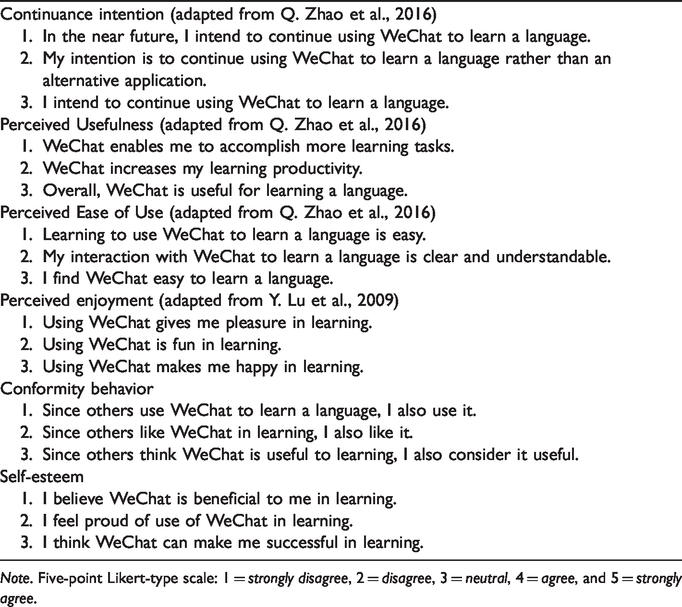
Note. Five-point Likert-type scale: 1 = strongly disagree, 2 = disagree, 3 = neutral, 4 = agree, and 5 = strongly agree.
Face Validity
The research instruments appear to be a measure of the constructs of continuance intention, perceived ease of use, perceived usefulness, perceived enjoyment, conformity behavior, and self-esteem. They also appear to identify the construct among the sample of the target population. Participants could also easily understand the questions they are required to answer.
Content Validity
We revised Q. Zhao et al.’s (2016) scales to measure continuance intention, perceived usefulness and perceived ease of use, and revised Y. Lu et al.’s (2009) scales to measure perceived enjoyment, conformity behavior, and self-esteem. The contents were rigidly designed and cross-examined by researchers. To ensure the content validity, we also conducted a test of internal reliability.
Internal Reliability
The study will firstly determine the internal reliability of the constructs. The term reliability, referring to the global consistency of measurements of variables, is often used in statistics and psychology. A measure will be considered highly reliable if statistically insignificant results are produced under consistent conditions. Highly reliable results could be duplicated and remain similar in different testing conditions. The reliability coefficients, for example, Cronbach’s alpha, ranging from 0.00 (unreliable) to 1.00 (reliable), may be used to indicate the degree of reliability of measurements (Carlson et al., 2009).
In the field of statistics, internal consistency is an important measure to identify if different items produce consistent results on the basis of the correlations of different variables or different subscales in a large scale. It determines whether several subscales can produce consistent results. It also measures whether different scales used to measure the same construct can contribute to consistent results. The degree of internal consistency tends to be determined by computing Cronbach’s alpha, which is a measure to calculate the result based on pairwise correlations. On condition that within-subject variability is significantly greater than between-subject variability, the value of Cronbach’s alpha tends to be negative (Knapp, 1991).
A generally acknowledged rule to describe the internal consistency is divided into six levels: excellent (.9 ≤ α), good (.8 ≤ α < .9), acceptable (.7 ≤ α < .8), questionable (.6 ≤ α < .7), poor (.5 ≤ α < .6), and unacceptable (α < .5) (George & Mallery, 2003). In this study, the value of Cronbach’s α is .87, which is computed from the data obtained from the six research instruments. This reaches the good level. The data are thus considered internally reliable.
Construct Validity
As mentioned earlier, the scales used in this study could adequately measure the corresponding constructs. Concepts of the constructs are transient, abstract and theoretical; we carefully observed and measured them in practice so as to minimize the random errors.
We firstly assessed the model fit with the data using well-established criteria before we used a WarpPLS structural equation modeling (SEM) model to identify the correlations between six specific constructs. To select the correct analysis program, we determined the data distribution via a one-sample Kolmogorov–Smirnov Test. After this, a nonparametric Mann–Whitney U test, which does not require normal distribution, was conducted to determine gender differences in the constructs.
Test–Retest Reliability
We made every effort to improve test–retest reliability. When designing the question items, we tried to rely on previously reliable ones and tried to revise them in order to reduce the possibilities of being influenced by mood, personality, or other factors of participants. In the process of data collection, we tried to avoid the external influence and ensure all of the participants joined the research under the same condition. We seriously tried to minimize the changes that might occur to the participants over the research procedure.
All the scales were followed by a 5-point Likert-type scale, ranging from strongly disagree to strongly agree, scoring 1 to 5 points for corresponding choices, respectively (see Table 1). As shown in Table 1, we used the scales to measure continuance intention, perceived ease of use, perceived usefulness, and perceived enjoyment adapted from previous works. As for the measurements of conformity behavior and self-esteem, we rigidly designed the scales on the basis of the features of constructs. Reliability of all the scales will be tested in order to improve the reliability of the obtained data.
Research Procedure
The research procedure started from WeChat-assisted language learning, a comprehensive questionnaire survey to analyzing data obtained from six scales (see Figure 2
Research Procedure.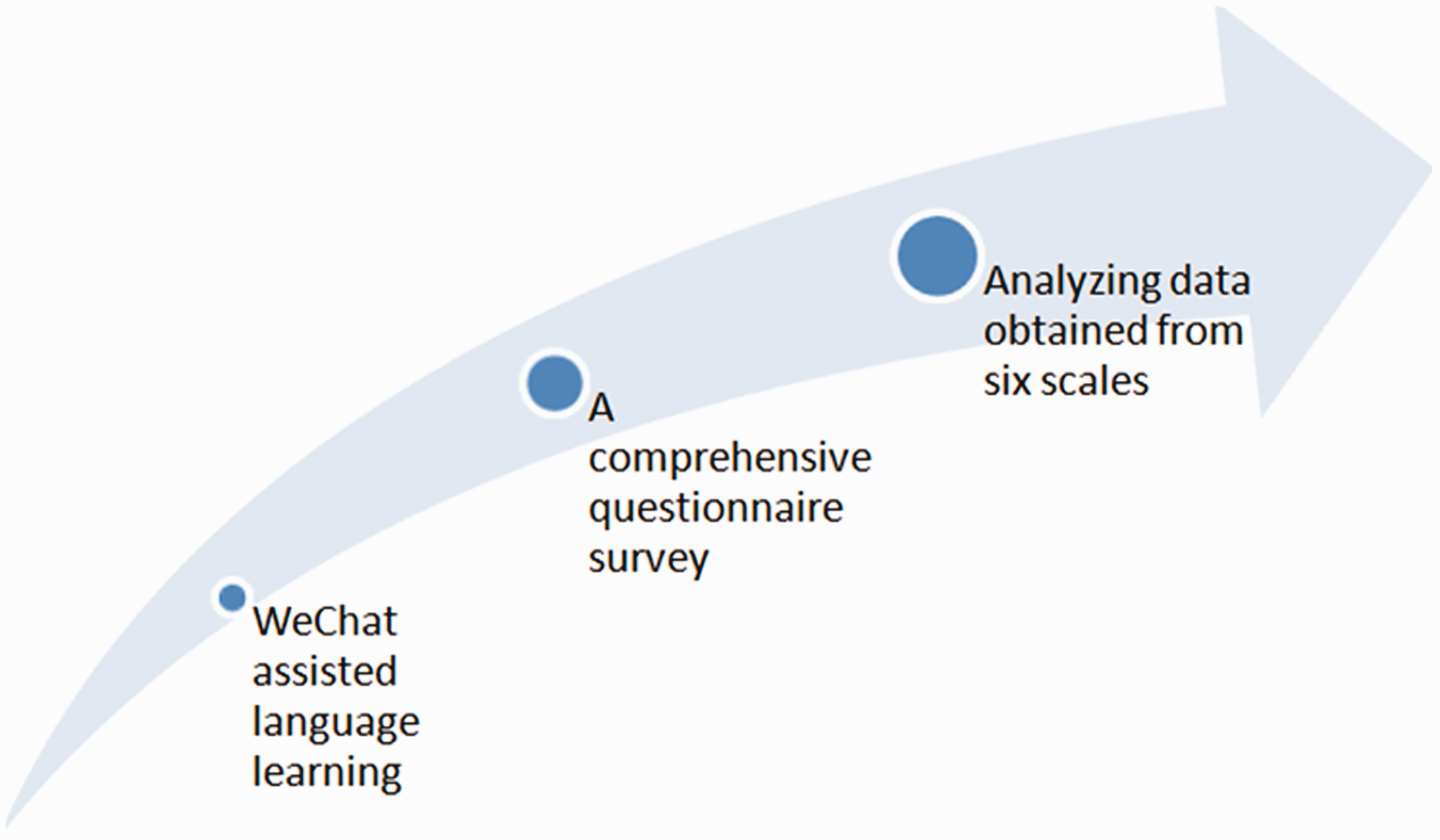
After the WeChat-assisted language learning, the selected participants were required to join a comprehensive questionnaire survey. The questionnaire including the abovementioned six scales to identify six constructs was administered to a total of 712 respondents at the university through the online questionnaire collection system. Participants, all of whom had smart phones, could complete the questionnaire conveniently on their smart phones. We provided awards to each participant who completed the questionnaire in a proper manner. We set that each smart phone could merely complete one questionnaire in order to avoid invalid repetitions. The response time was limited to 2 weeks. In total, we collected 701 questionnaires. We then deleted some invalid questionnaires due to either information incompleteness or homogeneous answers (e.g., choosing the same answer all the time). We finally obtained 681 valid questionnaires for further analysis. The sample size is thus 681. The valid response rate is 95.6%.
Results
Test of the Model Fit
To test the fitness of the TAM extended with conformity behavior and self-esteem, data collected from the six scales were entered into WarpPLS 5.0 for model analysis. A WarpPLS model was assumed where the correlations between continuance intention, perceived ease of use, perceived usefulness, perceived enjoyment, and the extended constructs of conformity behavior and self-esteem were formulated.
When we assess the model fit with the data, the following criteria are recommended. Specifically, the acknowledged criteria (Kock, 2015) are average path coefficient (APC) = 0.250, p < .001; average R-squared (ARS) = .505, p < .001; average adjusted R-squared (AARS) = .503, p < .001; average block variance inflation factor (AVIF) = 2.476 (acceptable if ≤5, ideally ≤ 3.3); average full collinearity VIF (AFVIF) = 2.110 (acceptable if ≤ 5, ideally ≤ 3.3); Tenenhaus GoF (GoF) = 0.711 (small ≥ 0.1, medium ≥ 0.25, large ≥ 0.36); Simpson’s paradox ratio (SPR) = 1.000 (acceptable if ≥ 0.7, ideally = 1); R-squared contribution ratio (RSCR) = 1.000 (acceptable if ≥0.9, ideally = 1); statistical suppression ratio (SSR) = 1.000 (acceptable if ≥0.7); and nonlinear bivariate causality direction ratio (NLBCDR) = 1.000 (acceptable if ≥0.7).
The formulated model is considered fit and quality indices are considered acceptable (p ≤ .05 for the APC, ARS, and AARS) (Kock, 2015). Furthermore, in this study, AFVIF is 2.110, which is acceptable since the acceptable VIF is equal to or less than 5 (Kock, 2015); GoF is 0.711, which is highly acceptable since explanatory power of a model is considered highly acceptable if GoF ≥ 0.36 (Kock, 2015); SPR is 1.000, which is perfect since it is ideally accepted if SPR = 1, so are RSCR, SSR and NLBCDR (Kock, 2015).
It is revealed from Figure 3
A WarpPLS SEM Model. CI = continuance intention; PEU = perceived ease of use; PU = perceived usefulness; PE = perceived enjoyment; CB = conformity behavior; SE = self-esteem.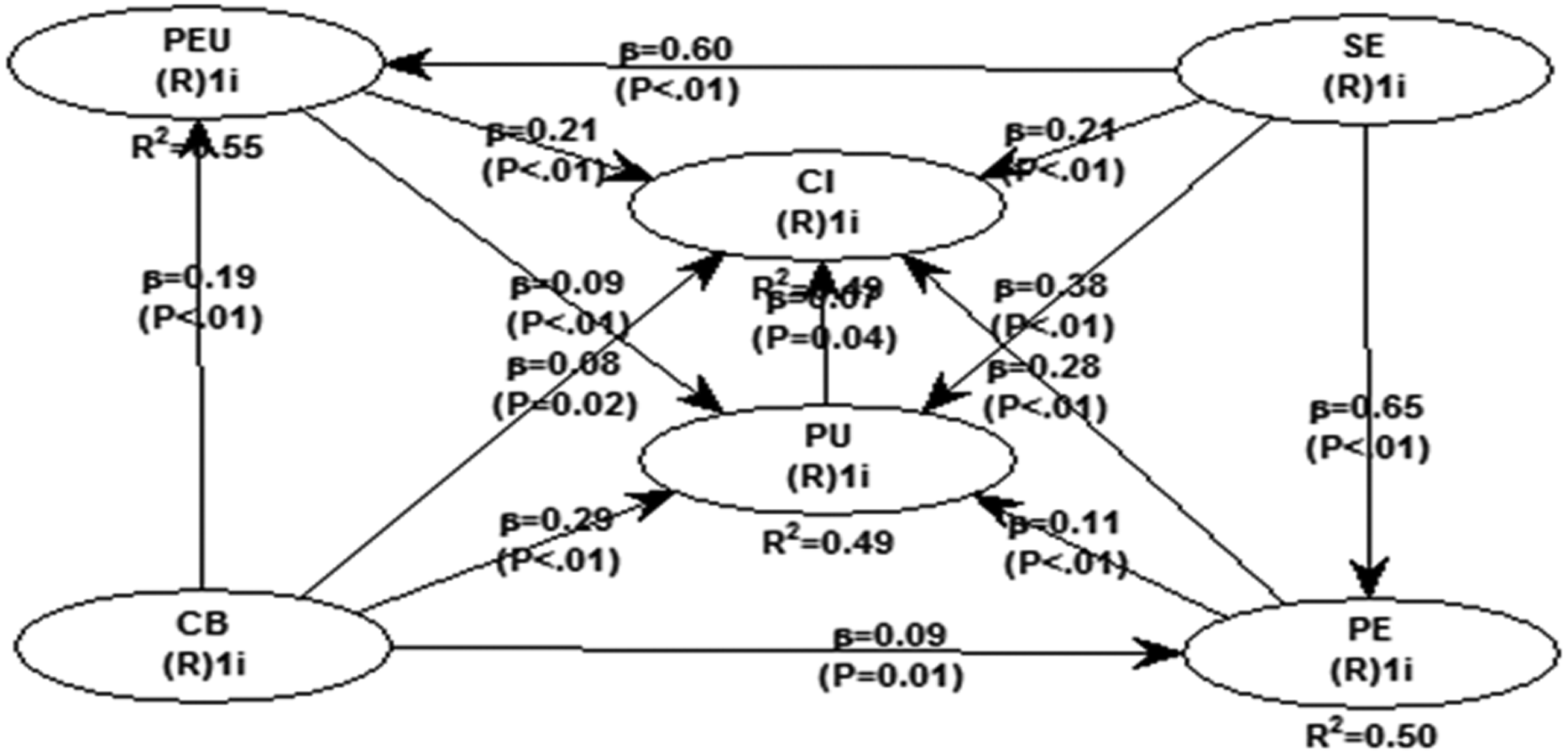
As a result, we rejected the null hypotheses: (a) conformity behavior cannot be integrated into the TAM to establish a fit model in WeChat use in language learning at the significance level .05 and (b) self-esteem cannot be integrated into the TAM to establish a fit model in WeChat use in language learning at the significance level .05. We accepted the first two alternative research hypotheses: (a) conformity behavior can be integrated into the TAM to establish a fit model in WeChat use in language learning at the significance level .05 and (b) self-esteem can be integrated into the TAM to establish a fit model in WeChat use in language learning at the significance level .05.
Gender Differences
One-Sample Kolmogorov–Smirnov Test.
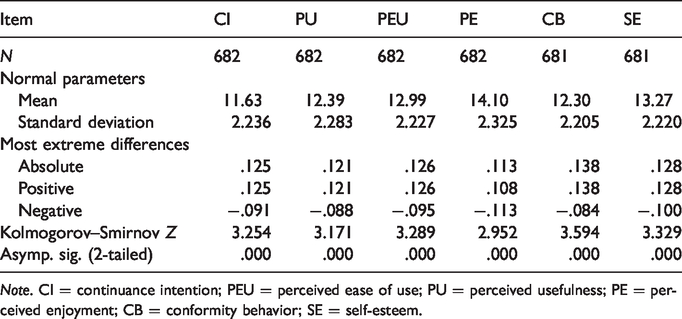
Note. CI = continuance intention; PEU = perceived ease of use; PU = perceived usefulness; PE = perceived enjoyment; CB = conformity behavior; SE = self-esteem.
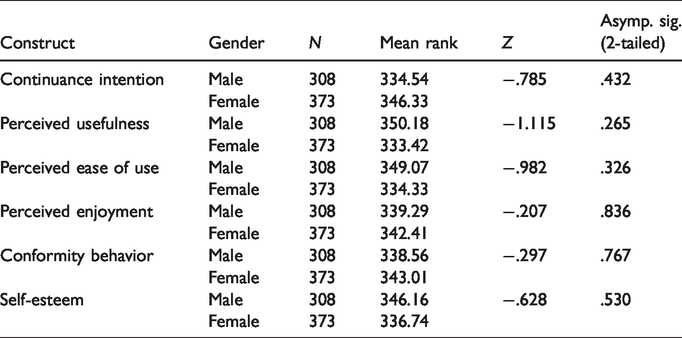
Gender Differences in the Constructs.
Results of Testing Null Research Hypotheses.
Discussion
The discussion part will develop in-depth arguments centering on rationales for including psychological constructs, roles of the included psychological constructs, correlations between constructs, and gender differences.
Rationales for Including Psychological Constructs
Others’ Learning Behaviors
Psychological influence posits that psychological elements influence user acceptance of mobile communicative technologies. Considering that learners are subject to learning behaviors of those surrounding them, especially in the Chinese context, we attempted to explore the influence of others’ learning behaviors on the target learners. Learners tend to keep in conformity with others’ learning behaviors in China. It is meaningful to propose an innovative construct referred to as conformity behavior. Learners desire to be respected by other learners, due to which they are sensitive to others’ opinions. In case that learners hold a strong self-esteem in language learning, they will win others’ respect and know how to respect others as well. Their learning progress will possibly be moving straight toward success. Self-esteem is therefore a worthwhile construct to be studied in WeChat-assisted language learning. Few studies have included both conformity behavior and self-esteem in the TAM of learning assisted with mobile device such as WeChat. Both constructs may be suitable for other mobile devices, which can be studied, especially in China.
Joyfulness, Usefulness, and Ease of Use
In the extended TAM model, two psychological elements, that is, conformity behavior and self-esteem are used to examine user continuance intentions, perceived ease of use, perceived usefulness, and perceived enjoyment regarding WeChat. In case that learners feel joyful in learning they will possibly engage in learning for longer time, which will enhance their continuance intentions. If they feel it easy and useful to use WeChat in language learning, they will also keep learning for a longer period. Peers’ active learning may also encourage learners to conform to them in learning behaviors, coupled with strong self-esteem. This is a benign learning cycle, which may facilitate learning effectiveness once established. Both psychological elements may have been potential influencing factors in language learning assisted with mobile devices. Practitioners may have been under the influence of them. The urgent issue to address is to remind designers and teachers of their effect on WeChat-assisted learning and to propose constructive suggestions for future design of mobile device and pedagogical approach.
Acceptance and Fashion
Language learners could also use WeChat as a tool to keep in conformity with peers and to fortify their self-esteem. WeChat provides them with appearance full of self-esteem because they can use it to convey their messages in a fashionable way. The conformity with peers also makes their behavior acceptable. When learning a language, they tend to keep in conformity with peers by using the same communicative application-WeChat. They can also join the virtual WeChat group to exchange ideas and share learning experiences. The perceived ease of use also positively encourages them to keep in conformity with peers by using WeChat since it is not difficult to be applied to learning. With WeChat, they could also share their understandings of knowledge with peers and discuss questions they feel hard to answer. By forming a WeChat communicative group, they could keep pace with others’ learning and even hold a video conference to address difficult issues. Learners’ acceptance and fashion would improve via the frequent communication.
Time and Energy Saving
The perceived usefulness also saves language learners’ time and energy. Via WeChat, they can facilitate the progress of language learning by watching videos, listening to recordings, writing in an acquired language, and speaking to peers on portable smart phones. The perceived enjoyment also stimulates language learners’ interest in the use of WeChat. They can play games, interact and share fun stories with peers, join learning activities, and enjoy themselves through the convenient use of WeChat. Besides, WeChat is easy to use since most of the participants are familiar with it. The perceived ease of use, usefulness, and enjoyment could save their time and energy in language learning. It is thus unsurprising to find that language learners’ continuance intention of using WeChat is enhanced, together with improved conformity behavior and self-esteem of learners.
Learning Quality and Interpersonal Relationship
Chinese language learners adopt WeChat as a learning tool to maintain or enhance language learning quality and establish interpersonal relationship with peers and teachers. The results are at large consistent with previous literature which indicates that “an interpersonal communication motive may increase enthusiasm for using WeChat and significantly interact with WeChat use to increase online and offline social support” (G. Wang et al., 2019, p. 244). It is noteworthy that language learners are motivated to use WeChat due to the phenomenon that most of their peers engage in language learning through the WeChat platform. This finally produced assimilated learning behavior, which is referred to as conformity behavior.
Roles of the Included Psychological Constructs
Gap Bridging
This study bridges the gap in the current literature regarding the impact of psychological elements on TAM constructs by proposing two psychological constructs, that is, conformity behavior and self-esteem. This study concludes that users are motivated by psychological influence factors to use WeChat as a means to communicate with peers and to improve their learning behaviors. It also provides evidence to demonstrate that the extended TAM of WeChat can be used to pave a solid ground to facilitate language learning.
Causal Effects
Importantly, this study provides evidence to demonstrate the causal effects on other basic constructs of a TAM caused by self-esteem and conformity behavior. These findings extend the basic TAM by proposing that psychological influence is a construct, which is promoted by cognitive benefits in institutional contexts (Venkatesh & Bala, 2008; Venkatesh & Davis, 2000). In the revised TAM, self-esteem and conformity behavior were positively correlated with continuance intention perceived ease of use, perceived usefulness, and perceived enjoyment. The result is meaningful in terms of both psychological and sociological dimensions.
Contribution to Psychological Influence Theory
This study contributes to the Psychological Influence Theory by revealing the impact of psychological factors on technology acceptance. To begin with, Psychological Influence Theory was proposed as an important theory influencing technology acceptance. Psychology is a discipline that explores behavior and mind, involving conscious and unconscious phenomena, coupled with feeling and thought. It is a specialized subject of a wide range of various aspects aiming to pursue perceptions of many features of brains, and to demonstrate various individual or collective mental phenomena by formulating a theoretical or practical framework (Fernald, 2008). Under the framework, researchers could explore more in-depth constructs that might influence the effectiveness of WeChat-assisted learning, providing constructive suggestions for teachers and practitioners.
Correlations Between Constructs
Positive Correlations
The psychological influence factors, that is, conformity behavior and self-esteem, exert a positive and direct causal effect on perceived ease of use, perceived usefulness, perceived enjoyment and continuance intention. The positive correlations between psychological influence factors and these constructs indicate that conformity behavior and self-esteem are important determinants of the acceptance of WeChat. Nevertheless, the study occurred in China rather than other countries or areas. Whether the TAM integrated with two innovative constructs are suitable for other contexts needs to be investigated via rigid design and further studies. With swift development of information technologies, WeChat will be constantly updated. Designers should manage to improve the function by seriously considering the TAM.
Psychocultural Influence
This study indicates several unsolved psychological and cultural issues in correlations of constructs. Language learners tend to use WeChat to learn a language because they worry about the possibility that they will not be in conformity with peers or they will be short of self-esteem if they do not use WeChat, a commonly accepted mobile technology. In short, they deem WeChat as a practical tool to develop self-esteem and keep in conformity with peers. The correlations might also be due to features of Chinese culture, as Jin and Yoon (2014) argued that behavioral intention of mobile device was under great influence of cultural circumstances. Chinese students are immersed in education of being modest and obedience. The culture indicates that following others and keeping humble can be a wise decision to maintain harmonious relationship with members in the community. The harmonious relationship will also enhance their self-esteem, leading to positive correlations with other constructs.
Gender Differences
Involvement in WeChat
No significant gender differences in the constructs indicate that both males and females are nearly equally involved in WeChat-assisted language learning. Whether they enjoy WeChat or not, WeChat has become an indispensable tool to help them learn a language due to its ease of use, usefulness, and enjoyment. Influenced by self-esteem and conformity behavior, their intention to continue the use of WeChat will be maintained and enhanced. This finally helps to establish a fit TAM. Designers and practitioners may unnecessarily worry about gender differences in WeChat-assisted learning. When they design WeChat-assisted learning, they may be devoted more to conformity behavior and self-esteem rather than to gender influence.
Different Findings
Nevertheless, there are different findings. For example, it was concluded that gender and age could significantly moderate the correlations between use intensity, received likes, social acceptance, personal power, and self-esteem; however, no gender differences were revealed in self-esteem, personal power, or social acceptance in WeChat use (Y. N. Wang et al., 2018). This indicates that gender may not directly influence the WeChat use, but indirectly influence its use in language learning. Teachers should therefore pay much attention to this phenomenon and minimize this indirect impact by designing appropriate teaching approaches.
Conclusion
This concluding section will discuss the major contributions of this study, the limitations, and future research directions.
Major Contributions
The major contributions of this study are that it links the missing literature on the effect of conformity behavior and self-esteem on the technology acceptance. This opens a new window to research into the TAM by extending it to the discipline of psychology. Significant gender differences were not found in the constructs of TAM. Despite that Psychological Influence Theory can account for technology acceptance to a large extent, it is necessary to conduct more research to explore psychological constructs.
Limitations
There are two limitations in this study. On one hand, the subjects were clearly a target of opportunity. On the other hand, the study was conducted at one point in time, so we have no way to know whether the attitudes shifted with time or further experience in the course or with the development of WeChat.
Future Research Directions
Future research may extend the constructs further to psychology in order to complement for missing links in current literature. It is also promising to establish a sociocultural TAM with respect to mobile device acceptance in both western and eastern contexts. Interdisciplinary research (Yu, 2020) could also be a reliable approach between educational technology, psychology, sociology, and statistics.
Footnotes
Declaration of Conflicting Interests
The author declared no potential conflicts of interest with respect to the research, authorship, and/or publication of this article.
Funding
The author disclosed receipt of the following financial support for the research, authorship, and/or publication of this article: This study was supported by the Chinese National Fund for the Humanities and Social Sciences (Chinese Academic translation; 17WSS005).
