



Abstract
Mobile learning techniques have brought the potential of scaffolding information in real-world context that allows learners to interact more actively with their learning content. In this study, we present an interactive learning approach that allows learners to interact with their learning content in real-world context. With learning environment and tasks aligned to the learning content and outcomes, we have developed a mobile application for preschool children to experience their own learning environment using an interactive learning approach and mobile technologies Quick Response codes for learning counting and quantifying skills. The learning content is delivered to learners based on an interactive learning path and the assessment of the learners’ progress to further learning. We evaluate the learning approach in a group of 34 preschool children between 3 and 5 years old, divided into intervention and control group. The intervention group were engaged in numeric learning tasks using the interactive learning approach in mobile context. The control group were engaged in learning activities according to the preschool existing program’s pedagogical curriculum. Pre and post-test learning progress assessment related to the mathematical domain indicate that children from the experimental group performed better than the comparison group after four-month intervention period.
Keywords
Introduction
Background and Motivation
Quality early care and education programs have proven their effectiveness in producing long-term measures of school achievement and success in young adulthood (Shaefer & Cohen, 2000). For example, Learning number and counting skills during early childhood years can predict math competency in later school years (Geary et al., 2013; Locuniak & Jordan, 2008). A longitudinal study that followed three-and four-year-old children from low-income homes to age 40 demonstrates the lasting effects of preschool education (Schweinhart, 2005). The study found that Children who were randomly assigned to game-based preschool program had higher literacy rates, were more likely to graduate from high school, and had lower rates of criminal activity and drug use compared to participants who did not attend preschool.
Early years of children’s lives are highly important to social and intellectual advancement, as high proportion of human learning takes place during these early years (Bakken et al., 2017; Ormrod, 2016). Although the learning experiences of humans continue throughout their lifetimes, they do not do so at such intensity level as in the early years (Cross et al., 2009). Early childhood education is considered key for allowing self-directed-learning, rather than structured-learning, which lays the foundation for healthy social development and cognitive growth (Wenner, 2009). According to developmental psychologists, early childhood education is unique in allowing children to engage in playful learning, a teaching approach that promotes academic, social, emotional, and cognitive development (Hirsh-Pasek et al., 2009). Other researchers have shown similar gains in social and learning developments of playful initiated learning over structured-based didactic learning (Heljakka & Ihamäki, 2019; Kangas, 2010; Weisberg et al., 2013).
The merits of playful learning that it allows for games and game-based learning of different educational contexts to be adapted for supporting and improving the learning processes with formal and informal scenarios (Kangas, 2010; Pivec, 2007). By incorporating real-world concepts with the learning activities and allowing for both free and self-directed playful learning, game-based learning has shown to be intrinsically motivating learners’ cognitive, social, and behavioral engagement (Hirsh-Pasek & Golinkoff, 2011; Plass et al., 2015).
Interactive Learning in the Mobile Context
Mobile learning has become a popular trend in education due to its emphasis on providing learning content with the wealth of interaction, as well as its adaptability to learning settings beyond the physical classroom. Mobile learning techniques brought and promoted the potential of scaffolding information in a real-world context that allows learners to interact more actively with their learning content, anywhere and anytime (Bernacki et al., 2020; Devers & Panke, 2017; Domingo & Garganté, 2016; Falloon, 2017). Studies have shown that integrating the learning environment with real-time interaction and navigation-support of the learning content can enhance learners' understanding and motivation (Clarke, 2018; Ford, 2019; Jagušt et al., 2017; McMullen et al., 2019).
Educational mobile applications of solving math tasks, acquiring alphabet and vocabulary knowledge, and phonetic skills specific to different learning age groups have been advocated as useful tools for children’s learning of these skills (Fabian & Topping, 2019; Jack & Higgins, 2019; Stamatios & Michail, 2020; Sung et al., 2016). For example, Lauricella et al. (2017) suggest that the importance of supporting young children learning and development is not just whether and how children engage with mobile media, but the content and context of that engagement.
With the use of mobile applications to teach literacy and numeracy have shown positive effects on young children’s perceived and independent learning, many educational apps, as well as education entertainment, or edutainment apps—which are defined as “the act of learning through a medium that both educated and entertains” according to American Heritage Dictionary—have been investigated for different age groups, including preschoolers, to convey basic STEM (science, technology, engineering, and math) concepts (Heljakka & Ihamäki, 2019; Herodotou, 2018; Mera et al., 2018). Mobile tablet-based learning activities have been reported to show positive effects on young children’s motivation and learning engagement with such interactive tools (Dubé et al., 2019; Jagušt et al., 2018; Reeves et al., 2017). For example, (Schacter & Jo, 2017) suggest that integrating experimentally proven tablet mathematics apps (i.e., Math Shelf) into daily routine teaching can improve mathematical learning outcomes for preschool children. Similarly, (Pitchford & Outhwaite, 2019; Zaranis & Valla, 2019) find positive correlation between the integration of tablet computers in teaching and children’s early core cognitive skills and numeracy competence.
Mobile technologies Quick Response (QR) codes usage has shown to be suited for applications that can link users with their environment by putting meaningful and time and location-independent information in the hands of users. Experimental studies on the use of QR codes in educational contexts indicate that mobile technologies QR codes can positively motivate learners’ attention for class learning, and provide opportunities for both independent and supportive learning (Hung, 2018; Thorne, 2016). For example, Chung et al. (2019); Mowafi et al. (2019); Preka and Rangoussi (2019); and Seri and Savion (2019) show that mobile technologies QR codes with informal feedback may provide self-driven learning that can encourage learners’ interest in accomplishing their learning tasks. Similarly, (Chen, 2019; Jamiat et al., 2019; Y. Kim & Smith, 2017) indicate that augmented interactive educational mobile applications targeting emerging literacy and early math skills with real-world learning content can positively improve collaborative interaction and learning in a variety of age groups.
The study described in this paper attempts to build upon previous work to contribute a new level of investigation: allowing preschool children to experience their own learning environment by triggering their curiosity while sharing their environment with their peers, using an interactive learning approach and mobile technologies QR codes. With a learning environment and tasks aligned to the learning content and outcomes, we develop a mobile application that adopts interactive learning concept for learning the number core counting and quantifying skills. Ideally, this investigation will show the benefits that can be obtained of interactive learning in mobile context.
Research Hypothesis
The goal of this study is to investigate an interactive learning approach in mobile context to assess preschool children’s learning experience with a learning process that requires the learners' exploration and interaction with the learning content. The learning content is delivered to learners based on an interactive learning path and the assessment of the learners’ progress to further learning according to the learner's interaction with the learning content.
The study aims to empirically examine the impact of interactive learning approach on children’s learning experience of the number core that includes the number word list, one-to-one counting correspondence, and the cardinal counting principles. The study reported here focuses on validating the learning experience of using the interactive learning approach in mobile context in contrast to the traditional pedagogical approach as measured by counting and quantifying learning outcome scores. Due to the content used in the mobile interactive learning context, it is hypothesized that interactive learning approach in mobile context will have positive impact on children’s learning related to counting and quantifying skills. While there has been abundant discussion of educational technology strategies purported to have educational value for preschool-aged children at certain contexts methods that enable learners to be actively engaged with learning content that have clear goals related to their learning outcomes are still in their infancy.
Methodology
Pedagogical Approach
According to educational psychologists (Piaget, 1970), children mental progress goes through stages of cognitive development, of which early development stage depends on interaction among learners as well as the social relationships with the outside world. Early childhood pedagogical concepts emphasizes the learning environment sphere of influence towards linking learners’ interests and choices of exploration and discovery with their everyday life’s experiences (Lee, 2006; Moreno & Mayer, 2007). Learning at this age underlines the mastery of basic concepts before proceeding with learning more advanced concepts in the same domain (Ormrod, 2016).
Compared to traditional classroom learning, there has been a shift from formal teacher-centered learning to informal student activity learning and motivation in real-life contexts to promote students' learning (Furió et al., 2015; Looi et al., 2016). Recent research has illustrated the interplay of game-based interactive learning methods, such as inquiry-based learning and multimodal instruction, as key towards encouraging children’s motivation and engagement for learning (Alade et al., 2016; Bado, 2019; Bai, 2019; Zheng et al., 2018).
In this study, we present an interactive learning approach for preschool children featuring the aforementioned didactic pedological principles that aim at: linking learners’ interests and choices with their everyday life’s experiences; mastering basic concepts in one domain before learners’ proceeding with more advanced concepts in the same domain; and triggering an inquiry-based learning situations in a playful environment that prompts learners for undirected set of learning activities within instructional games format in the real-world context.
Participants and Outcome Measurement
A total of 34 children participated in the study. Participants were children ages 3-5, with mean age of 4.44 years, in the Southeastern Region of the United States. Children at this age are typically able to identify numbers and have started to show interest in counting and quantifying skills (Ormrod, 2016). A written consent was obtained from each participant’s parent or guardian prior to participation.
The participants in the study are enrolled in a combination Head Start and nonprofit preschool childcare program. The Head Start program’s educational approach to participants’ school readiness focuses on promoting language and literacy learning outcomes in children ages birth to five, aligned with the Early Learning Standards and the expectations of the State school districts. The program uses the Creative Curriculum (see http://www.teachingstrategies.com/), a widely-used preschool curriculum. Quality indicators are used to assess learners’ learning outcome scores across mathematical, cognitive, and literacy materials aggregated three periods—October, February and May, via the Teaching Strategies GOLD® Assessment System (see http://www.teachingstrategies.com/), pre-K assessment tool. The assessment contains 38 objectives within six areas: socioemotional, physical, language, cognitive, literacy, and mathematics (Appendix A). Administration occurs via a screening evaluation instrument to assess progress towards learning objectives. Progress towards objectives is measured on a scale of 0 to 8, where 0 represents the lowest level and 8 indicates the highest level. Evidence of the Teaching Strategies GOLD® Assessment’s reliability and validity as a measure of learning in the included domains has been established (D.-K. Kim et al., 2013).
Each participant was randomly assigned to one of two groups. The intervention or experimental group were engaged in learning tasks related to the number core (i.e., number word list, one-to-one counting correspondence, and the cardinal counting principles) using the interactive learning approach in mobile context. The control or comparison group were engaged in learning activities according to the preschool existing program’s pedagogical curriculum. The demographic characteristics for each participant in each group were recorded, along with statistical tests comparing the two groups are presented in Table 1. t-Test was used to assess the differences in age and gender, along with numeric literacy and quantifying and spatial relationships and pattern knowledge learning outcomes scores of Teaching Strategies GOLD® Assessment tool prior to the experiment. Kruskal Wallis chi-square Test was used to assess the differences in gender. The two groups were found to be statistically similar in demographic characteristics, as well as in numeric literacy and knowledge of spatial relationships and patterns.
Experimental and Comparison Group Characteristics Prior to Experiment.
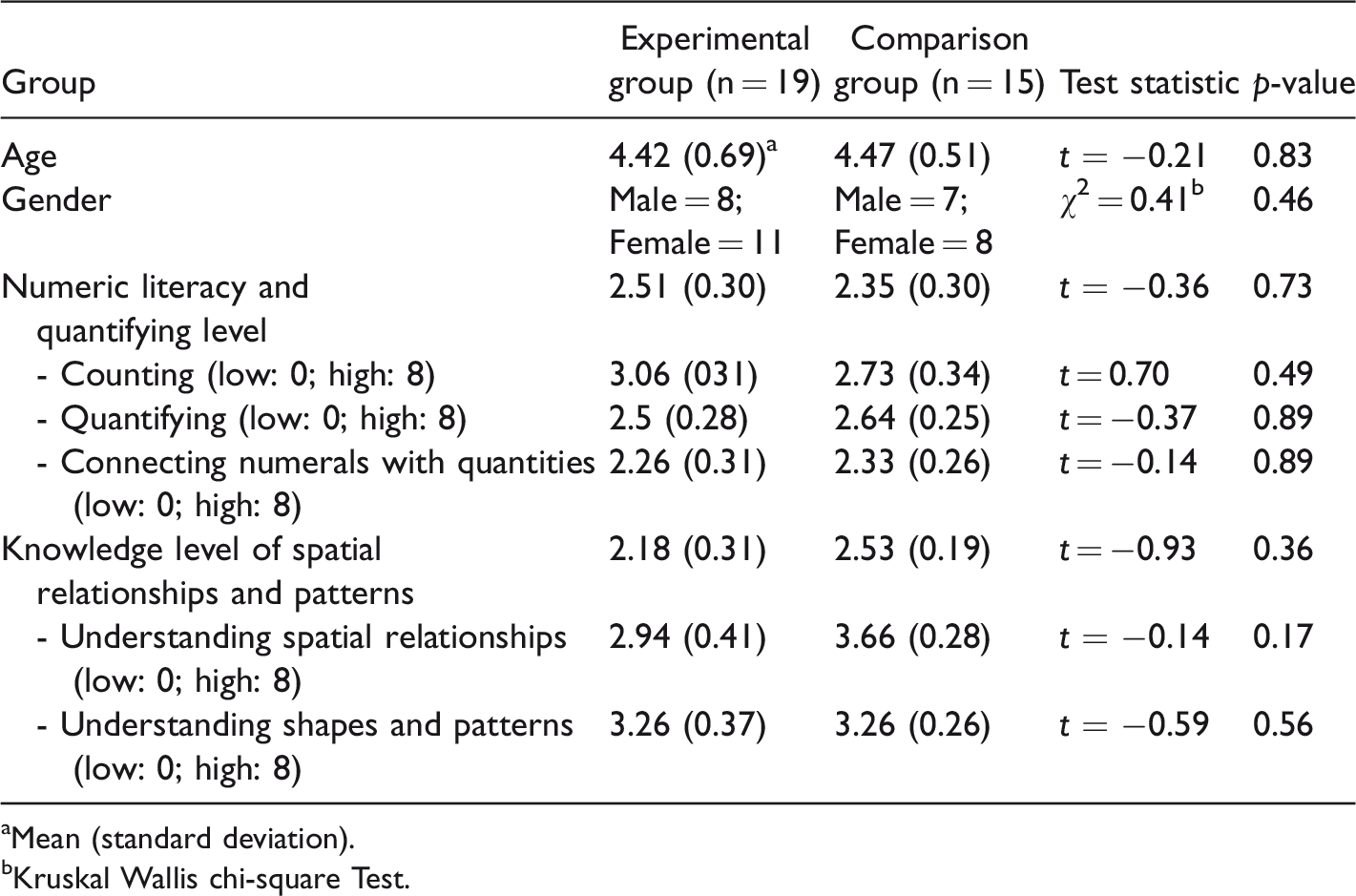
Mean (standard deviation).
Kruskal Wallis chi-square Test.
Experimental Apparatus
The interactive-learning environment is arranged of colored puzzle mats, hereafter referred to as learning objects. The learning objects are labeled with QR codes tags with unique code that stores information about the learning object (Figure 1). The learning environment setting allows participants to detect and identify the learning objects in the classroom using Samsung Tablet 10 Android OS devices equipped with QR codes readers. No prior experience or familiarity with handheld mobile devices was required of the participants, as minimal input is required to accomplish the goals of the learning tasks.
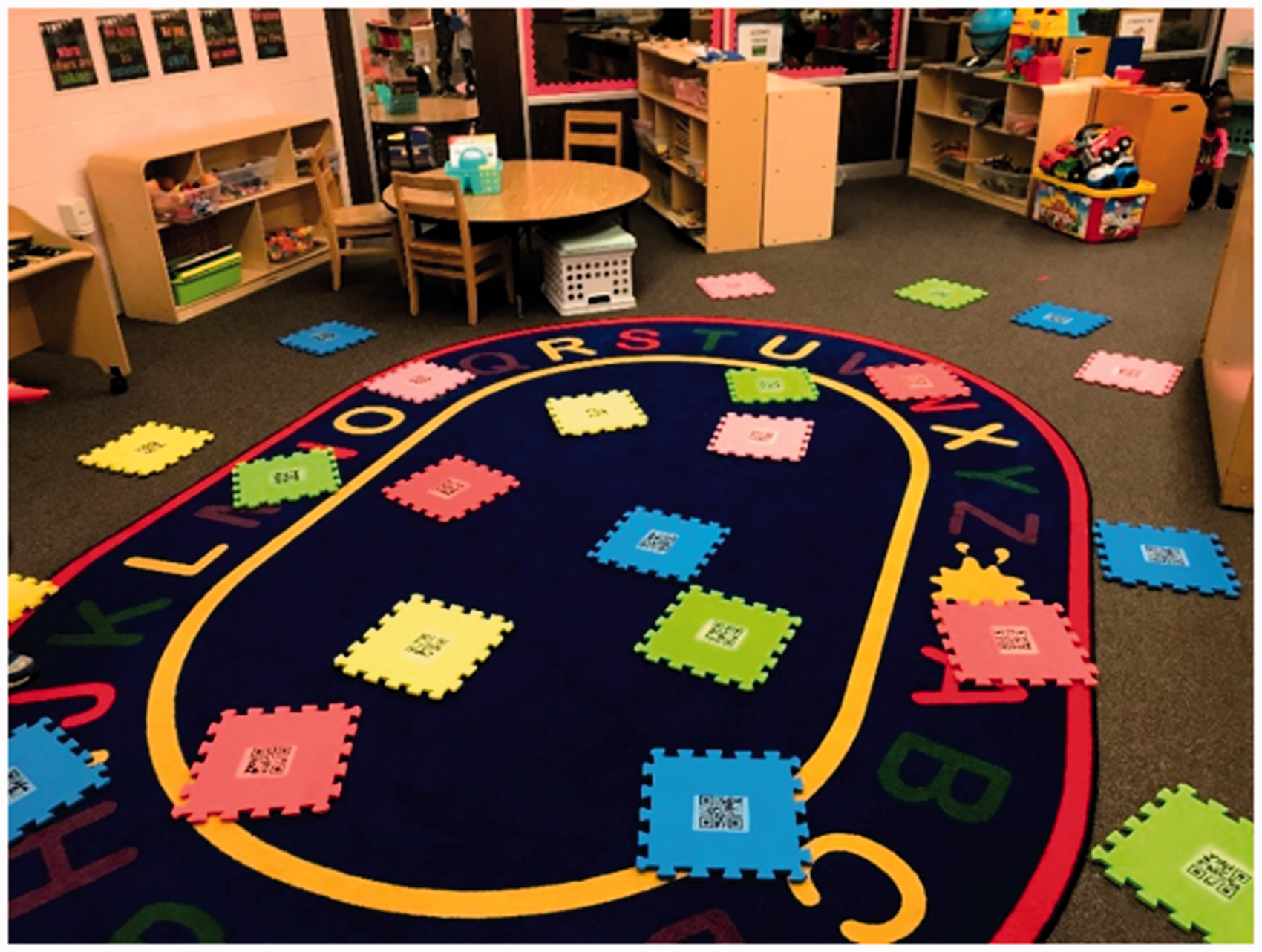
A View of the Classroom Arranged Environment.
Experimental Tasks
Over a four-month period of the academic year, participants in the comparison group undertook their learning activities according to the school readiness program based on Early Learning Outcomes of Creative Curriculum System (see http://www.teachingstrategies.com/). Participants in the experimental group performed their learning tasks using the proposed interactive learning apparatus related to the number core through a set of progressive learning tasks. The procedure of the experimental tasks is described below. Children’s learning outcome averages (mean scores) were collected and examined over the pre- and post-learning period to assess their learning and readiness progress across the Curriculum System related to the mathematical domain.
Procedure
To evaluate our proposed interactive learning pedagogical concept in mobile context, we developed a mobile application using the Android SDK (Google), installed on Samsung tablet devices with QR codes readers. The learning tasks were performed in the classrooms and supervised by the classroom teachers, who described to the participants how to perform the learning tasks. Each participant is assigned a unique user login number to allow for logging and tracking the learning progress of each participant. The learning procedure requires the participant to identify and count a set of learning objects (Figure 2), throughout the following progressive learning tasks:
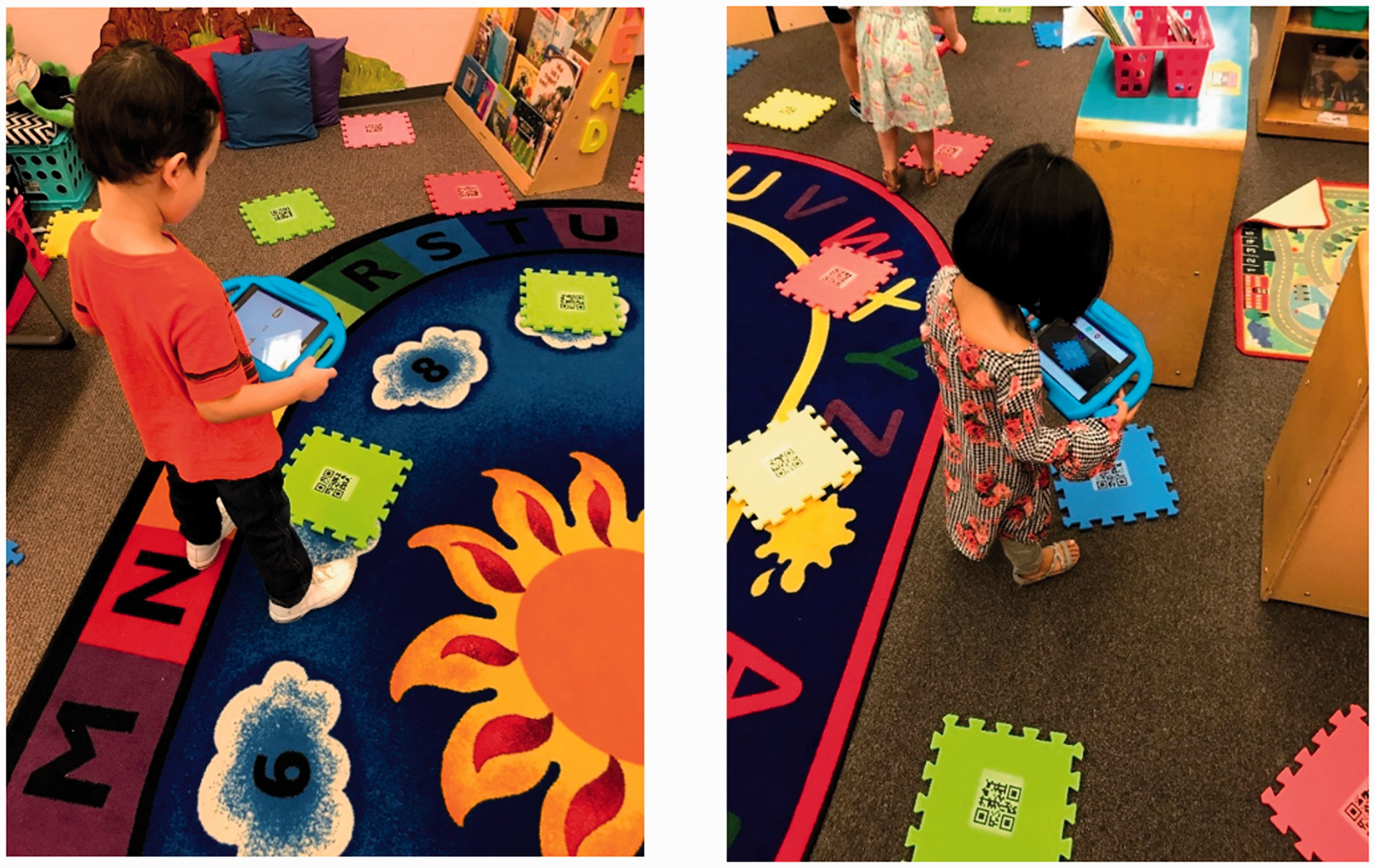
Demonstration of the Learning Activities.
Counting a set of five learning objects regardless of the color of these objects (red, blue, and green).
Counting a set of five learning objects of one specific color (red, blue, or green).
Counting one specific color (red, or blue, or green) of a set of learning objects of randomly selected numbers (between one and five).
Counting of two different colors (red and blue, or blue and green, or green) of randomly selected numbers (between one and five) of total of five learning objects of the two colors.
Each learning task entails a learning level of complexity that requires the successful completion of the lesser complexity prior to advancing to the higher level of complexity of the next learning task. Upon successful completion of each learning task, the application allows the participant to proceed to the next learning task. A threshold of eighty percent accuracy of the last three consecutive trials of each task is set through the application algorithm to define a successful completion of each learning task, in accordance with the numeracy skills of kindergarten math learning rubrics (Frye et al., 2013).
The following steps present the details of each learning task:
Participant is given a certain learning task and requested to explore his/her surroundings to fulfill the set learning task. Participant observes the learning object that matches the criteria of the set learning task. Participant tags the learning object with his/her handheld tablet device. The QR codes tagging will trigger an interactive learning feedback and executes an assessment relevant to the tagged learning object: о Provide an interactive feedback to the participant if the participant has correctly identified the learning object of the set learning task. о Provide an interactive feedback and supporting material to the participant to supplement the learning concept if the participant has incorrectly identified the learning object of the set learning task.
Figure 3 illustrates the algorithm of each of the learning tasks.
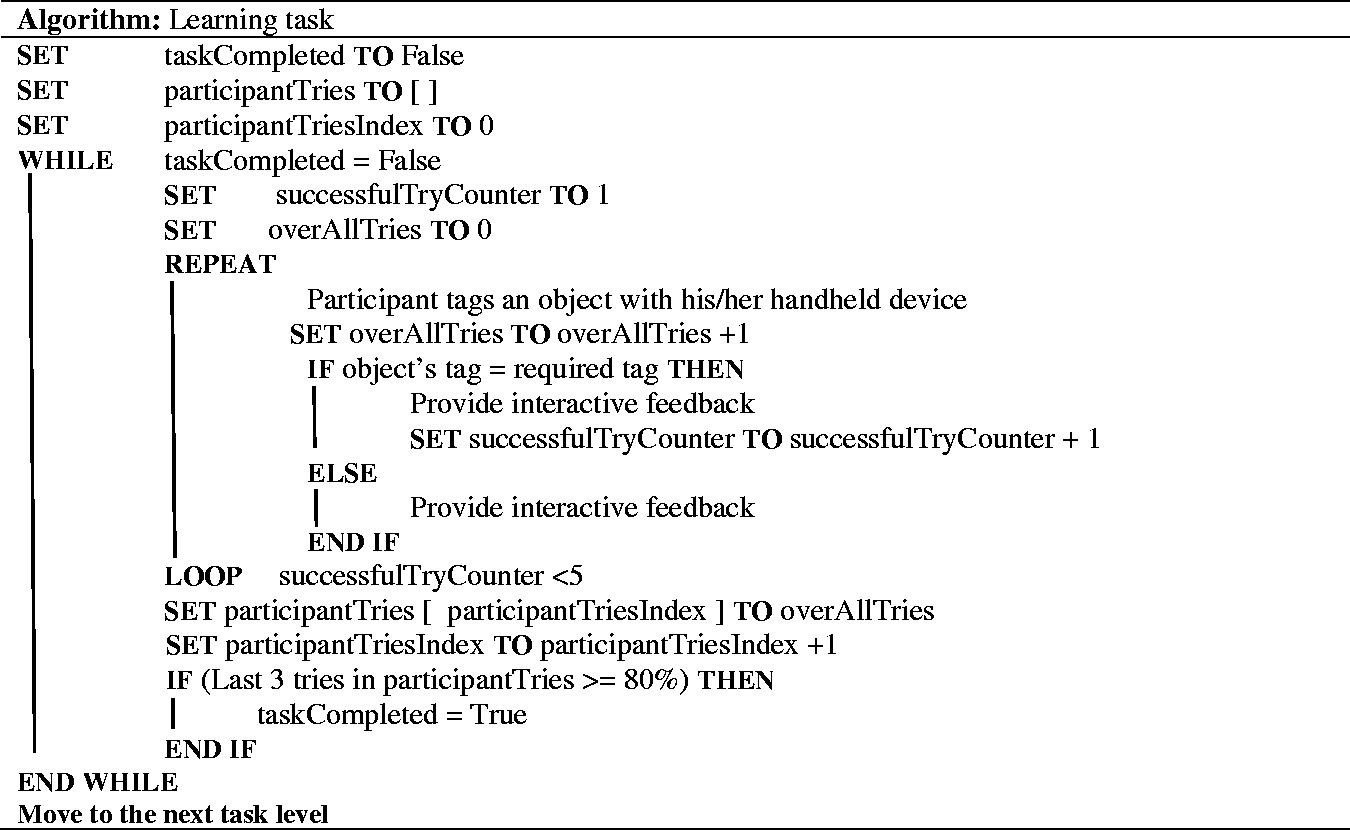
Learning Task Algorithm.
Analyses and Results
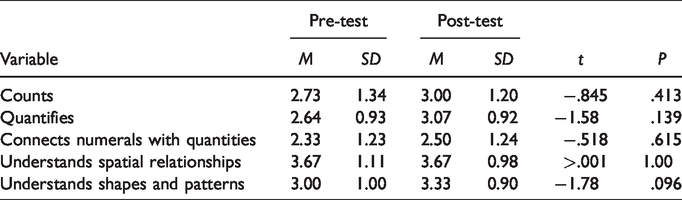
There were 15 participants in the current existing program’s pedagogical curriculum (comparison group) and 19 participants in the interactive learning in mobile context approach (experimental group). The means and standard deviations for pre-test and post-test for participants’ scores related to the mathematical learning and readiness progress domains were collected and examined for each group over the second and third aggregation period of the academic year (Appendix B), and listed in Tables 2 and 3, respectively.
Pre- and Post-Test Scores for Comparison Group Participants (n = 15).
Pre- and Post-Test Scores for Experimental Group Participants (n = 19).

*Statistically significant at the 0.05 level.
Paired-samples t-tests were used to investigate whether there any significant differences in the performance of participants’ learning experience between the interactive learning approach group and the existing pedagogical learning group as measured by curriculum learning outcome scores of counting, quantifying, and connecting numerals with their quantities, as well as for spatial relationships and shapes and patterns as measured by the Teaching Strategies GOLD® Assessment related to mathematical learning domain.
Numeric Literacy and Quantifying Skills
The analysis results indicate that there were no significant differences between pre-test and post-test scores of the comparison group participants for counting, quantifying, or connecting numerals with quantities, with p > .05, as shown in Table 2 and plotted in Figure 4. The experimental group participants’ scores for counting, quantifying, and connecting numerals with quantities indicated significant increase from pre- to post-tests, indicating the positive effect of interactive learning on participants’ learning outcomes performance, with p < .05, indicated by *, as shown in Table 3 and plotted in Figure 4.
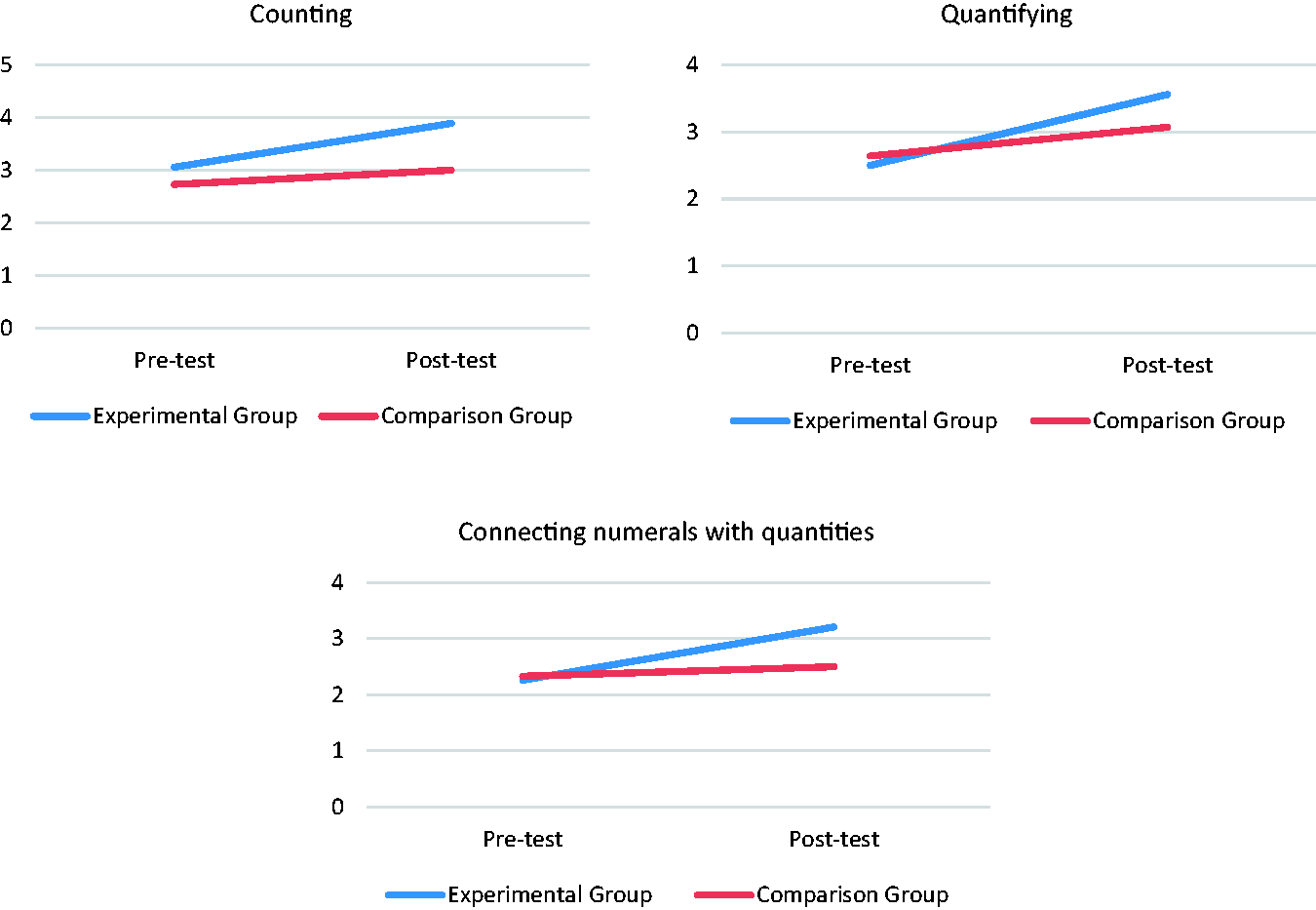
Pre-and Post-Test Scores of Numeric Literacy and Quantifying Level on the Teaching Strategies GOLD® Assessment for Comparison Versus Experimental groups.
Understanding Spatial Relationships and Patterns
Analyses of changes in understanding spatial relationships and patterns have also shown no significant differences for either variable between pre- and post-test scores for the comparison group, p > .05, as shown in Table 2 and plotted in Figure 5. While analysis of changes in understanding of spatial relationships have indicated significant difference between pre- and post-test scores (p = .017), analysis scores have not shown to be significantly different for pre- and post-test understanding of shapes and patterns (p = .384), as shown in Table 3 and plotted in Figure 5.
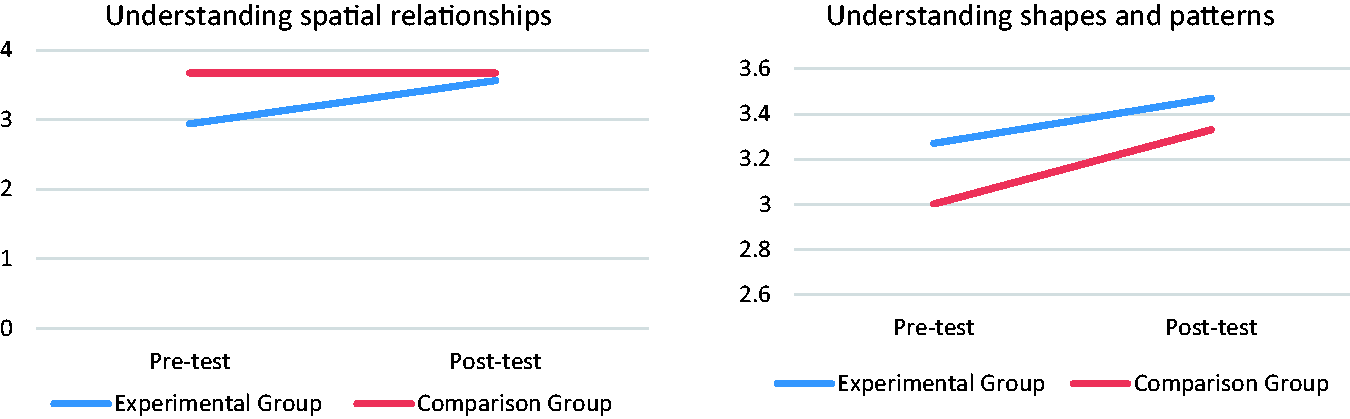
Pre- and Post-Test Scores of Knowledge Level of Spatial Relationship and Patterns on the Teaching Strategies GOLD® Assessment for Comparison Versus Experimental Groups.
Discussion
In the present study, we demonstrate and examine an interactive progressive learning tasks for the number core that can result in positive gains in preschool children’s numeric literacy and quantifying skills. Gains in standardized measures of counting, quantifying, and connecting numerals with quantities have shown to support this claim. Some evidence for the impact of our mobile interactive learning approach on understanding spatial relationships and pattern improvement is reported.
The results provide preliminary promising evidence of the interactive learning approach in mobile context as a tool for teaching essential early childhood readiness skills. Although concerns about screen-time for young children are prevalent, many of these concerns center on the sedentary nature of most screen-focused activities (e.g., see https://www.who.int/news-room/detail/24-04-2019-to-grow-up-healthy-children-need-to-sit-less-and-play-more) and resulting links to obesity, unhealthy diet, and quality of life (Robinson et al., 2017; Stiglic & Viner, 2019). Employing an interactive learning approach attempts to address these concerns. Our interactive learning approach differs from existing tools in that it integrates the learning content with the learning. Rather than offering screen-based learning content, the interactive learning approach prompts an inquiry-based learning content that triggers learners for searching and interaction with the learning material. In addition, the approach proposed in this study provides children the opportunity of interactive real-time feedback that allows for adapting the learning content with the learners’ performance relevant skills. As children play and interact in the learning process, the learning content can be used for undirected play activities, as well as for instructional learning. In doing so, we have adopted easy-to-use existing technologies in linking the learning content and the learning outcomes within the learning process.
Although our approach involves using many items in the preschool classroom, it does not require extensive planning or purchasing of materials: QR codes can be placed on existing items in the classroom (see Figure 1). Initial anecdotal evidence indicates that both students and classroom teachers have enjoyed the interactive learning approach, and classroom teachers showed interest to continue using the application in their classrooms even after initial data collection concluded. Given both its impact on the variables of interest and the response from participants, the proposed mobile interactive learning approach seems promising as a supplement to preschool numeric literacy curricula.
Through providing technology that focuses on mastery of basic concepts in one domain that facilitates the learning necessary before children can learn more advanced concepts in the same domain (Ormrod, 2016). Our application learning approach, therefore, allows for a variety of experiences in the same environment and provides challenging learning opportunities for different skill levels. Embedding environmental exploration and peer interaction while using the application are made possible both within the same and different age groups, as it may also evoke curiosity—such interactions have the effect of facilitating social and interaction learning.
Conclusions
In this study, we present a mobile interactive learning approach that allows interaction between learners and the learning content, using didactic pedagogical principles to support children’s ability to play and learn. Results indicate the viability of our mobile interactive learning experience for improvement of numeric literacy and quantifying skills as well as spatial relationships and patterns. In addition, it allows children to learn while they explore their learning environment, which may provide additional social and physical benefits.
This study was limited to a single childcare center classroom over a four-month-period. Therefore, the sample size was relatively small, and consequently the results are not intended to be representative or generalizable. Additionally, although our results demonstrate positive changes in numeral literacy among experimental group participants that were not found among comparison group participants, it is too early to evaluate the lasting effect of the interactive learning approach in mobile context. Our results suggest that interactive learning in mobile context is a promising method for teaching early childhood readiness skills that can be easily integrated in a preschool learning environment. Future longitudinal studies will be necessary to investigate long-term effects. Future research may also attempt to investigate the immediate and long-term impacts of interactive learning in mobile context on additional learning skills of early childhood and behavior outcomes.
Footnotes
Appendix A
Teaching Strategies GOLD® tool has a total of 38 objectives: 2 objectives related specifically to English language acquisition and thirty-six objectives are organized into nine areas of development and content-area learning: Social–Emotional; Physical; Language; Cognitive; Literacy; Mathematics; Science and Technology; and The Arts.
Teaching Strategies GOLD® assessment information data collected over a 4-month period, for measures of Mathematic learning objectives items pertaining to child’s ability to count (20.A), quantify (20.B), and connect numerals with quantities (20.C), along with child’s ability to understand spatial relations (21.A) and shapes (21.B), as shown in Figure A1.
Appendix B
Declaration of Conflicting Interests
The authors declared no potential conflicts of interest with respect to the research, authorship, and/or publication of this article.
Funding
The authors received no financial support for the research, authorship, and/or publication of this article.
