



Abstract
Creativity and Computational Thinking (CT) have been both extensively researched in recent years. However, the associations between them are still not fully understood despite their recognition as essential competencies for the digital age. This study looks to bridge this gap by examining the association between CT and two types of creativity, i.e., Creative Thinking and Computational Creativity. The research was conducted among 124 middle school students from Spain, who were divided into control and experimental groups; the intervention included an explicit encouragement to be as creative as possible (i.e., to submit multiple correct solutions) in a given learning task. Data were analyzed from a standardized creativity test (Torrance's TTCT) and cross-referenced with log files that documented the students' activities in the Kodetu game-based learning environment. Our research findings indicate some interesting associations between CT and Creativity. First, we found that creativity contributes to CT. Second, we found that CT is transferable across different domains. Finally, we found that Computational Creativity can develop and improve over time.
Technology and science have seen major developments in recent years alongside the constant growth in data and information. These trends compel students to acquire appropriate skills to help them meet the challenges of the future. Given these circumstances, the educational system is undergoing a change to support the acquisition of skills over content memorization (Scott, 2015). 21st-century skills include competencies such as problem-solving, creativity, and computational thinking (CT), which are considered essential to thrive in our technology-driven world (Bocconi et al., 2016; Deschryver & Yadav, 2015; Nouri et al., 2020). These skills are essential for all disciplines, and their integration is necessary to develop students' analytical and technological capabilities, and prepare them to be innovative problem solvers and critical thinkers (Deschryver & Yadav, 2015; Gretter & Yadav, 2016). The importance of these skills is a catalyst to the increasing implementation of different initiatives for imparting CT. Educational systems around the world recognize the need to nurture these skills from an early age (World Bank, 2019). One of the strategies to foster these skills is through programming and coding environments, as they enable high-order abilities such as logical thinking, critical thinking, and CT (Combéfis et al., 2016; Kafai & Burke, 2013). Strengthening coding skills is also associated with the notion that coding can enhance creativity (Eu Commission, 2019). The growing interest in promoting these skills and the environments that impart them have also accelerated the research in the field (Zhang & Nouri, 2019). However, there is a lack of sufficient research on the interrelationships between creativity and CT, and most analysis are based on qualitative methods and limited data volumes (Brennan & Resnick, 2012; Tang et al., 2020). Learning analytics methods make it possible to deeply explore and evaluate the learning environments and the learning processes involved (Krumm et al., 2018). Various studies in recent years have adopted these methods, and have shown their effectiveness in researching the learning processes and the acquisition of CT skills (Berland et al., 2013; Blikstein, 2011; Eguíluz et al., 2017; Hershkovitz et al., 2019). This study continues this line of research.
The purpose of this study is to examine the relationship between CT and creativity, and analyze how these skills are reflected in a game-based learning environment. Such an understanding may benefit various stakeholders who can better design the learning experiences to promote CT and creativity.
Computational Thinking
Computational Thinking (CT) is the conceptual basis required to define and solve real-world problems using algorithmic methods to reach transferable solutions; it is considered as a necessary skill in diverse contexts and multiple disciplines (Shute et al., 2017). CT comprises a large collection of mental strategies, such as recursive and procedural thinking, modeling, abstraction, decomposition, heuristic reasoning and parallelism (Wing, 2006, 2010). The term was first coined by Seymour Papert, who predicted that computational ideas can change the way children think in any field (Papert, 1980). Papert's vision was indeed realized, and it is now clear that CT is a universal skill that every child should acquire (Barr & Stephenson, 2011; Voogt et al., 2015). In the past, CT was considered to be primarily related to STEM fields, but today it is recognized as relevant to a broad spectrum of fields, including sciences, humanities and the arts (Gretter & Yadav, 2016; Kalelioğlu et al., 2016).
Large organizations, including the OECD and UNESCO, consider CT as a necessary literacy for tomorrow's citizens (Organisation for Economic Co-operation and Development, 2018; Scott, 2015; World Economic Forum, 2015). In 2012, the National Research Council (NRC) defined CT as one of the eight practices to be integrated into science studies (NRC, 2012). In 2016, a report was published by the European Commission, emphasizing that CT should be incorporated into compulsory education in order for students to fully participate in the digital world (Bocconi et al., 2016). Since then, many opinion papers, reports and initiatives dealing with the implementation of CT in the curricula have been published (International Society for Technology in Education & Computer Science Teachers Association [ISTE & CSTA], 2011; Kafai & Burke, 2013; Seow et al., 2019; World Bank, 2019).
Despite its vast popularity, there is little consensus regarding CT's operative definition and its evaluation strategies (Tang et al., 2020). CT is not narrowly focused on teaching and learning in a specific topic, but rather emphasizes the acquisition of extensive skills and knowledge that can be applied in a variety of contexts (Günbatar, 2019).
From a cognitive psychological point of view, CT's implementation in the curriculum can be seen from two perspectives: domain-general and domain-specific. A domain-general perspective sees CT as a universal skill that is not identified with a particular field of knowledge, while a domain-specific perspective sees CT as a skill related to a specific field, particularly computer science and programming (Lai, 2019). Referring to the latter point of view, the association between CT and programming is somewhat complex. On the one hand, coding is considered a fertile ground for learning and practicing CT (Buitrago Flórez et al., 2017; Lye & Koh, 2014; Román-González et al., 2017; Tsarava et al., 2017). On the other hand, some argue that CT represents thought processes used to solve problems that are not necessarily translated into codes (Tedre & Denning, 2016). Therefore it is important to separate the common association between CT and programming (Hu, 2011). Of course, the domain-specific perspective may be important in a broader context, considering that a skill that is acquired in a particular context may be transferrable, hence may affect other contexts as well (Perkins & Salomon, 1992).
Over the past decade, many online learning environments have been developed to facilitate and foster CT concepts acquisition. Among these environments are many user-friendly, game-based environments designed for children and adolescents (Kim & Ko, 2017). Many such environments are taking a constructivist approach, that is, promoting learning via an active process of the learner, and constructing knowledge by experimenting and linking existing knowledge with new knowledge (Fosnot & Perry, 1996; Jonassen & Ronrer-Murphy, 1999; Piaget, 1964). The constructionist approach, which extends the constructivist approach, also underlies some of the environments for acquiring CT (Csizmadia et al., 2019; Kesler et al., 2019). According to this approach, learning is a product of knowledge construction by using existing knowledge and hands-on experience, while creating meaningful, concrete artifacts. Some of the learning environments have embraced game design principles, creating highly interactive learning experiences that increase student motivation and improve learning outcomes (Ibáñez et al., 2014; Kazimoglu et al., 2012; Vu & Feinstein, 2017). These environments are usually built around linearly progressing challenges, that facilitate knowledge construction by breaking down the concepts into incremental learning components. They also support trial and error behavior for improving knowledge acquisition (Wang & Chen, 2010). Students can learn through practical experience, and gradually link the theoretical computing concepts to their ability to solve problems (Webb et al., 2018). The log files documenting the actions of the participants in these environments enable the collection and analysis of the processes involved in acquiring CT concepts. Previously, we have used the log files drawn from this platform to analyze students' persistence throughout the CT acquisition process, and to explore associations between creativity and CT (Israel-Fishelson et al., 2020; Israel-Fishelson & Hershkovitz, 2020).
Creativity
Creativity is a thinking ability that enables people to solve problems innovatively and to produce original and valuable products (Torrance, 1974). In the past, creativity was primarily thought of in the contexts of design and art. Still, today it is recognized for its importance for human inventive potential in all disciplines, and its impact is evident in various spheres of life (Donovan et al., 2014; Navarrete, 2013). In recent years creativity has been recognized as an essential skill for the 21st century (Said-Metwaly et al., 2017) that can be nurtured and should be included in curricula from an early age (Beghetto, 2010; Vygotsky, 2004).
There are a great many conceptualizations of the term “creativity”, but there is an overall agreement that this is a multidimensional construct comprising four dimensions, as suggested by Elis Paul Torrance, which are fluency, flexibility, originality, and elaboration (Torrance, 1965). Broadly speaking, these dimensions refer, respectively, to the production of many ideas of different types, which are new and can be articulated in detail. Creativity has been studied extensively over the years from various perspectives (Kaufman & Beghetto, 2009; Runco & Jaeger, 2012), among which are the thinking processes involved in this process; qualities of creative people; and characteristics of creative products. For a long time, a common belief among various scholars has held that creativity is a personal trait, linked to cognitive skills and characteristics such as IQ, motivation, and divergent thinking (Batey & Furnham, 2006). According to this perception, people have different levels of creativity, and one person may be more creative than another (Amabile & Pillemer, 2012). Today, an alternative theory suggests that creativity is influenced by different forces, some of which are related to personality and others to context (Amabile & Pillemer, 2012; Reiter-Palmon et al., 2009). Furthermore, some believe that creativity is not a permanent trait or a congenital phenomenon, but a skill that can be taught, practiced and improved (Hsiao et al., 2014).
The question of whether creativity is transferable, i.e., whether it is domain-general or domain-specific, has been the topic of an extensive discussion (Plucker & Beghetto, 2002). The perception of creativity as domain-general assumes that a person who demonstrates creativity in one area is more likely to show creativity in other areas. In contrast, the perception of creativity as domain-specific assumes that creativity in one domain is not necessarily related to creativity in another domain (Plucker & Beghetto, 2002; Said-Metwaly et al., 2017). The answer to this question is still open and unresolved, with some scholars suggesting that creativity is both domain-general and domain-specific (Baer, 2010; Hong & Milgram, 2010). This issue, therefore, has a direct impact on both the measurement of creativity and on its promotion. This research assumes that creativity may be, to some extent, transferable, and that exercising creativity in one domain may improve creativity in another (Stolaki & Economides, 2018; K. Wang & Nickerson, 2017), and therefore it is of great importance to cultivate and promote creativity. Indeed, our previous study supports this notion, as it had shown positive associations between different measures of creativity, outside and inside the CT acquisition process (Israel-Fishelson et al., 2020). Our current research design, as detailed below, aims at further testing this assumption and learn how creativity is expressed in the acquisition of CT.
Creativity and CT
Four decades ago, Papert (1980) emphasized the potential for developing creativity using computers. However, only in recent years has creativity been accepted as directly related to computer science, and its central role in fostering motivation and interest in this field of study has been acknowledged (Romeike, 2007). Different studies have demonstrated the mutual contribution of creativity and computer science, and CT in particular, on each other (Kong, 2019; Miller et al., 2013; Pérez Poch et al., 2016; Resnick, 2006; Seo & Kim, 2016). Creativity and CT are not to be considered as mutually exclusive, as both refer to knowledge-construction processes, and creativity involves a set of thinking tools that overlap with the fundamentals of CT, specifically, observation, imagination and visualization, abstraction, and creation and identification of patterns (Yadav & Cooper, 2017). Indeed, creativity is part of the International Society for Technology in Education and the Computer Science Teachers Association's definition of CT, as they refer to it as a reflection of logical and algorithmic thinking, problem-solving skill, and creative thinking (ISTE & CSTA, 2011). The role of creativity in CT acquisition is not limited to the construction of creative products, but is also manifested in finding new ways of thinking when facing problems that need to be solved (Dagiene et al., 2019).
In recent years, various educational initiatives worldwide have begun to establish national K-12 curricula, academic standards, and instructional activities that entwine these two skills together. Educational institutions have started to use digital learning environments that promote CT while allowing the expression and development of creative thinking (Kong, 2019; Roque et al., 2016; World Bank, 2019). Often, this requires adapting learning environments so that they will instill the main CT concepts in a logical progression, while simultaneously help in developing creative thinking (Dagiene et al., 2019).
Studies have examined the relationship between creativity and CT from different perspectives, including mostly examining creativity within the realm of CT and exploring the impact of these structures on each other (Miller et al., 2013; Seo & Kim, 2016). However, only a few studies focused on the association between these two perspectives. Our previous, seminal study had shown that creativity may contribute to CT acquisition (Israel-Fishelson et al., 2020); however, further research is needed to shed light on the associations between these two constructs. Therefore, the main goal of the current study is to explore the associations between creativity and CT among sixth-grade students in the context of a game-based learning environment for CT acquisition. The study refers to two types of creativity: creative thinking, defined as creativity as reflected by traditional measures of creativity, and computational creativity, a measure of how creativity is displayed in solutions within the learning environment.
Research Questions
We formulated the following research question to help meet our research goals:
How do the personal characteristics of students who were explicitly encouraged to think creatively and those who were not, differ when comparing their Creative Thinking, Computational Thinking, and Computational Creativity? What are the associations between Creative Thinking, Computational Thinking, and Computational Creativity, among students who were explicitly encouraged to think creatively and those who were not? What are the differences in students’ personal characteristics between those who submitted multiple solutions, and those who only managed to submit a single solution, when comparing their Creative Thinking, Computational Creativity, and Computational Thinking? How do the multiple solutions submitted differ from each other? How are these differences associated with students' personal characteristics?
Methods
Learning Analytics
Learning analytics (LA) is “the measurement, collection, analysis, and reporting of data about learners and their contexts, for purposes of understanding and optimizing learning and the environments in which it occurs” (Ferguson, 2012, p. 2). LA usually uses visualization, statistical, and machine learning techniques to assess and improve the understanding of learning processes and learning platforms involved in these processes (Krumm et al., 2018). Such methods are useful for predicting students' success (Emerson et al., 2019), detecting difficulties while acquiring CT concepts (Román-González et al., 2019), and evaluating the acquisition of CT concepts by aggregating students' achievements in various learning tasks (Kong, 2019).
In the context of computer science education, LA approaches have been previously used to study students' programming activities (Berland et al., 2013; Blikstein, 2011; Boutnaru & Hershkovitz, 2015; Eguíluz et al., 2017; Gal et al., 2017; Grover et al., 2017; Hershkovitz et al., 2019; Lu et al., 2017; Nutbrown & Higgins, 2016). These studies are often based on data that is automatically collected via an online learning platform, and objectively reflects the learning process; this data is stored in the learning systems' log files, which document each action taken in the system. The current study follows this line of research by applying LA methods to measure CT and computational creativity.
The Learning Environment: Kodetu
The Kodetu online game-based environment is used to implement basic CT concepts. It is targeted at elementary and middle-school students, and is based on the block-based mechanism of Google Blockly (Eguíluz et al., 2017). The platform has three official games, as well as the ability for users to create their own games. Each game consists of several levels. At each level, the user is required to solve a maze-based challenge and lead an astronaut to a marked target point. The user determines the astronaut's displacement using visual coding blocks. Progression to the next level is enabled when the current level is completed successfully. The user can reset the level and solve it again. Kodetu is available in three languages: English, Spanish, and Basque. During use, the system logs any action taken by its users, i.e., the user ID, the coding blocks being used, the solution correctness, and the action timestamp.
The Kodetu platform has already been used in several CT-related studies (Eguíluz et al., 2017, 2018; Saavedra-Sánchez et al., 2019). Below are the reasons for choosing this environment for the benefit of our research. First, Kodetu is based on block-based programming, and is therefore suitable for younger students with no prior experience in programming. Moreover, since the platform leads learners on a path along which they are gradually introduced to new concepts, it serves as a good platform for assessing CT while learning it. Second, it can be easily adjusted to fit different research objectives and questions. For example, we can control the number of challenges given to students, the nature of the challenges, and their order, as well as the feedback messages they receive. Indeed, we did so, as described below. Finally, this platform offers easy access to the system log files, as the software was developed for research purposes by some of the authors (third, fourth, and fifth). Platforms such as Kodetu allow for a portfolio-driven approach to assess CT, that allows for measuring its acquisition at multiple points in time throughout the learning process (Tang et al., 2020).
For the current study, a dedicated game was created in the Kodetu platform. The game, which has two versions, which we will refer to as “Kodetu Single” and “Kodetu Multi”, includes ten levels with increasing difficulty. These levels cover some CT concepts such as sequences, loops, and conditionals, as detailed below. The first four levels are designed to enable users to practice the concept of sequences. Level 1 is a trivial level to show how the platform works. Levels 2 and 3 involve turns and perspective. Level 4 presents a large maze in which a long sequence of actions, including more than one rotation, is needed to reach the goal. Level 5 limits the number of blocks that can be used (i.e., code length) to prevent participants from using long sequences and to encourage them to take advantage of new code structures of loops. Level 6 introduces loops in a trivial challenge. Level 7 also works on sequences and loops with a limitation on block usage. Level 8 limits the number of blocks that can be used (i.e., code length) to prevent participants from using long sequences, and to encourage them to take advantage of new code structures for conditionals. Level 9 introduces if-else conditionals, and requires nested structures and a limited number of blocks. Level 10 (shown in Figure 1) works on loops and conditional statements, while presenting a general maze with some distracting elements.
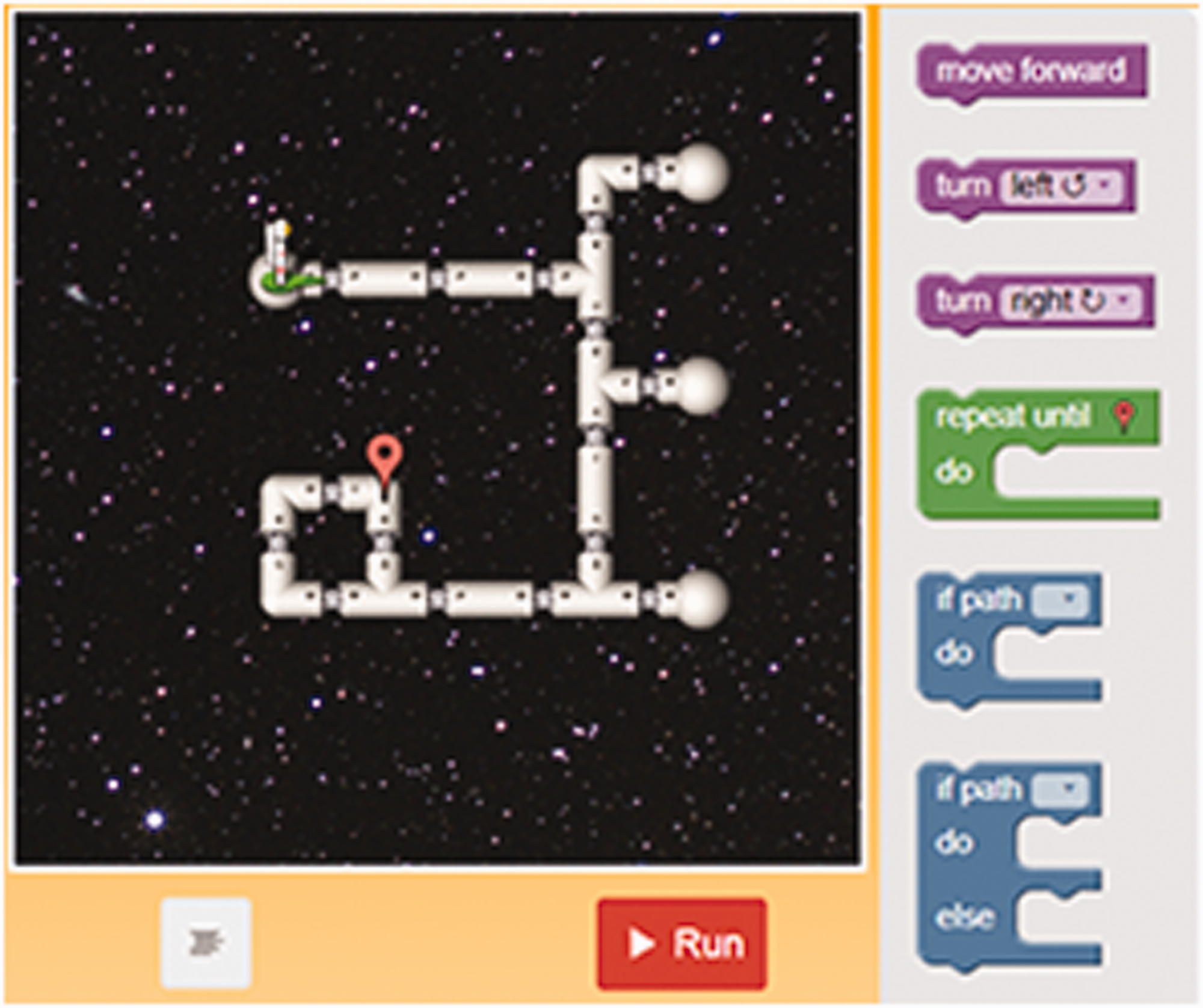
An Example Level of the Kodetu Game Used in This Study (Level 10).
Both versions of the game include the same set of levels, with only one difference in the system response for correctly solving Level 10. In “Kodetu Multi”, once a student is submitting a correct solution to Level 10, they have the option to submit another solution by clicking a “Repeat Level” button.
Participants and Procedure
124 sixth-grade students (ages 11–12 y/o) from two different schools in northern Spain participated in this study, that took place during June 2019. The participating students went to an outreach workshop about technology, programming, and robotics, in which they participated. The willingness to participate in the workshop as well as in the research was the criterion for choosing these schools. The workshop was organized by the Faculty of Engineering at the University of Deusto. During that workshop, the students played a designated Kodetu game for about 60 minutes. Included in the current analysis are only those students who progressed in the game until at least Level 9.
Students were divided into experimental and control groups. The division was based on the order of their group’s arrival at the workshop. Prior to their Kodetu session, all participants took a pen-and-paper creativity test (Torrance's TTCT – Figural Test) and filled-up a short online questionnaire that collected background information. Following that, students played Kodetu, either in the “Single” mode (control group) or in the “Multi” mode (experimental group).
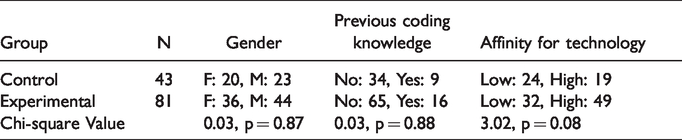
The control group included 43 students (23 girls and 20 boys); the experimental group included 81 students (36 girls and 44 boys). For the vast majority of the students, this was their first encounter with programming experience (79% of the control group and 80% of the experimental group). Additionally, 44% of the students in the control group and 60% of the experimental group reported having a high affinity for technology. No statistically significant differences were found between the groups with respect to their personal characteristics. The results are summarized in Table 1.
Demographics and Personal Characteristics of the Participants.
Data and Analysis
Our dataset, drawn from the learning environment's log files, contained 21,340 rows, each representing an action taken by a user, including the action's timestamp, the level at which it was taken, its result [Success, Failure, Timeout, Error], and the code associated with this action. All statistical analyses were conducted using IBM SPSS version 26.
Different research questions required defining different sets of relevant participants. For the first and second research questions, which are focused on analyzing students' behavior in the two research groups while playing levels 1–9 — which were identical for both groups — we compared the distribution of the dependent variables between the control group (N = 43) and the experimental group (N = 81), taking into consideration activity in levels 1-9 only.
For answering the third research question, which is focused on identifying the differences between those students who submitted multiple solutions (N = 11) in Level 10, to those who only submitted a single solution (N = 47), we partitioned the experimental group into two respective sub-groups, including in the former, students who at least tried to submit another solution after submitting a correct one.
For answering the fourth research question, which is focused on comparing the multiple solutions submitted, we only considered those students from the experimental group who submitted multiple correct solutions in Level 10 (N = 9).
Data from the Kodetu log files were cross-referenced with the data obtained via the creativity task, by using a unique ID assigned to each participant. The participants wrote down their Kodetu-generated ID on the creativity test form.
Instruments: Creative Thinking Test
The Torrance Test for Creative Thinking (TTCT) was used for assessing creativity. TTCT is considered one of the popular tests for such assessments. The TTCT is based on Gilford's theoretical model of divergent thinking, and examines Creative Thinking along four dimensions: fluency, flexibility, originality, and elaboration (Torrance, 1974). Alongside the figural test, the TTCT also offers a verbal test. The validity and reliability of both tests have been repeatedly proven (Cramond et al., 2005; K. H. Kim, 2011). However, we found the figural test more appropriate for this study. First, the tasks involved in the studied platform were mostly visual, both in terms of the puzzle presented to students and in terms of the blocks they used to build their code. Second, conceptual problem-solving of this type involves more graphic thinking than literal thinking (Liu & Lu, 2002). Furthermore, a recent analysis of both figural and verbal versions of the TTCT showed that, while the scores on the two versions are highly associated, the figural version is a more comprehensive, reliable, and valid measure of creativity (K. H. Kim, 2017). The TTCT – Figural Test has been previously used successfully for studying associations with creativity in the context of programming or CT (Liu & Lu, 2002; Seo & Kim, 2016).
To perform the TTCT we used a pen-and-paper test, where students received a sheet of paper with 12 identical empty circles. They were asked to draw as many drawings as possible, with the circles being an integral part of the drawing. An eligible drawing used the circle as part of the drawing. See examples in Figure 2.
Example of Eligible (top row) and Non-eligible (bottom row) Drawings from TTCT—Figural Test.
Research Variables
Demographics and Personal Characteristics
The participants self-reported their personal characteristics at the beginning of the session, using a short online questionnaire that includes the following variables:
Gender [M/F]
Previous Programming Background [Yes/No]
Affinity for Technology [1-10 Likert scale, with 1 being “Low”, and 10 being “High”]
Computational Thinking
Three variables were used to measure student-level acquisition of CT, each computed first for each level separately, and then averaged across levels:
Total Solution Attempts – counting all solutions attempts, including correct and incorrect ones. Correct Solution Attempts – counting only correct solution attempts; note that despite being able to progress to the next level upon submitting a correct solution, users can — and sometimes indeed do — re-try to solve the current challenge. Completion Time [min] – calculated as the difference between the time of loading the level and the time of moving on to the next level.
Creative Thinking
To score the pen-and-paper TTCT figural test, we used eligible drawings only, that is, only drawings in which a circle was considered an integral part of the drawing. To ensure the reliability of eligibility determination, each of the first two authors separately coded 20 sheets for eligibility. We then ran an inter-rater reliability assessment using Cohen’s Kappa, which yielded a satisfactory coefficient of 0.81. The authors then discussed borderline cases and agreed on guidelines for the rest of the coding, which was done by the first author.
Originality and flexibility were based on drawing categories. To this end, we needed to classify the full pool of drawings into categories. The coding of the first 20 sheets was done independently by each of the first two authors. Following the coding, the authors discussed their results until they reached unanimous agreements on the results. The remaining pages were coded by the first author, with continuous interaction with the second author on the category definitions, splitting and mergers. This iterative process ended with a final list consisting of 59 categories (e.g., Emoji, Sun, Flower, Signpost, Animal). Examples of the various analyzed drawings can be seen in Figure 3 with such categories as Face (top), Ball (middle), and Animal (bottom).
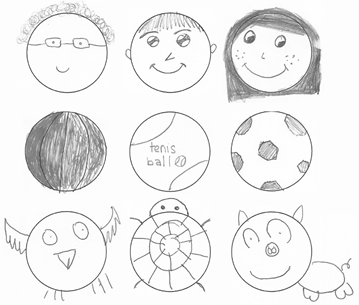
Examples of Drawings in Categories of Face (top), Ball (middle), and Animal (bottom).
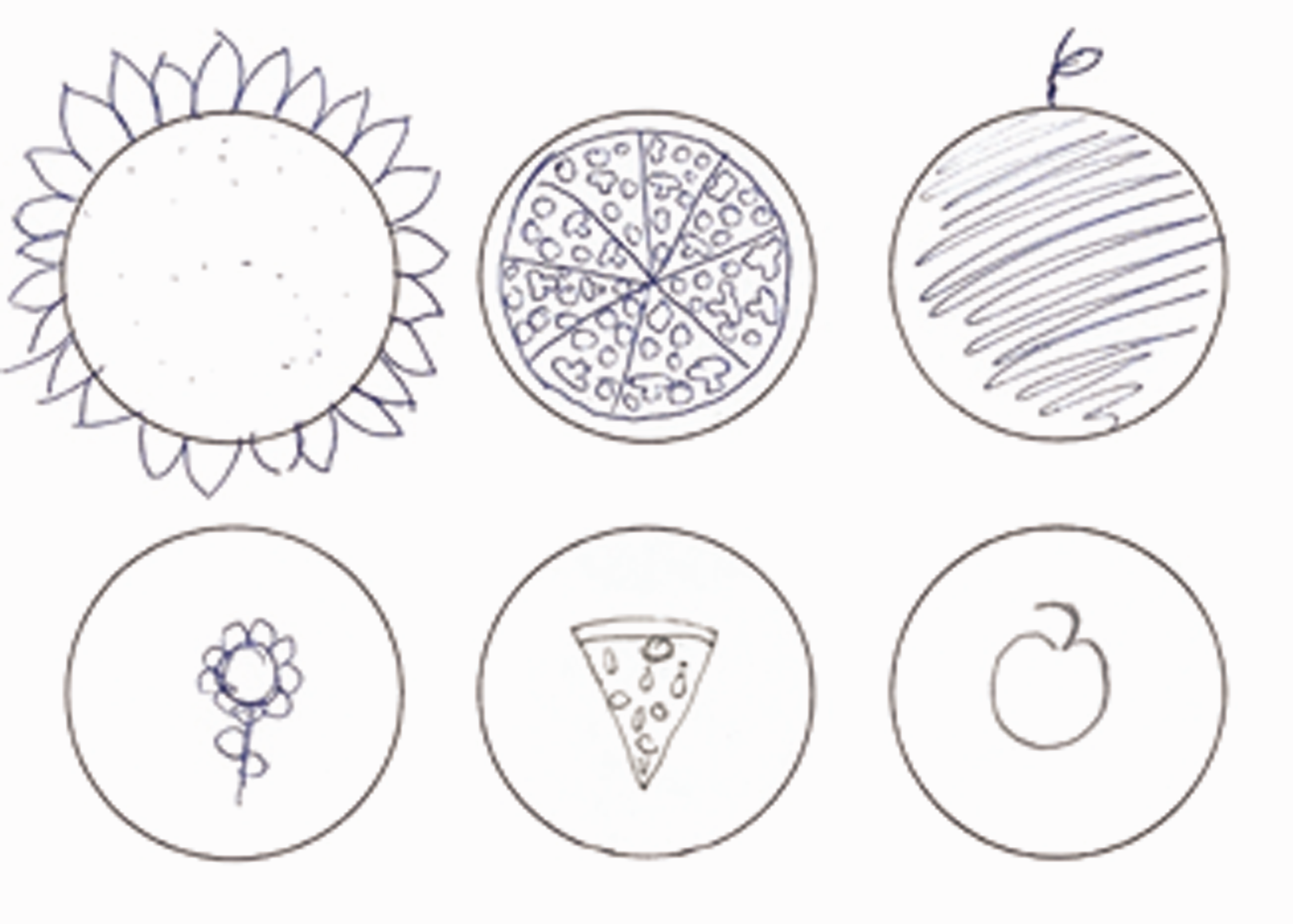
Using a process similar to the one used in determining the categories, the first two authors rated each of the eligible drawings for its elaboration on a scale of 1 (Low Elaboration) – 6 (High Elaboration), dependent on the drawing’s detail level. Figure 4 exemplifies the coding process of six drawings in the “Pizza” category, with the drawing on the left rated as 1, i.e., low elaboration, and the drawing on the right is rated as 6, i.e., high elaboration.

Examples of Six Levels of Elaboration as Were Evident in the: ‘Pizza’ Category, From Low (Left) to High (Right).
Four variables were computed for each student:
Fluency: number of eligible drawings; Flexibility: number of different drawing categories; Originality: frequency of drawing categories, averaged across all the student's drawings; Elaboration: number of ideas/details used in each eligible drawing, averaged across all the student's drawings.
Computational Creativity
In our analysis of creative solutions, we analyzed 1591 rows representing correct solutions. We did not refer to other logged solution attempts. We used originality as a single proxy for creativity, as fluency, flexibility, and elaboration were not applicable; this is because the Kodetu platform, like many other platforms, does not promote participants to submit multiple solutions. Once a level has been completed, participants are directed to the next level.
The frequency of a solution among all correct solutions was used to represent Originality on a 0–1 scale. The average frequency of correct solutions was used in cases when a participant submitted several correct solutions.
This process is demonstrated for level 9 (see Figure 5). The astronaut’s expected path, according to the participant’s code, involves walking straight, turning left, and several subsequent straight walks. Denoting “D” for a do-while loop, “I” for if condition, “E” for the else part of the condition, “F” for going forward, “L” for turning left. The common solution was: DIFFEL (Do: if the path forward, then forward, else turn left). This solution was submitted in 71% of the cases. However, there was another correct solution, DILLEF (submitted in 29% of the cases).
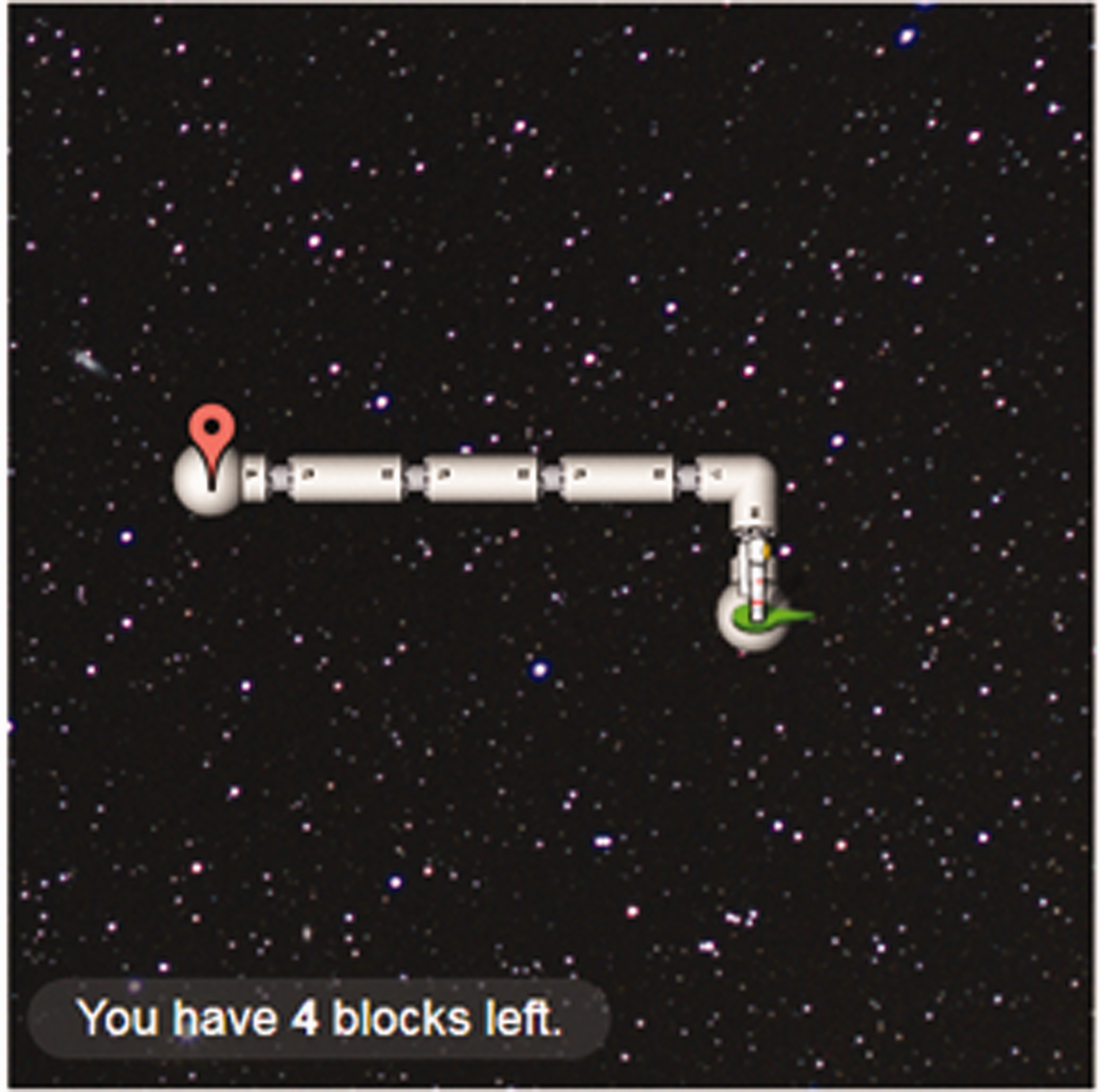
Initial Setting in Level 9.
Results
Comparing Between the Experimental and the Control Groups
In order to better understand whether and how Computational Thinking, Creative Thinking, and Computational Creativity differ between the experimental group and the control group, we first report on descriptive statistics of each of the variables.
Computational Thinking, Creative Thinking, and Computational Creativity
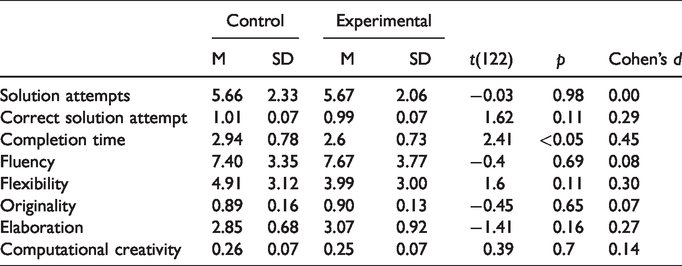
When comparing the performance related to Computational Thinking, we found that the Completion Time was higher for the control group than for the experimental group, with t(122) = 2.41, at p < 0.001. This difference has a small-medium effect size of d = 0.45. That is, the students in the control group had progressed in the game slower than the students in the experimental group. No differences were found between the groups in Solution Attempts or Correct Solution Attempts.
When comparing the performance related to Creative Thinking and Computational Creativity, we found no statistically significant differences between the groups. The results are summarized in Table 2.
Descriptive Statistics for Computational Thinking, Creative Thinking and Computational Creativity.
Associations Between Computational Thinking and Creative Thinking
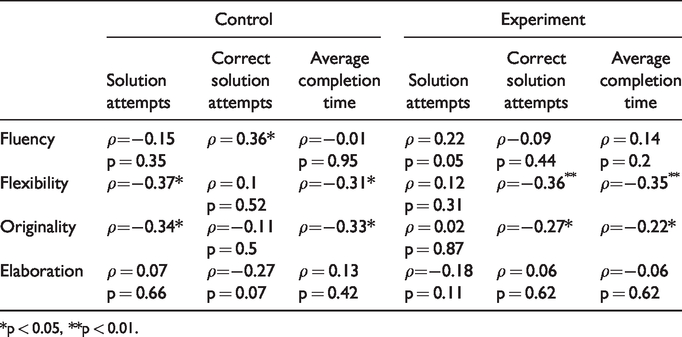
We tested for correlations between Computational Thinking and Creative Thinking. We found that for the control group, Fluency was moderately positively correlated with Correct Solution Attempts, with Spearman's ρ = 0.36, at p < 0.05. No further statistically significant correlations were found in the control group between Fluency and Computational Thinking, and no statistically significant correlations at all were found in the experimental group.
As for Flexibility and Originality, we found that in the control group they were statistically significantly negatively correlated with Solution Attempts, with ρ = −0.37 and ρ = −0.34, respectively, at p < 0.05. Additionally, these variables were also negatively correlated with Completion Time, with ρ = −0.31 and ρ = -0.35, respectively, at p < 0.05. These findings suggest that students in the control group who provided more varied and original drawings took less time and attempts to solve the game challenges.
Interestingly, we found that in the experimental group, Flexibility and Originality were statistically significantly negatively correlated with Correct Solution Attempts, with ρ = −0.36 and ρ = −0.35, respectively, at p < 0.01, and with average completion time, with ρ = −0.27 and ρ = −0.22, respectively, at p < 0.05. These findings imply that the more flexible and original the students in the experimental group were, the less time they needed to complete the game challenges and the fewer attempts they made to submit multiple correct solutions.
No statistically significant correlations were found between Elaboration and Computational Thinking variables in neither of the groups. The results are summarized in Table 3.
Correlations between Computational Thinking and Creative Thinking by Condition.
*p < 0.05, **p < 0.01.
Associations Between Computational Thinking and Computational Creativity
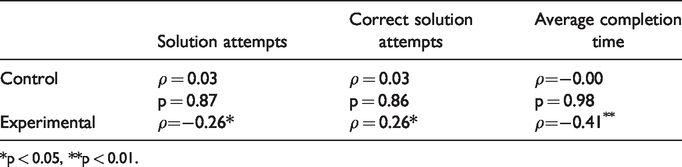
Next, we examined the correlations between Computational Thinking and Computational Creativity. No statistically significant correlations were found between the variables for the control group. In contrast, we found that in the experimental group, Computational Creativity was statistically significantly correlated with all measures of computational thinking. Computational Creativity was negatively correlated with Solution Attempts and Completion Time, with ρ = -0.26 at p < 0.05 and ρ = −0.41, respectively, both at p < 0.01. A positive correlation was found between Computational Creativity and Correct Solution Attempts, with ρ = −0.26, at p < 0.05. These results indicate that the more creative the students from the experimental group were in producing a solution, the less effort it took them to complete the game challenges. Findings are summarized in Table 4.
Correlations Between Computational Creativity and the Three Computational Thinking Variables, by Condition.
*p < 0.05, **p < 0.01.
Association Between Creative Thinking and Computational Creativity
Finally, we studied the correlations between the two creativity-related measures, that is, Computational Creativity and Creative Thinking. We found that in the experimental group, a statistically significant positive correlation existed between Originality and Computational Creativity, with ρ = 0.24, at p < 0.05 (see Table 5). This result indicates that the more original the students were in TTCT, the more creative they were in solving levels in the game. No correlations were found in the control group.
Correlations Between Creative Thinking and Computational Creativity by Condition.
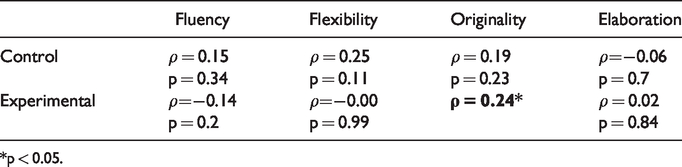
*p < 0.05.
Comparing Within the Experimental Group (Multiple vs. Single Participants)
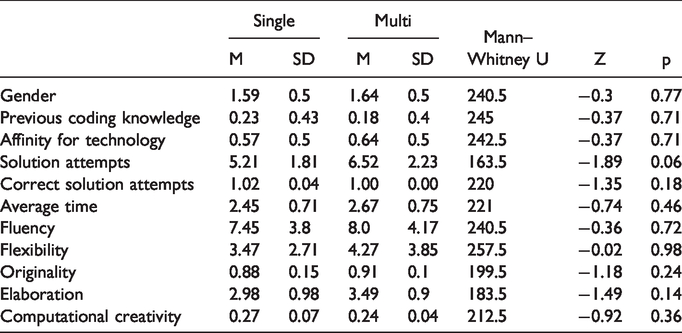
Next, we examined the characteristics of those students from the Experimental group who submitted — or, at least, tried to submit — multiple correct solutions in level 10 (N = 11). We refer to this group as “Multi”. We compared their performance in the pre-test and in levels 1-9 with those who submitted only one correct solution (N = 47). We refer to the latter group as “Single”.
Due to the ordinal nature of the data and the small sample size, we used the nonparametric Mann-Whitney U-test (an alternative to the t-test for parametric data) to compare the characteristics of the two groups regarding the research variables. This test is suitable for examining small samples of subjects (Nachar, 2008). Based on the results of the Mann-Whitney U-test (all having p > 0.05), we assert that there are no statistically significant differences between the “Single” group and the “Multi” group. The results are summarized in Table 6.
Demographics, Personal Characteristics and Computational Thinking, Creative Thinking and Computational Creativity.
Correlations Between Computational Thinking and Creative Thinking by Condition.
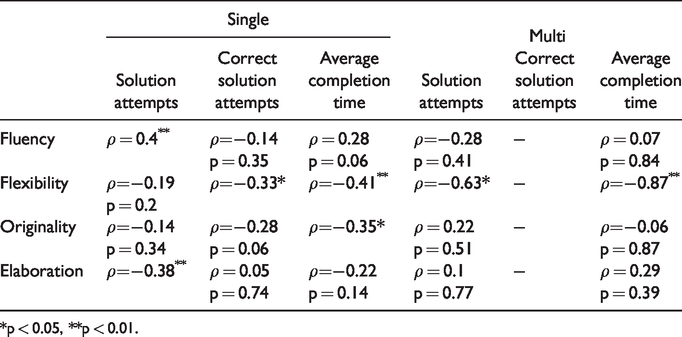
*p < 0.05, **p < 0.01.
Associations Between Computational Thinking and Creative Thinking
When examining the correlation between computational thinking and creative thinking, we found some notable findings. We found that in the “Single” group, a positive correlation was observed between Fluency and Solution Attempts, with ρ = 0.4 at p < 0.01. That is, the more fluent the students were in the standardized creativity test, the more solutions they provided in the game. Additionally, in this group, flexibility was negatively correlated with Correct Solution Attempts and Completion Time, with ρ = −0.33 at p < 0.05, and ρ = −0.41 at p < 0.01, respectively. These findings imply that the more flexible the students were, the less time they needed and the fewer correct solutions they submitted.
In the “Multi” group, we observed strong negative correlations between Flexibility, Solution Attempts, and Completion Time, with ρ = −0.63 at p < 0.05, and ρ = −0.87 at p < 0.01, respectively. That is, the more flexible students in the “Multi” group were in their drawings, the less effort it took them to solve the game challenges.
Moreover, a negative correlation was observed between Originality and Completion Time, with ρ = −0.35, at p < 0.05. For this group, we also found a negative correlation between Elaboration and Solution Attempts, with ρ = −0.38, at p < 0.01. That is, the more elaborated and original students were, the less attempts and less time it took them to complete the game challenges. The results are summarized in Table 7.
Associations Between Computational Thinking and Computational Creativity
Interestingly, we found that in the “Single” group, computational creativity was negatively correlated with all measures of computational thinking. That is, the more original the solutions were, fewer attempts were submitted by the students, they required less time, and their solutions were less correct. No statistically significant correlations were found for the “Multi” group. The results are summarized in Table 8.
Correlations Between Computational Thinking and Computational Creativity by Condition.
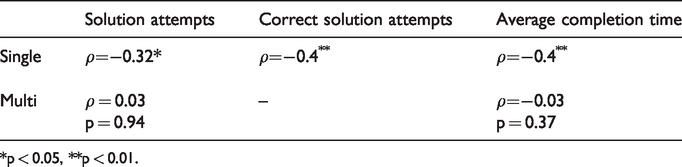
*p < 0.05, **p < 0.01.
Association Between Creative Thinking and Computational Creativity
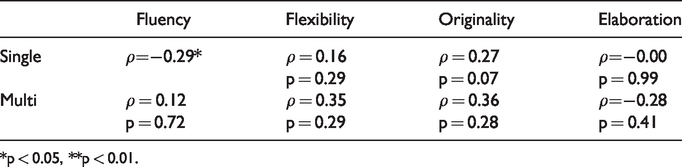
We found that in the “Single” group, Fluency was negatively correlated with Computational Thinking, with ρ = −0.29, at p < 0.05. No statistically significant correlations were found for the “Multi” group. The results are summarized in Table 9.
Correlations Between Creative Thinking and Computational Creativity by Condition.
*p < 0.05, **p < 0.01.
Comparing Multiple Correct Solutions and Their Submitters (Experimental Group, Level 10)
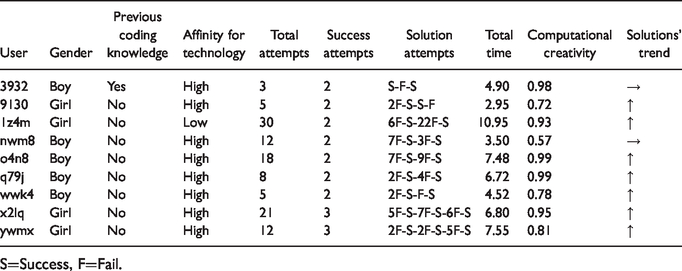
Lastly, we focused only on the students from the experimental group who provided more than one correct solution in Level 10 (N = 9, of whom 4 are girls and 5 are boys). We tried to identify the differences between the submitted multiple solutions, and highlight some common personal characteristics of those who submitted them. Only one boy had previous coding knowledge, while, in contrast, only one girl had a low affinity for technology. Except for one girl who submitted three correct solutions, all the students submitted two correct solutions. Remarkably, we found that except for two cases, all these students were able to improve their Computational Creativity score, meaning that their second/third solution was more original than the previous one they have submitted. The average Computational Creativity score for the first correct solution was 0.68 (SD = 0.17), while the average for the second correct attempt was 0.92 (SD = 0.14). A Wilcoxon Signed-Ranks Test indicated that the second correct attempt rank was statistically higher than the first correct attempt rank, with p < 0.05. In total, 10 different correct solutions were found. The most common solution (found in 35% of the cases) was the shortest one. However, this solution only used sequencing commands, i.e., forward, turn-right, and turn-left: FFFRFFFRFFTRF. Most solutions only used these commands in different variations and sequences. Only two solutions used the combination of sequencing command with loop and conditions. An example of such a solution is illustrated in Figure 6. It should be noted that this solution is not the most effective in terms of code length. The most effective solution consists of only four blocks: DoWhile, If-Else, Forward, and TurnRight. No participant has submitted such code.
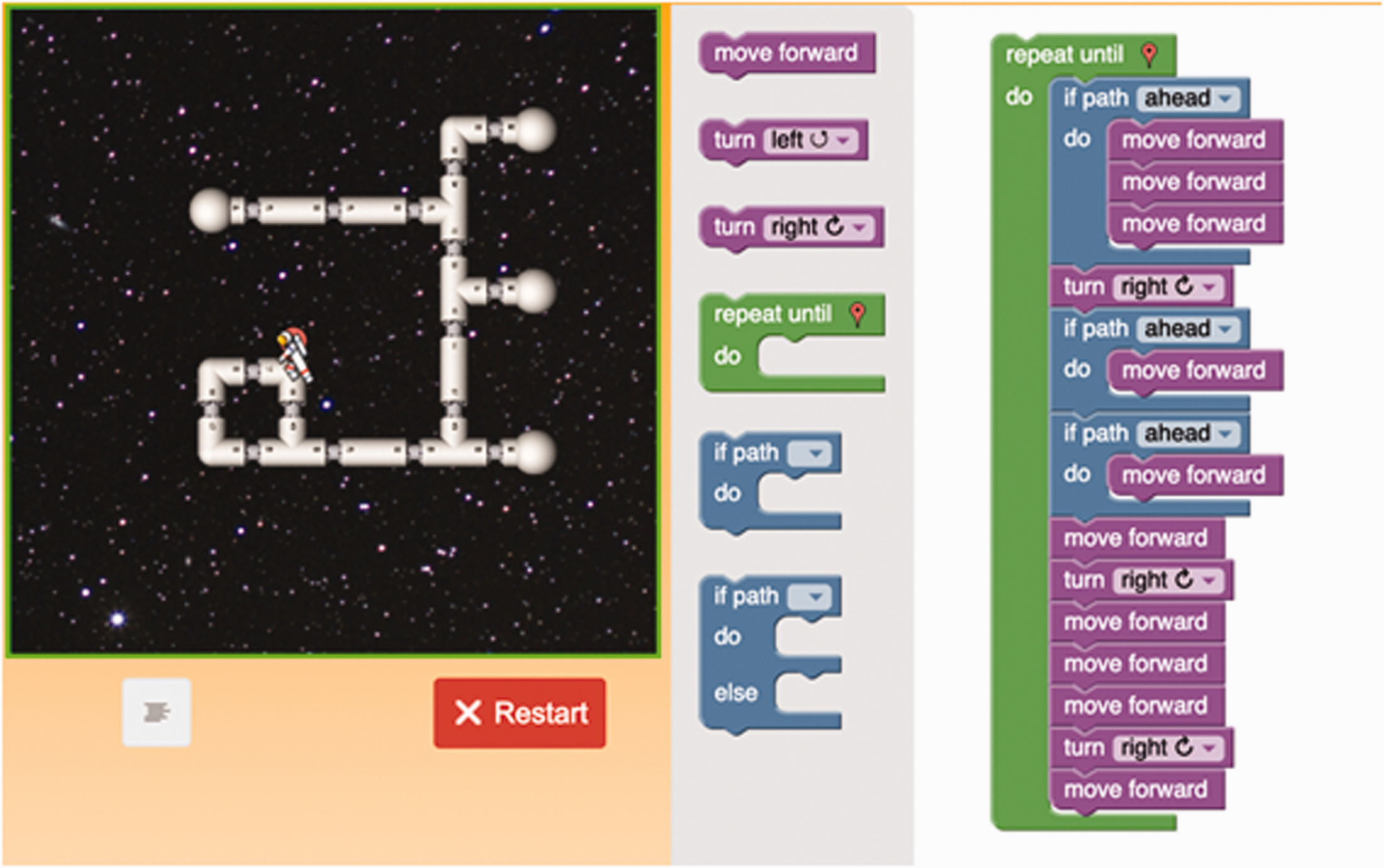
An Example of a Solution Which Used Sequencing Commands, Loop, and Conditions.
It is also important to highlight that students submitted a relatively high number of attempts, ranging between 3 and 30. The average number of Total Attempts was 12.67 (SD = 8.89). Examining the sequence of solutions submitted indicates that, with the exception of one student who succeeded in the first attempt, all students failed before and between their correct solutions. The results are summarized in Table 10.
Characteristics of Those Who Submitted Multiple Solutions in Level 10.
S=Success, F=Fail.
Discussion
In this study, we conducted a controlled experiment to examine middle-school students' personal characteristics and the association between CT, creative thinking, and computational creativity. These metrics were tested using a standard creativity test and student solutions in a dedicated game-based platform aimed at acquiring different CT concepts. Our intervention included an explicit request from the experimental group students to try to solve the last challenge of the game in as many different ways as possible; this request was made at the beginning of the session, that is, before starting using the game.
Our findings indicate that despite no statistically significant differences were found between the experimental and the control groups with respect to demographic and personal characteristics, creative thinking, and computational creativity, some differences were found with respect to CT acquirement. In particular, students in the experimental group needed less time to solve the game's challenges than students in the control group. It is possible that the students in the experimental group rushed through the challenges in order to reach level 10 where they were asked to submit multiple solutions. It was indeed found that giving students a task in a computer-mediated platform with a particular goal in mind accelerated students' performance (Schoeller, 2005)
We also found that there were similarities and differences between the experimental group and the control group, in the associations between creative thinking and CT. In both groups, we found statistically significant negative correlations between originality and flexibility and completion time. As students were more creative in the standardized creativity test, they required less time to solve the levels in the game. This is in line with previous studies which found associations between standardized creativity test and academic achievements (Anwar et al., 2012; Whalley & Ogier, 2020). Moreover, these findings provide the notion that creativity may contribute to computer science and CT in particular (Kong, 2019; Miller et al., 2013). Notably, we found that originality and flexibility were negatively correlated with solution attempts in the control group, while in the experimental group, these metrics were negatively correlated with correct solution attempts. We also found that in the control group, the higher the fluency score was, the more correct solutions were provided. These findings also reinforce the notion that creativity may be effective in acquiring CT, but this effect is most noticeable when there is no explicit pressure for being creative.
Our findings indicate some intriguing associations between all metrics of CT and computational creativity in the experimental group. The more creative the students were in producing a solution, the less effort it took them to solve the levels in the game. That is, creativity within the platform and CT acquirement are interconnected. This finding is consistent with previous studies that indicated the mutual contribution of creativity and CT, and that platforms for CT acquisition can develop and promote these skills simultaneously (Figueiredo & García-Peñalvo, 2017; Hershkovitz et al., 2019; Mishra & Yadav, 2013; Resnick, 2006). Additionally, we found that the more original the students in the experimental group were — as measured by a traditional pen-and-paper creativity test — the more creative they were in solving the levels of the game; this supports the notion that creative tasks can affect the expression of creative thinking in various domains, and may imply a “transfer of creativity” from one domain to another (Hong & Milgram, 2010; Liu & Lu, 2002).
When we compared those who submitted — or at least tried to submit — multiple correct solutions in level 10 (“Multi”) with those who submitted only one correct solution (“Single”), we found some remarkable findings. In the Single group, we found that creative thinking was negatively correlated with CT measures, excluding a positive correlation between fluency and solution attempts. As students were more flexible, they had fewer correct solutions, and as students were more elaborate, they had fewer attempts before achieving a correct solution. It is possible that elaboration hinders multiple solutions as students are more rigorous and immersed in perfecting their solutions. This assumption is consistent with the conclusions drawn from a study of 460 subjects who performed the Alternative Uses Test, whereby in time-limited situations, elaboration may hinder the production of original ideas (Dippo & Kudrowitz, 2015). Furthermore, we found that computational creativity was also negatively correlated with CT measures. It is apparent that these students found it difficult to provide creative solutions despite the amount of time they invested and the number of attempts they submitted. Their difficulty may be related to their lack of understanding of the concepts presented to them in the game. Indeed, it was found that creativity depends on expertise and familiarity with the content (Reilly, 2008).
As for the Multi group, we found that students who were more flexible required less time and fewer attempts in the game. Such association was found in the first phase, as detailed above. Moreover, since no statistically significant differences in group characteristics were found, it is possible that the students in the Multi group were able to provide multiple correct solutions because they understood the material better than the students in the Single group. This direction should be further investigated, as we plan to do in our future work.
An examination of the students who submitted more than one correct solution in level 10, revealed that the majority of these participants had a high affinity for technology, no previous coding experience, and performed more attempts in the game. As noted, there were no statistically significant differences in the characteristics of these students compared to the rest of the students in the experimental group. Indeed, previous studies have found that experience with technology usage does not necessarily predict CT acquisition (Durak & Saritepeci, 2018) or creativity (Jackson et al., 2012). Still, students were able to submit multiple correct solutions and even improve their creativity scores among the solutions. Therefore, it is possible that it was not their prior experience with technology that impacted their performance, but rather their tinkering — as is evident by the relatively high number of attempts — that has contributed to enhancing their creativity (Siemon et al., 2016). Moreover, tinkering was found as an effective strategy for learning programming, especially for novices. Importantly, the design of the learning environment and the immediate feedback that it suggests encourage this strategy (Berland et al., 2013). Therefore, the impact of the learning environment attributes on student performance should be further examined. Our findings show that most solutions that were submitted in that stage only incorporated basic commands, and although they were creative, they were not necessarily programmatically effective. It is possible that using more complex commands requires experience, which, as mentioned above, helps to develop creativity. Therefore, the relationship between code efficiency and creativity should be further examined.
As with the majority of studies, the design of the current study is subject to limitations. First, because we analyzed data from a single learning platform (Kodetu), it is possible that our findings were a result of some unique attributes of this platform (Saito et al., 2017). Furthermore, the analysis is based on students from a single country (Spain). Personal and cultural characteristics may affect how creativity is exhibited (Deng et al., 2016; Runco & Johnson, 2002; Zhou et al., 2013). It is possible that students from other origins and with different backgrounds will perform differently on such a platform. Therefore, we recommend replicating this study in other countries to offer a more international and multicultural view. Indeed, this is our plan.
Conclusions
This study advances the understanding of creativity and CT and enriches the limited knowledge base on computational creativity. Our findings suggest that creativity contributes to CT and is transferable across domains. Therefore, there is great importance of cultivating creativity while promoting CT. The findings also show that computational creativity can develop and improve over time, but at the same time, limitations can interfere with the expression of creativity. Many learning environments focus on code efficiency, sometimes at the expense of fostering creativity; original solutions which are longer than the desired solution will be perceived as less successful. However, longer solutions are not necessarily less effective than shorter ones, and might bring the user to the same successful outcome (Chao et al., 2014). Therefore, instructional designers need to inherently assimilate mechanisms to encourage creativity within learning platforms. Additionally, educators who want to better cultivate CT skills should encourage student creativity, whether by using dedicated learning platforms or by providing unplugged creative exercises.
Footnotes
Declaration of Conflicting Interests
The authors declared no potential conflicts of interest with respect to the research, authorship, and/or publication of this article.
Funding
The authors received no financial support for the research, authorship, and/or publication of this article.
