



Abstract
Scratch, a kind of visual programming software, has been widely used in instruction for primary school children. Scratch constructs a digital world for children to design, develop, and create coursework in which their creative thinking is fostered. Different instructional methods have been designed and implemented to stimulate children’s creative thinking skills through their coursework. This study investigated whether scaffolding construction with mind mapping promoted children’s creative thinking in a Scratch course. Two groups of 84 fifth-grade pupils participated in the study. The experimental group of 44 students adopted the scaffolding construction with mind mapping in the Scratch course, while the control group of 40 students did not use the mind mapping method. The Torrance Tests of Creative Thinking-Figural (TTCT-F) and Torrance Creative Personality Self-Report Scale were used three times over the 16-week learning period. The results show that learning in the Scratch course promoted the children’s creative thinking. The difference between the two groups indicates that mind mapping was beneficial to improve the children’s creative thinking.
Introduction
Creativity is the desire and ability to use one’s imagination, insight, intelligence, feeling, and emotion to transfer an idea from one state to another previously unexplored state (Dellas & Gaier, 1970). Creativity makes a huge difference in people’s lives (Whler & Reinhardt, 2021). It is critical to foster creative learning skills among children to prepare them well for future study and work. Creative thinking skills include finding, analyzing, and solving problems from different perspectives that are not identified by others (Hensley, 2020). The learning environment has a great effect on the cultivation of creative thinking (Besançon & Lubart, 2008). Marcos et al. (2020) proposed a method of reading and writing with the cooperation approach in the learning classroom to promote children’s creative learning. Navarrete (2013) carried out a case study to facilitate middle school students’ creative thinking in the design and development of digital games. Instructional strategies and methods were implemented in the cultivation of creative learning in different learning environments. Ersoy and Başer (2014) aimed to explore the effects of the problem-based learning method on creative thinking skills. In the present study, the method of scaffolding construction with mind mapping was used in a digital world constructed by Scratch software to promote children’s creative thinking.
Scratch, a kind of visual programming software as an entry-level programming language, is becoming increasingly popular (Coronado et al., 2020). Early programming languages were difficult to learn, so many children simply could not master programming syntax (Chou et al., 2019; Resnick et al., 2009; Su et al., 2015; Wu & Su, 2021). Using graphics makes programming tasks easier and is named “graphical programming” or “visual programming.” Daniel (1984) proposed that visual programming has shown that just with very little training people can create fairly complex programs. From design and development to creation of works of visual programming, learners’ creative thinking is cultivated. Due to wide use of the Scratch course in Chinese primary schools, studies are needed on its cultivation of creative learning.
In the 1960s, Buzan, a British scholar, invented the visual thinking tool mind mapping. With the development of knowledge visualization theory, mind mapping has been further popularized and applied. In Britain and Singapore, mind mapping has been included in the compulsory curriculum of national primary and secondary education, with teachers required to be able to use it skillfully. In the United States, mind mapping has also been a necessary teaching tool (Shiina et al., 2008). Mind mapping is effective in improving critical, creative and logical thinking (Mueller et al., 2010; Swestyani et al., 2018). This study focuses on the cultivation of creative thinking. Many studies have demonstrated that mind mapping is a tool for training students in creative thinking (Anderson, 1993; Lin & Shih, 2009; Pillay et al., 2020). Therefore, this study focuses on promoting children’s creative thinking in a digital world constructed by the Scratch course applying the method of scaffolding construction with mind mapping.
Literature Review
Creative Learning
People with high levels of creativity tend to have higher levels of academic achievement. Different levels of cognitive ability determine different levels of creativity. However, creativity is an independent ability of intelligence (Wallack & Koga, 1965). The integrative thinking that is the basis of our creativity is not enough. It must be developed along with the set of temperaments, qualities, and abilities that are necessary to succeed in solving difficult problems, as well as based on the knowledge and understanding stemming from rigorous research into and immersion in the problems in the field (Watts & Blessinger, 2016). In contrast to groupthink, which seeks the only correct solution to a problem, creative thinking involves the ability to generate new ideas that stretch and offer multiple possible solutions to a given problem consciously (Shamay-Tsoory et al., 2011).
Studies have shown that the creative process, the ability to construct original explanations, is found in all individuals (Shaheen, 2010). Creative thinking is considered a core skill required for all students (Chen et al., 2019; Kaufman & Beghetto, 2009; Shaheen, 2010). Researchers have noted that creativity can refer to the ability to create novel, useful, and generative works (Sternberg & Lubart, 1996). Hence, creativity is a characteristic of expression and the best way to express it through an original, valuable, and socially accepted idea, product or work of art. That is, creativity can be measured by performance indicators obtained from creative thinking tasks or psychological tests (Fink et al., 2009).
Previous studies have suggested that the learning method of student-centered game creation can benefit learners with an enjoyable and rich learning experience, promote practical technology application, and encourage deep and insightful learning (Navarrete, 2013). There are many ways and technologies to improve students’ creative thinking, such as applying higher-order thinking skills to storytelling (Aisyah & Setiawan, 2016), the training method of free painting (Laili & Yuniarti, 2017), and procedural learning for digital games (Behnamnia et al., 2020).
Scratch as a Visual Programming Software
Visual programming is a process of using meaningful graphical representations during programming (Shu, 1986). Students have hands-on experience because they can manipulate a program with visual concrete building blocks in a digital world, such as text boxes and buttons, and quickly generate an application (Eid & Millham, 2012). Visual programming software programs, including Alice, App Inventor, Kodu, Blockly, and Scratch, have been widely used in primary school courses. Among these, Scratch is the most typical and common, having been translated into more than 70 languages and used in more than 150 countries.
Scratch, a multimedia visual programming tool, was created by the Lifelong Kindergarten Group at the MIT Media Laboratory in collaboration with Yasmin Kafai’s group at UCLA (Maloney et al., 2008). There have been over a million Scratch projects since its inception (Maloney et al., 2010). The software is easier to modify and more meaningful and social than any other programming environment (Maloney et al., 2010). Scratch syntax is based on a set of graphical "blocks" that combine to create program subroutines in a digital world and does not require coding but rather can be programmed by dragging and assembling building blocks and is generally suitable for students ages 5–12. This is similar to Lego but in different learning environments. For the cultivation of creative thinking in adults, there are higher-level programming languages, such as R and Python. This study was mainly aimed at cultivating creative thinking in children. Many studies show that Scratch can enhance creative thinking. Kim et al. (2012) integrated information technology into teaching methods and confirmed that Scratch courses can improve students' computational thinking and creative thinking. Sayavaranont et al. (2018) studied a new Scratch teaching spiral model and proved its promoting effect on creative thinking. Thus, this study explored the cultivation of children’s creative thinking in the Scratch course, which constructs a digital environment. Therefore, hypothesis 1 was put forward.
Mind Mapping
Popularized by Buzan, mind mapping is a representation method that makes divergent thinking concrete and pictorial. It enables the inner cognitive structure of the brain to be shown and expressed through visualization (Buzan & Buzan, 2010). Mind maps are nonlinear visual contours of complex information that help promote memory, organization, creativity, and productivity. Ideas are displayed in context graphically, with the main theme at the center of the diagram and radiating out from the branches that surround each of the subthemes (Murley, 2007). The use of mind mapping has also shifted from simple pen-and-paper methods to computer software and collective collaborative mapping.
Studies have shown that mind mapping can help improve learners' creativity and learning interest (Malycha & Maier, 2017; Murley, 2007; Wang et al., 2010). In overseas teaching practice research, Conole and Weller (2008) found that mind mapping helped organize and represent design content and enabled designers to share and discuss design ideas more effectively. Eriksson and Hauer (2004) found that using mind mapping could help stimulate students’ interest in learning and improve their enthusiasm and concentration. Moreover, Thorpe (2008) determined that mind mapping could aid in visually representing the design of a series of learning tasks, enabling the designer to grasp the design content from a macro and global perspective and realize the perfect combination of learning tasks, goals, and situations.
Since then, most studies (Chen et al., 2020; Ismail et al., 2010; Liu et al., 2018) have applied mind mapping to programming teaching given its promoting effect on learning quality. Ismail et al. (2010) conducted a group of experiments among students majoring in computer science, proving that the mind mapping cooperative learning method can improve students' programming ability, problem-solving ability, and metacognitive knowledge. Liu et al. (2018) applied the teaching method of mind mapping to undergraduate programming and language teaching, transforming abstract and invisible thinking modes into visible, and radioactive thinking ones. It is proven that mind mapping can improve students' logical thinking and creative thinking skills. Chen et al. (2020) integrated mind mapping into MAPS (Mind Mapping, Asking Questions, Presentation, Scaffolding Instruction), a new kind of flipped classroom learning model, to enhance students’ learning motivation and reflection during Scratch learning. However, the application of mind mapping in Scratch learning to improve students’ creative thinking has not been demonstrated in previous studies. Therefore, this study used mind mapping as a control variable to explore the cultivation of creative thinking in children’s Scratch learning.
Chang et al. (2008) studied the influence of two teaching methods, “independent construction” and “scaffolding construction,” on students' biological learning. The system, which was in the "independent construction" learning environment, provided students with timely evaluation report and corresponding feedback. Students constructed their own mind maps with the help of feedback. In the scaffolding-building learning environment, students received an incomplete mind map in which some nodes and links were set as blank scaffolders. Scaffolding building is a transformation from complete building (Paas, 1992; Van Merriënboer, 1990). The “scaffolding” teaching method provides students with an incomplete framework as scaffolding in which some nodes and links are left blank. Students must finish the incomplete maps by filling in the blanks to finish the framework. This method, also called the “fill structure” method, has proven to be an effective teaching method that uses incomplete knowledge graphs to evaluate knowledge structures (Naveh-Benjamin et al., 1986, 1998). This kind of assistance can help reduce the psychological burden of students and provides them with a meaningful knowledge structure. Rourke and Lewer-Fletcher (2015) studied the application of scaffolding construction in mind mapping and proved that this approach can promote collaborative and reflective learning among students. Some scholars have demonstrated the effectiveness of this approach in education (Antoniou, 2016; Rajapriya & Kumar, 2017). Therefore, due to the fear that the cognitive level of fifth-grade students may not be sufficient for the self-construction of mind mapping, the mind mapping method with scaffolding construction was adopted. In this teaching method, the teacher prepares the frame of mind mapping in advance, leaving out some key knowledge points that will be filled in by students. The other group did not use any kind of mind mapping method. Therefore, hypothesis 2 was proposed.
Hypotheses
This study, based on drawing lessons from previous successful cases of Scratch learning, explored whether the cultivation of creative thinking skills is effective in Scratch visual programming education. The study divided instructional methods into scaffolding construction with mind mapping and without mind mapping to explore whether scaffolding construction with mind mapping can better improve pupils’ creative thinking. The following research hypotheses were proposed:
Both the experimental group (EG, scaffolding construction with mind mapping) and the control group (CG, no mind mapping) would significantly improve their creative thinking skills through 16 weeks of Scratch learning.
Students in the EG and CG would show significant differences in promotion of their creative thinking skills.
Method
Participants
Eighty-four fifth-grade children who took the Scratch course in the fall semester of 2020 participated in the experiment. The students were randomly assigned to the EG (44 students: 22 male and 22 female), which used the method of scaffolding construction with mind mapping, and the CG (40 students: 22 male and 18 female), which did not use the mind mapping approach.
According to Piaget’s theory of children’s cognitive development, children approximately 10 years old are in the concrete operational stage and gradually develop to the formal operational stage (Piaget, 1932). At this stage, children obtain the ability to think logically and to finish activities within a phase. They cannot complete tasks but can gradually overcome self-centered tendencies. However, children’s ability to think abstractly is insufficient in this stage. Therefore, their abstract thinking, logical thinking, and system thinking abilities need to be gradually cultivated. In addition, they should be guided step by step from the concrete operational stage to the formal operational stage (Ojose, 2008; Zhao et al., 2021). Therefore, the fifth-grade participants in this study were considered to be aided with scaffolding instruction when applying the mind mapping approach. The participants gained basic knowledge from the information technology course in third grade and mastered basic computer knowledge and skills. They began to learn Scratch programming in fifth grade, which provided an opportunity for the development of this study.
Procedure
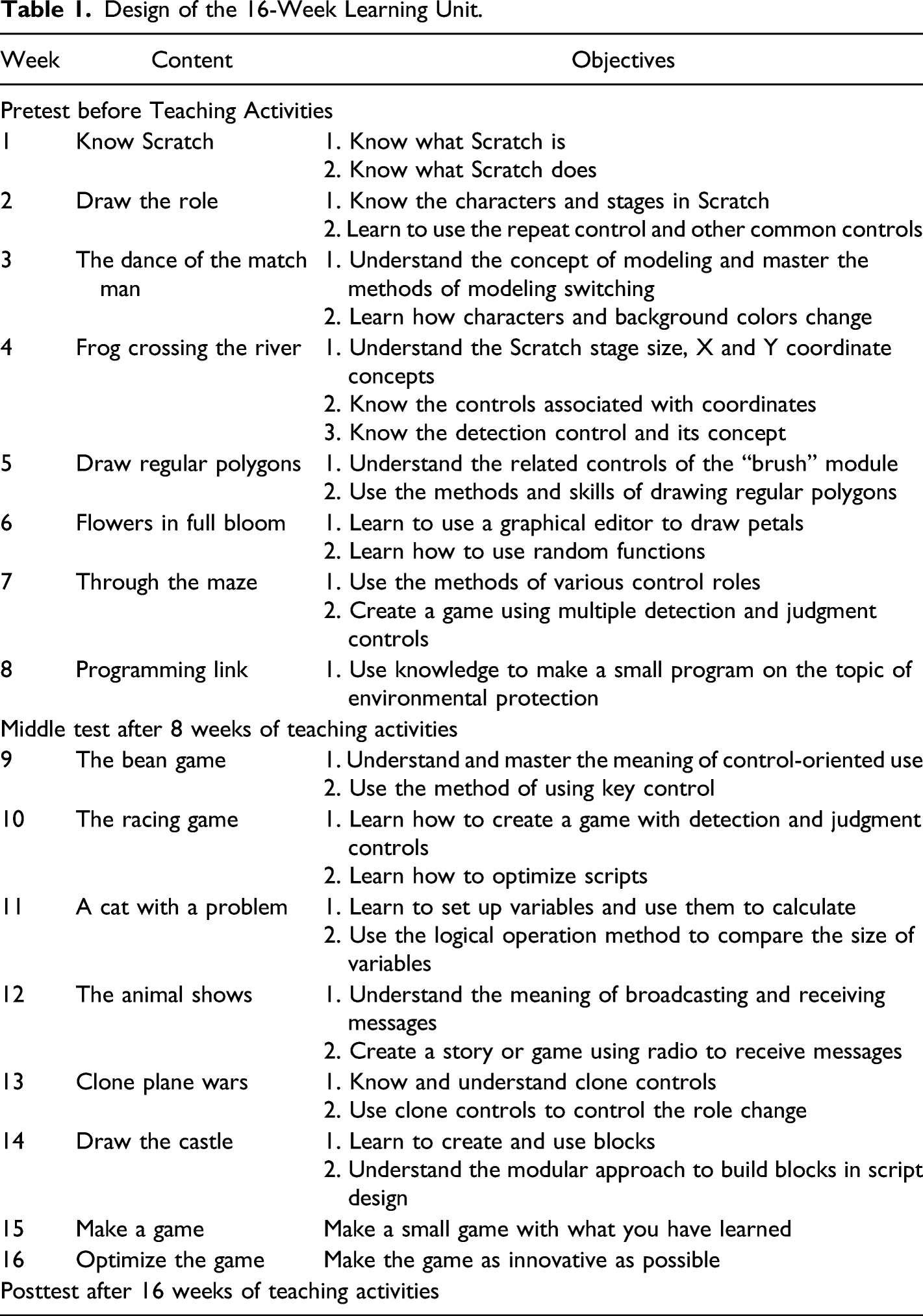
Design of the 16-Week Learning Unit.
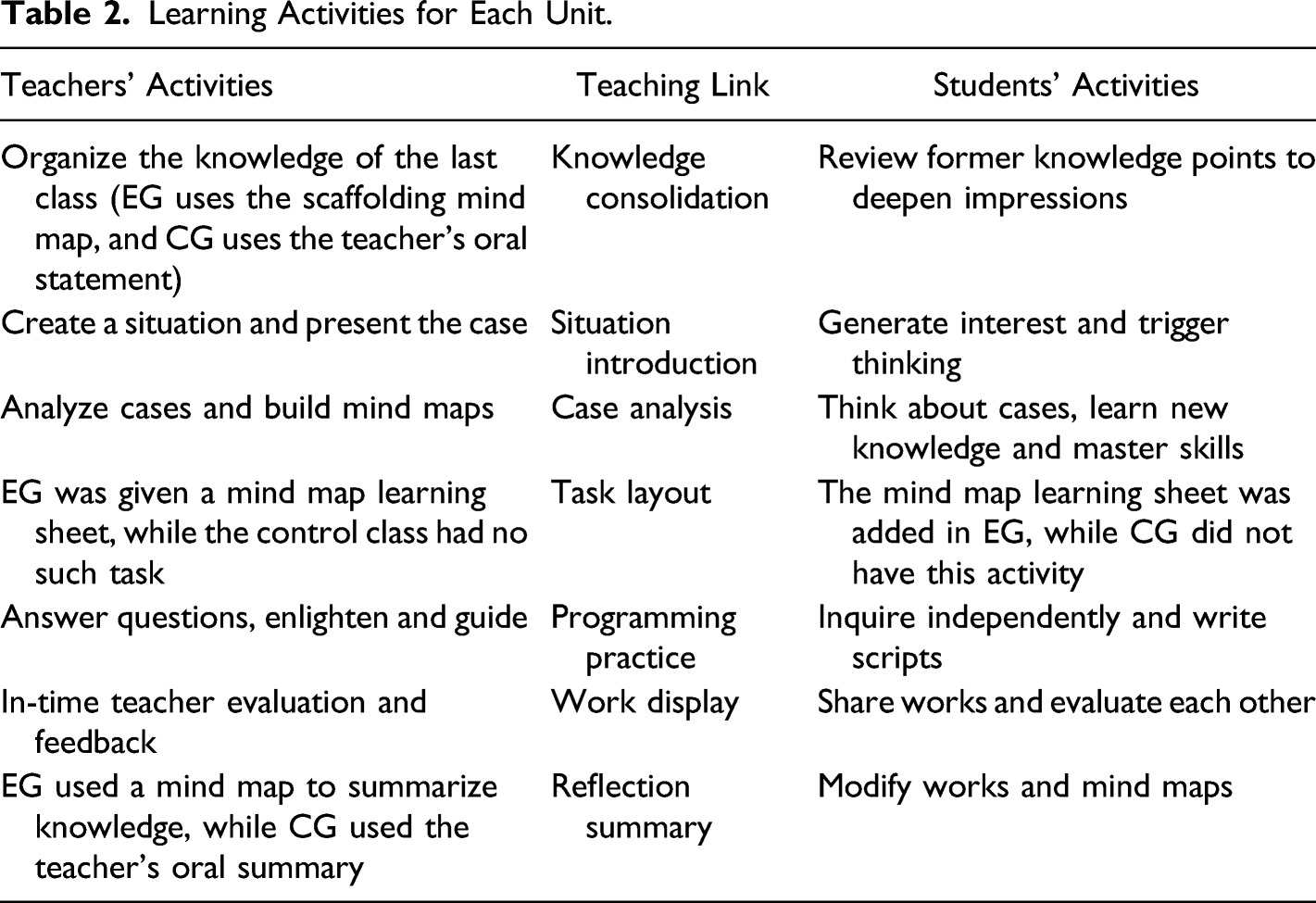
Learning Activities for Each Unit.
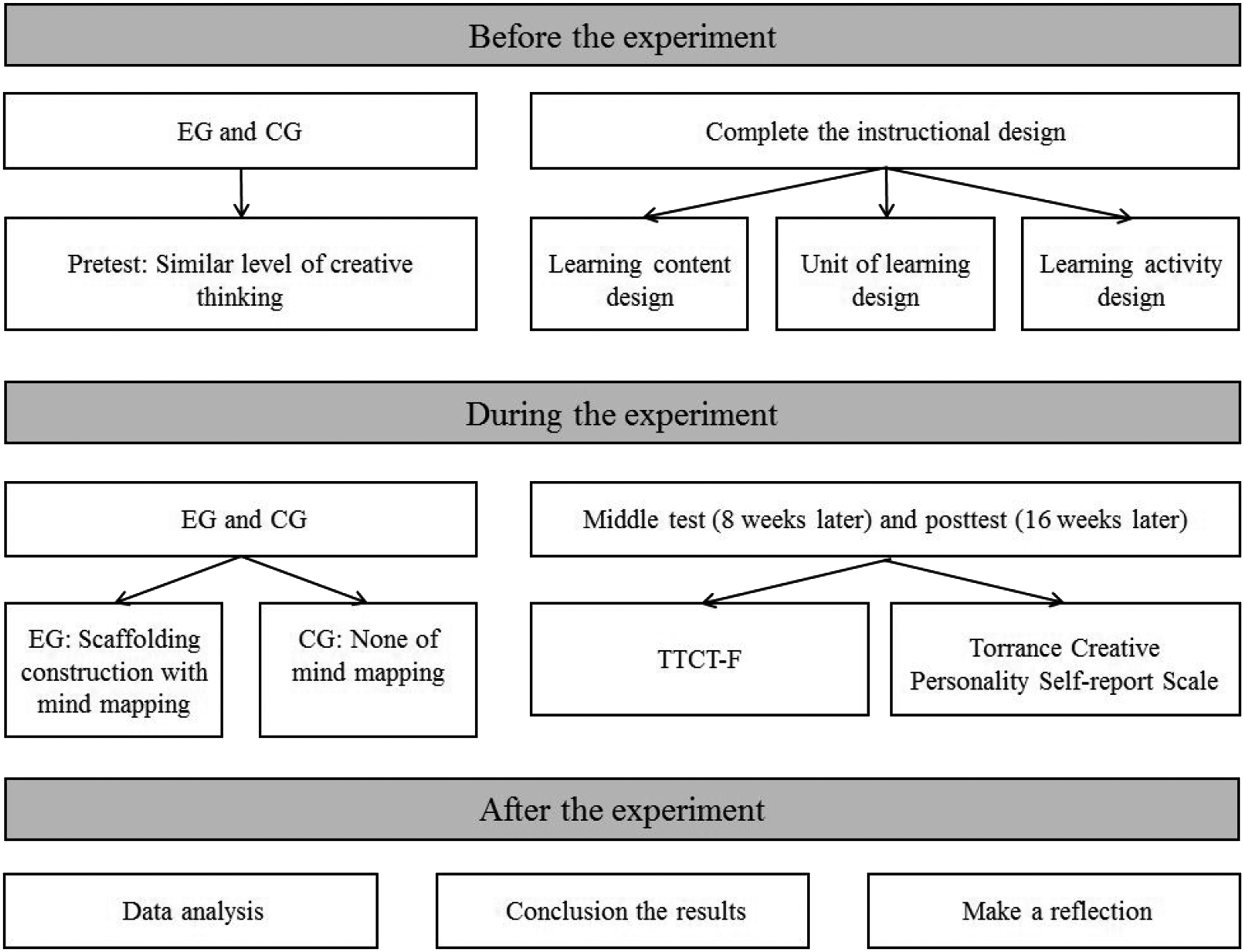
Experimental procedure.
Instruments
Torrance Tests of Creative Thinking
Clements and Gullo (1984) applied the TTCT to measure the effect of the programming domain on young children’s cognition. Torrance (2011) tested the effectiveness of the scale through short- and long-range tests. Seo and Kim (2016) used the TTCT to analyze the effects of coding education through pair programming for the creativity of elementary school students. The TTCT has been translated into more than 35 languages (Millar, 2002) and is used worldwide. It has been widely used in the field of education and business, which is recognized as a universal measurement tool in most fields (Hong, 2014; Kim, 2011). It has become highly recommended in education and even used in the corporate world (Kim, 2006). TTCT scores predict creative achievement better than scores on other tests (Kim, 2011). The TTCT includes two forms, the TTCT-Verbal and TTCT-Figural (TTCT-F). The TTCT-Verbal has two forms, A and B, and the TTCT-F also has two forms, A and B (Kim, 2006).
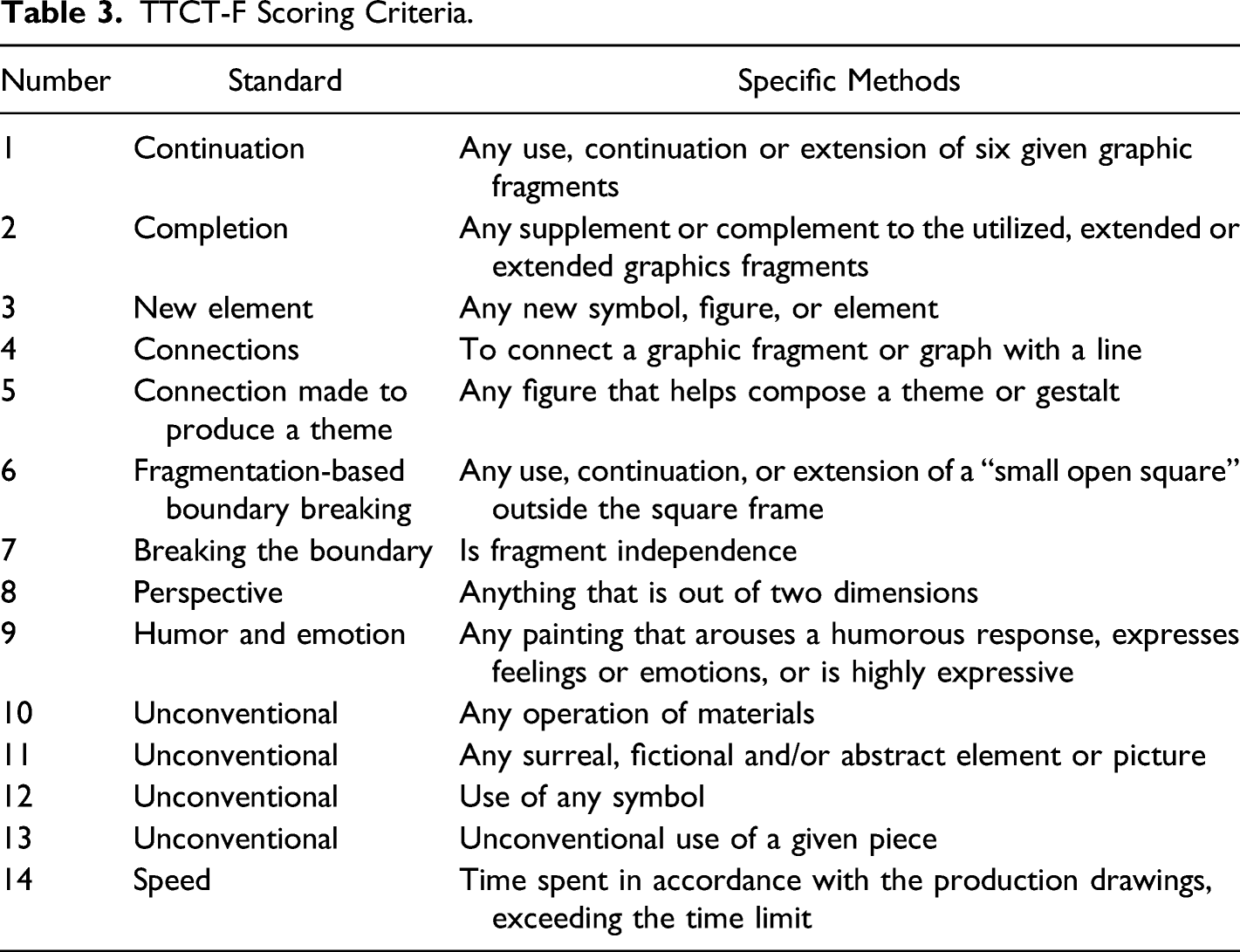
The TTCT-Verbal comes in two parallel forms, A and B. It consists of five activities, question and guess, product improvement, unconventional use, unconventional questions, and assumptions. Each task stimulus consists of a picture to which people respond in writing (Torrance, 1974). The TTCT-F has two parallel forms A and B, which are composed of three kinds of activities: constituting the picture, completing the picture, and repeating the graph of lines or circles (Kim, 2006). Researchers have used participants' scores on both versions and found significant results for both, but the TTCT-F has been more comprehensive, reliable, and effective (Kim, 2017). In terms of grading, this study referred to the grading criteria from existing studies (Urban, 2005). The following 14 key criteria are listed in Table 1, constituting the overall construction of the TTCT-F and serving as evaluation criteria (Jellen & Urban, 1986, 1989; Urban & Jellen, 1995).
TTCT-F Scoring Criteria.
Torrance Creative Personality Self-Report Scale
The study used the Torrance Creative Personality Self-Report Scale as a supplement to the TTCT-F. In 1965, Torrance compiled a self-report scale of creative personality, “What kind of personality do you have?”, which included 66 creative personality traits. It is necessary to gain a preliminary understanding of children’s creativity and to give positive or negative answers at the end of each item according to the subjects’ actual situation (Torrance & Hansen, 1965). Cox (2002) applied the tool to explore the relationship between self-directed learning and creativity among community college adult students, including computer science students. Garaigordobil and Berrueco (2011) used the tool to evaluate the effects of a play program on preschool children’s creative thinking. The tool contains 20 topics. Examples include Analogies are often used when speaking and writing; Able to actively identify problems and find relationships with them.
The Torrance Creative Personality Self-Report Scale has only two answers: yes and no. The study recorded 20 items on the scale as Q1–Q20, and the subjects scored 1 point for an affirmative answer and 0 points for a negative answer, adding the sum of Q1–Q20 as Q21 to test the subjects’ self-cognition of their own creative thinking.
Results
Reliability and Validity Measurements
Correlation Analysis of the TTCT-F.
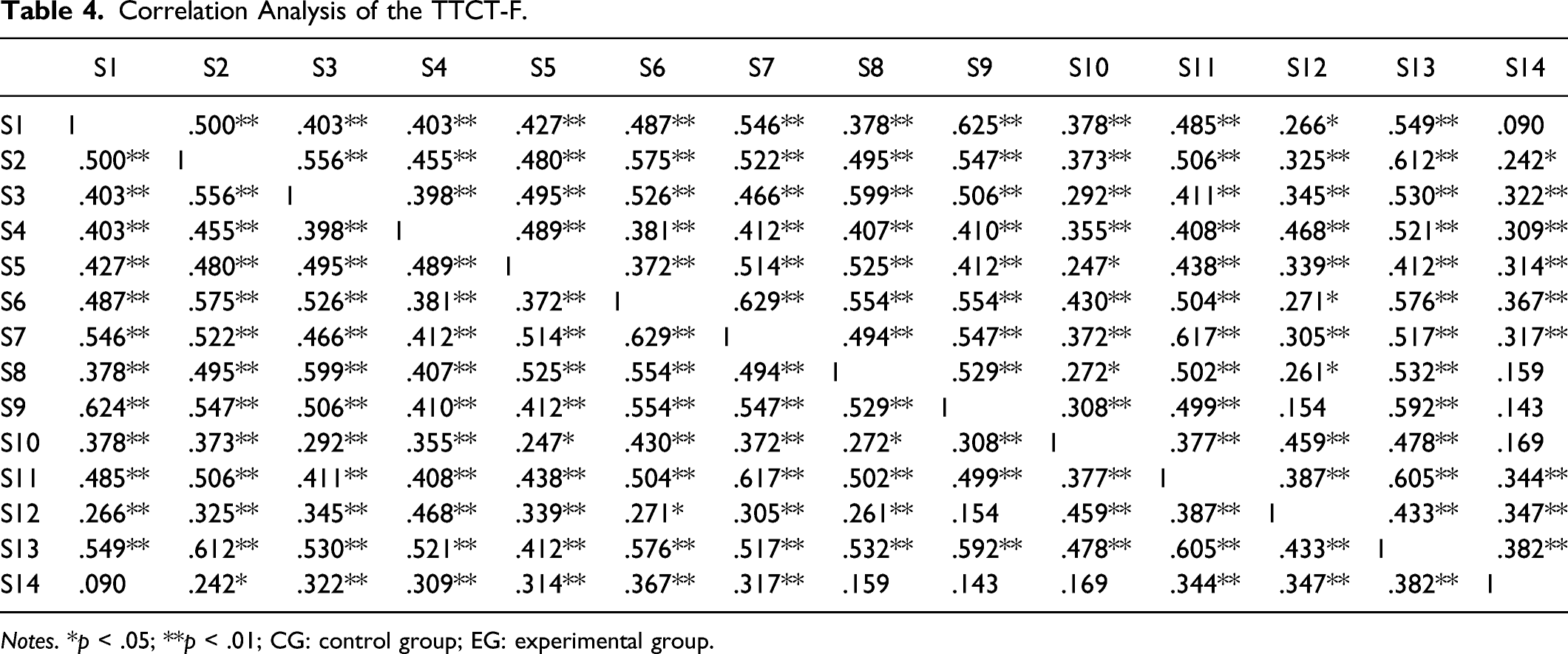
Notes. *p < .05; **p < .01; CG: control group; EG: experimental group.
Three-Time Test Results for the EG and CG
Pretest
Results of the Pretest.

Notes. *p < .05; **p < .01; CG: control group; EG: experimental group; M: mean; SD: standard deviation.
Middle Test
Results of the Middle Test.

Notes. *p < .05; **p < .01; CG: control group; EG: experimental group; M: mean; SD: standard deviation.
In addition, the two groups differed significantly in some scoring standards, including S3, S4, S5, S6, S9, S10, S12, S13, and S14. They also showed significant differences in the total score (S15) and the evaluation of their own creative personality (Q21). The effect size was also used in this study to detect the t-test effect. Although there are many ways to calculate effect size, Cohen’s d is the most frequently used method in the independent-sample t-test (Nakagawa & Cuthill, 2007; Sullivan & Feinn, 2012). A Cohen’s d value ≥ 0.2 and < 0.5 indicates small effects, a value ≥ 0.5 and < 0.8 indicates a medium effect, and a value ≥ 0.8 signals a large effect (Cohen, 1988). Therefore, S6, S14, and Q21 were shown to have small effects, while the rest had medium effects, indicating significant differences between the two groups.
Posttest
Results of the Posttest.

Notes. *p < .05; **p < .01; CG: control group; EG: experimental group; M: mean; SD: standard deviation.
The results revealed the following: (1) The mean scores of S1–S13 and Q21 in the EG were higher than those in the CG. (2) There were significant differences in the S1–S15 and Q21 scores between the two groups. (3) The S3, S7, S10, S12, S13, and Q21 scores indicated small effects, while the other scores indicated medium effects; thus, scaffolding construction with mind mapping was effective for the cultivation of creative thinking. (4) S14 scores in the CG were higher than those in the EG, which was an interesting phenomenon. In the limited time of the 20-minute TTCT-F test, CG students filled in more blanks than EG students. This is why the CG score in S14 was higher than that in the EG. However, as shown in Figure 2, for each blank, the EG students drew more complicated and meaningful pictures than those of CG students, indicating more creative answers for each item than the CG students gave (criteria refer to S–S13, S15. The scores of the two tests indicated that the EG scored higher than the CG in items S1–S13 and S15). Comparison of S14 responses for EG and CG students. Note. The figure shows Task 3: Parallel lines of the TTCT. There are 20 pairs of parallel lines below. Please add lines to complete each picture. You can paint anywhere in between, above or beyond the two lines. Try to think of things that others can’t think of. Draw as many different pictures as you can. Also, put as many ideas as you can into each picture to make it as full and interesting as possible, and write the name of each story on the line below each picture. Please take 10 minutes to complete this activity.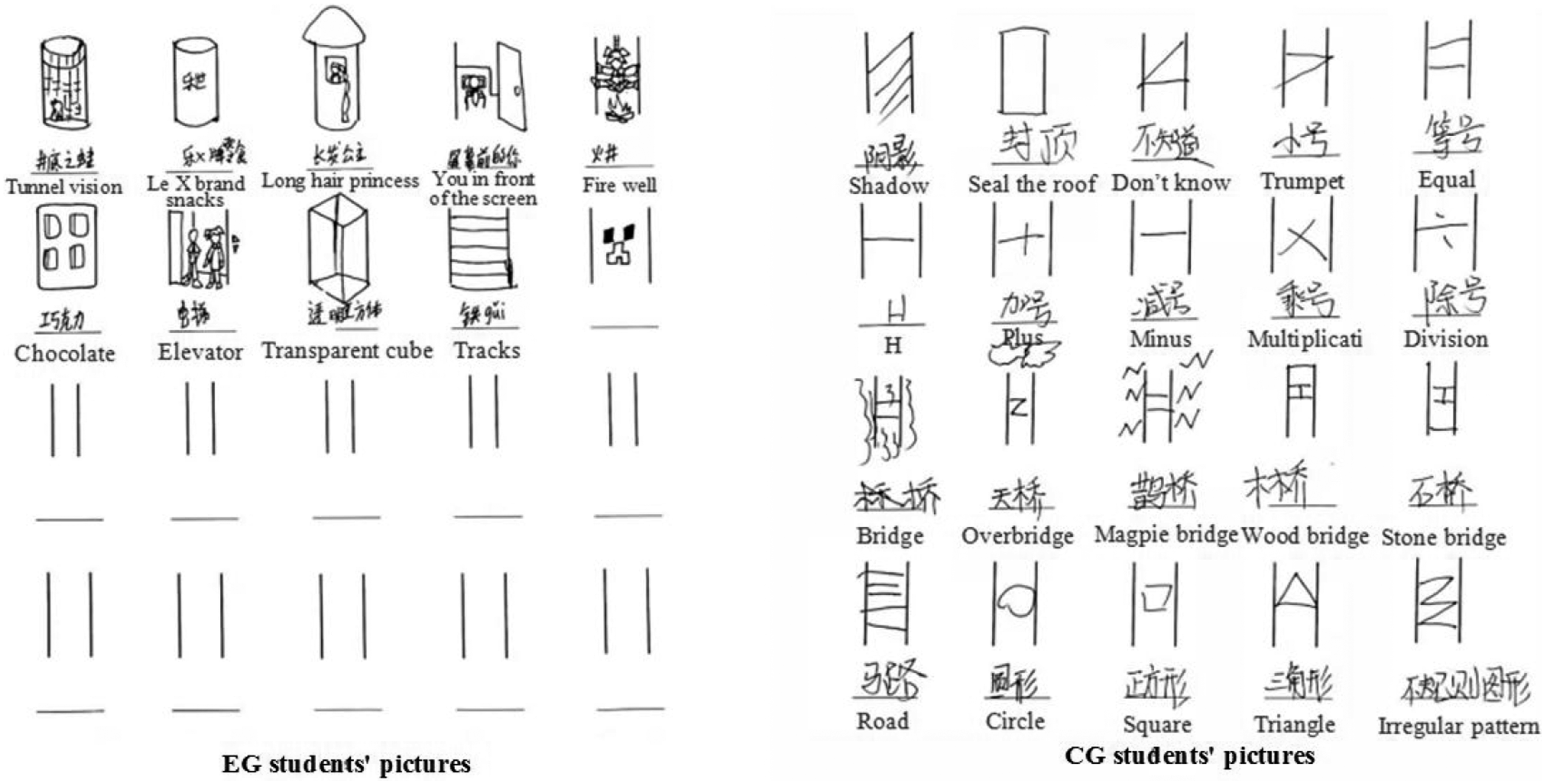
Comparison of creative thinking before and after the experiment
EG Students’ Creative Thinking Before and After the Experiment.

Notes. *p < .05; **p < .01; CG: control group; EG: experimental group; M: mean; SD: standard deviation.
CG Students’ Creative Thinking Before and After the Experiment.

Notes. * p < .05; **p < .01; CG: control group; EG: experimental group; M: mean; SD: standard deviation.
Discussion
Learning Scratch Improved Children’s Creative Thinking
Students' creative thinking can be measured through their work (Fink et al., 2009). Hence, this study used the TTCT-F picture test, which is widely recognized by the academic community for identifying changes in students’ creative thinking, and the Torrance Creative Personality Self-Report Scale as a supplementary tool. This study was conducted in a Scratch course for 16 weeks in a primary school. A pretest, middle test, and final test were conducted, and the results showed that each test score increased gradually. The scores before and after the experiment were significantly different, which indicated that the experimental design of this study was helpful for improving children’s creative thinking. The results are consistent with those of Garneli et al. (2015) and Pacheco et al. (2015).
The study showed that both groups showed significant differences after 16 weeks of Scratch course learning. This result was consistent with the study of Garneli et al. (2015). Fifty-three middle school students were divided into three groups, proving that the use of project-based learning methods and teaching methods based on visual programming tools can stimulate students' creative learning experience. However, whereas most research has linked visual programming with other teaching methods to measure children’s creative thinking levels, the present study links visual programming with the learning method of mind mapping. Therefore, hypothesis 1 was confirmed.
Mind Mapping is Effective in Promoting Creative Thinking
The control variable of this experiment was that the EG adopted the learning method of scaffolding construction with mind mapping, while the CG adopted the learning method without mind mapping. The two groups’ pretest, middle test, and posttest results were compared and analyzed. The pretest results showed no significant difference between the EG and CG, and their similar scores indicated that creative learning was at the same level for the two groups before the experiment. However, after the middle test, the study found that the children’s creative thinking in both groups had improved, and the scores of the EG students gradually rose higher than those of the CG students, showing significant differences in some standards. However, there was no significant difference in the overall scores. Although the posttest scores of creative thinking for both the EG and CG improved more than they had previously, the EG scores were higher than the CG scores for most of the standards, and the total scores differed significantly. To measure creative thinking, Urban (2005) noted that it is not accurate to look only at one of the 14 criteria and that instead the total score of the 14 criteria should be used, namely, S15 in the paper. Although the influences of S8, S9, and Q21 were small, the influences of other standards were medium or high efficiency. Thus, it was shown that scaffolding construction with mind mapping had a greater effect on children’s creative learning than the method without mind mapping. Therefore, hypothesis 2 was confirmed. This result is in line with the study of Vernon and Hocking (2016).
Conclusion
Due to the need for future citizens to gain creative thinking skills, it is critical to cultivate children’s creative learning skills in different courses. The Scratch course creates a digital world for children to design, develop, and create new coursework. In the course, the strategy of scaffolding construction with mind mapping promotes children’s creative learning.
Implications
The theoretical contribution of this study is to prove the positive influence of visual programming tools and mind mapping on the cultivation of creative thinking for children. Scratch, as a kind of visual programming tool, can help provide a creative learning environment in a digital world without preparation of other real materials for children’s hands-on activities. The strategy of mind mapping helps guide children in designing and creating their coursework.
The practical contribution of this study is that the results can provide some guidance for teachers to optimize their teaching methods and processes. For example, teachers can use scaffolding teaching methods and various tools, such as mind mapping, to guide students’ thinking patterns and use visual tools to cultivate students’ creativity.
Limitations and Future Works
Some limitations of this study need to be given more attention in future studies. First, the information technology course in fifth grade was only 16 weeks long in the semester in which the experiment occurred, so the frequency of testing—once every 2 months—may have caused the previous test to impact the later tests. An experiment should involve a long-term process (Liu et al., 2021; Su et al., 2021; Wu & Su, 2021). Second, each test in this study was analyzed according to the average score (rounded) from three experts to ensure scoring objectivity, but the number of experts may have been too small. These limitations overall warrant further optimization of the experimental design in subsequent studies. Third, this study considered the cultivation of creative thinking in the Scratch course. There may be other factors that influenced the changes in students’ creative thinking, such as the similar courses that students took in the same semester, which will be explored in future studies.
Footnotes
Declaration of Conflicting Interests
The author(s) declared no potential conflicts of interest with respect to the research, authorship, and/or publication of this article.
Funding
The author(s) disclosed receipt of the following financial support for the research, authorship, and/or publication of this article: This research was funded by the National Social Science Foundation of China (Grant No. BCA200093), and Priority Academic Program Development of Jiangsu Higher Education Institutions. Moreover, this study was supported by the Ministry of Science and Technology, Taiwan, under grant MOST 109-2511-H-019-004-MY2 and MOST 109-2511-H-019-001.
