



Abstract
Higher-order thinking skills (HOTS) are reliable predictors of success in school and the workplace. A typical technique for encouraging higher-order thinking is to use instructional design interventions that engage learners in simple cognitive activities. Business simulation game (BSG) is one of the types of interactive learning environments that can increase HOTS. In addition, student engagement and attitude toward technology use are considered strong influences on HOTS. The study explored the effect of using a BSG on HOTS and student engagement. It examined the influence of attitude toward the use of a BSG on HOTS and student engagement. The results of the t-test analysis showed that learning activities using BSG had a positive effect on HOTS and student engagement. Additionally, PLS-SEM analysis results indicated that immersion, interaction, and intention to use the game influence student engagement. Furthermore, student engagement significantly influenced HOTS. The findings indicate that students must demonstrate that they are engaging actively in a course to improve HOTS and that a BSG can be a valuable and effective tool for promoting engagement. Moreover, the COVID-19 pandemic caused limitations in sampling and representativeness of respondents. Future research should involve a bigger sample size and students who have attended related courses.
Introduction
Scholars, practitioners, and policymakers are increasingly focused their attention on the conceptualization and measurement of engagement. The relationship between time and effort invested by both students and educational institutions is known as student engagement, and through the use of other related resources, with the goal of optimizing the student experience and enhancing student development and learning outcomes (Schindler et al., 2017). A variety of structural and internal variables, such as the intricate interaction of relationships, activities of learning, and environment, shape student engagement. The more dedicated and empowered students are in their learning communities, the more probable this energy is to return to their studies and lead to several short and long-term results, which, in turn, fuel engagers can achieve (Bond et al., 2020). For several decades, some experts have remarked that games and gamification have inspired strategies for improving participation in a constructive manner (Connolly et al., 2012; Steinkuehler et al., 2012). Furthermore, engagement refers to academic and non-academic characteristics ocof university life (Teng & Wang, 2021). Student engagement has been defined as comprised of three elements: cognitive engagement, emotional engagement, and behavioral engagement (Fredricks et al., 2004; Skinner, 2016; Teng & Wang, 2021).
Learning through simulation games is built on theoretical and practical applications that students must apply in “real-life” scenarios. It is a clever and inventive technique that improves learning achievement and engagement (Mawhirter & Garofalo, 2016). By simulating real-world conditions or playing roles, problem-solving and performing, and repeating tasks, games typically serve the double objective of boosting learning outcomes while making learning pleasurable (Schindler et al., 2017). Researchers have demonstrated the advantages of employing BSG for manipulating teaching material and monitoring the consequences of these changes to provide students with practice and actual knowledge (Fox et al., 2018; Pasin & Giroux, 2011; Zulfiqar et al., 2019). Furthermore, simulation games are essentially free of risk; no one is hurt if they make a mistake or a poor judgment call. Because no genuine risk exists, participants can build confidence in a less stressful but exciting atmosphere (Pasin & Giroux, 2011).
BSG provides real-world workplaces with genuine and practical options for research and decision-making, which are essential to market success (Yang, 2015). They enable students to increase higher-order thinking skills (HOTS), which are crucial for commercial success (Springer & Borthick, 2004). HOTS, which involves problem-solving, critical thinking, and creativity, are essential for students whose education is focused on future employability and learning transferrable skills that will generate a successful job (Yang, 2015). In a changing world, the significance of HOTS is becoming evident; the majority of global competency models promote problem-solving and critical thinking abilities in multidimensional and unreliable contexts (Lee & Choi, 2017; Vidergor, 2018).
Despite the real advantages of introducing BSG into instructional strategies, using simulations to generate job skills while enhancing engagement and HOTS have yet to be appropriately explored (Yang, 2015), and criticism has been expressed regarding overlapping terminology and ambiguous definitions of higher-order thinking (Lee & Choi, 2017). In summary, educators must design and execute learning environments that encourage students to develop their HOTS (Lu et al., 2021). In addition, designing and implementing instructional interventions that engage learners in the complex cognitive tasks or activities outlined above is a popular technique for encouraging and promoting higher-order thinking. Learning resources, learning tasks, teaching methodologies, and even entire curriculums are included in these instructional interventions.
Improving HOTS is a collaborative process including instructors in all subject areas and may be taught at any level of study (Abosalem, 2016; Elfeky, 2019). Moreover, Alsowat (2016) recognizes that most students do not acquire these skills independently; hence, particular HOTS should be openly and directly taught at various points throughout a unit or semester. A well-designed game can help students build not only knowledge but also develop HOTS that can transcend the game and be applied in their everyday lives (Yang, 2015). Thus, this study was aimed at investigating the effect of BSG on students' engagement and HOTS, examining the influence of attitude toward BSG use on student engagement and HOTS, and at answering the following questions: (1) Will students who learn through BSG improve more significantly in terms of student engagement and HOTS than those who learn in regular class (comparison group)? (2) Will attitude toward a BSG (immersion, interaction, and intention to use the game) influence student engagement (behavioral, emotional, and cognitive)? (3) Will student engagement (behavioral, emotional, and cognitive) influence HOTS (problem-solving, critical thinking, and creativity)?
Literature Review
Student Engagement
Engagement refers to a specific notion of the student–institution interaction. Institutions are responsible for creating learning environments and providing opportunities for learning to occur (Krause & Coates, 2008). Bond et al. (2020) defined engagement as the amount of effort and energy students expend in their learning community over time, determined by behavioral, cognitive, and emotional characteristics. Others have mentioned that student engagement is the extent to which they engage in behaviors, such as classroom instruction, participation in enrichment education programs, asking for assistance from teachers, or cooperating with other students (Alsowat, 2016; Reeve & Tseng, 2011; Rogmans & Abaza, 2019).
Many researchers throughout the world have explored student engagement. The concept of engagement is receiving attention as a possible cure to falling academic motivation and accomplishment. Contextual features and environmental change are assumed to be flexible factors in engagement (Fredricks et al., 2004; Rogmans & Abaza, 2019). According to some researchers, engagement encompasses both behavior and emotion (Skinner, 2016), whereas others, on the other hand, have offered a model of three-dimension that incorporates cognitive, behavior, and emotion (Bond et al., 2020; Bond & Bedenlier, 2019; Fredricks et al., 2004; 2016; Skinner, 2016). The agentic engagement was included as the fourth component of student engagement by Reeve and Tseng (2011).
The concept of behavioral engagement is built on involvement and includes participation in academic, social, and extracurricular activities. It is advised to be key to ensuring good academic achievement and preventing dropouts (Bond et al., 2020; Fredricks et al., 2004; Teng & Wang, 2021). Some indicators of behavioral engagement are the time and achievement the student spends on learning activities (Buil et al., 2020; Schindler et al., 2017).
Students' favorable attitudes to their teachers, friends, and learning environment, along with their sense of belonging and interest, are referred to as emotional engagement (Buil et al., 2020; Reeve & Tseng, 2011; Teng & Wang, 2021). Attitude, interest, and value are indicators of emotional engagement (Fredricks et al., 2004). Finally, cognitive engagement is based on the concept of contribution; it entails forethought and a willingness to do the work required to grasp complex ideas and master challenging abilities (Fredricks et al., 2004, 2016). The will to learn, the determination to overcome academic challenges, the ability to achieve or surpass expectations, and the processing of material through critical thinking are all indicators of cognitive engagement (Fredricks et al., 2004; Schindler et al., 2017).
Higher-Order Thinking Skills
Higher education institutions have recently attempted to integrate technology into active learning settings to promote HOTS (Lee & Choi, 2017; Schindler et al., 2017). HOTS has become increasingly vital in developing innovative skills in the 21st century (Di et al., 2019). Moreover, as one of their educational goals, higher education institutions enhance these thinking skills to prepare students for the future society through teaching and learning (Kim et al., 2020).
Policymakers, educators, researchers, and the general public have all emphasized the relevance of HOTS (Di et al., 2019; Hwang et al., 2018; Lu et al., 2021). Problem-solving, critical thinking, and creativity are essential HOTS for students (Huang et al., 2022; Lu et al., 2021; Yang, 2015). Problem-solving includes the capacity to recognize a problem, gather and analyze relevant data, and select and implement an appropriate solution (Huang et al., 2022; Hwang et al., 2018; Yang, 2015). Students use critical thinking as a cognitive technique to critically analyze their methods and opinions (Hwang et al., 2018). Creativity is the ability to develop a new idea by elaborating upon, clarifying, analyzing, and evaluating an existing one (Huang et al., 2022; Hwang et al., 2018).
Moreover, students did not develop higher-order thinking skills naturally; therefore, HOTS should be explored in-depth and explicitly throughout a course or semester (Williams, 2003). Participation in educational activities cultivates HOTS. Engagement is the extent to which students actively participate in educational activities that foster high-quality learning (Coates, 2006).
Business Simulation Game
Game-based learning is an approach to the use of actual games to improve the teaching and learning process in the classroom (Mohamad et al., 2018). Games are exciting and entertaining and require critical analysis (Squire, 2002). In addition, games represent more excellent technological and cultural trends that impact educational innovators (Squire, 2008). Doyle and Brown (2000) stated that games provide an organized environment for studying complex issues. Furthermore, simulation games are games used to reproduce and educate concepts and methods that use people in a specific manner, whether actual or simulated (Tiwari et al., 2014). Simulation-based learning is based on constructivist theory, as individuals generate new knowledge based on their prior conceptual understanding (Dewey, 1986; Vygotsky, 1978). A simulation is a technique for learning or assessing the knowledge of instructional material that is based on a real-world scenario. The simulation is intended to simulate a real-world scenario as precisely as possible; students must adopt roles while analyzing the situation and making decisions. As the simulation progresses, students adapt to the challenges by understanding the implications of their choices and deciding their next steps based on this knowledge (Tiwari et al., 2014).
In addition, Business simulation games are commonly used in business classes (Faria, 2001; Tiwari et al., 2014; Zulfiqar et al., 2019). Previous research revealed that BSG is based on theories and practices to assist students in enhancing their academic achievement in the actual world. BSG also provides an innovative approach to increasing learners' motivation for study and practice in a secure setting by correctly simulating real business scenarios (Huang et al., 2022; Mawhirter & Garofalo, 2016; Pasin & Giroux, 2011; Zulfiqar et al., 2019). BSG enhances critical thinking, collaborative skills (Doyle & Brown, 2000), and attitude (Zulfiqar et al., 2019). Moreover, the research results of Buil et al. (2020) supported the application of business simulation games to improve undergraduate business students' engagement. While Kim et al. (2020) believe engagement in meaningful educational endeavors is the only way to enhance higher-order thinking skills successfully.
Attitude Toward BSG Use
Integrating technology into learning and teaching improves learning quality (Law et al., 2016). Previous research has determined that technology promotes active learning because it can involve complicated, real-world situations to stimulate students' minds and push them to think in novel directions (Lee & Choi, 2017). Both emotional and cognitive factors influence learner attitudes regarding technology use. On an emotional level, learners may find using technology for learning more or less painful or enjoyable. They may believe that technology increases interactions with the instructor or classmates, is productive and efficient, and delivers various learning benefits (Agyei & Voogt, 2011). Learners’ engagement might be influenced by their beliefs about technology or how they utilize it, which affects the methods they use to learn and their learning performance, regardless of the technology used (Lee & Choi, 2017).
Digital games are a form of technology-enhanced learning that provides many advantages to learners, and incorporating technology use into the classroom can enhance students’ engagement and HOTS (Di et al., 2019; Rogmans & Abaza, 2019). Many scholars have investigated the use of game-based learning, particularly in studies focusing on learning performance (Karagiorgas & Niemann, 2017; Wu et al., 2012). As a sort of digital game-based training, a simulation game has many advantages, including linking learning to real-world problems, opportunities to cooperate and share knowledge, and exposure to students in a safe environment while exploring and taking risks (Siewiorek et al., 2012). In addition, simulation games promote interactive and relevant experiences with a virtual business and combine social construction ethics, such as the active knowledge generation, as well as the supply of support instruments and participant involvement to improve HOTS (Kiili, 2005; Siewiorek et al., 2012; Yang, 2015). Furthermore, developing HOTS, games, or simulations based on problems allows students to examine and learn from practical scenarios in which all learning tasks are related to a more significant, authentic, and complicated challenge in which participants can try out new ideas, take control of the outcome, and get feedback and reflect on their chances.
Many studies have verified that BSG can provide gamers with a complete view of a company’s strategic activities and assist them in understanding how real-world business choices are made (Buil et al., 2020; Pasin & Giroux, 2011; Tiwari et al., 2014). Also, the positive effects of using BSG in teaching and learning activities have been found.
Methodology
Participants
This research was carried out at an Indonesian university. The students in their second-and-third years who had completed the introductory business courses and maintained their GPA were invited to participate. This guarantees that the participants have the same level of background knowledge. Thus, probabilistically equivalent is assumed. This study adopts a quasi-experimental posttest-only design because one of the purposes of this study is to assess whether the two groups differ after the treatment. Forty-eight students were randomly allocated into two groups using a random number generator, the comparison (n = 24) and the treatment group (n = 24). Both sections were taught by the same instructor, with identical course materials and evaluations; however, the treatment group students were instructed to use BSG.
Experiment Procedure
This study adopts a quasi-experiment design with nine meetings of 100 minutes each, as seen in Figure 1. The activity was employed in the entrepreneurship course to assist students in comprehending the process of running a business enterprise, particularly in competitive environments. Figure 1 shows the experimental procedure of this study. The students were divided into two classes at the start of the course. The student in the comparison group learned the module with regular/traditional learning activities utilizing PowerPoint, group discussions, and teacher-led discussions. The treatment group students used BSG to learn the module. Students were divided into six members per team during class time, enhancing communication and collaboration. Each team managed a firm and competed against other students' companies. In the first meeting, the students receive a course introduction for 100 minutes. Teachers described the process to the students in both the comparison and treatment groups in order for the experiment to be carried out successfully and efficiently. In addition, the students were required to sign consent documents. Next, from the second through the seventh meeting, the comparison group students were taught using the entrepreneurship module, which required them to design, manufacture, and sell various bicycles in various markets. On the other hand, the treatment group students learned within the BSG. In addition, the students also had to deal with the development, quality control and product development, production and operations management, inventory, human resource management, outsourcing, marketing and advertising, and financial management. The experiment procedure.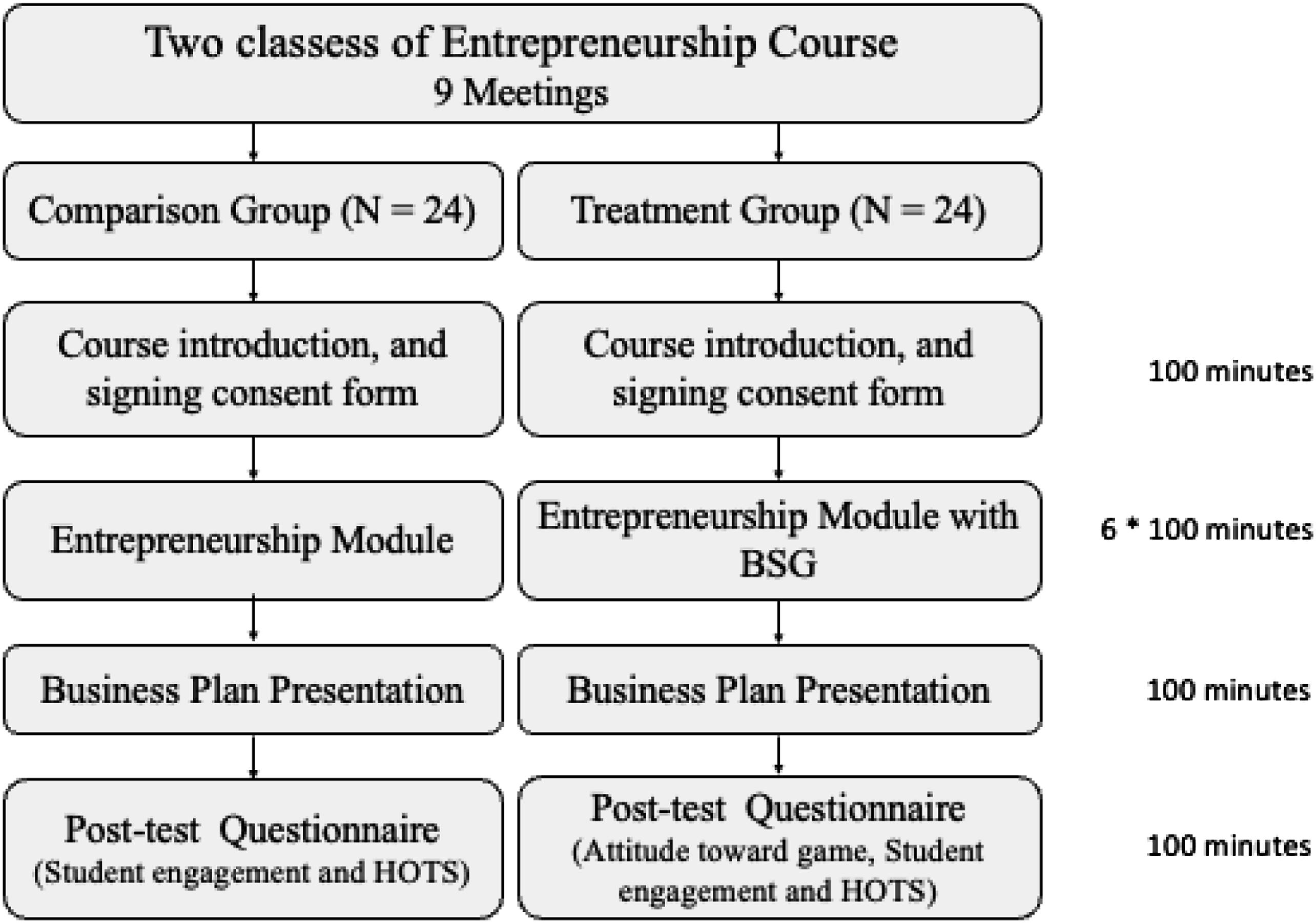
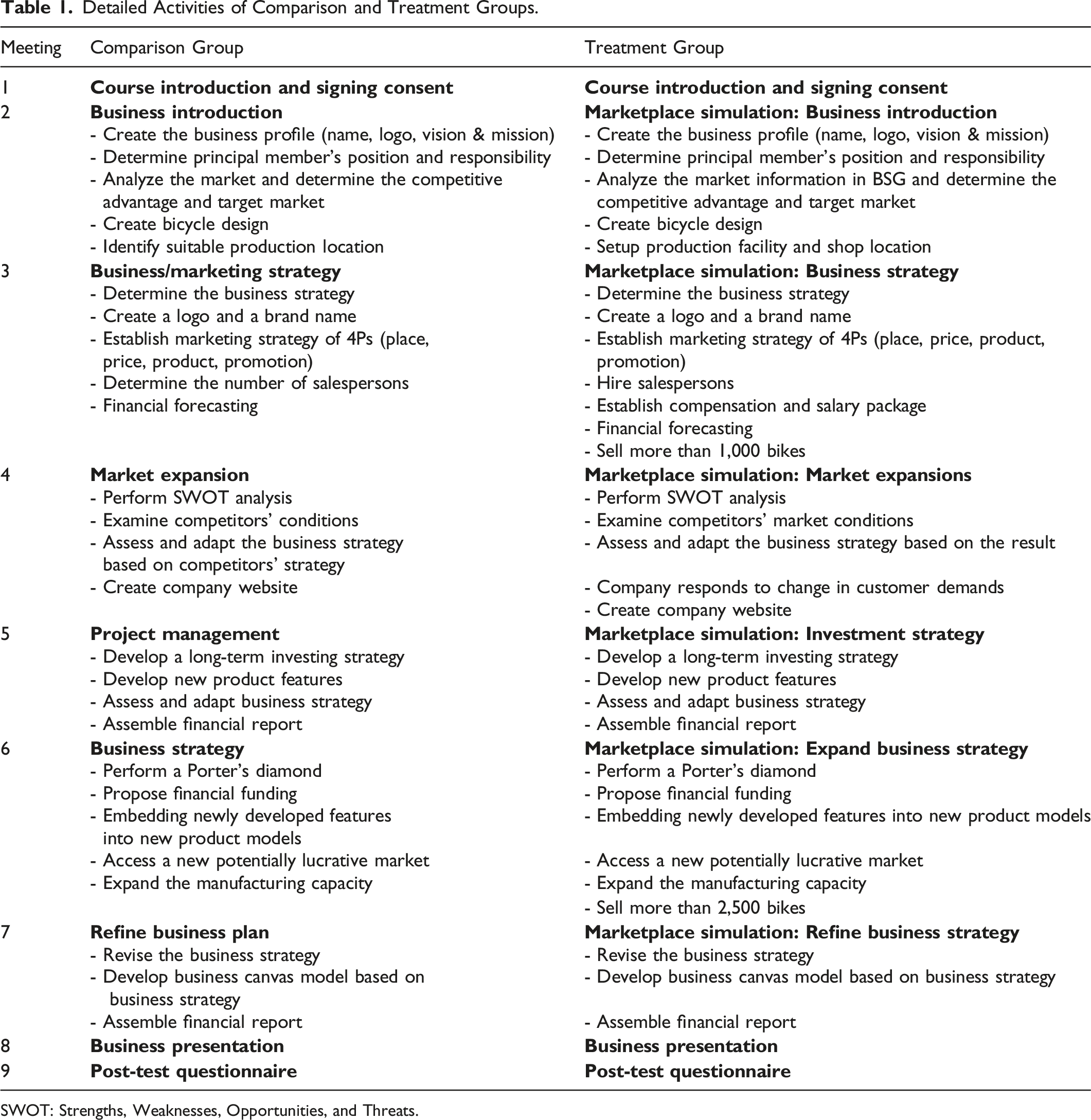
Detailed Activities of Comparison and Treatment Groups.
SWOT: Strengths, Weaknesses, Opportunities, and Threats.
Business Simulation Game
A commercial BSG called Marketplace Simulation (https://www.marketplace-simulation.com) was used. Marketplace Simulation is a virtual world where students can build and develop a business from scratch. Business management requires decision-making corresponding to company growth stages. At each stage, students are required to conduct a situation analysis to plan and implement their development strategy (see Table 1). In Marketplace Simulation, students must learn how companies operate in a rapidly changing market, where the market conditions are determined by customer needs, market demands, and competitor strategies. The student’s activity can be seen in Figure 2. The student’s activity in business simulation game.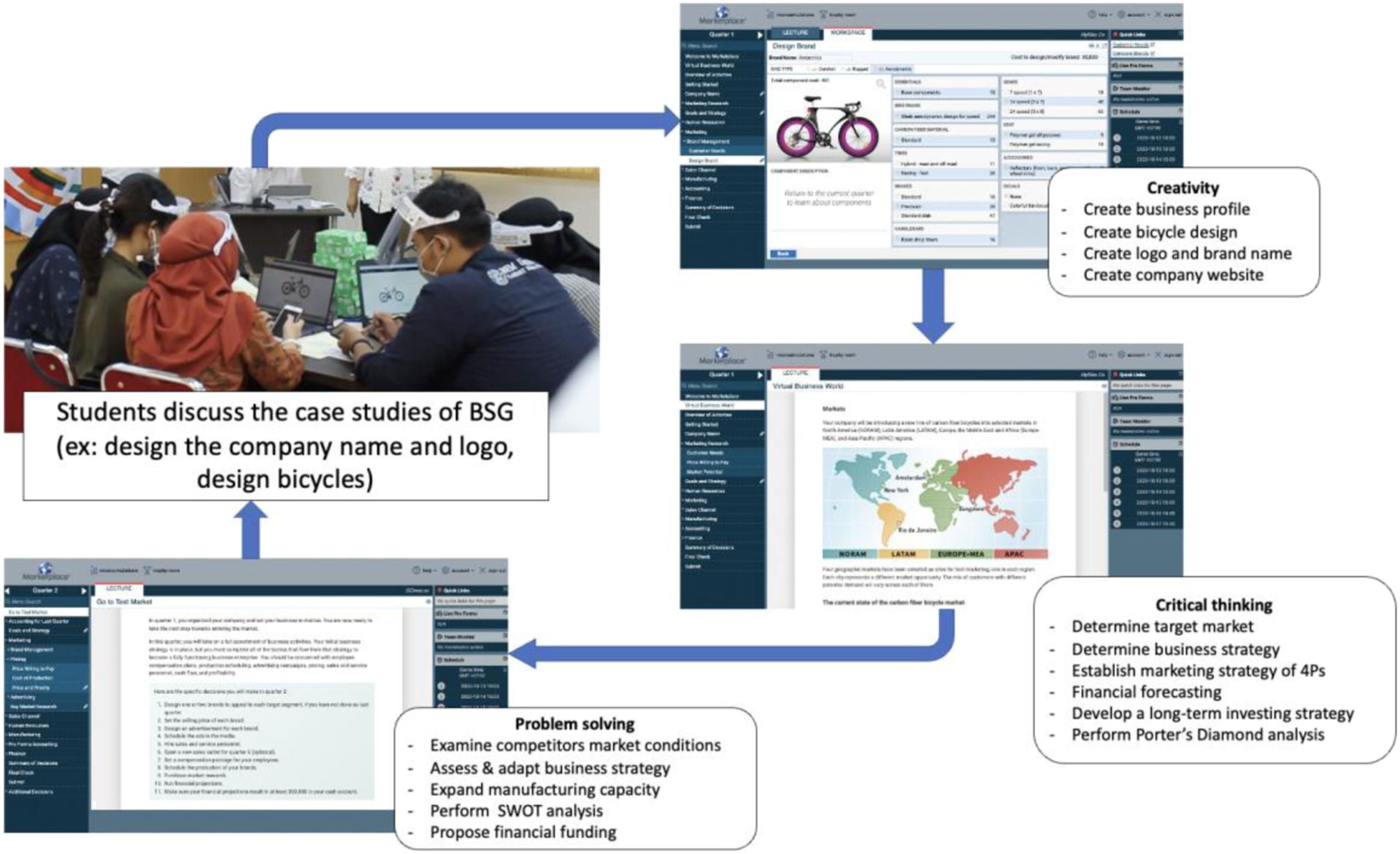
The virtual world of Marketplace Simulation encourages competition among students' teams, where each team was provided with seed capital to establish their own business. The business will execute the nature of a realistic company from marketing, distribution, human resources, manufacturing, finance, and accounting. In the simulation environment, students will establish a manufacturing plant and the distribution channels, create brands and advertising campaigns, employ salespeople, decide their compensation package, and set up production schedules that cater to demand predictions. In the latter stage, the companies will develop new products, and expand their distribution and manufacturing capacities to improve overall performance. These activities were performed step by step in the different decision stages. Therefore, the student can understand how their decisions and actions impact the performance of various functions within the company. This allows students to get a sense of how business works on a broader scale while offering enough information to understand the nuances of business. The overall result is determined by the company’s capability to develop demand, generate profits, satisfy customer needs and wants, carry out future investments, manage assets, motivate employees, and create equity for shareholders.
Model and Hypotheses
This study uses two analysis models, group comparison and influential analysis. Group comparison analysis determines whether the instructional learning using BSG has a statistically significant relationship with student engagement and HOTS (Research Question 1). In contrast, influential analysis determines whether attitude toward a BSG influences student engagement (research question 2) and student engagement influences HOTS (research question 3).
Group Comparison Analysis
In the group comparison analysis model, the independent variable was the instructional strategies, traditional instructional learning strategy for the comparison group, and BSG for the treatment group. The dependent variables of this study were students’ engagement (behavioral, emotional, and cognitive) and HOTS (problem-solving, critical thinking, and creativity). The framework of the group comparison analysis is presented in Figure 3. The hypotheses development of group comparison are as follows: The framework of group comparison analysis.
H1: The students of the treatment group will improve more significantly in terms of (a) behavioral, (b) emotional, and (c) cognitive engagement as compared to those in the comparison group
H2: The students of the treatment group will improve more significantly in terms of (a) problem-solving, (b) critical thinking, and (c) creativity as compared to those in the comparison group.
Influential Analysis
Earlier studies found whether the type of technology employed, the attitude to technology, or technology affects students' involvement and performance (Agyei & Voogt, 2011). Many others have affirmed that technology can promote HOTS (Lee & Choi, 2017). The three critical features of attitude toward the game applied to motivate student learning in this study are the feeling of immersion, intuitive interaction, and intention to use the game (Huang et al., 2010). Attitudes towards the use of technology are implicated in affective and cognitive components of learner thinking. Learners can find it more or less uncomfortable or enjoyable to use technology to learn, depending on how emotionally they feel. In terms of cognition, the degree to which students perceive that technology promotes relationships with the instructor or peers, or otherwise, is efficient and beneficial (Lee & Choi, 2017). We hypothesized, therefore, that the attitude of students with respect to immersion, intuitive interaction, and the purpose of utilizing games has a favorable effect on cognitive, emotional, and behavioral engagement in BSG. We thus hypothesize the following (see Figure 4): The concept of the structural model of influential analysis.
H3: Immersion would positively affect (a) behavioral, (b) emotional, and (c) cognitive engagement
H4: Interaction would positively affect (a) behavioral, (b) emotional, and (c) cognitive engagement
H5: Intention to use a game would positively affect (a) behavioral, (b) emotional, and (c) cognitive engagement Earlier studies involved cognitive, affective/emotional, and behavioral engagement with HOTS (Fredricks et al., 2016; Kim et al., 2020). Moreover, HOTS has not improved automatically. Indeed, students must participate in educational activities for these skills to improve. The degree to which students are actively involved in educational activities is considered engagement that is likely to result in high-quality learning (Kim et al., 2020). Consequently, educators must identify and explore teaching and learning environments that promote the HOTS of students (see Figure 4).
H6: Behavioral engagement would positively affect (a) problem-solving, (b) critical thinking, and (c) creativity skills
H7: Emotional engagement would positively affect (a) problem-solving, (b) critical thinking, and (c) creativity skills
H8: Cognitive engagement would positively affect (a) problem-solving, (b) critical thinking, and (c) creativity skills The influential analysis was performed on the treatment group only, as one of the purposes of this study is to examine the influence of students' attitudes toward BSG on students' engagement and HOTS.
Instruments
The Result of the Reliability and Validity Test.

**p < .01.
The three constructs of student engagement were measured following Reeve and Tseng (2011), and each construct was evaluated using three items. Behavioral engagement represented student concern toward and effort expended on the task. The emotional engagement was assessed in terms of the emotional state of the students. The cognitive engagement was assessed in student apprehension toward the learning activity. The reliability test of Cronbach’s α for student engagement is 0.849, with a high validity range of 0.767–0.981.
Finally, the measurement developed by Hwang et al. (2018) was adapted for this study to measure HOTS. The skills were evaluated concerning three dimensions: problem-solving (assessing students’ ability to solve the problems they face), critical thinking (assessing students’ ability to think critically), and creativity (assessing students’ ability to think creatively in forming new ideas). Each dimension was evaluated using three items—the Cronbach α of the HOTS survey is 0.836, where the validity ranged between 0.831 to 0.921.
Data Collection and Analysis
Data were gathered after the gaming sessions. All participants had been informed that their information would be used solely for educational research and that their qualifications did not influence their grades. The data was collected through online forms that assess students' value of attitude toward games, engagement, and HOTS.
For the group comparison analysis, a normality test was first conducted to determine whether to do a parametric or non-parametric test. The result of the initial test of Kolmogorov-Smirnov indicates that all data were normally distributed. Therefore, this study uses a parametric test of multiple analysis of variance (MANOVA). MANOVA is used to examine if there are differences between the comparison and treatment groups on dependent variables. The testing is run using SPSS 25.0.
The influential analysis was performed on the treatment group data and tested using a partial least square structural equation model (PLS-SEM). PLS-SEM is better suited for multivariate and multilevel analysis with complex models (Fornell & Larcker, 1981; Hair et al., 2014). PLS-SEM is a more appropriate prediction analytic approach that assesses measurement and structural models (Hair et al., 2014). Therefore, SmartPLS 3.0 was run to examine the influential hypotheses.
Results
Group Comparison
Student Engagement
Multiple Analysis of Variance Results of Students' Engagement.

*p<0.05.
As seen in Table 3, the MANOVA result indicates a significant difference between the two groups (F = 37.471, p < .05), supporting H1b. Emotional engagement scores were significantly higher for the treatment group (M = 4.5700, SD = 0.50602) as compared to the comparison group (M = 3.5558, SD = 0.63470). It implies that the comparison group perceived lower emotional engagement than their counterparts.
The results in Table 3 revealed that cognitive engagement significantly differs between the two groups (F = 18.593, p < .05). The mean scores also implies that the students in the treatment group percept higher cognitive engagement (M = 4.3758, SD = 0.40903) compared to students in comparison group (M = 3.9025, SD = 0.34799). Thus, H1c was supported.
Higher-Order Thinking Skills
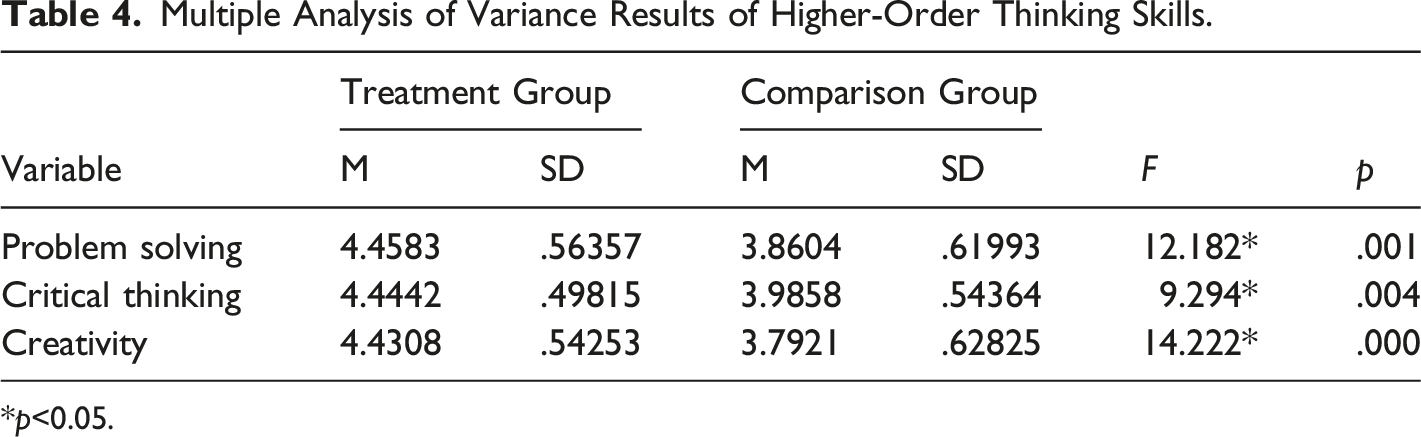
Multiple Analysis of Variance Results of Higher-Order Thinking Skills.
*p<0.05.
The statistical results of MANOVA demonstrated that the critical thinking abilities significantly differ between the comparison and treatment groups (F = 9.294, p < .05). The average scores also implies that the students in the treatment group (M = 4.4442, SD = 0.49815) scored higher critical thinking than the comparison group (M = 3.9858, SD = 0.54364). Thus, supporting H2b.
Table 4 indicates a significant difference in creativity between the two groups (F = 14.222, p < .05), supporting H2c. The examination of the mean creativity scores implied that the students in the comparison group (M = 3.7921, SD = 0.62825) perceived lower creativity than those in the treatment group (M = 4.4308, SD = 0.54253).
PLS-SEM (Influential Analysis)
Measurement Model
Results of the Measurement Model Assessment.
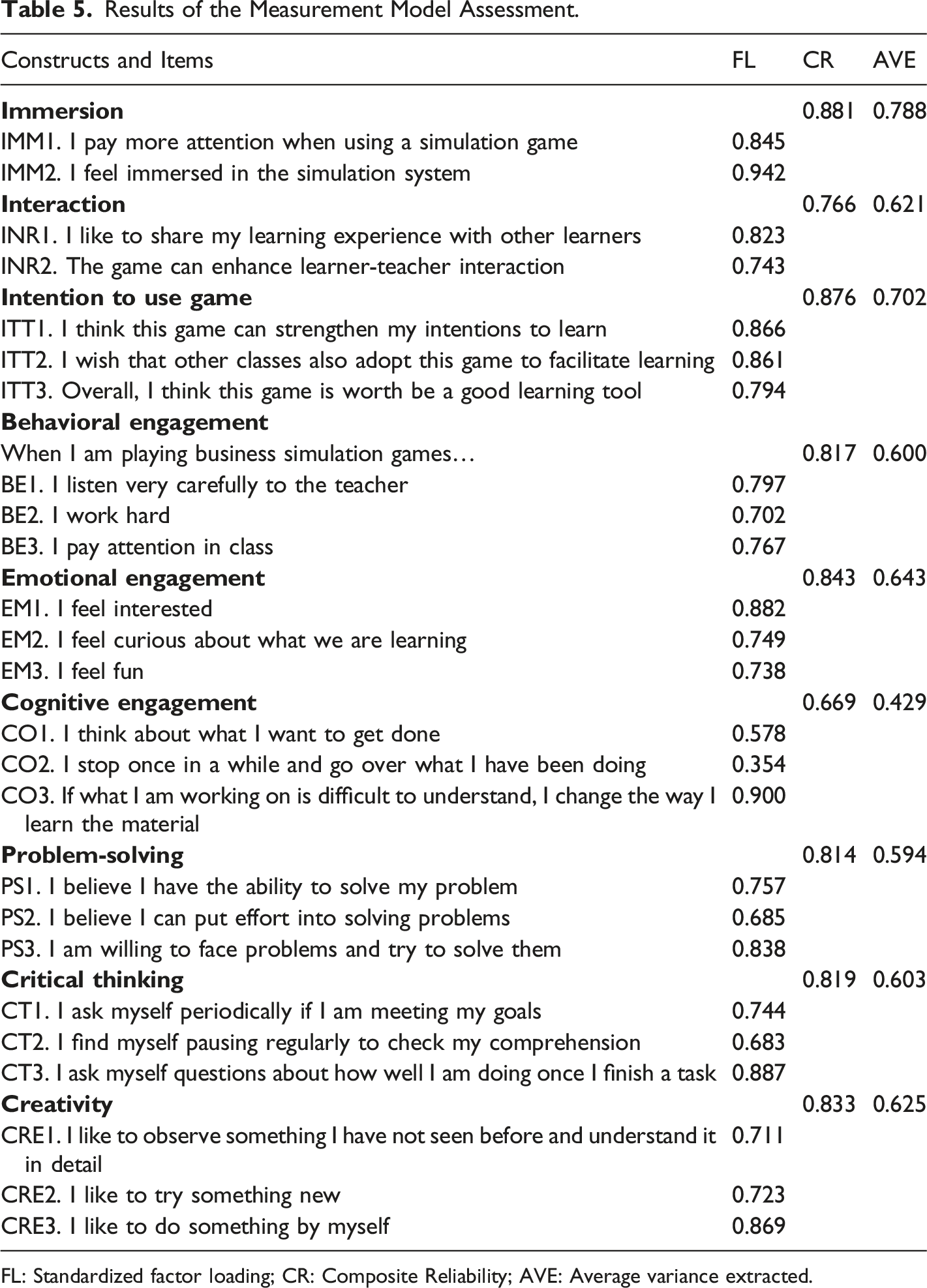
FL: Standardized factor loading; CR: Composite Reliability; AVE: Average variance extracted.
Results of Fornell-Larckers’ Discriminant Validity.
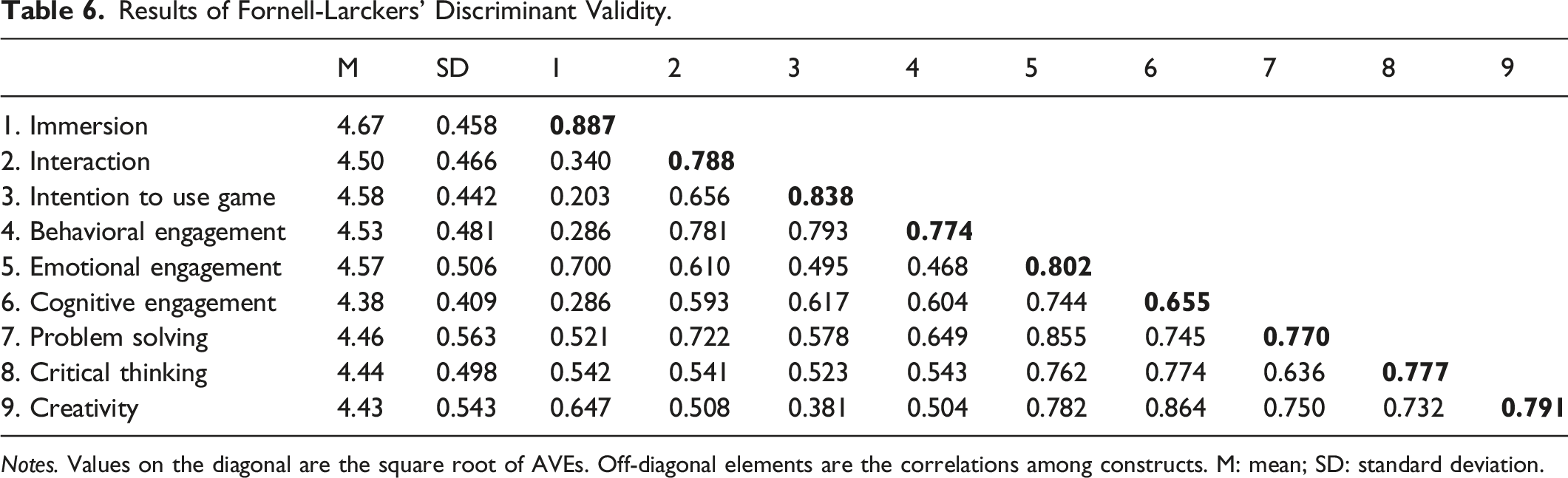
Notes. Values on the diagonal are the square root of AVEs. Off-diagonal elements are the correlations among constructs. M: mean; SD: standard deviation.
The sample size determines the analysis’s accuracy and the investigation’s conclusive power. According to Hair et al. (2014), the minimum sample size requires at least five times as many linkages pointing to observed variables in the model. Therefore, the minimum sample size threshold would be 15.
Structural Equation Modeling Analysis
Summary of structural model hypotheses.
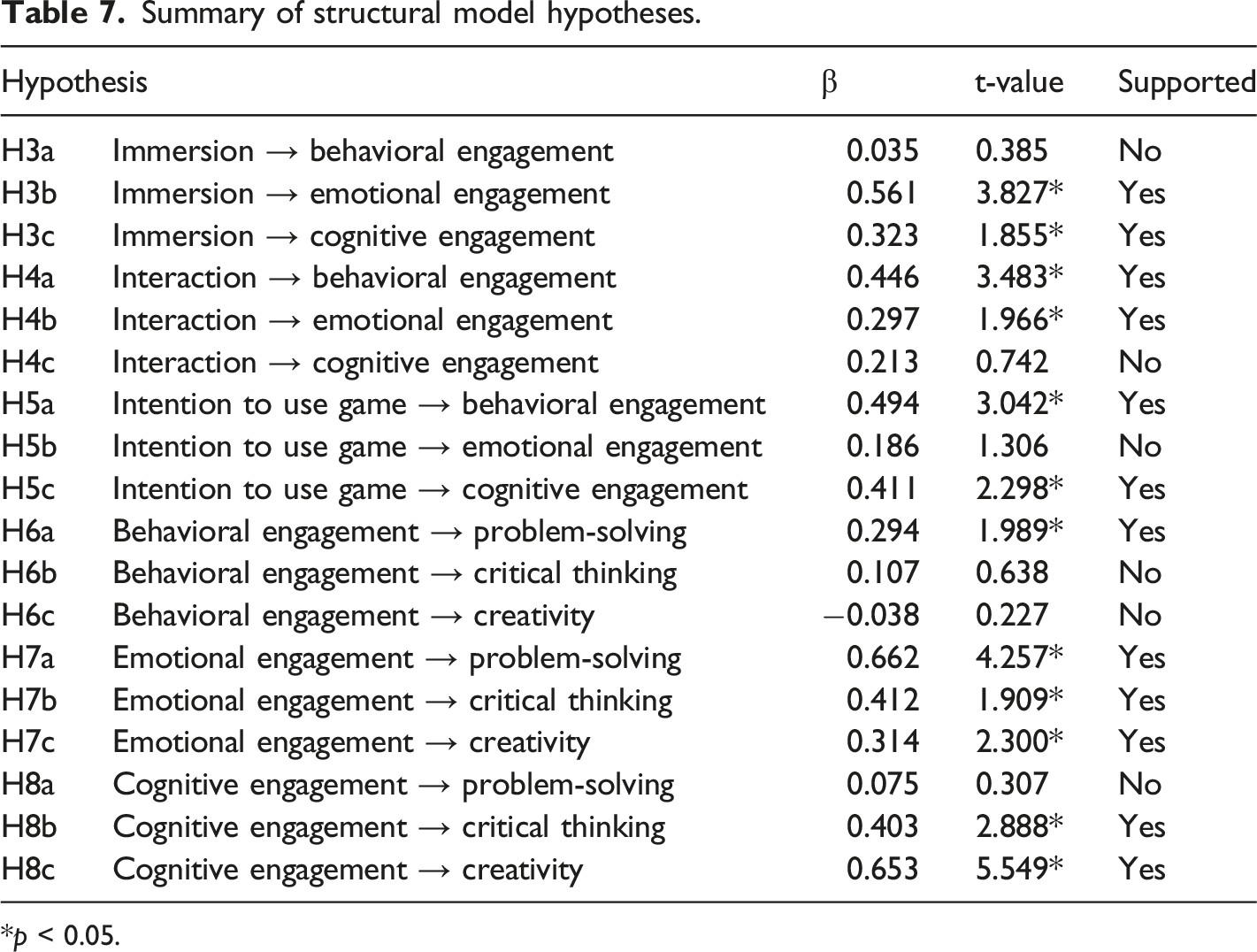
*p < 0.05.
The results of structural model in Table 7 indicates that immersion while playing the BSG was positively and significantly related with emotional (β = 0.561, t = 3.827, p < 0.05) and cognitive engagement (β = 0.323, t = 1.855, p < .05), thus supporting hypotheses H3b and H3c. Unfortunately, the model did not support the relationship between immersion and behavioral engagement (β = 0.035, t = 0.385, p > .05). Similarly, the interaction that occurred when the students played the game had a significant and positive relationship with behavioral (β = 0.446, t = 3.483, p < .05) and emotional engagement (β = 0.297, t = 1.966, p < 0.05). Therefore, H4a and H4b were also supported. However, interaction and cognitive engagement were not significantly related (β = 0.213, t = 0.742, p > .05). In addition, as proposed by H5a and H5c, the students’ intention to use the BSG had a positive and significant influence on their behavioral (β = 0.494, t = 3.042, p < .05) and cognitive engagement (β = 0.411, t = 2.298, p < .05) but not on their emotional engagement (β = 0.186, t = 1.306, p > .05).
According to Table 7, behavioral engagement had a significant positive relationship with problem-solving ability (β = 0.294, t = 1.989, p < .05), thus, H6a was supported. Contrary to our predictions, no significant relationship was observed between behavioral engagement and the acquisition of critical thinking (β = 0.107, t = 0.638, p > .05), and creativity (β = −0.038, t = 0.227, p > .05) skills. Therefore, H6b and H6c were rejected. As stated in H7a, H7b, and H7c, emotional engagement with the business simulation predicted problem-solving (β = 0.662, t = 4.257, p < .05), critical thinking (β = 0.412, t = 1.909, p < .05), and creativity (β = 0.314, t = 2.300, p < .05) ability. In addition, cognitive engagement positively and significantly influenced critical thinking (β = 0.403, t = 2.888, p < .05) and creativity (β = 0.653, t = 5.549, p < .05) skills, supporting H8b and H8c. However, H8a was rejected; no significant relationship existed between cognitive engagement and problem-solving (β = 0.075, t = 0.307, p > .05). The final structural model of this study is shown in Figure 5 and Appendix 1.
In Figure 5, immersion, interaction, and intention to use the game accounted for 71.2% of the variance of behavioral engagement, 61.6% of the variance of emotional engagement, and 46.5% of the variance of cognitive engagement. Similarly, behavioral, emotional, and cognitive engagement explained 78.4% of the variance of problem-solving, 63.6% of the variance of critical thinking, and 75.9% of the variance of creativity. The results of the structural model analysis.
Discussion
Effects on Student Engagement and HOTS
The first purpose of the study is to investigate the impact of a BSG on student engagement and HOTS. Regarding the first research question, the overall results showed that BSG positively affects student engagement and HOTS. Table 3 indicates that the students in the treatment group have higher scores than the comparison group on engagement and HOTS (H1).
All topics in the simulation have seen an increase in student engagement. The BSG activities included conversation, problem-solving involving company matters, and examining the business’s market, sales, production, and financial aspects. Students’ engagement is a complex term that may be categorized into three categories: behavioral, emotional, and cognitive engagement (Fredricks et al., 2004, 2016). The most excellent significant impact of BSG was on cognitive engagement, followed by behavioral and emotional engagement (Table 3). Both behavioral and cognitive engagement are critical components of student learning.
Moreover, according to Fredricks et al., 2004, cognitive engagement refers to a student’s readiness to take the opportunity to comprehend the knowledge and acquire skills. This effort can be seen in their participation in-class activities. Additionally, students’ behavioral engagement refers to their involvement in learning and academic duties. Students completed and participated in all case-related activities and discussions during BSG. Finally, emotional engagement is frequently examined by self-report assessments and provides information on students' attitudes toward a particular subject, method of delivery, or teacher (Fredricks et al., 2004). Hence, the treatment group’s overall cognitive, behavioral, and emotional involvement was more significant than the comparison group.
H2 was supported. BSG simultaneously fosters all three aspects of HOTS (creativity, critical thinking, and problem-solving). BSG had the most significant effect on creativity, followed by problem-solving and critical thinking (Table 3). The strategy to BSG on creativity can be clarified by the integrative activities’ opportunities for authentic, collaborative creativity. These exercises aided learners in content creation and game development (i.e., designing a company name and logo). The problem-solving dimensions included a Strengths, Weaknesses, Opportunities, and Threats (SWOT) analysis, studying and evaluating new market potential, and altering corporate strategy. Furthermore, BSG offers opportunities for critical thinking by requiring players to assess market conditions, establish strategies, and decide the selling price for game results.
Influence of Attitude Toward BSG Use on Student Engagement
The second purpose of the study was to examine the influence of students' attitudes toward BSG use on their HOTS through their engagement with the game. The study predicted that attitude toward BSG use (immersion, interaction, and intention to use the game) would influence engagement (behavioral, emotional, and cognitive) and HOTS (problem-solving, critical thinking, and creativity). The results of the PLS-SEM analysis supported 12 out of the 18 hypotheses (Table 6).
Concerning the second question on how the attitude toward using a BSG influences student engagement, as shown in Figure 5, the results indicate that a feeling of immersion influences emotional (H3b) and cognitive engagement (H3c). Interaction affects behavioral (H4a) and emotional engagement (H4b), and intention to use the game influences behavioral (H5a) and cognitive engagement (H5c).
Ojeda (1968) identified the concept of immersion as a state of flow in which cognitive and affective elements are activated when one plays a game. Flow or immersion can be regarded as enjoyment during gameplay, and enjoyment is usually connected to elements such as fun and interest (in contrast to boredom) (Caroux et al., 2015). Moreover, the feature of interaction is the main characteristic of a BSG environment attracting students to learn (Huang et al., 2019). The findings indicate that the interaction of the students while playing the game had a positive effect on their behavioral and emotional engagement. Interaction is a crucial factor affecting learning performance in the classroom (Huang et al., 2019). All the students interacted and participated in the BSG, and, in doing so, they shared their interests and experiences (Matute & Melero, 2016). The result of this study is in line with the finding of earlier research that indicates the time and effort used in learning activities are the behavioral participation indicators (Coates, 2005; Fredricks et al., 2004). Finally, the student’s intention to use the BSG encouraged them to learn about and participate in all of the BSG’s classroom activities. Previous research has indicated that behavioral engagement includes participation and involvement in an activity of learning (Buil et al., 2020; Schindler et al., 2017).
The positive effect of attitude during BSG activities on student engagement, as mentioned by Matute and Melero (2016) regarding the aspects that influence the success of a BSG, could be explained by students being engaged and working with other students and by the instructor conducting class activities using the BSG. Moreover, the BSG was designed primarily for social interaction in a team and allowed teams to compete to allow students to use decision-making, problem-solving, and incentives to interact with academic content in a virtual setting (Schindler et al., 2017). For example, while playing the BSG, students were supposed to adopt roles as heads of departments, make judgments on a series of company difficulties and respond to the outcomes. In this case, the BSG applied the adaptive learning principle, where the learning environment is changed according to student needs and actions. The students take an active role in the learning activities, absorb information, relate to their knowledge, and build their new knowledge during the simulation play. This finding aligns with a constructivist paradigm, which mentioned that the learner would be affected by the environment. There will be an interaction between the student and the environment; also, learning should be relevant and applicable to everyday life (Dewey, 1986; Vygotsky, 1978). Dewey (1986) and Piaget (1973) confirmed that an educator’s responsibility was to mold a student’s experience and determine what environments promote positive learning.
The present study results indicate that immersion, interaction, and intention to use the BSG had the most decisive influence on behavioral engagement, with emotional and cognitive engagement followed (Figure 5). This result is in line with Schindler et al. (2017), who reported that computer games are centered on behavioral engagement indicators.
Moreover, the negative relationship between using a BSG and engagement (H3a, H4c, H5b) may be caused by limited game mechanics knowledge (Rashid & Asghar, 2016), which may cause distractions and reduce the time spent on learning tasks.
Influence of Student Engagement on HOTS
The third set of research questions on how (behavioral, emotional, and cognitive) student engagement influences HOTS (problem-solving, critical, and creativity). The significant results indicate that behavioral engagement positively affects problem-solving (H6a), emotional engagement strongly affects all HOTS forms (H7a, b, c), and cognitive engagement positively affects critical thinking (H8b) and creativity (H8c). As indicated in Figure 5, the effect of behavioral engagement influenced problem-solving skills. This finding is consistent with Li et al. (2013) and Yang’s (2015) research, who have mentioned that among HOTS, the skill most directly connected with game-based learning and most addressed by game creators is problem-solving. The Marketplace Simulation game provided many opportunities exist for problem-solving. For example, the activity of the fourth session (Table 1) required skillful adjustment and attempts at market expansion. In all quarters of the simulation game, the students analyzed all potential strengths, weaknesses, opportunities, and threats (SWOTs).
Moreover, as Figure 5 shows, emotional engagement positively influenced problem-solving, critical thinking, and creativity. This BSG was the first experience of its kind for the students. They were focusing on playing the game throughout its activities of designing a product, creating a marketing strategy, developing new product features, analyzing SWOT, and evaluating feedback to achieve the company’s targets.
In addition, motivation to learn is one indicator of cognitive engagement connected with BSG (Huang et al., 2019). The gamified elements embedded in the BSG, such as a leader board where students can check their company’s rank against other companies, positively influenced their motivation to perform better and analyze, evaluate, and create during the simulation. Figure 6 shows the students' activities in managing their company in a group of six and how it can improve their higher-order thinking skills. The students improve their problem-solving skills by analyzing and examining competitors' market conditions, assessing and adapting business strategy, expanding manufacturing capacity; performing the strength, weaknesses, opportunities, and threats (SWOT) analysis; and proposing financial funding for company development. To enhance critical thinking skills, the students determine their target market and business strategy, establish a marketing strategy of 4Ps, financial forecasting, develop a long-term investing strategy, and perform Porter’s Diamond analysis. In addition, Creativity skills are improved by doing activities such as creating a business profile, creating bicycle design, designing a logo and brand name, and creating a company website. This result is consistent with the finding reported by Huang et al. (2019); he mentioned that creativity has an essential relationship with the interaction and communication among learners when students are actively involved in the creative process. Activities of the simulation game.
Furthermore, students may be involved in evaluation and judgment activities due to their cooperation activities with group members. Their critical thinking skills will be processed and improved as a result. Moreover, the engagement of communication and participation in the group during simulation plays a crucial role when students analyze problems; the activities improve the students' problem-solving skills.
Conclusion
Overall, the findings of this study support the development of BSG intended to assist students in learning. A BSG can include a long-term historical scenario for contextualizing problems, connecting game strategy with the results, and providing cognitive and emotional engagement with problem-solving tasks. Adopting a BSG as the primary instructional technique created an environment replicating real-world challenges in this study and successfully improved problem-solving abilities. Moreover, the findings carry practical implications for educators in higher education. Students must engage actively in a course to improve HOTS. A BSG can be a powerful and efficient tool to facilitate engagement. As the influence of BSG on a thinking ability may lead to improvements in others, a global approach to higher-order thinking could be helpful if all of the three HOTS are significantly increased.
Limitations and Suggestions for Future Research
This study has several limitations. First, the study has limitations in sampling and representativeness concerning its application and the choice of respondents. During the Covid-19 pandemic, universities in Indonesia imposed restrictions on students participating in activities on campus. Students who registered to participate in the course had to comply with the applicable health procedures and obtain permission from their parents before participating. Second, the research focused on student HOTS, which includes creativity, critical thinking, and problem-solving, essential to fostering students’ future employability. Moreover, active participation in BSG, which focuses on business issues such as SWOT analysis, marketing strategy, and project management, requires prior knowledge. Future research could look into the impact of BSG on student performance in real-world situations, such as evaluating student employment status, salary, or employer reviews. Studies may also adopt alternative forms of BSG. In addition, it is recommended that research be carried out with bigger sample size and with individuals who have already finished any necessary coursework.
Footnotes
Declaration of conflicting interests
The author(s) declared no potential conflicts of interest with respect to the research, authorship, and/or publication of this article.
Funding
The author(s) disclosed receipt of the following financial support for the research, authorship, and/or publication of this article: This work was supported by the Ministry of Science and Technology, Taiwan (MOST 108-2628-H-224-001-MY3, MOST 110-2511-H-224 -003 -MY3).

Appendix
The final figure of the structural equation model.