




Abstract
Abundant research has tried to understand how games can be designed and used effectively to improve the learning process and to examine the correlations between digital learning games and student motivation, engagement, and knowledge retention. The current study examined the correlation between learning through digital game-based learning (DGBL) and students’ achievements, their sense of involvement, and motivation for learning. Using a quantitative approach, data was drawn from questionnaires and exams in two subjects: literature and language. Participants were 320 male and female students aged 12–14 attending a single middle school participated in the study. The students were randomly divided into three groups, each group was given a unique teaching and learning method. Group 1 studied and practiced using the traditional method (a teacher who teaches in the classroom and worksheets for practice), Group 2 studied with the traditional method but practiced with a digital game and Group 3 learned and practiced using a digital game. The findings showed that the students’ attained significantly higher achievements in the group that was taught traditionally but practiced with a digital game. It was also found that when digital learning games are integrated into teaching and learning, the students’ motivation and involvement in the class increased.
Keywords
Introduction
In recent years, we witness the development of the digital games industry in the social and educational arenas. The appearance of advanced technology with improved access to end devices for youth has led to the growth and development of games. The evolvement of Virtual Reality (VR) and Augmented Reality (AR) technologies have supported the creation of more immersive and experiential games that manage to blur the line between reality and imagination (Laghari et al., 2021; Marto & Gonçalves, 2022).
Consequently, there has been a growth in communities dedicated to games lovers on social networks that foster cooperation, competition and interaction between the players in a global environment (Hamari et al., 2016).
This progress in the games industry has also generated a revolution in education. Research literature shows that the use of digital game-based learning (DGBL) processes provides many advantages (Kiryakova et al., 2014; Schöbel et al., 2020). Different DGBL are effective for learning because they stimulate motivation, encourage cooperation, improve learners’ involvement and provide solutions for diverse learning styles (Banihashem et al., 2023; Ishak et al., 2023; Liu et al., 2023). The development of learning applications based on games has transformed DGBL into educational tools that permit learners to become more engaged during the lesson and to acquire skills and knowledge (Arnab et al., 2012, 2015; Banihashem et al., 2023; Gee, 2003; Prensky, 2006; Whitton, 2014; Xu et al., 2023).
Research has also shown that DGBL offers the learner challenging tasks, opportunities to socialize, clear goals, and instant feedback, that engender feelings of autonomy, efficacy and strong motivation while also developing 21st-century skills (Amzalag, 2021; Banihashem et al., 2023; Kaldarova et al., 2023; Kapp, 2013; Liu et al., 2023; Romero et al., 2015; Plass et al., 2016). DGBL also provides an interactive learning environment that advances collaborations and improves the learners’ cognitive processes (Banihashem et al., 2023; Hainey et al., 2020; Liu et al., 2023; Vnucko & Klimova, 2023). Employing a combination of problem-solving simulations and scenarios, learners can acquire various skills in an experiential way (Alvarez & Michaud, 2021; Bearman et al., 2019; Simanjuntak et al., 2021). Moreover, the games’ interactive character prompts the players to think strategically, to analyze complex situations and to make intelligent choices, thus promoting the development of High Order cognitive abilities (Elkordy et al., 2017; Kebritchi et al., 2010; Ritterfeld et al., 2009).
In light of this, it is increasingly evident that traditional teaching methods, including reading and writing and performing arithmetic-based activities, need to be changed into more innovative methodologies. These methodologies include creativity, decision-making, communication skills, etc. (Kaldarova et al., 2023), to meet the needs of the current generation of learners immersed in digital technology (Camacho-Sánchez et al., 2023). The change from traditional to innovative methodologies has a significant impact on learning (Camacho-Sánchez et al., 2023). DGBL is one of these new methodologies (Alfaro-Ponce et al., 2023) that is very popular among students (Ishak et al., 2023; Kaldarova et al., 2023).
Although there are many advantages to using DGBL for teaching and learning, it is important to note that there are still no unequivocal findings concerning meaningful learning from DGBL and information concerning the effectiveness of gaming in different types of learning and teaching remains limited (Banihashem et al., 2023). Furthermore, most DGBL research findings are based on students’ self-reports (Dehghanzadeh et al., 2022). Therefore, the present study aimed to fill this gap in the research literature by investigating significant differences between traditional learning and innovation learning using DGBL, with objective data collection - test grades (among other methods). The research findings can hopefully assist teachers in optimally integrating DGBL into the learning process.
Literature Review
Games in Teaching
Playing games is an enjoyable activity performed willingly but without material compensation. Gaming materials appear in different forms, platforms and genres but all have four distinct features: a goal, rules, a feedback system and the participants’ desire to take part. The purpose provides the players with meaning and a feedback system informs the participants in real time how close they are to reaching the goal. This procedure increases the intrinsic and extrinsic motivation for the activity (Hamari et al., 2016; McGonigal, 2011; Rieber, 1996). Extrinsic motivation is increased by external rewards such as points, badges, money, life, etc., and intrinsic motivation is increased by the satisfaction and enjoyment inherent in the game (Banihashem et al., 2023). In teaching, gaming constitutes a pedagogic approach which uses games and gaming activities in order to advance learning and teaching processes. This approach uses the game as a tool to improve learners’ understanding, learning, cognitive and emotional abilities (Arnab et al., 2012; Gee, 2003; Prensky, 2006; Whitton, 2014). A main goal is to create a learning environment that provides a positive experience, encourages learners’ daring to experiment and to make mistakes, and allows them to acquire skills and knowledge to use for success throughout life (Amzalag, 2021; Kapp, 2013; Romero et al., 2015; Plass et al., 2016). This unique and inspiring environment can provide the tools for the learners’ future success (Alvarez & Michaud, 2021; Hainey et al., 2020).
Scholars distinguish between a game that aims to provide fun and pleasure (Hamari et al., 2016) and a game whose elements are used for activity which is not play (Kiryakova et al., 2014; Schöbel et al., 2020; Thirakulwanicha et al., 2020) and whose main goal is not entertainment but something else. Learning games belong to this latter category (Gao et al., 2020).
GBL in Teaching
Due to technological development, computer-assisted learning games allow a virtual realistic environment to be created including simulations, in which the players can enter into an adventure while it takes place and thus engage in practice and acquire knowledge, exercising problem-solving in an active environment, learning with friends and receiving immediate feedback using various pedagogical paradigms (Arnab et al., 2015; Iten & Petko, 2016). These games have been designed and developed to be enjoyable, challenging and exciting while involving learning and educational contents suitable for the lesson subjects according to the learning programs (Buckley & Doyle, 2016; Huang et al., 2018). This design includes external components such as points, medals or a badge and leaderboards. It includes various internal components such as different challenges and levels provided by the games (Yıldırım, 2017). Thus, the games increase learners’ motivation, comprehension, active learning, creative thinking and problem-solving (Elkordy et al., 2017; Thirakulwanich et al., 2020). An educational game can award players with digital points, medals or other rewards when the learner attains specific learning goals, enabling the learner to feel that they are playing well and coping with challenges, and the correct answer to a question of exercise will award them with a sense of success and motivate them to continue to achieve more (Coren, 2011; Ofosu-Ampong, 2020; Yıldırım, 2017).
The integration of game components in the learning process provides cognitive, emotional and social advantages. Cognitively, the learners can acquire skills such as creative thinking and problem-solving (Amzalag, 2021; Arnab et al., 2012; Gee, 2003; Prensky, 2006; Whitton, 2014). Emotionally, many learners find it difficult to cope with failure in traditional learning (such as a low grade in a test), but they get used to this in a game environment (e.g.: disqualification in a computer game) and they do not treat it as a serious failure (Black et al., 2019). Socially, if there are tasks that require cooperation or teamwork, the games create a more pleasant classroom climate, a good atmosphere and mutual help (Dehghanzadeh et al., 2023; Urbieta & Peñalver, 2019).
However, despite all the advantages of gaming in learning, not every integration of gaming is effective. Although integration of gaming in learning can produce increased motivation for many learners that are still some for whom competition with their classmates can actually decrease their motivation level. Consequently, it is important to use a wide range of methods that can create a balance between the different extrinsic and intrinsic motivating factors (Hamari et al., 2016; Mekler et al., 2017; Thirakulwanich et al., 2020).
Educators’ purpose is that the learners will as much as possible, enjoy their time in the gaming space. In other words, they need to try to help the learners to concentrate in a way that will allow them to focus entirely on the learning game, so that it does not constitute an effort or overburden them. This feeling was described as “flow” by Csikszentmihalyi (1990) and it occurs when there is a balance between the challenge that the game poses and the player’s abilities. The game’s ability to offer a pleasurable experience and flow also allows the game’s characteristics to create a meaningful educational experience in order to learn and improve skills (Deterding et al., 2011).
The goals mentioned are attributed to educational games in general. It is important to note that the research literature distinguishes between serious games, game-based learning (GBL), and gamification. The term serious game encompasses a wide range of game-based initiatives, wherein the primary aim extends beyond mere entertainment (Arnab et al., 2015; Banihashem et al., 2023; Dehghanzadeh et al., 2022). This broad definition includes the concept of GBL since its main purpose is learning (Banihashem et al., 2023). Gamification refers to the use of game elements, such as points, rewards, scoreboards, and badges, in non-gaming activities (Dehghanzadeh et al., 2022; Kaldarova et al., 2023). Gamification can be used in teaching to create cognitive learning, engagement, and motivating learning experiences for learners, by using those extrinsic rewards (Alfaro-Ponce, et al., 2023; Banihashem et al., 2023; Dehghanzadeh et al., 2022).
The main difference between gamification and GBL is that gamification involves the creation of an activity that includes playful elements whereas GBL involves the creation of a complete game (Camacho-Sánchez et al., 2023).
GBL should support essential experiential learning (Arnab et al., 2015). The problem is that there is a lack of reciprocal knowledge sharing between designers of educational games and educational specialists (Arnab et al., 2015). Such integration has the potential to transform GBL into an efficacious tool for learners (Ishak et al., 2023). One viable solution to this issue is the creation of games through game generators.
Game generators are designed platforms with game mechanisms that do not require programming skills and enable users to focus on content rather than design, and therefore allow game creators to dedicate more time to the pedagogical aspects of their games instead of designing and developing them (Lotfi et al., 2015; Meishar-Tal & Kesler, 2023).
The research literature indicates that it is difficult to make an empirical examination of the effectiveness of students’ learning through games (Bellotti et al., 2013; Van Roy & Zaman, 2018), and the ability of learning games to improve motivation and involvement (Attali & Arieli-Attali, 2015). Yet, there are also claims that there is a need to perform research which will compare the benefit of the use of games in comparison with traditional learning (Kato & de Klerk, 2017).
Moreover, in light of the advantages of building DGBL by using game generators, the present study aimed to conduct an empirical investigation and compare the traditional teaching-learning method with digital games-assisted teaching and learning, using game generators, as guided by three research questions. Is there a difference in the learning achievements of students according to different teaching and learning methods (traditional acquisition and practice, traditional acquisition and practice using DGBL, and acquisition and practice using only DGBL)? 1. Is there a difference in the learning achievements of students according to different teaching-learning methods (traditional acquisition and practice, traditional learning method, where the teacher teaches in the classroom, and practices with DGBL, and acquisition and practice using only DGBL)? 2. Is there a correlation between the teaching and learning methods based on DGBL and the motivation (external and internal) of the learner and his involvement in learning? 3. Are there differences due to gender in the learning achievements of students studying according to the different teaching and learning methods?
Methodology
The study was an experimental study, intended to ensure establishment of cause-effect relationships as far as possible, manipulating the independent variables to observe their influence on the dependent variables, while controlling other factors (Cohen et al., 2018). The research data was drawn from lessons that took place in middle school in Beer Sheva during the academic year 2023 on the disciplines Hebrew Language and Literature for Grades 7 and 8.
Research Design
The research was performed in two learning disciplines: Hebrew language (a linguistic learning subject) and Hebrew literature in Grades 7 and 8. Because of an organizational change in the school’s teaching hours, these grades were studying literature for the first time in 2023, while the Hebrew language is a spiral discipline studied from the beginning of elementary school. All the classes that participated in the research are classes which routinely study these disciplines and the subjects chose are part of the annual learning program. For the subject of Hebrew Language, we chose to focus on the linguistic aspects - the parts of speech (verb, noun, adjective). For the subject of literature, we chose to focus on learning, understanding and implementation of different artistic means - personification, images, metaphors, indirect and direct characterization. The teaching-learning was performed by three teachers from the permanent teaching staff at the school, who teach the subjects of Hebrew language and literature.
The research was conducted in three stages:
At the first stage, we constructed three different rounds of Hebrew language studies and also three different rounds of learning Hebrew literature studies. 1. A group that studied and practiced according to the traditional method: In this group, students studied the learning material in traditional manner with a teacher in the classroom. After learning the subject (known as acquisition) the students practiced the learning material in a traditional manner, meaning answering questions written by the teacher on the blackboard or using a textbook. 2. A group that studied in the traditional manner but practiced the knowledge using a digital game. In this group students studied the subject in the classroom, taught by a teacher using the traditional method, and then practiced the learned material in a digital game than was prepared by us on https://wordwall.net. The digital game for language was an interactive quiz that included various questions, to be answered in a limited time and granting points and prizes when the answers to the questions were correct. (see an example of the screenshots in Table 1). Examples of Screenshots From the Game on Language.

Learning Through Digital DGBL in Language Class
The game is an interactive quiz with questions about parts of speech. There was no knowledge acquisition in the quiz. The students performed an exercise based on the contents learned entirely in the classroom. 3. The digital game in literature was navigating a maze using a character representing the player. The student needed to reach the correct answer but also to avoid other characters that could disqualify him (see an example of the screens in Table 2). Examples of Screenshots From the Game on Literature.
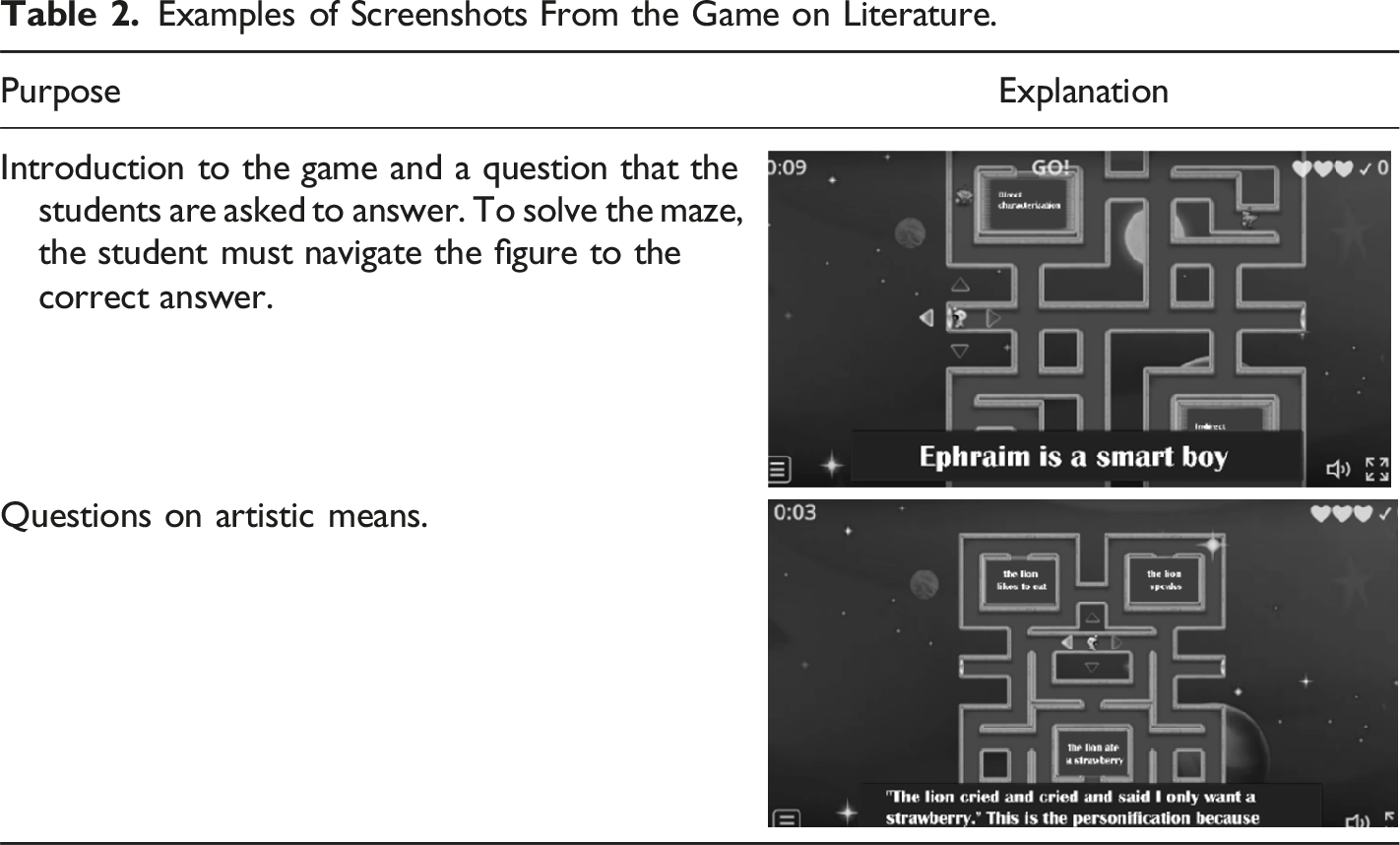
Learning Through DGBL in Literature Class
A personal game in which the student needs to reach the correct answer represented by a character that they move within the maze. The student needs to avoid elements that can disqualify them. The game is timed and has audio accompaniment.
Examples of Screenshots From the Escape Room on Language.

Examples of Screenshots From the Escape Room in Literature.
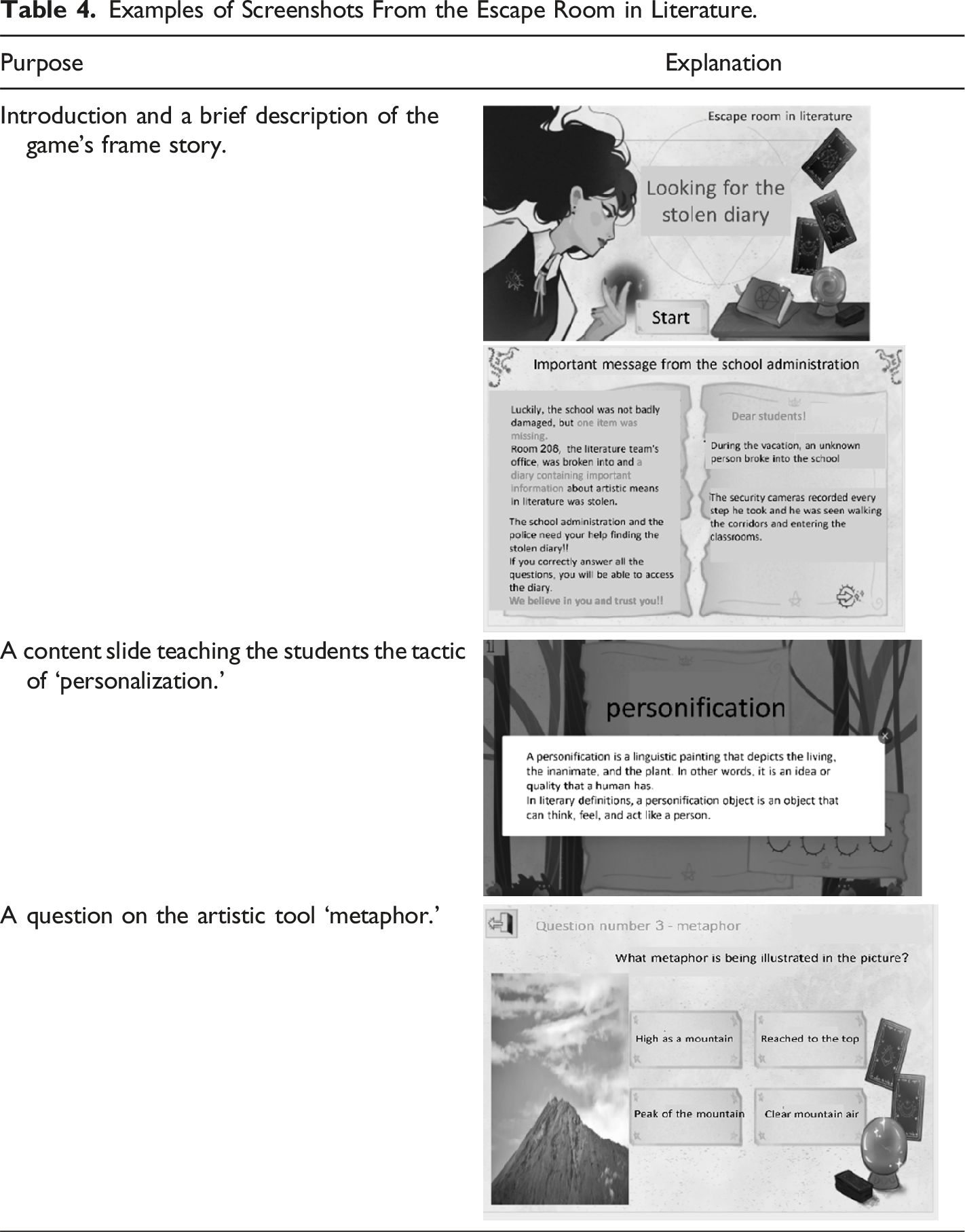
Examples from the Escape Room Game on Language
The escape room included a story in which the students found themselves on an annual trip to a haunted castle. The students had to find items that would help them to escape from the castle by answering questions on language.
Examples from an Escape Room Adventure Focused on Parts of Speech in Language
The escape room included a story frame in which a mysterious burglary of the literature journal takes place in school. The students have to help the staff to search for and find the journal with the assistance of correct answers to academic questions.
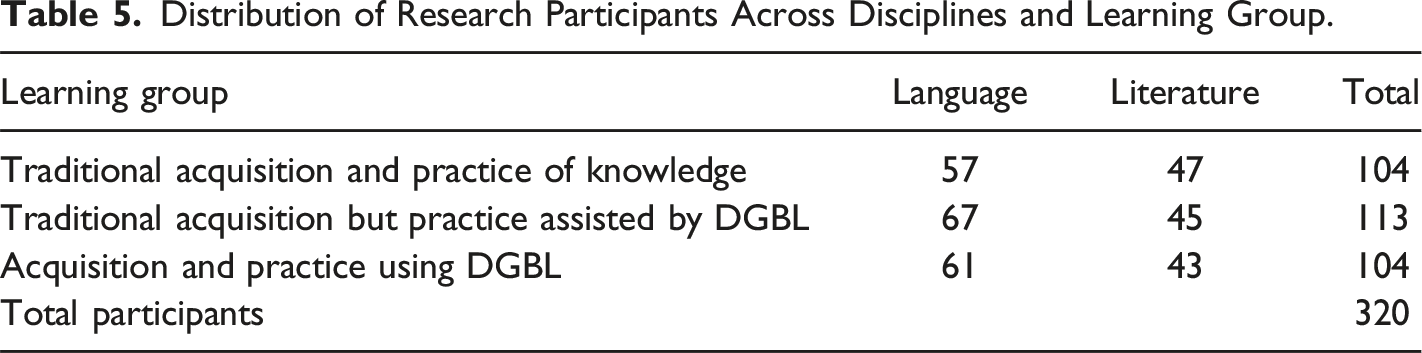
At the second stage, the class’s students were divided randomly into three groups (1) traditional acquisition and practice of knowledge, (2) traditional acquisition and practice assisted by DGBL, (3) acquisition and practice using DGBL. This division was performed both for language and of literature studies.
At the third stage, all research participants studied according to one of the teaching-learning methods detailed above, in one of the disciplines: literature or language.
At the fourth stage, all participants completed an exam in the studied field (literature or language) performed on Google Forms. The purpose of the exam was to examine students’ comprehension of the learned materials in each different type of learning. All the students who studied language received the same identical exam on language, and all those who studied literature received an identical exam on literature.
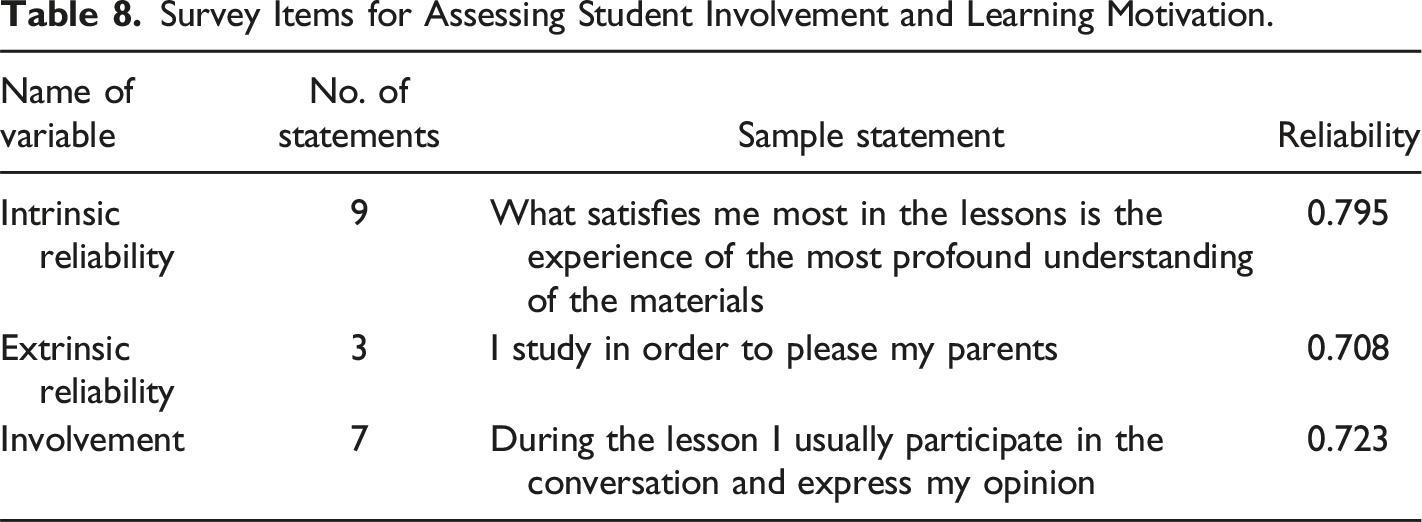
At the fifth stage, all participants responded to an additional questionnaire specially built on Google Forms. The questionnaire examined their intrinsic and extrinsic motivation and also their involvement in the learning process. Here too all the students answered an identical questionnaire.
The questionnaires were distributed to the students by the instructing teacher through the class WhatsApp group or in the Google classroom environment. All the students had the same time to answer the exam and also to respond to the questionnaire.
The Research Population
Distribution of Research Participants Across Disciplines and Learning Group.
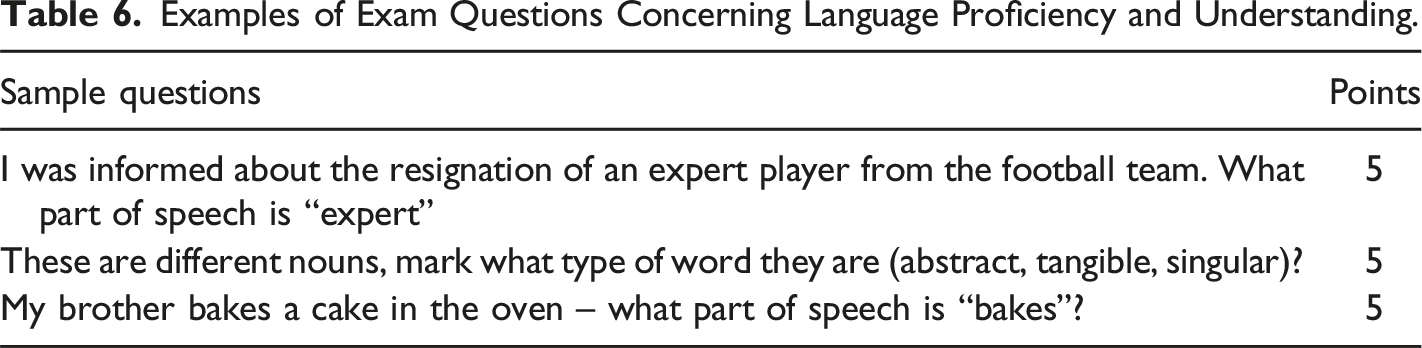
Research Tools
Examples of Exam Questions Concerning Language Proficiency and Understanding.
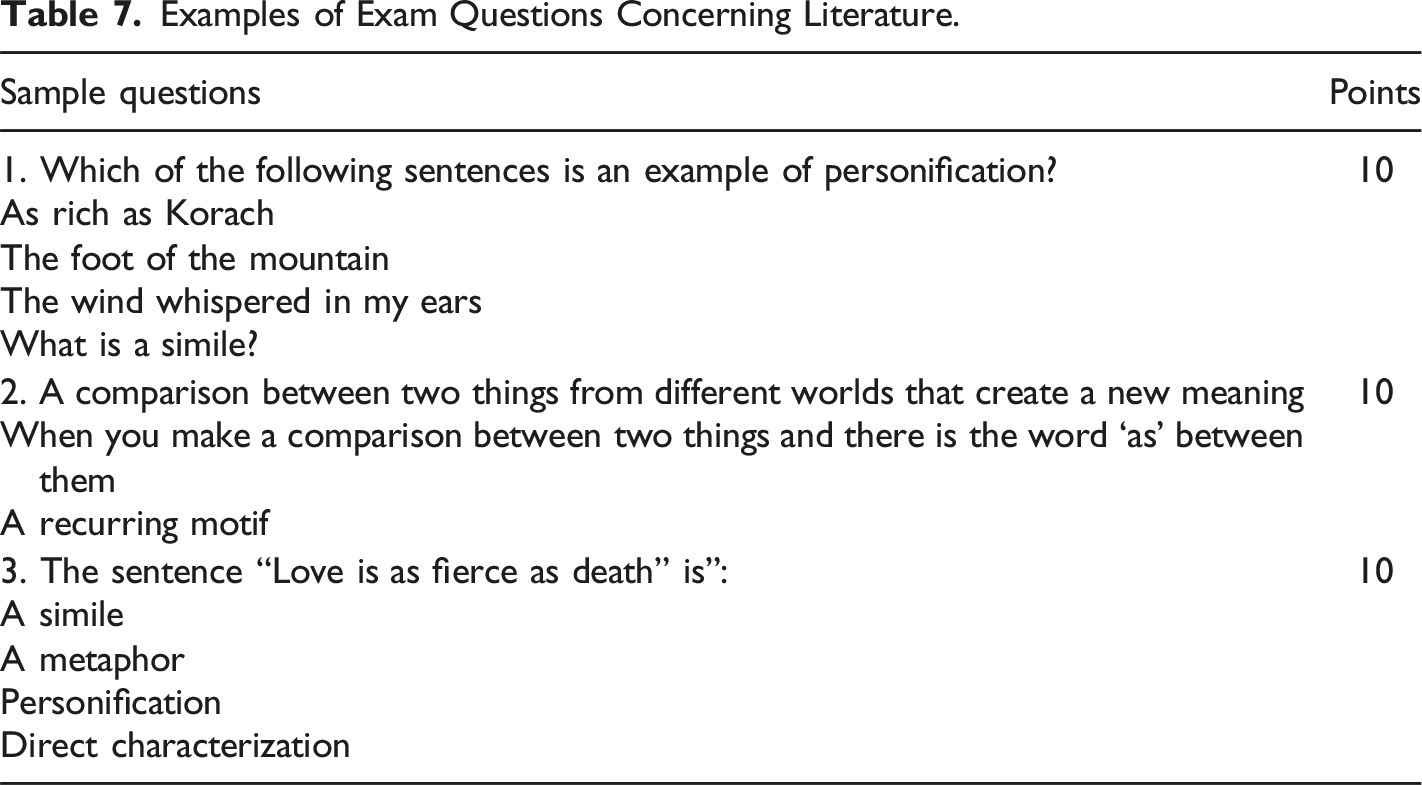
Examples of Exam Questions Concerning Literature.
Survey Items for Assessing Student Involvement and Learning Motivation.
Ethics
The research was approved by the school principal and also by the academic faculty ethics committee. The academic subjects taught during the research are part of the Ministry of Education’s learning program. The students were informed that they were assisting in a study that would examine the influence of learning through DGBL. They were promised anonymity in case of publication and their identity was recorded in the research by means of random numbers given to each student participant and this was fed into the exam and the questionnaire. The purpose of the identifying number was to match the student’s grade to the data in the motivation and involvement questionnaire.
Findings
Research Question 1
Is there a difference in the learning achievements of students according to different teaching-learning methods (traditional acquisition and practice, traditional learning method, where the teacher teaches in the classroom, and practices with DGBL, and acquisition and practice using only DGBL)?
In order to answer this question, we examined the students’ achievements (which were tested in the exam, as detailed in the chapter explaining the research tools) in each of the learning environments and without distinction between the different studied disciplines. It was found that the mean grades using the traditional learning method (where the teacher taught in the classroom) and practice was with DGBL were the highest (m = 77.61; SD = 16.20). This was followed by the mean grades for the group who studied and practiced with the help of DGBL (M = 72.69; SD = 22.47) and the lowest mean grades were in the group which was taught and practiced according to the traditional method (M = 70.53; SD = 21.82).
At the next stage, we conducted an ANOVA test of variance to examine whether there were significant differences in the academic achievements of students who studied according to the different study methods, still without distinguishing between the studied disciplines. The findings showed a significant difference in the students’ achievements (F(2,293) = 3.179, p < .05) between the groups. To examine between which groups the differences were significant, a Tukey test was conducted. The results of the test indicated a significant difference between the traditional study method (acquisition with a teacher in the classroom and practice using worksheets and textbooks) (M = 70.53 SD = 2.395) and the traditional study method (acquisition with a teacher in the classroom and supplemented by practice with a digital game), (M = 77.61; SD = 1.552), to the benefit of traditional teaching together with practice through a digital game.
Next, in order to test whether there was a difference in academic achievements for the two different disciplines, language and literature, between the different teaching methods: (1. Traditional teaching and practice; 2. Traditional teaching and practice using a digital game and 3. Teaching and practice using a digital game), t-tests were conducted for the independent variables.
The findings indicated no significant difference between the studied disciplines when the teaching method and practice are traditional (t(71.770) = 1.466, p > .05), nor was there a significant difference between the disciplines when taught by traditional teaching, but practiced with a digital game (t(93.098) = 0.999, p > .05). Contrastingly, a significant difference was found between the disciplines when DGBL were used as the method for both teaching and practice (t(76.347) = 2.311, p < .05). The mean of the grades for language was higher (M = 77.05, SD = 16.60) compared to the grades for literature (M = 66.51, SD = 24.97).
Research Question 2
Is there a correlation between the teaching and learning methods based on DGBL, the motivation (external and internal) of the learners, and their involvement in learning?
Pearson Correlations Between the Research Variables.

*p < .05, **p < .01.
The findings revealed positive correlations of varying strengths between the research variables. Examination of the correlations in the group that studied and practiced the traditional method, showed that there were positive correlations of varying strengths between intrinsic motivation and extrinsic motivation, between extrinsic motivation and involvement in learning, and between intrinsic motivation and involvement in learning without distinguishing between the studied disciplines. It was also seen that there was no significant correlation between achievements and the other variables, when teaching and learning were both traditional.
Examination of the correlations in the group that learned traditionally but practiced with a digital game, revealed positive correlations of varying strengths between intrinsic and extrinsic motivation, between extrinsic motivation and involvement in learning, and between intrinsic motivation and involvement in learning without distinguishing between the studied disciplines. Weak-medium correlations were also revealed between achievements and student involvement in learning and between achievements and intrinsic motivation.
Examination of the correlations in the group that both learned and practiced through a digital game, revealed that in this group too there were positive correlations of varying strengths between intrinsic and extrinsic motivation, between extrinsic motivation and involvement in learning, and between intrinsic motivation and involvement in learning without distinguishing between the studied disciplines. Weak-medium correlations were also found between achievements and internal motivation, as well as between achievements and external motivation.
It is important to note that when we examined these correlations separately for each studied discipline, we found no meaningful difference in the existence of significant correlations and their strength compared to the correlations we reported for both disciplines together.
Research Question 3
Are there differences due to gender in the learning achievements of students studying according to the different teaching-learning methods?
Initially, we examined whether gender was associated with a difference in academic achievements between the different teaching-learning methods for the two disciplines language and literature together. To do this, an ANOVA test was conducted. The findings showed that there was no significant difference in achievements among the boys (f(2,144) = 1.510, p < .05), but there was a significant difference in achievements among the girls (f(2,145) = 5.395, p < .01). To check between which teaching-learning methods the difference was significant, a post hoc Tukey test was conducted and it was found that the significant difference was between the traditional teaching and practice method (M = 68.57; SD = 23.482) and the traditional teaching method supplemented by practice with a digital game (M = 81.93; SD = 14.332), to the benefit of the latter.
Next, we examined those differences, relating to each discipline separately. The findings indicated that there was no difference in the boys’ achievements in language, between the three different teaching-learning methods (f(2,80) = 0.398, p > .05), but there was a significant difference in their literature achievements (f(2,61) = 9.780, p < .001). In order to discover between which teaching-learning methods the difference was significant, a post-hoc Tukey test was performed and it was found that there was a significant difference between the traditional teaching and practicing method (M = 73.75; SD = 19.30) and the traditional teaching method supplemented by practice with DGBL (M = 77.20; SD = 14.295) indicating a benefit to the combination of traditional teaching with DGBL for practice. It was also found that there was a significant difference between the traditional teaching and practice method (M = 73.75; SD = 19.30) and the method in which both teaching and practicing were performed with DGBL (M = 50.67; SD = 25.49) in favor of traditional teaching and practicing.
In contrast, among the girls, significant differences were found in their achievements between the three teaching-learning methods specifically for language (f(2,77) = 6.422, p < .01) but not for literature (f(2,65) = 1.179, p > .05). In order to discover which of the teaching-learning methods showed a significant difference for language achievements, a post-hoc Tukey test was performed and it was found that the significant difference was between the traditional teaching and practicing method (M = 73.48; SD = 22.69) and the traditional teaching method with digital game practice (M = 82.94; SD = 16.49) to the benefit of the combined traditional teaching with digital game practice. A significant difference was also found between the traditional teaching and practicing method (M = 73.48; SD = 22.69) and the method in which both teaching and practicing were performed with DGBL (M = 78.43; SD = 19.00), to the benefit of the latter method.
Discussion
The research described here aimed to discover whether there was a correlation between the use of DGBL in schools for learning and teaching and the students’ achievements, intrinsic and extrinsic motivation, and their involvement in their learning process. To achieve this goal, middle school students were divided randomly into three groups such that each of the three groups studied and practiced what they had learnt according to different combinations of teaching-learning methods. One group studied and practiced using the traditional teaching method (the teacher teaches in the classroom and the studied knowledge is practiced with a textbook). A second group learned in the traditional method (the teacher teaches in the classroom) while they practiced the knowledge in a digital game and a third group: learned and practiced through a digital game. To demonstrate the differences in effect of the different teaching-learning methods, the students took an exam at the end of the learning process and also answered a questionnaire that tested their involvement in the learning process, and their intrinsic and extrinsic motivation for learning.
In the research literature, most of the findings dealing with GBL and learning are based on self-report questionnaires (Banihashem et al., 2023; Dehghanzadeh et al., 2022). Based on objective learning achievements and self-report questionnaires, this study contributed to a deeper understanding of how DGBL contributes to innovating learning.
The findings indicated that the students who studied in the traditional manner (teacher in the classroom) but practiced with a digital game had the highest achievements in comparison to those who studied with the two other teaching-learning methods. It was also found that the difference between the achievements of students who studied and practiced according to the traditional method and the achievements of those who studied according to the traditional method but practiced with DGBL was significant.
Since in both these abovementioned teaching-learning methods the teacher has an identical role, we attribute the difference in achievements to the practice with DGBL instead of the traditional practice method. Thus, it appears that the most meaningful combination is traditional teaching with innovative and active learning with DGBL. This finding is in line with other studies in this field which showed learners achieved higher exam grades when learning was games-based (Franciosi, 2017; Karakoç et al., 2022; Liu et al., 2020; Xu et al., 2023).
At the next stage, we looked at the differences in achievements between the different studied disciplines for each of the teaching-learning methods. The findings show no significant difference in achievements between those studying literature in comparison with those studying language when they were taught according to the traditional method. Moreover, no significant difference was found in the achievements of those studying literature over those studying language when the students were taught traditionally but played DGBL to practice. In contrast, with regard to language studies, it was found that the achievements were highest when the students both learned and practiced with DGBL in comparison to those studying literature. There was also a difference in achievements for language between traditional learning and practice, and learning and practice with DGBL, to the benefit of the latter method. Perhaps the reason for this, is that language studies are connected to the students’ familiarity with the learning materials, while literature studies were a new discipline, that the students were studying for the first time in the studied academic year. The discipline of language is a spiral subject that is studied throughout the school years. So, it seems that students’ several years of familiarity with this discipline may have created the difference. A possible explanation for this may be the German cognitive load of the learners (Liu et al., 2023). Given these findings, we recommend that educators should use DGBL in learning especially for practice, when the students already have a foundation in the studied discipline. These findings support reports from the research literature in this field which indicate that the integration of a game in teaching processes has a positive influence in comparison to the traditional teaching-learning method (Barz et al., 2023; López-Fernández et al., 2021).
The research findings echo previous research findings (Banihashem et al., 2023; Coren, 2011; Dehghanzadeh et al., 2023; Ofosu-Ampong, 2020; Partovi & Razavi, 2019; Thirakulwanich et al., 2020; Xu et al., 2023; Yıldırım, 2017) and reveal correlations of a medium to high strength between involvement in learning, and intrinsic and extrinsic motivation in the groups taught by the traditional model that practiced with a digital game and in the groups that studied and practiced with a digital game. These correlations were stronger than those for groups who studied and practiced literature according to the traditional learning-teaching method. It was interesting to see that not only the teaching-learning method was important, but also which discipline was studied. The findings show that in contrast to positive and strong correlations found for those who studied literature studies according to the traditional method and practiced with DGBL, the findings among students who studied language were the reverse. It was perversely the students who studied and practiced according to the traditional method who exhibited stronger positive correlations than those who studied according to the other methods. This finding is surprising and further research is needed to more profoundly understand the reasons for this.
Another interesting finding that emerged from the research deals with the correlation between the academic achievements for the different teaching-learning methods found in the boys’ group and in the girls’ group. The statistics showed that among the boys the different teaching-learning methods did not produce different academic achievements. In contrast, a significant difference emerged among the girls when they studied with different methods. The girls’ mean grades when they studied according to the traditional method but practiced with DGBL was higher than those of the girls who studied and practiced with the traditional method. Two possible explanations can be examined for this finding. The first, boys spend more time on DGBL than girls (Desai et al., 2010; Leonhardt & Overå, 2021). Boys also have more experience in computer games and use of various end devices that they use to play (such as computers, mobile phones and consoles) (Gómez-Gonzalvo et al., 2020). Boys also perceive themselves as having stronger self-efficacy for games and as having stronger playing skills than girls (Dindar, 2018). Perhaps the difference in academic achievements in the context of DGBL is connected to the fact that boys are used to being DGBL players in their spare time and so a learning game in school hours did not contribute to their academic abilities.
The other possible explanation for this finding, is pinned in what actually happens in the educational arena in the classroom. A document that reviewed the policy concerning the promotion of gender equality in the education system, argues that there is both an overt and covert learning program in the education system. While the overt learning program deals with learning subjects and the studied contents, the covert learning program relates to everything that takes place in school and is not part of the formal learning program such as: social relations, teacher-student relations etc. Often the covert learning program delivers messages to the students that strengthen gender stereotypes, for example supporting the dominance of boys, especially as a group in the classroom and other school spaces (Avgar, 2017). Research has also shown that teachers unconsciously tend to relate differently to male and female students, for example in terms of the time devoted to each gender group, different ways of speaking to them and their expectations from each group (Avgar, 2017). This may explain the differences found here, for when the traditional classroom space provides a broader ‘space’ for boys rather than girls, the use of a digital game in which the girl can study and progress at their own pace individually, led to more profound experimentation and practice, something that enabled them to achieve higher grades. An additional finding relates to differences between boys’ and girls’ achievements between the different disciplines, indicating a difference by gender. This finding also requires further study to understand the reasons for this difference.
In light of the research findings, we recommend several actions: • To integrate learning with a teacher and practice with DGBL. • To train teaching staff to introduce games in learning processes as an integral part of the learning program and not a one-time event. • To acquire end devices for the use of both teaching staff and students and not to rely on the students’ own end devices, in order to ensure an equal opportunity for all students to use those devices for learning in school. • The teaching staff should be aware of gender differences relating to the use of DGBL and the implications of those differences for academic achievements when using DGBL, both for boys and girls.
Conclusion
In this paper, we discuss the differences between three types of teaching, two utilizing DGML. We also discussed the consequences of learning outcomes, intrinsic and extrinsic motivation, and student engagement. The research design is based on information gathered from the scientific literature, including previous research studies. Nonetheless, the findings were based solely on two disciplines: language and literature.
The next step will be to apply the same design to other disciplines. This design might benefit educators who want to develop DGBL for their students and integrate it into their teaching, as an experiential practice. It might also benefit researchers to explore this pedagogical approach in other disciplines.
Moreover, the findings of the study highlighted the crucial role that teachers play in teaching and learning, alongside the use of technology.
Limitations of the Research and Recommendations for Future Studies
To attain as many research participants as possible, and without breaking the students’ learning sequence it was decided that the research would be performed by a staff of three teachers. Although they were all veteran teachers who worked together, individual personality characteristics of the teacher and the way in which they taught may have influenced the findings. It is therefore suggested that future research should be expanded to include additional schools, or to replicate this study in a single school with only one teacher.
We did not ask our participants about their background characteristics. As a result, these characteristics may have an impact on how learners engage in games, which can have an impact on the results of the study.
An additional limitation is a practical element, since some of the classes studied with computers and some with cellular phones, something that was less comfortable for the students, especially when using the escape room games (the third teaching-learning method). This limitation may also have harmed the findings.
In this study we examined the effect of different teaching-learning methods for only two disciplines. It is recommended that future research should study additional disciplines.
Footnotes
Declaration of Conflicting Interests
The author(s) declared no potential conflicts of interest with respect to the research, authorship, and/or publication of this article.
Funding
The author(s) received no financial support for the research, authorship, and/or publication of this article.
