



Abstract
In the past decade, Computational Thinking (CT) education has received growing attention from researchers. Although many reviews have provided synthesized information on CT teaching and learning, few have paid particular attention to collaborative learning (CL) strategies. CL has been widely implemented in CT classes and has become the most popular pedagogy among educators. Therefore, a systematic review of CL in CT classes would provide practical guidance on teaching strategies to enhance CT interventions and improve the quality of teaching and learning, ultimately benefiting students’ CT skills development. To address this gap, this study examined 43 empirical studies that have applied CL strategies, ranging from 2006 to 2022. Several findings were revealed in the analysis. First, a wide range of theories and frameworks were applied to inform research questions, pedagogical design, and research methodologies. Second, despite the acknowledged importance of group composition in effective CL, a large number of studies did not provide details on how the students were grouped. Third, six types of CL activities and instructional designs have been identified in CT classrooms. The synthesized information provides valuable insights that can inform future research directions and guide the design and implementation of CL activities in future CT classes.
Keywords
Introduction
Computational thinking (CT) refers to a set of interrelated skills and practices used to solve problems across disciplines (Wing, 2006). Researchers believe that CT will be a fundamental skill for students preparing for future engagement in the workforce and as active participants in society in the 21st century (Bers et al., 2022; Grover & Pea, 2017; Mørch & Kafai, 2022). Given its importance, an increasing number of countries have initiated curricula reform to teach students CT skills across K-12 levels (Bocconi et al., 2022). Simultaneously, CT education has received growing attention from researchers, who have conducted numerous empirical studies on various aspects in K-12 settings, including instructional design (Papavlasopoulou et al., 2019; Pérez-Marín et al., 2020), CT assessment (El-Hamamsy et al., 2022; Román-González, 2015), developing CT skills (Kong et al., 2018; Sun et al., 2022), and the interrelations between CT and other competencies (Città et al., 2019; Rodríguez-Martínez et al., 2020).
In CT classes, CL strategies have been widely implemented and have become the most popular pedagogy among educators (Lv et al., 2022; Szabo & Sheard, 2023; Tikva & Tambouris, 2021). Empirical evidence has shown that CL not only facilitates effective learning for students (Iskrenovic-Momcilovic, 2019) but also improves learning motivation, stimulates active student engagement (Wei et al., 2021), enhances participant relationships, and fosters individual learning responsibility (Zhong et al., 2016). While these findings have shed light on how students acquire CT skills in various CL settings such as pair programming (Bodaker & Rosenberg-kima, 2023), small group-based problem-solving (Herro et al., 2021), and board game competition (Kuo & Hsu, 2020), few have systematically summarized the instructional design features and identified the strengths and limitations of different CL approaches. A synthesized review of CL in CT classes would provide practical guidance on teaching strategies to enhance CT interventions and improve the quality of teaching and learning, ultimately benefiting students’ CT skills development.
Therefore, this study aims to present a review of the key characteristics of CT studies and CL instructional designs. This is accomplished by reviewing empirical studies that have applied CL strategies in K-12 CT classes. Specifically, this study addresses six research questions: RQ1: What are the characteristics of the CT studies that apply CL approaches? RQ2: What theoretical frameworks are applied to the CT studies? RQ3: What tools or artifacts are used in CL activities? RQ4: What are the group formation features in the CT studies? RQ5: What forms of CL activities are implemented in the CT studies? RQ6: What methods are used to assess CT skills and evaluate CL process?
Literature Review
CT Frameworks
The prevalence of CT spawned research that broke it down into several elements, aiming to clarify and outline what ‘thinking like a computer scientist’ means. As such, several conceptual frameworks have been developed to clarify what CT entails, inform teaching and learning, and support academic assessment. These frameworks can be classified into two main categories: CT as a thought process and CT as a problem-solving process.
CT Frameworks Focusing on the Thought Process.

Frameworks Focusing on the Problem-Solving Process.
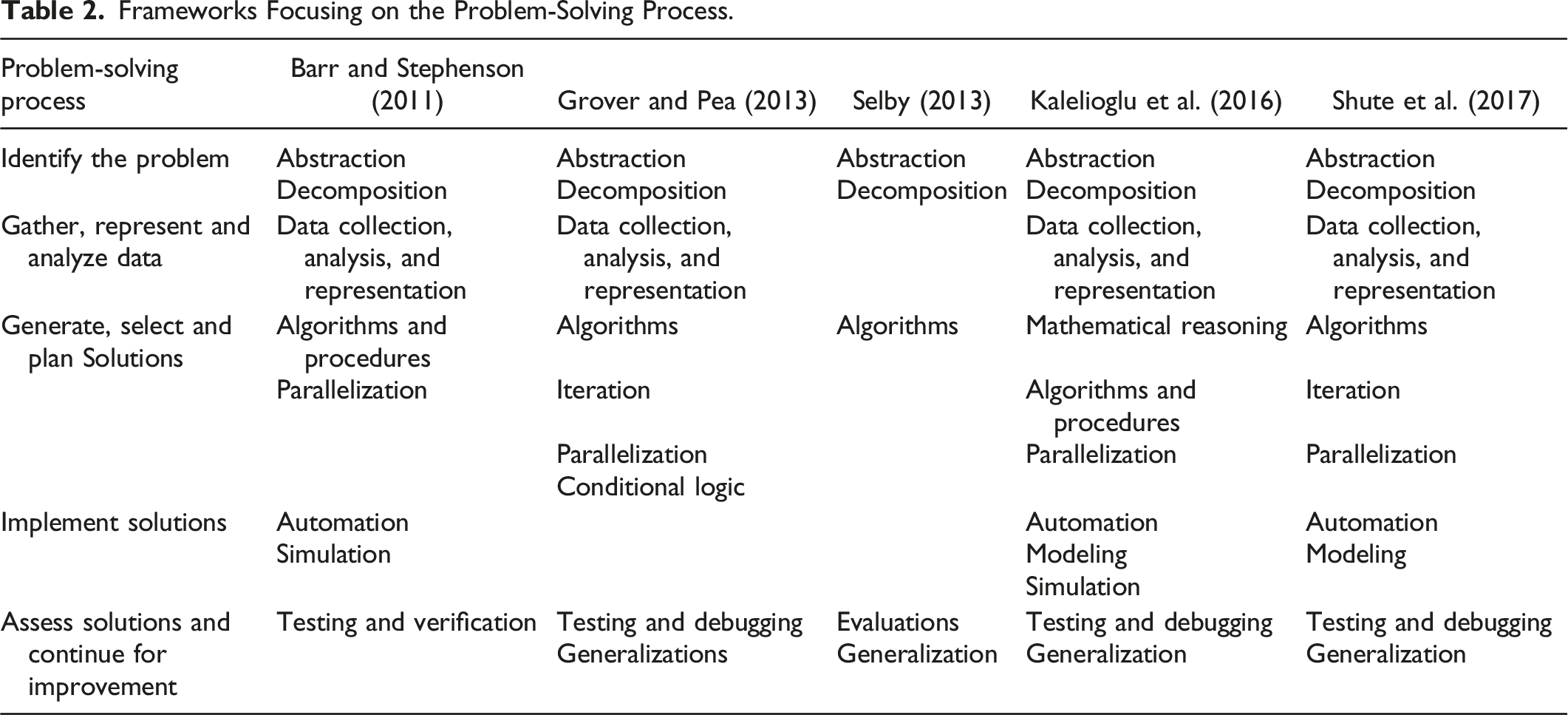
Table 2 presents frameworks that outline five facets of problem-solving processes within the scope of CT. Barr and Stephenson (2011) proposed a practical definition of CT in the K-12 education context, emphasizing it as a problem-solving methodology that can be automated, transferred, and applied across subjects (p. 51). Similarly, Grover and Pea (2013) identified the key elements that constitute CT and serve as the foundation for curricula designed to promote CT learning and assess CT development in schools. Building upon these definitions, Selby (2013) aimed to develop a narrower and simplified definition to facilitate CT assessment, focusing on only five key concepts of CT skills. On the other hand, Kalelioglu et al. (2016) and Shute et al. (2017) created a more comprehensive framework by reviewing previous CT definitions, interventions, assessments, and models across various disciplines. Although these frameworks exhibit slight differences, their common objective is to emphasize and support the knowledge and skills necessary to excel in CT across K-12 subjects. Moreover, they aim to inform assessment methods that measure foundational understandings of CT and problem-solving skills in K-12 learners. Overall, these frameworks serve as valuable tools for educators to facilitate the development of CT skills in students, which are essential for their future success in our rapidly changing technological world.
Collaborative Learning in CT Education
Collaborative Learning (CL) is defined as a set of teaching and learning approaches that involves groups of learners working together to solve a problem, complete a task, or create a product (Dillenbourg, 1999; Laal, 2012; Lehtinen et al., 1999). In K-12 CT classes, CL is widely recognized and promoted as an effective teaching approach for imparting CT skills (Lv et al., 2022; Szabo & Sheard, 2023; Tikva & Tambouris, 2021). First, CT is considered a social activity where programming is no longer seen as a solitary, tool-based task but rather one that fosters social interaction (Mørch & Kafai, 2022). Learners are engaged in various programming language environments that enable them to actively participate in communities of practice. These online learning communities provide valuable opportunities for learners to share, discuss, and remix each other’s projects (Resnick et al., 2009). Second, several CT frameworks highlighted the importance of collaborative skills. For example, Brennan and Resnick (2012) described CL in two ways: the value of creating with others, and the value of creating for others. When children are involved in CT practices, they are able to work together, establish partnerships, and collaborate with other students. By creating for others, young learners experience the value of authentic audience and appreciate that others are engaging with and appreciating their creations. Additionally, Grover and Pea (2017) acknowledged that collaboration is a cross-cutting skill for the 21st century learner. Therefore, the characteristics of CL can effectively promote students' CT perspectives while equipping them with essential skills to actively participate in an ever-evolving global community.
Group Formation in Collaborative Learning
Group composition is a pivotal factor that significantly influences both the learning performance and social behavior of the participating members through their interactions (Borge et al., 2018; Curşeu et al., 2018; Lee, 1993). Previous research indicated that a well-structured learning group could facilitate better discussions and interactions during the learning process, thereby achieving higher group performance (Curşeu et al., 2018; Janssen et al., 2013). Therefore, we contend that group formation plays a crucial role in effective CL.
Group formation can be achieved through random formation, self-selection, or instructor-assigned methods (Maqtary et al., 2019). Random formation refers to randomly assigning learners to groups without any specific criteria or preferences. Self-selection, on the other hand, allows learners to choose their own group members based on their personal preferences or compatibility. Alternatively, group formation can be guided by an instructor or an algorithm, utilizing specific criteria (e.g., gender, ability level, and member familiarity) to form groups that optimize learning outcomes.
Groups are usually classified into two types based on the diversity among group members. Homogeneous groups consist of individuals who possess similar attributes, such as similar levels of knowledge, skills, or characteristics. This type of group is often formed through self-selection, as students tend to choose group members based on similarity, friendship, or prior acquaintance (Maqtary et al., 2019). Heterogeneous groups, conversely, consist of members with different backgrounds and characteristics, such as learning abilities, skills, genders, or ethnic backgrounds. This diversity effectively promotes interaction among group members (van der Laan Smith & Spindle, 2007).
Group size is another important factor in impacting both the quantity and quality of interactions among group members (Janssen & Kirschner, 2020; Saqr et al., 2019). Smaller groups tend to promote more frequent and in-depth interactions, as well as greater participation and engagement among members (Saqr et al., 2019). In addition, meta-analyses have suggested that small groups with 2–4 students were more effective in promoting positive interdependence, individual accountability, and group processing than larger groups (Johnson & Johnson, 2009; Lou et al., 1996, 2001).
Previous Reviews in the CT Domain
To identify, evaluate, and summarize the findings of relevant individual studies, numerous reviews have provided an overview of empirical research concerning teaching and learning in CT education (Appendix A). These reviews can be organized into the following three themes.
The first theme pertains to the current CT education research trends. These reviews provide a comprehensive summary of findings, including course design, learning strategies, teaching tools, programming languages, and learning contents of CT education across different age groups. They also lay out clear and practical suggestions for future CT practice. For example, Grover and Pea (2013), Lye and Koh (2014), and Tikva and Tambouris (2021) appraised and synthesized information on K-12 CT education, serving as a general guide to what is already known in the CT domain.
The second theme involves the integration of CT with other disciplines. Researchers articulated how CT can be integrated into the teaching and learning of other subjects. For example, Barcelos et al. (2018), Lv et al. (2022), and Nordby et al. (2022) reported evidence of CT activities in math education from multiple facets, such as learning contents, instructional strategies, and outcomes.
The last theme focuses on particular aspects of CT education, such as CT learning contents (Israel-Fishelson & Hershkovitz, 2022; Zhang & Nouri, 2019), CT assessment (Cutumisu et al., 2019; Da Cruz Alves et al., 2019; Fagerlund et al., 2021; Tang et al., 2020), learning tools (Bakala et al., 2021; Ching et al., 2018; Ioannou & Makridou, 2018; Papadakis, 2021), and programming activities (Bati, 2022; Buitrago-Flórez et al., 2017). These reviews provide critical insights into different dimensions of CT by answering “what to teach,” “what can be learned,” and “how to assess” in CT activities.
These reviews provide up-to-date summarized information on recent CT initiatives. Nonetheless, there are limited reviews that investigate and synthesize CL instructional design in CT classrooms. Although there is a meta-analysis that examined the overall effects on the cognitive, social, and affective competencies of collaborative versus individual problem-solving in CT education (Lai & Wong, 2022), its focus was solely on learning outcomes, and the included studies were primarily at the university level. Given that CL approaches have gained significant popularity among educators in K-12 settings, a systematic review on how CL strategies implemented in CT classrooms could provide guidance on classroom activity design, create effective learning experience, and offer recommendations to researchers and practitioners in different learning contexts. Therefore, it is worthwhile to address this gap by reviewing the existing empirical studies and presenting a comprehensive picture of CL approaches to inform future implementations.
Methodology
This study followed Petticrew and Roberts’ (2006) guidelines and PRISMA statement (Page et al., 2021) to perform a systematic review through four steps: literature search, study identification, critical appraisal, data coding.
Literature Search
The literature search was executed from multiple databases, including ACM Digital Library, IEEE Xplore Digital Library, ERIC, PsycINFO, Scopus, and Web of Science. The search in the databases was restricted to January 1, 2006, and December 31, 2022, since 2006 was the year that CT was defined by Wing (2006). The search terms were constructed by Boolean logic as follows: (computational thinking) AND (code OR coding OR program OR programming) AND (primary school OR elementary school OR secondary school OR middle school OR high school OR K-9 OR K-12) AND (collaborat* OR cooperat* OR pair OR group OR team).
Apart from database searching, journals that published CT-related work were manually searched. These journals are Educational Research Review, Review of Educational Research, Computers & Education, and Journal of Educational Computing Research. Studies were also added through other sources, such as literature reviews. A total of 3234 papers were obtained in the preliminary searching stage.
Study Identification
Inclusion and Exclusion Criteria.
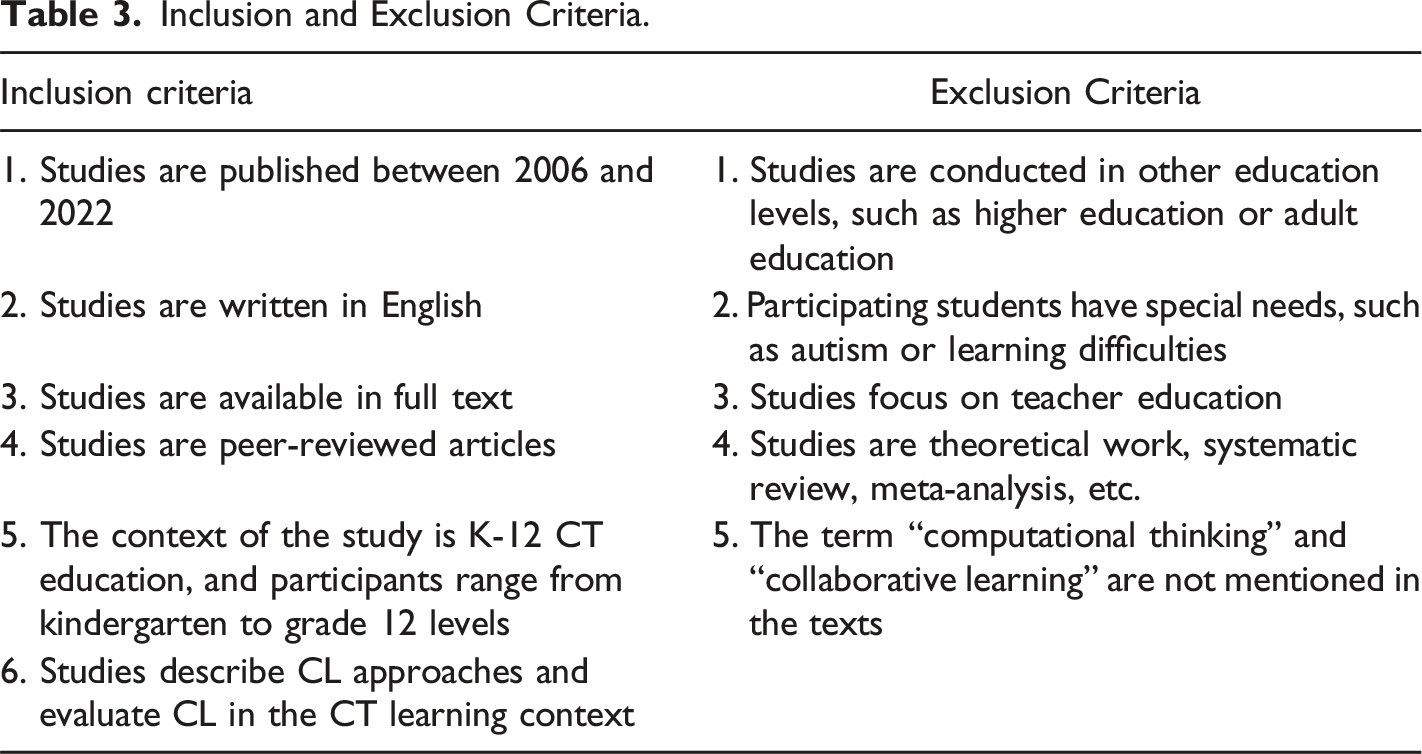
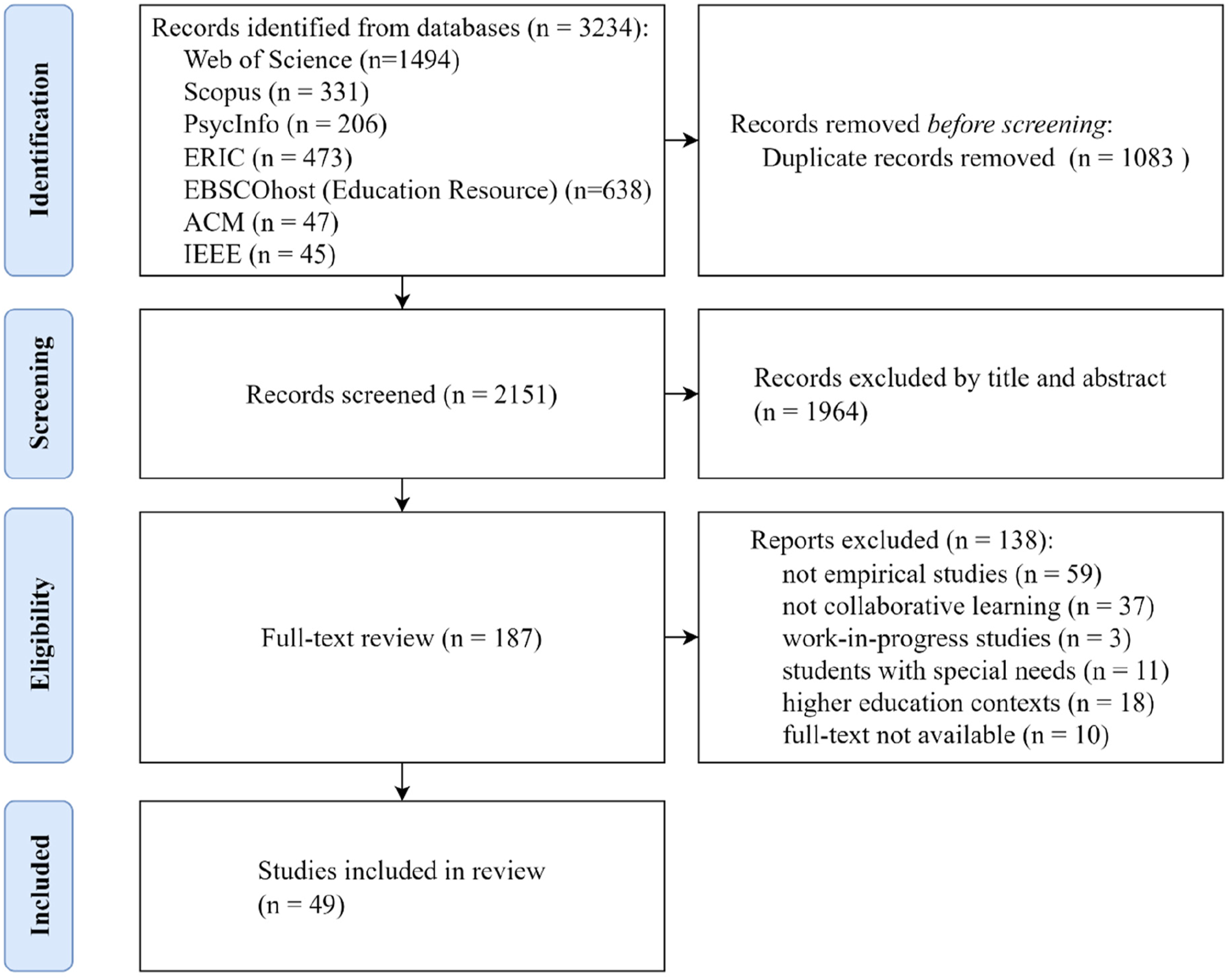
PRISMA.
Critical Appraisal
Critical appraisal determines whether the included studies are adequate for answering the research questions. It is an essential process in the review as it assesses the included studies for trustworthiness, value, and relevance. This study adopted an evidence-based practice (EBP) checklist to evaluate the quality of the implementation of the intervention (Education Group for Guidelines on Evaluation, 1999; Yang et al., 2018). The EBP checklist consists of six questions assessing the study’s quality (Appendix B). To ensure consistency and rigor, only studies with a total score ranging from 4 to 6 were included in this review, and studies with a total score lower than 4 were excluded (Morrison et al., 1999). The appraisal results are presented in Appendix B. Six studies were excluded due to insufficient rigor, and 43 studies were included for data extraction and synthesis. The list of the included studies can be found in Appendix C.
Data Coding
The coding scheme was developed based on a previous systematic review conducted by Lamsa et al. (2021). Given that their study explored CL features and analyzed factors that are highly relevant to this review, their coding scheme was adopted as a foundation but made necessary refinements to ensure its alignment with emphasis on the implementation and evaluation of CL approaches. The final coding scheme consisted of 12 categories (see Appendix D): (1) research method; (2) country; (3) sample size; (4) education level; (5) subject domain; (6) theories and frameworks; (7) CT tools, (8) group size; (9) grouping criteria; (10) CL activities; (11) CT assessment and (12) CL evaluation.
To increase the reliability of the coding, analysis, and interpretation of the results, all studies were coded by two independent researchers. This process was achieved by an interrater reliability (IRR) exercise to evaluate the agreement between authors in the process of extracting data, which could improve the quality and rigor of systematic reviews (Gough et al., 2012). A Master student majoring in instructional design and technology was recruited for the IRR exercise. The author and the student independently screened the 43 studies according to the coding scheme. Cohen’s kappa was used to measure the level of agreement for each code. Calculations were performed separately for each sub-code since the codes are independent with each other. This approach ensures that high agreement in one code does not mask low agreement in another code. According to Cohen’s suggestion, a kappa value between 0.61 and 0.80 is considered as substantial, and more than 0.80 is considered as almost perfect agreement (McHugh, 2012). Any disagreements that arose were resolved through discussion between the coders. The IRR results can be found in Appendix D.
Findings
In this review, a total of 43 studies were included. We analyzed the findings within each category and synthesized the results across all the included studies. The findings are divided into two subsections to address RQ1 to RQ6. “Study Characteristics” addresses RQ1 by providing an overview of the characteristics of the included studies, and “CL Implementation and Investigation” addresses RQ2 to RQ6 by investigating how CL approaches are implemented and investigated in CT classrooms.
Study Characteristics
Study Participants and Contexts
Characteristics of Included Studies.
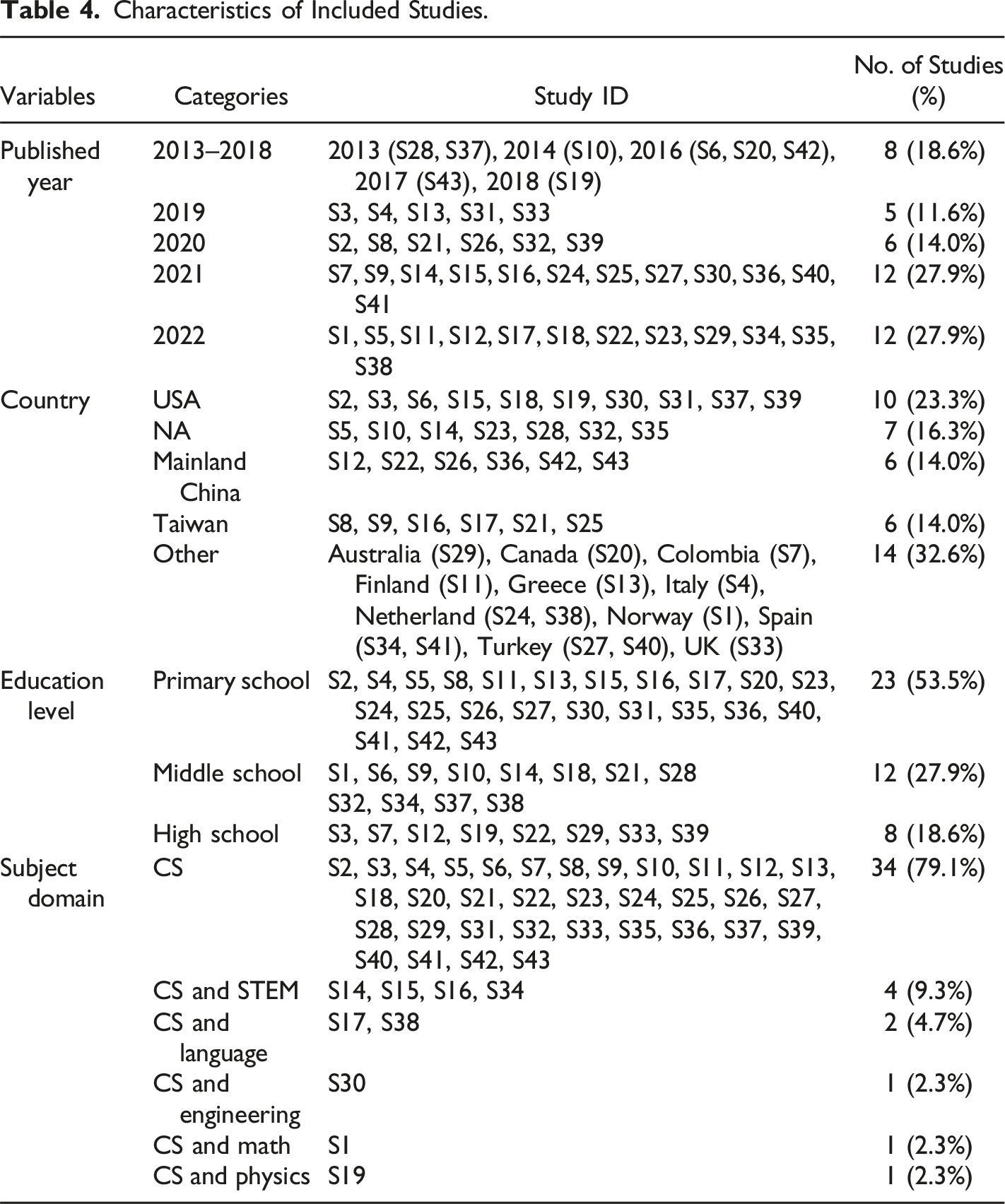
Most of the studies (n = 34, 79.1%) focused solely on developing CT skills within the computer science (CS) discipline, while a smaller portion of studies (n = 9, 20.9%) integrated CT skills into other subjects, such as STEM and languages. Surprisingly, despite the call for CT skills to be taught beyond the CS discipline (Barr & Stephenson, 2011), the studies included in this review indicate that the implementation of CT in non-CS classrooms still lags behind.
Research Method
Approximately half of the studies (n = 23, 53.5%) utilized a mixed-methods approach to evaluate the effectiveness of CL approaches in developing CT skills (S2, S3, S5, S6, S7, S8, S12, S13, S16, S17, S18, S19, S20, S21, S22, S26, S29, S33, S35, S36, S38, S39, S40). Specifically, researchers combined qualitative methods (e.g., observation, field notes, video recordings) with quantitative methods (e.g., pre/post-tests, questionnaires) to examine the impact of CL approaches on students' CT skills. By triangulating the results from both qualitative and quantitative methods, researchers were able to obtain a more comprehensive and nuanced understanding of how students develop CT skills in the context of CL.
CL Implementation and Investigation
Theories and Frameworks
Theories and Frameworks Applied in Studies.
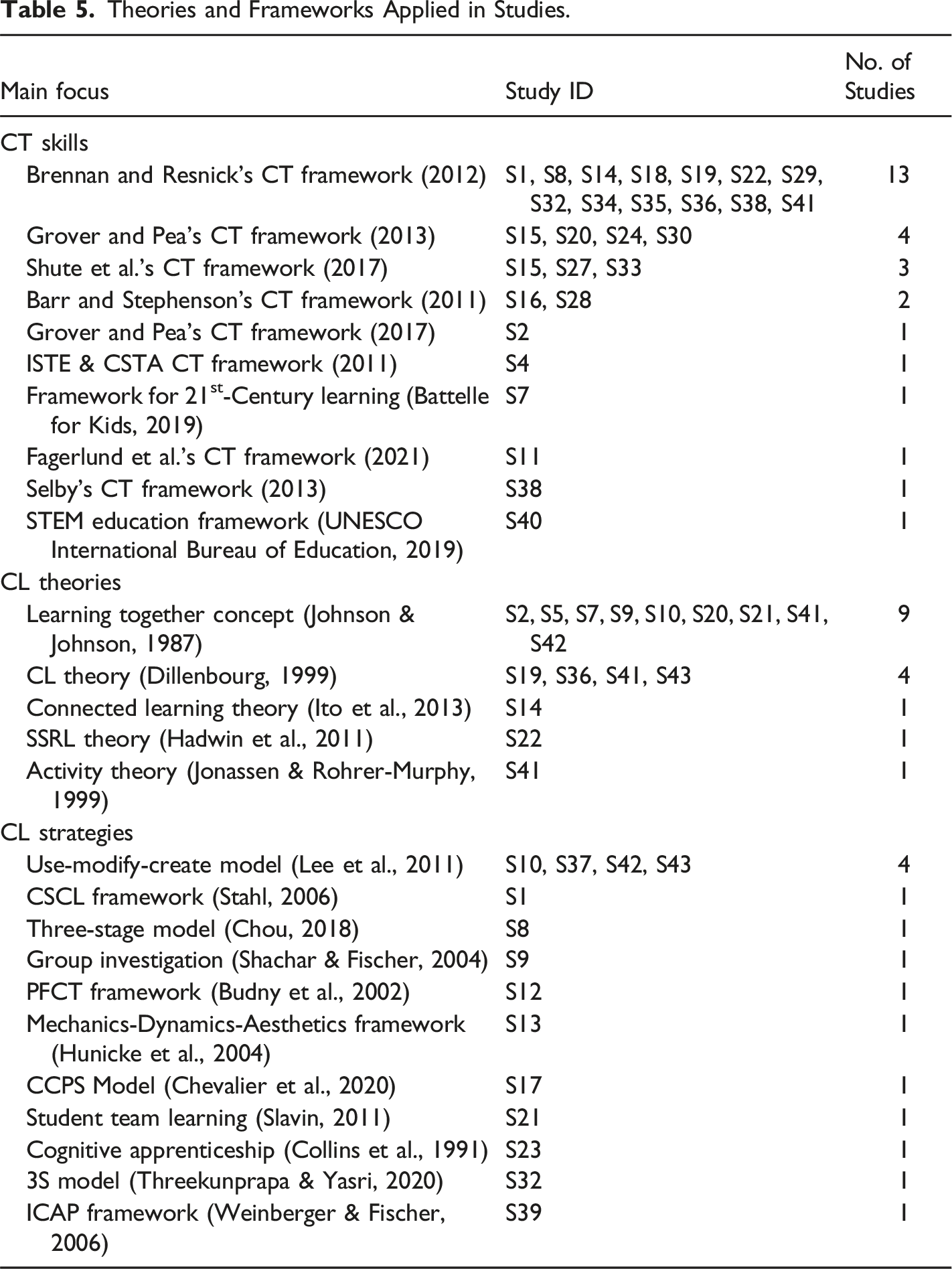
The first category emphasizes CT learning content. One of the most frequently used frameworks is Brennan and Resnick’s CT framework (2012). This framework breaks down CT skills into three dimensions and identifies specific concepts and practices that can be used to study and assess these skills. As shown in Table 5, 13 out of 43 studies integrated Brennan and Resnick’s CT framework (2012) into their instructional designs to meet the needs of students. Additionally, four studies utilized Grover and Pea’s CT framework (2013), three studies employed Shute et al.'s CT framework (2017), and two studies integrated Barr and Stephenson’s CT framework (2011). These frameworks provide a clear structure and guidance on teaching and assessing students’ CT skills.
The second category focuses on CL theories, with Learning Together and Alone (Johnson & Johnson, 1987) being the most preferred among researchers. Learning Together and Alone is a conceptual framework that teachers can utilize to structure any lesson cooperatively (Johnson & Johnson, 1987). Within the context of cooperative learning, students collaborate to achieve shared objectives in an independent manner (Johnson & Johnson, 2002). Among the studies included, nine of them employed Learning Together and Alone as guidance for CL activities. For example, in S2, this conceptual framework served as the core instructional design principle for conducting online programming learning activities. Additionally, S21 combined this framework with the Student Team Learning approach (STL) (Slavin, 2011) to create a CT board game, proposing two distinct collaborative tasks.
Next, four studies demonstrated the pivotal role of Dillenbourg’s CL theory (1999) in justifying and contextualizing their research designs. Drawing inspiration from Piaget and Vygotsky’s constructivism, Dillenbourg (1999) defined CL as a learning context in which two or more individuals learn or endeavor to learn collaboratively through specific forms of interaction. For example, S43 designed a CL curriculum that involves students working interactively to create CT projects through the sharing of information and the negotiation of meaning. This study aimed to investigate whether this proposed approach could improve students' CT skills and self-efficacy.
The third category is focused on analyzing the effectiveness of CL interventions and processes. Eleven different frameworks were applied in this category. Specifically, four studies (S10, S37, S42, S43) utilized the Use-Modify-Create model (Lee et al., 2011) to design a curriculum for teaching robot programming and to impart CT concepts to young children. The Use-Modify-Create model encourages learners to actively engage with existing CT knowledge, modify coding patterns, and subsequently develop a new CT project in the create stage (Lee et al., 2011). It promotes an iterative process of learning, adaptation, and creation, fostering both individual growth and innovation within the CT domain.
Among the remaining ten frameworks, four were used to analyze the behavior and interaction during the CL process: the CSCL framework (Stahl et al., 2006) (S1), group investigation framework (Shachar & Fischer, 2004) (S9), CCPS model (Chevalier et al., 2020) (S17), and the ICAP framework (Weinberger & Fischer, 2006) (S39). The remaining six frameworks were employed to design CL activities and analyze collaborative processes. These frameworks are the three-stage model (Chou, 2018) (S8), PFCT framework (Budny et al., 2002) (S12), Mechanics-Dynamics-Aesthetics framework (Hunicke et al., 2004) (S13), Student Team Learning (STL) (Slavin, 2011) (S21), cognitive apprenticeship (Collins et al., 1991) (S23), 3S model (Threekunprapa & Yasri, 2020) (S32). These frameworks provide structured guidelines and pedagogical principles to support the design and implementation of effective CL activities.
CT Tools
CT tools were classified into two dimensions: (1) text and visual programming languages; and (2) plugged-in and unplugged learning tools. This classification enables researchers to differentiate the various types of CT tools and how instructors utilize them in CT activities.
Of the wide range of CT tools used in the selected studies, 40 studies used visual programming tools, with only three (S9, S20, S22) using text-based programming languages (i.e., Arduino, Game Marker, and Python). However, even though text programming was used in those three classes, the outcomes were often visualized through animations or physical artifacts. For example, in S9, participants were required to write code to simulate the operation of traffic lights. The traffic lights were used to help students visualize the CT concepts and debug their code. In these three studies, teachers combined text-based programming languages and tangible artifacts to motivate students and help them engage with CT learning effectively.
Although CT tools can be classified based on text and visual language formats, some researchers have proposed an alternative categorization, dividing CT tools into two distinct categories: plugged-in and unplugged learning tools (Caeli & Yadav, 2020; Sigayret et al., 2022). Among the included studies, all of them utilized plugged-in tools in their CT interventions, except for five studies that employed board games (S4, S13, S21), Lego bricks (S7), and flowcharts (S32) and another two studies that combined unplugged and plugged-in tools to teach CT concepts (S16, S17). These findings highlight the dominance of plugged-in tools in CT education. However, these seven studies suggest that unplugged tools still play a valuable role in CT education, particularly for younger learners who learn abstract concepts.
Group Information
The majority of studies included in this review formed groups of two to four students, with only one study employing larger groups of five to six students. Specifically, 25 studies formed groups with two students. The group size was found to be primarily dependent on the nature of the tasks and the design of the curriculum. Students were paired up as their collaborative tasks involved pair-programming (n = 9), pair problem-solving (n = 5), or peer assessment (n = 1). On the other hand, larger groups consisting of three or more students were required to complete more complex tasks such as group projects or collaborative game design.
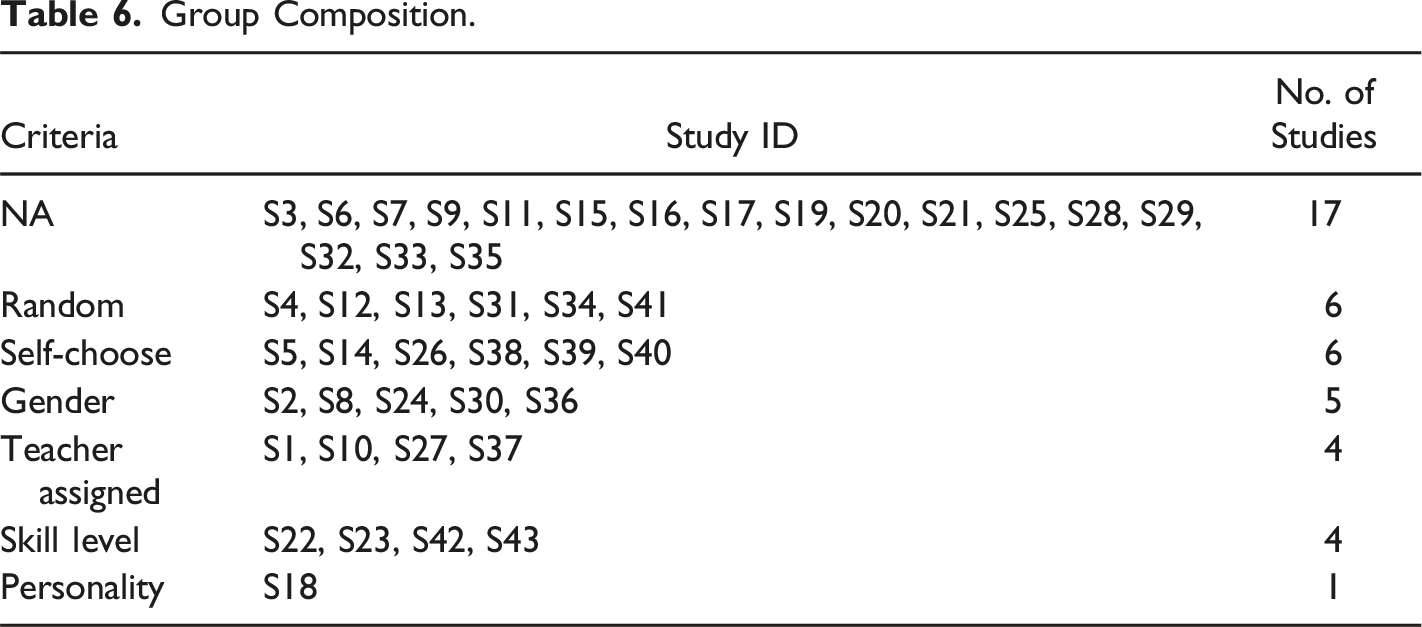
Group Composition.
Types of CL Activities
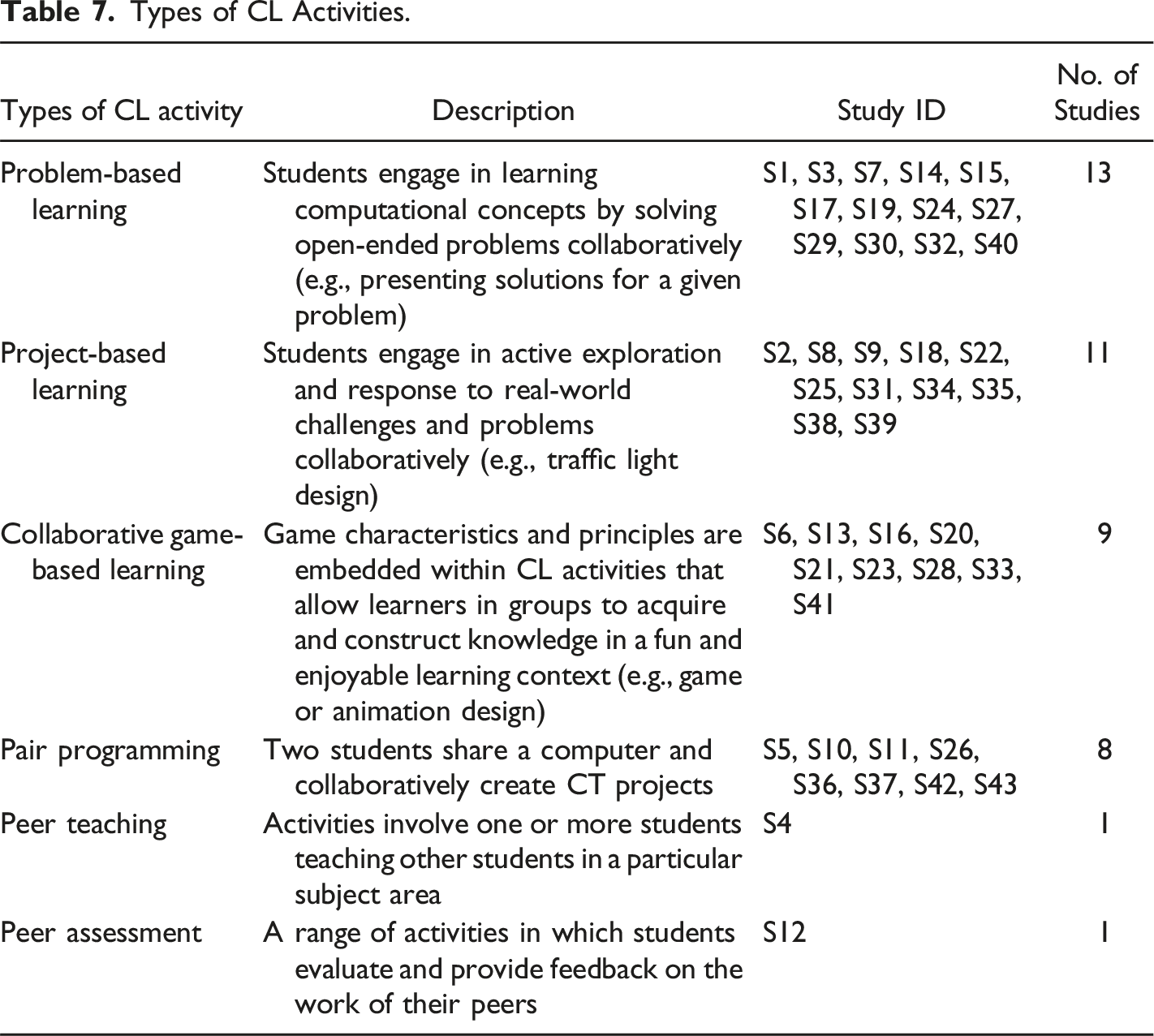
Types of CL Activities.
Problem-Based Learning
This is a pedagogical approach that employs a case or scenario to guide students in defining their own learning objectives. The process typically involves defining the problem, discussing, and analyzing the problem, followed by collaborative problem-solving and evaluation, with the aim of achieving the identified learning objectives (Dochy et al., 2005). This aligns with the CT framework, which views CT as a problem-solving process (Barr & Stephenson, 2011; Grover & Pea, 2013; Kalelioglu et al., 2016; Selby, 2013; Shute et al., 2017).
Thirteen studies developed lesson plans and implemented problem-based learning strategies within CT classes. For example, instructors assigned tasks to each group, students were required to present solutions and share the final product. This process involved a sequence of steps, including identifying tasks and defining objectives, designing algorithms, and generating solutions, constructing and debugging the product in groups with scaffolding support from mentors, modifying the algorithm, testing and debugging again, and reflecting on the experience and difficulties faced during the process (S7, S17, S32). This reflective step provides students with the opportunity to describe their thought processes and the strategies they used to overcome challenges, thereby further enhancing their learning outcomes (S40).
It should be noted that while most CL activities are conducted face-to-face, two studies opted for online collaboration using Zoom meetings to carry out their projects (S1, S19). These findings indicate that the integration of virtual environments is a potential solution to the challenges of online teaching and learning in the CT domain. Additionally, two studies highlighted the significance of peer support in the CL process (S3, S30). In collaborative CT activities, group members provided peer support for solving problems, sharing knowledge of CT concepts, and practicing collaboration skills, which in turn improved individual performance and effective CL (S30).
Project-Based Learning
In CT education, project-based learning typically begins with brainstorming and the design of the final programming product. Students then organize their group work, individual tasks as well as time management to present the final product. This process enables students to take charge of their own learning and develop valuable collaborative skills that they can apply in other areas of their academic and professional lives.
There were 11 studies that applied project-based learning to conduct CL activities. Interestingly, two studies conducted warm-up activities after group formation to help students become familiar with their teammates (S2, S18). Students spent a week engaging with a mini group project on Scratch to familiarize with each other and work collaboratively in small groups (S18). This step effectively improved CL in the subsequent class units. During the CL activities, teachers served as facilitators who observed students' learning, asked questions, and provided prompts when students faced difficulties (S8, S9, S18, S22, S25, S31, S34). Before the end of class, instructors designed presentation and Q&A sessions where students were encouraged to showcase their group projects, articulate their ideas, and reflect upon their experiences throughout the entire creative process (S9). In addition, students had the opportunity to comment on the work of other groups and receive feedback from their peers (S34, S38).
Collaborative Game-Based Learning
Game-based learning is designed to merge learning content and game elements to improve motivation and enhance knowledge and skills acquisition (Prensky, 2001). Within the CL context, game activities have the potential to effectively enhance active and situated learning, foster authentic collaboration, present challenges, and provide immediate feedback. Consequently, these activities have positive impact on students’ motivation, engagement, and academic achievement (Qian & Clark, 2016).
Among the nine cases of collaborative game-based learning examined in this review, the pedagogical design begins with game scenario development (S6, S13, S16, S20, S21, S23, S28, S33, S41). Two game formats, puzzles (S28, S33, S41) and boards (S6, S13, S16, S20, S21, S23), are used as game environments. These games are designed to include different levels of difficulty that encourage players to advance through the levels by successfully completing the preceding ones. Such challenging scenarios promote collaboration and problem-solving skills among players. In these nine studies, game design features either competition or collaborative mode between groups (S6, S13, S21, S33, S41). The findings revealed that the collaborative mode was more effective in promoting higher achievement and productivity than mode (S13, S41).
Pair Programming
Pair programming (PP) is a collaborative activity in which two programmers work side-by-side at one computer to complete the same task, such as software development, algorithm design (Williams et al., 2002). Typically, two programmers serve specific roles as either drivers or navigators. The driver is the one who controls the keyboard and mouse to write and edit code. The navigator, on the other hand, observes and identifies errors or provides suggestions for improvement. In recent decades, PP has gained increasing popularity in education settings and has been recognized as an effective way to impart introductory programming knowledge to novice learners (Buitrago-Flórez et al., 2017; Lai & Wong, 2022).
Eight studies in this review applied the PP approach to teach CT skills. In these studies, two students collaboratively and simultaneously worked on one computer and completed a programming task. Considering PP is relatively new for most students, a brief introduction and clear guidance on PP are essential before they undertake group tasks. Specifically, in two studies (S10, S43), students were required to practice individually before embarking on PP tasks. During PP practice, in studies S10, S11, and S37, teachers facilitated the process, instructing students to switch roles in a given period, whereas in S26, students were allowed to change roles freely.
Peer Teaching and Peer Assessment
Peer teaching is an active learning approach in that students perform as trainees and organize learning materials, make connections with the content, and apply it to new contexts with trainers (Rubin & Hebert, 1998). This approach not only increases motivation but also intensifies peer relationships, resulting in positive affective results beyond intellectual gains. In this review, only one study tried to incorporate peer teaching as CL strategy to promote students’ autonomy and maximize learning outcomes through interaction and cooperation (S4).
Peer assessment is another CL approach that teachers utilize to motivate students to evaluate and provide feedback on their peers' assignments, such as writing, oral presentations, portfolios, test performance, or other skilled behaviors (Topping, 2009). To implement productive peer assessment, researchers have suggested that clear judgment criteria and adequate training and support are essential (Topping, 2009). In S12, teachers emphasized the learning objectives and tasks for each module, provided clear rubrics for evaluating the tasks, and illustrated specific examples to the students. These efforts helped students gain a better understanding of the tasks.
Evaluation Methods
CT Skills Assessment
This includes five forms: CT tests, self-developed rubrics, portfolio assessments, questionnaires, and interviews. These assessments provide different dimensions for evaluating and measuring students' CT abilities.
CT tests are the most commonly used method of evaluating CT skills in the included studies (n = 20). It employs a multiple-choice question format and covers basic CT concepts such as sequences, loops, and conditionals. The items in CT tests are usually arranged according to increasing levels of difficulty. Although several versions of CT tests (Korkmaz et al., 2017; Román-González et al., 2017) have been validated with different groups of students in previous research (Korkmaz & Bai, 2019), there is no official recognized standardized test yet (Cutumisu et al., 2019; Merino-Armero et al., 2022; Tang et al., 2020). In addition, since these tests are tailored to specific age groups, many of them only cover a partial range of CT concepts and practices. This may result in incomplete and inconsistent assessments across different age groups (Tang et al., 2020).
The second type is self-developed rubrics. Researchers developed rubrics based on CT frameworks, such as Brennan and Resnick’s CT framework (2012) and Grover and Pea’s framework (2013), to evaluate students’ existing knowledge of CT concepts as evidence of CT proficiency (S1, S2, S4, S5, S14, S15, S24, S29, S34). These researchers believed that although CT is considered as a cognitive thinking process, the components of CT skills can be quantified and analyzed. However, the development of accurate and reliable rubrics poses a significant challenge to researchers due to their insufficient expertise and proficiency in CT (Tang et al., 2020). Therefore, schools should provide adequate support and guidance to teachers in terms of rubric development and application.
Portfolio assessment is a type of performance assessment and refers to a purposeful, systematic process of collecting and evaluating various types of student products to examine the attainment of learning targets (Mcmillan et al., 2013). Six reviewed studies used portfolio assessment to evaluate students’ CT skills through their projects (S18, S19, S32, S33, S35, S38). Researchers developed rubrics to assess whether the students have applied all required CT concepts in their projects. Additionally, researchers conducted content analysis to evaluate the extent to which these CT concepts are reflected in the students' designs. Since these rubrics are created and assessed by human raters, it is imperative to establish a clear differentiation between levels of performance. This distinction enables raters to accurately determine the rating that best reflects a student’s CT level.
Questionnaires are a self-report method used to investigate self-assessed learning outcomes, mainly focusing on different dimensions of CT skills. The standard questionnaire includes a majority of quantitative items (S17, S23, S30, S36, S38, S40), such as a Likert scale, as well as some open-ended questions (S27) aimed at collecting students' opinions during the intervention.
Only one study in our review employed semi-structured interviews to assess participants' proficiency level of CT skills (S35). The researchers compiled the interview guide with each question eliciting students’ behaviors that demonstrate low, medium, and high levels of proficiency. It is worth noting that interviews were primarily used to support or elaborate on the results of portfolio assessments. This implies that while semi-structured interviews provide an opportunity for participants to elaborate on their thought processes and provide insights into their understanding of CT concepts, they should be combined with other assessment methods.
CL Evaluation
CL evaluation entails multiple forms to obtain data from various sources. These studies employed questionnaires, group reflection, interviews, and relevant documents such as learning journals and narratives, to collect information about students' learning experiences. Furthermore, observation played a crucial role in examining learning behaviors and interactions during the CL process. It is worth noting that among the studies reviewed, 18 studies employed multiple methods to triangulate findings and provide a robust evaluation of CL strategies.
Out of our 43 reviewed studies, 23 studies collected self-reported data from participants to gain insights into their engagement in CL activities. Among the 23 studies, 18 studies examined the effectiveness of CL approach through questionnaires, including attitude (S5, S10, S17, S20, S25, S30, S43), motivation (S12, S23, S25, S31, S41), enjoyment (S13, S33), satisfaction (S40), friendship or partnership (S37, S42), self-efficacy (S12), and learning preferences (S9, S13, S23, S26, S33). These measurements are primarily focused on non-cognitive/affective learning outcomes.
Apart from questionnaires, researchers in S3, S9, S15, S18, S29, S34, S36, S38, and S40 asked students to present their projects and reflect on their CL experience in front of the class to improve learning effectiveness. This interactive process encouraged students to share not only their challenges and difficulties in CL but also comment on each other’s assignments. Additionally, researchers used interviews (S14, S26, S36, S38), learning journals (S2, S40), and narratives (S7) as complementary methods to understanding how students learn in CL contexts.
Twenty-one studies investigated the CL process through observation data. First, 18 studies (S3, S4, S5, S6, S8, S11, S13, S16, S17, S18, S19, S20, S21, S22, S24, S28, S29, S33) investigated students’ learning behaviors during collaborative work. For instance, S16 developed a coding schema (discussing with peers, expressing individual opinions, and asking teachers for help) to analyze students’ learning behaviors in CT classes.
Second, researchers were also interested in analyzing the discussions among students during CL activities (S1, S19, S23, S28, S33, S39). Interaction analysis not only provides insights into students' learning processes but also emphasizes the significance of interaction within CL activities. For example, S39 adopted the ICAP framework (Weinberger & Fischer, 2006) to examine the content and structure of student discussions. Similarly, in S23, researchers analyzed students’ discussions and drew inferences that active inquiry and guidance within groups can significantly enhance the effectiveness of learning.
Discussion
This review synthesized the findings from 43 studies to address six research questions, providing a comprehensive overview of characteristics, methodologies, theoretical frameworks, implementation, and evaluation of CL approaches in the context of K-12 CT education. To address RQ1, we summarized the characteristics of CT studies that apply CL approaches. Most studies were conducted in the USA and within CS discipline. Approximately half of these studies employed mixed methods to investigate the implementation and evaluation of CL strategies in CT classes. Next, we identified theories and frameworks that applied in CT research to address RQ2. These theories and frameworks can be categorized into three groups: focusing on CT skills, CL theories, and CL strategies. For RQ3, we summarized the tools or artefacts that used in CT classes. We highlighted the prevalent use of visual programming and plugged-in tools in CT education. Further, we analyzed the group formation features in the CT studies to address RQ4. We found that most studies formed CL groups between two to four students. However, only a few studies provided details on group composition. To address RQ5, we identified six types of CL activities and provided detailed descriptions of the instructional strategies in each type. Finally, for RQ6, we summarized the methods that researchers used to assess students' CT skills and evaluate CL process in classes.
These findings yield a number of insights. First, the majority of included studies focused on developing students' CT skills within the CS discipline, with only a limited number of studies integrating CT skills into other STEM or language classes (S14, S15, S16, S34, S17, S38, S30, S1, S19). These findings are consistent with previous research that CT research and instruction have predominantly been conducted through programming (Li, Schoenfeld, et al., 2020). The dearth of journal publications on CT in STEM education further highlights the significant gap in CT research and instruction (Li, Wang, et al., 2020). While researchers have acknowledged the mutual benefits of STEM education and CT learning (Martin, 2018; Weintrop et al., 2016), it is important to note that the mere recognition of CT’s significance in STEM fields does not provide sufficient guidance for its implementation in school instruction. The multi-faceted nature of CT poses particular challenges when it comes to applying it in specific educational contexts.
The slow development of CT in cross-disciplinary education can be attributed to various factors, such as educational policies and curriculum designs. On the one hand, many countries prioritize computing education and emphasize the introduction of programming to K-12 students (Bocconi et al., 2022). Additionally, CT frameworks were initially defined within the context of CS (Wing, 2006), establishing a foundational connection between CT and CS. Consequently, numerous educational initiatives have been developed to teach students CT through programming education. On the other hand, while some researchers advocate for promoting CT across disciplines (Barr & Stephenson, 2011), specific guidelines or resources for incorporating CT into cross-disciplinary education may be lacking within existing curriculum frameworks. These reasons potentially hinder the broader implementation of CT across various subjects.
Second, studies have utilized CT frameworks that highlight CT as a problem-solving process. Among these, the most frequently used are Grover and Pea’s CT framework (2013), Shute et al.'s CT framework (2017), and Barr and Stephenson’s CT framework (2011). These frameworks aim to inform assessment methods that measure foundational understandings of CT and problem-solving skills in K-12 learners. Their popularity among researchers can be attributed to the intrinsic connection between CL, problem-solving, and CT skills. On the one hand, CT education aims to equip students not only with the skills to understand CT concepts but also with a powerful approach to problem-solving applicable across disciplines (Bers, 2017). On the other hand, CL has been shown to positively influence children’s problem-solving abilities (Fawcett & Garton, 2005). Moreover, effective CL can be enhanced through engaging in problem-solving activities. This reciprocal relationship suggests that the focus of these frameworks on problem-solving acts as a bridge between CT education and CL.
Third, previous studies have highlighted the significance of group formation in achieving effective collaboration and meaningful interactions (Maqtary et al., 2019). However, a large number of included studies did not provide details on how the students were grouped (17 out of 43 studies). Normally, CL activities group students either into homogeneous or heterogeneous groups. Homogeneous groups consist of students with the same gender, similar knowledge levels, and learning abilities, while heterogeneous groups comprise students with diverse gender, knowledge levels, and personal characteristics (Gillies, 2016). For example, S2 grouped students into male-only and female-only groups and compared their learning outcomes. In contrast, students in S8 were randomly divided into learning groups of mixed gender. Further, in S22, students with different levels of performance were placed together in the same group. On the other hand, in S23, students were classified into higher and lower score groups. Although researchers have proposed various grouping methods to address the challenge of group compatibility, an optimal solution for dynamic group formation has yet to be addressed, particularly within the context of CT education.
Third, the effective attainment of CL outcomes relies heavily on the facilitation provided by teachers (Kaendler et al., 2015; van de Pol et al., 2010). Research has shown that teachers’ timely feedback, prompting and questioning students, and transferring control over the learning process to the students themselves positively related to learning outcomes (van Leeuwen & Janssen, 2019). This facilitation role of teachers has been consistently observed across most of the studies reviewed (S4, S8, S10, S14, S20, S23, S26, S27, S32, S35, S37, S38, and S40). For example, instructors provided a hint or asked open-ended questions to monitor and guide students' progress and understanding of CT concepts (S32, S35). Additionally, instructors’ timely feedback not only assisted learners in reflecting on their learning but also enabled them to evaluate their CL behaviors and make necessary adjustments to their group work (S4, S23, S40).
Fourth, reflection plays a crucial role in the learning process. According to Kolb (2014), reflection serves as the pivotal mechanism through which learners transform their concrete experiences into abstract concepts. One of the effective methods of reflection is writing learning journals to reflect on learning experiences (Roskos et al., 2001). Empirical evidence can be found in S2, S7, and S40, where instructors encouraged students to write learning journals to record both successes and challenges, as well as individual and group goals. Through reflection, students were able to revisit their CT knowledge and strive for improvement and deep comprehension in CL practice. Reflection is not limited to an individual activity but also a collective activity. This collective approach allows learners to benefit from the insights and viewpoints of others, leading to a more comprehensive understanding of the material. Such reflection takes various forms, such as classroom discussions and sharing sessions (Roskos et al., 2001). In S3, S9, S15, S18, S29, S34, S36, and S38, students were actively encouraged to present their projects in front of the class, discuss their challenges, share their problem-solving strategies, and receive valuable feedback from their peers. This collaborative reflection proved to be a valuable component of the learning process. Consequently, it is recommended that the application of collaborative reflection be extended to other CL activities. Previous findings showed that reflecting on each other’s assignments is helpful for achieving a deeper and broader understanding, as well as a higher level of individual reflection (Radović et al., 2022).
Conclusion
This systematic review aims to enhance our understanding of CL strategies applied in K-12 CT education. By analyzing and summarizing 43 empirical studies, this review offers valuable insights to future researchers and instructors, providing them with theoretical and practical implications to actively participate in and advance CT education.
Implications
The findings yield two theoretical implications. First, this study advances the understanding of how CL strategies are applied in K-12 CT classes. Through a systematic analysis of previous research, this study synthesizes information on the characteristics of empirical studies and CL approaches across five thematic areas. The findings offer insights into the instructional approaches, providing educators with practical guidance on how to develop effective teaching materials and create enriching CT learning experiences for their students. Furthermore, the identified gaps and opportunities highlight the potential for developing an instructional model based on the synthesized information. For example, future research could develop a comprehensive framework encompassing the preparation of teaching materials, pre-activity planning, in-class activities, and evaluation processes. This proposed framework could serve as a guideline and checklist for instructors to enhance their teaching practices.
Second, this study reveals the diverse range of theories and frameworks that are employed in designing and implementing effective CL interventions. These theories and frameworks fall into three main categories: those focused on CT skills, CL theories, and CL strategies, respectively. The presence of these three types of theories lays the foundations for preparing teaching materials, designing engaging class activities, and assessing students' engagement in CL. Further, they open avenues for future research to explore additional applications and expand upon the existing list, enriching the understanding of how these theoretical perspectives can further enhance CL in CT education.
Besides, future researchers could integrate different theoretical perspectives to create a “complementary” framework, which can more effectively explain empirical outcomes. For example, CT frameworks could be instrumental in designing teaching materials and creating CT assessments. Similarly, CL theories could guide the design of collaborative activities, while CL strategies could facilitate the CL process and evaluate the effectiveness of CL approaches. Such a “complementary” framework not only augments teaching practices but also bridges the gap between CL and CT education, fostering more cohesive educational research.
This study also offers practical implications for practitioners. First, it is imperative to promote interdisciplinary collaborations to foster the development of curricula and evaluation techniques that effectively facilitate children’s CT skills enhancement across disciplines. While CT is advocated as a cross-disciplinary skill for students beyond the CS major, most educational practice and research are still focused on the CS discipline. This is primarily due to a scarcity of teaching materials and professional expertise in the integration of CT and other subjects, as well as a lack of qualified assessment and evaluation methods. Consequently, several suggestions can be implemented. Schools can provide opportunities such as workshops and demonstration classes for teachers from different disciplines to collaborate and share insights on integrating CT into their respective subjects. Additionally, schools can offer professional training for teachers to enhance their understanding of CT. Further, schools could invite industry professionals with expertise in CT perspectives to share their experiences. These opportunities will equip teachers with the necessary knowledge, resources, and strategies to effectively incorporate CT skills into their teaching practices.
Second, schools should incorporate a variety of CL activities to improve both CT competencies and social skills. Additionally, given that the most effective CL activities are conducted in small groups of two to four students, careful consideration of group composition is essential to improve learning outcomes. When forming these groups, it is recommended to account for factors such as students' gender, skill levels, interests, and personalities, to maximize the effectiveness of CL and the learning outcomes for each student.
Third, despite the pervasive use of plugged tools in CL activities, the role of unplugged tools must be given equal consideration, particularly for younger learners when they learn abstract concepts. Previous research has highlighted the particular benefits of unplugged tools for young learners (Polat & Yilmaz, 2022; Sigayret et al., 2022). First, unplugged activities such as board games, mazes, and paper-and-pencil flow charts rely primarily on body movements, gestures, and concrete actions. This characteristic facilitates the connection between abstract CT concepts and tangible, hands-on learning materials, making the learning process more comprehensible and engaging for young learners. Additionally, the usage of unplugged tools fosters inclusive learning experiences, enabling students with no previous programming requirements to participate actively and equitably. Moreover, the application of unplugged tools enables the implementation of CT education in diverse areas, particularly in schools located in less-developed regions where access to computers or digital devices may be limited.
To better facilitate the application of CT tools, it is recommended that educational institutions establish a database, offering detailed information and clear descriptions regarding the usage of these tools, targeted age groups, and recommended assessment methods. Specifically, the database should include a wide range of plugged and unplugged tools. Each tool entry should include empirical evidence to support its effectiveness and offer guidance on how to utilize it in CL activities. Furthermore, the database could provide recommendations for observation techniques, rubrics, and formative assessments that align with the specific tools' usage. By doing so, this database can serve as a valuable resource for educators to make informed decisions and select the most suitable tools for their CT education initiatives.
Last, we summarized a group of methods to assess CT skills and evaluate the CL process. These insights could guide educators and researchers in developing and utilizing reliable assessment tools that evaluate both individual and group learning outcomes, as well as the effectiveness of the CL process itself. For example, digital portfolios enable students to document their CT projects, reflect on their learning process, and track their progress over time, providing a personalized assessment for each learner. Additionally, peer assessment can be used to evaluate group members' contributions and engagement. This method can foster accountability and encourage active participation in CL groups.
Limitations and Future Work
It is important to acknowledge that the studies included in this review were primarily written in English and conducted predominantly in the USA. This may introduce a potential demographic bias, thereby limiting the generalizability of the findings to a broader international context. To address this limitation, future studies should strive for greater diversity in terms of geographical locations and cultural backgrounds, ensuring a more representative sample. For example, further research could include studies from non-English-speaking countries and conducting cross-cultural comparisons to broaden the understanding of CL interventions in different educational contexts.
Second, this review only includes studies conducted within formal school settings, excluding after-school services or coding camps. This limitation may result in a narrower perspective on the application of CL strategies in K-12 CT education. To enhance the rigor and objectivity of future research, it is recommended to include a broader range of CT teaching contexts, enabling triangulation of synthesized information and increasing the reliability of the findings.
Supplemental Material
Supplemental Material - Collaborative Learning in K-12 Computational Thinking Education: A Systematic Review
Supplemental Material for Collaborative Learning in K-12 Computational Thinking Education: A Systematic Review by Stella X. Yin, Dion Hoe-Lian Goh and Choon L. Quek in Journal of Educational Computing Research
Footnotes
Declaration of Conflicting Interests
The author(s) declared no potential conflicts of interest with respect to the research, authorship, and/or publication of this article.
Funding
The author(s) received no financial support for the research, authorship, and/or publication of this article.

Data Availability Statement
The data are available from the authors upon reasonable request.
Supplemental Material
Supplemental material for this article is available online.
Author Biographies
References
Supplementary Material
Please find the following supplemental material available below.
For Open Access articles published under a Creative Commons License, all supplemental material carries the same license as the article it is associated with.
For non-Open Access articles published, all supplemental material carries a non-exclusive license, and permission requests for re-use of supplemental material or any part of supplemental material shall be sent directly to the copyright owner as specified in the copyright notice associated with the article.
