




Abstract

Photo by Lance Richardson
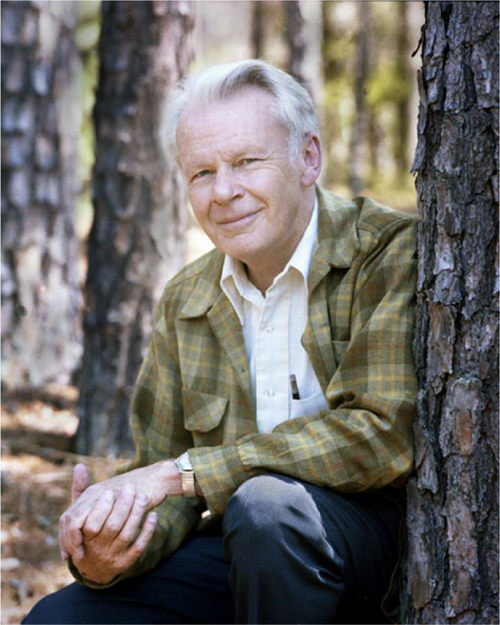
F. Stuart “Stu” Chapin Jr. pioneered the integration of social science into the field of city and regional planning. While known primarily for his seminal text Urban Land Use Planning, now in its fifth edition, 1 Chapin also published path-breaking research on urban development processes (Chapin and Weiss 1962) and human behavior patterns (Chapin 1974). At a time when planning education was largely seen as an offshoot of architecture, Chapin built enduring cross-disciplinary links with sociology, political science, public administration, and anthropology.
As a cofounder of the Department of City and Regional Planning at the University of North Carolina (UNC), Professor Chapin helped create the first U.S. social science–based planning education program within an Arts and Sciences College. Starting in the 1950s, he procured major research grants from the Ford Foundation and others, established the University’s Center for Urban and Regional Studies, mentored generations of students through his research projects, and instilled an institutional demand for planning faculty expertise in applied social science that continues to the present time.
Stu Chapin was not an “ivory tower” academic. As one of the “missionaries from Chapel Hill,” who helped to spread the gospel of city planning to the urbanizing South, Chapin led UNC students in practice-oriented projects across the region. He provided a model of applied research that guided the careers of the future planning practitioners and educators who followed in his footsteps. Drawing on his own experience as a planner at the Tennessee Valley Authority and as planning director at Greensboro, he created a systematic approach to land use planning that remains a foundation of contemporary planning techniques.
Chapin’s Career Arc
It’s not surprising that Chapin gravitated toward scientific research. Three generations of Chapins have been scholars. His father, F. Stuart Chapin, a sociologist and educator, served as president of the American Sociological Association and helped create the Social Science Research Council. His son, F. Stuart “Terry” Chapin III, a professor of ecology at the University of Alaska, is a member of the National Academy of Sciences.
Stu Chapin received a BA from the University of Minnesota in 1937 and two degrees from MIT, a Bachelor of Architecture in 1939 and a Masters in City Planning in 1940. During the 1940s, he worked as a community and regional planner at TVA, interrupted by wartime service in the U.S. Navy in the Solomon and Philippine Islands. In 1946, he connected with John A. “Jack” Parker, who was starting the UNC planning program. Following a two-year post as Greensboro planning director, where he worked with Kevin Lynch and developed his land use planning framework—a basis for his later textbook—Stu joined the UNC planning faculty in 1949 as its third member at the age of 33.
Looking back, Chapin identified three phases of his planning career (Kaiser and Rosenberg 2013). He called the first phase at TVA and Greensboro a learning period where he acquired his initial field experience and firsthand knowledge of planning and urbanization processes. The second was his teaching, writing, and analysis phase at UNC where he taught planning methods, published the first edition of Urban Land Use Planning, conducted interdisciplinary Ford Foundation–funded research on urban growth dynamics, and ventured into computer modeling of urban land development under an NSF Center of Excellence grant. The third was his more theoretical period where he studied how people and firms used urban space, relying on time-budget diaries to gather data on how people allocated their time to different activities in space.
Chapin retired from UNC in 1978, after a twenty-nine-year career as “Mr. Land Use Planning.” He had won all of planning’s top awards and served on the governing boards of the American Institute of Planners and the American Society of Planning Officials (the professional planning organizations which preceded the AICP and the APA), following the UNC tradition of service to the profession. In 1999, he was selected for the inaugural class of the Fellows of the American Institute of Certified Planners, in recognition of his lifelong contributions to the planning field. He was the third recipient of the ACSP Distinguished Educator Award, to be followed by three other UNC faculty members to date: John Parker in 1994, David Godschalk in 2002, and Raymond Burby in 2013. At UNC, he mentored a score of younger faculty members, including Shirley Weiss and Edward Kaiser.
Following retirement, Chapin moved to White Salmon, Washington. There, as the Governor’s appointee on the Columbia River Gorge Commission, he helped ensure that its strong provisions for scenic resource protection and recreation were included in the adopted management plan. His work there convinced him that natural processes should be more dominant in land use planning decisions; he now sees climate change issues as the most critical for planning in the twenty-first century (Chapin 2015). He will turn 100 in April 2016.
Chapin’s Legacy
Stu Chapin changed my life (Godschalk 2012). He showed me and many others how to be a model planning professor and mentor, how to nurture an ardent curiosity about how the urban world works, how to be a dedicated innovator and collaborator, and how to bring all of this about while remaining modest and good-natured to all around him. His exemplary life as a human being is a huge part of his legacy.
Chapin’s fertile mind produced the intellectual and institutional achievements that constitute the second part of his legacy. He taught us how to think about the growth of cities. He created an enduring planning methodology, built a world-renowned research center, and pioneered research on urban development processes and human behavior that underlie today’s studies of sprawl and smart growth. This is priceless intellectual capital.
Footnotes
Acknowledgements
I appreciate the contribution of my colleague Edward Kaiser to the writing of this account.