




Abstract
This article examines how beneficiaries of Brazil’s Bolsa Família (BFP) conditional cash transfer program find employment in a Brazilian municipality and assesses their participation in decent work. Using Belo Horizonte as a case study, researchers conducted a survey of BFP recipients. The article compares responses of informally and formally employed workers to assess how their employment meets the criteria of the decent work agenda. Results indicate no significant difference between perceptions of formal and informal employees concerning discrimination and poor working conditions. Findings lead to recommendations about formalization of employment, coordination with existing job training programs, child care, and transportation.
Introduction
The New Urban Agenda was adopted in 2016 at Habitat III in Quito to ensure that world cities will experience well-planned and managed urbanization, and will implement sustainable development practices (UN-Habitat 2016). One of the Agenda’s three “transformative commitments for sustainable urban development” is centered on the idea of “sustainable and inclusive urban prosperity and opportunities for all” (United Nations General Assembly 2016, 6). This commitment has as one of its pillars “sustainable economic growth, with full and productive employment and decent work for all.” Within this context, the livelihood of urban residents becomes a core issue and should be properly addressed in order to promote sustainable urban development (Werna 2013). In this article, we focus on two important strategies to improve the livelihood of the urban poor: poverty alleviation and access to decent work.
Various planning strategies to enhance the livelihood of the urban poor are being implemented across the globe. One such strategy is the conditional cash transfer program (CCT). There is evidence that CCTs improve the lives of poor people worldwide (Fiszbein and Schady 2009). Brazil’s Bolsa Família Program (BFP) is one of the largest CCTs in the world. The long-term goal of BFP is to end intergenerational poverty by providing economic incentives to educate poor children, but it was also designed to alleviate poverty in the short term by operating as a complement for income for families. The program is succeeding at reaching some of its long-term goals to improve outcomes for children (Soares, Ribas, and Osório 2010; Chitolina, Foguel, and Menezes-Filho 2013). However, BFP will not be successful in its short-term goal to alleviate poverty until its adult beneficiaries are able to find and maintain jobs that will improve their livelihood.
Finding and maintaining a job, ideally in the form of decent work, is a critical step toward improving livelihood. Therefore, it is important to understand how BFP beneficiaries interact with the labor market and pursue decent work. Using the municipality of Belo Horizonte (BH) in the state of Minas Gerais as a case study, this article assesses the relationships between BFP, employment opportunities, and decent work. The article has three objectives: (1) examine the work status of BFP beneficiaries; (2) determine how BFP beneficiaries find employment opportunities; and (3) evaluate whether BFP beneficiaries have access to decent work. As explained below, this is accomplished by surveying BFP recipients. It is expected that the outcomes of this research can help inform policy making to ensure that there are strategies in place to increase the number of low-income people experiencing decent work and that BFP is functioning as a holistic and effective poverty alleviation strategy.
Bolsa Família Program
The BFP offers a sum of money to families on the condition that they send their child to school regularly (85 percent attendance or better), and that the child receives regular health checkups and state-mandated vaccinations. The BFP is a program that discourages child labor through cash benefits for families. However, it is also a key social protection program, as it ensures a minimum income for the lowest-income families. The amount of the benefit varies depending on the number of children and the per capita income of the family. As of 2014, the BFP served 14 million households, all of whom are targeted for participation by municipal governments (IPEA 2015). In 2006, out of 11.1 million households served by BFP, 62 percent earned less than the minimum wage and 20 percent did not earn any money from labor (Machado et al. 2011). This suggests that municipal governments have been effective at targeting deserving families for the program, which aims to help those in need.
The BFP has had a number of positive effects on the lives of its beneficiaries. In their study, Tapajós et al. (2010) summarize the 2009–2010 “BFP Impact Assessment Report.” Compared to eligible nonbeneficiary families, more children in interviewed beneficiary families were well nourished, received polio vaccinations, and attended school regularly. Another study by Soares et al. (2010) suggests that the BFP was the cause of 16 percent of the country’s fallen inequality between 1999 and 2009 and was responsible for one-third of the country’s decrease in extreme poverty and a 16 percent decrease in poverty during the same period. Poverty did decline dramatically in Brazil during this period, although BFP was not solely responsible for this decline. The rest of this precipitous decline in poverty can be explained by rising GDP growth rates and dramatically lowered unemployment (World Bank 2016).
BFP does not directly help adult beneficiaries find jobs and thus has not been successful in this regard, but it is not unique; it has been noted that conditional cash transfer programs generally do not do enough to help beneficiaries find work and exit the program (de la Brière and Rawlings 2006). Beneficiaries may also experience other barriers to stable employment, including lack of reliable transportation and/or child care. It is critical that the economic trajectory of the recipients’ families is altered if they hope to exit the program and maintain adequate livelihood.
Despite these positive effects, the BFP has been met with some criticism. Some fear that providing these cash transfers may impact the labor supply. Adults may work less, either fearing that they need to stay “poor” to continue earning BFP benefits or simply because having extra income from BFP allows them to (Fiszbein and Schady 2009). Others suggest that outside employment is unchanged whereas others suggest it decreases with receipt of BFP benefits (Foguel and de Barros 2010; Teixeira 2010; Ribas and Soares 2011). However, most studies show that conditional cash transfer programs do not significantly affect the adult labor participation rate (Fiszbein and Schady 2009; Machado et al. 2011). Fiszbein and Schady suggest that families may perceive BFP benefits as temporary and thus do not change their work habits. While several studies do show that beneficiary parents work 0.6 to 3.5 hours less per week, the overall adult participation rate is unchanged, suggesting that BFP does not threaten the country’s labor supply (Machado et al. 2011).
Additionally, Tavares (2010) conducted a study about mothers who were BFP beneficiaries, focusing on the labor supply side. She found that there was a negative “income-effect” on mothers’ decision to work (i.e., the higher the household income per capita, the less likely that mothers work). The BFP cash transfer amount was not sufficient to create the “laziness effect,” an adverse incentive characterized by less working hours or by decrease in labor supply, caused by receiving the BFP benefits. Finally, in their study, de Brauw et al. (2015) showed that while BFP causes positive or insignificant changes in women’s labor supply in urban areas, it causes significant decreases in women’s labor supply in rural areas. Moreover, they observed that many BFP beneficiaries cut back on formal employment to seek an increase in informal employment, a finding they attribute to the process used to establish BFP income eligibility. Ribas (2014) also found that BFP has a direct and positive effect on informality for the same reasons.
Though it may seem counterintuitive, these studies show substantial evidence that the additional income gained through participation in BFP does not cause adults to lower their participation in the labor force. This suggests that the benefits are enough to offset the cost of children’s education but not enough to boost families to a comfortable income level. Adults must maintain their employment to sustain their standard of living, even if this means working in indecent conditions.
Decent Work in Brazil
Many poor workers in developing countries like Brazil work in the informal economy, where wages and working conditions are unregulated. Informal workers do not have carteira de trabalho (henceforth work card) signed by his or her employer. The work card is a formal document used in Brazil to record all the working contracts of a person. This document “permits an easy empirical separation of workers with formal labor contracts that must comply with the labor laws from workers with informal labor contracts not subject to this legislation” (de Barros and Corseuil 2004, section 4.1). Even though there are employees without signed work cards who contribute to the social security system, they are considered informal workers (Carvalho Filho and Estevão 2012).
The informal economy in Brazil is a result of an extremely bureaucratic and relatively corrupt government system. International indicators show that in Brazil, the number of hours needed to open and close a business is one of the largest in the world. Thus, the informal economy attracts micro-entrepreneurs and people looking for livelihood strategies (Barufi 2015). The informal economy thrives in midsize cities and large urban areas, and informality is especially prevalent in the retail, service, domestic work, and handcraft sectors. Informal work is so prevalent that if the informal economy were included in the national GDP, GDP would increase by as much as 30 percent. The federal government is making various efforts to simplify regulations in order to attract informal employees to the formal sector. An example is the SIMPLES program, in which taxes and social security have a lower cost and requirements to enter in the formal sector are lessened.
Ideally, employment should be in the form of decent work for all, regardless of socioeconomic status. “Decent work” is a concept defined by the United Nations International Labour Organization (ILO) to describe the availability of employment in safe and fair conditions where workers have rights and can earn an adequate living.
ILO has a specific agenda for decent work that is based on four strategic objectives: creating jobs, guaranteeing rights at work, extending social protection, and social dialogue. As stated on its website as of November 15, 2015, ILO’s definition for extending social protection is “to promote both inclusion and productivity by ensuring that women and men enjoy working conditions that are safe, allow adequate free time and rest, take into account family and social values, provide for adequate compensation in case of lost or reduced income and permit access to adequate healthcare.” Social protection should also be expanded to children and their families. Social protection “is essential in preventing and reducing poverty for [them], in addressing inequalities and in realizing children’s rights” (ILO 2014, 10). As pointed out by ILO (2014), CCTs are “the most prominent new development” for “closing coverage gaps and strengthening income security for children and their families” (19).
Brazil has made great strides in promoting decent work, but there is still work to be done. The Brazilian Constitution affords workers’ rights in all four axes of the ILO’s definition of decent work: employment, workers’ rights, social protection, and social dialogue. However, these protections largely do not apply to the country’s large informal sector because these jobs are not registered with the government. Despite a trend toward greater formal employment, only about half of the country’s workers are formalized. The rate of formality is higher in Minas Gerais, about 70 percent in 2012 according to PNAD. This rate remained unchanged between 2012 and 2015. Some sectors, like domestic work and construction, are exceptionally informal, and as such, workers in these sectors have been largely excluded from social protection. These protections are perhaps most vital to women, who have no legal right to maternity leave in an informal setting. Additionally, Figure 1 shows that formal workers consistently earn more than informal workers in the Belo Horizonte Metropolitan Region (BHMR).
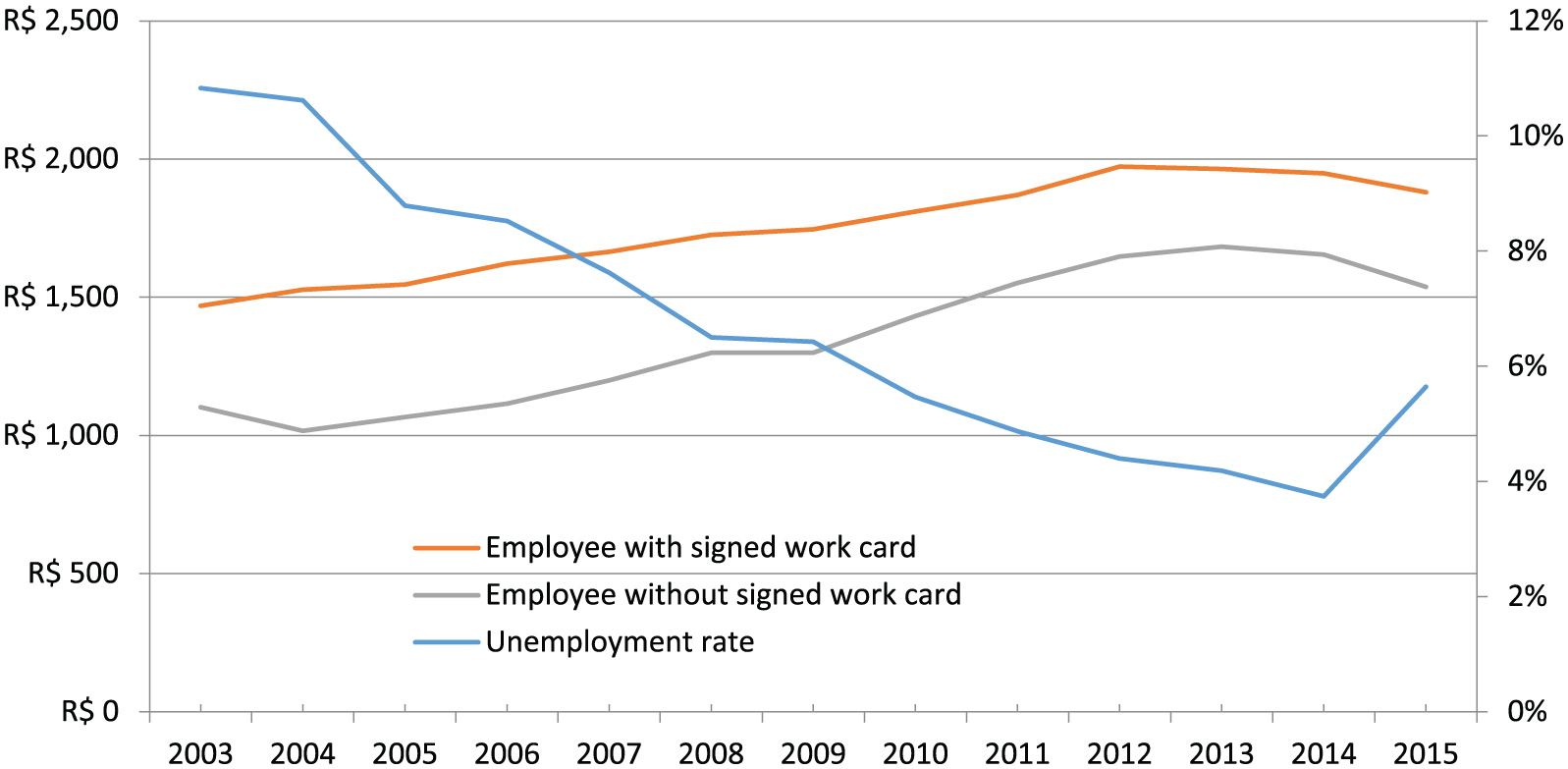
Unemployment rate, and monthly salary in the formal and informal sectors for Belo Horizonte Metropolitan Region, 2003–2015.
In 2007, Belo Horizonte (BH) was one of a very few municipalities in Brazil whose governments partnered with the ILO to promote decent work. The current mayor Fernando Pimentel was at the end of his mandate in 2008 when he officially launched the Municipal Agenda of Decent Work for Belo Horizonte (JusBrasil 2015). When the next mayor of BH took office, the agenda was no longer a priority, and the program languished. In January 2015, former Mayor Pimentel became governor of Minas Gerais, which may provide the political impetus for the agenda to be restarted, perhaps even at a wider geographic scale. In August 2015, the state government under Governor Pimentel indicated that a statewide Decent Work Agenda may be implemented (Secretaria de Estado de Trabalho e Desenvolvimento Social 2015). This incident reveals the politicized nature of the issue of decent work, a major factor preventing its wider implementation in Brazil.
Conditional Cash Transfers and Employment
Increased income from employment is crucial because a cash transfer alone is rarely enough to help families exit poverty. As observed by OAS/ECLAC/ILO (2010, 32), “the inclusion of labor components in monetary transfers was not foreseen in their initial design. . . . Nonetheless, [CCTs] have begun to increasingly include actions on the generation of income since it was seen that the transfer alone was not enough to reduce these families’ vulnerability in the short and medium term.” To illustrate this point, in their study about the Mexican Oportunidades cash transfer program (a program without employment benefits), Yaschine and Dávila (2008) reported that only 4 percent of recipients were able to lift themselves out of poverty in the long term after receiving the cash transfer.
Acknowledging the difficulties that many poor workers face in trying to find employment, and especially decent work, other countries have created employment programs that complement their CCT schemes. Results of these programs have been mixed, but each case offers a unique policy solution to problems that impoverished workers face throughout the developing world, including Brazil.
Neighboring Argentina created a temporary employment and cash transfer program called the Programa Jefas y Jefes de Hogar Desocupados (PJJHD) in 2002 as a temporary response to a severe economic and political crisis. PJJHD targeted families with an unemployed head of household and that included children under age 18, pregnant women, and/or people with disabilities. Families received a cash transfer equal to half the average per capita income of Argentine families at the time. In return, the head of household was expected to work 20 hours a week in social and community support jobs. Municipalities could receive labor from PJJHD recipients for social and community support, urban and rural development, tourism, social housing, or environmental projects. The program had numerous positive effects on the Argentine economy even after it ended in 2004. PJJHD reduced indigence by 25 percent, and unemployment by nearly 50 percent (Tcherneva and Wray 2005). Women in the program felt they were learning skills that would help them find private employment and reported that they preferred to work for their cash transfer (Tcherneva and Wray 2007). Despite this, the program was phased out and beneficiaries were encouraged to participate in a new program without work requirements, limiting research on the lasting success of the program.
Chile also combined cash transfers and incentives for employment as part of a comprehensive system to address widespread poverty called Chile Solidario. The program includes a wide array of services including physical and mental health treatment, financing for housing improvement, job training, and employment assistance. Program participants also receive a modest cash transfer meant to defray the cost of their participation.
Perhaps the most innovative element of Chile Solidario’s employment programs is the Bonus program. The government will pay the cost of training program participants and will also pay the employer half of minimum wage for up to six months, thus paying a public or private enterprise for a portion of the participant’s salary. In addition, municipal labor offices receive a bonus for every individual who is placed, and for every individual who remains employed at least four months. The program has been moderately successful in matching participants with employment; 26.2 percent of participants were matched with jobs between 2000 and 2008 (OAS/ECLAC/ILO 2010). Training appears to be a critical component of the program, and one that was lacking in the Chilean case: Carneiro, Galasso, and Ginja (2015) find a 20 percent increase in the employment rate of married women who accessed additional training services but did not find evidence of lasting employment benefits for all participants. Larrañaga, Contreras, and Ruiz-Tagle (2012) also attribute lower-than-expected employment gains in part to a lack of training resources.
Survey Process
To investigate the linkages between the BFP and decent work, we completed a survey of BFP recipients in Belo Horizonte, Brazil. BH was selected as the case study because of its recent history concerning the decent work agenda, described above. BH also provided a large sample of BFP recipients, with seventy thousand households receiving benefits in 2012. The survey was designed to ask BFP beneficiaries about their employment status and whether or not their employment meets the criteria of the decent work agenda. It also asks beneficiaries about the tools they use to find and maintain employment in order to better understand what programs are best meeting their needs. Details about the survey process and sample size calculations can be found in the appendix.
Four hundred thirty-seven surveys were conducted in August–October 2012 in six different Centers for Social Assistance (CRAS), scattered across the municipality. However, after examining the results of the CRASs’ surveys, it was observed that the sample included more nonworkers than expected, likely because of the centers’ hours. Given the fact that the one of objectives of the survey was to understand how BFP beneficiaries were engaged in decent work, it was decided to take additional surveys at Regional City Halls (RCHs) to complete the data collection. One hundred ninety additional surveys were conducted at two RCHs in November 2013.
The survey questions for BFP beneficiaries in Belo Horizonte were developed based on Luebker’s 2008 questionnaire focused on informal employment and decent work conditions in Glen View, Zimbabwe. Luebker’s questionnaire was altered to better capture the local context of decent working conditions in Brazil. Our questionnaire had the same three sections as Luebker: current working conditions, past working conditions, and demographics.
Survey Results and Discussion
Socioeconomic Characteristics
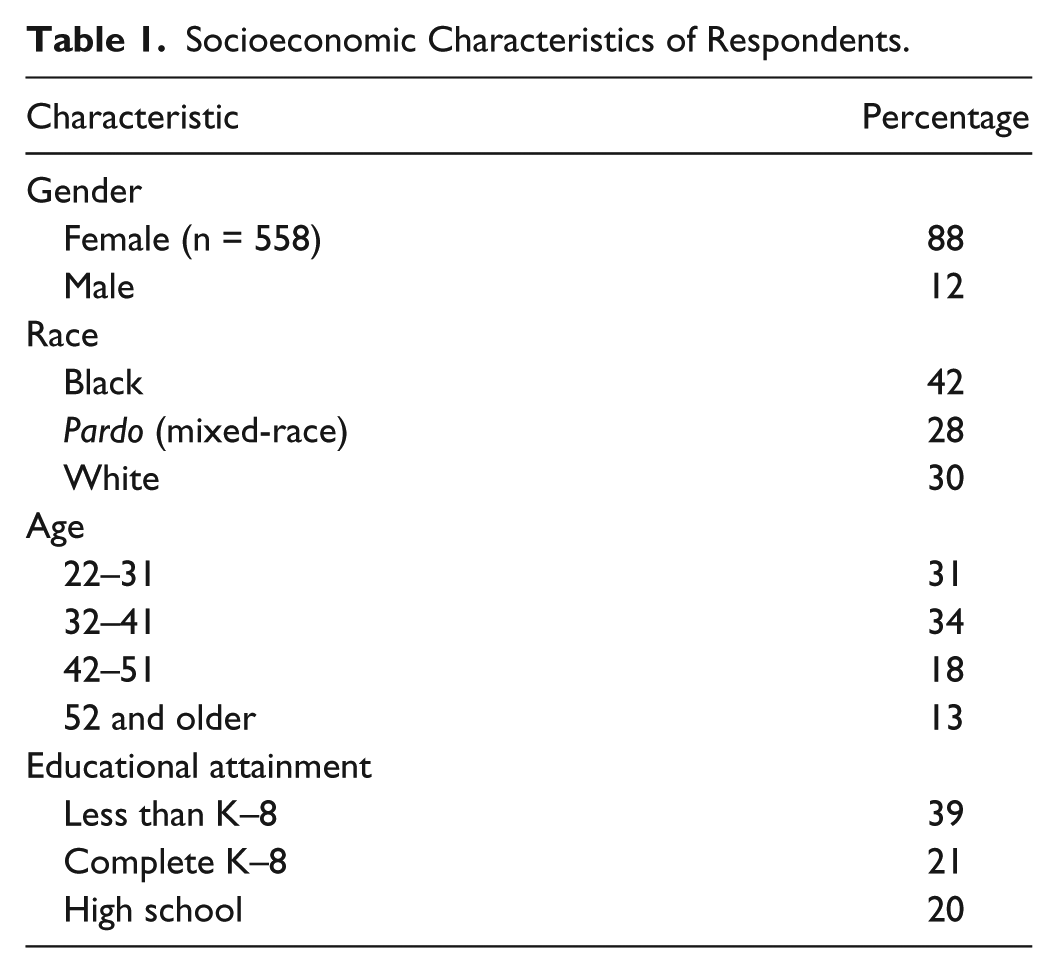
The socioeconomic characteristics of our 627 respondents illustrate the many challenges they face in finding and retaining work. As shown in Table 1, the majority of respondents fit the profile of a young (under forty) nonwhite woman with limited educational attainment.
Socioeconomic Characteristics of Respondents.
In terms of income, the average respondents had a household income 20 percent higher than the minimum wage, and on average two members of the household worked. That income had to support households with an average of four people, including two children. This strains the average respondent household’s budget: only 16 percent of the respondents were able to save money by the end of the month. This suggests that the vast majority of households only have enough money to pay for their immediate needs, if they are even able to cover those entirely. Overall, our respondents represent the highly disadvantaged population that BFP is intended to serve.
Work Status
Concerning work, only 54 percent of the respondents had a job when surveyed. Of the 46 percent who were not working, one-third had a reason for staying out of the labor force: 14 percent were retired, and the rest reported staying home to take care of children or ill relatives, or to do domestic tasks. Fifty-two percent of unemployed respondents indicated that they were available to work in the past seven days, and 48 percent were not available to work. As Figure 1 illustrates, the unemployment rate was around 5 percent at the time of the survey for the BHMR; the discrepancy between our survey and the official rate reveals a bias in our sample toward unemployed BFP beneficiaries.
With regard to child labor, only 3 percent of children 16 years old or younger were working. All of them were working at the municipal government program named “Young Apprentice,” where they are receiving professional training in order to enter the job market at age eighteen. This is an unsurprising result given that BFP beneficiaries agree not to send their children to work in order to receive benefits. Moreover, as stated by ILO (2014), “reductions in child labour are more evident where cash benefits are integrated with additional programme elements, such as after-school programmes” (13). In Brazil, a successful example of such strategy is the PETI (Programa de Erradicação do Trabalho Infantil), which was combined with BFP (ILO 2013).
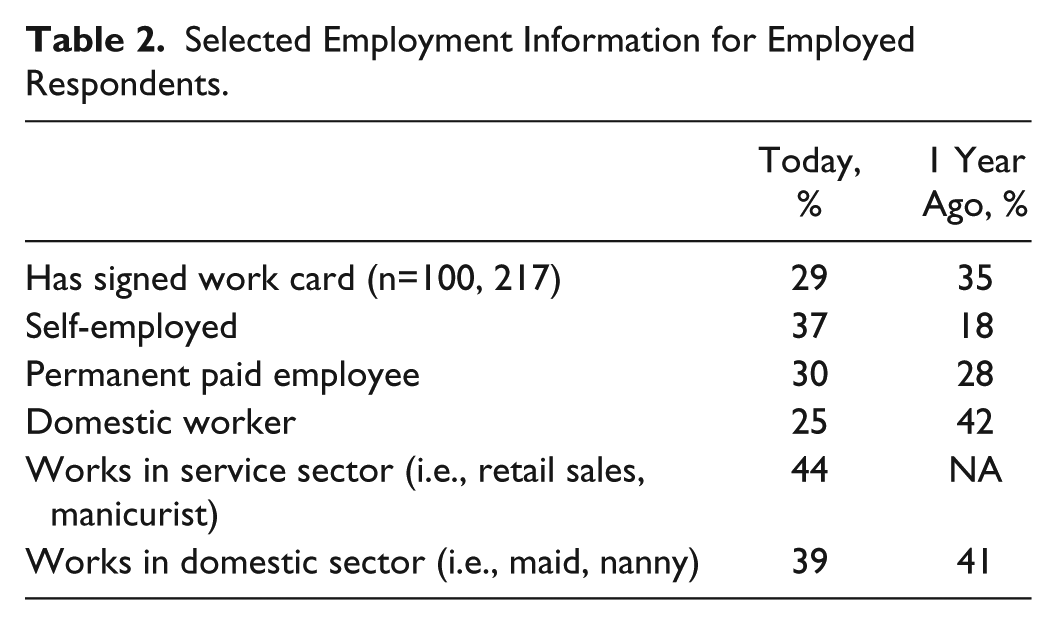
The employment status of the employed respondents is detailed in Table 2, indicating that many respondents are informal workers in the service and domestic sectors. Seventy-one percent did not have a work card signed by his or her employer. Based on the work card question, only 29 percent of the survey participants were working in the formal sector during that time. The 2012 PNAD indicates that 72 percent of workers in Minas Gerais state worked in the formal sector, suggesting that our sample is much more likely to work in the informal sector.
Selected Employment Information for Employed Respondents.
Low rates of formal employment among our survey respondents may be a result of their gender and race. Brazilian women, and especially black women, have lower rates of formal employment and higher unemployment rates than their male counterparts (Guimarães 2013). Guimarães attributes this disparity to the overrepresentation of women and black workers in precarious jobs like domestic work, which often have the lowest rates of formality. Nearly 20 percent of all women worked in the domestic sector in 2009, and only 27.2 percent of female domestic workers are formally employed (Guimarães 2013).
The large number of unemployed women may turn to the SINE (Sistema Nacional de Emprego) for help finding work. However, though the program is designed to help unemployed Brazilians find formal employment, SINE is contributing to gender disparities in decent work. Many jobs list sex requirements for their fulfillment, and 44.7 percent of all jobs offered by SINE in 2009 are for men only (Guimarães 2013). Unsurprisingly then, women only attain 39.6 percent of SINE jobs (Guimarães 2013), making it unlikely that many women will ever find formal employment through the program.
Even women who are employed face disparities in the amount they are paid for their work. Brazilian women earn only 70.7 percent of what men earn in an average month, or 82.7 percent if adjusted for the difference in hours (Guimarães 2013). Women work less than men because of the precarious nature of their work as well as the cultural expectations that women take care of children and elderly family members. Even so, women consistently earn less than men for the time they do work, and the disparities are more severe for more educated women (Guimarães 2013).
To better understand previous employment experiences, one question was about their working status twelve months ago: at that time, 38 percent were not working and 62 percent were working. Responses for those who were working twelve months ago are included above in Table 2. Considering respondents who were working during both periods (i.e., at the time of the survey and also twelve months ago), one in four had their work card signed by their employer in both periods. When asked how his or her employment today compared to twelve months ago, results were split evenly: 47 percent said it did not change, 28 percent said it got worse, and 25 percent said it got better.
When BFP beneficiaries were asked if they faced barriers keeping them from going to work, only one-third said yes. Of those who said yes, 62 percent chose transportation and traffic as a barrier, and 34 percent reported a lack of available child care. Eighty-four percent of the respondents who said no work close to home, further illustrating the importance of transportation in accessing work.
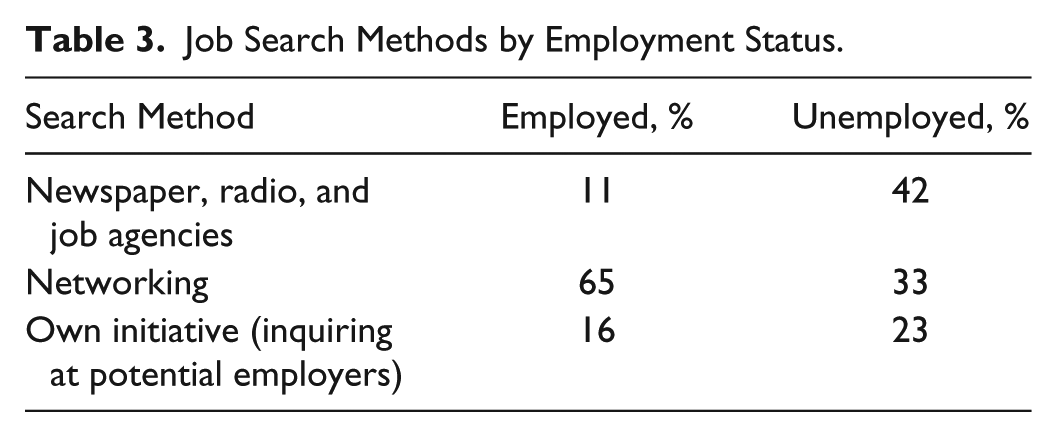
When asked about job search methods, responses differed dramatically between employed and unemployed respondents. Fifty-three percent of unemployed respondents reported looking for work in the past thirty days, and had primarily used newspaper ads and job agencies to find opportunities, as shown in Table 3. However, those respondents who were currently employed and therefore successful in their most recent search largely found work through networking. These results suggest that networking is the most successful job search tool for respondents in Belo Horizonte, but this may not be accessible to newcomers or those with limited social networks in the community.
Job Search Methods by Employment Status.
Assessment of Decent Work
Our survey asked several questions intended to ascertain whether or not respondents’ employment met the standards of decent work, especially concerning safety and treatment by coworkers and supervisors. When asked if they encountered any problems in the work they were doing, only 27 percent said they did. The two main reasons were tiring work and relationship with clients. Twenty-two percent of the respondents did not consider their working environment safe, largely because of violence and drug use in the neighborhood and lack of safety equipment. Ninety-three percent of the respondents felt they were treated well in their job, mainly because they had a good relationship with their clients. From the ones who did not feel well treated (7 percent), poor relationships with clients and discrimination were the two most common complaints. Considering discrimination in the work environment, 21 percent felt that they had been victims of discrimination, and the main reasons for that were job position, ethnicity, socioeconomic status, and gender.
These results show that the vast majority of respondents who did have a job during the time of the survey did not feel that they faced problems in their work. They considered their work environment safe, were treated well in their jobs, and did not face discrimination in their work environment. All these positive findings may be related to existing programs and institutions that target domestic workers and others in precarious working environments. To illustrate, D’Souza (2010) describes a program devoted solely to domestic workers (Programa Trabalho Doméstico Cidadão) that aims to improve “the social and professional qualifications of domestic workers, and [to promote] collective organization and representation in decision making processes” (63–64). Concerning discrimination in the work environment, Gomes (2009) points out that national programs, in collaboration with ILO, are improving “legal institutions for the fight against discrimination and [are decreasing] inequality in the labour market” (103). She states “even though discrimination still marks the country’s labour market, there has been a change in the distribution of labour income and, in particular, a decline in the level of labour market discrimination by sector and by geography” (103). Moreover, de Andrade Baltar et al. (2010) explain that in Brazil, the Public Ministry of Labor “focuses primarily on collective labour issues that have impacts on social relations,” including “the fight against all forms of discrimination” (21).
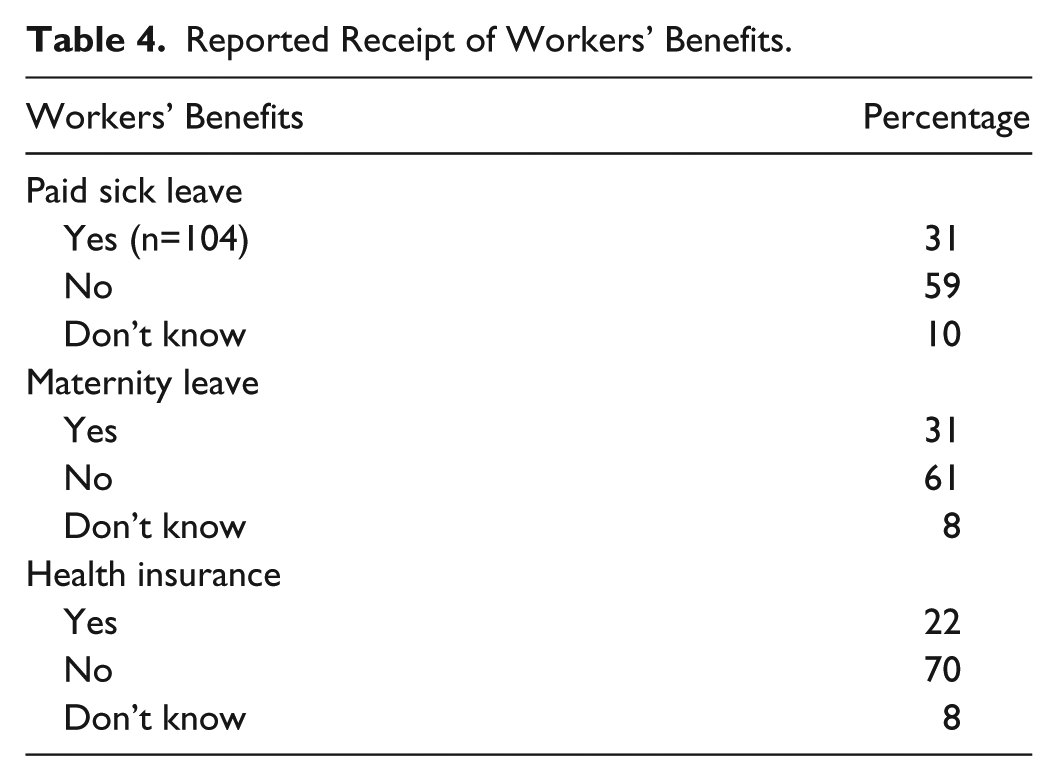
Respondents seemed unsure about their rights as workers, and generally believed they did not have the right to sick leave, maternity leave, or health insurance, especially for those participating in informal employment. Our survey asked whether or not respondents received basic benefits, and responses are recorded in Table 4. It is important to highlight that of those respondents who did not have their work card signed by their employers, only 7 percent would receive their salary if they had to miss a day of work because of health-related problems, only 6 percent would receive their salaries during maternity leave, and less than 1 percent had health insurance from their employer. As Gomes (2009) concludes, there are signs that workers’ rights are being protected in Brazil, for example, the decrease in child labor and that “there is a much broader consensus about their status as fundamental rights” (106). However, “there is still a long way to go to their full implementation” because violation of these rights has long been commonplace in the country.
Reported Receipt of Workers’ Benefits.
In order to test differences in responses of informal and formal participants displayed in Table 5, independent sample t-tests with unequal variances were used to check differences between BFP-related and decent work-related questions. The null hypothesis was, there is no significant difference between informal and formal employees’ responses. t-tests revealed a nonsignificant difference in response between formal and informal employees for answers related to BFP (p value = 0.88) and for answers related to decent work (p value = 0.90). This suggests that being a formal employee does not differ from being an informal employee with regard to issues related to professional qualification and complementary programming, nor to issues related to decent work such as discrimination and improvements in working conditions. However, when comparing their average salary over the last month, formal employees received 40 percent more than informal employees, and had to work 14 percent more of average hours daily.
Comparing Differences Between Informal and Formal Workers.
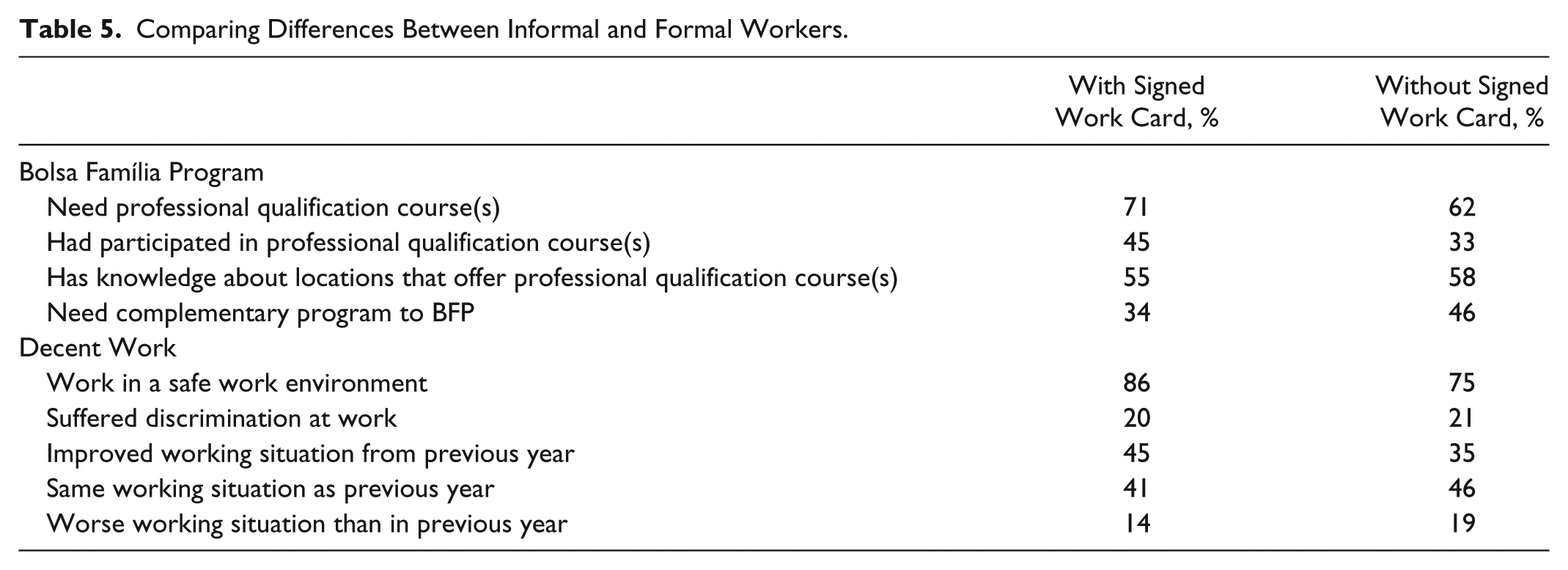
The fact that there is not a significant difference between the perceptions of formal and informal employees is striking and deserves attention. In practical terms, formal employees should experience a better working environment than those in the informal economy, who have virtually no rights as employees, and may work long hours for low wages. We argue that the main reason for these results is the lack of awareness among the respondents about their labor rights and the concept of decent work. A significant portion of respondents reported that they did not know about job opportunities and were unsure whether additional support would help them, reflecting the fact that many have never held formal employment and thus do not know what rights they should be entitled to. This argument is also directly related to their lack of access to quality education.
Need for Additional Support
Sixty-four percent of the working BFP beneficiaries wanted more opportunities for professional training. They were most interested in learning culinary arts, information technology, manicures, and hairdressing. Concerning past professional training opportunities, 37 percent of the respondents had participated in training, mainly in information technology, culinary arts, manicures, and sewing. Participation in training varied by sector: 28 percent of domestic sector employees participated in professional training, compared to 43 percent of nondomestic sector employees. Concerning the institutions that provided professional training opportunities the most cited were the CRASs, Belo Horizonte City Hall, and SENAI/SESC/SENAC.
BFP beneficiaries were split when asked if additional support programs were needed to improve outcomes. Forty-three percent said that additional programming would improve BFP, 45 percent said it would not, and 12 percent did not know how to answer the question. The most requested types of additional programming were professional training opportunities, increase in the amount transferred, and child care.
Moving Forward
BFP-Related Recommendations
Based on the survey results, we offer six recommendations to connect BFP beneficiaries with employment opportunities, and especially to increase BFP beneficiaries’ access to decent work. These recommendations are to inform policy makers about strategies in place to increase the number of low-income people experiencing decent work, and that can improve BFP’s performance as a holistic and effective poverty alleviation strategy.
Facilitate Placement of BFP Beneficiaries (and Especially Women) into Formal Employment
Our findings indicate that many barriers still exist in providing decent work opportunities for BFP recipients. The majority of survey respondents work outside the formal sector, where they cannot benefit from government protections and higher salaries. Respondents indicate that finding formal work is difficult, and that they do not possess the skills needed to work in many sectors of the economy. This is especially challenging for women, who make up the vast majority of BFP beneficiaries and who are excluded from many of the jobs currently offered through programs like SINE. However, it is important to highlight that some beneficiaries may seek informal employment as a strategy to continue in the program.
Make receipt of BFP benefits conditional upon employment
Given that the majority of respondents were looking for work at the time of our survey, and that currently receipt of BFP does not require employment, it may be beneficial for Brazil to consider revisiting the BFP design to include a condition related to employment similar to those described in Argentina and Chile. These countries have successfully implemented programs to create employment opportunities and help poor workers rise from poverty. If the federal government is willing to invest in new projects that could put unemployed BFP beneficiaries to work, this could help them gain new skills and prepare for finding decent work in the private sector. This is the only way that BFP recipients will rise from poverty and discontinue their participation in the program.
Coordinate job training programs with BFP
If not through large public works projects as in the other examples, Belo Horizonte could also help its BFP beneficiaries find decent work by increasing awareness of its existing employment training programs. Our fourth recommendation is that the state must better coordinate its job training programs with the BFP by ensuring communication of complementary services. The federal government currently offers technical training through its Programa Nacional de Acesso ao Ensino Técnico e Emprego, a program established in 2011 (Ministério da Educação 2015). Even though this program has been serving Brazilians for four years, survey respondents indicated that they would benefit from additional training that would help them gain professional qualifications. This suggests that BFP beneficiaries in Belo Horizonte are not aware of the existence of these programs, and therefore are not accessing them. Addressing the barriers that are keeping BFP beneficiaries from accessing these training opportunities will help them get the experience they need to find decent work.
Expand child care services for BFP beneficiaries
Roughly a third of respondents indicated that a lack of available and affordable child care is preventing them from working. Though Belo Horizonte provides free child care at several government offices throughout the city, our fifth recommendation is to expand the provision of care for more children. Without child care, many beneficiaries will be forced to stay home with their children and sacrifice the earnings that would come with additional employment.
Planning-related Recommendations
Improve education about labor rights
Because informal employment generally does not meet the qualifications of decent work, it is vitally important that informally employed Brazilians find opportunities to work in the formal sector and that they are educated about their rights as workers. That education is a vital component of a successful program, given that our respondents indicated a lack of awareness about labor rights. To combat this, education about labor rights in any employment condition should be included in existing or future job training programs.
Ensure affordable and accessible transportation to employment centers
Finally, underlying concerns about employment training and child care is a lack of transportation options. Our survey respondents identified transportation as the most common barrier to steady employment. It is likely that this also presents a barrier to accessing existing child care (the second most common barrier) and training resources. In a study of Rio de Janeiro, Motte et al. (2016) find that informal workers tend to commute shorter distances and times (with the exception of domestic workers), illustrating that transit access is key to participation in the formal economy. Belo Horizonte’s transit network compares unfavorably to others in Latin America in terms of cost and coverage, according to Jaitman (2015). In Belo Horizonte, fifty bus rides would cost 25 percent of a monthly minimum wage salary, illustrating a significant cost barrier to transportation among the poorest workers. Coverage is poor as well: BH has one of the lowest rates of metro network coverage per capita. Transit agencies in Belo Horizonte must ensure that transportation is affordable, frequent, and accessible to BFP beneficiaries, and that it connects them with not only employment opportunities but other community resources as well.
Conclusion
The main objectives of this study are to examine the work status of BFP beneficiaries, determine how BFP beneficiaries find employment opportunities, and evaluate whether BFP beneficiaries have access to decent work. Our findings suggest that most adult respondents were employed in the informal sector, though women had higher rates of unemployment. Our respondents indicate that networking is the most successful job search tool. Concerning decent work, even though most respondents did not report problems in their work environment, many are not aware of their labor rights.
Our data collection was initially planned to target a random sample including 666 BFP beneficiaries to be able to generalize the results for all BFP beneficiaries from Belo Horizonte municipality. As described in the appendix, a combination of factors including unwillingness to help from an appointed public employee and budget and time constraints did not allow a random sample. The fact that this is not a random sample is the main limitation of our study, resulting in a potential overrepresentation of unemployed BFP beneficiaries. Even though the sample was biased toward unemployed BFP beneficiaries because of the hours of survey locations, it provided a geographically diverse sample because RCHs and CRASs were randomly spread across the municipality. Additionally, our sample reveals the tendency of BFP beneficiaries to work in the informal sector, following the findings of de Brauw et al. (2015) and Ribas (2014).
Two important issues should also be highlighted to understand the representativeness of our sample. First, surveys took place in two different periods of time, with approximately one year between the two periods. The socioeconomic context of the country was different from fall 2012 and fall 2013. Second, surveys took place in two different contexts: CRASs and RCHs. CRASs are only open during the day, making them more accessible to the unemployed who are free during work hours.
Many of the respondents of our survey work in the domestic sector, and fortunately there is reason to be optimistic about their ability to attain decent work in the near future. In 2013, a constitutional amendment was approved establishing the rights of domestic workers. Before the amendment, domestic work was totally informal, allowing this labor class to be exploited, underpaid, and work in precarious conditions. Since October 2015, employers must sign their work cards. Domestic workers are now entitled to benefits including social security, retirement, funds if they are unjustly fired, and income taxes reported by employers.
There are several opportunities for future research on the topic of decent work in Belo Horizonte. First, if Belo Horizonte’s Municipal Agenda for Decent Work is revived, this would present new opportunities to study the impact of this program on the availability of decent work for BFP beneficiaries in the municipality. Since the former Mayor of Belo Horizonte who championed the agenda is now Governor of Minas Gerais, there is hope that the program will be restarted despite the current mayor’s lack of interest. Decent work will also likely be a focus of the ILO and its partners because of the UN’s new 2030 Agenda for Sustainable Development, which calls out decent work as one of its seventeen goals to achieve economic, social, and environmental sustainability. This may also boost efforts to promote decent work in Brazil and other developing nations worldwide.
Second, future research should focus on complementary programs being implemented in the municipality and how they impact BFP beneficiaries. This study asked BFP beneficiaries how they are finding employment, but did not explore how beneficiaries are engaging with other employment programs. Our survey results did suggest that many recipients are unaware of the programs that may be available to them, but we cannot assess the suitability of existing programming from the responses we collected. Understanding any gaps that exist in these programs, and how BFP recipients use them, is of vital importance in determining how best to meet the needs of Brazil’s poor.
Third, additional research is needed on programming that could help find more job opportunities for women. Women make up the vast majority of BFP beneficiaries but often struggle to find jobs suited to their skills through employment programs like SINE. More research is needed to determine how best to provide opportunities for decent work to Brazilian women such that they can improve their livelihood.
Additional research is especially important now because of the current political and economic crisis in Brazil. Since the time of our survey, the country experienced a severe economic crisis largely because of three factors: (1) the world economic crisis negatively affected Brazilian exports; (2) public spending was being financed by fiscal deficit, causing increase in interest rates and consequent disincentives to consume and invest; and (3) the country implemented traditional stabilization policies based on the decrease in public expenditures, which in turn reduced the supply of essential public goods to low-income population, and increased unemployment and subemployment. Within this context, the federal government’s approval rating fell sharply. A political movement to unseat President Rousseff was strongly supported by the urban middle class, resulting in her impeachment on August 31, 2016.
As a final remark, we should keep in mind that making sustainable places for all is truly the heart of the UN’s New Urban Agenda. The sustainable and prosperous cities of the next century will not only address pressing issues of transportation, housing, and environmental protection but will also address issues of decent work and poverty alleviation. CCTs are one tool to help promote both, but these programs must be designed carefully to have the desired impact. In the case of Brazil’s BFP, our results indicate that a lack of decent work opportunities remains a barrier to ending poverty in cities like Belo Horizonte. If BH can provide more support for BFP beneficiaries, the city will be well on its way to addressing major issues and becoming a more sustainable city in the decades to come.
Footnotes
Appendix
Acknowledgements
Mônica A. Haddad would like to acknowledge Camila Morais for her research assistance, Shannon Thol for her comments, Victor Chamone for his help at FUNDEP, and Luiz Henrique Vieira from BH City Hall for his constant support. She is also grateful to the BH City Hall staff who assisted her during the survey process. Dr. Haddad would like to thank the students who conducted the surveys: Camila Morais, Daniela Schiaffino, David Meireles, Flavio Bretz, Gabriel Braga, Renato Nascimento, and Sara Prado. She especially thanks all who gave their time to participate in the survey. The authors would also like to thank the anonymous reviewers for their feedback and comments.
Declaration of Conflicting Interests
The author(s) declared no potential conflicts of interest with respect to the research, authorship, and/or publication of this article.
Funding
The author(s) disclosed receipt of the following financial support for the research, authorship, and/or publication of this article: This research project was partially funded by the Iowa State University Center for Excellence in Arts and Humanities - Research Grants for Assistant and Associate Professors (2012-2013).
Author Biographies
References
Supplementary Material
Please find the following supplemental material available below.
For Open Access articles published under a Creative Commons License, all supplemental material carries the same license as the article it is associated with.
For non-Open Access articles published, all supplemental material carries a non-exclusive license, and permission requests for re-use of supplemental material or any part of supplemental material shall be sent directly to the copyright owner as specified in the copyright notice associated with the article.
