



Abstract

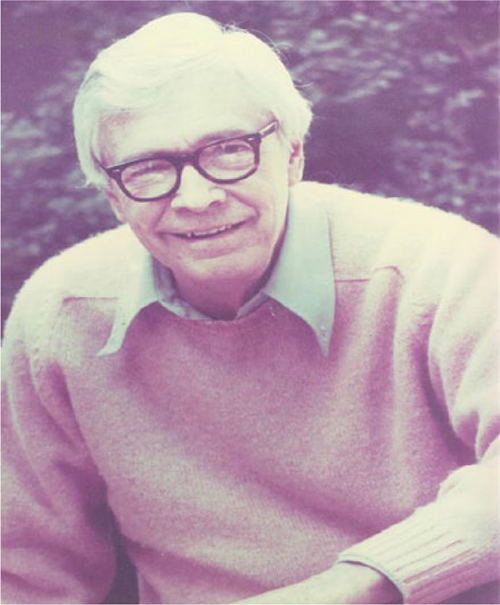
This essay is the tenth in a series on the recipients of the Association of Collegiate Schools of Planning (ACSP) Distinguished Educator Award, ACSP’s highest honor. The essays appear in the order the honorees received the award.
Jack Parker wasn’t your typical distinguished planning educator. He didn’t publish a lot. He didn’t win any teaching awards. He wasn’t involved in many public service activities. What he did was conceive and execute a unique approach to planning education and then, over twenty-eight years, nurture the university department that put it into practice. In the process he and his faculty colleagues created one of the preeminent planning education programs in America. Here we tell the story of how this all came about, described more fully in Kaiser and Rosenberg (2013).
John A. “Jack” Parker was born in 1909 in Nova Scotia and grew up in Vancouver, Canada. After attending the University of British Columbia for two years, he transferred to MIT in 1928 to study architecture. Parker attained his BS and master’s degrees in architecture in the early 1930s but couldn’t find a job as a practicing architect in the Depression economy. Therefore, he obtained a teaching position at the Lowthorpe School of Landscape Architecture for Women in Groton, Massachusetts, in 1933. In a little more than a year he was promoted to director of the school and spent the next decade as a successful administrator. Under Parker’s leadership, the Lowthorpe School became one of only eight schools in the nation with a landscape architecture curriculum approved by the American Society of Landscape Architects. Thus, in 1944, at the age of only thirty-five, Parker had nearly ten years of successful academic administrative experience under his belt.
As World War II began to wind down, the University of North Carolina (UNC) at Chapel Hill was looking for ways to foster economic and social development in the South. To that end, it hired Parker to found and head a new university department of city and regional planning, subject to Parker’s obtaining a master’s degree in planning at MIT. Parker accepted the position, obtained the degree, and arrived in Chapel Hill in September of 1946.
Thus, the thirty-seven-year-old Parker, fresh out of planning school, began his lifelong job in planning education. He would go on to build and guide the highly innovative planning program in Chapel Hill for the next twenty-eight years, a longer tenure than any other chair of a university planning department, eventually retiring in 1974.
In addition to serving as the head of the Department of City and Regional Planning for nearly three decades, Parker served on the boards of directors of the American Institute of Planners and American Society of Planning Officials and as vice chairman of the North Carolina State Capital Planning Commission. Among his awards are Special Recognition for Outstanding Service and Leadership in Planning Education from the American Institute of Planners, 1974; the ASPO Medal of the American Society of Planning Officials, 1975; and the Distinguished Professional Achievement Award from the North Carolina Chapter of the American Planning Association, 1982. And of course, in 1994 he was awarded the Distinguished Planning Educator Award by ACSP.
Jack Parker excelled in two roles—institution builder and what we might call “people planner.” In the first role, he created a unique and path-breaking planning education program, the first in the South, seventh in the nation, and first, with the University of Chicago program, to be based in the social sciences. In the second role, Parker recruited several generations of talented people to the planning field and guided their professional development, both as students and then as maturing professional planners.
Parker the Institution Builder
Facing UNC’s financial limitations in 1946 (university funding for the new program was limited to Parker’s salary), he quickly secured outside support from the Tennessee Valley Authority and the Carnegie Institute to create what became a magical core team of three MIT-trained planners, including himself, F. Stuart Chapin Jr. (also an ACSP Distinguished Educator), and James M. Webb. He also capitalized on the enthusiastic support of a cadre of talented social science professors who were members of the UNC Institute for Research in Social Science (IRSS). The institute incorporated faculty beyond its core social science disciplines to include public administration, education, social work, and law and emphasized what we now call applied research, concentrating on social and economic issues of North Carolina and the South.
Parker, Chapin, and Webb worked with the IRSS faculty to invent a unique curriculum and distribution of responsibilities. The three MIT-trained planners taught the core of urban physical planning based on the MIT model, which emphasized studios and field applications. The supporting IRSS faculty taught social sciences, with special attention to issues of urban growth and community development, and social science analysis methods. The social science faculty also tutored Chapin and Parker in social science methods and the craft of preparing research proposals and obtaining research grants.
Parker’s embedding the planning education program in an applied social science enterprise eased the introduction of the doctoral program in 1961 and strengthened the Center for Urban Studies as a base for faculty and PhD student research. It also supported the expansion of what had been primarily a physical planning curriculum to include economic development, social services, environmental quality, and more sophisticated analytics.
The most telling constant in all of this was Jack Parker, who remained as department head, academic entrepreneur, chief student and faculty recruiter, and ambassador and departmental advocate for the faculty and student body. Barclay Jones, another ACSP Distinguished Educator, called him “the chairman’s chairman.” He not only initiated much of the department’s evolution but supported initiatives of faculty and students in a way that maintained the integrity of the curriculum and a sense of community through the turbulent but progressive 1960s.
As department head, Parker operated much like the dean of a school, not a faculty chair. Though he consulted constantly with his faculty, there was no governing structure and no regular faculty meetings. Parker concentrated on administration and did little classroom or studio teaching and even less research and publishing. Webb focused on studio and workshop courses and working with communities in North Carolina through the North Carolina State Planning Office. Chapin taught both lecture and studio courses, while developing a social science research and publication program. Thus, each of the core faculty focused on what he did best—Parker the administrator/institution builder, Chapin the teacher-researcher, and Webb the studio course-community outreach practitioner.
Parker the People Planner
Complementing his role as institution builder, Parker used his exceptional personal skills to excellent advantage by being the planning program’s chief people planner. He excelled in encouraging people’s aspirations, probing implementation strategies, and helping both faculty and students achieve their goals. He happily assumed full responsibility for student recruitment and student advising; becoming chief alumni advisor-coordinator in an ever-growing network of the school’s planning alumni, he always emphasized the melding of professional skills with community values.
Jack Parker created and operated a one-man student recruitment program in lieu of a more passive admissions process. He traveled to undergraduate campuses, particularly the Ivy League schools, to talk to professors and potential planning students. He established a nationwide network of alumni, academic, and professional planner contacts to recruit and screen potential applicants. He was super quick to personally respond to applicants, often by immediate return mail. He matched applicants with alumni and other contacts in each applicant’s vicinity in a proactive recruiting and screening operation and personally orchestrated an applicant’s visit to Chapel Hill.
Parker became every student’s primary faculty advisor, a task normally distributed among a planning school faculty (which eventually occurred in Chapel Hill as the department grew in the 1960s). He counseled on choosing an area of concentration, placed students in courses, coordinated placement in the summer internship and supervised the internship experience in conjunction with the host planning agency, and ran a placement program for the graduating planner. He was known to students and faculty as a proactive, “father knows best,” forceful advisor. Francis Parker (no relation), a former UNC student and faculty member, described his approach in this way: “When Jack ‘advised’ you as a student, it was a shared joke that you would emerge from his office with exactly what he thought you should take, rather than the course list you had carefully prepared … and you could never figure out quite what happened.”
Parker extended his mentoring with virtually every graduate of the program, becoming a career-long consultant to many and in the process creating an alumni network for finding and matching opportunities and job searchers. He continued his interest in students, faculty, and alumni and maintaining the Department of City and Regional Planning network for more than twenty years beyond his retirement in 1974. We remember Jack’s famous evening parties during those years in his backyard garden near campus, where Jack would receive students and light up both himself and them with one-on-one discussions of a student’s aspirations and plans, sometimes later personally intervening on the student’s behalf.
The Parker model of contributing to our profession is unique and demonstrates significant options for today’s planning faculty and senior planning practitioners. Parker had a strong and compelling, yet largely selfless, personality. He gained satisfaction by building an institution, creating faculty teams to initiate new courses and research programs, and aiding faculty, students, and alumni planners everywhere.
Footnotes
Declaration of Conflicting Interests
The author(s) declared no potential conflicts of interest with respect to the research, authorship, and/or publication of this article.
Funding
The author(s) received no financial support for the research, authorship, and/or publication of this article.
Editor’s Note
David Godschalk, after a long and distinguished career in planning education and practice, passed away on January 27, 2018, after a short illness. David was named an ACSP Distinguished Educator in 2002 and will be greatly missed by his colleagues at Chapel Hill and throughout the planning world.
Author Biographies
University of North Carolina Emeritus Professors Kaiser, Burby, and Godschalk were befriended and mentored by Jack Parker for nearly four decades, beginning as applicants and students in the 1960s and continuing as junior and later senior faculty until Parker passed in 2001.