



Abstract

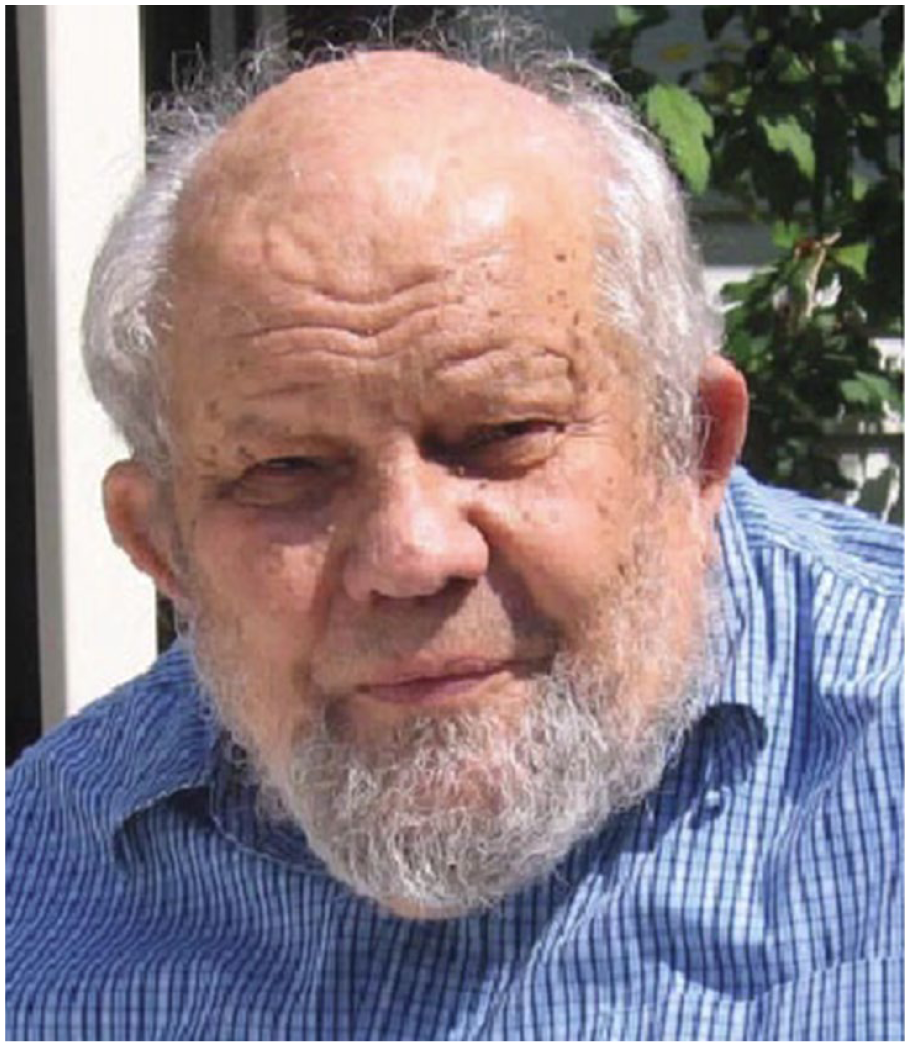
This essay is the eleventh in a series on the recipients of the Association of Collegiate Schools of Planning Distinguished Educator Award, ACSP’s highest honor. The essays appear in the order the honorees received the award.
Anyone who participated in a simulation game run and was debriefed by Al Feldt knew that they had been treated to an educational experience by one of the premiere icons of the planning profession. His animation and spirit punctuated the wisdom imparted from his vast knowledge of the world and how it operates. Al was one of the major leaders of that magnificent core of planners and gamers that made Michigan the nucleus of gaming simulation in the 1970s and the decades that followed. Though he’s retired now, he is still productively involved in everything from voter education, to hearing loss, to electric self-driving vehicles, and all topics in between. He is also writing fiction and biographical pieces about his family, and he’s only 85. One can only guess what the next 15 years will be like for him.
But it’s Al’s reputation as a gamer that has made him world-renowned. Starting in 1962 at Cornell, Al then moved on to the University of Michigan from 1971 until receiving emeritus status in 1994. Al started out as a physicist, earning his BS in physics in 1954 from the University of Michigan. He completed his wide-ranging education with a PhD in sociology in 1963, working with the demographer David Goldberg. However, it was at Cornell that he fully discovered his penchant for simulation gaming. His aptitude as a gamer—he was introduced to gaming as a teaching technique while still in grad school—has been described in Feldt (2014).
Whether it was energy, pollution, government procedures, issues of race and gender, or any other cutting-edge social or political cause, Al designed games that taught the essence of those planning problems with an expertise and passion unmatched by most of his peers. Al truly believed that “everyone should be involved in the planning process and urban planners must represent those least able to represent themselves.” To this end, he developed and designed simulations that offered all citizens a voice in the planning process. His goal of having an ongoing simulation/game in the basement of city hall, where anyone can come in and participate at any time of the day or night, is still a valid goal. And with modern-day information technology, it probably is already in the works somewhere around the world. Many of his students—he served on 135 doctoral committees—have gone on to be educators in planning and other disciplines that use gaming/simulation as a teaching tool in both the academy and the professions.
Al, along with Dick Duke, was a founding member of the University of Michigan’s Environmental Simulation Laboratory. Later, with Barbara Steinwachs and a few other gamers, he established the University of Michigan Extension Gaming Service, where gaming/simulation was established as a valid educational tool in planning- and environmental-related research. New games and simulations were practiced and tested by scholars from a variety of schools and institutions from Michigan and around the world. With his sense of humor and wisdom, Al was highly sought after to serve on his colleagues’ research and development teams, a student’s dissertation committee, or just to be there for someone to bounce ideas off.
CLUG—The Cornell Land Use Game (Feldt 1965) was Al’s first big solo venture into gaming and got him recognized as a legitimate gamer. CLUG has been published once again, this time on the Internet (Feldt 2013), and is still available for free to interested users. But it was not just gaming/simulation that made Al the educator he was; it was much more than that. Once in the classroom, studio, office, agency, corporation, or wherever he found himself, those around him knew that they were in the presence of an intellectual giant whose understanding and insights far exceeded his credentials as a gamer. This was most notably true when it came to issues of social justice and the environment.
Al received many awards and teaching accolades. Three awards were from the University of Michigan’s College of Architecture and Urban Planning: the Sol King Award for Excellence in Teaching, 1983; the Urban Planning Alumni Distinguished Service Award, 1989; and the Allan G. Feldt Alumni Colloquium, 1994. He also received the ACSP’s Distinguished Planning Educator Award, 1995, and the Wilma T. Donohue Award from the Housing Bureau for Seniors, 2000.
In the early 1970s Al, Dick Duke, and Don Michael (a social psychologist and fellow planning faculty member) each bought farm land in rural Michigan with the intent of gaining some sense of self-sufficiency. These mostly served as retreats from urban life and to have a place where they could meet socially with their students and families. Al was also experimenting with sustainable (low-tech) living techniques such as composting toilets and French intensive gardening. On weekends in the summer, his students would come out to relax, eat, and talk. It was in this setting that many of Al’s urban theories and practices were discussed and passed on.
Al Feldt’s career at Cornell was best summarized by David Sawicki (PhD, Cornell, 1970): “Al’s most important contribution as an educator was to be permissive—to allow students to explore, gain confidence, and then contribute themselves once they had matured. Al was not judgmental. He enjoyed a good argument. He was at the center of a movement at Cornell Planning in the late ’60s that moved the program from being architecture/design-centric, to social/public policy centric—a huge movement within Cornell and planning education more broadly.” The teaching principles Al employed at Cornell guided his entire career.
Footnotes
Declaration of Conflicting Interests
The author declared no potential conflicts of interest with respect to the research, authorship, and/or publication of this article.
Funding
The author received no financial support for the research, authorship, and/or publication of this article.