




Abstract
Research examines how journalists cover and frame the issue of climate change in mainly nationally circulated newspapers. This study compares and contrasts the framing of climate change between two nationally circulated newspapers, the New York Times and the Washington Post, and three intermountain west, mountain town, community newspapers, Jackson Hole News & Guide in Jackson Hole, WY, Summit Daily in Summit County, CO, and Park Record in Park City, UT. This research compares national versus community coverage, coverage over time for the years 2011 and 2016, and coverage between the three communities, using five commonly used frames, responsibility, human interest, conflict, morality and economic consequences. Results indicate there are statistically significant differences when comparing national to community newspaper coverage as well as between the three community papers, indicating the importance of local context in media coverage of climate change and in frame analysis more generally. Climate change is a partisan issue, but community newspapers may be less partisan, so analyzing newspaper coverage at various scales adds to our understanding of how different contexts shape media coverage, which in turn may shape views on climate change.
Introduction
If we want to understand views and actions related to climate change, it is important to understand how the media frame this topic. The media have a great deal of power to shape the public’s perception of climate change, and how climate change is portrayed in the media can influence policy engagement (Boykoff & Rajan, 2007; Ford & King, 2015). Research shows the impact of media is more significant than education and experience in translating scientific knowledge, and the media play an important role in the public’s perceptions of risks associated with climate change by framing such risks in specific ways (Dirikx & Gelders, 2010). Framing is an inherent part of human cognition for organizing and contextualizing events. It refers to placing information in a specific context so that certain elements of the issue are received by individuals, which may influence their judgment (Pan & Kosicki, 1993).
Past research has focused on how journalists cover and frame the issue of climate change or global warming in mainly nationally circulated newspapers (Boykoff, 2007; Boykoff & Boykoff, 2004; Dirikx & Gelders, 2010; Ford & King, 2015; Matthes, 2009; Shehata & Hopmann, 2012; Trumbo, 1996; Wagner & Payne, 2017). There has been little focus on community-level newspapers (Antilla, 2005; Bohr, 2020). Previous research has also identified five commonly used news frames, described by Semetko and Valkenburg (2000), which we will explain further below.
This study contributes to our understanding of the portrayal of climate change in the media by applying previous research on news media coverage to media coverage of climate change in the context of three communities. Specifically, we look at community newspapers in three intermountain west ski towns. While the selected communities are not representative of all communities served by community newspapers, media coverage of climate change in these towns is especially important because climate change could have large effects on these communities. It is unlikely that selecting a handful of communities to represent all communities served by community papers would truly be representative; instead, we focus on a specific type of community, and future research can explore such questions in other types of communities. A key contribution of this study is to demonstrate that studying framing using standard frames in specific community contexts adds to our understanding of framing in general. This study also contributes to our understanding of framing of the specific issue of climate change, and how this varies in national versus community contexts.
We analyze community newspapers from three mountain towns in the intermountain west (Park City, Utah’s Park Record, Summit County, Colorado’s Summit Daily, and Jackson, Wyoming’s Jackson Hole News & Guide) and two nationally circulated newspapers (the New York Times and the Washington Post) using five frames defined by Semetko and Valkenburg (2000). The study design allows for comparisons at different scales and in different contexts and assessing if the situation has changed over time by comparing climate change coverage in local and national newspapers, the frequency of the five climate-related frames for the years 2011 and 2016, and coverage in the three local communities.
Framing
Frame analysis is an approach to analyze media content and effects. Some of the first theoretical concepts on frame analysis come from Goffman (1974). Goffman stated, “we tend to perceive events in terms of primary frameworks, and the type of framework we employ provides a way of describing the events to which it is applied” (Goffman, 1974, p. 24). Previous studies looking at frame analysis rely on a wide range of definitions of framing (Matthes, 2009). At its foundation, the concept of framing “refers to subtle alterations in the statement or presentation of judgment and choice problems” (Iyengar, 1994, p. 11). Ford and King (2015, p. 138) define framing as “the process by which broad organizing themes are selected and emphasized, elements of a story such as the scenes, their characters and actors are emphasized, and supporting documentation is used.” Entman’s definition of framing states “to frame is to select some aspect of a perceived reality and make them more salient in a communication text, in such a way as to promote a particular problem definition, causal interpretation, moral evaluation, and/or treatment recommendations” (1993, p. 52). For this research, we rely on Entman’s definition of framing to maintain consistency with previous studies.
Journalism is a way to interpret the world, and focusing on journalistic practices is a useful extension of framing research (Brüggemann, 2014). Categories and frames “allow journalists to more efficiently net, sort and transmit information” (Tuchman, 1978). Choices of words and their organization into news stories are not a trivial matter, they define the issues under consideration, and frames are tools newsmakers use in constructing news discourse (Pan & Kosicki, 1993). A media frame “suggests what the controversy is about, the essence of the issue” (Gamson & Modigliani, 1994, p. 376; see also Gamson, 1989; Gamson & Modigliani, 1989). Wagner and Payne (2017) state, “By understanding how climate change is framed, we can see how newspapers classify and categorize the problem” (p. 7).
Frames can be detected by looking at key words, metaphors, concepts, visual images, and ideas within news narrative (D’Angelo & Kuypers, 2009) and then researchers can analyze the effects of such frames. These framing effects occur when small changes in the presentation of an issue produce larger changes of beliefs and opinions (Chong & Druckman, 2007). Shanto Iyengar’s (1994) book “Is Anyone Responsible?” demonstrates how important and influential frames can be in the media. In the domain of risk, Kahneman and Tversky (1984) find that framing effects influence whether or not an individual exhibits risk-seeking or risk-averse behavior for the same scenario. Valkenburg et al. (1999) find that how journalists frame crime in news stories affects the readers’ thoughts and recall and defines the ways the readers present the information. Framing processes and practices are not only important and influential in shaping public opinion, but they can also identify the need for collective action and bring about social movements (Benford & Snow, 2000). For example, Entman and Rojecki (1993) conducted a study from 1980 to 1983 to see how the anti-nuclear movement was reported in the New York Times and Time magazine; they found that judgments made by the journalists, such as the concept of expertise or the ability of the movement to recommend valid policy measures, affected the anti-nuclear movement’s ability to gain support and mobilize. Furthermore, analyzing news frames draws attention to the intent of the sender, which highlights the possibility that a certain frame may represent the interest of a particular organization or group that further advances their agenda while simultaneously silencing opponents (Gamson, 1989). Entman and Rojecki (1993) suggest that journalists’ negative portrayal of anti-nuclear mass movements may have been influenced by powerful elites who were threatened by the level of political power the movement was attracting.
Framing research analyzes a variety of topics and transcends virtually every political issue from fracking and climate change (Dirikx & Gelders, 2010; Olive & Delshad, 2017), to the anti-nuclear movement (Entman & Rojecki, 1993), social security, immigration reform and domestic violence fatalities (Bullock, 2007; Bullock & Cubert, 2002; Chong & Druckman, 2007). In a key piece of research that informs the current study, sociologist Kari Norgaard (2011) looks at the effects of climate change in a small community in Norway where skiing and outdoor recreation is a major part of the culture. During the 3-month period between November 2000 and January 2001, the community experienced an unusually warm winter that delayed the first snowfall 2 months. During this time, Norgaard (2011) only found 11 articles that referenced the unusual snow fall, while most other references to the weather were made in connections to skiing, leading her to draw conclusions about the construction of a general attitude of denial in relation to climate change (Norgaard, 2011). In another example related to environmental issues, when analyzing media coverage and framing of hydraulic fracturing in four U.S. and Canadian newspapers, Olive and Delshad (2017) find that the dominant frame around fracking has to do with public concern over water quality.
The sociological focus on framing is sometimes traced to the mid-fifties and Gregory Bateson’s (1955) essay “A theory of play and fantasy: A report on theoretical aspects of the project for study of the role of paradoxes of abstraction in communication” (Vliegenthart & Van Zoonen, 2011). However, since the early ’90s, frame research has largely been dominated by media and communication studies with very little contribution from the field of sociology. Thus, some previous framing research points to more individual differences in meaning and interpretations whereas a more sociological perspective looks at not only individuals’ knowledge or attitudes, but at social contexts, professional and organizational processes, and power structures (Vliegenthart & Van Zoonen, 2011). Although sociologists focus on frames as part of media discourse and how journalists frame specific issues in their news stories, some would argue that journalists are objective in their reporting and would not let their values influence how issues are defined (Brüggemann, 2014; Entman, 1993; Wagner & Payne, 2017). However, from a sociological standpoint, how issues are framed and interpreted is seen as part of a broader social construct.
Framing of Climate Change
In the context of climate change, early research on public understanding of the issue concluded that generally the public is misinformed (Trumbo, 1996). A more recent study conducted by Reynolds et al. (2010) showed that between 1992 and 2009, survey respondents showed awareness and comprehension of some issues surrounding climate change. However, overall, the public was still generally misinformed about the relationships between human activities and climate change (Reynolds et al., 2010; see also, Hamilton & Saito, 2015; McCright et al., 2016). Few issues have such contradictory views and coverage than climate change, which is consistently characterized by controversy or skepticism. Perhaps in part because of this, attempts to address climate change often fail to lead to the creation and implementation of effective policies to mitigate or adapt to climate change.
One explanation for the skepticism surrounding climate change can be attributed to the idea of balanced reporting, where equal attention is given to contrarian views (Boykoff & Boykoff, 2004). Balanced reporting allows the mass media to frame climate change as a debate, controversy or even in terms of uncertain science by allowing equal attention to climate deniers or skeptics (Antilla, 2005; Bailey et al., 2014; Brüggemann & Engesser, 2014). This often leads to journalists quoting climate skeptics, which increases the conflict surrounding the issue of climate change (Brüggemann & Engesser, 2014). One study looking at U.S. newspaper coverage and reporting of 32 scientific claims and studies over a 1-year period from March 1, 2003, to February 2004 found that although there were numerous examples of frames constructing climate change as valid science, articles that framed climate change in terms of a debate, controversy or uncertainty were also common (Antilla, 2005). More recent research demonstrates that newspapers have moved away from balanced reporting as a journalistic norm in the context of climate change and increasingly represent the scientific consensus that climate change is real (Boykoff, 2007, 2008; Opt & Low, 2015; Zamith et al., 2013).
Another explanation for climate change skepticism is that interest groups, elite government officials and others may provide journalists with selective information, which then shapes how the media frame the issue to the general audience (Entman & Rojecki, 1993; Olive & Delshad, 2017). The contradictory ways climate change is framed and reported can lead to the spread of misinformation and increase confusion and conflict. Early research identified the role of conservative think tanks in presenting counter claims regarding global warming and orchestrating climate skeptic movements (McCright & Dunlap, 2000). Identifying the real consequences of this misinformation, McCright and Dunlap (2000) state, “we see that the conservative movement employs counter-claims that serve to block any proposed action on global warming that challenges its interests” (p. 528). In further research, the authors note that the three counter claim themes identified in their paper were also highly visible and widely used by conservative activists and think tanks in an effort to halt the U.S. endorsement of Kyoto Protocol; “these and other examples of the conservative movement’s heightened activities seem to indicate that the counter-claims identified in this paper have real-world practicality” (McCright & Dunlap, 2003, p. 518). While public understanding of climate change could potentially influence policy makers to adopt strategies to address climate change, norms such as balanced reporting or intentional misrepresentation, which are then conveyed to the public, in part by how issues are framed, can obstruct such action.
Public opinion on climate change is influenced by a range of factors that can interact with media coverage (Brulle et al., 2012). One study looked at Fox, CNN and MSNBC news coverage of climate change through 2007 to 2008 and concluded that Fox dismisses climate change more often and regularly hosts climate skeptics more than climate scientists (Feldman et al., 2012). The study further found that people’s political ideology and views on climate change were positively or negatively affected by the news programs they watched. For example, Republicans who routinely watched Fox news over CNN or MSNBC had more negative beliefs and opinions regarding climate change opposed to Republicans who regularly watched CNN and MSNBC. These results emerged even after controlling for demographics, other media usage, political partisanship, and beliefs and values regarding science and the environment (Feldman et al., 2012). A similar and more recent study finds that political ideology and education predict news media choices, and these media sources reinforce and amplify existing beliefs about climate change (Bolin & Hamilton, 2018). In a longitudinal analysis, Carmichael et al. (2017) provide evidence that partisan media coverage of climate change may have an effect on partisan public concern. They state that media outlets “are able to strengthen views held by their audiences when framing is consistent with the audiences’ pre-existing beliefs” (Carmichael et al., 2017, p. 609). Their research supports claims about “echo-chambers” and “boomerang-effects” established by communication scholars; media outlets frame the issue of climate change that reinforces pre-existing views of the audience members (i.e., “echo-chamber”) or when the public is introduced to views that are inconsistent with their own, they appear to strengthen their views (i.e., “boomerang-effect”) (Carmichael et al., 2017).
It is important to note that most prior studies look at national media outlets such as the New York Times and the Wall Street Journal. By including local community papers in this research, there is the possibility that these newspapers are not as politically divided on the issue of climate change and potentially reach a more politically diverse group in the community. For instance, a study published in 2016 found that during an election cycle in Virginia, third-party candidates were covered more by community-level newspapers compared to the Washington Post and other larger daily papers (Kirch, 2016). Community newspapers are a vibrant part of local media and their environment as well as a vital source in political campaign information (Shaker, 2011). Furthermore, despite loses, community papers are still a dominant source of newspaper information for many in the United States (Coppins, 2021; Reader, 2018).
Methods in Frame Analysis and Five Commonly Used Frames
Content analysis “may be defined as a systematic effort to classify textual material” (Iyengar, 1994, p. 18). Frame analysis can be divided into either inductive approaches, where news stories are analyzed for an array of frames that are not pre-determined and may include issue-specific frames, or deductive approaches, where frames are predefined and content analysis is performed to verify the extent to which these frames occur (Iyengar, 1994; Semetko & Valkenburg, 2000). Examples of deductive frames are Semetko and Valkenburg’s (2000) five frames: responsibility, human interest, conflict, morality and economic consequences. We use these frames in this study. Using these five frames as a standard set of content analysis indicators, as suggested by Semetko and Valkenburg (2000), allows for studying framing across research efforts and across contexts, topics, media outlets and over time. These five frames have been used repeatedly in content analysis studies due to their broad and widely applicable nature, which allows researchers to apply these frames to multiple disciplines and multiple studies.
Borah (2011) in a systematic examination of the literature on framing finds that more than half of the content analysis studies analyzed developed unique frames, limiting their ability to contribute to the broader literature on framing. By using “frames identified in prior studies” (Borah, 2011, p. 256) we are able to make comparisons between framing at different scales and in different contexts, and these comparisons can be further extended across other studies that use these frames and other studies that look at other, different, specific community contexts. The ability to compare framing across contexts and topics contributes to the development of framing theory more generally. While our main goal is to better understand the media framing of climate change in community contexts, our research also contributes to the development of framing theory by testing these commonly used frames in specific contexts, to build our understanding of framing more generally.
Here, we describe Semetko and Valkenburg’s (2000) five frames in more detail. The responsibility frame “presents an issue or problem in such a way as to attribute responsibility for its cause or solution to either the government or to an individual or group” (Semetko and Valkenburg, 2000, p. 96). This frame refers to a party’s involvement in the problem and whether they are capable of solving the issue or responsible for its outcome (Biswas & Kim, 2016; Dirikx & Gelders, 2010).
The human interest frame “brings a human face or an emotional angle to the presentation of an event, issue or problem” (Semetko & Valkenburg, 2000, p. 95). It appeals to the emotional side of the individual by personalizing an issue or problem, such as climate change, to bring it closer to people’s everyday lives (Dirikx & Gelders, 2010; Valkenburg et al., 1999). Looking at how climate change adaptation is framed in influential North American newspapers from 1993 to 2013, Ford and King (2015) found that most of the stories focus primarily on the need to adapt, as opposed to adaptations that have taken place. This focus on the need to adapt to climate change often brings a humanistic quality to reporting by speaking directly to the individual that it is in their best interest to adapt and respond to extreme weather events that are exacerbated by climate change.
The conflict frame “emphasizes conflict between individuals, groups, or institutions as a means of capturing audience interest” (Semetko & Valkenburg, 2000, p. 95). It stresses divergence between parties/individuals concerning climate change and is mainly focused on winning and losing (Valkenburg et al., 1999). In the climate change context, conflict frames can be organized around disagreements about causes, climate finance issues and level of commitment for reducing greenhouse gas emissions, among others (Biswas & Kim, 2016). For example, Boykoff and Boykoff (2004) argue that the prestige press gives equal attention to climate change “defenders” and to climate change “skeptics,” causing more confusion and controversy surrounding human-induced climate change. Nonetheless, Boykoff (2007) demonstrates that between 2003 and 2006 balanced reporting declined significantly, and a more recent similar study found no evidence for the norm of journalistic balance reporting (Schmid-Petri et al., 2017). Although these studies seem to suggest that conflict surrounding the reality and cause of climate change has decreased, some studies show that the conflict frame in general was still the most frequently reported (An & Gower, 2009; Biswas & Kim, 2016; Matthes, 2009; Semetko & Valkenburg, 2000).
The morality frame “puts the event, problem, or issue in the context of religious tenets or moral prescriptions” (Semetko & Valkenburg, 2000, p. 96). As stated previously, this frame is rarely used, and when it is used is done so indirectly by journalists (An & Gower, 2009). However, reports of the morality frame being used in climate coverage tend to focus on whether the environmental impact is necessary or right or wrong (Biswas & Kim, 2016).
The economic consequences frame “reports an event, problem, or issue in terms of the consequences it will have economically on an individual, group, institution, region, or country” (Semetko & Valkenburg, 2000, p. 96). In the context of climate change, this frame emphasizes the way in which climate change will (economically) affect people, and that news reporting will often use the consequence frame to dramatize the issue to their audience (Valkenburg et al., 1999). For instance, the National Oceanic and Atmospheric Administration released an article in February 2019 in which it reported that for the year 2018 there were 14 climate disasters totaling about $91 billion dollars in damages, with the most catastrophic being hurricane Michael which was responsible for $25 billion alone (National Oceanic and Atmospheric Administration, 2019). Further research shows that after a natural disaster, often the discourse of climate change in the news and media increase, suggesting that climate change is presented as a terrible and catastrophic phenomenon (Boykoff, 2007). A content analysis of the five frames in Dutch and French newspapers between 2001 and 2007 found the economic consequences frame as having the most appearances (Dirikx & Gelders, 2010).
Frame analysis studies that have employed all or some of these five frames cover a diverse set of topics from politics, climate change and adaption to crises in the news (An & Gower, 2009; Biswas & Kim, 2016; Chetty et al., 2015; Semetko & Valkenburg, 2000). However, few studies looking at climate change strictly adhere to these five frames, while other studies only include some but not all of the five frames (Dirikx & Gelders, 2010). For example, An and Gower (2009) studied crisis news frames by analyzing various types of crises based on news coverage in 2006 and found that responsibility and economic consequences frames were predominantly used, which is consistent with Semetko and Valkenburg’s findings. Similarly, a study comparing news coverage of climate issues around the Paris Climate Conference in 2015 between the U.S. and Indian newspapers found that the conflict frame along with human interest were predominantly used (Biswas & Kim, 2016). The majority of studies that included the morality frame reported that that frame was used the least (An & Gower, 2009; Chetty et al., 2015; Dirikx & Gelders, 2010; Semetko & Valkenburg, 2000; Valkenburg et al., 1999). Framing is one way to allude to the power of a communicating text, and by analyzing frames we can illuminate precisely the ways that journalists and the media can influence human consciousness (Entman, 1993).
Newspaper Framing of Climate Change in Three Ski Towns in the Intermountain West
In addition to posing many general threats, climate change poses real long-term challenges to the tourism industry across North America, and research shows that the natural environment is important in determining the attractiveness of a region for tourism (Scott, 2003). The west in particular faces threats to the ski tourism industry in the form of declining snowfall and snowpack. Taking a Western regional focus, the three local newspapers we analyze are Park Record in Park City Utah, Summit Daily in Summit County Colorado and Jackson Hole News & Guide in Jackson Hole Wyoming. Both Jackson Hole News & Guide and Summit Daily are published daily, whereas Park Record is published twice weekly; however, we compare the three papers because all three community papers are the main community newspaper for their town. While all three papers cover towns that are ski towns, all three papers are owned by different parent companies. The Jackson Hole News & Guide is a free daily paper and is locally owned by Teton Media Works, Inc. The Park Record, which is published twice weekly and is not free, was owned by Digital First Media of Denver, a publisher owned by Alden Global Capital, but the paper was purchased in 2015 by Swift Media Communications based in Carson City, Nevada. Colorado Mountain News Media, a subsidiary of Swift Media Communications, is the parent company of Summit Daily News, a free daily. As stated above, for comparison we also analyze two nationally circulated papers, the New York Times and the Washington Post.
The three western mountain towns selected for analysis are major recreation towns that generate a substantial portion of their economy through tourism, and they have substantial local newspapers. These mountain areas are sensitive to climate change, which can have huge impacts on the tourism industry across all nation-states and particularly within North American mountain regions (Burki et al., 2003; Norgaard, 2011; Scott, 2003; Williamson et al., 2008; Wobus et al., 2017). According to the Bureau of Economic Analysis, in 2017 alone the outdoor recreation economy accounted for 2.2% of the Gross Domestic Product; “for the first time, Outdoor Recreation Satellite Account (ORSA) includes information on the contribution of outdoor recreation activities to GDP” (Bureau of Economic Analysis, 2019). From a state level, the contribution of outdoor activities ranges from 5.4% of GDP for Hawaii to 1.2% GDP for the District of Columbia; while both Utah and Colorado’s outdoor recreation contribute 3.3% to their GDP, and Wyoming’s recreational activities make up 4.4% of their GDP. This further demonstrates that climate change encompasses more than just environmental degradation and species loss but highlights the potential impacts on national and especially local economies. One study looked at 247 ski locations across private and public lands throughout the United States and found that under future impacts of climate change, nearly all lengths for winter activity will decline by 2050 and will further decrease by the year 2090 (Wobus et al., 2017). A warmer climate can lead to fewer ski days, which has a negative rippling effect across North American mountain communities. More specifically, when looking at the impacts of climate change at a state level, over the last century, Colorado has experienced rising temperatures and the state as a whole has warmed faster than both the U.S. and global average (Williamson et al., 2008). As climate change intensifies over the next 100 years, one of the largest economic impacts from increased temperatures will be on Colorado’s tourism sector, particularly skiing and other related winter activities (Williamson et al., 2008). It is evident that climate change has a huge impact on tourism in mountain regions, which is why looking into how climate change is framed, particularly in these three mountain towns, is extremely important and provides us a window as to how climate change is perceived.
We focused on the intermountain west because of its abundance of big ski towns with economies that may be particularly affected by climate change. We chose Park City, Utah, Jackson Hole, Wyoming, and Summit County, Colorado, because all three are similar in population size, voted Democratic in the 2016 Presidential election and have comparably sized newspapers. Our aim was to compare newspaper framing in three communities with similar contexts compared to national coverage. All three intermountain west communities are characterized by heavy tourism and recreation activities, to which climate change poses a real threat. The threat of climate change is a situation that has been identified in previous sociological research (Norgaard, 2011). Given how vulnerable these towns are to the impacts of climate change, we found it particularly relevant to analyze how climate change is reported or discussed in their local newspapers. Democratic voting majority was another factor to make sure our three towns are relatively similar, especially on an issue such as politics, since the issue of climate change is highly politicized.
According to the National Newspaper Association, roughly 150 million people in the United States read community newspapers. A 2013 survey of community newspaper readers in small U.S. towns found that 83% of readers agreed that they rely on their local newspapers for information. In addition, 71% of respondents say they read their local newspapers at least once per week, while 52% are daily readers. Finally, 92% of those who responded to the survey thought their community newspapers were informative. A little over half said they preferred their newspapers over television and radio as their source of information (National Newspaper Association, 2013). This provided additional justification for including small community newspapers in this research.
This study asks the following research questions:
Method
We examine how the five frames defined by Semetko and Valkenburg (2000) are applied to the coverage of climate change in three newspapers in ski towns in the intermountain west, as well as two national newspapers. This research contributes to the overall literature on media coverage of climate change, but it differs in that this research incorporates smaller, local, newspapers, and it focuses on a specific type of community where social environmental relationships are key to the community’s identity as well as economy. This enables an analysis of how climate change is framed in this media context and this research contributes to literature on framing in general (Semetko and Valkenburg 2000) and framing of climate change in particular (Dirikx & Gelders, 2010). We analyze all five newspapers, Park Record, Summit Daily, Jackson Hole News & Guide, the New York Times and the Washington Post, for the years 2011 and 2016. We chose these years because when we began our data collection, 2016 was the most recent year for which we could obtain a complete sample for all of the papers. We then opted to use a 5-year time lag because examining change over time every 5 or 10 years is not uncommon. In addition, we wanted a long enough time to examine change, but if we went further back in time our sample size of articles decreased considerably because media coverage of climate change has been increasing over time. A 5-year interval thus seemed a logical choice. While current events will always shape media coverage, our empirical results or the conclusions we draw from them do not seem to be unduly influenced by any particularly anomalous events for the 2 years we chose to examine, based on the fact that no one current event or story dominated the media coverage we analyzed.
Limited studies on climate change have analyzed media coverage in smaller newspapers and there are few empirical studies comparing local and national newspaper coverage of climate change (Antilla, 2005; Bohr, 2020). Thus, this study is somewhat exploratory, but it is based on previous research that has employed the same five frames (An & Gower, 2009; Chetty et al., 2015; Dirikx & Gelders, 2010; Matthes, 2009; Semetko & Valkenburg, 2000). Although we are analyzing community newspapers along with nationally circulated newspapers, the methods and frame analysis we have chosen are used specifically to study framing in a generalizable way (Matthes, 2009; Semetko & Valkenburg, 2000). When analyzing nationally circulated print media we look at both the New York Times and the Washington Post. These national newspapers are the two most circulated daily newspapers (Ford & King, 2015) and are the most often included in previous studies employing frame analysis in national print media (Antilla, 2005; Boykoff & Boykoff, 2004; Matthes, 2009; Reynolds et al., 2010; Shehata & Hopmann, 2012; Trumbo, 1996).
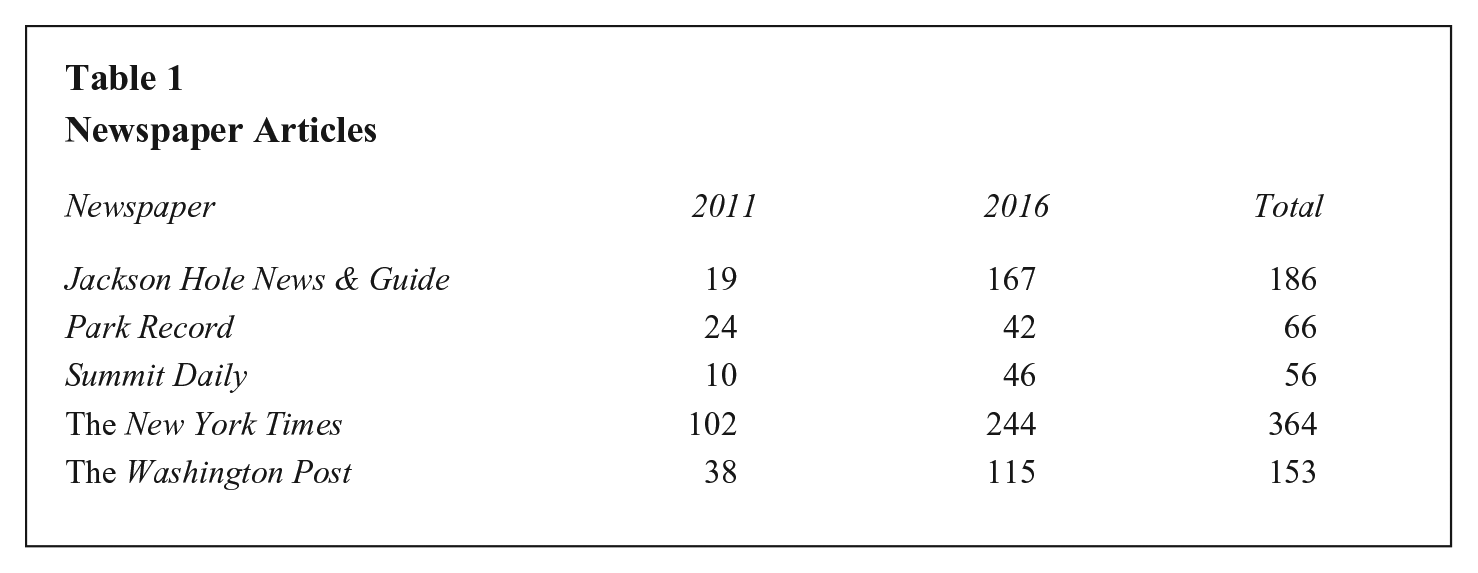
Each of the five newspapers was screened for articles mentioning key words climate change OR global warming within the entire article. When gathering articles for the New York Times and the Washington Post, we used Lexis Uni via the Utah State University library website, while for the local papers we used each paper’s search feature. After the initial search, we removed articles that were not actually related to climate change or global warming. Given the high number of articles in the nationally circulated newspapers, we selected a random sample of 25% of the national articles, while coding 100% of the articles from the three community papers. The final number of articles analyzed is displayed in Table 1. This methodology is similar to past studies that analyze the U.S. prestige press for their coverage of global warming (Boykoff, 2007; Boykoff & Boykoff, 2004). Similar to other studies and to remain consistent, editorials, opinion columns, letters to the editor and advertisements were excluded from our analysis (Shehata & Hopmann, 2012; Trumbo, 1996).
Newspaper Articles
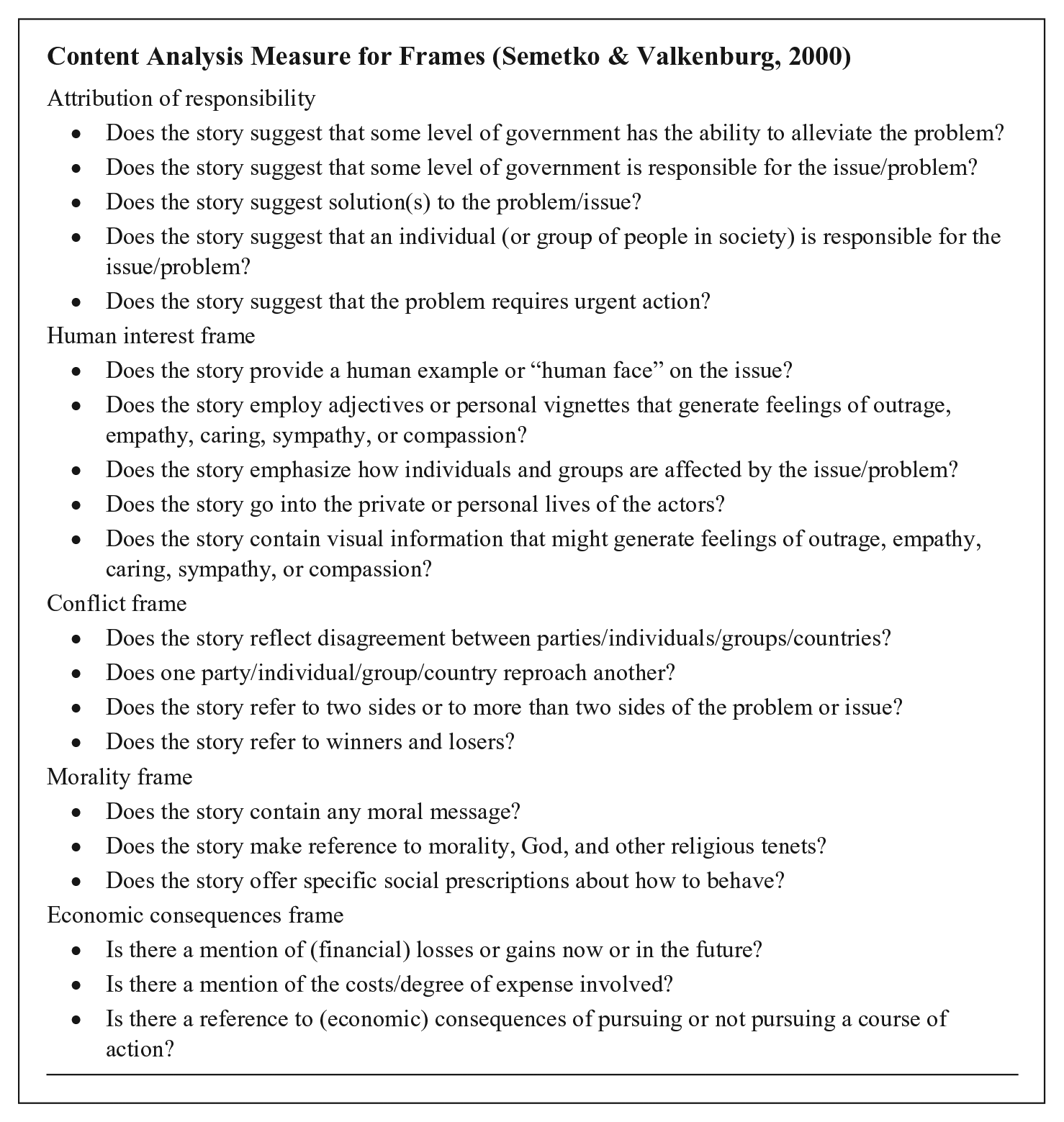
Our analysis utilizes the five frames defined by Semetko and Valkenburg (2000). To measure the extent to which each of the five frames appeared in the stories mentioning any of the two key terms, climate change or global warming, we answer yes (1) or no (0) to each of the 20 questions developed by Semetko and Valkenburg (2000) (see Appendix). We utilize this same questionnaire and attend to remaining consistent when coding to ensure reliability and validity, described further below. Previous studies applied this same questionnaire and found that all 20 questions were reliable in capturing all the five frames (Dirikx & Gelders, 2010). In qualitative content analysis, researchers read text in context and then code into specific categories which ultimately allows the researchers to develop their frames inductively (Church et al., 2019). Here, we use a deductive quantitative content analysis and employ the five frames defined by Semetko and Valkenburg (2000).
The unit of analysis is the whole article, including photo captions and the title. One other graduate student was hired to conduct an intercoder reliability test in which we each independently coded 30 random articles from NYT, WP and all three intermountain community papers. During the coding process each coder read through and coded each article. After we each finished our 30 articles, we met via Skype to discuss our Krippendorff’s alpha, a measure of our agreement in coding beyond chance, and to discuss any discrepancies in coding. After multiple rounds of intercoder reliability testing, we did not achieve our goal of a Krippendorff’s alpha of .8, although our simple intercoder agreement was eventually 80% or greater for all variables that were coded (Lacy et al., 2015). Therefore, to ensure consistency in coding, all articles were eventually coded by both coders. Reconciliation, to ensure reliability and validity, consisted of each researcher coding the transcript and then actively discussing their respective codes with the goal of arriving at a completed version in which all codes were agreed upon; this is also referred to as a “negotiated approach” (Garrison et al., 2006). While intercoder reliability requires two or more coders to work independently from one another and select the same code for the same unit of text, intercoder agreement requires two or more coders the ability to reconcile their coding discrepancies they may have for their unit of analysis (Campbell et al., 2013).
Results
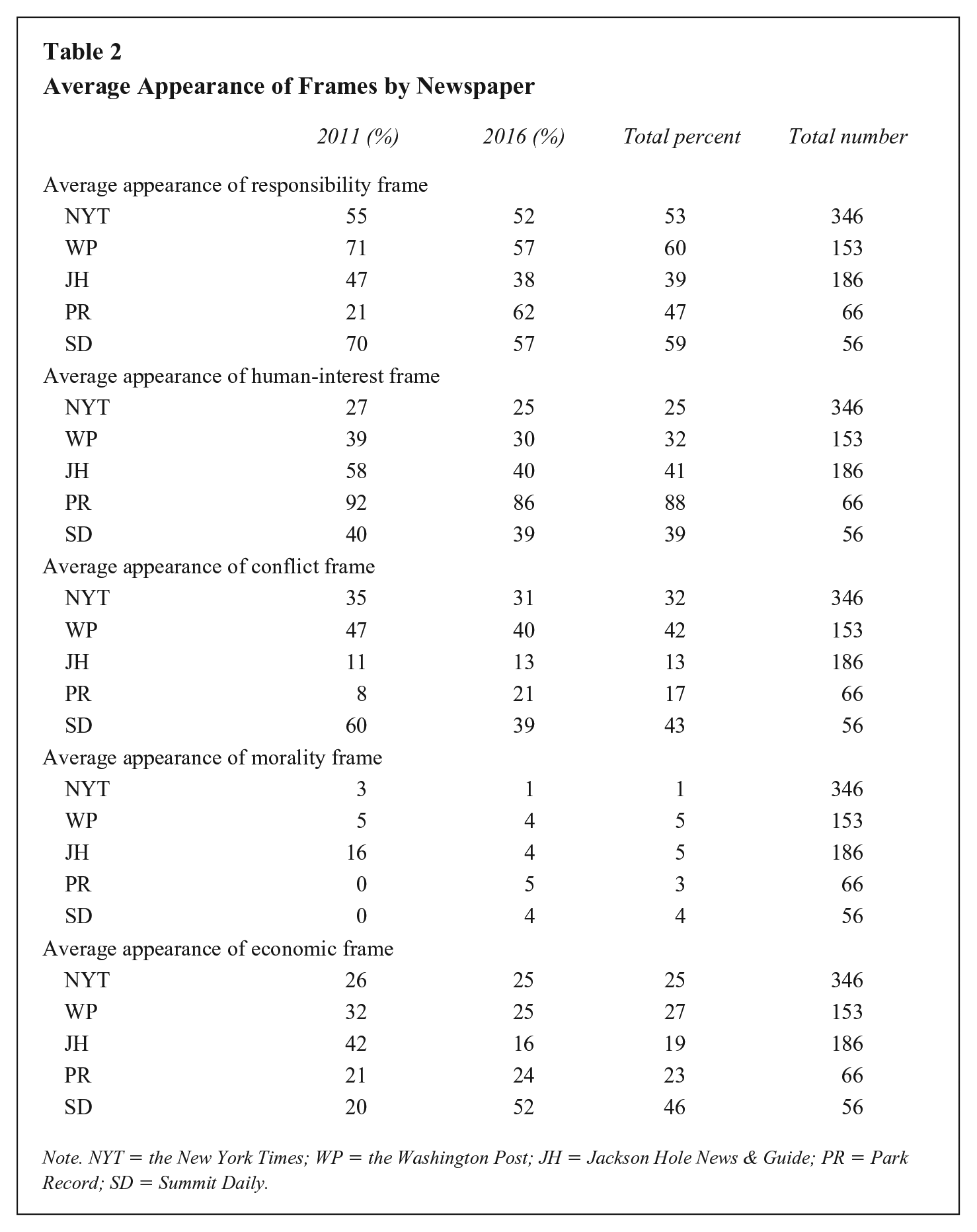
The first research question asks how each of the three intermountain community newspapers frame the issue of climate change. The average appearance of each frame for each paper is displayed in Table 2, which shows that for all three mountain town newspapers, the human interest and responsibility frames had the highest average appearance overall, although there was some variation between the three community papers, discussed further below. Following the human interest and responsibility frames for the community newspapers were the economic consequences and the conflict frames. The morality frame appeared the least often. Based on the literature, which mainly analyzes national papers, we expected that the responsibility and economic consequences frames would appear most often, which is not consistent with our findings. The human interest frame was actually the most prevalent frame among the intermountain town newspapers, followed by the responsibility, economic consequences, conflict and morality frames, respectively.
Average Appearance of Frames by Newspaper
Note. NYT = the New York Times; WP = the Washington Post; JH = Jackson Hole News & Guide; PR = Park Record; SD = Summit Daily.
A human-interest-related recurring theme among the community papers was the notion of activism among the residents. One article by Jeff Dempsey, “Citizen’s climate lobby looks for Park City Support” in Park Record (Dempsey, 2016, February 16) highlighted how Al Gore’s “An Inconvenient Truth” inspired one man to get involved: That film put things in stark relief . . . then I heard about the Citizens’ Climate Lobby and attended a meeting,’ that was about a year ago, and I’ve been very involved since.
Likewise, an article by Scott Iwasaki, “Singer Peter Yarrow is still the activist” in Park Record (Iwasaki, 2016, May 17) highlights the singer’s passion for activism and music: Today, socially conscious music sits right in the climate movement. It is not just the policy that needs to change, it needs to happen in the hearts of the people. That will take a lot of work, a lot of effort, a lot of singing . . . and a lot of listening.
With regard to the responsibility frame, one example from a Summit Daily article titled “Coal mining rejected for climate risks is back on the table” by Elizabeth Shogren (2016, March 1) highlighted the lack of responsible steps taken by government agencies and administrations: The Obama administration had again proposed letting coal companies mine in a roadless area of Colorado’s North Fork Valley. The U.S. Forest Service wants to allow mining despite its own new analysis that reveals the mining could result in a net cost to society . . . because a federal judge last year found the government’s original environmental analysis failed to take a “hard look” at the potential contributions to climate change. This helped environmental groups “sue the government for its failure to adequately consider climate change in its actions related to federal fossil fuels across the West.
The second research question sought to know the difference in how climate change is framed between both national newspapers and the three community newspapers. Unlike the three mountain town community newspapers, the most frequently used frame among the national newspaper coverage was the responsibility frame, followed by conflict, then human interest and economic consequences. As with the three community newspapers, the morality frame appeared least of all in both national newspapers. To further investigate whether the use of the five frames varied in a statistically significantly way between the national and community newspapers, we conduct a series of chi-square tests. This part of our analysis was somewhat exploratory; we wanted to learn if the use of the five frames would vary significantly by scale. We find the differences in the use of the five frames between the national and the community scale are statistically significantly different for the responsibility, human interest and conflict frames. One potential reason for a non-statistical significance with respect to the morality frame is likely due to a limited number of articles that framed the issue of climate change as a morality problem. These results are displayed in Table 3.
Statistically Significant Difference Between Frames by Scale, Time, and Place

Chi-square tests marked for statistical significance: ***p < .001. **p < .01. *p < .05.
These findings indicate that the local newspapers may be more likely to frame climate change in a way that highlights the effects on a community level by personalizing the issue or problem. For instance, a major theme among the intermountain community newspapers framing of climate change was how it could potentially affect the amount of snowfall or delay the ski season, which would have an impact on particular individuals or groups in their work related to the tourism economy. This indicates the importance of local context to patterns in media framing.
The goal of the third research question was to determine whether the use of the five frames has changed over time. A Pearson’s chi-square test was carried out to see whether the use of the five frames by year was statistically significant. This study did not find that there is a statistically significant difference between the five frames for 2011 and 2016. None of the five Pearson chi-square tests reached the .05 threshold of statistical significance. The results for these analyses are also displayed in Table 3. We also note that overall, the coverage of climate change increased from 2011 to 2016. In addition to demonstrating the increasing coverage of climate change, this indicates consistency over time in framing. This further demonstrates the ongoing usefulness of employing Semetko and Valkenburg’s (2000) standard frames to analyze media coverage of climate change and to make these analyses comparable across studies in different contexts.
The goal of the fourth and final research question is to determine whether the use of the five frames differs among the three intermountain town community newspapers. Table 2 shows that the Jackson Hole News & Guide and the Park Record both utilize the human interest frame and then the responsibility frame more frequently, whereas the Summit Daily utilizes the responsibility and conflict frames most frequently, more in line with the national papers. To test whether there are statistically significant differences between the use of the five frames by the three papers, we conduct a Pearson’s chi-square test of significance. We found the use of the five frames between the three community newspapers is statistically significantly different for the responsibility, human interest, conflict and economic consequences frame. For instance, there is a significant relationship among the conflict frame χ2 (2, N = 307) = 25.2, p < .001, human interest frame χ2 (2, N = 307) = 45.8, p < .001, economic consequences frame χ2 (2, N=307) = 17.8, p < .001, and the responsibility frame χ2 (2, N = 307) = 7.40, p < .05 and all three intermountain community newspapers. However, the morality frame was not statistically significant, χ2 (2, N = 307) = 0.767, p > .05. These results show that in addition to detecting difference between the national and the community level, we also find significant differences in the use of framing between the three communities. This shows that not only does national versus local context matter in newspaper coverage and framing of climate change, but local contexts also matter and vary significantly.
Conclusion
In prior research, scholars who analyze print media frames primarily focus on national or prestigious newspapers in their analyses. This study contributes to the literature by including an analysis of three community newspapers. Utilizing the five frames—responsibility, human interest, conflict, morality and economic consequences—described by Semetko and Valkenburg (2000), we analyze media framing of climate change, and we find significant differences among the use of the five frames at the local scale compared to the national scale, indicating the importance of scale and specific community context. In this study, our community context was U.S. Intermountain West ski towns, which are likely to be greatly affected by the issue under examination, climate change. Furthermore, while the findings from our specific communities are not meant to be generalizable, they are comparable, both to national coverage and other community contexts, because we utilize standard frames that are used by other researchers and are comparable across topics. Although our communities were selected for their very specific contexts, our findings regarding framing of the topic of climate change can be compared with other studies that use these frames and can contribute to framing theory more generally (Borah, 2011).
In the three community papers, the human-interest frame was used most frequently overall, and this was a clear difference in comparison to the national papers. Local newspapers aim to connect their audience or readers to their community and to each other. Stories published in local newspapers are often more personal and display local impacts. Regarding climate change, local newspapers appear to more frequently personalize the effects of climate change or bring “an emotional angle to the presentation of an event” (Semetko & Valkenburg, 2000, p. 95). This highlights that the role of the community papers is to write about how local, state or national issues affect the community’s individuals or businesses. The findings in this research indicate that local print media take a personal tone in stories about climate change.
The local newspapers’ use of the responsibility frame was geared toward governmental policies that either helped or hindered the impacts of climate change. In local papers, some articles highlighted the case for saving the Paris Climate agreement, while others mentioned Donald Trump’s plan to take the United States out of the Paris Climate Accord. Both the national and community newspapers used the responsibility frame in a similar manner that highlighted the important role governments have in efforts to combat and reduce the impacts of climate change.
Given that all three mountain town communities rely heavily on recreational tourism, it makes sense that the economic consequences frame was the third most frequently used frame. Climate change was often presented as having negative consequences for the local economy. For example, numerous articles mentioned how a delayed snowfall due to a warmer climate affected their ski season and ultimately their economy and well-being.
In the two national newspapers, the responsibility frame was used most frequently. With national newspapers, the goal may be to provide a window into the broader world. Stories address the general population and cover issues that affect the majority of communities, cities and states. Both the New York Times and the Washington Post published articles that suggested governments are responsible for climate change and at the same time are capable of alleviating its impacts, while other articles emphasized the importance of individual action and responsibility. For example, articles alluded to legislative efforts to cap carbon emissions and increase the use of renewable energy, while others suggested ways to mitigate the effects of global warming at an individual or community scale including grassroots movements and organized political action.
In national newspapers, after the responsibility frame the conflict frame was most prevalent. This may be attributed in large part to the 2016 election of Donald Trump and his stance on questioning the reality of global warming and climate change. National articles highlighted disagreement related to climate change as a major conflict between political parties.
When we compared the five frames between the two years, 2011 and 2016, we did not find a statistically significant difference between the two years for any of the five frames, although coverage of climate change increased during this time. This indicates the ongoing relevance of Semetko and Valkenburg’s (2000) five frames for conducting media analyses that are generalizable and comparable across studies. Future research could analyze additional years at 5-year intervals moving forward.
Our study has several limitations that suggest directions for future research. In addition to only studying a limited time frame, we examine a very specific type of community context. We analyzed three ski town newspapers in the Intermountain West region of the United States. We selected this type of mountain town because climate change is likely to have a direct impact on these types of communities. The three communities are somewhat politically similar in that they are in counties that tend to vote more Democratic, but they are within states that tend to vote more Republican. We know that media coverage of climate change is a partisan issue, but community newspapers may be less partisan, adding to our understanding of how different contexts shape media coverage of climate change and in turn shape views on climate change. Future research would do well to explore further variety in local contexts. For example, future research could analyze media coverage of climate change in ski towns in other regions of the United States, towns whose economies may be affected by climate change for different reasons or towns whose economies may not be as directly affected by climate change. Studying framing of climate change in these different contexts will lend insights to our understanding of media coverage and views on climate change and framing in various contexts more generally.
Furthermore, while we argue for the value of using frames that can be compared across studies and contexts, other frames not perfectly captured by the five frames, such as the debate over scientific uncertainty or outright climate change denial, may need to be studied using unique frames and/or inductive methods that allow for the development of additional context or topic specific frames. For example, in reading the newspaper articles, we also observed that there is still a debate regarding the scientific uncertainty related to climate change in the U.S. media, at least through 2016. One explanation could be the way scientists present their studies on climate change–related effects. For example, Howe et al. (2019) found an increased level of trust in scientists and their message among the general population when scientists provided a best- and worst-case scenario for predicted sea-level rise. However, when scientists included the level of uncertainty in their predictions regarding the consequences of sea-level rise, such as structural damage or population displacement, it was met with lower levels of trust and a reduction in message acceptance (Howe et al., 2019). Some articles, mainly in the community newspapers, discussed how some community members do not see the immediate impact of climate change on their ski season and feel that scientists and politicians exaggerate the impacts. These are just some examples of possibilities for studying media framing of climate change inductively in future research.
There was some variation between the three community newspapers. While overall they utilized the human interest frame the most, followed by the responsibility frame, for Summit Daily the responsibility frame was more dominant than the human interest frame. Based on our analyses, we cannot explain exactly why this occurs. At a glance, the counties are relatively similar politically and economically, but our results point to the importance of local community context, and future research could explore the role of local context further. Political, economic, sociocultural, and other considerations probably come into play. Nuances related to ownership of the newspaper, cost of the paper or publication schedule may matter, although such differences do not immediately explain the variation across communities that we see. Future research could employ both quantitative methods at larger scales and qualitative analyses, especially in the form of inductive textual analysis or community case studies. This study omitted editorial and opinion pieces from the analysis, in line with other research at the national scale; however, a future analysis of these types of articles could also shed further light on variation in individual community context.
As past studies have shown, how climate change is framed can influence the public’s knowledge and perception on the issue, which can affect what measures or policies are implemented to mitigate climate change or adapt to the impacts. For instance, one can speculate that as the topic of climate change becomes more salient throughout print media, the level of public knowledge and concern regarding the consequences of climate change could also increase. This could create pressure on our elected officials to pass legislation that mitigates the impacts of climate change and to divest from fossil fuels to a path more reliant on renewable energies. Future research could aim to make links between media coverage and difference in public opinion or policy enactment. In many communities, the impacts of climate change extend beyond just environmental consequences and include economic and well-being consequences; this increases the desire for business and others to seek opportunities for alternatives, including alternative energy solutions (Biswas & Kim, 2016). By looking at print media on a local community level, we can potentially gain a clearer understanding of how the media frames the topic of climate change. This, in turn, could help policy-makers and other interested parties enact specific policies and adaptive strategies that cover all the issues exacerbated by climate change.
Finally, our study also contributes to framing theory more generally. Chong and Druckman (2007, p. 120) write that public opinion is important to a democratic society, and framing may be one way public opinion is shaped, from manipulation and deception to “more neutrally to a learning process in which people acquire common beliefs, as in the coordination of people around a social norm.” Examining framing in various contexts utilizing standard frames that can be compared across contexts is one step in improving our understanding of frame construction of this highly politicized issue (Borah, 2011). This study provides support for a key sociological insight, that context matters (Dietz & Jorgenson, 2013). If issues are framed differently in different contexts, it can shed life on the powers and structures that shape framing, political polarization, varying degrees of receptiveness to contrary evidence, and how framing may shape citizen belief formation moving forward.
Footnotes
Appendix
Content Analysis Measure for Frames (Semetko & Valkenburg, 2000)
| Attribution of responsibility |
| • Does the story suggest that some level of government has the ability to alleviate the problem? |
| • Does the story suggest that some level of government is responsible for the issue/problem? |
| • Does the story suggest solution(s) to the problem/issue? |
| • Does the story suggest that an individual (or group of people in society) is responsible for the issue/problem? |
| • Does the story suggest that the problem requires urgent action? |
| Human interest frame |
| • Does the story provide a human example or “human face” on the issue? |
| • Does the story employ adjectives or personal vignettes that generate feelings of outrage, empathy, caring, sympathy, or compassion? |
| • Does the story emphasize how individuals and groups are affected by the issue/problem? |
| • Does the story go into the private or personal lives of the actors? |
| • Does the story contain visual information that might generate feelings of outrage, empathy, caring, sympathy, or compassion? |
| Conflict frame |
| • Does the story reflect disagreement between parties/individuals/groups/countries? |
| • Does one party/individual/group/country reproach another? |
| • Does the story refer to two sides or to more than two sides of the problem or issue? |
| • Does the story refer to winners and losers? |
| Morality frame |
| • Does the story contain any moral message? |
| • Does the story make reference to morality, God, and other religious tenets? |
| • Does the story offer specific social prescriptions about how to behave? |
| Economic consequences frame |
| • Is there a mention of (financial) losses or gains now or in the future? |
| • Is there a mention of the costs/degree of expense involved? |
| • Is there a reference to (economic) consequences of pursuing or not pursuing a course of action? |
Acknowledgements
The authors thank Drs. Steve Daniels, Cathy Bullock, Richard Krannich, and E. Helen (Eddy) Berry for their guidance and support.
Funding
This research is supported by Utah Agricultural Experiment Station Project# UTA01369.
