



Abstract
This research investigated linguistic variation in Pakistani English newspaper editorials employing multidimensional analysis to identify: distinguished language feature; and linguistic variation in the light of textual dimensions model. Corpus comprised 1,000 editorials from four newspapers. Results showed the distinguished use of nouns, public verbs and sentence relatives thereby the editorials were found focusing on narrative, explicit and informational discourse. These results led to conclude about the presence of linguistic variation in Pakistani English newspaper editorials.
Keywords
Introduction
The newspaper is a widely read material (Westin & Geisler, 2002). It is a powerful source of information in written form (Cissel, 2012). It provides base for the most of our political and social knowledge (Farrokhi & Nazemi, 2015). The said information/knowledge is transferred to us in different forms, for example, news (about latest events), opinions (newspaper views about events) and service information, that is, information about prices, sports, television programs and weather (Bell, 1991), featured articles, news editorials and news reports (Danesi, 2009; Fowler, 1991; Reitz, 2004), or articles, columns, editorials, letters to editors, news reports and news stories (Batool, 2015). Each of the said news forms has its own communicative purpose. For examples, the news presents a short report about current events, whereas an article provides the in-depth information about specific events, people, or subjects (Danesi, 2009; Turow, 2014). Referring back to Westin and Geisler (2002), newspaper has a wider public reading than any other printed material, and the language used in the newspaper largely reflects the language as it is used in a particular society. It means that the newspapers published in different countries reflect varied use of languages as they are used in the respective societies. Thus, building on Westin and Geisler (2002), this research aims to investigate linguistic variation in English language newspapers published in Pakistan.
Opinion pages in a newspaper are known for the explicit articulation of political views of the newspaper editors and owners (Kahn & Kenney, 2002). Editorial is one of the most important opinion pages, and is used to influence the reader (Greenberg, 2000). It (an editorial) is the genre of a newspaper article that presents opinions on topical issues to persuade readers and spread institutional ideologies (Biber, 1988; Van Dijk, 1992). In simple words, it is the opinion of editors or publisher on a news item, or topic (Sinclair, 1995). Usually, it is written by the “editorial gatekeepers,” that is, editorial board members. Therefore, it is never taken as a single author work and is always published unsigned (Ciofalo, 1998, p. 18). An editorial is considered very important due to the purposes it is used to achieve, for example, to form a society’s opinion in both political and public spheres (Simurda, 1997), to mold public opinion on current affairs (Westin & Geisler, 2002), to set the agenda (Le, 2010), to persuade the readers to undergo a certain type of action, that is, to change their attitude about the topic under discussion (Farrokhi & Nazemi, 2015), to influence social cognition of the readers (Farrokhi & Nazemi, 2015; Van Dijk, 1992) and to present newspaper opinion about recent issues of political, or social importance (Huang & Ren, 2020). In short, it is a form of media discourse that belongs to a large class of opinion (Farrokhi & Nazemi, 2015). An opinion is defined as the kind of belief that is based on cultural and social grounds, is evaluative in nature, and sees things as good or bad, and right or wrong (Van Dijk, 1995). For these purposes, it (an editorial) has differently been labeled, for example, timely essay (Bond, 1961), voice of the newspaper (Schaffer et al., 1998) and mouthpiece of the newspaper (Le, 2008).
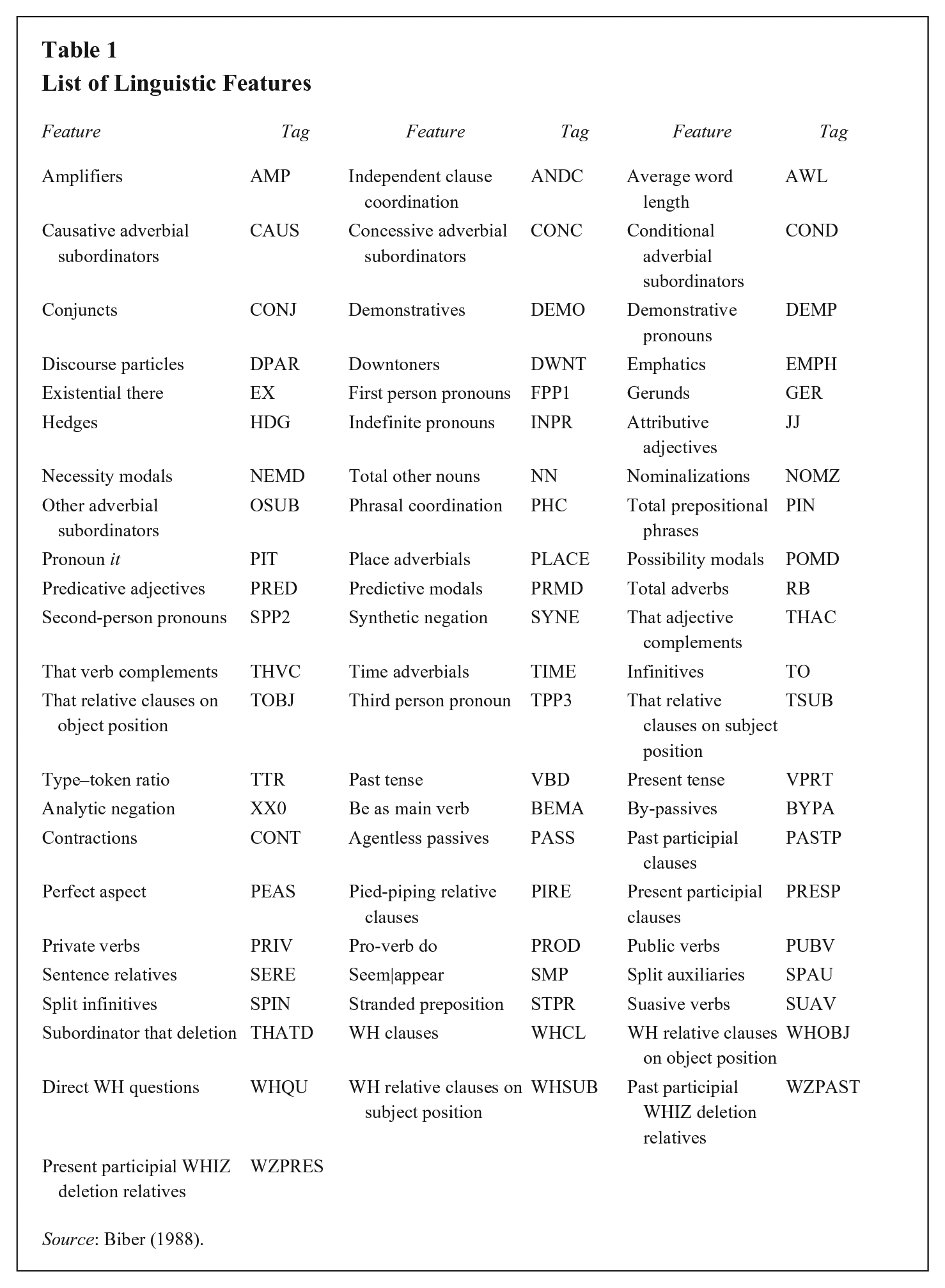
Editorial writers use different persuasion devices and strategies to influence the readers’ cognition (Farrokhi & Nazemi, 2015). In fact, the editorial writers require factual evidence and linguistic devices while writing an editorial. The former is needed to support the opinion, whereas the latter is needed to present the opinion in a convincing manner. The linguistic strategies involve lexical, and grammatical choices, for example, use of coordinate conjunctions, demonstrative pronouns, infinitives, nominative pronouns, mental verbs, relative pronouns and so on (Bashir et al., 2021). Thus, the use of these devices is believed to be culture- and language-oriented, and the editorials (being persuasive in nature) reflect such writing preferences as are grounded in their cultural and linguistic contexts. In this way, editorials “are regarded as rich sources of writing conventions” that are assumed to “differ among languages and cultures” (Farrokhi & Nazemi, 2015, p. 155). Thus, building on the said notions, this research is aimed to explore linguistic differences in the editorials published in different Pakistani cultural establishments (i.e., Punjab, Sindh, Khyber Pakhtunkhwa and Federal area) based on the use of linguistic features (Table 1). There are different reasons for the selection of editorials as a subject of this research, for example, the editorials: “set standards” for persuasive English writings (Connor, 1996, p. 144); hold special position in contrastive rhetoric research (Farrokhi & Nazemi, 2015); and “exhibit an interesting interplay of linguistic features and strategies to achieve the communicative purpose of persuading the audience which is worth investigating” (Masroor & Ahmad, 2017, p. 83). Furthermore, linguistic features distinctly characterize a specific register, subregister, specific text and specific language variety, and indicate the style of a person or written text. These features have not been sufficiently studied in Pakistani English newspapers except in a limited number of recent studies on: linguistic variation in newspapers in Pakistani context (Ahmad & Ali, 2019; A. Ali & Shakir, 2022; M. Ali & Sheeraz, 2018; Alvi, 2017; Ijaz et al., 2021; Siddique et al., 2022). Some researchers conducted research on: discourse analysis of English editorials (Izadi & Saghaye-Biria, 2007), rhetorical structures of English editorials (Bonyadi, 2010; Fartousi & Dumanig, 2012) and discourse features of newspapers (Kuhi & Mojood, 2014; Siddique et al., 2018). Therefore, the present study is aimed to investigating linguistic variation in Pakistani English newspaper editorials using multidimensional analysis (MDA) on the use 67 linguistic features (Table 1).
List of Linguistic Features
Source: Biber (1988).
In Pakistan, the trend of generic and rhetorical research on newspaper editorials is growing. This trend has led to the exploration of discourse, meta-discourse and individual linguistic features with the help of comparative analyses of content and genre. This present research is based on MDA proposed by Biber (1988). MDA ensures the study of a large number of linguistic features simultaneously in a large amount of data. It (MDA) was initially introduced for the comparison of spoken and written registers (Biber, 1988). However, it has also been extensively applied to successfully study language variation in a wide range of research areas, for example, synchronic analyses of author styles, genres and registers; diachronic analyses to study register evolution; contrastive analyses of registers from non-Western languages; analyses of university English for material development and move, and the analyses of moves, and discourse structures (Xiao & McEnery, 2005). Previously, Pakistani research (S. Ali, 2020; M. Ali & Sheeraz, 2018, 2021; Alvi, 2017) has also applied MDA to study linguistic variation in newspaper editorials. However, the previous research applied MDA approach in a limited way. Therefore, a study based on the sufficiently representative corpus is still needed, and this research is aimed to study linguistic variation in the editorials from four Pakistani English language newspapers to cover this gap.
Literature Review
A large body of research has been conducted on different aspects of newspapers around the world. This section presents the review of research conducted in Pakistan, and abroad on different aspects of newspapers with a particular focus on to establish the status of MDA-based research on newspaper editorials in Pakistani context.
Research on Newspaper Editorials Around the World
The first MDA-based research (Westin & Geisler, 2002), to mention here, was conducted to study diachronic variation in British newspaper editorials published throughout the 20th century. Corpus of this research was developed from editorials of three newspapers, that is, the Guardian, the Daily Telegraph and the Time with a time interval of 10 years. Analysis revealed the language of British newspaper editorials becoming less narrative, and less abstract but more persuasive, and argumentative. In addition, analysis revealed language variation taking place in British newspaper editorials during the last part of 20th century. The analysis also revealed language differences between the Guardian and the other two newspapers, that is, language of the Guardian was found to be more informal as compared with the language of other two newspapers. This research provided decade-wise comparisons reporting precise results. Therefore, this research could be regarded a strong reference with respect to methodology (for the current research), however, the sample of this research was insufficient (554 samples) to present generalizable results.
The research (Izadi & Saghaye-Biria, 2007) conducted critical discourse analysis of American newspaper editorials with the aim to study the position of different newspapers on the same issue, that is, Iran’s nuclear program. The data for this study were collected from three American newspapers, that is, the New York Times, the Wall Street Journal and the Washington Post. Results revealed the presence of six oriental themes in editorials of the said newspapers from 1984 to 2004. Results also revealed the New York Times using less oriental arguments than the other two newspapers. Still another research (Golan & Lukito, 2015) was also conducted on the American newspapers to study the framing of China’s emergence as a global power in the opinion pages employing an inductive textual analysis. The data comprised editorials from the New York Times and the Wall Street Journal. Results showed the New York Times editorials being different from the Wall Street Journal editorials in taking position about China. In this way, the editorials of both of the said newspapers were found to frame China unequally. Both of these studies (Golan & Lukito, 2015; Izadi & Saghaye-Biria, 2007) could be important here to serve as a base for the presence of variation in newspaper editorials published even within the same culture.
Another research (Ansary & Babaii, 2005) was conducted to study (qualitatively as well as quantitatively) the global or cross-rhetorical structures of English newspaper editorials to find macro-rhetorical structure variation. The corpus of this research comprised 90 English newspaper editorials written by native (American) and nonnative (Irani and Pakistani) editorial writers. The analysis showed nonsignificant difference between native and nonnative editorials in terms of rhetorical elements. On the basis of these results, the research concluded about nonnative editorials to be (often) the translated version of native editorials. Another research (Zarza & Tan, 2016) studied the schematic structures of newspaper editorials through contrastive analysis. The data comprised 240 editorials from the New York Times (an American newspaper) and the New Straits Times (a Malaysian newspaper). The results showed American and Malaysian newspaper editorials having the same schematic structures based on four obligatory moves, that is, headline, presenting the case, justifying the events and articulating the position. These studies (Ansary & Babaii, 2005; Zarza & Tan, 2016) could be considered important here for a number of reasons, for example, for providing awareness of conventional structures in editorial writing, for establishing the presence of structural similarity in editorials published in different cultures and thereby for providing a direction to explore variation in Pakistani newspaper editorials in some other ways, for example, through linguistics features (Table 1).
The recent research (Huang & Ren, 2020) presented an MDA of the writing styles of editorials from the China Daily (a Chinese newspaper) and the New York Times (an American newspaper) to study the difference in American and Chinese editorial writing styles. The corpus (developed from 200 texts from each newspaper) was tagged with CLAWS Tagger, analyzed through Biber Tagger to study different linguistic features, and frequencies (of linguistic features) were counted by a wordsmith tool. As a result, language of the China Daily editorials was found being more informational, and impersonal than the language of the New York Times editorials that (the language of the New York Times editorials) was more narrative and argumentative. Therefore, the China Daily editorials were concluded to be more formal and readable as compared with those of the New York Times. This study provided perception about American and Chinese persuasive writing styles. This research could be important here to build on that the editorial writing styles vary across cultures and strengthened the belief about variation underlying newspaper editorials written in different cultures.
Research on Newspaper Editorials in Pakistan
An MDA-based research (Ahmad & Ali, 2019) was conducted in Pakistan to study the register variation in Pakistani press reportage. The data were collected from five Pakistani newspapers and were analyzed through Biber’s system. The results showed internal variation of press reportage in each category of five leading newspapers. In addition, language of the Frontier Post was found to be distinct. Furthermore, Pakistani press reportage was found to be more narrative and explicit as compared with the British press reportage.
Another research (Alvi, 2017) was conducted on the linguistic analysis of newspaper editorials using the MDA approach to describe the language used in Pakistani newspaper editorials and compare them with British newspaper editorials. Corpus comprised 1,500 editorials from five leading newspapers with three subcategories (personal editorials, organizational editorials and letters to the editors) that (corpus) was analyzed for 147 features and nine dimensions. The results showed linguistic variation among five leading newspapers of Pakistan, among three subcategories of editorials and among Pakistani and British newspaper editorials. The research concluded that linguistic variation occurs in editorials at both international and national levels. Though this research employed strong methodology for analysis, yet it left research gaps regarding text types and text size.
Another research (M. Ali & Sheeraz, 2018) in Pakistani context was conducted to study diachronic variation in Pakistani English newspaper editorials using MDA. For this purpose, a specialized corpus CorPENE was developed to explore language variation in three phases. The results about three phases showed the language of Pakistani editorials becoming explicit, nonnarrative, impersonal and less informative in nature over the years. In addition, the comparison of subcategories of editorials showed the editorial category developing as more abstract, less explicit and less informational while the letter to editor category was found to become less abstract, less informational and less explicit. Similarly, the third category, that is, Op-ed was observed to become more abstract, more explicit and less informational. This research (M. Ali & Sheeraz, 2018) was followed by a recent diachronic research (Siddique et al., 2022) on linguistic variation in Pakistani newspaper editorials across six decades. Results reported the presence of variation across decades. In addition, the results reported the said editorials language to remain abstract, dense, explicit, less argumentative and nonnarrative.
Another recent research (S. Ali, 2020) conducted the corpus-based analysis of newspaper reportage using MDA to present a comparison between the language of South Asian and British newspapers focusing to explore linguistic variation and identify Pakistani English newspaper reportage being distinct from other South Asian English language newspapers. For analysis, a specialized corpus of six million words was developed from the data of press reportage of three leading newspapers. Results showed variations in South Asian and British press reportage. In addition, the results revealed linguistic variations in the subcategories of South Asian press reportage. Pakistani newspapers’ English language was, therefore, concluded (in comparison with British and other South Asian Englishes) to be a distinct variety as compared with the British and other South Asian newspapers’ Englishes. The methodology of this research was strong from analysis perspective. However, the scope of this research was limited because of the limited corpus size. Still another recent research (Ijaz et al., 2021) examined Pakistani newspaper columns of opinion during COVID-19 using MDA to explore the effect of COVID-19 on the language of Pakistani newspaper columns. The corpus of this study comprised 2.6 lakh words and was analyzed by Biber’s multidimensional tagger on the basis of textual dimensions followed by the analysis of variance (ANOVA) test. Results showed clear variations in the editorial language published during and before COVID-19, that is, the language of Pakistani newspaper editorials was less technical, less narrative and less informative and more context-dependent during COVID-19.
Thus, the research conducted at the international level shows that the newspaper editorials written in different cultures reflect variations in terms of language (Westin & Geisler, 2002), stance (Golan & Lukito, 2015; Izadi & Saghaye-Biria, 2007) and editorial writing style (Huang & Ren, 2020). The said research provides a sound ground to study variation in Pakistani newspaper editorials. However, the research (Ansary & Babaii, 2005; Zarza & Tan, 2016) shows similarity in the newspaper editorial structures. This present research views Ansary and Babaii (2005) and Zarza and Tan (2016) as a guide, and tries to investigate variation in Pakistani newspaper editorials otherwise than the schematic structures. Furthermore, there is another noteworthy research (e.g., Ahn et al., 2020; Billeaudeaux et al., 2003; Bonyadi, 2010; Burroughs, 2015; Fartousi & Dumanig, 2012; Fosu, 2014) that is not though relevant in terms of variation in newspaper editorials yet is very important to mention here to provide a practical reference of research on newspapers.
Similarly, the research (Ahmad & Ali, 2019; S. Ali, 2020; M. Ali & Sheeraz, 2018; Alvi, 2017; Ijaz et al., 2021; Siddique et al., 2022) conducted in Pakistani context also marks variation in the language of Pakistani English newspaper editorials and motivates this research to explore linguistic variation in the use of linguistic features (Table 1) along with the function of frequently occurring features. It is important to mention here that the majority of above-reviewed research shows the trend of cross-cultural analyses of the language used in editorials. However, the research (Golan & Lukito, 2015; Ijaz et al., 2021; Izadi & Saghaye-Biria, 2007; Westin & Geisler, 2002) also shows the trend of studying variation in the newspapers published within the same country (culture). Therefore, this present research also aims to study variation in the newspapers editorials published within the same country, that is, Pakistan.
Research Methodology
Research Framework
This research follows MDA (Biber, 1988) as a theoretical framework. Normally, it is used to systematically identify as well as interpret register variation. It is systematic, quantitative and qualitative in nature. It is systematic because it employs different system software to tag, process and analyze data. Moreover, it is quantitative because it facilitates not only in the identification of different features, but also ensures the computation of high degree frequencies employing different statistical techniques. In addition, it is qualitative since it facilitates the functional interpretation of linguistic patterns (S. Ali, 2020). Furthermore, MDA is preferable to the other available frameworks (e.g., Hyland, 2005) for a number of reasons, such as it: offers different dimensions to study the whole range of linguistic variation in a register under study; associates a range of linguistic features with a particular dimension that help determine the position of a register under investigation and ensures the identification of different dimensions empirically employing sound statistical techniques (Conrad & Biber, 2014). These advantages have not so far been offered in any other framework. Therefore, this framework has been regarded suitable for this research. Past research used this framework for studying variation: between spoken and written language (Biber & Finegan, 1994), between different languages (Biber, 1995; Cao & Xiao, 2013), from diachronic perspective (Conrad & Biber, 2014), between native and nonnative varieties (Shakir & Deuber, 2018; Xiao, 2009) and between different nonnative varieties (S. Ali, 2020). This present research employs the same framework to study variation within the same variety, that is, Pakistani variety of English.
Linguistic Features Employed in This Research
This research employed a list of 67 linguistic features to study variation in Pakistani English newspaper editorials and determine the nature and category of the content of the editorials. These features were explored in the corpus with the help of Multidimensional Analysis Tagger (MAT) using a particular tag given against each features in Table 1.
Research Corpus
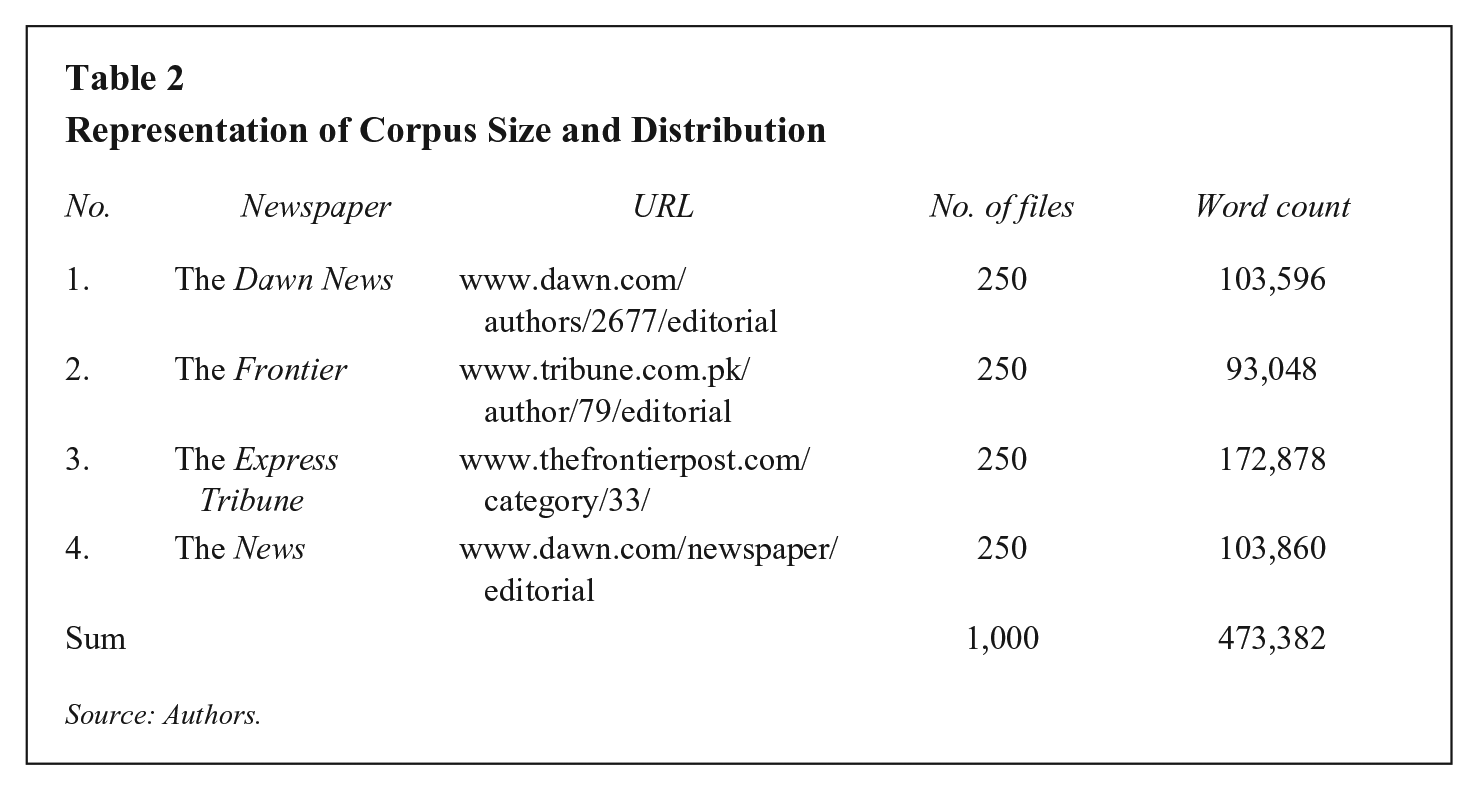
The corpus of this research was developed from 1,000 editorials published in four Pakistani English newspapers. The editorials were published in electronic version, and were also available online at the newspapers web pages for open access. The name of newspaper, online link, number of editorials included in the corpus from each newspaper and the number of corpus words are given in Table 2.
Representation of Corpus Size and Distribution
Source: Authors.
Corpus development process involved simple procedural steps, that is, (1) manual retrieval of editorials from newspaper websites in the form of raw data, (2) cleansing of data to remove bugs to avoid corpus processing problems and (3) transferring the data to Notepad files arranged in a separate folder. Data saved in Notepad files formed the research corpus and were ready to process in corpus tools for analysis purpose.
Corpus Analysis
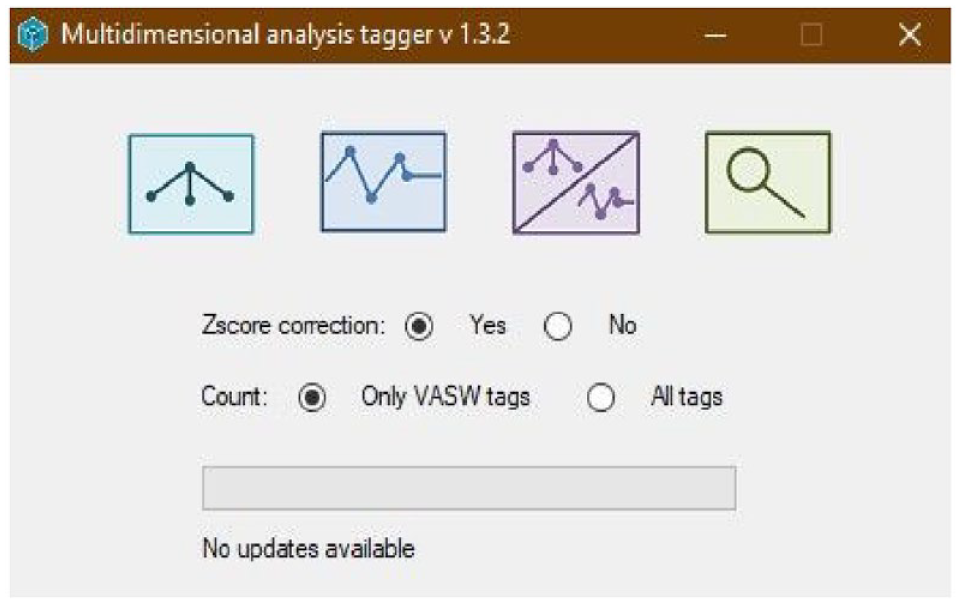
Corpus analysis followed mechanical procedures, that is, (1) tagging through MAT version 1.3.2, (2) setting of the “Zscore correction,” and “Count” to “Yes,” and “Only VASW tags,” respectively, on MAT panel (see Figure 1 for pictorial view of the tagging process), (3) setting of token ratio to 400 and (4) selecting first five of six dimensions (the sixth one was not selected for being insignificant).
Pictorial View of the MAT Tagging Process
Tagging/analysis process provided the frequencies of linguistic features that were normalized per 1,000 words by applying Formula 1. The reason for applying normalization was the different number of words in the corpus of different newspapers that (different number of words) was expected to affect the results. Normalization technique was applied to reduce the possibility of the said effect and obtain results in normal frequencies.
Formula 1. Normalization

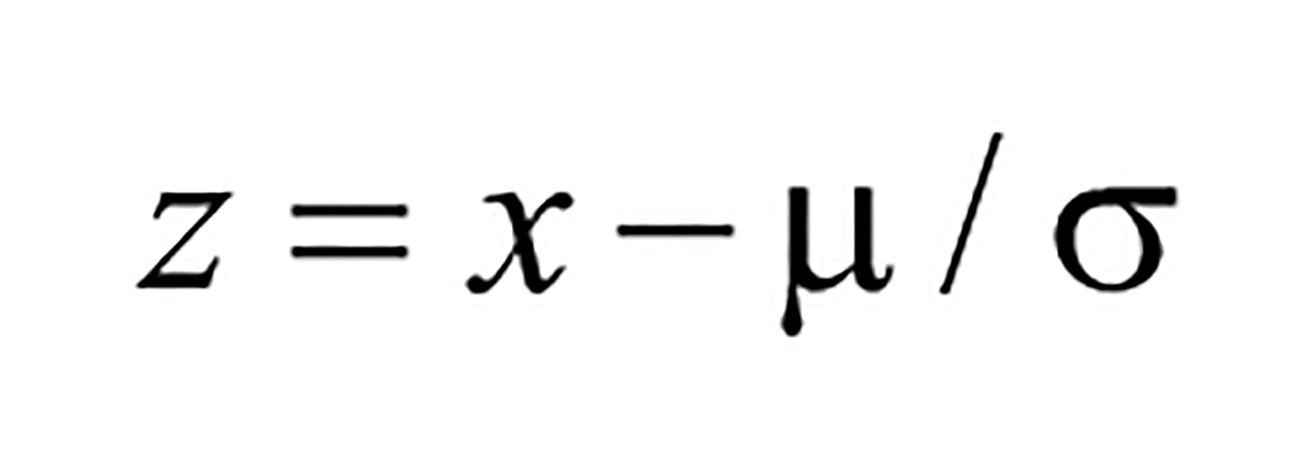
After getting the normalized values, mean, range and standard deviation were obtained followed by the calculation of Z-score by applying Formula 2 that provided positive and negative feature values.
Formula 2. Z-Score Calculation
In the last step, dimension scores were obtained through Z-score values by applying Formula 3, that is, by subtracting sum of Z-score values of positive features from the sum of Z-score values of negative features. Furthermore, the interpretation of underused and overused features was made using AntConc.
Formula 3. Dimension Score Calculation

Results
The results of this research are described and presented below.
Dimension Scores of Newspaper Editorials Through Multidimensional Analysis
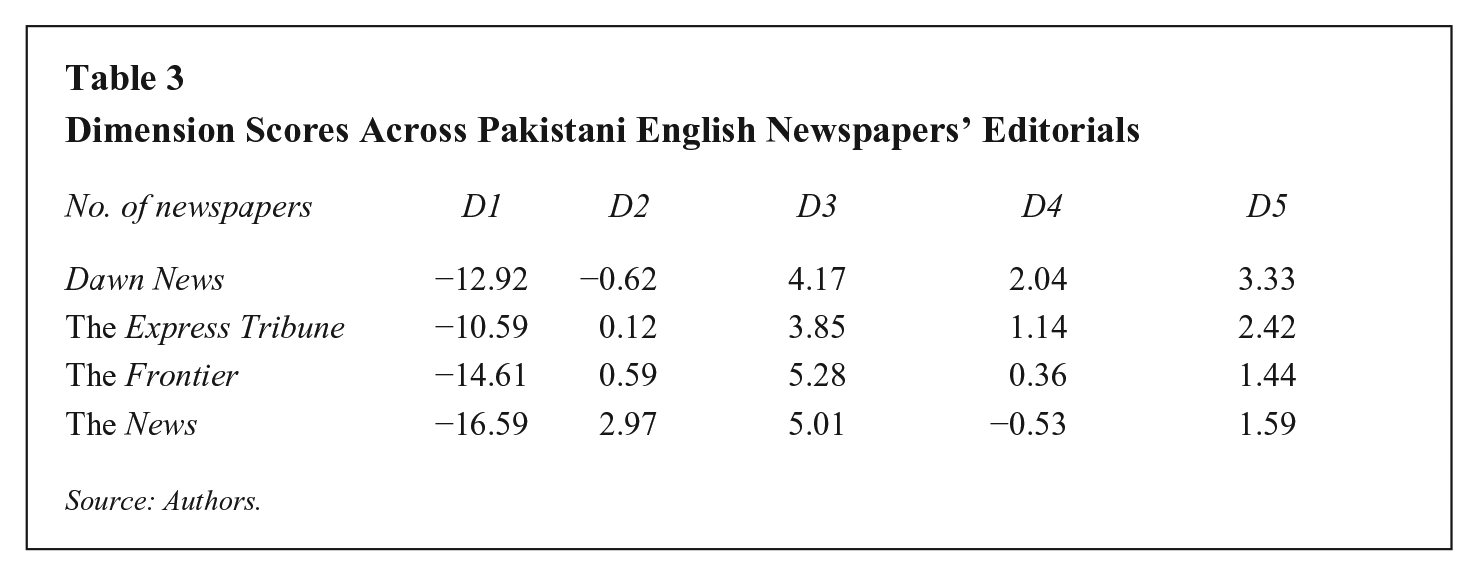
The dimension scores of editorials from four newspapers with respect to five textual dimensions are shown in Table 3.
Dimension Scores Across Pakistani English Newspapers’ Editorials
Source: Authors.
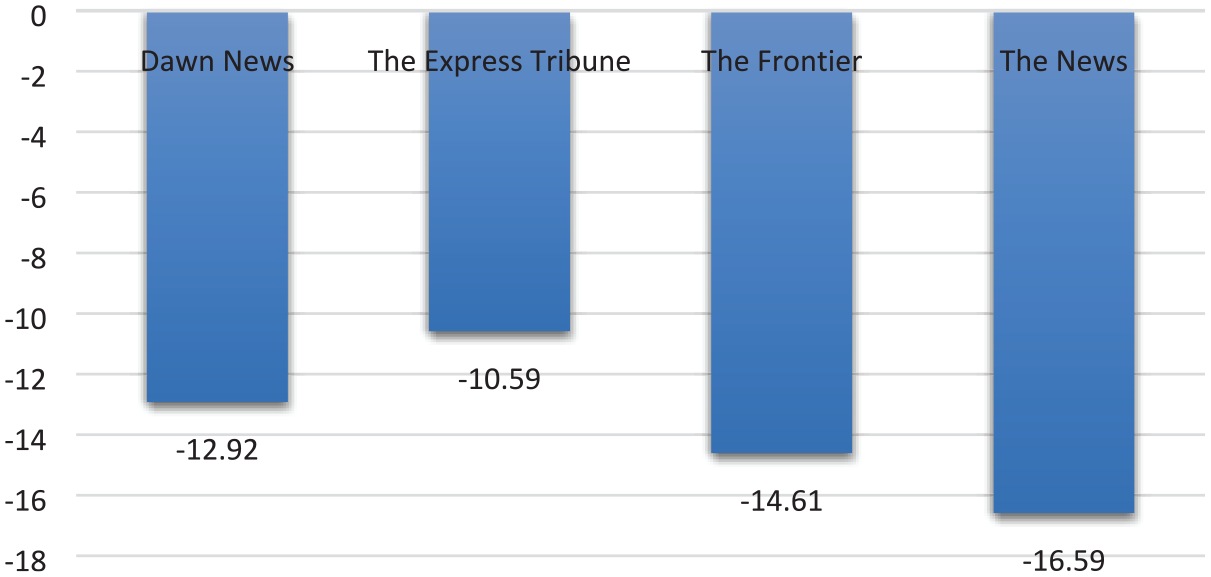
In dimension 1 (as Table 3, Graph 1), involved versus informational, all values of dimension scores are negative. The maximum difference is observed between the Express Tribune and the News, that is, 6, while the minimum difference is observed between dimension scores of the Dawn and the Express Tribune, that is, 2.33. Thus, the editorials from all the four newspapers show significant differences with respect to the dimension scores (Table 3). It indicated the existence of variation in linguistic features with reference to dimension 1.
Dimension 1: Involved Versus Informational Production
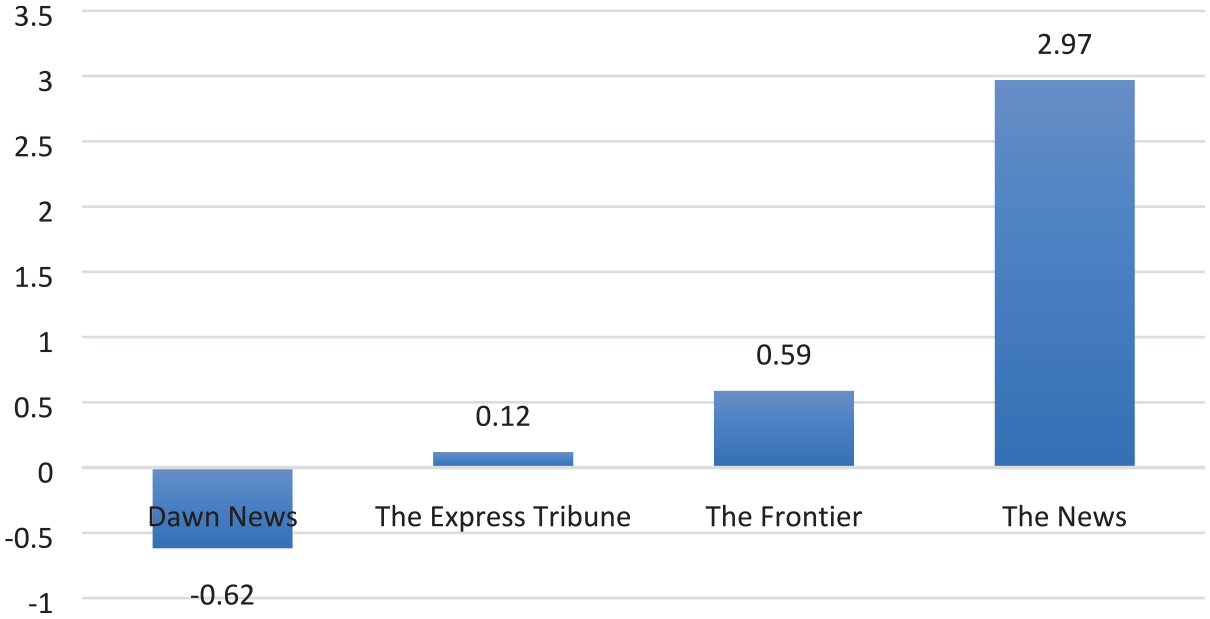
In dimension 2, that is, narrative versus nonnarrative, the values of dimension scores of three newspaper editorials (the Express Tribune, the Frontier and the News) are observed to be positive while of one of them (the Dawn News) is found to be negative. The maximum difference is observed between the News and the Dawn News, that is, 3.59, while the minimum difference is observed between the dimension scores of the Express Tribune and the Frontier, that is, 0.47. Thus, the results (Table 3, Graph 2) indicate a significant range of variation in the editorials of four newspapers with respect to dimension 2.
Dimension 2: Narrative Versus Nonnarrative Concerns
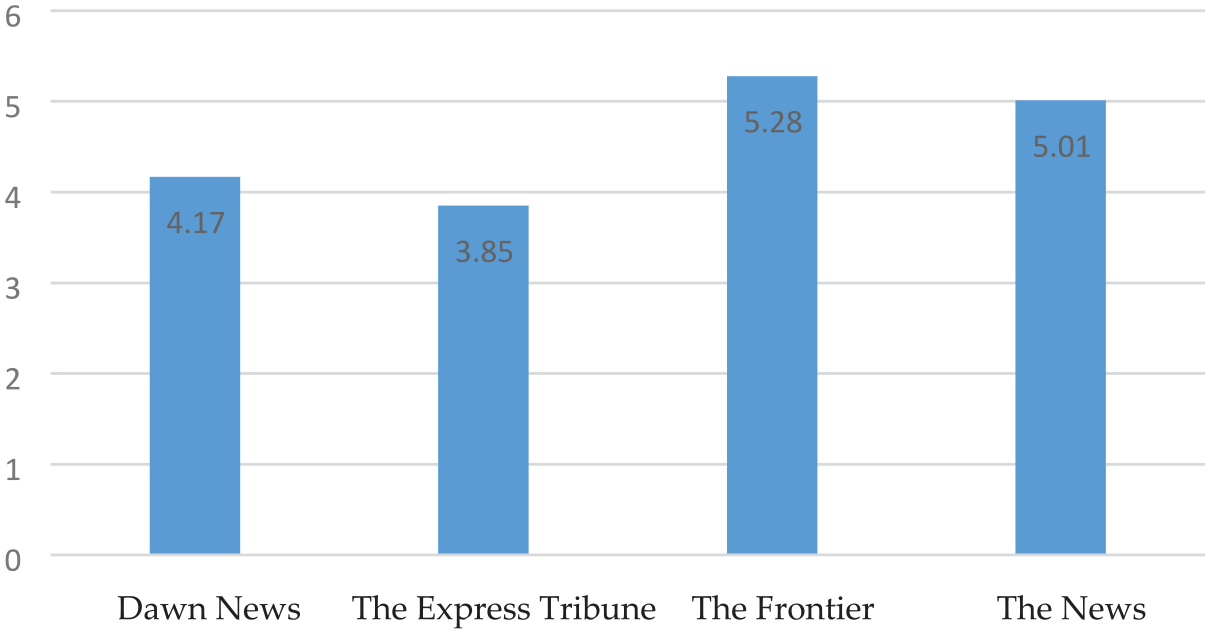
In dimension 3, explicit versus situation-independent reference, all values of dimension scores are observed to be positive. The maximum difference is observed between the Frontier and the Express Tribune, that is, 1.43. On the contrary, the minimum difference is observed between the dimension scores of the Frontier and the News, that is, 0.27. Thus, the results related to dimension 3 (Table 3, Graph 3) show a small degree of variation in the editorials of the four Pakistani English newspaper editorials.
Dimension 3: Explicit Versus Situation-Dependent Reference
In dimension 4, that is, overt expression of persuasion, all values of dimension scores in three newspapers’ editorials (the Dawn, the Express Tribune and the Frontier) are seen to be positive, while in one (the News) of them are found to be negative. Moreover, the maximum difference is seen between the Dawn News and the News, that is, 2.57, while the minimum difference is seen between the Express Tribune and the Frontier, that is, 0.78. Thus, the results related to dimension 4 (Table 3, Graph 4) indicate a small range of variation in the editorials.
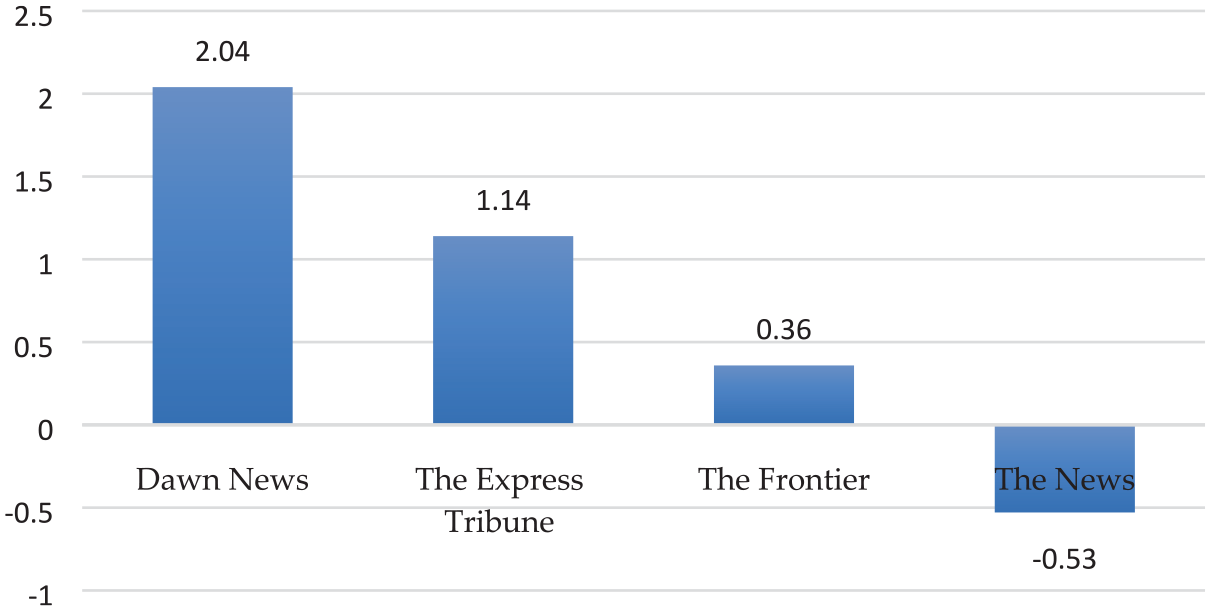
Dimension 4: Overt Expression of Persuasion
In dimension 5, that is, abstract versus nonabstract information, all values of dimension scores in the editorials of all the four Pakistani newspapers are positive. Furthermore, the maximum difference is seen between the Dawn and the Frontier, that is, 1.89, while the minimum difference is observed between dimension scores of the News and the Frontier, that is, 0.15. Thus, the results (Table 3, Graph 5) indicate significant variation and somehow regularity in the editorials of all the four newspapers with respect to dimension 5.
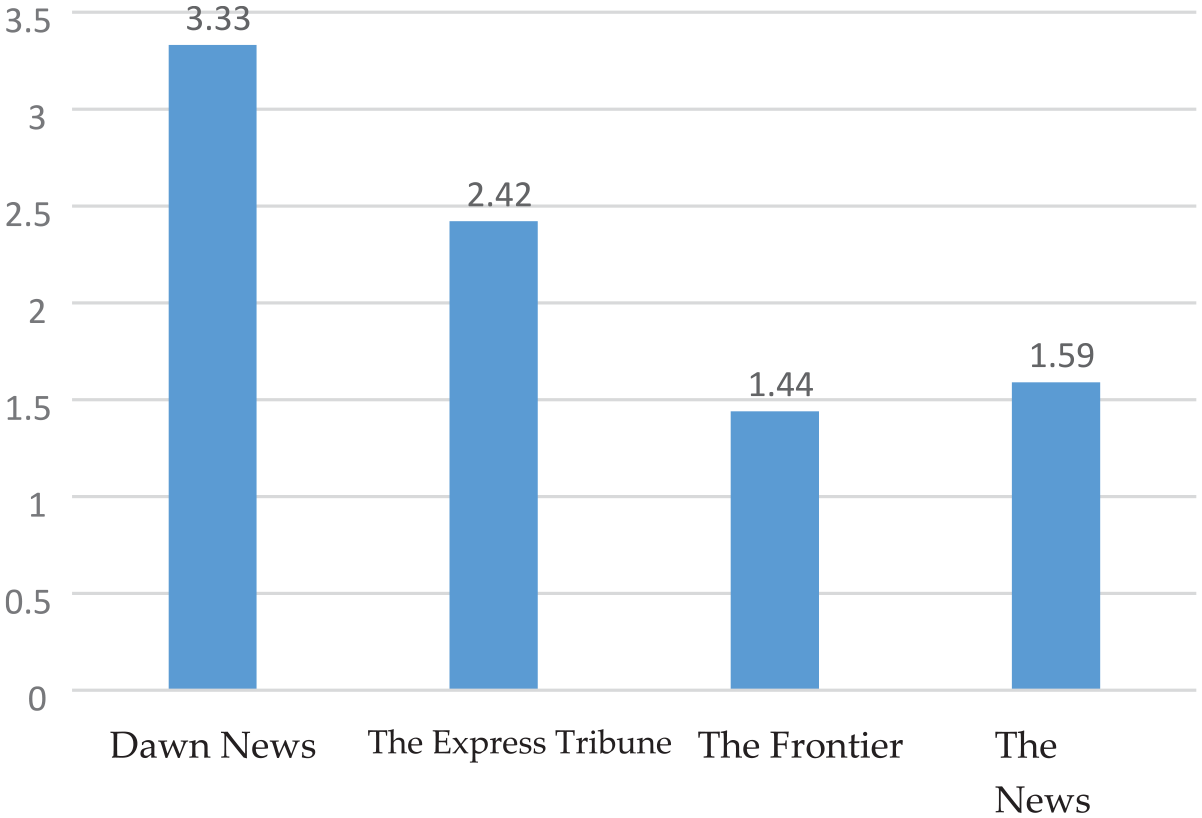
Dimension 5: Abstract Versus Nonabstract Information
Discussion
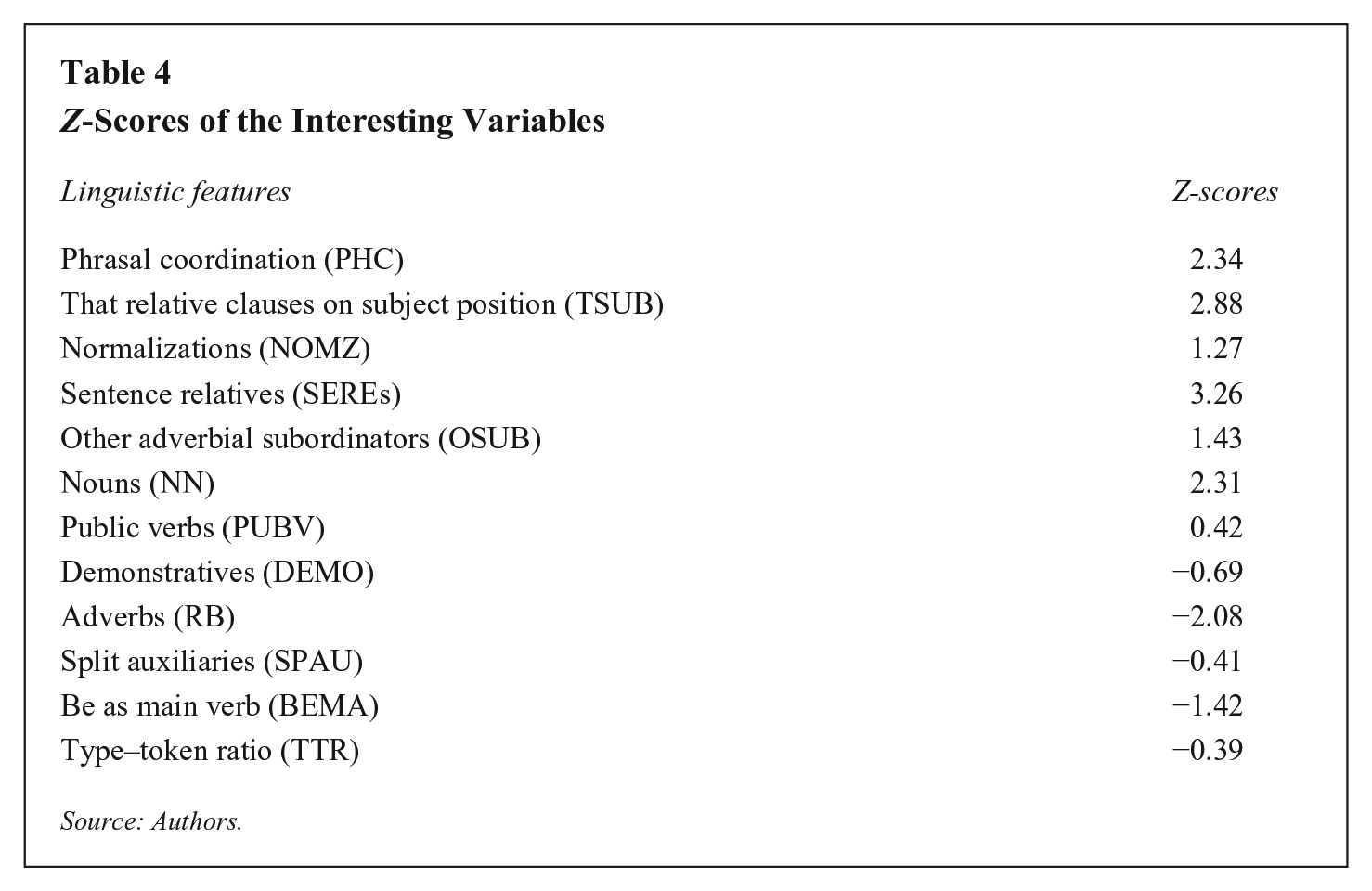
This section discusses the results of linguistic variation among Pakistani English newspaper editorials on the basis of MDA. The variations among the Pakistani English newspaper editorials with reference to five dimensions are due to their nature and style of writing. An overview of how linguistic features function to produce variations in newspaper editorials, along different textual dimensions, is discussed further in this section. A table (Table 4) of all the linguistic features for variations in newspaper editorials along with their Z-scores from the overall data is given in this section. To see whether the text in each newspaper is informational or interactional, narrative or nonnarrative, explicit or situation-based, persuasive and abstract or nonabstract, the linguistic variation has been explored and interpretations are also given. Graphical representation is also given to show differences in the data of editorials with reference to five dimensions. Table 4 shows linguistic features that are responsible for variation with their Z-scores.
Z-Scores of the Interesting Variables
Source: Authors.
Variations in Pakistani Newspaper Editorials According to Dimension 1
Cluster Graph 6 shows Dimension 1 of four Pakistani English newspaper (the Dawn, the Express Tribune, the Frontier and the News) editorials. The closest text type has been shown in the said cluster graph of four newspapers. The underused features in dimension 1 (as shown in Table 4) are demonstrative (DEMO) and be as main verb (BEMA), while the overused features are sentence relative (SERE) and noun (NN).
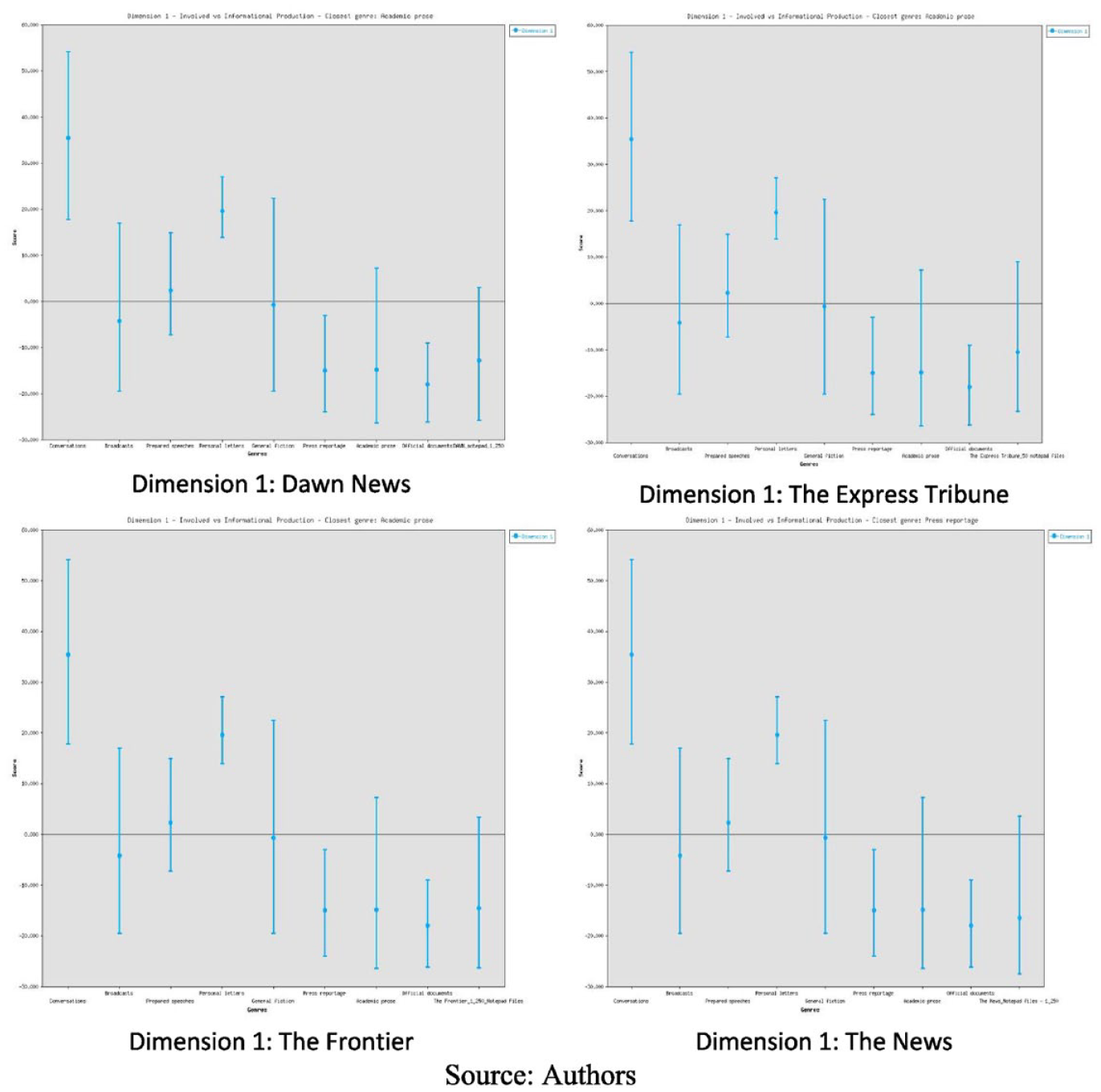
Representation of Text Types Across Dimension 1
Furthermore, Cluster Graph 6 classifies the categories of three newspapers editorials (the Dawn, the Express Tribune and the Frontier) out of four as academic prose, for the closest text type with respect to dimension 1. While the closest type for the fourth one, that is, the News, is shown as press reportage.
According to dimension 1, involved versus informational production, the editorials of four newspapers show variations due to the presence of overused and underused features. Editorials of the News contain informational content due to the overuse of NN feature. The editorials of the Dawn, the Express Tribune and the Frontier contain involved content due to overuse of SERE. BEMA also appears in files as an underused feature. According to the Cluster Graph 6, editorials of the Dawn, the Express Tribune and the Frontier resemble with the genre of academic prose, while the editorials of the News relate to the genre of press reportage. See Excerpt 1, for example.
It is BEMA that is the underused feature in dimension 1 and this feature is contributing to make the data involved. BE is tagged as being a main verb in this pattern: BE is followed by the determiner, possessive pronoun, preposition or adjective.
That itself would not
SEREs are overused linguistic features in dimension 1 and this feature is making data involved. A sentence relative is tagged by Stanford tagger when a punctuation mark is followed by the word “which.” See Excerpt 2, for example.
Earlier, Finance Minister Ishaq Dar said the point of view of the opposition was not understandable as everything could not be discussed in the House. He said the prime minister had proposed a committee,
NNs are an overused linguistic feature in dimension 1 and this feature is responsible for making data informational. A noun can be tagged by NN through Stanford Tagger. See Excerpt 3, for example.
So, rather than harass or
Variations in Pakistani Newspaper Editorials According to Dimension 2
Cluster Graph 7 shows dimension 2 of the said four Pakistani English language newspaper editorials. The closest text type has been shown in all the four newspaper editorials. The overused feature in dimension 2 is public verb (PUBV) that classifies the categories of two of four newspapers editorials, as prepared speeches due to the closest text type with respect to dimension 2. While the closest type for first and second one is categorized as conversations and personal letters, respectively.
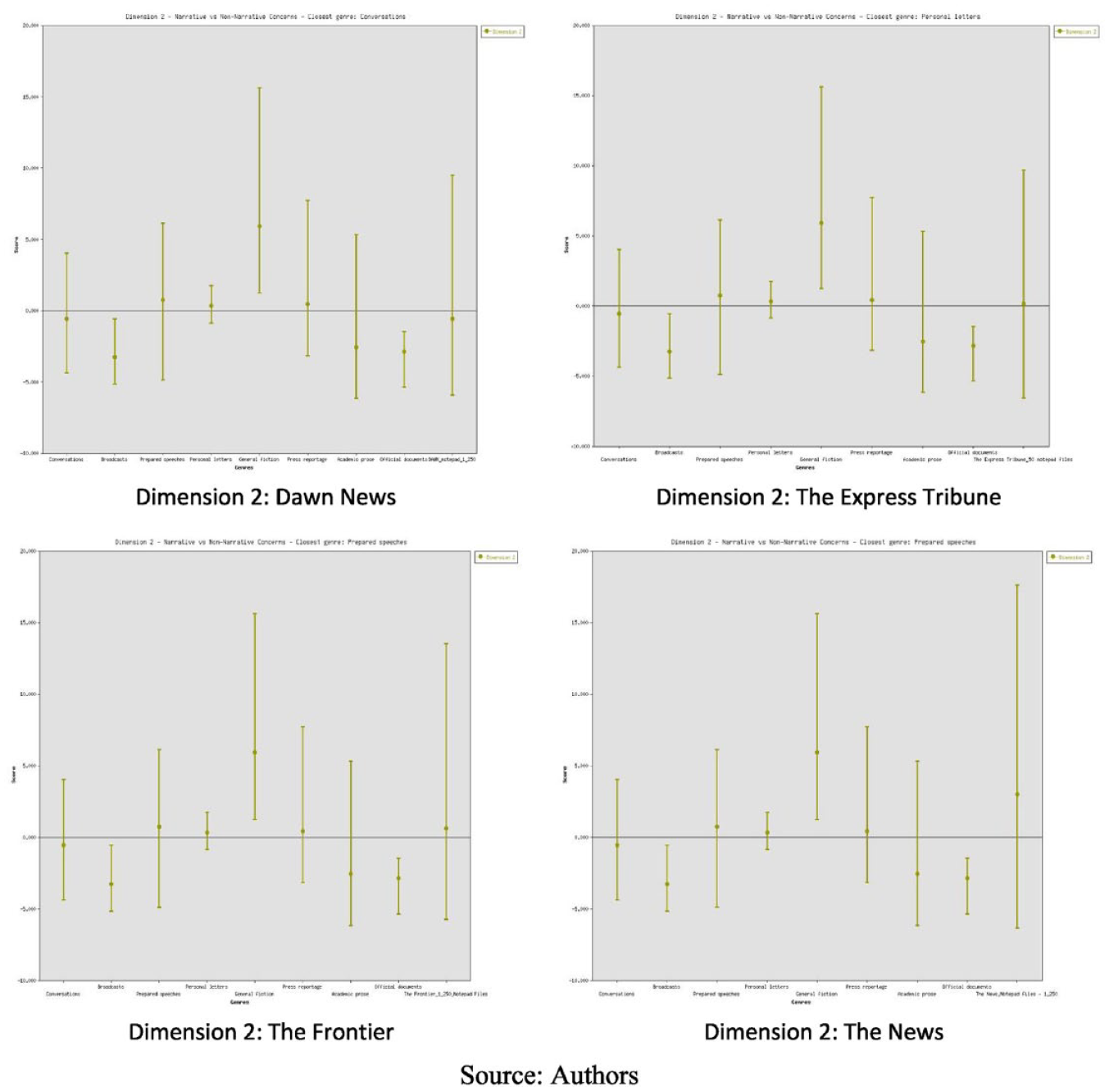
Graphical Representation of Text Types Across Dimension 2
According to dimension 2, narrative versus nonnarrative discourse, editorials from the four newspapers are showing narrative discourse. The editorials from the News are highly narrative due to the overuse of PUBV and the editorials from the Frontier are also narrative in nature. However, the interesting features are absent in editorials from the Dawn and the Express Tribune. According to Cluster Graph 7, editorials from the Frontier and the News relate to the genre of prepared speeches. While, the editorials from the Dawn relate to the genre of conversations and the editorials from the Express Tribune resemble with the genre of personal letters.
PUBVs are overused linguistic features in dimension 2 and contribute to determine the narrative nature of data. This tag is useful for searching any of the items that are listed by Quirk et al as mentioned in manual of tagger. See Excerpt 4, for example.
Analysts
Variations in Newspaper Editorials According to Dimension 3
Cluster Graph 8 shows dimension 3 of the four newspapers, that is, the Dawn, the Express Tribune, the Frontier and the News. The closest text type has been shown in the said graph of four newspapers. The underused feature in dimension 3 is the final account of RBs, while overused features are phrasal coordination (PHC) and that relative clauses on subject position (TSUB). Thus, the editorials from the said newspapers are classified as academic prose due to the closest text type with respect to dimension 3.
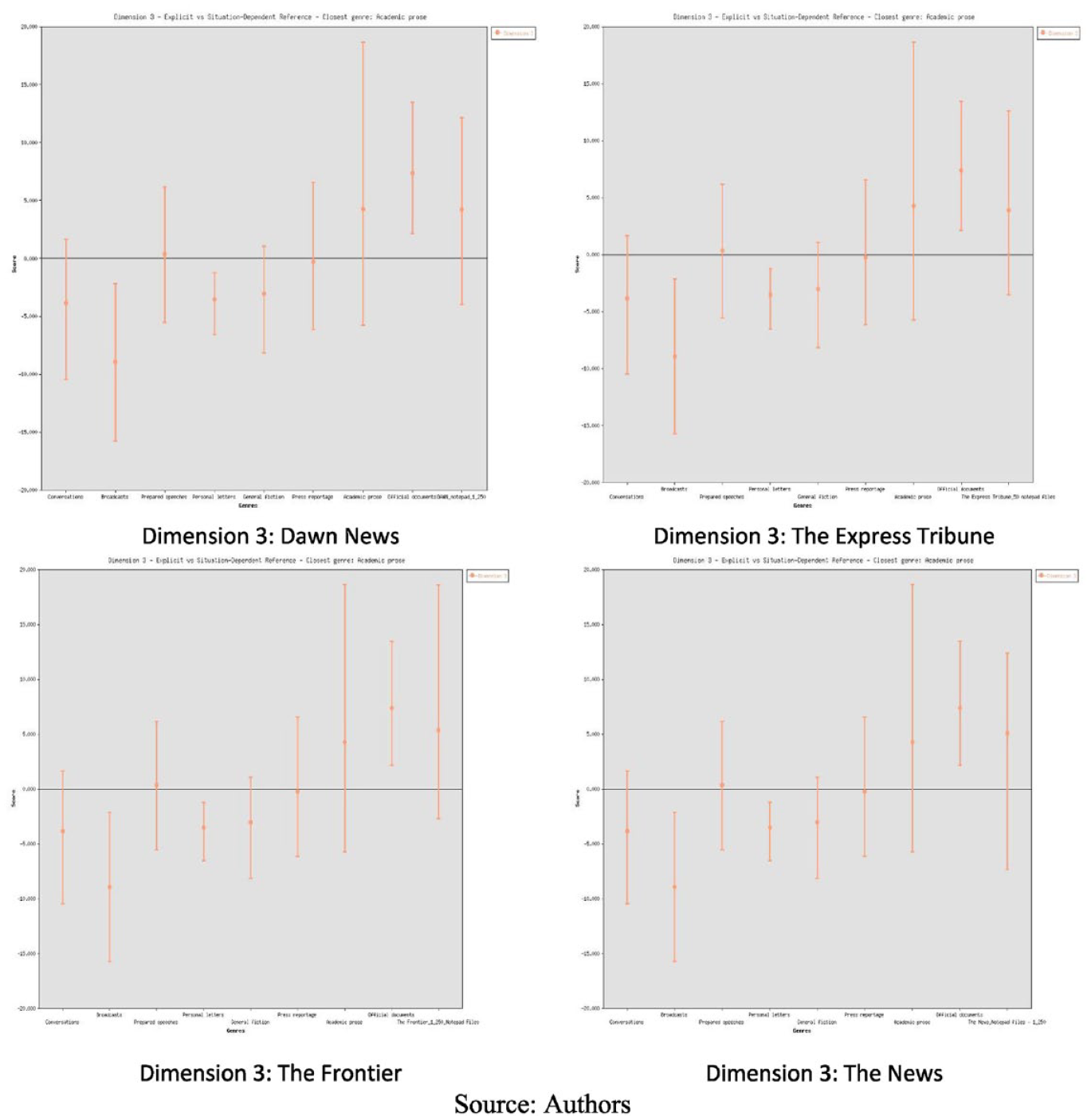
Graphical Representation of Text Types Across Dimension 3
According to dimension 3, explicit versus situation-dependent reference, the editorials of four newspapers show explicit discourse due to the occurrence of interesting features. Editorials of the Frontier have the highest amount of explicit content due to the overuse of PHCs, TSUBs and underuse of RBs. The Dawn and the Express Tribune have explicit content due to the overuse of PHC and TSUB features. The editorials of the News also show explicit discourse due to the overuse of feature, that is, PHCs and underuse of RBs. Thus, editorials from all the four newspapers (according to Cluster Graph 8) relate to the genre of academic prose. Furthermore, PHC is an overused feature in dimension 3. See Excerpt 5, for example.
This has persisted for decades and is only slowly beginning to change, but countries that are willing
Variations in Newspaper Editorials According to Dimension 4
Cluster Graph 9 shows dimension 4 of the four newspapers. The underused feature in dimension 4 is observed to be split auxiliary (SPAU), while the overused feature is observed to be split infinitive (SPIN). These findings classify the closest type “personal letters,” for the Dawn editorials, “general fiction” for the Express Tribune editorials, “prepared speeches” for the Frontier editorials and “academic prose” for the News editorials.
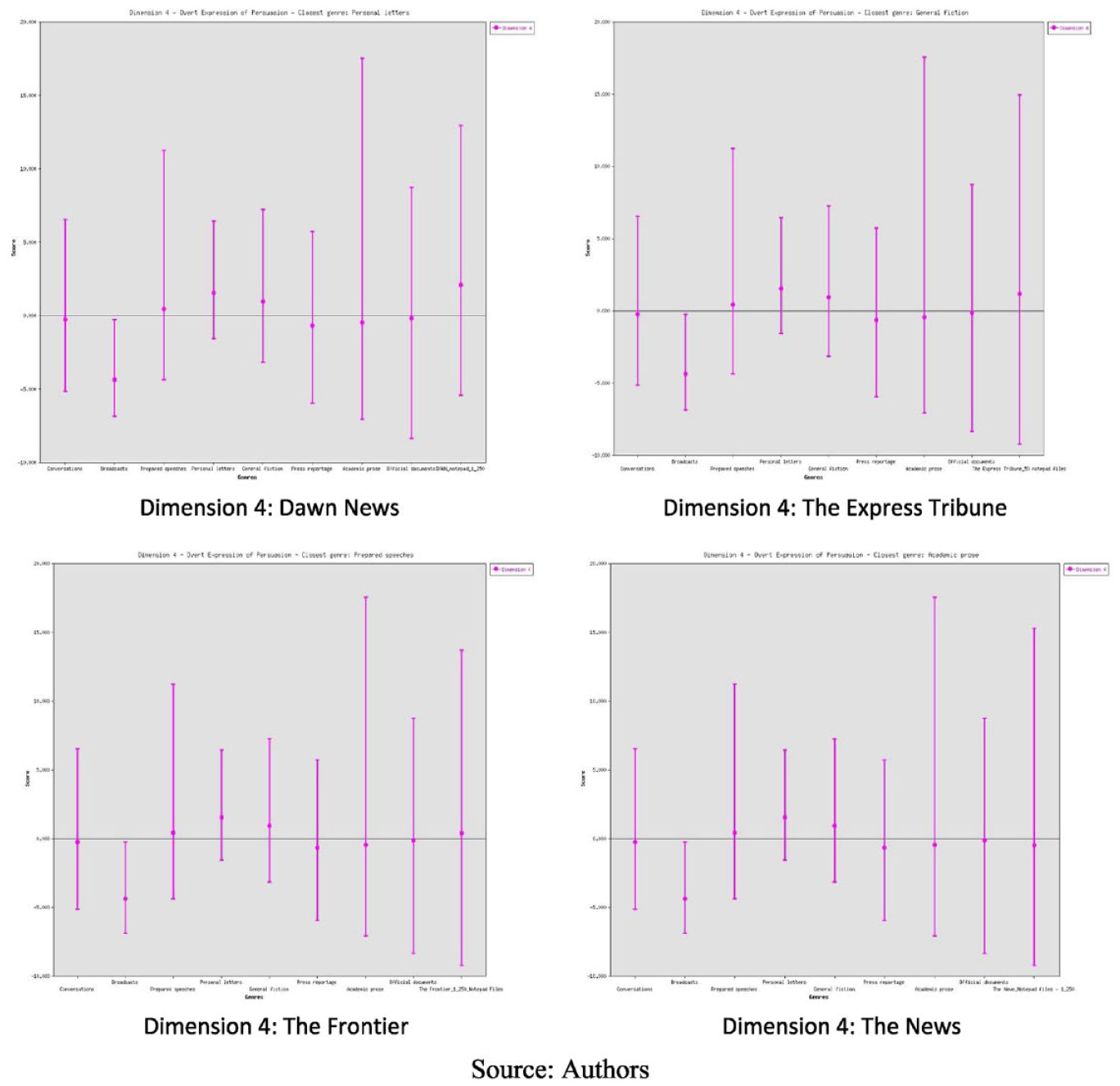
Graphical Representation of Text Types Across Dimension 4
According to dimension 4, overt expression of persuasion, the editorials of four newspapers have been observed to use persuasive discourse. However, there is no considerable occurrence of interesting variables in corpus that can contribute to the variation, that is, the interesting variables are not found in any of the four newspaper editorials except the SPINs and SPAUs. SPINs have been found to be overused, while SPAUs have been found to be underused. Furthermore, the SPINs do not cause variation as these features show ambiguity. Thus, as per findings, editorials from the Dawn relate to the genre of personal letters, editorials from the Express Tribune relate to the genre of general fiction, editorials from the Frontier relate to the genre of prepared speeches and editorials from the News relate to the genre of academic prose. Moreover, SPIN is an overused feature in dimension 4 and it is responsible for creating ambiguity. SPINs (see Excerpt 6, e.g.) are recognized when an infinitive marker is to be followed by one or two adverbs (RB), and a base form of verbs. Similarly, SPAUs are the underused features in dimension 4. SPAUs (see Excerpt 7, e.g.) are found when an auxiliary verb is followed by one or two RB, and a verb base form.
Considering the nature of the job, it is essential to not only provide training to guards at private security firms, but
India plans to introduce a 25 percent tax on sugar exports to maintain local supplies, the government said on Thursday, and a move that
Variations in Newspaper Editorials According to Dimension 5
Cluster Graph 10 shows dimension 5 of the four newspapers, that is, the Dawn, the Express Tribune, the Frontier and the News. The overused feature in dimension 5 is other adverbial subordinators (OSUB), while the underused feature is type–token ratio (TTR). The said cluster graph classifies the Dawn editorials as official document. While the closest type for all other three newspaper editorials is found to be a press reportage genre.
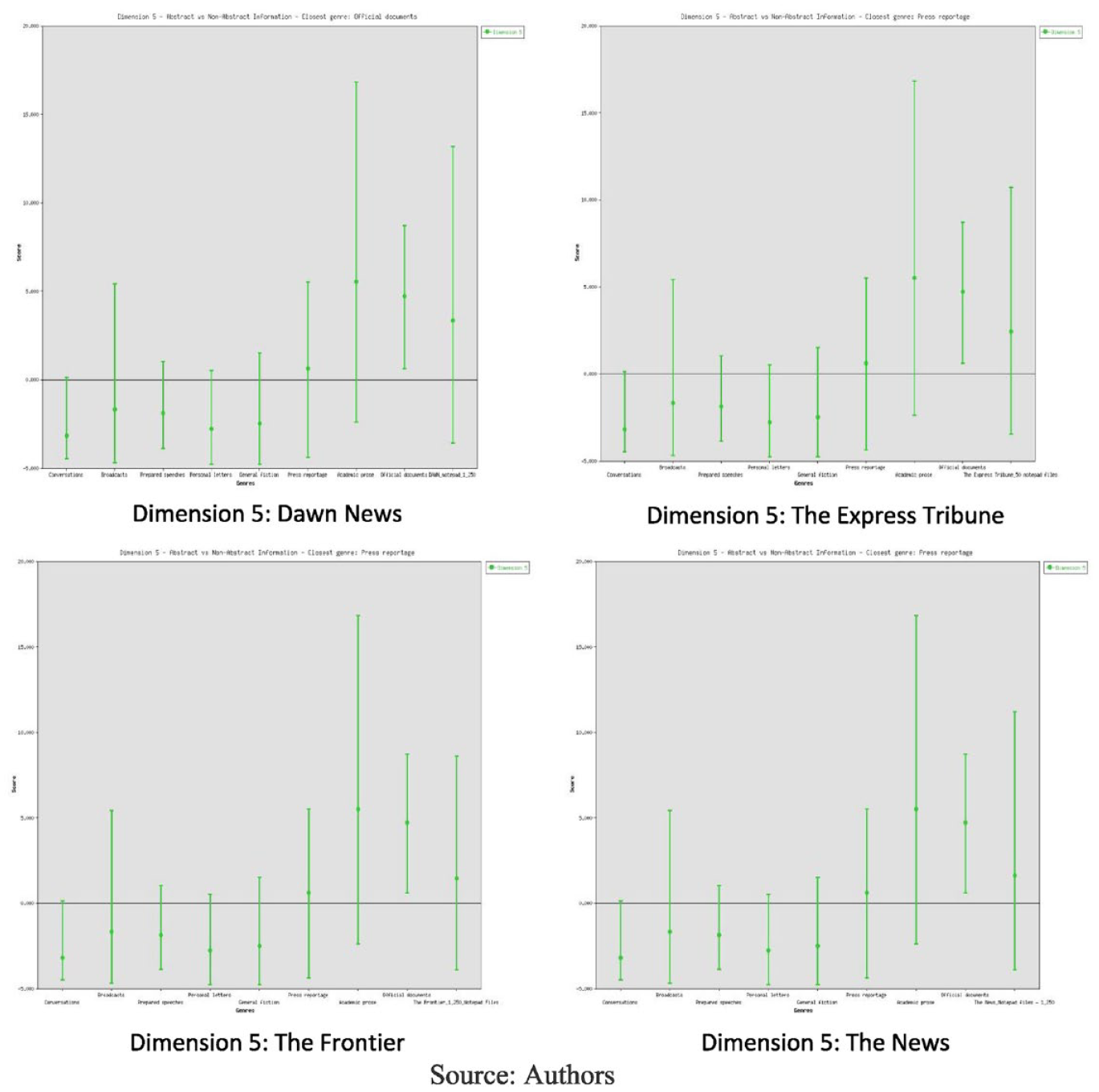
Graphical Representation of Text Types Across Dimension 5
According to dimension 5, that is, abstract versus nonabstract information, content of the editorials of four newspapers is observed to be abstract. Editorials from the Dawn have been found to contain the most abstract content due to the overuse of OSUBs and underuse of TTRs. The other three newspapers also contain abstract content because of the use of the same features. However, the interesting linguistic features are not found in any editorial from all the four newspapers. Therefore, there is no considerable variation. Thus (as per Cluster Graph 10), the editorials from the Dawn have been found to relate to the genre of official documents, while editorials of other three newspapers have been observed to relate to the press reportage. TTR is an underused feature in dimension 5, whereas OSUBs are the overused features in dimension 5 (see Excerpt 8, e.g.). This tag finds these words: since, while, whilst, whereupon, whereas, whereby, such that, so that, such that, as much as, for as much as, insofar as, in so much as, as long as, as soon as.
A corporate lawyer echoed the same claim
Thus, the corpus developed from 1,000 editorials of four Pakistani English newspapers reflects the editorials relating to the genre of: academic prose on dimensions 1 and 3, prepared speeches on dimension 2, general fiction on dimension 4 and press reportage on dimension 5. On the whole, the said corpus belongs to the category of general narrative exposition. These results confirm the existence of variation in Pakistani English language newspaper editorials. These results have alignment with the results of past research (Ahmad & Ali, 2019; S. Ali, 2020; Alvi, 2017; Golan & Lukito, 2015; Huang & Ren, 2020; Ijaz et al., 2021; Izadi & Saghaye-Biria, 2007; Siddique et al., 2022; Westin & Geisler, 2002).
This variation might occur generally because (as Westin & Geisler, 2002 observe) of the reason that the language used in the newspaper largely reflects the language as it is used in a particular society and particularly because of the reason that the editorials reflect “rich sources of writing conventions” that “differ among languages and cultures” due to the use of language- and culture-oriented strategies and devices (Farrokhi & Nazemi, 2015, p. 155), and therefore, “reflect national styles” (Connor, 1996, p. 144). In fact, the members from different discourse communities adopt different ways to organize their thoughts in writing. As a result, their thoughts reflect specific culture-based patterns that are reflected as writing conventions through the use of language. Newspaper editorials (being argumentative and persuasive in nature) reflect the same cultural and linguistic conventions (Farrokhi & Nazemi, 2015). This notion can further be seen in the light of an argument, that is,
People who identify themselves as members of a social group (family, neighborhood, professional or ethnic affiliation, and nation) acquire common ways of viewing the world through their interactions with other members of the same group. These views are reinforced through institutions like the family, the school, the workplace, the church, the government, and other sites of socialization through their lives. Common attitudes, beliefs and values are reflected in the way members of the group use language-for example, what they choose to say or not to say and how they say it. (Kramsch, 2001, p. 6)
Language, in fact, is directly proportional to the linguistic and social environment of the both the writer and the reader (Biber, 1995). In this way, the strategies employed by the newspaper editorial writers from one particular language may not be the same as adopted by the newspaper editorial writers from another language (Farrokhi & Nazemi, 2015; also see Bolgün & Mangla, 2017).
Furthermore, it has been confirmed that the newspaper editorials universally share similar organizational structures (Ansary & Babaii, 2005; Bhatia, 1993; Wornyo, 2022; Zarza & Tan, 2016), but vary in the realization of rhetorical strategies (Wornyo, 2022), which is influenced by the contextual factors among which cultural thought patterns are said to influence the most upon the organization of ideas into writing form (Connor, 2008). It means that the context (in which something is written) is an important factor to influence the text (Wornyo, 2022). So, Pakistani newspaper editorials (being written in different cultural contexts) reflect variation in the use of linguistic features as compared with the newspaper editorials written in different cultures (as discussed in the “Literature Review” section).
This research has implications for the students of communication and media studies, newspaper editorial writers and researchers in the field of journalism particularly in English as foreign language (EFL)/English as a second language (ESL) setting. First, this research has implications for the students of communication and media studies in a sense that they (students) are taught how to write different journalistic genres, for example, editorials, news reports and review articles (Wornyo, 2022). However, the students from EFL/ESL backgrounds are not sufficiently proficient in English language like Anglo-Americans. Therefore, they face language problems in specific discourse contexts. So, the studies analyzing the use of language of specific genres revealing linguistic elements involved in the composition of the said genres prove helpful to the students engaged in the professional training to become expert writers of the said genres (Ansary & Babaii, 2005; Flowerdew & Dudley-Evans, 2002; Wornyo, 2022). Second, this research has implications for the editorial readers with a view that English newspaper writing style involves a system of grammatical, lexical and phraseological means that (the system) is viewed as a different linguistic entity working to inform and instruct the readers (Arakelyan, 2015). In addition, this research is important for the public in way that the agenda setting editorials in editorials (see Le, 2010) sets an important line of research that proves useful to “give the public a syllabus, a list of things to think about” (Newsom & Wollert, 1988, p. 417). Thus, this research is expected to provide the readers of editorials to have a new food for thought about newspaper editorials. Finally, this research has implications for the future researchers in the field of rhetoric with a view that the newspaper editorials are specifically important for contrastive rhetoric (Farrokhi & Nazemi, 2015).
Conclusion
The present study is based on the MDA of four Pakistani English newspaper editorials to identify linguistic variations in accordance with five textual dimensions. The results show linguistic variation in the editorials of four Pakistani English newspapers (the Dawn, the Express Tribune, the Frontier and the News). Dimensions 1, 2 and 3 are responsible for variation, while dimensions 4 and 5 have no interesting features, so that, they are not responsible for variation. On dimension 1, there is variation as the editorials of the News have informational content due to the overuse of nouns. While, the editorials from the Dawn, the Express Tribune and the Frontier contain involved content due to the overuse of sentence relatives. On dimension 2, the editorials show narrative discourse and there is slight variation as the editorials of the News are highly narrative due to the overuse of PUVBs and the editorials of the Frontier are also narrative in nature. However, interesting features are absent in the editorials of the Dawn and the Express Tribune. On dimension 3, there is slight variation as the editorials of the Frontier have the highest amount of explicit content due to the overuse of PHC, TSUB and underuse of RB and the editorials of other three newspapers also show explicit discourse. On dimension 4, the editorials comprise persuasive discourse, the interesting variables are absent in all editorials of the four newspapers except the SPINs that appear to be overused and SPAUs that appear to be underused. On dimension 5, the editorials contain abstract content and the interesting features are absent as the editorials of the Dawn comprise highest abstract content due to the overuse of OSUB and underuse of TTR and the other three newspapers also contain abstract content because of these features. However, there is absence of interesting linguistic features in editorials of all the four newspapers, so that, they have no role in variation. The results also show the nature of editorials of all the four newspapers. Overall, the editorials have been found to have narrative and explicit discourse, with some editorials containing involved, and informational content due to the frequent use of NNs, PUVBs, SEREs and RB.