Abstract
This is part 2 in a two-part article series. This article seeks to expand upon the Inquiry Design Method for Christian Education, IDMCE, by explaining how to implement IDMCE in the Christian education setting. The article also demonstrates how to utilize IDMCE as a template for creating research-based unit designs for curriculum in Christian education by providing an example of a complete unit. In this example, all seven steps of IDMCE are thoroughly explained.
Keywords
Christian education must serve the church in promoting Christlikeness. For Christian education to be effective, it must rely on a curriculum that is based on Scripture and sound doctrine; it must be engaging to students; and it must be based on educational practices, methodology, and instructional strategies that are proven by research. Part 1 of this article offered a plea for curriculum reform in Christian education based on an evaluation of the current church curriculum and valuable findings from neuroscience and educational research. Part 1 introduced the Inquiry Design Method for Christian Education (IDMCE) as a model of curriculum development that focuses on Scripture-based content and student interest while promoting Christ-like transformation. The seven steps of IDMCE were explained and analyzed based on current research. Part 2 will focus on the pragmatic application of IDMCE, including how to design and implement units and lessons that target learner inquiry, understanding, and Christ-like transformation.
IDMCE provides the essential framework for unit design that incorporates the latest findings in neuroscience and educational research. Wlodkowski (2008) states in the motivational framework for culturally responsive learning that students need four things: (1) collaborative learning (accomplished throughout the IDMCE process), (2) relevant learning goals (accomplished in the compelling question, supporting questions, and learning tasks of IDMCE), (3) critical questioning and predicting (accomplished in the learner inquiry phase of IDMCE), and (4) self-assessment (accomplished in the assessment phase of IDMCE). Although each of these components was found to be incomplete or missing in a recent evaluation of current curricula utilized in churches (Wilkerson, 2022), IDMCE provides the necessary structure to emphasize and utilize collaborative learning, relevant learning goals, critical questioning, self-assessment, and other essential research-based practices.
IDMCE Design and Implementation
Part 1 introduced IDMCE as a research-based unit design method, and part 2 will offer a detailed guide for designing and implementing an IDMCE unit. This guide will include a brief overview of each of the seven steps, a discussion on how to design and implement each step successfully, and an example of each step of an IDMCE unit. The example section will focus on a unit designed to meet several learning objectives that build upon each other for an in-depth understanding and application of the biblical account of Hosea.
Unit Example
The following criteria will set the stage for the unit design example in each section. A unit on Hosea will introduce learners to Old Testament hermeneutics as they develop a basic understanding of how to interpret and apply Old Testament stories based on the story level, covenantal level, and canonical level or the metanarrative of Scripture. By viewing certain passages in Hosea through each lens, learners will gain an in-depth understanding of the text. This learning will help students understand that Christians are the redeemed, yet their goal is to continually be transformed into the image of Christ as they strive to resemble the Redeemer. This sample unit will allow learners to explore and apply biblical hermeneutics, make direct connection and application of the concepts explored to understand the value of sanctification and growing in Christlikeness, and be exposed to many of the essential characteristics of Christ-like living.
When a teacher (or course designer) selects learning outcomes for a unit, it is critical that he or she is specific in stating precisely what learners should come to understand and not simply the concept(s) that the teacher will cover. Instead of simply saying, “Learners will understand the story of Hosea,” well-written learning objectives, or student understandings, will be more specific and typically include the word “that” (McTighe & Willis, 2005, p. 135). Although learners will be exposed to the story of Hosea, they should come away with not only an overview of the story but also a deep understanding and application of the concepts presented and conveyed. The learning objectives should present new, challenging, valuable, and enduring concepts. It is critical that the teacher establishes well-written learning objectives that fully describe the expectations for learning before he or she continues the design process. The following learning objectives will guide the formation of the Hosea unit:
Learners will understand that Hosea, as the redeemer, was obedient at the cost of forsaking pride, selfishness, control, reputation, comfort, desire, money, justice, etc. and that he could be characterized as a surrendered servant, obedient, selfless, committed, loving, forgiving, etc. Learners will understand that Gomer, as the redeemed, can be characterized as unworthy, sinful, unlovable, selfish, untrustworthy, etc., yet she is the image of Israel and all of mankind (us) in our sin and separation from God. Learners will understand that Hosea represents God and his relationship with Israel and Jesus in his love and actions toward mankind (us). Learners will understand that we, seeing ourselves as Gomer, should be thankful for God's love, mercy, and justification, but we cannot stay there. Through sanctification, we must be shifting from the characteristics of Gomer, the redeemed, to those of Hosea, the redeemer. We should be growing in Christ-like perspective and actions as we strive to glorify the Lord. Learners will understand that Hosea was able to obediently follow through with a difficult task not simply because of his love and commitment to Gomer but ultimately because of his love and commitment to God. Learners will also be able to consider and apply this concept to areas of their life.
Hook
In IDMCE, the concept of a hook has been modified slightly from the introductory activities currently used in curricula. Introductory activities are typically utilized at the beginning of every lesson to promote student engagement, and they often extend for the first ten to twenty minutes of each lesson. In IDMCE, the hook has been refined to align with recent research. Sousa (2011) reports that students remember most of what happens at the beginning and end of a lesson. Research indicates that the prime time for learning is the first 20 min of class. In light of this research, it is vital to limit the amount of time spent on the hook so that valuable information can be obtained within the first 20 min of class time. Also, one can determine that teachers should only use a hook when necessary to gain students’ attention and motivation, such as at the beginning of a unit, but not necessarily at the beginning of each lesson. In current curricula, an introductory activity is often used too frequently, requires too much time, is uninteresting, or seems disconnected from the learning outcomes.
Designing the hook
In IDMCE, the hook is only used for the first lesson in the unit. The hook introduces the compelling question by linking it to students’ prior knowledge, experience, and interests. The hook is an excellent place to incorporate left-brain connections such as music, videos, images, and activities to pique student interest in the concepts and ideas represented by the compelling question. The hook must be brief and directly linked to student interest, prior knowledge, and the concepts represented in the compelling question. The selection of the activity and material for the hook is largely dependent on the context and makeup of the group.
Implementing the hook
The hook will be the students’ first experience or activity in a new unit, and it should ideally be limited to about ten minutes. The hook may involve students’ watching a video clip, viewing an image, reading a quote or small excerpt, participating in a game or activity, or experiencing other engaging content or activities. The hook activity should include an opportunity for student dialogue and discussion. A hook will only be used during the first lesson in the unit, and it will be followed by the introduction of the compelling question.
Hook example
For the Hosea unit, an engaging hook for learners could involve the concept of an ideal spouse and marriage, which, of course, would be contrasted with what learners will see in the story of Hosea. For example, the teacher would ask learners to mentally create an image to describe their childhood dream of a perfect spouse and marriage. After providing a minute for learners to think about this concept, students will be given a few minutes to share with a partner. By discussing with partners, all learners are held accountable for visible thinking with no opportunity to sit passively. Doing so also grants timid students an opportunity to share in a safe manner, building their confidence so that they may be more willing to share in the whole group setting later. After allowing partners to discuss for 3–5 min, the teacher will ask for a few comments in the whole group setting. Students will share their own thoughts or something interesting that their partners said.
By using this particular hook, the teacher is connecting learners to something they are familiar with, something that can have an emotional connection or reaction, and a concept that leads directly into the unit content. The teacher may offer humorous illustrations of a dream spouse and marriage, such as cartoons, children's books, and children's movies. This process begins to establish a connection to, an interest in, and emotions related to the concepts presented in the Hosea unit.
Compelling Question
After the hook, the teacher will introduce the compelling question for the unit. The IDMCE process utilizes all of the learning outcomes to create a high-interest, all-encompassing, and intellectually rigorous compelling question. The compelling question is introduced in the first lesson and remains the focus of instruction throughout the unit, serving as a learning outcome guide. The compelling question, alongside the learning outcomes, guides the formation of the supporting questions, tasks, and assessments. In IDMCE, the compelling question provides clear and rigorous learning outcomes, links new learning to past and future learning, introduces the learning outcomes to students in an interesting and engaging manner, and ensures that learning outcomes are revisited throughout the unit. The compelling question promotes cognitive challenge and deep learning.
Designing the compelling question
The teacher employs compelling questions to successfully guide students in pursuing answers to questions instead of simply regurgitating information. Hence, the teacher must ensure that the questions are relevant and that the answers to each question contain valuable and applicable information. Learners engage with content that is immediately useful in their life, and it is the teacher's responsibility to make the new content meaningful and applicable to learners (Vella, 2008). When designing a compelling question, one must also consider the content to be explored, essentially asking the question, “What do we want students to understand, know, and do by the end of the unit?” The teacher must consider what he or she wants students to do with the learning, what students must understand for their learning to be transferrable, what questions students will explore, and what knowledge students need to acquire (McTighe & Willis, 2019). Christian educators typically design lessons for one or more of the following aims: content, inspiration, and action (Richards & Bredfeldt, 1998). The compelling question should encompass each of these learning aims in a way that simultaneously promotes student interest and inquiry.
Creating a compelling question is a critical yet challenging task. To design an effective compelling question, the teacher should consider the following steps:
Establish a list of learning outcomes and potential supporting questions for the unit. Brainstorm potential compelling questions that could encompass the learning outcomes and test their accuracy (as described later in the learner inquiry phase). Adjust the compelling question so that it invites questions from students that likely match the learning outcomes and potential supporting questions. Ensure that the compelling question is likely intriguing to students. Test the compelling question for accuracy.
The fifth step (testing for accuracy) can be accomplished by formulating a response to the compelling question that includes responses to the supporting questions. If this response fully incorporates each of the desired learning outcomes for the unit, then the compelling question is accurately stated. If not, then the teacher should continue to adjust the compelling question. (Specific instructions for creating excellent compelling questions can be found in Swan et al., 2018, chap. 2.)
Implementing the compelling question
Ideally, the teacher will introduce the hook to students and then reveal the compelling question. It is important to post the compelling question where it is visible in the classroom so that students can refer to it throughout the unit. The teacher will then utilize the compelling question during the learner inquiry phase.
The compelling question should serve as a tool that introduces the unit concepts, guides the learning process, and aids students in reviewing their learning throughout the unit. Learners will begin each lesson by reflecting on the compelling question, which is a reminder of the initial inquiry and end goal for their understanding and an opportunity to recall what they have learned about the compelling question. According to Bain (2004, p. 38), “The most effective teachers help students keep the larger questions of the course constantly at the forefront.”
Frequently asking students to recall what they have learned about the compelling question as the unit progresses is what the authors of Make it stick refer to as “effortful recall.” This happens in “spaced practice” and requires learners to “‘reload’ or reconstruct the components of the skill or material anew from long-term memory rather than mindlessly repeating them from short-term memory” (Brown et al., 2014, p. 82). Although massed practice loops information through short-term memory with the illusionary feeling of mastery, Brown et al. (2014, p. 83) argue instead for effortful recall or “the effortful process of reconstructing the knowledge that triggers reconsolidation and deeper learning.” Research indicates that 70–90% of learning is forgotten within the 18–24 h following the lesson (Sousa, 2011). Sousa (2011, p. 76.) argues, “This time requirement confirms that the processing and transfer between working memory and long-term storage needs adequate time for the encoding and consolidation of the new information into the storage networks.”
Therefore, the reintroduction of the compelling question for each lesson within the unit builds and solidifies student understanding of the learning objectives because it requires learners to answer by pulling understanding from long-term memory, processing it again, and adding to it as they hear other responses. As learners continue to consider the compelling question by rethinking and discussing different answers, their understanding deepens, and responses become more sophisticated and supported by solid evidence (McTighe & Silver, 2020). As Elmer and Elmer (2020, p. 157) report, “Every time a learner returns to a thought, considers it more carefully, and gains insight, neural networks are stimulated to grow and become stronger.”
Compelling question example
For the Hosea unit, the teacher will first expose students to the hook described earlier. After a brief time of discussion, the teacher will introduce students to the compelling question for the unit: “How does my life resemble the redeemed or the redeemer?” Instead of plainly telling students, “Today we are learning biblical application of the story of Hosea and Gomer” or reading aloud the learning outcomes (doing so will likely cause students to lose interest), the teacher will present students with an introductory hook and a compelling question that sparks interest and curiosity about applying biblical principles to daily life. By using the terms redeemed and redeemer, as opposed to Gomer and Hosea, the teacher allows for the inclusion of the covenantal and canonical concepts where God and Jesus are ultimately seen as the Redeemer and Israel and mankind are seen as the redeemed. This verbiage conceptually provides learners an opportunity to discuss the connection between the canonical concepts, the characteristics exemplified by Gomer and Hosea, and their connection to justification, sanctification, and living an obedient life for God's glory.
Learner Inquiry
After the teacher introduces the hook and the compelling question, it is the perfect opportunity to allow students to intellectually engage in the content and gain ownership of their own learning through the learner inquiry process. The learner inquiry process allows students to think deeply as they inquire about the compelling question. Learner inquiry will be utilized once in the unit, and it falls between the introduction of the compelling question and the introduction of the supporting questions. Although a specific method for using learner inquiry will be presented here, the teacher can somewhat alter this process to best meet the needs of his or her specific group of students based on criteria such as group size, class time available, age of learners, and other factors.
Designing for learner inquiry
The learner inquiry phase has been adapted from the Question Formulation Technique (QFT). According to Right Question Institute (n.d.), the QFT strengthens the skill of asking questions by providing “a structured method for generating and improving questions. It distills sophisticated forms of divergent, convergent, and metacognitive thinking into a deceptively simple, accessible, and reproducible technique.” The learner inquiry process is simple to design, as most of the work is done by the learners as they create questions about the compelling question. The teacher must also utilize the learner inquiry process during the design phase. That is, the teacher should participate in the learner inquiry phase to anticipate the questions that would likely arise about the compelling question. Doing so tests the compelling question for accuracy and effectiveness. The questions that are generated should align with the learning outcomes for the unit, which will become the supporting questions. If the questions generated by the teacher do not represent the learning outcomes or the desired supporting questions for the unit, then the compelling question should be modified. This process should be repeated until the compelling question is interesting to students while also generating questions aligned with the learning outcomes for the unit. The learner inquiry phase is beneficial not only for learners but also for the teacher.
Implementing learner inquiry
After introducing students to the hook and the compelling question, the teacher will give students an opportunity to think deeply and inquire about the compelling question using the learner inquiry process. Learners will be given approximately 5 min to list as many questions as possible about the compelling question. The teacher should remind learners that this is a brainstorming process that has no correct responses and prompt students to use open questions as opposed to closed questions. After each learner has developed a list of questions about the compelling question, the students will gather into small groups of three to four, and each learner will share his or her list of questions. This process will result in a combined list of questions for the group. If questions are similar, then they can be integrated into one question. At this time, each group will select its top two or three questions to submit to the large group. The teacher will collect the top questions from each group, creating a class list of their best questions.
This list of questions will be utilized in the development of the supporting questions for the unit. Although not all questions can make the final list as supporting questions, they may be valuable to the students and the learning process. Therefore, it is recommended that the teacher collect each student's original list of questions to review while planning individual lessons. It is also recommended that the teacher keep a list of the supporting questions posted in the learning environment for the remainder of the unit.
Learner inquiry example
For the Hosea unit, after presenting the hook and the compelling question to learners, the teacher will ask the students to complete the learner inquiry phase. Students will have an opportunity to see, hear, and think about the compelling question “How does my life resemble the redeemed or the redeemer?” For this question, because the learning goals are not suggested in the compelling question, it is important for promoting more aligned learner inquiry questions that the teacher will inform the students that the question is connected to the story of Hosea. Learners will have approximately 5 min to think deeply about this question and generate as many questions as possible. They will record their questions as they work silently. During this time, the teacher will inform students that this is simply a brainstorming activity; therefore, there are no right and wrong—or good and bad—questions.
At the end of 5 min, the teacher will ask students to work in small groups of three to four members. Each group member will take a turn sharing the questions that he or she has generated until all members have shared. Then, the group will select its top two or three questions to share with the large group. Next, each small group will share its top questions with the large group, and then a class list will be generated after like questions have been combined and any necessary modifications to questions have been made.
Supporting Questions
Although the compelling question serves as the overarching concept that sparks and sustains student interest and inquiry as it drives the learning for the unit, supporting questions offer the unit essential structure and guidance to ensure alignment with the original learning outcomes. Without supporting questions that provide a clear objective for lesson goals and tasks, the compelling question can, over time, veer off in many different directions. In such a case, often unintentionally yet almost certainly, the unit will diverge from the original learning outcomes or leave students unaware of how each particular lesson fits into the larger picture. In IDMCE, the teacher not only anticipates the supporting questions before unit implementation but also uniquely crafts supporting questions based on student inquiry and learning outcomes. Each unit will have one compelling question and approximately three to five supporting questions. Each individual lesson will be guided by a compelling question and one supporting question.
Designing the supporting questions
When designing units and lessons, the teacher must plan for supporting questions before he or she introduces the unit to students. Is this possible? How can one plan units and lessons, especially for other teachers to implement, and utilize the learner inquiry process, which allows for student inquiry and direction in creating their own supporting questions?
Designing supporting questions while also allowing for learner inquiry and participation is not only possible but also essential for promoting maximum student engagement and internal motivation for learning. When preparing a unit, the teacher first creates a list of learning objectives to address the content that will be taught. These learning objectives shape the supporting questions for the unit. Although the supporting question step is introduced forth in the IDMCE process, as it will be introduced forth to students, it may be easier to create supporting questions first in the actual design stage. Based on my professional experience as a leader and trainer, many teachers have found it easier to design effective compelling questions after they have established supporting questions. In this method, one would establish or utilize a set of provided learning outcomes and create supporting questions to address the learning outcomes selected. Once the teacher has written supporting questions, he or she can design a compelling question to address all of the supporting questions. The teacher should test the compelling question for reliability by utilizing the learner inquiry process with the compelling question to see whether the supporting questions are likely to arise. If not, then the compelling question should be modified.
The students’ list of supporting questions will not typically match the teacher's planned supporting questions exactly, but they are often similar. For any excellent student questions that are not initially planned for, the teacher can add lesson material and resources to address these as the unit progresses. This can also be the case for units designed for other teachers to deliver, such as packaged curricula. The teacher who delivers the content can create his or her own materials to address student questions that were not addressed through the originally designed supporting questions. To address learning outcomes for the unit that may not appear in the student-selected supporting questions, the teacher can add these materials to the student-generated list of supporting questions. The teacher can accomplish (this) by participating in the learner inquiry phase or when selecting the final supporting questions at the end of the learner inquiry activity.
Implementing the supporting questions
After presenting the hook, compelling question, and learner inquiry process to students, the teacher has accomplished most of the supporting questions phase. By participating in the learner inquiry step and generating a list of top questions about the compelling question, learners have created their own class list of supporting questions. The teacher should combine the class-generated list of questions, any exceptional but overlooked individual student questions that were not included in the class list, and any questions that are essential for meeting the established learning outcomes but were not represented in the student-generated list. The teacher will use this final list of questions to create supporting questions for the unit. Although not all of the student-generated questions will become supporting questions, some of them may be excellent questions to utilize in the individual lessons under the umbrella of a teacher-designed supporting question. The supporting questions will be presented to students and posted in the learning environment throughout the unit. The teacher will present lessons, addressing one supporting question at a time and typically starting with the most basic or prerequisite supporting question.
The teacher will utilize supporting questions to guide the individual lessons, for they provide learning outcomes that drive the selection of sources and tasks for each lesson. The supporting questions also serve as a guide for students because they offer clear learning outcomes for each lesson in direct alignment with the compelling question for the unit. Students can clearly see how the supporting questions fit into the larger picture because they created them as questions about the compelling question. Learners should also be aware that the goal of the lesson is to be able to thoroughly answer the supporting question by the end of the lesson.
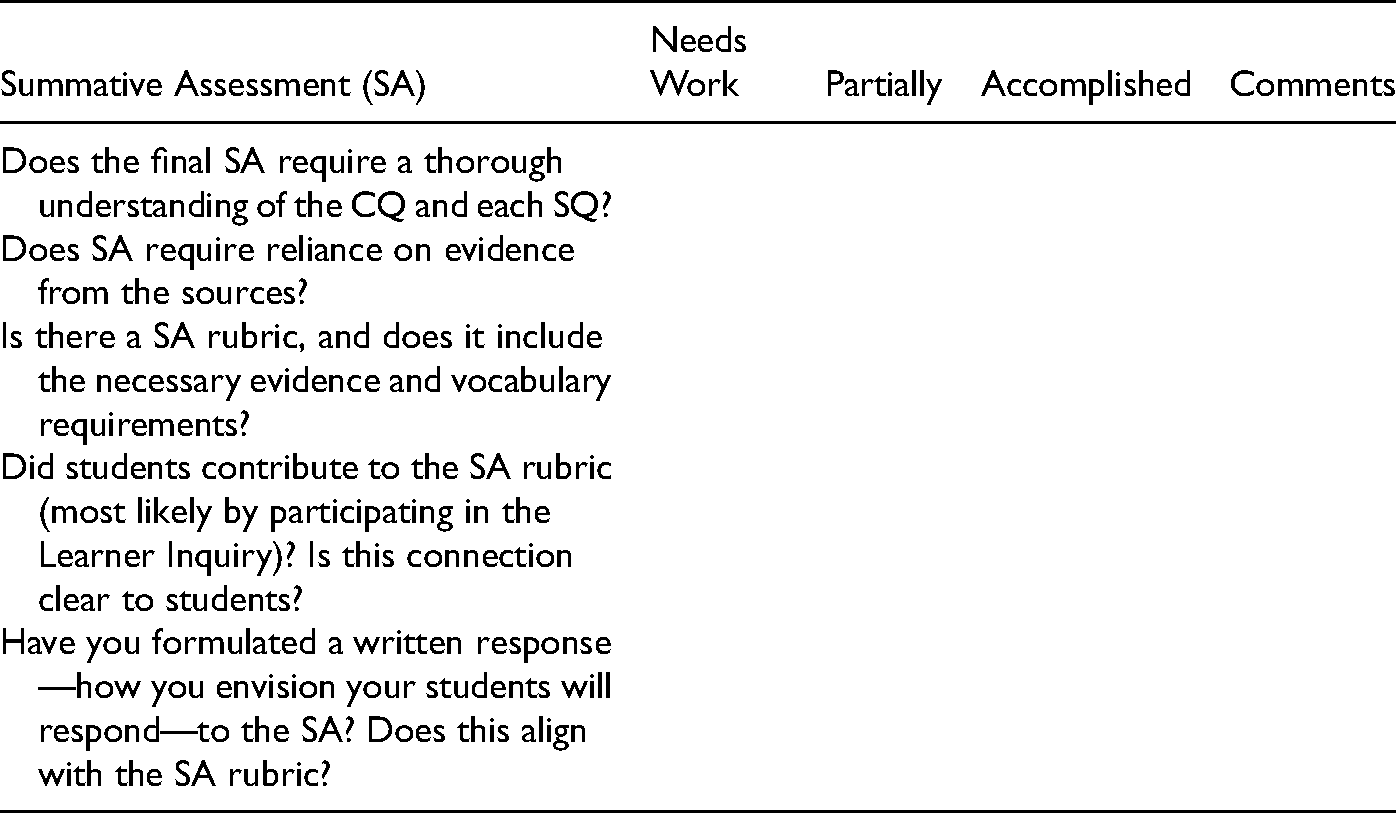
Therefore, supporting questions are not only used as guides for learning but also as assessments of learning at the end of the lesson. By answering the supporting question at the end of each individual lesson, students must process and explain their understanding, which provides the necessary closure for each lesson. Finally, when the teacher prompts students to answer the compelling question as a summative assessment at the end of the unit, the supporting questions serve as a simple rubric to guide students and to aid teachers in the evaluation of student responses.
Supporting questions example
The supporting questions should directly align with the learning outcomes for the unit. For the Hosea unit, the following will serve as the supporting questions for the compelling question “How does my life resemble the redeemed or the redeemer?”:
How can Hosea and Gomer, the redeemer and the redeemed, each be characterized? Who/what does Gomer represent covenantally and canonically? What are the implications of this? Who/what does Hosea represent covenantally and canonically? What are the implications of this? What factor ultimately guided Hosea's actions, and how can we apply this concept daily? How does our understanding of Gomer and Hosea affect our emotions, actions, and Christian walk?
These five supporting questions were designed in direct correlation with the learning outcomes as well as under the umbrella of the compelling question. They are intended to support a thorough student understanding of Gomer and Hosea in order to fully answer the compelling question and make direct application of this learning to students’ own lives. For this unit, the student-generated learner inquiry questions will likely have different wording, and they may not cover all concepts represented in the supporting questions. Students may not have knowledge of the specific language, particularly “covenantally” and “canonically,” yet they may ask similar questions based on their existing knowledge. In this case, it is essential for the teacher to explain to students that some supporting questions have been added or modified slightly to aid the learners in a full understanding of the compelling question. Student-generated questions that do not become supporting questions may be used in the learning tasks or activities. When the unit is over, learners should be able to utilize their understanding of each of these supporting questions in their response to the compelling question.
Learning Tasks
After designing the unit's learning outcomes, hook, compelling question, and supporting questions, the teacher must create individual lessons made up of sources and learning tasks to address each of the supporting questions. Typically, a unit may have anywhere between four and six lessons. Each lesson includes a review of the compelling question, an introduction of the supporting question, the learning tasks, and then a time of closure to answer and discuss final thoughts about the supporting question. The learning tasks make up the bulk of the lesson and require engagement with sources as well as intellectual engagement, dialogue, and collaboration among learners.
Designing learning tasks
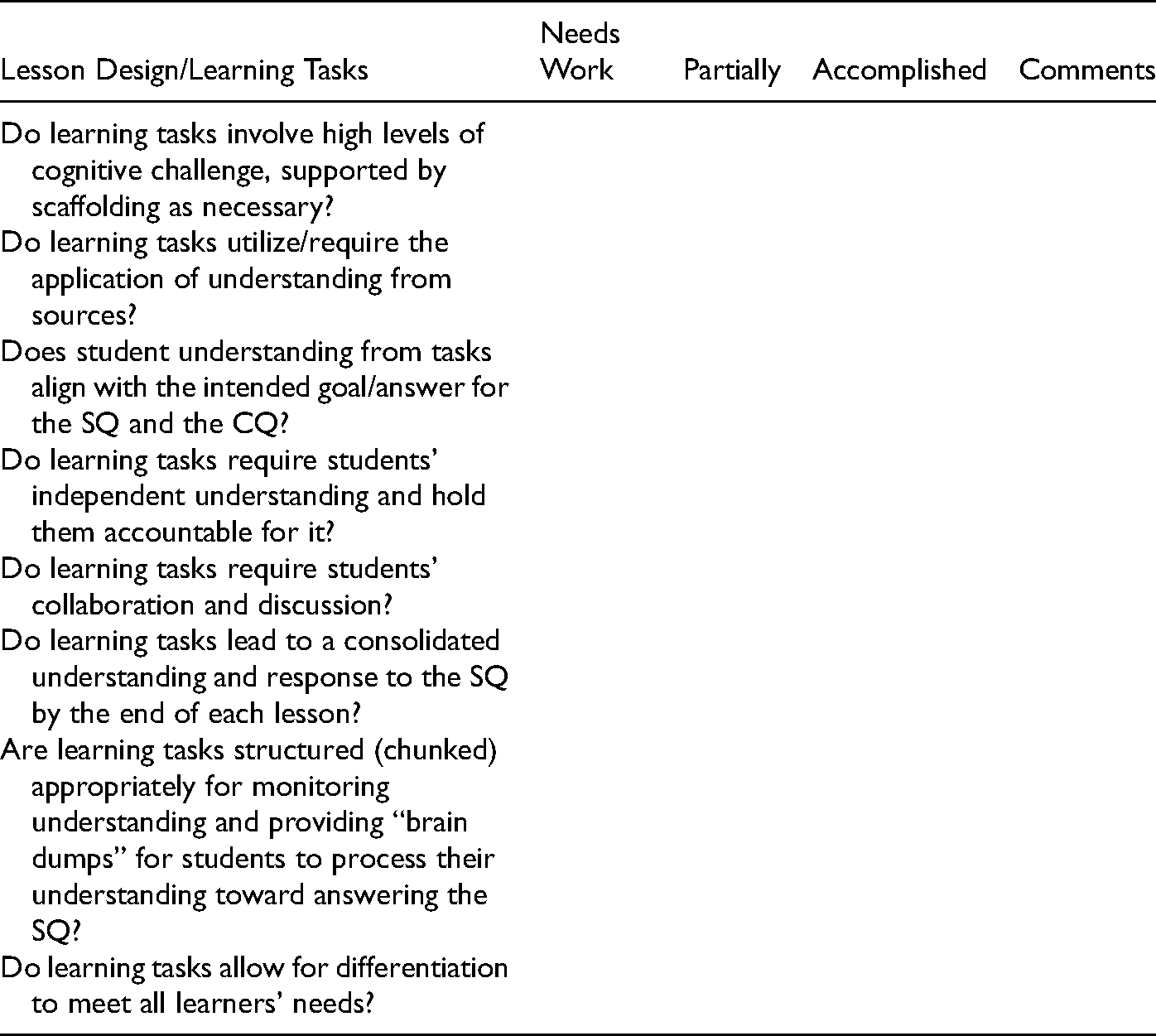
Most of the students’ time will be devoted to the learning task phase. For this step, the teacher should combine Scripture and possibly other sources with thought-provoking questions and tasks that require learners to process the information and build an understanding of the lesson's supporting question. The goal of the learning task phase is to prepare students to thoroughly answer the supporting question, which will provide the understanding that will build throughout the unit to eventually enable them to answer the compelling question. An equally important goal of learning task design is to promote intellectual engagement and visible thinking among all learners.
Schmoker (2018) provides a simplistic yet effective method for designing learning tasks. Students are pre-taught vocabulary that may impede learning, provided a purpose for reading (supporting question), supplied with materials or sources, exposed to open questions or higher-order prompts (learning tasks), shown a model of effective higher-order reading as the teacher reads and “thinks aloud,” given guided practice and independent practice with assessment, provided opportunities for class discussion, and then prompted to provide a written response grounded in the text as a closure activity (assessment utilizing the supporting question). Bain (2004, p. 127) offers clarity on reading assignments, stating, “The best teachers didn't ask students to discuss readings; they provoked and guided them into discussing ideas, issues, or problems that some article or chapter might help them approach. The students read those pieces not merely to complete an assignment but to prepare for their intellectual struggle.” Learning tasks and activities to stimulate higher-order thinking may include but are not limited to students’ utilizing analogies and metaphors to describe new learning; attempting to solve real-life problems; asking questions about new learning; participating in discussions, debates, and role plays; and analyzing content compared with popular media (Sousa, 2011).
Implementing learning tasks
Leaning tasks should require students to read, write, think, and discuss. It is critical that effective instructional strategies are explicitly written into curriculum design requiring learners to engage with Scripture and content through visible thinking, collaboration, and discussion. This requires the inclusion of visible thinking strategies such as partner talk, which requires all students to process questions or tasks and form a response, or Write-Around, where small groups of students respond to a question or concept on a shared poster, respond to each other's comments, and eventually, trade prompts with other groups and respond again. There are numerous strategies for visible thinking that could be implemented, but the main objective is to promote thinking, processing, and building understanding of the learning objectives in a way that holds all students accountable for intellectual engagement. Also, when learner thinking is visible, the teacher can easily assess students’ understanding and modify instruction as needed.
Learning tasks example
A thorough example of a learning task for this unit would require the space of an additional article; therefore, only a brief overview will be offered. After reviewing the compelling question, the teacher will introduce the supporting question for this lesson (“How can Hosea and Gomer, the redeemer and the redeemed, each be characterized?”) and then remind students that they will be answering this question at the end of the lesson.
First, the teacher will ask students to read Hosea 1:1-2 and then explain that Hosea will be known as the redeemer and Gomer is the redeemed. Next, the teacher will ask each student to individually respond to the following prompt: “Thinking back to our first activity where we considered our ideal spouse and marriage, consider the following: What do you notice? Complete sections 1 and 3 in the chart below.”

After each learner has individually listed responses to sections 1 and 3, students may compare their responses with a partner or small group. Then, the teacher will ask for responses, creating a visible class list. Next, learners will be asked to read Hosea 1:3 and respond individually to the following prompt: “What do you notice? Add thoughts to section 2.” Once again, students will respond by writing individually then comparing their responses with a partner or small group, and then a class list will be created. Students will then read Hosea 3:1-3 and respond individually to the following prompt: “What do you notice? Add these additional thoughts to any of the three sections.” These responses are written, discussed with a partner or small group, discussed with the large group, and added to the visible class list.
The teacher will then explain how this straightforward reading, as well as the class's list of characteristics, was an understanding at the story level. Next, the teacher will describe the difference in Old Testament understanding at the story level, covenantal level, and canonical level. It would be best to have this in writing for students to see and keep for future reference.
Lastly, students will individually form a response to the supporting question “How can Hosea and Gomer, the redeemer and the redeemed, each be characterized?” Students will compare responses with a partner or small group and then make changes or additions to improve their own response. The teacher will ask for several responses, allowing students to continue to revise their own response. Students will save this work to be recalled and utilized in the next lesson and for the summative assessment. Students will use the chart as they begin to think about the story covenantally and canonically.
Assessment
Assessment will be implemented throughout IDMCE units. The lesson design phase includes constant formative assessment through questions and learning tasks. By utilizing the compelling question often, posing the supporting question for the lesson as a closure assessment, and occasionally reviewing previously taught supporting questions, the teacher accomplishes the many purposes of assessment. Although the means of assessment can seem simple and repetitive, creativity and student choice are available through the way students show their understanding in response to the compelling and supporting questions. Although all learners receive the same prompt, their responses could be displayed in various modes, including written responses, posters, flow charts, videos, and Flipgrids.
For example, during an IDMCE lesson, the teacher might begin by reviewing the compelling question and introducing the supporting question for that particular lesson. After students have completed the learning tasks included in the lesson, the teacher will offer closure by asking students to respond to the supporting question based on their understanding. This response may come in multiple formats. At this time of closure, the teacher may also ask students to describe how the understanding built in this lesson helps them answer the compelling question for the unit. Students would be held accountable for these responses by displaying their thoughts or communicating their ideas to others.
Designing assessments
By participating in the creation of a list of supporting questions during the learner inquiry phase of IDMCE, students are simultaneously creating a rubric for their response to the compelling question. If students accurately address each of the supporting questions in response to the compelling question using textual evidence, then they have successfully and thoroughly answered the compelling question. Therefore, students are capable of self-assessment as they respond to the compelling question based on their utilization of the supporting question. Students are also capable of self-assessing their learning along with the way. Students should be aware that mastery of learning is proven when they answer the compelling question by addressing the supporting questions. If students are aware of this, then they are more apt to ask for clarification and ensure their understanding of the supporting questions along with the way. In other words, if learners know the expectations for assessment at the end, then they can self-assess their level of understanding throughout the unit.
Implementing assessments
The supporting questions are used as formative assessments for closure at the end of each lesson. When learning tasks have been completed, the teacher will present the supporting question again for closure. This time, students will answer the supporting question using their learning from the learning tasks. Each student should prepare a written or verbal response, which will be shared with a peer or the teacher in some manner. It is critical that the teacher sees or hears several sample responses to the supporting question. If there are any misconceptions or if vital information is not present, then the teacher can ensure appropriate understanding is apprehended and discussed before students leave the classroom. This process will afford students an opportunity to participate in closure whereby they recall and process their learning as well as grant the teacher an opportunity to provide feedback and additional instruction if necessary.
For the final summative assessment at the end of the unit, the teacher will simply ask students to respond to the compelling question. A variety of modes could be utilized, such as written expression, posters, and videos. It is critical that learners utilize the supporting questions as they formulate their responses to the compelling question. The supporting questions serve as a rubric, making students aware of what is expected in their responses. Also, the teacher utilizes the supporting questions as a rubric when he or she reads student responses. If students accurately address each of the supporting questions in their response, then they have also correctly achieved each of the intended learning outcomes.
Since the objective for biblical learning is not simply to acquire knowledge or a certain grade but to learn and apply concepts resulting in Christ-like transformation, it is essential that the teacher utilize assessments differently in IDMCE than in a school setting. In IDMCE, assessments’ do not signal the end of a unit with a grade for each student, as teaching and learning are not considered complete until each student provides an accurate response to the compelling question indicating their achievement of the learning outcomes. Therefore, a grade for each student is not necessary (although this may be required in a Christian school or university setting). Instead, students will share their responses with each other and make modifications to their own responses. Success is not measured by what learners originally accomplish on the assessment but by whether students achieve a thorough understanding of the learning outcomes. Students’ final work on the assessment is not intended to be graded but kept by the student for future reference.
Assessment example
Assessments for the Hosea unit are conceptually simple yet very informative and impactful. After completing each lesson, the teacher will simply ask the supporting question as a recap of student learning. For example, if students are working through the first supporting question (“How can Hosea and Gomer each be characterized?”), then the teacher will introduce the supporting question at the beginning. A typical lesson plan utilizing learning tasks will follow, and then the lesson will conclude with the supporting question in the last 5–10 min. This time, the supporting question “How can Hosea and Gomer each be characterized?” is not presented as a guide for learning but as an opportunity for students to respond. They will use their understanding from the learning activities to thoroughly respond to the supporting question. This is best done through written expression; however, it can be done in a variety of other ways. After forming a response, students will share with a partner, and then several students will be asked to share either their response or their partner's response.
Transformative Application
The final phase of IDMCE must move learners from their knowledge of the compelling question to a mastery of learning exhibited by the application and extension of new learning into Christ-like transformation. Learners must have opportunities to apply and extend their knowledge into other areas of life as well as into new perspectives, behaviors, and habits (Elmer & Elmer, 2020). These opportunities may come through various learning tasks targeting the application of learning.
Designing for transformative application
The transformative application phase could be very simple or elaborate depending on the context, the learning outcomes, and the time allotted. In a simple manner, Sousa (2011) suggests brainstorming to teach for transfer. Brainstorming offers learners an opportunity for powerful reflection and extension. Learners brainstorm ways to apply their new learning to other situations or concepts. After having time to reflect on this mode of application, students can share ideas with partners, in small groups, and ultimately as a large group in order to collect a variety of applications.
Another possible exhibition of the application and extension of learning would be the creation of a personal reflection or prayer involving students’ new Scripture-based understanding. Like praying the Word, the learners’ prayers would offer their understanding of biblical truth as a plea to God to incorporate Scripture-based understanding into their thoughts and lives. Relatedly, the content may also lend itself to students’ creating a plan for implementation or change in behaviors and habits based on a time of personal reflection, integration, and application of learning.
Implementing transformative application
Transformative application is implemented immediately after the summative assessment for the unit. After learners have an opportunity to formulate and modify their response to the compelling question, the teacher will ask them to utilize the transformative application to extend their learning to other concepts and areas of life. Depending on the time and resources available, this task can involve various activities, such as presenting learning to others, taking action in the church or community based on new learning, brainstorming, and praying the Word.
Transformative application example
Although transformative application could extend outward into projects and civil action, the example provided will be very practical and easy to implement. After students have finalized their individual responses to the compelling question, they will utilize this work to create a prayer. The teacher will give learners approximately 10 min to utilize the concepts represented in their final assessment in order to formulate a written prayer. When each student has finished his or her written prayer, the class will collectively read their prayers as one large group prayer. This can be done in a variety of ways to accommodate time and group size. For example, with a very large group, each individual prayer can be kept to a shorter length, or students can get into small groups for prayer instead of the whole group. In some instances, the prayers may be very personal. In this case, students may want to prepare a prayer to be shared as well as a private prayer.
Conclusion
Part 1 of this article recommended a reformation of curriculum design for Christian education based on unit planning, lesson design, and instructional strategies representing the latest findings in neuroscience and educational research. The IDMCE was introduced as a model of curriculum development that promotes Scripture-based content, student interest, and Christ-like transformation. Part 2 focused on the pragmatic design and implementation of IDMCE, serving as a unit design guide. IDMCE utilizes an engaging hook, compelling and supporting questions, learner inquiry, student-centered learning tasks, assessments, and transformative application to provide students an in-depth learning experience targeting authentic engagement and true understanding. By implementing IDMCE, curriculum designers and teachers in the realm of Christian education can ensure that learners are exposed to research-based structures and strategies promoting student motivation, biblical understanding, and Christ-like transformation.
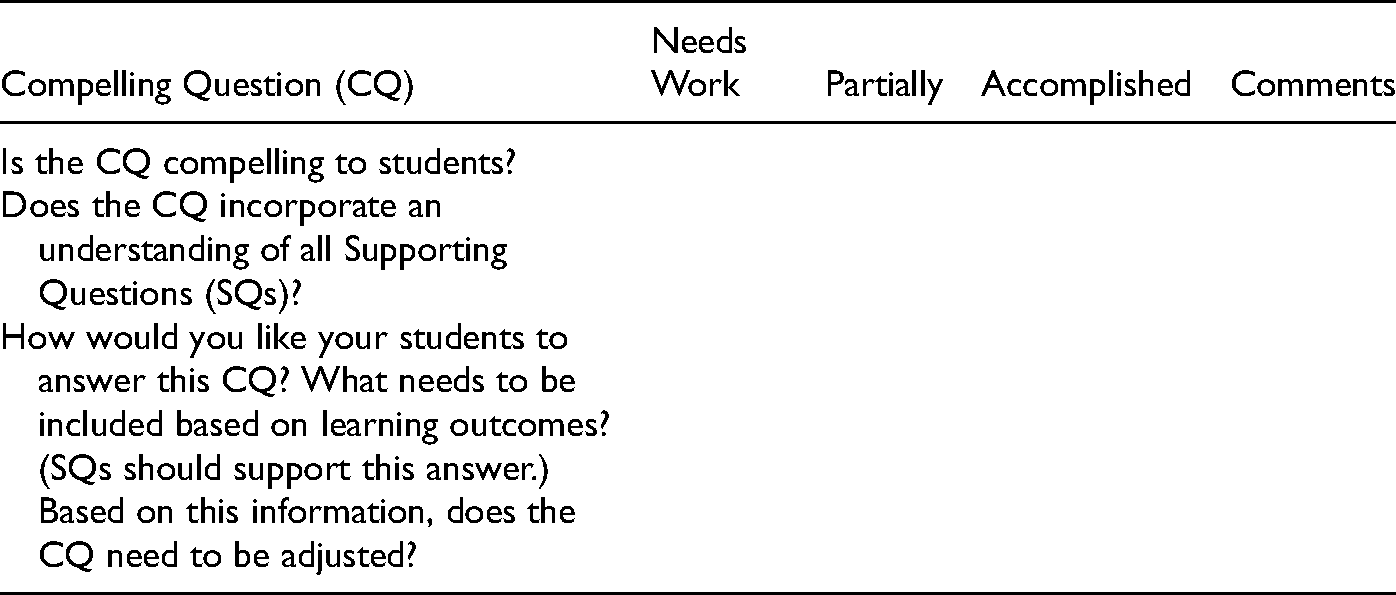
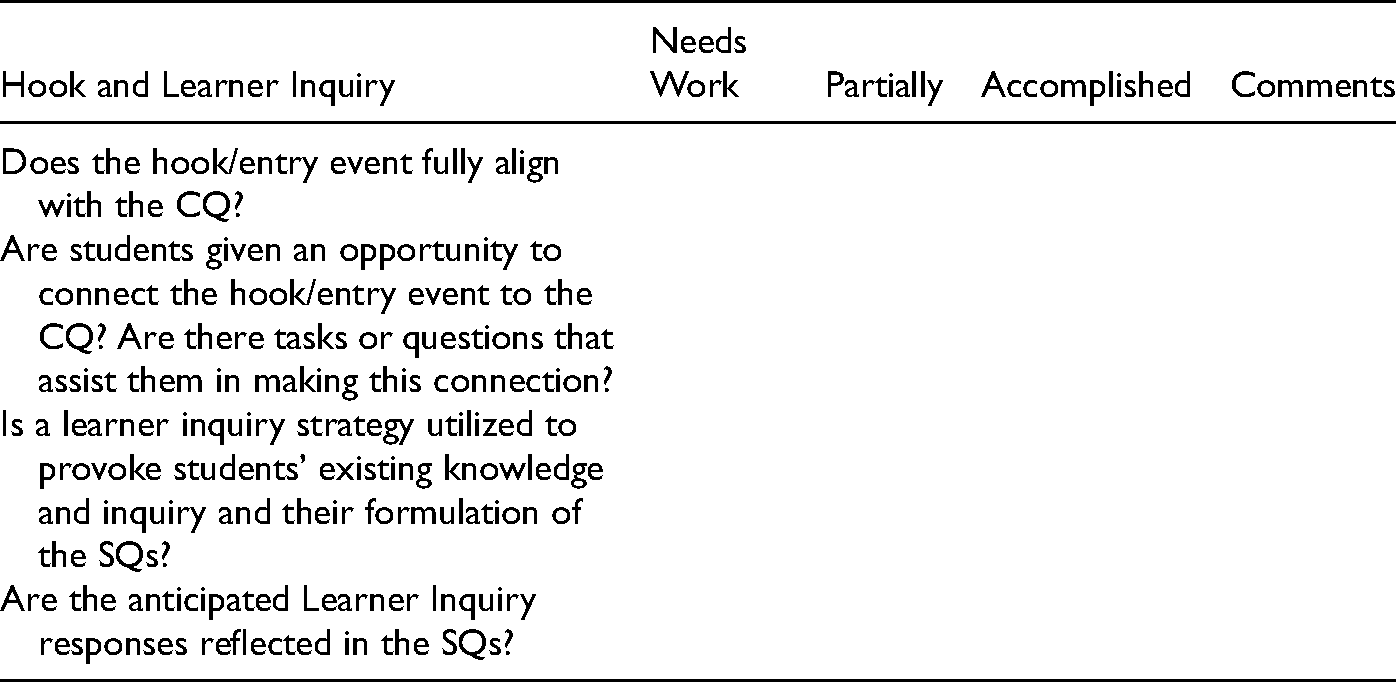
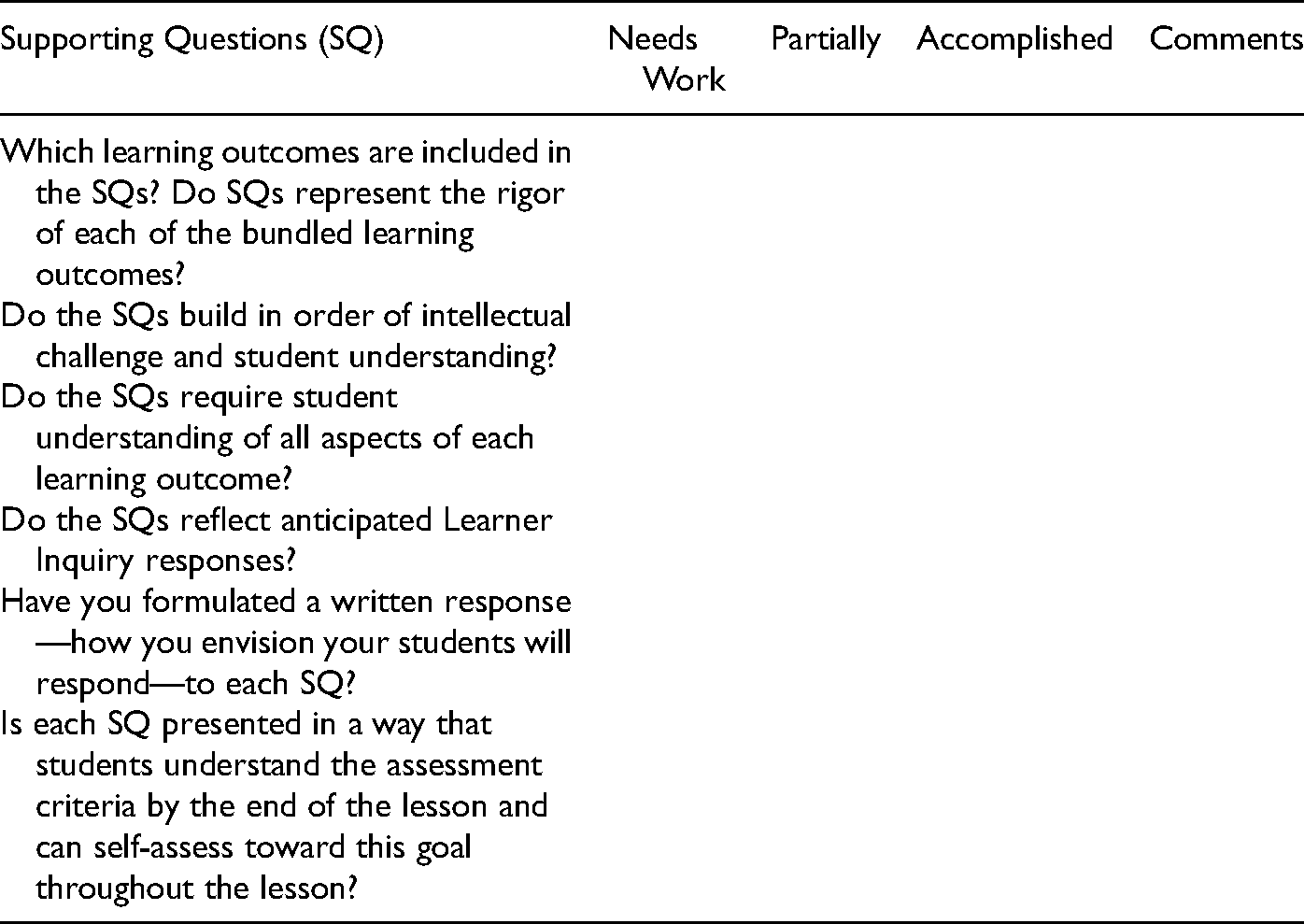
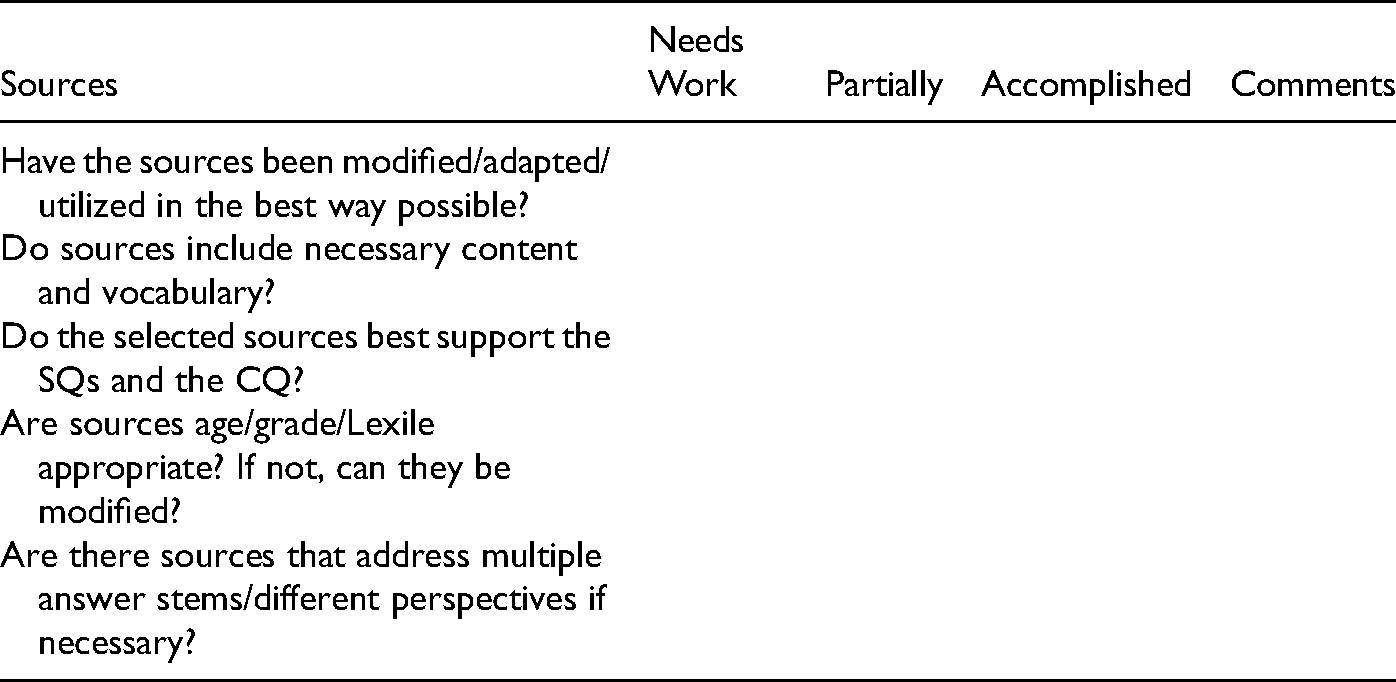
IDMCE unit design checklist