




Abstract
This article investigates the trends and changes in patterns of nonfatal occupational injuries and illnesses among Hispanic workers versus non-Hispanic minority workers in the United States between 1992 and 2009. Injuries and illnesses are also examined by the severity of cases and across industry sectors. The differences in the mean share of nonfatal injury and illness cases found between Hispanic and non-Hispanic minority workers in the top three industries are tested to determine if they are statistically different. The hypothesis that Hispanic workers experience a relatively higher incidence of injuries and illnesses because of the growing share of Hispanics in the U.S. labor force and relatively lower educational attainment level is established through a vector autoregressive (VAR) framework. These findings suggest greater need for safety efforts with Hispanic workers in industries demonstrating high rates of injuries and illnesses, such as education and training that addresses safety behavior, work conditions, and language and cultural barriers.
Keywords
As the Hispanic labor force participation rate rises, there has also been an increase in their nonfatal occupational injuries and illnesses. Nonfatal occupational injuries and illnesses has been defined by the Bureau of Labor Statistics (2011a) as a work-related event or exposure that results in any medical treatment beyond first aid, loss of consciousness, restriction of work, or transfer of job functions. Of the minorities in the United States, Hispanic workers accounted for the largest share of the total nonfatal occupational injuries and illnesses: in 2009, Hispanics comprised 13.1% of the total cases while the African American and Asians (including Pacific Islanders) made up 8.5% and 1.6%, respectively (Bureau of Labor Statistics, 2010b). When analyzing injury and illness cases by their severity, which is measured as number of days away from work, Hispanic cases involved greater number of lost workdays indicating greater severity of injuries and illnesses. Many factors have been attributed to this relatively high incidence and greater severity of injuries and illnesses among Hispanic workers, and they include increased Hispanic population as well as participation in the U.S. labor force, higher percentage of Hispanic immigrants (particularly those that lack legal status) and younger workers, lower Hispanic educational attainment, a lack of fluency with English language skills, and differences in risk preferences or incomes (Joong-Hwan & Shin, 2003; Orrenius & Zavodny, 2009).
The objectives of this study are twofold: first, to analyze and understand trends, changes in patterns and the severity of nonfatal occupational injuries and illnesses involving days away from work among the U.S. Hispanic workers, and compare them to non-Hispanic minority workers in the U.S. private sector for the period covering 1992 to 2009. Additionally, focusing on the three leading industrial sectors with Hispanic injury and illness cases, the significance of the differences in the incidence of injuries and illnesses between the Hispanics and non-Hispanic minority workers will be established. Second, the article will investigate the underlying factors that may be contributing significantly to the surge in cases of Hispanic injuries and illnesses.
Rising cases of injuries and illnesses among the Hispanic workers nationally is a pressing public policy concern given the growing share of Hispanic workers in the U.S. labor force. Yet, much of the existing research on Hispanic injuries, such as Orrenious and Zavodny (2009), Goodrum and Dai (2005), and Farooqui, Ahmed, and Saleem, (2007), have limited their investigations only to fatal and nonfatal injuries of Hispanics in construction and agricultural industries, two of the leading industrial sectors with high incidence of Hispanic injuries. Yet, a greater understanding of the incidence of injuries and illnesses among the Hispanic workers in general, and factors that may be driving its growth is important given the direct implications on governmental and industry policy to help improve health and safety of this growing segment of the U.S. workforce. Although occupational injuries and illnesses affect the workers, they also impose significant burdens on the families of those workers, employers, the community, and the economy. For example, workers who lose more than a week of work or have permanent disabilities may incur an average of well more than US$10,000 in lost earnings, and this is only a fraction of the workers’ total losses, which includes medical and non-pecuniary costs (Boden, Biddle, & Spieler, 2001; Reville, Boden, Biddle, & Mardesich, 2001a; Reville, Polich, Seabury, & Giddens, 2001b). The National Safety Council (2010) reported that the average direct cost of a work-related injury or illness is roughly US$48,000 per case.
Therefore, this study provides a brief analysis of occupational injury and illness cases among U.S. Hispanic and non-Hispanic workers and a review of the underlying factors for differences between Hispanics and non-Hispanic minorities. In addition, the methodology utilized to test for the differences between the Hispanics and non-Hispanic minority workers as well as the model employed in the study are outlined. Last, the results are presented followed by the implications of the findings and recommendations for researchers and employers.
Review of Nonfatal Occupational Injury and Illness Cases
Trends Analysis
In 2009, the number of nonfatal occupational injuries and illnesses involving days away from work in the U.S. private sector amounted to 964,990 cases, which represents 1.9 cases per 100 full-time workers in the private sector. The majority (close to 95%) of these cases were injuries with the remainder being categorized as workplace illnesses (Bureau of Labor Statistics, 2010a). As shown in Table 1, the total number of cases has steadily declined since 1992, and this general downward trend may be explained in part by better and greater information and improved safety measures (such as warnings of hazardous materials and signs indicating wet floors) and technology in workplace (Ussif, 2004). The drop in cases was most significant between 2008 and 2009, which is attributed to a general decline in total U.S. employment, and hours worked, particularly in the construction and manufacturing industry sectors (Bureau of Labor Statistics, 2010b). Nonetheless, the share of minorities in the total U.S. nonfatal injuries and illness cases has been rising steadily. Based on the Bureau of Labor Statistics data (Bureau of Labor Statistics, 2010b), between 1992 and 2009, the percentage share of the minorities in the total number of cases increased from 18% to close to 23%, respectively.
Nonfatal Injuries Involving Days Away From Work for U.S. Private Sector (in ‘000s) a
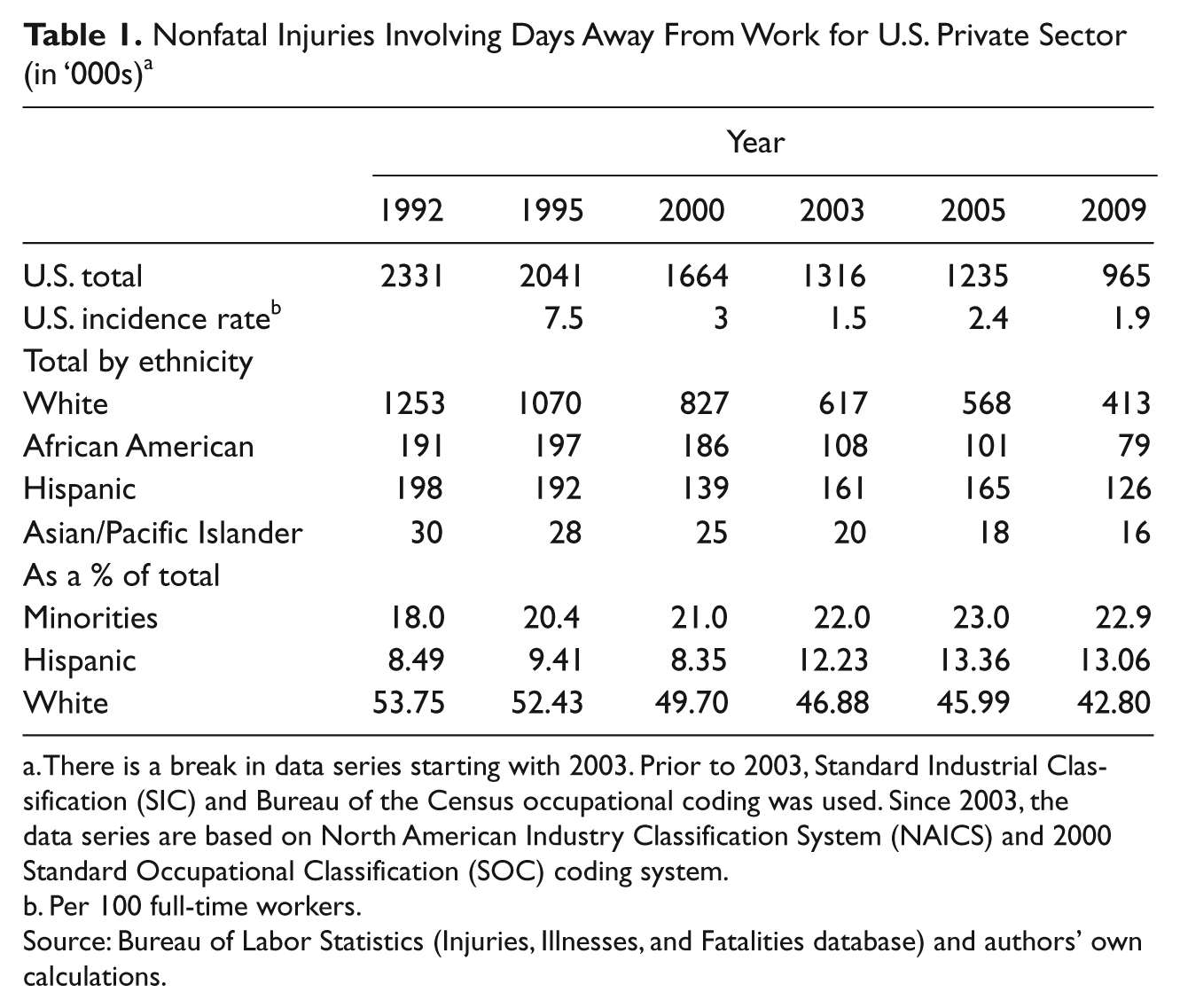
There is a break in data series starting with 2003. Prior to 2003, Standard Industrial Classification (SIC) and Bureau of the Census occupational coding was used. Since 2003, the data series are based on North American Industry Classification System (NAICS) and 2000 Standard Occupational Classification (SOC) coding system.
Per 100 full-time workers.
Source: Bureau of Labor Statistics (Injuries, Illnesses, and Fatalities database) and authors’ own calculations.
The rise in Hispanic injuries and illness cases was primarily behind this; Hispanics have surpassed other minority groups in their share of the nonfatal cases, rising steadily from 8.5% in 1992 to 13.1% by 2009. Hispanics accounted for more than half of the minority cases by 2009. Meanwhile, the shares of other minorities, namely African Americans and the Asians and Pacific Islanders, have stayed relatively steady throughout the study period whereas the percentage share of White worker cases has been on the decline from the highest share of 55.5% in 1993 to 42.8% by 2009. These data are further confirmed when injury and illness cases for each ethnic group is expressed as a percentage of each group’s employed workforce; Hispanics continue to demonstrate the highest percentage share, followed by African Americans, Whites, and Asians and Pacific Islanders. Between 1995 and 2006, Hispanic share of injuries and illnesses in the U.S. total cases exceeded the share of employed Hispanic workers in the U.S. labor force. Taking the average for the entire period of the study, the percentage share of the former was 11.4% compared with 11.2% for the latter.
In looking at the breakdown by industrial sectors, Table 2 illustrates that as with other minority groups, over half of the Hispanic injury cases occurred in service-providing industries. More specifically, between 2003 and 2009, this industrial group accounted for 57.4% of the Hispanic cases on average with other minority groups registering well over twothirds of their total cases. Injuries in three industrial subsectors, namely trade, transportation and utilities, professional and business services, and leisure and hospitality, made up most of these cases. In the latter two subindustry groups, Hispanic share had been rising slightly over the years. The goods-producing industries accounted for the remaining 42.6% of the Hispanic injuries and illness cases; this share is significantly higher than the share of African American, and Asian and Pacific Islander injury and illness cases. In ranking the industries on the basis of their 2003 to 2009 average share of Hispanic injuries and illnesses, the top six industries are as follows: trade, transportation and utilities (21%); manufacturing (19%); construction (17%); leisure and hospitality (10%); professional and business services (10%), and education and health services (9%). There has been little or no change in this ranking on a yearly basis since 2003. Injuries and illnesses in wholesale and retail sectors account for most of the cases in the trade, transportation and utilities industrial group. In leisure and hospitality industrial group, cases largely accumulated in the accommodation and food services sectors. Health care and social services accounted for most cases under the educational and health care industry.
Analysis by Major Industrial Sectors a
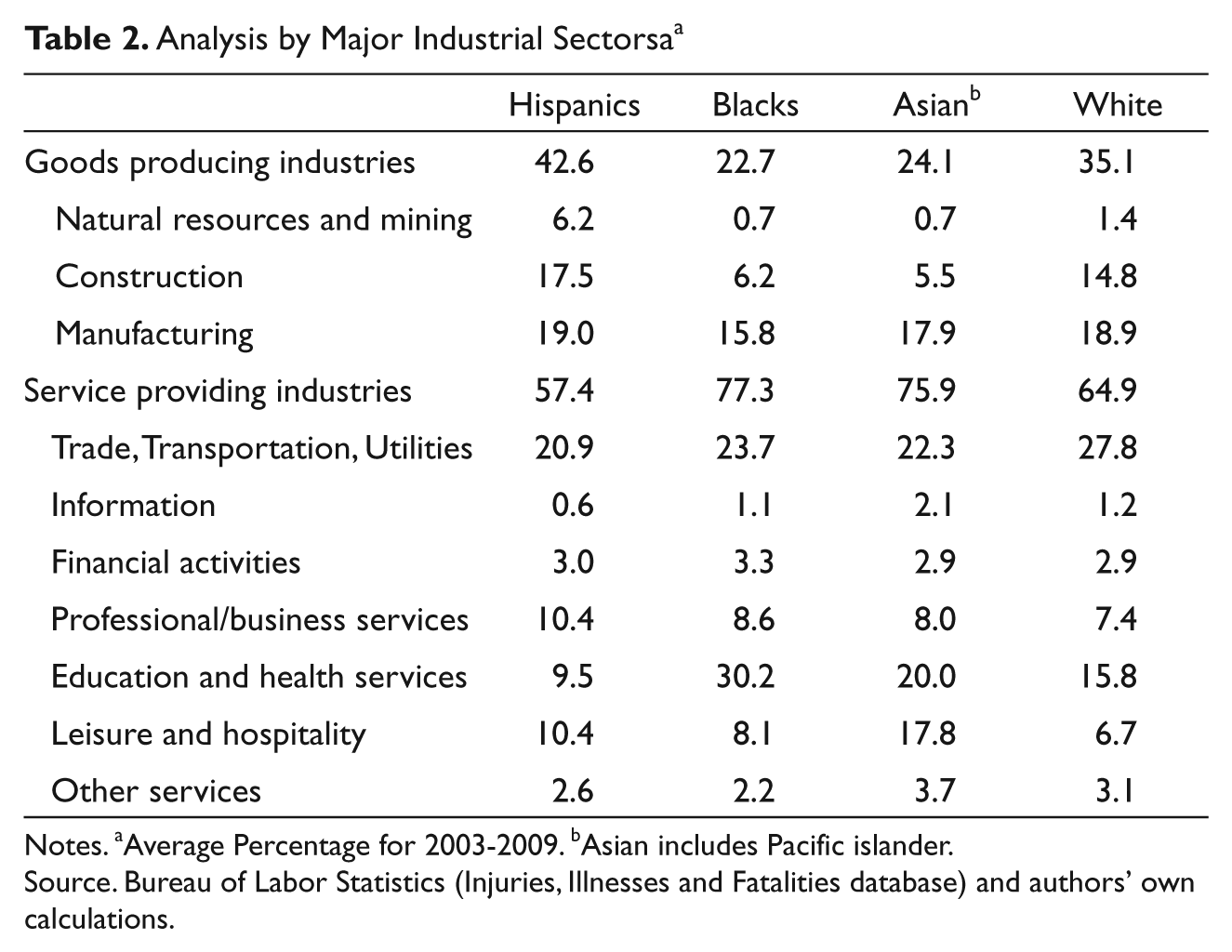
Notes. aAverage Percentage for 2003 to 2009. bAsian includes Pacific Islander.
Source: Bureau of Labor Statistics (Injuries, Illnesses and Fatalities database) and authors’ own calculations.
The severity of an injury and illness pertains to days an individual is unable to work, or engages in restricted work tasks, or experiences a transfer of job functions, or both (Bureau of Labor Statistics, 2011a). In analyzing the average share of injuries and illnesses by severity of cases between 2003 and 2008, Hispanics experienced the highest percentage of cases (22.5%) involving 31 or more days away from work, followed closely by the African Americans.
Determinants
Foremost among factors attributed to the large incidence of injuries and illnesses among Hispanic workers are the increased Hispanic population and their entry in the U.S. labor force. According to the U.S. Census Bureau, U.S. Hispanic population jumped 99.2% between 1992 and 2009 to 48.4 million compared with a gain of 35.5% for the combined African American and Asian populations and 20.1% for the overall population. Of the total U.S. population of 307 million in 2009, more than a third currently belongs to a minority group and Hispanics alone made up 15.8%. The share of Hispanics that has surpassed the African American population share in 2001 continues to rise. According to the 2007 American Community Survey (ACS), one out of every six U.S. residents will be of Hispanic origin by 2014. The impressive Hispanic population growth is the result of relatively high birth rates and immigration since 1965. Hispanic women in general have more children and have them at a younger age than their counterparts. The fertility rate among Hispanic immigrants is even higher: as pointed out by the Pew Hispanic Center (2009), their annual birthrates are 50% higher than those of their native-born peers. This may be because immigrants face a better quality of life as well as greater optimism about their future in the United States.
Greater diversity in the U.S. population is also reflected in the labor force. Overall in the U.S., an increase in the labor force has stemmed largely from a rise in foreign-born workers through increased immigration in the 1980s and 1990s. Over the two decades between 1988 and 2008, the U.S. labor force increased 26.8%, from 121.7 million to 154.3 million. Almost half of this increase came from growth in the Hispanic labor force, which made up 14.3% of the U.S. civilian labor force by 2008.
Other than the increased Hispanic population and labor force participation, other factors behind the higher incidence of injuries and illness cases among Hispanics include a larger share of younger workers in the Hispanic workforce, language barriers, and low educational levels. As a group, Hispanic workers are likely to be foreign born and younger than other minority groups in the U.S. In 2007, 40% of the U.S. Hispanic population of 45.4 million was foreign born, compared with 8% for the non-Hispanic population (Grieco, 2010). Based on the Current Population Survey 2011 data (Bureau of Labor Statistics, 2011c), younger Hispanics (defined as those aged 16 to 24 years), who make up 22% of the Hispanic population, accounted for 17% of its labor force, which is significantly higher than the 14% share for the same age group in the U.S total labor force. Additionally, the rate of nonfatal injuries is generally higher among younger workers; according to the Centers for Disease Control of the U.S. Department of Health and Human Services (2010), between 1998 and 2007, the average nonfatal injury rate was 5.0 U.S. hospital emergency department-treated injury cases per 100 full-time equivalent workers, twice the rate reported for older workers (25 years and older). This is attributed to younger employees being less likely to recognize work hazards or communicate safety issues as well as having less awareness of their legal rights. Combined with other factors such as limited English language proficiency and a lack of legal status, younger Hispanic workers are less likely to report injuries or seek hospital care for less severe nonfatal injuries. Reflecting this, the rate of workplace injuries among Hispanic teenagers is estimated to be 60% higher than the rate for White teenagers (Science Daily, 2007).
The language barrier has been cited as another possible cause for higher injury rates among Hispanic workers. Hakimzadeh and Cohn (2007) reported that fewer than one-in-four (23%) Hispanic immigrants are able to speak or read English well, with this rate varying among different Hispanic groups. For example, South Americans are likely to claim higher proficiency in English than Central American, particularly Mexicans. As reported by the Center for Construction Research and Training (2009), 62% of Hispanic immigrant construction workers reported that they did not speak English well or did not speak English at all. According to the National Institute for Occupational Safety and Health and the Bureau of Labor Statistics, workers with limited English proficiency have less access to health care, are exposed to more barriers related to health services, are less likely to adopt preventative health services, and receive less safety training, which results in these workers experiencing greater disability, and added social and economic burdens from their injuries and illnesses (Bonauto, 2010).
Furthermore, compared with other ethnic groups in the United States, Hispanics had the lowest educational attainment. By 2009, only 61.9% of the Hispanic population of 25 years old and older completed high school or higher compared with 86.7 % for the average for the United States for the same age group. Relatively low educational attainment among Hispanics may be explained in part by increased immigration of Hispanics with low educational levels, which is creating a growing gap between the foreign-born and U.S.-born Hispanics. For example, according to the Maine Center for Economic Policy (2009), in 2003, 40% of U.S.-born Hispanics obtained an associate’s degree versus 22% for the foreign-born Hispanics. Strong and Zimmerman (2005) pointed out that low educational attainment among other factors has resulted in higher Hispanic employment in more hazardous occupations.
In conclusion, given that 76% of the U.S. Hispanic population over the age of 5 speaks Spanish at home, with a little more than half unable to read and/or write in English, and given that almost 40% of Hispanics have not completed high school (U.S. Census Bureau, 2011), greater attention should be given to examining injuries and illnesses of Hispanic workers in the United States. Given the costs of workers’ compensation insurance, the direct costs of an injury or illness, and the social burden injuries and illnesses place on the workers, families, communities and the economy, the implementation of behavioral safety processes in corporations is warranted. Applying a behavioral safety process to reduce occupational injuries and illnesses has great financial benefits. As pointed out by the American Society of Safety Engineers (LoPinto, 2004), the introduction of safety processes in the workplace is necessary as the cost of preventing workplace injuries and illnesses is less than addressing and correcting them after the fact. Corporations that invest in such safety measures often realize greater financial return, lower workers’ compensation costs, lower turnover rates, lower absenteeism, higher productivity levels and increased employee morale as well as positive brand image.
Method and Data
This study employed data on workplace-related nonfatal injuries and illnesses involving days away from work for the U.S. private sector. The annual data was obtained from the Workplace Injuries and Illnesses database of the Bureau of Labor Statistics. The period of the study examined was 1992 to 2009. Analysis of data prior to 1992 was not possible since coding of ethnic groups became available only in 1992. In conducting the analysis, this research employed percentage shares instead of absolute number of cases of injuries and illnesses, which was due to a change in the classification of the data series in 2003, thus making post-2003 data incompatible with pre-2003 data. In 2003, BLS replaced the Standard Industrial Classification (SIC) system with the North American Industry Classification System (NAICS).
Data analysis consisted of estimating and comparing the mean percentage share of nonfatal occupational injuries and illnesses among Hispanics versus non-Hispanic minorities for both the total number of cases and the number of cases based on the three leading industries. In looking at the top three industrial sectors, our goal was to determine if the same conclusions would remain after controlling for industry sectors and their differences. The percentage test shares were used to test for a statistically significant difference in the mean percentage values between Hispanics and non-Hispanic minorities. Due to the small size of the data (less than 30 observations), a t-test was employed to examine the difference between the mean values. The findings of this test were used to help determine whether the difference found between the two mean values was significant enough to conclude that Hispanic workers are injured at a greater rate than non-Hispanic minority workers.
To analyze the relative importance of the determinants of Hispanic injuries and illnesses in the United States, the following model was employed:

Where:
Hinjpop refers to Hispanic injuries and illness cases as the percentage of U.S. Hispanic population;
Hemp refers to Hispanics as the percentage of U.S. total employed workers;
Hedu refers to share of Hispanics (25 years and older) who completed high school and higher to serve as a proxy for the U.S. Hispanic educational attainment level.
The study uses the annual time series data covering the period 1992 to 2009. Data for employment for both the overall U.S. labor force and Hispanics were obtained from the Bureau of Labor Statistics. Hispanic educational attainment data came from the U.S. Census Bureau and consisted of the percentage of Hispanics who completed high school and higher.
The model expressed by equation (1) is employed to test the hypothesis that the share of Hispanic injuries and illnesses is likely to rise with the increase in the Hispanic share of U.S. employed workers while it is anticipated to fall as Hispanic educational attainment level rises. It is expected that as Hispanic educational level rises, Hispanics will likely move into supervisory- or management-level job positions, in addition to becoming more knowledgeable about safety practices as their education level and language proficiency increases. Although limited English proficiency (LEF) among Hispanics is recognized to be an important determinant of injuries, annual data on levels of English proficiency among ethnic groups in the United States. (collected by the American Community Surveys of the U.S. Census Bureau) is only available from the year 2000. Because of this limited availability of time-series language data, English proficiency variable is not included as a determinant of the model.
The analysis of the model begins with an examination of the unit root properties of the three time-series data series (namely log of hinjpop, log of hemp, log of hedu) using the Augmented Dickey-Fuller and Phillip and Perron stationarity tests. If the data series are found to be nonstationary in level form, a cointegration test follows, using the Johansen maximum likelihood procedure. This test determines whether the linear combination of the nonstationary time series data have an inherent tendency to move together in the long run. Before testing for cointegration, the appropriate lag length of one period was selected on the basis of Akaike and Schwarz information criterion. If cointegration is found among the variables, a vector error correction model (VECM) will be constructed to investigate the dynamic interactions among the variables. In the absence of cointegration, a standard VAR model is employed using the first differences of the nonstationary variables.
Results
Table 3 shows the mean percentage share of injuries and illnesses data for all the U.S. industries as well as the three leading industries (namely, trade, transportation, and utilities industry, construction industry, and manufacturing industry), which are ranked on the basis of the highest average share of Hispanic cases for 1992 to 2009.
Share of Nonfatal Injuries and Illnesses Among Hispanics Versus Other Minorities
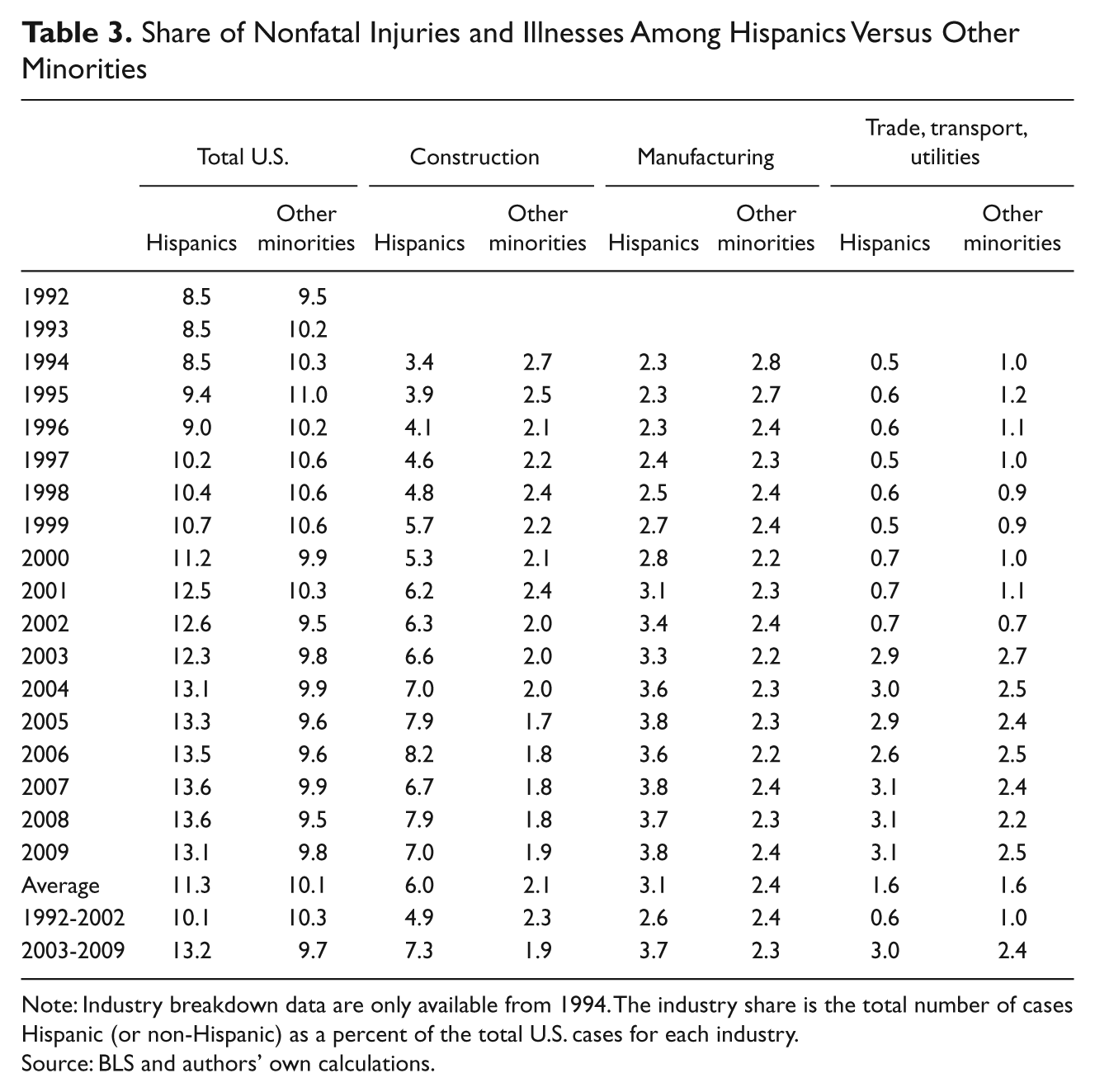
Note: Industry breakdown data are only available from 1994. The industry share is the total number of cases Hispanic (or non-Hispanic) as a percent of the total U.S. cases for each industry.
Source: BLS and authors’ own calculations.
The data reveals that Hispanics generally experienced a higher percentage of injuries and illnesses compared to other non-Hispanic minorities with an increase in their share in more recent years, at both the U.S. aggregate level and by the three industrial sectors listed here. Focusing on the average for 2003 to 2009, the Hispanic share in the overall U.S. total rose to 13% from 10% in earlier years. Meanwhile, the share of other non-Hispanic minorities stayed constant at 10% of the total injury cases.
Table 4 provides the results of the t-test for the difference in the mean percentage shares between Hispanics and non-Hispanic minorities. This finding indicates that, at 5% significance level (or at 95% confidence level), there is a difference in the percentage shares on injuries and illnesses between Hispanic workers and non-Hispanic minority workers. These findings confirm that, in aggregate, Hispanics experienced significantly higher injuries and illnesses (at the mean average of 11%) compared with other non-Hispanic minorities (at the mean average of 10%).
t-Test for Two Means With Unequal Variances for Total Number of Injuries and Illness Cases
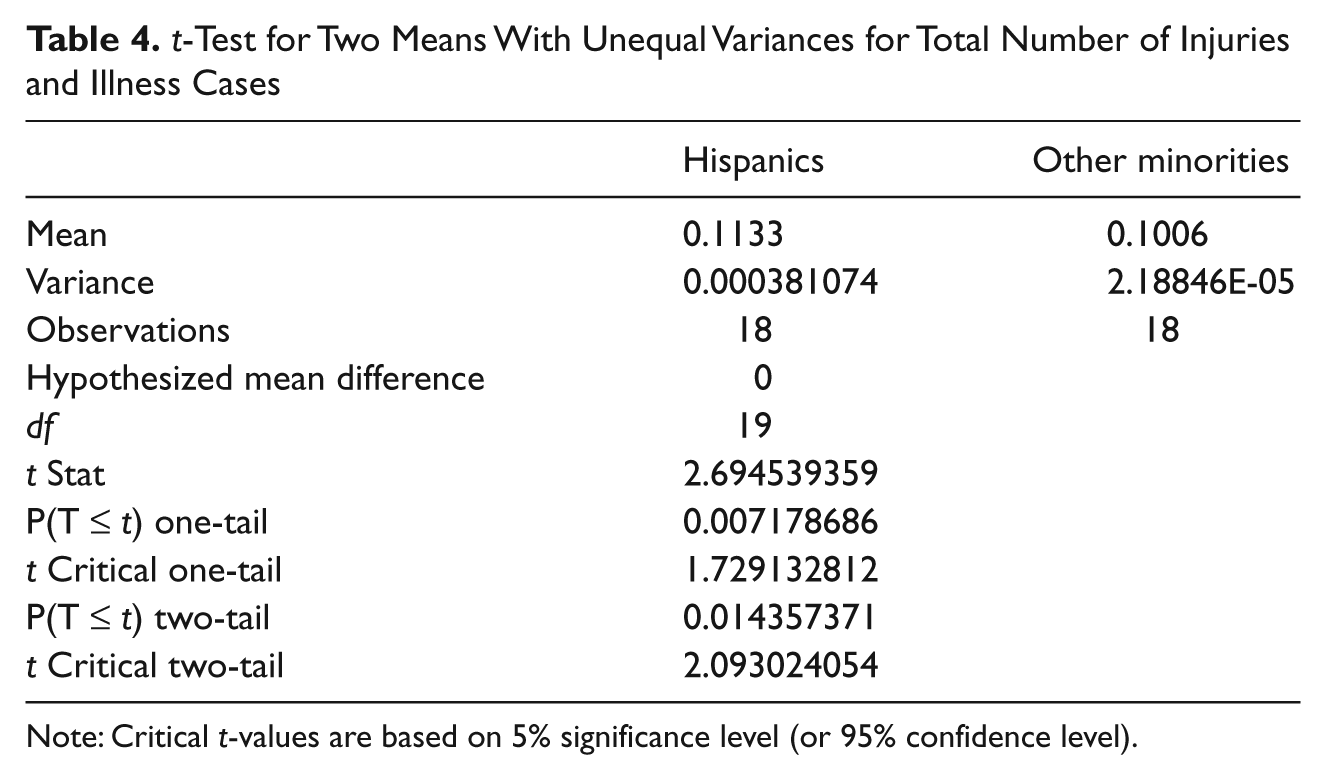
Note: Critical t-values are based on 5% significance level (or 95% confidence level).
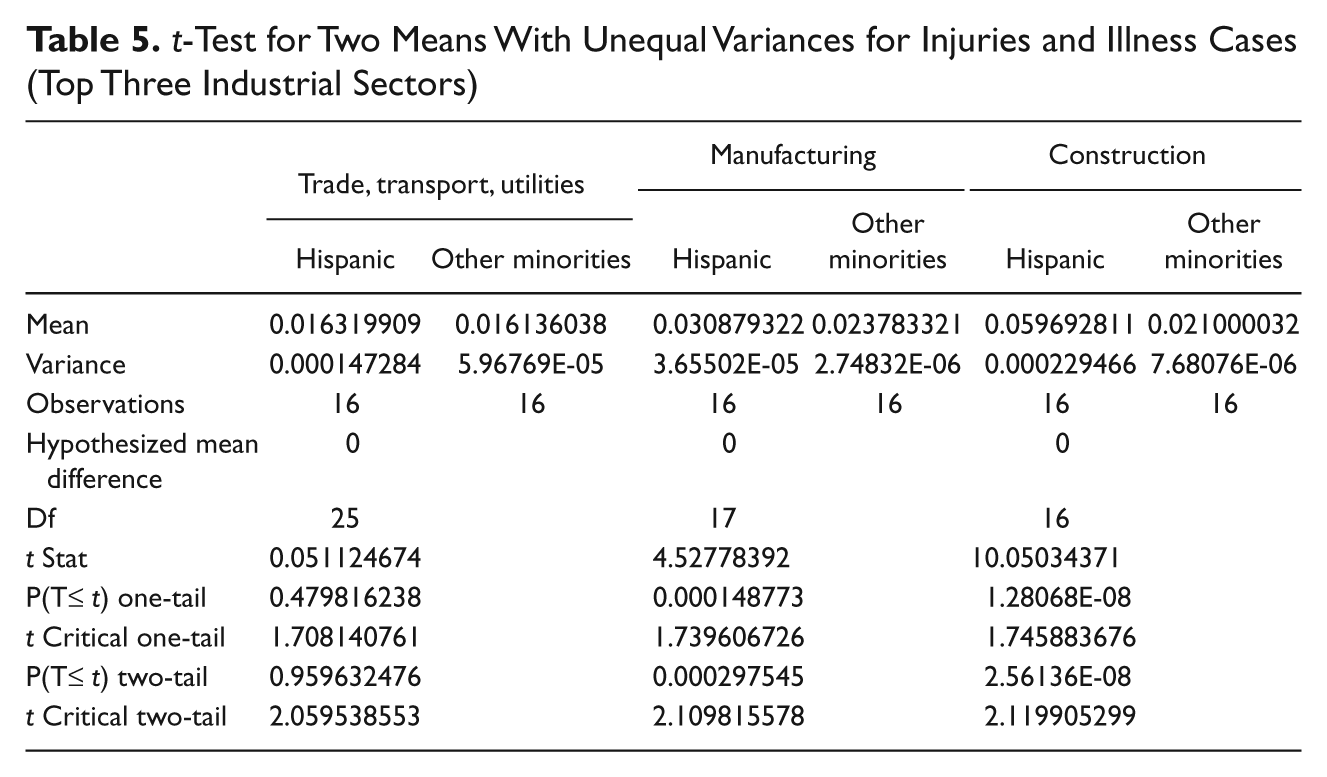
To control for industry differences, a similar test was performed by industrial sectors for the three leading industry groups, and the results are provided in Table 5. For the trade, transportation and utilities industrial sector, there was no significant difference found in the mean shares of the two groups. In contrast, Hispanics had significantly higher mean percentage share at 5% significance level when examining both the manufacturing and construction industry sectors. These findings suggest the importance of controlling for industry sector when investigating injuries and illnesses, as the results will likely differ across industry sectors.
t-Test for Two Means With Unequal Variances for Injuries and Illness Cases (Top Three Industrial Sectors)
Before employing the model shown by equation 1, the time-series unit root properties of the log values of three data series (namely hinjpop, hemp, hedu) were tested and found to be have a unit root stationary at first differences (or integrated of order 1). The results of the Johensen maximum likelihood cointegration tests reveal the presence of one significant cointegration vector, suggesting that there exists a linear combination of variables that links them in a long-run stable relationship. Based on the vector error correction model (VECM), this long-run relationship between the share of Hispanic injuries and illnesses in the Hispanic population, the Hispanic share of the U.S.-employed labor and Hispanic educational attainment for one cointegrating vector is expressed as follows (with t-statistics in parenthesis):

Note: * refers to 1% level of significance
The long-run cointegrating normalized coefficients for both the Hispanic share of U.S. employed workers and Hispanic educational attainment is found to be significant at 1% level. The former independent variable has a positive significant impact on Hispanic injuries while the latter independent variable has a negative effect. These findings suggest that a 1% increase in the Hispanic share of U.S.-employed labor raises the Hispanic share of injuries in the Hispanic population by 0.17% whereas a 1% increase in the share of Hispanics with high school diploma or higher reduces the share of Hispanic injuries and illnesses by 0.05%. It is evident from these findings that as more Hispanics enter the labor force and become employed, a rise in injuries and illnesses will be observed. However, it is likely that part of this rise can be offset by an increase in the educational attainment among Hispanic workers.
Conclusion
An analysis of the trends from 1992 to 2009 found that Hispanics have a rising share of injury and illness cases in the United States of all the minority groups. The differences between Hispanics and other non-Hispanic minorities were found to be statistically significant at both the aggregate level and by industrial sector. In addition, Hispanic share of cases will likely rise as Hispanic share of U.S. population increases and more Hispanics become employed. Some of this increase could be offset with the implementation of behavior safety processes that address language barriers, and overcome limitations of lower levels of educational attainment.
A behavioral safety process trains employees to identify critical safety behaviors, situations, or work conditions that can lead to injuries. Such a safety process encourages employees to observe each other and record critical elements of safe and at-risk work practices on a checklist, followed by the delivery of positive and corrective feedback to a coworker. A key component of this process involves employees collaborating with supervisors to set safety-related goals on daily and weekly bases. Implementing a behavioral safety process to reduce occupational injuries and illnesses has great financial benefits. For example, Hantula, Rajala, Kellerman, and Bragger, (2001) examined two manufacturing companies’ return on investment for utilizing a combined behavioral safety process with ergonomical additions to reduce their injury rates. They found that both companies decreased their incidence and severity of injuries while additionally experiencing a return on investment. After factoring in the costs of the behavioral safety process (consulting time, materials, employee behavioral safety training time), ergonomical additions, and taxes, the return on investment was 1.27:1 for one company and 10.53:1 for another company. Although results showed both companies received direct cost benefits, the true return on investment could be in the millions had the analysis taken into account the indirect cost savings related a decrease to injuries, lost days, and transfers. With the projected increase in U.S. Hispanic population and their entry into the labor force, costs of injuries and illnesses will likely rise at both individual and society levels unless more effective safety measures are implemented, especially in industrial sectors with large number of Hispanic workers.
Footnotes
Acknowledgements
The authors would like to thank anonymous referees of this journal for their helpful comments.
Declaration of Conflicting Interests
The author(s) declared no potential conflicts of interest with respect to the research, authorship, and/or publication of this article.
Funding
The author(s) received no financial support for the research, authorship, and/or publication of this article.