




Abstract
This study examines the factorial invariance of the Scale on Beliefs About Children’s Adjustment in Same-Sex Families (SBCASSF) across countries in three samples: Chilean, Spanish, and Hispanic university students. The scale analyzes attitudes toward the consequences of the rearing and education of children by parents with a homosexual sexual orientation. The instrument consists of two subscales: Individual Opposition and Normative Opposition. The Spanish sample is composed of 199 university students, the Chilean sample is made up of 279 students, and the Hispanic sample consists of 114 students. The results provide empirical evidence for the reliability of the SBCASSF in the samples from the countries and its factorial invariance (strict invariance). Results are also provided about differences between countries and by sex. The SBCASSF could be a potentially useful measure for educators, psychologists, and other mental health professionals who wish to study beliefs about the child-rearing practices of same-sex parents.
Introduction
The study of public opinion about the homosexual sexual orientation varies considerably among countries, revealing different levels of social acceptance (Hadler, 2012). In some countries, marriage between people of the same sex is legal (e.g., the United States, Holland, Sweden, Canada, Belgium, and Spain), whereas in others it is illegal (e.g., in different African or Eastern European countries; The International Lesbian, Gay, Bisexual, Trans and Intersex Association [ILGA], 2013). The cultural context and social norms greatly determine the beliefs and attitudes of the members of the social community, which, furthermore, vary with the social, economic, and political evolution of the country itself (Baunach, 2012). In spite of the high visibility and acceptance of lesbians and gay men, prejudice, discrimination, and hostility toward them continue to be a problem today (Gato, Fontaine, & Carneiro, 2012; Herek, 2009a). However, the expressions of rejection have changed, and now it is manifested more subtly or with microaggressions directed at individuals only because of their homosexual sexual orientation (Wegner & Wright, 2016). The meta-analysis by Katz-Wise and Hyde (2012) analyzed the victimization experiences of LGB people (lesbians, gay men, and bisexual), concluding that 55% of LGB individuals reported experiencing “verbal harassment,” 45% suffered “sexual harassment,” 40% reported “being followed,” 37% were “threatened,” and 28% were “physically assaulted,”
The variables highlighted by the literature as predictors of rejection of people with a homosexual sexual orientation are mainly linked to religious fundamentalism and religiosity (Altemeyer & Hunsberger, 1992; Barrientos, Cárdenas, Gómez, & Frias-Navarro, 2013; Burdette, Ellison, & Hill, 2005; Hunsberger & Jackson, 2005; Olson, Cadge, & Harrison, 2006; Rowatt, Tsang, Kelly, LaMartina, McCullers et al., 2006; Schwartz & Lindley, 2005), sex, (Costa & Davies, 2012; Cramer, 2002; Herek, 1988; Nagoshi et al., 2008), educational level (Kelley, 2001; Lambert, Ventura, Hall, & Cluse-Tolar, 2006; Steffens & Wagner, 2004; Van den Akker, Van der Ploeg, & Scheepers, 2013), age (Sherkat, Powell-Williams, Maddox, & de Vries, 2011; Treas, 2002), gender role identity (Harbaugh & Lindsey, 2015), and beliefs about the etiology of the homosexual sexual orientation (Frias-Navarro, Monterde-i-Bort, Pascual-Soler, & Badenes-Ribera, 2015; Overby, 2014). Thus, the most religious people, men, older people, people with less formal education, those with a masculine gender identity, and people who believe that the sexual orientation is learned show less favorable attitudes toward homosexual people. Even economic development, race, and political stability are variables that have been studied as predictors of public opinion about nonnormative behaviors like homosexuality (Adamczyk & Piit, 2009; Andersen & Fetner, 2008; Bonilla & Porter, 1990; Inglehart, 2006; Inglehart & Baker, 2000; Inglehart, Norris, & Welzel, 2002; Kelley, 2001). For example, in a Portuguese heterosexual sample, Gato and Fontaine (2016) found that men held higher levels of sexual prejudice toward gay- and lesbian-headed families than women did. However, some studies have not detected statistically significant differences in the traditional expression of heterosexual women’s prejudice toward gay men and lesbians (Frias-Navarro & Monterde-i-Bort, 2012; Herek, 1988).
Previous studies indicate that Spain, Chile, and the United States have different attitudes toward gay men and lesbians. For example, the Pew Research Center (2013) showed that 88% of the Spaniards surveyed declared that homosexuality should be accepted, with a 6-point score change compared with 2007, whereas only 68% of Chileans stated that homosexuality should be accepted, with a 4-point score change compared with 2007. In North America, only 60% of those interviewed thought homosexuality should be accepted by society. Moreover, Frias-Navarro, Monterde-i-Bort, Barrientos-Delgado, Badenes-Ribera, and Cardenas Castro (2014) showed that Spain and Chile differed in their attitudes toward same-sex parenting, with the latter being more homophobic.
In Spain, same-sex marriage has been legal since 2005, fostering the visibility of these couples and provoking an important social change in Spanish society (Arjona, Checa, Ainz, & González, 2012; Pichardo, 2011). Spanish law 13/2005 grants same-sex couples the right to marriage, inheritance, adoption, tax benefits, and divorce, in other words, exactly the same rights and obligations as heterosexual couples. The study by Stulhofer and Rimac (2009), analyzing the determinants of homo-negativity in 33 European countries, shows that Spain is among the countries with less homo-negativity, forming part of the group of countries with stable policies and democratic legal systems. However, the controversy and debate has not ended in Spain, especially regarding the question of child-rearing and adoption by same-sex couples (Jennings, Mellish, Tasker, Lamb, & Golombok, 2014; Platero, 2007).
In Chile, as in other Latin American countries, the legal situation of sexual minorities has improved in recent years (Barrientos, 2015). Moreover, the country has spent years discussing a law to regulate civil unions, which has received fierce opposition from various different sectors. Finally, civil unions between same-sex couples were recognized (living together without being married) in January 2015, but without allowing marriage or adoption. In spite of everything, discrimination, victimization, and other forms of harassment due to one’s sexual orientation are still a problem in Chile; the topic of homo-parenting produces an especially strong rejection in the Chilean population (Instituto de Investigación en Ciencias Sociales [ICSO], 2011).
In the United States, after a favorable ruling by the Supreme Court in June 2013, the Defense of Marriage Act was overturned, which specified that marriage could only take place between a man and a woman. From that point on, same-sex marriage gradually began to be legalized, until it became obligatory for all the States in June 2015, including the right to adopt children (Flores & Barclay, 2015). However, the results of the studies show that in the United States, there is still rejection of discrimination toward LGBT people and same-sex marriage (Herek, 2016; Moskowitz, Rieger, & Roloff, 2010; Mustanski, Andrews, & Puckett, 2016; Norton & Herek, 2013). Specifically, in San Francisco (California, the United States), the first organization defending the civil and political rights of lesbians was created (Daughters of Bilitis [DOB]). San Francisco has a large gay community with liberal attitudes toward sex and diversity, especially in the Castro District (Mattson, 2015). San Francisco has legally recognized marriage between same-sex couples since 2013, although it was initially approved in 2008, but this city has also suffered rejection of this minority group (Herek, 2016; Mattson, 2015; Moskowitz et al., 2010; Mustanski et al., 2016; Norton & Herek, 2013).
A recent study carried out by the Pew Research Center (2014) compares various countries in the world, including Spain, Chile, and the United States, on topics such as acceptance of homosexuality. Regarding the question “Do you personally believe that homosexuality is morally acceptable, morally unacceptable, or not a moral issue?” in Spain 55% consider homosexuality morally acceptable, and only 6% unacceptable, whereas in Chile only 45% consider homosexuality acceptable, and 32% consider it morally unacceptable. In the United States, only 23% think homosexuality is morally acceptable, and 37% think it is morally unacceptable. As Ball (2016) pointed out, it is a serious mistake to believe that the favorable resolution of the problem of equal marriage rights is the end of the fight for LGBT people (lesbians, gay men, bisexuals, and transsexuals) in the United States. Sexual stigma as a representation of the social devaluation of the homosexual sexual orientation continues to be present, even in societies that have already accepted marriage between same-sex couples (Herek, 2009b; Kite & Bryant-Lees, 2016).
The study of the perception of same-sex couples as parents is an important area of research. The legalization of same-sex marriage has made it possible to foment the visibility of the homosexual behavior, but the behavior of being a gay father or mother continues to produce rejection and discrimination in a society where individual antipathy toward gay men and lesbians is sanctioned, but where the social norm imposes heterosexist values and beliefs (Clarke, 2001; Costa, Almeida, Anselmo, & Leal, 2014). Two of the arguments most commonly used to reject same-sex parenting are the social rejection that the children would suffer (homophobic bullying; Clarke, Kitzinger, & Potter, 2004; Ellis, 2001; Tasker & Golombok, 1997) and the development of the gender identity (Clarke, 2002; Fedewa, Whitney, Black, & Ahn, 2015; Golombok, 2000). These two questions form part of the dimensions measured by the Scale on Beliefs About Children’s Adjustment in Same-Sex Families (SBCASSF; Barrientos et al., 2013; Frias-Navarro, 2009; Frias-Navarro & Monterde-i-Bort, 2012; Frias-Navarro et al., 2014).
This study analyzes the way the SBCASSF functions in Spain, Chile, and the United States (San Francisco), and how the nature of the beliefs, or the SBCASSF score, may operate differently across the samples. Spain and Chile have the official language of Spanish in common, and the majority of the Hispanics living in North America also know Spanish, but their social, political, and economic contexts vary considerably. There are large differences among the three countries regarding approval of the homosexual sexual orientation, given that attitudes toward the homosexual behavior are affected by individual circumstances and by characteristics of the national context (Van den Akker et al., 2013).
The measurement instrument consists of two subscales: the Individual Opposition subscale and the Normative Opposition subscale. The objective is to measure the two dimensions of rejection of same-sex parents: the individual dimension and the social or normative dimension, respectively.
The Individual Opposition subscale identifies opinions involving open and more aggressive rejection of the effects of the child-rearing and educational practices of same-sex parents. The attribution of the children’s possible psychological difficulties and maladjustments is directly linked to the sexual orientation of the same-sex parents. This subscale represents the dimension of individual-level antipathy toward gay men and lesbians (Franklin, 1998; Herek, 1990, 2004, 2007; Nielsen, 1990).
The Normative Opposition subscale identifies beliefs and opinions linked to everyday heterosexism, where heterosexuality is normalized, naturalized, and privileged as an institution. The items on this subscale attribute to society, and not to the subject’s own beliefs, the child’s social rejection and, consequently, his or her maladjustment due to belonging to a family with same-sex parents. It represents the social and normative dimension of the rejection of same-sex parents.
The lack of data related to the transcultural equivalence of the test among Spaniards, Chileans, and Hispanics who live in the United States has motivated our equivalence/invariance study to determine whether the SBCASSF instrument operates similarly in these three groups. Unless the invariance of the scale is shown, performing statistical comparisons of the three countries could lead to erroneous interpretations due to measurement bias (Cheung & Rensvold, 2002; Steenkamp & Baumgartner, 1998).
A scale’s measurement is invariant when there are no biases in the scores due to the existence of different patterns of relationships between the items and the latent variables (Lubke, Dolan, Kelderman, & Mellenbergh, 2003). Showing the measurement invariance of the scores is crucial to being able to compare these scores in samples from different countries. Thus, the formal and substantive equivalence of the results obtained with the same test in three different countries grants validity to statistical tests by comparing the scores from the three samples on a construct that has the same representation or significance in all three countries.
In practice, a researcher will be able to compare the results of a test applied in different contexts when evidence is provided about the metric equivalence of the measurement instrument, that is, when it has been shown that the values of the observed variables depend only on the values acquired by the latent variables, regardless of the group to which they belong (Meredith, 1993; Wu, Li, & Zumbo, 2007).
Therefore, our study has four objectives:
1. The main purpose of this study is to evaluate the metric invariance of the SBCASSF, using the scores of a sample of Spaniards, a sample of Chileans, and a sample of Hispanics who live in the United States. To test the hypothesis of the equivalence of the scores of the three samples on the SBCASSF, a study was carried out of the factorial invariance of the measure, based on four nested models that progressively increased the number of restrictions by constraining free parameters (Byrne, 2008). The models were evaluated by means of multigroup confirmatory factorial analysis (MG-CFA), and they were estimated based on the polychoric correlation matrix using the Maximum Likelihood (ML) procedure with the LISREL 8.8 software (Jöreskog & Sörbom, 2006).
More specifically, first we evaluated the configural invariance to test the model fit without restrictions between the Spanish, Chilean, and Hispanic samples.
Second, we examined the weak or metric invariance and tested whether the fit continued to be good when, in addition to the equivalence of the model across the groups, the factorial weights were matched.
In the third stage of the analysis, we tested whether strong invariance is met; to do so, maintaining the conditions imposed in the two previous steps, we restricted the intercepts.
The progressive evaluation is completed by checking the fit produced at the level of strict invariance. In this latter case, a new condition is added by restricting the variances and covariances of the errors.
The three remaining objectives propose working hypotheses that will be confirmed if the factorial invariance of the instrument is shown in the three countries represented in our study sample.
2. Another objective is to test, using a within-subjects or repeated-measures design, whether in the three countries the same pattern is maintained of greater expression of normative opinions of modern rejection compared with individual opposition or more aggressive and traditional rejection (modern rejection hypothesis).
3. Between-group designs were used to analyze possible differences between men and women on the Individual Opposition and Normative Opposition subscales in each of the three countries, in order to find out whether the pattern is similar in these three social contexts.
4. Furthermore, a between-groups design was used to analyze the differences between the scores obtained by the participants from the three countries on the subscales of the SBCASSF.
Method
Participants
Convenience nonprobability sampling was used. The total sample consists of 592 heterosexual participants. The Spanish sample is composed of 199 university students (M age = 21.63, SD = 6.86), 37 men (18.6%) and 162 women (81.4%). The sample of Chilean participants is composed of 279 university participants (M age = 20.06, SD = 2.76), 106 men (38%) and 173 women (62%). And the sample of Hispanic residents in San Francisco (California, the United States) is composed of 114 university participants (M age = 32.88, SD = 12.31), 53 men (46.5%) and 61 women (53.5%).
Measures
The survey consisted of two sections.
The first section included items related to information about sociodemographic variables: sex, age, and sexual orientation (self-identification as gay man, lesbian woman, bisexual, or heterosexual). Participants who identified themselves as homosexual or bisexual were eliminated from the analyses.
The second section included the SBCASSF (Frias-Navarro, 2009; Frias-Navarro & Monterde-i-Bort, 2012). This instrument measures subjects’ beliefs about the effects of the child-rearing and educational practices of same-sex parents on the psychological and social adjustment of their children. The SBCASSF consists of 14 items distributed in two subscales: Normative Opposition and Individual Opposition, with seven items in each subscale. A Likert-type response scale is used that ranges from 1 (completely disagree) to 5 (completely agree). The higher the score, the greater the degree of rejection of the child-rearing and educational practices of same-sex parents.
Procedure
This study was part of a cross-cultural research between Spain, Chile, and the United States about group relations and attitudes toward different social groups. Participation in the study was voluntary. The participants were guaranteed anonymity in filling out the paper-and-pencil questionnaires. The questionnaires were completed during class time, and the participants obtained extra credit in the Chilean sample, but not in the Spanish sample. In San Francisco (the United States), they received an economic compensation of US$2.
In Spain and the United States, the measurement was performed when they already had a law allowing same-sex marriage, whereas in Chile, the measurement took place before the 2015 law was passed allowing same-sex marriage.
Results
Preliminary Analyses
All the values for univariate skewness and kurtosis for all the variables in the model were satisfactorily within conventional criteria for normality (−3 to 3 for skewness and −10 to 10 for kurtosis), according to the guideline suggested by Kline (2010).
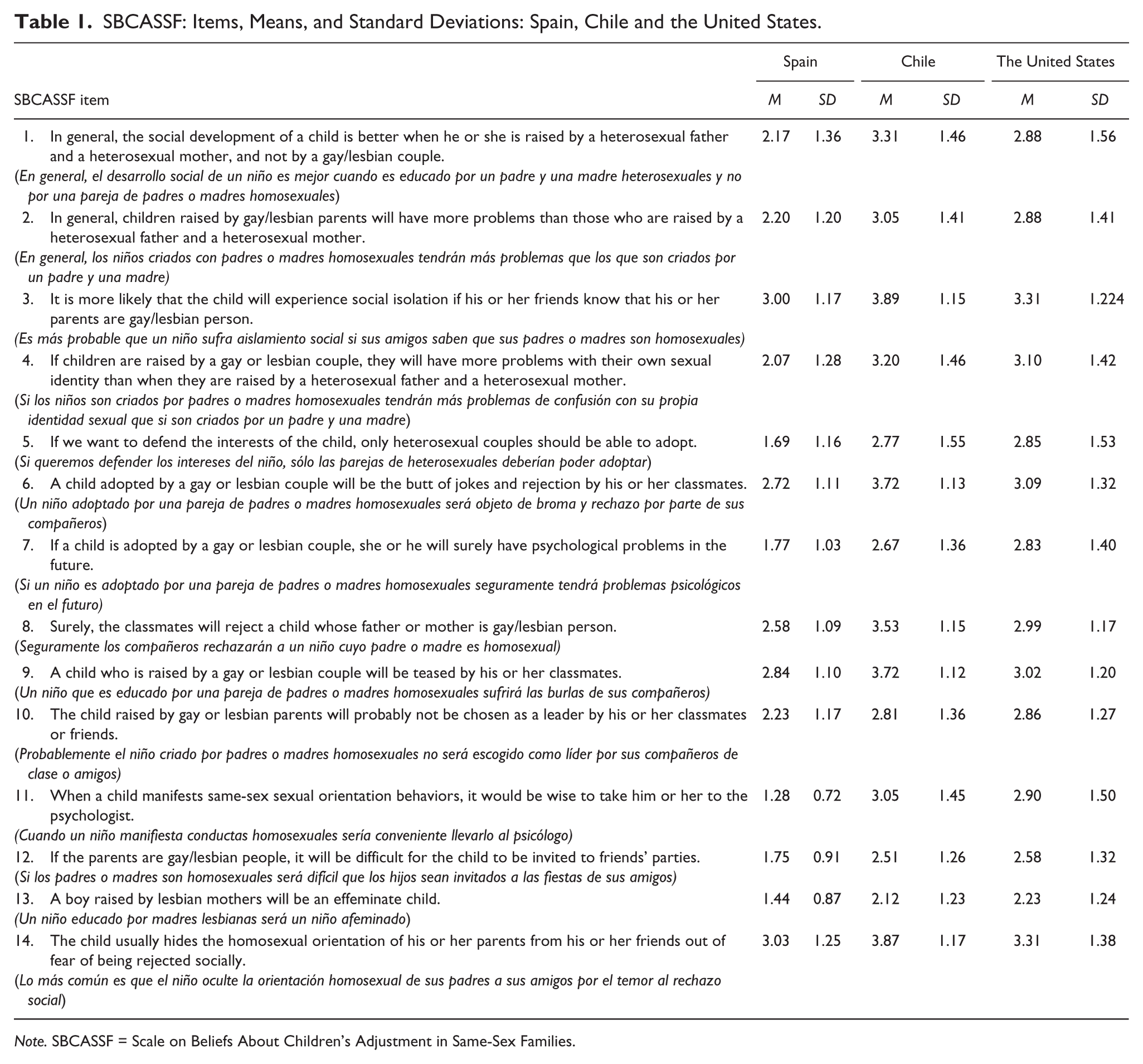
Table 1 shows the mean scores and standard deviations of each of the items that make up the SBCASSF scale for each sample analyzed.
SBCASSF: Items, Means, and Standard Deviations: Spain, Chile and the United States.
Note. SBCASSF = Scale on Beliefs About Children’s Adjustment in Same-Sex Families.
The results of the three samples of participants show that the two items that obtain the highest scores belong to the Normative Opposition subscale and refer to the child’s problems of social isolation if the parents are of the same sex: “It is more likely that the child will experience social isolation if his or her friends know that his or her parents are gay/lesbians” (Item 3) and “The child usually hides the homosexual orientation of his or her parents from his or her friends out of fear of being rejected socially” (Item 14).
Objective 1: Factorial invariance analyses
Figure 1 presents the SBCASSF factor structure of the hypothesized model.

The SBCASSF factor structure of the hypothesized model.
Factorial invariance analyses
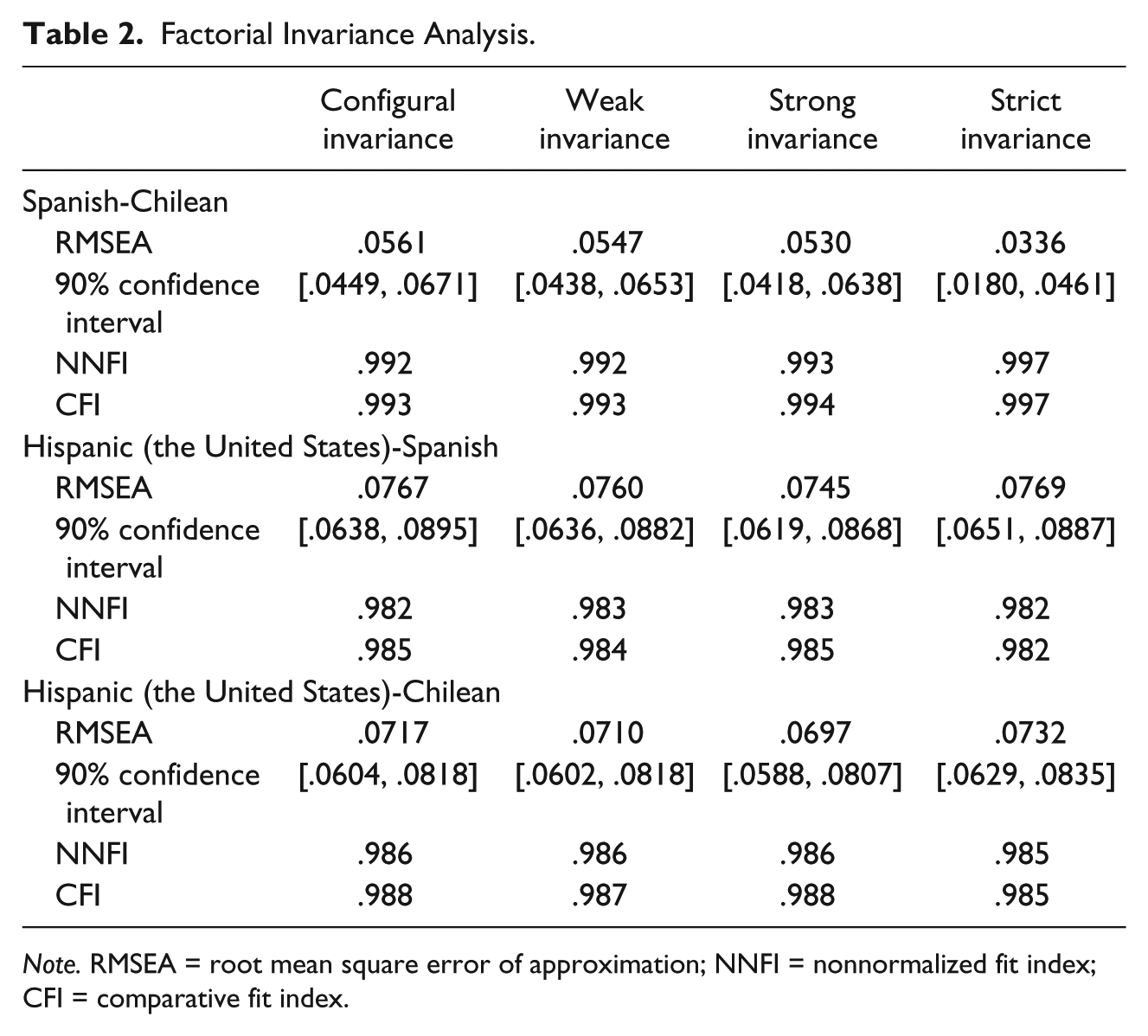
The analyses of the results obtained are conducted considering both the goodness of fit indexes and the differences presented by these indexes compared with the configural invariance model used as the reference (Table 2). Specifically, we used the comparative fit index (CFI; Bentler, 1990), the nonnormalized fit index (NNFI; Bentler & Bonett, 1980) and the root mean square error of approximation (RMSEA; Steiger, 1989). Cutoff criteria are usually used to evaluate their suitability. Thus, we can consider that CFI and NNFI values equal to or greater than .90 and RMSEA values equal to or smaller than .08 would indicate an adequate fit of the evaluated model (Fan & Sivo, 2005; Marsh, Hau, & Wen, 2004).
Factorial Invariance Analysis.
Note. RMSEA = root mean square error of approximation; NNFI = nonnormalized fit index; CFI = comparative fit index.
Regarding the differences between the indexes of each model evaluated, following Cheung and Rensvold (2002), we consider a change equal to or greater than .01 to be inadequate, compared with the model used as the base.
Configural invariance
By constraining the model to two dimensions and 14 observed variables for the Spanish, Chilean, and Hispanic samples, it can be observed that the scale presents the same configuration in all three cases, with adequate goodness of fit indexes (CFI ≥ .985; NNFI ≥ .982, RMSEA ≥ .0561).
Thus, the results obtained allow us to state that the people in the three samples use the same conceptual framework to respond to the items that make up the scale; therefore, there is configural invariance (Cheung & Rensvold, 2002; Vandenberg & Lance, 2000).
Weak or metric invariance
The factor loadings of the items in each of the latent variables are equal in the three groups, and a change of a unit in an item produces, in the Spanish, Chilean, and Hispanic samples, the same change in the score on the factor with which it is associated (Wu et al., 2007).
Analyzing the fit indexes, it can be observed that they reach adequate levels (CFI ≥.984; NNFI ≥ .992, RMSEA ≥ .0547). At the same time, the differences between these values and those of the configural invariance level are less than .01. Therefore, we can state that the regression lines are equal in the two samples considered.
Strong invariance
When focusing on the third step in the analysis, we observe that the goodness of fit indexes continue to be adequate (CFI ≥ .985; NNFI ≥ .983, RMSEA ≥ .0530), and the differences in the indexes compared with the reference model are situated at levels less than .01. In light of these results, we can state that both the factor loadings and the intercepts are the same in all three samples.
Strict invariance
In the last step of the progressive analysis of the factorial invariance, strict invariance was evaluated. In this case, not only are the factor loadings and the intercepts equal in the three samples but also the variances and covariances of the errors. Whether we look at the fit indexes (CFI ≥ .982; NNFI ≥ .982, RMSEA = .0336) or analyze the differences compared with the base model, we are able to assert the equivalence of the three samples included in the study.
Objective 2: Within-groups comparison of the individual opposition and normative opposition scores in the three countries
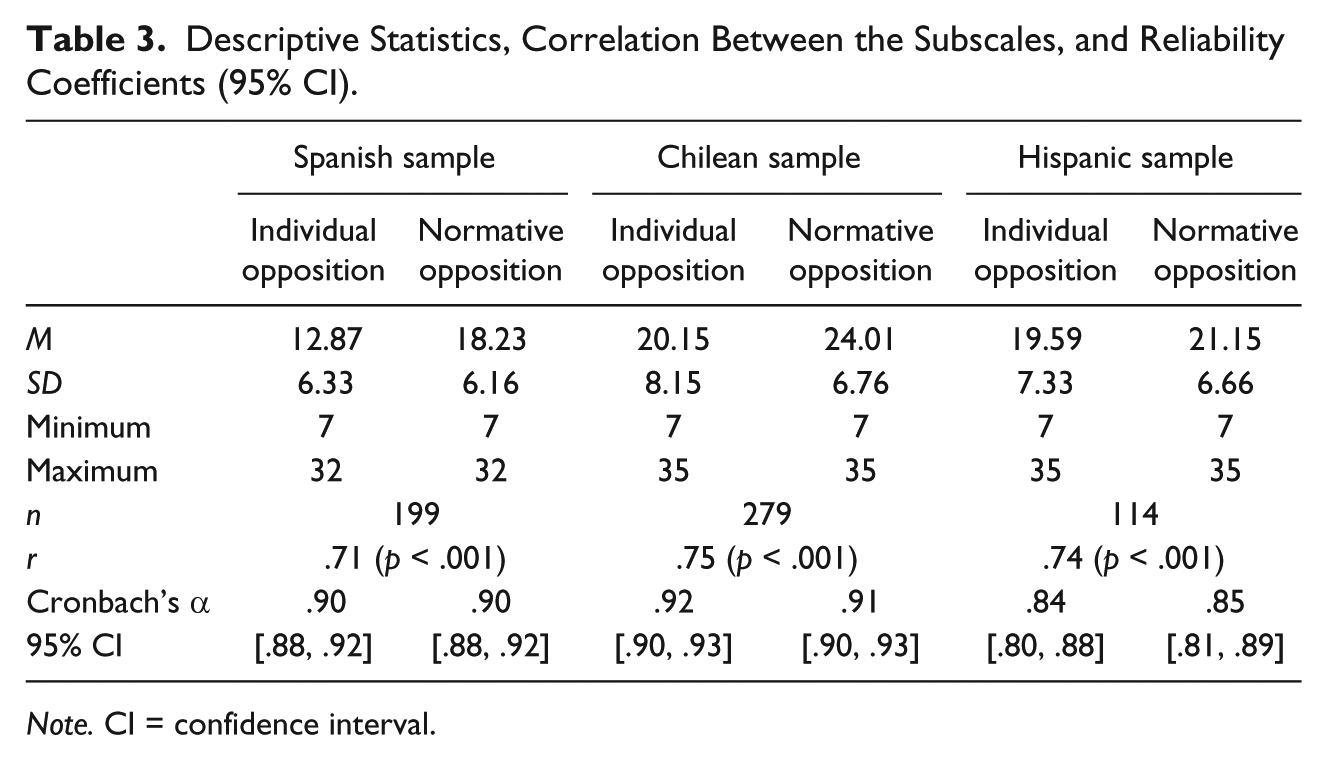
The mean scores obtained on the Normative Opposition subscale are higher than those on the Individual Opposition subscale in the three samples studied, with the difference being statistically significant in Spain (intrasubjects ANOVA, F(1, 200) = 251.28, p < .001, η2 = .58), in Chile (intrasubjects ANOVA, F(1, 278) = 141.47, p < .001, η2 = .34), and in the United States (intrasubjects ANOVA, F(1, 114) = 11.22, p = .001, η2 = .09; see Table 3). The magnitude of the difference between the means on the two subscales is much greater in Spain and Chile, with quite large effect sizes, compared with the sample from the United States, where the eta-squared effect is medium.
Descriptive Statistics, Correlation Between the Subscales, and Reliability Coefficients (95% CI).
Note. CI = confidence interval.
Objective 3: Comparison of the scores of men and women in the three countries
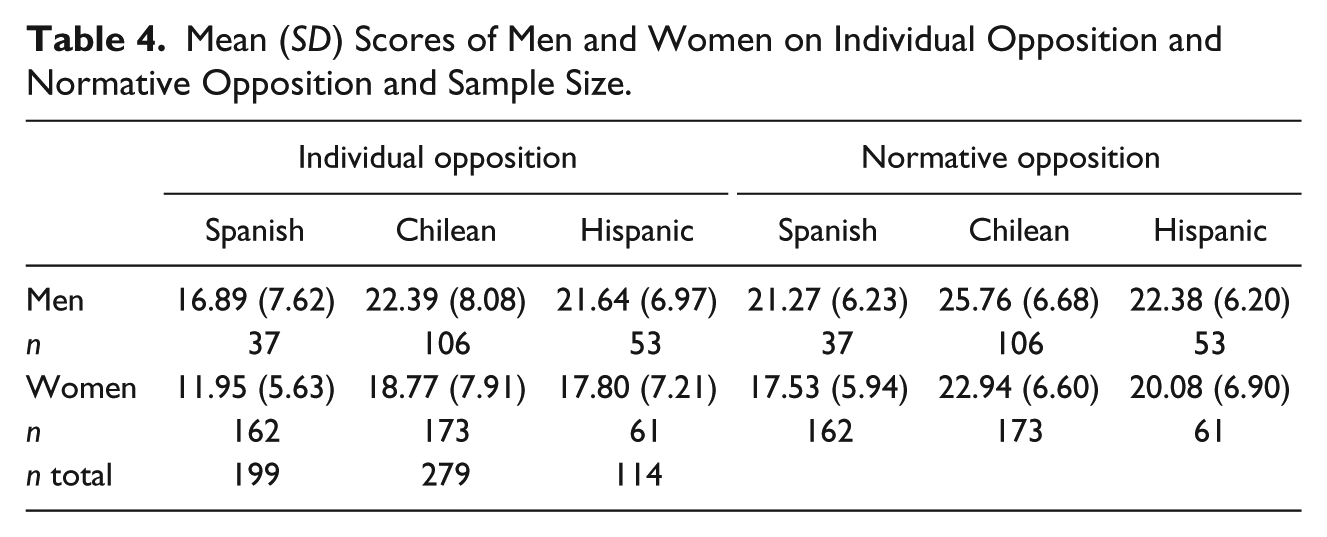
The analysis of the mean scores of men and women shows that the men’s scores are higher than the women’s on the Individual Opposition subscale in the samples from Spain (between-subjects ANOVA, F(1, 202) = 16.95, p < .001, η2 = .08), Chile (between-subjects ANOVA, F(1, 279) = 13.23, p < .001, η2 = .06), and the United States (between-subjects ANOVA, F(1, 121) = 7.55, p = .007, η2 = .06). However, when the data were analyzed for the Normative Opposition subscale, the men obtained higher scores than the women in Spain (between-subjects ANOVA, F(1, 199) = 12.18, p = .001, η2 = .06) and Chile (between-subjects ANOVA, F(1, 279) = 12.86, p < .001, η2 = .04), but the differences are not statistically significant in the sample of Hispanic participants living in the United States (between-subjects ANOVA, F(1, 118) = 3.73, p = .056, η2 = .03). The mean scores of the men and women who participated in the study appear on Table 4.
Mean (SD) Scores of Men and Women on Individual Opposition and Normative Opposition and Sample Size.
Objective 4: Between-groups comparisons of the mean scores of the samples from the three countries
As a measure of effect size, we used the proportion of explained variance by means of eta-squared (η2) when performing the ANOVA and the Pearson r coefficient. Cohen (1988) established a conventional interpretation of effect sizes where Pearson r = .10 is considered a small effect, r = .30 is a medium-sized effect, and r = .50 is a large effect. In addition, eta-squared interpreted as η2 = .1 is a small effect size, η2 = .06 is a medium effect size, and η2 = .14 is a large effect size. These guidelines are used throughout this article to interpret the results (Navarro, Llobell, & Pérez, 2000.
Table 3 presents the descriptive statistics and reliability coefficients estimated by Cronbach’s alpha (95% CI) for each subscale in the three samples of participants. In the three countries, the level of internal consistency of the scores obtained on the subscales was adequate, with alpha values above .83.
The analysis of the differences in the mean scores of the three samples of participants on the SBCASSF scale shows that the three groups differ in a statistically significant way, both on the Individual Opposition subscale (ANOVA, F(2, 589) = 60.89, p < .001, η2 = .17), and on the Normative Opposition subscale (ANOVA, F(2, 589) = 45.70, p < .001, η2 = .13).
The analysis of the a posteriori Tukey test shows that the Chilean sample obtains higher scores than the Spanish (p < .001) and Hispanic (p < .001) participants on the Normative Opposition subscale, and the difference between the scores of the Hispanic and Spanish samples is also statistically significant (p < .001). The Spanish participants obtain the lowest scores on the Normative Opposition subscale, followed by the Hispanics and Chileans. On the Individual Opposition subscale, the Spanish participants also obtain the lowest scores, differing in a statistically significant way from the Chileans (p < .001) and the Hispanics living in the United States (p < .001). In this case, the difference between the mean scores of the Chilean and Hispanic participants is not statistically significant (p = .777). On the Individual Opposition subscale, the Spanish participants obtain the lowest mean score of the three groups, and the difference between the Chileans and Hispanics is not statistically significant.
The Pearson correlation coefficient values between the two subscales of the SBCASSF instrument are high and statistically significant in the three samples studied (see Table 3).
Discussion
The results of our study point out the equivalence of the factorial structure of the SBCASSF in the sample of Spanish, Chilean, and Hispanic university students. Items loaded on the same factor (configural invariance), magnitudes of factor loadings were the same (factor loading invariance), and regression intercepts relating each item to the factor were similar (intercept invariance). In summary, the scale achieved strict invariance. Therefore, the instrument has been shown to measure the construct in the same way in the three samples.
In addition, the results show that the theoretical structure defended by the authors of the instrument regarding modern prejudice is supported in the three countries analyzed. As the authors state (Frias-Navarro & Monterde-i-Bort, 2012), based on the theory of modern prejudice, in modern societies there has been a transformation toward more subtle forms of rejection of lesbians and gay men, with the rejection extending to the child-rearing practices of same-sex parents. In effect, the individual and more aggressive rejection, characteristic of the traditional rejection, is lower, with the more subtle and indirect rejection, based on the social norm and not on personal arguments, predominating. This pattern of responses is replicated in the three countries studied.
The analysis of the differences by sex shows that the men obtain higher scores than the women on individual or traditional opposition in the three countries studied, supporting the relationship described in the literature between the sex of the subject and the attitudes toward same-sex parenting (Barrientos et al., 2013; Frias-Navarro & Monterde-i-Bort, 2012; Gato & Fontaine, 2013). Moreover, this pattern is also maintained between the Spanish and Chilean men when rating normative rejection based on the heterosexist norm, but this pattern is not maintained in the case of Hispanic men, given that their scores do not differ from those of the women. The results from the literature are not unanimous, as some authors have not found sex differences in the attitudes toward same-sex parents (Baiocco, Nardelli, Pezzuti, & Lingiardi, 2013; Swank & Raiz, 2010). Therefore, more studies are needed to understand the role of sex in explaining sexual prejudice toward same-sex parenting, especially from the theoretical perspective of modern prejudice.
Regarding the differences between the countries, Spain stands out with less rejection of same-sex parents from both the traditional and modern or normative perspectives. Spain has been consolidated as a country that recognizes all the civil rights of same-sex parents and does not distinguish between marriage between heterosexuals and same-sex couple unions. Chileans and Hispanics do not differ on their individual or traditional assessment of same-sex parents, but Chileans obtain higher scores on the Normative Opposition or Modern Rejection subscale. On this point, it should be kept in mind that when the evaluation in Chile was carried out, same-sex marriage was still not allowed, whereas in Spain and the United States, the evaluation was performed when they already had same-sex marriage laws. Thus, it would be necessary to perform a new study with a sample from Chile, given that same-sex marriage was passed in 2015.
This study has limitations. One of the limitations of our study is the type of sample used in Spain, Chile, and the United States. Broader and more representative samples are probably needed. Thus, it would be advisable to broaden this type of study to other groups of subjects, such as adults without higher studies and professionals, as well as replicating the study with university students. Furthermore, it should be taken into account that since the time of our data collection, Chile has passed a law that regulates unions between same-sex couples. Our data represent a point of comparison between the time before this law was passed and data from future studies, making it possible to study the possible effects of the legislation on attitudes toward unions between same-sex couples, as well as the perception of their quality as parents.
Given the results of the study, it appears that the SBCASSF could be a potentially useful measure for educators, psychologists, and other mental health professionals who wish to study beliefs about the child-rearing practices of same-sex parents. One of the main advantages of this instrument is its dimensionality, which allows it to measure individual antipathy toward same-sex parents and, above all, normative and subtle rejection of these parents. This type of normative rejection can be studied within the line of research on modern prejudice, which highlights that discrimination and rejection of members of minority groups (gay men, lesbian, immigrants, handicapped people, etc.) can be expressed in a socially acceptable way. External arguments are used that mask the expression of prejudice and the defense of heteronormativity, adopting a more tolerant attitude toward the prejudice (Frias-Navarro, Barrientos-Delgado, Badenes-Ribera, Monterde-i-Bort, & Cárdenas-Castro, 2013; McConahay, 1986; Meertens & Pettigrew, 1997; Morrison, Morrison, & Franklin, 2009; Pettigrew & Meertens, 1995). The radical transformation of modern societies has fostered the decriminalization of homosexuality and the elaboration of laws to protect lesbians and gay men from discrimination and violence. This change requires the social normalization of intimate relationships between same-sex couples, as well as their role as parents. For this purpose, having measurement instruments adapted to the change that has occurred in the manifestation of prejudice is fundamental to finding modern evidence of prejudice. Understanding negative attitudes toward same-sex parents is essential in order to promote supportive attitudes, tolerance, and equality, and develop prevention policies and practices.
Footnotes
Acknowledgements
The authors thank the participants who responded to their questions.
Declaration of Conflicting Interests
The authors declared no potential conflicts of interest with respect to the research, authorship, and/or publication of this article.
Funding
The authors disclosed receipt of the following financial support for the research, authorship, and/or publication of this article: This study was financed by the VALi+d program for predoctoral Training of Research Personnel (ACIF/2013/167), Conselleria d’Educació, Cultura i Esport, Generalitat Valenciana (Spain).