



Abstract
It is important to understand multilingual students’ lived experiences and sense-making in their everyday written communication before rethinking the implementation of translingual writing in college composition classrooms. Unpacking multilinguals’ written communication across social and academic contexts, this exploratory qualitative study integrates digital ethnographic and interview methods to examine the first-semester communication experiences of 10 undergraduate students. The findings indicate that while participants engaged in translingual written communication as part of their lived experiences in social contexts, they were reluctant to draw upon their home language in academic settings. Based on the findings, I discuss the pedagogical implications of supporting multilingual students in college composition classrooms. I argue that instructors must reposition themselves as co-learners together with their multilingual students to enact a translingual stance in academic settings and reimagine meaningful written communication beyond English-only. This study sheds light on rethinking the pedagogical practices around implementing translingualism in college composition.
Keywords
For years, the United States has been the top international student host country in the world. According to the Institute of International Education (2019), the number of international students pursuing higher education in the United States has reached “all-time high” at almost 1.1 million. Among them the vast majority are from nonnative-English-speaking countries, with those from China representing the largest ethnic group (N = 369,548). With the internationalization of American higher education, college composition classrooms have turned into a linguistically superdiverse ecology, where multilingualism and cross-cultural communication is the lived reality for teachers and students alike (Benda et al., 2018; Poe & Zhang-Wu, 2020). Consequently, higher education campuses have transitioned into “fundamentally multilingual spaces, in which students and faculty bring to the acts of writing and communication a rich array of linguistic and cultural resources” (Conference on College Composition and Communication, 2020).
Translingual writing, which questions English-only ideologies and values multilingual writers’ entire linguistic repertoire, has shown great potential in addressing linguistic superdiversity in American higher education. Although translingualism has gained momentum in applied linguistics and K-12 education since early 2000s, it was not until the publication of Horner, Lu, et al.’s (2011) manifesto “Language Difference in Writing: Toward a Translingual Turn” that this concept became widely discussed in the field of college composition. In their article, Horner, Lu, et al. (2011) call for college writing teachers to develop a “translingual disposition” (p. 311), which encourages multilingual students to draw upon their home languages to enrich their written communication in English. Under the translingualism paradigm, students’ strategic deviation from standard English should be considered as a legitimate way to express their multilingual identities instead of a sign of linguistic incompetence. Thanks to its social justice orientation and timeliness in addressing the linguistic superdiversity in American higher education, translingualism has drawn significant scholarly attention to the field of college composition.
Despite its popularity, however, empirical investigation of translingual writing at the tertiary level is “far outpaced” by its conceptualization and theorization (e.g., Canagarajah, 2013, p. 41; Gevers, 2018; Matsuda, 2014; Zhang-Wu, 2021a, 2022). Among the scarce empirical explorations on translingual writing in U.S. college composition, leading translingual scholar Canagarajah (2011, 2013) has conducted a series of studies that powerfully demonstrate code-meshing among multilingual writers in academic contexts. Nevertheless, the translingual texts that these studies have focused on were limited in literacy autobiography, a genre that is in nature “far more amenable than, say, a lab report to the expression of linguistic identity in form and content” (Matsuda, 2014, p. 481); little is known about translingualism as a lived meaning-making practice among multilingual students across academic and social contexts. Such a lack of empirical exploration on translingual writing “poses unsettling questions for pedagogy” (Canagarajah, 2013, p. 41), leaving college writing instructors uncertain about how to put this important concept into practice. Consequently, the implementation of translingual writing is often depicted as a decision in the hands of students (Lu & Horner, 2013; Schreiber & Watson, 2018). However, since multilingual students are often linguistically minoritized and victims of English-only ideologies in the first place (Zhang-Wu, 2021b; Zhang-Wu & Brisk, 2021), it is unclear whether and how they would be willing or have the power to take the initiative and perform translingual writing in college writing classes and beyond.
Tiostanova and Mignolo (2012) remind us that communication is a product of social practices and “languages are not something that human beings have but what human beings are” (p. 61). It is therefore important to understand multilingual students’ lived experiences and sense-making in their everyday written communication before rethinking the implementation of translingual writing in college composition classrooms. Yet, since much of the existing scholarship on translingualism tends to focus primarily on multilingual students’ written communication at the classroom level (e.g., Canagarajah, 2011, 2013; Schreiber & Watson, 2018), it is unclear how multilingual students translanguage across social and academic contexts. To fill this void in research, this exploratory qualitative study integrates digital ethnographic and interview methods to explore the first-semester written communication experiences of 10 multilingual undergraduate students across both social and academic contexts by investigating: (1) How did the participants engage in translingual written communication in social contexts, if any? (2) How did they engage in translingual writing in academic contexts, if any?
This study’s scholarly significance is twofold. First, it contributes to the scarce literature (e.g., Fraiberg et al., 2017; You, 2016) which adopts digital ethnographic methods to explore student writers’ multilingual and multimodal communication across time and space. Secondly, examining translingual written communication both within and beyond academic context, this study highlights the importance of understanding multilingual students’ lived experiences and sense-making in their everyday written communication before rethinking the implementation of translingual writing in college composition classrooms.
Linguistic Superdiversity in English-Only Society
Superdiversity is a concept proposed by anthropologist Vertovec (2007) to capture the complexities of international migration. Different from diversity, superdiversity highlights “the sense of superseding, or addressing what is ‘above and beyond’ what was previously there” (Meissner & Vertovec, 2015, p. 545). Although originally coined as a concept to describe international migration, superdiversity has received research attention across the disciplines, including English, education, linguistics, business, and many more fields (e.g., Baycan-Levent, 2010; Benda et al., 2018; Blommaert, 2013; Blommaert & Rampton, 2011; Sepulveda et al., 2011).
In American higher education, linguistic superdiversity has gradually become the reality of college composition programs. Beyond the sheer increase in the total number of languages used in college writing classrooms (as captured in the term linguistic diversity), linguistic superdiversity examines the dynamics and interplay of various languages and their communicators’ ethnicity, identity, race, nationality, and culture among other factors. Proposing superdiversity as an important lens in designing writing program assessment, Poe and Zhang-Wu (2020) point out that in the era of global mobility all students are to a degree multilingual as they are immersed in translingual communication in their everyday life. Similarly, arguing that international students is “insufficiently robust as an analytical category” (p. 79), Benda et al. (2018) caution us that since multilingualism and translingual communication is no longer limited only to international students, college writing programs are serving increasingly linguistically superdiverse student populations.
Despite the growing linguistic superdiversity in American college composition classrooms, an English-only ideology is still rampant in society with “standard” English widely perceived as a gatekeeper for academic advancement and career opportunities. Because English is often depicted as a neutral international medium of communication that brings its learners/users economic and social benefits, non-English languages and their users are marginalized and othered (Pennycook, 2019). For example, while linguistic superdiversity has become the new reality in American higher education, academic publishing across the disciplines still favors the so-called “standard” English; deviations from such a standard would be considered linguistically incompetent. As Hartse and Kubota (2014) put it, “despite sympathy for an approach that would pluralize English usage, the textual mediation of lexical and grammatical items was often driven by native-speaker institution” (p. 71).
Translingual Writing in College Composition Classrooms
Comparing the so-called standard English to a “lingual frankensteinia” wiping out other cultures and languages, Phillipson (2008) cautions against the “ideological dangers” of the rampant English-only mentality in society (p. 250). As an initiative to let the voices of the othered be heard, Horner, Lu, et al. (2011) call for teachers and researchers in college composition to embrace translingualism in their classrooms. Translingual writing does not mean merely allowing students to jump from one language to another during articulation. At the micro level, it requires writing instructors to cultivate a safe and inclusive space that allows students from diverse backgrounds to draw upon their whole linguistic repertoires during written communication. At the macro level, translingualism aims to challenge “the larger systems of discrimination and oppression” and “the social inequities which monolingualist ideologies support and perpetuate” (Schreiber & Watson, 2018, p. 96; see also Lu & Horner, 2013) by disrupting the boundaries between named languages and acknowledges multilingual students’ entire linguistic repertoire.
Given its deep social justice orientation, the concept of translingualism has received substantial attention in the field of college composition. However, despite its many potentials, translingualism “poses unsettling questions for pedagogy” (Canagarajah, 2013, p. 41). On the one hand, since “most academic texts written by scholars promoting translingual approaches do not include codeswitching, and many plurilingual approaches only publish in English” (Kubota, 2020, p. 168), it is difficult for writing instructors to visualize how best to implement translingualism into pedagogical practices. On the other hand, with conceptual investigations “far outpac[ing]” its empirical explorations (Canagarajah, 2013, p. 41; Matsuda, 2014), literature on translingualism stays primarily theoretical (e.g., Gevers, 2018; Kubota, 2020). The constant (re)conceptualization of translingualism has led to inconsistencies in its definition, which poses significant challenges for instructors to fully understand this important concept, further discouraging them from putting translingual writing into practice in college composition classrooms (Zhang-Wu, 2021a). For instance, while translingualism is depicted as a disposition (Horner, Lu, et al., 2011; Lee & Jenks, 2016), an orientation (Canagarajah, 2015) or an ideological stance (Gevers, 2018) by some, others refer to it as a competence (Jain, 2014) or a tool (Ascenzi-Moreno & Espinosa, 2018). To put translingual writing into practice and to realize its potential to challenge English-only ideologies, it is important to transition from “doing only the talking” to “doing the doing” (Kubota, 2020, p. 168).
Understanding students’ lived experiences in written communication is an important first step in rethinking translingual writing and its implications in college composition classrooms. To achieve this goal, the present study integrates digital ethnographic and interview methods to explore the first-semester written communication experiences of 10 multilingual undergraduate students. Learning from the lived communication experiences of multilingual writers across both social and academic contexts, this study hopes to rethink translingualism in college composition classrooms.
Methodology
Researcher Positionality
As an applied linguist who came to the United States years ago as a Chinese international student, my identity has influenced every stage of my research. My lived experiences as once a Chinese international student and now a faculty member working with multilingual writers have aroused my interest in exploring translingual communication among international college students. In this study, I adopted an insider-outsider positionality (Dwyer & Buckle, 2009) to facilitate my data collection and analysis. Leveraging my multilingual communicative repertoire, I was able to conduct digital ethnographic observation of participants’ multilingual social media interactions. Furthermore, during the interviews, I was able to invite participants to communicate in their languages of choice, regardless of their decisions to adopt Chinese, English, or a combination of both. While my insider identity established a sense of trust during the interviews, I constantly strived to adopt my outsider identity to “put the objects of study at a distance” (Kessen, 1991, p. 189, emphasis added in original) by conducting ongoing member-checking with participants to reduce misinterpretations and biases (Corbin & Strauss, 2007).
Context
This study took place at Hillside, 1 a private university in the Northeastern United States. In Fall 2018, when this study was conducted, Hillside’s international undergraduate enrollment was at all-time high, consisting of students from over 40 countries. Among them, those from China formed the largest ethnic group, representing approximately half of its entire international student population. At Hillside University, First Year Writing (FYW) is part of the core undergraduate curriculum. All incoming nonnative English-speaking freshmen are required to take a writing placement assessment designed by the Hillside Writing Program. Based on their performances, these multilingual students are either placed into one of the eight sections of FYW for English Language Learners (FYW-ELL) or mainstreamed into regular FYW classes along with their native-English-speaking peers. FYW-ELL sections are designed for those multilingual students who are considered in need of additional language support as assessed by the writing placement test. Nevertheless, it is worth noting that all international college freshmen at Hillside have already met its admission requirement of achieving 100 or above on TOEFL, indicating their advanced English proficiency level as measured by the Educational Testing Service (2022). Most of those placed into FYW-ELL are international students from China, echoing the university’s overall international student demographics.
The current study is part of a larger project approved by Hillside’s Institutional Review Board that examines Chinese international freshmen’s initial languaging journeys in American higher education. As detailed in Table 1, in this study I focus on the experiences of 10 Chinese international students enrolled in FYW-ELL during Fall 2018 who self-reported as daily users of WeChat, the most popular social media application in China. WeChat is a free application that supports multimodal and multilingual instant messaging, video conferencing, voice messages, and file transmission.
Participants’ Demographic Information.
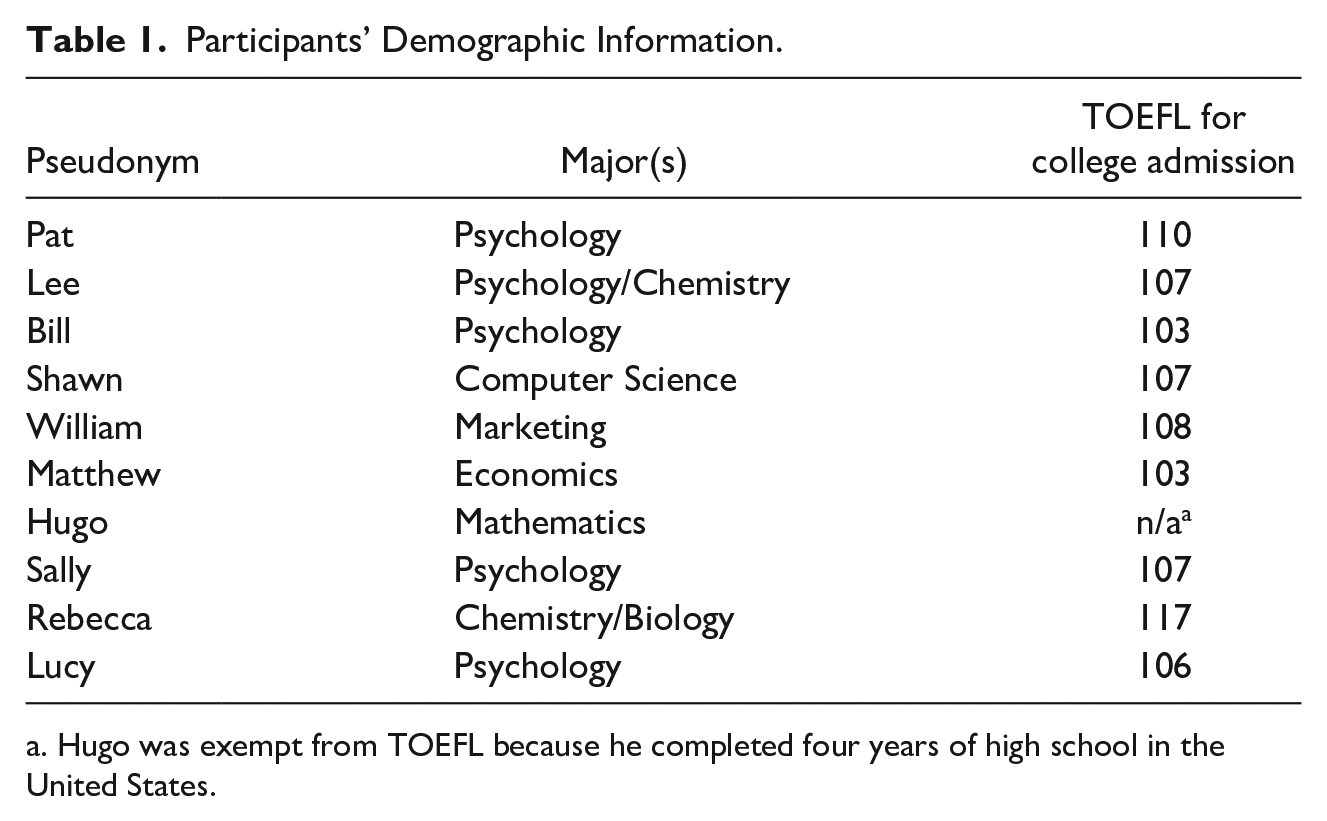
Hugo was exempt from TOEFL because he completed four years of high school in the United States.
Data Collection and Analysis
All data were collected in accordance with the standards and guidelines of the human subjects review board. Data sources included (1) two semistructured interviews with each participant (N=20) conducted at the beginning and the end of the semester respectively; and (2) a 4-month digital ethnography of participants’ written communication via WeChat yielding 464 screenshots. The interview questions were open-ended in nature, aiming to explore participants’ overall initial college experiences (e.g., How do you describe your first-semester experiences at Hillside? How does it feel to be an international student at Hillside?), their languaging journeys in academic settings (e.g., How do you perceive your language experiences studying at Hillside? Tell me about your experiences as a multilingual writer in each course.) and their experiences communicating in nonacademic contexts (e.g., Tell me about your friendship/social life; Who do you hang out with and how do you communicate with them?). Based on participants’ responses to these semistructured interview questions, follow-up questions were asked to understand their specific communication experiences across contexts. All interviews were recorded and then transcribed in their original language forms (English, Chinese, or a mixture of both) without being translated into English to preserve the nuances of participants’ language choices.
Following digital ethnographic methods (Pink et al., 2016), I conducted online observations of the participants’ communication via WeChat from August to December 2018 in a nonintrusive manner. WeChat data were collected as screenshots, documenting participants’ multilingual and multimodal communication (for an example, see Figure 1). I chose to adopt digital ethnographic observations as a supplement to interviews because social media platforms have been found to be particularly beneficial in examining the lived communication experiences of multilinguals across time and space (Fraiberg et al., 2017; You, 2016). Additionally, given its popularity and cultural relevance, WeChat is an ideal platform to explore Chinese international students’ written communication in social contexts (Zhang-Wu, 2021b).
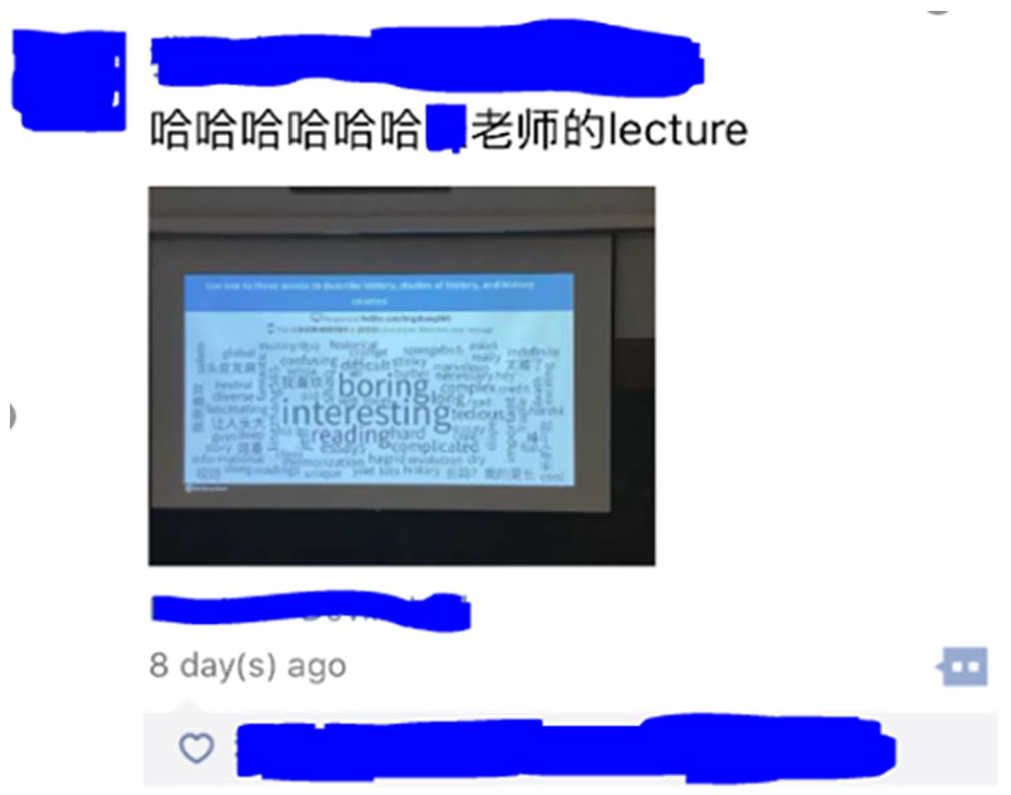
WeChat post documenting participant’s thoughts on lectures.
Data were analyzed following the coding procedures of applied thematic analysis (Guest et al., 2012). First, I separated useful research data from irrelevant information (e.g., greetings and small talks during the interview). After such data reduction, I read and reread the data to identify, extract, and refine four themes: Chinese usage in academic contexts, Chinese usage in social contexts, English usage in academic contexts, and English usage in social contexts. Following the themes, I conducted content coding (Guest et al., 2012) yielding twelve codes, including context codes (academic, social), mode of expression codes (translingual, English-only, Chinese-only, Chinglish), and experience codes (documenting experiences, academic support, social support, emotional support, TOEFL, and dictionary). These codes made it possible to facilitate understanding of participants’ written communication experiences across contexts. In the section below, I report findings based on participants’ engagement in translingual writing in social and academic contexts, respectively.
Findings
Chinese was an integral part of the participants’ written communication in social settings. On WeChat, translingual written communication occurred frequently, skillfully, and effortlessly both on and off campus to establish and maintain a strong network among Chinese students at Hillside. In this online community, participants actively drew upon their multilingual and multimodal communicative repertoires to share their overseas studies experiences and provide mutual support academically, socially, and psychologically. Nevertheless, participants’ rich multilingual languaging practices in nonacademic contexts did not translate into their translingual communication in academic settings. Instead, participants often expressed negative ideologies toward their home language. While 7 out of 10 participants had relied on Chinese-English dictionaries early in the semester, they gradually reduced their dependence on home language as a scaffold to facilitate their academic writing. Despite participants’ competence in writing translingually, they preferred English-only in academic contexts.
Participants’ Engagement in Translingual Writing in Social Contexts
A pattern observable across all participants’ WeChat activity was that translingual written communication occurred most frequently when participants tried to document their first-semester college journeys and share with the larger Chinese international student community (334 out of 464 screenshots). These WeChat posts did not aim to solicit answers from peers, but instead intended to share memorable moments studying at Hillside. In response to these posts, Chinese peers usually played the role of listeners and clicked “like” to express their affirmative attitudes toward the bloggers.
For example, Bill posted a picture he took during his history class (see Figure 1) and commented: 哈哈哈哈哈哈XYZ老师的lecture Author Translation (AT): Ha ha ha ha ha ha Prof. XYZ’s lecture
In the picture, Bill captured a funny moment when the history professor integrated a live poll to capture students’ perceptions toward “history, studies of history and history courses.” It turned out, as illustrated in the picture of the PowerPoint slide, the word “boring” was among students’ top responses. Starting his comment with six laughing sounds “哈哈哈哈哈哈” (ha ha ha ha ha ha), Bill indicated to his WeChat friends that he was sharing a hilarious event. Bill continued the sentence by code-meshing with the English word “lecture” instead of using the corresponding Chinese translation “课.” As Bill clarified during the interview, this was because there was an absence of Chinese expressions to describe college-level classes. Since “课” can refer to any classes in K-12, higher education, or even extracurricular settings, he reported to purposefully choose the word “lecture” to clarify that this post was specifically about one of his tertiary-level lessons.
Similarly, documenting his thought while completing his reading assignment (see Figure 2), Hugo took a picture of his philosophy textbook and commented: 爱像一阵风 吹完它就走 AT: Love is like wind, which will disappear right after it blows. [wind-blowing emoji] The content in Aristotle’s book is much too realistic. Aristotle这书写的太真实
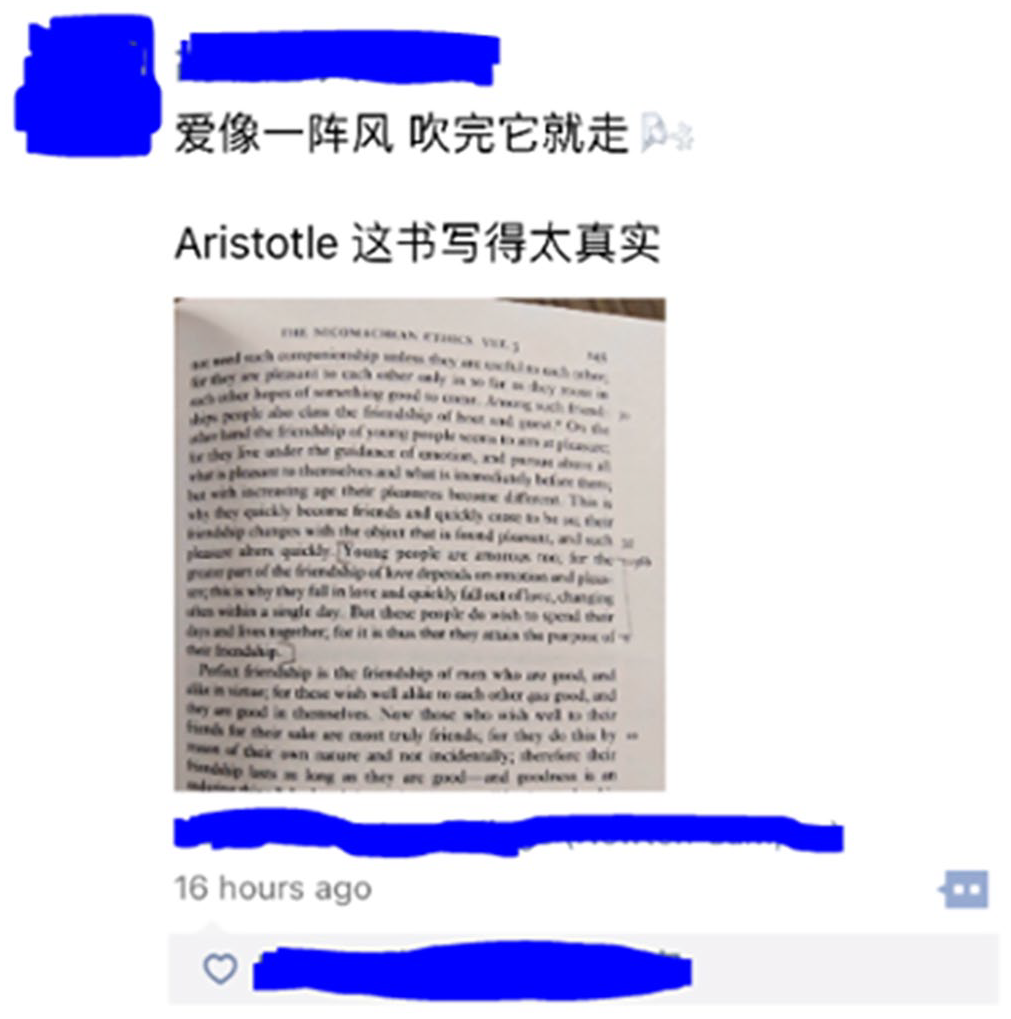
WeChat post documenting participant’s thoughts on course readings.
In the photo, Hugo annotated a section in Aristotle’s Nicomachean Ethics, in which the philosopher wrote: “. . .they fall in love and quickly fall out of love, changing often within a single day.” Hugo explained during the interview that this sentence reminded him of his recent breaking up with his girlfriend and triggered his memory of the lyrics of a famous song by Taiwanese musician Jay Chou comparing love to wind (爱像一阵风 吹完它就走). According to Hugo, he inserted a wind-blowing emoji  both to add to the vividness of the description and to show some irony that Aristotle’s writing was a mirror of his lived experience. Hugo reported that he intentionally chose to refer to Aristotle in English rather than adopting the widely used Chinese transliteration “亚里士多德” to highlight the fact that his aforementioned thoughts were triggered while doing his philosophy course readings at Hillside.
In addition to archiving their academic journeys (199 screenshots), participants also utilized the WeChat platform to document their extracurricular events (105 screenshots). Similar with when they shared their coursework-related experiences, the participants engaged in translingual communication more for the purpose of capturing a snapshot of their overseas studies journey than soliciting peers’ responses. For instance, in Figure 3, Lucy shared six photos documenting a peer-to-peer mentorship event or what she referred to as “mentor mentee 活动.” This activity was so fun that Lucy and her peers ended up taking lots of pictures, unintentionally turning it into a photo-shooting event (到最后也变成了各种拍拍拍). Lucy explained during the interview that her decision to code-mesh “mentor mentee” into a Chinese-dominant post was because of the absence of a direct translation of this expression in Chinese. While expressions such as “师徒” (teacher-student) were somewhat close to the meaning, mentor-mentee relationship were likely to be less formal. Lucy expressed how much she enjoyed the event by inserting emoticons of smiley faces including hhhh, 真可惜XXX和XXX没能一起来 AT: XXX and XXX were not able to join me at the event. What a pity. ,
, 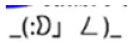 , and
, and  . According to Lucy, she decided to code-mesh with the numbers “2333” (an emoticon for kisses and love) at the end of the post to express her sadness that two of her close friends have missed the gathering:
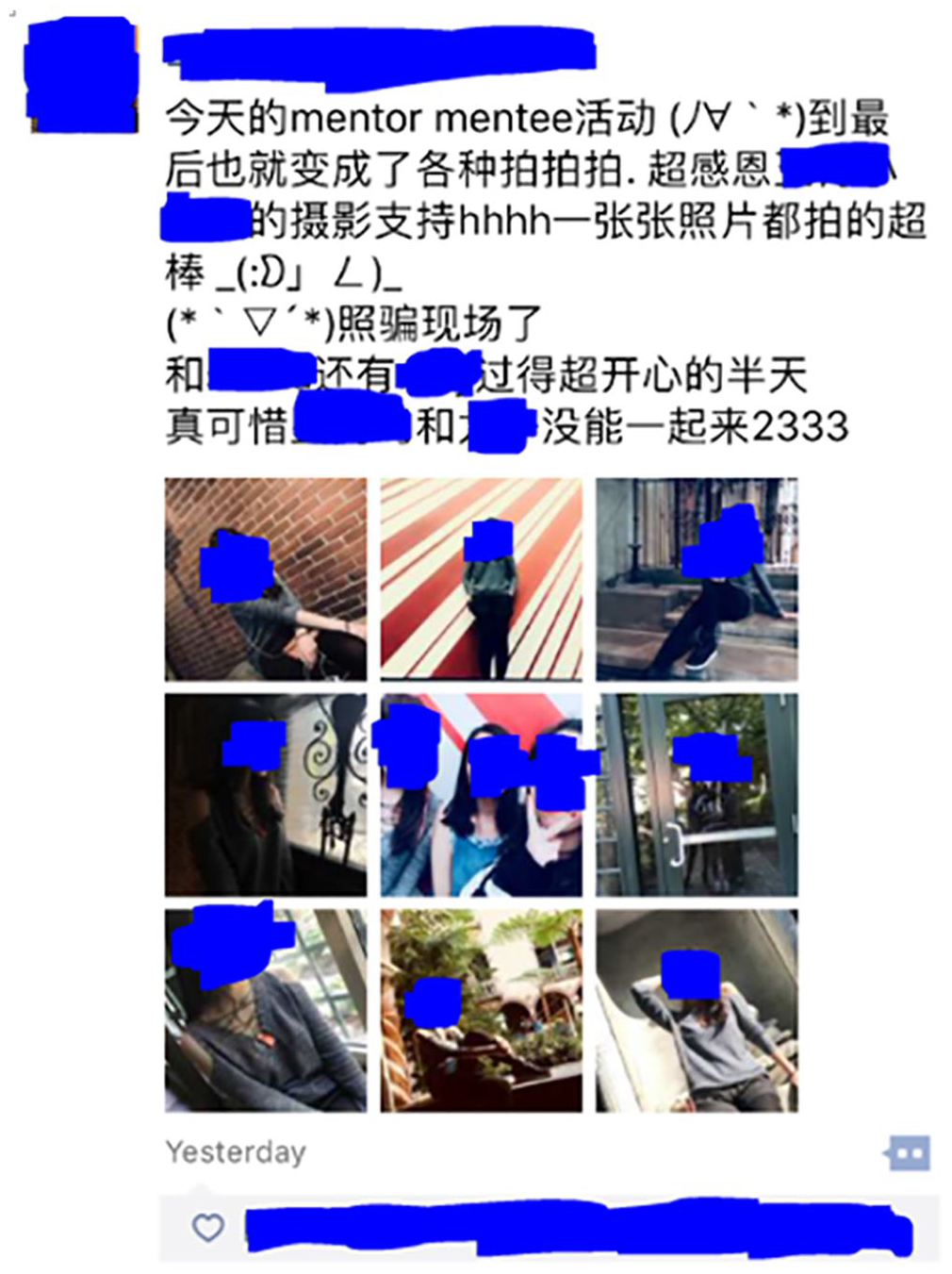
WeChat post documenting participant’s thoughts on extracurricular activity.
Beyond documenting their overseas studies experiences, the participants also drew upon translingual communication on WeChat to seek academic, social and emotional support from peers in the Chinese international student community (130 out of 464 screenshots). For example, Figure 4 captures a moment in which Sally engaged in translingual written communication to seek academic support from her peers. Together with a photo of a math problem, Sally launched a public post with three words “为什么” (why) followed by four question marks “????” to express her deep confusion and eagerness to seek support from her peers. In response to this post, Lee used math equations “f(0)>0; f(1)<0; f(2)>0” to explain the problem. Sally then replied “懂了。。谢谢” (Got it, thanks) followed by an emoji 可是怎么想到代入负一的 AT: but how did you even think of solving the problem with -1 to express her gratitude. Yet, beyond knowing the answer to the math problem, Sally also wanted to learn how Lee thought about solving the problem in this way. Therefore, immediately after demonstrating her gratitude, she added:
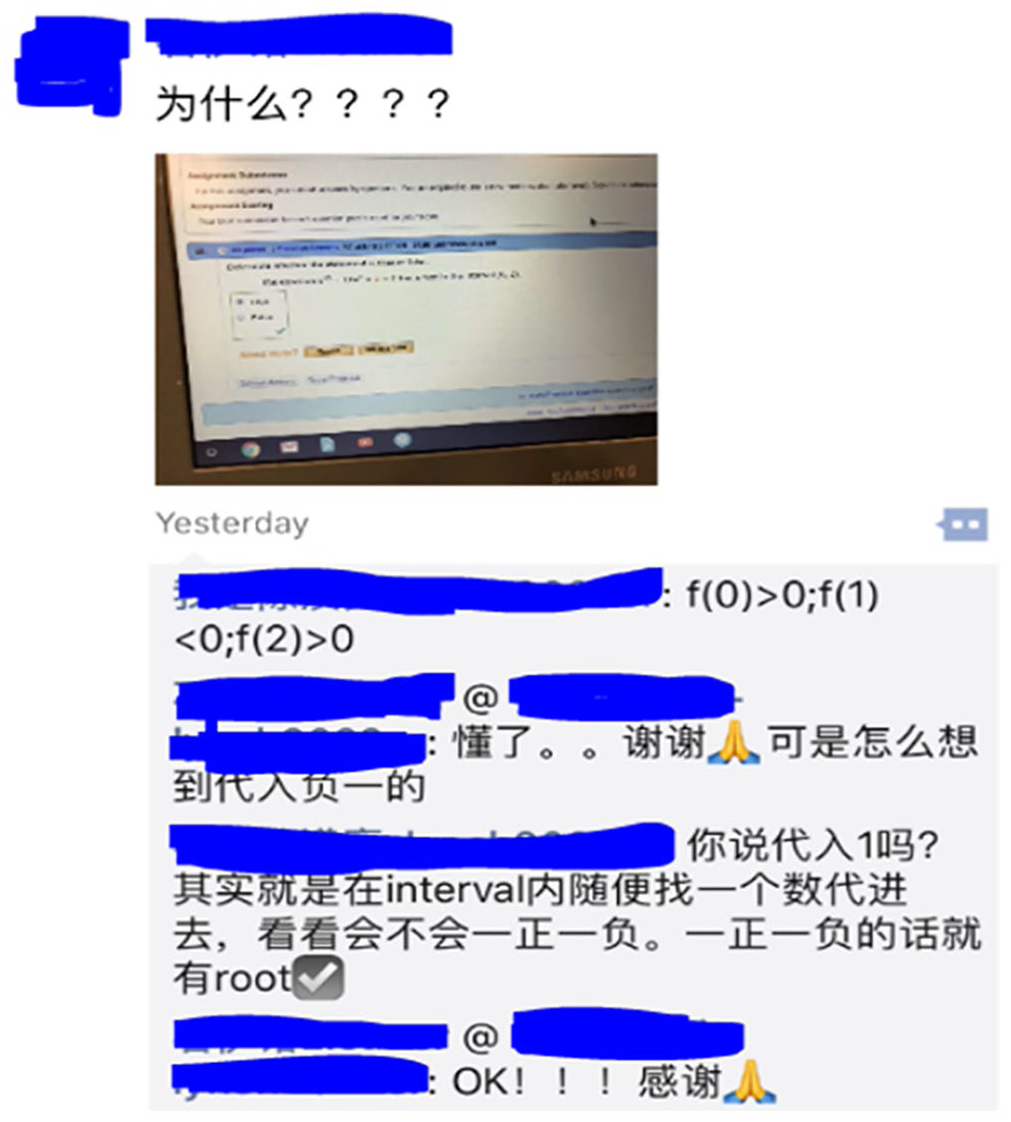
WeChat post seeking academic support from peers.
Lee responded by first clarifying whether Sally meant 1 instead of -1 (你说代入1吗). Then he continued to explain his thought process: 其实就是在interval内随便找一个数带进去,看看会不会一正一负。一正一负的话就有root.
In this sentence, while Lee primarily used Chinese in his explanation, he code-meshed with English when he referred to specific math concepts (interval and root) that they both had encountered at Hillside. Lee reported that he chose to shift to English because he did not want the corresponding math terminologies in Chinese (区间 and 根) to cause any confusion to Sally. At the end of his explanation, Lee added the emoji  to indicate the problem was now solved. Finally, to express her excitement to fully understand the solution to the math problem and her gratitude to Lee, Sally put down three exclamation marks and the emoji
  in addition to “谢谢” (thank you).
Translingual written communication was also frequently observed when the participants intended to seek social and emotional support from peers in the Chinese community. This was particularly common right before the midterm and final exams, when students’ academic stress was high. For instance, as seen in Figure 5, to seek social support by forming a study group in preparation for the coming history exam, Pat posted: 历史复习局 醒了的约么 AT: Forming a history exam review group. Anyone who is now awake and wants to study together?
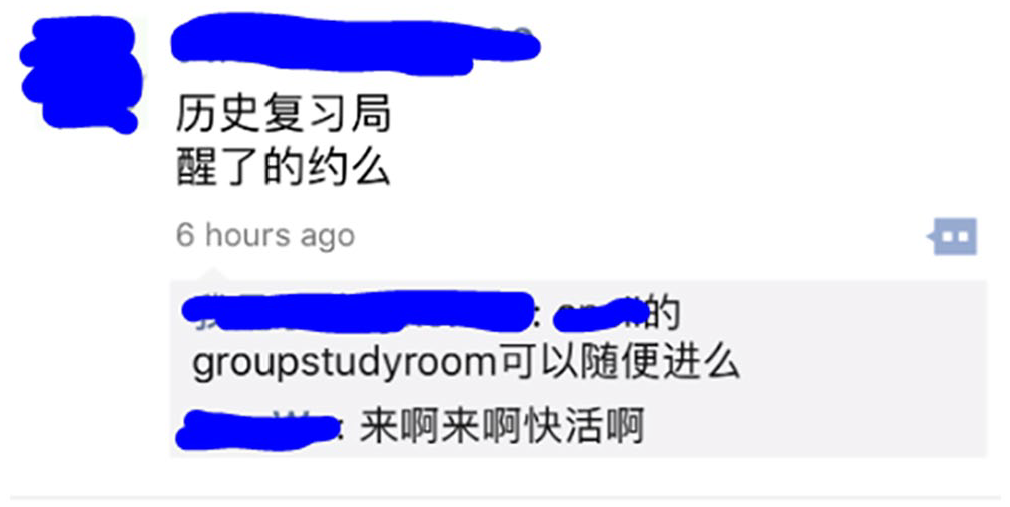
WeChat post seeking social support from peers.
He quickly followed up with another question about the location of this study group: XXX [library]的groupstudyroom可以随便进么 AT: Are we allowed to use the group study room of the library?
A peer who happened to be preparing for the history exam replied: 来啊来啊快活啊 AT: Join me, join me. It’s fun.
In this conversation, the only code-meshing happened when Pat mixed in the English phrase “group[ ]study[ ]room.” Pat explained during the interview that he chose to switch to English instead of using the equivalent Chinese translation “自习室” to reduce confusion. Because the library had numerous areas available for group work, Pat clarified that he was referring specifically to the section in which all rooms had the words “group study room” on the doors.
Finally, participants also engaged in translingual writing on WeChat to seek emotional support from peers in the Chinese community to cope with their academic stress. As illustrated in Figure 6, for instance, Rebecca vented her anxiety due to the coming exam by posting: 明天别考试,求你了,再给我一天时间刷题吧 AT: Exam, please do not come tomorrow. I beg you. Give me one more day to finish the practice problems.

WeChat post seeking emotional support from peers.
Under the text, Rebecca added a MEME of a frustrated panda face to make fun of her Chinese identity and wrote “I’m fine” followed by some Chinese cursing words to vent that she was in fact far away from being fine. According to Rebecca, she code-meshed with the common English expression “I’m fine” along with the word “fine” three times to show her helplessness. Rebecca explained that she intended to highlight the irony that in English, people would usually answer “I’m fine” to questions such as “How are you?” even if they were feeling horrible. In response to her frustration due to academic stress, a few peers liked her post and another Chinese student responded “Good luck” followed by three exclamation marks and an emoji of a four-leaf clover  representing good luck in Chinese culture.
Participants’ Engagement in Translingual Writing in Academic Contexts
Despite their multilingual capacity, rarely did the participants engage in translingual communication in academic contexts. In fact, 8 out of 10 participants demonstrated negative perceptions toward Chinese usage in academic contexts, referring to it as “lazy” “silly” and “unprofessional.” The participants reported during the interviews that their reluctance to draw upon home language in academic contexts was closely related to the English-only policy in FYW-ELL. As its course title indicated, the goal of FYW-ELL was to improve students’ academic English skills. Because of the large number of international students in FYW-ELL, especially the disproportionate enrollment of Chinese-speaking students, some Hillside writing instructors required students to use English as the medium of communication in class to maximize their opportunities to practice English.
All 10 participants showed favorable attitudes toward an English-only policy in FYW-ELL, reporting that it would benefit their academic studies at Hillside in the long run. On the one hand, eight argued that an English-only policy could provide multilingual students with opportunities to be immersed in an English-speaking environment. As Sally pointed out, since her friend circle was largely limited to Chinese peers and she often sat together with her Chinese friends in class, she rarely had any chance to practice English at Hillside. Therefore, an English-only policy could familiarize her with communication in an English-speaking environment and enhance her English proficiency. On the other hand, six claimed that an English-only policy in college should be considered a default requirement for all multilingual international students. According to Rebecca, because all international students have already passed TOEFL, they should always resort to English for communication purposes. Additionally, Shawn highlighted the heavy cost of overseas studies and considered speaking Chinese in American college “a waste of money.” He explained during the interview: 你花这么多钱出国,如果用中文,你就失去留学意义了 AT: You spent so much money in order to study in the U.S., if you use Chinese, then it defeats the purpose of overseas studies.
The participants seemed unclear about the concept of translingual writing; instead, they showed strong desire to produce native-like, grammatical-error-free texts in English in academic contexts. Four participants explicitly told me during the interview that their goal in attending FYW-ELL was to get rid of their Chinglish writing (Chinese influence on academic English writing) and produce standard English. Chinglish writing was stigmatized as “accents in writing” and grammatical mistakes. As a result, those who produced Chinglish writing in FYW-ELL were looked down upon and under substantial peer pressure from other Chinese international students. For instance, William was discriminated by his Chinese classmates because of his incapability to meet the written linguistic demands in FYW-ELL at the beginning of the semester. According to William, while he was able to pass the TOEFL requirement because of his repeated trials (five times) and examination-oriented test preparation, he had little exposure to English-immersion environments prior to college. He therefore had the tendency to mix Chinglish in writing. During a peer review activity in FYW-ELL, one of his Chinese peers who was assigned to provide feedback on William’s paper not only made fun of his deviations from “standard” English but also later posted his paper on WeChat to publicly embarrass William for his lack of English writing proficiency. William reported that this experience had traumatized him, later deciding to minimize his contact with Chinese peers altogether and aggressively socialize with domestic students to maximize his opportunity to improve English.
It is worth noting, however, while Chinese was not used in their writing products as advocated in lots of translingual writing scholarship (e.g., Horner, Lu, et al., 2011; Lu & Horner, 2013), 7 out of 10 participants reported drawing upon their home language in the process of producing standard English. From the very beginning of the semester, Chinese online resources and bilingual dictionaries were used to facilitate participants’ academic writing in English. According to the participants, when they were uncertain about the gist of certain course readings in English, they would search for the key words in Chinese and rely on Chinese scholarly publications on online platforms such as “知网” (Chinese National Knowledge Infrastructure) to get the main ideas. This, according to the participants, greatly facilitated their subsequent paper writing in English.
Seven participants mentioned that they chose to leave Chinese and Chinese online resources out of the products of their academic writing for fear of violating the classroom-level English-only policy mandated in FYW-ELL. Furthermore, two emphasized that since they were never taught how to properly refer to foreign language materials in their papers, despite their interest in experimenting with translingual writing, they were uncertain how to integrate non-English elements in their written products. For instance, interested in drawing upon Chinese scholarly publications to enrich his writing yet unclear about how to cite these articles, Bill reported that he was forced to come up with a somewhat unethical “survival strategy.” During the interview, Bill introduced how he managed to leverage his multilingual advantage to avoid in-text citations and “trick” the antiplagiarism software: 如果你先找中文论文,再用自己的话把相关知识点翻译成英文,再写进你的essay里,你就不用管烦人的in-text citation了。因为美国教授的放抄袭软件无论如何不可能发现你其实引用了中国论文的句子,因为在你essay里的出现的只有你的翻译。 AT: You don’t have to worry about the annoying formats of in-text citation if you first find literature in Chinese, then translate relevant key information into English using your own words, and finally integrate it into your essay. There is no way for American professors’ anti-plagiarism software to figure out that you actually cited something from literature published in Chinese, because the only thing that shows up in your essay is going to be your own translation.
In addition to Chinese online resources, 7 out of 10 participants also reported using Chinese-English bilingual dictionaries as a quick aid to meet the linguistic demands in academic contexts. They relied heavily on bilingual dictionaries, especially at the very beginning of their college experiences. All seven participants reported that they had bilingual dictionary applications installed on their computers or smartphones (e.g., ICIBA, YouDao Dictionary), so that they could look up unfamiliar vocabulary during the lectures or when doing homework. While five students explicitly pointed out that using an English-English dictionary would be “more ideal” because of its benefit in training them to “think in English,” they still preferred bilingual dictionaries for practical reasons. They explained that since digesting definitions in English was much more time-consuming than reading the corresponding Chinese versions in bilingual dictionaries, bilingual dictionaries stood out as a more efficient tool. For example, complaining that looking up unknown terns in monolingual dictionary hindered him from keeping up with the lectures, William chose to depend on bilingual dictionary so that he could grasp the target definitions as fast as possible. Similarly, Sally emphasized that because it took more effort to navigate English-English dictionaries, she preferred to stay with bilingual dictionaries so as not to interrupt her idea flows during academic literacy practices.
Interestingly, as the semester progressed, these seven participants all reported gradually reduced usage of bilingual dictionaries. When it came to the second round of the interviews at the very end of the semester, rarely did any report that they still resorted to bilingual dictionaries to facilitate their academic writing. This, according to the participants, was largely due to their concerns about awkward wording (or Chinglish) in their writing products. Lucy shared one example during the interview. Because she was unable to express pushing somebody out of their comfort zone, Lucy reported that she decided to rely on her bilingual dictionary and came up with the Chinglish expression “lower someone’s invisible fence.” Similar to Min-zhan Lu’s (1994) well-known example of can able to, representing a culturally based creative expression invented by multilingual writers, this phrase would make perfect sense to Chinese speakers as it was a direct translation from the common expression “降低心理防线.” Nevertheless, such a creative expression may be unclear to readers with no prior knowledge in Chinese. Lucy reported that her Chinglish expression ended up confusing her writing professor, who commented on her paper “What do you mean?” and urged her to reword it. According to Lucy, this experience has subsequently discouraged her from bilingual dictionary usage.
Discussion
The findings of the present study have indicated while Chinese international students were skillful in engaging in translingual communication during their social interactions via WeChat, they were hesitant to draw upon their multilingual linguistic repertoire in academic settings. This clearly demonstrates their intentional decision-makings when languaging across contexts. While creatively shuttling across languages to express their multilingual identities, participants were constantly weighing the stakes (i.e., academic vs. causal communication) and considering cultural factors (i.e., whether certain expressions make more sense in one language/culture than another). This has also reflected the nature of multilingualism, which “taps not only linguistic ability within single languages but also the ability to move translingually (and transculturally), across as well as within abstracted languages and cultures” (Horner, NeCamp, & Donahue, 2011, p. 286).
Based on 4 months of digital ethnographic observation of the participants’ written communication on WeChat, I found that translingual writing occurred frequently, naturally, and skillfully as a means to express the Chinese international students’ feelings and emotions along with their cultural and linguistic identities. As illustrated in their WeChat posts, the participants were able to draw upon their entire linguistic repertoire, shuttling across not only English and Chinese but also MEMEs, emojis, emoticons, numbers, symbols, and punctuations based on specific purposes and communication needs. For instance, creatively mixing “I’m fine” with Chinese curses to accompany a MEME of a frustrated-looking panda face, Rebecca vented her anxiety toward the coming exam in a humorous and sarcastic way. Shuttling back and forth with Chinese, English, and emoticons (e.g.,  , 2333), Lucy vividly documented her joy at the mentor-mentee event and how much she felt sorry for her two friends who had missed the gathering. Furthermore, exaggeratedly putting down multiple punctuations (????, !!!) and repeatedly using the emoji
  , Sally emphasized her urgency in seeking academic support from peers, her excitement in solving the problem, and her gratitude toward Lee’s prompt help. These examples have clearly demonstrated that translingual writing is a natural part of multilingual students’ communicative practices and a vivid reflection of their identities.
Nevertheless, despite their expertise on drawing upon translingual written communication to express their cultural and linguistic identities, to document their experiences, and to seek support from peers in social settings, the participants rarely adopted translingualism in academic contexts. Instead, they cast doubt on the legitimacy of home language usage in classroom settings and preferred relying on English to fulfill their written communication. Although Chinese usage was to some extent observed (i.e., browsing Chinese online resources, referring to Chinese-English dictionaries), participants’ reliance on Chinese was limited mainly to the process instead of the product in their written communication. They positioned Chinese as subordinate to English, a scaffolding tool to facilitate English expression for academic purposes.
One may argue that it is the nature of academic writing instead of the supremacy of English that has led to an absence of translingual written communication in participants’ essays. Indeed, it is true that written communication in academic contexts is often heavily censored and at much higher stakes than that in nonacademic settings such as via WeChat, naturally making it more challenging for multilingual writers to put translingual writing into practice in college classrooms (Canagarajah, 2011). Yet, translingual practices, specifically the mixture of English into Chinese, is neither uncommon among academic written communication in China, nor deemed inappropriate or unprofessional among Chinese writers. For example, in their doctoral dissertation in 2014 which was later cited in other referred journals in China, Chinese scholar Xueyan Han not only mixed “EFL” in her title, but also translanguaged effortlessly throughout her thesis to discuss the influence of cultural identity theory on English learning. Similarly, another Chinese scholar Jia Yan, whose 2006 article was cited 75 times as of January 2022, code-meshed English expressions (e.g., oneness, sameness, identity) throughout their publication on cultural identity.
The findings of this study indicate that participants’ reluctance to code-mesh Chinese into academic writing products relates to other reasons beyond their concerns about the negative influences of translingual writing on their grades. Specifically, participants’ stigmatized perceptions of Chinese usage in academic settings, describing it as “lazy,” “silly,” “unprofessional,” and “a waste of money” echo the findings of previous research indicating that “[m]onolingualism has a strong hold” on multilingual writers (Arnold, 2020, p. 337). Moreover, the fact that all 10 participants supported mandating an English-only policy in FYW-ELL and six explicitly argued that English-only should be considered a default requirement for all multilingual international students has reflected the influences of “zero point epistemology” of English (Mignolo, 2009, p. 160), based on which English is positioned as the neutral and universal means of communication and non-English languages are considered inferior, unprofessional, and problematic. Such an epistemology is dangerous and harmful, as it “deludes many [English] learners through the false promises [English] holds out for social and material gain” (Pennycook, 2019, p. 180), consequently leading them to develop language-as-problem orientations against their home languages (Ruiz, 1984). As shown in the findings, Chinese usage and Chinglish expressions in academic contexts were problematized by participants, and those who failed to produce standard written English were excluded and discriminated (see William’s experience).
These multilingual international students’ strong belief in the zero point of English is likely to be constructed back in their home country and further strengthened during their overseas college experience. Long before their studies at Hillside, the participants were likely to be exposed to an English superiority fallacy, picturing the mastery of English as a prerequisite to socioeconomic advancement in Chinese society. As illustrated in People’s Daily, one of Chinese government’s official propaganda outlets, English is positioned in China as “the language of international communication” that facilitates “economic growth and social development” and “opens doors to greater opportunities” (Li, 2020). According to People’s Daily, using English can provide Chinese people with “a fresh pattern of thinking” and “a powerful tool . . . to connect to the outside world” (Li, 2020). With the seed of the zero point ideology deeply rooted in their education back in China, it was not surprising that participants intentionally kept translingual writing outside of the academic contexts and unanimously embraced an English-only policy both in FYW-ELL and beyond upon arriving at Hillside.
During their first semester in college, the participants’ zero point of English ideology was further strengthened in FYW-ELL, a course that was said to be offered to support multilingual students’ capability to function linguistically in college by providing them academic English writing support. In fact, the course’s title itself was likely to promote a deficit perspective toward multilingual international students, positioning them as linguistically incompetent “English language learners” instead of individuals who were capable of shuttling strategically across the rich multilingual resources in their linguistic repertoires. This subsequently contributed to participants’ reported learning goal in attending FYW-ELL, which was to eliminate their “accent” in English writing. When it was their perceived objective to eliminate Chinese or Chinglish interferences on their academic writing in “standard” English, participants were likely to develop the problematic assumption that English was the one and only legitimate language in college as well as the gold standard for communication in academic contexts. Consequently, participants developed negative perceptions of their home language (e.g., “lazy,” “unprofessional”), which further contributed to their reluctance to enact translingual writing in academic contexts by including Chinese elements in their written products in FYW-ELL and beyond.
Moreover, FYW-ELL’s mandate of an English-only policy and overemphasis on English immersion has tightened the already “strong hold” of monolingualism on newly arrived multilingual international freshmen (Arnold, 2020, p. 337). When such an English-only policy was in place, multilingual international students’ home language usage was heavily stigmatized, marginalized, and illegitimized. As a result, participants blamed bilingual dictionary usage for impeding their capability to “think in English.” Similarly, creative Chinglish expressions (e.g., “lower the invisible fence” in Lucy’s essay) that reflected multilingual and multicultural writers’ agency, cultural awareness, and identity negotiation (Lu, 1994) were deemed as a sign of linguistic incompetence and Chinese online resources were regarded merely as scaffolding tools during the process of academic writing without being treated as legitimate references in participants’ written products. Participants’ dynamic translingual written communication was limited to nonacademic settings and their cultural and linguistic funds of knowledge (Gonzalez et al., 2006) were forced outside of the classroom doors, despite their potential as a powerful tool to support multilingual international freshmen’s initial academic adjustment during their transnational, transcultural, and translingual overseas journeys.
Rethinking Translingualism in College Composition Classrooms
Throughout their first semester in college, the participants were able to frequently and skillfully tap into their rich linguistic resources to document their experiences and form within-group support systems among members in the Chinese international student community. As seen in their WeChat interactions, translingualism is not an artificial construct to be learned but rather a lived reality of multilingual students’ daily communication (Menken & Sánchez, 2019). Under this circumstance, promoting an English-superiority fallacy and reinforcing a classroom-level English-only policy is a violation of multilingual students’ linguistic human rights (Kubota & Okuda, 2016; Tochon, 2019). Since linguistic superdiversity has become a key feature of today’s college composition classrooms (Poe & Zhang-Wu, 2020), multilingual students’ home language usage should not only be allowed but also be encouraged in academic contexts. Only by doing so would it be possible for multilingual students to see their rich linguistic resources as assets and view their home language usage and linguistic differences in a more positive light.
In this study, participants’ code-meshing of Chinglish in academic writing should not be framed as grammatical errors or linguistic incompetence. Instead, Chinglish could be treated as valuable pedagogical moments for student writers to learn how to negotiate for meanings based on their identities and communication goals. For example, similar to Min-Zhan Lu’s (1994) example of “can able to,” Lucy’s Chinglish expression “lower someone’s invisible fence” could be a helpful teaching moment for FYW-ELL instructor and students to discuss creative expressions in translation and how they reflect the transcultural and translingual identities of multilingual writers. Pairing such a discussion with reflectional activities such as the Cultural and Linguistic Identity Self-Portrait (Zhang-Wu, 2021c, p. 478) in which students are invited to rely on colors and patterns to generate a self-portrait to reflect on how their rich cultural and linguistic backgrounds define who they are, multilingual students are likely to detach themselves from their presumed identities as powerless forever language learners of English and rediscover their full potentials as multilingual beings.
It is worth emphasizing, however, that simply lifting the English-only rule in college composition classrooms and welcoming students to use their home languages may not result in their final decision to incorporate their linguistic assets in academic written products. This is likely because “transforming linguistic expectations and practices alone does not necessarily lead to leveling inequality” (Kubota, 2020, p. 169). As discussed earlier, the seeds of English-superiority fallacy are likely to have been planted in participants’ minds long before they arrived in the United States. When these multilingual student writers entered FYW-ELL, they may feel too powerless to adopt their agency and engage in translingual writing in academic contexts where monolingualism stays as the unspoken norm (Arnold, 2020). To prevent home languages from being minimized as inferior to English, college composition teachers have an important role to play in problematizing the zero point of English and explicitly inviting home languages into the classroom.
College composition instructors need to raise students’ awareness of the history and danger of the zero point of English (Mignolo, 2009). Because the creation and widespread use of English is deeply rooted in the colonial history of Western powers (Mignolo, 2009; Pennycook, 2019), it is necessary to explicitly teach multilingual writers to disobey the rampant English-only rules in society and encourage them to draw upon their rich linguistic repertoires whenever possible to facilitate meaning-making across the contexts. This could further function as a bottom-up endeavor to bring multilingual students’ voices into academic written communication and address the current troublesome situation in the field where “the dominance of composition scholarship by English monolingualism is manifested not simply in the language(s) of the scholarship produced but the language(s) of scholarship cited” (Horner, NeCamp, & Donahue, 2011, p. 272). Only by doing so can it be possible to transform translingual writing from a practice in the classroom to an active force to challenge the English-only ideological stance in educational institutions and beyond (Menken & Sánchez, 2019; Zhang-Wu, 2021a).
Whelan Ariza (2019) has wisely pointed out, “By allowing language learners to utilize their existing language knowledge for pre-thinking skills in order to perform academically in an additional language, students will have a richer comprehension of the academic tasks” (p. 1). Home languages must be considered as valuable resources that facilitate students’ biliteracy development instead of stigmatized codes that are too “silly” and “unprofessional” to be used in academic settings. As shown in the findings of the study, despite participants’ negative ideologies toward home language usage, resorting to Chinese online resources was in fact particularly beneficial in facilitating their holistic literacy practices in American higher education. Drawing upon knowledge and resources in Chinese, participants were able to grasp certain concepts more efficiently and deeply than reading them only in English.
In fact, since diverse perceptions are often present in non-English resources, legitimizing non-English materials in academic writing is an empowering moment to decenter English and Eurocentric knowledge and cultivate critical thinking among students. Weighing all the benefits of home language usage in academic contexts and acknowledging multilingual students’ translingual communication reality beyond the classrooms, in addition to lifting a classroom-level English-only policy and allowing students to draw upon their funds of knowledge (Gonzalez et al., 2006), college composition instructors must also explicitly invite them to include these resources in their writing products. To realize this potential, one possible action is to provide clear instructions on how to properly cite non-English sources and translated materials. When multilingual students are offered concrete guidance to incorporate non-English resources in their academic writing, incidents such as Bill’s somewhat unethical strategy to “trick” the antiplagiarism software by translating sentences from Chinese scholarly articles would be less likely to occur. While it may seem too challenging for monolingual college composition teachers to evaluate non-English sources in multilingual students’ academic writing, previous research has suggested that teachers do not need to master students’ languages in order to bring translingualism into academic contexts and leverage it as a tool to promote multilingual students’ holistic literacy development (Menken & Sánchez, 2019). Instead, instructors must reposition themselves as co-learners together with their multilingual students to enact a translingual stance (Horner, Lu, et al., 2011) in academic settings and reimagine meaningful written communication beyond English-only.
Conclusion
Exploring international college freshmen’s written communication throughout their first semester in college, this study drew upon digital ethnography (Pink et al., 2016) and traditional interview methods to initiate an empirical investigation of students’ translingual written communication. Examining translingual written communication both within and beyond academic contexts, the findings of the study have indicated that translingualism is an integral part of multilingual people’s lived experiences; keeping home language out of academic contexts pushes against the linguistic superdiverse reality of today’s globalized world, which dehumanizes users of othered languages. To empower students and respect their linguistic human rights, English needs to be “place[d] alongside and equal to a pluriversality of languages” (Cushman, 2016, p. 236).
Despite its potentials and pedagogical significance, this study is limited by its sample size. While the multimodal data collected through digital ethnographic observation on WeChat vividly illustrates the richness and skillfulness of a small group of multilingual students’ translingual written communication, future studies could adopt survey methods to sample a much larger and more diverse student population (e.g., all FYW students) and investigate patterns in their literacy practices across contexts. Furthermore, the findings of the study indicate that translingual written communication occurred frequently in social contexts throughout the very first semester of multilingual students’ college experience. Yet, it is unclear whether their degree of engagement in translingual writing would change years into their overseas studies. Future studies could adopt a longitudinal design and explore students’ written communication experiences across contexts throughout their entire undergraduate years.
Advocating for translingual writing as a force of empowerment and a way to promote social justice should be a concrete action instead of an empty slogan (Kubota, 2020). In this process, teachers hold a central role in promoting culturally and linguistically responsive pedagogy, whose localized decisions and agency on classroom language policies have a long-term impact on students’ academic and identity development (Zhang-Wu, 2017). Indeed, we still have a long way to go before the zero point of English could be fully eradicated. That said, advocating for the linguistic human rights of students from linguistically superdiverse backgrounds and rethinking college composition classrooms as a safe space for multilinguals to (re)construct their lived experiences and identities in translingual written communication could be a helpful first step toward tearing down the English-only wall.
Footnotes
Declaration of Conflicting Interests
The author declared no potential conflicts of interest with respect to the research, authorship, and/or publication of this article.
Funding
The author received no financial support for the research, authorship, and/or publication of this article.