



Abstract
This article analyzes the crystallized learning disposition formed in secondary schools and its persistent influence on the transition between educational sectors and the workplace. Using interview data from eight adults who graduated from a prestigious university in Korea, this study reveals that exam-inclined self-direction, a manner of self-direction without self, is strongly associated with types of knowledge and the method of constructing the self under extreme ranking competition. Exam-inclined self-direction, firmly ingrained in the students, has momentum beyond secondary schools, in which it was cultivated, and has constrained some of their life choices. This article problematizes some ideas of self-direction and discusses exam-inclined self-direction as socially and institutionally conditioned, as well as the reason it has survived in the Korean social context. Finally, this article calls for the in-depth investigation of a new category of learner, exam-friendly adult learners.
Keywords
The ways in which school experiences influence learning in adulthood is an important issue in the field of lifelong learning. According to Mannheim (1952), experiences are not merely accumulated sequentially—the historical and cultural experiences during adolescence have a significant effect on the nature and interpretation of later experiences. Similarly, Alheit and Dausien (2002) contend that learning within and through one’s life history is “interactive and socially structured [. . .] but it also follows its own ‘individual logic’ that is generated by the specific, biographically layered structure of experience” (p. 16). Schools, as institutionalized social learning management apparatus, have been considered to structure humans’ learning in a specific way through standardized curricula, examinations, and degrees (Allen, 2013; S. Kim, 2015). Specifically, how do culturally bounded school experiences influence the formation of a particular “individual logic” and subsequently shape individuals’ later academic and working lives?
The biographical influence of early school experiences can be clearly observed in South Korea. South Korea is well-known for its academic achievement in the Organisation for Economic Co-operation and Development’s Programme for International Student Assessment (PISA) report. In PISA 2012, for example, Korea’s youth ranked first/second in reading, first in math, and second to fourth in science among Organisation for Economic Co-operation and Development member countries. This may result from very intense competition for college admission and repeated problem-solving in tests for gaining higher grades and ranks within the education system. However, many scholars have criticized this approach to preparation for multiple-choice exams as depriving students of pleasure in learning, academic thinking, and independent thinking as well as making students adjust themselves to the examiner’s viewpoint (D. H. Kim, 2010; S. Kim, 2015; Shin, Shin, & Kwon, 2004). How exactly do these conditions induce a particular inclination toward certain learning patterns and shape Koreans’ learning?
Adult education has attempted to establish its own academically independent perspective based on the identity of the adult as independent of that of the child. Much early work on adult learning sought to delineate the process and characteristics of adults’ autonomous and self-directed learning (Merriam, 1993; Tennant & Pogson, 1995). Efforts to define what is unique about learning in adulthood are undoubtedly of enduring value (Merriam, 1993); however, S. Kim (2001) points out, “Since learning theory has been separately discussed in childhood and adulthood, reconstruction of learning theory including both, in particular, collectively covering the entire life of humans, has not been achieved” (p. 14). Thus, instead of an exclusive focus on adult learning, it is important to expand our understanding of childhood, adolescents, and adulthood to research on lifelong learners. In terms of developing theories on lifelong learning, the nature and continuity of learning disposition induced by school experiences seem natural targets for investigation.
Learning disposition comprises a complex combination of learners’ motivations, beliefs, and attitudes toward learning and their capacities (Bloomer & Hodkinson, 2000; Evans & Waite, 2010); given that learning disposition manifests as the actions and decisions of the individual, it cannot be discussed without using notions of self-direction. The present research problematizes some ideas of self-direction as a teaching method, personal attribute, or the perception that self-direction varies by situation (Brockett & Hiemstra, 1991; Grow, 1994; Ponton, Derrick, & Carr, 2005). This research instead posits that self-direction takes diverse forms as a kind of social practice within particular social conditions. Brookfield (1993) raises the question of “how control can be exercised [by the student] authentically in a culture which is itself highly controlling” and discusses ‘true’ self-direction (p. 234). However, the present article focuses on empirical research on the nature of self-direction that is demonstrated in such cultural constraints and the mechanism by which a particular mode of self-direction is continued, modified, or reproduced in adulthood, rather than on a normative judgment on the authenticity of self-direction.
In summary, this study aims to provide a deeper understanding of the mechanism by which schooling experiences have a lasting impact on adult learning. The research questions are as follows:
The life history method is used with eight graduates from a prestigious university in Korea. In addition, this study provides insight into “elite” (Deresiewicz, 2014, p. 3) adult learners with high educational attainment (i.e., those who have excelled in secondary schools and graduated from prestigious universities).
Literature Review
Learning Disposition: Persistent or Fragile?
Learning disposition is defined by Evans and Waite (2010) as “orientation to learning” that manifests “complex sets of adults’ motivations, beliefs and attitudes toward learning and their own capabilities to achieve in and through learning” (p. 164). Similarly, Bloomer and Hodkinson (2000) define “disposition to learning” as “learners’ perceptions of and approaches to learning” (p. 583). Learning disposition is a comprehensive concept that includes learner identity, a disposition toward ourselves as learners (Biesta, Field, Hodkinson, Macleod, & Goodson, 2011). What is really important here is that dispositions are “[persistent] habits of mind, tendencies to respond to situations in certain ways” (Katz, 1988, p. 30) and that they guide the interpretation and subsequent revision of experiences in characteristic ways (Carr, 1999). Thus, learning dispositions influence later learning (Biesta et al., 2011; Bloomer & Hodkinson, 2000; Evans & Waite, 2010).
If this is so, how robust and persistent are dispositions? The mutability of learning disposition is an important matter of debate concerning the relationship between school experiences and adult learning. The literature shows that learning disposition or identity can easily vary in different situations (Bloomer & Hodkinson, 2000; Evans & Waite, 2010). Evans and Waite (2010) argue that orientation to learning “can change according to specific experiences of success or failure, opportunities or setbacks at any stage” (p. 164). Similarly, Bloomer and Hodkinson (2000) show that dispositions to learning can transform over time, even in a short period.
Other researchers, however, claim the robust, lifelong impact of learning disposition is shaped in the school years. For example, Gorard and Selwyn (2005) assert that early school experiences form a long-term orientation toward learning. More specifically, Belzer (2004) shows that experiences in school affect adult learners’ view of their current learning context; when a nonformal learning environment does not coincide with their prior learning experiences in school, learners often feel stress or tension and stop learning.
Of course, learning disposition is not necessarily robust or persistent. Thus, the present study focuses on learning disposition that is socially structured and maintained over long periods of time through intensive practice by learners.
Self-Direction as a Social Practice
Self-directed learning among adults and the process through which it occurs have been of significant interest in the field of adult education (Merriam, Caffarella, & Baumgartner, 2007). One of the main controversies over self-direction concerns whether it is a matter of instruction method or a personality trait. For example, Brockett and Hiemstra (1991) argue that “self-direction in learning refers to two distinct but related dimensions: as an instructional process where a learner assumes primary responsibility for the learning process” (p. 24) and as a personality characteristic centering on “a learner’s desire or preference for assuming responsibility for learning” (p. 24). Grow’s (1994) instructional models demonstrate how teachers can help students become self-directed. However, more emphasis has been given to the view that being self-directed is a personal attribute of learners (Merriam et al., 2007). Accordingly, the Self-Directed Learning Readiness Scale (Guglielmino, 1977) has received much attention.
The second debate concerning self-direction is whether it is innate or situational (Merriam et al., 2007). Some papers note the situational characteristic of self-direction. Candy (1991) describes self-direction as being expressed in different ways according to the combination of four variables (technical skills related to the learning process, familiarity with the subject matter, sense of personal competence as learners, and commitment to learning). Self-direction, therefore, is assumed to vary “from situation to situation” (p. 309). In addition, Ponton et al. (2005) claim that the exhibition of autonomy is domain-specific.
This article rejects this dichotomy and posits that adult self-direction is a construct of social structure and a learning disposition that is persistent. Brookfield (1993) stress the hegemonic aspects of self-direction based on the political context, pointing out that “if the range of acceptable content has been pre-ordained,” we are “controlled rather than in control” (p. 234). Brookfield takes a formal-logical view that controlled self-direction” is not genuine self-direction; thus, genuine self-direction is impossible inside a school. However, what we need is not a normative judgment on the authenticity of self-direction but for empirical research to clarify, in specific ways, the nature of self-direction that is displayed in such restrictive environments and how it persists.
It is necessary to note here the difference between self-direction and self-regulated learning. The literature sometimes views the two concepts as identical, but they should be differentiated. Self-regulation is often understood as a process that aims at academic achievement (Pintrich, 2004; Zimmerman, 2002). For example, Zimmerman (2002) defines self-regulation as “the self-directive process by which learners transform their mental abilities into academic skills” (p. 65). More specifically, Zimmerman defines the self-regulatory process in terms of the application of eight skills: setting specific proximal goals for oneself, adopting strategies accordingly, monitoring progress, shaping one’s physical and social context to meet goals, developing time management skills, evaluating one’s methods, attributing causation to results, and actively adapting future methods.
To summarize, self-regulated learning is a microscopic, cognitive, and instrumental concept. Thus, self-direction should be addressed in terms of social and institutional contexts that shape and constrain the nature of the ‘self’ and the ‘direction’ in self-direction. This is reflected in the research questions addressed in the present study.
Institutional Context: The Korean Education System
The entrance examination system is one of the strongest factors that influences Koreans’ learning disposition. The Korean entrance examination system is characterized by prescribed problem-solving and standardized test rank competition. S. Kim (2015) argues that repeated problem-solving to prepare for multiple-choice exams trains students to grasp the examiner’s viewpoint and find correct answers, making them dependent and closed-minded. Similarly, D. H. Kim (2010) comments that “the classrooms in Korean society do not teach the joys of learning, but, rather, focus on the acquisition of ‘quiz-style’ knowledge for exams” (p. 124), which causes students to move away from academic thinking.
Schools announce student ranks to promote competition, and students shape their learner identities through a sense of superiority or inferiority derived from the publicized ranks (D. H. Kim, 2010). According to Shin et al. (2004), those who scored in the 99th percentile in the Korean SAT said that the largest factor in their academic success was their parents’ expectations and competition with peers. In addition, the highest achievers are reported to be pressured to choose careers that befit them as members of prestigious high schools or universities, rather than being allowed to make decisions based on genuine interest or abilities. In sum, the Korean educational context yields a strong learning disposition that is firmly ingrained in the students. Thus, examining the impact of the learning disposition engendered by the Korean education system is of particular importance.
Methodology
Life History
This study conducted life history research on elite adult learners in Korea. The life history method, which achieved prominence in the Chicago sociological research tradition in the early 1920s, has been widely used for educational studies since the 1980s (Goodson & Sikes, 2001). Life history research in the adult education field explores questions of agency, reflexivity, and identity formation in relation to social structures (Biesta et al., 2011; West, Alheit, Andersen, & Merrill, 2007). Sawchuk and Taylor (2010) argue that institutional and personal factors influence life choices and transitions in learning and work. According to Dhunpath (2000), the life history method has power as an “authentic means of understanding how motives and practices reflect the intimate intersection of institutional and individual experience in the postmodern world” (p. 544).
Life history research “does not study lives themselves but rather texts of lives” (Biesta et al., 2011, p. 9), because life stories narrated by adults are not an objective account of the facts of their lives but rather “a partial, selective commentary on lived experience” (Goodson & Sikes, 2001, p. 16). Through analyzing and interpreting these life stories, life history research examines the “crucial interactive relationship between individuals’ lives, their perceptions and experiences and historical and social context events” (Goodson & Sikes, 2001, p. 2). Thus, this article employs the life history method and presents case studies of eight life stories to investigate the characteristics of the embedded learning disposition in Korean secondary schools and lifelong learning patterns set against the wider Korean sociocultural context.
Research Participants
The research participants were eight graduates of a prestigious Korean university (henceforth referred to as “University X” to ensure anonymity) in their mid-30s. The participants entered the same department (of social sciences) in the same year in the late 1990s. There were three criteria for selecting the research participants. First, this article identifies the top students who had thrived in an institutionalized formal learning setting as graduates of University X, where only students in the top 1% of scores on the Korean SAT can enter. Second, social science majors were selected (instead of majors with direct links to particular professions) for more detailed information on the complicated decision-making process regarding career paths. Third, participants in their 30s were chosen to enable a close examination of learning at work and thoughts about changing jobs while also allowing the recollection of relatively vivid memories of their secondary schools and school-to-work transition. To ensure the anonymity of the participants, a detailed description of each major was omitted.
Preliminary interviews with all 15 students who had entered the department in a particular year revealed that they did not share the same learning disposition. These students were placed into three groups (absorbed types, genius types, and resistant types). While absorbed types chose full conformity with the system and emphasized their efforts and perseverance, resistant types were critical of the system, defined schools as hothouses for higher grades, and pursued their own learning besides studying for exams. Genius types were neither critical of nor totally immersed in the system; because they obtained high scores without great efforts, they were confident in their intelligence and felt superior to absorbed types. Although 7 out of 15 people had different types, 8 (the greatest number) were the absorbed type. This type of graduate was chosen because this research aims to investigate the linkage between institutions and cultures that shapes the meaning of self-direction, learning dispositions that individuals have gained in the course of actively subjugating themselves to the learning goals of the system, and the patterns of life courses. Actively conforming to the education system was eschewed to some extent by those in the other categories. A comparative study of the differences between the two other types would be an interesting follow-up study, which will be addressed in the Discussion section.
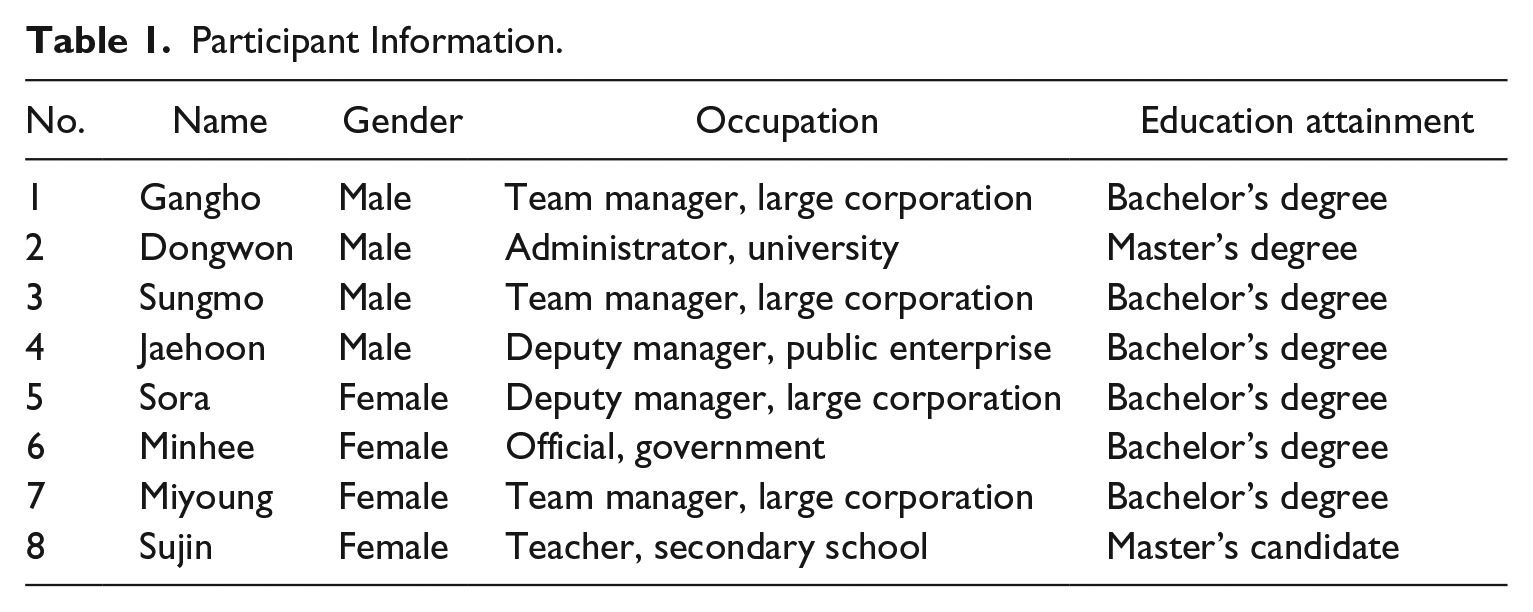
The information on the eight research participants is provided in Table 1. The participants (four male, four female) were aged either 33 or 34 and were from middle-income families.
Participant Information.
Data Collection and Analysis
The face-to-face informal interview is the most common strategy for data collection in life history research (Goodson & Sikes, 2001). The present article collected its main data from two or three in-depth and semistructured interviews with each participant. The focus of the first interview was a detailed story of how the participants had studied in secondary school to grasp the nature of their learning disposition. The second and third interviews focused on the tensions and conflicts in the participants’ university major, career decision making in the process of the school-to-work transition, and learning at workplaces. Each interview took 2 to 3½ hours.
The constant comparative analysis method was used in this study (Strauss & Corbin, 1990). The data analysis was conducted during the data-gathering period. As each interview was conducted and transcribed, the transcripts were read repeatedly and sorted in chronological order (from secondary school to the workplace). Interview data about secondary school were first coded through an open coding scheme, and then the codes were categorized to find repetitive patterns of participants’ actions and attitudes regarding the college entrance competition system. The codes and categories were frequently compared with other data within the same transcript and between different transcripts. The three major categories discovered were compared with each other and consolidated into an emerging theme, “exam-inclined self-direction.” The other data were coded and categorized to understand the patterns and regularity of this learning disposition regarding the transition between educational sectors and the workplace. Through a constant comparative process, themes about patterned variation emerged; the findings are discussed below.
Findings
Secondary School: Formation of Exam-Inclined Self-Direction
Within the Korean educational system, which focuses on college entrance competition, the aims of study are fixed and learning content is prescribed. The participants had not been required to discover or construct the aims of their studies; instead, a dictated aim was accepted. Given the highly stratified hierarchy of Korean universities, this dictated aim for academically talented students was extremely simple: entering University X. Studying for the entrance exam was essentially a means to elevate their relative position among their peers across the nation. Students had a reasonable sense of their national rank based on a series of mock examinations. With the multiple-choice exams regulating what was to be learned, repetition and accurate memorization become critical. The most fundamental part of the exam preparation was familiarizing oneself with a standardized test question format. In this context, the participants formed an exam-inclined self-direction with three elements: the quantification of learning, synchronization with others, and subjugated subjectification.
Quantification of learning
The participants were highly self-directed in that they accurately quantified a day’s learning allocation as a basis for their study plans. These plans were defined in not only a relatively long-term period of months and weeks but also in short-term units, such as days and hours. For the participants, learning was quantifiable “work” rather than study.
There was no exception. I had to do five pages of math, memorize 20 or 30 English words, and then review wrong-answer notes. It was all fixed. (Sungmo) I mean, it was like work rather than study. I was only interested in the amount of learning and not really in the learning content. (Dongwon)
The participants felt a great sense of achievement and self-satisfaction after completing all the plans. Furthermore, they could quickly quantify the results of their studies into tangible results, such as an increase in rank and test scores. This fueled their persistent immersion in such studying despite not having any actual interest in what they had learned. This self-gratification mechanism was a critical condition according to which the participants’ self-direction functioned and grew.
Synchronization with others
The participants strived to synchronize their thoughts with those of their teachers by writing down every word the teachers said in class and thinking from the teachers’ perspective.
I even tried to write down all the teachers’ jokes. Later, reading the jokes written in my textbook, I could vividly recall the scenes of their instructions. During the tests, I asked myself what the teacher would think about this question and read questions in their voices in my mind. (Sujin)
Evidently, this was not enough to study diligently, but the students had to grasp the examiner’s intent and modify their thoughts according to the specifications of the test. Such synchronizing is an effective approach to multiple-choice tests that does not demand students’ own thinking or logic.
In fact, I knew that I shouldn’t think too much in solving questions. Thinking deeply could make me confused. I didn’t have to go deeper into the world of knowledge. [. . .] I knew this instinctively. (Miyoung)
Thus, instead of developing their own thinking, they became deeply accustomed to easily summarizing and organizing knowledge, which gave them a definite feeling of having studied something. With this voluntary and conscious synchronization with others and separation from knowledge, they could study more effectively by erasing their sense of “I” (i.e., self-direction without self).
Subjugated subjectification
The third element of Korean formal education’s mode of self-direction is subjugated subjectification. The participants had taught themselves to adapt to the system, and they managed their emotional and mental energies to suit exam-oriented learning. To express this process in the language of Foucault (1988), by shaping and controlling themselves as “test takers,” they showed self-direction in performing technologies of the self, a series of techniques that allow individuals to police and regulate their bodies, thoughts, and conduct. In line with this conceptualization, participants voluntarily gave up resistance and never problematized the highly controlling cultures of schools; instead, they sought out small pleasures within the system.
After I was compelled to stay late in class at a middle school, I accepted the reality without any specific complaints. [. . .] Although other friends complained about their extremely controlled lives in schools, I thought it was quite good. I found joy in playing basketball during lunch breaks. (Gangho)
Furthermore, they acclimatized themselves to the system of college entrance exam competition by viewing all factors that distracted them from their studies as serving no practical purpose. Career exploration also belonged to the “useless thoughts” category.
I studied only to get higher scores and did not explore my career options. I thought it was a waste of time. [. . .] Concentrating on studying for exams without otiose thoughts was important. If I achieved top scores, I could choose any major. (Dongwon)
They efficiently managed their emotions and mindsets through diary writing. They consciously tried to record their emotional distress from low scores or boredom from monotonous studying. They also recorded their aims and anticipated rewards to cheer themselves up. However, they also punished themselves when they thought about something else or procrastinated in their studies: For example, Sora struck her palms as a punishment. The more they became skilled at blocking such thoughts of the outside world and avoiding fundamental questions about the very conditions in which they were situated, the more immersed the participants became in their exam studies. That is, they actively subjugated their selves to the system.
In summary, exam-inclined self-direction is characterized as self-direction without self (i.e., self-direction in subjugating themselves to the learning goals of the system but not in their learning approach). This particular learning disposition was so embedded that it continued to influence their methods of learning in higher education and the workplace.
Learning Disposition in Higher Education
The transition from secondary school to higher education is a critical event in people’s academic lives. The participants also faced a sudden change: ambiguity in the aims and range of their studies. After fulfilling their long-cherished and clear goal of entering University X, the participants were suddenly expected to explore and develop their own life goals without formal guidance. They struggled to do so as they were highly conditioned to focus on clear, predetermined goals.
Furthermore, the nature of knowledge at the university level was different. The professors in the participants’ department often required students to write or talk about their own thoughts. Instead of memorizing obvious knowledge, they had to read many books and develop their own logic according to their interests. This was a big shock.
In my first semester, I was really shocked. Professors kept demanding my opinion, but I did not have any thoughts! (Sigh) [. . .] That was so difficult. I felt lost. I was in a panic throughout my college years. (Miyoung)
The participants experienced a large gap between two different methods of study. Whereas exam-inclined self-direction worked with the absence of self, in college study, they could not study without a sense of “I.” This evoked a growing sense of crisis and an understanding that change was needed. However, the actions they took fell short of bridging this gap.
Frustration from exam-inclined self-direction: Distinction between me and potential academics
When they failed to successfully enter the world of their major, the participants were frustrated, and Gangho and Miyoung even regretted that they had not applied for a major that requires a similar method to that required for studying in secondary schools.
I chose the wrong major. I was quite confident at doing something when someone told me what to do and competing and learning fast within a fixed curriculum. Later, I thought I should have gone to a college of law or economics, where learning is based on memorization. (Gangho)
Such conditions were good opportunities for the participants to reflect on and transform their learning disposition; however, they responded to these difficulties by drawing a line between themselves as proficient at exams and potential scholars. The participants classified themselves into two groups: good performers only in terms of exams, and potential scholars. They placed themselves in the first group: “I was a person who was good at only exams. [. . .] So I did not think about continuing to study in the future” (Sora).
Thus, even after entering college, the participants assessed their aptitude for studying by comparing themselves to others. Through the distinction between themselves and a minority of would-be scholars, they decided to view the possibility of living as a scholar as unviable.
Regression: Returning to exam preparation
Because the participants could not engage in the world of their major, the civil service examination emerged as a convincing alternative. To those who had experienced success only through exams, when exposed to situations without clear goals, the easy way out was to prepare for exams again. In Korea, three difficult state exams are administered to select the nation’s diplomats, administrators, judges, and prosecutors and are considered shortcuts to success. Among the eight participants, five had attempted such exams. They felt no particular sense of resistance against preparing for exams again, and they took a few semesters off to concentrate on exam preparation. Gangho and Jaehoon even felt that studying for the exam was in fact “really fun” because it consisted of a considerable amount of memorization, which gave them a clear sense of studying something.
There was a lot to memorize, so I really liked studying for exams. It fit me. [. . .] The instructor taught very clearly what I had not completely known before. Listening to the instructor’s explanation, I said “Ah! Ah!” After memorization, I solved test questions. I got this feeling that “Ah, so now I am learning something.” In college, I never got this feeling. (Gangho)
With fixed knowledge as the object of learning, the participants could regress to their previous mode of learning; the ability to study for an exam was readily available for application when required. Returning to exam preparation made them feel a sense of stability at college.
Connecting learning disposition to career choices: Multiple-choice career paths
When in college, the participants were so satisfied and convinced that entering University X meant a secure, stable lifestyle in the future that exploring career options was no longer urgent. The question “Who am I?” was easily answered by the statement “I am a student at University X.” However, as their graduation date neared, they needed to decide on their careers. They transformed the career path issue into a multiple-choice question:
I listed some secure jobs, and I wiped them out one by one. Graduate school? No. Becoming a teacher? No. Civil service exam? [. . .] like this. It was a kind of elimination. It was quite simple [. . .] it was not really a product of deliberation. (Sungmo)
Thus, the multiple-choice question not only was a particular format of test but also functioned as a way of thinking and life. Minhee passed the state civil service exams and started to work as a high-ranking official in the government. Meanwhile, for Miyoung, who failed in the same exam, the remaining option was to work at a company. As she had ranked the civil service higher than a company, she thought that if she had to go to a company, she should enter the biggest company, which would impress others. Sungmo and Sujin also entered big companies on this basis; they did this quite easily with the credential of having graduated from University X.
Learning Disposition at the Workplace
Unlike their school days, in the vocational world, there were no clearly defined goals and learning tasks. While adults have been reported to experience a period of moving toward individualization of learning, away from the institutionalization of learning (Merriam et al., 2007), the participants had trouble in directing their own learning autonomously at the workplace.
Retention: Bounded by learning disposition
The participants had to identify their own goals and dreams. However, this was not easy. Sungmo worked as a manager of an education department at a large company. He was evaluated as a good worker; however, his job was not rewarding for him because he had no clear career goal or life vision.
To tell you something extreme, the only lifelong dream in my life was to enter University X. Then, I never really had other dreams. I also feel this contradiction. As an education manager, I have told employees “Have a dream!” but I have been dreamless. [. . .] Actually, I don’t like my work. I don’t know what I really want to do with my life. However, I cannot go outside to find my aptitude or the true meaning of life. I was always on the path of success and never deviated, so maybe I am scared of it. (Sungmo)
The participants had been model students and had faithfully followed a path of continuous success in terms of college entrance and employment. The journey of discovering their real forte and meaning in life was defined as a “deviation” on the basis that it was not allowed and was inappropriate for them. Thus, their decision to avoid doing so is an example of “self-direction without the self.”
Even at work, the participants were dependent on a goal specified by others. Gangho said, “If my company forced me to study or sent me somewhere for learning, I would do it. But my company does not.” Dongwon also confessed that, even in his 30s, he could not study hard without external motivation.
Even now, if someone directs me in a clear way, I can head toward that goal eagerly. However, nobody does. [. . .] Unless I voluntarily apply for an English test or something, I don’t get any feedback or motivation. Maybe that’s why I cannot study as hard as before. (Dongwon)
They were so highly conditioned to follow given instructions and perceive themselves as learners through test scores that they could not create new mechanisms to inspire themselves to learn at work, where goals are personally determined. With the complacency of a stable life and the fear of venturing off the path, they were unable to expand their self-direction.
Reinforcement of existing mode of self-direction
There were some cases in which exam-inclined self-direction was reinforced at work. Jaehoon successfully applied to a state-owned company that had a peculiar promotion policy. It would normally take 20 years or more to become an executive, but by passing the executive promotion exam, employees could directly assume the position of executive. The exam was inherently similar to the college entrance exam. Furthermore, Jaehoon had had the experience of preparing for the bar exam. It was a good opportunity for him.
He started to memorize the company’s regulations and studied for licenses that provided additional points for promotion. Every day after work, Jaehoon went to a study room and watched video lectures, just like he had when he was a high school student. Studying for the license tests meant memorization and answering multiple-choice questions, which gave him the familiar feeling of “I am studying” for the first time in many years.
Sora had a similar experience. While preparing for a promotion exam, she felt great pleasure, which she had not felt at work. She took an empty sheet of paper and wrote down what she had memorized. Although this knowledge did not mean much to her and she even called it “very trivial,” she derived joy from study by quantifying her learning and accomplishing her study plans. Sora was so inspired by this feeling and the positive results of the promotion exam that she envisioned a “life only with exams.”
I really wish I could just keep taking exams without working. I wish that there was something that gave me money for just passing exams. I am so skilled at this [studying for exams]. Didn’t I tell you that I just wanted to keep earning licenses without working? I think such studies could actually be fun. (Sora)
Minhee had the same dream of a life with only exams. She passed the state exam for administrators and has since worked for the government. However, when she faced a series of difficulties at work, she considered escaping from her current work and changing her job through another exam.
I think of changing my job. I have not felt this is my work. Looking back on my life, I realized that studying was not hard for me and that, instead, work is hard. [Thus,] changing jobs through exams for a professional license or certificate would be a possible career option. (Minhee)
However, despite her confidence, she could not decide on the exact type of exams she should prepare for as she had no specific idea of what she really wanted to do. This is the dilemma faced by exam-friendly adult learners.
Of course, there were different patterns. Sujin, an English teacher at a secondary school, researched diligently to deliver outstanding lessons as a graduate of University X. She had a strong fear of falling into an ordinary life and thus applied for a graduate school. Psychological impulses, such as pride and fear, drove her to juggle her studies, job, and housework. Miyoung, who entered a big company and earned a decent income, has enjoyed a cultural lifestyle with classes on photography, films, and so on. She emphasized and sought joy in her life. Although these two participants appeared to be learning something voluntarily, it is misleading to say that a complete transformation of their learning disposition had taken place. The former was driven by fear and did not articulate a different learning disposition in the interview; the latter had retreated into recreational cultural pursuits.
Discussion
This article set out to answer to an important question: How do early learning patterns and educational experiences subsequently shape Koreans’ learning and working lives? This study reveals that the learning disposition of selected top Korean students who have been immersed and succeeded in entrance exam competition is exam-inclined self-direction and how this learning disposition persistently influences the transition between educational sectors and the workplace. By discussing the distinction of exam-inclined self-direction from the existing concept of self-direction, this article will argue for a sociocultural contextualization of the notion of self-direction in terms of the situated nature of “self-direction,” as institutionally and culturally bounded. Additionally, the reasons this particular learning disposition has survived will be interpreted against the backdrop of Korean sociohistorical contexts.
Exam-Inclined Self-Direction as Socially and Institutionally Conditioned
Self-direction is not a fixed concept; accordingly, to update the concept, it is necessary to focus on new aspects that self-direction can acquire in different cultural and institutional conditions. This article shows that self-direction is not merely uniform and argues that, instead, self-direction takes diverse forms as a kind of social practice within particular social conditions. Exam-inclined self-direction is a socially constructed and “conditioned” type of self-direction in the Korean education system. The findings of this study problematize some self-direction concepts and diversify the existing approaches.
First, exam-inclined self-direction, referred to as self-direction without the self, argues that self-direction is strongly associated with the nature of knowledge and types of test questions in school. Exam-inclined self-direction, which includes a predilection to clear and objective knowledge, leads to conformity with examiners’ perspectives. As D. H. Kim (2010) states, the knowledge that is acquired in preparing for such exams is far from academically meaningful, because academic thinking cannot be conflated with a thinking style chosen from multiple choices. With voluntary synchronization with others and separation from knowledge, self-direction without self can exist and work. In contrast, Bloomer and Hodkinson (2000) identify a quite different disposition: “a critical disposition to knowledge” and “a strong interest in disputable knowledge” in the student Amanda Ball, who values the development of her own thoughts and ideas (p. 587). This implies that approaches to knowledge have a strong influence over types of self-direction.
Second, exam-inclined self-direction provides a distinctive manner in which the “self” is constructed in “self-direction.” Institutional systems of test rank competition and culture define the manner of perceiving the self, and shape a particular meaning of “self” in self-direction. As Biesta et al. (2011) and West et al. (2007) argue, a person’s position is strongly intertwined with their identity; this article shows that acquiring the highest position in test rankings is analogous to subjects’ identities, with features such as being “trapped in a bubble of privilege” and “great at what they’re doing, but with no idea why they’re doing it” (Deresiewicz, 2014, p. 3). The method of constructing the self that results from test ranking affects future adulthood through “individual logic” as graduates of prestigious universities.
Third, this article argues that self-direction is not just a matter of learning but rather a particular habit of mind toward a way of life. The patterns of life are closely intertwined with exam-inclined self-direction, which has been gained while participants actively subjugated themselves to the learning goals of the system. Exam-inclined self-direction works in the condition in which a “standardized objective” was given. Without a clear objective, people choose the path of stability through the “elimination method,” which is familiar to them from multiple-choice exams. As phrased by Deleuze and Guattari (1988), with/through their learning disposition, they persistently follow socially stable “striated spaces” that are “hierarchical, rule-intensive, strictly bounded and confining” (p. 487), that is, a homogeneous partitioned field of movement that forbids free motion. In some cases, exam-inclined self-direction constrains certain life choices, which implies that a particular version of self-direction is a sociocultural construct linked to “restricted agency” (Biesta et al., 2011, p. 99) in one’s life, by fencing then within what life is or might become attainable, and choices are made within “subjective opportunity structures (which include notions of what is ‘appropriate’ for each person)” (Gorard, Rees, Fevre, & Welland, 2001, p. 169).
Continuity of Learning Disposition: Favorable Social Circumstances
Exam-inclined self-direction is a crystallized learning disposition that has momentum beyond the secondary schools in which it may be cultivated. Thus, the present study’s findings are differentiated from those that found that learning disposition can change easily (Bloomer & Hodkinson, 2000; Evans & Waite, 2010). Its persistence depends on the social conditions that may weaken or strengthen it. If exam-inclined self-direction was significantly disadvantageous and a significant threat to survival occurred, individuals may change their learning disposition. However, it is more advantageous for survival in Korean universities and workplaces.
Exam-inclined self-direction was determined in Korea by the collective experience of abrupt modernization under Japanese colonial rule, the Korean War, long-term military dictatorship, and “compressed, economy-centered approach to modernity” (Chang, 1999, p. 31). Education is regarded as the sole path to higher social status and is encouraged by Confucian cultural heritage. Thus, Koreans are forced to concentrate on competitive educational success. Learning has been always linked to survival and success; however, although it is a wide concept that covers various human experiences, its meaning has been pared down to “studying for exams.”
Neither learners nor colleges have made sincere efforts to change the learning disposition status quo. According to Lee and Lee (2012), one of the main cognitive strategies of students who earned the best grades at Korea’s prestigious universities was “writing all of an instructor’s words” (p. 671), including even jokes. That is exactly what research participants did in secondary schools. Despite their crises at college, participants had no problem obtaining a college degree without transforming their learning disposition, and state exams were a secure path to social success. In addition, Korea’s academic factionalism (Seth, 2002) gave them an advantage over others when entering big companies.
Furthermore, the Asian Financial Crisis in 1997 and the Global Financial Crisis in 2008 meant that job insecurity has become a serious issue in Korean society, and stable jobs have become scarce, leading to fierce competition to obtain stability (Han & Choi, 2014). Exam-inclined self-direction has become a favored asset through which to obtain a secure job, because the most frequently used measure in selection processes such as the civil service exam, medical school entrance exam, and public financial institution exam is a standardized exam. Thus, individuals are disincentivized from discarding or transforming their learning disposition. In summary, the persistence, maintenance, and reproduction of exam-inclined self-direction are strongly related to the nature of knowledge used in the Korean “selection process.”
In conclusion, this article argues that institutions and culture profoundly shape the meaning and nature of self-direction and that a robust and persistent “learning disposition” can shape people’s experience of education and work by, in some cases, constraining career choice. Given the importance of PISA scores in international policy and the fact that Korea does particularly well in the PISA rankings, it is worth noting that this research offers a fresh and critical way of discussing what “lies behind” such success. Findings on the transitions between educational sectors and the assumptions about knowledge of students would be useful in the life history research field.
In addition, this study shows that exam-friendly adult learners groups, which differ from self-directed and autonomous adult learners, exist and are worth investigating in depth. Rather than simply defining them as “victims, in effect, of self-censorship” (Brookfield, 1993, p. 234), it is more interesting to explore how this type of adult learner group emerges, survives, or deals with rapid changes, and how they perceive their opportunities and constraints. This is a basis from which to expand our understanding of adult learner diversity.
Of course, the university entrance competition system does not lead to the same learning disposition for all cases, and not all high achievers have exam-inclined self-direction. Thus, a comparative study with resistant-type and genius-type people as mentioned in the research methodology is required. In addition, further studies are required to investigate any differences in the learning disposition of learners of middle and lower rank and in the construction of the subsequent learning life, to see the big picture of the effects of the Korean education system on the learning life course.
Footnotes
Declaration of Conflicting Interests
The author(s) declared no potential conflicts of interest with respect to the research, authorship, and/or publication of this article.
Funding
The author(s) received no financial support for the research, authorship, and/or publication of this article.