



Abstract
While the human resource development (HRD) literature has made strides to incorporate critical race theory, critical Whiteness studies has not been substantively addressed. White experiences need to be incorporated into organizational learning literature in racialized ways. Unpacking the racialized experiences of Whites in organizational settings is important because it challenges the often-unstated assumption that White experiences are normal and neutral. The uncritical centering of Whiteness is part of what makes the marginalization of racialized others possible, and critical Whiteness studies research seeks to contribute to the decentering process. This article integrates literature exploring racialized White experiences from disciplines, including history, sociology, theology, and legal studies within an existing framework for HRD. This research will place special emphasis on aspects of critical Whiteness that relate to the workplace. The purpose of this article is to advance a theoretical framework that will enhance HRD’s capacity for research and action pertaining to workplace racism.
Introduction
Racism continues to plague many types of organizations, creating hostile, inequitable, and unjust environments. Human resource development (HRD) has a duty to respond to such injustice (Byrd, 2018), and this article seeks to broaden our community’s theoretical base for recognizing and opposing racism. The need for such research is underscored both by recent high profile instances of workplace hate crime allegations at General Motors (Simon & Sidner, 2019) and by the raise of CEO Action for Diversity and Inclusion—an intercorporate alliance of over 500 CEOs and Presidents from 85 industries who have pledged to make their organizations more inclusive (CEO Action for Diversity & Inclusion, 2018). While the HRD literature has made strides to incorporate important theoretical lenses for addressing issues of racism such as critical race theory (CRT; Byrd, 2007; Rocco, Bernier, & Bowman, 2014) and Black feminism (Byrd & Stanley, 2009), critical Whiteness studies (CWS, also called WhiteCrit) has not been substantively addressed. The connection between CWS and critical HRD (CHRD) requires further development because, despite the fact that Whites as a racial group control access to more resources than any other group in America, the role their race plays in informing their actions has rarely been discussed in HRD literature (Bohonos, 2019b).
Yosso (2005) presented an intellectual genealogy of CRT that highlights its roots in critical legal studies, feminisms, ethnic studies, cultural nationalism, Marxism, and colonialism. This genealogy also shows that CRT has spawned several offshoot subdisciplines, including LatCrit, FemCrit, AsianCrit, TribalCrit, and CWS. CRT branches complement each other and seek to reinforce each other’s work by providing multiple perspectives on the issue of racism (Yosso, 2005). While CRT informs a broad range of projects, its proponents generally recognize figures such as Derrick Bell (1992), Kimberlé Crenshaw (1989), Neil Gotanda (1991), and Cheryl Harris (1993) as founding figures. CRT’s core tenets include that race is a social construction, racism is a pervasive and permanent feature of our society, people experience differentiated forms of racialization, individuals experience multiple intersecting identities, and people of color’s experiences with racial discrimination afford them unique voices in discussions about racism.
CWS does not seek to draw attention away from people of color’s experiences with discrimination; rather, it seeks to focus on Whiteness as a means of problematizing racism (Green, Sonn, & Matsebula, 2007). Alfred and Chlup (2010) noted that White experiences need to be incorporated into HRD literature in a racialized way. “Racialized experiences” refer to events where race is a salient factor even if it goes unacknowledged by some. Racialized experiences tend to be those through which historically situated racial inequities are perpetuated. Explaining the racialized experiences of Whites is important because it challenges the often-unstated assumption that White experiences are normal and neutral. The uncritical centering of Whiteness is part of what makes the marginalization of racialized others possible (Cabrera & Corces-Zimmerman, 2019), and CWS research seeks to contribute to the decentering process. The purpose of this article is to enhance HRD’s capacity for research and action pertaining to workplace racism by integrating themes from CWS into the framework for CHRD (Bierema & Callahan, 2014). To accomplish this purpose, this article integrates key themes from literature that explore racialized White experiences, placing special emphasis on writings that relate to the workplace.
CWS literature highlights key areas of White racial formation, White identity, learning Whiteness, color blindness and transparency, unconscious bias, privilege, and old-fashioned racism. While this article focuses on the CWS offshoot of CRT, HRD would benefit from complementary projects that aim to deepen and broaden our understanding of each of the branches of the CRT family tree. Additionally, putting discussions about different aspects of CRT into dialogue with other aspects of diversity such as disability, immigration status, sexuality, and class will strengthen the theoretical basis of HRD.
Framework for CHRD
HRD researchers began discussing the integration of critical pedagogy, critical theory, and HRD in the early 2000s (Elliott & Turnbull, 2003; Fenwick, 2004, 2005; Sambrook, 2000; Trehan, 2004) and called for the development of CHRD. Since then, CHRD has continued to grow (Sambrook, 2008), and it reached a watershed with the publication of a themed issue of Advances in Developing Human Resources on the topic (Gedro, Collins, & Rocco, 2014). In that issue, Bierema and Callahan (2014) presented a new framework for HRD based on critical theory. According to a Google Scholar search on May 6, 2019, this article is the most cited CHRD article since its publication as well as one of the most cited CHRD articles to date. Owing to its prominence in the field and its conceptual flexibility, it was selected as the CHRD model with which to integrate themes from CWS. This framework explains how tenets of CHRD can inspire interrogations of the strong tradition of masculine rationality in HRD that privileges performativity, commodifies workers, preferences the needs of stockholders over steakholders, and ignores power relationships. Bierema and Callahan suggested that paying attention to how key HRD areas of engagment such as relating, learning, changing, and organizing interact with organizational context, stakeholders, methods, and processes can forward the CHRD aim to redress the marginalization and disenfranchisement of minoritized employees. Figure 1 summarizes this relationship. In their model: Context catalyzes reflection about where HRD practice occurs and the situational factors that inform and influence engagement. Stakeholders encourage the HRD professional to reflect on whom their engagement serves, and who is privileged or marginalized as a result. Process facilitates reflection on what values and assumptions undergird the HRD interventions enacted. And method guides how HRD will be implemented. (Bierema & Callahan, 2014, p. 436).
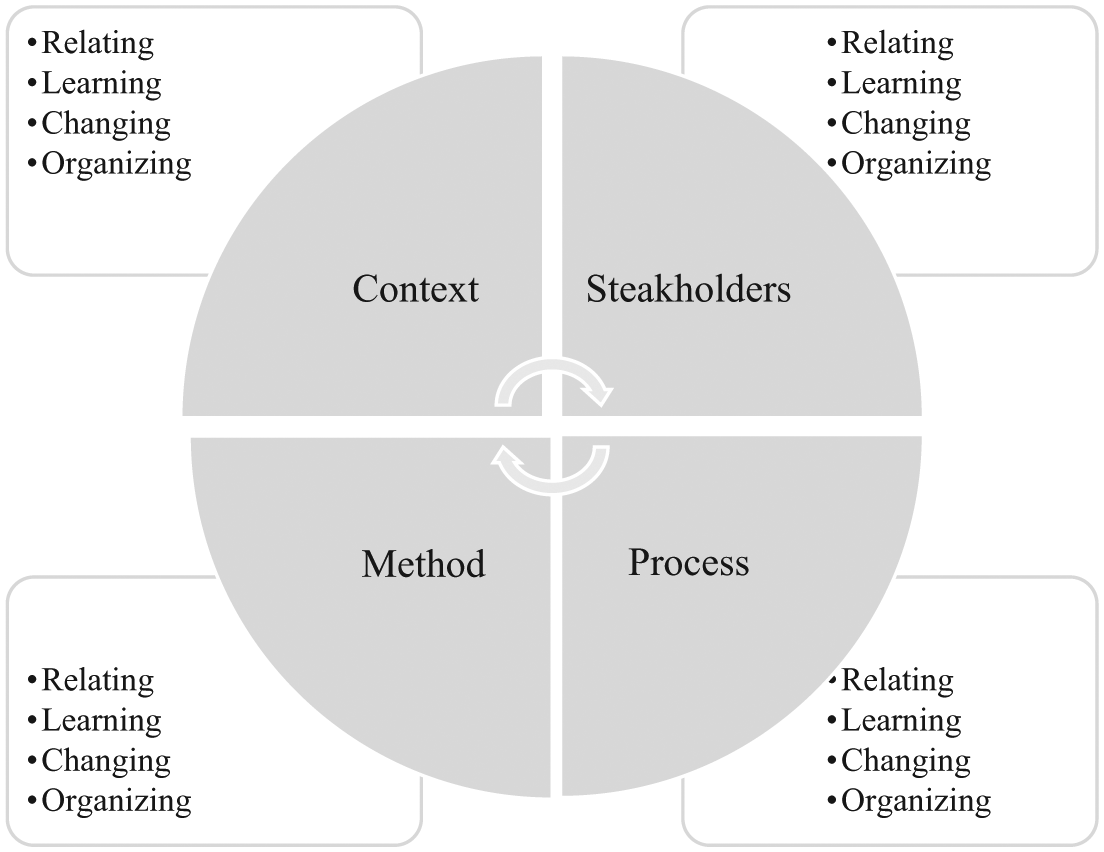
A framework for critical human resource development (CHRD).
Research Questions
The following questions guide this article and the proposed conceptual framework. The first question emphasizes the need to cull relevant findings from the broad and interdisciplinary field of CWS. The second requires a discussion regarding how these findings can inform HRD research and practice.
What insights from critical Whiteness literature can be useful in informing research and practice in HRD?
How can extant literature in critical Whiteness studies be integrated into a critical HRD framework?
Methodology
The researcher began developing a reading list for CWS and HRD by searching in Academic Search Complete for the term Critical Whiteness Studies in all fields, plus human resource development, human resource management, or organizational development in all fields, and this effort yielded zero results. Repeating the same procedure in ABI/Inform Global yielded two hits. Searching titles from AHRD (Academy of Human Resource Development) conference proceedings from 1995 to 2017 for “Whiteness” yielded zero results, and the term White yielded two results. Full text searches of these AHRD proceedings produced multiple hits for the term White, but most hits resulted from proper names including White, references to white-collar workers, or brief descriptions of research subjects. Fewer than 10 substantively addressed White racial experience. Discussions with colleagues interested in racial justice led to referrals to read several books that addressed Whiteness and its relationships to educational and organizational contexts. Subsequent searches on Amazon.com yielded additional books related to the topic. The researcher proceeded using these books, their references, and the publication Towards a Bibliography of Critical Whiteness Studies (Engles, 2006) to deepen the reading for this article. Continued reading allowed the researcher to feel comfortable that he had reached a saturation point before undertaking to write this article. The reading list ended up including over 100 articles or chapters in edited books and at least 20 book-length monographs. CWS is a broad and interdisciplinary field, so the researcher purposefully chose to include texts that he deemed to have clear relevance to HRD. The researcher paid special attention to research that was conducted in organizational settings and to writing in which the author was explicit about workplace connotations. Areas with developed CWS literature that are not substantively represented in this article include film studies, literature, visual arts, and K-12 education. Topics that were frequently addressed and which had clear implications for HRD in the literature were selected for discussion in this article. These include the history of Whiteness in America, White racial formation, White identity, color blindness, unconscious bias, White privilege, old-fashioned racism, and approaches to antiracism. Each of these topics will be discussed in more detail in my Findings section before they are integrated into the framework for CHRD (Bierema & Callahan, 2014).
Analysis
Analysis of literature began with detailed reading and note-taking of each text. The author made annotations regarding key concepts that were addressed in multiple sources. The author also noted key citations that appeared in multiple texts. Following Hamilton and Torraco (2013), literature was sorted into categories based on the works’ primary contributions. Several themes emerged through this process, and the eight that the author deemed most relevant in HRD were included in the article. Other themes, such as representations of Whiteness in the performing arts and antiracist K-12 education, were not included in the findings of this article. The latter of these themes does have a considerable degree of research, which would be worthy of its own review of literature in a K-12 focused journal.
One critique that emerged from this analysis was that previous scholarship, most of which came from pure social sciences, did little to specifically address how organizations and organizational researchers can work to confront White privilege and racism in the workplace. Hamilton and Torraco (2013) noted that integrating literature from other fields can add value to HRD by bringing together fragmented knowledge spread across a variety of fields and developing a framework for research and practice. The present article seeks to accomplish this by integrating key themes from CWS into an existing framework for CHRD.
Findings
The key areas of CWS identified in my analysis include history of White racial formation, White identity, learning to be White, color-blind racism, forms of unconscious bias, definitions of White privilege, old-fashioned racism, and approaches to antiracism. Each of these areas will first be discussed separately in the present section, before relationships between key findings are explored in the discussion.
History of White Racial Formation
Several studies have explored how Whiteness has been constructed throughout history. In the American context, many European immigrant populations were initially regarded as others by dominant Whites but gradually earned acceptance by positioning themselves against Blacks (Baldwin, 1985; Du Bois, 1995, 1998; Ignatiev, 1995; Roediger, 2006, 2017). For example, aligning with the anti-Black positions held by dominant Whites provided the 19th-century Irish access to labor market advantages such as increased access to employment and greater opportunities for entrepreneurship, as well as political advantages such as suffrage and jury service. Workplaces and labor unions functioned to assimilate European immigrants into American Whiteness, and their labor activism included opposition to the abolition of slavery and efforts to exclude free Blacks from obtaining jobs typically reserved for Whites (Ignatiev, 1995).
A similar process continued into the 20th century with White ethnics buying into the idea that American Blacks are the true others and subverting their own linguistic, religious, culinary, and cultural traditions in order to gain access to the benefits of Whiteness (Roediger, 2006, 2017). The workplace persisted as a key locus of acculturation into Whiteness, and White ethnics continued to accrue material benefits from White solidarity. The success achieved by European immigrants was used to insinuate that the failure of Blacks, Latinos, and Asians to advance was owing to a lack of initiative or determination. These narratives ignored that non-Europeans did not have access to the pathways to Whiteness and likewise ignored that the pathways to Whiteness included the expectations that new Whites would work in solidarity with old Whites to exclude non-Europeans from the benefits of full citizenship and full economic opportunity.
Labor markets, education, and entrepreneurship were much more open to Whites than to people of color and represent hundreds of years of White economic advantage, as did many 20th-century government initiatives including the New Deal, the post-World War II G.I. Bill, and Federal Housing Administration policies, all of which served to enrich and educate Whites more so than people of color (Anderson, 2017; Greenburg, 2009; Painter, 2011; Phoner, 1997). The major economic disparities that resulted from past discrimination continue to provide advantages to Whites today. Thus, mindfulness of the connection between White identity and labor market exclusions will lend perspective to HRD professionals as we design programs to address present forms of labor market and organizational injustice.
White Identity
White identity is difficult to define in the contemporary context because Whites often conceptualize themselves as raceless (Gallagher, 1997; Roediger, 2017). This obliviousness is a crucial part of White identity to the point that when a White person makes a point of talking about Whiteness they run the risk of being perceived as sappy by other Whites and dangerous by people of color (Grover, 1997). When Whites are aware of their racial identities, their understandings tend to be complex and often contradictory, with Whiteness often being perceived as a liability (Bonilla-Silva, 2014; Myers, 2005). For many Whites the construction of Whiteness largely hangs on fears of reverse discrimination, and efforts to construct Whiteness in virtuous terms. There is a common perception that affirmative action and other governmental or organizational policies are barring deserving Whites from opportunities, which is supported by a view that people of color are undeserving takers (Anderson, 2017; Gallagher, 1997; Myers, 2005). The prevalence of these views is important for HRD professionals to consider as organizations implement diversity initiatives. It may be prudent for many organizations to consider antibacklash programs to help Whites understand the rationale behind diversity initiatives and process negative feelings and to prevent negative actions against people of color who are advancing within the organization.
When forced to confront their racial identities, either through the presence of racial minorities or in formal educational settings, Whites often experience intense negative emotions and defensive posturing (Gallagher, 1997; Matias, 2016). Similarly, when racially conscious Whites criticize White racism, they are frequently subjects of verbal attack from other Whites (Bohonos, 2019b; Myers, 2005) and social isolation (Lensmire, 2017). HRD professionals should consider methods for disarming negative feelings and backlash that may arise from diversity trainings or from the increasing presence of people of color in the workplace. Addressing negative emotions may be an effective way of stemming microaggressive behavior and other forms of discrimination.
Learning to Be White
White racial identity formation can be seen as following the cycle of socialization (Harro, 2000), with early socialization into racial bias happening in the home and among trusted community members. This process continues with engagement with institutions and the broader culture, and maintenance of racially biased positions are enforced by sanctions and rewards in social and organizational contexts. Recognition of the racial biases one has been socialized into can lead to negative emotions such as anger, resentment, and guilt. Confronting these feelings requires individuals to make a choice to either begin to resist racism or remain complicit in the status quo. Whites sometimes feel shame when considering their actions toward people of color as a result of the moral compromises they feel compelled to make in order to retain acceptance in their own communities. The threat of racial exile facilitates a process in which Euro-Americans are taught not to question the racial status quo (Bohonos, 2019a, 2019b; Lensmire, 2017; Thandeka, 1999). When Whites realize the degree to which they have been complicit in perpetuating racism the frequently experience emotional crises and break down in tears (DiAngelo, 2018). While Matias (2016) warned that Whites can sometimes use tears to present themselves, rather than people of color, as victims of racism, taking such emotions seriously may allow HRD professionals to develop programs aimed to address debilitating shame and guilt preventing many Whites from fully engaging in social justice advocacy. This approach to helping potential allies overcome White guilt and White shame might have merit in the milieu of training, mentoring, or coaching.
Color-Blind Racism, Neutrality, and Transparency
Color-blind racism, White-neutrality, and transparency of Whiteness are common themes in CWS (Alfred & Chlup, 2010; Flagg, 1997a; Rodriguez, 1998; Roithmayr, 2014; Thandeka, 1999). “Color blindness” or “color-blind Racism” is the insistence that individuals do not or should not see race because race no longer matters (Bonilla-Silva, 2014, p. 2). Neutrality and transparency of Whiteness refer to the implicit assumption that White standards of behavior are or should be treated as normative in a culture (Rasmussen, Klinenberg, Nexica, & Wray, 2001).
One of the defining characteristics of contemporary Whiteness is that Whites often choose not to think about themselves in racial terms (Bonilla-Silva, 2014; Diangelo, 2018; Flagg, 1997a). Conceiving of Whiteness as transparent and only considering the races of minority group members facilitates the belief that Whiteness is neutral. This myth of White neutrality can lead to decision making that is ostensibly race neutral but that is culturally loaded nonetheless because decisions are informed by White norms. (Flagg, 1997b). Early articulations of color blindness and neutrality were based on qualitative research, and some questioned how widespread or representative these findings were (Andersen, 2003; Bonnett, 2008). Quantitative research has confirmed that Whites are more likely to embrace color blindness than other racial groups but has also demonstrated that there is variability among Whites regarding race consciousness (Hartmann, Gerteis, & Croll, 2009). According to this research, color blindness in the United States is most common among college-educated Whites not from the South. To combat false neutrality, researchers should question the neutrality of White/Western epistemologies (Zuberi & Bonilla-Silva, 2008) and foreground the voices of people of color (Dixson & Anderson, 2018). In organizational settings, unexamined assumptions of White neutrality can lead to people of color being implicitly relegated to the margins of organizations.
While working within White corporate cultures, people of color can face challenges regardless of the degree to which they adapt to White norms (Carbado & Gulati, 2013; Flagg, 1997b) because “White people frequently interpret norms adopted by a dominantly White culture as racially neutral, and so fail to recognize the ways in which those norms may be in fact covertly race-specific” (Flagg, 1997b, p. 87). Delgado and Stefancic (1997) discussed how the belief in race neutrality can be a defensive posture for Whites when they resist calls for change. These authors noted that, because many regard the current system as neutral and meritocratic, challenges to the system’s fairness are subject to major scrutiny.
Many strategies can be employed in defense of neutrality including portraying advocates as people with chips on their shoulders rather than true social justice advocates and portraying their demands as being “excessive, tiresome, or frightening” (Delgado & Stefancic, 1997, p. 98). Defensive postures include evading responsibility, claiming that enough has been done for people of color already, invoking fear of revolutionary change, and choosing to believe that majority group issues are more pressing and important than issues of those on the margins. HRD professionals need to be aware that assuming that the dominant culture is neutral within an organization creates implicit double standards, and the color-blind posturing prevents many Whites from acknowledging how policies and group norms disproportionally benefit majority group members. HRD interventions that may help to confront false neutrality could include presenting critical studies of the organization’s history and prevailing cultural norms and facilitated discussions about how accepted organizational standards adversely affect minoritized people. These types of efforts will require organizational leaders to develop high degrees of awareness and nuance in their understandings of organizational racism. As with many approaches to diversity and inclusion, action without deep understanding of the issues runs the risk of further engraining hegemonic power structures. For this reason, movement toward antiracist organizational praxis needs to be research based and should be addressed in all phases of the career arch including academic programs preparing future employees, corporate sponsored mentoring and leadership development, and in the professional develop of upper-level leaders.
Aversive and Dysconscious Racism
One of the dangers of race neutrality is that it allows discrimination to take place in the absence of discriminatory intent. CRT and CWS scholars have introduced concepts such as aversive and dysconscious racism to explain further how racist behavior can manifest even in those who believe in racial equality. There is a disconnect among Whites who espouse inclusive or multicultural ideals but whose actions and backstage discourse diverge significantly from their publicly stated ideals (Hughey, 2011). The term aversive racism is used to describe individuals who claim to oppose racism but who nonetheless fail to internalize feelings of racial equality (Dovidio & Gaertner, 2004, p. 4). In an organizational setting, attempts to suppress, rather than confront, negative biases can lead to negative feelings manifesting in the form of microaggressions, which can be hurtful to people of color and difficult to confront (Brookfield, 2014). Whites attributing positive bias toward other Whites, even when they do not show negative bias toward Blacks, demonstrates the complexity of this issue (Hayman & Levit, 1997).
Differences in stated ideology and actions result from the fact that racism does not square with the dominant ideology but still affects many at unacknowledged levels (Bonilla-Silva, 2014; T. Ross, 1997). The problem is that “When our culture teaches us to be racist, and our ideology teaches us that racism is evil, we respond by excluding the forbidden lesson from consciousness” and that to keep racism out of conscious thought Whites imagine racists to be “either historical figures or aberrational and isolated characters in contemporary culture” (T. Ross, 1997, p. 29). By externalizing racism as the purview of hate groups, Whites can avoid confronting their own racial discomforts.
King (1997) identified “dysconscious racism” as a form of racism that tacitly accepts dominant White norms and privileges. This stems from uncritical thinking about the “social and economic advantages White people have as a result of subordinating others” (King, 1997, p. 128). The habit of uncritical thinking about racial inequity makes imagining a society without racial privilege difficult for Whites. Dysconscious racism differs from unconscious racism in that dysconscious racism does not need to be accompanied by repressed racial animus, but rather tends to be accompanied by a blasé ignorance toward racial inequity. In organizational settings, similar lack of reflexivity regarding the privileges of Whiteness can prevent the recognition of inequity and the development of empathy for those who are laboring in the face of marginalization.
White Privilege
White privilege provides unearned systemic advantages to Whites (Allen, 2004; Diangelo, 2018; McIntosh, 1997; Monaghan, 2010; Wise, 2014). These advantages are less likely to be recognized by Whites than people of color (Hartmann et al., 2009). McIntosh (1997) defined White privilege as an invisible package of unearned assets which I can count on cashing in each day, but about which I was “meant” to remain oblivious. White privilege is like an invisible weightless knapsack of special provisions, assurances, tools, maps, guides, codebooks, passports, visas, clothes, compass, emergency gear, and blank checks. (p. 291)
Race, gender, sexual orientation, and other areas of difference can each account for one area of privilege that can work in concert with others. However, recognizing privilege can be difficult for those who possess it. McIntosh suggested that Whites work to identify their own privilege and how it has influenced their lives. This process can encourage Whites to “give up the myth of meritocracy” and resist the “permission not to hear voices of people of other races” that the dominant culture affords us (McIntosh, 1997, p. 295).
While not shying away from the language of privilege, McIntosh also expressed concerns that privilege can hamper the personal development of those who have it because “it does not confer moral strength” (McIntosh, 1997, p. 296). This raises concerns that those who depend on privilege are not challenged in the same way as others and therefore may be stunted in growth. In this worldview, the anticompetitive elements of privilege will weaken those who hold power, and antiracist reforms will encourage development through truly open competition. It has been argued that the significance of merely recognizing privilege can be overstated and that it must be accompanied by both challenges to the racial status quo and effort to work in solidarity with people of color to confront racism (Allen, 2004). HRD professionals should work to include privilege identification exercises into diversity and inclusion trainings and to facilitate discussions on how understandings of privilege can be parlayed into meaningful action for racial justice.
Old-Fashioned Racism
While much of the contemporary CWS literature focuses on forms of racism Bonilla-Silva (2014) calls the “new racism,” what he terms “old-fashioned racism” is also a topic of continuting discussion (Souther Poverty Law Center, 2019). Forms of racism dicussed in the previous three subsections would all be considered new racism as they discuss racially problematic dynamics amoung Whites who disavoe racsim on a personal level. Old-fashioned racism is experiencing a resurgence and has been described as a remnant of Jim Crow. It is associated with extra-legal violence, one-on-one racists behavior, and overt declarations of White supremacy. White supremacist leaders, such as former Klan Grand Wizard David Duke, have embraced a dual strategy of publicly cultivating a racially sensitized moderate conservatism while working in private circles toward explicitly White supremacist aims (Langer, 1997; Wise, 2014). These efforts have seen some success. While membership numbers of White supremacy groups are relatively small, the number of people who sympathize with their beliefs is much higher than formal membership indicates, and recent years have seen an increase in reports of racially motivated hate crimes. (Federal Bureau of Investigation, 2017; L. J. Ross & Mauney, 1997). Additionally, many who do not overtly embrace hate support organizations and politicians who pursue hateful policies under mantras like patriotism or family values.
Old-fashioned racism has been linked to organizational settings (Ansley, 1997; Byrd & Scott, 2014), and there is increasing documentation of employers talking openly regarding their racial biases (Bohonos, 2018, 2019b; Bonilla-Silva, 2014; Kirschenman & Neckerman,1991). This phenomena can create hostile work environments while creating patterns of inequitable hiring across an organization or in isolated work groups within a larger organization. Kirschenman and Neckerman (1991) also noted a geographic element to this discrimination by pointing out that employers expressed negative stereotypes about applicants who lived in inner-city areas associated with poverty and people of color.
Even a relatively small number of old-fashioned racists, particularly when they are managers and have the authority to hire and fire, can exert huge influence. They can scuttle the careers of people of color by closing certain organizations or units to minority hiring, excluding people of color from key networking and leadership development opportunities, and creating work cultures in which moderate Whites feel pressured to quietly accept questionable practices (Bohonos, 2018). Additionally, they can create opportunities for Whites through preferential treatment. A young White who is benefiting from preferential treatment of a senior White employee might do so without ever recognizing that his preferential treatment is motivated by a racial agenda. To him privilege could be invisible or if noticed it might appear race neutral. While it is often difficult to assess whether an organizational leader is motivated by old-school racism, in some instances, bigoted White leaders privately share their animus with junior mentees (Bohonos, 2019b). In such cases, the organization will benefit from anonymous reporting processes that protect whistle-blowers.
HRD professionals should be mindful of the possibility that some employees or work groups may embrace old-fashioned racism. Formal policies will be required to deter and address overt form of racism such as direct racial insults, the use of slurs, and display of hate symbols (Byrd & Scott, 2014; Simon & Sidner, 2019). However, organizations should not limit themselves to reactive disciplinary policies. Antiracist policies need address overt expressions of intolerance while also allowing employers to consider the cumulative effect of microaggressions. An integration of research regarding microaggressions and the workplace bullying literature could be a fruitful ground on which to develop disciplinary procedures for repeated microaggressions. Similarly, Bohonos (2019a) argues that media sources that promote bigotry should be considered when employees launch complaints related to hostile work environments. Additionally, developing strong social justice identities among employees and encouraging growth of an antiracist organizational culture could deter expression of old-fashioned racism and facilitate the identification and confrontation of ringleaders who may otherwise operate safely in informal spaces.
Approaches to White Antiracism
CWS scholars have suggested several ways in which Whites can move themselves, their organizations, and society toward a more equitable state. These include encouraging working to recognize racial privilege, address internalized biases, decenter White norms, cultivating White racial justice ally identities, and encouraging antiracists praxis. Movement toward each of these approaches will require sustained investments in workshops, facilitated dialogues, and other consciousness-raising activities.
Recognizing individual levels of privilege is probably a good first step for individuals who want to pursue social justice. Many majority group members fail to recognize that they benefit from systems of oppression (Diangelo, 2018; McIntosh, 1997), and this failure can lead people to overvalue their individual achievements. For example, an employee might attribute advancement in their firm to hard work without recognizing that their hiring, and thus their opportunity to demonstrate their work ethic, was facilitated by their access to powerful White social networks. In this case, the point is not to devalue the individual’s hard work but to recognize that group membership opened a door. The failure to recognize how privilege facilitated this individual’s hard work could then lead this employee to attribute the lack of success of people of color to personal failings, such as an unwillingness to work hard, when in reality, many of those people of color did not have equal access to the opportunity to demonstrate their work ethic.
Seeking to address and manage one’s own unconscious, aversive, or dysconscious bias is an important developmental step for aspiring antiracists. History is replete with individuals who advocated for the rights of racial minorities while acting in condescending ways toward the groups they were seeking to help. Recognizing that all people probably have some repressed bias is an important step that should be followed by efforts at becoming aware of one’s biases. Pope, Price, and Wolfers (2014) demonstrated that NBA officials, after being made aware that economists had proven them to be more likely to call personal fouls against members of a different race than against members of their own race, corrected the bias. This work suggested that becoming aware of one’s implicit biases could be enough to help individuals move toward overcoming their biases. This is an important insight for HRD practitioners, who should work to include exercises that make people aware of their own implicit biases in diversity trainings.
Seeking to recognize that majority group cultural norms are not neutral can help move Whites toward productive antiracist action. Deep socialization into habits of color-blind racism and White neutrality make it difficult for White people to consistently recognize which decisions are loaded by White cultural norms, but Flagg (1997a) argued that general skepticism toward it is a reasonable first step. This step includes recognizing that “white people participate in the maintenance of White supremacy whenever we impose white norms without acknowledging their whiteness” (Flagg, 1997a, p. 222). This could lead to a relativizing of White racial norms and thus to more inclusive organizations.
Developing positive forms of majority group identity could be another key to facilitating White commitment to racial justice. Kincheloe and Steinberg (1998) called for the construction of positive White identity. White identity is often associated with conservative White identity politics or White supremacy, and thus many socially conscious Whites feel uncomfortable in discussing their racial identities. This sense of discomfort is compounded by White guilt experienced by Whites whose reflections on White identity leave them feeling condemned. Both White guilt and a lack of a positive White identity inhibit White commitment to struggles for racial justice. Kincheloe and Steinberg argued for the necessity of “creating a positive, proud, attractive, anti-racist White identity that is empowered to travel in and out of various racial/ethnic circles with confidence and empathy” (1998, p. 12). They believed that such an identity would empower Whites to have positive and affirming experiences with racial minorities and that it would also help them to be better allies. To create these new White identities, assumptions of White supremacy must be challenged and that racism must be unlearned.
After recognizing nonneutral norms, the next logical step for an antiracist is to challenge those norms. Noel Ignatiev (1995, 1997) has been a proponent of the need for Whites to undercut their own privilege. He believed that Whites should aspire to disrupt White norms to the point that other Whites view them as race traitors. He recognized that this is not an attitude that a majority of Whites are ever likely to commit to but believed nonetheless that if a sizable minority of Whites pursued this goal that the system of White privilege could be weakened to the point of collapse. This approach to antiracism has been criticized for failing to work collaboratively with people of color and encouraging an opting out of Whiteness that represents a denial of Whiteness rather than a critique of it (Allen, 2004; Leonardo, 2002; Thompson, 2001). While the rejection of White identity called for by Ignatiev (1997) might be impractical or even counterproductive, efforts at undercutting privilege might yield results. For example, a member of a predominantly White organization could begin by pushing the company to post all jobs externally rather than allowing managers to fill positions from within their personal networks.
Confronting overtly racist behavior is another important part of White antiracism. While this may appear to be the simplest form of antiracism, it can be difficult to do. Confronting racist behavior at work can introduce considerable personal risk (Myers, 2005), particularly when the offending party is a powerful senior employee. It is also important to consider that confronting overt racism can drive the behavior underground. So even if a successful confrontation convinces an offender to give up racist jokes or slurs, this is no guarantee that they will not continue to enact more subtle forms of discrimination.
For a White antiracist, the importance of listening to the voices of racial minorities cannot be overstated. Encouraging and listening to voices of people of color is essential to the foundational effort to move beyond color blindness and myths of neutrality. It is also essential for learning how to be a reliable and helpful ally to a particular individual and within the context of a particular organization. Because people have different needs and desires, and organizations have different cultures, Whites must avoid the belief that they have general cut and paste solutions. Rather, they should make use of existing theories and past successes to inform actions that are sensitive to the real needs of each organization and its people.
Existing approaches to antiracist education that may be useful in diversity training settings include storytelling, journaling, creating brave spaces, problem posing, developing empathy, intergroup dialogue, arts education, historical study, and critical reflection (Bohonos, Otchere, & Pak, 2019; Brookfield, 2018; Brookfield & Holst, 2010; Byrd & Scott, 2010; Ingram & Walters, 2007; Kasl & Yorks, 2016)
Conclusions: Framework for Integrating Critical Whiteness Theory With CHRD
One of the strengths of the CHRD framework introduced earlier (Bierema & Callahan, 2014) is a breadth and flexibility that would allow it to function as an umbrella under which CHRD professionals with varying interests and aims can practice and conduct research. Operating under Bierema and Callahan’s framework, the present article suggests how findings from CWS can be incorporated to provide a more tightly bounded framework to inform research and action regarding White racism in HRD (see Figure 2). This model addresses a need area identified in my analysis by providing organizational researchers and change leaders with a conceptual guide for addressing privilege and racism. In this section, I will describe how insights from CWS can inform understandings of CHRD areas of engagment and faciliate the creation of liminal spaces for antiracist action.
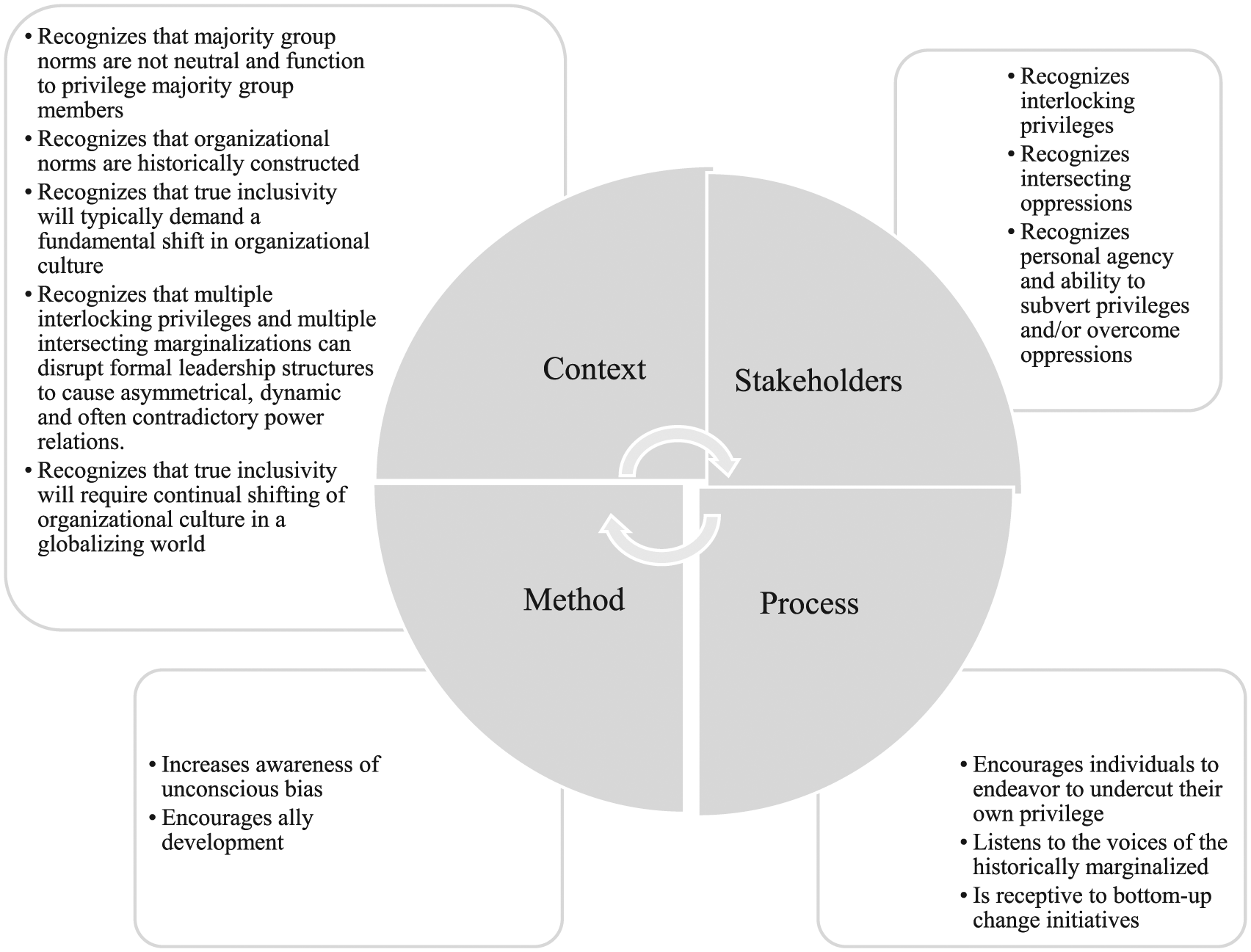
Framework for integration of critical Whiteness studies (CWS) and critical human resource development (CHRD).
Context
Literature from CWS helps underscore that organizational cultures are historically constructed in ways that affect all relating aspects of HRD research and practice. Typically, majority group norms are privileged by the appearance of neutrality. Because people of color are marginalized by the centering of White cultural expectations, true inclusivity will demand fundamental shifts in organizational cultures. Such shifts will require members of the organization to learn to recognize that multiple interlocking privileges and multiple intersecting marginalizations can disrupt formal leadership structures to cause asymmetrical, dynamic, and often contradictory power relations. Moving toward true inclusivity will require a change in the form of continual shifting of organizations’ cultures in a diversifying and globalizing world. Facilitating such change will require HRD professionals to organize with allies in our organizational contexts and collaborate with social justice advocates in other spheres.
Stakeholders
CSW literature foregrounds the power differentials that affect relationships between stakeholders. These differentials can be especially poignant when White stakeholders are relating to people or communities of color both inside and outside the organization. People from privileged positions have a moral obligation (Byrd, 2018) to learn to be aware of the power they hold and should work on changing behavior patterns that derive from exploitation of people of color. Businesses need to recognize that communities of color affected by their decisions are stakeholders whose voices need to be heard. Hearing these voices will require reorganizing decision-making processes to allow input from communities that may be affected by shifts in organizational policy.
Method
To improve the relating aspect of organizational life, CWS literature suggests that trainings designed to help employees learn about their unconscious bias can be an important step toward changing discriminatory workplace cultures. Additional change initiatives could include moving beyond diversity training to incorporate racial justice ally development programs and organizing communities of practice that meet to discuss efforts to combat organizational injustice.
Process
CWS literature challenges HRD professionals to find ways to encourage Whites to reflect on how privileged positionalities affect the way they relate to people of color and to look for ways to engage in these relationships more equitably. Additionally, people at all levels of an organization need to learn to listen to people of color and recognize their unique voices on matters related to racial inclusivity. Organizations should work to become more receptive to bottom-up and community-driven change initiatives. Organizing in ways that maximize communication with communities of color will be beneficial to organizations that seek to avoid doing harm in minoritized communities, while working toward a more equitable society.
Liminal Spaces for CWS in HRD
Bierema and Callahan (2014) described their original model as nested and interconnected in ways that create “liminal spaces” for critical action (p. 440). While they may be discussed separately in research, in practice the areas of engagement overlap. For example, when working in a predominantly White context one must recognize how White cultural norms are overvalued. Knowledge of this inequity can empower any stakeholder to engage in the process of learning to value the voices of racialized others. This process could be greatly facilitated by ally development programming offered by HRD professionals. Many such permutations of the interrelatedness of the areas of engagement could be explored. These could continue a focus on racism or explore the potential of integrating findings related to CSW within a framework of intersectionality (Collins & Bilge, 2016; Crenshaw, 1989). In an intersectional application, privileges and marginalizations based on race as well as other factors such as gender, sexual orientation, class, religion, an immigration status would be carefully considered within each area of engagement.
Suggestions for Future Research
There is a great deal for HRD to learn from CWS. As our discipline moves toward a greater emphasis on social justice, insights regarding White identity, color-blind racism, White privilege, and the resurgence of overt racial hate can form the basis for antiracists workforce praxis. Insights from CWS should be combined with research from other branches of the CRT family tree as well as critically oriented scholarship focusing on topics such as gender, sexuality, disability, and immigration. Putting these streams of literature into discussion in organizational contexts will create opportunities to push organizations toward more just treatment of those who have historically been marginalized by them.
CWS is a new area for HRD and there are several avenues for future research. These include greater attention paid to issues of race and racism in all organizational studies, histories of HRD that address racialized dynamics in the development of the field, and the need for more intersectional research. Additionally, future research could integrate CWS literature focusing on adults with parallel literature in K-12 education. Such an effort would allow for collaborate cradle to career antiracist education.
CHRD researchers who conduct research in predominantly White organizations can start paying more attention to issues of race. Even if the researchers are mostly interested in other issues (e.g., gender, sexuality, spirituality, leadership, engagement etc.), paying greater attention to the racial composition of organizations and research informants can help researchers from falling into color blind or White-neutral representations of organizational cultures. Additional empirical research that seeks to unpack racialized experiences in organizations, and more work looking at the intersection of race with other identity markers, is suggested. This research should include research that foregrounds issues of race in the history of HRD.
To be more effective in these pursuits, more partnership research between CHRD scholars with different areas of focus is recommended. For example, a research team where one member is deeply steeped in queer theory, another in postcolonialism, and another in CRT would likely be capable of providing deeper intersectional analysis on the axis of race, colonialism, and sexuality than any of the team members would be alone. Finally, development of research teams that cross lines of race, gender, nationality, sexuality, religious affiliation, disability, and so on, and who are reflexive about such collaborations, is recommended. Reflexivity about such partnerships will help other researchers imagine paths forward for collaborative research that challenges various forms of inequity.
Footnotes
Declaration of Conflicting Interests
The author(s) declared no potential conflicts of interest with respect to the research, authorship, and/or publication of this article.
Funding
The author(s) received no financial support for the research, authorship, and/or publication of this article.
