




Abstract
Adult basic education (ABE) programs in the United States serve millions of students annually to help them achieve high school equivalency, English proficiency, and other skills. These skills are necessary for upward mobility and competitiveness in the labor market, which is important for ABE students who are disproportionately affected by racial/ethnic disparities and poverty. Among learners who are not in ABE programs, substance use and trauma affect student outcomes. Similar research is limited among ABE students. Understanding the influence of these factors among ABE students can better inform interventions. The current study, grounded in Stress and Coping Theory, examined rates, risk factors, and gender differences for substance use and trauma among 286 ABE students. Results indicated that trauma is prevalent and associated with substance use, substance use suggests a need for brief counseling, and there were gender differences in substance use behaviors. Recommendations for interventions among ABE programs are discussed.
Introduction
Approximately 1.1 million adults were in adult/post-compulsory basic education (ABE) programs in the United States (U.S.) from 2019 to 2020 (U.S. Department of Education, 2020). Of ABE students, 42% are in basic education programs (i.e., literacy and numeracy skills), 37% are in English as a second language program (i.e., English proficiency), and 21% are in adult secondary education programs (i.e., high school equivalency [HSE] and adult high school credit credential; Tamassia et al., 2007). The largest ABE providers are local education agencies delivering instruction in classroom settings, serving approximately 60% of adult learners (Tamassia et al., 2007). These programs serve the nearly 2 million youth who drop out of high school annually, 2 million adults who do not have a high school diploma, and nearly 20 million adults with limited English proficiency in the United States (Fry, 2014; Wilson, 2014). While ABE programs are critical to helping individuals get out of poverty and pursue higher education, waitlists in all 50 states suggest they have limitations in their capacity to serve the growing adult population in need of these resources (McLendon et al., 2012).
Several disparities exist among ABE students compared to students in K-12 and college settings, including the overrepresentation of racial/ethnic minorities and unemployed individuals (Tamassia et al., 2007). Of ABE learners, approximately 18% are African American/Black and 46% are Hispanic/Latinx (U.S. Department of Education, 2020), despite these groups comprising 13% and 18% of the U.S. population, respectively (Census Bureau, 2019). Importantly, ABE programs also serve a wide age range of adults, with the largest percentage of adult learners ranging from 25 to 44 years old (U.S. Department of Education, 2020). Despite the large population of adult learners, the disparities in representation, and the low rates of educational attainment, limited research exists examining barriers to health and well-being among ABE students across the developmental span. When examining health overall, poor health is associated with lower educational attainment (Hale et al., 2015), and health literacy in ABE programs help to promote health equity (Chervin et al., 2012). As such, it is important to examine health factors among this underserved education population to foster the development of interventions that can be integrated into ABE to increase positive student outcomes. Substance use and trauma are two areas of health to examine that support this aim.
The present study focused on substance use and trauma due to the high prevalence of substance use and traumatic experiences among individuals in the United States. An estimated 19.4% of people aged 12 and older used illicit substances (i.e., illegal drugs) over the past year and 60.2% used any substance (i.e., tobacco, alcohol, and/or illicit drugs) over the past month in 2018 (Substance Abuse and Mental Health Services Administration [SAMHSA], 2019). Trauma is also prevalent in the United States. According to the American Psychiatric Association (APA, 2013), a traumatic experience is any event, either directly exposed, witnessed, or learned about, where an individual is exposed to threatened or actual death, serious injury, or sexual violence. Among a national sample of adults in the United States, 89.7% reported exposure to a traumatic event over their lifetime (Kilpatrick et al., 2013). Among racial/ethnic minorities, a highly represented group in ABE, there are disparate rates of trauma exposures (i.e., highest rates found among African Americans; Roberts et al., 2011), and trauma is associated with substance use (Breslau et al., 2003). As such, these variables are of particular importance for ABE research.
Gaps in the Literature Examining Substance Use and Trauma Among Adult Education Students
Factors such as substance use and trauma affect student outcomes (Crosby, 2015; McCluskey et al., 2002). For example, early alcohol and drug use are associated with high school non-completion among African American and White students, with family factors (e.g., children) mediating Latinx student completion rates (McCluskey et al., 2002). Research suggests that substance use is prevalent among high school students not in ABE. In a national study of high school-aged students (15–17 years old), approximately 44% reported using at least one substance in the past year (Silveira et al., 2019). Factors such as age, gender, and race/ethnicity were associated with the likelihood of use. Specifically, males were more likely to use various substances (Silveira et al., 2019), which is consistent with other research showing higher substance use among men (e.g., Kloos et al., 2009; Lev-Ran et al., 2013). Substance use and the effect on academic achievement appear to continue beyond high school. A study among college students observed that increases in substance use (alcohol, marijuana, and other illicit drug use) on campuses were negatively correlated with graduation (Johnston et al., 2016; Swisher & Dennison, 2020). These observations underscore the importance of identifying ways to minimize substance use in schools with the aim of improving student outcomes (i.e., school completion, achievement). Given the prevalence of substance use among emerging adult students not in ABE and the associations of use with negative student outcomes, more research is needed examining patterns in ABE programs.
In the extant literature, there is an established link between trauma and substance use. Increased substance use among individuals who experience trauma has been described as a coping response (Boyraz & Waits, 2018; Herrenkohl et al., 2013). The relationship between trauma and substance use has been observed among students in a variety of educational settings. In a study among non-treatment-seeking college students, trauma exposure was significantly positively associated with alcohol and drug use (Flood et al., 2009). Trauma also affects students’ classroom behaviors, such as declining attendance, falling grade point average, and negative teacher assessments (Leiter & Johnsen, 1997). Existing research also suggests that educational attainment correlates with trauma exposure, particularly violent traumas (Bachman & Saltzman, 1995). Female students appear to be at an increased risk for trauma. For example, among a college sample, female gender was a risk factor for trauma exposure (Read et al., 2011). Further, in a study examining the prevalence of trauma among a sample of women in an adult education program, rates of exposure to traumatic events (e.g., physical or sexual assault, threatening with a weapon) ranged from 6% to 18% (Muro & Mein, 2010). Trauma exposure among women affects learning (Horsman, 2013), as well as initiation and completion of adult education (Horsman, 2006). With approximately two-thirds of youth in the United States reporting that they have experienced a traumatic stressor by the age of 16 years (National Child Traumatic Stress Network [NCTSN], 2017), and the relationship between trauma and substance use, it is imperative to understand how substance use and trauma patterns extend to ABE students. Schools across the United States have encouraged the development of trauma-informed schools and curriculums. Similar strategies may be useful in ABE programs. Examining the intersection of substance use and trauma calls for a theoretical approach that links them in a way that is congruent with how they are experienced.
Theoretical Perspective
The Transactional Theory of Stress and Coping (Lazarus & Folkman, 1984) helps elucidate why adult education students may be at risk for substance use, particularly among students who experience traumas. The Stress and Coping Theory focuses on one's response to stressors experienced in their environment. Specifically, this theory details that after an individual appraises stress in their environment, they can either utilize problem-focused coping (i.e., attempt to change the environmental stressors) or emotion-focused coping (i.e., attempt to reduce the negative emotions as a result of the stressors; Lazarus & Folkman, 1984). Stressors faced by ABE students, such as the aforementioned trauma-related exposures, may cause students to be at risk for maladaptive coping strategies, such as substance use, to manage stressors.
Adult education students also face several stressors beyond traumatic stressors that may place them at an increased risk for coping through substance use. While high school drop-outs are only a sub-population of ABE students, common stressors faced by students that are associated with high school drop-out include adverse childhood experiences (ACEs; Morrow & Villodas, 2018); substance use and absenteeism related to use (Patrick et al., 2016); conflicts with school personnel (Meeker et al., 2008); working and absenteeism due to financial need for employment (Staff et al., 2020, Meeker et al., 2008); pregnancy and/or lack of childcare (Meeker et al., 2008); low school achievement (Jimerson et al., 2000); low socioeconomic status (SES; Jimerson et al., 2000); and poor home environment/relations (Jimerson et al., 2000). Students with limited English proficiency may also use ABE programs (Wilson, 2014). Limited language proficiency can be another significant stressor. Immigrant populations, who utilize ABE language programs, are less likely to have substantial substance use problems (Ojeda et al., 2008), but have unique trauma risks (e.g., discrimination, acculturative stress, family conflict; Sangalang et al., 2019). Overall, research supports that life and academic stressors can increase substance use among high school students (Leonard et al., 2015); however, these relationships are understudied among ABE student populations.
The Present Study
The present study examines substance use and trauma rates and associations among students in an ABE. This research could help inform interventions that address substance use, trauma, and other related needs among ABE students. The present study aims are to examine: (1) substance use rates and gender differences, hypothesizing that males will report more substance use than females; (2) experiences of trauma and gender differences; hypothesizing that females will report more trauma exposure than males; and (3) the relationships between trauma exposure (e.g., traumas that directly happened to the student, traumatic events witnessed by the student, traumatic events the student learned about, and a trauma variable that combines each of these three types of exposures) and substance use, hypothesizing significant positive relationships.
Method
Participants and Procedures
This study was approved by an Institutional Review Board (IRB) and had support (e.g., accessibility and consultation opportunities) from the ABE organization leadership and staff. The sample was conveniently recruited from an ABE program in a Northeast, midsized, urban city. Access to the sample was facilitated by an ongoing partnership between the research team and the ABE program. Eligible participants were enrolled at the ABE center, were aged 17 and older, and could read in English, Spanish, and/or French. The survey was administered with a readability level of 6th grade as determined by the Flesch-Kincaid Grade Level scoring in Microsoft Word. Bilingual proctors who were members of the research team were also available during the surveying to answer questions. Eligible students were enrolled in one of five ABE programs: General Educational Development (GED), National External Diploma Program (NEDP), High School Completion (HSC), English for Speakers of Other Languages (ESOL), or citizenship. The most common program enrollments among the students surveyed were ESOL (n = 117; 41%), high school credit (n = 76; 27%), and GED (n = 65; 23%) programs. Eligible participants completed a survey protocol. The full survey included 173 self-report items formatted in Qualtrics. The survey was available in three languages (English, Spanish, and French), which were the primary languages spoken among the students at the ABE program. Participants provided informed consent and anonymously completed the confidential survey. A total of 286 participants completed the survey. Of the total sample, 161 students (56%) took the survey in English, 111 (39%) in Spanish, and 14 (5%) in French. In the event that the survey was triggering for participants, they had access to a licensed clinician who could provide consultation/screening, crisis intervention, and make recommendations for community supports.
Measures
Demographics
Participants answered 48 items assessing their background, such as age, gender, race/ethnicity, income, employment status, and other psychosocial characteristics.
Substance Use
Past 12-month drug use was measured using the Drug Use Questionnaire-20 (DAST-20; Skinner, 1982). The DAST-20 is a 20-item measure that asked participants if they have used various substances (e.g., marijuana, cocaine, amphetamines, inhalants, sedatives, hallucinogens, opioids) for nonmedical reasons over the past year and if they experienced a number of specific problems related to their drug use. Items focus on social, occupational, legal, or medical problems related to use. Example questions include: “Have you abused prescription drugs?” and “Have you been in trouble at work (or school) because of drug abuse?” Responses to items were dichotomous (“yes” or “no”), with “yes” responses receiving one point each. Total scores for the DAST-20 range from 0 to 20, with higher scores indicating more problematic drug use. Specifically, scoring of the DAST-20 helps to categorize participants into the American Society of Addiction Medicine Placement Criteria (ASAM) placement criteria and recommended levels of care based on reported problems related to drug use. A score of 1–5 indicates “low” addiction severity, or ASAM Level I treatment recommendation (brief counseling/intervention). A score of 6–10 indicates “intermediate/likely to meet DSM criteria” addiction severity, with Level I or II care (outpatient). A score of 11–15 indicates “substantial” addiction severity and Level II or III care (intensive). A score of 16–20 indicates “severe” addiction and Level III or IV care (intensive). For the present study, total scores were observed continuously, rather than categorically. The DAST-20 evidenced good reliability in the study sample (α = .82).
Past 12-month alcohol use was measured with the Alcohol Use Disorders Identification Test (AUDIT; Babor et al., 1992; Saunders et al., 1993). The AUDIT is a 10-item measure of harmful drinking behaviors, such as average monthly alcohol use, number of drinks per day, and negative consequences of alcohol use. Items were scored differently based on the specific item as detailed in Babor et al. (1992). For example, an item asked, “How often do you have six or more drinks on one occasion?” Responses were scored as: (0) never; (1) less than monthly; (2) monthly; (3) weekly; and (4) daily or almost daily. Total AUDIT scores of eight or more indicate harmful use. For the present study, total scores were examined continuously, such that higher scores indicate more harmful alcohol use. Total scores range from 0 to 40. The AUDIT evidenced good reliability in the study sample (α = .77).
Trauma
Experiences of trauma were measured with the Life Events Checklist for DSM-5 (LEC-5; Blake et al., 1995). The LEC-5 is a 17-item measure examining whether participants have experienced, witnessed, or learned about various common traumas (e.g., accidents, natural disasters, sexual assaults, and combat-related) throughout their lifetime. Participants indicated if the trauma “happened to them,” they “witnessed it,” they “learned about it,” “not sure,” or “doesn't apply.” There is no specific scoring for this measure. The present study categorized responses as follows: (1) a trauma happened to the student, (2) student witnessed a traumatic event, (3) student learned about a traumatic event, and (4) a combined trauma variable examining any exposure (i.e., either event happened to the student, or was witnessed or learned). Scoring was dichotomous for each of the four trauma categories, with a score of “1” indicating that at least one of the listed common traumas was experienced throughout their lifetime, while a score of “0” indicated that the participant has not experienced any of the listed common traumas in any form. The LEC-5 evidenced good reliability in the study sample (α = .83).
Data Analysis
Data were analyzed using IBM SPSS version 27. To determine substance use and trauma rates (Aims 1 and 2), and sample characteristics, univariate analyses were conducted, such as frequencies, percentages, means, and standard deviations. Bivariate analyses were conducted to examine relationships between study and demographic variables. To determine gender differences in substance use (Aim 1), a series of independent samples t-tests were conducted to examine differences in DAST-20 and AUDIT scores. To determine gender differences in trauma exposures (Aim 2), chi-square tests were used to test if there were differences across the four trauma variables (i.e., whether students experienced a traumatic event, witnessed a traumatic event, learned about a traumatic event, and any exposure to a trauma). To examine relationships between substance use and trauma (Aim 3), bivariate analyses were conducted, as well as a series of independent samples t-tests to determine differences in DAST-20 and AUDIT scores across the four trauma variables.
Results
Sample Characteristics
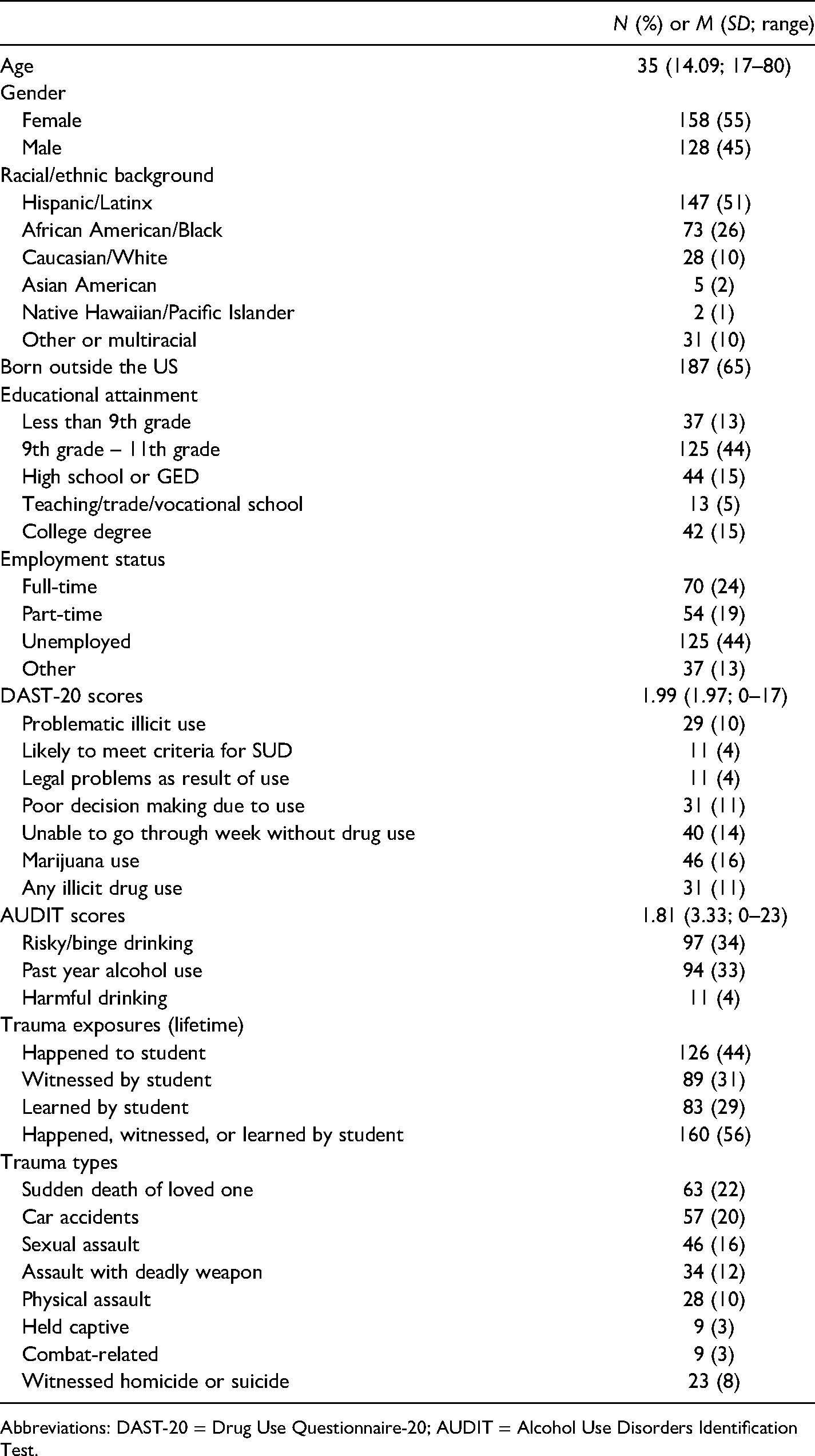
Sample characteristics for key demographic variables are presented in Table 1. The students ranged in age from 17 to 80 (M = 35; SD = 14.09) and most were female (55%) and reported having children (51%). The majority of the sample identified as Hispanic/Latinx or African American/Black and 65% of the sample was born outside of the United States. The average highest level of education was 11th grade. Approximately a third of the students reported a household income placing them below the federal poverty level and were receiving government assistance. There were several barriers identified among the sample. Common barriers included unemployment (44%), financial hardship (42%; unable to pay rent, mortgage, or a utility bill in the past year), inadequate health insurance (60%), lack of childcare (21%), homelessness (17%), and hunger (16%).
Sample Characteristics on Key Demographics and Study Variables.
Abbreviations: DAST-20 = Drug Use Questionnaire-20; AUDIT = Alcohol Use Disorders Identification Test.
Aim 1: Substance Use Rates and Gender Differences
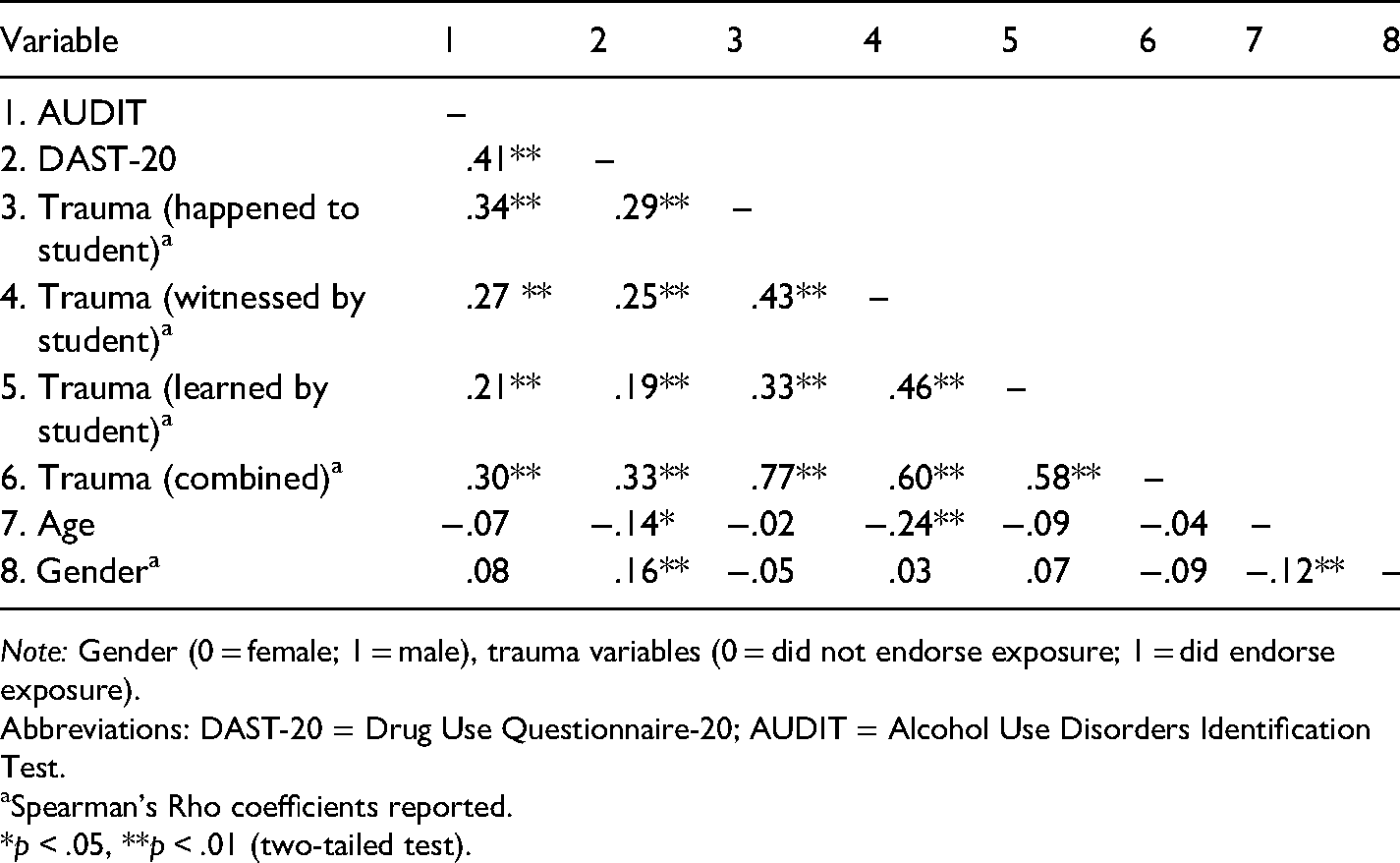
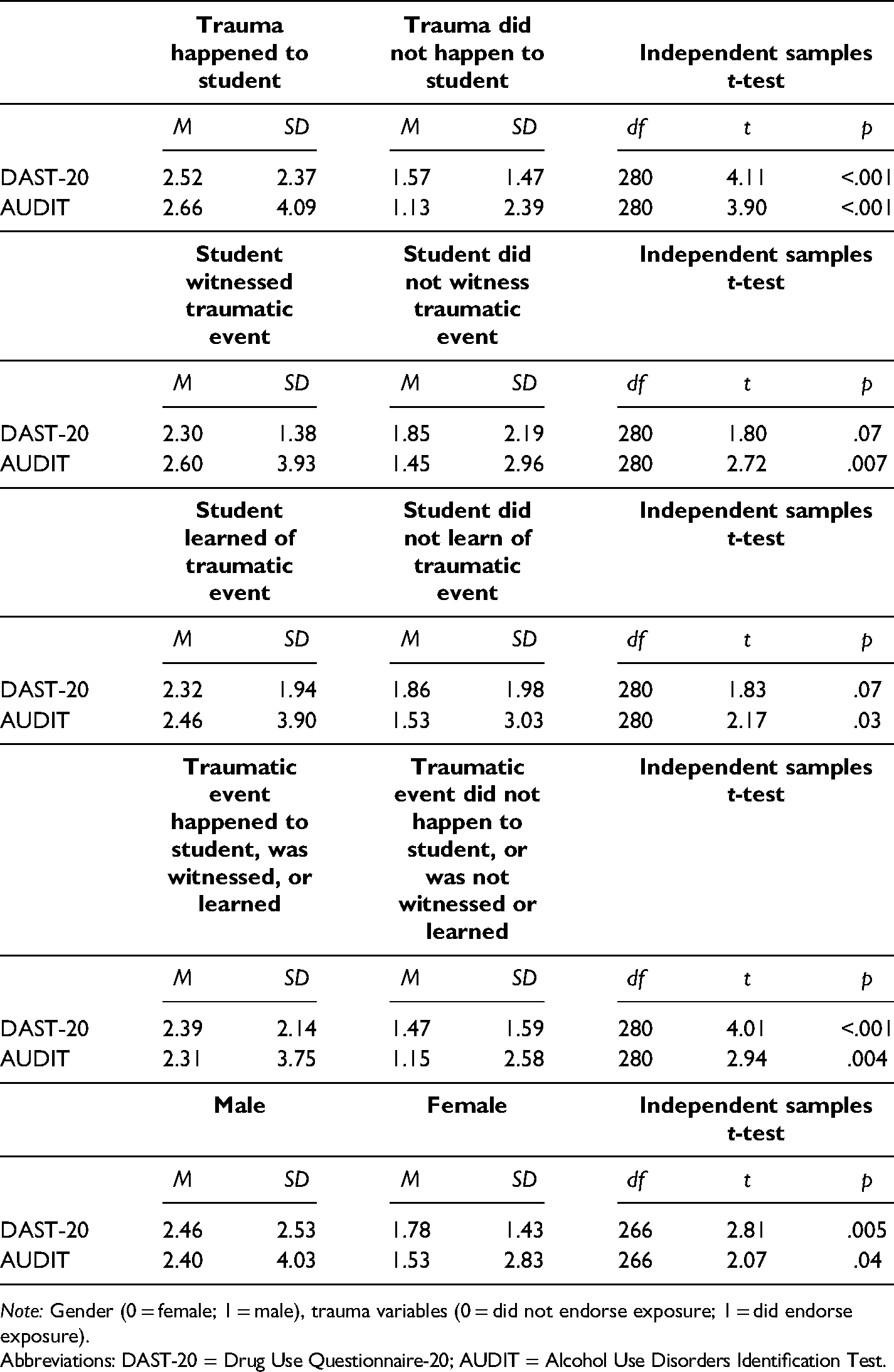
Findings related to substance use frequency over the past year are presented in Table 1. Regarding drug use, 16% of the sample reported misuse of marijuana and 11% reported any illicit drug use. Problematic drug use was generally low, with 10% reporting problematic illicit drug use over the past year and 4% of the sample likely meeting criteria for an illicit substance use disorder. The mean DAST-20 score was 1.99 (SD = 1.97), indicating on average low addiction severity among the sample, though this value indicates a need for brief counseling. Regarding alcohol use, 34% of the sample reported risky/binge drinking over the past year and 33% reported any alcohol use in the past year. The mean AUDIT score was also low (1.81, SD = 3.33), indicating overall low alcohol use severity among the sample. Approximately 4% reported alcohol use that qualifies as harmful drinking. Bivariate analyses (Table 2) showed a significant association between gender and drug use (rs = .16; p < .01), but not gender and alcohol use. However, results of the independent samples t-tests indicated that males reported slightly more alcohol use than females, t(266) = 2.07, p = .04, and more drug use than females, t(266) = 2.81, p = .005.
Bivariate Correlations among Study and Demographic Variables (N = 286).
Note: Gender (0 = female; 1 = male), trauma variables (0 = did not endorse exposure; 1 = did endorse exposure).
Abbreviations: DAST-20 = Drug Use Questionnaire-20; AUDIT = Alcohol Use Disorders Identification Test.
Spearman's Rho coefficients reported.
*p < .05, **p < .01 (two-tailed test).
Aim 2: Experiences of Trauma and Gender Differences
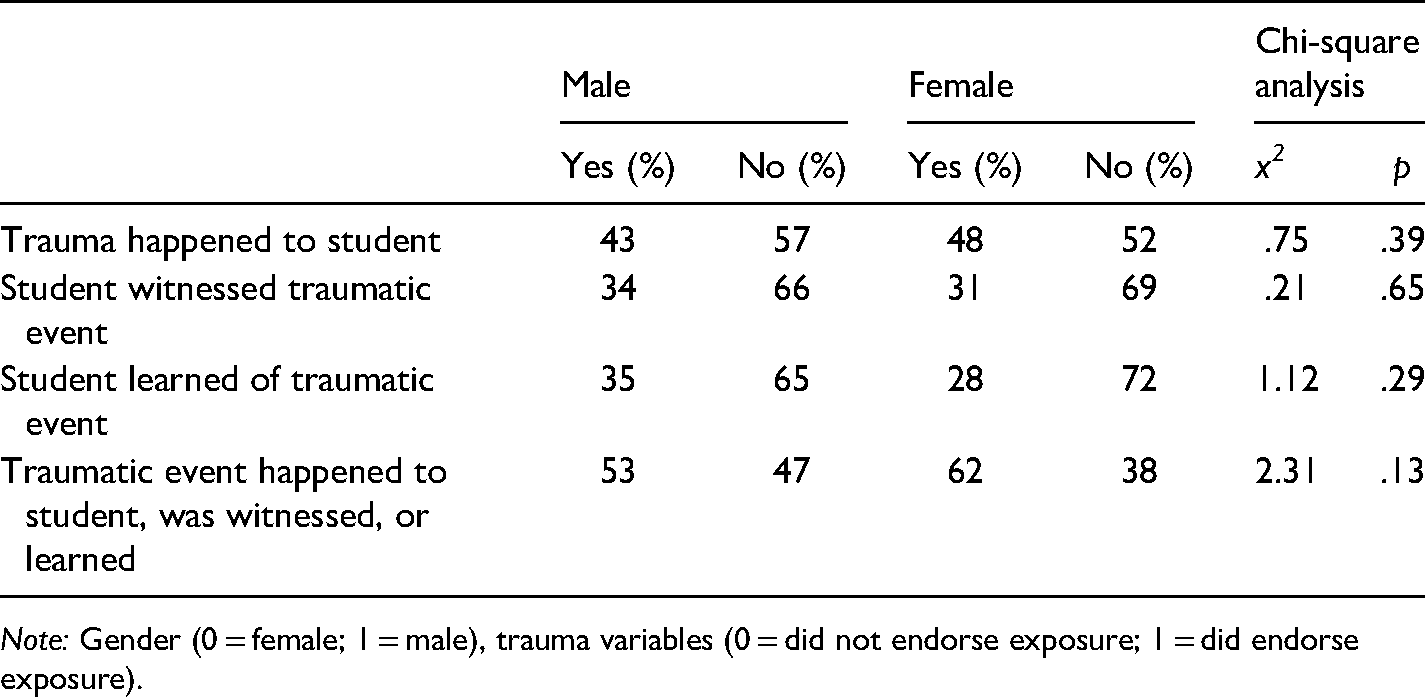
Rates of lifetime trauma exposure are presented in Table 1. Among the sample, 44% reported that a traumatic event happened to them in their lifetime, 31% witnessed a traumatic event, 29% learned about a traumatic event, and 56% reported having any trauma exposure (either directly, witnessed, or learned). The most commonly reported traumas experienced included the sudden death of a loved one, car accidents, and sexual assault. Results of the chi-square analyses that examined gender differences across the four trauma variables are presented in Table 3. There were no significant gender differences in whether a trauma happened to a student, x2(1, 268) = .75, p = .39, they witnessed a traumatic event, x2(1, 268) = .21, p = .65, they learned about a traumatic event, x2(1, 268) = 1.12, p = .29, or in combined trauma exposure, x2(1, 268) = 2.31, p = .13.
Gender Differences in Types of Trauma Exposures.
Note: Gender (0 = female; 1 = male), trauma variables (0 = did not endorse exposure; 1 = did endorse exposure).
Aim 3: Relationships Between Trauma Exposures and Substance Use
Results of bivariate correlational analyses examining the relationships between trauma exposure and substance use are presented in Table 2. Results indicated significant positive associations between personally experiencing a trauma and alcohol use (rs = .34; p < .01) and drug use (rs = .29; p < .01), witnessing a traumatic event and alcohol use (rs = .27; p < .01) and drug use (rs = .25; p < .01), learning about a traumatic event and alcohol use (rs = .21; p < .01) and drug use (rs = .19; p < .01), and any trauma exposure and alcohol use (rs = .30; p < .01) and drug use (rs = .33; p < .01). Results of the independent samples t-tests examining differences in DAST-20 and AUDIT scores across the four trauma exposure categories (Table 4) showed that students who personally experienced a trauma reported significantly more problematic drug use, t(280) = 4.11, p < .001, and alcohol use, t(280) = 3.90, p < .001, than students who did not. Similarly, students who indicated combined trauma exposure (i.e., either experiencing, witnessing, or learning) reported significantly more problematic drug use, t(280) = 4.02, p < .001, and alcohol use, t(280) = 2.94, p = .004, than those who did not. There were no significant mean differences in drug use scores between students who witnessed, t(280) = 1.80, p = .07, or learned about a traumatic event, t(280) = 1.83, p = .07. However, there were significant differences in alcohol use scores for students who witnessed, t(280) = 2.72, p = .007, or learned about a traumatic event, t(280) = 2.17, p = .03, compared to students who did not.
Examining Differences in DAST-20 and AUDIT Scores Across Trauma Exposures and Gender.
Note: Gender (0 = female; 1 = male), trauma variables (0 = did not endorse exposure; 1 = did endorse exposure).
Abbreviations: DAST-20 = Drug Use Questionnaire-20; AUDIT = Alcohol Use Disorders Identification Test.
Discussion
There is a critical need to identify the prevalence of substance use and trauma among adult education students in the United States. ABE students are an underserved and understudied population in public education. The present study begins to address this gap by examining the rates and relationships between trauma and substance use among ABE students using a Stress and Coping framework (Lazarus & Folkman, 1984). This is one of the first studies to examine these factors and gender differences among an ABE population, which allows for a more comprehensive understanding of the pervasiveness of these issues among adult learners. Overall, the associations found in this study were significant, but low to moderate. Nevertheless, the findings have important implications for ABE students and programs.
Aim 1: Substance Use Rates and Gender Differences
Given the interrelated nature of substance use and lower educational attainment (Patrick et al., 2016), aim one of these studies examined the rate of substance use among ABE students. Overall, the scores on the DAST-20 were low. However, the average score on the DAST-20 among this sample indicated some need for brief counseling according to ASAM's recommended levels of care. Regarding alcohol use, overall observed addiction severity was also low. Nevertheless, a third of the sample reported risky drinking over the past year. The observed low rates of substance use among this sample are consistent with previous literature indicating low rates of use among immigrant populations (Ojeda et al., 2008), which may be associated with immigrant generation. Specifically, research shows that first-generation immigrants have lower odds of poor health compared to later-generation immigrants (Acevedo-Garcia et al., 2010). This finding is relevant to our sample given that 65% were born outside the United States. However, results still suggest that there is a need for brief evidence-based interventions, such as Motivational Interviewing (an evidence-based, client-centered intervention for eliciting behavior change; Rollnick & Miller, 1995) with this sample of adult education students. Motivational Interviewing is shown to be effective for substance use among adult and emerging adult samples (Grenard et al., 2006).
Aim 1 also examined gender differences in substance use among ABE students. Results indicated that males in this sample tended to report more alcohol and drug use than females. This is consistent with previous research highlighting a link between male gender and higher rates of substance use (Kloos et al., 2009). These findings among adult education students highlight a need for targeted efforts to intervene and prevent substance abuse among men. Strategies should focus on helping men to identify adaptive coping strategies to manage stressors. This is especially important given that men exhibit higher levels of school dropout when compared to their female counterparts (National Center for Education Statistics [NCES], 2020).
Aim 2: Experiences of Trauma and Gender Differences
Over half of ABE students in this sample reported experiencing a traumatic stressor in their lifetime. The frequency of trauma exposures among this sample reiterates the importance of trauma-informed practices in ABE programs to improve the classroom experience, build trust and stability, and strengthen the support networks of students. More schools are moving towards implementing trauma-informed learning environments in which administrators, teachers, and staff work together to understand and mitigate the negative effects of trauma on behavior and learning processes. These strategies appear to also be important for ABE programs and their students. Integrating trauma-informed models in ABE organizations are particularly important, given the trauma vulnerability of adult education students observed in this study.
No significant differences were observed between males and females in patterns or rates of trauma exposure. While being male was associated with higher substance use among this sample, the observation of similar rates of trauma exposure calls for universal practices that acknowledge the risk of substance use among men and women with trauma histories. It also calls for targeted strategies to mitigate risks. Building interventions that are gender-specific and recognize the different types of trauma men and women experience may be beneficial.
Aim 3: Relationship Between Trauma Exposures and Substance Use
A third aim of the study was to examine the relationship between trauma and substance use among ABE students. Aligned with Stress and Coping Theory, substance use can be conceptualized as a stress response (De Bellis, 2002). This was supported in the current study because experiencing a trauma was associated with higher rates of alcohol and drug use. This finding was observed for both men and women, which is consistent with prior research (e.g., Danielson et al., 2009), indicating that trauma exposure increases the risk for substance use disorders for men and women. The positive relationship between trauma and substance use is also consistent with previous research (Breslau et al., 2003; Giaconia et al., 2000). Whether this is related to maladaptive coping strategies (e.g., self-medication), inaccessibility to culturally and linguistically appropriate behavioral health services, or mental health stigma, there are important considerations for interventions in ABE programs. These programs may need high-quality, culturally appropriate treatment services, ideally available within the ABE organization and delivered by practitioners who are trained to assess and treat both substance use and trauma-related issues (e.g., trauma-related distress that may affect student performance). In the absence of in-organization services, referral systems that connect students to culturally appropriate services available in the community are critical. These referrals should allow for ongoing collaboration and communication between ABE programs and community providers to increase students’ capacity to achieve their education goals by increasing their social supports and stress management tools.
Demographic characteristics also revealed several potential barriers that may exacerbate traumatic stressors experienced. The current sample was primarily comprised of racial/ethnic minorities who reported: living in poverty, inadequate childcare, healthcare limitations, living in unsafe neighborhoods, and unemployment. These social determinants of health can influence health outcomes (World Health Organization [WHO], 2021) and affect health through limited treatment accessibility (Settipani et al., 2018). Further, among racial/ethnic minorities, experiencing discrimination can also affect health outcomes, including substance use (Miller-Roenigk et al., 2021). While not measured, discrimination may also be a contributing factor to traumatic experiences and health for the current sample. Overall, experiencing these social challenges in the absence of support and resources may be associated with substance use (Lindenberg et al., 1993), reemphasizing the need for ABE-based resources.
Strengths, Limitations, and Future Research
There are several limitations that affect generalizability and the ability to make causal inferences. Specifically, the present study used cross-sectional data, which does not allow for inferences of causal relationships. Further, implementation of this research was limited to one ABE program in a midsized, urban, Northeastern city. As such, this sample may not be representative of national, suburban, or rural area ABE populations. Relatedly, the results of the present study did not stratify results by specific ABE subgroups (e.g., high school credit, GED, ESOL), which may show unique needs by subgroup. Future studies should examine substance use and trauma-related experiences, including traumas not measured by the LEC-5 (e.g., incarceration, separated from loved ones due to migration, discrimination) across specific programs and geographic locations over time for a more descriptive and representative picture of students that could benefit from tailored interventions. Examples may include robust longitudinal designs that examine substance use and trauma across ABE subgroups while controlling for other factors that may influence outcomes of interest. This study also did not include information on student outcomes related to substance use, nor examine specific protective factors that may mitigate the risks identified. Future studies should aim to identify what may protect ABE students from substance use, such as support networks, while also including educational outcome measures. This approach may identify unique barriers to target for intervention. Another limitation is that students may have underreported substance use and trauma experiences, or the most acute students may have decided to not participate. While self-reported measures have been widely validated and yield comparable results to biomarker data (e.g., urinalysis; Musshoff et al., 2006), future studies may test different methods of obtaining data and reaching acute students. A final limitation is that the current study did not measure the literacy of participants. Even though there were protocols in place to ensure participants understood the survey items, future studies should employ literacy assessments or utilize methods to mitigate potential comprehension challenges (e.g., using programs to read items aloud).
Despite the limitations, this study had several strengths. This research was conducted with an underrepresented population of ABE students, which allowed for the identification of several of their specific needs. The findings on substance use and trauma, as well as gender differences, inform interventions, policies, and programs for ABE organizations. Another strength of this research is that it examined different types of trauma exposures. Specifically, examining substance use and gender differences related to directly experiencing, witnessing, or learning about a traumatic event, and a combined trauma exposure variable allowed for more nuanced patterns to emerge. For example, this study highlighted complex relationships between trauma exposures and substance use, such that any type of trauma exposure was associated with problematic alcohol use, yet only direct exposure or combined exposure was associated with problematic drug use. Examining the associations of both alcohol and drug use with trauma could set the foundation for the identification of interventions needed in ABE programs that consider their intersection. Finally, this research included a wide age range of students. While approximately a third of the students surveyed in this study were young adults (i.e., between the ages of 17 and 25 years), the sample was diverse in age, highlighting substance use risks and trauma rates beyond transitional aged youth and young adults.
Implications and Conclusions
Results of the current study among ABE students indicated substance use behaviors that suggest a need for brief intervention; frequent trauma exposures among men and women; gender differences in substance use that calls for targeted strategies; and a positive relationship between trauma and substance use. These factors have been shown to affect school achievement, suggesting that integrating targeted substance use and trauma interventions in ABE programs may improve student outcomes (e.g., retention, classroom performance). Specifically, introducing evidence-based strategies for intervening at the organization level to mitigate substance use and trauma risks, such as trauma-informed ABE programs and Motivational Interviewing, may be beneficial to this population. These interventions may be facilitated through existing case management and wraparound services provided in ABE programs. Future studies should examine the effectiveness and fidelity of these interventions on ABE student outcomes.
Students in ABE programs could also benefit from interventions to build healthy coping skills to mitigate potentially distressing trauma-related symptoms. Screening for substance use and trauma-related experiences at the end of orientation as students enroll in ABE may be beneficial to ensure services are in place when they begin. Screening at the end of orientation may provide students an opportunity to develop the trust of staff during the enrollment process so they may feel more comfortable sharing their experiences. Trauma-informed behavioral health practices should acknowledge how trauma may differentially affect male and female adult learners. Finally, trauma-informed ABE program practices should consider how staff may experience secondary trauma and burnout because of their exposure (Miller & Flint-Stipp, 2019).
Footnotes
Acknowledgments
We would like to thank and acknowledge the contributions and support of Michelle Bonora and Toni Walker. Moreover, Michael Awad's contribution to this project was partially supported by the National Institute of Drug Abuse of the National Institutes of Health under Award Number T32DA019426. The content is solely the responsibility of the authors and does not necessarily represent the official views of the National Institutes of Health or of contributors. We also appreciate the participants who shared their stories and made this research possible. The authors report no conflicts of interest.
Declaration of Conflicting Interests
The authors declared no potential conflicts of interest with respect to the research, authorship, and/or publication of this article.
Funding
The authors disclosed receipt of the following financial support for the research, authorship, and/or publication of this article: This work was supported by the National Institute on Drug Abuse (grant no. T32DA019426).
