



Abstract
Central to debates about the construction of masculinity in sociology is the influence of culture and what constitutes acceptable displays of masculinity. This article adopts a novel approach in examining this question. It adopts a summative content analysis, combined with a semiotic analysis, of 1,100 Facebook photographs, in order to explore the underlying meanings within the photos and the performances of masculinity. Facebook photographs from 44, straight, White, male, early emerging adults attending the same university are used as a representation of an individual’s ideal self. These are then analyzed in order to determine the behaviors endorsed by peer culture. It was found that the sample overwhelmingly adopted inclusive behaviors (including homosocial tactility, dancing, and kissing each other), and inclusive masculinity theory was utilized to contextualize participants’ constructions of masculinity. Thus, this research shows that emerging adult males at this university construct their masculine identities away from previous orthodox archetypes. It is argued that the reducing importance of gendered behavior patterns may represent an adoption of what are perceived as wider cultural norms and act as a symbol of adulthood to these early emerging adults.
Introduction
Previous research has suggested that men have been forced into distancing themselves from femininity, if they wished to be considered masculine and heterosexual (Bird, 1996). Connell (1995) suggested that this was the operation of hegemonic masculinity, where men ascribing to and embodying the hegemonic ideal dominated over both other men (Burstyn, 1999) and women (Dunning, 1986).
However, more recent research demonstrates a clear increase in inclusive forms of masculinity among adolescents and emerging adults in Britain (McCormack, 2012; McCormack & Anderson, 2010; Peterson & Anderson, 2012; Warwick & Aggleton, 2014). This research examined 1,100 Facebook photographs demonstrating the behaviors adopted by a sample of 44 heterosexual male, university sports students. It found participants incorporating inclusive behaviors, including homosocial tactility, dancing with other men, and kissing other men.
It finds that these men are located within a culture of reduced homohysteria, where inclusive masculinity proliferates. Adopting inclusive masculinity theory, this article utilizes a novel methodological approach combining Facebook, content analysis, and semiotic analysis. It contributes to growing scholarship on inclusive behavior by showing that some men do not fear stigmatization for their behaviors and are comfortable to include them as part of their online identity, displaying them to their wider online networks. Being that the sample is at the cusp of emerging adulthood—a time of exploration, delayed responsibilities, and having few obligations (Arnett, 2004)—their behaviors may represent a delay in adopting “adult” (orthodox) masculine performances, or conversely an attempt to craft what they see as an independent adult identity. The behaviors categorized may be representative of identity exploration—a common feature of university students (Arnett, 2004)—or they may demonstrate an adoption of what they perceive to be wider cultural shift in gender norms such as men hugging or having bromances (Anderson, 2014); the adopting of societal norms being a criterion considered important in indicating a transition into adulthood (Nelson & Barry, 2005).
Orthodox Masculinity
This research uses Anderson’s (2009) inclusive masculinity theory, rather than Connell’s (1995) hegemonic masculinity, for a number of reasons. Chiefly, this is because Connell’s theory of hegemonic masculinity conflates an archetype with a social process. It describes a social ordering of masculinities within a hierarchical framework consisting of multiple constructions of masculinity, “where at any given time, one form of masculinity rather than others is culturally exalted” (p. 77). Hegemonic masculinity (the process) is however often conflated with the archetype of traditional masculinity. Anderson (2005) corrects this by calling the set of behaviors that create the archetype orthodox masculinity. Thus, the use of orthodox masculinity avoids confusion around whether an archetype or process is being described.
Hegemonic masculinity also suggests that there may only be one dominant archetype of masculinity. While this may have been true at the time of the theory’s formation in the mid-1980s, contemporary masculinity research by scholars such as Anderson (2014) and McCormack (2012) shows no one hegemonic masculinity, but multiple masculinities coexisting without dominating over each other or attempting to establish hegemony. It is, therefore, more appropriate to adopt Anderson’s (2009) inclusive masculinity theory, which allows for the coexistence of multiple masculinities without hierarchy.
Previous research on the gendered nature of men highlights that masculinity is not just a source of social privilege over women and gay men, but also that it has negative impacts on heterosexual men themselves (Burstyn, 1999; Robertson, 2003). A significant attribute of this comes from the notion of obligatory heterosexuality (Anderson, 2005; Burstyn, 1999; Connell, 1995) and the requisite of athleticism. These combine with the perceived need in sport to socialize boys into acceptable (heterosexual) male roles (Burstyn, 1999), and to distance males’ behaviors from that, which is socially coded as feminine (or what Anderson calls homosexualizing behaviors). This enforced heterosexuality has traditionally been regulated through the weapon of homophobic discourse (Anderson, 2005; D. Plummer, 2006), which endeavors to stigmatize homosexuality and its perceived feminine characteristics. The distancing of oneself from homosexuality/homosexual characteristics through homophobic discourse serves as a self-defense mechanism against accusation of homosexuality.
Connell (1995) argues that the need for men to distance themselves from femininity is based upon the patriarchal belief that masculinity is superior to femininity, and the assumption that any association with femininity will decrease one’s masculinity (Bird, 1996). Accordingly, men must therefore distance themselves from femininity if they desire to be masculine/heterosexual in the eyes of other men.
Of concern to this research, alcohol has also been found important in the accrual of masculine capital. Peralta (2007) identified symbolic violence toward oneself in the binge drinking behaviors of athletes, which also enabled male athletes of lesser sporting talent to gain masculine capital through excessive alcohol consumption. Similarly, De Visser and Smith (2007) found that young men were able to use competence in alcohol consumption in order to boost their masculine capital to make up for other areas where they may lack masculine attributes. Peralta (2007) suggests that young men use stories of alcohol consumption as a means through which to embody hegemonic masculinity.
The concept of masculine capital (Anderson, 2005) is important to orthodox masculinity, because it suggests that masculinity is not something that is permanently achieved, but continually performed (West & Zimmerman, 1987), and therefore something that needs continual reestablishing. De Visser, Smith, and McDonnell (2009) identify masculine capital as coming from a variety of sources, including physicality, absence of vanity, predatory heterosexuality, and excessive consumption of alcohol, resulting in men achieving greater admiration from others and increased social benefits.
Theorizing Inclusive Masculinities
While research on masculinities found orthodox behaviors to be prevalent in the 1980s and 1990s, evidence today suggests that orthodox masculinity is no longer universally valued by all in the West, allowing men to transcend previously narrow definitions of masculinity (Anderson, 2014). Anderson’s (2009) theory of inclusive masculinity collapses Connell’s (1995) hierarchy of masculinities while incorporating it into his own theory. Anderson (2009) suggests that decreasing cultural homophobia leads to a reduction in homohysteria—the fear of being publicly perceived as gay for the wrongdoing of gender. This reduction in homohysteria consequently allows more inclusive styles of masculinity to be legitimized. Anderson argues that this contemporary form of heterosexual masculinity (inclusive masculinity) is able to exist alongside orthodox masculinity without either one maintaining hegemonic status.
According to Anderson’s theory, if there has been a reduction in homohysteria and men do not fear being labeled as homosexual, then they no longer need to defend against accusations of homosexuality, nor police their gender to the same extent as previous generations (Bird, 1996). Consequently, they have greater agency to adopt a range of behaviors and explore identities that have been previously coded as feminine (and therefore homosexual if performed by a male) because they do not fear being stigmatized as gay (Anderson, 2014).
Of relevance to this research, Ibson’s (2002) analysis of male photographs from the 1880s to the 1980s demonstrates that men and boys did not always stigmatize tactility between each other. Rather, he shows that this developed alongside the cultural awareness of homosexuality and the accompanying homohysteria (Anderson, 2009). Conversely, if emerging adult males perceive cultural and societal norms to include these previous off-limit behaviors, they may be adopted as a marker of contemporary adulthood (Nelson & Barry, 2005).
What is considered a marker of contemporary adulthood may however differ depending on culture. Research in the United States, by Way et al. (2014) and Way (2013), suggests that, for boys, autonomy from others (including friends and family), and the development of independence in pursuit of adulthood, encourages some to reject intimate friendships and align with dominant (orthodox) notions of masculinity. In Way et al.’s (2014) study, a larger proportion of boys increased in their acceptance of orthodox behaviors across 6th to 11th grade, but this was not universal. This suggests only a partial acceptance of orthodox masculinity as akin to adulthood. Similar research in the United Kingdom (McCormack, 2012) found that among male college students (aged 16-18), intimate friendships were of central importance.
Explaining this disparity in findings, Anderson (2014) suggests that there is a cultural lag between the United States and the United Kingdom in how much orthodox masculinity is still valued; that more inclusive styles of masculinity appear to be prevalent in the United Kingdom compared with the United States. Although much of the research suggesting inclusivity is based in the United Kingdom (e.g., McCormack, 2012; Warwick & Aggleton, 2014), there are still examples of inclusivity in the United States (e.g., Adams, 2011; Baker & Hotek, 2011). Anderson, Ripley, and McCormack (under review), for example, show that among hundreds of heterosexual undergraduate men surveyed in 11 universities, 10% had kissed another male on the lips and 40% had kissed or had been kissed on the cheek. Still, this does not compare with the 89% of heterosexual undergraduate men who have kissed on the lips in England (Anderson, Adams, & Rivers, 2012). Despite this cultural lag, there is still a wealth of evidence to suggest that a rejection of traditional orthodox masculinity among young men occurs in many spaces; and with this comes an adoption of new, more inclusive styles of masculinity (Anderson, 2005, 2009, 2011, 2014).
Anderson and his colleagues are not the only ones to find this. De Visser (2009, p. 368) revealed men aligning themselves with what they considered more “feminine” attributes (such as being thoughtful, quiet, or intuitive) with one participant referring to orthodox masculinity as “ludicrous.” Elsewhere, research has shown that men are willing to be physically tactile with each other (Adams, 2011; Baker & Hotek, 2011; McCormack, 2012; McCormack & Anderson, 2010), to cuddle (Anderson & McCormack, 2015), kiss each other (Anderson et al., 2012; Drummond, Filiault, Anderson, & Jeffries, 2014), dance with each other (McCormack, 2012; Peterson & Anderson, 2012), and work in feminized retail positions (Roberts, 2012). This corresponds to reducing levels of cultural homophobia across the United Kingdom and the United States (see the British Social Attitudes Survey; Clements & Field, 2014; General Social Survey for the United States; Keleher & Smith, 2012).
Researching Facebook
Social networking sites have become an embedded part of digital culture and young people’s daily lives (Hew, 2011). Social networking sites can be beneficial for sociologists because they provide an unobtrusive means to explore large amounts of data, while remaining relatively invisible (Murthy, 2008). But in contrast to other online communities (such as Internet forums), the connections made in Facebook are anchored in the real world (Zhao, Grasmuck, & Martin, 2008). This means that users trialing new identities (e.g., Turkle, 1995)—a common occurrence at university (Arnett, 2004)—on Facebook would be unable to do so without their authenticity being questioned by the real-world connections they have (Winston, 2013).
Understandably, there will be attempts to manage these identities, and Goffman’s (1959) dramaturgical analogy of the self provides a useful means by which to envisage the identity Facebook users portray. It proposes that an individual has both “front stage” performances in which they aim to control the impression that others have of them and “back stage” behaviors, comprising their private life. Within Facebook, this impression management is embedded within the way the service is used. Members are able to choose which information they share with others, determine who they allow to see their information, select the photographs that represent their “profile,” and “untag” photographs that they do not like (Rui & Stefanone, 2013; Winston, 2013). As university is the time at which emerging adults move closer to formulating a more distinct identity, solidifying the people they wish to be (Arnett, 2004), it seems likely that aspects of their profile that disrupt this are likely to be removed.
Individuals sculpt “socially desirable identities” (Zhao et al., 2008, p. 1830) based upon the socially desirable norms of their peer group (Livingstone, 2008), and then convey this through interaction with peers and group photos (Livingstone, 2008; Mendelson & Papacharissi, 2011; Zhao et al., 2008). These online identities, and the content generated, also have the power to act as socializing agents to emerging adults (Coyne, Padilla-Walker, & Howard, 2013) and convey what is culturally acceptable to others through peer interaction.
Mendelson and Papacharissi (2011) found that photos contained within “Photos of You” (photographs people had been tagged in) section of Facebook predominantly showed people in groups or posing with others. It was felt that analyzing photos of interactions with their peer group would provide an insight into the identity the participants wish to depict, as well as how this is situated in the cultural norms of a British University and the individual’s peer group. Thus, social networking sites, such as Facebook, offer relatively accurate representations of the identities that people wish to portray; identities that are confirmed by their Facebook friends (Mendelson & Papacharissi, 2011; Winston, 2013). Even though identity management will occur, the way in which they choose to portray themselves will illuminate a desirable representation within the culture they inhabit.
Method
This research aimed to look at the performance and presentation of masculine identity through the “Photos of You” section of each of the 44 Facebook profiles of self-identified heterosexual undergraduate men. This totaled 1,100 photos. Participants were aged between 18 and 20 years, were exclusively White and heterosexual. They studied on the same sports degree course at a university in the west of England, and, although few were professional athletes, most were active athletes. Participants were drawn from one undergraduate sport course, whereby each male member of the course was sent a friend request via Facebook with an accompanying explanation of the research, a request of their consent to take part in the research, and a request of permission to use their photographs in published academic research. The University they attended numbered around 16,000 students in a small city of around 100,000 people and mainly caters for subjects outside of the creative arts.
A sports course was selected because of the expectation that those heavily invested in the institution of sport would be least likely to resist traditional constructions of masculinity (Anderson, 2005). In addition, my previous connections with the course made my participant recruitment easier and although participation was not mandatory, no participants refused to take part. Consent was also later gathered from non-participating men and women in photographs that were to be included in the published article. From the 80 men on this course, 44 were randomly selected in order to represent a range of sports (both team and individual).
Specifically, the research looked to determine if heterosexual men’s online identities encompassed a more inclusive style of masculinity, compared with previously dominant orthodox constructions. In order to do this, a summative content analysis of the first 25 photos from the “Photos of You” section from each of the participants’ profiles was first performed. This analysis permitted me to compare whether inclusive or orthodox behaviors were most frequently demonstrated. Photographs were collected from the participants’ profiles over the course of a day and stored offline for later analysis.
Given that summative content analysis is first concerned with counting and comparing the frequency of key concepts before moving on to interpreting the underlying meanings/context (Hsieh & Shannon, 2005), I selected the first 25 photos from each participant’s Photos of You section as it allowed for quantifiable trends in the data to be established, and then analysis of the latent content within them (Hsieh & Shannon, 2005). Because summative content analysis offers no specific method for understanding latent content, after frequencies of behavior had been established, I utilized a semiotic analysis on selected photos from each category in order to understand them in greater depth. As semiotic analysis is primarily concerned with latent content, it is often combined with content analysis to get beneath the surface level of the data (Banks, 2007).
In line with Bell’s (2001) recommendations, the research design took a deductive approach to categorization and based on previous masculinities literature, coded three explicit “value” categories: (a) orthodox masculinity, (b) inclusive masculinity, and (c) setting. Each category contained specific “variables” to examine. For orthodox masculinity, I looked for distance between men, demonstrations of heterosexuality, domination over others, acts of aggression, and so on. For inclusive masculinity, I looked for homosocial tactility, male-male kissing, same-sex dancing, and other displays of same-sex intimacy. The “Setting” code was included in order to establish the contexts in which photographs were being taken, and confirm whether a large proportion of Facebook photographs for university students come from parties/clubs and involve alcohol as has been previously suggested (Alemán & Wartman, 2009; Mendelson & Papacharissi, 2011).
Once the content analysis had established the most common themes within photographs, semiotic analysis was then used to “supplement and extend its findings by means of detailed analysis of typical examples” (Bell, 2001, p. 34). “Barthian visual semiotics” (Van Leeuwen, 2001) was used to conduct this detailed analysis and determine possible “readings” of the photos. Semiotics allows for the deconstruction of an image and all its interacting features in order to gain a deeper level of understanding about a photograph. This depth of analysis enables one to make detailed interpretations about how the photo can be understood, looking at connotations that accompany it, and syntagmatic considerations that look at how particular tones or themes are created by images. Ethical procedures of the British Sociological Association were adhered to, and written consent was gained from participants giving me permission to analyze their photographs and use them for publication purposes.
Results
Homosocial Tactility
Other researchers have shown that bars, parties, and nightclubs are common settings in which Facebook photographs are taken (Alemán & Wartman, 2009; Mendelson & Papacharissi, 2011), and this was also evident in my sample with 52% of the photographs taken in these settings. It is therefore unsurprising that the most commonly found inclusive behavior—homosocial tactility, was frequently identified at bars, parties, and nightclubs. Of 278 photos, 162 containing purely homosocial (male-male) tactility were found in those settings. These 278 photos exclude heterogeneous tactility (see Table 1); this being defined as tactility exhibited with both men and women simultaneously.
Tactility in Photographs.
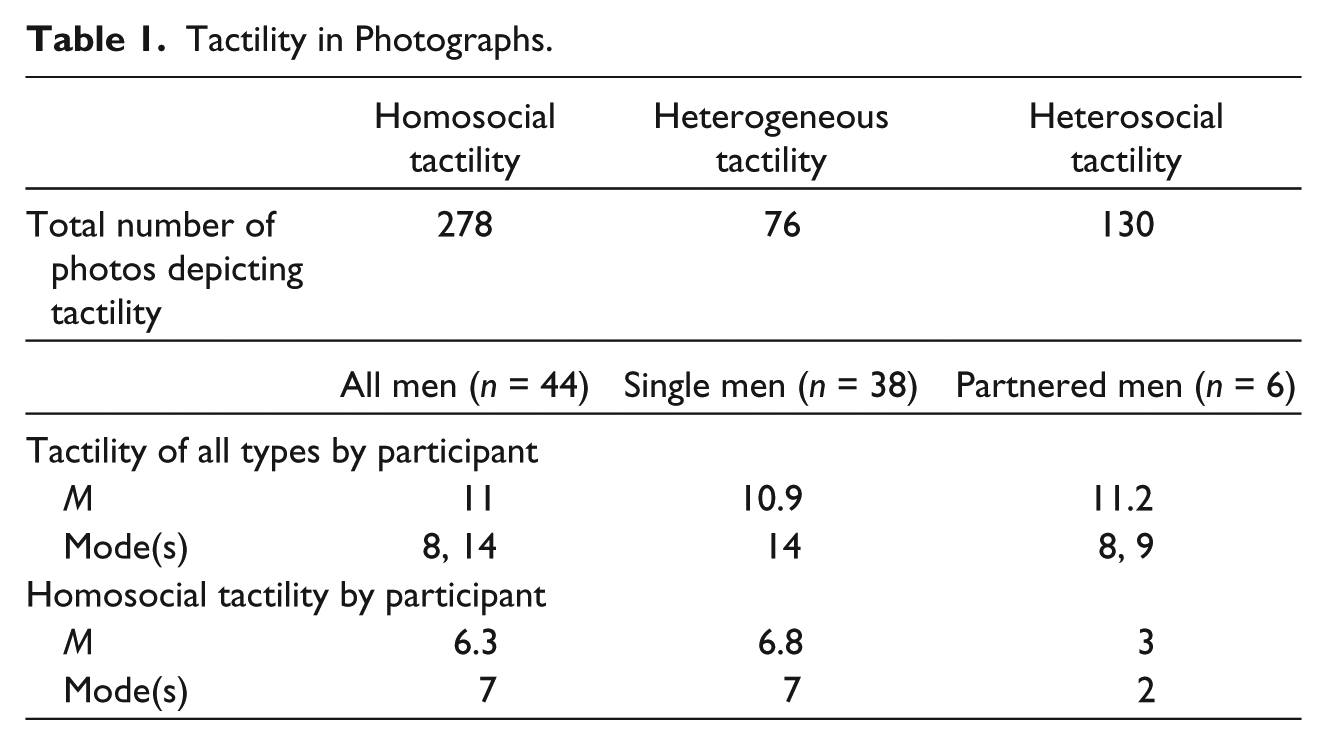
Figure 1 shows two men standing in a bar facing the camera with their arms draped around each other’s shoulders. The men stand motionless, heads pressed together, waiting and posing for the photograph.
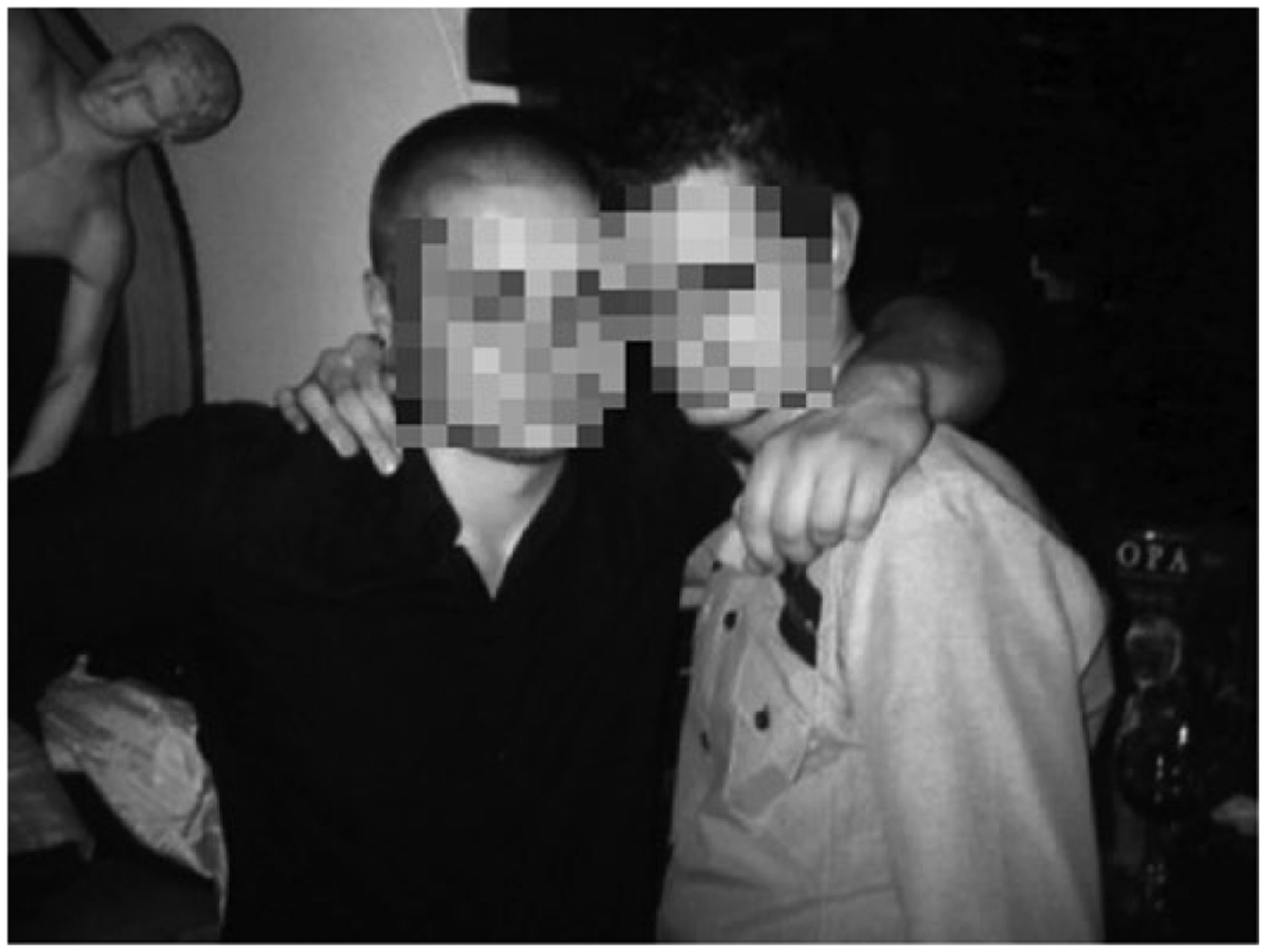
Men posing for a photograph.
Like the example given in Figure 1, all participants displayed homosocial bonding in at least some of their photographs. The mean for a participant demonstrating homosocial tactility was 6.3 (or 25%) of the 25 photos. Although it might be argued that the contemporary norms of photographs encourage people to move closer together, the behaviors observed were far more diverse than simple displays of tactility (e.g., arms around shoulders). They included holding hands, hugging, sitting on each others’ laps, lying across each other, kissing, light touching, seat sharing, and piggybacking; sometimes also demonstrated with a combination of partial nudity. Although some of these photographs will have had ironic intentions (Manago, 2013), men appeared comfortable in these displays of homosocial intimacy, and the volume/variety of photos indicates that these behaviors were part of a cultural norm within the sample.
Figure 2 shows a moderately lit room, where four men are photographed in close proximity to each other. Three are sat pressed up against one another, while one lies across them. Half of them hold cans or beer or cider but all appear comfortable and relaxed. There are some attempts to pose for the photo but the visible frenetic energy suggests that some of them were either not ready or not concerned.
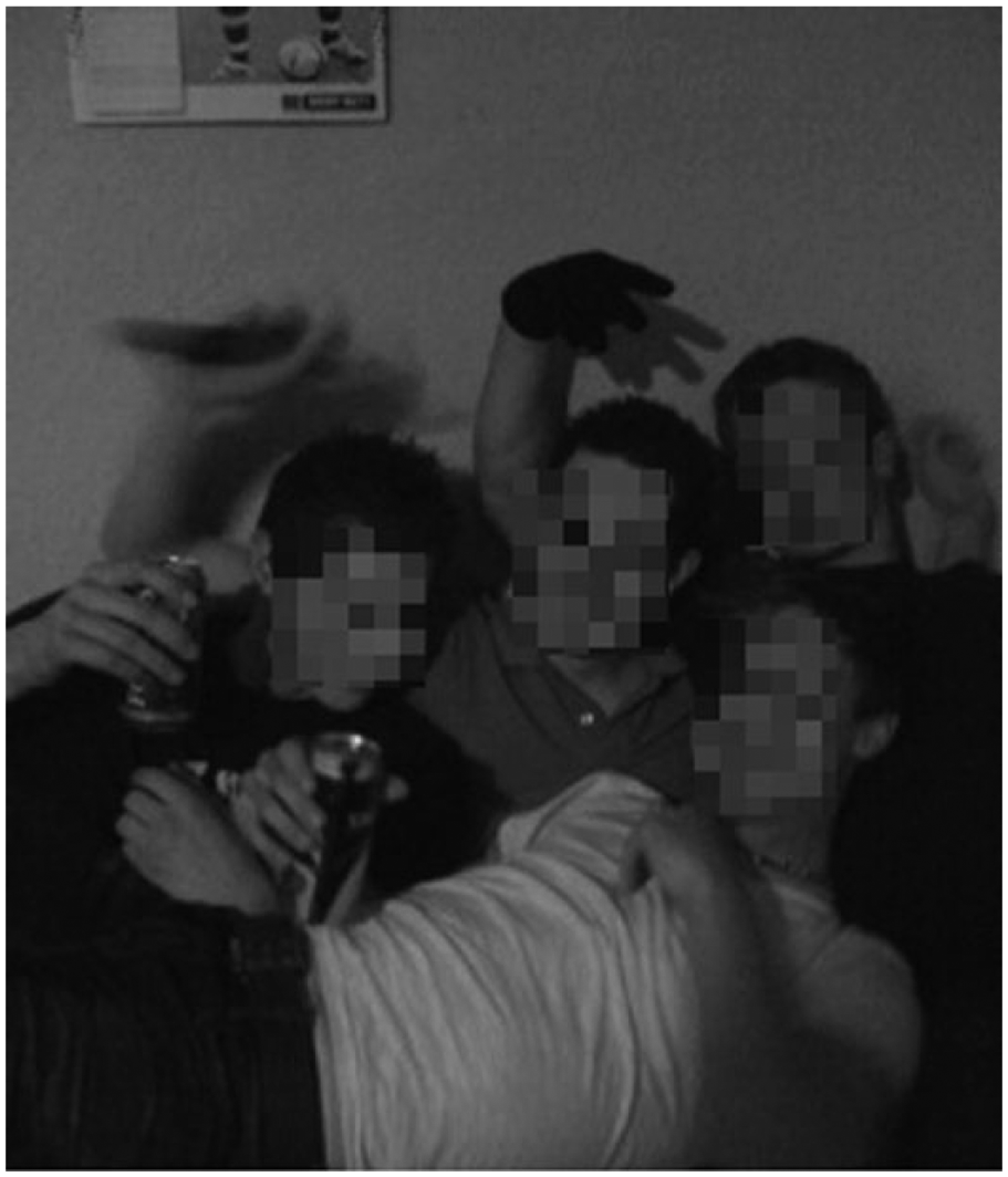
Group of men cuddling and drinking alcohol.
While these types of tactile behaviors were sometimes displayed between men and women (heterogeneous tactility), in line with Mendelson and Papacharissi’s (2011) findings, they were most commonly found between men (see Table 1). Exemplifying this, only six of the profiles examined featured more photos of heterosocial tactility (men being tactile with just women) than homosocial tactility.
However, the level of homosocial behavior demonstrated in the photographs diminished in user profiles where the participant identified as having a girlfriend, whereupon this became a focus for a large proportion of photographs. Six participants from the 44 had girlfriends (no participants identified as gay), and the mean number of homosocially tactile photos on their profile was 3. When these 6 participants are taken out of the sample, the homosocial mean for each of the remaining (single) participants rises to 6.8 (see Table 1).
A chi-square test of independence was performed to examine the relation between relationship status and photographs of homosocial versus heterosocial tactility. The relation between these variables was significant, χ2(1, N = 408) = 36.714, p < .01. Single participants were more likely to engage in homosocial tactility than partnered participants, who themselves were more likely to engage in heterosocial tactility. That is not to say that these partnered men demonstrated tactility less than the single men. Table 1 demonstrates that levels of overall tactility (meaning tactility demonstrated with any gender) across all photos are relatively similar.
Photos of men kissing were taken in nightclubs, bars, or party settings, with an implied presence of alcohol. Despite only seeing 14 men’s profiles displaying photos of them kissing another male (18 photos in total), the presence of any photos of this nature is extremely significant because of the homosexual overtones associated with male kissing (Anderson et al., 2012). In addition, kisses often happen quickly, so it is unlikely that all instances would have been caught on camera.
Figure 3 shows two men in busy club kissing each other. They have their arms around each other holding one another’s necks, while others are around them. One of the participant’s faces is obscured, and the other has closed his eyes during the kiss.

Two men kissing.
None of the photos could be described as intimate kisses but mainly comprised of men kissing each other on the cheek, and only two of the photos showed men kissing on the lips. This may reflect that it is more common for a man to have kissed another man on the cheek, than on the lips as well as highlighting the difficulty in capturing a kiss on camera, especially when considering that other research at the same university found 89% of the male students had kissed another male on the lips (Anderson et al., 2012).
Despite the low number, the number of photos of men kissing each other was twice as frequent as that of men and women kissing (as shown in 10 photos). This contrasts with Mendelson and Papacharissi’s (2011) research that found men were more likely to be photographed kissing women on the cheek than other men. Anderson’s (2014) research, however, suggests that rates of male-male kissing are slightly elevated in athletes compared with the general population.
Homosocial Tactility Away From Bars, Clubs, and Parties
Despite Mendelson and Papacharissi (2011) stating that “for men, the sociality ends at formal events, emphasising the importance of drinking buddies” (p. 28), this was not evident in the sample. Of the 494 photographs away from bars, clubs, and parties, 116 demonstrated homosocial tactility (see Table 2). Men were photographed lying together in beds, sat on each other’s laps in kitchens, hugging in the outdoors, all in much the same way they had been photographed in bars, clubs, and parties. These photographs suggest a culture of diminishing homohysteria.
Homosocial Tactility by Setting.
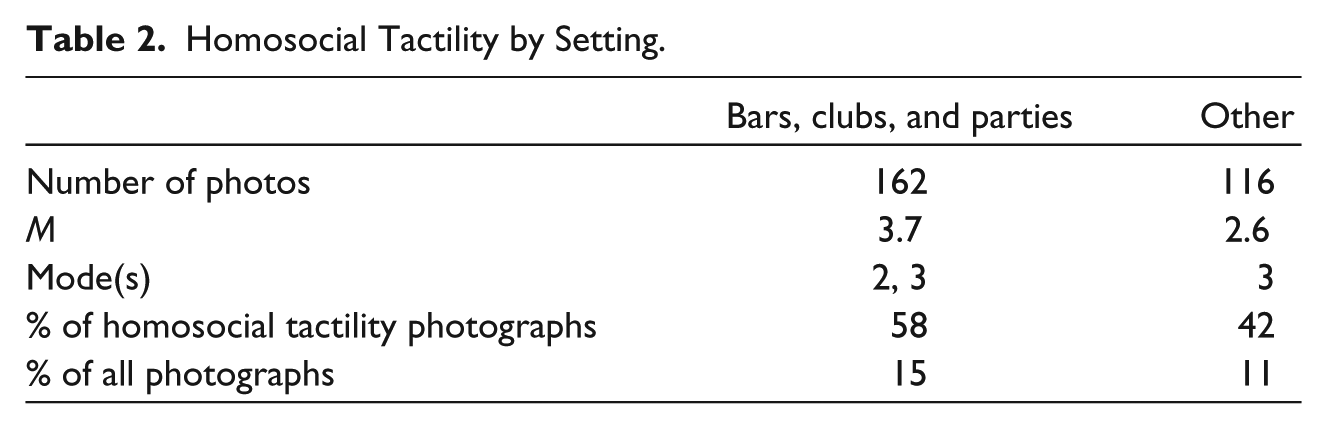
It would, however, be naïve to suggest that students might not still be consuming alcohol just because they are away from bars, clubs, or parties (Wells, Graham, & Purcell, 2009). If alcohol was acting as a method by which these men were accruing masculine capital (De Visser & Smith, 2007; De Visser et al., 2009) in order to transgress gendered boundaries and engage in homosocial tactility, then we would expect to see at least an implied presence in the majority of homosocial photographs. However, of the 116 photos only 22 showed the implied presence of alcohol, such as open containers of alcohol nearby (although it is not necessarily possible to judge whether alcohol is being consumed at that specific point).
Rather than a means by which to gain masculine capital, the high presence of alcohol-related photos highlights the photographic norms of Facebook (Alemán & Wartman, 2009; Mendelson & Papacharissi, 2011), as well as the importance of alcohol for undergraduate students, both male and female (Mobach & Macaskill, 2011). Even if we exclude the 22 photographs of implied alcoholic consumption then the remaining 94 photos still make up 9% of the total sample of all photographs. In addition, other research in Britain also confirms that homosocial tactility is happening without alcohol consumption (Anderson & McCormack, 2015; McCormack, 2012).
In Figure 4, three men are pictured lying side by side in the same bed with their bodies entwined. The men are in various states of undress, ranging from potentially naked to fully clothed, but are all smiling at the camera. The man positioned in the middle has his arm around one of their necks (which is being clasped by the recipient), and the other may be playing with the last man’s hair (although it is unclear).
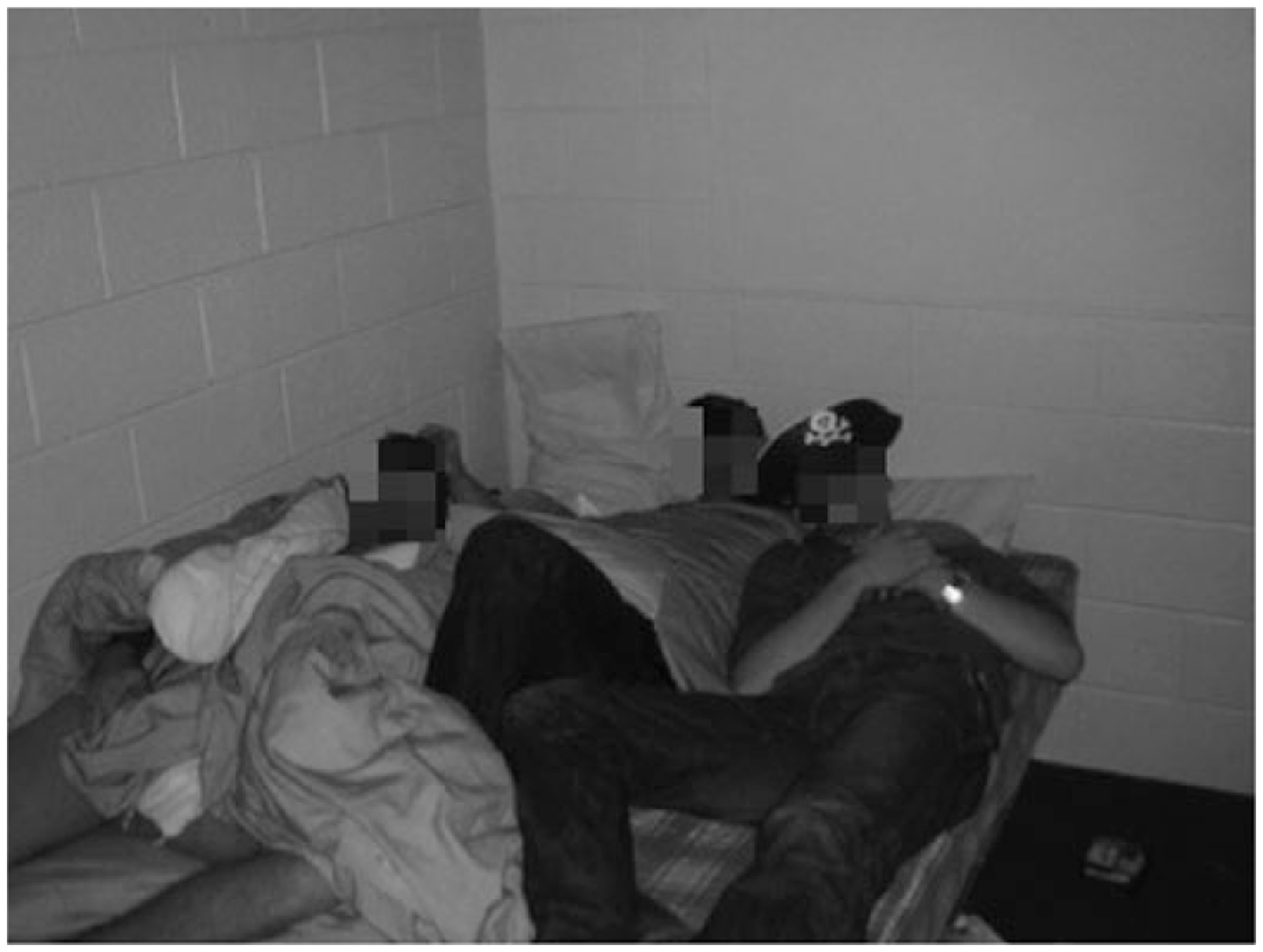
Men in bed together.
Dancing
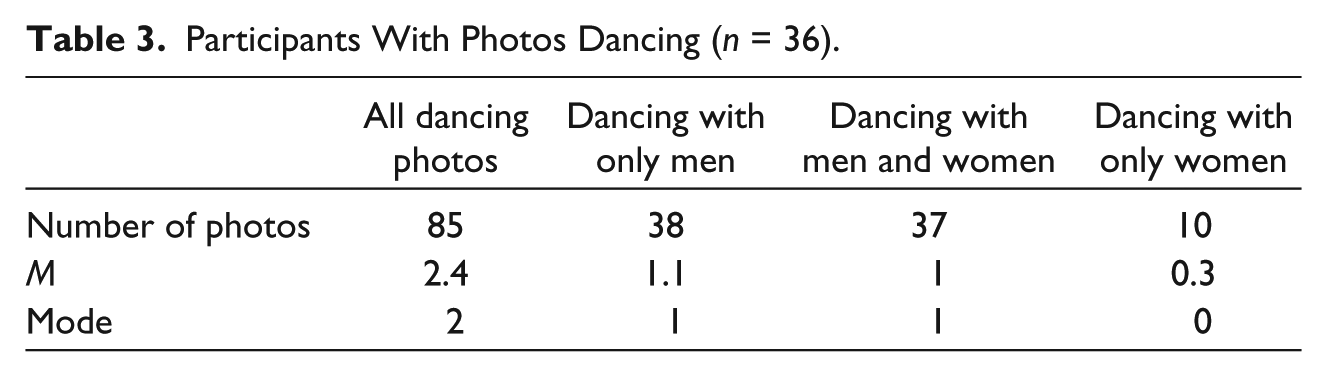
Despite the image of dancing being highly associated with femininity (Adams, 2005; Kraus, Hilsendager, & Dixon, 1991), 85 images showed men dancing. While Brown et al. (2005) suggest that dancing is an important part of the courtship ritual, photos often showed men dancing together in a purely male group (see Table 3). Peterson and Anderson (2012) suggest that during the 1980s, men never used to touch when dancing, but such behavior has subsequently become more common. The photos I analyzed reflect this attitude as common, and men were actively engaged in dancing with other men. Furthermore, the men captured in these photographs generally seemed to be enjoying the dancing as an activity in itself, instead of looking around with intention of “seeking a mate”; although it is not possible to be certain without interview.
Participants With Photos Dancing (n = 36).
Men are seen dancing at clubs and parties, sometimes sporting a shirt and smart trousers, other times daubed with neon body paint or elaborate fancy-dress costumes (fancy dress being a common occurrence at British universities). They dance in both mixed-sex and same-sex groups, illustrating both as socially acceptable within their university culture.
Figure 5 shows two men in a club dancing together. The blur on the photo shows that they have made little attempt to stop dancing for the photograph although they may have lent in toward each other for the benefit of the photo.

Men dancing together.
This particular photograph demonstrates common themes found among many of the photographs of men dancing with only men. Similar to the previous findings on homosocial tactility, they do not fear each other’s touch, nor do they need to be dancing with women to “explain” their dancing as the heterosexual pursuit of women. The photo suggests that these men are comfortable with dancing together for enjoyment. Others have also found male adolescents in the United Kingdom dance for fun (McCormack, 2012; Peterson & Anderson, 2012) and may be attributed to the reduction of homohysteria in the United Kingdom (Anderson, 2014).
This all-male dancing might therefore be considered as a bonding activity where men are enjoying the actual activity of dancing (Grazian, 2007), rather than using it for pursuit of masculine capital. It is because the photos of men dancing have the potential to be read as feminine by others, yet are still included within the sample’s online identity construction, which make it another important indicator of reducing homohysteria within their peer culture.
The numbers of photographs showing men dancing with men and women (37), or only men (38), were proportionally equal. Thirty-six of the 44 participants were photographed dancing with men either exclusively or in a mixed group of men and women, and photos of men dancing with only women were relatively rare (only 10; see Table 3). The remaining 8 participants had no photographs of dancing at all. Photos of dancing were unsurprisingly found mainly in the social arena of what appeared to be nightclubs, and were often accompanied by the visible presence of alcohol.
Discussion
The analysis of 1,100 photographs of heterosexual, British undergraduate athletes from one university overwhelmingly shows an adoption of inclusive behaviors. Framed within a culture of diminished homohysteria, the photographs in this study show that these early emerging adults are able to explore and demonstrate behaviors that were off-limits to men from the previous generation (Anderson, 2014). Every participant showed at least some behaviors consistent with Anderson’s (2009) theory of inclusive masculinity and a relative lack of photographs demonstrating what could be read as orthodox. Dancing, hugging, and kissing are all present within many of their online identities and available for their friends and family to see.
This research confirmed previous findings suggesting that the highest proportion of photographs uploaded to Facebook for university students were from parties or other similar social settings that included alcohol (Alemán & Wartman, 2009), and that alcohol consumption is highly related to university student life (De Visser et al., 2009; Peralta, 2007; Sparkes, Partington, & Brown, 2007). The only behavior consistently found that has the capacity to be read as orthodox was the high frequency of photos suggesting alcohol consumption. However, as previously discussed, alcohol forms a part of the photographic norms of Facebook for many university students, and is equally important to female students (Alemán & Wartman, 2009; Mendelson & Papacharissi, 2011; Mobach & Macaskill, 2011), rendering these photographs an ineffectual way to raise one’s masculine capital if this was the goal. Presence of alcohol does also not preclude a reduction in cultural homohysteria that allowed these men to demonstrate more inclusive behaviors (Anderson, McCormack, & Lee, 2012).
The most thoroughly demonstrated behavior was that of homosocial tactility. Interestingly, men demonstrated less homosocial tactility when they had a girlfriend, although their overall level of tactility toward others in general (male and female) did not drastically change (see Table 1). One interpretation of this may be that within a culture of decreased homohysteria, men seek tactility and affection from others; if they are not partnered, then these photos suggest that they will seek this from other men. This is consistent with Anderson’s theorizing and is further detailed in Anderson and McCormack’s (2015) research on men cuddling together. Yet, even when partnered, Anderson (2014) suggests that men still desire homosocial tactility with others, and the photographs in this research suggest that this is true, although more tactility was demonstrated with their partners. It is, however, important to note that actual levels of homosocial tactility when partnered may be higher than these photographs suggest due to a gender difference in regard to who takes more photographs, with students suggesting that women take and upload more photographs to Facebook (Alemán & Wartman, 2009).
The types of inclusive behaviors observed all suggest a continuing reduction of homophobia within contemporary western society (Anderson, 2009; Keleher & Smith, 2012) and therefore an accompanying reduction in homohysteria (Anderson, 2009). Looking at the photographs in this research as an indication of cultural norms among these emerging adults, they send some very clear ideological messages about what is considered acceptable and socially desired behavior within the context of university. Each photograph a participant includes on their profile is an example of how they behave in the real world and contributes to their identity as a whole. The self-presentation they put forward should be considered as how they wish others to view them (Goffman, 1959), with any aspects they do not wish others to see, not linked with their profile. Facebook profiles are a means through which users demonstrate their identities in both implicit and explicit ways (Zhao et al., 2008), and photographs make up a large part of this. The entire sample incorporated behaviors consistent with inclusive masculinity theory into their identity, suggesting an active rather than passive endorsement of inclusive masculinity.
Inclusive masculinity, and the broadening of behaviors it affords, may be representative to these early emerging adults as a marker of adulthood; at least for these White, heterosexual, university-attending men in the United Kingdom. They have dispensed with some older notions of gender appropriate behaviors that may still exist in early adolescent years (e.g., homophobia; McCormack, 2012) in pursuit of adulthood. They may also want to demonstrate a more autonomous identity, away from familial constraints (Arnett, Ramos, & Jensen, 2001)—a generation less likely to be accepting of such behaviors (K. Plummer, 2010)—and align more with what they perceive as contemporary cultural values of both wider society and their peer group. The greater extent of diminishing homohysteria in the United Kingdom compared with the United States may also explain why these men seem to reject orthodox masculinity as a marker of adulthood to a greater extent than some U.S. studies (e.g., Way et al., 2014)
If the adoption of inclusive masculinity is now becoming a part of modern adulthood, it is however important to further determine which groups this holds true for. Many studies have already found varying degrees of inclusive masculinity to be a robust feature across varied samples of adolescents and emerging adults, including various levels of education and economic class (e.g., Anderson, 2014; McCormack, 2012; Roberts, 2012). But how it relates to understanding emerging adulthood, and whether such behaviors are becoming a robust feature of adulthood (at least for some groups) in general, is still yet to be fully understood.
Drawing upon inclusive masculinity theory, it is evident that these men give performances of masculinity in a way that they would be unlikely to do so within a homohysteric culture. Their homosocial tactility (among other observed behaviors) would be stigmatized as effeminate and be unlikely to stay tagged for long (or even happen in the first place). Conversely, the observed frequency of behaviors that go against the tenets of orthodox masculinity suggests that these men live within culture where this is the norm, a culture of diminished homohysteria. Because these men do not fear being homosexualized for their behaviors, they are able to adopt a wider range of behaviors without fear of stigmatization; the photographs tagged on Facebook are normal for them, hence they leave them tagged. Just as Morris and Anderson (2015) have shown popular male online video bloggers in the United Kingdom adopting inclusive masculinities and exhibiting them for all to see, the photographs here represent a glimpse into today’s young male friendships, where intimacy and affection is not a secret, instead it is publicly boosted.
Limitations
There are of course limitations to this study. The aim of qualitative research is not to make total generalizations, and our sample is limited in several ways. First, the participants are all exclusively White, university-attending males, which will no doubt influence the types of images produced. There was a relatively limited scope of locations in photographs, mainly comprising bars, clubs, and parties: all closely related to university life and not necessarily generalizable outside of a university setting. In addition, participants are only drawn from one particular sports course from one highly ranked, relatively small university. The types of behaviors observed could conceivably be localized to the course, university, or city. The nature of Facebook does not however necessarily constrain their online networks to only these geographical locations, and others will likely view their online performance outside of this small geographic area.
Another limitation comes from the multiple readings that an image may have (Lacey, 1998), meaning that their interpretation will not necessarily be the same as another’s (Rose, 2001). One person may see a picture of men dancing, while another sees them play fighting. I would, however, argue it is the potential of a picture to be read as dancing (at one time considered feminine) that is important, and suggests that these men are comfortable in others’ thinking they are partaking in such an activity (even if they might not).
Research by Manago (2013) also suggests that irony functions as a method by which men are able to include less orthodox aspects within an online profile, while still aligning with orthodox masculinity; the same ironic performances have also been found by McCormack (2012). However, without speaking to these participants, it would be difficult to determine the proportion of photos constructed in an ironic way. Thus, all of the pictures demonstrating tactility, dancing, or kissing can be potentially read as ironic. It is however worth noting that other studies show men are also engaging in these behaviors without irony (Anderson, 2014; Anderson & McCormack, 2015).
Footnotes
Acknowledgements
I thank Professor Eric Anderson, Dr Mark McCormack, and many others for their guidance and comments when writing this article as well as the participants for access to their photographs.
Declaration of Conflicting Interests
The author(s) declared no potential conflicts of interest with respect to the research, authorship, and/or publication of this article.
Funding
The author(s) received no financial support for the research, authorship, and/or publication of this article.