



Abstract
This qualitative study explores how comprehensive sexuality education located within a broader positive youth development approach informed transformations among young people from informal urban communities in India. A thematic analysis of data obtained from the young people, their parents, and frontline workers revealed that securing the cooperation of families was possible for the program because sexual and reproductive health education was not a stand-alone intervention, but a part of a larger approach seeking to build capacities of young people. The strategic introduction of sexual and reproductive health communication helped the participants to overcome inhibitions about the topic. Enhanced awareness of gender, pubertal changes, gender-based violence, and child sexual abuse was evidenced post participation. Improved agency was manifest through decision making, critical thinking, confidence, mobility, and articulation, especially among girls. Program interventions to enhance sexual and reproductive health awareness of parents and communities and to improve health services and facilities were bolstered through youth engagement. Such contribution by the young reinforced their knowledge and skills, strengthened agency, and cemented family and community support. A holistic program situated within the positive youth development approach thus seemed a pragmatic vehicle to promote comprehensive sexuality education for young people in vulnerable urban communities.
Keywords
Background
Promoting Sexual and Reproductive Health of the young involves, along with services and laws, the provision of comprehensive sexuality education (World Health Organization [WHO], 2018), defined by the United Nations Educational, Scientific and Cultural Organization (UNESCO) as: a curriculum-based process of teaching and learning about the cognitive, emotional, physical and social aspects of sexuality. It aims to equip children and young people with knowledge, skills, attitudes and values that will empower them to: realize their health, well-being and dignity; develop respectful social and sexual relationships; consider how their choices affect their own well-being and that of others; and, understand and ensure the protection of their rights throughout their lives. (2018, p.16)
The comprehensive sexuality education framework goes beyond the provision of scientifically accurate information about reproduction, contraception, and sexual diseases to promote positive values related to sexuality; encourage critical thinking skills, strengthen young people’s citizenship, and develop life skills needed to support healthy choices (United Nations Population Fund [UNFPA], 2021). Its multiple, sequential sessions spread over a course of several years address culturally and developmentally relevant topics with a learner-centric approach, and can be conducted with adolescents in school or community settings (UNESCO, 2018). The integration of a gender and human rights perspective throughout the curriculum is integral to its effectiveness (UNFPA, 2021).
However in India, the milieu of forced silence around sex and sexuality, gender inequity, lack of agency among adolescents as well as inadequate awareness of and access to services continue to compromise their sexual and reproductive health (Population Council & United Nations Children’s Fund [UNICEF], 2013).
In rural as well as urban India, there is hardly any sexual and reproductive health communication between parents and adolescents (Population Council & UNICEF, 2013), leaving girls unprepared for menarche (Tuli et al., 2019; Van Eijk et al., 2016) and boys harboring misconceptions about nocturnal ejaculation and masturbation (Sheoran et al., 2016; Tondare et al., 2011). A lack of awareness about menstrual hygiene (Van Eijk et al., 2016) puts girls at risk of reproductive tract infections (Population Council & UNICEF, 2013) even as stigma precludes any attempt to sensitize boys about menstruation and related issues (Tuli et al., 2019).
Although early marriage in India has declined over time, especially in urban areas, the practice continues (International Institute for Population Sciences [IIPS] & ICF, 2017) resulting in early pregnancies, adverse pregnancy outcomes, and the risk of subjecting girls to all forms of violence (Sivagurunathan et al., 2015). Despite strictly imposed norms against pre-marital sexual relations, evidence points to sexual activity before marriage, particularly among boys (Mutha et al., 2014). Because of stigma and fear of disclosure of sexual activity status, lack of information, and inaccessible facilities or judgmental providers, contraceptive practice among the unmarried is limited or inconsistent and there is a persistent unmet need for contraception, especially among young women (Jejeebhoy et al., 2020; Khubchandani et al., 2014).
Gender compounds the limited agency that adolescents have (Population Council & UNICEF, 2013). Restricted mobility of girls limits their access to health facilities; limited decision making as well as financial autonomy coupled with experience of violence further compromise their reproductive rights (Jejeebhoy et al., 2020). Attitudes propagating gender discrimination and condoning violence against women persist even among adolescents, both boys and girls (Das et al., 2014). The prevalence of sexual abuse against children and adolescents is alarming in India, even though the need for protecting family honor, the sense of shame in discussing sexual abuse, and the tendency for victim-blaming results in underreporting of such cases (Choudhry et al., 2018).
Gender socialization intensifies during adolescence (Basu et al., 2017) and most young people grow up believing that there is no alternative to heterosexuality (Bowling et al., 2019). Experiences of actual/felt and internalized stigma negatively impact the psychological well-being of young people with non-normative gender and sexuality (Wandrekar & Nigudkar, 2020).
The National Adolescent Health Program launched by the Government of India in 2014 is a significant leap for adolescent health programming in India. This program includes both clinic-based and community-based service provision models and also introduces gender-based violence into its ambit. However, poor implementation in terms of quality and coverage of both health services and community-based activities has remained a challenge (Barua et al., 2020).
Against this backdrop, EHSAS (Empowerment, Health, and Sexuality of Adolescents), an adolescent and youth intervention at SNEHA (Society for Nutrition Education and Health Action), a Mumbai-based non-profit, works with young people from urban slum communities to promote their health and wellbeing. Improving sexual and reproductive health among the young participants through comprehensive sexuality education (UNFPA, 2014) is a key component of this intervention.
The program follows the guidelines laid down by the comprehensive sexuality education framework (UNFPA, 2014), within a larger positive youth development approach. Positive youth development is a comparatively recent approach toward youth programming that aims at empowerment of young people by promoting their “assets” or knowledge and skills such as interpersonal, creative or vocational skills; providing opportunities to develop youth “agency,” or the ability to think and act independently which includes self-confidence, decision making, mobility and analytical thinking (Hinson et al., 2016). Creating an “enabling environment” comprising their physical environment, social relationships, norms, customs, and government systems as well as providing opportunities to young people to contribute to this change escalates the process of building their assets and agency (Durlock et al., 2007). The “contribution” can take the form of awareness building by an individual within the family, school, or community, or as a collective effort to strengthen or transform systems such as peer education, advocacy, awareness campaigns, or research (UNICEF, 2018).
The present paper tries to discover how this program, implementing the comprehensive sexuality education framework within the positive youth development approach, informed transformations among the young participants and what emerged from their negotiations with the self, their families, communities, and the environment around. In particular, it attempts to seek answers to the following research questions: What transformations did the young people experience through participation in the program? How did the positive youth development approach complement the implementation of the comprehensive sexuality education framework?
Program Description
The program evolved organically through the organization’s on-ground experiences of working to improve health and nutrition outcomes for urban slum populations. The program works in Dharavi and Kandivali (Mumbai) and Kalwa (Thane) in Maharashtra. The program sites conform to the description of urban informal communities in India, with acute overcrowding, abysmal sanitation facilities, and inadequate approach roads with poor street lighting (National Buildings Organisation, Government of India, 2013). Such infrastructure results in negative health impacts and exacerbates risks of sexual violence (Nallari, 2015). A majority of the residents, as in other Mumbai slums, are dependent on community toilets, which are often in a state of disrepair due to heavy user ratio, poor quality of construction, and user apathy (Performance Assessment System Project, 2014).
Between 2016 and 2019, the program engaged with 3,963 young people, both boys and girls, including 3,746 adolescents (10 to 19 years old) and 217 youth (20 to 25 years old), and their families. The young participants, mostly students of middle and high school, belonged to migrant families with poor educational backgrounds, engaged in low-paying occupations.
The conceptual framework that guided the program is presented in Figure 1, where the anticipated changes related to the sexual and reproductive health of the participants are categorized in the four positive youth development domains of asset, agency, contribution, and enabling environment. The program interventions consisted of group education expected to build “assets,” that is, health awareness, gender-egalitarian attitudes and life skills of the young people, as well as awareness and advocacy with families, communities, and government systems designed to build an “enabling environment.” The program provided opportunities, encouragement, and support to promote young people’s “contribution” or participation in efforts to change the environment. While supportive families and communities were necessary to ensure participation of adolescents in the program, enhanced awareness and skills were a prerequisite for their contribution to change efforts, and a foundation for improved “agency,” that is, qualities such as self-confidence, decision making, and critical thinking. Opportunities for contribution to build an adolescent-friendly environment, such as community campaigns and advocacy with government systems to provide better health facilities and services were expected to improve agency and reinforce asset-building. The enhanced agency and support from the environment would further boost young people’s contribution. The interrelated transformations in these four domains would thus trigger an upward cycle of youth development.
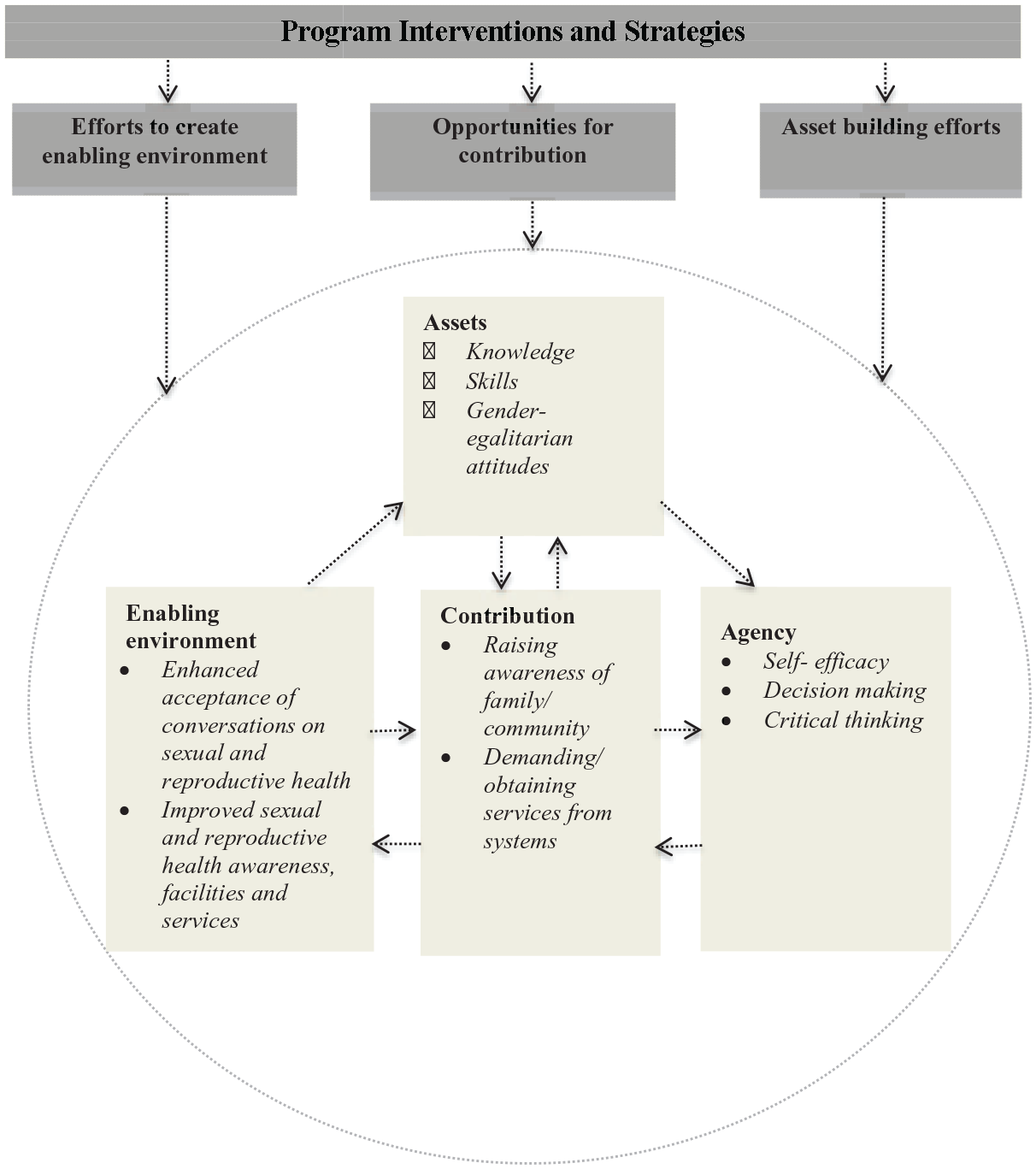
Conceptual framework informed by positive youth development approach (Hinson et al., 2016) and comprehensive sexuality education framework (UNFPA, 2014).
Comprehensive sexuality education calls for a pre-determined curriculum that is scientifically accurate, comprehensive, age-appropriate, incremental, culturally relevant, and based on gender equality and human rights (UNESCO, 2018). The content of the group education sessions was aligned with these norms. Apart from accurate anatomical and physiological information on sexual and reproductive health, there were discussions on positive aspects of sexuality such as love and relationships based on consent and respect. The sessions addressed issues of gender and power inequalities, sexual orientation, and gender identity while a gender perspective underlined all program activities.
Sessions focusing on male and female reproductive systems, pubertal changes, and menstrual health were conducted with age-segregated groups, and a module on sexuality dealing with love and infatuation, conception, early pregnancy, contraception, and non-normative sexuality was conducted only with adolescents above 15 years of age. Discussions on cultural myths related to menstruation and gender-based violence including child marriage were a part of the curriculum. At the same time, considering the cultural taboos prohibiting conversation on sex and reproduction in heterosexual groups, the participants were segregated by sex and remained so till they were comfortable discussing the topic in a mixed group. The comprehensive sexuality education framework recommends safe learning spaces and trained educators (UNFPA, 2014). Accordingly, the community centers of the program provided safe spaces to the young people to engage in learner-centered interactive learning, and the field staff trained in facilitation skills and program content was supported by staff with a post-graduate degree in social work. A different staff team conducted the program at each site, though the curriculum was decided centrally.
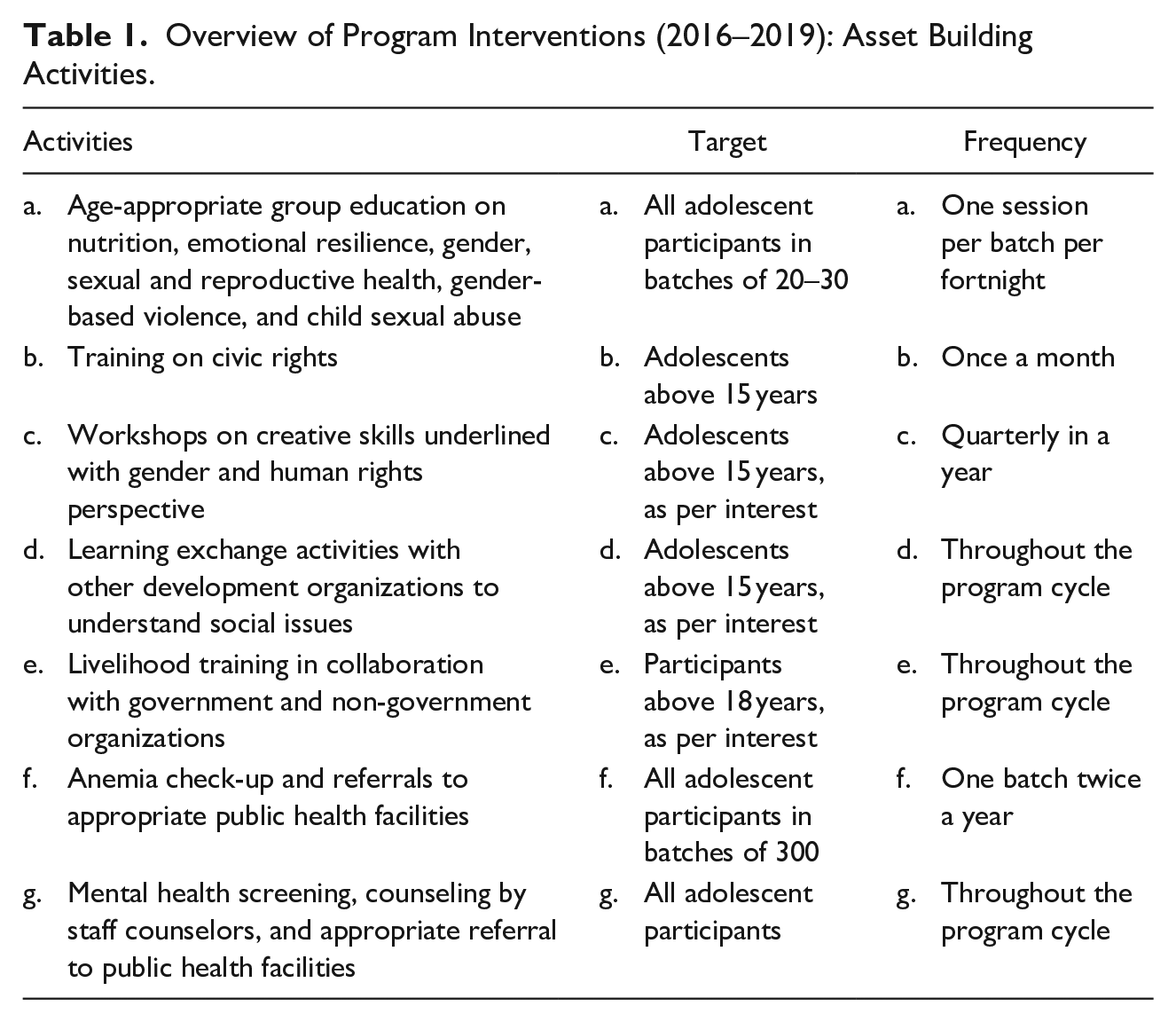
Going beyond comprehensive sexuality education but under the ambit of positive youth development, group education sessions on nutrition, employability training, creative skill-building workshops as well as health and mental health services formed a part of the asset-building activities of the program. While the comprehensive sexuality education framework stresses addressing structural factors, such as access to sexual and reproductive health facilities and services (UNFPA, 2014), the program, using a positive youth development lens, took a broader view of the environment as encompassing social, normative, structural, and physical aspects (Hinson et al., 2016) and engaged with parents and communities, as also with government systems. The scope of youth contribution, emphasized under the comprehensive sexuality education framework (UNFPA, 2014) as a transformative experience, was also therefore wider.
The details of the program intervention are given in Tables 1 and 2. These consisted of efforts to build assets and an enabling environment. As described earlier, the opportunities for contribution by the young participants, expected to lead to enhanced agency, were woven into the efforts.
Overview of Program Interventions (2016–2019): Asset Building Activities.
Overview of Program Interventions (2016–2019): Efforts to Create Enabling Environment.

Methods
The evaluation of the program by a team of organizational, yet independent evaluators was carried out between 2017 and 2020 at all the three program sites, to explore the processes set in motion by the program interventions, so that the program model could be refined and strengthened. Qualitative methodology was used to enable an in-depth, personalized, and contextually sensitive understanding of the topic under study (Patton, 2015). The present paper is based on the findings of the study.
Data were collected by two researchers (V.A. and N.S.), both women with prior experience of working on issues related to gender and with vulnerable urban communities. Eighteen Focus Group Discussions (FGDs) with 206 young participants (127 girls, 79 boys; 96 participants aged below 16 years; 111 participants aged 16 years and above), 10 In-depth Interviews (IDIs with five girls, five boys, aged 16 years and older) and eight FGDs with 49 participants (34 girls, 15 boys, aged 16 years and older) who were active as program volunteers were conducted periodically throughout the program cycle. The participants were selected purposively considering the criteria of age, gender, and geographical location. Most of the participants were studying in higher secondary school and beyond, except four girls who had dropped out of higher secondary school.
Ten FGDs were conducted with 96 parents, mostly mothers, in the course of the intervention cycle. Interviews were conducted with two clinical and one non-clinical staff member from the public health system. Convenience sampling was used to select the parents and the public health staff. Six audio recordings (podcasts) by young participants from an information and communication technology workshop depicting their experiences with love and attraction formed part of the data.
The FGDs with young participants aimed to gauge their perceptions and recall of the information they received about nutrition, emotional resilience, gender, and sexual and reproductive health and how they used this learning in their daily life. The FGDs and IDIs with the volunteers focused on their motivation for and the experiences of becoming a program volunteer, the initial reaction of the family and the community, and the perceived effect of the program on participants, their families and the community. Perceptions regarding the health needs of young people, the delivery of public health services to them, and their experience of collaboration with the program formed the domains of inquiry for the public health staff. The FGDs with parents sought to corroborate responses from their offspring, explored their expectations from the program, and assessed their opinion about the program as well as the change in their awareness and attitudes toward issues critical to young people. The researchers’ understanding of the positive youth development approach and the comprehensive sexuality education framework formed a backdrop to these conversations.
The study design and tools were subjected to internal review. The interviews and FGDs were conducted mostly at the program centers in the communities or at a centrally accessible place in the community depending on the convenience of the participants. FGDs were conducted in age-segregated groups and initially in sex- segregated groups, when participants exhibited discomfort with sexual and reproductive health conversations in mixed groups. Interviews with health post personnel were conducted at their workplaces. The participants were contacted through the program staff after informing them about the purpose of the study. All those who were contacted expressed willingness to participate in the study. Written consent for obtaining data related to program interventions was obtained from parents of young participants at the time of enrolment in the program, while at the time of data collection verbal consent/assent was taken from the participants. The interviews were conducted in Marathi or Hindi, were audio-recorded, and then translated and transcribed into English. The hesitations, pauses, and giggles were retained in transcriptions. Participants’ permission was sought before recording; they were assured of confidentiality and the data were anonymized.
Data obtained from the FGDs and the IDIs with the young participants were triangulated with data gathered from the podcasts as well as from the parents and the public health staff. Periodic informal interactions with the program staff and observations by the researchers provided insights informing the analysis. Data were analyzed thematically. We used a combination of inductive and deductive thematic analysis (Braun & Clarke, 2012). After becoming familiar with the data, these were inductively grouped into codes, which were then collated and distilled into key themes. The analysis was also deductive as our literature review related to the positive youth development approach (Hinson et al., 2016) and the comprehensive sexuality education framework (UNFPA, 2014) informed these themes. Inputs from the research team (V.A., R.S., N.S., S.R. N.K., and A.J.) accompanied an iterative movement between the full data set, key themes, and the emergent analysis, which continued till the themes were crystallized.
Results
Adolescent Sexual and Reproductive Health: A Community Context
Almost all the participants admitted to a lack of awareness about all aspects of sexual and reproductive health before attending program sessions. Most of the young girls were unprepared for menarche and after menarche received only incorrect information from their female relatives.
“We did not even know that we have three holes down there!” (Girl, aged 16+ years from Dharavi) “My aunt said that girls are cursed therefore they get periods.”(Girl, aged below 16 years from Kandivali)
Boys appeared to fare worse with none reporting a mature conversation with an adult about pubertal changes. Apparently, schools were not helpful, friends provided misleading information, and the internet, to those few who could access it, was very confusing.
“Sometimes we used to feel scared, what is happening to the penis, what is coming out of it, but not now.” (Boy, aged below 16 years, from Dharavi) “On YouTube, sometimes the answers are correct and sometimes not.” (Boy, aged 16+ years, from Kandivali) “My friend advised me that shaving my penis would help increase my height!” (Boy, aged 16+ years, from Dharavi)
Instances of gender-based violence were common in the neighborhood or in the family. Boys subscribed to the prevalent patriarchal notions. Girls seemed to accept street violence as a part of everyday reality, which resulted in restricting their mobility. Young boys were also not exempt from such abrasive experiences.
“Earlier we used to feel, what is the use of talking about all this?” (Girl, aged 16+ years, from Kandivali) “I used to take my male privilege for granted.” (Boy, volunteer, aged 16 + years, from Kandivali) “When we go to the toilet in school, boys comment on our penis; sometimes they ask, do you want mine? Do you want to hold it?” (Boy, aged below 16 years, from Dharavi)
Inadequate facilities exacerbated concerns related to health. “There is no water facility in the toilets, the toilets do not get cleaned regularly, often the lights are dysfunctional and doors and windows of the toilets are broken” were issues commonly voiced by adolescents and parents alike. The community perceived public health facilities only as “a place where babies are vaccinated,” while the public health staff also admitted that services for adolescents were not a priority because of their other workload.
Receptivity to Sexual and Reproductive Health Information
Despite the need for information, the participants, especially boys, were wary of attending the group education sessions, which they thought would be “boring.” However, the theater and dance workshops and other opportunities to be with their peers lured them. Interest in health education developed gradually as the participants kept getting new information.
“Boys from my neighborhood and tuition used to come here, so I became interested.” (Boy, volunteer, aged 16+ years, from Dharavi). “We learned about queer community only here. This was something very new and interesting.” (Girl, aged 16+ years, from Kalwa).
Some participants admitted feeling shame and revulsion when sexual and reproductive health education was introduced. Younger adolescents were more uncomfortable than the older ones, who had some previous exposure to the subject.
“All the boys were teasing each other about what we were all being taught. So sir made two separate groups of boys and girls and then taught us.” (Boy, aged below 16 years, from Dharavi) “We were shown pictures of body parts. The young girls found it disturbing. We did not, as we had seen those earlier.” (Girl, aged 16 + years, from Kandivali)
However, a year later, many of the young people were comfortable with sexual and reproductive health conversations in mixed groups and displayed higher participation levels. The volunteers, who had participated in community campaigns and events on sexual and reproductive health issues, displayed far more readiness to speak on the topic indicating that familiarity bred comfort. In Kalwa, where sessions on gender were conducted before those on sexual and reproductive health, young people demonstrated better receptivity and retention of information than in Dharavi and Kandivali, where the session sequence was reversed.
Building Assets through Information, Attitude, and Skills
Enhanced assets in terms of knowledge, interpersonal and communication skills, and gender-egalitarian attitudes were revealed through the data.
As a result of program interventions, both boys and girls reported being aware of pubertal changes that took place not only in their bodies but also in those of the opposite sex, the nutritional needs of pubertal girls, and menstrual hygiene practices. This, as a girl from Kalwa pointed out, “was important so that boys become sensitive to girls’ needs during menstruation.”
“Just as we prepare for a guest’s arrival, blood is lined in the stomach to receive a baby, and if the baby does not come, it is thrown out.” (Boy, aged below 16 years from Dharavi) “When we use a cloth instead of sanitary pads, we think nobody should see it, we hide it somewhere. But it needs to be washed and dried properly in the sun.” (Girl, aged 16 + years, from Dharavi)
In a society where women are harassed for not giving birth to a male child and where early marriages are still prevalent, many participants were aware that the “Y (chromosome) from men determines the sex of the child,” and knew that early marriage and pregnancy impaired maternal and child health, and “also affect studies of a girl and her future gets destroyed.”
Sessions on sexuality enabled the young people to see the transgender community and those with non-normative sexuality in a whole new light.
“Earlier we used to make fun of transgenders. Now I understand they are human and they too have rights. I have started giving them respect and talking to them normally.” (Boy, volunteer, aged 16+ years from Dharavi)
Confusion, however, prevailed about Human Immunodeficiency Virus (HIV)/ Acquired Immuno Deficiency Syndrome (AIDS), with one participant expressing that “HIV can spread through mosquito bites.” Also, they knew and believed in a girl’s right to consent for sex, however, did not think that she had the right to abort her child without permission from her husband or family. The program staff explained this disparity in different aspects of health awareness as resulting from differences in acceptability by the community.
“The parents accept their children gaining knowledge about menstruation and pubertal changes that they lacked. However, the taboos around topics such as HIV and abortion are much stricter and detailed discussions on these aspects would be counterproductive for the program.” (Program staff)
All the girls could discern gender discrimination practiced at home, “I learned about gender discrimination, and I could see a lot of it in my own family, with privileges reserved for my brother.” Many of the boys, of all ages, after attending the sessions displayed a change in attitude and in behavior, such as “helping out with the housework.” The young people as well as the parents exhibited a clear understanding of what constituted child sexual abuse and what should be an appropriate response to such incidents. They were also aware that anybody “who has control,” could inflict gender-based violence, and any woman “even those who are educated,” could experience it. The participants concurred that violence against women could take forms other than physical beating, and it could not be justified on the ground that the woman was not fulfilling the gender role expectations, “when she is unable to prepare food for her husband on time.” It had taken repeated discussions for them to realize this, and also to understand that “experiences of abuse do not depend on the type of clothes worn. Fully clothed girls can also be sexually assaulted.” (Girl, aged 16+ years, from Kandivali)
Most of the participants appreciated learning vocational and creative skills. Along with an increased awareness of their sexual and reproductive health rights, young volunteers learned the mechanisms for ensuring access to these rights. The content of the education sessions, as well as the group processes, contributed to this learning.
“There was no one in our area to teach us how to complain to the local administrative system about blocked drainages or toilets. The program taught us.” (Boy, volunteer, aged 16+ years, from Kandivali) “I learned something from one friend and something else from another. If we had any problem, we would share and resolve it by talking to one another.” (Girl, aged 16 + years, from Kalwa)
Redefining Agency Along With Sexual and Reproductive Health
Various aspects of agency such as confidence, articulation, mobility, self-efficacy, critical thinking, and decision making (Hinson et al., 2016; UNFPA, 2014) apparently received a huge boost through participation in program activities.
Most of the participants who participated in the program as volunteers recounted how “small activities” in the form of community campaigns and events taught them “big things” such as confidence, and self-efficacy. This was overwhelmingly corroborated by the parents.
“We used to stay at home and do nothing. But when we did a street play, got complimented by older people, we felt nice. We felt like doing something more.” (Girl, volunteer, aged 16+ years, from Kalwa) “We were sent for vocational training; we also learned about saving; now when there is a financial difficulty, we contribute from our savings. We feel so proud when we help our parents with our money!” (Girl, volunteer, aged 16+ years, from Kalwa)
Enhanced mobility was reported especially by girls, who were earlier “not allowed to step out of the house.” They were no longer shy of speaking in public or discussing taboo topics such as menstruation with their male friends and showed enough assertiveness to postpone marriage or break off a “bad” relationship. Their knowledge and confidence enabled them to question myths and norms they recognized as barriers to their health and wellbeing.
“In my family, girls are not allowed to be educated. After attending the sessions, I told my father that I want to study further, and also I want to work.” (Girl, volunteer, aged 16+ years, from Dharavi) “I explained to my ex-boyfriend that earlier you were good but now you have got into addiction, so I am breaking up with you.” (Podcast by a girl aged 18) “We have a shop which sells sanitary pads. If I got periods, no matter how much my dress was spoiled, I would not go there to pick up a pad if my brother was sitting there. Now I go and take even if he is there, as I know this is not something to be ashamed of.” (Girl, volunteer, aged 16+ years, from Kandivali)
Many of the young people displayed an increased sense of responsibility including maintenance of health and hygiene for themselves and for others.
“People do not think about their health except when they suffer. They will visit the doctor when they are extremely sick. I advise people to seek help when the illness is at an early stage.” (Girl, volunteer, aged 16+ years, from Kandivali) “If there isn’t a bin in the toilet then I’ll put the sanitary pad in a paper bag and throw it in our home dustbin.” (Girl, aged below 16 years, from Kalwa)
The feeling that encouragement and support they got from the staff caused these transformations was strongly apparent, as was a desire to transform others around them.
“We must walk with heads held high and not with downcast eyes...this change has come about only due to participation in the project, and I’m thankful.” (Girl, volunteer, aged 16+ years, from Kalwa) “Other girls may have problems that are more serious than mine. So many are married off as children and forced to sit at home. I should do something good for them.”(Girl, volunteer, aged 16+ years, from Kandivali)
Young People as Drivers of Change: Opportunities for Contribution
The young participants were instrumental in creating a ripple effect in their immediate social circles. Many of them reported sharing the information they received with their friends from school. Girls especially reported sharing the information about pubertal changes with their younger sisters and girls from the neighborhood.
“Friends compel me to tell them everything about what I learn here. I have told them about bodily changes, periods, gender, everything.” (Girl, volunteer, aged 16+ years, from Kalwa) “I try and reason with my friends if they harass a girl or a third gender person. I try to make them see that this is wrong. At least while I am with them they refrain from such actions.” (Boy, volunteer, aged 16+ years, from Dharavi)
Creative skills such as poster making, cartoon strip making, street theater, and dance learned through program activities enabled the participants to conduct community campaigns. These campaigns encouraged reflections on behaviors and attitudes, among the actors as well as the spectators.
“Only when I started performing the role of a victim of violence (in a street play), I could empathize with the feelings of a girl in such a situation” (Boy, volunteer, aged 16+ years from Kalwa) “The residents here know nothing better than to drink and abuse the women, and need to be taught a lesson!” (Spectator after watching a street play on gender-based violence performed by the program participants observed by one of the researchers)
The data were replete with reports by girls who never thought of retaliating against street violence earlier but had now gathered enough courage to confront the perpetrators, get the support of other people in the vicinity, and/or report the violence to the police when they or their friends were subjected to such experiences. Not just the girls, but a few of the boys as well had shown the sensitivity to intervene as bystanders to prevent incidents of gender-based violence and child sexual abuse.
“I saw an old man in an auto-rickshaw inappropriately touching a girl sitting next to him. I shouted at him and made him get down from the auto.” (Boy, volunteer, aged 16+ years, from Kandivali) “I saw a very old man inappropriately touching a 2–3 year-old girl engrossed in play. She could not understand what he was doing. I shouted at that man to make him stop and questioned him about his act.” (Girl, volunteer, aged 16+ years, from Kandivali)
The skills of communicating and working with people learned through their interactions with the program staff and co-participants prepared the young people to initiate collective action to demand sexual and reproductive health facilities and services for the community.
“There were no lights near the public toilets, attracting anti-social elements. This affected our mobility as we were told to avoid these lanes for fear of abuse or harassment and accessing the toilets became a problem, compromising our health. We approached the local administration and got 43 streetlights repaired.” (Girl, volunteer, 16 + years, Kandivali) “I told everyone that unless you raise a voice, the dysfunctional public toilet in our area is not going to be repaired. Together we wrote a letter to the local political leader, went many times to him for a follow-up, and the toilet is repaired now.” (Boy, volunteer, 16 +years, Kandivali)
Creating an Enabling Environment
The families were initially apprehensive that the program “would teach wrong things” and were reluctant to let their children enroll in the program. The reluctance was more in the case of girls, who were “not allowed to go out of the house, except to go to school and back.” The staff gained the trust of the families through repeated home visits, and by allowing the parents to accompany the girls during program activities. Group education on nutrition and emotional resilience as well as health services secured parental approval. The respondents, after learning vocational skills were able to contribute to family income, which further convinced the parents that the program “teaches good things.”
“After coming here our children have stopped eating junk food.”(Parent from Kandivali) “My daughter’s temper outbursts have reduced. We are able to communicate better. Here children learned how to deal with mental stress. Children got blood reports, medicines.” (Parent from Kandivali) “My daughter has learned to stitch, now works at home and earns some money. She was sitting idle at home, at least she is learning something useful.” (Parent from Kalwa)
Sessions conducted with parents reportedly improved gender attitudes, parent-child communication and the data also indicated initiation of conversations about topics previously considered taboo.
“After attending the sessions here, now if my father discriminates between me and my brother, mother supports me.” (Girl, aged 16+ years, from Dharavi) “Earlier whatever they used to talk (related to sex), they used to hide from me, we never had an open discussion, but now Mom discusses with me.” (Girl, volunteer, aged 16+ years from Kandivali) “I wasn’t able to talk to my married sister about sex. I have slowly started talking to her...about love, about couples.” (Boy, volunteer, aged 16 + years, from Dharavi)
The program appeared to make some headway in raising the consciousness of the public health staff regarding sexual and reproductive health issues of and even mandatory services for adolescents. A public health staff with 27 years of work experience candidly admitted, “The first time I heard about the National Adolescent Health Program was through this program. The information they gave on gender-based violence was also new to me!” On the other hand, the participants were made aware that they needed to “be proactive and ensure that they received services” being provided by the public health system. Evidence of such demand generation was apparent from an incident in Kalwa. When the program organized a visit to a public health center for a group of participants to get a booster dose of the tetanus vaccine, they gathered other girls in the community and brought them to the center for the same.
The positive transformations brought in the community by the young participants helped to mitigate initial backlash and made their families and the community view them and the program with a new respect.
“Since the time we got the public toilets repaired, whenever there is an issue in my area, they come to me. Now I feel that a step taken by me has gained support from the community, now they are with me.” (Girl, aged 16+ years, from Kandivali) “Even after our parents allowed us to enroll, community members would stop them from letting us attend program activities. Now the same people ask me to tell them what I learned.” (Girl, below 16 years, from Kalwa) “Children went to the government office and put light in the toilet, arranged water and now it is clean. This time they got support from the program but next time they can do this on their own.”(Parent from Dharavi)
During the FGDs with parents conducted at the end of the program cycle, there were voices supporting gender equality, and providing sexuality education to young people, even in the midst of persistent doubts about “giving extra knowledge to children.”
“Girls should have education and they should do whatever they want to do.”(Parent, from Kalwa) “We did not know the names of our own body parts, we came to know now.” (Parent from Kandivali) “Children need to know that masturbation is not wrong. Boys need to know about menstruation.” (Parent from Dharavi)
Discussion
Our findings revealed a gradual ebbing of the participants’ inhibitions to discuss topics related to sexual and reproductive health. The comprehensive sexuality education framework (UNFPA, 2014) has underlined the importance of promoting communication skills. The ability to overcome social barriers to the conversations about sexual and reproductive health in formal (within school or healthcare settings) and interpersonal (with parents or caregivers, friends, and sexual partners) settings is important for young people to negotiate their needs and boundaries and to access services (Koenig et al., 2020). Acquisition of this ability was indicated by the very fact that young respondents, especially boys, were able to talk on this taboo topic with older women researchers.
Sexuality education is an unmet need of adolescents in India, (Tripathi & Shekhar, 2013) yet, our data underlined the need to be strategic while introducing sexual and reproductive health communication with young people. To dent the wall of secrecy surrounding the topic and to break age-old prejudices and stereotypes, repetition and reinforcement of information through various channels were necessary. The session content not only needed to be age-appropriate as prescribed by the comprehensive sexuality education framework (UNFPA, 2014), but initial sessions were also needed to be conducted in sex-segregated groups. The framework advocates the integration of a gender perspective into sexuality education as a key to its effectiveness (UNFPA, 2014). We found that not just the inclusion, but the sequencing of sessions on gender in the comprehensive sexuality education curriculum was critical. Conversations on gender if introduced prior to sessions on sexual and reproductive health eased acceptance of communication on the topic.
The program apparently succeeded in enhancing young people’s awareness of gender, pubertal changes, gender-based violence, and child sexual abuse. It also influenced a positive shift in gender attitudes and gender-equitable behavior and acquisition of interpersonal skills. The comprehensive sexuality education framework (UNFPA, 2014) has underlined the importance of promoting decision-making, critical thinking, and assertiveness among the young, which gets subsumed under the positive youth development domain of “agency” (Hinson et al., 2016) along with confidence, articulation, and mobility. Enhanced critical thinking was manifest through the participants’ health-seeking behavior and especially in girls questioning gender discrimination and myths about menstruation. Decision-making skills were amply demonstrated through instances of girls asserting their right to choice in their personal lives, as also through instances of bystander interventions by the participants in cases of child sexual abuse and gender-based violence. Improvement in confidence, articulation, and mobility was also widely reported especially by the girls, as a result of financial independence, encouragement by the staff but mostly due to their experience of engaging with communities and systems.
The data showed encouraging results of efforts to engage adolescents as drivers of change, advocated by the comprehensive sexuality education framework (UNFPA, 2014) and the positive youth development approach (Hinson et al., 2016). Research has documented the efficacy of youth-adult partnership (Villa-Torres & Svanemyr, 2015) in spreading sexual and reproductive health awareness, and some health programs for the young, including the National Adolescent Health Program in India have incorporated the component of peer education (Barua et al., 2020). Going beyond that, our findings showcased that young people could assume leadership to address structural deficiencies within the communities impacting sexual and reproductive health and promote gender-equal attitudes among their families and peers. Most government and non-government programs providing sexual and reproductive health education focus on young girls (Population Council & UNICEF, 2013), yet this program consciously engaged with boys as well as girls. Our data showed that boys were as vulnerable and in need of sexual and reproductive health information as girls, and validated the finding by Bansal et al. (2021), that with sensitization, they could become key players in changing traditional attitudes toward gender and gender-based violence.
The data led credence to the program effort of situating the comprehensive sexuality education within a larger positive youth development approach. There has been a strong parental resistance to providing information on sexual health issues to young people (Ismail et al., 2015). Securing the trust and cooperation of families was possible for the program because sexual and reproductive health education was not a stand-alone intervention, but a part of a larger positive youth development approach seeking to build “assets” of young people through group education as well as health services. The skill-building workshops interested young participants and their parents even as they served to build capacity. The health and livelihood services and sessions on nutrition offered by the program earned the approval of the parents while bolstering the health of young people. The rapport built with the families was leveraged to ensure participation of the young even in program activities that might otherwise have met with parental disapproval.
However, maintaining the fine balance between ensuring parental support and pushing the sexuality education agenda continued to be a tight rope walk for the program. This was apparent from the fact that topics such as abortion and sexually transmitted diseases remained under-discussed due to apprehensions about backlash in a culture that places a premium on abstinence before marriage and preserving the virginity of unmarried girls. Selective support for sexual and reproductive health education was evidenced in previous studies as well (O’Sullivan et al., 2019).
The four positive youth development domains of asset, agency, enabling environment and contribution were interconnected and cyclical. Engagement with families of adolescents paved the way for their participation in program activities that strengthened their assets such as knowledge of their sexual and reproductive health rights and skills of working with people as well as systems. Equipped with these assets and with improved agency, young people could contribute to efforts to create a supportive environment by pushing systems to provide improved services, and by raising consciousness on sexual and reproductive health issues. The contribution by the young further enhanced their agency, honed their skills, and reinforced learning. Adolescent and youth participation emerged as a key factor in gaining support from the environment, which boosted their engagement with the program and in collective action to demand better facilities and services for the community.
The government-initiated National Adolescent Health program in India incorporates elements of the positive youth development approach, as it recognizes the need for addressing adolescent health holistically, engaging with parents and the community and involving young people as peer-facilitators to improve health awareness (National Health Mission, 2021). However, the on-ground implementation of this program has remained limited (Barua et al., 2020). Evidence from the present study makes a case for investing in and strengthening the program. The evidence also showed that boys, as well as girls, need to be involved in attempts to build gender equity essential for enhanced sexual and reproductive health and rights among the young.
Mixed methods research could substantiate our findings and longitudinal studies would be invaluable to understand the long-term effects of such interventions on the personal trajectories of the participants and their continued engagement around community health issues.
Limitations
Quantitative data was not available to substantiate the qualitative findings. Data collection was undertaken during and immediately after the program interventions, so the long term effect of the program could not be gauged.
Conclusion
Situating comprehensive sexuality education within a larger positive youth development approach eased resistance from families of the young participants. Interventions influenced positive transformations in terms of willingness to discuss sexual and reproductive health, enhanced awareness of gender, pubertal changes, gender-based violence, and child sexual abuse as well as improved interpersonal skills among the young people. Improved agency was manifest through decision making, critical thinking, confidence, mobility, and articulation, especially among girls. Involvement of young people in program interventions to improve awareness of parents and communities regarding reproductive health issues and in advocacy to improve sexual and reproductive health services and facilities bolstered these efforts. Such contribution by the young reinforced their knowledge and skills, strengthened agency, and cemented family and community support. A holistic program addressing all the four domains of positive youth development thus seemed a more pragmatic approach to promote comprehensive sexuality education for young people in vulnerable urban communities.
Footnotes
Declaration of Conflicting Interests
The author(s) declared no potential conflicts of interest with respect to the research, authorship, and/or publication of this article.
Funding
The author(s) disclosed receipt of the following financial support for the research, authorship, and/or publication of this article: This work was supported by the Ford Foundation under Grant 0135 – 0632.
The EHSAS program was funded by grants from ACG Cares Foundation, Credit Suisse Securities India Private Limited & Credit Suisse AG, the N K Patni Charitable Trust, United Nations Population Fund (UNFPA) and Epic Foundation. We would like to convey our gratitude to all the funders, the program staff and the study participants.
