




Abstract
This article investigates the impact of infrastructure development on food security in sub-Saharan Africa (SSA), with a specific focus on moderating role of institutional quality. To do so, the study utilizes a panel dataset for 40 SSA countries spanning the period 2005–2022. Methodologically, the research employs the System Generalized Method of Moments (GMM) and Panel-Corrected Standard Errors (PCSE) estimators. These techniques are adopted to robustly address potential endogeneity, unobserved heterogeneity, and cross-sectional dependence. The empirical findings demonstrate that while infrastructure development significantly enhances food security, this positive effect is substantially amplified in environments characterized by high-quality institutions. Ultimately, the results suggest that strengthening institutional frameworks is a critical lever for maximizing the returns on infrastructure investments and fostering sustainable food security across the region.
Keywords
Introduction
Food insecurity remains a critical concern for both developing and developed nations.1–3 According to FAO 4, food security exists when all people, at all times, have physical and economic access to sufficient, safe, and nutritious food that meets their dietary needs and food preferences for an active and healthy life. While increasing production is a primary strategy for maintaining global security, 5 reveal a paradox: although global food production exceeds aggregate needs, approximately 29.6% of the world’s population (2.4 billion people) suffered from moderate or severe food insecurity in 2022, with 900 million facing severe insecurity.
In sub-Saharan Africa (SSA) specifically, the prevalence of undernourishment is the highest globally. In 2023, approximately 107.5 million people in West and Central Africa were affected by acute food insecurity, 6 with severe crises reports in Nigeria, Burkina Faso, Somalia, and South Sudan. 7 Experts estimate that nearly one-third of food intended for consumption in developing countries—1.3 billion tons—is lost annually. Crucially, these losses occur primarily along the post-harvest value chain and are largely due to systemic infrastructure deficits in storage, processing, and cold-chain logistics. 8 Consequently, infrastructure development is vital for achieving Sustainable Development Goal (SDG) 2, which emphasizes agricultural investment to combat hunger, alleviate poverty, and build resilience.
From a theorical standpoint, development theory has long established physical capital investment as a foundational step in national progression.9–11 Infrastructure, defined as the essential physical and organizational structures of a community, encompasses transport, energy, digital public infrastructure, and institutional frameworks. 12 In rural contexts, these systems are vital for improving livelihoods and enhancing sustainable agricultural output, particularly in developing economies where the poor rely on subsistence farming.13,14
Recent scholarship underscores that infrastructure is a key driver of agricultural productivity. 15 While African nations have sought to mitigate food insecurity through such investments, 16 SSA remains far from meeting SDG targets, with 33.33% of its population suffering from hunger. 17 Infrastructure deficits increase intra-African trade costs by up to 40% 18 and account for a significant portion of the decline in economic growth and productivity. 19
To address these gaps, initiatives such as the Program for Infrastructure Development in Africa (PIDA) and the Alliance for Green Infrastructure in Africa (AGIA) have been launched. However, the effectiveness of these initiatives is frequently undermined by a deep-seated paradox: despite massive investment pledges, sub-Saharan Africa remains trapped in a cycle of “porous” governance and infrastructure decay. The governance of these projects remains a critical challenge, as weak rule of law and corruption often lead to “white elephant” projects that fail to connect rural farmers to urban markets. As Acemoglu et al. 20 argue that institutional quality is the root cause of cross-country differences in productivity and growth. In the specific context of SSA, porous institutions do not merely slow down growth; they actively stifle food security by inflating the costs of essential services and allowing for the mismanagement of vital resources such as water and energy. Moreover, institutions influence food security indirectly by facilitating capital accumulation and enhancing economic efficiency. 21
This study argues, therefore, that the persistent food crisis in SSA is not solely a result of physical scarcity, but rather a consequence of the toxic interaction between deficient infrastructure and fragile institutional frameworks. For instance, a road built in a context of weak oversight is prone to rapid deterioration and illicit checkpoints, which directly increase food prices and reduce stability. While the role of physical infrastructure has been analyzed globally,22,23 this study offers a significant advancement to the frontier of knowledge by shifting the focus from linear infrastructure impacts to a conditional synergy framework. The core contribution of this paper is twofold and extends beyond a marginal regional analysis.
First, it addresses a major theoretical and empirical gap by explicitly modeling the interdependency between four dimensions of physical infrastructure and institutional quality. While existing scholarship often treats these as parallel drivers, we demonstrate that institutions act as a catalyst that determines the marginal productivity of physical capital in the food system. By analyzing these interaction terms, we show how the effectiveness of infrastructure is strictly conditional upon the quality of the institutional environment.
Second, by providing empirical, this study makes two contributions. Regionally, it provides the first multi-dimensional, empirical assessment of the infrastructure-institutional quality-food security nexus across 40 SSA countries. Globally, it challenges the conventional “infrastructure-only” paradigm by demonstrating that the returns on physical investment fundamentally depend on the quality of governance. This establishes a conditional synergy framework that can be applied to any developing context, and constitutes a genuine expansion of the frontier of knowledge in development economics.
Against this backdrop, three interrelated research questions guide this study: (i) To what extent does infrastructure underdevelopment perpetuate food insecurity in SSA? (ii) How does weak, “porous” institutional quality erode the food security returns on infrastructure investment? (iii) Does robust complementarity between infrastructure and institutional quality generate food security gains that neither factor could achieve independently? The questions are explicitly linked: the first establishes the problem, the second diagnoses the institutional constraint and the third tests the synergistic solution.
Finally, the remainder of this article is organized as follows: Section 2 provides a literature review and conceptual framework; Section 3 details the research methodology; Sections 4 and 5 present the results and discussion; and the final section concludes with policy implications.
Literature review and conceptual framework
Brief literature review
The nexus between infrastructure and food security remains underdeveloped in the literature, particularly regarding the moderating role of institutional quality. From a theoretical perspective, enhanced infrastructure is posited to accelerate economic growth and, consequently, bolster food security.24,25 However, large-scale development often necessitates the conversion of arable land to non-agricultural uses; in certain contexts, this displacement can pose a significant threat to local agricultural development and food security. 26
Within this framework, the quality of institutions becomes paramount.27,28 Indeed, Robust institutional quality acts as a vital regulatory mechanism for economic policy, fostering transparency and market competitiveness. Furthermore, effective institutions ensure the efficient allocation of public infrastructure investments, directing them toward regions with high agricultural potential. 29
Empirically, infrastructure is regarded as a fundamental pillar for the successful implementation of agricultural policies designed to strengthen food security.19,30 For instance, Kiprono and Matsumoto Ref. 31 demonstrated that road improvements in Kenya positively impacted agricultural productivity by facilitating large-scale farming diversification, increasing fertilizer application, and enhancing market participation. Nevertheless, infrastructure development can also inflate land prices, thereby incentivizing farmers to sell their agricultural holdings for non-agricultural conversion. 32 In such scenarios, food security may remain precarious despite the presence of modern infrastructure.
Under these conditions, institutional quality plays a decisive role in ensuring a sustainable level of food security. While previous research has highlighted the independent roles of institutional quality,33,34 the moderating effect of institutional quality on the relationship between infrastructure development and food security remains largely undocumented. Therefore, this study addresses this gap by utilizing comprehensive infrastructure indices that capture both the aggregate and component-specific dimensions infrastructure of development.
Conceptual framework: The impact of infrastructure on food security
To better understand the multifaceted nature of the hunger crisis in sub-Saharan Africa, it is essential to move beyond the traditional “infrastructure-only” paradigm. While physical capital is a necessary condition for development, its impact is rarely linear. Instead, the efficacy of physical investments is fundamentally shaped by the surrounding institutional environment. To capture this complexity, this section develops a comprehensive conceptual framework that integrates physical infrastructure development with institutional governance as a dual engine for food security.
Specifically, this framework departs from conventional models by emphasizing the conditional synergy between physical and institutional capital. Rather than treating transport, energy, and digital networks as isolated variables, we conceptualize them as assets whose productivity is either unlocked or stifled by the quality of governance. By synthesizing the theoretical insights of Aghion et al. 35 on institutional efficiency and the empirical findings of Olaniyi et al.36,37 on moderating effects, we establish a roadmap for analyzing how sub-Saharan African economies can transform physical connectivity into sustainable food outcomes.
As illustrated in Figure 1, the conceptual framework is built upon a logic of cumulative and amplifying interactions wherein institutional quality serves not merely as a parallel driver, but as a fundamental moderator of the infrastructure-food security nexus. As FAO & WFP
38
suggest, while infrastructure provides the structural backbone of food systems, its operational efficacy is inherently contingent upon the robustness of the governing institutional frameworks. This synergy operates through an efficiency and sensitivity channel: high-quality institutions reduce transaction costs and fill “institutional voids,” thereby ensuring that physical networks—such as transport, energy, ICT, water—effectively benefit vulnerable populations rather than being undermined by rent-seeking behaviors.36,37 Transmission channels between infrastructure and food security. (Source: Authors from literature).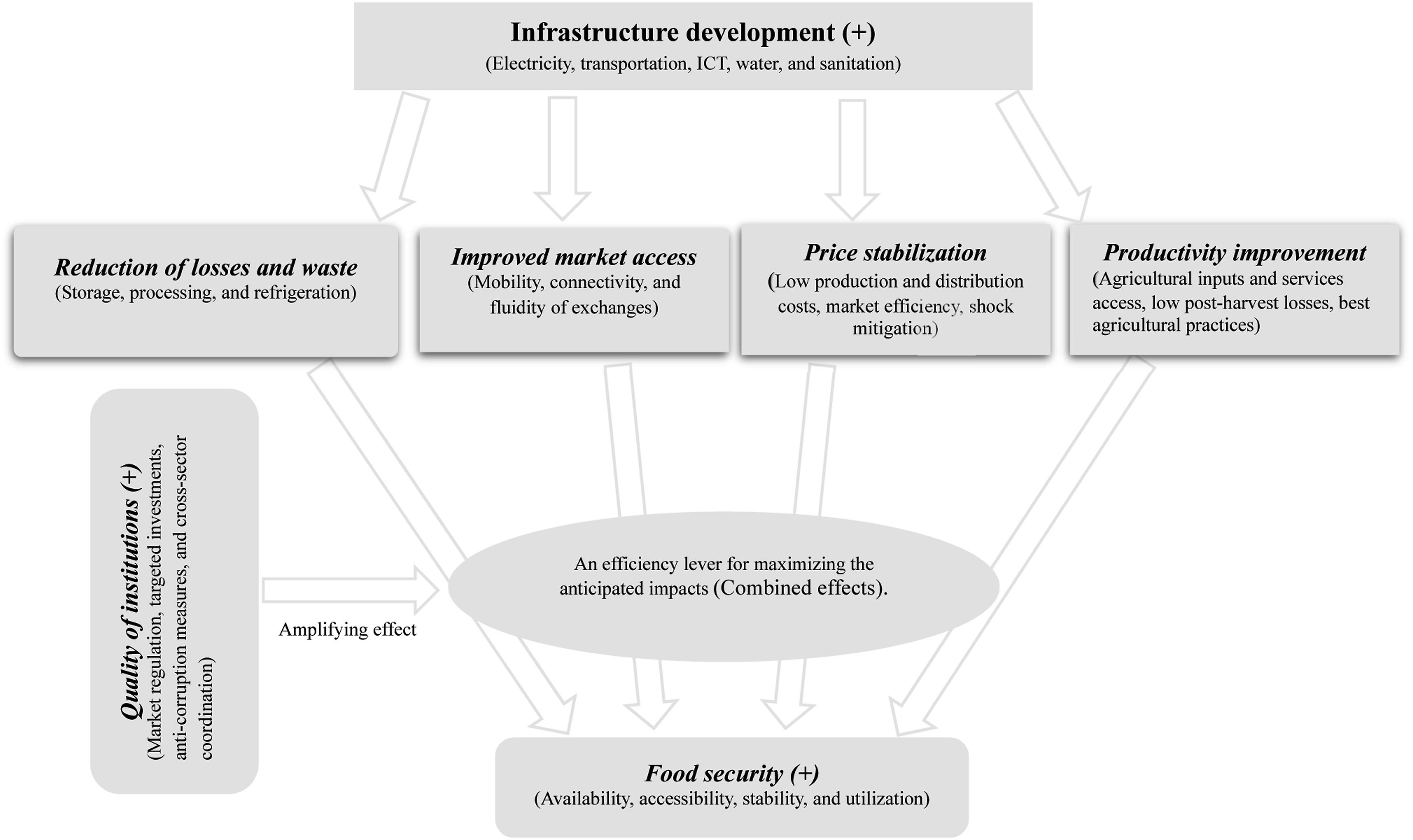
Furthermore, consistent with the theory of strategic complementarities, the interaction between physical and institutional capital generates increasing returns. In this context when cohesive policies coordinate investments across multiple sectors simultaneously, the combined impact on food availability and price stability exceeds the simple sum of their individual effects. 39 In essence, solid institutions act as strategic efficiency lever, transforming physical assets into sustainable social outcomes. 35
Finally, for infrastructure development to exert a lasting impact on food security, a sufficient level of governance is required to optimize resource allocation and prevent misappropriation. 40 In this sense, institutional quality thus serves as a de-risking mechanism that fosters a climate of confidence, ensuring that the reduction of post-harvest losses and waste along the value chain translates into tangible food security gains. 36 Ultimately, as shown in Figure 1, the quality of institutions acts as a critical filter: whereas, infrastructure investments may fail in environments of weak governance due to mismanagement, strong institutions maximize the productivity of every unit of physical capital invested to effectively enhance food availability, accessibility, stability, and utilization.
Materials and methods
Construction of the composite food security index
The dependent variable in this study is the composite Food Security Index (FSI). Specially, following the methodology of Jolliffe, 41 this index was constructed using Principal Component Analysis (PCA) based on four indicators frequently utilized in the literature.42–44 These indicators include: (i) average dietary energy intake, (ii) average protein intake, (iii) the share of dietary energy derived from cereals, roots, and tubers, and (iv) the per capita variability of the food supply. Based on the analysis of 720 observations, the selection of the retained component was governed by Kaiser’s criterion, which mandates retaining components with eigenvalues greater than one.
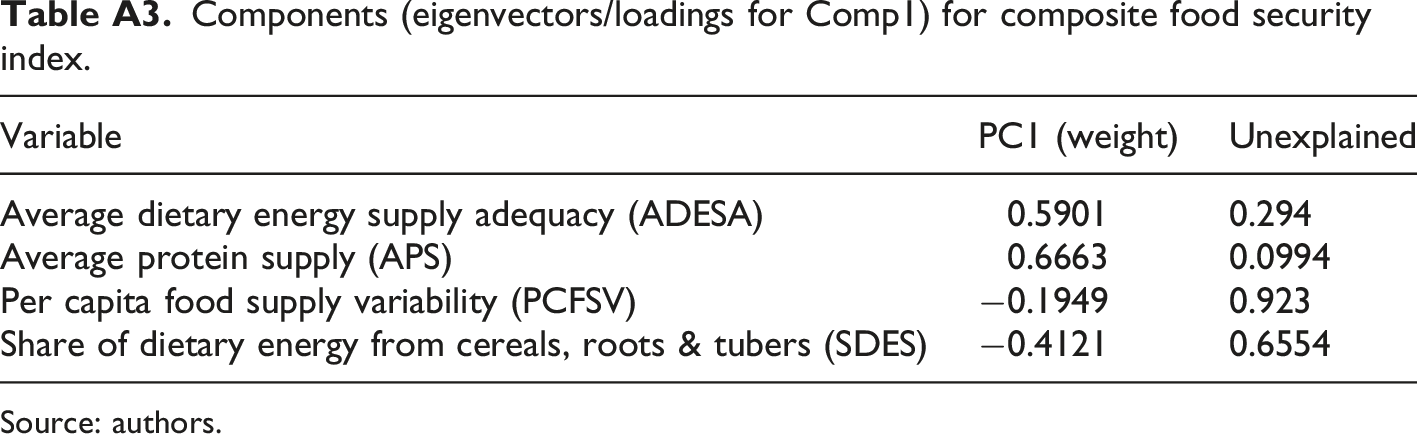
In this regard, the first principal component (Comp1) yielded an eigenvalue of 2.027, thereby accounting for 50.69% of the total variance among the four indicators. Subsequent components were excluded as their eigenvalues fell below the 1.0 threshold. The FSI was then generated by weighting the standardized indicators according to their eigenvector loadings on Comp1, where Average Dietary Energy Supply Adequacy (ADESA) and the Average Protein Supply (APS) emerged as the primary contributors with positive loadings of 0.590 and 0.666, respectively (See appendix, Tables A1-A3).
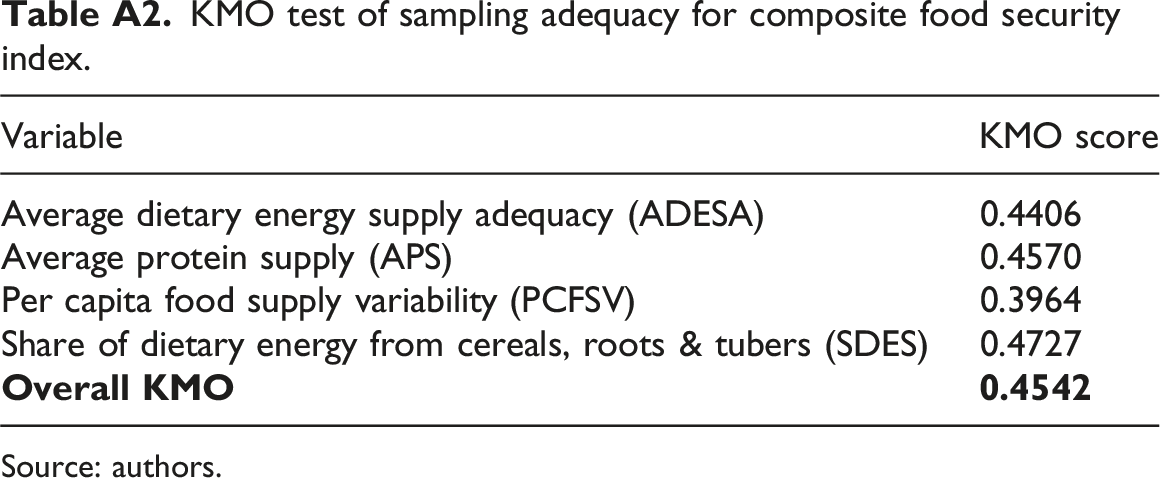
Regarding the Kaiser–Meyer–Olkin (KMO) measure of sampling adequacy (0.454), the decision to proceed with factor reduction is robustly defended in the development literature. Indeed, as argued by Booysen 45 and Bartholomew et al., 46 the conceptual relevance of multidimensional constructs—such as the pillars of food Security—justifies the inclusion of indicators even when internal correlations are modest. Furthermore, Jolliffe 41 and guidelines support the use of PCA for creating composite development indicators, provided the first component captures a substantial share of information (over 50% in this study). This approach ensures that the resulting index is a theoretically sound and parsimonious proxy for the phenomenon under study.
Independent variables
Infrastructure development serves as the primary explanatory variable of interest in this study. Following the methodology of Kodongo and Ojah 47 and Azolibe and Okonkwo, 48 it is proxied by the Africa Infrastructure Development Index (AIDI) from the African Development Bank. The AIDI is a composite metric designed to track the state and progression of infrastructure across the continent through four core dimensions: (i) electricity, encompassing total public and private generation as well as energy imports; (ii) transport, measured by total road network length and the extent of paved roads; (iii) ICT, captured by internet penetration per 100 inhabitants and total telephone subscriptions; and (iv) water and sanitation, assessed by the percentage of the population with access to improved sanitation and potable water sources. 49 In this analysis, both the aggregate index and its individual components are utilized to evaluate the holistic and disaggregated impacts of infrastructure on the food security index.
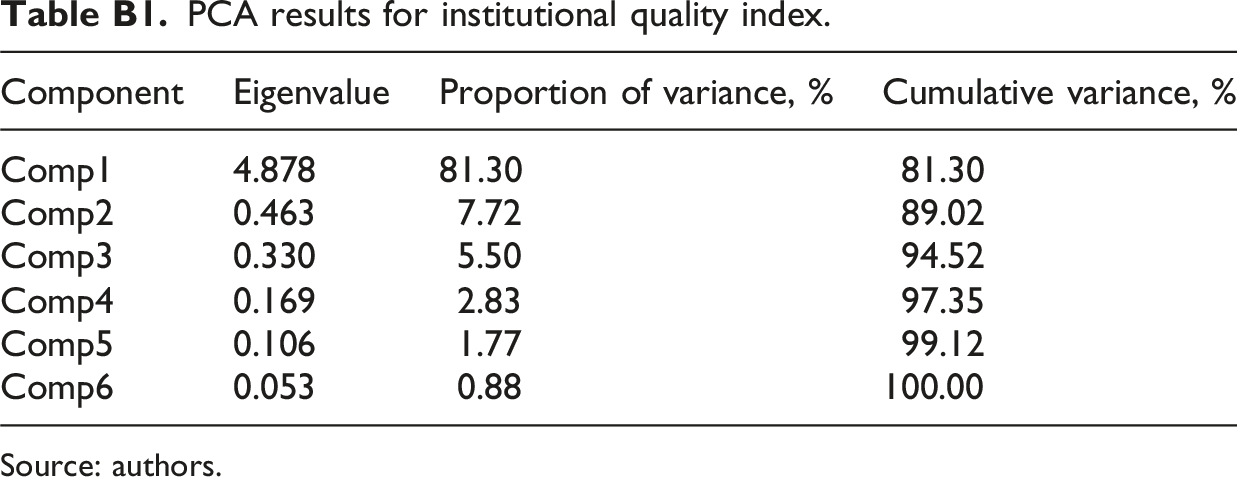
To account for the governance environment, an institutional quality index was generated using Principal Component Analysis (PCA) of the six Worldwide Governance Indicators (WGI): (i) control of corruption, (ii) government effectiveness, (iii) political stability and absence of violence/terrorism, (iv) regulatory quality, (v) the rule of law, and (vi) voice and accountability. 50 The analysis, conducted on 720 observations, confirms the robustness of the index. Following Kaiser’s criterion, only the first principal component (Comp1) was retained, as its eigenvalue of 4.8779 significantly exceeded the 1.0 threshold.
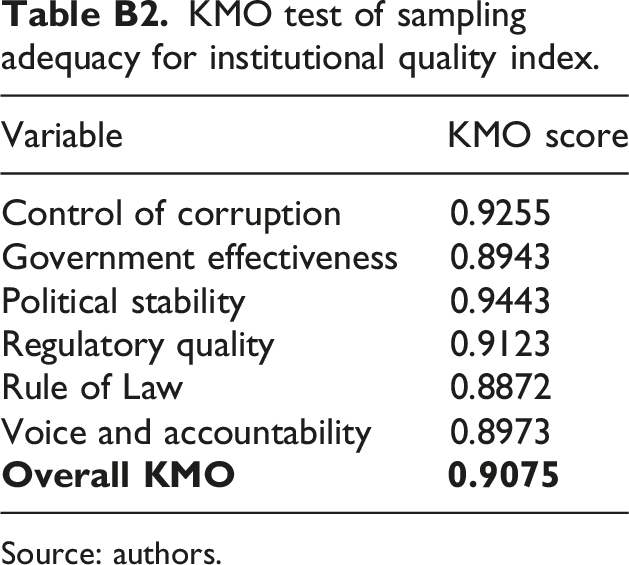
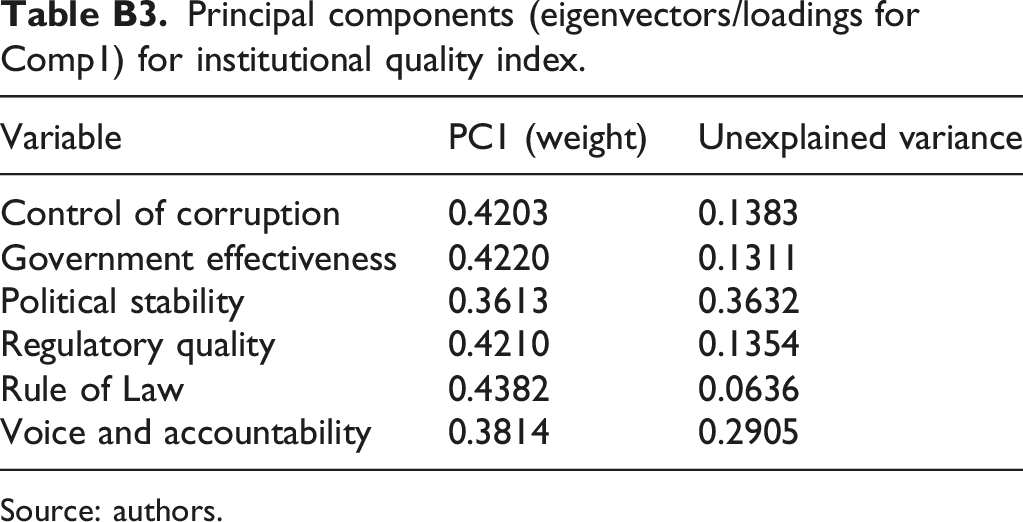
This primary component accounts for 81.30% of the total variance, indicating that it captures the vast majority of the information contained in the six individual governance dimensions. The weighting for the composite index was derived from the eigenvector loadings of comp1, where all variables showed strong and balanced contributions, particularly Rule of Law (0.4382), Government Effectiveness (0.4220), and Control of Corruption (0.4203). The statistical suitability of the data for factor reduction is highly significant, as evidenced by an overall Kaiser–Meyer–Olkin (KMO) score of 0.9075. According to Kaiser 51 and Hair et al., 52 a KMO value above 0.9 is considered “marvelous”, ensuring that the resulting composite index is a highly reliable and statistically sound proxy for institutional quality in sub-Saharan Africa (See appendix, Tables B1-B3). This method of constructing indices through Principal Component Analysis (PCA) aligns with recent empirical studies focusing on Sub-Saharan Africa.53–55
Description of variables, recent literature, and expected signs.
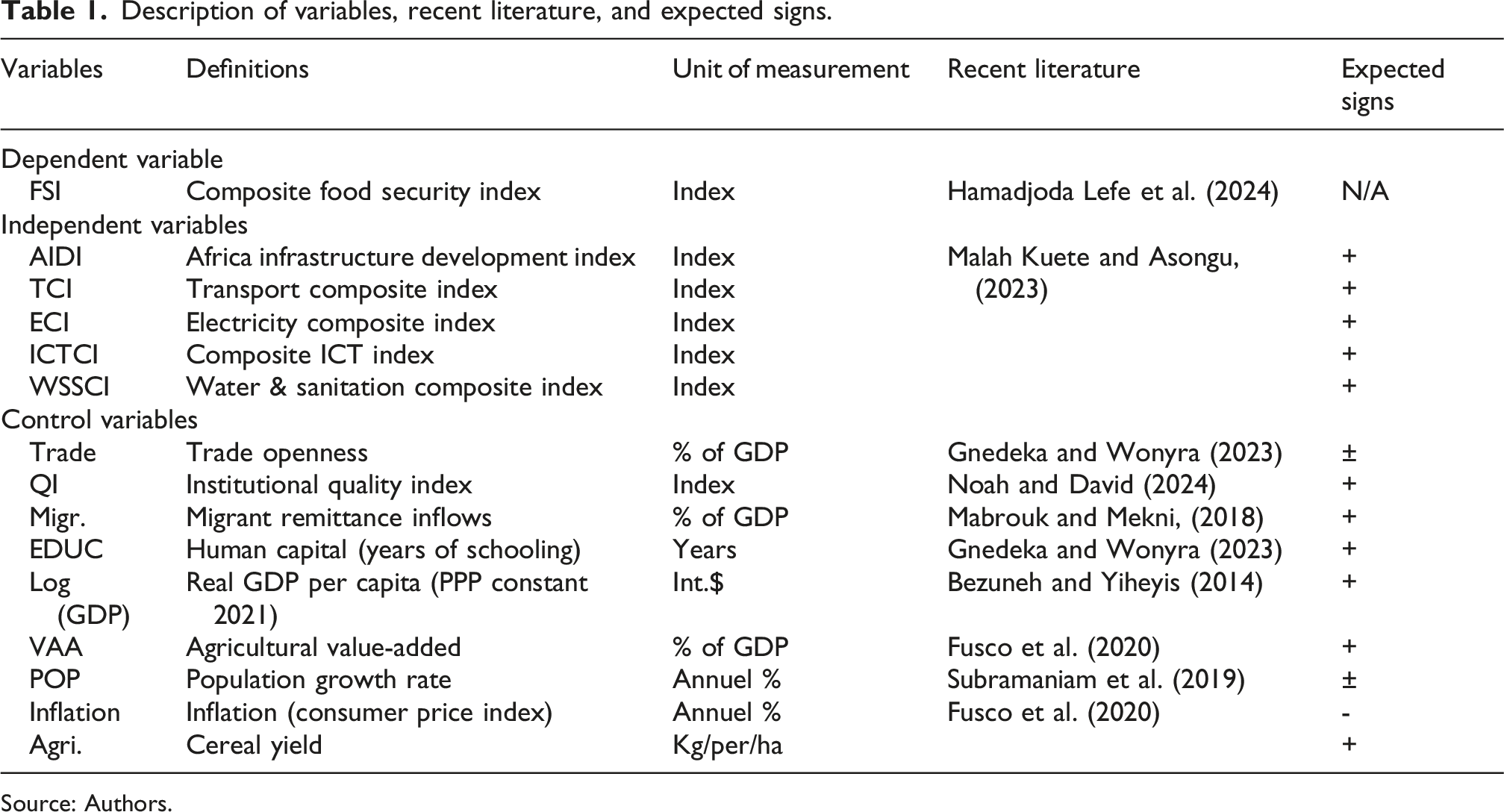
Source: Authors.
Econometric specification and estimation technique
The theoretical framework for this study is grounded in Malthusian, neo-Malthusian, and capability theories.58–60 Initially classical Malthusian theory posits that food scarcity is a direct consequence of exponential population growth outstripping arithmetic food production.
58
Extending this logic, standard neo-Malthusian theory suggests that an insufficient per capita food supply is further exacerbated by the finite nature of arable land resources. By synthesizing these perspectives with Sen’s capability and entitlement approach
61
—which emphasizes access and distribution—the food security index function can be formally specified as follows
Subsequently, the Food Availability Decline (FAD) theory is applied to integrate the fundamental drivers of food shortages.
60
This theoretical lens posits that food insecurity arises primarily from a contraction in the aggregate food supply relative to population growth. Drawing upon contemporary empirical scholarship, we assume that the level of food supply and agricultural output is conditioned by infrastructure development,
49
trade openness,
44
agricultural value-added,
62
and institutional quality.
50
Consequently, equation (1) is reformulated as follows
In this specification, Infr represents five distinct categories of infrastructure: the overall Africa Infrastructure Development Index (AIDI), the Transport Component Index (TCI), the Electricity Component Index (ECI), the ICT Component Index (ICTCI), and the Water and Sanitation Component Index (WSSCI).
Furthermore, the model is further extended by incorporating the Food Entitlement Decline (FED) theory. This framework focuses on the “entitlement set”—the collection of alternative commodity bundles that an individual can acquire within a society by leveraging their legal rights and economic opportunities.
60
Within this paradigm, food demand and consumption are determined by key socioeconomic variables, including per capita income,
56
inflation,
57
human capital,
44
and migrant remittances.
63
As a result, the final augmented model is specified as follows
Following this theoretical development, the static econometric model is specified as follows
Since, this study utilizes panel data, which are typically analyzed using fixed-effects (FE) or random-effects (RE) specifications. Following the approach of Malah Kuete, and Asongu,
49
we initially estimated equation (4) using the FE estimator. However, static models and standard Ordinary Least Squares (OLS) often produce inconsistent estimates when addressing potential heteroscedasticity and endogeneity.
64
To mitigate these biases, this research employs dynamic panel models based on the Generalized Method of Moments (GMM) framework developed by Arellano and Bond.
65
Drawing on the empirical methodologies of Subramaniam et al.
57
and,
64
the functional form of the dynamic estimated equation is specified as follows
As previously noted, a primary objective of this study is to analyze the moderating role of institutional quality in the relationship between infrastructure development and the food security index. Specifically, we examine how institutional quality interacts with infrastructure to influence food security index outcomes across sub-Saharan African countries. To capture these dynamics, interaction terms for each infrastructure component—including the composite index, transport, electricity, ICT, and water and sanitation—were incorporated into the model, as specified in equation (6) below
To effectively address the potential for endogeneity bias arising from the simultaneous relationship between institutional quality and food security, this study employs the System Generalized Method of Moments (System GMM) estimator. In panel data analysis, two GMM models are predominantly used: the difference GMM, developed by Arellano and Bond, 65 and the system GMM estimator.
Existing literature indicates that the difference GMM estimator can present several statistical challenges. 66 Specifically, when variables are highly persistent, the instrumental variables—lagged levels of the dependent and explanatory variables—may prove to be weak instruments. Consequently, the difference GMM estimator is susceptible to finite-sample bias, particularly when the number of time periods is small (T<N). 67
To overcome these limitations, this study employs the system GMM estimator. Unlike the difference GMM, the system GMM incorporated both lagged levels and lagged differences of the explanatory variables as instruments, thereby enhancing the efficiency and consistency of the estimates. Nevertheless, a potential risk when adopting this method is the invalidity of the lagged differences as instruments. To ensure the reliability of our results, we verify instrument validity using two standard diagnostics: the Sargan test for over-identifying restrictions and the Arellano-Bond test for second-order serial correlation, AR (2).
Furthermore, to ensure the robustness of the primary model, additional estimations were performed utilizing the Panel-Corrected Standard Errors (PCSE) technique. This approach effectively addresses potential cross-sectional dependence, which frequently arises from unobserved common factors that lead to interdependence among variables in regional studies. 68 Finally, to address potential concerns regarding multicollinearity, this study adopts a strategy of separate estimations for each infrastructure’s category. Instead of including multiple physical capital variables in a single equation, each component was tested in distinct models to isolate their specific marginal impacts (see equations (4)–(6)).
Period, study area, and data sources
List of countries in the study.
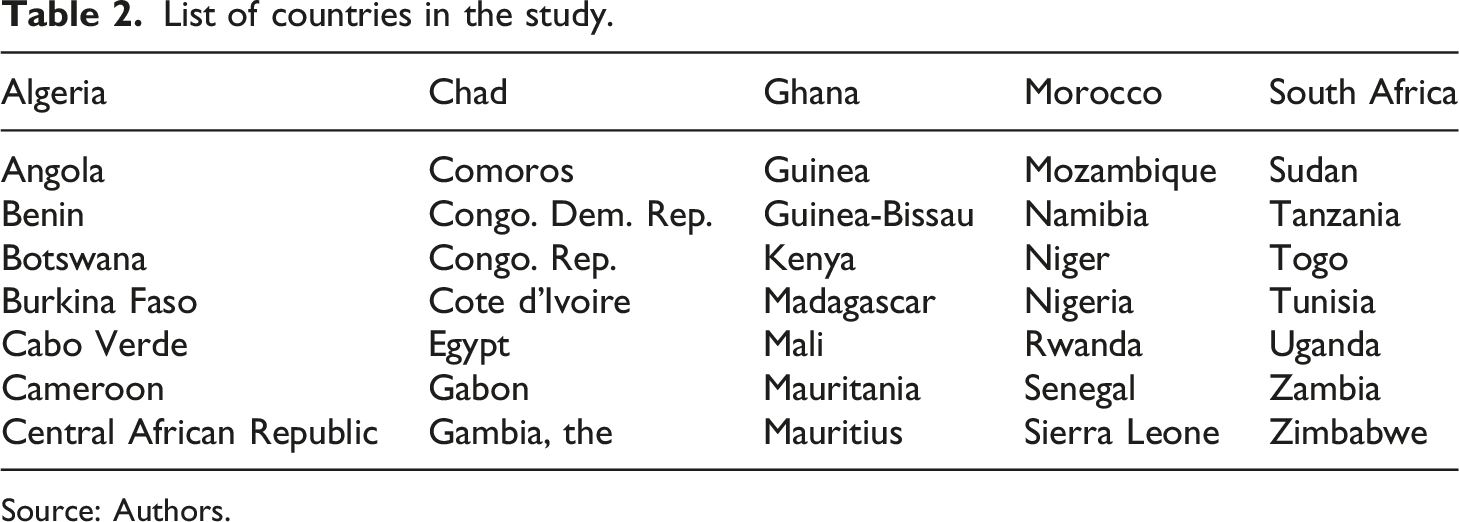
Source: Authors.
To ensure reliability, the dataset was compiled from four authoritative sources: the World Development Indicators (WDI), FAOSTAT, the African Development Bank (AfDB), and the Worldwide Governance Indicators (WGI). However, to address varying observation counts across variables, missing values were managed using established imputation techniques, such as interpolation and mean substitution. Regarding the latter, we specifically employed group-mean (country-specific) imputation rather than a grand mean substitution. Statistically, this procedure is superior for preserving the cross-sectional heterogeneity of the panel and preventing the artificial deflation of the standard deviation, which is a common risk with simple mean imputation. 69 Furthermore, this technique was restricted to variables where the missingness was verified to be Missing at Random (MAR), and where the missing data threshold did not exceed 5% of total observations.
By maintaining the within-group variance, this approach ensures that the composite indices remain representative of the actual socio-economic conditions of the sampled countries. To further validate the robustness of the indices and the subsequent econometric results, we conducted a sensitivity analysis by comparing models with and without imputed values. Ultimately, the stability of the coefficients across these specifications indicates that the imputation process did not significantly alter the underlying structural relationships, thereby maintaining dataset integrity while ensuring the overall robustness of the analysis. 70
Results
Descriptive results analysis
Descriptive statistics for variables in Sub-Saharan Africa (2005–2022).
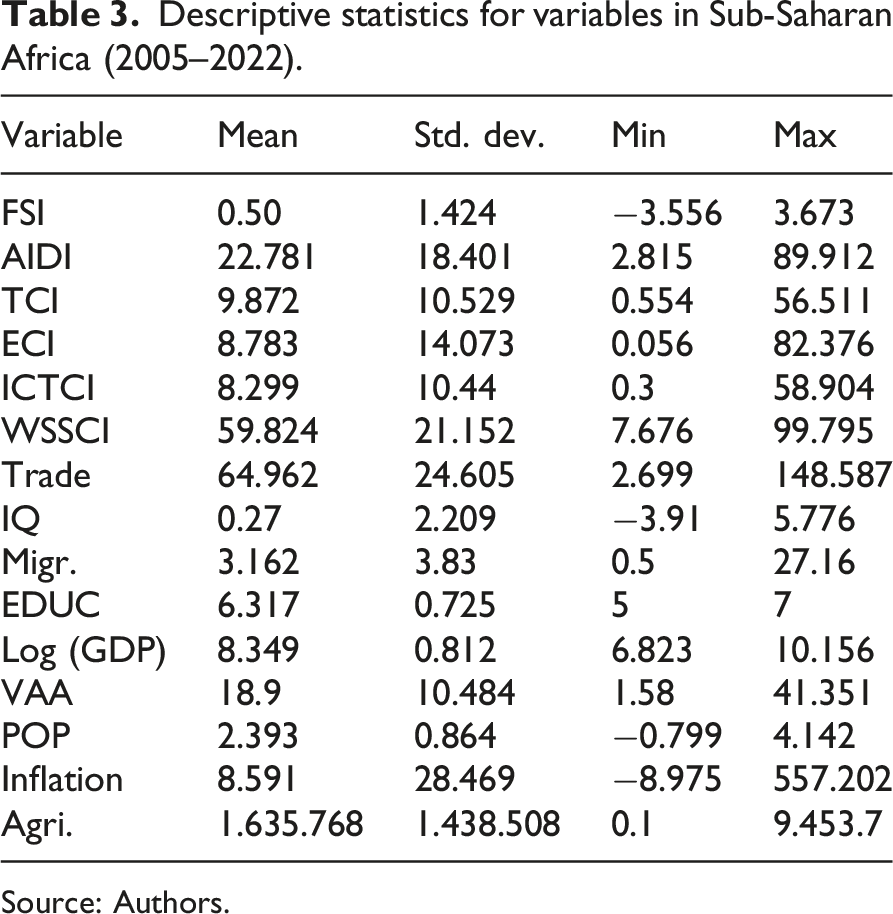
Source: Authors.
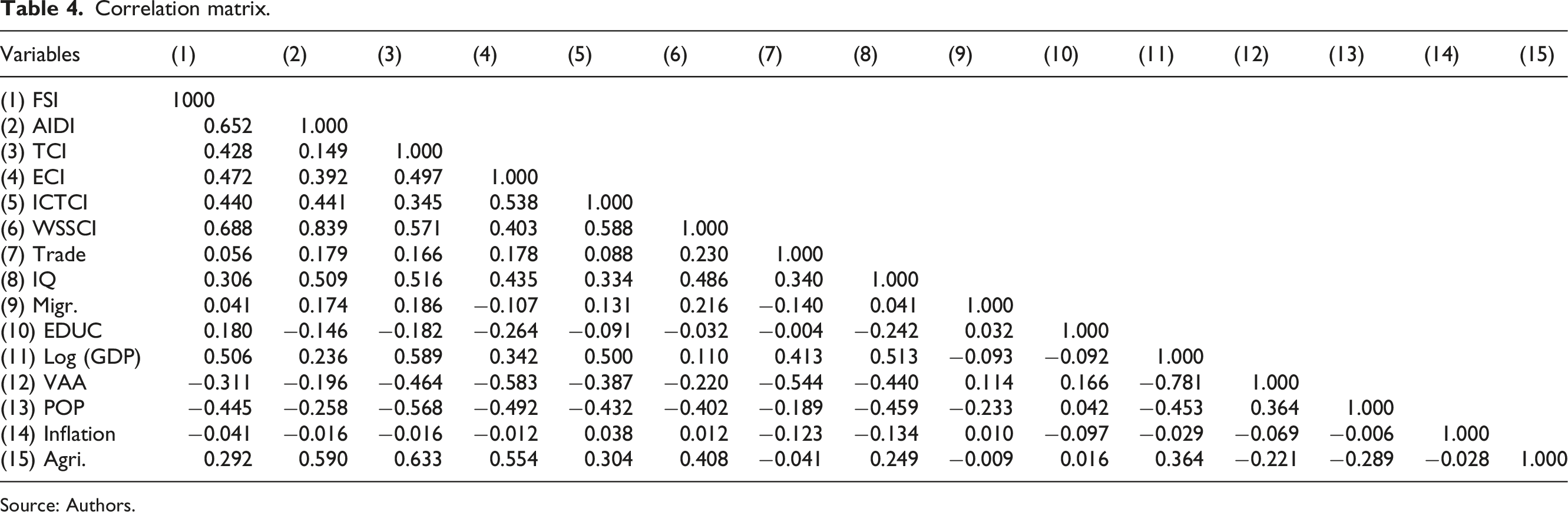
Correlation matrix.
Source: Authors.
First, the composite infrastructure index and its individual components—excluding the Water and Sanitation Systems Composite Index (WSSCI)—exhibit low dispersion, as evidenced by the proportionality between their means and standard deviations. This suggests that infrastructure development levels are largely concentrated around their respective averages of 22.78, 9.87, 8.78, 8.30, and 59.82. A similar trend is observed for the control variables, except for inflation and trade openness, which remain relatively volatile. Additionally, the composite food security index (FSI) levels appear tightly clustered around a mean of 0.50.
Regarding the correlation matrix (Table 4), several factors—including infrastructure measures, trade openness, institutional quality, remittances, human capital, GDP per capita, and cereal yields—demonstrate a positive relationship with the FSI. Conversely, the FSI is negatively correlated with population growth, inflation, and agricultural value-added. In this context, the low values of these coefficients suggest that the model is unlikely to suffer from multicollinearity.
To formally validate this assumption and address potential concerns regarding the simultaneous inclusion of related infrastructure and economic components, we conducted Variance Inflation Factor (VIF) test for each specification. The results show that mean VIF values across the models are remarkably low, ranging from 1.95 to 2.51. Furthermore, all individual VIF scores remained well below the widely accepted critical threshold of 10, 52 with values specifically reaching 5.12 for AIDI, 3.15 for TCI, 2.89 for ECI, 1.54 for ICTCI, and 4.96 for WSSCI. Consequently, these results confirm that multicollinearity does not pose a threat to the stability or reliability of our econometric coefficients. Nonetheless, as these correlations are purely descriptive, an in-depth econometric analysis is required to establish robust statistical significance.
Finally, the graphical correlation between the composite infrastructure index and the FSI (Figure 2(a)) illustrates a positive relationship within the context of sub-Saharan Africa. This suggests that, on average, African countries with superior infrastructure also maintain higher levels of food security. This positive trend persists when examining disaggregated indicators (Figure 2(b)), implying that developments in ICT, transport, electricity, and water and sanitation all contribute to enhancing the food security index across the region. Correlation between FSI and infrastructures development. (Source: Authors).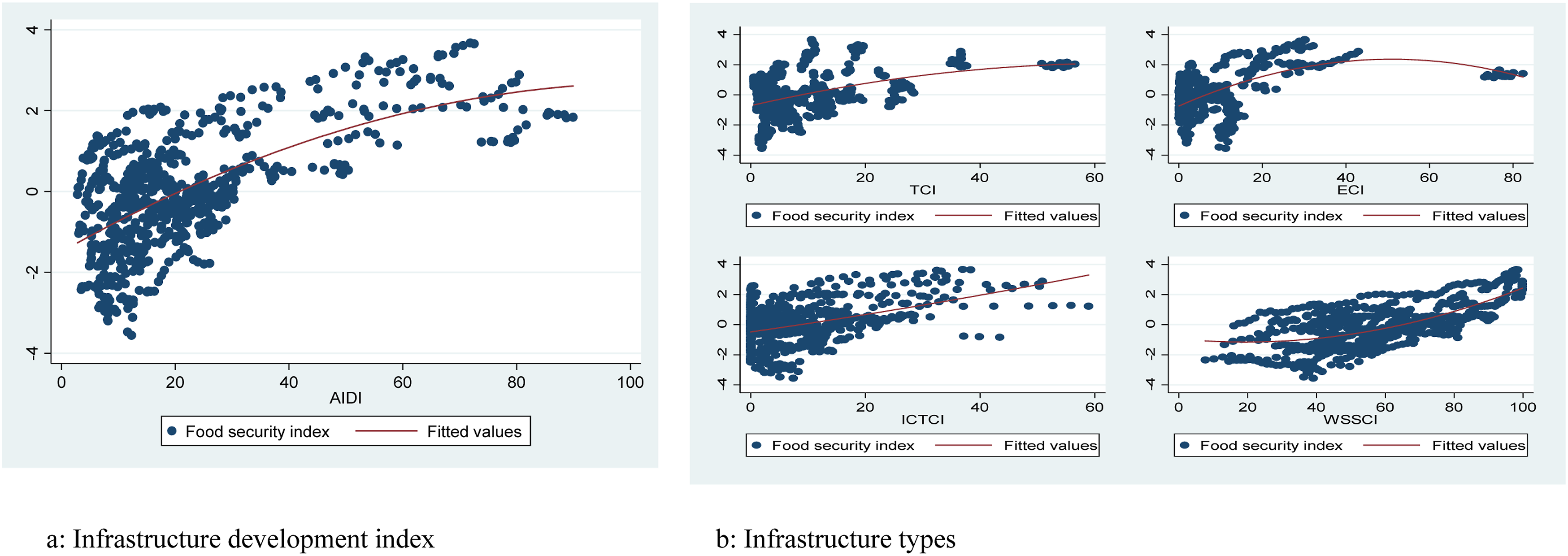
Econometric results
Results of the baseline analysis (fixed effects model)
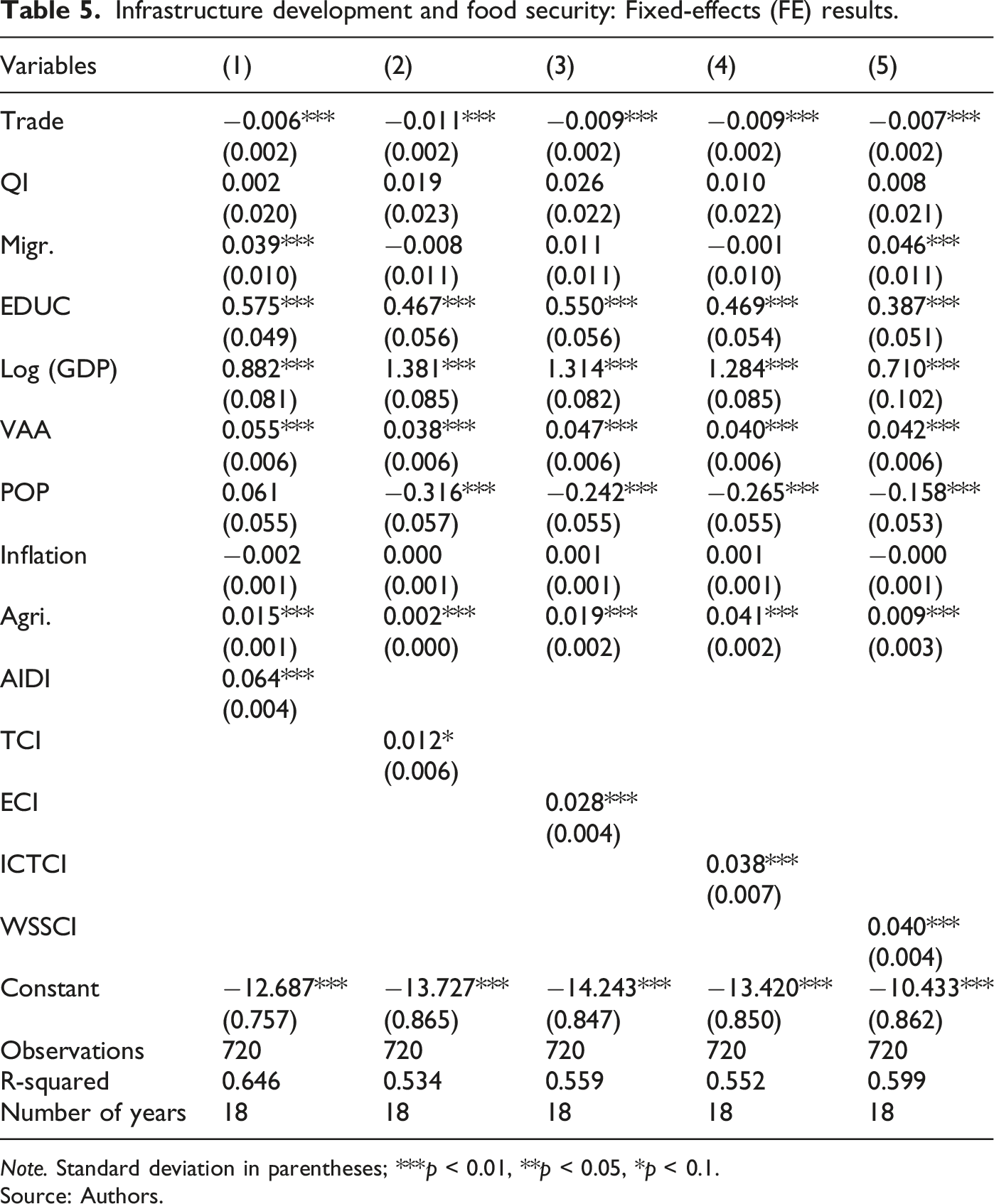
Infrastructure development and food security: Fixed-effects (FE) results.
Note. Standard deviation in parentheses; ***p < 0.01, **p < 0.05, *p < 0.1.
Source: Authors.
Overall, the findings demonstrate that each infrastructure index exerts a positive and statistically significant influence on the FSI, thereby corroborating the correlations illustrated in Figure 2. Specifically, overall infrastructure development is found to improve food security by 0.064 percentage points. At the disaggregated level, the estimated coefficients suggest that improvements in transport, electricity, information, and communication technologies (ICT), and water and sanitation enhance FSI by 0.012, 0.028, 0.038, and 0.040 percentage points, respectively. Furthermore, the results underscore the significant roles of institutional quality, trade openness, human capital, GDP per capita, agricultural productivity, and migrant remittances in driving food security trajectories across the region.
However, as previously discussed, these fixed-effects estimates may be subject to endogeneity bias. Consequently, they serve primarily as a baseline for the more robust dynamic panel estimations presented in the following sections.
Effects of infrastructure development on food security index: GMM estimates
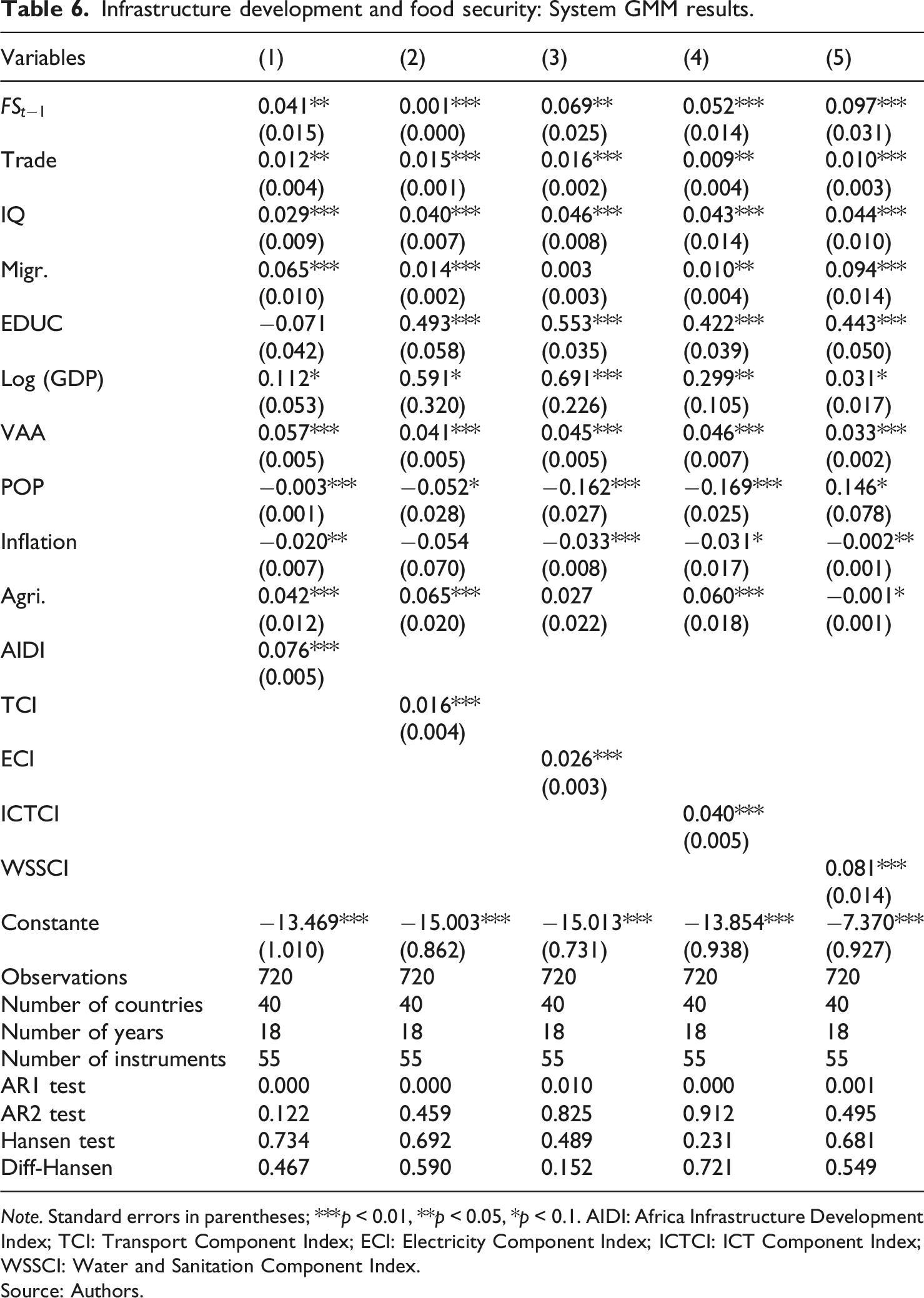
Infrastructure development and food security: System GMM results.
Note. Standard errors in parentheses; ***p < 0.01, **p < 0.05, *p < 0.1. AIDI: Africa Infrastructure Development Index; TCI: Transport Component Index; ECI: Electricity Component Index; ICTCI: ICT Component Index; WSSCI: Water and Sanitation Component Index.
Source: Authors.
Regarding the regression results, the analysis, indicates that the current food security is significantly influenced by its lagged value (
The empirical findings further reveal that the overall infrastructure development index exerts a positive and statistically significant effect on the FSI. Specifically, each infrastructure component—transport, electricity, ICT, and water and sanitation—contributes significantly to enhancing food security. These results suggest that infrastructure upgrades act as potential catalyst for bolstering food security outcomes across sub-Saharan Africa.
Beyond physical capital, institutional quality emerges as a pivotal determinant of food security, a finding that contrasts with the non-significant results obtained from the baseline fixed-effects model. For instance, a one-unit improvement in institutional quality is associated with a 0.076 percentage point increase in the FSI when evaluated alongside the aggregate infrastructure index. On a disaggregated basis, the marginal contributions to improved food security are 0.016, 0.026, 0.040, and 0.081 percentage points for transport, electricity, ICT, and water and sanitation, respectively. Lastly, variables such as GDP per capita, agricultural value-added, and cereal yields are found to strengthen FSI, whereas inflation and population growth exert detrimental effects. Collectively, these findings confirm that food security is a multidimensional challenge, governed by a complex interplay of economic, structural, and institutional factors.
Moderation effect of institutional quality
The moderating role of institutional quality: System GMM results with interaction terms.
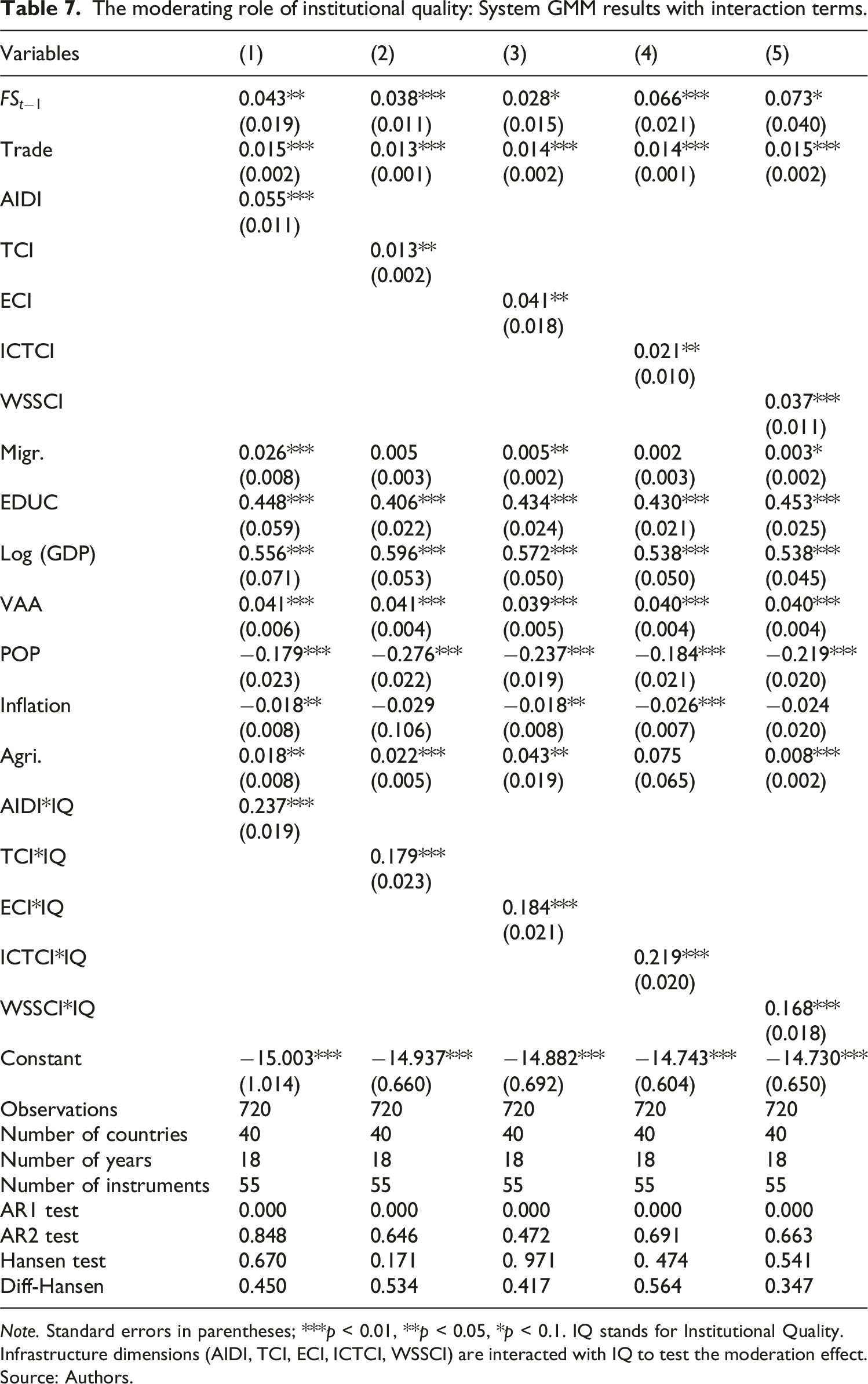
Note. Standard errors in parentheses; ***p < 0.01, **p < 0.05, *p < 0.1. IQ stands for Institutional Quality. Infrastructure dimensions (AIDI, TCI, ECI, ICTCI, WSSCI) are interacted with IQ to test the moderation effect.
Source: Authors.
In this regard, the core findings confirm that infrastructure generally exerts a positive influence on food security within the region. Crucially, the introduction of the interaction term reveals that this effect is significantly amplified in environments with high institutional quality. This suggests that robust institutions act as a “force multiplier” for infrastructure investments, where the interaction coefficients for AIDI*IQ (0.237), TCI*IQ (0.179), ECI*IQ (0.184), ICTCI*IQ (0.219), and WSSCI*IQ (0.168) are all positive and statistically significant at the 1% level.
Furthermore, effective institutions facilitate superior resource allocation, ensure adequate maintenance regimes, foster transparent project management, and enable strategic governance and planning. Collectively, these conditions collectively maximize the benefits derived from infrastructure development for FSI. Ultimately, the synergistic effect of combining quality infrastructure with sound governance yields a greater impact than the sum of their individual effects, thereby confirming the existence of strategic complementarities between physical and institutional capital.
Sensitivity analysis and robustness checks
The robustness of this study was evaluated by examining both the estimation methodology and the selection of variables. To verify the technical validity of the findings, additional estimations were conducted using the Panel-Corrected Standard Errors (PCSE) technique. This approach effectively addresses potential cross-sectional dependence stemming from unobserved common factors, which often lead to interdependence among variables in regional analyses. 68 Furthermore, we introduced several alternative indicators as proxies for infrastructure, including access to electricity (% of the population), internet usage (% of the population), access to basic drinking water services (% of the population), and the log of fixed telephone subscriptions. 49
Robustness check: PCSE results using original infrastructure Index and alternative infrastructure proxies.
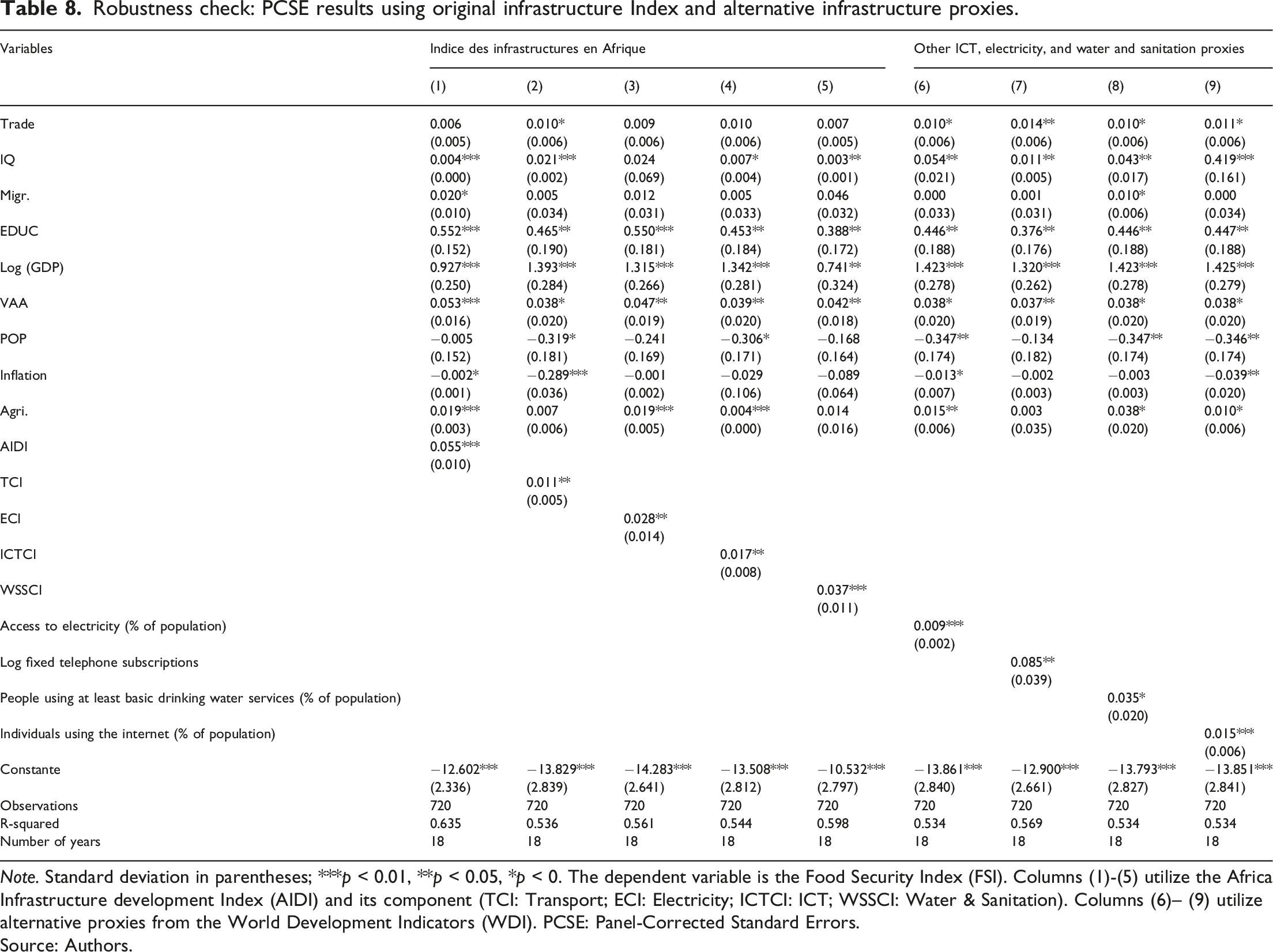
Note. Standard deviation in parentheses; ***p < 0.01, **p < 0.05, *p < 0. The dependent variable is the Food Security Index (FSI). Columns (1)-(5) utilize the Africa Infrastructure development Index (AIDI) and its component (TCI: Transport; ECI: Electricity; ICTCI: ICT; WSSCI: Water & Sanitation). Columns (6)– (9) utilize alternative proxies from the World Development Indicators (WDI). PCSE: Panel-Corrected Standard Errors.
Source: Authors.
Discussion
The econometric results presented in Tables 5–8 corroborate the theoretical and empirical hypotheses established in the literature regarding the nexus between infrastructure development and the food security index (FSI) in sub-Saharan Africa (SSA). These findings align with theories of agricultural development and rural transformation, which emphasize the pivotal role of physical infrastructure in bolstering productivity and food security. 71 Specifically, the estimates reveal a positive and significant impact of infrastructure indices on the FSI while highlighting the moderating influence of institutional quality.
Results from the fixed-effects model (Table 5) indicate that the Africa Infrastructure Development Index (AIDI) enhances food security, although the effects of specific components vary by context. This positive correlation stems from the fact that infrastructure facilitates the efficient transport of agricultural commodities to markets, thereby reducing the spoilage of perishable goods. Furthermore, the presence of reliable infrastructure incentivizes farmers to increase production by providing improved distribution channels. Consequently, these conditions enhance both the availability and quality of food, as infrastructure mitigates post-harvest losses caused by delivery delays. These results support the analyses of Calderón and Servén, 30 who identify infrastructure as a fundamental pillar of African food security programs.
The positive impact of transport infrastructure is consistent with the findings of Lokesha and Mahesha 13 in India and Kiprono and Matsumoto Ref. 31 in Kenya, where road improvements led to increased productivity and reduced losses. Similarly, the influence of ICT and electricity corroborates the work of Edeme et al. 19 and Candelise et al., 23 demonstrating that such infrastructure supports agricultural output and improves access to nutritious food in developing economies.
Regarding control variables, GDP per capita and agricultural yield confirm their positive roles in food security, aligning with the development theories of Rostow and Todaro10,11 who view investment in physical capital as a critical stage of economic growth. Notably, institutional quality does not achieve significance in this specific model, diverging from the findings of Lin et al. 29 Ashraf and Javed. 72 This discrepancy suggests that the effects of institutional quality may be obscured by endogeneity, thereby justifying the application of more sophisticated econometric techniques, such as the System Generalized Method of Moments (GMM).
The estimates obtained using the System GMM, presented in Table 6, successfully correct for endogeneity and unobservable heterogeneity, confirming a more robust positive effect of infrastructure on food security. The results indicate that the AIDI significantly contributes to improving FSI outcomes. These findings support the analyses of Mamatzakis, 22 who regard public infrastructure as a critical factor of production capable of reducing agricultural costs while simultaneously boosting productivity.
The results further reveal that enhancing transport infrastructure contributes substantially to strengthening food security. This conclusion is consistent with the empirical work of Lokesha and Mahesha, 13 which demonstrated that improved road infrastructure in India increased both agricultural productivity and aggregate production levels. In the contemporary context of SSA, this synergy is critical for the operationalization of the African Continental Free Trade Area (AfCFTA). For member states, our results suggest that reducing intra-regional trade barriers will only achieve its full potential if accompanied by physical connectivity to bridge the gap between food-surplus and food-deficit zones.
The analysis also indicates the positive and significant effect of information and communication technologies (ICT) and electricity on the FSI. These effects can be attributed to the fact that ICT facilitates access to vital information concerning market prices, weather conditions, and modern agricultural techniques. The transformative impact of digital infrastructures is exemplified by the mobile money revolution in these nations. As demonstrated by Suri and Jack, 73 the integration of ICT networks with sound regulatory oversight has revolutionized smallholder farmers’ access to credit and real-time market information, reducing the information asymmetries that traditionally trap rural populations in food insecurity. 74
Electricity, conversely, is crucial for improving food preservation systems and processing techniques, as well as enabling the use of modern agricultural equipment. However, a critical dimension of this infrastructure is the persistent issues of electricity shortages and power outages (load shedding) observed in some nations of SSA. 75 The reliable electricity is a prerequisite for modern food systems. These interruptions severely undermine the food system by disrupting cold-chain logistics and leading to significant post-harvest losses. 76 Our findings suggest that beyond building power plants, the governance of the energy sector—ensuring reliability and efficient maintenance—is paramount to food security stability. 57
The influence of water and sanitation facilities on the FSI is particularly pronounced, underscoring the critical importance of access to drinking water and proper sanitation services for food security. This infrastructure is essential not only for agricultural production but also for food quality, thereby reducing the disease burden and post-harvest losses. These results align with the work of Hamadjoda Lefe et al.,
77
which highlights their positive contribution to food security in sub-Saharan Africa. The persistence of the lagged food security index variable
Contrary to the fixed-effects results, institutional quality proves to be a determining and positive factor for the FSI in the GMM model, supporting the conclusions of Lin et al. 29 and Drebee et al. 34 those robust institutions can explain a significant variance in agricultural production. Similarly, migrant remittances and GDP per capita confirm their positive role in the FSI, in line with studies by Atukunda et al. 16
The introduction of interaction terms into the model (Table 7) provides further insight, revealing that institutional quality significantly amplifies the positive effect of infrastructure on food security. This indicates that strong institutions reinforce the efficacy of infrastructure investments. The observed results align with a broader dynamic documented in recent literature concerning the role of institutions as a transmission channel between investment and economic and social performance. 38
In practical terms, essential infrastructure only achieves its full potential benefits for food security when operating within an effective institutional environment. Overall, this synergy operates through several key transmission channels. First, high-quality institutions improve the “sensitivity” of the FSI to infrastructure by mitigating institutional voids and reducing transaction costs, ensuring that physical capital effectively reaches the most vulnerable populations. 40 Second by establishing a robust regulatory framework, effective governance acts a de-risking mechanism that prevents the diversion of resources into rent-seeking activities, racketeering, or political interference, thereby securing the productive use of agricultural networks. 78
Third, effective institutions—characterized by transparency, good governance, minimal corruption, and robust rule enforcement—ensure the rational and equitable management of infrastructure, thereby preventing misuse or premature deterioration. Furthermore, as established in the literature on institutional thresholds, a certain level of governance is required to transform infrastructure from a potential vector of resource misallocation into a tool for inclusive growth. 79 Ultimately; strong institutions ensure that infrastructure development yields sustainable gains by optimizing the marginal productivity of public investments and fostering a climate of confidence for the agricultural sector. 37 This institutional “stimulus” ensures that the switch from primitive to sophisticated capacities is not hampered by the inefficiencies often found in resource-dependent contexts. 36
For instance, an assessment of road infrastructure quality in West Africa demonstrated that sound infrastructure, supported by strong institutional oversight, can reduce waiting times for goods transporters by over 5120 min and eliminate illicit fees, thereby improving the food and nutritional security of the population. This reasoning aligns closely with the findings of Soko et al., 80 who highlight the moderating role of governance in the efficacy of agricultural spending. Similarly, it resonates with the work of Zawojska and Siudek, 21 which establishes a clear nexus between institutional quality and food security, water policy and agriculture. 81
Specifically, by effectively curtailing administrative bottlenecks and rent-seeking behaviors along transport corridors, robust institutional oversight ensures that the efficiency gains from physical infrastructure are directly transmitted to the food system. In this sense, our argument that the institutional environment acts as decisive filter for the success of infrastructure-led food security strategies.
Regarding the model’s stability, the control variables remain consistent across specifications. Notably, human capital exerts a positive effect, supporting the arguments of Wu et al. 14 and Kaplinsky and Kraemer-Mbula. 15 Taken together, these results further confirm that the composite food security index (FSI) is significantly influenced by a synergy of economic and institutional factors.1,72
Turning to the robustness checks, the Panel-Corrected Standard Errors (PCSE) estimates presented in Table 8 (Columns 1–5) validate the robustness of these findings. Specifically, by accounting for cross-sectional interdependencies, 68 these results corroborate the GMM estimates and align with the research of Hamadjoda Lefe et al., 77 which underscore the essential role of infrastructure in mitigating food insecurity in sub-Saharan Africa. Furthermore, institutional quality maintains its positive influence, thereby reinforcing the conclusions of Ashraf 72 regarding the role of robust institutions in curbing administrative abuse and mismanagement.
Complementing these results, robustness checks using alternative infrastructure proxies—specifically access to electricity, fixed telephone subscriptions, access to basic drinking water services, and individuals using the internet—yielded similar results (Columns 6–9, Table 8). These empirical findings not only underscore the vital importance of these alternative infrastructure measures in improving the FSI but also confirm our previous results. These observations corroborate the existing literature, which has shown that access to electricity and internet usage, for example, positively impact food security. 23
In summary, these sensitivity analyses eliminate potential biases and demonstrate that infrastructure development—particularly when supported by robust institutional frameworks, plays a decisive role in achieving Sustainable Development Goal 2 (Zero Hunger) in sub-Saharan Africa. 16
Conclusion and policy implications
The global community is currently navigating unprecedented, multifaceted crises, encompassing climate change, conflicts, land degradation, and volatile commodity prices. In this critical context, infrastructure development is pivotal for ensuring sustainable food security globally, particularly in sub-Saharan Africa (SSA). Accordingly, this study addressed a pertinent question: what is the quantitative impact of infrastructure development in a region like sub-Saharan Africa, characterized by escalating food insecurity and suboptimal institutional quality?
To address this inquiry, the research utilized a dataset spanning 40 sub-Saharan African countries from 2005 to 2022, the research examined the effect of infrastructure development on food security, explicitly integrating the moderating role of institutional quality. The empirical analysis involved estimating a model using the System Generalized Method of Moments (GMM) and Panel-Corrected Standard Errors (PCSE) to robustly address unobserved heterogeneity and potential endogeneity among the explanatory variables.
The core conclusion derived from this analysis is clear: effective policies aimed at bolstering food security in sub-Saharan Africa necessitate comprehensive improvements across all infrastructure domains—specifically transportation, electricity, information and communication technology (ICT), and water and sanitation. Furthermore, a key finding was also the observation that robust institutional quality significantly enhances the positive effect of infrastructure investments on food security outcomes within the region.
These findings, in turn, underscore the vital importance of infrastructure at various stages of the food system: production, processing, storage, transport, and distribution, in addition to essential water and sanitation services. Consequently, a significant policy implication of this research advocates for strengthening Public-Private Partnerships (PPPs), through the establishment of specialized agricultural infrastructure funds and the creation of “Agro-industrial Corridors.” More specifically, governments should implement transparent competitive bidding processes and standardized contractual frameworks to lower entry barriers for private firms. To address the financing gap, national authorities could provide credit enhancement mechanisms or sovereign guarantees to de-risk long-term investments in rural cold storage and processing units.
However, the feasibility of scaling up such investments depends on addressing deep-seated governance challenges, such as administrative inefficiencies and corruption, which often lead to project delays and cost overruns. This strategy promises even greater returns only if implemented within sound institutional and legal frameworks. To implement this, it is crucial to establish independent regulatory agencies to oversee infrastructure quality and prevent monopolistic pricing in distribution networks. Such frameworks facilitate introduction of private sector innovation, notably through technology transfer clauses.
In turn, these improvements lead to enhanced public service quality through increased operational efficiency and incentivizes the private sector to complete projects on time, within budget, and at optimized costs. In practice, this also requires land registries to be digitized in order to reassure international partners. This imperative is further reinforced by the Food and Agriculture Organization’s report, 80 which aims to reverse current trends in hunger, food insecurity and malnutrition.
In conclusion, this study provides empirical evidence of the critical role played by infrastructure and institutional quality, a few caveats remain. While the System GMM estimator was rigorously employed to mitigate endogeneity and provide consistent estimates, we remain cautious in claiming definitive causality. Given the observational nature of the panel data, the results should be interpreted as robust empirical associations that strongly suggest a positive link between infrastructure development and food security outcomes.
Future research endeavors could extend this analysis by incorporating alternative measures of food security, such as the moderate or severe food insecurity index. However, it must be noted that data availability for this specific metric remains a limiting factor for many countries included in the current study. Furthermore, while this study provides a comprehensive overview of 40 sub-Saharan African countries, it does not explicitly account for the significant geographical and economic heterogeneity within the region. The decision to prioritize an aggregated panel was primarily driven by the requirements of the System GMM estimator, which necessitates a sufficiently large N to ensure the validity of internal instruments and the robustness of over-identification tests.
In light of these consideration, future studies should consider disaggregating the data by regional blocs—such as ECOWAS, EAC, or SADC—or by specific country characteristics, such as the distinction between landlocked and coastal nations. By doing so, researcher could more effectively explore how local specificities might influence the infrastructure-food security nexus. Finally, exploring the impacts of diverse institutional forms—specifically the distinction between formal and informal institutions—could provide deeper insights into their differential effects.
Footnotes
Acknowledgments
We thank the editors and patient reviewers for their helpful comments and suggestions. We also extend our gratitude to the anonymous colleagues whose comments helped improve the quality of this manuscript.
Consent for publication
The authors of this manuscript consent to its publication.
Author contributions
Kodjo Théodore Gnedeka: Data curation, conceptualization, formalization and econometric analysis, methodology, writing–review and editing. Ogouyomi Roméo Carlos Agnoun: methodology, formalization and econometric analysis, writing–review and editing. Christian Duhamel Logozo: Conceptualization, writing–review and editing. Pikabe Doni: writing–review and editing. Akoété Ega Agbodji: Conceptualization, supervision. All authors have read and approved the current version of the paper.
Funding
The authors received no financial support for the research, authorship, and/or publication of this article.
Declaration of conflicting interests
The authors declared no potential conflicts of interest with respect to the research, authorship, and/or publication of this article.
Data Availability Statement
The data supporting this research were found on the websites of the following organizations/institutions: 1. FAO: https://www.fao.org/faostat/en/#data/FS, 2. World Bank: https://databank.worldbank.org/source/world-development-indicators, and https://www.worldbank.org/en/publication/worldwide-governance-indicators, 3. AfDB:  .
.
Declaration of generative AI and AI-assisted technologies in the writing process
During the preparation of this work, the authors used ChatGPT to assist with editing and correcting grammar and spelling errors. Following this, the authors reviewed and revised the content as necessary and take full responsibility for the final publication.
Appendix
PCA results for composite food security index. Source: authors. KMO test of sampling adequacy for composite food security index. Source: authors. Components (eigenvectors/loadings for Comp1) for composite food security index. Source: authors. PCA results for institutional quality index. Source: authors. KMO test of sampling adequacy for institutional quality index. Source: authors. Principal components (eigenvectors/loadings for Comp1) for institutional quality index. Source: authors.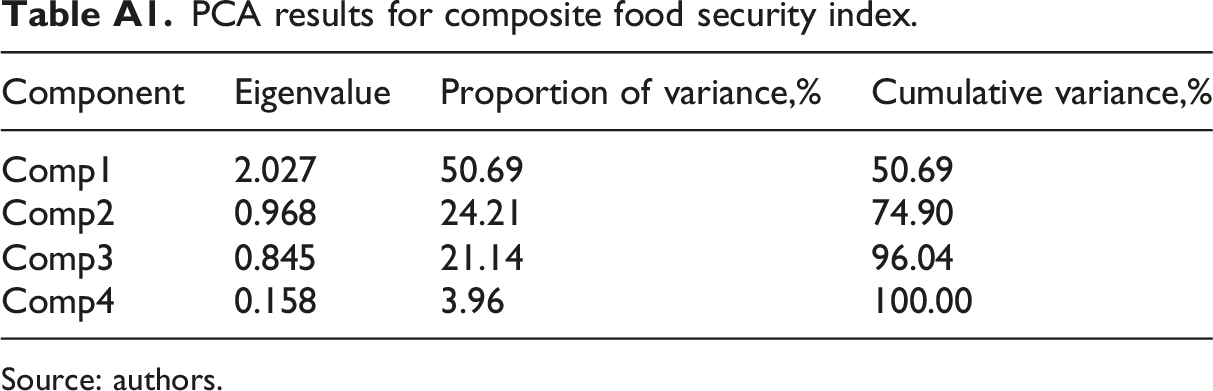
Component
Eigenvalue
Proportion of variance,%
Cumulative variance,%
Comp1
2.027
50.69
50.69
Comp2
0.968
24.21
74.90
Comp3
0.845
21.14
96.04
Comp4
0.158
3.96
100.00
Variable
KMO score
Average dietary energy supply adequacy (ADESA)
0.4406
Average protein supply (APS)
0.4570
Per capita food supply variability (PCFSV)
0.3964
Share of dietary energy from cereals, roots & tubers (SDES)
0.4727
Variable
PC1 (weight)
Unexplained
Average dietary energy supply adequacy (ADESA)
0.5901
0.294
Average protein supply (APS)
0.6663
0.0994
Per capita food supply variability (PCFSV)
−0.1949
0.923
Share of dietary energy from cereals, roots & tubers (SDES)
−0.4121
0.6554
Component
Eigenvalue
Proportion of variance, %
Cumulative variance, %
Comp1
4.878
81.30
81.30
Comp2
0.463
7.72
89.02
Comp3
0.330
5.50
94.52
Comp4
0.169
2.83
97.35
Comp5
0.106
1.77
99.12
Comp6
0.053
0.88
100.00
Variable
KMO score
Control of corruption
0.9255
Government effectiveness
0.8943
Political stability
0.9443
Regulatory quality
0.9123
Rule of Law
0.8872
Voice and accountability
0.8973
Variable
PC1 (weight)
Unexplained variance
Control of corruption
0.4203
0.1383
Government effectiveness
0.4220
0.1311
Political stability
0.3613
0.3632
Regulatory quality
0.4210
0.1354
Rule of Law
0.4382
0.0636
Voice and accountability
0.3814
0.2905