



Abstract
The purpose of this article is to discuss the process of teaching graduate students in school psychology to write psychological reports that teachers and parents find readable and that guide intervention. The consensus from studies across four decades of research is that effective psychological reports connect to the client’s context; have clear links between the referral questions and the answers to these questions; have integrated interpretations; address client strengths and problem areas; have specific, concrete, and feasible recommendations; and are adapted to the language and literacy level of the reader. The Hayes and Flower model of the writing process is the conceptual framework used to describe the process of teaching report writing. This involves a constructivist approach to supervision and the use of specific strategies that may be effective in teaching graduate students to formulate the case, adapt their writing to the language and literacy level of the reader, set goals, and generate and organize the text.
Report writing is frequently difficult for graduate students in school psychology and clinical psychology. In addition to formulating the case, they need to think about how to communicate their ideas effectively. They typically have to adapt to the demands of different practicum supervisors who have different ideas about the nature of a good psychological report, some of which are contrary to the research evidence. The challenge for faculty members in academic training programs and clinical supervisors in school psychology is to provide a training experience that will enable graduates to write reports that provide solid diagnostic information in a manner that is comprehensible to teachers, parents, and adolescent students and that effectively guide the provision of services to children, youth, and families. The purpose of this article is to communicate our reflections on the process of teaching report writing with the goal of formulating some guidelines regarding best practices.
Report writing is the culmination of the assessment process. To write an effective report, school psychologists need to develop a variety of skills, including attaining rapport with children, youth, and families; administering and scoring norm-referenced psychological and educational tests in a standardized manner; school and classroom observation; interviewing children, teachers, and parents; and using curriculum-based measurement. They need a sound knowledge base in ethical and professional practices, child and adolescent development, teaching exceptional learners, developmental psychopathology, culturally sensitive practice, case formulation, and school consultation (Canadian Psychological Association, 2007). As a consequence, the School and Clinical Child Psychology (SCCP) program at the Ontario Institute for Studies in Education (OISE)/University of Toronto has a highly structured curriculum for teaching assessment. Important conceptual knowledge is provided in courses in professional ethics, exceptional learners, and developmental psychopathology. Assessment is explicitly taught in a carefully sequenced set of courses using a mastery learning approach including explicit teaching in psychometrics; administration and scoring of cognitive, academic, and social-emotional tests; diagnostic interviewing; classroom observation; curriculum-based measurement; and assessment of children and youth from culturally and linguistically diverse backgrounds. Report writing is integrated into all of these assessment courses.
The first section of this article summarizes relevant research on the features of effective psychological reports. This research provides a backdrop for the second section of the article, which is devoted to describing the specific strategies used in the SCCP program to develop report-writing skills. In this section, we discuss some of the misconceptions that students often have about psychological reports and how we work with them to dispel these misconceptions. The third section discusses implications for best practices in report writing. This article, therefore, addresses the following questions: (a) What are the conclusions that can be drawn from research on the features of effective psychological reports? (b) What are the specific methods used in the SCCP program to teach report writing? (c) What are the implications for best practices for report writing and teaching report writing?
Psychological reports serve several functions. The first function is to increase the understanding of clients, their parents (in case of children), and other professionals (including teachers) about clients’ strengths and adaptive skills; cognitive, academic, and social-emotional difficulties; and the environmental factors that impede and enhance learning and social-emotional adjustment. The second function is to provide viable recommendations for accommodations and interventions that are tailored to the needs of the client. The third function is to communicate the diagnostic information and recommendations in ways that they are understood, appreciated, and implemented with the ultimate result of improvements in clients’ functioning. The final function of psychological reports is to provide a long-term record that can be used to access treatment and accommodations (Harvey, 2006).
The conclusions from research conducted over more than 40 years are consistent in terms of the features of psychological reports that fulfill these functions (e.g., Harvey, 2006; Pelco, Ward, Coleman, & Young, 2009; Rucker, 1967). According to Groth-Marnat (2009), effective psychological reports are readable, connect to the person’s context, have clear links between the referral questions and the answers to these questions, have integrated interpretations, and address client strengths as well as problem areas. Wiener (1987) used the framework of considerate text (Armbruster & Anderson, 1984, 1985) as a way of conceptualizing these features. This model is based on schema theory; it suggests that writers of expository text should take into account readers’ existing knowledge, skills, and attitudes and should carefully consider the structure and coherence of the text.
Taking Readers’ Existing Knowledge and Skills Into Account
Most psychological reports are written at the literacy level of a graduate student (Harvey, 2006), even though parents (most with only a high school education), teachers, and school administrators are the typical readers. Reports that consider readers’ skills typically have short sentences, minimize the number of difficult words, reduce jargon, have very few acronyms, and have several subheadings (e.g., Groth-Marnat, 2009; Wiener, 1987). It is sometimes difficult to define technical terms in a way that the definition is not more incomprehensible than the term itself. Groth-Marnat suggests that the terms can be explained by providing a qualitative description of test responses (e.g., for verbal working memory, had difficulty repeating a series of numbers backwards), relating the problem to an example provided by the client (e.g., “I can’t remember a person’s phone number while I dial it”), or providing an implication for everyday life (e.g., likely would not be able to take notes from a lecture). A challenge in writing for multiple audiences is the degree to which scores should be reported, and if so, which scores. The consensus is that percentiles, if explained clearly, are relatively easy to comprehend (Harvey, 2006), but other scores can be included in tables or appendices if required for decision making or if a client is functioning below the first percentile (e.g., there may be a dramatic difference in adaptive functioning between a standard score of 65 and 40). In these cases, age- or grade-equivalent scores may be helpful, in spite of their limitations.
Although most middle-class parents with a secondary school education comprehend and prefer to read the same type of reports as teachers and school administrators (Wiener & Kohler, 1986), some parents and adolescent clients have a level of language and literacy skills that would not permit them to access a written psychological report that is formulated to be helpful for the school system. They may benefit from receiving a brief report that summarizes the assessment conclusions, including bullets referring to the client’s strengths, difficulties, reasons for difficulties, and recommendations (Groth-Marnat, 2009).
Recommendations should be specific, clear, realistic to implement in the context, and consistent with the knowledge, skills, experiences, and attitudes of parents and teachers (Bagnato, 1980; Harvey, 2006; Wiener, 1987). Although this is challenging and time consuming, several databases have clearly written recommendations with regard to classroom accommodations and specific strategies for teaching reading, writing. and math skills and for executive functioning and behavior management (e.g., All Kinds of Minds, 2006; Mather & Jaffe, 2002). The first author, for example, has produced a website (http://adhdld.com) that contains handouts to be attached to reports elaborating on commonly used evidence-based approaches. Although these databases are useful because they reduce the writing demands for the psychologist and save time, it may be tempting to copy and paste recommendations from these databases without considering whether they are appropriate for the specific client and context. The consequence of indiscriminately copying and pasting recommendations is that they do not link to the assessment data, may not be appropriate for the client, and may have a canned quality (Harvey, 2006).
Structure and Coherence
Reports that readers comprehend best integrate information by functional domain instead of source of information (Bagnato, 1980; Groth-Marnat, 2009; Pelco et al., 2009; Wiener, 1985, 1987; Wiener & Kohler, 1986). Reports that are organized by source typically include the information gleaned in interviews with parents and teachers in the Background Information section, and have headings such as Tests Used, Behavioral Observations, Test Results, Summary and Recommendations. These reports describe clients in terms of test data, present results test by test, present information that is not related to the referral question, and sometimes include contradictory statements (because the results of different tests may be contradictory on the surface). These reports are replete with phrases such as “test scores indicate that” and “individuals with this profile typically” (Groth-Marnat, 2009).
Integrated reports in school psychology that are organized by functional domain have headings such as Intellectual Ability, Academic Functioning (with subheadings for reading, math, and writing), Learning Difficulty, Social-Emotional Functioning, and Recommendations (with subheadings such as educational placement, classroom accommodations, modifications to instruction, behavioral management, parenting, and additional resources). When describing the child’s functioning, information gleaned from interviews, classroom observations, observations in the test sessions, and standardized tests are integrated within the domain. Reports are easier for readers to access if the various domains are consistent with the referral questions (that incorporate parent, child/adolescent, and teacher goals, although these may be reframed), phrased in question format at the outset, and then addressed in the body of the report (Groth-Marnat, 2009; Wiener, 1987). An example of a series of questions that might frame the report is shown in the report template depicted in Figure 1.
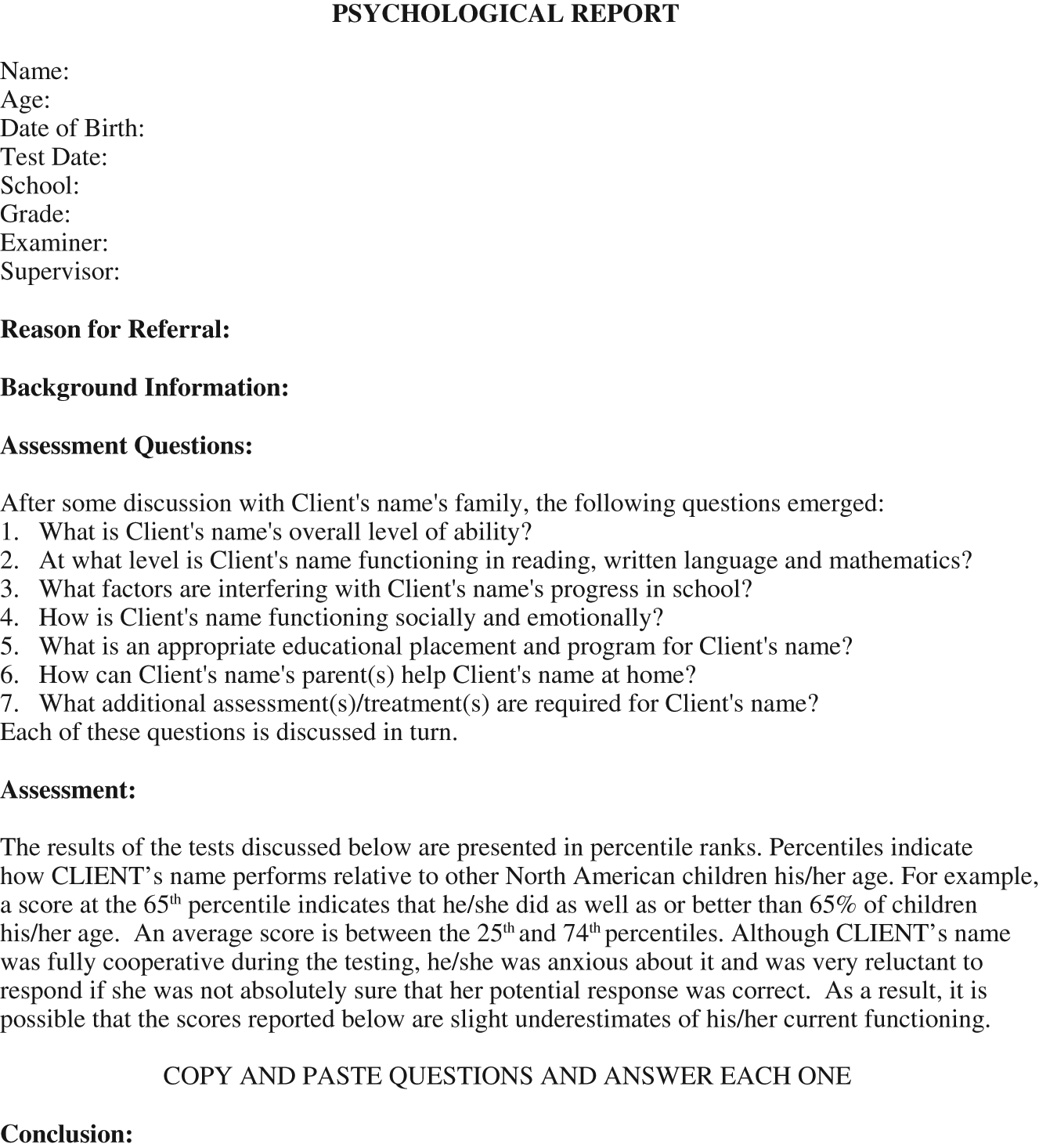
Template for question and answer format reports
The methods used to teach psychological report writing are based on Scardamalia and Bereiter’s (1987) conceptualization of the distinction between knowledge telling and knowledge transforming and Hayes and Flower’s (1987) model of the writing process. After discussing our adaptations of this model to report writing, we describe the specific teaching strategies that we use and how we address students’ misconceptions about the nature of psychological reports.
Theoretical Basis for Teaching Report Writing
Writing integrated reports may be challenging for some students because it demands knowledge transforming as opposed to knowledge telling (Scardamalia & Bereiter, 1987). The knowledge-telling process typically involves a mental representation of the writing assignment (in this case a report) that is formulaic and automatic. Writers who use a knowledge-telling process generate text on the basis of the order dictated by the data they have or their notes. Thus, in the case of a psychological report, they insert all of the information obtained in an initial interview in the Background Information section, even though some of the information may be more relevant in the context of specific topics (e.g., reading, social, and emotional functioning). Although they convey the necessary information, the linkages between ideas are often lacking and the line of argument is not developed. Reports written using a knowledge-telling process reflect the writers’ train of thought as opposed to being adapted to the train of thought of the intended readers. In essence, they require the reader to integrate the ideas. Writers who use a knowledge-transforming process not only think about the main points they want to convey but have these main points function as goals that directly influence the writing process. They use data from behavioral observations, interviews, and test results to build a well-developed case formulation that fulfils the goal of enabling readers (teachers, school administrators, parents, adolescent clients, and health professionals) to gain a deep understanding of the clients’ strengths and difficulties, the factors contributing to their difficulties, and the interventions that would be beneficial.
Figure 2 is an adaptation of Hayes and Flower’s (1987) structure of the writing process to describe the process of writing psychological reports. According to Hayes and Flower, writing is goal directed and requires the writer to engage in planning, sentence generation, and revision. Planning is influenced by the task environment; in the case of report writing, supervisors should strive to ensure that students have the knowledge they need about the diagnostic issues and recommendations and about the reader’s skill in reading reports. Instructors should provide motivating cues to ensure that students exert the extraordinary amount of effort that is sometimes needed to produce an effective report at the initial stages of their learning. Planning is also influenced by writers’ long-term memory; in the case of report writing, this involves background knowledge in the areas implicit in the referral questions, their understanding of the knowledge and literacy levels of their readers, and stored writing plans (i.e., formats for writing psychological reports that are accessible to readers). When they are actually planning, students need to develop a formulation of the case (Hayes and Flower refer to this as generating), figure out their goals (or core messages), and think about how to organize the report to communicate their goals. Once this planning has occurred, they can actually write the report (Hayes and Flower refer to this as translating). While writing they need to monitor their work to ensure that they are communicating their goals (which are informed by the goals of parents, children and adolescents, and teachers), reporting accurate data, and writing at a level of their readers. This involves reading and reviewing the text produced and asking their supervisors to review and provide feedback on the draft.
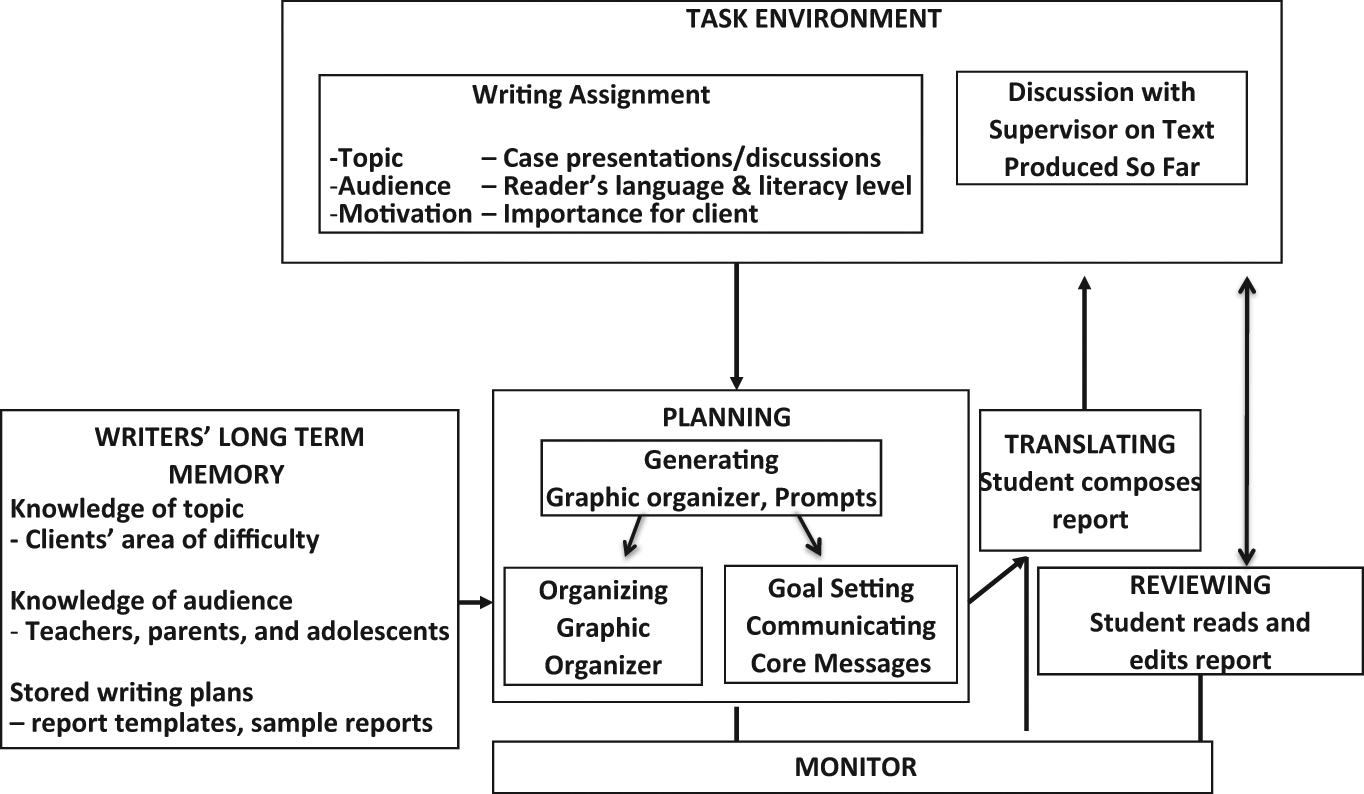
Adaptation of structure of writing process to writing psychological reports (Hayes & Flower, 1987)
Teaching Strategies
Faculty members and clinical supervisors who are teaching report writing in the SCCP program intervene at all of the stages of the writing process outlined by Hayes and Flower (1987). With respect to the task environment and planning phases, we provide opportunities for case discussion through case presentations to the class as a whole, ask questions about who might be reading the report in terms of their knowledge of psychological terms and literacy levels, and forcefully indicate how important the report might be in terms of guiding interventions for clients. In addition, we use the following strategies in different courses:
Specific instruction in report writing in the initial course begins with a didactic presentation of the research on the features of reports that are comprehensible to parents and teachers.
Prior to writing the report, students create a graphic organizer (Brown, 2005) that displays their formulation of the case (see Figure 3, for example). This helps them see the linkages between the different domains they assessed (intellectual ability, academic functioning, cognitive processes, social and emotional functioning) and how they relate to the diagnosis. On the periphery of the graphic organizer they write the stressors (environmental factors that impede learning and social-emotional adjustment) and personal and environmental strengths (personal and environmental factors that enhance learning and social-emotional adjustment) that affect their clients.
Students fill out a form (Figure 4) that summarizes the core message they want to communicate to clients, parents, and teachers in terms of content (what they want to communicate) and process (how they intend to communicate the content), and those messages are discussed in class.
Students are given the opportunity to examine examples of excellent reports written in previous years in their courses.
In the initial course we give students a very structured and comprehensive report template and in other courses they are given explicit guidelines.
Students have access to ReportWriter (http://adhdld.com), a website that is designed to facilitate writing reports that have the features shown by research to be informative for parents and teachers. 1 ReportWriter consists of a manual, report templates that format the report and include a list of questions that are commonly addressed in reports about children and adolescents, prompts for the issues that might be addressed in relation to each question, templates for reporting test results, and templates for cover letters to parents, school districts, and health professionals. ReportWriter also contains handouts describing evidence-based strategies for teaching reading, math, writing, and study skills and for behavioral interventions. Each handout addresses the purpose of the strategy, indicates with whom it can be used and in what settings, outlines the teaching or therapeutic procedures, summarizes the research on the strategy, and provides a list of additional resources.
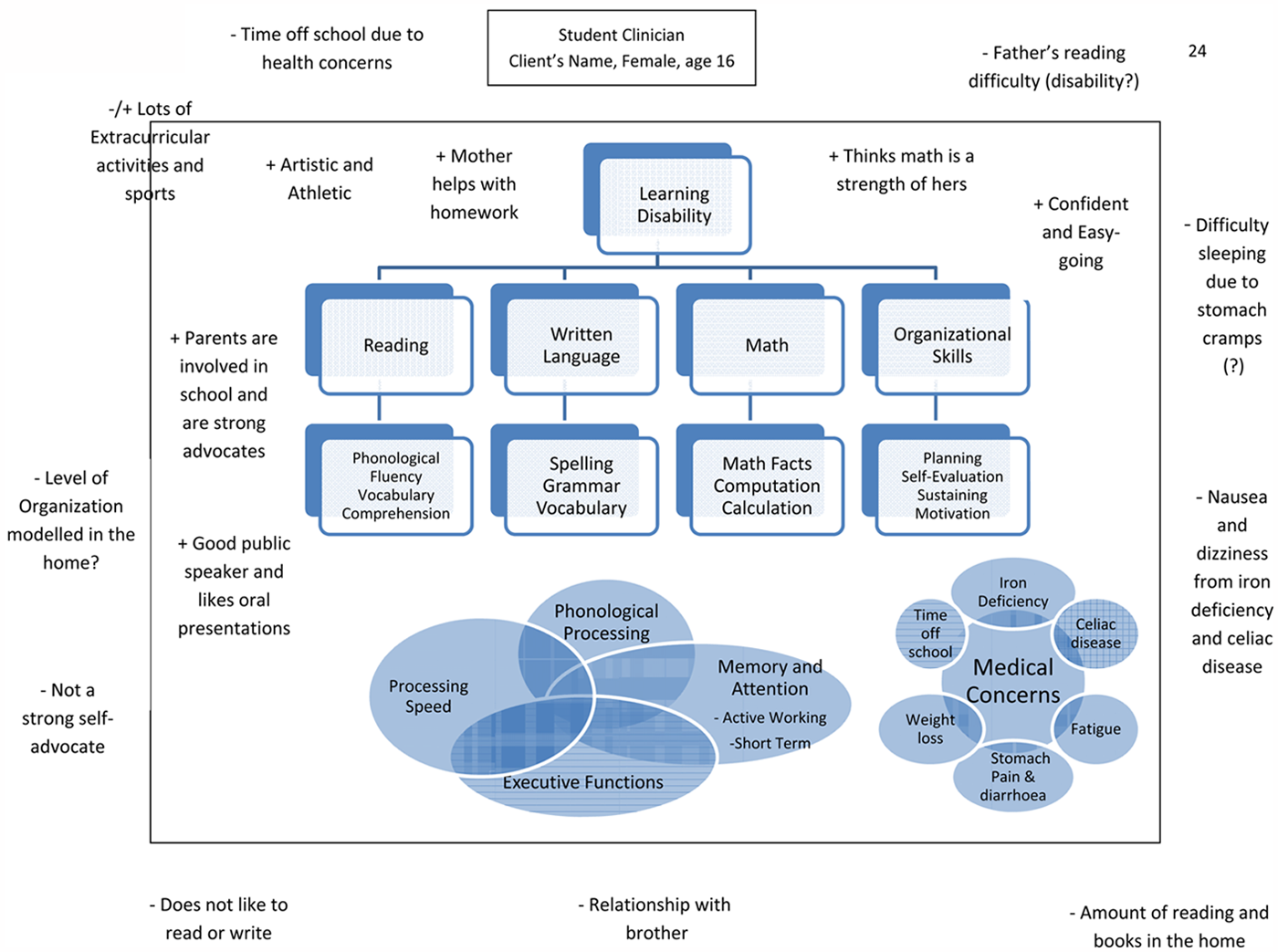
Case formulation Graphic Organizer
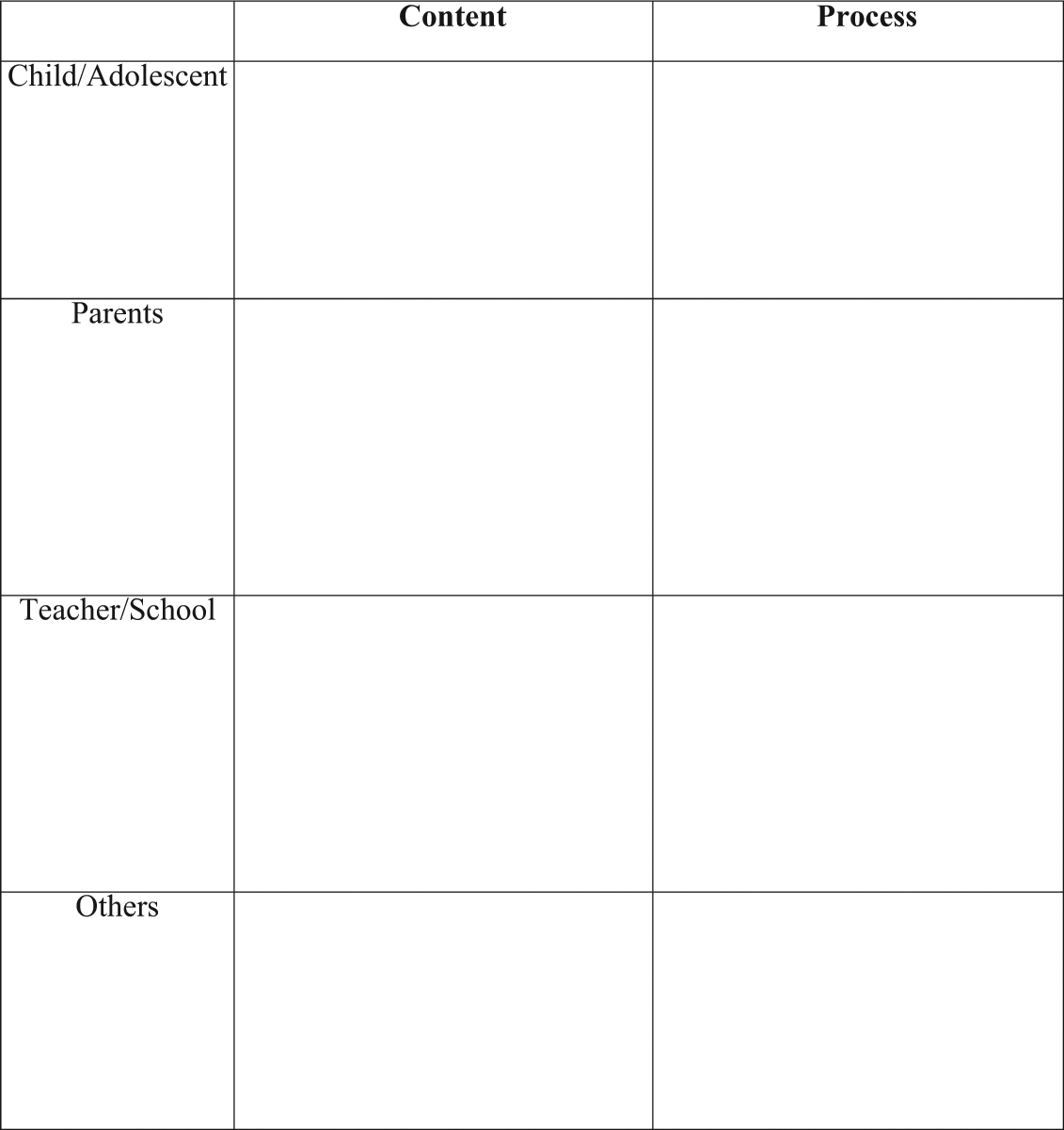
Core messages form
Once students have produced a draft of the report, supervisors read the report and provide feedback regarding the content, organization, and degree to which the report is communicating the desired message. Students are required to write two drafts of their report, each of which is evaluated (see Figure 5 for sample rubric for final draft of report). Instructors read and provide detailed comments on the first report, typically holding individual meetings with students. Supervisors use a constructivist approach to supervision of students; they ask questions that help students develop their skills in problem solving and case formulation and stimulate their own self-questioning skills. They sometimes spend more hours reading a student’s report and writing comments than it would take to write it themselves. Most students need to meet with the instructor once after preparing the first draft; others need to meet several times. The mediated teaching that occurs in these supervision meetings, however, is crucial to students’ learning about assessment and writing reports. The evaluation for the second draft is partly based on the quality of students’ response to that teaching. Most students have major changes to make from the first to the second draft. For the most part, students only need to correct some minor typographical or wording errors in the third draft that is ultimately signed by the instructor and sent to clients, schools, and health professionals. Students who have major changes to make in this third draft receive an Incomplete in the course until their reports meet an acceptable standard.
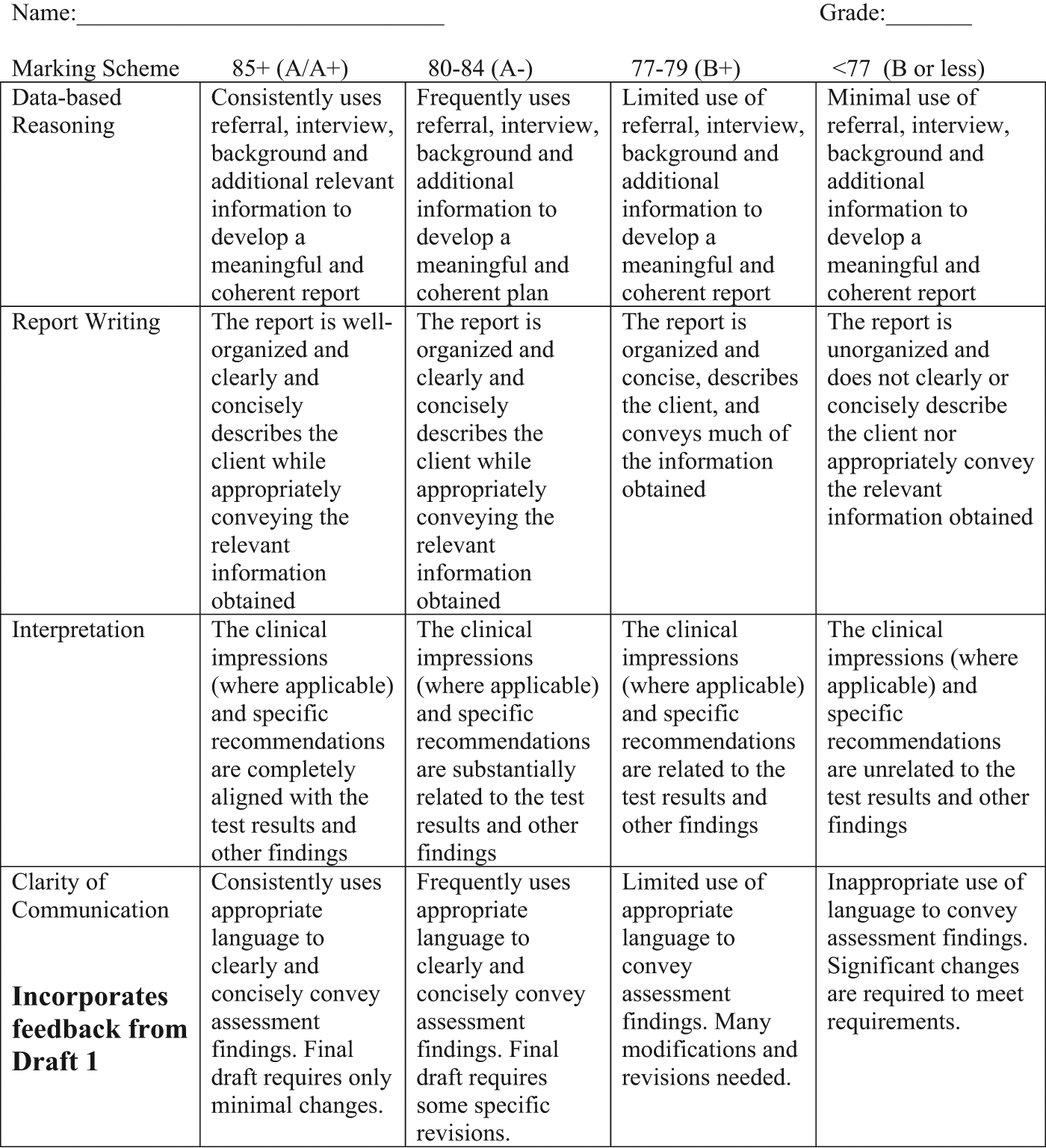
Final report rubric
A key aspect of the translating and reviewing component of the model is to write a report at a readability level that is accessible to most parents and teachers. As recommended by Harvey (2006), students might be encouraged to calculate the readability level of the reports they produce using standard readability formulae such as the Flesch-Kincaid grade level readability score (Formula: 0.39 (average sentence length) + 11.8 (average syllables per word) – 15.59). They might do this calculation for the section of their reports on cognitive processes because this section is most difficult to explain in simple terms. Furthermore, when parents of our clients are English language learners or have a low literacy level, we sometimes write a simple one-page diagrammatic report that summarizes the client’s strengths, difficulties, reasons for these difficulties, and recommendations (see Figure 6). This report is often useful for adolescents; we give them a laminated copy with concrete recommendations that they can mount on their desks or bulletin boards and refer to when they are doing their schoolwork. This report is also useful for framing oral feedback sessions.
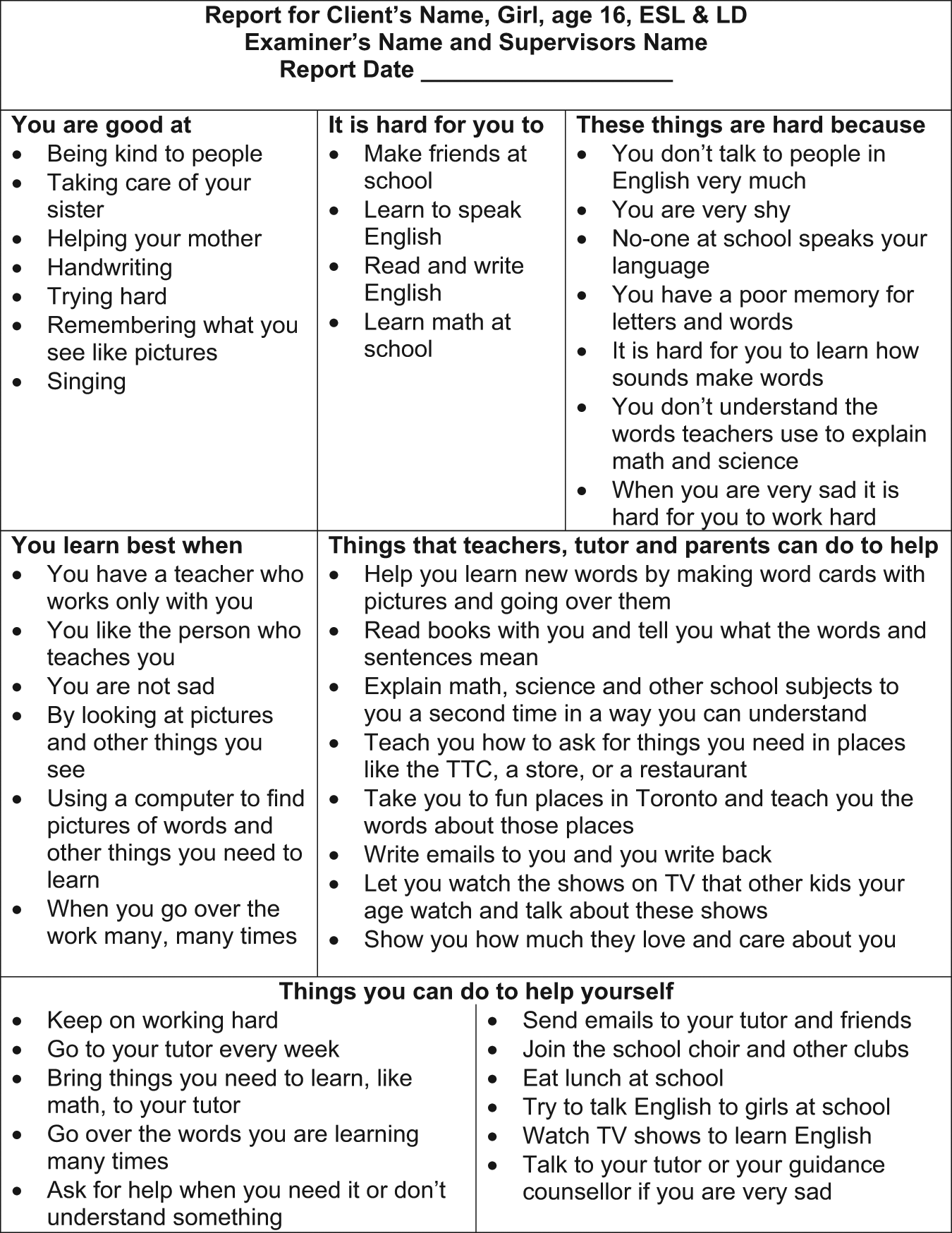
Simple report for parents and adolescents with low language and literacy level
Addressing Student Misconceptions
Students often have several misconceptions about psychological reports that need to be dealt with in the individual sessions with them. They naturally want their report to be credible and authoritative but sometimes confuse that with being erudite. As a result, they refer to themselves as “the examiner” instead of writing in the first person, use long sentences with passive voice and complex structure, and use long multisyllabic words. Their definitions of technical terms are often more difficult to understand than the term itself. We try to minimize this problem by talking about it in the didactic presentation and suggesting that they have a competent person who does not have a psychology background read the report and highlight anything he or she does not understand. We also do the psychological buzzword exercise (Figure 7) during this didactic presentation. This exercise illustrates that the strings of terms we sometimes use in reports can be as baffling to readers as the combinations that are produced when selecting one word from each of the three columns of the table (e.g., developmental lexical projection). When reviewing the first draft of reports, supervisors provide feedback on these style issues and show how some sentences can be changed to state the message directly.
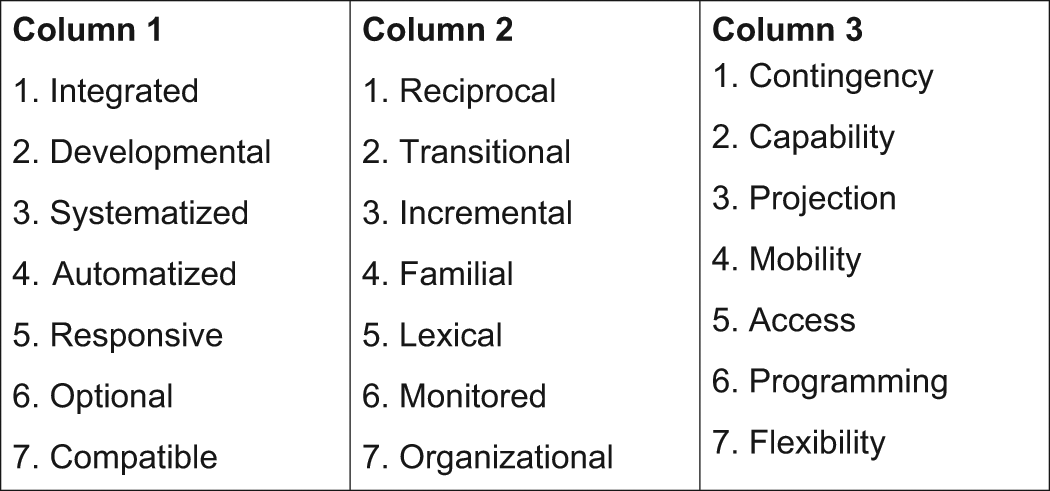
Psychologists’ buzzword table to illustrate problems with jargon in reports
Due to confusions about who they see as the primary reader of the report or due to anxiety, some students believe that they must communicate every detail of the client’s history, the scores of every test and subtest, and why they made certain decisions in terms of choice of test, pressing the limits, and so on. In essence, they write the report as if their supervisors are the only readers. We suggest that they use the following decision-making algorithm to report scores:
Does the total score of the test reflect the students’ functioning in all areas? If yes, report and interpret it and do not proceed to scores on other scales and subscales.
If not, do the total scores on the major scales of the test reflect the students’ functioning in that area? If yes, report and interpret those scores and do not include other scores.
If not, discuss the variability of subscales and what it means.
If the scores of major scales do not reflect the client’s functioning, the results of an error analysis should be reported.
As mentioned above, students often include recommendations from databases that are not appropriate for their clients. We suggest that they ask themselves the following questions in relation to the information and recommendations included in the report:
Did I address the parent, child/adolescent, and school goals for this client?
Does this information contribute to my core message?
Am I repeating myself?
Does this information enhance understanding of the nature of the client’s strengths, needs, and reasons for their difficulties?
Might this information be potentially embarrassing or damaging?
Would teachers or parents comprehend this?
Is this information necessary for making decisions about support or interventions?
Is the recommendation clearly described, age appropriate, and reasonably feasible in the home or school setting?
How might the recommendation be beneficial for the client?
Is there research evidence to support the efficacy of the recommendation?
We begin our instruction in assessment with a course devoted to ensuring that students can accurately administer and score standardized tests and learn how to administer new tests. Although this has many advantages, some students believe that scores on standardized tests are a better source of data about children than interviews and observational data. For example, when reporting about oral language abilities in a child with whom this is problematic, they confine themselves to reporting scores from tests, even though they have a taped language sample. The Prompts section of the ReportWriter program is sometimes helpful because it provides a framework of issues that might be deserving of elaboration. We also provide informal tests or rating scales that are useful for conceptualizing this information. In one course, students are asked to type their behavioral observations and classify them according to the headings of their report.
The biggest challenge for faculty teaching report writing is to provide the scaffolding necessary to write an integrative report. We show students examples of reports or sections of reports organized by source and organized by functional domain and ask them to compare the features of the two reports or report segments. We suggest that they create a graphic organizer or fill out the core message sheet, give them feedback, and ask them whether the narrative report actually conveyed the core message or formulation clearly. For students who experience more difficulty with this, we reword or reorder the questions they ask at the beginning and rewrite a section of their reports (e.g., the section describing the client’s written expression), leaving blanks for information they need to fill in. We then ask them to apply the same principles to other sections when writing the next draft.
As discussed in the first section of this article, implications for best practices in terms of the features of psychological reports have been informed by more than four decades of research (e.g., Harvey, 2006; Pelco et al., 2009; Rucker, 1967; Wiener, 1987). The results of these studies are consistent with the theory of considerate text (Armbruster & Anderson, 1984, 1985). The implications are that writers of psychological reports must find ways to consider the needs of multiple readers with varying backgrounds, write integrative reports that communicate information by functional domain, and make the structure of the report salient. A few studies have shown that reports that begin with questions that are formulated on the basis of the referral issues and then answer these questions are more easily comprehended and appreciated by parents, teachers, and school administrators (Groth-Marnat, 2009; Wiener, 1987).
There is virtually no research on how to teach graduate students and school psychologists who are beginning their careers to write reports that reflect best practices. In the second section of this article, we discussed some of the strategies we use in the SCCP program at OISE/University of Toronto to accomplish this. The evidence of the effectiveness of our approach to teaching assessment is derived from a survey of 52/59 graduates of the doctoral program between 2002 and 2007. Approximately two thirds of the graduates (67.4%) were very satisfied with the training they received in assessment, and 29.4% were satisfied. Only 3.9% were unsatisfied, and no one reported being very unsatisfied. We do not, however, have research data demonstrating the effectiveness of the specific strategies for teaching report writing described above. These strategies, however, are consistent with theories of the writing process that have been well supported and research on teaching writing.
Conclusion
Teaching report writing is a challenging and time-consuming task for faculty members in school psychology programs and clinical supervisors in school districts. Although there is a strong research-based consensus on the types of psychological reports that are effective in terms of increasing the understanding of readers about children and youth and communicating recommendations for accommodations and interventions, strategies for teaching report writing skills have scarcely been discussed in the literature and intervention research is minimal. We have suggested strategies for teaching report writing that we have tried with our students and are consistent with theories and research on the writing process, but we humbly acknowledge that we do not have research data to support the effectiveness of specific strategies. Research investigating the effectiveness of these strategies in terms of enhancing students’ ability to produce reports that are consistent with our knowledge of effective reports is clearly needed.
Footnotes
The author(s) declared no potential conflicts of interest with respect to the research, authorship, and/or publication of this article.
The author(s) received no financial support for the research, authorship, and/or publication of this article.