



Abstract
Understanding how social support and anxiety influence academic engagement in boys and girls is important to ensure that we effectively promote academic engagement. This study examined the relationship between gender, social support, anxiety, and academic engagement in elementary and junior high school students. Students in Grades 5 to 9 (N = 1,904) completed self-reports measuring academic engagement, anxiety, and perceived social support from family, friends, and school staff. Results indicated that girls were more likely to perceive social support and to score higher on the anxiety scale than boys were. Grade level was a significant predictor of academic engagement for boys but not for girls, while anxiety classification was a significant predictor of academic engagement for girls but not for boys. This study highlights the importance of understanding the multiple factors that influence academic engagement to provide targeted prevention and intervention strategies and how these factors differ for boys and girls.
Educational outcomes such as academic engagement are influenced by numerous factors including individual differences and psychosocial variables (Skinner & Pitzer, 2012). Research on academic engagement has determined that engagement may differ across students, is malleable to change, and is associated with other variables including gender, grade level, anxiety, and social support (Fredericks, Blumenfeld, & Paris, 2004). However, previous studies have only examined the associations between engagement and a few isolated variables at one time. The current study is unique in that the associations between academic engagement, gender, grade level, anxiety, and social support are examined collectively (Mazzone et al., 2007; Rueger, Malecki, & Demaray, 2009; Wang & Eccles, 2012).
Academic engagement is a multidimensional theoretical construct that comprises three components: behavioral, emotional, and cognitive engagement. Behavioral engagement refers to what a student does: participating in school life, homework, extracurricular activities; emotional engagement refers to what a student feels: affective response to school and the people and activities associated with school; and cognitive engagement refers to what a student thinks: intellectual investment and effort (Appleton, Christenson, & Furlong, 2008; Fredericks et al., 2004). Students’ engagement in each of these related, but distinct, dimensions can range from minimally to deeply engaged and is malleable to change influenced by a combination of personal and environmental factors (e.g., task relevance, autonomy, relatedness, and competence; Fredericks et al., 2004). Engagement and motivation are used interchangeably by some authors (Reschly & Christenson, 2012). For example, Martin’s (2002) Student Motivation Wheel provides a theoretical model of motivation that reflects the underlying behavioral, emotional, and cognitive dimensions as having a positive (boosters) or negative (guzzlers) effect. In this model, boosters include self-belief (cognitive), learning focus (cognitive), value of school (affective), persistence, planning, and study management (behavioral), while guzzlers include self-sabotage (behavioral), failure avoidance (behavioral), low control (cognitive), and anxiety (affective). It is not surprising then that students’ academic engagement is partially shaped by school environment (e.g., student–teacher relationships, classroom structure, etc.) and that it predicts future academic performance (e.g., grades, graduation, career aspirations; Skinner & Pitzer, 2012).
Gender Differences in Academic Engagement
Research highlights differences in academic engagement between boys and girls. In a study of 12 countries (Grades 7-9), including Canada, Lam et al. (2012) found that girls reported higher levels of academic engagement than boys, and teachers rated girls as demonstrating stronger academic performance than boys. Conversely, teachers viewed boys as having weaker concentration, work production, and problem-solving skills than girls (Martin, 2004). Girls’ use of planning for schoolwork completion, study strategies, mastery approach to learning, persistence in academic problem solving, and perception of more support from adults and peers may contribute to their higher levels of academic engagement and achievement (Martin, 2004). Furthermore, boys’ negative view of school, reluctance to ask for help or do extra work, tendency not to see the value of homework, engagement in self-sabotage behaviors, due to fear of failure(Martin, 2003, 2004) may contribute to their lower levels of academic engagement and achievement. Furthermore, while children’s self-perceptions of academic competence generally declined with age, boys’ sense of competence declines more quickly than girls’ (Jacobs, Lanza, Osgood, Eccles, & Wigfield, 2002).
Gender Differences in Social Support
Social support is defined as a transaction between individuals modifying either a situation or one’s perception of a situation (e.g., help with tasks), enhancing positive functioning or buffering against negative outcomes (e.g., empathy, companionship, advice; Demaray & Malecki, 2002; Zimet, Dahlem, Zimet, & Farley, 1988). School psychology research has found that student perceptions of the availability of social support from their families, friends, teachers, and classmates are associated with multiple personal and academic outcomes (Bond et al., 2007). For example, students who perceive more social support also tend to achieve better grades in school (Levitt, Guacci-Franco, & Levitt, 1994), engage more (Libbey, 2004), demonstrate fewer externalizing (e.g., acting out and delinquency) and internalizing (e.g., anxiety and depression) problems (Demaray & Malecki, 2002), and experience greater well-being (Oberle, Schonert-Reichl, Guhn, Zumbo, & Hertzman, 2014). Perceived social support is theorized to be associated with academic engagement by promoting enthusiasm, perseverance, interest, positive emotions, and willingness to participate in school (Ryan & Patrick, 2001).
There are some notable gender differences in perceived social support from various sources. While perceived support from parents was consistent across gender, young adolescent girls perceived more social support from teachers, classmates, and close friends than boys (Rueger et al., 2009). Girls also perceived the most support from close friends, and boys perceived the least amount of support from their classmates. However, classmates’ support predicted adjustment outcomes, including better attitude toward school and lower levels of reported anxiety over time for boys but not for girls. Demaray and Malecki (2002) also found that girls perceived more support than boys from all sources except parents.
A longitudinal study by Wang and Eccles (2012) found that perceived social support from parents and teachers predicted all dimensions of academic engagement and buffered against the general declines in engagement that tend to occur across the middle and secondary school years. These associations did not differ by gender. In contrast, a more recent study found that boys showed lower behavioral engagement than girls across self, teacher, and observer ratings, and the association between gender and engagement was mediated by teacher support (Lietaert, Roorda, Laevers, Verschueren, & De Fraine, 2015). Support from teachers, including providing students with choices and noting the relevance of academic content, was more important for boys’ engagement than for girls’ (Lietaert et al., 2015).
The Effect of Anxiety and Gender on Academic Engagement
Anxiety disorders are among the most common disorders that children and adolescents experience, with prevalence rates of up to 30%, and occurring two times more often in females (American Psychiatric Association [APA], 2013) with different anxiety disorders manifesting at varying developmental points, and continuing into adulthood at a higher rate than other disorders (Kendall, Hedtke, & Aschenbrand, 2006). A related study on stress and academic outcomes in adolescence found that students with higher levels of perceived stress and anxiety were also less engaged in school (Raufelder et al., 2013) as anxiety tends to reduce motivation and cognitive engagement because the intruding anxious thoughts interfere with complex thought (Pekrun & Linnenbrink-Garcia, 2012). However, a sense of autonomy, relatedness, and competence (collectively referred to as self-determination) mediated the association between perceived stress and emotional and behavioral engagement.
Even though, as a group, girls tend to perform better in school than boys, they also worry more about their academic performance, experience more distress, especially when they perform poorly, and evaluate their performance more harshly than boys do (Martin, 2004; Pomerantz, Altermatt, & Saxon, 2002). Girls reported increasing anxiety symptoms between Grades 6 and 8, while boys reported decreasing symptoms (Grills-Taquechel, Norton, & Ollendick, 2010). Girls also experienced unique academic risks related to anxiety symptoms as their anxiety symptoms between the ages of 11 and 16 predicted later low academic attainment (Veldman et al., 2014). In addition, as girls enter mid-adolescence, their rate of reported maladaptive cognitions (e.g., anxiety, failure avoidance, and uncertain control) increased and their rate of adaptive cognitions (valuing schoolwork, belief in academic ability) decreased (Bugler, McGeown, & St Clair-Thompson, 2015). Boys and girls differ with respect to academic engagement, perceived social support, and anxiety. Girls tend to be more engaged in school than boys are, and girls tend to perceive more social support than boys. However, girls are also more likely to experience anxiety than boys are, particularly as they age into adolescence, which may affect their school functioning.
While girls may have an increased risk of poor academic outcomes from anxiety, it may be easier to identify boys who are at risk of developing an anxiety disorder according to a longitudinal study of anxiety symptoms (Lechter, Sanson, Smart, & Toumbourou, 2012). There were discernible differences between boys who would and would not develop high levels of anxiety in parent reports of characteristics at age 5 (e.g., level of anxiety and shyness), but these differences were not seen in girls. In addition, more girls than boys developed high levels of anxiety, and more boys than girls had low levels of anxiety in this study. They concluded that their results support an ecological model of anxiety wherein the confluence of individual characteristics, family characteristics, and environmental factors determine the level of anxiety symptoms individuals’ experiences (Lechter et al., 2012). There is a complex interplay of personal and social factors that influence academic engagement, and the pattern of associations between these factors may be unique for boys and girls.
Purpose of the Current Study
This study examines the role of social support and anxiety in understanding gender differences in academic engagement as it is unclear how boys’ and girls’ are influenced by these variables. Consequently, the following research questions were addressed in this study:
Method
Data Source
Six public Catholic schools from a western Canadian city were invited to participate in this study. All six schools included kindergarten through Grade 9, where kindergarten to Grade 6 was referred to as elementary, and Grades 7 to 9 were referred to as junior high. A study information package was sent home seeking active parental consent for children in Grades 5 to 9 to take part in a confidential survey about how students felt about school, their well-being and their relationships. Of the 2,279 parents who were approached to take part, 1,904 (83.5%) agreed, and their children completed the survey. Table 1 outlines the characteristics of the students who took the survey. Respondents were 51% male and 49% female. Elementary students in Grades 5 and 6 made up 42% of the sample, with the remaining 58% of respondents in junior high (i.e., Grades 7, 8, and 9). The gender distribution was consistent by grade level (elementary: 53% male, 47% female; junior high: 50% male, 50% female). In this sample, 14% of the students demonstrated moderate to severe anxiety symptoms.
Gender, Grade, and Anxiety Classification in the Sample.

This study was part of a larger project that measured more constructs than those reported here. The methods and variables used in this article were previously reported in Wilcox, McQuay, Blackstaffe, Perry, and Hawe (2016), which provides additional details.
Study Variables
Academic engagement
Academic engagement was measured with a five-item scale (adapted from Libbey, 2004). Students were asked to report how often (1 = never, 2 = sometimes, 3 = always) they feel like they are doing well at school, schoolwork is too hard (cognitive/behavioral; reverse coded), they care that their homework is done correctly (emotional/behavioral), it matters what their grades are (cognitive), and school is a waste of time (emotional; reverse coded). Responses were summed, with higher scores indicating greater academic engagement (Cronbach’s α = .61).
Anxiety
Anxiety was measured using the Multidimensional Anxiety Scale for Children–10 (MASC-10; March, 1997). This 10-item questionnaire, developed as a shortened version of the original 39-item MASC, assesses a variety of anxiety symptoms in children, as defined in the Diagnostic and Statistical Manual of Mental Disorders (4th ed.; DSM-IV; APA, 1994). Intended for use in epidemiological and treatment outcome studies, the MASC-10 has been shown to be a reliable, unidimensional scale (March, 1997; March & Sullivan, 1999). Using a 4-point scale (0 = never true, 1 = rarely true, 2 = sometimes true, 3 = often true), students were asked whether they feel shy, check to make sure things are safe, get nervous if they have to perform in public, feel sick to their stomach, feel restless and on edge, get dizzy or faint feelings, try to stay near mom or dad, feel afraid that other kids will make fun of them, the idea of going away to camp scares them, and bad weather, the dark, height, animals, or bugs scare them. A total anxiety t score was calculated, based on age and gender (Cronbach’s α = .75). As outlined in March (1997), students with a t score above 65 were classified as reporting moderate to severe anxiety symptoms.
Social support from family and friends
Two scales, adapted from Zimet and colleagues (1988), were used to measure social support from family and friends. In a four-item scale measuring social support from family, students were asked how often (1 = never, 2 = sometimes, 3 = most of the time, 4 = all of the time) their family tries to help them, they get emotional help from their family, they can talk about problems with their family, and their family is willing to help them make decisions. Responses were summed (Cronbach’s α = .82).
Social support from friends was measured with four items (Zimet et al., 1988), asking students how often (1 = never, 2 = sometimes, 3 = most of the time, 4 = all the time) their friends try to help them, they can count on their friends, they have friends they can share happy and sad times with, and they can talk about problems with their friends. Responses were summed (Cronbach’s α = .82).
Social support at school
Two scales (adapted from Libbey, 2004) were used to measure social support at school: staff social support and peer relations. For staff social support, students were asked to report how often (1 = never, 2 = sometimes, 3 = always) adults at this school listen to what they say, treat students with respect, care about them, and notice when students are doing a good job. Responses were summed, with higher scores indicating greater staff social support (Cronbach’s α = .78).
Peer relations was measured with four items (adapted from Libbey, 2004), asking students to report how often (1 = never, 2 = sometimes, 3 = always) they have close friends at this school, find it hard to make new friends (reverse coded), have friends they can depend on, and there are kids in class that they like. Responses were summed, with higher scores indicating greater peer social support (Cronbach’s α = .60).
Gender and grade
Students reported their gender (boy/girl) and grade (Grades 5, 6, 7, 8, 9). For the analysis, grade level was aggregated to explore the differences between elementary students (Grades 5 and 6) and junior high students (Grades 7, 8, and 9). Both of these variables were dummy coded for the regression analysis (Gender: boy = 1, girl = 0; Grade level: junior high = 1, elementary = 0).
Analysis
Descriptive statistics provided an overview of student characteristics, reliability analyses showed the internal consistency of each scale, and Pearson’s correlations outlined the relationship between each of the scales in the analysis. Scale differences by gender and anxiety classification were then analyzed using independent t tests and Cohen’s d for effect size. To control for the family-wise error rate, the significance level used for the independent t tests was based on the Bonferroni correction for doing multiple comparisons (i.e., p < .05/6 comparisons = p < .008; Miller, 1981). Finally, linear regression analysis was undertaken to model the relationship between academic engagement of students with their demographic characteristics, anxiety classification, and social support variables. Separate models were run for boys and girls. Little’s Missing Completely at Random (MCAR) test (Little, 1988) determined data to be missing completely at random, χ2(3119, N = 1904) = 3,066; p < .749; therefore, list-wise deletion was used for all analyses. All analyses were completed using IBM SPSS Statistics Version 21.
Results
Reliability and Correlation Analysis
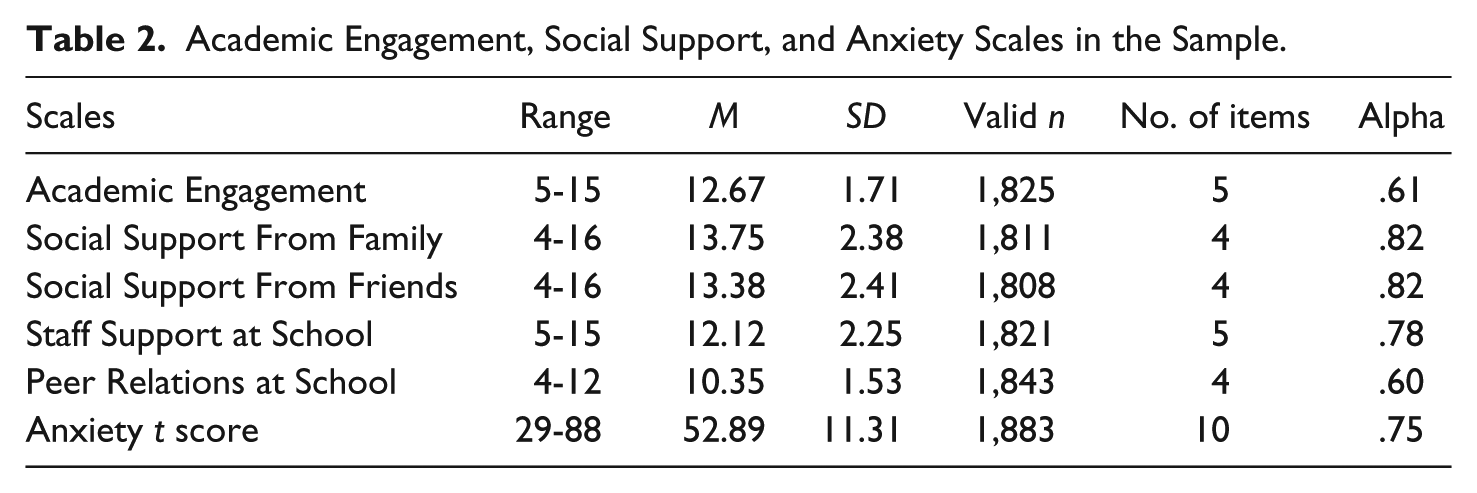
Table 2 outlines the scales used in this study. The valid number of cases varies for each scale due to missing data. There were differences found by grade level between the academic engagement, social support, and anxiety scales. These differences were explored in Wilcox et al. (2016). Table 3 shows Pearson’s correlations between the academic engagement, social support, and anxiety scales. Academic engagement and the social support scales are negatively correlated with anxiety. On the contrary, the social support scales and academic engagement scale are positively correlated with each other.
Academic Engagement, Social Support, and Anxiety Scales in the Sample.
Pearson’s Correlations Between Academic Engagement, Social Support, and Anxiety Scales in the Sample.
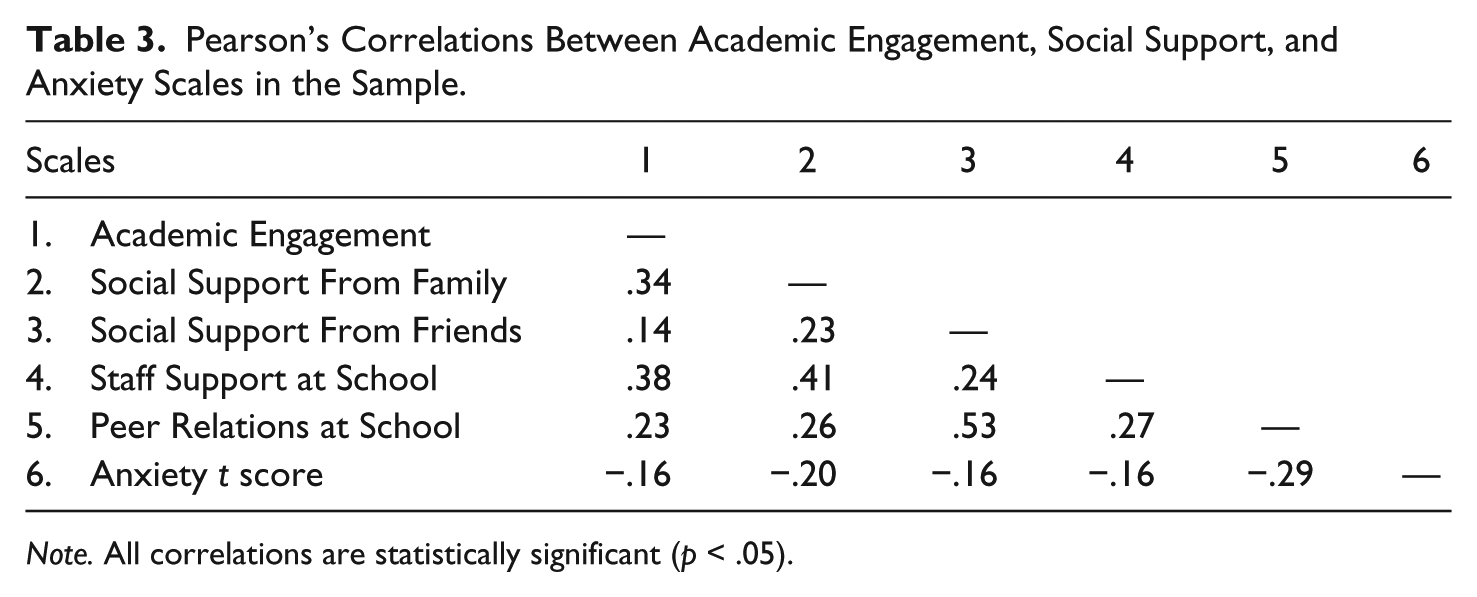
Note. All correlations are statistically significant (p < .05).
Differences by Gender
Results in Table 4 show differences by gender between the academic engagement, social support, and anxiety scales. With a medium effect size (Cohen, 1988), results show that girls are significantly more likely to perceive that they have social support from their friends. In addition, although effect sizes are low, results also show that girls are significantly more likely to perceive positive peer relations at their school than boys and are also significantly more likely to score higher on the anxiety scale than boys.
Academic Engagement, Social Support Scales, and Anxiety Scales by Gender.
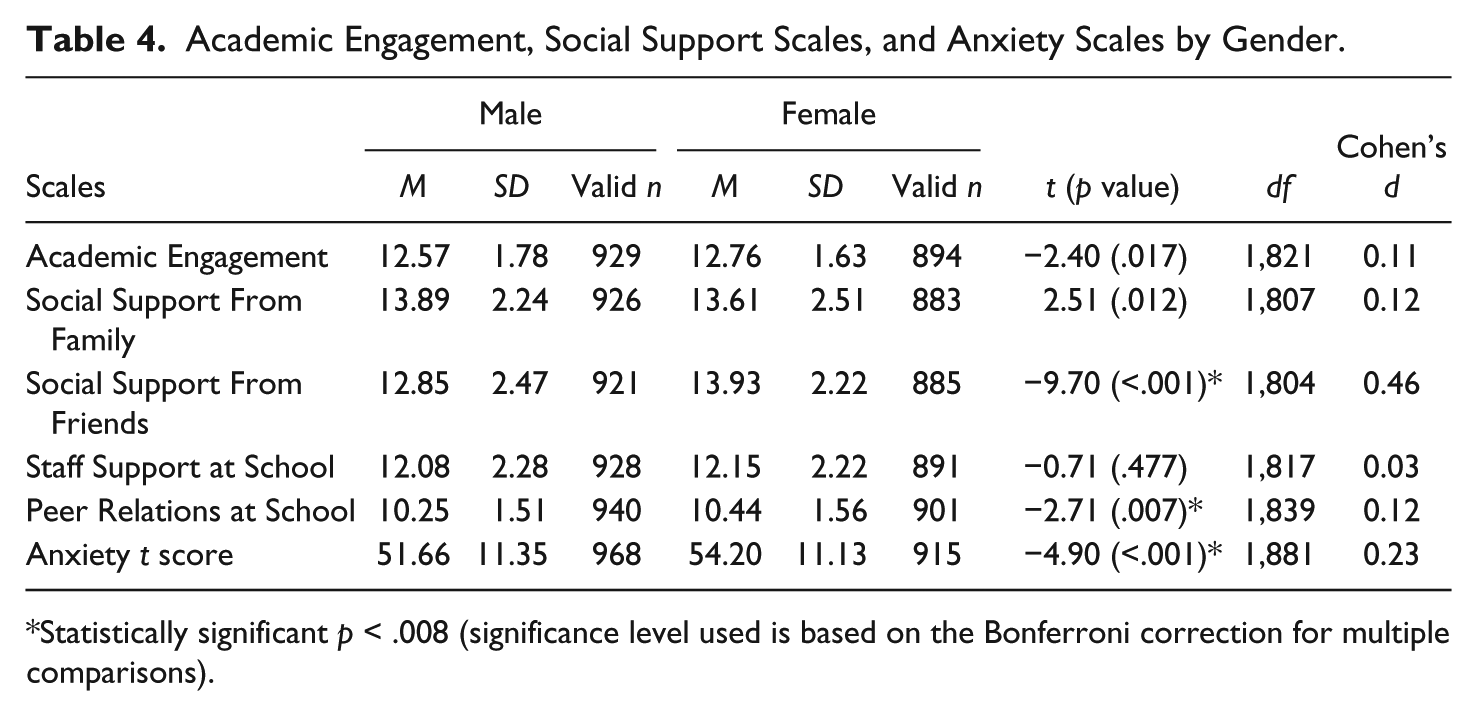
Statistically significant p < .008 (significance level used is based on the Bonferroni correction for multiple comparisons).
Differences by Anxiety Classification
Results in Table 5 show the differences by anxiety classification between the academic engagement and social support scales. With a medium effect size (Cohen, 1988), results show that students who demonstrated moderate to severe anxiety symptoms (i.e., t score > 65) are significantly less likely to perceive positive peer relations at school. In addition, although effect sizes are low, results also show that students classified as having anxiety are significantly less likely to be academically engaged, less likely to perceive social support from their family and friends, and are less likely to perceive social support from staff at school.
Academic Engagement and Social Support Scales by Anxiety Classification.
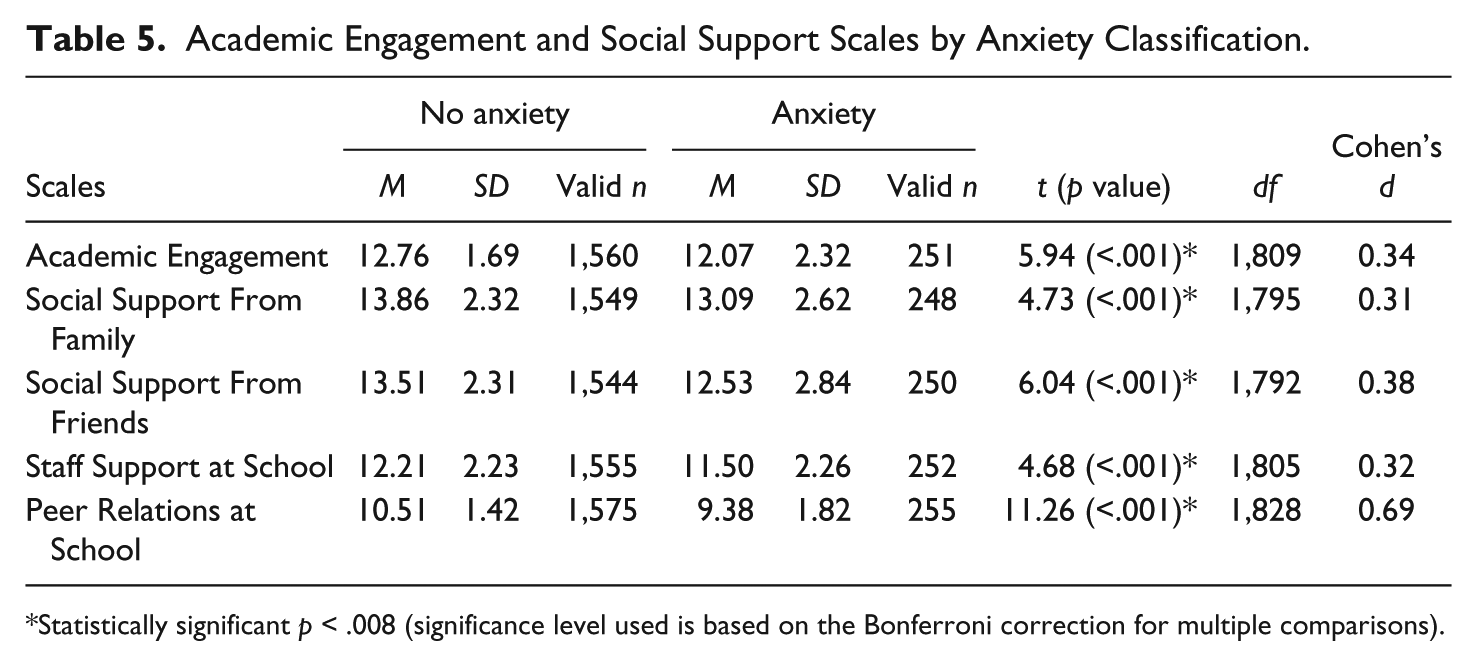
Statistically significant p < .008 (significance level used is based on the Bonferroni correction for multiple comparisons).
Regression Analysis
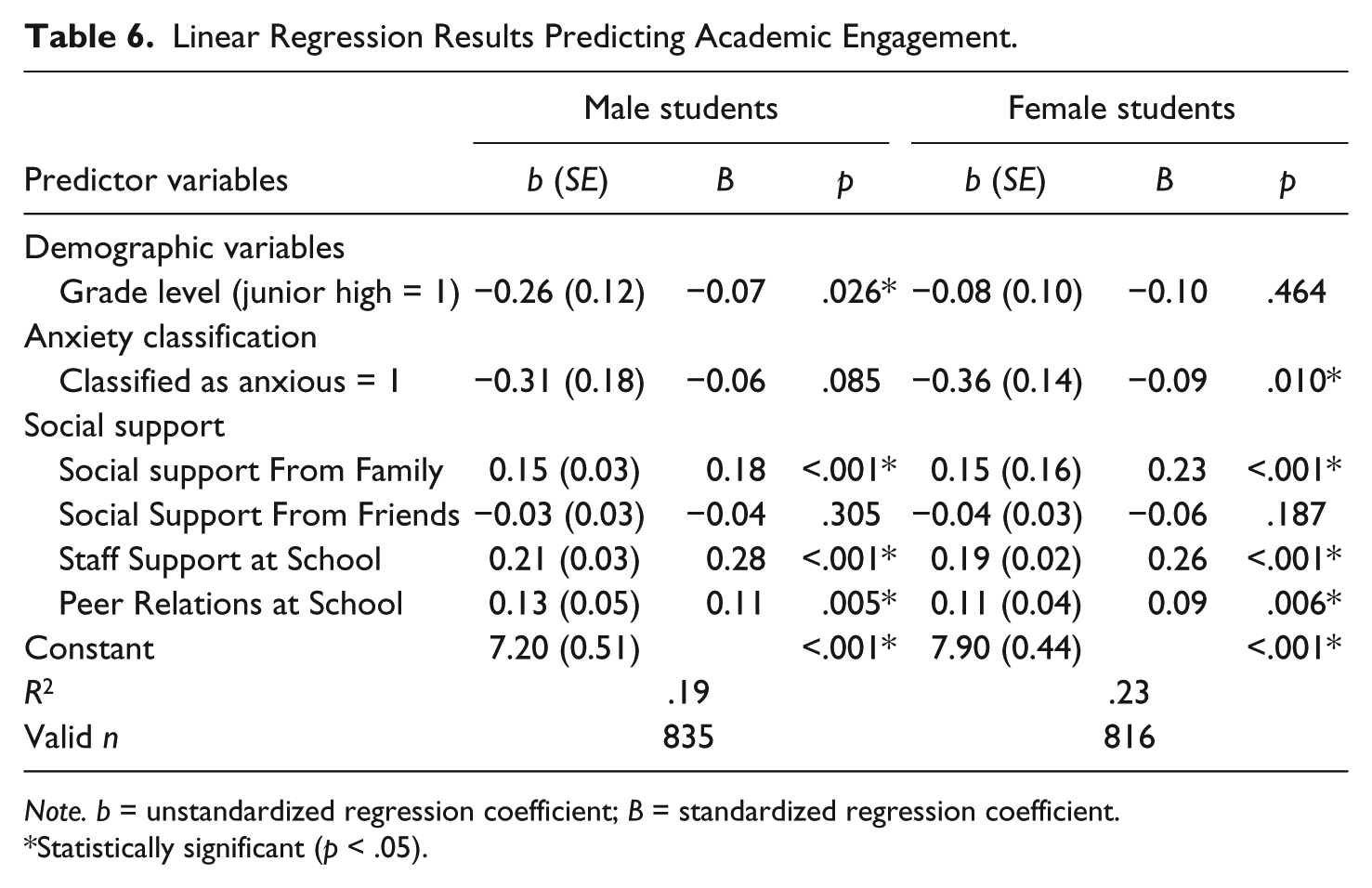
Results in Table 6 show separate regression analyses for boys and girls. For male students, 19% of the variation in academic engagement can be explained by grade level, anxiety, and social support. For female students, 23% of the variation in academic engagement can be explained by the same variables. Social support variables are strongly associated with academic engagement for both male and female students. Students who perceive more social support from their family, perceive more social support from staff at school, and perceive more positive peer relations at school are more likely to score higher on the academic engagement scale (for both male and female students).
Linear Regression Results Predicting Academic Engagement.
Note. b = unstandardized regression coefficient; B = standardized regression coefficient.
Statistically significant (p < .05).
There are some differences between boys and girls. For male students, grade level is significantly associated with academic engagement, but it is not a significant variable for girls. That is, boys are less likely than girls to be academically engaged in junior high. For female students, grade level does not have a significant effect on engagement. However, for female students, anxiety classification is significantly associated with academic engagement, but it is not a significant variable for boys. That is, girls who are classified as anxious are less likely to be academically engaged. For boys, anxiety classification does not have a significant effect on engagement.
Discussion
The aim of this study was to examine how the academic engagement of boys and girls was associated with social support and anxiety. Several gender differences were found. Girls reported higher levels of academic engagement, social support from friends, and positive peer relationships at school, similar to the Lam et al. (2012) study; at the same time, they reported higher levels of anxiety, which was similar to the Pomerantz et al. (2002) study. However, boys reported lower levels of academic engagement, anxiety, and social support from peers. Grade level was significantly associated with academic engagement for boys, such that boys in junior high were less likely to be academically engaged than boys in elementary school. For girls, the more important variable was anxiety, such that girls with moderate to severe anxiety symptoms were less likely to be academically engaged than girls with low levels of anxiety.
Students who reported higher levels of social support from their family and from school staff and who reported more positive peer relations at school also reported higher academic engagement, as was found in Libbey (2004). Furthermore, students with high levels of self-reported anxiety also reported lower levels of academic engagement (Raufelder et al., 2013; Wang & Eccles, 2012) and perceived social support from family and friends, peer relations, and support from school staff (Demaray & Malecki, 2002), which was similar to other studies. This suggests that interventions targeting academic engagement may need to consider the impact of both gender and level of anxiety. This is also supportive of Martin’s (2002) theoretical model of motivation in that social support was a booster to academic engagement and anxiety was a guzzler, negatively influencing academic engagement.
There are several limitations that should be considered in interpreting the findings of this study. First, casual inferences cannot be made about cross-sectional research. Second, social desirability bias is always a concern in self-report measures; however, the current results suggest that students reported differing levels of social support from the three groups: friends, family, and school staff. It is therefore plausible that students discriminated and recorded their actual feelings. Third, two of the scales used in the study (academic engagement and peer relations at school) demonstrated relatively low internal consistency, which may have affected reliability. The results of this study may not be generalizable as participants were only from one public Catholic schools district in one Canadian city. In addition, several significant findings had low effect sizes, which suggests that the clinical significance of these findings should be interpreted with caution as statistical differences between groups may not necessarily translate into noticeable or meaningful differences between groups in real life.
These research findings are applicable for practitioners in school settings. Perceived social support is associated with positive outcomes for students; therefore, it is important to help students build social support networks and to learn how to use these networks to obtain the support they need through positive school climate initiatives (Thapa, Cohen, Guffey, & Higgins-D’Alessandro, 2013). The results of this study suggest that the support needs for boys and girls may differ in some respects. Similar to other studies (Demaray & Malecki, 2002; Rueger et al., 2009), boys were less likely to perceive social support from friends and peers and were more likely to be disengaged academically in higher grades. Consequently, boys may benefit from support in learning to recognize and utilize social supports, to build those social supports, and to maintain engagement as they reach the transition to junior high school as boys in junior high school reported lower levels of social support and engagement than those in elementary school: for example, supporting the development of self-belief, maximizing opportunities for success, helping students see the connection between effort and outcomes, and developing strategy use to positive outcomes (Martin, 2004). Girls, however, were more likely to report high levels of anxiety, and anxiety was a predictor for level of academic engagement. Consequently, girls may benefit from preventive intervention such as coping skills training to help them manage anxiety symptoms and reduce the negative effects of high anxiety on engagement. Finally, perceived social support predicted academic engagement for both boys and girls. While school personnel often feel like they have little control over student challenges, staff can have a positive impact on students’ academic engagement through intentionally developing strong relationships with students (see Hughes, 2012).
A major part of academic engagement is social and emotional in nature; therefore, a strong focus on relationships between home and school, between teachers and students, and between students and learning is likely a necessary component of effective intervention. By understanding how boys’ and girls’ engagement is influenced by perceived social support and anxiety, school psychologists are in a position to improve practices and outcomes for students.
Footnotes
Declaration of Conflicting Interests
The author(s) declared no potential conflicts of interest with respect to the research, authorship, and/or publication of this article.
Funding
The author(s) disclosed receipt of the following financial support for the research, authorship, and/or publication of this article: This study was funded through Canadian Institutes of Health and Research (CIHR). The title was “International Collaborative Centre for the Study of Social and Physical Environemnts and Health” reference number CDA-66152.