




Abstract
Autism Spectrum Disorder (ASD) is an aetiologically complex neurodevelopmental disorder characterized by deficits in social functioning. Children with ASD display a wide range of social competence and more variability in social domains as compared with either communication or repetitive behaviour domains. There is limited understanding of factors that contribute to the heterogeneity of social abilities in ASD. A modified version of McKown and colleagues’ social competence model was used to examine social competence in 49 8- to 13-year-old boys with ASD without cognitive disability. The relations between executive function (EF), social emotional learning (SEL), and parent reports of child social competence were examined. Results showed that EF but not SEL predicted parent-reported child social competence. Although many interventions target SEL skills, these findings support specifically targeting EF in both assessment and interventions of school-aged children with ASD.
Autism Spectrum Disorder (ASD) is a neurodevelopmental disorder characterized by core deficits in social functioning and restricted/repetitive patterns of behaviour (American Psychiatric Association [APA], 2013), and marked by variability in symptom manifestation, cognitive abilities, and developmental course and outcomes (Volkmar & Klin, 2005). The pathognomonic feature of ASD is social impairment (Volkmar, Lord, Bailey, Schultz, & Klin, 2004). Children with ASD have multiple social deficits, including difficulty establishing and maintaining peer relationships, a lack of shared enjoyment in the interests and accomplishments of others, and a general paucity of social emotional reciprocity (Volkmar et al., 2004). As social competence, broadly defined as the ability to engage effectively in social interactions (Rose-Krasnor, 1997), is a strong predictor of positive outcomes in both neurotypical and clinical populations, enhancing social competence in children with ASD is often a primary focus of intervention (Whalon, Conroy, Martinez, & Werch, 2015).
Children with ASD display a wide range of social competence (Volkmar et al., 2004); however, there is limited understanding of the factors that contribute to this heterogeneity of social abilities. There is evidence that social trajectories and predictors of social competence differ for children with ASD only and children with both ASD and cognitive disability, who comprise approximately 30% of the ASD population (Centre for Disease Control and Prevention, 2012). For example, researchers have found that children with ASD without cognitive disability display more heterogeneity in levels of social functioning than children with ASD with cognitive disability (Fountain, Winter, & Bearman, 2012). Given this variability, identifying and examining factors associated with social competence in children with ASD who do not have a cognitive disability may provide valuable information for intervention.
Educational researchers studying factors associated with social competence in nonclinical populations tend to apply social emotional learning (SEL) frameworks. SEL skills are commonly conceptualized in terms of self-awareness, self-management, social awareness, relationship skills, and responsible decision making (Lipton & Nowicki, 2009). School programs universally targeting these skills significantly improve the prosocial behaviours for typically developing children (Collaborative for Academic, Social, and Emotional Learning, 2005). However, SEL interventions have not proven to be as effective in children with ASD (Bellini, Peters, Benner, & Hopf, 2007). Although short-term social benefits have been documented, children with ASD show poor generalisation and maintenance of skills learned through these programs (Wong et al., 2015). Although there are likely many reasons for this, one possibility is that there are other skills, such as those under the umbrella of Executive Function (EF) that more directly relate to the development of social competence in children with ASD.
EF is a multiple process system controlling and integrating higher order cognitive processes involved in thought, action, and goal-directed behaviour (Anderson, 2002). Recent conceptualisations emphasize the importance of EF skills in self-regulation (McCloskey & Perkins, 2013), asserting that regulatory functions are a hallmark feature of EF (Wasserman & Wasserman, 2013; Zhou, Chen, & Main, 2012). In addition, contemporary conceptualizations reflect a multifaceted construct based on three distinct but interrelated dimensions: cognitive, behavioural, and emotional regulation (Wasserman & Wasserman, 2013; Zhou et al., 2012). Cognitive regulation refers to processes that involve active control over the cognitive processes engaged in learning and is typically operationalised as attention, planning, and working memory (Anderson, 2002). Behavioural regulation refers to inhibitory control—the ability to regulate activity level, self-monitor, and suppress automatic impulses (Hinnant & Obrien, 2007). Emotion regulation refers to appropriate emotional modulation to meet situational demands and achieve personal goals (Dennis, 2010) and is typically operationalised as affective decision making.
Although there is empirical evidence that EF is associated with social competence in typically developing children (Rinsky & Hinshaw, 2011), the literature on EF and social competence in children with ASD is less clear. Deficits in cognitive and behavioural regulation are well-documented in school-age children with ASD (Narzisi, Muratori, Calderoni, Fabbro, & Urgesi, 2013). Some studies have found cognitive and behavioural indices of EF to be related to social deficits in children with ASD, but not neurotypical children (Happe, Booth, Charlton, & Hughes, 2006; Landa & Goldberg, 2005), while others have found no relation (Joseph & Tager-Flusberg, 2004). The few studies that have examined emotion regulation by investigating affective decision making found that children with ASD respond differently to emotionally relevant stimuli (Johnson, Yechiam, Murphy, Queller, & Stout, 2006; Yechiam, Arshavsky, Shamay-Tsoory, Yaniv, & Aharon, 2010). No studies to date have examined the association between affective decision making and social competence in children with ASD.
Although SEL and EF skills may be important determinants of social competence in children in ASD, there is a paucity of research linking these theoretical constructs. One promising model that attempts to explain the links between SEL, EF, and social competence has been proposed by McKown and colleagues (McKown, Allen, Russo-Ponsaran, & Johnson, 2013; McKown, Gumbiner, Russo, & Lipton, 2009). In their model, SEL skills and two aspects of EF—cognitive and behavioural self-regulation—are thought to be associated with each other as well as independent predictors of social competence in children. More specifically, three SEL domains—nonverbal awareness (affect recognition), social meaning (the ability to interpret social meaning through theory of mind [ToM], empathy, and pragmatic language) and social reasoning (social problem solving)—are independent predictors of social competence for both typically developing children and children with various mental health disorders, including ASD. They also found that inattention and inhibition are significantly associated with SEL skills and predict social competence independently of SEL skill in both typically developing children and children with ASD.
Although these findings demonstrate the utility of including EF as well as SEL skills in studies of social competence, there are limitations to this model. First, while McKown’s model highlights the role of cognitive regulation and behavioural regulation in social competence, it includes only one aspect of each (attention and inhibition) and does not assess the third domain of EF—emotion regulation. Second, all SEL and EF measures in the McKown studies are based on parent-report, which have been criticized for their lack of correlation with child-administered performance measures (Zhou et al., 2012). Thus, it is important to include child-based performance measures within all three domains of EF.
In this study, we extended McKown’s conception of self-regulation to include the tripartite conceptualization of EF and examined the relations between SEL, EF, and social competence. Our model includes child performance-based measures of the three domains of SEL, the three domains of EF, and parent ratings of social competence in children ASD without cognitive disability (see Figure 1). We hypothesized that our proposed model of SEL and EF would account for significant variance in social competence among children with ASD. More specifically, we hypothesized the following:
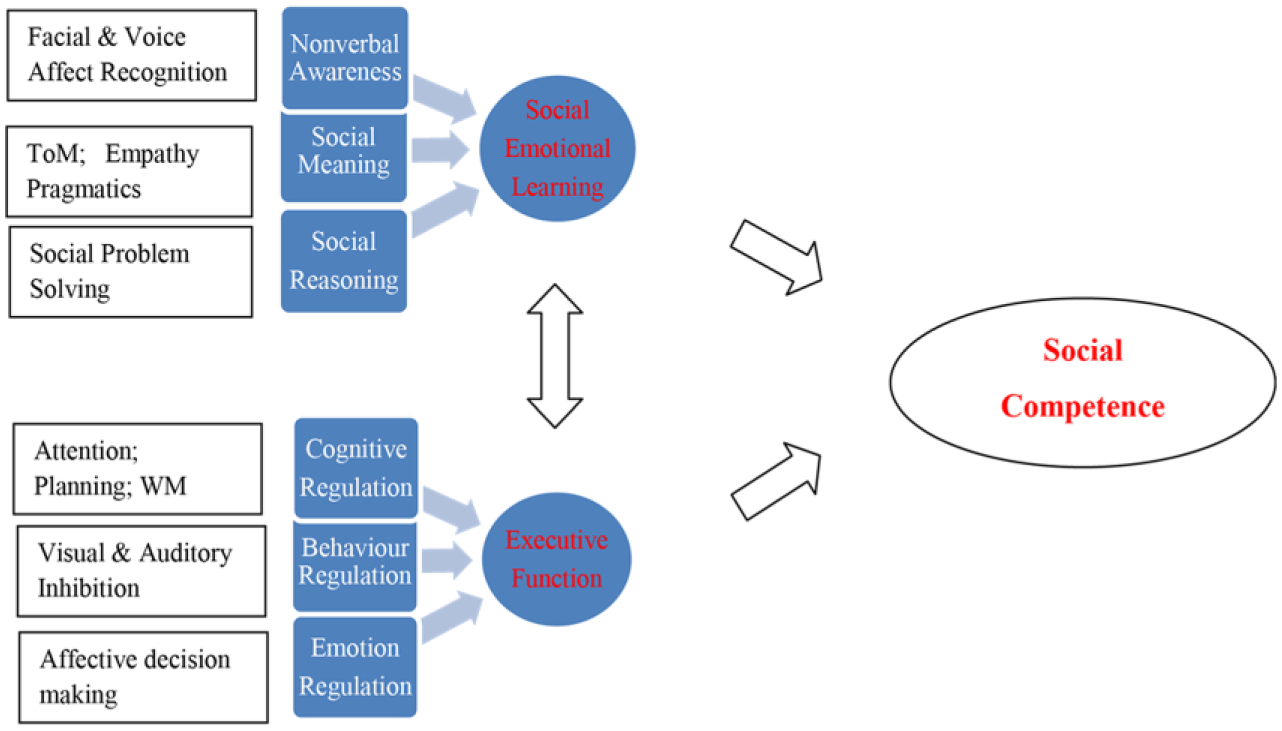
The hypothesized relationship between social competence, social emotional learning, and executive function.
Method
Participants and Procedures
Children were recruited through provincially based autism programs. Parents provided diagnostic reports or their consent to access health records to confirm previously made Diagnostic and Statistical Manual of Mental Disorders (4th ed., text rev.; DSM-IV-TR; APA, 2000)–based diagnoses of an ASD. All testing was completed individually; administration of tasks was presented in counterbalanced order, alternating between SEL and EF measures. Children were administered a measure to estimate IQ, six SEL tasks, and eight EF tasks. Parents completed social competence questionnaires while their child completed tasks in an adjoining room.
Forty-nine boys, aged 8 to 13 years (M = 10.0, SD = 1.6), and their parent(s) participated. Seven had a diagnosis of Autistic Disorder, 22 had a diagnosis of Pervasive Developmental Disorder Not Otherwise Specified and 20 had a diagnosis of Asperger’s Disorder. Parents reported high annual family incomes (75.0% ≥ CAD$75 000) and high levels of education (81.2% of parents had completed post-secondary education). The Wechsler Abbreviated Scale of Intelligence (WASI-II) was used as an estimate of intellectual ability. Children were of average intelligence (M = 105.7, SD = 13.8) and 18 (36.7%) were taking stimulant medication.
Child-Administered Measures
SEL
SEL domains assessed included Nonverbal Awareness, Social Meaning, and Social Reasoning. Tasks of facial and voice affect recognition were used to evaluate Nonverbal Awareness. Tasks of ToM, empathy, and pragmatic language were used to evaluate Social Meaning. A standardized problem solving task was used to measure Social Reasoning. Tasks were chosen based on reliability and validity evidence for use with school-aged boys and on the basis of previous ASD research findings
Diagnostic Analysis of Nonverbal Accuracy 2 (DANVA-2; nonverbal awareness)
The DANVA-2 (Nowicki & Duke, 1994) measures the ability to identify cues regarding emotional states of others based on facial expression and vocal inflection. The number of correct choices and errors was tallied for each condition.
Strange Stories task (ToM)
The Strange Stories task (Happe, 1994) assesses the ability to understand mental states such as belief, intention, and deception, as well as the ability to understand that others have their own thoughts and ideas which may be different from their own. Total number of correct items was used as the raw score.
Bryant Empathy Index (BEI; affective empathy)
Seven questions of the BEI (Bryant, 1982) were read to participants. A 4-point visual rating system was used in which participants indicate the veracity of the statements.
Test of Pragmatic Language–Second Edition (TOPL-2)
The 18 questions from the Pragmatic Evaluation component of the TOPL
Test of Social Problem Solving (TOPS-3E)
The TOPS-3E (Bowers, Huisingh, & LoGiudice, 2005) was used to evaluate Social Reasoning. In this standardized measure, children view photographs and interpret information about social situations by responding to questions. An abbreviated version of the TOPS-3E which included 50 questions based on nine pictures was used. Total points were used as the raw score.
EF
EF was assessed via performance-based tasks and parent ratings. Measures of attention, planning, and working memory were used to evaluate Cognitive Regulation. Measures of both visual and auditory inhibition were used to evaluate Behavioural Regulation. An affective decision-making measure was used to evaluate Emotion Regulation.
A Developmental NEuroPSYchological Assessment (NEPSY-II) subtests
The NEPSY-II is a pediatric neuropsychological assessment instrument (Korkman, Kirk, & Kemp, 2007). Unlike some batteries, the NEPSY-II is interpreted at the subtest level. Two tasks were used to assess components of EF. The Auditory Attention subtest was used to assess an aspect of cognitive regulation. The Inhibition subtest was used to assess an aspect of behavioural regulation. The task assesses the ability to inhibit automatic responses in favour of novel ones. Completion time and error scores for the Naming and Inhibition conditions were used.
Tasks of Executive Control (TEC)
The computer-administered TEC (Isquith, Roth, & Gioia, 2010) was used to assess visual attention, visual working memory, and visual inhibition.
Tower of London Task
The children’s version of the Tower of London Drexel University–Second Edition (Culbertson & Zillmer, 2005) was used to measure planning ability. Participants rearrange three different colored beads situated on three vertical pegs of descending height to replicate a pattern on the examiner’s peg board. The raw total moves score was used for analysis.
Hungry Donkey Task (emotion regulation)
The Hungry Donkey Task (Crone & van der Molen, 2007) is an affective decision-making task in which participants “feed” as many apples as possible to a donkey by choosing between two identical decks of cards, behind which unpredictable losses of apples were presented on 10% of the trials. The tasks resemble real-life decisions in terms of reward, punishment, and uncertainty of outcomes (Crone, Bunge, Latenstein, & van der Molen, 2005). Net difference scores were calculated by subtracting the number of disadvantageous choices from number of advantageous choices.
Parent-Rated Measures of Social Competence
Social Skills Improvement System (SSIS)
The SSIS (Gresham & Elliott, 2008) was used to measure functional prosocial behaviours. The SSIS is composed of seven subscales targeting communication, cooperation, assertion, responsibility, empathy, engagement, and self-control. The standardized Social Skills score was analysed.
Vineland Adaptive Behavior Scales, Second Edition (Vineland-2)
The Socialisation domain of the Vineland-2 (Sparrow, Cicchetti, & Balla, 2005) measures a range of personal and interaction skills needed for everyday adaptive social behaviour and independence. Standard scores were derived.
Results
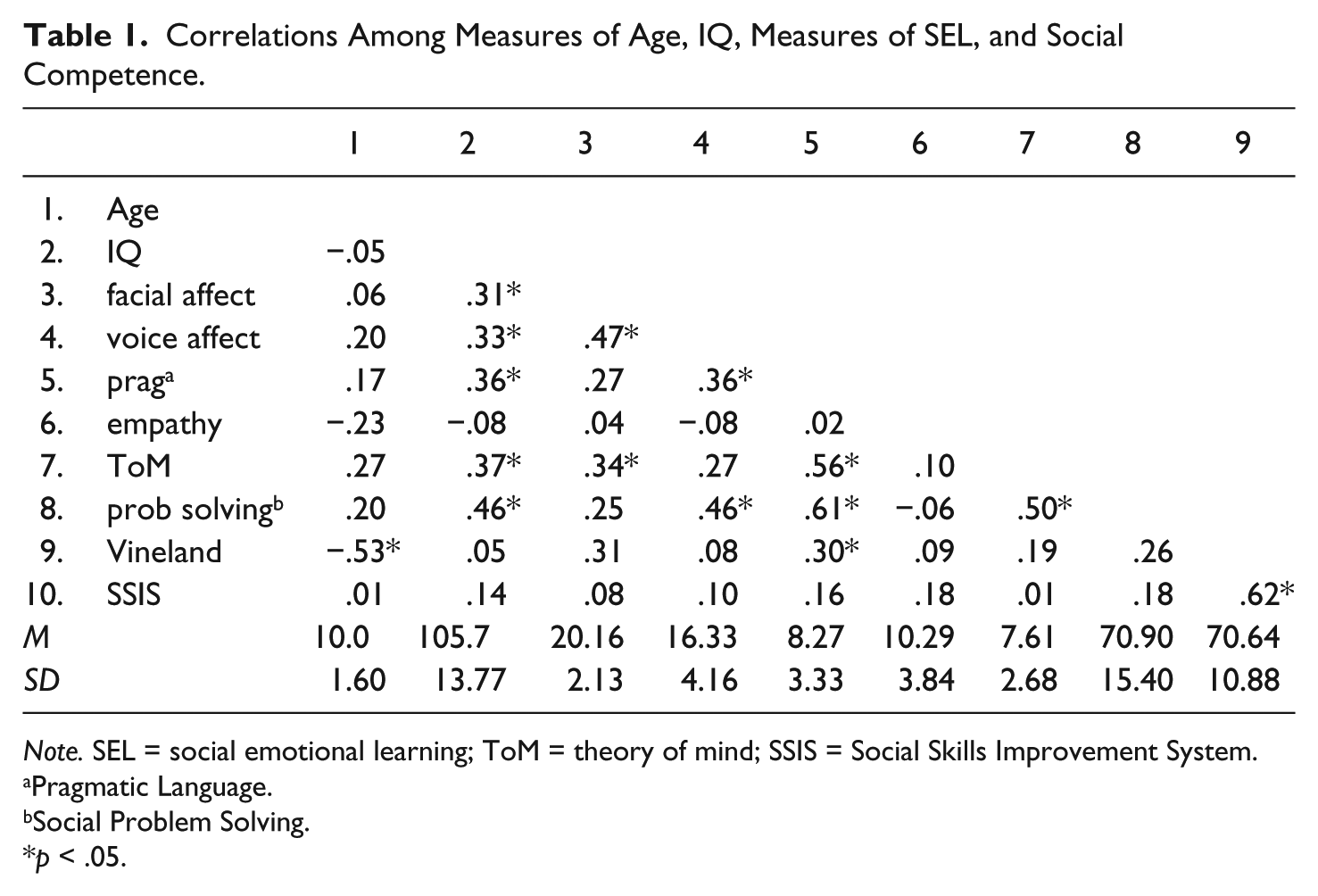
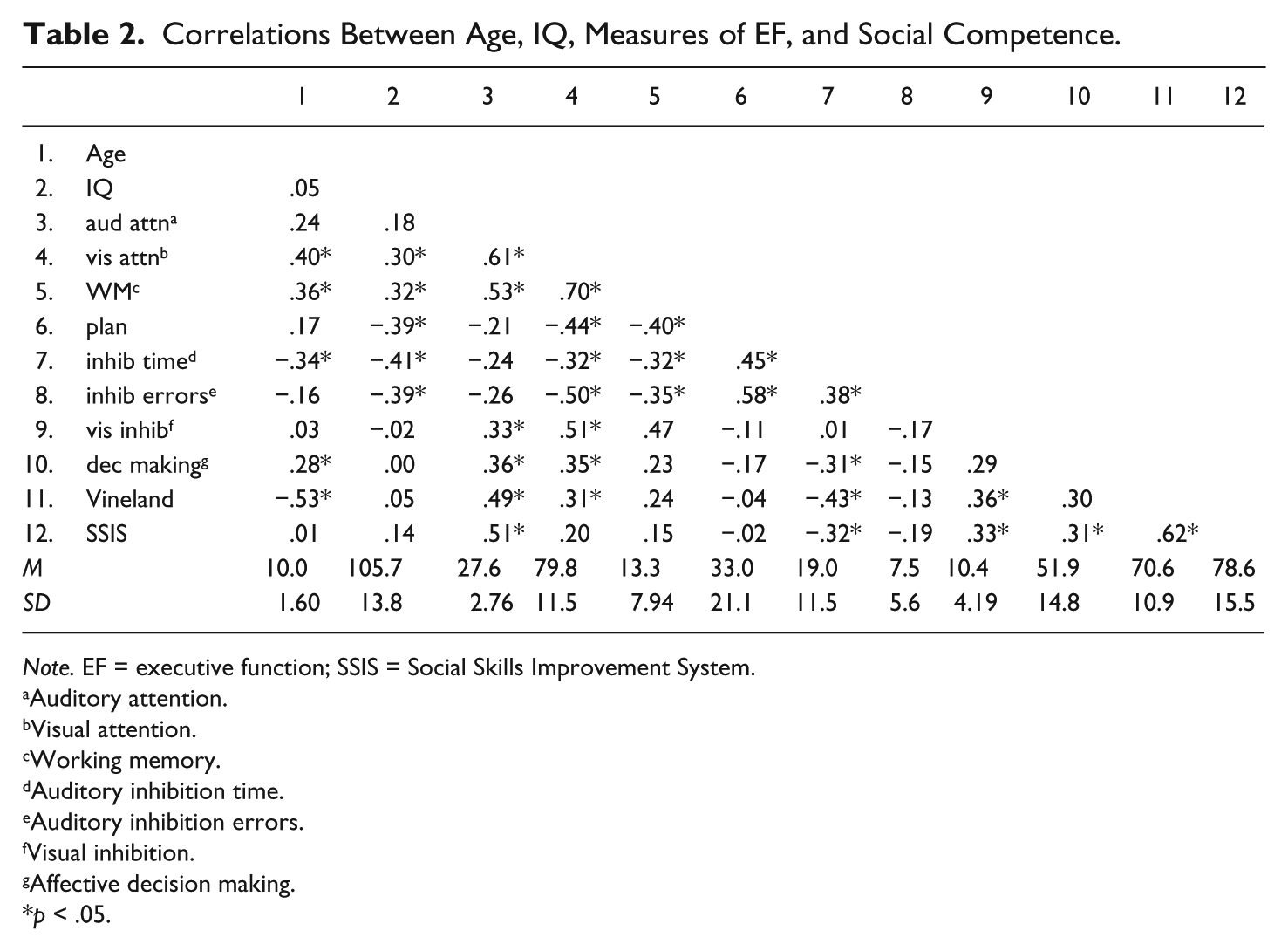
While we recognize that our statistical analyses are underpowered, this is not uncommon in preliminary clinical research (Leung, Vogan, Powell, Anagnostu, & Taylor, 2016; Narzisi et al., 2013). Given this, our results should be considered exploratory in nature. Following initial data screening, one outlier was identified from the parent ratings of social competence. This outlier was discarded because the SSIS and Vineland-2 scores were over three standard deviations higher than the mean and significantly impacted the correlation and regression analyses. Social competence ratings were highly variable. For the total score of the SSIS, parent ratings ranged from the Very Low to Average range (40-107) with 31.3% of the sample scoring at least 2 standard deviations below the normative mean. For the Vineland-2 Socialization Domain, scores ranged from the Low to Average range (47-98) with 52.1% of the sample scoring at least 2 standard deviations below the normative mean. See Tables 1 and 2 for the descriptive data of all measures.
Correlations Among Measures of Age, IQ, Measures of SEL, and Social Competence.
Note. SEL = social emotional learning; ToM = theory of mind; SSIS = Social Skills Improvement System.
Pragmatic Language.
Social Problem Solving.
p < .05.
Correlations Between Age, IQ, Measures of EF, and Social Competence.
Note. EF = executive function; SSIS = Social Skills Improvement System.
Auditory attention.
Visual attention.
Working memory.
Auditory inhibition time.
Auditory inhibition errors.
Visual inhibition.
Affective decision making.
p < .05.
Associations Among the Study Variables
The relations between social competence ratings, SEL, and EF measures, as well as age and IQ were examined (Tables 1 and 2). Age was significantly positively correlated with four EF tasks: TEC visual attention, TEC working memory, NEPSY-II auditory inhibition (time), and Hungry Donkey affective decision making. There was a statistically significant negative association between age and scores on the Vineland-2. Given the significant correlations between age and EF and that standard scores were not available for all tasks, age-corrected z scores were calculated and used for subsequent analyses.
No statistically significant associations were found between SEL measures and social competence ratings (Table 1). Auditory attention and visual inhibition were positively correlated with both the Vineland-2 Socialization domain and SSIS total score, while auditory inhibition reaction time was negatively correlated with both of these measures (Table 2).
Creation of Composite Scores for SEL and EF Domains
To reduce the number of variables tested in subsequent regression analyses, two separate Principal Components Analyses (PCAs) with varimax rotation were conducted to identify SEL and EF domains. For SEL, only variables that were correlated with other measures in the previous analyses were included. A two-factor solution that accounted for 71.9% of the variance was found. The first factor represented Social Understanding and included Happe Strange Stories, TOPL-2, and TOPS-3E. The second factor represented Nonverbal Awareness and included the DANVA voice and facial affect recognition.
The eight measures of EF were also entered into a PCA. A three-factor solution that accounted for 76.0% of the variance was found. The first factor represented Cognitive Regulation and included the NEPSY-II Auditory Attention, TEC Visual Attention, and Visual Working Memory. The second factor represented Behavioural Regulation and included Tower of London and the NEPSY auditory inhibition reaction time and accuracy scores. The third factor represented Emotion Regulation and included the Hungry Donkey task (affective decision making).
Next, the identified factors were used to create composite scores for use in regression analyses. The z scores for SEL and EF variables were summed according to each latent factor identified. The z scores of the SSIS and Vineland-2 were combined to provide one social competence score.
Predictors of Parent-Rated Social Competence
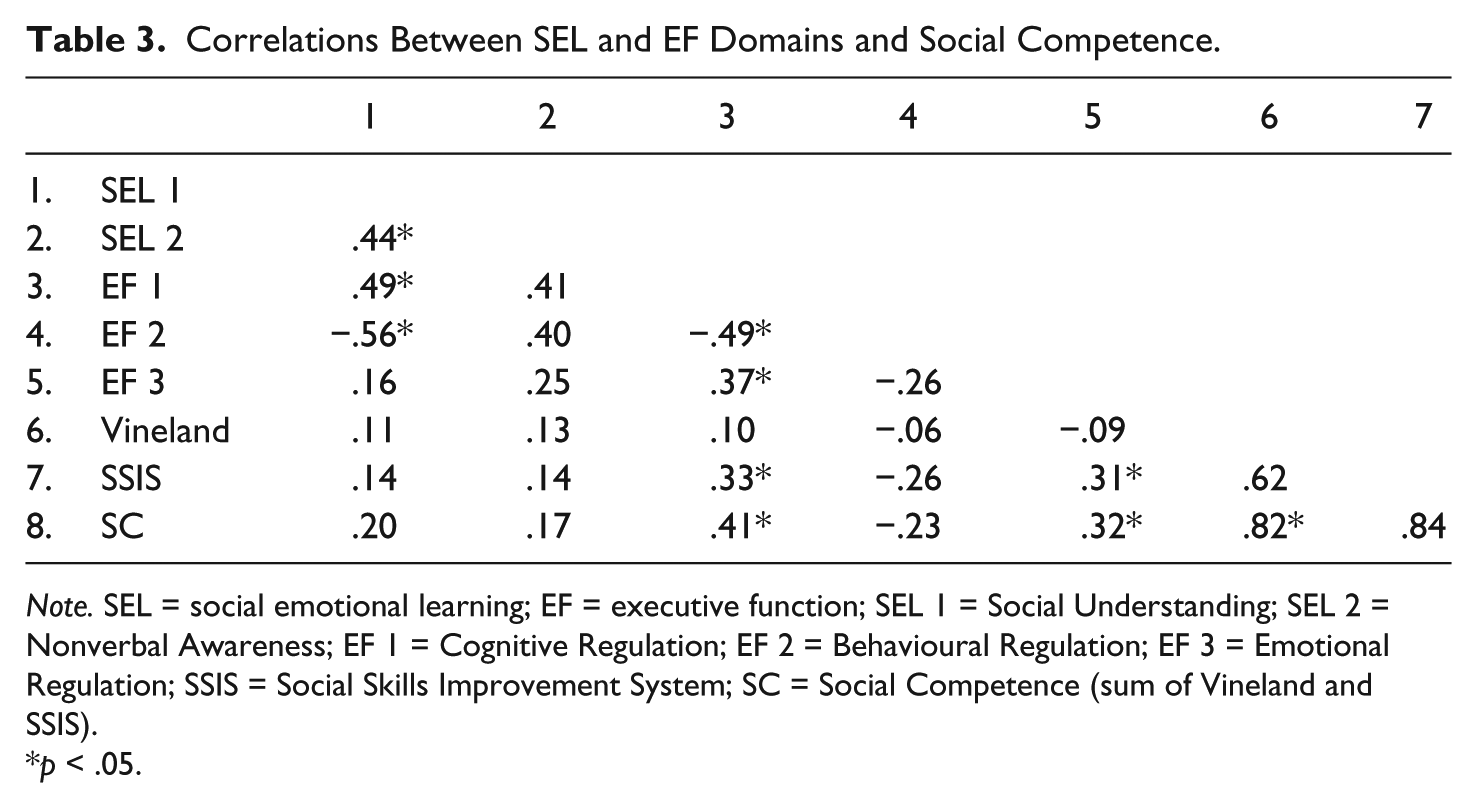
Correlations between the child-administered SEL and EF domains and parent-rated Social Competence found that Social Competence was only positively correlated with Cognitive Regulation, r(47) = .41, and Emotional Regulation, r(47) = .32 (Table 3). To test the hypothesis that SEL and EF independently predict significant variance in social competence, two separate multiple hierarchical regressions were performed. Age and IQ were entered in the first block of each regression, and social competence was entered as the criterion variable for all analyses. For the SEL model, Social Understanding and Nonverbal Awareness were entered as predictor variables. The overall SEL model was not significant, F(4, 43) = 1.6, p = .20, and accounted for 12.7% of variance in Social Competence (Table 4). Cognitive Regulation, Behavioural Regulation, and Emotion Regulation were entered in the second block as predictor variables in the EF analysis. The results indicated that the overall EF model was significant, F(5, 42) = 3.64, p < .01, and accounted for 30% of the variance in Social Competence. In the final model, age and Cognitive Regulation were significant predictors of social competence (Table 4). See Figure 2 for a representation of our findings.
Correlations Between SEL and EF Domains and Social Competence.
Note. SEL = social emotional learning; EF = executive function; SEL 1 = Social Understanding; SEL 2 = Nonverbal Awareness; EF 1 = Cognitive Regulation; EF 2 = Behavioural Regulation; EF 3 = Emotional Regulation; SSIS = Social Skills Improvement System; SC = Social Competence (sum of Vineland and SSIS).
p < .05.
Multiple Regressions Assessing Predictors of Social Competence.
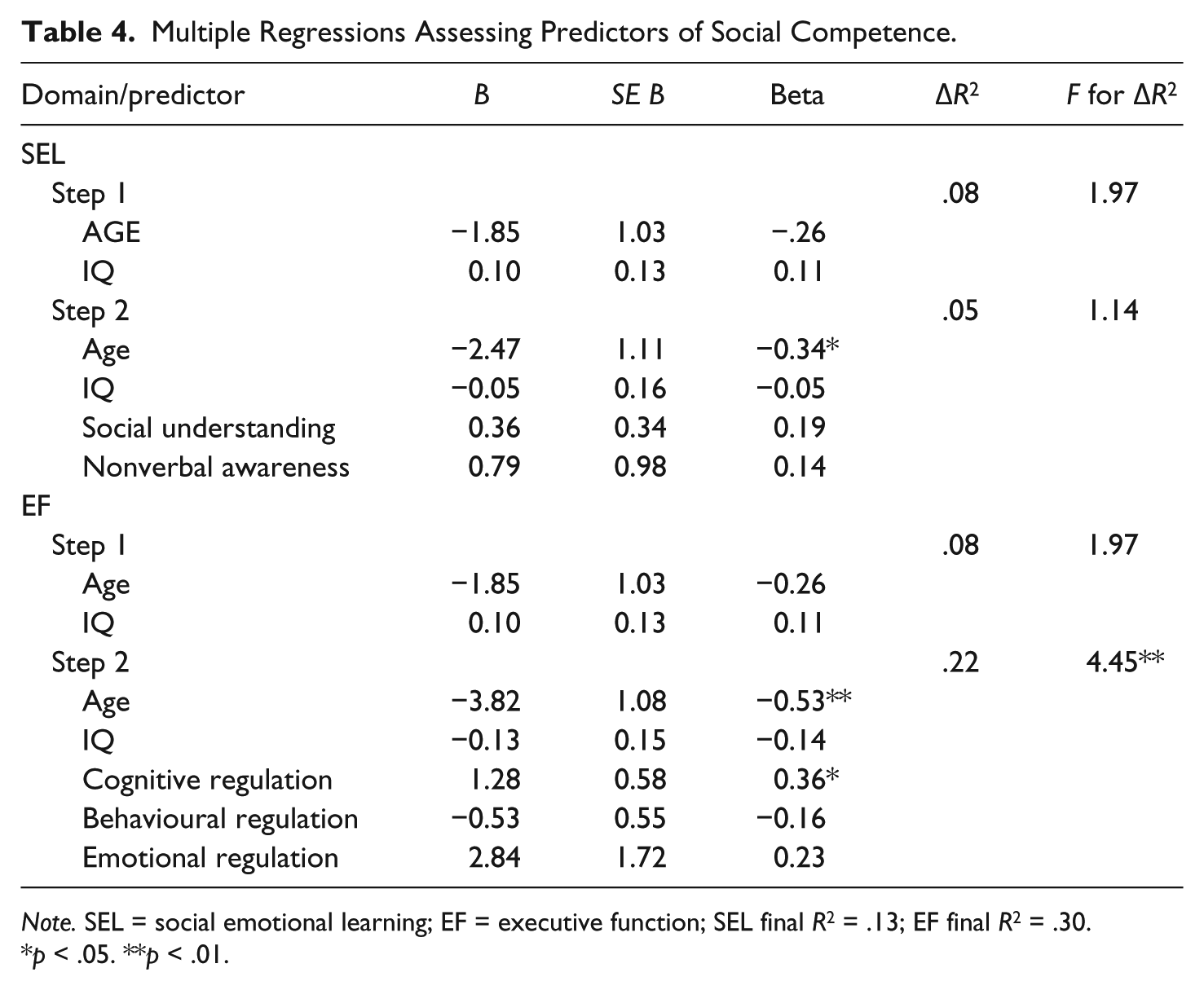
Note. SEL = social emotional learning; EF = executive function; SEL final R2 = .13; EF final R2 = .30.
p < .05. **p < .01.

Visual summary of results.
Discussion
Social competence is associated with a range of positive outcomes throughout the life span. In this study, our understanding of the heterogeneity of social competence in children with ASD without cognitive disability was extended by our focus on SEL and EF as predictors of social competence.
Consistent with prior research and ASD clinical diagnostic criteria, the children in this study demonstrated clinical impairment in social adaptation and skills. However, the wide range of parent-reported social competence supports the idea that children with ASD and without cognitive disability should not be viewed as homogeneous with respect to their social functioning (Fountain et al., 2012). Thus, it is important to take into account individual variation in functioning rather than implementing broad-based interventions targeting social deficits in general when implementing interventions.
Using McKown’s theoretical framework and extending it to include all domains of the tripartite model of EF allowed us to develop a more comprehensive understanding of SEL and EF variables associated with social competence and the relations among them. Consistent with previous research (Ahmed & Miller, 2011; Oerlemans et al., 2014), we found cognitive and behavioural aspects of EF to be associated with the SEL concept of Social Understanding. Thus, for the children in this study, the abilities to sustain basic attention, keep things in mind while doing another task, and inhibit primary responses in favour of a nondominant one are related to how well they can recognize affect in others and how effectively they can problem solve social situations, interpret social cues, and take the perspective of others. Although the EF aspect of emotion regulation has not been previously explored in children with ASD, we expected it to be associated with SEL and this was not the case. It is possible that the affective decision-making task was not the most appropriate one to use, as there is evidence that children with ASD tend to approach these types of tasks in a logical, rather than emotional or motivational, manner (Johnson et al., 2006). Future research might include physiological measures to get information regarding arousal levels in responses to the task (Crone & van der Molen, 2007).
Our hypothesis that both SEL and EF domains would be correlated with social competence received partial support. First, we found that two domains of EF—Cognitive Regulation and Emotion Regulation—were significantly correlated with children’s social competence. However, we did not find a relation between behavioural regulation and social competence. Previous results have been mixed, with some studies finding associations between behavioural regulation and social competence (Joseph & Tager-Flusberg, 2004) and others finding no relation (Kenworthy, Black, Harrison, della Rosa, & Wallace, 2009). Further evaluation with alternate measures of behavioural inhibition should be conducted to explore whether other aspects of Behavioural Regulation may be associated with Social Competence.
In this study, none of the SEL domains were associated with social competence. The finding was unexpected given the presumed importance of SEL skills in children’s ability to navigate the social world that is emphasized by previous research (Bellini et al., 2007; Russo-Ponsaran et al., 2015). Furthermore, researchers using a similar model have found all three SEL domains (nonverbal awareness, social meaning, and social reasoning) to be associated with social competence across both community and clinical samples that include children with ASD (McKown et al., 2009). One possible reason for this discrepancy is that SEL scores in children with ASD in the McKown study were combined with the scores of children with other clinical disorders, such as attention-deficit/hyperactivity disorder (ADHD) and internalising disorders, to form a clinical group. As our study focused only on children with ASD, our results may be a more accurate reflection of the unique/counterintuitive relation between SEL and social competence within this particular population. Another possibility is that the role of SEL in social competence is different in children with ASD. Recent research by Ziv, Hadad, and Khateeb (2014) suggests that social reasoning skills in preschool children with ASD did not predict their prosocial behaviours in the same way as social reasoning skills predicted prosocial behaviours in typically developing preschoolers.
EF did predict ratings of social competence of children in our study. This finding adds to the growing body of literature suggesting that EF plays an important role in children’s social abilities (e.g., Leung et al., 2016; Rinsky & Hinshaw, 2011). Children’s scores on the Cognitive Regulation domain significantly predicted their levels of social competence. Thus, for children with ASD without cognitive disabilities, processes such as attention and working memory make an important contribution to their levels of social competence and may providing an important avenue for targeted clinical interventions.
In sum, as measures of EF predicted parent-rated social competence in our study, researchers investigating social competence in children with ASD should include measures of EF in their studies. Future research can explore the role of EF in the development of social competence in children with ASD and mechanisms through which EF is associated with social competence. Determining the effectiveness of interventions targeting EF and examining whether different EF interventions are more effective for children at different stages in development will be instrumental to clinical and educational practice, and will serve to begin addressing the gap in social competence between children with ASD and neurotypical peers throughout childhood (Szatmari, Charman, & Constantino, 2012).
Although multimodal interventions have been found to improve behavioral and cognitive regulation skills in typically developing children (Diamond & Lee, 2011), more research is needed to determine whether they can make similar improvements for children with ASD. Specific efficacious interventions, such as computerized training, biofeedback, verbal mediation, external cueing, environmental restructuring, and mindfulness meditation (Cicerone, Levin, Malec, Stuss, & Whyte, 2006; Diamond, 2012; Riccio & Gomes, 2013) are well-suited for classroom implementation. As the overarching goal of EF interventions is the training and internalisation of regulatory cognitive processes (McCloskey & Perkins, 2013), teachers are uniquely positioned to offer the scaffolding required to help students internalize these processes. Moreover, teachers’ daily contact with students puts them in the ideal position to create everyday experiences as well as coaching for children to practice self-regulation skills, and hence generalise these gains (Bierman & Torres, 2016).
There are some limitations to this research that need to be addressed. First, we relied on parent report measures to assess children’s social adaptation (Vineland-2) and social skills (SSIS). Although there are limitations to this approach, there is support for the use of a single informant in the assessment of social skills and adaptive behaviour. For example, researchers have repeatedly found no significant differences between parent and teacher ratings on social skills (Gresham, Elliott, Cook, Vance, & Kettler, 2010; Murray, Ruble, Willis, & Molloy, 2009) and on the Vineland measures for children with ASD (Gagnon, Nagle, & Nickerson, 2007). Future research should include data collection and analysis of social competence through direct classroom observation. Second, our sample, while comparable to other preliminary clinical research (e.g., Leung et al., 2016), was small and us such our findings should be viewed as exploratory and in need of future replication.
Footnotes
Declaration of Conflicting Interests
The author(s) declared no potential conflicts of interest with respect to the research, authorship, and/or publication of this article.
Funding
The author(s) received no financial support for the research, authorship, and/or publication of this article.