



Abstract
In the account books of Antonio Franchi (1638–1709), a portraitist at the Medici court, a surprisingly high number of commissions came from British merchants and captains living in the port city of Livorno in the Grand Duchy of Tuscany. Outlining a parallel between Britain's port cities and artworks of the same period, this contribution analyses the reasons why British demand for portraiture became such an important phenomenon in the life of Florentine painters during the seventeenth and eighteenth centuries. Second, it explores the characteristics of portrait-making in Livorno and the identity of the patrons, with a focus on the relations between merchants and captains of the Royal Navy. Lastly, the article takes into consideration the dispersion of most portraits produced in port cities and how this can be linked to maritime and naval careers.
In December 1794, after having served as post-captain at the Siege of Calvi, Horatio Nelson was in the Tuscan port city of Livorno when he received a letter from his wife, Frances, asking for a small portrait of him. 2 This well-known episode – which resulted in the miniature portrait now held in the Greenwich National Maritime Museum collection (Figure 1) – has been analysed by Katherine Gazzard in her recent doctoral thesis, in which she emphasizes how a portrait could testify to Horatio's safety more effectively than any written communication. 3 Moreover, because of its small size, a miniature could be worn as a necklace, thus reinforcing the sentimental value of the image.
Nelson's miniature represents the only known portrait in a British collection that can be safely traced back to the Tuscan port. Nonetheless, when asking for it in her letter, Frances explained how she had been told that Italy was ‘the place to have it done’ – a phrase which implies that Nelson's miniature was not an isolated case. 4 As archival documents confirm, Livorno had been one of British naval personnel's favourite places for the commissioning of portraits since at least the late seventeenth century. Within the Grand Duchy of Tuscany, the port city was an ever-changing cosmopolitan reality, with a conspicuous presence of rich foreigners of different nationalities – French, Jewish, Dutch, Armenian, Greek, British, Turkish, Tunisian – who lived and worked together in an environment that became shaped by their cultural differences and needs. The account books of the painter Antonio Franchi (1638–1709) prove the widespread choice among Florence-based painters to move to Livorno, while also testifying that the demand for portraits came primarily from British merchants and captains in the city. 5 By looking at this rare source of information, the next paragraphs will focus on the features of portrait production in Livorno and on the internal organization of the British community living in the city, which was usually referred to as the ‘English Nation’ or the ‘English Factory’.
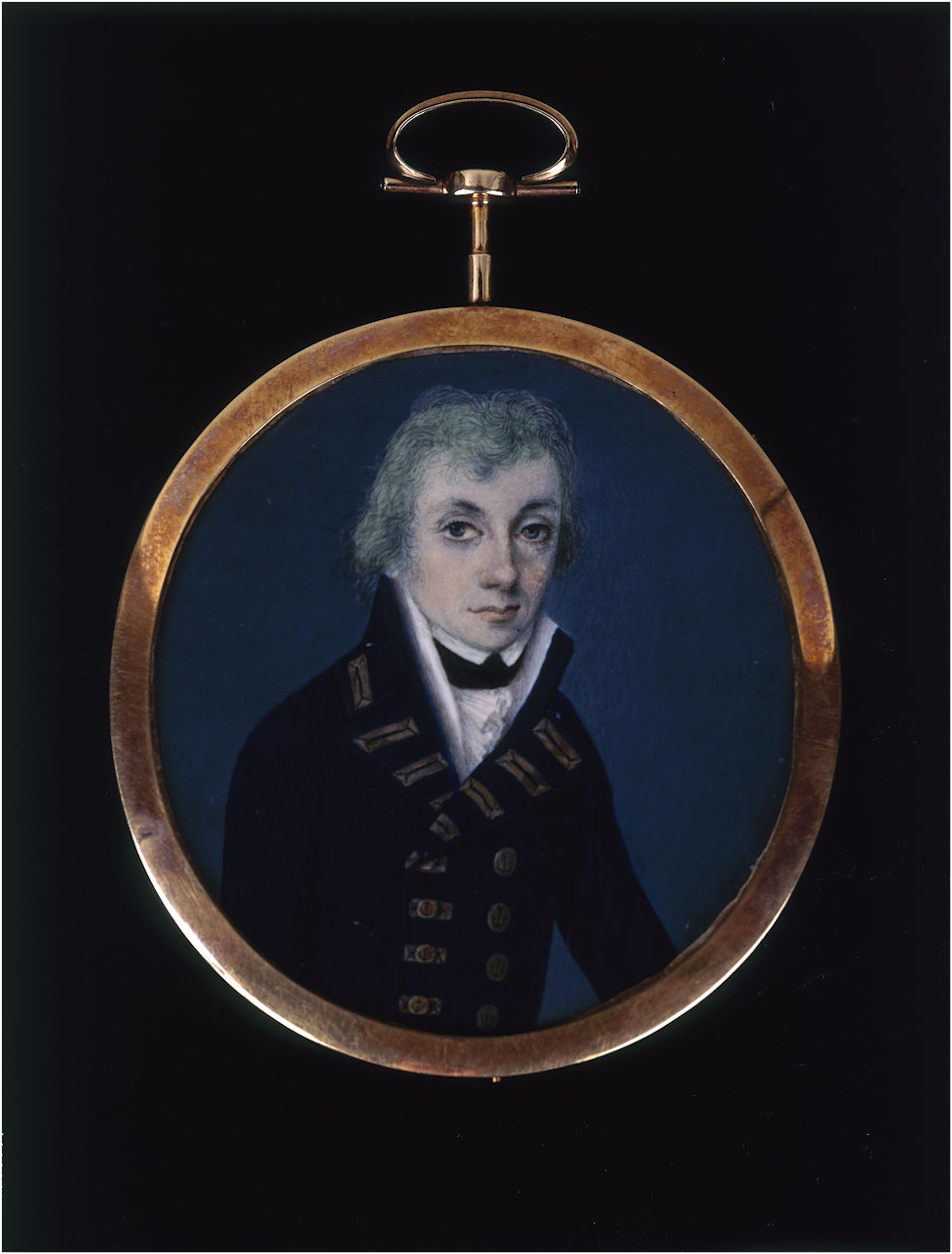
Anonymous, Captain Horatio Nelson, 1794, oil on cardboard, 65 × 60 millimetres.
Painters in ports
Until recently, ports of trade were not seen as strategic places for the advancement of a painter's career. The case of Joshua Reynolds (1723–1792), who spent six years working in Plymouth before moving to London, has now highlighted how painters could easily benefit from the comings and goings of people, and from the numerous contacts that could be established in harbours. 6 Looking back at seventeenth-century Tuscany, this seems to be proven again, particularly in the case of portraiture. In fact, due to the geographical distance from families of origin, uncertainty about the future and the high risks related to maritime jobs, the demand for portraits was particularly high in port cities used by either merchant ships or warships.
Antonio Franchi (Figure 2) was the official portraitist of the Grand Duchess Vittoria della Rovere (1622–1694) and, during his life, mainly worked at the Medici court in Florence. 7 Although Livorno is never mentioned in the biographies devoted to Franchi's career, his account books trace his frequent stays in the port between 1680 and 1698. 8 The demand for portraits that Franchi satisfied during this period had to be met by other painters in the preceding and later decades. In a letter dated 15 April 1704, Count Lorenzo Magalotti complained to Orazio Felice della Seta about the lack of good portraitists in Livorno, and sought to hire the painter and future director of the French Academy in Rome, François de Troy (1645–1730), who was in Pisa at that time, on behalf of the Spanish consul and his wife. This shows how wealthy patrons did not rely on artists who permanently resided in Livorno, but – more commonly – on painters who were passing by or available to come on request. 9 In this respect, the sometimes brief information on seventeenth- and eighteenth-century Florentine painters confirms that many of them decided to expand their network of customers by working intermittently in nearby cities, sharing the same business strategy.

Antonio Franchi, Self-portrait, 1686, oil on canvas, 71 × 57 centimetres.
The increasingly common choice to operate in Livorno in the late seventeenth century was not just the result of the highly competitive Florentine art market, but also of the freer environment of the port city. In fact, despite the higher number of citizens, a somewhat conservative bias – such as the widespread notion that a painter who worked for ordinary people had to be considered an artist of low rank – often limited the possibilities to acquire a large number of commissions in Florence. Such rules were even stricter in relation to the genre of portraiture. As pointed out by Filippo Baldinucci in 1681, only illustrious personages had the right to see their own image depicted, and the demand for portraits from commoners and the ‘plebeian’ painters who fulfilled it were both harshly criticized. 10 In a letter written to Carlo Antonio Gondi, then Florentine Ambassador in France, the Grand Duke's secretary, Apollonio Bassetti, had to admit that unlike Paris, for an artist, Florence was not ‘worthy of surviving the world by means of portraits’. 11 This letter implies that a portraitist could scarcely earn enough to support himself, thus showing that for skilled painters the possibility of working simultaneously for the court and for other customers, such as merchants, was not deemed a viable business strategy. For this reason, when commissions for portraits were lacking in Florence, Livorno became a city where Antonio Franchi, like other artists, could work undisturbed for individuals of various social backgrounds and different religions, benefitting in addition from quick payment – something that was not always guaranteed in Florence. 12
Furthermore, in the same way as Reynolds decided to leave his studio in Plymouth and board Commodore Augustus Keppel’s Centurion, Livorno could be the stepping stone to new opportunities. 13 Despite having been invited to England, the still-life painter Andrea Scacciati (1642–1710) never left the Grand Duchy, 14 while the more adventurous Alessandro Gherardini (1655–1727), after having produced ‘various oil paintings for Livorno and for England’, spent a few months in London and, once back in Tuscany, decided to leave for Denmark, following King Frederick IV in 1709. 15 Hasty journeys and stormy returns following important political figures were also present in the life of the painter Bartolommeo Bianchini (1634–1711), who, being seriously indebted and guilty of a public scandal for having lived with a model, boarded a ship in 1697 to follow the future bey of Tunis, Romdhane El Mouradi. 16 Foreign merchants and captains in Livorno were therefore assiduously sought after by Tuscan artists, both for purely economic reasons and for the possibility of becoming known abroad and going to work in a different country. In the absence of other documentary sources as reliable as Antonio Franchi's account books, I will base the next paragraphs only on this evidence.
British merchants living in Livorno
Due to the important positions they held within their community in Livorno, several British merchants whose names are recorded in Antonio Franchi's account books are easily identifiable. 17 These men were part of the new generation of merchants who arrived in the port between the late 1660s and the 1680s. They mainly requested from Franchi original portraits in the head format, a modest size measuring one braccio in width (around 60 centimetres) that allowed only the face, part of the chest and sometimes the hands to be portrayed (for the prices of head portraits, see Table 1). Unlike Florence, where portraits were usually in larger formats and had more elaborate compositions suited to the aristocratic patrons, the evidence for Livorno points to a production distinguished by greater simplification and speed of execution. Moreover, if in Florence it was rare to settle on the price of an artwork at the beginning – since it was not permitted to talk directly about money when dealing with noble clients – in Livorno the price of an artwork was immediately agreed on, based on its medium and format. 18 This was not only due to the different social status of merchants and their familiarity with handling money. The English culture had less problems than that of Italy in considering paintings as mere commodities: portraits always had standardized formats and prices, and, in the case of history paintings, copies of famous artworks were preferred to originals exactly because of the ease of establishing a precise cost. 19 A few examples of merchants commissioning portraits from Franchi are presented here as evidence of this modus operandi.
Prices in pezze for head portraits commissioned from Antonio Franchi.

The first name of a British man found in Franchi's account books is that of Samuel Foote, a young merchant from London who had settled in the Tuscan port city in the 1670s together with his uncle, Robert, and his younger brother, Charles, who died there in 1674, as commemorated by his tombstone in Livorno’s Old English Cemetery. 20 After having been affiliated to his uncle's company – the Foot Smith & Co. – Samuel later started to work with fellow merchant Benjamin Burdett, who arrived in Livorno in the 1680s. 21 Samuel Foote commissioned from Antonio Franchi an oval head portrait in 1681 and then a normal head portrait in 1684, and paid, respectively, 10 and 12 pezze (the currency in use in Livorno) for them. 22 If the artist decided not to disclose the charge for these portraits when they were first commissioned (‘Non si è fatto patti’), he nevertheless quickly understood the ease with which he could set a profitable standard price in the port. When Benjamin Burdett (Samuel's partner) commissioned a similar portrait of himself from Franchi in 1686, he was immediately informed of the price. 23
The merchant Robert Balle – a prominent member of the British Factory and de facto consul during the 1670s and 1680s – did not ask Franchi for a portrait of himself. Instead, in 1685, he commissioned a portrait of one of his brothers, whose name was not specified in the artist's account books. Since Robert was the eldest of 15 siblings, including Gils (a merchant in Genoa) and Charles (a merchant and consul in Messina from 1679 to 1688), 24 we can assume that, in 1685, one of his brothers had arrived in Livorno and Robert wanted a portrait of him. 25 In addition to a portrait of his brother, Robert had also asked Franchi for a portrait of his nephew, Thomas, who had joined him in Livorno that same year. The price of 12 pezze charged for each portrait suggests that they were head portraits. Payment was made through a man named ‘Bonelli’, who archival documents confirm to have been the English merchant Jacob Bonnell. 26 With the subsequent commission for a head portrait in 1686 by the future consul Lambert Blackwell – who had moved to Livorno from Constantinople around 1684 – Franchi began to be a well-known portraitist within the British community in the port city. 27
Foote, Balle, Burdett and Blackwell were wealthy members of the English Factory in Livorno, and they all availed themselves of the services of a good painter. Antonio Franchi used to advertise his ability to guarantee frankness in his portraits, referring to it as ‘the particular gift that God has granted me in the likeness of portraits’. 28 This was possibly the reason why these merchants, who had recently arrived in Tuscany and did not have their family with them, decided to commission head portraits from Franchi. Since the limited space did not allow for the introduction of iconographic motifs highlighting the socio-economic status of the sitter, head portraits focused more on the detailed representation of the physiognomy of the clients, suggesting that they were for private display in the house of someone close to the portrayed person. 29 For those who received a portrait of a distant loved one – like Frances Nelson with the miniature of Horatio – the most important thing was to be able to see an accurate representation of their face, so that they could remember it clearly despite the passing of months or years since they had last seen them.
Despite the lack of home inventories of the merchants who had commissioned portraits from Antonio Franchi, those of other fellow English merchants in Livorno demonstrate how portraiture was an essential part of interior displays. According to an inventory dated 1695, in the main hall of the home of the cousins William Upton (died 1693) and Arthur Martyn hung four portraits in the three-quarter format (slightly wider than a head portrait), alongside framed maps and some small paintings depicting vessels. 30 In the house located on the main street of the city inhabited by Thomas Dethick, Henry Charleton and James A’Court, out of a total of 118 paintings, 24 were portraits of men and women. 31 Twenty-seven pieces of art were displayed in the living room – octagonal paintings of unspecified subjects, several others in larger formats, two small statues and two half-length portraits (measuring around 120 × 100 centimetres). In a room probably used as an office, there were two full-length portraits alongside a depiction of a globe, a seascape with vessels, a larger landscape of London and a wall map of the Kingdom of Spain. Furthermore, in the two bedrooms next to the office hung 10 three-quarter portraits (one depicting Thomas Dethick) and two head portraits (including one of a woman identified as ‘the slave of Thomas Dethick’), together with some small landscapes and a depiction of the Virgin Mary. If the portraits in the living room and the office were in the half-length and full-length formats – indicative of a public display – those hanging in other, more private rooms were smaller, with a height of around 60 or 90 centimetres. Two types of portrait are thus easily identifiable: those of beloved or significant others and those representing someone's career, public identity, or political and economic connections.
William Sheppard was the only merchant who commissioned a large-format portrait of himself from Antonio Franchi, which cost 25 pezze instead of the usual 12. Although the order was received in April 1697, the portrait was still unfinished by the following August. Trying to explain the length of time being taken in completing the artwork, the painter stated in a letter that the delay was appropriate because of the conspicuous size of the canvas: ‘I do not think that the wait should seem too long, since to complete a work of four braccia in less than a year is equivalent to being served with solicitude’. 32 A portrait that required a wait of around a year and measured approximately 240 × 140 centimetres (that is, a full-length format) certainly did not indicate the immediate need of the client to send it as an aide-memoire to distant loved ones. To that aim, Sheppard had requested a head portrait in 1695 and a small one on copper (which cost 10 pezze) in 1697, both of which could be completed quickly and were easy to carry and find a place for. 33 The full-length portrait, on the other hand, confirmed that it was a painting to serve a public purpose, celebrating his professional and/or social rise.
Royal Navy officers and British captains
Along with his three portraits – the full-length one, the head portrait and the one on copper – Sheppard had commissioned from Antonio Franchi portraits of other merchants and Royal Navy captains. 34 Starting in the second half of the seventeenth century, the Royal Navy had begun to escort British mercantile ships in the Mediterranean and protect them from possible attacks, making Livorno one of its bases; it was a useful protection system that lowered insurance prices on goods and made trade more competitive. 35 This important change not only increased the presence of members of the Royal Navy in Livorno; it also led to the appointment of a ‘coordinator of naval and commercial movements in the Mediterranean’ and a commissioner of the victualling ‘responsible for the technical assistance and procurement of Her Majesty's ships in the Mediterranean’. 36 Following the death of the consul Ephraim Skinner and the physical absence of the next official consul, Thomas Platt – who resided in Florence – the merchant Robert Balle was probably viewed as the most suitable member of the English Nation in Livorno to hold these two positions during the 1680s. Moreover, he seemed to be already in charge of managing the travel expenses of, and giving assistance to, British men passing through the port city. In fact, in discussing Balle's role within the British community, Gigliola Pagano de Divitiis noted how he offered ‘practical help to the nobles travelling along the peninsula, such as paying bills, advancing cash and shipping goods’, and in suggesting ‘where to make purchases and to which artists to give commissions’. 37 It is no coincidence that, in Franchi's account books, immediately after the commissions from Robert Balle in 1685, there appear the Italianized names of captains and members of the Royal Navy, such as ‘Capitan Pietro Inglese’, ‘Capitan Odoardo Inglese’, ‘Capitan Barbiere’ and ‘Capitan Giovanni Inglese who was in Alexandria for Mr. Taddei’. 38 The latter two names can be linked to James Barber, who was in command of the guard ship Ann and Christopher and ordered a portrait of his son, 39 and Captain John Blue, who was in command of the ship Providence. 40
Other than the commissioner of the victualling, a new official figure – the Bank's agent – emerged during the last decade of the seventeenth century. These agents were correspondents and overseas representatives of the newly founded Bank of England (1694), and were carefully chosen from among the British men who operated in the major Mediterranean ports of trade. 41 The Bank of England had the primary function of financing the war against France and paying the troops, in some cases by using foreign correspondents. 42 In addition to financial reasons, the agents assured fleet members ‘that they could count on the facilities of the English merchants to make local purchases so long as the credit of the Bank itself was sustained’, thus taking on some of the tasks previously described in relation to Robert Balle. 43
The firm Western, Burdett & Co. was the first representative in Livorno elected by the Bank of England in 1694. 44 As highlighted in a letter written by Franchi to Benjamin Burdett dated August 1690, the English merchant had already built strong relations with members of the Royal Navy over the previous years. In fact, Burdett had asked the painter to set off quickly for Livorno to serve both the resident British men and the newly disembarked officers of the fleet. Convalescing after a long illness, Franchi responded that he hoped the fleet would hold back ‘until it is possible to pass through this air without danger’ (referring to a heatwave typical of August); he then underlined the great expense necessary to organize the trip, since he no longer had a house or furniture in Livorno. For this reason, and since he was also quite busy in Florence, it would not be convenient for him to go ‘for the usual price of 12 pezze per portrait’. The painter was therefore forced, in his own words, to alter the prices for ‘foreigners’ – that is, the captains and members of the fleet – while he would keep them unchanged for his usual clients. 45 Although there are figures relating to the cost of his portraits along the bottom of Franchi's copy of the letter addressed to Burdett, it is not possible to know whether the painter eventually went to Livorno or decided to remain in Florence working for the Medici family. As can be seen from the Avvisi di Mare in the Biblioteca Labronica of Livorno, the fleet to which Burdett referred had arrived in the Tuscan port on 19 August. It was the British and Dutch convoy from Cadiz, which was made up of 10 ships, of which two were British warships. The first was the Portland (Figure 3) of Captain Thomas Ley (died 1702); the second was the Greenwich, commanded by Richard Edwards. 46
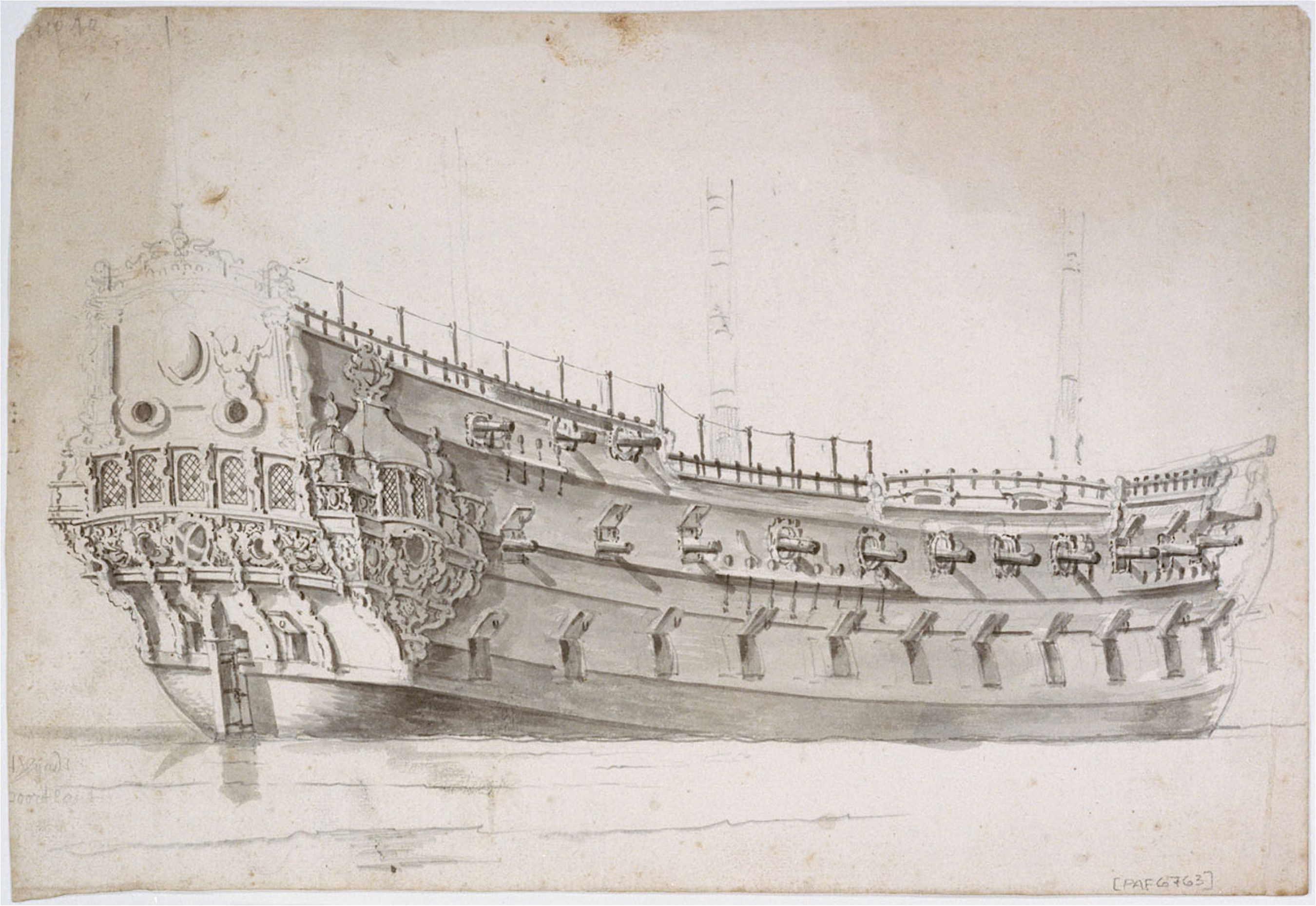
Willem van de Velde the Elder, The Portland, circa 1661, graphite on paper, 230 × 336 millimetres.
Appointed on 27 March 1695, William Sheppard and his partner Alexander Rigby succeeded Burdett in the role of the Bank's agents. In order to be appointed, they had to secure £20,000 to be split between the members of the court who would vote for them (among whom were two of their relatives, Thomas Sheppard and Richard Rigby). 47 Sheppard's new role not only explains the different nature of the full-length portrait he commissioned from Franchi in 1697 but also justifies the list of orders that the painter received in 1695 and 1697, in which Sheppard acted as the intermediary for some captains and members of the Royal Navy. In 1695, he commissioned two portraits for an unnamed English captain, one for ‘Signor Giovanni Inglese’ and another for ‘Signor Odoardo Inglese’. 48 Then, in 1697, Sheppard ordered portraits of ‘three English captains’, the English vice-consul John Burrows and ‘Signor Felice’ (that is, Felix Calvert, the brother-in-law of Alexander Rigby), and requested two paintings on behalf of Captain ‘Martelli Inglese’. 49 From 25 March onwards, Franchi recorded the payments he had already received and those still to be collected from Sheppard:
For the four portraits without hands made by order of Mr. Sceper, that are of two captains, of the one who went to Venice and one of Mr Felice, at 14 pezze each, and the 4 canvases at one piastrino each, pezze 57.
For Mr Sceper's portrait, pezze 10.
For the big portrait, pezze 25
For advance payment of the 2 paintings I must make for Mr. Captain Martelli, 20 pezze and 20 cratie for the copper of the said little portrait.
…
For two portraits of two Captains, pezze 28
For the one who went to Venice, pezze 14
For Mr. Felice's one, 14
For the small one of Mr. Sceper, 10
For the big one, 25
…
For the one of the English vice-consul, 14. 50
Since William Sheppard oversaw the payments, Franchi did not write down the full names of the ‘foreign’ captains, who he had never met before and were probably part of Royal Navy convoys. The presence of a surname when writing down an order from Robert Martell suggests more familiarity between the painter and the patron. Martell was in command of the Upton Galley, which he co-owned with Alexander Rigby and six other partners, and, despite not being part of the Royal Navy, information on his movements between 1695 and 1697 was frequently transmitted from Livorno to the English Navy Council by the consul Lambert Blackwell and the vice-consul John Burrows. Based on their correspondence, Martell arrived in Livorno on 15 December 1695, and had already left the city on 20 January 1696 bound for Messina and from there to Alexandretta. He arrived at his destination on 3 April 1696, and traces of him can be found again in the port of Dartmouth on 3 July 1697, with timber and oil brought from Livorno. 51 Captain Martell's visits to Livorno were therefore frequent and, on the aforementioned occasion, he decided to purchase ‘pictures’ through the agency of Sheppard. If the artworks were commissioned around February or March 1697, it is likely that Martell envisaged returning to collect them a few months later. The subject matter of the paintings had to be to the painter's liking, a peculiarity that suggests they probably had to be sold or donated to third parties. Martell's only request concerned the final price, which should not exceed 200 pezze (16 times more than the cost of a head portrait). Livorno could have been chosen as the right place to acquire paintings not only because of the convenience of having an intermediary who, being a Bank's agent, could anticipate the payment, but also because of the cheap price of artworks compared to England or other Italian cities.
The price asked by Franchi from the other captains for their portraits was two pezze more expensive than the 12 he usually asked. Apparently, as he had already written to Burdett in 1690, the painter decided to increase the cost of his artworks for ‘foreigners’ to cover the expense of moving to Livorno and renting a house and furniture there. In any case, British captains must have found these portraits cheaper than in their native country, considering the prices of the most popular portraitists in England at the time: Peter Lely charged 20 guineas for a format similar to the head portrait in 1670, while Godfrey Kneller asked for 15 or 20 guineas in 1703. 52 According to the currency exchange rate used at the time by merchants and captains, British prices were equivalent to 35 pezze in Lely's case and 26 pezze in Kneller's case, a clear difference compared to Franchi's 12 or 14. 53 Even the cost of Franchi's miniature portraits, which was around six pezze at the end of the seventeenth century, had to be cheaper than in England. 54 While painters specializing in portraiture in England – as indeed those in France and the Netherlands – enjoyed greater consideration than their colleagues in the Grand Duchy, we must bear in mind how most Royal Navy captains did not commission their portraits from high-ranking artists like Lely or Kneller, and probably relied on cheaper painters. 55 Nevertheless, in the case of Livorno, Antonio Franchi was notoriously expensive, as he was the official portraitist to the Grand Duchess, and cheaper painters could certainly be found in the port. Thus, the favourable rate surely helped Franchi in acquiring extremely profitable commissions, for which he was paid more than in Florence, where the prices had remained unchanged since his predecessor Justus Suttermans (1597–1681). 56
The lost portraits of British merchants and captains
Unfortunately, apart from the miniature of Horatio Nelson, none of the seventeenth- and eighteenth-century works that Italian portraitists created for British merchants and captains seem to have survived. Especially in the context of the Royal Navy, the majority of the portraits that we know today are in a large format and of high-ranking figures, created for public display. 57 These kinds of portraits were usually not commissioned in foreign countries, as there was little time available and the possibility of not being able to return to collect the finished artwork. Of the many captains, vice admirals and commanders of the Royal Navy who passed through Livorno between 1670 and 1700, only eight portraits are known to exist in public collections, and they are of those particular figures who had noble origins, became a Member of Parliament or were knighted after a brilliant naval career: Sir John Narborough, Sir Cloudesley Shovell (Figure 4), Baron Matthew Aylmer, Sir George Rooke, Sir John Norris (Figure 5), Sir George Walton, Thomas Mathews and Baron John Berkely of Stratton. 58 Their portraits are in the full-length or half-length format and they draw on the illustrious precedent of the Flagmen of Lowestoft series created by Peter Lely for James, Duke of York (Figure 6). 59 Many elements in the portraits have made the sitters easily identifiable over the centuries, even when their names have become less known to the general public: the background with the sea and vessels (which immediately denotes the naval environment) and an inscription bearing their name (which is often present on the canvas or the many prints produced after it).
As this article has shown, the market that flourished in Livorno was for head portraits or miniatures, formats which could be completed in a few days or weeks and were requested in most cases by merchants or officers who did not hold any title or political position. Being designed for private display and as a sentimental keepsake for those who knew the sitter, their names were rarely inscribed on the front or back of these artworks. Furthermore, since space was limited, iconographic attributes that could link the individual to the sea or a naval career were not present in the foreground or background of these head portraits. 60 Of the previously mentioned captains who passed through Livorno during the late seventeenth century, only a miniature of Cloudesley Shovell survives in the Guildhall Museum in Rochester (Figure 7). In this small oil-on-copper portrait, the captain appears young and is wearing armour. Here is depicted in a less formal position, with one hand raised as in the act of saying goodbye to the observer before leaving, which might have been the actual occasion on which the artwork was created by the anonymous artist.
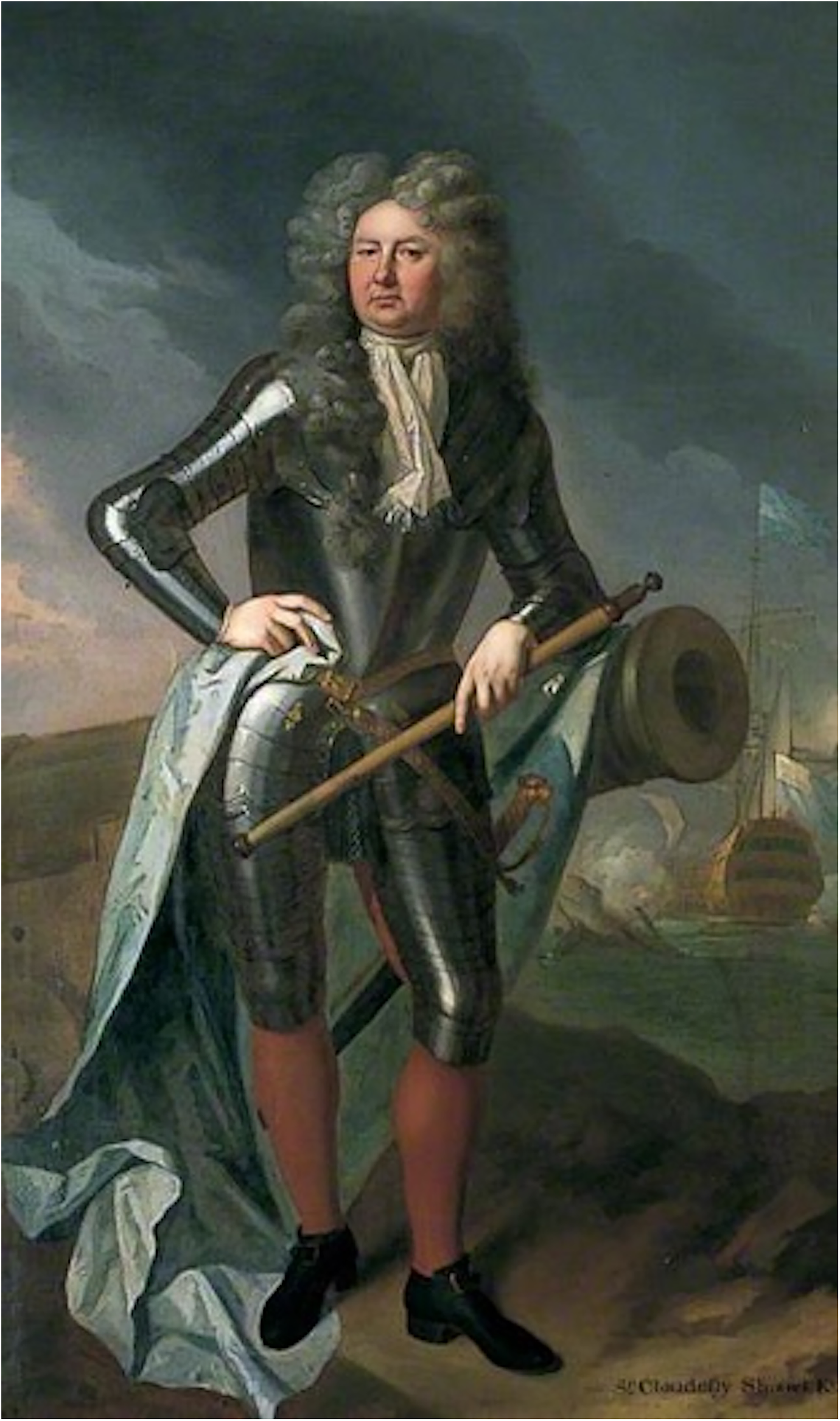
Michael Dahl, Sir Cloudesley Shovell, early 18th century, oil on canvas, 228 × 143 centimetres.
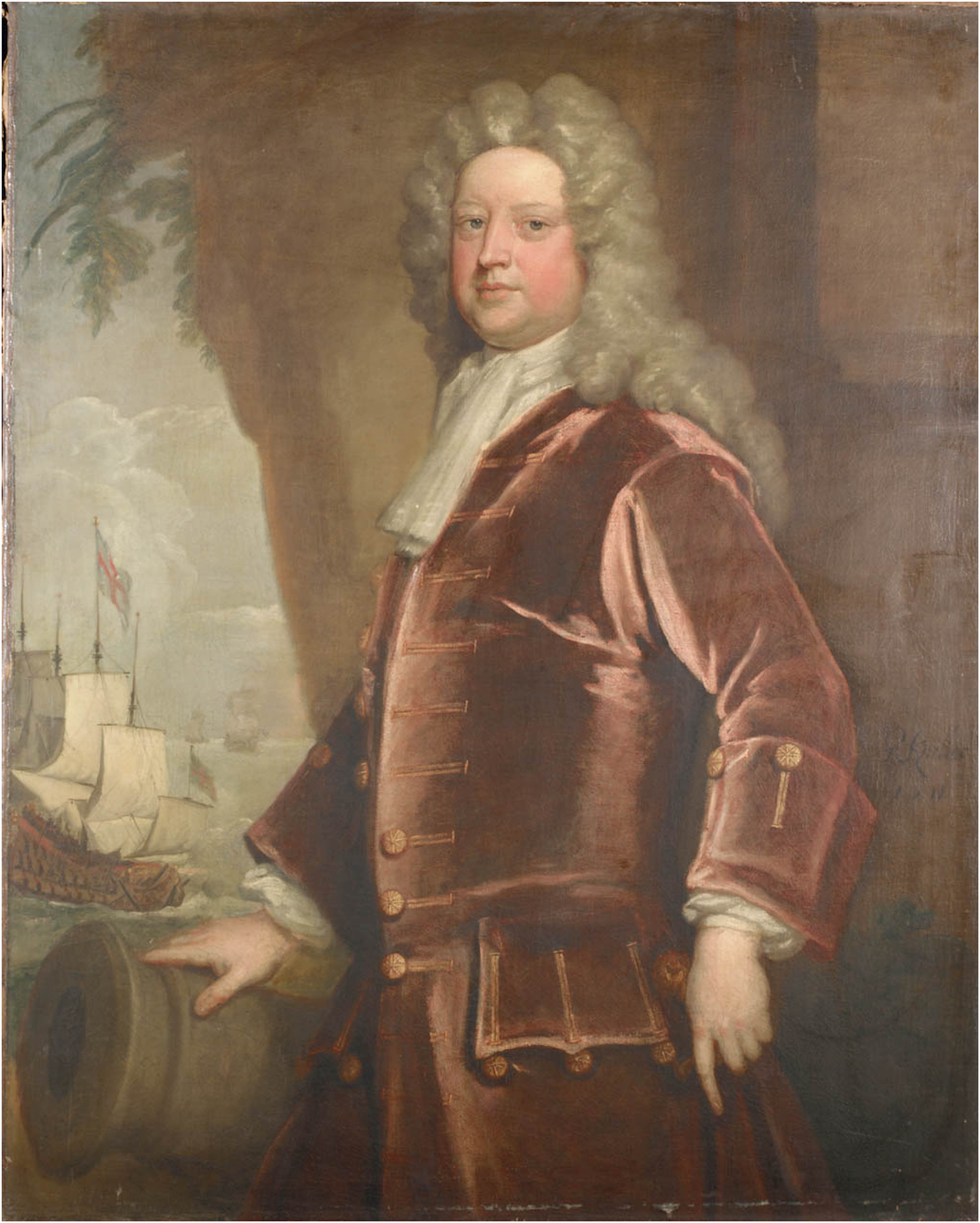
Godfrey Kneller, Admiral Sir John Norris, 1711, oil on canvas, 126 × 102 centimetres.
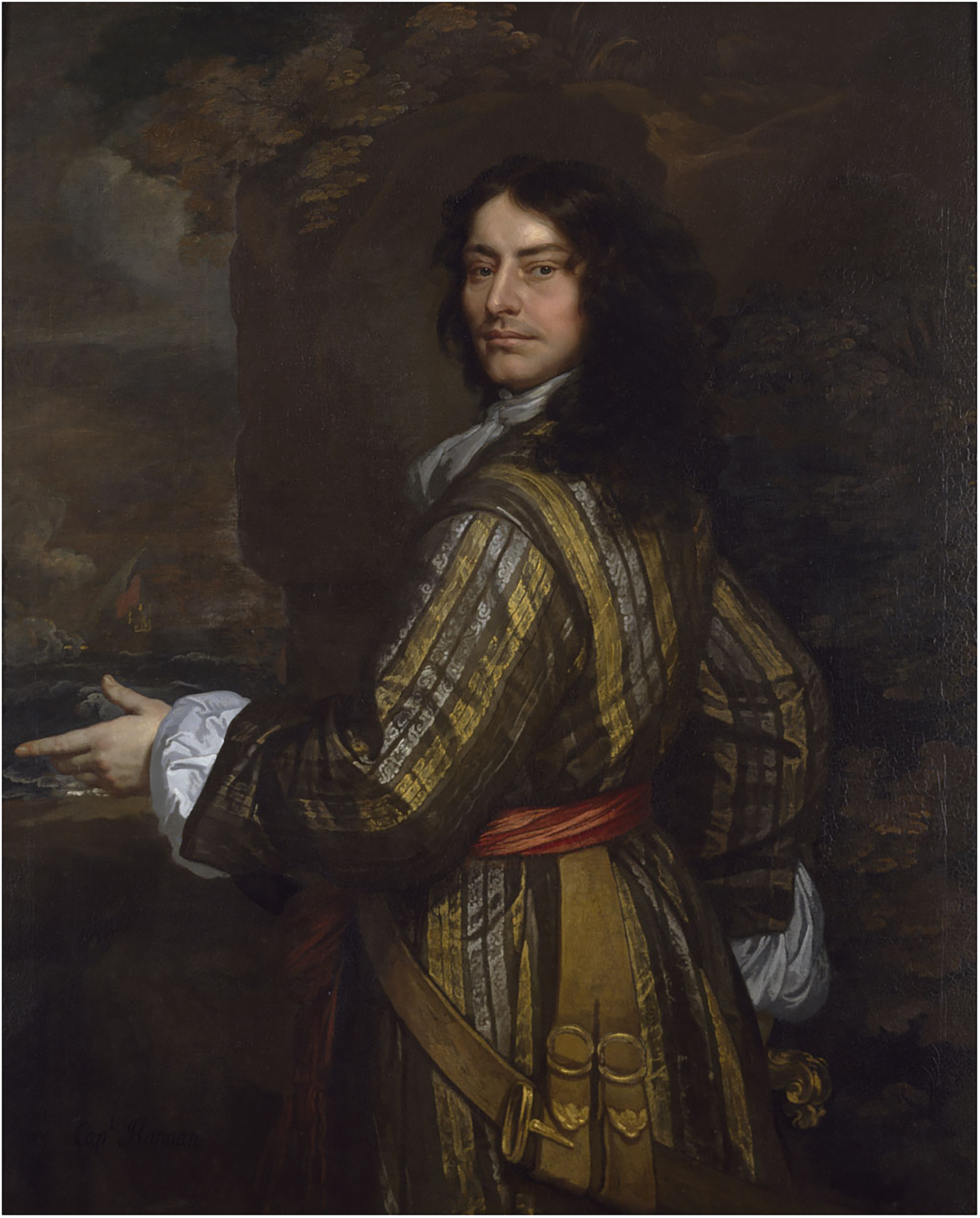
Sir Peter Lely, Sir John Harman, 1666, oil on canvas, 127 × 101.5 centimetres.
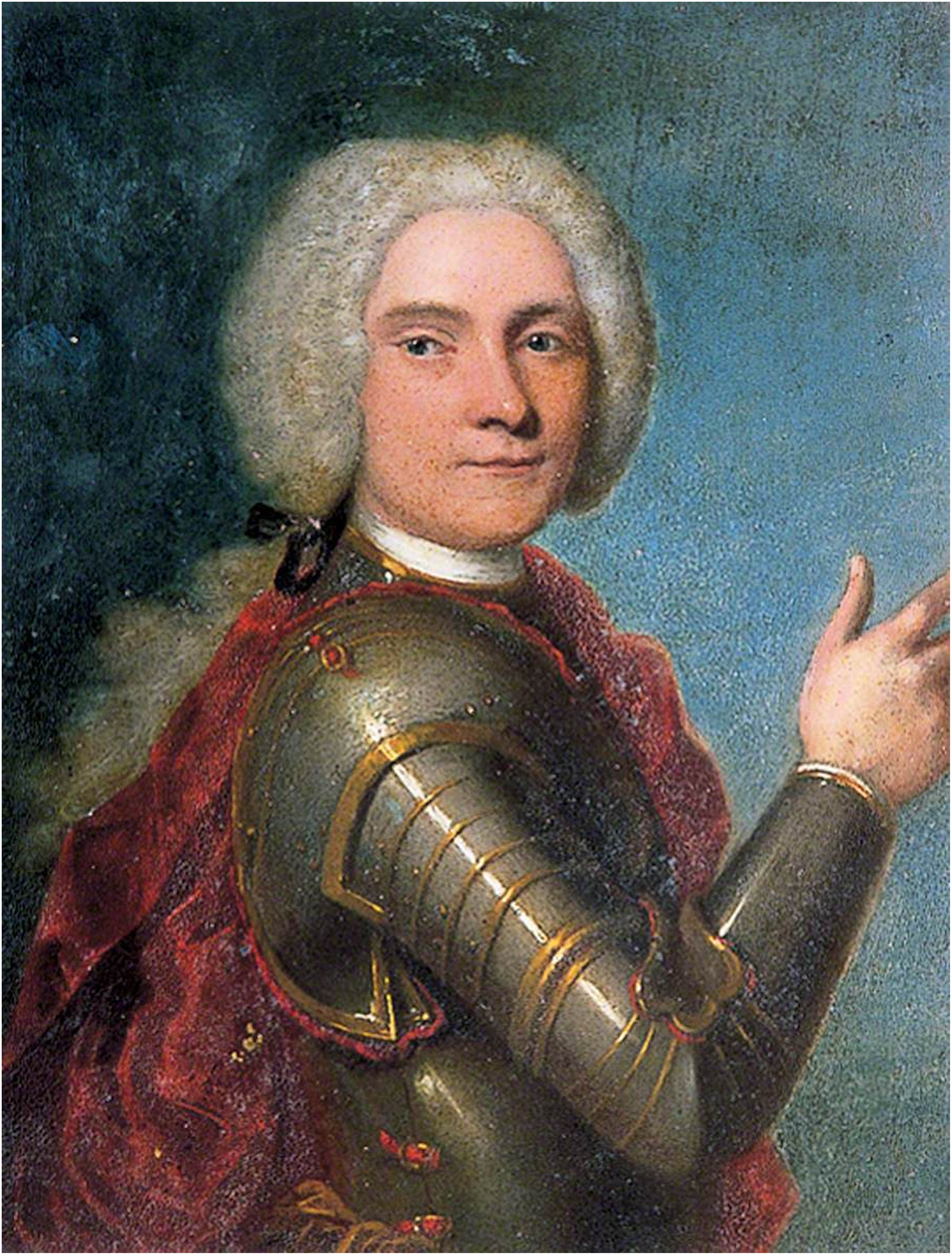
Anonymous, Sir Cloudesley Shovell, oil on copper, 21 × 16 centimetres.
What happened to the hundreds of portraits that were probably produced in Livorno and other Italian port cities for British merchants and captains working abroad during the seventeenth and eighteenth centuries? The case of Sir Lambert Blackwell exemplifies the fate of portraits and other family possessions over the centuries. Despite having been a powerful personality, none of the portraits of Sir Lambert – including the head portrait by Antonio Franchi – seem to have survived. Following his role as a consul in Livorno, he became a baronet, the Member of Parliament for Wilton, a financer of the Royal Crown and a rich landowner. 61 Nevertheless, his involvement in the South Sea Bubble in 1720 must have struck a heavy blow to Blackwell's position, forcing him to sell much of his property. 62 He was probably able to bequeath his portraits and a still significant inheritance to his son Charles, but after another generation the line died out and all the estate, ‘with his valuable collection of paintings, books, coin, etc.,’ entered into the possession of William Foster Junior of Norwich (1762–1821). 63 Therefore, following economic misfortune and being succeeded by the Foster baronets – whose line, in turn, died out in 1960 – nothing of the Blackwell collection of paintings is known today. Despite the value that family portraits have always held in British culture, when separated from the original family where the names of ancestors are more easily preserved, small-format portraits may lose their significance.
Another case that highlights the risks associated with maritime and mercantile careers is represented by William Sheppard. Soon after the commission of his full-length portrait from Antonio Franchi, Sheppard lost most of his wealth and professional credibility both on a national scale and within the mercantile community of Livorno. In 1697, his former associate, William Plowman, was accused of piracy by the French consul and the Grand Duke of Tuscany. Sheppard became involved in the subsequent long court case, during which the members of the British Factory of Livorno decided to take sides against him and Plowman in an attempt to secure their position within the Tuscan state. 64 The glory that Sheppard hoped to achieve through international trade and his role as a Bank's agent faded miserably, and the full-length portrait, which was probably destined to be hung in some important building, is now lost.
As this article has shown, despite the lack of artworks that can now connect Livorno to England, the British presence in the port city shaped the art market in Tuscany, convincing several painters to work there. The increasing movement of people that the mercantile and naval environment produced in the early modern period coincided with a significant increase in demand for portraits. Antonio Franchi's account books, which are already known as a useful source for the study of late-Medicean patronage, have now revealed a promising field of research. The numerous inventories and documents that are still to be explored in the Livorno State Archive will probably provide new insights on the subject.
Footnotes
Acknowledgements
I would like to thank Professor Cinzia Sicca (University of Pisa) and Professor Andrea Addobbati (University of Pisa) for their helpful advice and guidance while I was doing my archival research and writing this article. I would also like to thank all of the archivists and staff of the Livorno and Florence State Archives and Biblioteca degli Uffizi who aided me in my search for valuable document resources.
Declaration of conflicting interests
The author(s) declared no potential conflicts of interest with respect to the research, authorship and/or publication of this article.
Funding
The author(s) disclosed receipt of the following financial support for the research, authorship, and/or publication of this article: This research has been funded by the Department of Civilizations and Forms of Knowledge (University of Pisa) as part of the ministerial project ‘Dipartimenti di Eccellenza 2018–2022: Structures in Time: Resilience, Acceleration, and Change Perception (in the Euro-Mediterranean Area)’.

Notes
Author biography
Silvia Papini is a PhD candidate in the History of Art at the University of Pisa, University of Florence and University of Siena. She is currently researching several aspects of the picture market in the Grand Duchy of Tuscany and Livorno during the seventeenth and eighteenth centuries, taking into consideration factors such as multiculturalism, the global market and the naval environment.