




Abstract
Scientists, hunters and business entrepreneurs in the Carolinas all had mutual interests in giant manta rays (Mobula birostris) during the early decades of the 1900s. Eastern-seaboard coastal communities called them devil fish, because of the horn-shaped fins on their head. Although the Ocean Leather Company in Morehead City primarily processed shark-skin leather, it also experimented with the skins of rays and other sea animals for the manufacture of a great variety of consumer products. Articles were written for scientific journals and ray specimens were contributed to national institutions like the American Museum of Natural History. Local fishermen, along with celebrities like the US president, Teddy Roosevelt, harpooned devil fish in Cape Lookout while marvelling at their grace and strength, breaching up to six feet above the water's surface. Beaufort planter William Elliott presented many accounts of this fantastic sea creature, with vivid stories of enslaved African harpooners jumping off boats onto the backs of giant manta rays. This research combines historical accounts and images, newspaper advertisements and talks at local explorer clubs to illustrate case studies of the community's obsession with collecting, cooking, hunting and conquering rays as an important component of maritime leisure and environmental history. It concludes by addressing international examples of subsistence, recreational and industrial fishing, and its impacts on manta rays.
In 1859, William Elliott, a Carolina writer, addressed his readers with this opening remark: Do you know, gentle reader, what a Devil-Fish is? Imagine a monster measuring from sixteen to twenty feet across the back, full three feet in depth, having powerful wings or flaps, with which he drives himself furiously through the water, or vaults high in the air, his horns projecting several feet beyond his mouth.
1
Animal-lore literature of the Carolinas
Elliott was a third-generation South Carolina planter, author and sportsman, who penned numerous articles, complemented with sketches, on agricultural and outdoor topics. Elliott claimed to be the first person to ever land and kill a devil fish. Yet, in his book Carolina Sports, he recounts a vivid tale of enslaved African watermen who jumped from a barge onto the backs of giant manta rays to harpoon them, praising these heroics as an event that merited knighting for bravery. Men, mostly enslaved, rowed small four-oared boats in the hunt. Elliott recommended the sportsman who goes in search of devil-fish to embark in a four-oared boat if sport be his object; for he will then feel the full force of the fish; and enjoy the velocity of movement. But, if success in capturing be uppermost in his thoughts, a six-oared boat is preferred. In either case, it should be without a keel, and draw but little water forward; for a change in front is necessary, as well in the attack as the pursuit.
3
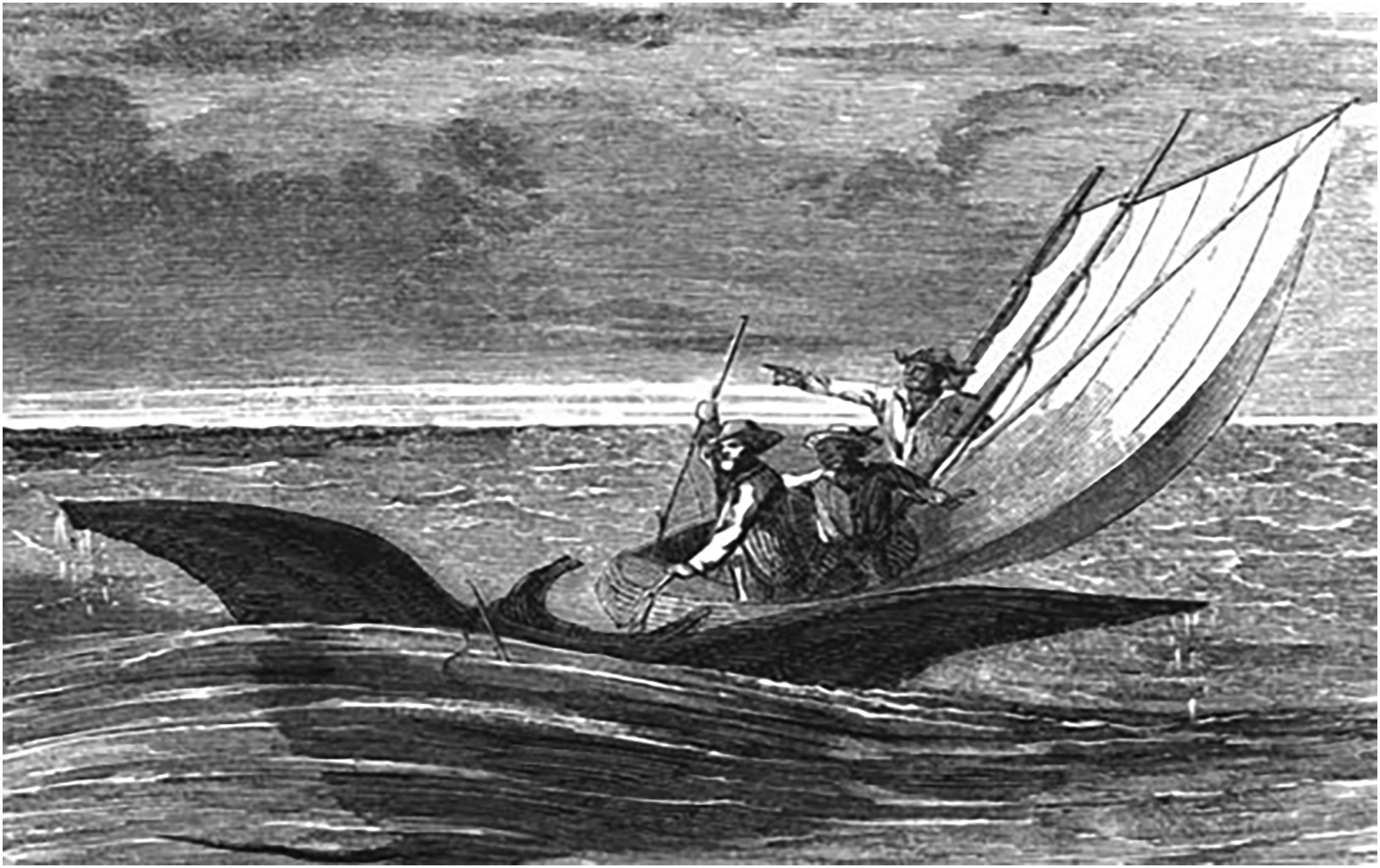
Harpooning a devil fish from a small sailing boat.
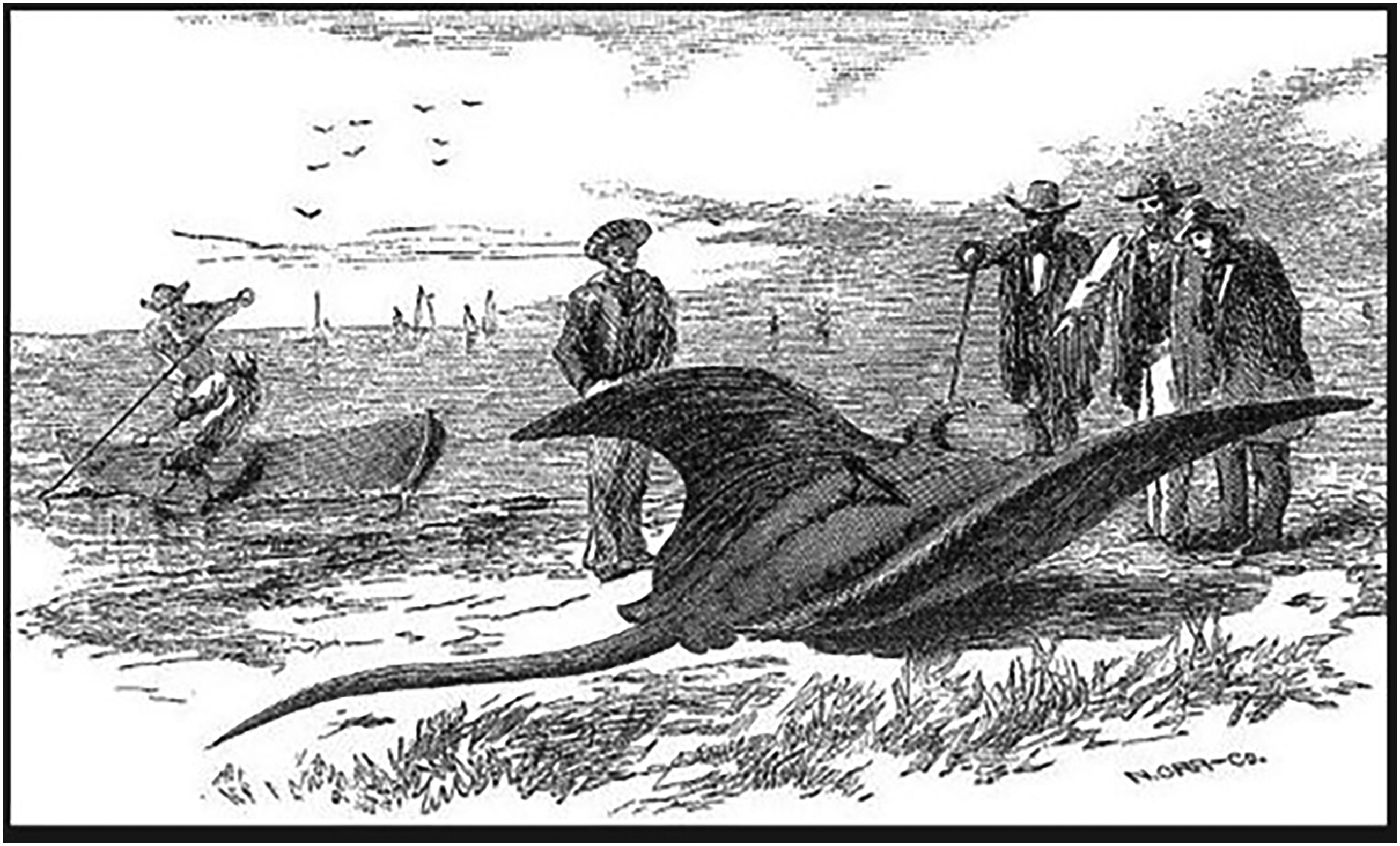
Landing a harpooned devil fish.
The crew of boats hunting giant manta rays were equipped with an arsenal of weapons – a harpoon, a lance, a hatchet, a rifle and two bayonets fixed onto long staves. They stowed accessories like masts, sails and awnings in the bottom of the boat and placed an anchor with a rope on a platform to be prepared for trimming while underway. There was usually more than one boat involved in a hunt and, when the crew spotted a giant manta ray, the oarsmen rowed furiously towards it. It required three or more enslaved crew to handle the rope and wrap it round a gunwale once the giant manta ray had been successfully harpooned. Oarsmen were often injured in the chaos of the hunting fray. 4
Elliott was among several other eighteenth- and nineteenth-century naturalists and writers who compiled animal-lore writings, describing and depicting enslaved people's engagement with wildlife in the Carolinas. These protagonists included Native Americans, Africans and African Americans, as part of natural history themselves or serving as enslaved frontiersmen of the Carolinas in this capacity. Diarist Janet Schaw, a well-educated Scottish woman who travelled to North Carolina to visit her older brother, Robert, the owner of a plantation near Wilmington, noted the plantation rowers, in full livery, who handled a planter's gig and the ‘very dextrous’ black boatmen who hunted alligators on the Cape Fear River. Explorer John Lawson, in 1709, observed black men who dove naked into coastal waters to kill sharks with knives. Athletic activities, from row-boat racing to wrestling alligators and giant manta rays, symbolized the masculinity and strength of the planter's ‘property’ and bolstered the image of the patriarchal plantation system. 5 Later writers built on these foundational works, repeating or adding to them – for example, John Brickell (1710–1745), a native of Ireland who accompanied the future governor of Edenton, George Burrington, on his Carolina explorations. The intent was to investigate the colonies’ natural production potential but reiterated much of Lawson’s work. By today’s standards, Brickell plagiarized Lawson’s animal lore. 6
Devil-fish hunter extraordinaire: Russell J. Coles (1865–1928)
Public fascination continued through the nineteenth century in the Carolinas, with devil-fish hunting escalating in the media during the early twentieth century with the exploits of the illustrious Russell J. Coles between 1900 and 1925. John Walker Harrington, a journalist who contributed to the Sun newspaper in 1917, wrote an article about Coles titled ‘Personality of Man Who Took Colonel Roosevelt Devil Fishing and Whose Pastime Is the Study of Sea Monsters’. 7 He described Coles’ vocation as a tobacco dealer from Danville, Virginia, with an avocation as a naturalist, sportsman and ichthyologist. He worked eight months a year to pay for his fishing trips, hire boats and afford the wages of a high-quality crew. Coles attracted people in fishing circles and beyond with his cornstalk hat, boundless energy, pep, and loud, booming voice. Most impressive was his role as a daring sportsman-scientist, inventing strategies and equipment to capture sea monsters. He trained men to work with him, encouraging them to take risks and seek the ‘blood lust of primitive man’. 8 At the other end of the spectrum, Coles was a fastidious cook, epicurean, charming host and riveting storyteller about his fishing exploits. His other contributions were to ichthyology publications on a variety of subjects, such as giant manta rays, which were of equal interest to those of well-known scientists with a plethora of academic credentials. At the time, few scientists had studied giant manta rays in the wild. 9
Historian David Cecelski had access to the Coles family records, adding more colourful details to his exploits. Russell studied medicine at the Virginia Military Institute, but after a prank in which he attempted to blow up the school's arsenal with a particularly large quantity of dynamite, he was asked to leave without completing his degree. He had no formal training in the study of marine life as part of his Virginia college experience. During his summers, he moved onto a houseboat in the bight of Cape Lookout, North Carolina. Although Coles’ initial primary interest was shark hunting, he began diversifying with other marine life, like giant manta rays, around 1909 when he was awed by the sight of one breaching above his boat. Soon, he and his boat crew became obsessed with giant-manta-ray hunts and made three expeditions to the Gulf Coast of Florida where this marine species was more prevalent. During one of those trips, Teddy Roosevelt accompanied them as a guest, and the event was headline news across the United States (Figure 3). Prior to setting out, Roosevelt received instruction under Coles, taking land lessons using a spear he had obtained from Africans killing lions. On one occasion, they reported travelling on a small boat at 9 miles an hour versus a devil fish moving at 15 or 16 miles per hour and around 6 feet underwater. His crew McCann, Captain Willis, Rice and Lewis, were all professional fishermen in their fifties (Figure 4). Teddy Roosevelt not only set up charters with Coles, but also invited him to give talks at his high-profile club in New York. Another media highlight was when Coles and the head of his crew, Captain Charlie Willis, killed the largest giant manta ray recorded up to that time.
10
Coles explained that his unique design of harpoon led to his success: I found that both sharks and rays sometimes continue fighting long after both brain and heart have been pierced by lance and bullet, but that death is instantaneous when the spinal cord is severed at a certain spot just back of the brain … I therefore designed and had forged a huge lance, more than three times as heavy as a whale lance, which I call a ‘spade lance’, on account of it having a square cutting edge four inches wide.
11
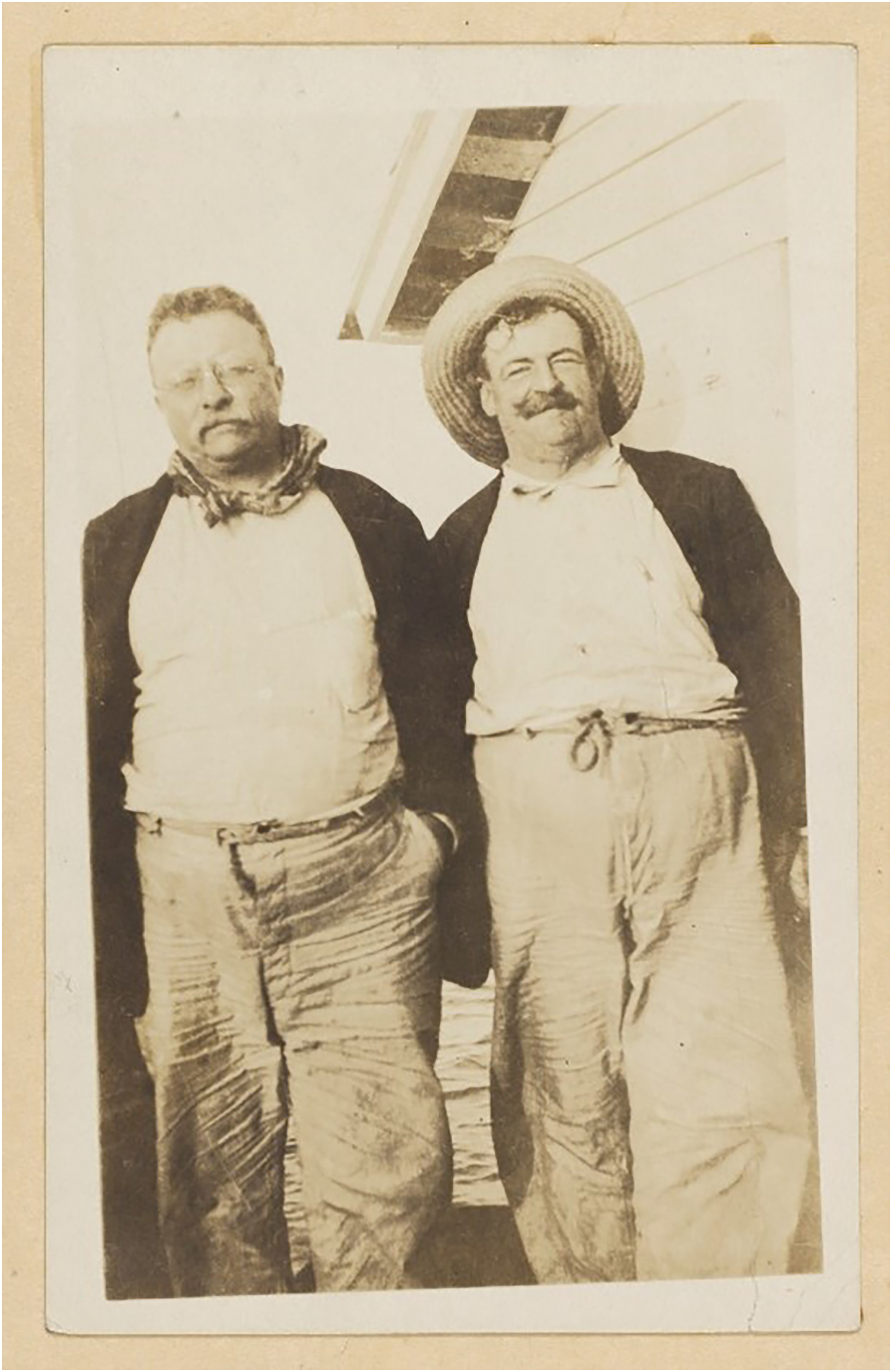
Colonel Theodore Roosevelt and Russell J. Coles on a devil-fish harpooning expedition on the coast of Florida, 16 March 1917.

The devil-fishers (standing, left to right: Mart Lewis, Captain Jack McCann, Captain Charley Willis, Roland Phillips and Gus Rice; seated, left to right: Theodore Roosevelt and Russell J. Coles).
While Coles hunted Manta birostris for sport, he was also fascinated by their biology. He set up a makeshift laboratory on the houseboat, where he could dissect marine specimens and learn about their physiology. In the early decades of the 1900s, shark experts at museums and universities in the United States and Europe were corresponding with him and requesting exhibits and information for models, including the American Museum of Natural History (Figure 5). Coles and Roosevelt received honorary doctorates simultaneously from Trinity College for their contributions to science (Figure 6).
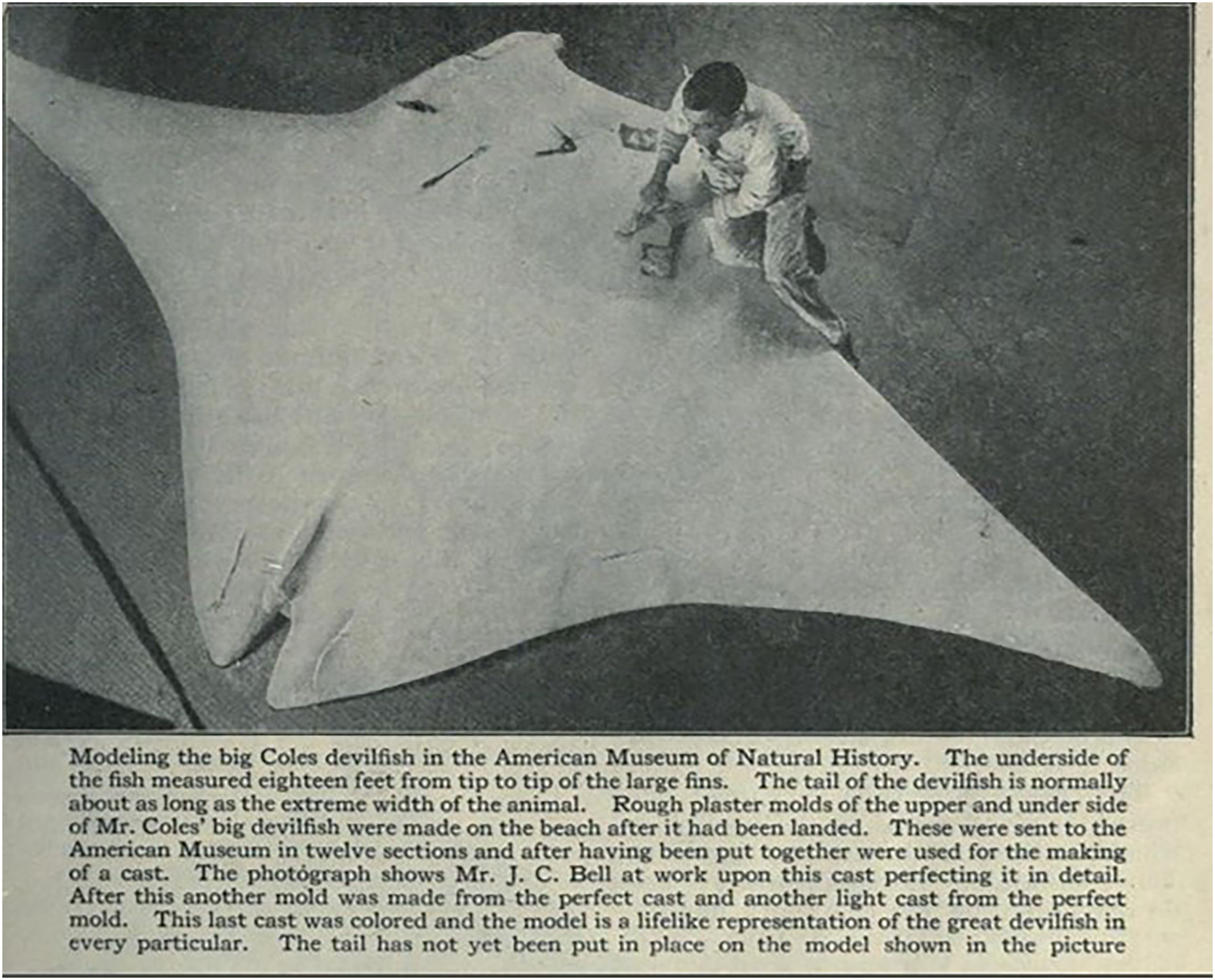
Modelling the Manta Ray specimen contributed by Russell Coles at the American Museum of Natural History.

Photograph taken just after the degree of Doctor of Science had been conferred on Colonel Theodore Roosevelt and Russell J. Coles.
Although he submitted articles or notes and provided specimens to prestigious scientific institutions like the Smithsonian, his talks and magazine and newspaper missives gave him significantly more public attention as a local fishing hero. The tone of these items reflects a mixture of sentiments prevalent at the time: not only a desire to convey awe and respect with regard to giant manta rays, but also an obsessive desire to dominate, hunt and conquer these creatures (Figures 7 and 8). 13
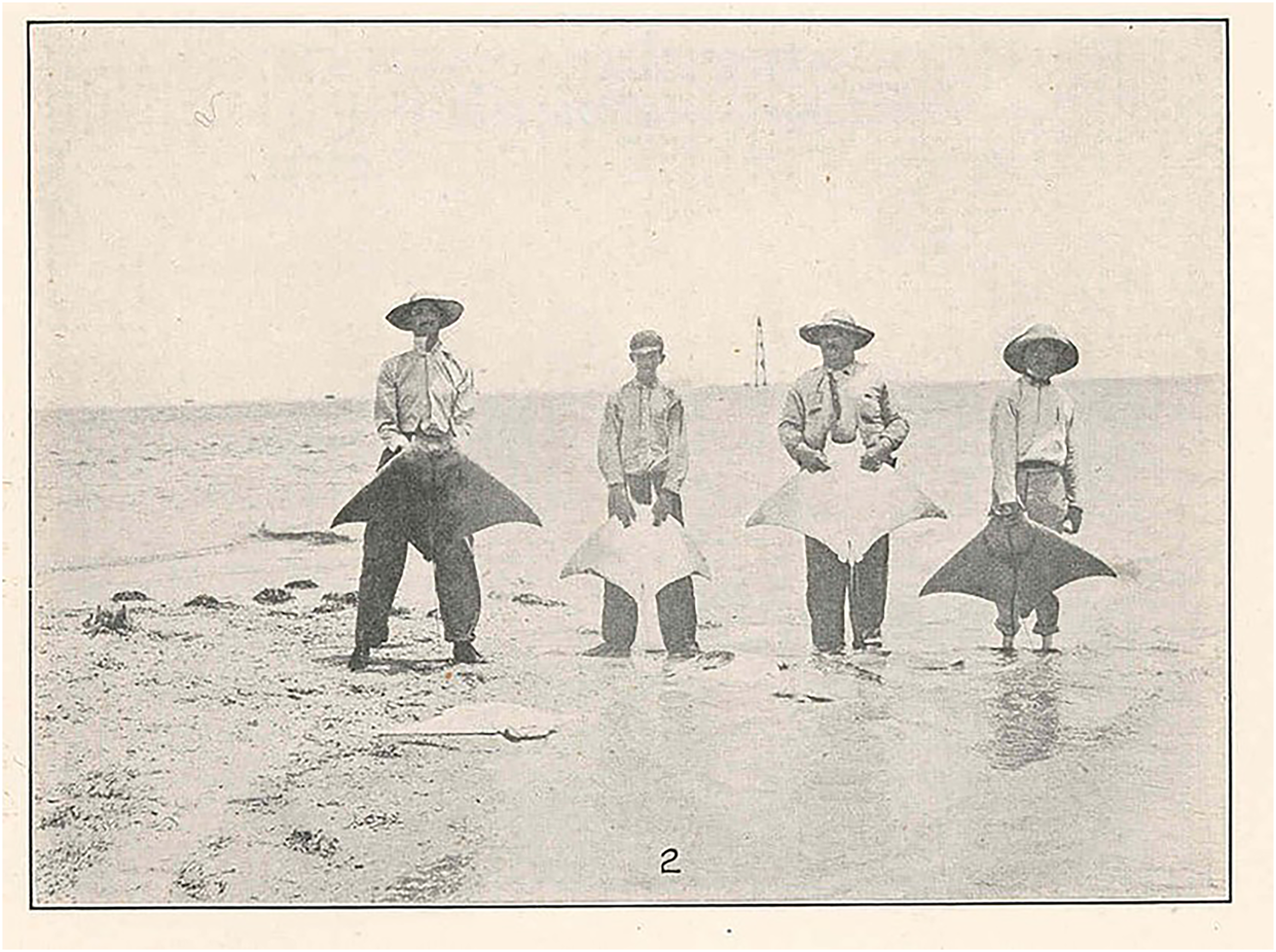
Mobula hypostoma, a catch of nine, taken by Russell J. Coles (second from right) at Cape Lookout, NC, 10 July 1910.
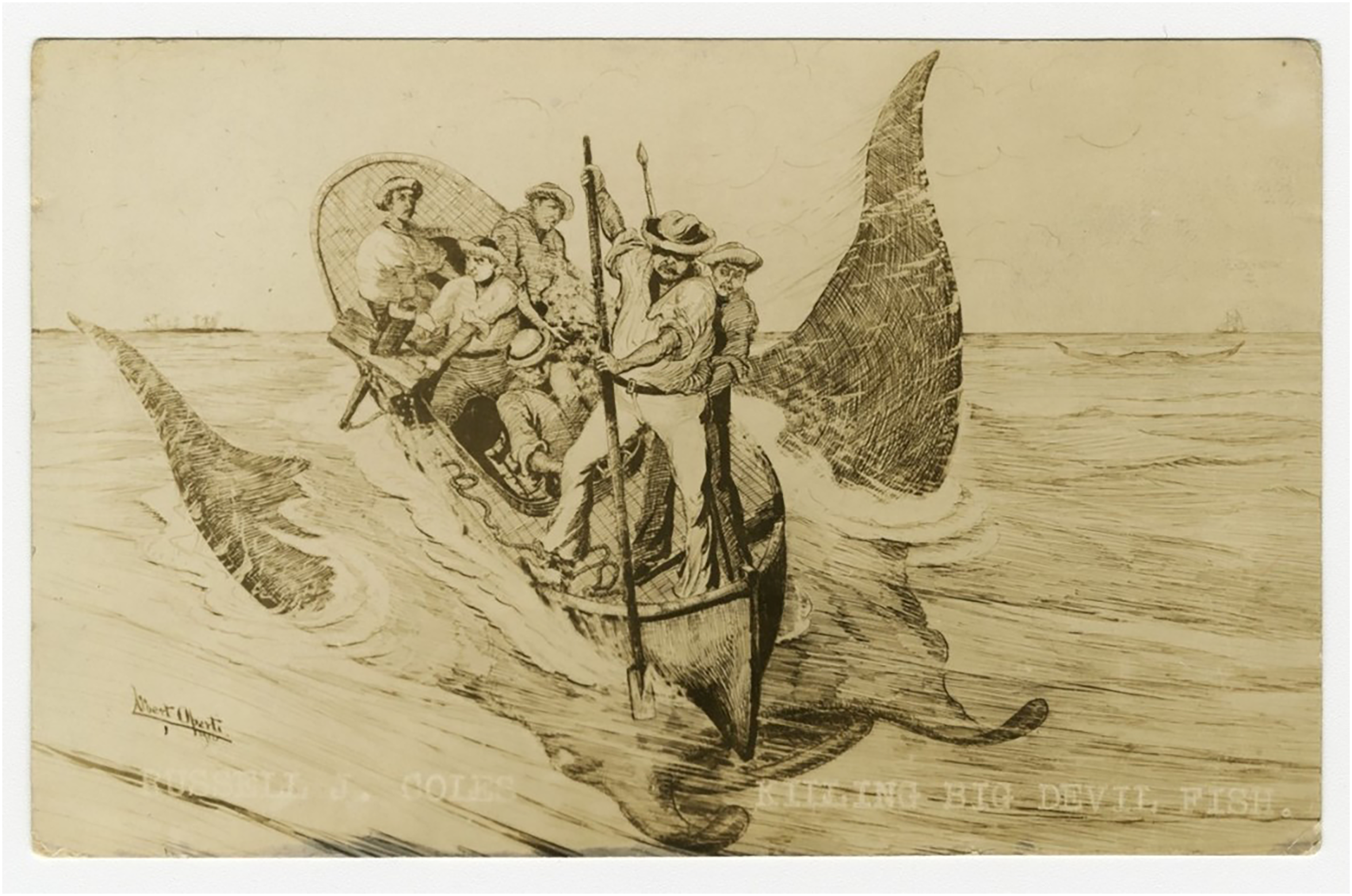
‘Russell J. Coles Killing Big Devil Fish’.
The fish-leather market
In the First World War era, a significant consumer niche market for manta rays, sharks, walruses, sturgeons, eels, whales and dolphins was the leather industry. ‘Fish leather’ was vigorously promoted as a substitute for shoes and boots at 25 per cent cheaper than cattle leather. In 1918, a newspaper article in the Richmond Times announced that the United States government had taken over all cattle and horse leather to support soldiers’ and cavalry needs in the war. Tanneries to process these new leathers were established along the Atlantic, Gulf and Pacific coasts, with the goal of producing 100,000 hides a year. The giant manta ray yielded 40 square feet of slaty-coloured back leather and 30 feet of white belly leather, which was considered ideally suited for fashionable shoes (Figure 9). 14
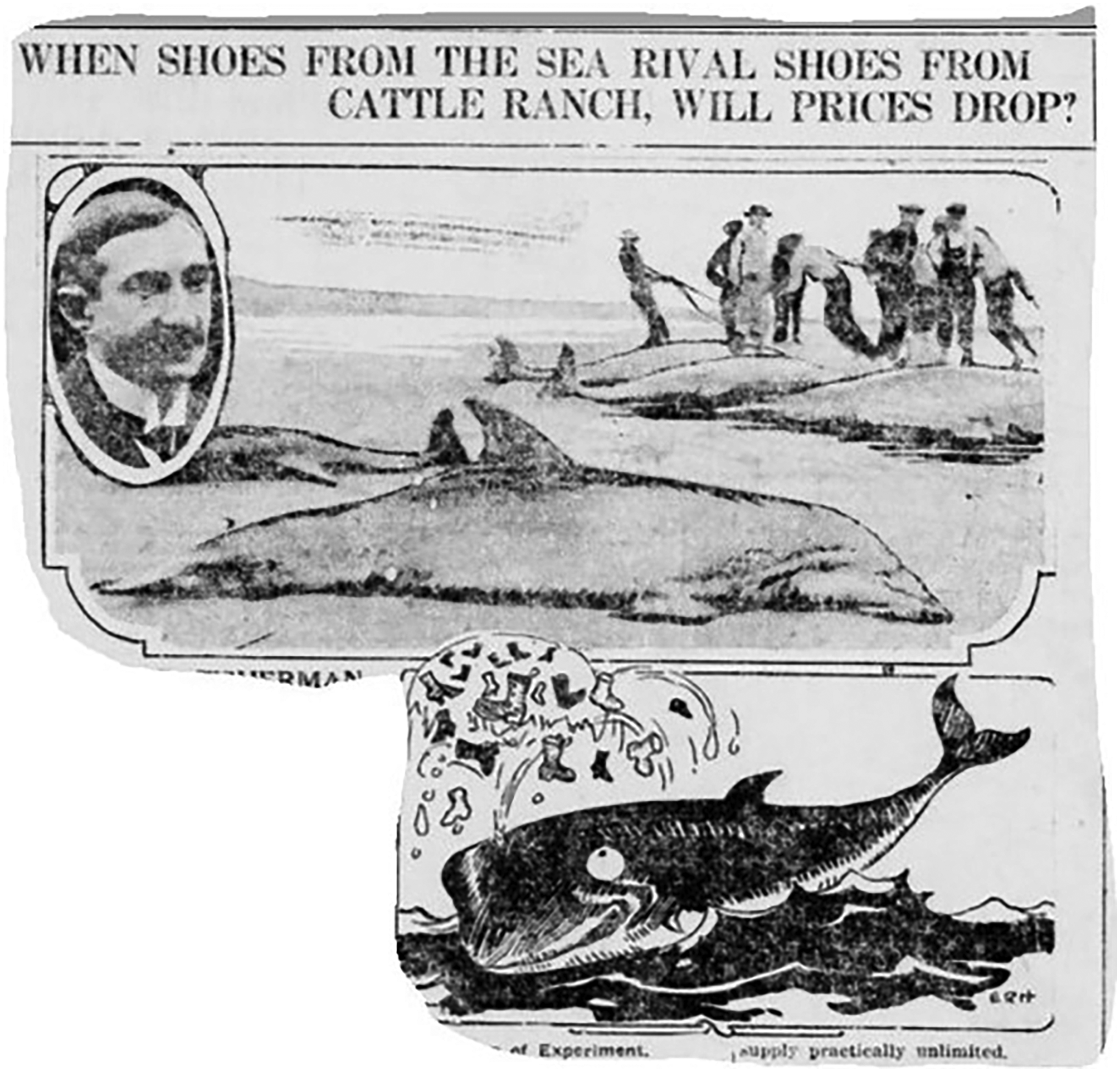
An image in a newspaper article promoting the use of marine leather.
There were several other scientific and entrepreneurial contributors to the study and commercialization of devil fish – for example, Theodore Nicholas Gill (1837–1914), an ichthyologist, malacologist and librarian. Gill catalogued mammals, fish and molluscs particularly, although maintaining proficiency in other orders of animals. He was a librarian at the Smithsonian and senior assistant at the Library of Congress. Gill was elected as a member of the American Philosophical Society in 1867. 15
Alfred Ehrenreich (1832–1931), an ex-banker, chemist and naturalist, set up an experimental laboratory in Newark, New Jersey, where he and his partners began to experiment with methods of refining the process of tanning the hides of sea creatures (Figure 10). The challenge was the ‘placoid cells’, which give the skin of sharks its toughness and durability. Drawing on the research of two other chemists, Theodore H. Kohler and Allen Rogers, the company perfected at least two different processes for using hydrochloric acid to remove the shagreen and soften the leather. 16 In contrast to cattle leather, which took a year or more to tan, fish skins took two weeks and had more versatile uses, not only for shoes (Figure 11), but also for book bindings, upholstery, whips, gloves and card cases. 17

Dr Alfred Ehrenreich.
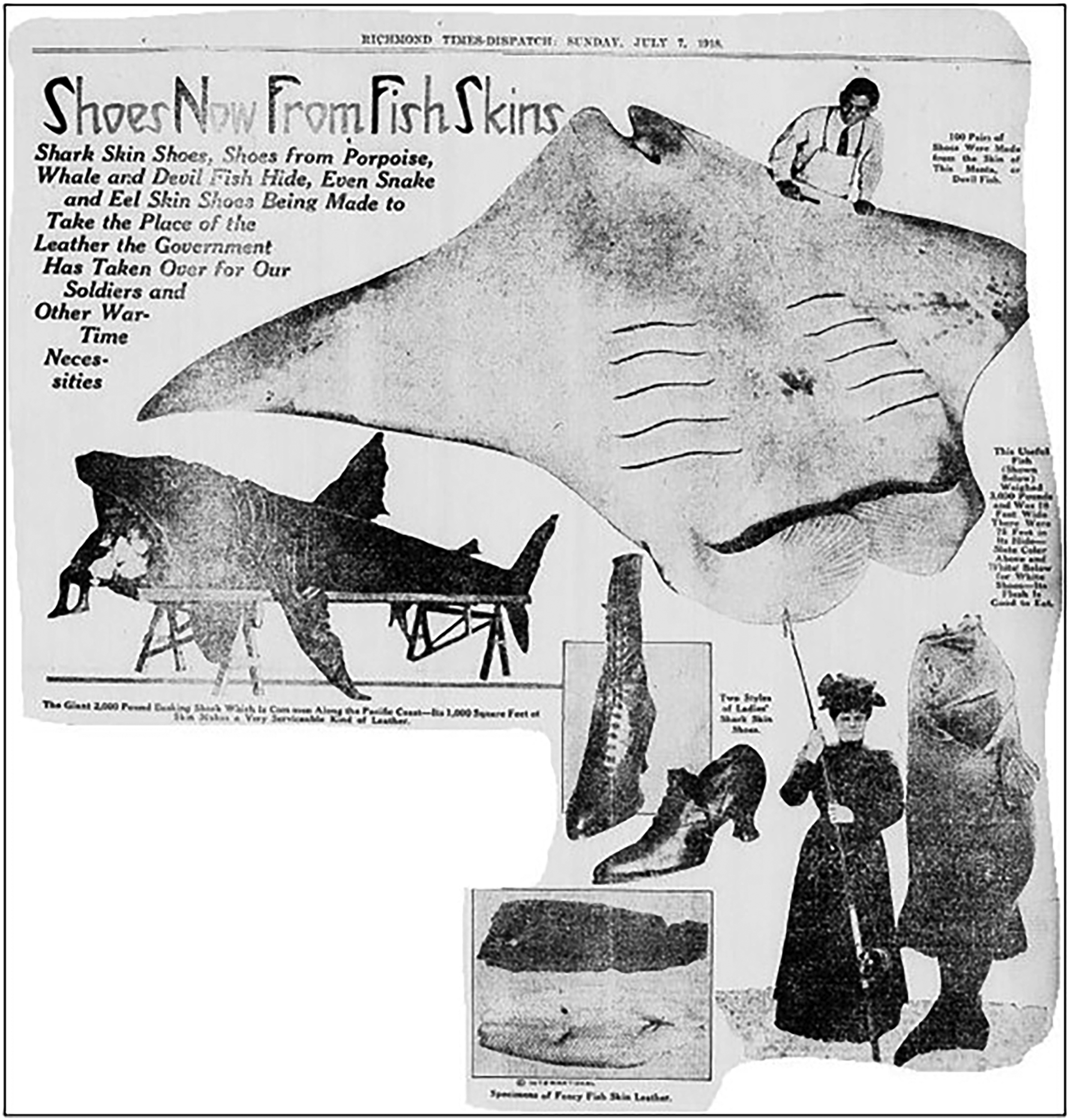
A newspaper article promoting the use of marine leather as a war time contribution to save other leathers for soldiers uses.
The Ocean Leather Company
As these techniques became successful, the Ocean Leather Company was established in Morehead City, North Carolina, in 1918. 18 In 1919, newspapers described the locations of these fishing stations as contiguous with or directly in the sweep of the Gulf Stream, such as Morehead City and Broad Creek in North Carolina, and Fort Myers and Sanibel Island in Florida. Harpooning devil fish was not the only method of capture. Nets and wire traps, varying in length from 300 yards to half a mile, were set up across a tideway. Small powerboats pulled the seines to the shore. 19
The Morehead fishing station, catering also to shark fishing, was located at the end of a railroad on Bogue Sound near the former navy yard. Its infrastructure included wharves for fishing boats; skinning platforms; a narrow-gauge railway for transporting carcasses to processing areas; an oil-rendering plant; and large-frame buildings for storage, as well as with machinery for reducing carcasses to fertilizer and salting and bailing skins. Further inland were rudimentary bunkhouses for some of the men, although many lived in the town of Morehead. 20
Devil-fish recipes
Russell Coles had become one of the country's leading authorities on sharks and rays. Now famous, entrepreneurs approached him to promote the consumption of these fish. There was an effort to promote the use of the meat as a seafood dish. The United States Department of Commerce published 29 recipes using skates and rays, including baked skate, fried skate, skate à l’italienne, skate à la Normande, skate à la crème, skate à la créole, skate pie, skate fritters, moulded skate with green peas and skate chowder. The cookbook noted that it tasted like a delicious fat bluefish. It required soaking for 36 hours, changing the water every 3 hours. Cooks skinned the back, belly, horns and cownose in large strips for tanning. The flesh required a considerable amount of butter and fat for cooking. 21 Many of the recipes listed go back as far as the 1830s in New York, when domestic-economy magazines described ray as a wholesome, fine-flavoured, nourishing fish, although requiring careful cleaning and special preparation. The liver was a delicacy and chopped up and mixed with parsley, butter and fennel to make sauces. Cooks chopped the cold boiled meat finely and added it to salads or bound it with egg to make fish balls (Figure 12). 22
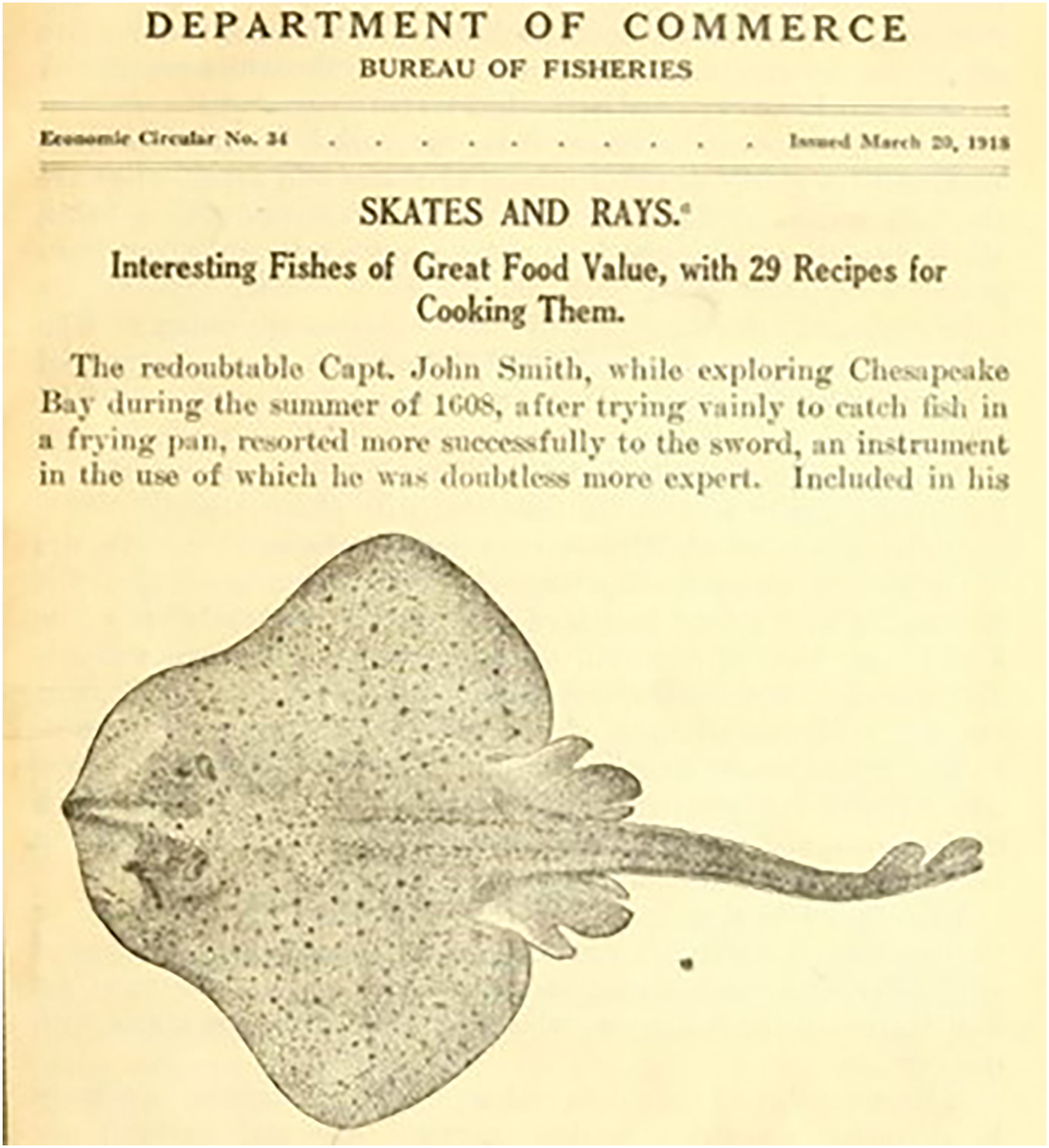
US Department of Commerce Recipes for Skates and Rays.
The historical vignette of early enslaved peoples’ devil fishing in the Carolinas and the exploits of Russell J. Coles, along with his devil-fishing crew, promoted widely by figures like Theodore Roosevelt, is a significant strand in the fabric of environmental and maritime history in North Carolina and the United States. Currently, giant manta rays are listed as threatened in the Endangered Species Act, passed in 1973. The purpose of the Act is to conserve endangered and threatened species and their ecosystems. Congress recognized in the early 1970s that the natural heritage of the United States was of ‘esthetic, ecological, educational, recreational, and scientific value to our nation and its people’. 23 It was understood that, without protection, many native plants and animals would become extinct. The provisions of the Endangered Species Act are enforced through citizen suits and civil and criminal penalties. A criminal violation could result in imprisonment and a fine of up to $50,000. A civil violation of a major provision may result in a $25,000 fine (a knowing violation) or a $12,000 fine. Scientific studies on the species and its distribution continue to grow, showing giant manta rays migrating from Florida to the Carolina coast north of Cape Hatteras during the warmer months of June to October. 24
International context: subsistence, sport fishing and industrial exploitation
Recreational fishing, also termed sport fishing or game fishing, is fishing for leisure or competitive purposes. Russell Coles’ obsession with manta rays and successful promotion of his activities is an example of game fishing that led to targeted museum and recreational expeditions, fascinating the public, politicians, museum curators and scientists alike. His fishing expeditions were conducted on small boats with a minimal crew, heavily armed with various hunting weapons. Although manta rays are currently not a target for industrial fisheries – broadly defined as a category of capture fishery characterized by several variables, including high-capital equipment and expenditure, a high level of mechanization, large vessel size, global market access and operating offshore on a multi-day basis – many are caught as bycatch. This occurs especially in industrial purse-seine and artisanal gillnet fisheries. According to a scientific estimate, industrial purse-seine fishing vessels catch about 13,000 manta rays each year while hunting tuna. 25
More significantly, manta rays have been targeted in recreational and small-scale commercial fisheries for centuries. Small-scale fisheries have generally acquired them for their meat (consumed locally), cartilage (exported as a filler for shark-fin soup) and skin (exported for leather). 26 Since the 1990s, a market for manta-ray prebranchial gill plates for Asian medicines has emerged and expanded. 27 In Indonesia, manta-ray harpoon fisheries have been documented across the country, including in Lombok, Lamakera, Lamalera and villages in the Alor region. 28
Manta-ray fisheries have existed for decades in the Philippines, primarily in the Bohol Sea region in areas like the Bohol, Camiguin and Mindanao islands. Fishers use gaffs, harpoons, hook and line, and gillnets, and sell their catch locally either fresh or as dry meat, gill plates and skin. 29 In India, manta rays are the focus of many small-scale fisheries, and similarly sold as dried meat and gill plates. Most of the fisheries operate in southern Kerala, Tuticorin, Chennai and north-western Mumbai. 30 Traditionally, manta rays were not fished in Sri Lanka due to the poor quality of their meat. However, demand for gill-plate exports eventually led to planned fishing for this product. 31 In 1898 in Mexico, Leon Louis Vaillant and Leon Diguet described pearl divers in the Gulf of California taking ‘manta’ with them to prevent them from getting entangled in the diving equipment, and using the carcasses for fishing bait. From the early 1980s, manta rays were hunted in artisanal fisheries in the Gulf of California using harpoons and set gillnets. 32
In Taiwan, a dedicated harpoon fishery for manta rays existed from 1930 to 1960, but there have been contradictory reports about its continued existence. 33 Mozambique's artisanal harpoon fishery targeting manta rays off the southern coast has a catch of approximately 20–50 individual fish annually in a small area of 50 square kilometres. The meat is consumed fresh, locally. 34 Gaza, the Palestinian territories and Egypt host a purse-seine fishery for manta rays for local consumption. Gaza gained recognition after media coverage of a catch where approximately 500 individual fish were landed. 35
Even in some countries where the gill-plate trade is not operating, the targeting and bycatch of manta rays in artisanal fisheries can be significant. David Croll et al note that a strategy to reduce artisanal manta-ray catches by initiating new fishery regulations, providing technical assistance for gear modification and the improvement of live-release techniques, and promoting non-consumptive uses (for example, diving ecotourism) could significantly reduce the take. Education on the vulnerable status of manta rays and a realistic assessment of the economic opportunities for their conservation is important to ensure community cooperation. 36 The histories of Manta Ray fishing, like that in North Carolina, are a significant component of our understanding of the past exploitation of this fishery and how far conservation initiatives have advanced today.
Footnotes
Funding
The author received no financial support for the research, authorship and/or publication of this article.
