



Abstract
The global burden of stroke in children is poorly characterized. We aimed to quantify the global burden of pediatric stroke. A systematic review and meta-analysis was conducted in accordance with Preferred Reporting Items for Systematic Reviews and Meta-Analyses (PRISMA) guidelines. The estimated birth prevalence and incidence of perinatal and overall childhood stroke was used to calculate the worldwide stroke burden by World Bank Income Groups and World Health Organization (WHO) regions. The estimated birth prevalence of perinatal stroke (regardless of type) was 21.01 per 100 000 total births and estimated childhood incidence of stroke was 3.73 per 100 000 person-years. The childhood incidence of ischemic stroke and hemorrhagic stroke was 1.30 per 100 000 person-years and 0.99 per 100 000 person-years, respectively. There is a relatively greater burden of perinatal stroke birth prevalence. Epidemiologic data on pediatric stroke is concentrated in western HIC. Coordinated efforts are needed to better understand the burden of pediatric stroke in LMIC.
Pediatric stroke can be broadly classified as perinatal stroke and childhood stroke based on age.1,2 Perinatal stroke is defined as stroke occurring between 20 weeks of gestation and 28 days post-delivery, and childhood stroke is defined as stroke occurring between 28 days and 18 years. 2 Pediatric stroke can further be classified by the underlying cause: ischemic and hemorrhagic. 2 Pediatric stroke carries a mortality rate between 10% and 25%. 3
The incidence of childhood stroke largely based on studies from high-income countries (HICs) has been shown to range between 2.5 and 13 per 100 000 per year, whereas the birth prevalence of perinatal stroke has been estimated to be approximately 25 per 100 000 per year.4–7 There are regional variations due to limited diagnostic capacity and epidemiologic studies, especially in low- and middle-income countries (LMICs) where there are resource constraints. 8 Previous studies show that LMICs bear a disproportionately greater burden of stroke.9–13 The increased stroke burden in LMICs is further complicated by poor health infrastructure including undertrained workforce, inadequate diagnostic tools, treatment delays and shortages, and lack of rehabilitation resources—all of which negatively impact outcomes.14–16
Recent literature has estimated the global incidence of adult cerebrovascular disease at 6.67 per 100 000 persons with wide global variation. 17 However, comprehensive studies measuring the global burden of stroke in children is lacking. Based on recent Global Burden of Disease (GBD) estimates, there were 310 133 incident pediatric stroke cases in 2021 globally. 18 Children aged <5 years had the highest incidence of hemorrhagic stroke. Conversely, adolescents aged 15-19 years hold the highest burden for ischemic strokes, with higher overall risk observed in LMICs.3,18 There is a need to quantify the burden of pediatric stroke across different regions and address the deficit in global pediatric stroke care contributing to disparities to ensure access to safe, timely, and affordable care for children worldwide. In this report, we conducted an epidemiologic meta-analysis using pooled primary incidence and birth prevalence data to characterize the global burden of pediatric stroke.
Methods
Search Criteria and Study Selection
A systematic review of the literature for epidemiologic studies of stroke in pediatric patients was conducted in accordance with the Preferred Reporting Items for Systematic Reviews and Meta-Analyses (PRISMA) guidelines. 19 The PRISMA search was conducted followed by stages of screening the title/abstract, and full text. The databases queried were PubMed, EBSCOhost, Embase, Cochrane, WHO Global Index Medicus, Global Health (CABI), and Web of Science databases. No date restrictions were applied to the search. The complete search syntax is provided in Supplemental Table 1 and was developed by study authors in consultation with a health science librarian.
Five independent reviewers (S.W.K., N.S., Y.A., N.A.B., P.P.) performed both stages of screening, ensuring each article was screened twice by 2 different reviewers. Disagreements were reconciled at both stages by independent reviewers (J.H.C., M.C.D.). Inclusion criteria consisted of studies that were original research, population-based or hospital-based, and reported epidemiologic data needed to estimate incidence (number of cases, reference population, and study duration). Reference lists of included articles were reviewed to identify additional relevant studies. Excluded literature included letters to the editor, commentaries, editorials, studies with the population of interest less than 1000 and articles that provided epidemiologic data on all populations but did not define or specify the pediatric subset of the population of interest. No article was excluded on the basis of language. The age range for children was defined by each individual study but did not exceed 20 years. The neonatal age range was defined as birth to 30 days of life. The quality of each individual study was assessed with the Grading of Recommendations, Assessment, Development and Evaluations (GRADE) framework, and the risk of bias was assessed with the Risk of Bias in Non-randomized Studies of Interventions (ROBINS-I) tool.20,21
Data Extraction and Analysis
Data were extracted by 4 independent reviewers into a common Excel database (J.H.C., Y.A., P.P., and L.D.), including total births/pediatric population, number of stroke cases and stroke types, age range, estimated incidence, location/country of study, study period, and data source (population-based or hospital-based record). World Health Organization (WHO) regions were used to designate geographical location, including the following regions: African Region (AFR), Region of the Americas (AMR), South-East Asian Region (SEAR), European Region (EUR), Eastern Mediterranean Region (EMR), and Western Pacific Region (WPR). Income level for the country of origin of each study was assigned based on World Bank income classification: low-income countries (LICs), lower and upper middle-income countries (lower MICs and upper MICs), and high-income countries (HICs), respectively.
Perinatal stroke was measured by birth prevalence to capture the true burden of disease at the time of birth whereas childhood stroke was measured by incidence. 22 Meta-analyses were conducted to separately estimate perinatal stroke (regardless of type) birth prevalence, and incidences of overall childhood stroke (including both ischemic and hemorrhagic), childhood ischemic stroke, and childhood hemorrhagic stroke. A study may contribute data for more than one of these estimates. Each meta-analysis utilized the extracted numbers of cases and total population/person-years during the study period from each study and was conducted using Freeman-Tukey double arcsine transformation and the inverse variance method. The estimated incidence rate (per 100 000) from a random effects model was reported, with a forest plot to visualize all individual studies included. Heterogeneity across studies was tested using Cochran Q test and evaluated by estimating the between-study variance τ2 and the proportion of variability that is explained by differences between the included studies, I2. Other characteristics of the included studies were summarized by percentages. The associated burden in the World Bank Income Groups or WHO regions was calculated by multiplying the estimated incidence or birth prevalence by the total pediatric population in each respective region found using the Our World in Data database. 23
All statistical analyses were performed using R, version 4.4.1 (R Foundation for Statistical Computing).
Results
Included Studies
The initial search yielded 25 495 articles. Following deduplication, 17 298 articles underwent title and abstract screening. A total of 195 articles including 13 articles that were identified in the reference list of included articles at this stage were included in the full-text review. After full-text review, 52 unique studies from 22 countries published between 1978 and 2024 were included in the final meta-analysis (Figure 1). The most common country of study was the United States (11; 21%), followed by Canada (7; 13%), France (5; 10%), and Germany (4; 8%). By WHO region, the most common region of study was the EUR (24; 46%), followed by AMR (18; 35%), WPR (8; 15%), SEAR (1; 2%), and EMR (1; 2%). There were no studies from AFR (Supplemental Table 2). By income status, 51 (96%) of the included studies were from high-income countries and 2 (4%) were from uMICs (both studies from China). The GRADE quality metric resulted in 32% low-quality, 51% moderate-quality, 17% high-quality study ratings. ROBINS-I risk of bias evaluation resulted in 17% low-, 72% moderate-, and 11% high-risk studies.
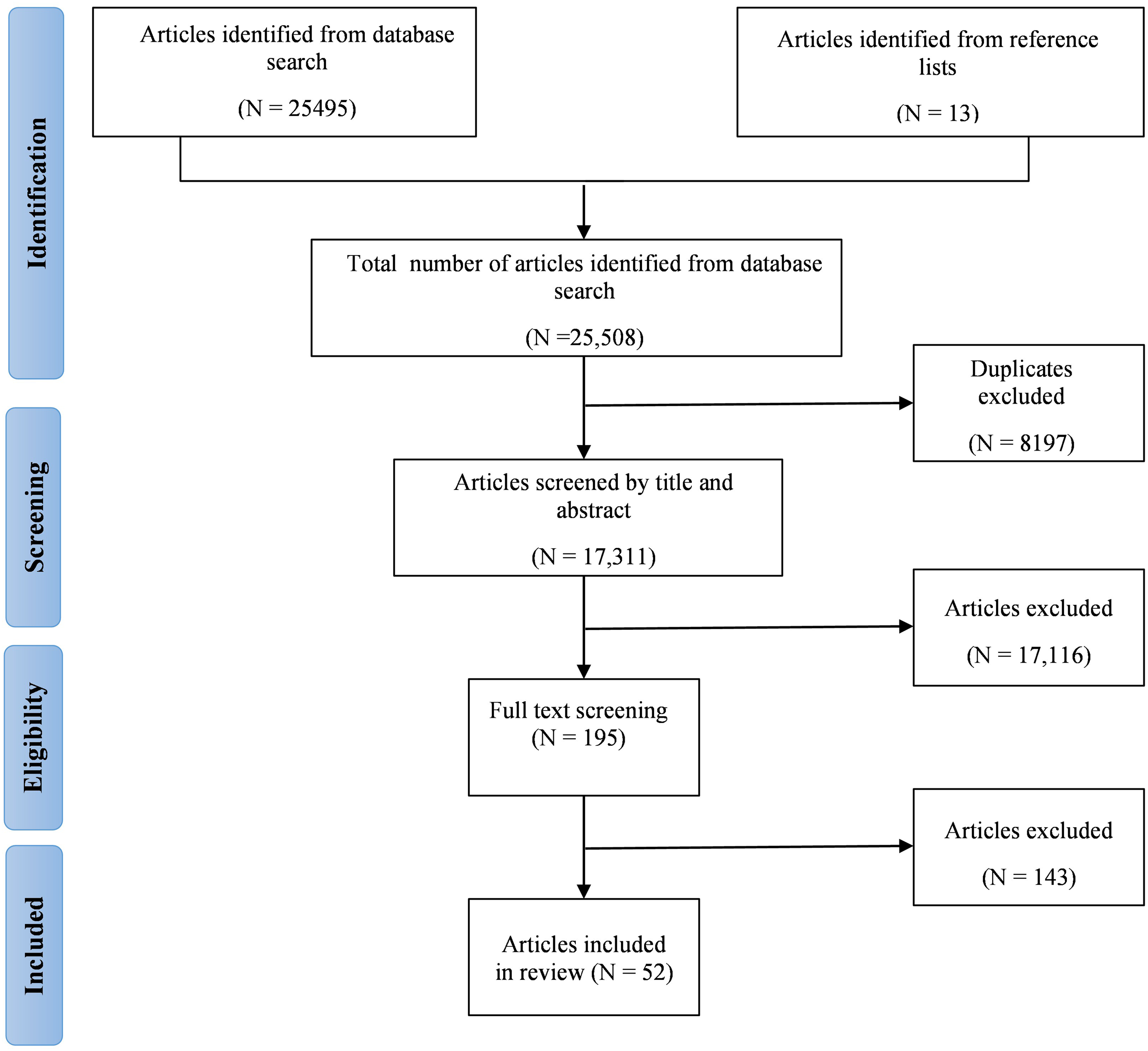
PRISMA flow diagram for selection of study articles.
Epidemiology
From 16 studies that reported incidences of childhood stroke (including both ischemic and hemorrhagic), the meta-analysis resulted in an overall incidence of 3.73 (95% CI: 1.97-6.04) per 100 000 person-years (Figure 2). The reported incidence from individual studies varied from 0.89 to 27.11 per 100 000 person-years, with I2 = 97.8% and only 2 studies reporting an incidence higher than 10 per 100 000 person-years. By stroke type, 31 studies reported on childhood ischemic stroke, 15 studies reported on childhood hemorrhagic stroke, 21 studies reported on perinatal stroke regardless of the stroke type. The incidence of childhood ischemic stroke was an estimated 1.30 (95% CI: 0.84-1.85) per 100 000 children-years (Figure 3a). The incidence of childhood hemorrhagic stroke was an estimated 0.99 (95% CI: 0.54-1.55) per 100 000 person-years (Figure 3b). The estimated perinatal birth prevalence of stroke was 21.01 [95% CI: 13.36–30.33] per 100 000 births (Figure 4). Most childhood incidences reported in these studies exclude patients from the neonatal patient group (<30 days), but a few studies reported incidences that include perinatal patients.
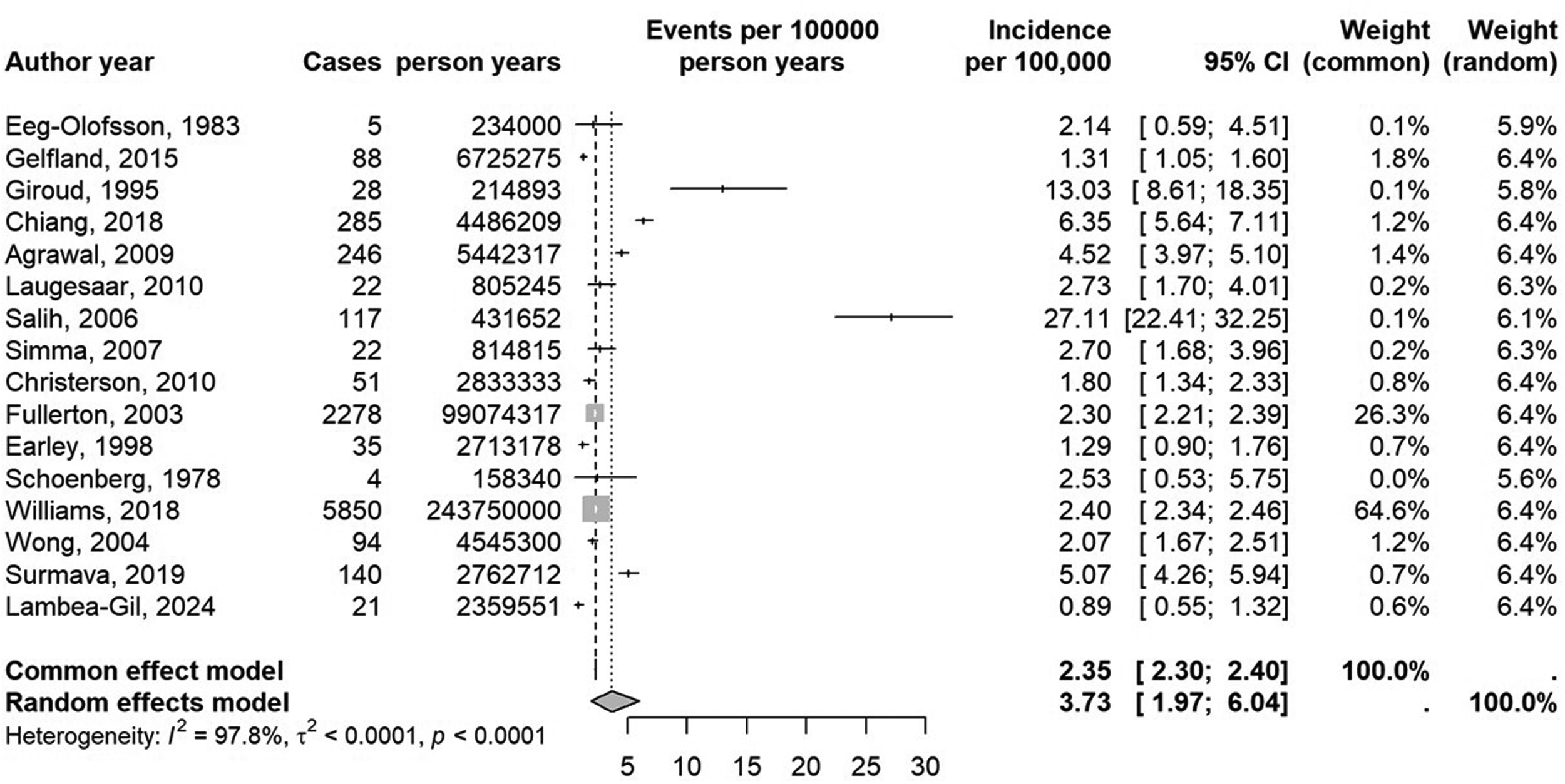
Forest plot for overall pediatric incidence of stroke.
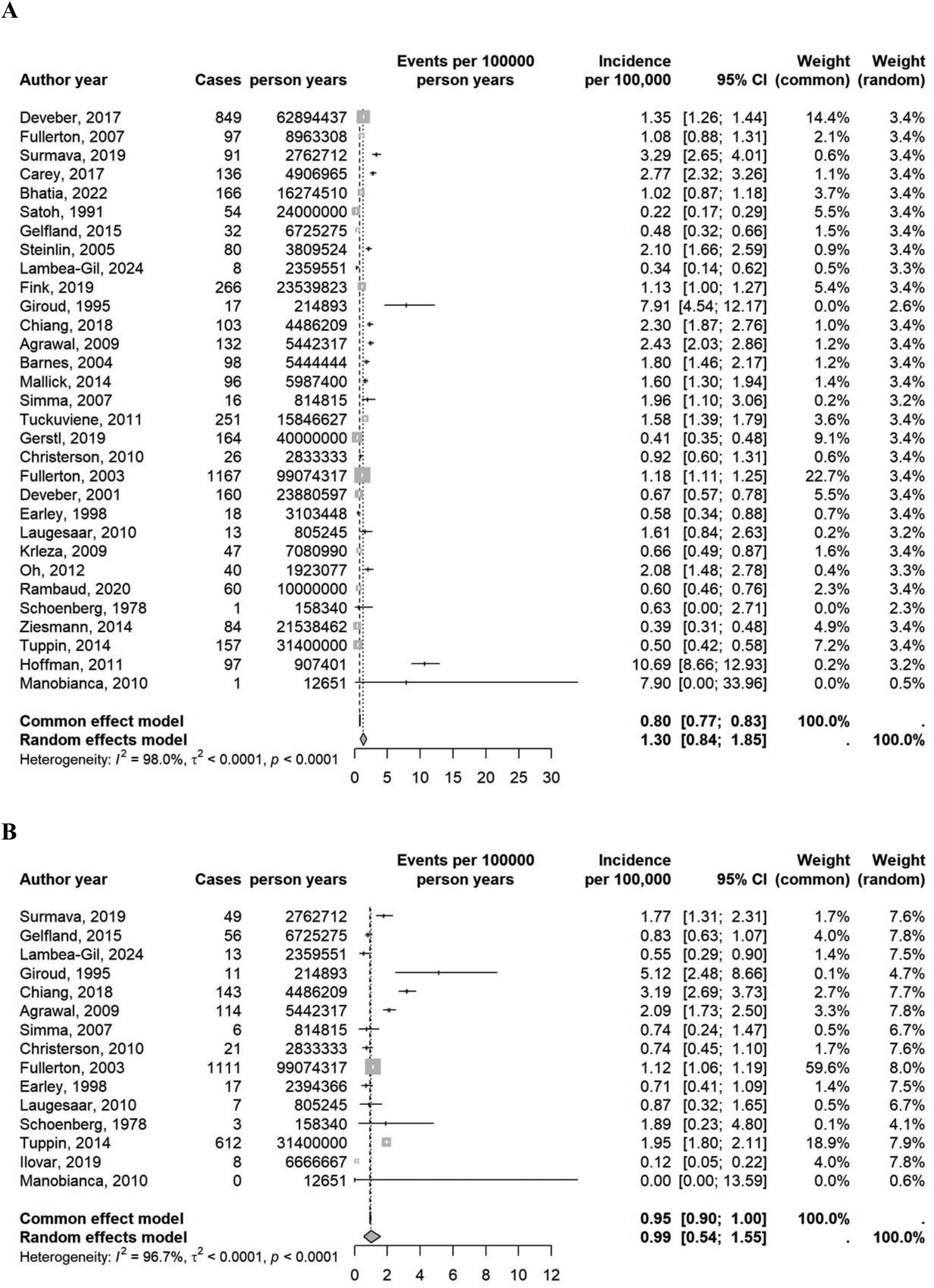
(A) Forest plot for overall pediatric incidence of ischemic stroke. (B) Forest plot for overall pediatric incidence of hemorrhagic stroke.
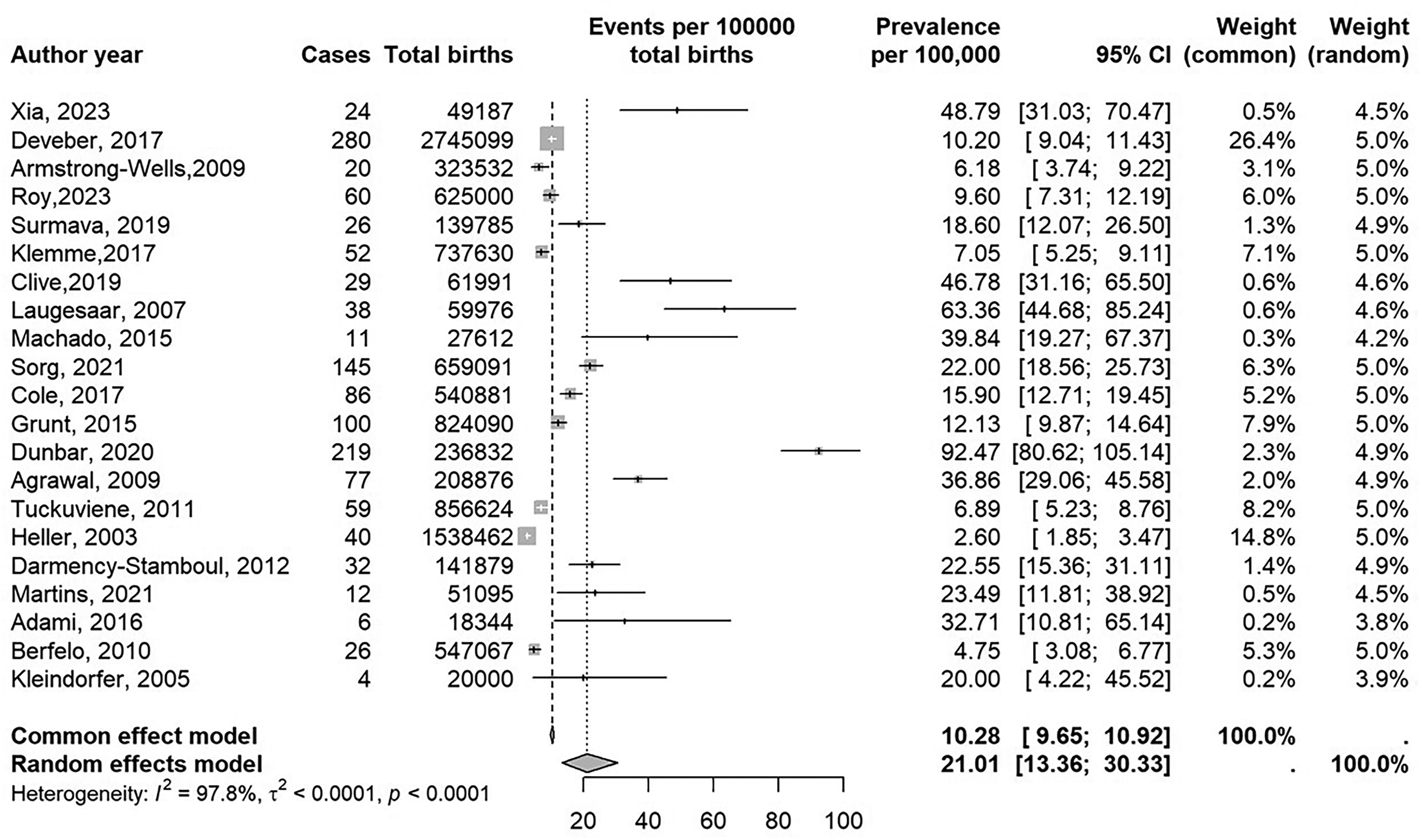
Forest plot for perinatal birth prevalence of stroke.
Global Burden of Childhood and Perinatal Stroke
By World Bank income region, lower MICs exhibited the greatest burden of stroke with an estimated 46 590 cases of overall childhood stroke and 14 654 cases of perinatal stroke, making up 49.7% and 52.1% of the projected worldwide burden for childhood (93 670) and perinatal (28 148) stroke burden, respectively. HICs exhibited the lowest burden of stroke with an estimated 9645 cases of childhood stroke for all subtypes and 2560 cases of perinatal stroke, making up 10.3% and 9.1% of the projected worldwide childhood and perinatal stroke burden, respectively. By WHO Region, the SEAR demonstrated the greatest burden of childhood stroke (22 079 cases), followed closely by the African Region (21 748 cases), representing 25.5% and 25.2% of the projected worldwide burden of childhood stroke, respectively. The EUR Region demonstrated the lowest burden of childhood stroke (6947 cases), representing 8.0% of the projected worldwide burden. The burden of perinatal stroke was greatest in the African Region (8328 cases) representing 29.6% of the projected worldwide perinatal stroke burden followed by the SEAR Region (7078 cases) representing 25.1% of the projected worldwide perinatal stroke burden. The EUR Region demonstrated the lowest burden (2193 cases), representing 7.7% of the projected worldwide perinatal stroke burden. Stratifying by subtypes of childhood stroke, lower MICs had the greatest burden of childhood ischemic stroke (17 455 cases) and childhood hemorrhagic stroke (12 992 cases) whereas HICs had the lowest burden of childhood ischemic stroke (3613 cases) and hemorrhagic stroke (2689 cases). By WHO regions, SEAR Region had the greatest burden of childhood ischemic stroke (8272 cases) and childhood hemorrhagic stroke (6157 cases) followed by African Region with 8148 cases and 6065 cases, respectively. EUR had the least burden of childhood ischemic stroke (2603 cases) and childhood hemorrhagic stroke (1938 cases). Tables 1 and 2 demonstrate the global burden of the different stroke subtypes across World Bank income groups and WHO Regions.
Estimated Case Burden of Pediatric Stroke by World Bank Income Group per Year.
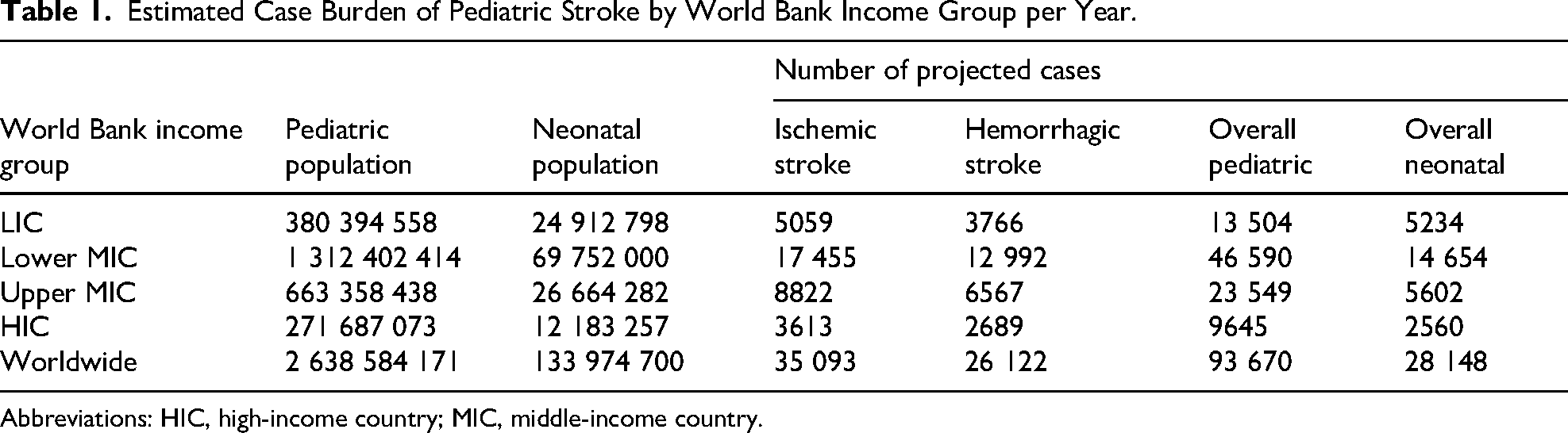
Abbreviations: HIC, high-income country; MIC, middle-income country.
Estimated Case Burden of Pediatric Stroke by WHO Region per Year.
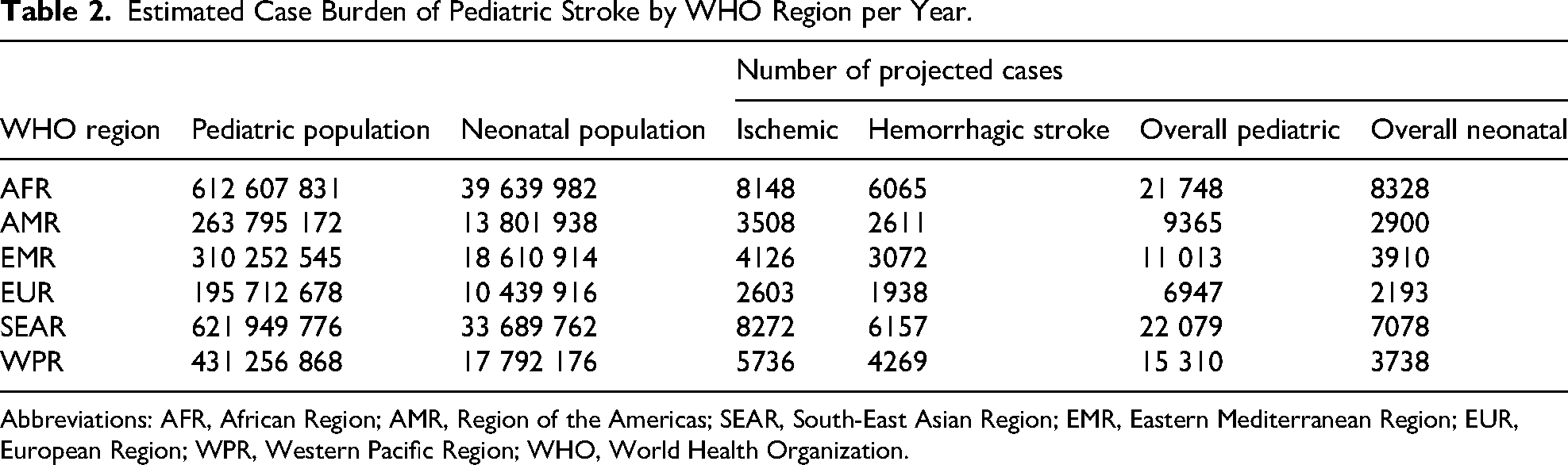
Abbreviations: AFR, African Region; AMR, Region of the Americas; SEAR, South-East Asian Region; EMR, Eastern Mediterranean Region; EUR, European Region; WPR, Western Pacific Region; WHO, World Health Organization.
Discussion
Herein, we report the global burden of childhood and perinatal stroke. For childhood stroke, the estimated overall incidence was 3.55 per 100 000 person-years, ischemic stroke incidence was 1.33 per 100 000 person-years, and hemorrhagic stroke incidence was 0.99 per 100 000 person-years. Birth prevalence of perinatal stroke was estimated to be 21.0 per 100 000 births.
In the present study, LMICs demonstrated the greatest case burden of childhood and perinatal stroke largely because of their high population content. When classified by WHO regions, the African and Southeast Asian Regions demonstrated the greatest case burden of childhood and perinatal stroke, respectively. Our results are similar to findings of a study by Hughes et al 24 who estimated the worldwide burden of adult hemorrhagic stroke to be 500 000 people per year, with two-thirds occurring in LMICs. These regions also have the greatest population growth trajectory despite lower levels of sustainable resources, resulting in a widening disparity gap. 25 Estimates for LMIC modeled from HIC data almost certainly represent an underestimation of the true incidence and birth prevalence and therefore burden of disease. Thus, these figures—however striking—are conservative in their description of LMIC childhood stroke. Indeed, we would expect the incidence to be higher in many of these regions because of the relatively higher prevalence of several childhood and perinatal stroke risk factors, including prematurity,7,26,27 sickle cell disease, 28 traumatic brain injury, 29 and central nervous system (CNS) infections.29–31 A previous study found the highest incidence of childhood stroke in the African region (20.76-25.05 per 100 000 population) compared with other regions (10.71-17.30 per 100 000 population) based on data from the 2019 Global Burden of Disease Initiative. 3
Defining the incidence for pediatric stroke both allows a more complete understanding of the unmet brain health needs and also justifies resource allocation to this largely neglected pediatric entity. Pediatric stroke survivors often suffer long-term sequelae including epilepsy, cerebral palsy, cognitive impairment, and motor impairment.32,33 Perinatal stroke is associated with significantly worse long-term neurologic outcomes compared with childhood stroke. 34 Optimal pediatric stroke management requires a multidisciplinary team that includes pediatric neurologists, pediatric neurosurgeons, neurocritical care specialists, physical therapists, and others to recover and optimize long-term functional outcomes. There are, however, global disparities in healthcare workforce availability and health system infrastructure between HICs and LMICs with a significant workforce deficit in LMICs alongside a lack of acute stroke and rehabilitation services despite the increased burden of cases in LMICs. 35 This severely impacts access to timely and quality multidisciplinary stroke care. A study by Dewan et al 15 demonstrated that in LMICs a greater percentage of pediatric patients traveled greater than 2 hours to seek neurosurgical care. Neurocritical care also demonstrates global disparities, even in the acute phase of stroke care. Saini et al 36 demonstrated that fewer than 5% of acute ischemic stroke patients receive intervention globally and Lynch et al 17 reported that between 13% and 57% have access to inpatient rehabilitation following stroke. These studies highlight the existing inequities in access to both acute stroke management and rehabilitation. The findings of the present study serve as a call to action for the global neurologic diseases community to work together to better understand the burden of pediatric stroke and build adequate and equitable treatment and rehabilitation capacity.
This report carries limitations inherent to most systematic reviews and meta-analyses: selection bias, publication bias, and heterogeneity of included studies. It is possible that the searched databases exclude data from low-income countries—published or unpublished—that are not archived in a major public index. The studies themselves carry a high risk of bias, and are heterogenous in terms of children's age range, case definitions, stroke types, and study population estimates. Because of the significant heterogeneity between studies, a random effects model was used to provide a more conservative, robust estimate of birth prevalence and incidence. Furthermore, we conducted subgroup analysis based on the available data to explore estimates across age groups (perinatal vs childhood) and childhood stroke types (hemorrhagic vs ischemic). The collated incidences and birth prevalence were derived mainly from HIC source data. Thus, calculated case burden in LMIC should be viewed as a best-available estimate in light of literature scarcity.
Conclusion
The global pediatric stroke incidence is estimated at 3.55 per 100 000 children, equating to more than 120 000 new cases worldwide each year. Communities in LMIC suffer a significantly greater burden of both perinatal and childhood stroke compared with those in HIC. There are limited data concerning pediatric stroke incidence globally, particularly in the African, South-East Asian, and Eastern Mediterranean Regions, as well as from LMICs.
Supplemental Material
sj-docx-1-jcn-10.1177_08830738261441084 - Supplemental material for Global Pediatric Stroke Epidemiology: A Systematic Review of the Literature and Meta-Analysis
Supplemental material, sj-docx-1-jcn-10.1177_08830738261441084 for Global Pediatric Stroke Epidemiology: A Systematic Review of the Literature and Meta-Analysis by Joseline Haizel-Cobbina, Stefan W. Koester, Yusra Arafeh, Prabhat Poudel, Nancy Abu-Bonsrah, Nathan A. Shlobin, Jeffrey Chen, Liping Du, Albert Isaacs and Michael C. Dewan in Journal of Child Neurology
Supplemental Material
sj-docx-2-jcn-10.1177_08830738261441084 - Supplemental material for Global Pediatric Stroke Epidemiology: A Systematic Review of the Literature and Meta-Analysis
Supplemental material, sj-docx-2-jcn-10.1177_08830738261441084 for Global Pediatric Stroke Epidemiology: A Systematic Review of the Literature and Meta-Analysis by Joseline Haizel-Cobbina, Stefan W. Koester, Yusra Arafeh, Prabhat Poudel, Nancy Abu-Bonsrah, Nathan A. Shlobin, Jeffrey Chen, Liping Du, Albert Isaacs and Michael C. Dewan in Journal of Child Neurology
Footnotes
Acknowledgements
We thank Heather Laferriere, Health Science Librarian at Vanderbilt University School of Medicine, for her assistance in conducting this systematic review.

Author Contributions
M.C.D. and A.I. were responsible for study conception and design. J.H.-C., S.W.K., Y.A., P.P., N.A.-B., N.A.S., J.C., and M.C.D. performed the literature search and article screening. J.H.-C. and L.D. performed the data analysis. The first draft of the manuscript was written by J.H.-C. and S.K.. All authors critically revised the work and approved of the submitted version of the manuscript.
Funding
The authors received no financial support for the research, authorship, and/or publication of this article.
Declaration of Conflicting Interests
The authors declared no potential conflicts of interest with respect to the research, authorship, and/or publication of this article.
Availability of Data and Material
N/A.
Supplemental Material
Supplemental material for this article is available online.
References
Supplementary Material
Please find the following supplemental material available below.
For Open Access articles published under a Creative Commons License, all supplemental material carries the same license as the article it is associated with.
For non-Open Access articles published, all supplemental material carries a non-exclusive license, and permission requests for re-use of supplemental material or any part of supplemental material shall be sent directly to the copyright owner as specified in the copyright notice associated with the article.
