



Abstract
Food system and energy planners have given scant attention to the impacts on agrifood systems of a particular form of energy production—fracking—and its implications for planning and regulation. Impacts include those related to water availability and quality; land quality, use, and value; wildlife; labor costs; infrastructure and services; and the implications of boom and bust dynamics of these for the sustainability of agriculture and food systems. Planning is challenged by competing frames of economic and environmental benefits, lack of capacity, power imbalances, and sometimes state policy. This review maps research on these linkages, identifies elements of successful planning, and offers directions for future research.
Since about the mid-1990s, food systems have received increasing attention by community and regional planners (Pothukuchi and Kaufman 1999, 2000; Kaufman, Pothukuchi, and Glosser 2007; Raja, Born, and Russell 2008; Vitiello and Brinkley 2014). Accordingly, planners have noted the food system’s diverse links to the energy sector (Pothukuchi and Wallace 2009; Heller and Keoleian 2003; Pimentel et al. 2008). Such links include the food system’s dependence on fossil fuels, fuels derived from food and farm sources, and agricultural and food system practices that are less energy intensive and more sustainable. However, with rare exceptions (e.g., Food and Health Network of South Central New York 2012), food system planners have typically paid less attention to hydraulic fracturing, a form of unconventional oil and natural gas production.
On the flip side, energy planners focus on links to land use, transportation, environmental impacts, neighborhood design, conservation, renewable alternatives including biofuels, and equity with respect to localities (Kaza and Curtis 2014). For example, the American Planning Association (APA) has identified a framework for integrating energy issues into planning through development patterns, transportation, and economic development (Shuford, Rynne, and Mueller 2010). Although food system issues are not entirely absent in discussions of energy-related planning, they tend to have a low profile. For another example, APA’s (2011) policy guides on climate change, food systems (Kaufman, Pothukuchi, and Glosser 2007), and energy (APA 2012) all urge planners to support alternative food systems that are more sustainable and local, so as to reduce greenhouse gas emissions and mitigate the impact of climate change on communities. Planning and regulation related to fracking from the perspectives of healthy food access, food security, and food system sustainability, however, are missing in such policy guidance.
As hydraulic fracturing (referred to as fracking from here on) has become more widespread and operations are frequently located in rural areas where food production is a primary activity, the need to help local officials understand its food system implications becomes pressing. This article seeks to map the linkages between fracking and food systems and trace their implications especially for local regulation, planning, and policy. Planning can help anticipate and mitigate potential negative impacts of fracking on food system activities. It can also identify possible pathways for their coexistence and enhance food-related goals in fracking-impacted communities, among other objectives.
Tracing the food system–fracking connections and their implications for food system goals is no easy task, however. Both food systems and fracking are relatively new to the planning field. Although peer-reviewed scholarship is slowly emerging, few data exist on fracking’s causal links to known impacts and on impacts across space and time. For this and other reasons, there is a lack of consensus on the nature and extent of social and ecological risk involved with the activity. The low level of planning capacity in rural communities that are most affected by fracking is yet another challenge. Add to this the typically charged nature of local discourse, the reality of power differences between industry actors and local officials and residents, questions about the appropriate level of policy development and regulation, and the challenges for community planning become even clearer. These are unpacked in this article.
Community and regional food systems planning is a subfield of planning that underscores food as a vital human need. Such planning focuses on the linkages between activities within the food system and between food and other community systems (Pothukuchi and Kaufman 1999). For example, food system activities in production, processing, distribution, preparation, consumption, and food waste disposal have spatial and other connections to local communities; they also impinge more or less on public health, the local economy, land and ecology, social welfare and equity, and cultural heritage (Kaufman, Pothukuchi, and Glosser 2007). Food systems planning therefore may encompass activities that help build more local and sustainable supply chains through, for example, direct farm-to-consumer linkages and related infrastructure (e.g., Edmonds and Dunning 2016; Pothukuchi 2009) or support for local farms to convert to certified organic production (e.g., Woodbury County 2005; National Sustainable Agriculture Coalition n.d.). Alternatively, food system planners may seek to make elements of the industrial food system more responsive to local communities, for example, by attracting supermarkets to underserved areas (e.g., Pothukuchi 2005) or linking emergency food sites with community gardens to increase low-income households’ access to fresh produce (e.g., Just Food n.d.).
Fracking’s links to food systems are important to consider for a variety of reasons, even if scholarship on the links is still nascent. First, evidence exists of fracking’s impacts on communities, as they relate to land and land use, air, water, wildlife and habitats, and crop and livestock production, and of fracking’s boom and bust patterns, all of which have direct and indirect implications for food systems. Second, because communities need to build resilience in the face of climate change and other global crises, the implications of fracking for food system goals such as food security, food safety, and food sovereignty—that is, going beyond a focus on agriculture—need to be understood. Third, recent research on food–energy–water nexus issues suggests that public awareness of the food–energy nexus issues is especially is low. On the other hand, greater awareness of water–food and energy–water nexus issues is correlated with support for water conservation and sustainable food production (Portney et al. 2017). Finally, we need to know if and how fracking and food system activities may coexist; if, how, and where they must be separated; and where local food chains may offer a viable alternative to fracking.
Due to a paucity of peer-reviewed scholarship on many linkages of interest in this article, we relied on a combination of scholarly, trade, mass media, and advocacy sources, recognizing their respective strengths and weaknesses. These sources and methods are discussed following a brief history of the rise of fracking as an industry in the next section. Thereafter, we review the literature on fracking’s impacts on localities including impacts on water, farmland and farming operations, fisheries and wildlife, rural communities, and the emerging regional food system. In a subsequent section, planning and governance approaches to prepare for fracking as well as address its impacts are explored as are related challenges that planners may face. A concluding section offers directions for future research.
The Rise of Fracking
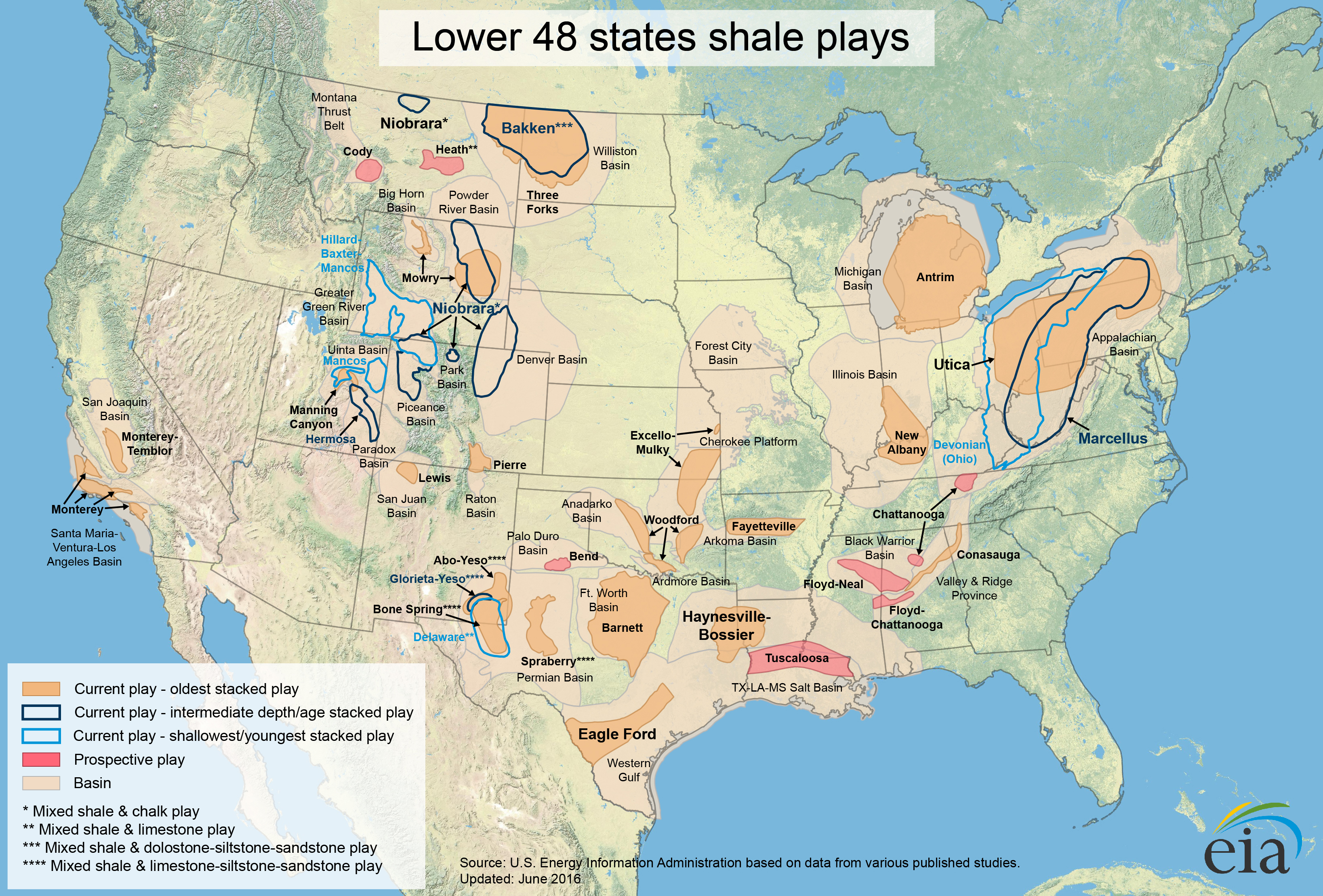
By offering an economical way to reach previously inaccessible reserves deep below the earth’s surface, fracking has contributed to the rapid expansion of the natural gas industry in North America in recent years. This method of extraction injects a high-pressure mixture of water, sand, and chemicals into rock formations. Fracking, which now describes the entire industry and not just the method of extraction, has proliferated since the early 2000s, reaching a boom between the years 2005 and 2012 in the Marcellus shale formation of Pennsylvania and the Barnett shale formation in Texas. In 2012, approximately 1,100 localities spread across twenty-two states in the United States had fracking operations located within their jurisdictions (Loh and Osland 2016). Figure 1 offers a glimpse of fracking’s geography in 2015.

Shale plays in the lower 48 states. Source: https://www.eia.gov/maps/images/shale_gas_lower48.jpg.
Fracking is attractive for a number of reasons: economic benefits, energy independence, and security, as well as cleaner energy. Nearly 50 percent of locally produced natural gas is produced by fracking, with the gas industry as a whole contributing 3 million jobs and US$385 billion in direct economic activity (Howarth, Ingraffea, and Engelder 2011). Specifically, extracted shale gas is predicted to constitute 46 percent of the United States’ total energy supply by 2035 (Howarth, Ingraffea, and Engelder 2011; Finley and Seiber 2014). By providing a readily available domestic energy source, fracking promises to reduce US dependence on foreign oil and vulnerability to fluctuations in the prices of energy obtained from foreign sources (Jacquet 2009). In addition, the burning of natural gas in power plants instead of coal greatly reduces power plants’ emissions of greenhouse gases. As a relatively cleaner source of energy, natural gas thus helps meet energy needs until more renewable sources replace fossil fuels (Howarth, Ingraffea, and Engelder 2011). Too, sale or lease of land for fracking has offered a source of retirement for a number of longtime farmers (Lyderson 2012).
However, as elaborated below, fracking also imposes numerous burdens on the natural and social environment, with impacts on local agriculture, fisheries and wildlife, land use, and economies. For example, demand for freshwater especially in water-scarce areas and during the dry season and the risk of contamination of ground and surface water can make fracking a major concern for many communities (Drouin 2014; McGee 2014; Ong 2014; Finley and Seiber 2014; Drobot 2011). Although wastewater is recycled in operations in certain regions where deep well disposal is difficult (Rao 2012), there is no efficient method for recycling that water for domestic or agricultural purposes (Finley and Seiber 2014).
Exposure to chemicals used in the industry can also pose health hazards to humans, livestock (Bamberger and Oswald 2012; US Environmental Protection Agency [EPA] 2016; DeDonder et al. 2015), and fisheries and wildlife (Weltman-Fahs and Taylor 2013; Klein et al. 2007; Bamberger and Oswald 2012; Girling et al. 2013). Demands for ancillary resource extraction such as for frac-sand, transportation-related needs and impacts, and the need to accommodate influx of workers and supply their basic needs pose challenges for local, often rural, communities. Rural communities that wish to capitalize on proximity to metropolitan markets for local agriculture, ecotourism, and outdoor and recreational opportunities can also be challenged by the noise, surface water contamination, transportation and aesthetic impacts of fracking operations, and the perceptions and realities of food contaminated by pollutants (Christopherson and Rightor 2015). Finally, fracking’s higher wage labor demands may create shortages and other economic impacts in rural communities that traditionally pay low wages in agriculture and are less able to compete (Mobbs 2014; Ong 2014). These impacts can be severe when local communities experience a bust after a few years due to lower energy prices. Still, although the current downturn in fracking is raising questions about boom and bust effects on communities, nothing suggests its demise (Wethe 2015; Cusick 2016; Hurdle 2016).
The natural gas industry, like the petroleum industry in general, functions in a global market. Decisions regarding fracking, however, are implemented at the local level where consequences are also experienced. Local governments especially in rural areas experiencing fracking may not be equipped with the capacity or technical knowledge to adopt policies that adequately address fracking hazards (Loh and Osland 2016). “The shale boom caught everyone by surprise,” according to Inman (2014), planners included. With scarce peer-reviewed research available to link immediate impacts and long-term risks to specific fracking activities, the lack of scientific consensus on many issues, and significant power imbalances between industry representatives and local officials, the political rhetoric surrounding fracking is often reduced to environment versus economy (Evensen, Clarke, and Stedman 2014).
Highly variable governance has also emerged, with very little diffusion of policy approaches across borders (Rabe 2014). Governance of gas and oil has historically been decentralized in the United States, and all appearances are that this will continue with fracking (Rabe 2014; Pereira 2016). Most regulation of fracking occurs at the state level, rather than the federal or local levels. Indeed, state preemption of much local regulation of fracking is commonplace, though not universal (Loh and Osland 2016; Rabe 2014; Rao 2012; Strang 2015). Thus, the role and content of local planning, policy, and governance continue to be debated.
Food Systems and Fracking Literature Review: Methods
Given the relatively recent attention from planners to both food system and fracking issues, scholarship devoted to their intersection is understandably thin (see Food and Health Network of South Central New York 2012; DeLonge and Basche 2017). The approach used here to identify relevant literature consists of the following elements. First, we conducted general web searches as well as those of the Google Scholar website, using key words related to “fracking” along with food system terms, such as “food,” “agriculture,” fisheries, “food retail,” and so on. This exercise surfaced scholarly material as well as that from trade, news media, and advocacy sources. Second, we compiled themes that were explicitly or implicitly related to planning, that is, in categories related to land use, transportation, natural resources and the environment, labor and employment, economy, health, risk perception, public participation, governance, and so on.
Third, we examined papers cited in relevant sources, with special attention to peer-reviewed papers. Fourth, as gaps in the surveyed literature emerged, we expanded the search for references to specific basic food system terms. Food retail growth in communities experiencing a fracking boom and incidence of food insecurity in communities experiencing losses or downturns are some examples of this effort. We also searched for discussions of frameworks such as food security, sustainability, sovereignty, and agroecology. Finally, because most of the discussions of fracking’s impacts were neutral or negative for the rural communities in which they tended to be located, we searched for synergies between other forms of resource extraction and agriculture, for their possible applicability to fracking-affected regions. What follows thus reflects the state of knowledge of and possibilities for the nexus between food systems, fracking, and local communities.
We adopted an inclusive definition of food systems planning, focusing on the content of community and food system linkages rather than the disciplinary pedigree or professional identity of authors. Two perspectives justify this: one, food system planning, like much other planning, emphasizes collective action at the local level. Two, many, though by no means all, goals related to food system planning reconceptualize sustainable food systems as inherently local, whether it is from an agroecological standpoint (Gliessman 2014), that of foodsheds (Kloppenburg, Hendrickson, and Stevenson 1996) or food miles (Pirog et al. 2001), civic agriculture (Lyson 2014), or other standpoints. Both perspectives call for intentionally inter- and multidisciplinary approaches. Our search for food systems literature thus included linkages to public health, local economy, natural resources and environment, equity, ethics, public participation, and policy and governance. Our material therefore included scholars of and in urban and community planning, rural sociology, community development, agricultural extension, agroecology, agricultural economics, and others. While some may balk at referring to these scholars as food system planners and the scholars themselves may self-identify in divergent ways, they nonetheless are actively engaged in discourse on how to achieve food system goals through local, collective action.
A blind spot also seems to exist in energy planning scholarship and practice to emerging technologies such as fracking and their implications for local land use, the environment, and especially, the food system. For example, although Section 18 of the APA’s (2012) energy policy specifically addresses unconventional petroleum, in which it states that “[for] production and transport projects [i.e., pipelines], approval should not be granted absent improvements in both technology and regulatory oversight.” What are these improvements, and how might they be measured? Very little guidance exists on tools, planners may need to properly address this issue and how the tools may protect community and regional food systems. Food and energy both are crucial social needs, with fracking emerging as a significant energy source. It is therefore important to uncover the ways in which fracking may impinge on both conventional food systems and the development of more local and sustainable alternatives.
The Impacts of Fracking on Agriculture, Food Systems, and Rural Communities
Water Impacts
The impact on water is of great concern because of its wide-ranging implications for human and animal health, ecological integrity including issues related to fisheries and other wildlife habitat, agricultural food production, community livability, and recreation and ecotourism in rural areas. An exhaustive discussion of water impacts is outside the scope of this article. In summary, the demands for freshwater by fracking, competition with agriculture and other uses for freshwater, wastewater disposal, and risks of contamination of surface and ground water are some concerns discussed here (Cooley et al. 2012; Finley and Seiber 2014; Darrah et al. 2014; Jacquet 2014; Nagappan 2016; Schroeck and Karisny 2013; Burton et al. 2014; Johnston, Werder, and Sebastian 2016).
Water demands of fracking—about 14.5 gallons of water per million British thermal unit—are small in comparison to those of other sectors such as agriculture, urban land uses, and the production of other forms of energy such as nuclear power and conventional oil and gas. In areas where drought is persistent and the water table is receding, however, as well as on smaller spatial scales such as the county or municipal levels, agriculture may well lose out to fracking for water (Rao 2012; Nicot and Scanlon 2012; Finley and Seiber 2014; Jackson et al. 2014). In Colorado, for example, natural gas drilling companies outbid for what had previously been claimed by farmers of the unallocated water supply (Finley and Seiber 2014). Ong (2014) also reports that fracking made the land too dry to grow crops in drought-prone Carrizo Springs, TX. As the price of fresh water went up, the amount of acreage farmed fell and food prices rose. Freshwater is the main component of fracking fluids, at 90–97 percent of the total volume injected (US EPA 2016). The US EPA (2016) estimates 1.5 million gallons as the median volume of water used per well from January 2011 to February 2013, with 74,000 gallons and 6 million gallons at the tenth and ninetieth percentiles of their data, respectively.
Ground and surface water contamination through spills, leaks, and other accidental occurrences are yet another concern although the lack of baseline data often dogs related research. Fracking wastewater can contain hundreds of chemicals, many of them unreported due to proprietary practices and a lack of state and federal reporting requirements. Gas production companies once reported 750 different additives used in the fracking process to a Congressional committee, ranging from harmless additives such as walnut hulls, citric acid, sodium chloride, and even coffee to toxic substances including methanol, lead, and benzene (Finley and Seiber 2014). Of the chemicals reported, twenty-nine were determined to be known or possible carcinogenic substances (Finley and Seiber 2014).
For example, Fontenot et al. (2013) found elevated concentrations of arsenic, selenium, and strontium in drinking water wells located closest to natural gas extraction sites. In Pennsylvania, in an example of citizen science, sportsmen reported high levels of bromides and total dissolved solids in some streams near fracking operations (Begos 2011). A concern exists that even low concentrations of fracking chemicals may affect aquatic bugs and flies that are in turn eaten by fish and birds (Begos 2011; Weltman-Fahs and Taylor 2013). Although scant, if any, evidence exists of systematic contamination of ground and surface waters, such contamination may threaten fisheries and other wildlife which may serve as food sources for local populations.
Wastewater management is complicated and many gaps exist in information about the process. For example, the fate of 62 percent of fracking wastewater in West Virginia is unknown due to inadequate state reporting requirements (Drouin 2014). Besides the chemicals added to fracturing fluids, the wastewater left over from fracking operations, called brine, is also extremely saline and because of this alone, can render soil unsuitable for growing crops if spilled. Many spills go unreported. Khan (2015) estimates that at least 175 million gallons of wastewater spilled from 2009 to 2014. US EPA (2016) identified 457 spills between 2006 and 2012, while, using a method covering the entire life span of a well, Patterson et al. (2017) identified more than 6,600 spills in four states with high fracking activity from 2005 to 2014 (McGrath 2017; Lindemann 2017).
Lutz, Lewis, and Doyle (2013) report, “developing the Marcellus shale has increased the total wastewater generated in the region by approximately 570 percent since 2004, overwhelming current wastewater disposal infrastructure capacity” (p. 647). As operations look to transport wastewater to more distant locations with greater capacity, risks associated with transportation and related spillage may increase. Although advances in well pad design and casing technology can help prevent leaks during the drilling process (Calderón et al. 2015), risks from leakages of methane or other chemicals continue to exist especially since the industry is exempt from many major environmental statutes including the Safe Water Drinking Act, the Clean Water Act, and the Toxic Release Inventory (Kosnik 2007; Darrah et al. 2014; Ong 2014). Researchers call for enhanced and standardized regulatory requirements for reporting spills as well as transparency for data sharing and analysis to prevent future spills and better protect communities (Patterson et al. 2017).
Although the risks from fracking-related wastewater are of specific concern here, one reviewer noted in turn the significant risks associated with pesticides and fertilizers in farm runoffs. Such runoffs contaminate surface water, endanger wildlife, and pose other ecological and social risks. In this view, managing the nonpoint pollution from runoffs is arguably more challenging than managing disposal from point sources constituted by shale gas operations. While this view may hold merit, comparing threats posed by farm runoffs versus fracking wastewater falls outside the frame of this article. We also do not wish to defend practices used in industrial agriculture. In fact, the article suggests that some communities may find the development of an agroecologically oriented food system to be a sustainable alternative to both fracking and industrial agriculture.
Agricultural Impacts
Advocacy groups have spoken out against the potential dangers of fracking to agriculture and the food supply. At a 2013 gathering, “Food, Farms, and Fracking in California,” Kassie Siegel of the Center for Biological Diversity noted, “In California, fracking is expanding into areas that are home to some of the most productive farmland in the world…. Fracking pollution poses a real risk to our foodsheds, organic farms, and all aspects of food production” (Mazurek 2013). Food and Water Watch (2012, 2013) released reports highlighting the importance of New York’s agricultural economy and the threats posed by fracking activity. Another group consisting of food professionals, Chefs for the Marcellus (2010), campaigns against fracking to protect the regional foodshed.
Given the paucity of reports from scientific groups and government agencies, advocacy groups such as Chefs for the Marcellus and Food and Water Watch play a vital role in informing and organizing the public. They create spaces for people to share information, data, and resources and to assert their priorities. The Ohio Ecological Food and Farm Association (n.d.) launched a web page, “Fracking and Farmland: Stories from the Field,” where farmers are invited to share their concerns and experiences with fracking. It is not clear, however, if or how planners are working with such groups to develop a better understanding of food system concerns in regard to fracking or to gain input and craft strategies.
More scholarly studies on the issue are slowly emerging. Farah (2016) found that proximity to fracking wells in Alberta, Canada, decreased productivity of irrigated crops within eleven to twenty kilometer (about seven to twelve miles) by 1.4–5 percent depending on the month that the well was drilled. Evidence of effects on farm animals was uncovered in a case in which seventeen cows died within one hour of direct exposure to fracking fluids (Bamberger and Oswald 2012). However, another found no significant relationship between animal health condition and proximity to natural gas wells (Slizovskly et al. 2015). These studies, however, were based on self-reported surveys and recommended professional veterinary examination of the animals in future research (Bamberger and Oswald 2012; Slizovskly et al. 2015).
Dairy producers depend on unpolluted water and pasture. In Pennsylvania, where dairy farming is an important staple of agriculture, Finkel et al. (2013) found that while milk production and the number of milk cows had been falling since 1996, the largest decrease took place during 2007–2011, when natural gas drilling was at its peak. Stopping short of drawing causal pathways, the authors recommend continuing study of the impacts of hydraulic fracking on agricultural yields and animal health. Slizovskly et al. (2015) also suggest including animal health metrics in community health impact assessments of natural gas exploration. More research is needed to characterize the potential human risk from consuming meat, milk, and eggs from animals that have been exposed to fracking (DeDonder et al. 2015; Bamberger and Oswald 2014).
The impact of fracking-related air pollution on agricultural pollinators is another concern. Thirty-five percent of crops in global food production depend on pollinators such as bees (Klein et al. 2007). NOx is a key pollutant emitted by fracking operations along with other noxious gases (Adgate, Goldstein, and McKenzie 2014; Moore et al. 2014). From research on exhaust gases, mononitrogen (NOx) levels are found to be key to the degradation of floral volatiles, which honeybees require for flower recognition (Lusebrink et al. 2015; Girling et al. 2013).
Risks to agricultural production exist not only on or near sites where actual drilling takes place but also along natural gas transmission pipelines and transportation corridors as well as where supporting industries operate. For example, an underground gas storage facility (plus two large brine ponds on the surface) is proposed in Watkins Glen, NY, near the pristine Finger Lakes region. 1 Watkins Glen is not at an optimal location for Marcellus Shale and is unlikely to see tax revenue from well production (Christopherson and Rightor 2015). However, the area now faces the threat of potential surface water, groundwater, and air contamination from the proposed facility, as well as risk of tarnishing of its image as an attractive natural location for ecotourism and wine production (Christopherson and Rightor 2015). All these could have long-term negative consequences for its mostly agriculture- and tourism-based economy.
In LaSalle County, IL, sand mining companies have acquired at least 3,100 acres of farmland, paying a median price of US$17,500 an acre. This amount is dwarfed by expected profit: a single mine on 564 acres is estimated to generate US$99 million a year. Frac-sand runs wide just below the surface, which means the fertile top and subsoils are dug up across hundreds of acres. International demand for frac-sand is growing. Farmers in prime frac-sand areas can take a hefty buyout for their land or face an uphill battle if they resist (Pearson 2013; Wernau 2014). Farmers of small- or mid-sized operations often face corporate bullying, procedural inequities in negotiation of lease terms, and environmental impacts from proximity to industry (Malin and DeMaster 2016). As a result, many farmers have chosen to sell and move away, with lasting social, economic, and environmental changes in the abandoned communities.
Impacts on Developing Local, Alternative Food Systems
Economics dictates that land moves to uses that bid higher rent, with benefits to society as a whole even if a particular use such as agriculture loses out. However, advocates of food system and other forms of sustainability argue that, as a necessity for life itself, food is not just another economic commodity. They cite the risks to society of excessive reliance on distant and industrial sources of our food, sources that also consume significant amounts of energy to produce, move, and process food. They also call for agroecological alternatives that are more sustainable and locally based (Pothukuchi and Wallace 2009; Pothukuchi and Kaufman 1999; Pirog et al. 2001; Martinez et al. 2010; Hinrichs 2003; Heller and Keoleian 2003; Gliessman 2014; Kloppenburg, Hendrickson, and Stevenson 1996; Buchan et al. 2015; Edmonds and Dunning 2016).
Thus, the fracking industry is emerging at the same time as critiques of the industrial food system are growing and more sustainable alternatives are being developed or exhorted nationwide including in regions experiencing influx of fracking. Local, alternative food movements call for supporting small, organic, and diversified farms; enhancing local markets for agriculture; and eating locally and seasonally, among other things (Gliessman 2014; Kloppenburg, Hendrickson, and Stevenson 1996). Proponents of agroecological food systems argue that the greater the structural and functional similarity of an agroecosystem to the natural ecosystems in its biogeographic region, the greater the likelihood that the food system will be sustainable (Gliessman 2014). Fields of sociology, anthropology, biological and environmental sciences, ethics, economics, and planning are all crucial to studying such food systems.
To be sure, such alternative food systems as described above are no panacea for resolving the problems posed by the industrial food system. Critics cite, for example, the small scale of the local food economy relative to total food sales (Low and Vogel 2011), challenges for equity even in the alternative food movement (Slocum 2007; Alkon and Mares 2012; DeLind 2011; Werkheiser and Noll 2014), problems associated with the “local trap” (Born and Purcell 2006), and other contradictions of food system localization for social and environmental goals (Hinrichs 2003). Advocates of local, sustainable food systems though urge going beyond yield as the sole metric for success; they call for valuing more highly the social, environmental, and equity benefits such food systems create (Gliessman 2014; DeLonge and Basche 2017; Mercer, de Rijke, and Dressler 2014).
Still in its infancy in many regions, the local food movement is threatened by the reality and perception of risk from drilling activity (Graham, Rupp, and Schenk 2015). According to one upstate New York farmer who raises grass-fed cattle, “My beef sells itself. My farm is pristine. But a restaurant doesn’t want to visit and see a drill pad on the horizon” (Royte 2012). Amish communities in Pennsylvania and Ohio which have more established economies based on local agriculture, cottage industry, and ecotourism also display impacts of fracking even as some families have benefited economically from leasing their mineral rights or selling land to drilling companies (Hopey 2016; Royte 2013; Scheyder 2013). For example, the municipal application of drilling wastewater or “brine” to roads is raising concerns about possible health problems in Farmington Township, PA (Hopey 2016).
Yet, food systems and local/regional planning appear to have blind spots in regard to these competing interests. For example, the Southwestern Pennsylvania Commission’s (SPC 2015) plan for the local food supply chain in a ten-county region details the many benefits to the region’s economy and health that local agriculture can and does provide. According to data from StateImpact Pennsylvania (National Public Radio 2015), these ten counties are also home to 3,225 active natural gas wells, yet the SPC’s plan contained no mention of any potential impacts that the presence of this industry might have on the local food initiative.
Awareness of potential contamination may negatively affect consumer demand for meat, milk, eggs, and other products from farms near fracking sites (Ong 2014). A decline in marketability of farm fresh products from fracked regions likely will hurt small farms disproportionately that supply to chefs, farmers markets, or retailers of locally grown products, potentially leading to an out-migration of farmers away from shale regions and a rise in prices of good farmland. In this scenario, large, industrial farms with greater capital may be able to weather these conditions; however, small organic farmers will be vulnerable to a loss of livelihood (Ong 2014). A sustainable food system also needs transportation policies that prioritize local and regional food networks over long-distance ones (Pothukuchi and Wallace 2009), but this is only possible if small farms can withstand the conditions of labor and land value and quality created by the fracking industry (Throupe, Simons, and Mao 2013).
Industrial agriculture’s dependence on fossil fuels heightens the tension between food and energy security. As Kloppenburg, Hendrickson, and Stevenson (1996) so eloquently explain: Perhaps the most obvious problem is the amount of energy required to move agricultural and food products from field to table. But the extensive environmental costs associated with the recovery and combustion of fossil fuels are regarded largely as externalities in conventional accounting. Mistaking the price of energy for its true cost effectively subsidizes the concentration of production in monocultures and confinement systems irrespective of their distance from consumers. Cheap energy further facilitates such concentration by lowering the cost of the fuel, fertilizers, pharmaceuticals, machinery, irrigation, packaging, and refrigeration so essential to industrial farming and food manufacture. (p. 35)
Impacts of Boom–Bust Dynamics
Small, rural communities exposed to rapid economic development in one sector may benefit from increased revenues but also face the need to expand infrastructure, social services, housing, and make other public investments. Even if they can keep up with this rapid expansion, communities are often left worse off than before the boom if they are unable to diversify their economy and if they have a smaller and poorer population left behind (Christopherson and Rightor 2012; Ferrell and Sanders 2013; Norgaard 2014). Over the long term, specialization in extractive industries has also been shown to produce negative economic and social impacts for localities, including declines in per capita income, increased crime rates, and lower educational attainment (Haggerty et al. 2014; Price et al. 2014).
Boom impacts are spread across the entire region as it industrializes, as truck traffic increases, and gas storage facilities and pipelines are built. This means that the region as a whole will have to study, regulate, and monitor the implications (Christopherson and Rightor 2012). As the price of natural gas fluctuates, a series of mini booms and busts may occur over a long period of time, which complicates the matter even further (Jacquet and Kay 2014). Christopherson and Rightor (2012) found that the increase in the resident population within the fracking communities was marginal, indicating that the workforce inhabits the community only transiently during an energy economy boom. However, growth is experienced in sectors such as retail trade, health care, and food services (Putz, Finken, and Goreham 2011).
The influx of workers to natural gas boomtowns such as Williston, ND, Carrizo Springs, TX, and Waynesburg, PA, has caused inflation of both housing and food prices (West, Knipe, and Christopherson 2012). In Williston, a news article reported that fast food restaurants were on the rise to offer people the “cheapest meal they’ve had in months” (Jean 2015). This town also noted a rise in homelessness rate to at least 19 percent (Christopherson and Rightor 2012). This suggests growing food insecurity in the community as homeless individuals are more likely to rely on emergency food programs such as soup kitchens and food pantries and stretched budgets of even those who are housed typically prioritize rent over food (US Conference of Mayors 2015). In the long term, Christopherson and Rightor (2012) believe that after an area has relied on resource extraction, costs for other businesses may go up, leading to a less diverse and more volatile economy. Agriculture is hit especially hard due to its reliance on low-cost labor.
Farmworker communities too may face higher rates of unemployment when nearby farms go under, unable to compete with fracking operations for water. California’s Central Valley, for example, contains some of the poorest counties in the state, many of which have large Latino farm worker populations (Guzik 2014). Such communities already face high rates of food insecurity (Wirth, Strochlic, and Getz 2007; Minkoff-Zern 2014) and therefore arguably confront a greater public health burden when food insecurity is combined with fracking-related exposure to air pollution, stress, and sleep disruption (Rasmussen et al. 2016).
Risk Perception, Governance, and Planning
Subject to the vagaries of external control and global markets, natural resource-based communities are often sensitive to environmental and social change (Humphrey et al. 1993; Flint and Luloff 2005; Hilson 2002). Many communities affected by shale gas production are in a similar boat: already vulnerable socioeconomically, they are taking on significant additional risks associated with fracking (Johnston, Werder, and Sebastian 2016; Freudenburg 1992; Hudgins and Poole 2014; Simonelli 2014; Fitchen 1981). They have to prepare for a range of impacts discussed previously, before the onset of fracking and for after their exit. Although it is unfair and inaccurate to paint such communities purely as victims, they must often make decisions with incomplete knowledge, competing interests, limited governmental and planning capacities, and uneven power (Loh and Osland 2016; Haggerty and McBride 2016). Accurately assessing community needs and values, developing processes that accommodate divergent perspectives and ambiguous risks, and creating long-term strategies that benefit the community as a whole are no small challenge, however. Rural planning typically is “ad hoc, incremental, and disproportionately dictated by private sector decision-making and higher level government policies” (Frank and Reiss 2014, 393).
Awareness of issues and facts is important to shaping citizens’ attitudes. Looking at the nexus between water, energy, and food, Portney et al. (2017) examined the link between awareness and attitudes in a large-scale national study from 2015. Referring specifically to fracking, they write, “a significant number of people understand that this process of creating energy is connected to water usage and risk of water pollution” (p. 4, online). By contrast, they found that the public’s understanding of the energy–food nexus was weak. They note that higher awareness of the nexus among water, energy, and food is associated with support for policies to protect water supplies, conserve water and energy, and develop more efficient practices in food and agriculture.
Understanding public perception of the benefits and risks involves the examination of the dominant narratives and frames of discourse through which the possible impacts of fracking are presented and the power imbalances inherent in this discourse (Hudgins and Poole 2014; Finewood and Stroup 2012; Perry 2012). Hudgins and Poole (2014) determined, for example, that consent for unconventional drilling in Pennsylvania was manufactured by state and industry actors, with proponents framing the discourse to “corral” public opinion in industry’s favor. In this hegemonic discourse, “water, land, air, community, quality of life, health, wildlife, family relationships, food, and more are reframed such that their utility or fulfillment is defined around the market logic required to extract maximum profit” (p. 305).
The public has some awareness of the power dynamic at play, as can be seen in a survey that asked if residents agreed that “the gas industry benefits…at the expense of local communities and citizens.” It found that New Yorkers agreed highly (72 percent), followed by Pennsylvanians (69 percent) and Marylanders (60 percent; Kromer 2015). Jacquet (2012) similarly found that 30 percent of the landowners in northern Pennsylvania whom he studied believed that changes in the area would become increasingly negative in the following five years if natural gas drilling were to continue. Those who viewed the industry positively were more likely to be the ones to lease their lands and benefit economically, while those who had initial negative perceptions of the industry would not be likely to lease, therefore experiencing negative externalities (e.g., increased traffic) yet none of the benefits.
Governance and Regulation
Evidence suggests that regulations are put in place only in response to particular events. To help communities be more proactive, Riha and Rahm (2010) suggest a framework for assessing water impacts related to shale gas drilling, in which they urge identifying impacts that are certain and can be planned for and those that are uncertain but can be moderated through preventive planning, risk assessment, and monitoring systems. Sura (2011) similarly recommends considering the full range of planning responses instead of addressing them one permit at a time. He urges communities to require that operators compensate localities for the full impacts to infrastructure and staff time. He also calls for active monitoring and permit enforcement processes and reviewing and updating plans as conditions evolve. See Figure 2 for a range of plans developed by local governments to address fracking.

Examples of plans required by local governments. Source: Sura (2011).
Communities that have planned for the possibility of fracking hazards have had some success with implementing farmland preservation or water protection regulations. Located in an agriculture-rich region, Grand Junction, CO, for example, demonstrates how, through collaborative planning, the community created an ordinance that includes the following regulations imposed on drilling activity: (a) requiring “baseline” data on water quality, (b) assembling extensive planning documentation before a permit is issued, (c) supplying information on any toxic chemicals being used in the watershed, (d) banning waste pits, (e) requiring bonds covering 100 percent of damages (should they occur), (f) hiring third-party monitors, and (g) disallowing any measurable increase in pollution of the community’s water supply (Sura 2011). Another agricultural community, Stillwater, MN, initiated a citizen-run water quality monitoring program, albeit with some difficulty maintaining unpaid volunteers. Through conservation easements, this community was able to protect more than 2,200 acres of rural land. Stillwater also requires the use of alternative dispute resolution techniques before any actor backs out of agreements (Sura 2011).
Plans and regulations, though, have to be carefully crafted so as not to conflict with state law (Sura 2011; Hagstrom and Lahr 2014). New York and Pennsylvania, for example, illustrate very different regulatory responses to fracking. Each state saw a tidal wave of leasing activity giving property rights to companies for drilling. A state with a long history of experience with conventional resource extraction, Pennsylvania has adapted many of those legal policies to cover unconventional gas development 2 (Murtazashvili 2015). Accordingly, Act 13, which supports and codifies drilling activity in the state, preempts local zoning and limits local government’s ability to ban fracking. By contrast, New York originally imposed a moratorium while further study was conducted on the environmental impacts and in 2015 proceeded to place a ban on all fracking activity in the state.
Local regulations related to fracking also vary greatly. In Coppell, TX, zoning allows fracking only in sites zoned Light Industrial and Agricultural (Negro 2012). Santa Barbara County, CA, has a higher level, discretionary permit approval process for fracking activity (Negro 2012). Setbacks are a common element, stipulating distances anywhere from 100 to 2,000 feet away from certain land uses, natural resources, and human activities (Negro 2012). In Bellfry, MN, a group of landowners petitioned to their county commission to establish an overlay zone, called the “Silvertip Zoning District,” to protect about 3,000 acres of agricultural land that “is home to family farms raising cash crops, organic produce, hay, horses, and cattle” (Harbine 2015, 1). The Commission approved the proposal but rescinded the approval soon afterward because landowners holding 60 percent of land in the district opposed it (Harbine 2015).
When communities seek to act to protect agricultural land and prepare for other impacts, being able to predict where drilling is likely to take place is vital (Murtha and Orland 2014; Meng 2014). For example, Murtha and Orland (2014) predict areas of future land conversion in rural Sullivan County, PA, for well sites, drill pads, and pipeline locations. They caution that impacts on the rural landscape will be far greater when transportation infrastructure and pipeline construction are included. Meng (2014) offers a geographic information systems–based model based on spatial logistic regression to determine which sites are at risk for drilling. Such predictive models can be used by federal, state, or local governments to strategically conserve areas likely to be affected by the drilling industry and minimize negative effects on agricultural land. They could also help areas prepare by undertaking baseline studies of air and water quality and study infrastructure and other needs.
Conceptually speaking, such modeling in shale gas areas could also preferentially identify possible locations where agriculture and fracking might coexist. They might consider specific criteria related to type of agriculture present, fracking procedures and technology to be used, operator history of spills and other accidents, freshwater demand and wastewater disposal issues, and land use and zoning regulations. However, we found scant, if any, evidence of such affirmative modeling in the literature. Those who report happy coexistence between agriculture and fracking tend to be landowners who transfer mineral rights (e.g., Heller 2013; Simpson 2015) or trade associations or other advocates of resource extraction (e.g., Fraser Institute 2012; International Mining for Development Center 2014).
Murtha and Orland (2014) characterize the Marcellus Shale development as one of Rittel and Webber’s (1973) “wicked problems,” for which both the problem and solutions are ill-defined with no real test for success. Seeking to break through polarizing rhetoric, Murtha and Orland suggest that planners’ approach should be to provide guidance to the public to help them ask the right questions and identify their community’s priorities and then inform them of the ways that planning can help achieve those goals. Through community engagement and workshops, they found that many participants were surprised by the opportunities that planning presents to mitigate the risks of shale gas development. Citizens are thus empowered to discuss concerns and be actively involved in the planning and design of their communities. However, from rural Australia, McKenzie (2013) offers a less sanguine assessment. She found that collaborative planning processes initiated with Chevron Corporation were undermined by “disconnects between commercial imperatives, governance frameworks, investment risk, and timeframes” (p. 341).
Adaptive governance though is continually needed to encourage nonoppositional postures, flexibility, collaboration, and learning among stakeholders (Innes and Booher 2010; Ferrell and Sanders 2013; Haggerty and McBride 2016). Scholars recommend strategies for dialogue among interested parties, officials, and scientists; complex, redundant, and layered institutions; a mix of institutional types; and designs that facilitate experimentation, learning, and change (Dietz, Ostrom, and Stern 2003). Although atypical in practice, such approaches are in line with broader recommendations for planning in and for rural areas (Frank and Reiss 2014; Daniels, Keller, and Lapping 1988; Daniels and Lapping 1996; Marcouiller 1997). Because rural planning needs arise from conflicts of different kinds, Frank and Reiss (2014) argue for conflict resolution and consensus building practices; they also encourage the adoption of collaboration, negotiation, and networking to build community and leverage resources.
To summarize, planners in rural, agricultural areas have a tool kit of responses to address fracking’s potential risks to food systems before and while the activity occurs. Tools include (1) local zoning codes to facilitate siting of fracking operations and mitigate land use and other conflicts (Loh and Osland 2016); (2) special overlay zoning districts to protect agricultural and environmentally sensitive areas (Harbine 2015); (3) fencing, landscaping, and required setbacks from agricultural land and other neighboring uses (Loh and Osland 2016; Negro 2012); (4) predictive modeling to determine where fracking is most likely to occur and possible conflicts with food system activities (Meng 2014; Murtha and Orland 2014); (5) permitting, enhanced performance guidelines, reporting, tracking, and transparent monitoring systems, and related requirements (Loh and Osland 2016; West, Knipe, and Christopherson 2012; Rawlins 2014); and (6) finally, community-based participatory planning processes that engage stakeholders at every level and over time (Haggerty and McBride 2016; Murtha and Orland 2014).
Finally, if not fracking, then what? Simonelli (2014) urges communities in affected areas to develop a plan B and plan C. Supporting the linkages discussed in this article, she offers regional food systems and related ecotourism as a possible long-term alternative to fracking in New York. Regional food industries related to organic produce, dairy, wine, beer, and Greek Yogurt, all rely on clean, reliable water supplies. Shoppers of such products in New York City and other cities will need to be assured that there is no fracking-related contamination. Increased investment in tourism, a related option, also requires clean air, clear roads, and silence.
Indeed, a study of twenty-six counties in Western United States reports that energy industry-focused counties (sixteen of the twenty-six) have performed poorly from an economic development perspective relative to other counties, in part because new service-based industries such as tourism have been growing and are creating more jobs than extraction industries (Christopherson and Rightor 2012). Anecdotal evidence from agriculture also supports this argument. In Preston County, WV, for example, the 41-acre Round Right Farm’s revenues from organic vegetables and grass-fed beef sold in local markets have outweighed what the natural gas company offered other landowners in the area (Walker 2016). Of course, farm communities in proximity to metropolitan markets are better able to take advantage of the local, agroecological alternative than those more “deeply” rural ones that are less able to claim the premium from direct sales to consumers and farm-to-institution linkages (Daniels and Lapping 1996).
According to Simonelli (2014), a by-product of discussions about fracking, zoning, and development is a move to create long-term development plans by localities: “If gas doesn’t come, how will they create new avenues of development? If gas does come, what can the towns ask for, beyond road repair, which will make quality of life better for all citizens, not just those receiving lease payments?” (p. 273). Thus, experience with fracking seems to reinforce broader calls for integrated rural planning and development to address social, economic, and demographic changes (Frank and Reiss 2014; Daniels and Lapping 1996; Daniels, Keller, and Lapping 1988; White 2014). It also echoes the need to integrate such concepts as sustainability and resilience, even if rural planners are well advised to frame issues of environmental conservation cautiously and with attention to context (White 2014).
Implications for Future Research
Much as in the fracking industry, “the range of issues and geographies points to the central significance of globalization in food system issues, while the issues still often remain firmly rooted in the immediate concerns of people’s home communities” (Mendes and Nasr 2011, 19). Planning for more sustainable, local and regional food systems requires more attention to a host of issues in rural as well as urban areas. Specifically with regard to fracking, more attention is needed from a food system perspective to the issues discussed in this article: water, land, wildlife habitat, labor, markets, perceptions and realities of risk to food production and quality, boom and bust dynamics, and planning and governance approaches at multiple levels. Attention is also needed to impacts over the long term. Damages to environmental or public health could appear well after gas extraction has ended, which could affect future generations (Rawlins 2014; West, Knipe, and Christopherson 2012). This is of special importance for local communities whose livelihoods depended on farming prefracking and may need to fall back on it when there is no more gas to extract.
The following are a few specific recommendations. First, the realities and perceptions of safety of food from fracking-affected areas need to be carefully documented. Second, where and how agricultural activities were adversely impacted or where mechanisms for coexistence or even synergy were developed (or are possible) between food system and fracking activities also need to be better understood in light of the current lack of consensus on risks, paucity of causal data, and divergent planning responses. Third, impacts on wildlife and fisheries from a food system perspective need more attention as do air quality and other impacts on pollinators.
Fourth, as is the case more generally, the healthy food needs of fracking-affected communities—whether they are farmworker or bust areas that have seen economic losses or booming communities—should be addressed in local responses, including if such needs may be met from local sources. Fifth, the extent to and conditions under which an agroecologically oriented food system can offer farmers a viable, sustained alternative to transfer of mineral rights or land to fracking operations is yet another area of needed research. Such research needs to be framed broadly to consider outcomes beyond yield and revenues and take into account the needs of farmers as well as rural communities (DeLonge and Basche 2017; Gliessman 2014).
Sixth, planning processes in which market logics confront such community-serving and future-oriented values as stewardship, resilience, and sustainability also need more attention in fracking-related governance. With much in common with the local and sustainable food movement, such values are often articulated by protest movements to highlight social priorities that typically have a low profile in dominant governance frameworks (Fung 2004). Seventh, studies of resource and land management governance from other contexts may offer lessons for shale gas governance. For example, how concepts of “free, prior and informed consent” (Simonelli 2014; Ornelas 2014) and the “precautionary principle” (Finkel and Law 2011; Goldstein, Bjerke, and Kriesky 2013; Hawkins 2015) are applied in practice in Canada, United Kingdom, and Europe need to be researched. The precautionary principle argues for preventive action to be taken in the face of uncertainty, burden of proof for safety to be shifted to the proponents of an activity, and alternatives to possibly harmful actions to be explored in decision-making. Finally, as more light is starting to be shed on the nexus among energy, water, and food systems, the emerging links between energy and food will help clarify local planning, state, and federal policy responses.
Footnotes
Declaration of Conflicting Interests
The author(s) declared no potential conflicts of interest with respect to the research, authorship, and/or publication of this article.
Funding
The author(s) received no financial support for the research, authorship, and/or publication of this article.