




Abstract
Research offers ample insights into how people of different genders could experience transportation systems in equitable ways, but gender equity is still not part of mainstream transportation practice. We propose that Complete Streets could serve as an implementation system to advance gender equity. We provide empirical information, gender concepts, and regional cases from literatures on gender and transportation, multimodal travel, and public space to support this call to action. We find that a gender-aware Complete Streets movement would: 1) implement gender-specific tools and data; 2) address social environments and infrastructure; and 3) establish a gender-inclusive agenda to reform transportation policy.
Introduction
Decades of research in transportation, urban design, and city planning confirm the existence of gender differences and inequities in travel and the social outcomes of transportation systems. Several practical responses could increase gender equity in transportation including expanding transit services, preventing harassment and gender violence, providing accessible pedestrian infrastructure, and building age-friendly environments (CIVITAS 2014). Yet, these recommendations have not been sufficiently institutionalized in practice or policy. To close the gender gap in transportation we, researchers and practitioners, need to better connect theory and practice in this field, an effort that requires us to work through pragmatic, conceptual, and political challenges (Payne 2011).
We support this call to action with a proposal: Use the widespread Complete Streets movement as a platform for gender mainstreaming. Complete Streets is a practice-oriented policy and design framework that decenters automobiles and reprioritizes pedestrian, bicycle, and transit travel modes. Since the National Complete Streets Coalition was launched in 2004, more than 1,600 public agencies in the U.S. have adopted Complete Streets policies, resolutions, ordinances, design guides, or plans (Smart Growth America 2021).
As it stands, Complete Streets has the potential to make a measurable difference in mobility and access for people of all genders, but these changes will be limited until the movement applies existing research findings on gender equity. In this article, we use the abundant and methodologically diverse literatures on gender, multimodal transportation, and public space as an analytic through which we reimagine how Complete Streets could advance gender equity. We ask: What new concerns and approaches would gender-aware Complete Streets policies and implementation actions include?
Through this literature review, we synthesize relevant: 1) empirical information about gender norms, roles, and relations in the context of multimodal travel (e.g., walkability, travel behavior, safety); 2) gender concepts that are relevant for multimodal transportation and public space; and 3) regional cases and examples of gender mainstreaming in multimodal transportation (and potentially different experiences across regions). In line with our commitment to apply theory in practice, we write for an audience of researchers, practitioners, and anyone who works across these categories.
In the existing research we identified three findings that Complete Streets can apply: 1) implement gender-specific tools and data; 2) address social environments as well as infrastructure; and 3) establish a gender-inclusive transportation policy system. Moreover, a complex, intersectional, and collaborative approach to Complete Streets can expand its notion of equity and bolster the capacities of professionals and researchers to create it.
Complete Streets
The Complete Streets movement asserts a normative vision for motorized society based on equality across travel modes. It says that transportation systems should “put safety over speed” and prioritize design for walking, cycling, and transit over automobiles (LaPlante and McCann 2008). Complete Streets policies, implementation plans, and capital projects offer designs that pivot away from the automobile-centric street design of the 20th century. They propose investments in curb ramps, median islands, bike lanes, travel lane reconfigurations, traffic speed reductions, street trees, and placemaking projects that situate road infrastructure within the context of adjacent activities and land uses (McCann and Rynne 2010).
International Reach of Complete Streets
Cities throughout the world, including the Global South, count the Complete Streets movement among its tools for building sustainable transportation systems (Venter, Mahendra, and Hidalgo 2019). The core ideas that compose Complete Streets, which may be called Streets for People in a global context, Living Streets in the UK, or Movement and Place in Australia, have global reach because motorization and automobile-centric design are increasingly prevalent. As such, cities apply Complete Streets ideas to preserve existing walkable zones, retrofit areas previously configured around cars, and promote public transit (Al-Mosaind 2018; Zan 2019; Chang et al. 2017).
Complete Streets ideas circulate in a global transportation policy network. In this context, sustainable transportation concepts are as aspirational, relational, and political as they are technical (Wood 2014; Marsden et al. 2012). The Complete Streets movement achieved its broad reach and mainstream status as it found local champions, engaged advocacy groups, received community buy-in, and allowed for flexible policies that matched local needs (Jordan and Ivey 2021). Public health actors have also advanced the movement by building active transportation coalitions that include a Complete Streets agenda (Sansone, Sadowski and Chriqui 2019; Porter et al. 2019; Moreland-Russell et al. 2013; Geraghty et al. 2009).
Effectiveness
The Complete Streets movement seeks to influence both policy and transportation system performance. With respect to policy, the National Complete Streets Coalition uses a 10-criteria scoring rubric to evaluate the quality of adopted Complete Streets policies. The rubric assesses whether the policy includes “must” language, instead of “may” language, in the body of the legislation. It awards points to policies that require communities to “prioritize vulnerable users or neighborhoods with histories of systematic disinvestment or underinvestment” instead of merely benefitting or mentioning them (Smart Growth America and National Complete Streets Coalition 2018: 21).
With respect to transportation system performance, Complete Streets advocates can point to the effectiveness of individual elements of multi-modal transportation design, such as the safety benefits of speed reductions, but the total effect of the Complete Streets framework has been challenging to quantify (Jordan and Ivey 2021; Hui et al. 2017; Gregg and Hess 2019; Lenker, Maisel and Ranahan 2016). A few studies of the Complete Streets framework in-action have found a positive effect on pedestrian safety and no effect on residential property values (Porter et al. 1972; Schneider 2018; Vandegrift and Zanoni 2018). A review of the equity-focused research on active transportation interventions found that most studies have been cross-sectional, though some longitudinal studies have found weak evidence that the interventions have positive benefits for historically underserved groups by race, ethnicity, and socioeconomic status (Hansmann, Grabow and McAndrews 2022).
Transportation Equity and Mobility Justice
In 2016, the Complete Streets Coalition officially acknowledged a central tension in the movement: racially marginalized travelers and those with lower socio-economic status face relatively high injury risk as pedestrians and this is especially notable since the communities in which Complete Streets policies have been adopted are whiter and wealthier than the U.S. average (Smart Growth America Complete Streets Coalition, 2017). Both Complete Streets research and practice have risked neglecting how social groups are impacted differently and differently experience public space and transportation. Though the Complete Streets agenda includes the different needs of travelers by age and ability, the widespread use of the phrase “all users” in Complete Streets discourse has been more universalizing than inclusive. The movement could go further to build mobility justice in the transportation system with an agenda that fully acknowledges streets as “symbolic and social spaces” (Zavestoski and Agyeman 2015: 7; Gregg and Hess 2019; People for Mobility Justice 2021). Complete Streets could also better position itself to address problems of police violence and racial profiling in streets as well as tokenism in multimodal transportation leadership and policy spaces (American Planning Association 2019).
Like race and class, gender equity and mobility justice are interrelated within the pursuit of equitable multi-modal transportation. Yet, mainstream Complete Streets practice does not directly engage with gender. The “Best Complete Streets Policies of 2018” was the first time the movement’s policy assessment tool included gender among the identity characteristics of diverse travelers (Smart Growth America National Complete Streets Coalition, 2018). Although the Complete Streets movement indirectly recognizes gender through the imagery of women and children as travelers in plans and marketing materials, most Complete Streets policies and plans do not say “gender,” “woman,” “man,” “nonbinary,” or “transgender” (McAndrews et al. 2021). This omission is glaring given the working knowledge of the large proportion of women non-drivers, the gender gap in cycling, the centrality of walking and transit for women’s travel, and the prevalent insecurity in public space felt by women and gender minorities (nonbinary, gender queer, gender nonconforming, and transgender people) (Rosenbloom et al. 2020).
The Complete Streets movement and its vision for equality across travel modes would be strengthened by better attending to the complexities of identities and how the combination of an individual’s different identities affects their travel and experiences in transportation systems. Gender-based inequities in transportation connect to other forms of exclusion by race, ethnicity, socio-economic status, age, and ability and should be understood together in an intersectional framework (Hancock 2007; Crenshaw 1989). For example, how may the experiences of a Black transgender man differ from that of an Asian American woman in bus systems and what would differences imply for planning? The Complete Streets movement risks reproducing transportation inequities in access, mobility, health, safety, violence prevention, and environmental outcomes if it sidelines complex identities. Hence, until gender is integrated into transportation designs and thinking, equity cannot be fully achieved for marginalized social groups—not by race, age, or ability, nor for pedestrians, cyclists, and transit riders.
Feminist Approach
We propose building gender awareness into the Complete Streets movement and its implementation. To do so, we adopt a feminist approach grounded in transportation research and professional practice. A feminist approach to transportation starts with the premise that women and gender minorities exist and are legitimate and equal users and designers of the transportation system (Rosenbloom et al. 2020). Moreover, it would acknowledge that universalizing assumptions about men and masculinity obscure men’s actual experiences. This approach values multiple ways of knowing and doing; acknowledges the contribution of incremental actions to social change; mixes theory and practice; prioritizes implementation; and frames both infrastructure and infrastructure policy agendas as relational and flexible rather than rational and fixed (Law 1999; Hanson 2010; Sánchez de Madariaga 2013; Rosenbloom et al. 2020).
A feminist approach to transportation draws on the intellectual work of feminist geography, urban planning, engineering, design, and the practical experiences of feminist system designers (Hayden 1980; Hanson and Hanson 1981; Buckley 1986; Sandercock and Forsyth 1992; Massey 1994; Sánchez de Madariaga 2004; Fainstein and Servon 2005; Costanza-Chock 2018). Gender awareness in transportation needs to include sexuality too since the experience and expression of gender and sexuality, although distinct, inform one another (Mai and King 2009; Smart, Brown and Taylor 2017). Each plays a role in traveler identity and household formation, which influence travel behavior as well as how one experiences and is perceived in public space. As such, a feminist approach to transportation is not simply about women’s travel and experiences; it is a framework that recognizes gender as a determining factor in one’s access to and experience of the transportation system both as a consumer and producer of the system. It aims to improve the transportation system for people of all genders. In turn, this framework values embodied experiences of transportation environments—to move, orient, perceive, decide, interact, find one’s way, and design one’s way—as sources of knowledge about transportation, especially from historically underrepresented groups.
Far from a theoretical preference, connecting Complete Streets and gender equity in transportation demands a feminist approach. Streets represent more than the physical manifestation of abstract engineering standards; they are dynamic places where quotidian travel carries meaning and, therefore, contributes to placemaking and even one’s sense of self. Without a feminist lens on the diversity and fluidity of travelers’ identities and experiences, as well as those of system designers, attempts at gender equity through Complete Streets will be stifled by limited and universalizing representations of travel and public space.
Methods
To the best of our knowledge, only three studies have made a direct connection between Complete Streets and gender. Jensen et al. (2017) asked whether newly renovated Complete Streets in Salt Lake City, Utah would attract relatively more women compared to conventional streets (answer: they might, but women still represented only 29% of users). Keippel et al. (2017) analyzed a case study of Billings, Montana where a Healthy by Design Coalition successfully advocated for a Complete Streets policy by calling attention to gender disparities in physical activity. The third study investigated whether the application of bus rapid transit and Complete Streets in Mexico City increased walking. It found that the interventions affected women more than men, and particularly women with lower socioeconomic status (Chang et al. 2017).
Article Search, Screening, and Inclusion Process
Because so few studies focus on gender and Complete Streets, we searched the larger academic and grey literature on gender, public space, and multimodal transportation, which spans decades and crosses several disciplines. The interdisciplinarity of the topic motivated our use of three journal databases. Web of Science provided broad coverage of the general academic literature. PubMed covered biomedical and health topics. The Transportation Research International Documentation (TRID) database focused specifically on transportation-related references.
We used three categories of search terms to query each database (Table 1). Category 1 covered gender (and sexuality) terms, including gender, women, or LGBT* (Lesbian, Gay, Bisexual, and Transgender) and specified that the terms needed to be included in the title to identify articles where these issues were the central topic. Category 2 is related to travel behavior and street environments, encompassed by terms such as travel, transport, street, road, design, public space, safety, or security. Category 3 specified different modes of transportation to ensure that articles covered pedestrians and cyclists, as well as various types of public transit and private vehicles. Our search terms were in English, but the search settings allowed results in any language; subsequent hand searching included search terms in Spanish.
Literature Search Terms and Descriptions.
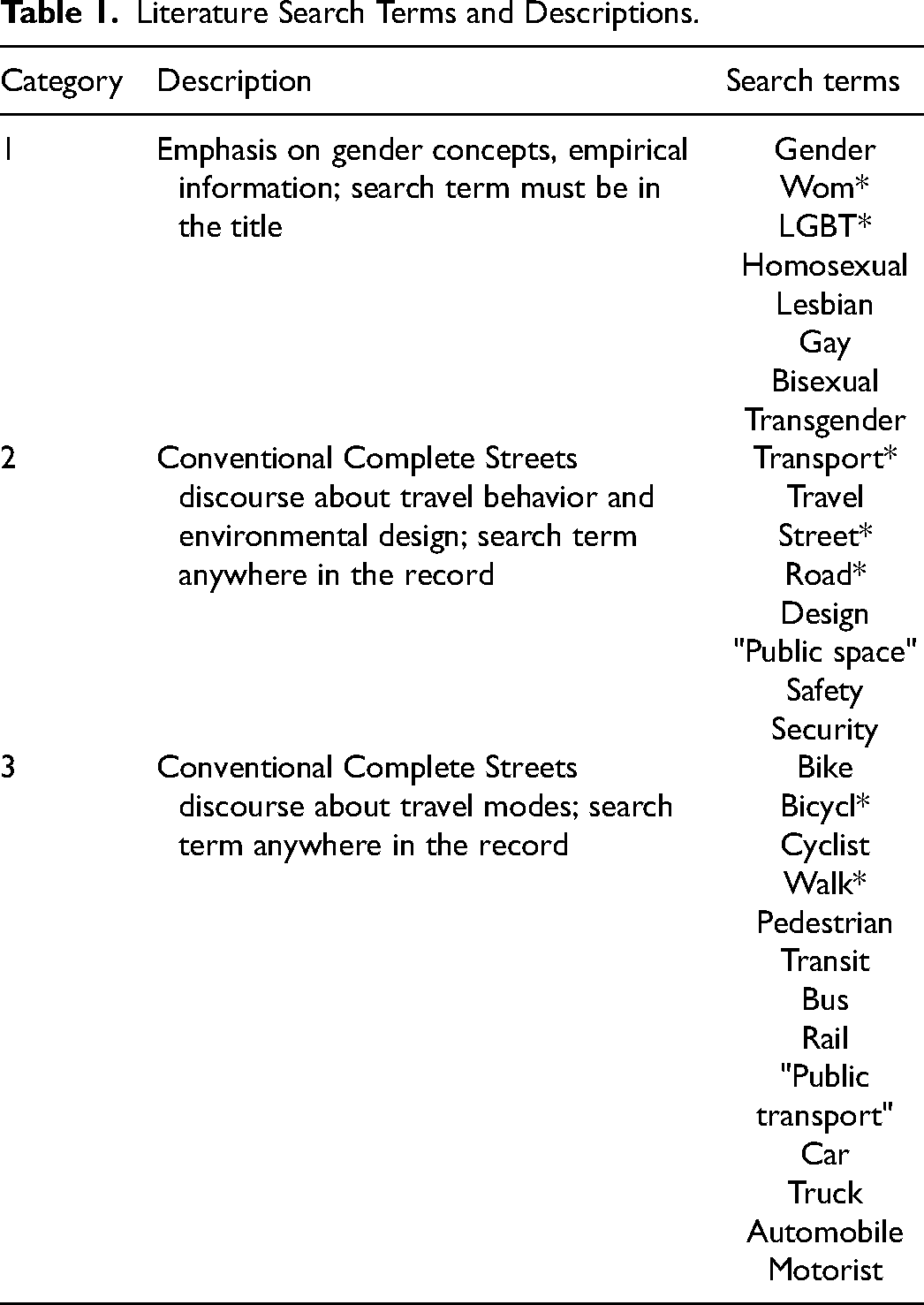
Figure 1 illustrates the screening process of records from the databases and Table 2 details the exclusion criteria. The initial queries produced 3390 records, of which 2622 were unique references after removing duplicates. We conducted an initial screening of the 2622 titles, looking for studies on transportation, streets, built environments, travel behavior, vehicles, and other topics that relate to Complete Streets policy, planning, and design, broadly defined. Following, we excluded many articles with a medical perspective that lacked significance for transportation. This stage narrowed the references to 1144.
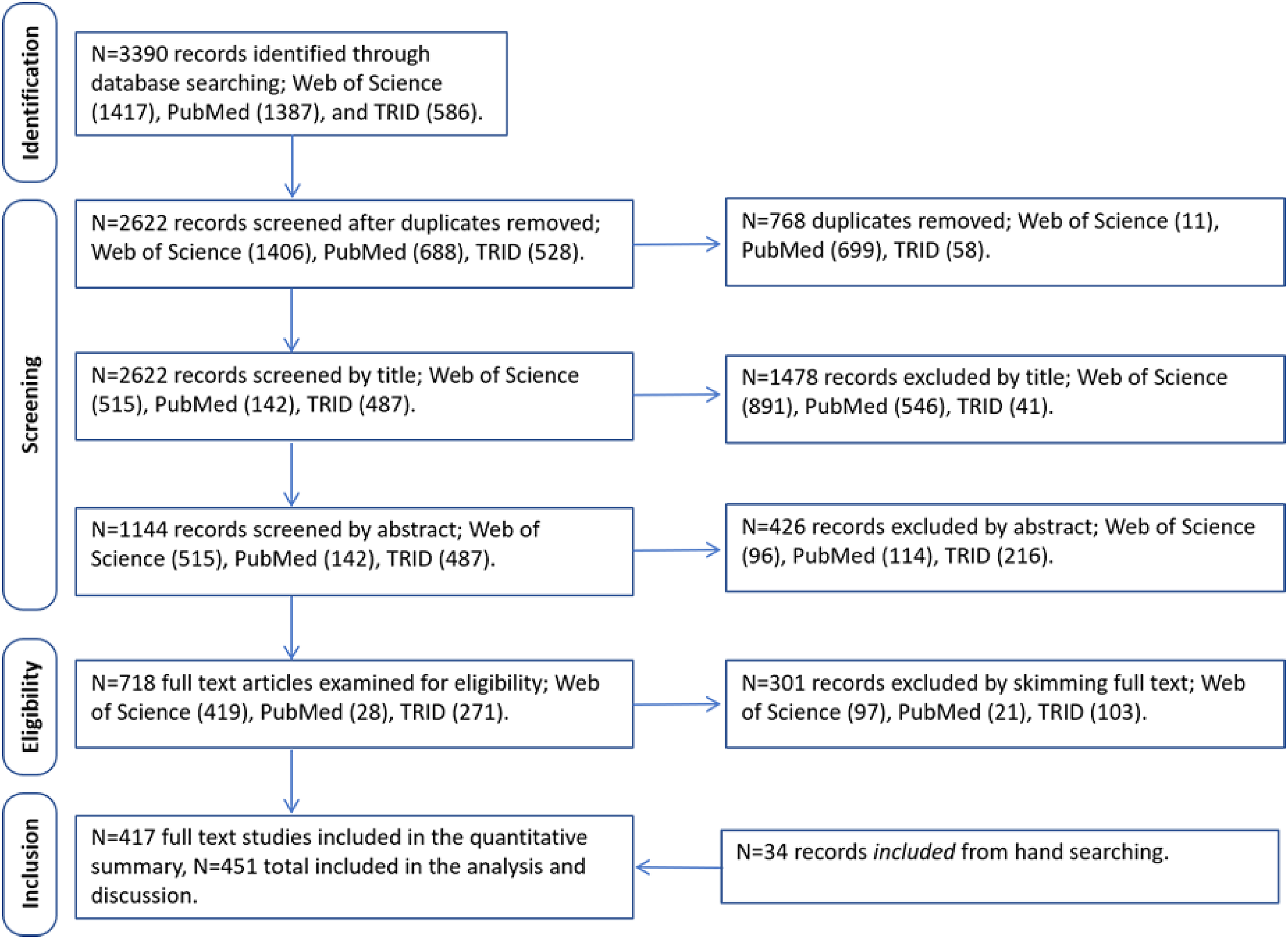
Screening and inclusion process diagram.
Inclusion and Exclusion Criteria in the Screening Process.
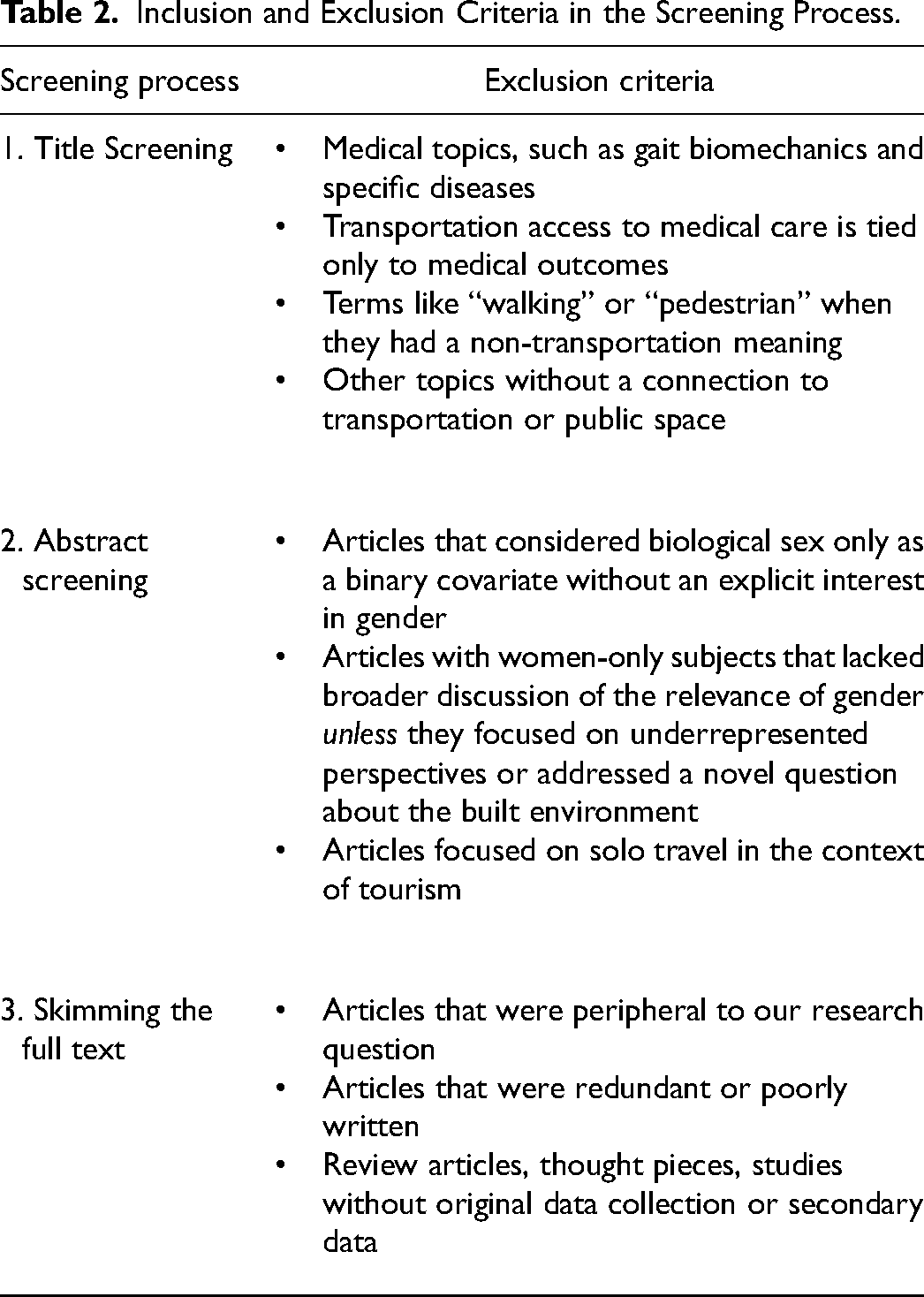
The second round of screening involved reading all 1144 remaining article abstracts. In addition to applying the first-round criteria, we excluded references that used biological sex simply as a binary covariate or that studied women without indicating the relevance of gender. We made exceptions for articles that presented underrepresented perspectives by race, age, ability, or geographic region (usually public health studies of physical activity). This second round of screening narrowed the number of references to 718.
As a final screening step, we skimmed these 718 articles and prioritized studies that used original quantitative or qualitative evidence or deployed secondary data; this excluded thought pieces and reviews from the formal analysis, though we used them as framing documents. This narrowed our list to 417 references highly relevant to our research question and themes of Complete Streets. We supplemented these 417 articles with hand searching in English and Spanish that provided better coverage of the literature on queer perspectives on transportation and the grey literature on gender and transportation (N = 34, these are not included in the quantitative summary).
Article and Abstract Qualitative Coding
We performed an exploratory analysis of 80 full-text articles after the first-round screening by title to establish a qualitative coding vocabulary to analyze the content of each abstract and article. We refined the qualitative codes through several rounds of group discussion until they concisely yet faithfully represented the topics of the abstracts and articles. The codes were: 1) travel behavior; 2) social/cultural norms; 3) street environments and public space; 4) intersectional considerations; 5) policies, plans, and implementation; and 6) human factors, ergonomics, and physiological sex differences (Table 3). The third category—street environments and public space—included several subtopics, including 3A) infrastructure and the built environment; 3B) safety from traffic; 3C) perceptions of built environments; 3D) security from crime and harassment; 3E) social space; and 3F) vehicles. In Table 3 we also note whether these topics are typically included in Complete Streets discourse.
Summary of Article and Abstract Content Coding.

The majority of articles and abstracts integrated travel behavior, social norms, street design, and public space instead of treating them as stand-alone or disconnected topics. One-third of articles included discussion of streets and public spaces, often going beyond infrastructure to highlight perceptions of public space or the social environments that streets create. Another one-third of the articles offered intersectional analyses. About a quarter of the articles addressed planning, policy, and implementation issues. A minority of the articles considered human factors, ergonomics, and sex-based factors; most of these studied the use of seatbelts during pregnancy. In sum, these articles show the scope of documented knowledge about gender, multimodal transportation, and public space that could be integrated into Complete Streets.
We designed a database for documenting basic information about each abstract and article (e.g., citation, research method, study area, sample size, and main findings) including these qualitative codes. Research team members read and coded the 718 abstracts and 417 articles included in the study. The PIs audited the team’s article coding by scanning the articles again to ensure that each entry was complete and accurate.
Results and Discussion
The literature covers several regions, languages, and cultural contexts. The majority of the 417 studies were from North America (32%), followed by Europe (26%), Asia (15%), Australia and New Zealand (6%), Central and South America (4%), the Middle East (3%), and Africa (2%). The places most often studied were the US (105, including studies from 22 different states), the UK (22), Australia (21), India (18), Canada (16), China (9), Mexico (9), and Pakistan (8). Most (95%) were written after 2000, including 77% since 2010. We read articles in English, Spanish, German, Portuguese, and Italian. Similar proportions focused on pedestrians (19%), bicycle (16%), transit (14%), and automobile travel (19%), and the remaining 32% covered a mix of travel behavior, policy, physical activity, and public space research.
Studies used various quantitative and qualitative methods; despite their epistemic and methodological variety, nearly all studies used binary gender categories and heteronormative constructs. Quantitative studies typically analyzed survey data to understand gendered travel behavior as well as crash and injury data to investigate differential injury risk by gender. Papers that examined travelers’ perceptions of public space were more likely to use qualitative approaches from the social sciences and humanities. Constructs based on perceptions of public space (as a complement to objective measures of public space) are salient in the literatures on physical activity, placemaking, and multimodal transportation. These literatures indicate the need for both qualitative and quantitative research to inform transportation engineering and policy, which is consistent with a feminist approach to Complete Streets that legitimizes qualitative studies of subjective knowledge and its application to practice.
The relevant literature reaches audiences through diverse modes of academic production and distribution. In addition to peer-reviewed articles in traditional academic journals, it includes decades of well-cited conference proceedings and special issues of journals (e.g., de Gregorio Hurtado and Novella Abril 2016; TRB 2005). Non-academic databases led us to many critical sources: a steady stream of reports from government agencies and non-governmental organizations that contribute to the state of the art of the field (European Institute for Gender Equality 2016).
Given the diversity of the literature and data types, we utilized the social-ecological model to draw and analyze connections between topics in the literature and those of concern to Complete Streets—in both its current form and looking toward ways to advance gender equity (Figure 2). The social-ecological model is suitable for this analysis because it posits relationships between subjective experiences in the transportation system (e.g., the decision to walk) and the influence of upstream factors (e.g., built environments, social norms, and policies) that enhance or limit one’s experiences and behaviors (Sallis, Owen and Fisher 2015). It asserts that: 1) travelers’ perceptions of the transportation system are legitimate sources of knowledge; and 2) that travelers not only interact with physical spaces but also prevailing social norms, design standards, and policies ideas.

A multilevel approach to gender-aware complete streets.
The model provides a structure to organize the embodied knowledge that arises in the literature. Its different levels correspond to findings in the literature and help us identify both the areas in which practitioners can most effectively advance gender equity and areas where new voices and stakeholders can participate in imagining and implementing Complete Streets interventions.
Level 1 describes the subjective experience of an individual traveler and their personal characteristics. Complete Streets interventions can influence individual behaviors, perceptions, experiences by increasing one’s perception of safety. For example, people perceive places with lower traffic speeds as safer than roads with high traffic speeds. Level 2 describes interpersonal exchanges in public space, which is salient in the literatures on sexual harassment and placemaking. Level 3 refers to the built environment, which is the focus of the existing Complete Streets policies that contend to change the physical form and operation of transportation systems. Level 3 is usually considered together with Level 1, such that changes in the built environment could influence a person's subjective experience of travel (e.g., their perception of safety). Level 4 involves social norms, such as the norms of gendered behavior. Social norms are also associated with Level 1 because they affect a person's subjective experience of travel, as well as with Level 2 because they are present in street-level interpersonal exchanges that could communicate respectful norms of safety and inclusion.
Findings Overview
We use the existing literature to analyze where Complete Streets is already doing gender equity work, but perhaps unknowingly and without naming it as such, and where this work is absent in its practices and discourse. For this analysis, we distill the existing Complete Streets discourse into the following argument: Complete Streets policies and plans, when implemented, result in multimodal infrastructure that makes walking and cycling safer and more convenient, which will prompt travelers (of all ages and abilities) to change their travel behavior and increase their walking, cycling, and transit ridership.
Complete Streets’ Current Potential for Gender Equity
Supports investments in multimodal transportation
Research about travel behavior consistently shows that, globally, women are more likely than men to walk and ride public transit and are less likely to be cyclists. Further, women have lower access to cars, smaller activity spaces, tend to work at home or jobs closer to home, conduct more caregiving activities, and are more likely to stop driving as older adults (Scheiner and Holz-Rau 2012; Sánchez de Madariaga 2013). Many of these patterns are more pronounced in heterosexual relationships, but also hold true in same-sex partnerships (Smart, Brown and Taylor 2017). At this point in travel behavior scholarship, we have little synoptic information about the mobility patterns of gender minorities. In the second part of this review, we focus attention on qualitative studies of travel experiences among gender minorities, which consistently report themes of insecurity and resistance.
Recalling earlier mentions of intersectionality in this paper, the differences in travel behavior within any gender must also be considered and depend on household composition, employment status, income, race, age, ability, and other factors. In Santiago de Chile, women have higher rates of walking than men on average (more than 55% vs. nearly 40% of trips on average, respectively) but taking just this finding alone obscures the fact that walking trips are concentrated among women with lower socio-economic status and that women with the highest levels of socio-economic status drive cars for over 70% of trips (Figueroa Martínez and Waintrub Santibáñez 2015). Moreover, the environments in which women with lower socio-economic status walk typically have lower access to amenities, transit, and jobs and are perceived as more menacing and insecure (Figueroa Martínez and Waintrub Santibáñez 2015). Further, qualitative studies of women’s physical activity and travel behavior in Australia and India highlight that walking, and therefore exposure to potentially insecure environments, is a choice constrained by income (Ball et al. 2006; Mahadevia and Advani 2016).
In short, systemic underinvestment in multimodal transportation disproportionately constrains the mobility of women and people who have caregiving responsibilities, particularly those in households with lower socio-economic status. Complete Streets initiatives, which have resulted in infrastructure investments that improve the accessibility and safety of walking, bicycling, and transit, could directly improve gender equity outcomes by reducing these constraints. Moreover, such investment can potentially benefit gender equity indirectly by facilitating the independent mobility of older and younger travelers who may be non-drivers or dependent on caregivers.
Aims to improve cyclist and pedestrian safety
Women are more sensitive to traffic safety concerns than men, particularly for bicycling (Garrard, Handy and Dill 2012). Countries with high-quality bicycle infrastructure networks have nearly equal numbers of male and female bicyclists, yet countries without this infrastructure have two to three times more male bicyclists than female bicyclists (Garrard, Handy and Dill 2012). Similar gendered patterns in cycling behavior, attitudes, and access to high-quality infrastructure exist at the local and neighborhood scales, which suggests that investment in high-quality bike infrastructure projects is a matter of gender equity (Akar, Fischer and Namgung 2013).
Our survey of research on pedestrian safety found mixed evidence on whether women and men have different perceptions of pedestrian safety or different injury risk. The literature did confirm that walking is an important travel mode for women and that women tend to walk more than men until they reach older ages, implying that women have more exposure to hazardous (or protective) pedestrian spaces (Pollard and Wagnild 2017; Loukaitou-Sideris 2006). Therefore, the efforts of Complete Streets to improve cyclist and pedestrian safety serve to benefit gender equity in transportation.
Women and gender minorities experience personal security concerns above and beyond the risk of injury from traffic. We explore the issue of personal security later in this paper in our discussion of social dimensions of public space: there is a tremendous need and opportunity for Complete Streets to aim to prevent harassment and gender violence.
Is contingent on urban form and land use context
The gender equity outcomes of street-level multimodal infrastructure investments may be contingent on land use and transportation patterns at a regional scale. The regional patterns in residential racial segregation, gentrification, and transportation investments would also be interrelated with gender equity.
The benefits of multimodal transportation investments for both men and women tend to be maximized in higher-density places where people travel relatively short distances to meet their daily needs (Lo and Houston 2018). If one lives in an auto-oriented community and has a disproportionate amount of care-related travel, then relying on cars is likely to be a practical, yet costly, necessity. The benefits of pedestrian, cycling, and transit investments of Complete Streets projects may be lower and more indirect for people who depend solely on cars (McLaren and Parusel 2015). Multimodal streets and transit service expansion offer more benefits, particularly to caregivers and nondrivers, when they are complemented with regional land use and housing policies that result in compact settlement patterns (Boarnet and Hsu 2015). Although Complete Streets policies have been adopted by rural, small, and low-density communities across the U.S., their potential to advance gender equity may be stronger in urban places with more opportunities for multimodal travel.
Requires an intersectional framework
Even in compact environments, the gender equity outcomes of multimodal infrastructure investment and active transportation programs differentially reflect socioeconomic, racial, and ethnic patterns within a single gender population. In a study of bus rapid transit expansion and Complete Streets improvements in Mexico City, Chang et al. (2017) found that women with lower education experienced disproportionately larger increases in walking for transport and recreation than women with higher education and that the subset of working women with lower education also shifted their travel mode away from cars (from 19% to 4%). The study could not determine if these were positive or negative changes in women’s welfare because the study design did not consider the larger set of tradeoffs that travelers make such as time use or personal security. A study of Walk Your Heart to Health, a community promoter-facilitated walking group intervention with predominantly Hispanic and non-Hispanic Black participants (90% women) in Detroit, Michigan, found a statistically significant negative interaction effect of race (non-Hispanic Black) on overall steps along with higher program retention among older participants (Schulz et al. 2015). These studies reinforce the need for an intersectional approach to Complete Streets that is able to engage with the full range of environmental, social, and economic factors present in transportation policy and design decisions.
Shares similarities with gender mainstreaming agendas
Gender mainstreaming projects related to transportation have led the way in applying Complete Streets concepts (Wittbom 2011). European examples, such as the Mariahilf district in Vienna, highlight how multimodal transportation investments directly follow from—and may require support from—gender-aware urban development processes and methodologies. A second example elevates the role of participatory planning. In Barcelona, Col·lectiu Punt 6 has designed a participatory planning process to connect gender, urban design, and walkability across the spheres of everyday life, which include production, reproduction, personal identity, and political action (Ciocoletto 2016). A participatory planning process that includes diverse voices provides an even fuller picture of the heterogeneity within the spheres of everyday life.
Beyond these examples of gender-aware physical planning in Europe, the literature indicates the need for cross-sector policies that prioritize women’s mobility patterns (Maciejewska and Miralles-Guasch 2020). For instance, adjusting school schedules to reduce constraints on women’s employment (Craig and van Tienoven 2019) and improving women’s access to emerging, flexible modes such as ridesharing and ride-hailing, can facilitate women’s participation in work and other activities (Singh 2020). These complementary policies are apt actions for a gender-aware Complete Streets agenda and expand its focus to include newer travel modes as well as new collaborations across sectors such as health care, human services, education, technology, and energy.
Recommendation to Expand Complete Streets’ Engagement with Gender Equity
Our review identified a major gap between the scope of Complete Streets practice and the literature findings. The literature says that the experience of travel, as well as the outcomes of the transportation system, are profoundly influenced by social and cultural gender norms, perceptions of streets as public spaces, harassment and security, the social spaces of streets, the social spaces inside vehicles, and intersectional perspectives beyond age and ability (Table 2). If existing Complete Streets policies and their implementation incorporated more sophisticated knowledge of these social factors, beyond infrastructure, it could more directly facilitate gender equity in transportation. This section presents empirical information, gender concepts, and regional cases, focusing on the cluster of six social topics in Table 2 that are underrepresented in the current Complete Streets agenda.
Develop collaborative approaches to include subjective experiences of public spaces
When cisgender women, transgender, and nonbinary travelers write about public space, their analysis often includes an examination of the social and psychological spaces in which one experiences social norms about appropriate gender behavior (in Figure 2, this would be Level 1 and Level 2). These authors reflect on their subjective sense of self and the consequences of resisting gender norms in public spaces such as streets or transit vehicles (Doan 2010). Farrow (2018), a queer traveler in the United States, described transgressing cisgender and heterosexual norms in ordinary places such as public transit. These transgressions forced them to consider their appearance, which often made them feel vulnerable or confident, depending on the situation. The interaction between one’s inner life and experience of public space ultimately prompted them to “play” with their gender presentation in public space, usually by modifying their clothing, posture, or facial hair, sometimes to fit gender norms, and sometimes to resist these norms. Thus, traveling in public space can also be a reflective inner journey through the emotional and material spaces of gender identity (Mai and King 2009). For researchers in transportation and urban design, this is a topic that warrants further study.
The interaction between transportation, public space, and the subjective sense of self is a recurring pattern in the literature across regions. Guggenheim and Taubman Ben-Ari (2014) studied three ultraorthodox communities in Israel, all with strict social bans on women’s driving. Interviews with 13 ultraorthodox women who received special exceptions to drive, despite the ban, documented how they responded to driving. In this religious context, the drivers felt uncomfortable, exposed, and immodest. They did not feel immodest because of their driving skills or travel times, but because they sensed a conflict with their gender identity in the context of their communities and religious beliefs. Hence, traveling in public space can have negative, painful normative consequences, which, despite being a private injury, transportation planners should acknowledge. In fact, during the early period of motorization, traffic injury was considered a private problem resulting from a person’s poor driving behavior; it was not treated as a public problem until professional norms acknowledged the multilevel interaction between individuals, environments, and system designers (McAndrews 2013).
These two examples foreground how people can experience gender as a function of traveling in public space. Further, these experiences suggest practical ways of assessing the inclusivity of streets, public transit vehicles, and other parts of the transportation system. A transportation system would be considered inclusive (or not) from the perspective of one’s subjective experience of their gender, including unstable gender identity. Inclusive spaces are not necessarily copacetic or conflict-free. We would expect different evaluations of inclusion within and across people, as well as difficulty generalizing inclusion within the science-based policy system that governs streets. This difficulty, however, demonstrates that the role of subjectivity in Complete Streets is a critical and fertile arena for further examination and action through social science and humanities fields, the arts, creative design, placemaking, historic preservation, oral history, activism, and public humanities approaches to public engagement in transportation policy, planning, and urban design. These arenas offer precedents for planners to work with subjectivity, collective action, and public space. This indeed would be a massive yet necessary shift from traditional civil engineering approaches to local roads to fully address equity in these spaces.
Incorporate insight from interpersonal exchanges in the transportation system
The literature on gender and multimodal transportation calls attention to the role of interpersonal exchanges that reinforce or sometimes challenge social norms around women’s travel. These exchanges are not currently acknowledged in the Complete Streets framework, which focuses on infrastructure. They are, however, part of Complete Streets practice, usually in the form of family-focused cycling or walking events.
Based on the literature on gender and transportation, these events should be considered a potential mechanism to advance gender equity and social inclusion. For instance, family members or other close relationships have a strong influence on travel behavior. In her study about women and public space in Recife, Siqueira (2016) explained that her grandmother routinely ended their visits together with the same statement: “This is no time to be out in the street.” She complied with her grandmother’s wishes out of respect, though she did not necessarily share her grandmother’s concerns about walking alone at night (Siqueira 2016). Nonetheless, we often honor and reinforce our social relationships through travel behavior. This is one mechanism through which “perceived fears and social norms circumscribe women’s travel times to daylight hours and discourage non-motorized travel” (Song, Kirschen and Taylor 2019, 148). Siqueira’s grandmother may be justified in her concerns, and, objectively, it may be less safe for women to travel alone at night in Recife. Yet women and gender minorities not only have the burden of circumscribed mobility and being targets of violence, but they are also called on by society—through personal relationships that maintain gendered ideologies of fear—to adjust their behavior, activities, and self-expression (i.e., Level 1) instead of looking upstream (i.e., to the social norms in Level 4) to prevent gender violence in the first place. Family-focused walking and cycling events could be designed to correct these stereotypes and norms.
Another type of interpersonal exchange is outright harassment by strangers who intend to enforce misogynist norms of appropriate gendered behavior (Bhattacharyya 2016). Depending on one’s regional and cultural context, certain travel modes (e.g., cycling, public transit) may be more likely to provoke harassment because of gender stereotypes and exposure, but often it is the simple presence of a woman or gender minority in public space that leads to being attacked. In this case, individual travelers shoulder the impossible trade-off of either not participating in public life or traveling with a sensation of physical vulnerability. The prevalence of gender violence in streets and public spaces prompts female, transgender, and gender nonbinary travelers to manage their physical appearance, carefully select their route, carry a type of defense, text a friend when they get home or take other protective actions (Heim LaFrombois 2019; Song, Kirschen and Taylor 2019).
Complete Streets should take note that certain interpersonal exchanges can increase one’s sense of security in public space, especially by seeing others of the same social group. Johnson and Miles (2014) interviewed nine observant Muslim Arab women who wore Islamic headscarves and who either lived in or frequently visited Bay Ridge in Brooklyn, NY. In addition to the physical design and land use aspects of walkability, these study participants explained that the “presence of substantial numbers of women wearing the Islamic headscarf…made them feel at ease and included in places that were otherwise foreign to them” (Johnson and Miles 2014, 1903). Moreover, the participants felt that their own presence in public space challenged negative stereotypes of Muslim women. This example teaches us that gender equity and inclusion within a Complete Streets framework could arise through interpersonal relationships and encounters, especially when they are supported by safe and walkable streets. Without these interpersonal relationships and encounters, the interviewees would not have seen one another and consequently felt a sense of belonging. In fact, these social encounters are not superfluous to streets and transportation, they are a critical part of streets that we should not oversimplify in design.
Extend gender equity practices to transportation design, labor force, and policy
Gendered social and cultural norms (Level 4 in Figure 2) influence decision-making and policies that shape transportation infrastructure and public spaces (Level 3 in Figure 2). For instance, Ward (2000) reflected on her identity as African American, a woman, a traveler, an academic researcher, a policymaker, and a practitioner to emphasize the value of recognizing the intersections of one’s different identities to actively resist discrimination. Ward had the professional status and influence to advocate for women, African Americans, and low-income transit riders in her work, but she faced tokenism and racism in her profession. “The conflicts arise when I assert myself as a human being…I am allowed to do research [with the expectation] that I do research that is of interest to white males and representative of their perspectives” (Ward 2000, 23). The implication for Complete Streets is that an inclusive transportation system extends to the transportation workforce through the professional norms and processes of system designers who create policies, design standards, and incentive structures (CIVITAS 2014).
Social and cultural norms that operate at Level 4 in Figure 2 establish the setting in which policymakers decide to invest in multimodal transportation infrastructure. Research has shown that countries that have the most extensive, low-stress bicycling infrastructure tend to have higher gender equality, measured with the Gender Equality Index (comprising indicators of gender equality in work, financial resources, education, time, power, health, violence, and intersecting identity factors; Prati 2018). Another example also shows the influence of national (or regional) gender norms, transportation systems, and globalization. In a study of the metro system in Delhi, interviewees told the researchers that men were more respectful toward women in the metro (Level 2) than other transit systems in the city because the metro was specifically constructed based on Western ideas of modernity, which they perceived to include gender equity (Level 4; Gopal and Shin 2019). While it is well-known that transit system design can affect gender equity, this literature tells us that Complete Streets will need to develop a broad cultural awareness of gender norms in society and at multiple scales in the transportation system.
Implement anti-violence measures in transportation
The Complete Streets movement has hardly engaged with violence and harassment prevention (Level 2) yet the fear of gender-based violence—including harassment, assault, and rape—underlies much of the discussion of social norms in public space. The voices in this literature include transgender, gender nonbinary, men, and women travelers from all over the world (Soto Villagran 2017; Bhattacharyya 2016; Roberton 2016; Weintrob et al. 2021). Numerous articles document how travelers experience such fear, the cost it imposes on their lives, specific interpersonal defenses they have developed in reaction to pervasive violence, as well as institutional-level design and policy interventions to prevent it.
Rather than recapitulate this literature, which was recently reviewed by Ding, Loukaitou-Sideris and Agrawal (2020), we consider how Complete Streets may respond. The main categories of anti-violence responses in the transportation sector include (1) design (e.g. lighting, maintenance, and transit station area configurations); (2) policing (e.g. programs that place police in transit environments); (3) technology (e.g. CCTV, real-time transit information, and smartphone-based reporting); (4) policy (e.g. women-only transit schemes, security audits by women, involving women’s voices in the planning process, and anti-harassment criminal justice measures); and (5) education (e.g. workshops, signage, and grassroots community action) (Ding, Loukaitou-Sideris and Agrawal 2020; Rivadeneyra et al. 2015; Loukaitou-Sideris 2010).
Existing anti-violence strategies are not necessarily universally inclusive. In the context of LGBTQ communities in Toronto, Roberton (2016) notes some limitations of existing violence prevention strategies and recommends new practices. First, travelers often hesitate to report violence because the police notoriously doubt the validity of their experience and ultimately humiliate them for reporting. Citing larger patterns of racial bias in law enforcement, research participants in Toronto explained that reporting should be independent of law enforcement and that public transit agencies should have required sensitivity training. LGBTQ community organizations in Toronto also recommended: “dismantling, disarming, and simply creating a better relationship with the police” to create more inclusive streets as public spaces (Roberton 2016, 87).
Activists and scholars have criticized the reliance on law enforcement to respond to gender violence as a mechanism of racial injustice. In practice, racialized laws and law enforcement disproportionately protect heterosexual, cisgender white women and disproportionately harm marginalized racial and ethnic groups, immigrants, transgender and gender nonbinary communities, as well as people with disabilities (Kim 2020). Examples from public space that are relevant for Complete Streets include the criminalization of panhandling, marijuana, sex work, and loitering and increased presence of law enforcement on streets, multiuse trails, bike paths, parks, open space, and other spaces associated with multimodal transportation (Roberton 2016; Loukaitou-Sideris 2010). These findings raise pressing questions about the appropriate and inappropriate use of law enforcement as well as alternatives to law enforcement in the transportation system. In practical application, Complete Streets planning must engage with diverse voices to understand what people perceive as a threat and likewise what they perceive as safe.
Conclusion and Implications for Practice
What does our review of the literature on gender and multimodal transportation recommend to the thousands of communities that are implementing Complete Streets policies? First, we learned that implementing existing Complete Streets policies may advance gender equity even without explicitly raising gender awareness because women are more likely to walk, ride transit, and have concerns about cycling. We also realized the relevance of gender mainstreaming, which is a process through which policymakers and planners consider the different needs of men and women to bring gender awareness to every stage of planning, design, and implementation. When communities have applied gender mainstreaming to streets, corridors, or transportation networks, the process has resulted in programs that resemble Complete Streets.
Regarding gender mainstreaming, we found noteworthy examples from Vienna and Barcelona that validate its effectiveness. If communities desire gender awareness in their multimodal transportation planning, then public works departments, advisory committees, advocacy organizations, or consultants could apply principles of gender mainstreaming. Gender awareness can be integrated into the existing Complete Streets planning process by examining data disaggregated by gender, including gender-specific questions on surveys (e.g., caregiving, security), and including women and gender minorities in leadership and decision-making processes.
It is both appropriate and necessary to combine questions of gender with questions of race, ethnicity, religion, county of origin, and other identity factors that are as relevant to local communities as they are to transportation research. Complete Streets practitioners already rely on multi-sectoral partnerships and this approach can be expanded to include new partners who value lived experience in decision-making processes about streets as public spaces.
The effort to mainstream gender in Complete Streets can also serve as an opportunity to remove cisgender and heteronormative conventions in both the practice and study of transportation planning, policy, and design. As one of our review’s articles proposed, “How do we queer gender in more spaces, particularly ordinary spaces like public transit…” (Farrow 2018)? This literature review illustrates both potential and challenges for moving beyond the gender binary in transportation and the need to increase awareness of queer and nonbinary concepts and perspectives. Our initial database search, for example, did not find the scholarship on queer, transgender, and nonbinary travelers. This is likely the result of the underrepresentation of queer urbanism scholarship in academic databases and resolved only when we searched this area with an expanded vocabulary and examination of bibliographies.
The literature shows the need for transformative structural and epistemic change, too, not only an additional equity “lens.” We read the literature on gender, multimodal transportation, and public space as an exercise in listening to and believing the experiences of women and gender minorities. We found that a substantial proportion of evidence about gender equity in transportation is completely missing from the Complete Streets movement. Based on our analysis of this gap, we draw attention to three areas for future research and practice.
First, practitioners and researchers will need new tools, methods, instruments, and data to respond to the issues and questions raised in the literature, including the social norms of public space and violence prevention. Complete Streets plans reference social inclusion, sometimes disaggregate data by gender, and may use inclusive strategies for public engagement, yet they lack interventions designed to foster social inclusion or to prevent harassment (McCann and Rynne 2010). Researchers and practitioners could unite to develop respectful and evidence-based planning methods and tools that elevate gender in multimodal transportation. These may include questions for surveys, model policy language, and collaborative forms of public engagement, to name a few. In tandem, we must expand what counts as data, as well as the methods to create it, to increase the legitimacy of subjective experience and perceptions of public space.
Second, practitioners and researchers need to conceptualize streets as public spaces that are open systems of reciprocal relationships. Thus, achieving gender equity in transportation requires interventions in the social environment of streets. While transportation and public works departments do not typically develop anti-violence programs or supportive peer groups to complement the Complete Streets infrastructure, they should develop capacity in these areas and partner with other sectors that can lead the effort. A parallel example, drawn from urban design that empowers older adults, illustrates the dilemma: “loneliness cannot be solved with accessible ramps” (Kiyota 2017). Complete Streets faces a similar challenge of influencing underlying social phenomena through physical design. It is necessary to build sidewalks where women typically walk, but sidewalks will not necessarily make it an inclusive street, which is the underlying desired outcome of Complete Streets. Again, the subjective experience of travelers is a key source of insight about social inclusion in public space and Complete Streets can develop methods and capacity for utilizing this knowledge.
Through this review, we encountered several other examples of social-ecological interventions that can potentially expand the scope of Complete Streets research, practice, and policy to include the social realm. Examples include women’s walking groups sponsored by community health departments, public art, safe routes to school programs, community-based safety and security programs, feminist bicycle advocacy, and professional networks in transportation that specifically support historically underrepresented groups. Transportation professionals should see these interventions as just a starting point to advance gender inclusion in multimodal travel and placemaking. Evidence from the research tells us that multilevel interventions that combine sidewalks (i.e., Level 3 infrastructure) with supportive peer groups (i.e., Level 2 interpersonal exchange) can result in sustained, positive changes in walking behavior (Lee et al. 2012). Further, Complete Streets implementation could be more open to involving public health practitioners, educators, social workers, and other partners to prevent gender-based harassment.
Third, although practitioners could advance gender equity by working at smaller scales, their work would have a wider transformative effect as part of the larger transportation policy system. Beyond the domain of Complete Streets, this transformative practice needs to reach upstream mechanisms of transportation statutes, appropriations, finance, and project prioritization. Too often mainstream transportation policy maximizes mobility for middle-class commuters while investments for nondrivers, caregivers, and racial and economic minority groups remain piecemeal. This leaves practitioners—for example, those who focus on transportation disadvantage—to rely on underfunded cross-sector collaborations to implement critical transportation “alternatives.” The unmet demand for equitable mobility requires enabling policies, people of all genders in leadership, changing broader social expectations, and broader community engagement in transportation planning. At the same time, novel policy change needs complementary implementation through practical programs and designs, which is an ideal role for Complete Streets.
We know that planners, advocates, and public works departments face resistance when they try to convert auto-oriented streets into multimodal public spaces. Implementing a Complete Streets policy can take decades and demand hefty costs while actors reorganize themselves to dismantle traditional street design standards and replace them with new ones that reflect multimodal priorities. From start to finish, negotiating a new way to govern the social and technological order of streets requires hundreds of practical and discursive changes that are often too subtle to celebrate. Within this context, Complete Streets practitioners may interpret a focus on gender equity as burdensome, especially if they have already broadened the scope of Complete Streets to include race, ethnicity, and socioeconomic status. Such a response, or any other means of resistance, however, will only continue to halt racial justice, or justice for anyone else, in transportation.
The impulse of Complete Streets to create equity between travel modes prompts a fundamental question: what would it take to create full multimodal equity—streets that are safe for all types of transportation and the varied subjective—and often shared—experiences of travelers? As equality by travel mode does not translate to equality across people, Complete Streets’ greatest potential is to resist “intersecting forms of oppression such as sexism, heterosexism, racism, ableism, and classism” through interventions in public space (Lubitow et al. 2017). Advancing gender equity will not necessarily be comfortable; it requires a collective push to create Complete Streets that are truly inclusive and to hold public systems accountable for wide-scale and long-term change. If Complete Streets utilizes an intersectional feminist framework, it can help achieve this resistance by recognizing complicated and fluid identities of travelers, adopting a relational approach to policymaking instead of individualism, and valuing the embodied experiences of road users who can attest to feeling included in public space.
Footnotes
Declaration of Conflicting Interests
The author(s) declared no potential conflicts of interest with respect to the research, authorship, and/or publication of this article.
Funding
The author(s) disclosed receipt of the following financial support for the research, authorship, and/or publication of this article: This work was supported by the Wisconsin Alumni Research Foundation, Center for Transportation Equity, Decisions, and Dollars, University of Wisconsin–Madison Global Health Institute.
