




Abstract
More than 1,500 children died in the United States in 2011 due to child maltreatment. A substantial portion of these deaths were due to neglect. Previous research has found that a large percentage of child neglect cases involve supervisory neglect; however, the role of inadequate caregiver supervision (ICS) in child maltreatment deaths is unknown. The present study reviewed files from the Child Death Review Board in the state of Oklahoma for the years 2000 to 2003 to examine (a) how many deaths were due to inadequate caregiver supervision and (b) which child, caregiver, family, alleged perpetrator, and incident characteristics predicted risk for death related to ICS. Results indicated that almost half of the child maltreatment deaths were related to ICS. Older children and those living in homes with greater numbers of children were more likely to die from causes related to ICS. In addition, the alleged perpetrators of deaths related to ICS were more likely to be biological parents than alleged perpetrators of non-ICS-related deaths. These findings suggest that interventions to assist caregivers in providing appropriate levels of supervision for their children may be important for reducing children’s risk for death.
Child maltreatment is a serious threat to the well-being of children in the United States. In 2011, approximately 1,570 children died in the United States due to maltreatment, and many more were seriously injured (U.S. Department of Health and Human Services [USDHHS], Administration for Children and Families, Administration on Children, Youth and Families, Children’s Bureau, 2012). A large portion of these deaths (71%) were due to either neglect alone or resulted from a combination of neglect and physical abuse (USDHHS, Administration for Children and Families, Administration on Children, Youth and Families, Children’s Bureau, 2012). The number of child deaths due to neglect suggests that it is important to study the factors surrounding such deaths in the service of developing effective prevention approaches.
Research on nonfatal child maltreatment indicates that a large portion of child-neglect cases involve inadequate supervision (Pears, Kim, & Fisher, 2008). Indeed, Pears et al. (2008) found that 89% of preschool-aged children in foster care had been victims of supervisory neglect (Pears et al., 2008). In addition, a study of child injury deaths in Louisiana and Alaska reported that 43% of deaths were due to inadequate caregiver supervision (Landen, Bauer, & Kohn, 2003). This study found that deaths due to drowning, fire, and pedestrian activity were most likely to be due to poor caregiver supervision. The sample in this study included both maltreatment-related and non-maltreatment deaths.
Experts have argued that risk factors for unintentional child injury and child maltreatment overlap considerably (Peterson & Brown, 1994); however, specific data are not available on the number of child maltreatment deaths that result from inadequate supervision. Long-term data from the state of Oklahoma indicate that the second and third most common causes of fatal maltreatment are unintentional drowning (12%) and smoke inhalation (9%; Damashek, McDiarmid Nelson, & Bonner, 2013). As noted earlier, previous research has found that such injuries are often related to poor supervision (Landen et al., 2003). However, more research is needed to examine how frequently maltreatment deaths are related to inadequate caregiver supervision (ICS).
Research is also needed on the child, caregiver, family, perpetrator, and incident characteristics associated with ICS deaths. Understanding which child, caregiver, family, perpetrator, and incident characteristics are associated with child deaths due to ICS would assist in developing more effective prevention strategies. In research on child injury deaths in Alaska, investigators found that male children were more likely to die as a result of ICS (Landen et al., 2003). However, research is needed to determine whether there are other child characteristics, as well as caregiver, perpetrator, family, and incident factors that are related to child maltreatment fatalities that result from ICS.
The present study used data on child maltreatment fatalities provided by the Oklahoma Department of Human Services and the Child Death Review Board to determine the number of deaths that were related to ICS in the years 2000 to 2003. The study also examined whether child (i.e., age, gender, ethnicity), caregiver (mother-figure age, father-figure age), alleged perpetrator (gender, relationship to child), family (number of children in the home, parents’ marital status, whether parents lived together), and incident characteristics (type of maltreatment, cause of death) were associated with risk of death from ICS.
Method
Procedures
Data for all child deaths in the state of Oklahoma that were due to abuse and neglect (as determined by the Department of Human Services, Child Welfare Division) in the years 2000 through 2003 were examined. The data were collected as a collaborative project between the Department of Human Services (DHS), Child Welfare Division; the state Child Death Review Board (CDRB); and researchers at the University of Oklahoma Health Sciences Center (HSC). The data for this study were collected at the time of each child’s death as part of DHS or state-instituted child death investigations and kept in files at the Child Death Review Board office in Oklahoma City. The study was approved by the Institutional Review Board at the University of Oklahoma Health Sciences Center.
Data Sources
Victim, caregiver, family, alleged perpetrator, and incident characteristics
The investigators’ data sources included death certificates, medical examiner reports, child welfare investigative reports, law enforcement investigative reports, and court reports. Trained research assistants retrieved data regarding pertinent variables from these reports and created an electronic database. Variables that were included in analyses included victim (i.e., age, sex, ethnicity), caregiver (mother-figure and father-figure age), family (number of children living in the home, whether or not the mother and father figures lived together or were married), and alleged perpetrator characteristics (i.e., gender and relationship to the victim).
Two variables, including maltreatment type (abuse, neglect, or both) and cause of death (e.g., head trauma, drowning, etc.), were not explicitly recorded in the paper files and were coded by study staff. Physical abuse was coded in cases in which a caregiver engaged in physical acts that caused an injury to a child. Neglect was coded in cases in which a caregiver failed to provide age-appropriate care for a child. These variables were coded by the research assistants based on the DHS narrative reports of the circumstances surrounding the children’s deaths. Reliability was calculated based on 13% of cases. For both type of maltreatment and cause of death, kappa analyses indicated excellent reliability (1.00 for both).
Reliability analyses were also conducted for the other variables in the study (based on 13% of cases); kappa analyses were used for dichotomous variables (i.e., victim’s gender, parents’ marital status, whether or not parents lived together, alleged perpetrator gender, whether or not alleged perpetrator was biologically related to victim) and correlations were used to examine continuous variables (i.e., child age, mother- and father-figure ages). Results of kappa analyses ranged from .69 to 1.00, and results of correlation analyses ranged from .99 to 1.00. There were too many categories of victim ethnicity and the alleged perpetrator’s relationship to the victim to calculate kappa; thus, percent agreement was calculated for each of these variables. Percent agreement for victim ethnicity was 87, and percent agreement for the alleged perpetrator’s relationship to the victim was 92.
In the state of Oklahoma, child deaths are evaluated by a medical examiner (ME), who codes the death using six potential categories: homicide, accident, natural, suicide, pending investigation, and undetermined/unknown. The codes do not include a designation for abuse or neglect. The (ME) code was recorded from the children’s death certificates. DHS determines whether or not children’s deaths were related to child maltreatment.
Inadequate caregiver supervision
The Modified Maltreatment Classification System (MMCS; English & the Longscan Investigators, 1997) was used to determine whether deaths were due to inadequate caregiver supervision and to rate the severity of neglect. The MMCS coding system was developed to code type and severity of child maltreatment incidences. For the present study, the investigators used only the supervisory neglect portion of the classification system. The system is divided into three different types of supervisory neglect: Supervision (401), Environmental (402), and Substitute Care (403). The MMCS provides a scale for rating the severity of maltreatment (1 = least severe, 5 = most severe) for each category of abuse and neglect, including supervisory neglect. For example, for the general supervisory neglect category, the criteria for the lowest level of severity (“1”) is, “the caregiver fails to provide adequate supervision or arrange for alternate adequate supervision for short periods of time (i.e., less than 3 hr) with no immediate source of danger in the environment.” Whereas the criteria for the most severe rating (“5”) is, “the caregiver fails to provide adequate supervision for more than 12 hr.” There are specific criteria for each subtype of supervisory neglect.
Coders read a narrative report (taken from DHS records) of the circumstances surrounding each child’s death and coded whether or not the death was due to ICS. Each death determined to be related to ICS was coded by MMCS category and severity. If the death was not determined to be related to ICS, a code of “0” was recorded for both the category and severity. Two coders were trained by coding several files jointly. Coders then read and coded 28 cases (24% of the total) individually; the two coders had 75% agreement with regard to whether or not the death was due to ICS, and the intraclass correlation for severity ratings was .70. All disagreements between coders were resolved through discussion.
Participants
The data set consisted of a total of 141 child maltreatment deaths. Of those, the cause of death, as coded by the medical examiner, was undetermined for 27 (19%) cases. These cases were not included in subsequent analyses as there was insufficient information to determine whether or not the deaths were related to supervision. The final data set included 115 children who died in the state of Oklahoma from child maltreatment (as determined by DHS) during the years 2000 to 2003 (total of four years). The participant characteristics for the entire sample can be seen in Table 1. The majority of the children were male and Caucasian. However, African American children in the sample were overrepresented compared to their representation in the state population (8.3%; U.S. Census Bureau, 2000). The majority (90%) of children were ages five and younger, and the mean age was three. Most mother-figures were in their mid-20s, and most father-figures were in their early 30s. The majority of the alleged perpetrators were female and were biological mothers. The mean number of children in the home (including the deceased child) was 3, and the majority of the victims’ parents were unmarried and living together. The majority of deaths were coded as either homicides (48.7%) or accidents (44.3%) by the medical examiner (as noted on the death certificate). The rest were coded as natural (i.e., from natural causes, 5.3%), suicides (0.9%), or were pending investigation (0.9%).
Child, Caregiver, Alleged Perpetrator, and Family Sample Characteristics for all Cases of Death.
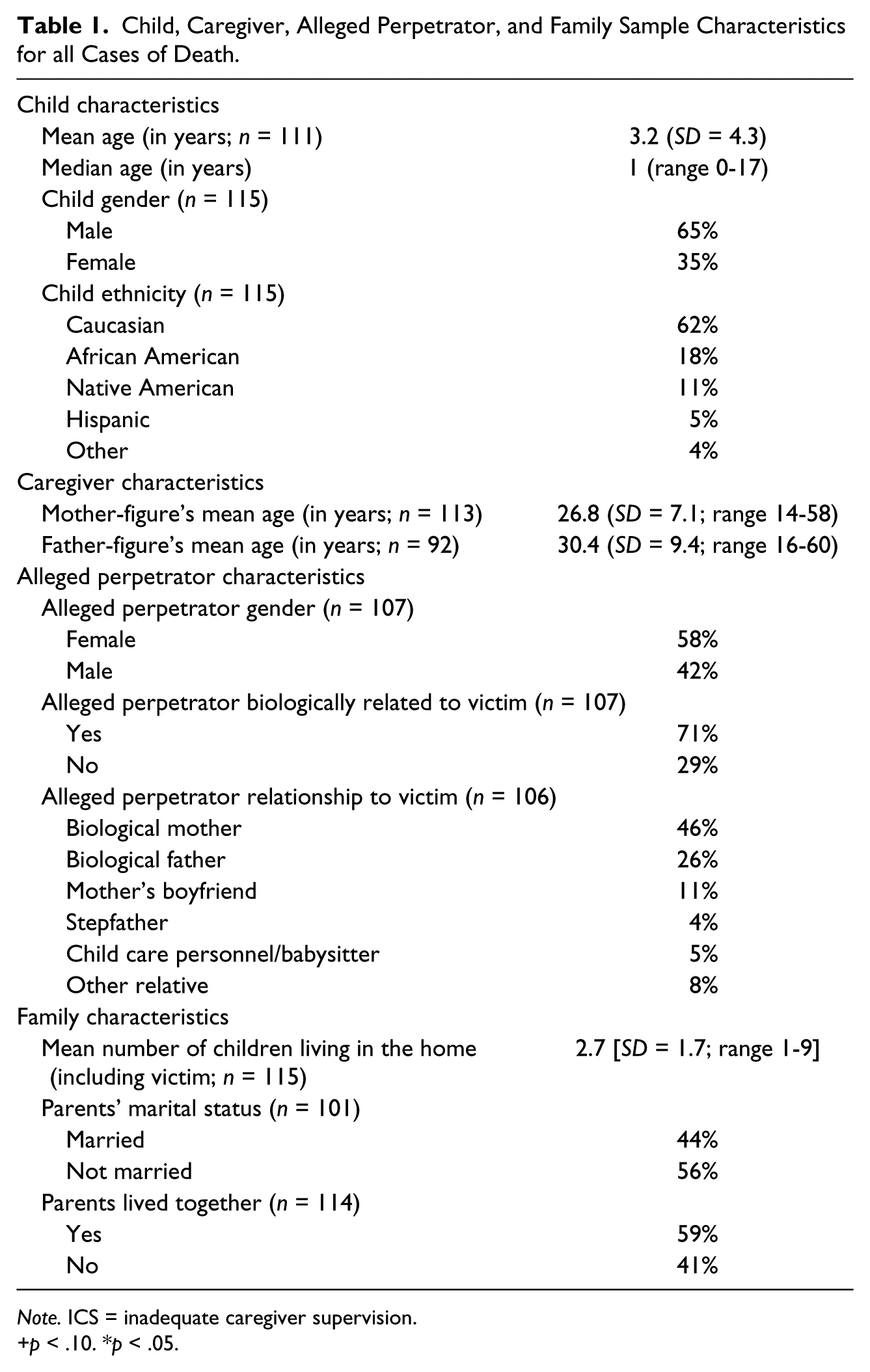
Note. ICS = inadequate caregiver supervision.
p < .10. *p < .05.
Results
Deaths Due to ICS
Using the MMCS, 51 (44.4%) of the 115 deaths were determined to be related to ICS. Of those 51, 53% (n = 27) were related to lack of supervision in a hazardous environment, 33% (n = 17) were related to general supervisory neglect, and 14% (n = 7) were related to inappropriate substitute care. When combining all supervision categories, mean severity for deaths related to ICS was 3.0 (on a scale of 1-5; SD = 1.5). Mean severity was higher for the hazardous environment category (M = 3.8, SD = 1.4) than for the general lack of supervision (M = 1.7, SD = 0.9) or inappropriate substitute care (M = 2.9, SD = 1.1) categories.
Child, Caregiver, Alleged Perpetrator, Family, and Incident Characteristics Associated With ICS
Bivariate analyses were used to examine whether child, caregiver, alleged perpetrator, family, and incident characteristics differed for deaths that were determined to be related to ICS versus those that were not. Variables that were examined included child age, child gender, child ethnicity, maternal age, paternal age, alleged perpetrator gender and relationship to child (biological or nonbiological), number of children in the home, parents’ marital status, whether parents lived together, type of maltreatment (i.e., abuse, neglect, or both), medical examiner code, and cause of death (e.g., drowning, head trauma). Results can be seen in Table 2. T-tests were conducted for continuous variables, and chi square tests were conducted for categorical variables. Deaths related to ICS were more likely to occur for older children and for those living in homes with greater numbers of children. In addition, biological mothers were more likely to be the alleged perpetrators in cases that involved ICS when compared with cases that did not involve ICS. Finally, there was a trend for fathers of children whose deaths were related to ICS to be older (p = .09) and for the alleged perpetrator to be female (p = .05) and biologically related to the victim (p = .08).
Comparison Between ICS and Non-ICS Deaths by Child, Caregiver, Family, and Alleged Perpetrator Characteristics.
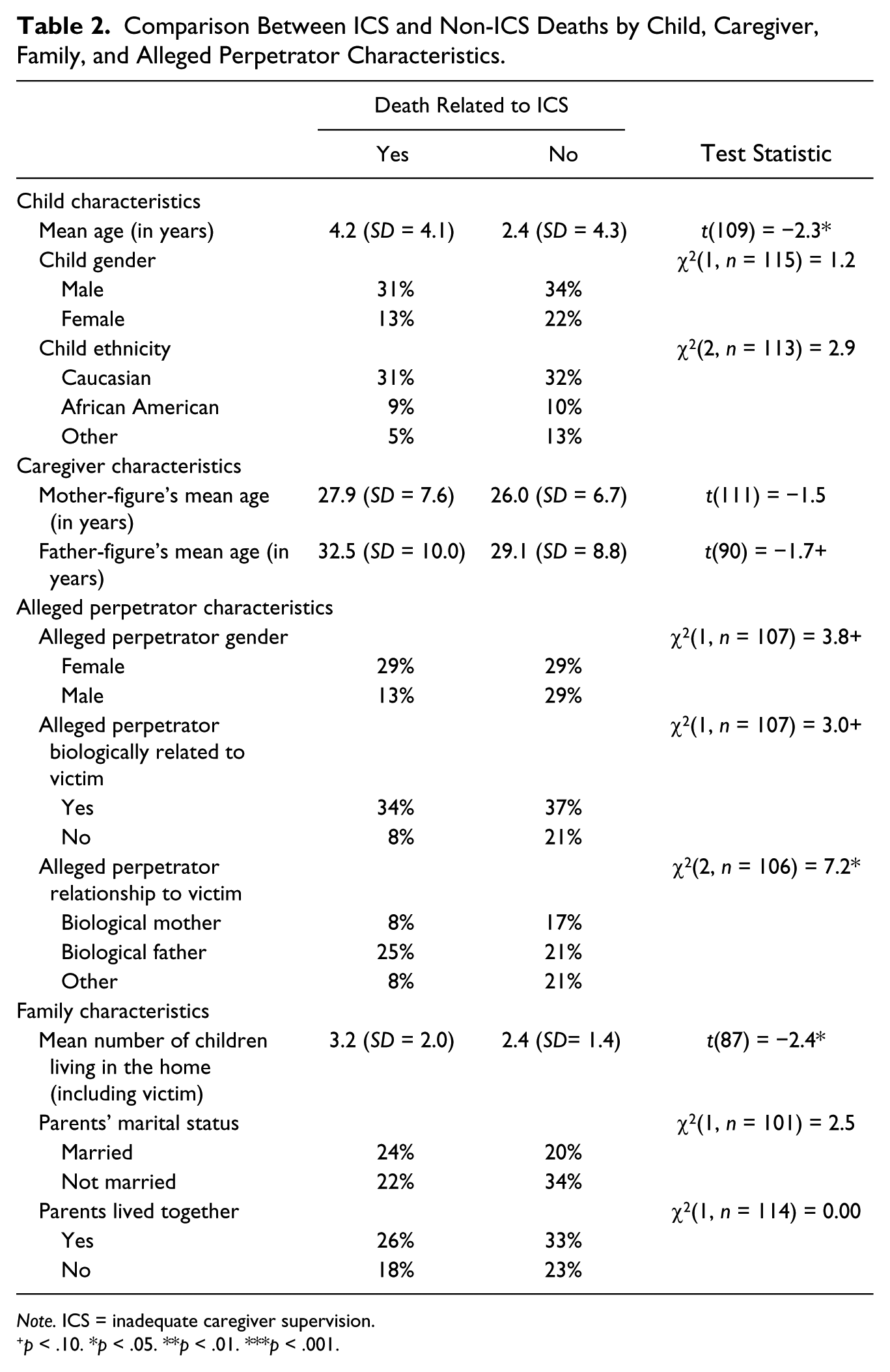
Note. ICS = inadequate caregiver supervision.
p < .10. *p < .05. **p < .01. ***p < .001.
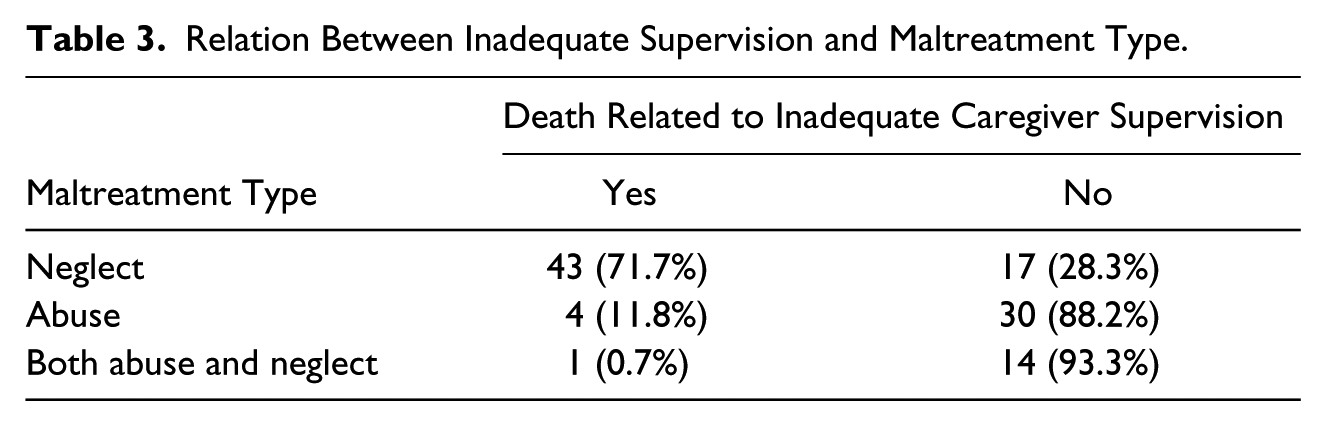
We also examined whether deaths due to ICS were related to incident characteristics (i.e., type of maltreatment, cause of death, and medical examiner code). Deaths related to ICS were most likely to be coded as an accident by the medical examiner, χ2 (5, n = 114) = 59.7, p < .0001. As can be seen in Table 3, deaths that were related to ICS were more likely to be due to neglect, χ2 (2, n = 109) = 41.5, p < .0001, versus physical abuse or both physical abuse and neglect. As shown in Table 4, the most common causes of death for fatalities related to ICS were unintentional drowning, smoke inhalation, and unintentional gunshot wounds.
Relation Between Inadequate Supervision and Maltreatment Type.
Relation Between Inadequate Caregiver Supervision and Cause of Death.
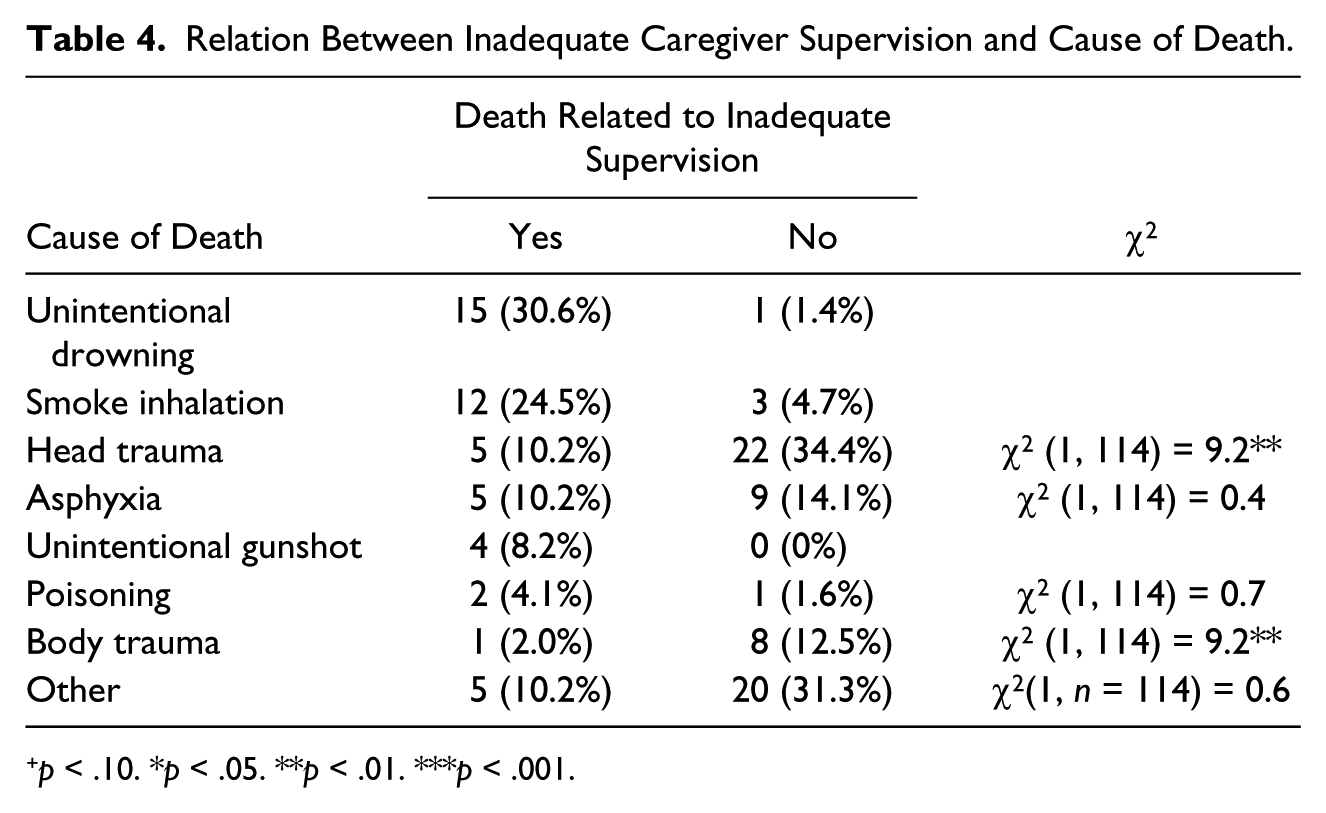
p < .10. *p < .05. **p < .01. ***p < .001.
Significant and marginally significant child, caregiver, alleged perpetrator, and family continuous and dichotomous variables were included in a logistic regression model to determine the relative contribution of each variable in predicting whether or not deaths were related to ICS. Table 5 indicates that the victim’s age, the primary alleged perpetrator’s relationship to the victim (biologically related or not), and the number of children in the home significantly predicted the likelihood that the child’s death was related to ICS. Specifically, the deaths of older children who lived in homes with higher numbers of children and who were maltreated by a biological relative were more likely to be related to ICS.
Logistic Regression Results: Predicting Likelihood of Death due to Inadequate Caregiver Supervision From Child, Caregiver, Alleged Perpetrator, and Family Variables (N = 83).
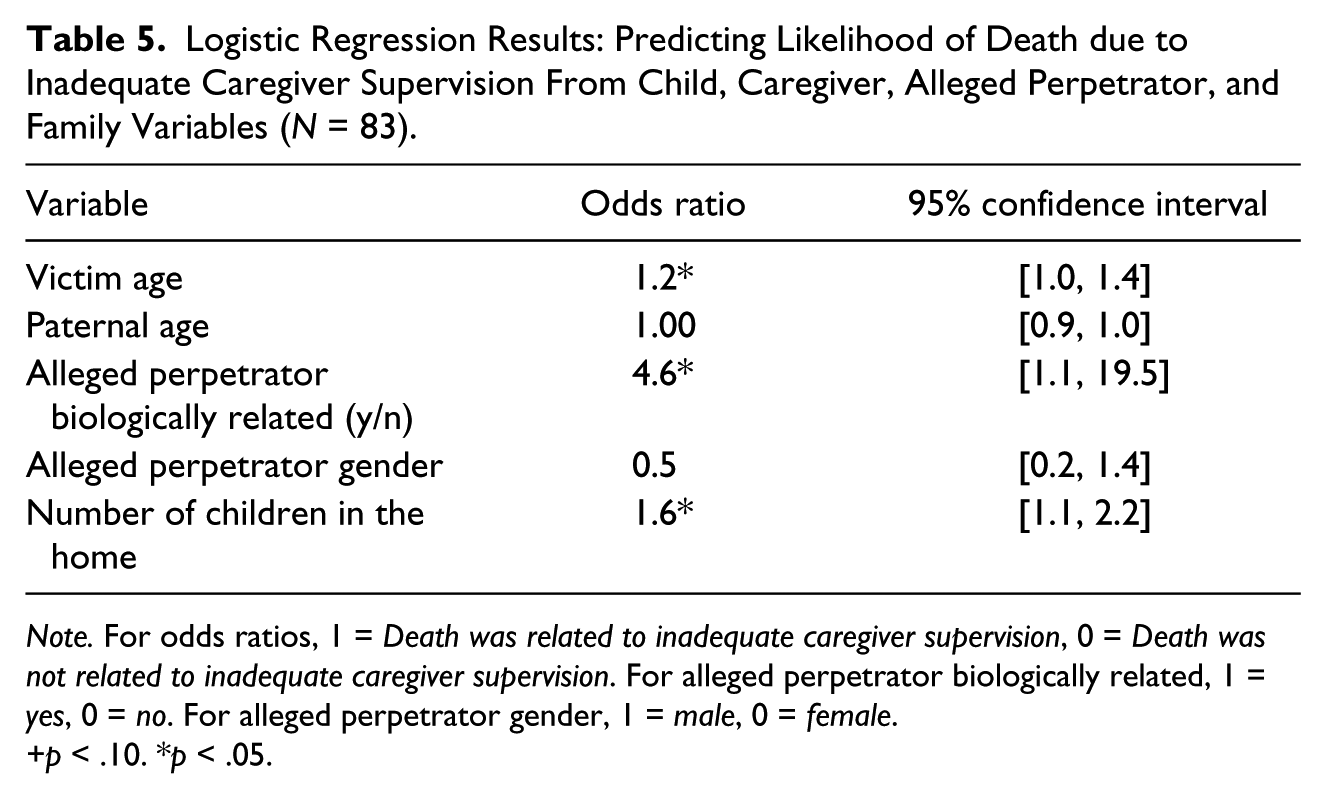
Note. For odds ratios, 1 = Death was related to inadequate caregiver supervision, 0 = Death was not related to inadequate caregiver supervision. For alleged perpetrator biologically related, 1 = yes, 0 = no. For alleged perpetrator gender, 1 = male, 0 = female.
p < .10. *p < .05.
Discussion
The present study examined child maltreatment deaths that were related to inadequate caregiver supervision (ICS) in the years 2000 to 2003. The study also examined which child, caregiver, alleged perpetrator, family, and incident characteristics predicted greater likelihood that child deaths were related to ICS. We found that 44% of the child maltreatment deaths in these years were determined by study coders to be related to ICS. These results are strikingly similar to a study of child injury deaths in Louisiana and Alaska that included both maltreatment and non-maltreatment deaths. The study reported that 43% of deaths were due to ICS (Landen et al., 2003). The fact that so many deaths were related to ICS in both of these studies indicates that helping caregivers improve supervision of their young children may be an important child death prevention strategy. These results may also underscore the difficulty in determining whether deaths due to poor supervision should be determined to be instances of neglect or nonneglectful accidents. Indeed, states in the United States have different procedures for determining whether or not deaths are due to child maltreatment (Shanley, Risch, & Bonner, 2010).
The majority of deaths related to ICS in the present study were caused by drowning or smoke inhalation. These findings are important given that prior research has found that these two causes of death are the second and third leading causes of child maltreatment death in the state of Oklahoma (Damashek, McDiarmid Nelson, & Bonner, 2013). Moreover, Landen and colleagues (2003) found that drowning and fire-related deaths were likely to involve ICS. Such findings indicate that targeting ICS as a prevention strategy may have the potential to significantly reduce the number of child deaths related to drowning and fires.
Logistic regression analyses indicated that child maltreatment deaths related to ICS were more likely to occur for slightly older children (i.e., average age of four versus two) and for those living in households with greater numbers of children (i.e., average number of three versus two children). It is important to note that the age range in our study was somewhat limited; therefore, older children in our sample were typically about age four. However, these findings are interesting because previous research on non-maltreatment-related (unintentional) injuries have indicated that mothers supervise younger children (i.e., toddlers) more closely than older children (i.e., ages four to five; Morrongiello, Corbett, McCourt, & Johnston, 2006). However, the results of the present study suggest that preschool age children also need close supervision, particularly in the presence of hazards, such as water and fire. The results further suggest that families with several children may have difficulty adequately supervising all of their children and may need assistance in determining how to maximize the effectiveness of supervising several children at once.
Finally, children were more likely to be victims of deaths related to ICS when biological parents were the alleged perpetrators. Thus, ICS deaths were more likely to occur when children were with their parents, rather than in day care or school settings. Such results suggest that parents in particular need education about the importance of close supervision for their young children as well as training in providing appropriate levels of supervision.
Study Limitations
Although the present study provides information about the role of ICS in child maltreatment deaths, it is important to note its limitations. First, data were limited to one state, which may limit the generalizability of the findings. Second, our sample size was somewhat small and limited to a period of four years. A larger sample size may have allowed us to detect more differences between ICS and non-ICS deaths. Third, our data set was limited to mostly demographic variables and did not include information on several important contextual variables that have been found to be related to risk for child maltreatment deaths. Researchers have found that a variety of contextual factors, such as family socioeconomic status, parental mental health problems, and parental social support are significantly related to the occurrence of fatal child maltreatment (Crittenden & Craig, 1990; Dolan, Guly, Woods, & Fullam, 2003; Friedman, Horwitz, & Resnick, 2005; Goetting, 1988; Overpeck, Brenner, Trumble, Trifiletti, & Berendes, 1998; Pritchard & Bagley, 2001; Stroud & Prtichard, 2001). Our inability to include such variables in the present study makes it challenging to discuss interventions that go beyond addressing simple caregiver skill deficits to address other social-ecological variables that might contribute to child maltreatment deaths.
Implications
Taken together, these findings may suggest the need for interventions to teach parents about how to supervise their children closely, particularly in the presence of life-threatening environmental hazards. To date, evidence-based injury and neglect interventions primarily focus on reducing hazards in the home (e.g., placing cleaning products out of reach, using baby gates) and do not systematically address caregiver supervision (e.g., Carman, Friedman, Lamb, & Lennon, 2006; King et al., 2001; Lutzker & Bigelow, 2002). The present findings may suggest that information about appropriate supervision around bodies of water as well as the use of working smoke alarms should be included in existing home visiting programs. Moreover, a systematic and empirically supported method for training caregivers to appropriately supervise their young children is needed. SafeCare, a general child neglect intervention, has been successful in decreasing maltreatment recidivism rates by focusing primarily on parent skills training (Chaffin, Hecht, Bard, Silovsky, & Beasley, 2012). However, given the fact that contextual factors (e.g., maternal mental health, socioeconomic status, social support) are related to child maltreatment fatalities (Crittenden & Craig, 1990; Dolan et al., 2003; Friedman et al., 2005; Goetting, 1988; Overpeck et al., 1998; Pritchard & Bagley, 2001; Stroud & Prtichard, 2001) as well as parents’ supervision of their young children (Damashek, Williams, Sher, & Peterson, 2009; Morrongiello et al., 2006; Nover, Shore, Timberlake, & Greenspan, 1984; Porter et al., 2007), it may also be important for interventions to address contextual factors that may serve as barriers to adoption of new parenting skills. Interventions that address such factors have shown promising results in treating child neglect (DePanfilis & Dubowitz, 2005; Fraser, Walton, Lewis, Pecora, & Walton, 1996).
Footnotes
Declaration of Conflicting Interests
The author(s) declared no potential conflicts of interest with respect to the research, authorship, and/or publication of this article.
Funding
The author(s) received no financial support for the research, authorship, and/or publication of this article.