



Abstract
The present study evaluated the utility of the Chinese version of the Revised Controlling Behaviors Scale (C-CBS-R) as a measure of controlling behaviors in violent Chinese intimate relationships. Using a mixed-methods approach, in-depth, individual interviews were conducted with 200 Chinese women survivors to elicit qualitative data about their personal experiences of control in intimate relationships. The use of controlling behaviors was also assessed using the C-CBS-R. Interview accounts suggested that the experiences of 91 of the women were consistent with the description of coercive control according to Dutton and Goodman’s conceptualization of coercion. Using the split-half validation procedure, a receiver operating characteristics (ROC) curve analysis was conducted with the first half of the sample. The area under the curve (AUC) for using the C-CBS-R to identify high control was .99, and the cutoff score of 1.145 maximized both sensitivity and specificity. Applying the cutoff score to the second half gave a sensitivity of 96% and a specificity of 95%. Overall, the C-CBS-R has demonstrated utility as a measure of controlling behaviors with a cutoff score for distinguishing high from low levels of control in violent Chinese intimate relationships.
It has long been recognized that just counting the number of violent acts cannot adequately explain the violence in intimate relationships (e.g., Dutton & Goodman, 2005; Edleson & Tolman, 1992). Rather, attention should be given to the context in which intimate partner violence (IPV) takes place. Specifically, it is important to ascertain whether the violence is part of a general pattern of power and control in such relationships (Johnson, 2008). However, assessing control in violent intimate relationships has been a challenge for practitioners and researchers. In particular, differentiating high from low levels of control in the relationship is problematic. Cluster analysis was used to identify clusters of high and low control individuals in previous studies (Graham-Kevan & Archer, 2003; Johnson, 2008; Johnson & Leone, 2005). There are, however, problems with using a cluster analysis method, including the lack of well-established rules for defining a cluster (Punj & Stewart, 1983) or definitive criteria for admission to a cluster (Cattell, 1978). Furthermore, the nature of the sample significantly influences the nature of the cluster (Johnson, 2008). Thus, even when the sample contains very few or no individuals with a high level of control, a cluster analysis will still find clusters of higher and lower levels of control. In such cases, a high level of control is only so in comparison with the rest of the sample. It has been suggested that both qualitative and quantitative data should be used concurrently to find a cutoff for differentiating low and high levels of control in violent intimate relationships (Johnson, 2008). No studies, however, have reported on the use of a cutoff score for dichotomizing levels of control in IPV.
In addition, there is a need to understand the use of control not only in the context of IPV but also in the cultural system where the violence occurs (Dutton, 1996; Edleson & Tolman, 1992). Previously, research found that psychological abuse victimization, rather than physical and/or sexual abuse victimization, had a negative impact on Chinese women’s mental health (Tiwari et al., 2007). Despite the conjecture in the above study that the partners might have used ridiculing and shaming to control the women, the use of control by the perpetrator was not measured. Nevertheless, the importance of using a culturally sensitive tool to assess IPV was clearly demonstrated.
A number of measures have been used to assess the use of control in intimate relationships, including a 92-item Coercive Control measure (Dutton, Goodman, & Schmidt, 2005), behavior-specific questions on controlling behaviors by an intimate partner in the World Health Organization (WHO) multicountry study (Garcia-Moreno, Jansen, Watts, Ellsberg, & Heise, 2005), and the Revised Controlling Behaviors Scale (CBS-R; Graham-Kevan & Archer, 2005). However, none of the measures has been validated for Chinese women and their appropriateness for these women is therefore not known.
The present study aimed to evaluate the utility of the Chinese version of the CBS-R (hereafter known as the C-CBS-R) as a measure of controlling behaviors in Chinese intimate relationships and to find a cutoff point on the C-CBS-R using a mixed-methods approach. The CBS-R was chosen because of the commonalities identified (N. Graham-Kevan, personal communication, September 24, 2010) between the domains of the CBS-R and the control tactics reported by abused Chinese women (Tiwari & Yuen, 2010). Specifically, the abusive partners in Tiwari and Yuen’s study were reported to use tactics such as “making it difficult for her to work,” “threatening to hurt her and/or the children,” “causing embarrassment to her by being rude to her family or friends,” “restricting the amount of her activities outside the relationship,” and “constantly checking on her whereabouts.” And such tactics were similar to the five domains of the CBS-R, namely, “using economic abuse,” “using coercion and threats,” “using intimidation,” “using emotional abuse,” and “using isolation” (Graham-Kevan & Archer, 2008). Furthermore, a validated Chinese version of the CBS-R is needed because Chinese women may not interpret controlling behaviors in the same way as their Western counterparts due to their Chinese upbringing. For example, under the influence of the traditional Chinese culture, which emphasizes the need for a wife to be submissive to her husband (Tang & Lai, 2008), Chinese women, instead of viewing a husband’s use of punishment as a form of control, may even condone it as his right to bring his wayward wife into line (Chan, 2009). Thus, there is a need to validate the Chinese version of the CBS-R to ensure that it is culturally appropriate.
Method
Design
The findings presented in this article are part of a large cohort study of Chinese women’s experiences of IPV victimization (Tiwari, Lam, & Hong, 2012). The present study adopted a mixed-methods design to elicit qualitatively the women’s personal experiences of control in intimate relationships through individual, in-depth, semistructured, face-to-face interviews. A quantitative approach was also used to evaluate the C-CBS-R through a researcher-administered questionnaire. The study was approved by the Institutional Review Board of the principal investigator’s (PI) institution.
Participants and Setting
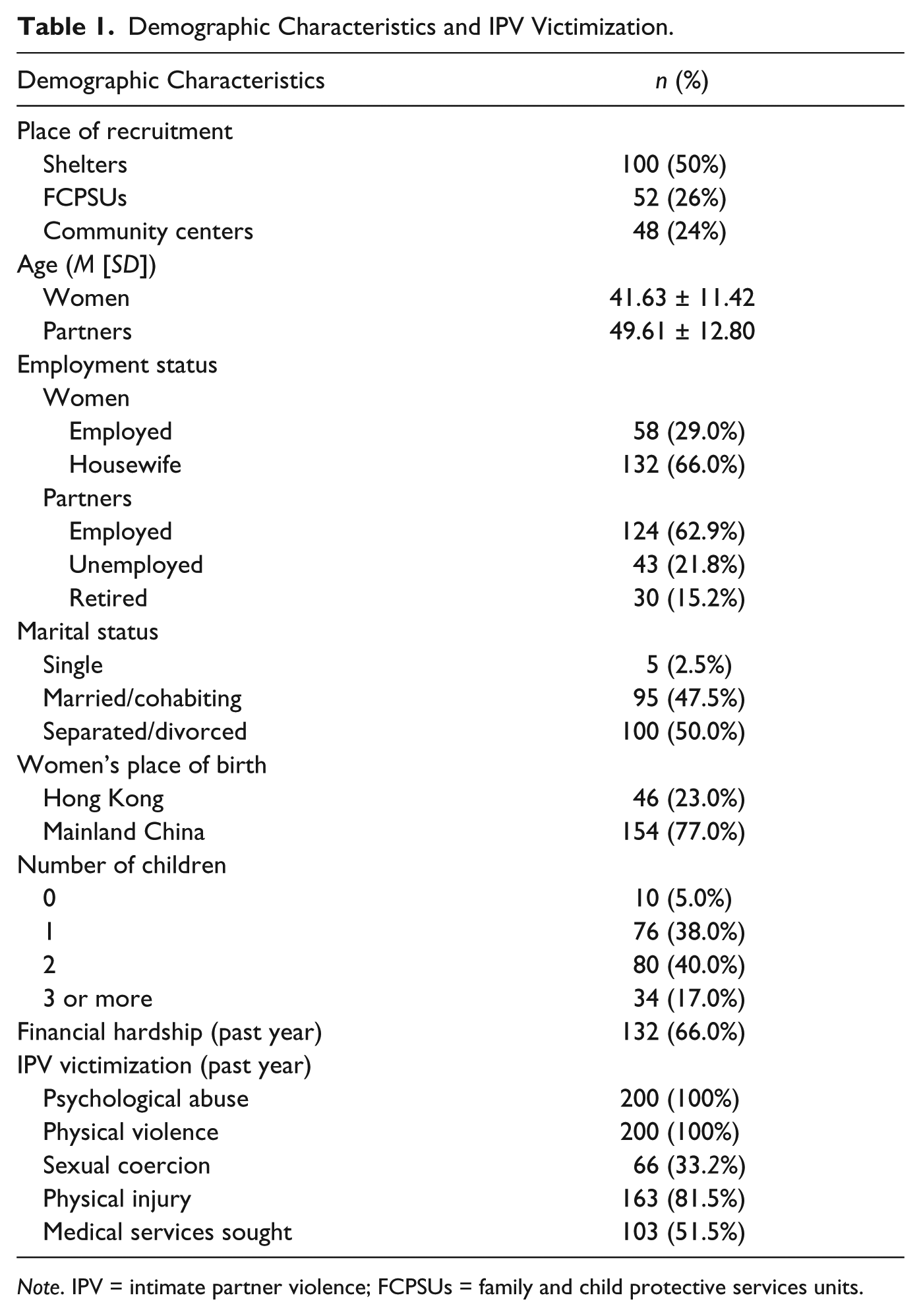
To be eligible for the study, the participants had to be Chinese women, 18 years of age or older, able to communicate in Cantonese or Putonghua (the two main dialects spoken in Hong Kong), and screened positive by the researcher for intimate partner physical violence victimization in the preceding 12 months based on the Chinese Abuse Assessment Screen. A total of 200 women met the inclusion criteria and were recruited for the present study. Recruitment sites were deliberately selected to maximize diversity in the women’s IPV victimization experiences. Thus, recruitment sites covered all districts in Hong Kong and included shelters for abused women, community centers operated by nongovernmental organizations, and the Family and Child Protective Services Units (FCPSUs) under the Social Welfare Department of the Government of Hong Kong Special Administrative Region. Of the 200 participants, 100 were recruited from the four shelters for abused women and the remaining 100 women were recruited from 7 community centers (n = 48) and 11 FCPSUs (n = 52).
Measurements
Qualitative measures
The interviewer sought to elicit information from the participants about the context in which the violence occurred and their experiences of control in their intimate relationships. An opening question was posed to the interviewee: “Can you tell me what it has been like living with your partner all these years?” Prompts were used to help elaborate on the accounts reported, such as “What do you and your partner do when dealing with matters arising between you (such as family income, spending, parenting, in-laws, socializing with friends, going out without the partner)?” “What do you and your partner do when you two disagree about something?” “Do you feel that you are free to do what you want?” (with reference to the subject under discussion, such as parenting, spending, socializing, etc.), “Are there times in your relationship when you feel that your partner is the one who decides what you can or cannot do, and how do you feel when that happens?” “Are you afraid of your partner?”
Quantitative measures
Controlling behavior
A 32-item CBS-R (see the appendix) developed by Graham-Kevan and Archer (N. Graham-Kevan, personal communication, 24 Sep 2010) was adopted to measure the use of controlling behaviors by the woman (self-reports) and that by the partner (derived from the woman’s report on her partner; Graham-Kevan & Archer, 2005); this was created by adding the subscales of using children (5 items; for example, “threaten to take the children away”) and minimizing (3 items; for example, “blame the other for being hit”) to the original five subscales of economic control (4 items; for example, “make it difficult for the other to work or study”), threatening control (4 items; for example, “threaten to harm the other one”), intimidating control (5 items; for example, “smash the other’s property when annoyed/angry”), emotional control (5 items; for example, “show the other one up in public”), and isolating control (6 items; for example, “try to restrict time one spent with family or friends”). Each item of the CBS-R was rated on a 5-point Likert-type scale ranging from 0 (never) to 4 (always). The original CBS-R has demonstrated satisfactory alpha values (Graham-Kevan & Archer, 2009).
For measuring controlling behaviors in violent Chinese intimate relationships, the 32-item English version of the CBS-R was forward translated into traditional Chinese. To ensure that the meaning of each item was retained, a consensus meeting was held by two of the investigators (A.T. and G.L.) who are bilingual (in traditional Chinese and English). It was then back-translated into English by a professional translator who was blinded to the original English version of the CBS-R. The back-translated English version was compared with the original English version to ensure equivalence in meaning and expression. Modifications were made as appropriate (first draft). It was then independently reviewed by three Chinese researchers/practitioners with expertise in IPV victimization and perpetration in the Chinese community. All three reviewers found the Chinese CBS-R to be relevant, appropriate, and comprehensive. Only minor revisions were made to some of the wordings of the items as suggested by the reviewers, and the C-CBS-R was revised accordingly (second draft). Cultural adaptation testing was conducted with 5 abused Chinese women who were invited to complete the C-CBS-R and then undergo cognitive debriefing with the PI in face-to-face interviews. Further modifications and refinements were made based on the women’s feedback on clarity, ease of understanding, and relevance (final draft). Finally, the C-CBS-R was pilot tested for feasibility with another 15 abused Chinese women. No further revisions were made to the C-CBS-R after the pilot test.
In addition, the Chinese Revised Conflict Tactics Scale (C-CTS2; Chan, Brownridge, Tiwari, Fong, & Leung, 2008), Chinese posttraumatic stress disorder (PTSD) Checklist Civilian version (C-PCL-C; Wu, Chan, & Yiu, 2008), and Chinese Beck Depression Inventory version II (C-BDI-II; Chinese Behavioral Science Society, 2000) were administered to assess participants for intimate partner physical violence victimization, PTSD symptoms, and depressive symptoms, respectively.
Procedure
The study was conducted between September 2010 and August 2012. In a private room provided by the shelter/community center/FCPSU, an individual, semistructured interview was conducted and recorded digitally with the woman’s permission. To elicit private and sensitive information from Chinese women survivors of IPV, we have developed an interviewing technique that allows us to build trust with the interviewee and gain access to her experiences, feelings, and thoughts about her intimate relationship (Tiwari, Fong, & Lam, 2011). Furthermore, in addition to the verbal accounts, the interviewer also enhanced the richness of the interview data by keeping field notes, including the nonverbal cues displayed by the woman (such as her facial expression, gesture, posture, and tone of voice), distressing thoughts, feelings, and images. The field notes also included clarifications sought, the interviewer’s understanding of the woman’s experiences and empathy for the woman, inferences drawn from the woman’s utterances, and her comments about the accuracy of the inferences. In addition, a questionnaire containing the C-CTS2, C-CBS-R, C-PCL-C, and C-BDI-II was also administered.
Qualitative data analysis
Three of the researchers (A.T., G.L., and K.L.) independently undertook a structured analytic process to gain a deep understanding of the meaning of the data. During the process, which took several months, the researchers became deeply immersed in the data (women’s accounts and field notes) through repeated reading, intuiting, analyzing, and synthesizing (Streubert & Carpenter, 2011). In addition, the cyclic nature of questioning and verifying that started in the data collection stage continued throughout the data analysis process. This ensured that the researchers questioned their prior conclusions in the context of what they had discovered at different points in the analysis process. Data analysis took the form of identifying key words and phrases and grouping similar ones into categories. The categories were critically examined and interpretations were made. Similar categories were clustered to form themes. Through questioning, verifying, and reflecting, the researchers related the themes to one another and arrived at a rich description of the phenomenon being investigated, that is, the context in which partner violence took place in Chinese intimate relationships. The rigor of the analysis was ensured by the three researchers undertaking repeated rounds of critical discussion and debate, in addition to their own analysis, to assess the accuracy and credibility of the emerging themes.
Statistical analysis
The C-CBS-R was analyzed as in Johnson (1999), based on the women’s reports of their and their partners’ use of controlling behaviors. For each individual, the mean C-CBS-R score was calculated as the total item score divided by the number of applicable items. To determine a cutoff score of the C-CBS-R for dichotomizing high and low levels of controlling behaviors, the participants’ qualitative findings (i.e., the reported partner violence took place in a context of coercive control [yes] or not [no]) and the quantitative findings (i.e., the mean C-CBS-R scores) were inputted for analysis. The sample of 200 participants was randomly split into two halves. For the first half, using the qualitative findings as the benchmark, as suggested by Johnson (2008), we conducted a receiver operating characteristic (ROC) curve analysis. Specifically, the Youden index, that is, sensitivity (1 – specificity), was calculated for different cutoff values, and the cutoff value that maximized the Youden index was taken as optimal. The optimal cutoff value was then validated by using the second half of the sample to obtain the sensitivity, specificity, positive predictive value (PPV), and negative predictive value (NPV). Criterion validity of the C-CBS-R cutoff score was assessed by using a t test to examine the known higher depression level in individuals experiencing partner violence accompanied by coercive control (Dutton et al., 2005). The Statistical Package for the Social Sciences (SPSS) version 20.0 was used for the analysis and 95% confidence intervals (CI) were reported where appropriate.
Results
Participants
Table 1 shows the demographic characteristics and IPV experiences of the 200 women in the study.
Demographic Characteristics and IPV Victimization.
Note. IPV = intimate partner violence; FCPSUs = family and child protective services units.
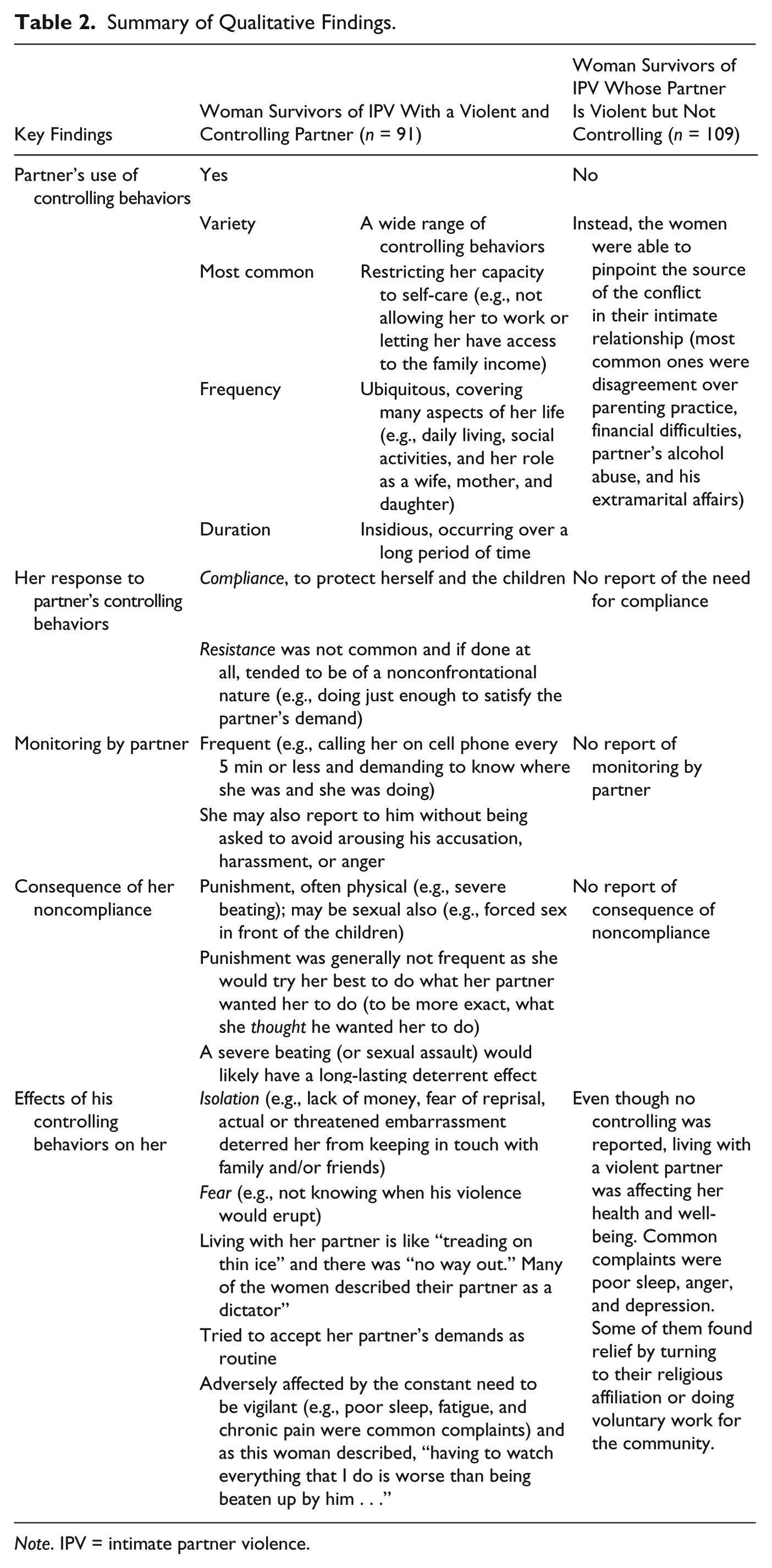
Table 2 summarizes the qualitative findings.
Summary of Qualitative Findings.
Note. IPV = intimate partner violence.
Qualitative Findings: The Context in Which Partner Violence Took Place in Chinese Intimate Relationships
Of the 200 women interviewed, 91 gave vivid accounts of how their partners used, in addition to physical violence, a wide range of behaviors to control them, including denying them money and support, and restricting their contacts with others. The partners’ wishes had to be obeyed and failure to do so would result in punishment of a physical (e.g., beating) or sexual (e.g., forced sex) nature. The fear of punishment often deterred the women from doing anything of which (they thought) their partner would not approve.
Not only did the women have to account for every minute of their movements, the partners also checked on them frequently (e.g., via cell phone). Subjected to frequent and repeated episodes of humiliations, threats, and verbal abuse, the women were living in a state of fear and uncertainty. The lack of financial means, fear of reprisal from the partner, and the actual or threatened embarrassment by the partner in front of their family or friends have also deterred many of the women from visiting their families or socializing with friends. The accounts provided by these 91 women were consistent with Dutton and Goodman’s (2005) descriptions of partners’ use of coercive control in violent intimate relationships. Such descriptions were not apparent in the accounts provided by the remaining 109 women, whose experiences of IPV were often the result of disagreements over parenting practices, financial difficulties, the partner’s alcohol abuse, or his extramarital affairs.
Quantitative Findings: Evaluation of the C-CBS-R and the Cutoff Score
The mean C-CBS-R score
Table 3 shows the overall mean C-CBS-R scores and mean scores for each of the five subscales indicating controlling behaviors used by the women and their partners. The alpha values for the C-CBS-R were .799 (women) and .928 (partners).
Mean C-CBS-R Scores and Standard Deviations (SD) Indicating Women’s and Partners’ Use of Controlling Behaviors.

Note. C-CBS-R = Chinese Revised Controlling Behaviors Scale.
p < .05.
The cutoff score of the C-CBS-R
The results of the ROC curve analysis for the first half of the data are shown in Figure 1. The area under the curve (AUC) is .991 (95% CI = [.982, .999]; p < .001). The sensitivity, specificity, PPV, NPV, and Youden’s index of the different cutoff mean scores on the C-CBS-R to identify the use of coercive control are displayed in Table 4. The cutoff score of 1.145, which has the highest Youden’s index, was selected. The chosen cutoff score was then applied to the second half of the data to evaluate the accuracy of the cutoff score. With a sensitivity of 96% (95% CI = [88.1%, 100%]), specificity of 95% (95% CI = [88.9%, 97.1%]), and PPV and NPV of 87% (95% CI = [65.0%, 89.0%]) and 99% (95% CI = [97.3%, 100%]), respectively, the score of 1.145 was found to be an optimal cutoff. The correct classification rate was 93% (95% CI = [89.3%, 96.7%]).
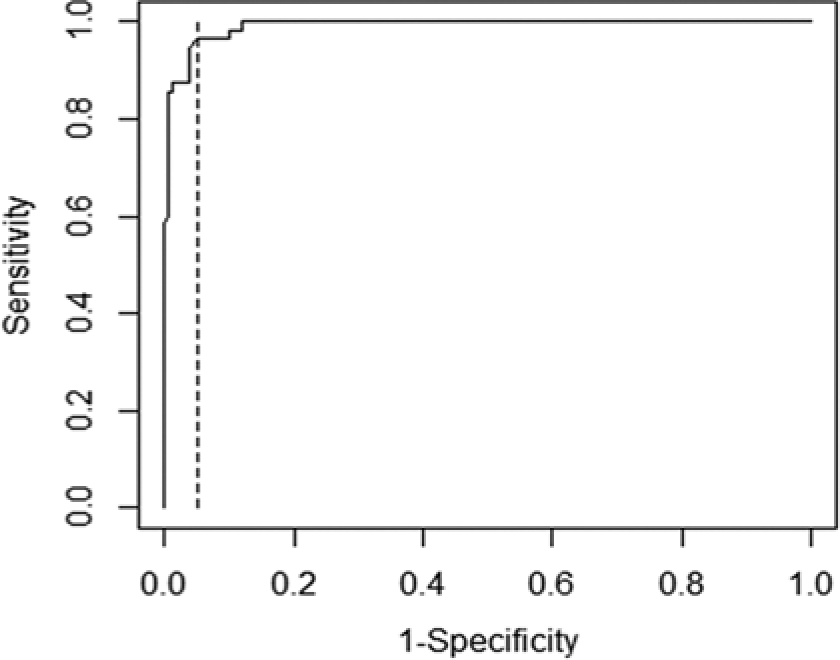
ROC curve for using the C-CBS-R to assess coercive control.
The Sensitivity, Specificity, PPV, NPV, and Youden’s Index of the C-CBS-R at Different Cutoff Mean Scores.

Note. PPV = Positive Predictive Value; NPV = Negative Predictive Value; C-CBS-R = Chinese Revised Controlling Behaviors Scale. Italicization denotes cutoff score.
Criterion validity of the C-CBS-R cutoff score
By applying the C-CBS-R cutoff score of 1.145 to the women’s reports of mental health effects of IPV, it was found that women experiencing partner violence accompanied by the partner’s use of a high level of controlling behaviors (i.e., > 1.145) reported significantly higher depressive symptoms (31.72 vs. 11.61; p < .001) and PTSD symptoms (60.24 vs. 33.89; p < .001) compared with those women whose experience of partner violence was not accompanied by the partner’s use of a high level of controlling behaviors.
Discussion
The present study was the first to report on the utility of the C-CBS-R as a measure of controlling behaviors and a cutoff point for distinguishing high from low levels of controlling behaviors in Chinese intimate relationships. Using an agency sample (abused women recruited from abused women shelters and FCPSUs) and a community sample (abused women recruited from community centers) in Hong Kong, we conducted a mixed-methods study, as suggested by Johnson (2008), to evaluate the utility of the C-CBS-R and to validate the cutoff score of the C-CBS-R both qualitatively and quantitatively. We found that the C-CBS-R had utility as a measure of controlling behaviors in violent Chinese intimate relationships. In addition, we successfully demonstrated that a cutoff score of 1.145 on the C-CBS-R was an optimal point for distinguishing high from low levels of controlling behaviors. Evidence of criterion validity was also found, with the C-CBS-R scores positively correlated with scores of PTSD and depressive symptoms. In future, it is suggested that 1.145 be used as a standard cutoff score with the C-CBS-R and possibly with the CBS-R.
An advantage of a cutoff score on the C-CBS-R is that frontline service providers can work out whether the reported controlling behaviors are indicative of a high or low level of control in the context of violent intimate relationships. This would allow them to make early identification of those most at risk of further violence and/or injury so that timely and potentially effective interventions may be initiated. For example, if partner violence is found to be accompanied by a high level of controlling behaviors by the partner, ending the relationship does not necessarily end the violence. Indeed, the threat to the perpetrator’s control as a result of the separation may even lead to an escalation of the use of control (Bachman & Saltzman, 1995). In such cases, ensuring the safety of the woman and other members of her family must be a priority in addition to helping the woman to leave the relationship.
In the present study, a partner’s use of a high level of controlling behaviors in a violent Chinese intimate relationship was found to be correlated with more severe depressive and PTSD symptoms. Our finding is consistent with Johnson and Leone’s (2005) analysis of 4,967 married women in the National Violence Against Women Survey, which revealed that IPV survivors experiencing a high level of coercive control had significantly higher scores of depressive and PTSD symptoms. In a well-documented meta-analysis by Golding (1999), the adverse impact of IPV on survivors’ mental health was clearly demonstrated, with depression and PTSD being the two most common mental health sequelae of IPV. Our present study has confirmed and further extended the findings of Golding’s review by delineating the role played by controlling behaviors in the link between IPV and mental health outcomes. Future research could further investigate the mediating effect of controlling behaviors on the association between IPV and survivors’ mental health.
Previously, studies that used Johnson’s (2008) typology to identify abusers who were both violent and controlling have revealed a range of findings depending on the sampling method and the nature of the sample. For example, using random sampling in a community sample, 17% of the woman participants reported having been abused by an intimate partner who was both violent and controlling (Leone, Johnson, Cohan, & Lloyd, 2004). In another study, 29% of women recruited from shelters, community, and the courts reported history of IPV by partners who were also controlling (Johnson, 1999). The composition of the sample in the present study may also have affected the results. With 100 women recruited from the shelters and 52 from the FCPSUs, the sample was primarily a clinical one for whom the experience of IPV would likely be severe enough to warrant the seeking and provision of formal assistance. This may explain why such a high number of the women (nearly half of them) reported having been abused by a controlling partner in the qualitative analysis. Such finding, however, should be treated with caution. In the absence of a representative sample, it would be inappropriate to generalize the finding and assume that almost half of the IPV in Hong Kong was perpetrated by violent and controlling partners.
The qualitative data elicited from the 200 interviews are a strength of this study and have provided rich information about the context of violent Chinese intimate relationships hitherto unreported. The women have confirmed, as previously suggested for non-Chinese IPV survivors (e.g., Dutton, 1996; Edleson & Tolman, 1992), that the measurement of violent acts alone cannot adequately explain the violence in intimate relationships. Indeed, for nearly half of the women in this study, their partners’ violent behaviors were not mindless acts but were a means to gain control over them, as previously suggested by Johnson (2008).
Limitations of this study include the use of self-reports, which are liable to erroneous recall and social desirability, thus affecting the accuracy of the women’s reports. Despite recruiting participants from all districts in Hong Kong, the small sample size and convenience sampling limit the generalizability of the findings. Also, as mentioned earlier, the composition of the sample may have affected the results. To more accurately assess the proportion of abusers who are both violent and controlling in the community, a population-based, representative sample should be used in future studies. Also, as the information was elicited from the participants during a single period of data collection, changes over time (e.g., partner’s use of controlling behaviors) cannot be inferred. Therefore, a longitudinal study, though more costly and complex to implement, would allow researchers to examine the pattern and change of the partner’s use of controlling behaviors, with the possibility of predicting future trends.
In conclusion, using a qualitative–quantitative design in a sample of abused Chinese women, we have shown that the C-CBS-R has utility as a measure of controlling behaviors, with a cutoff score to distinguish high from low levels of control in violent Chinese intimate relationships.
Footnotes
Appendix
Declaration of Conflicting Interests
The author(s) declared no potential conflicts of interest with respect to the research, authorship, and/or publication of this article.
Funding
The author(s) disclosed receipt of the following financial support for the research and/or authorship of this article: This work was supported by the General Research Fund of the Research Grants Council of the Hong Kong Special Administrative Region (HKU753510).