



Abstract
Alcohol use among university students has received considerate attention in recent years due to its serious consequences. There is insufficient data in terms of the relationship between child abuse history and future use of alcohol in such a group. In addition, little is known about the effects of polyvictimization (lifetime multiple victimization experiences) on the consumption of these young adults. This study has examined whether a history of exposure to intimate partner violence (IPV) and/or child abuse is related to alcohol consumption. Particular attention was given to different forms of victimization (physical, psychological, sexual abuse, and exposure to IPV) occurring over the life of the individual. A questionnaire that underwent a process of adaptation in two pilot studies, incorporating the Alcohol Use Disorders Identification Test (AUDIT) and questions about child abuse history, was used. The questionnaire was applied to 1,452 students in Brazil. Child abuse and polyvictimization were related to higher alcohol intake and binge consumption in the last 3 months. Physical, psychological, and exposure to IPV were polyvictimization forms with the most impact on alcohol consumption. The study points out the need to initiate prevention strategies among Brazilian university students for a decrease of harmful alcohol consumption, as well as prevention of family violence.
Alcohol consumption among university students has drawn attention of researchers around the world in recent years (Andrade, Duarte, & Oliveira, 2010; Eaton et al., 2012; Wechsler & Nelson, 2008), particularly toward the consequences of binge drinking, such as physical injuries, greater likelihood of sexual assault victimization, and decreased academic performance, among others (Hingson, Edwards, Heeren, & Rosenbloom, 2009; Howland et al., 2010; Testa & Livingston, 2009). Although scholars discuss effective ways to prevent and combat hazardous consumption (Lansford, Dodge, Pettit, & Bates, 2010; Wechsler & Nelson, 2008), there is not enough knowledge on variables associated with alcohol intake among university students to implement research-based prevention programs (Wechsler & Nelson, 2008). In addition, Eaton et al. (2012) and Merline, Jager, and Schulenberg (2008) state that there is little research associating life history events to alcohol consumption in university students, resulting in an incomplete understanding of the phenomenon.
Brazil has increased its efforts to diminish alcohol consumption, according to Sanchez, Locatelli, et al., (2013), although easy access to beverages facilitates the fact that 81.7% of Brazilian adolescents below 18 (the legal age for drinking) had consumed alcohol at least once in their lifetime. In contrast, only 51.8% of U.S. adolescents had consumed alcohol below the legal age (Substance Abuse and Mental Health Services Administration [SAMHSA], 2015), an expressive difference between those countries. Owners of bars and liquor stores present a challenge to curb underage drinking, in Brazil, with more than 80% of stores selling alcohol to adolescents despite the prohibition (Romano, Duailibi, Pinsky, & Laranjeira, 2007).
The purpose of the present study is to examine whether a history of child abuse is related to alcohol consumption in students attending university in Brazil. Emphasis will be given to different forms of victimization (physical, psychological, sexual, or exposure to parental intimate partner violence [IPV]), as well as to polyvictimization, questioning if any of such modalities is related to higher alcohol consumption and binge drinking.
Exposure to IPV is known to be a variable linked to alcohol consumption in adults (Smith, Elwyn, Ireland, & Thornberry, 2010). In addition, all forms of child abuse, such as physical (Lansford et al., 2010), psychological (Goldstein, Flett, & Wekerle, 2010), and sexual abuse (Schraufnagel, Davis, George, & Norris, 2010) have demonstrated increased odds of alcohol-use problems, and higher consumption within different groups in the aforementioned studies. However, little research has been conducted to date seeking to verify the occurrence of multiple victimizations throughout life and their relationship to alcohol intake among university students.
Polyvictimization refers to different forms of abuse occurring to the same individual, and not a single form of abuse occurring repeatedly (Finkelhor, 2008; Finkelhor, Turner, Hamby, & Ormrod, 2011), as different forms of abuse indicate an increased vulnerability on the part of a particular child in comparison with another suffering the same modality of abuse. However, there is still no delimitation as to how many different events (and the frequencies of their occurrence) classify an individual as having suffered polyvictimization. The most widely used classification determines polyvictimization as the occurrence of at least two different forms of victimization over the lifetime of an individual (Dong et al., 2004; Finkelhor, 2008; Finkelhor, Ormrod, & Turner, 2007; Finkelhor et al., 2011).
According to Finkelhor et al. (2011) and Dong et al. (2004), several factors suggest the importance of studies on polyvictimization during childhood, especially because there are indications that cumulative aversive events at this developmental stage bear a greater number of negative consequences throughout life. A key feature of polyvictimization is the large amount of adversity that these children face compared with children who did not suffer multiple forms of abuse, such as increased number of accidents and diseases in general, a higher percentage of unemployment, parental substance abuse, and increased likelihood of mental disorders (Finkelhor et al., 2011). According to these authors, investigations and interventions must access data on all forms of victimization, and not focus on a specific form of abuse.
As reported by Finkelhor, Hamby, Ormrod, and Turner (2009), some researchers have accessed data on polyvictimization from accounts about the life history of individuals, whereas others seek data covering the last year of life. Despite methodological differences, some demographic North American groups show higher rates of incidence of polyvictimization: boys, older children, children from middle socioeconomic status, children from single-parent families, or those whose primary caregivers are stepparents or other adults (Finkelhor et al., 2011). According to these authors, the higher the age studied, the greater the chance of finding individuals who have experienced various forms of abuse, simply because they have a greater chance of being exposed to more aversive events.
According to Dong et al. (2004) and Finkelhor et al. (2007), most studies that associated a history of abuse with alcohol consumption in adulthood specifically investigated a single form of abuse, whereas in most cases, multiple forms of abuse take place concurrently with the same individual. Children who suffer various forms of abuse in a short period of time are at greater risk of long-term negative consequences concerning their physical, mental, and emotional aspects (Finkelhor et al., 2011).
Gilbert et al. (2009) have found that child abuse, including polyvictimization, increases the likelihood of alcohol consumption in adulthood, an association that was restricted to females. Other authors expand this assertion, pointing out that polyvictimization increases the likelihood of alcohol abuse regardless of gender, race, age, and alcohol consumption by parents. Despite these data, the findings cannot be extended to participants from different cultural contexts, as these studies have only focused on U.S. university students, preventing the results from generalization to other countries.
Method
Participants
The original sample initially included 1,452 students from a public university in the state of São Paulo, Brazil. However, 76 questionnaires were discarded due to incomplete data or inconsistent responses (e.g., the participant claimed not consuming alcoholic beverages, and yet reported having consumed beer and rum in the last 3 months). Therefore, a total of 1,376 questionnaires were analyzed involving 724 females (52.6%) and 652 males (47.4%), with ages between 18 and 30 (M = 21.1 years).
Each university course was assigned a code, which was subsequently drawn through the website www.Random.org. The codes were bestowed according to the number of years involved in the courses, thus, Medicine would have codes ranging from MED1 to MED6. At the time of this survey, the university had 171 courses, and 103 (66%) of them had at least one sampled participant. In addition, all courses had at least 1 year sampled, with 514 freshmen, 303 sophomores: 273 from the third year, 183 from the fourth, and 103 fifth-year students. Considering that the university had 9,881 students on campus according to 2010 data, the study sample comprised 14.7% of the student body, with a sample size mean error equivalent of 2.5%.
Data Collection Procedure
The study was approved by the university’s institutional review board. All participants signed informed consent, and had the right to withdraw from the research at any moment. Data collection procedure involved the first author going to one of the randomly selected rooms, requesting permission from the professor, and giving participants instructions on how to complete the questionnaires. Participants were asked to respond accurately based on what they could recall, in addition to being told there were no right or wrong answers. They were also informed that they could stop completing the questionnaires at any moment. Consent forms and questionnaires were distributed, and participants proceeded filling them out. Students took 10 min to complete the survey on average. Questionnaires and consent forms were kept separately to prevent participant identification. Data collection lasted 40 days while no other events occurred that might have increased or decreased alcohol consumption, such as holiday weeks, exams, or university games, as recommended by Wechsler and Nelson (2008).
Instrument
An instrument on alcohol consumption and history of child abuse was compiled in Portuguese. The questionnaire went through two pilot assessments by students who did not participate in the final research, and were asked to evaluate questions regarding their clarity and relevance. Questions on alcohol consumption were based on the AUDIT (Alcohol Use Disorders Identification Test), an instrument from the World Health Organization, by Babor, Higgins-Biddle, Saunders, and Monteiro (2001). AUDIT questions included quantity and frequency of consumption, consumption on a typical day, inability to perform expected activities due to alcohol intake, and the possible occurrence of strong cravings to consume alcohol in a total of eight questions. Participants were also asked whether they had hurt themselves or others during consumption. The sum of the points obtained by participants on the assigned questions was applied according to the handbook of the instrument. Questions pertaining to binge drinking were drawn from the work of Courtney and Polich (2009) and Wechsler et al. (2002). Thus, binge consumption was determined as the intake of five or more doses at an interval of 2 hr for men, and four or more doses at the same interval for women. Participants were asked about the occurrence of binge during lifetime and in the last 3 months. A dose of alcohol was calculated using the measure of one can of Brazilian beer (330 mL at 5% ethanol), a glass of wine (140 mL at 12% ethanol), and a shot of distilled beverage (40 mL at 40% ethanol). This information was given to participants prior to the data collection.
The questionnaire contained definitions of physical, psychological, and sexual violence, as well as exposure to domestic violence, with examples to clarify aggressive behaviors. Questions regarding physical and psychological abuse were based on Finkelhor (2008) and Finkelhor et al. (2011). Questions related to sexual abuse were based in Bannwart and Brino (2011), whereas those relating to exposure to IPV were based on Sinclair (1985). Participants were asked to mention events occurring to them prior to age 18, as in the following examples: “Did someone from your family ever hit you?” “Have you ever been insulted (cursed, offended, threatened, etc.) by a family member?” “Have you ever witnessed any form of violence between your caregivers?” and “Have you ever suffered any form of sexual abuse?” The final questionnaire consisted of 40 questions, eight of which were on demographics, 16 on alcohol consumption, and 16 questions on the victimization history of participants. To protect confidentiality, the only personal data requested involved identification of gender, age, university course, and year
The accuracy of the instrument (the extent the estimated model was close to the actual parameter) was assessed by running an ordinal logistic regression with 1,027 participants and the test samples was composed of 343, all randomly selected. The hit rate in the test sample for participants who consumed alcohol was 93.4%, indicating excellent accuracy. The sensitivity of the instrument—the percentage of individuals who the model classified correctly among those who consumed alcohol—was 100%. That is, all individuals who consumed alcohol were properly classified by the model. The hit rate of the model for participants who did not consume alcohol was 46.2%.
Results
Table 1 shows participants’ lifelong consumption of alcohol, and intake in the last 3 months, as well as lifelong binge consumption, and binge consumption in the last 3 months. An ANOVA test showed that no significant differences were found between men and women’s consumption, either through life or in the last 3 months.
Percentage of Participants’ Alcohol and Binge Consumption Lifelong and in the Last 3 Months According to Gender.
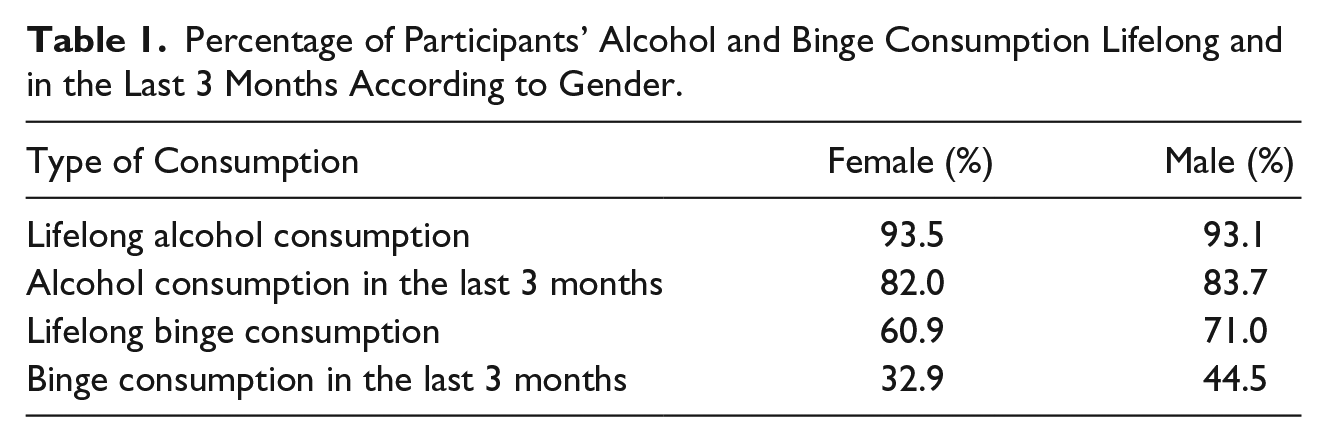
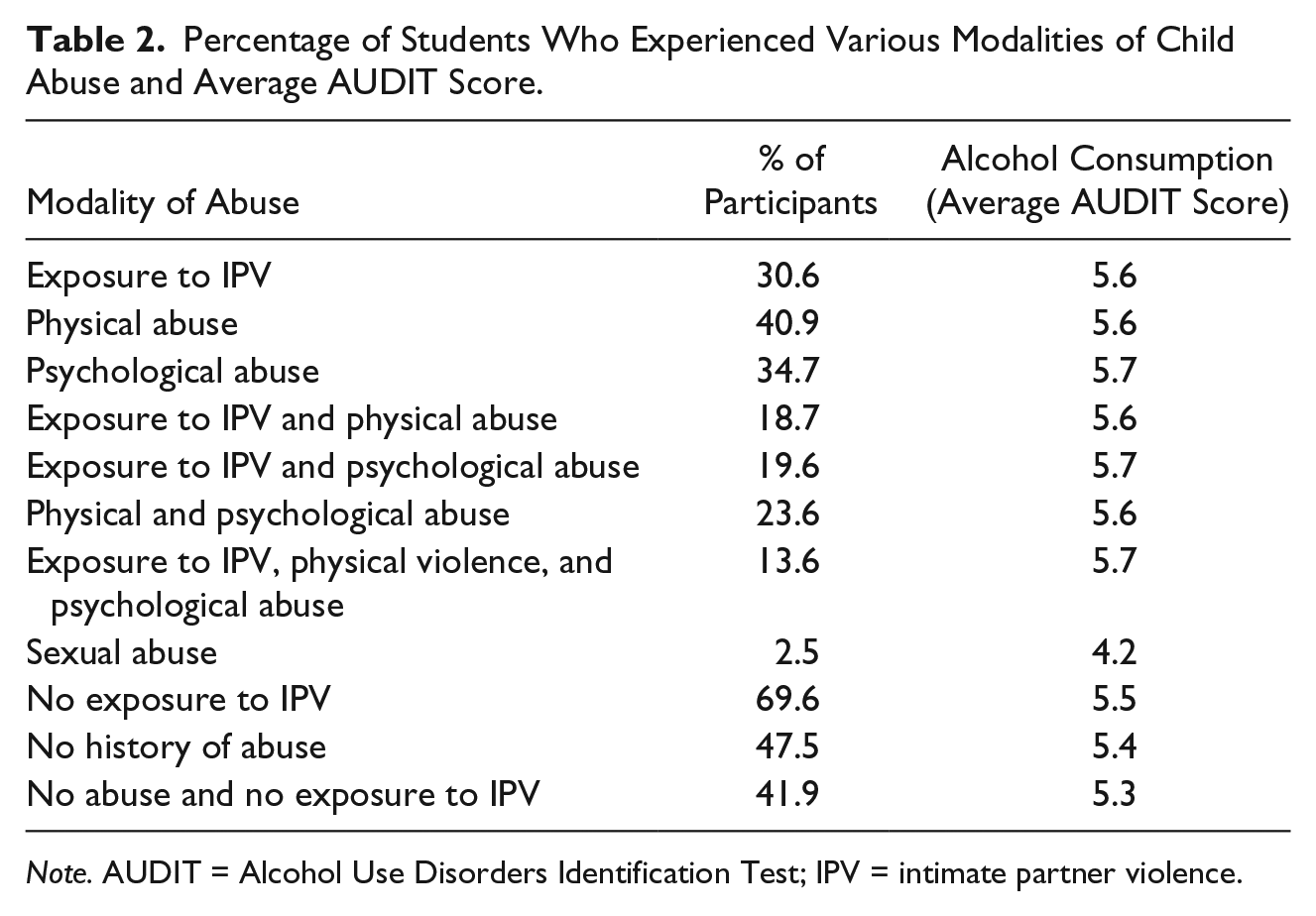
Table 2 shows the percentage of participants who were victims of physical, psychological, and sexual abuse, and their exposure to IPV. The sum of percentages exceeds 100% because the same participant may have experienced more than one form of abuse throughout life. Physical abuse was the most frequent form of maltreatment with 40.9% of participants claiming victimization during their lifetime, followed by psychological abuse in 34.7% of cases, and 30.4% of the participants reported exposure to IPV. Due to the low frequency of sexual abuse (only 35 participants disclosed this modality), further data analysis was not possible, such as combination with other violence modalities, including polyvictimization. Data pertaining to alcohol consumption were based on questions selected from the AUDIT. The average AUDIT score for each form of victimization was calculated, as shown in Table 2.
Percentage of Students Who Experienced Various Modalities of Child Abuse and Average AUDIT Score.
Note. AUDIT = Alcohol Use Disorders Identification Test; IPV = intimate partner violence.
AUDIT mean scores among students who were child abuse victims were found to be on the superior limit of the lowest classification identified by the authors as needing “Alcohol Education” (0-7 points), and close to the next classification level, according to the manual in need of “Simple Advice” (8-15 points). Babor et al. (2001) recommend to participants in this score range brief group intervention with the aid of educational materials. Among participants, five students had scores in the category “Referral to specialist for diagnostic evaluation and treatment,” the highest in the AUDIT, reflecting the need for professionals to monitor the consumption.
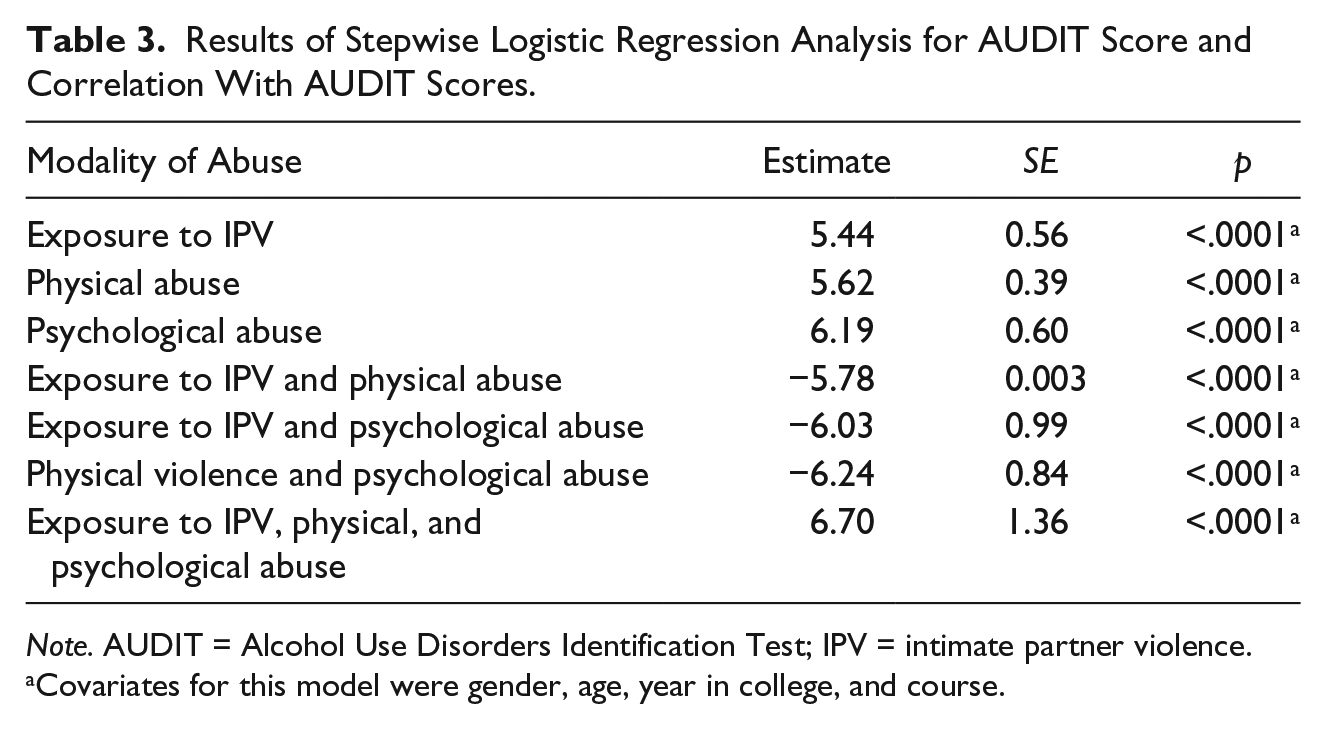
Table 3 illustrates predictors of AUDIT scores, based on a stepwise logistic regression analysis to investigate different forms of child abuse. All forms of violence combinations were treated as interactions for this analysis, and gender, age, year in college, and course were covariates. All relationships were found to be significant. All child abuse forms, including exposure to IPV, combined or alone showed a significant higher AUDIT scores compared with participants who had not a history of child abuse.
Results of Stepwise Logistic Regression Analysis for AUDIT Score and Correlation With AUDIT Scores.
Note. AUDIT = Alcohol Use Disorders Identification Test; IPV = intimate partner violence.
Covariates for this model were gender, age, year in college, and course.
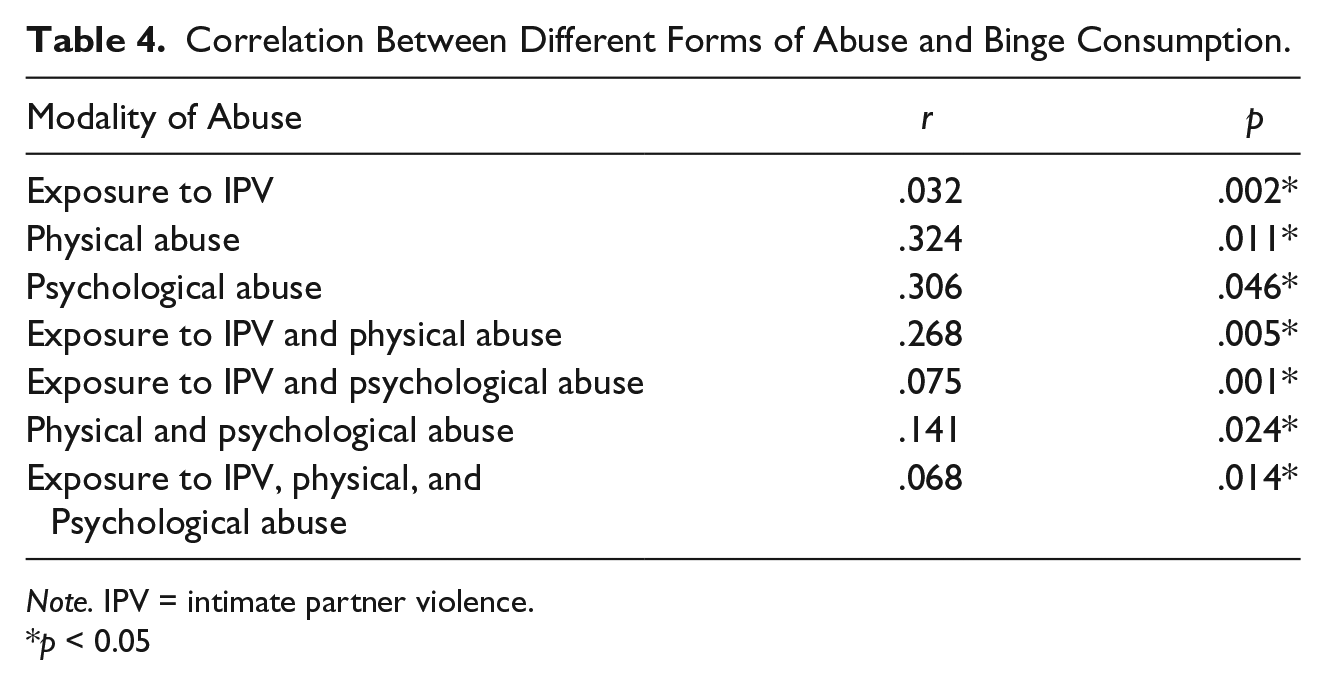
Table 4 illustrates the correlation results among different forms of abuse and lifelong binge consumption using the Pearson test.
Correlation Between Different Forms of Abuse and Binge Consumption.
Note. IPV = intimate partner violence.*p < 0.05
Results indicate that participants who experienced a history of abuse had a greater chance of binge drinking involvement at any point in their lives, compared with those who reported not experiencing abuse. Thus, lifelong binge consumption was found to be associated with a history of child abuse and exposure to IPV.
Discussion
Alcohol Consumption and Binge Drinking
The rate of lifetime alcohol consumption by university students obtained in this study (93.3%), although somewhat higher, is similar to other data collected (86.2%; Andrade et al., 2010), indicating that almost all students in Brazil have drank alcohol previously. The fact that the data collection was conducted by a fellow student may have induced participants to give more reliable information and not to foresee punishment, when reporting consumption to someone of their own rank. This may be inferred, as the study conducted by Andrade et al. (2010) used trained interviewers who did not partake of campus life. Thus, a student researcher may achieve more reliable results, particularly with a sample who often may receive criticism for their drinking behavior, and further studies could confirm this aspect.
Data on university students in Brazil, whether from a previous study (Andrade et al., 2010) or the present one, indicate a similar rate of lifetime alcohol consumption when compared with the United States, with 87.6% of Americans with some college education having consumed alcohol in their lifetime (SAMHSA, 2015). One would expect a larger difference between countries, as (a) there is easier access to alcohol in Brazil (Romano et al., 2007; Sanchez, Santos et al., 2013); (b) alcohol’s cost is cheaper in that country; (c) the legal age to purchase and consume alcohol consumption throughout Brazil is 18, whereas in most U.S. states is 21; (d) vendors, in Brazil, are less strict in requesting documents to prove your legal age (Romano et al., 2007). In addition, considering the strong association between alcohol consumption and previous child maltreatment, we may speculate that the prevalence of child abuse may be higher in Brazil, than in the United States. A national survey on the United States shows a child abuse prevalence of 13.8% (Finkelhor, Ormrod, Turner, & Hamby, 2005), and although there are not similar global prevalence studies in Brazil, the country’s unequal distribution of income and the fact that it has been investing in child abuse prevention much later than the United States justify this argument. For example, Pinheiro and Williams (2009) found a prevalence of physical violence according to 66% of elementary students from the same city as the university from this study is located.
The present study’s data exhibited a trend seen in other surveys conducted around the world (SAMHSA, 2015; Wilsnack, Wilsnack, Kristjanson, Vogeltanz-Holm, & Gmel, 2009), and in Brazil (Andrade et al., 2010), in which female alcohol consumption revealed an upward trend in recent years, especially among young women, although consumption is smaller than male consumption. Nevertheless, differently than previous results by Goldstein et al. (2010) in Canada, and Palmer, McMahon, Rounsaville, and Ball (2010) in the United States, no significant differences between consumption of males and females were found in the present study,
Given this result, the need for alcohol prevention strategies specifically designed for women should be emphasized in Brazil, because alcohol is even more damaging to this group, considering the greater risk of sexual abuse among women who consume alcohol (Hingson et al., 2009; Testa & Livingston, 2009), and women’s higher susceptibility to health problems derived from alcohol use (Schenck-Gustafsson, 2009; Schuckit, 2009). Some examples of preventative strategies may include teaching safety behaviors, such as the monitoring of intoxicated females by friends, locating a health care facility to aid them in such a condition, or escorting the female home under the supervision of a person who is not intoxicated or under the influence of another illegal substance (Testa & Livingston, 2009).
The rate of binge consumption found in the present study was also alarming, with 60.9% of women and 71.0% of men having taken part in binge drinking throughout life, and binge consumption rates in the last 3 months of 32.9% for women and 44.5% for men. A correlation between lifelong binge consumption and a history of violence among participants was found. This result indicates that not only is the consumption of alcohol higher for participants who have suffered abuse, but also that binge consumption is more common in this group. All forms of polyvictimization were also related to lifelong binge drinking, as predicted, indicating that one and all forms of abuse are related to binge drinking, including polyvictimization. Despite previous data indicating that polyvictimization would trigger more negative consequences (such as alcohol consumption) than one form of abuse (Finkelhor et al., 2005; Finkelhor et al., 2011), this fact was not observed in this study. Our data indicate that one single abusive modality or multiple modalities (polyvictimization) are associated with similar patterns of binge drinking and alcohol consumption. It is possible that other variables, such as availability and price of beverages, may have a stronger association with alcohol intake during university years, but more studies are necessary to confirm such hypothesis.
In spite of the stringent criteria used for binge drinking in the present study, involving a 2-hr range interval, as adopted by Courtney and Polich (2009), no decrease in the percentage of students involved in binge consumption was observed. Wechsler et al. (2002) have defined binge as consumption of five drinks for men and four for women at an event or occasion. However, university parties usually last longer than 2 hr, in which case the intake of five doses would not reach an alcohol concentration of 0.08 g/L for most young people in a period exceeding 2 hr (Courtney & Polich, 2009). As the period of consumption was circumscribed, it would be expected that the binge consumption rates found in this study would be lower than those of other Brazilian studies, however similar rates were observed (Andrade et al., 2010; Santos et al., 2014). The data presented in our investigation indicate that 25.3% of college students had taken part in binge consumption in the past month, whereas in the United States this frequency was of 39% (SAMHSA, 2014). Therefore, more studies are necessary to comprehend binge drinking and alcohol consumption among university students, and the use of a single definition of binge may provide a better understanding among different countries, as well as better planning of prevention programs.
Association Between Abuse History and University Alcohol Consumption
The prevalence of sexual abuse in the lives of participants in the sample is below the data found in other studies with university students and young adults in other Latin American countries, such as Mexico and Colombia (Caballero, Ramos, González, & Saltijeral, 2010; Pereda, Guilera, Forns, & Gómez-Benito, 2009). These differences are possibly influenced by the methodology used. As the questionnaire here employed included only three questions on sexual abuse, this topic most likely was under-identified, and the low frequency of reported sexual abuse may explain lower average alcohol consumption scores in this group. Thus, further research is needed to understand the relationship between alcohol consumption among university students and a sexual abuse history, particularly because general studies on the prevalence of sexual abuse are still non-existent in Brazil.
A high prevalence of participants reported a history of exposure to IPV (30.6%) in Brazil, compared with 25% in the United States and 22% in Canada (Graham-Bermann & Perkins, 2010; Sinha, 2012), perhaps, among other factors, because these North American countries have had awareness about domestic violence for longer periods, as prevention programs started earlier than in Brazil. The instrument used in the present study did not enquire which parent initiated the aggression toward the partner, or whether they occurred on the part of both parents. Therefore, the instrument does not allow assertions as to which parent perpetrated aggression, data which are vital for a more detailed overview of IPV. Nonetheless, the Brazilian scenario indicates that women are the main victims of domestic violence (Garcia-Moreno, Jansen, Ellsberg, Heise, & Watts, 2006), thus prevention of this form of violence is necessary not only for women but also to teach men non-aggressive behaviors.
Albeit recent, polyvictimization studies suggest evidence that with multiple forms of victimization, there is a greater likelihood of unlawful behaviors alcohol use and consumption of other substances (Ford, Elhai, Frueh, & Connor, 2010; Robboy & Anderson, 2011). The data obtained in the present study indicate that a single form of abuse or more than one abuse modality are associated with increased alcohol consumption among Brazilian university students. Further studies in Brazil could replicate this finding using other instruments such as an adaptation to Portuguese of the Juvenile Victimization Questionnaire (JVQ; Finkelhor et al., 2005). Alcohol features a differentiated relationship with violence victimization. When comparing children who experienced one form of violence with those who have suffered various other forms, Finkelhor et al. (2011) found that the former had lower chances of diseases, accidents, unemployment, mental disorders, or of having parents who abuse substances. Regarding the consumption of alcohol, any form of abuse was correlated with higher intake, so that any abuse is a risk factor for alcohol use during university years and polyvictimization may have a direct relationship with other by-products, of alcohol abuse, such as anxiety and depression or risky behaviors, a possibility that was not analyzed by this study. A different approach may be needed to identify whether polyvictimization is associated with other behavioral problems related to alcohol consumption, with a direct focus on these by-products.
A history of family violence and alcohol consumption was independent of other factors such as gender and income, reaffirming data from international studies on the topic (Ford et al., 2010; Lansford et al., 2010; Lown, Nayak, & Greenfield Korcha, 2011; Robboy & Anderson, 2011). Further studies should investigate the consequences of binge drinking among those who suffered polyvictimization and those who suffered one form of violence.
The present study has limitations as to the generality of the data, due to the fact that participants came from a single Brazilian public university. There may be regional variations in the occurrence of violence against children and women, because communities that tolerate or encourage such behavior, usually present higher frequencies of these events compared with countries implementing prevention efforts (Finkelhor et al., 2011). In addition, as previously mentioned, the low frequency of sexual abuse indicates that, the questionnaire should be revised to include more information on the subject or even a specific instrument to access this specific form of violence.
Many variables are known to have an association with alcohol consumption during university years, such as the availability and price of alcohol, antisocial behavior, having friends who engage in alcohol consumption, and the student’s attitudes about consumption. This study’s main contribution relies in providing additional information in terms of investigating the abuse history of university students in an effort to search other meaningful variables that may help to explain the phenomenon of alcohol consumption in young adults.
Brazil is the lead country in terms of university access in Latin America and other developing countries with an increase from two million university students in 2002 to 7.3 million students in 2015 (Ministério da Educação, 2015; United Nations Educational, Scientific and Cultural Organization [UNESCO], 2002). An increasing trend in number of the university student population also occurred in other developing countries (Calderon, 2015), stressing the need to gather data on alcohol consumption in such countries. In addition, the study provides information linking previous child abuse to alcohol consumption in a culture different than the U.S. one.
Conclusion
The present study aimed to determine whether a history of family violence was related to higher consumption of alcohol during the university years of Brazilian students. Results indicated that alcohol consumption by university students in this country is high, with men and women consuming equally. A history of child abuse, including IPV exposure, had a significant relationship with higher alcohol consumption by university students, as well as a higher chance of binge drinking in life.
These data point to the need to direct efforts to implement two types of initiatives: (a) public policies and strategies that promote positive parenting and domestic violence programs to curb the high levels of interpersonal violence in Brazilian families, and (b) the need for preventive projects to reduce alcohol consumption among university students.
Footnotes
Declaration of Conflicting Interests
The author(s) declared no potential conflicts of interest with respect to the research, authorship, and/or publication of this article.
Funding
The author(s) received no financial support for the research, authorship, and/or publication of this article.